

An insane asylum located in the North West region of the United States attempts an experimental test to root out Vietnam soldiers faking signs of psychosis. A new commanding officer, a military psychiatrist named Colonel Kane, will take the lead of the experiment. But Kane’s methods are unorthodox and Kane himself seems distant from what’s expected from him, leaving the military patients, and even some of the personnel, wondering about his state of mind. Kane lets the committed soldiers live out their most outrageous fantasies and the further his practice plays out, the more that there might actually be something terribly wrong with the new commanding colonel.

“The Ninth Configuration” is the big screen adapted version of William Peter Blatty’s novel entitled “Twinkle Twinkle Killer Kane.” Blatty, who wrote the screenplay and directed the film, dives back into motion pictures once again after the success of another previous adapted novel; a little piece of work you may be familiar with called “The Exorcist.” In the span of seven years, Blatty was able to cast again the versatile Jason Miller, who had portrayed a much more serious Father Karras in “The Exorcist,” as one of the leading asylum inmates in “The Night Configuration.” From then on, the hired case was forming into a formidable force of method actors including Stacy Keach (“Slave of the Cannibal God”), Scott Wilson (The Walking Dead), Ed Flanders (“The Exorcist III”), Robert Loggia (“Scarface”), Neville Brand (“Eaten Alive”), George DiCenzo (“The Exorcist III”), Moses Gunn (“Rollerball”), Joe Spinell (“Maniac”), Tom Atkins (“The Fog”), Richard Lynch (“Invasion U.S.A.”), and Steve Sander (“Stryker”). This cast is a wet dream of talent.

What’s unique about Blatty’s direction of this film is the non-displaying of action and dialogue off screen. Whether it’s character narration, dialogue track overlay, or slightly off camera view, the spectator, for more about half the film or perhaps even more, isn’t being directed to focus on the current action or dialogue and this creates the illusion of hearing bodiless voices or activities, as if you’re part of the ranks in the mentally insane roster. Only until the truth or catalyst is reveal is when more traditional means of camera focus is applied.
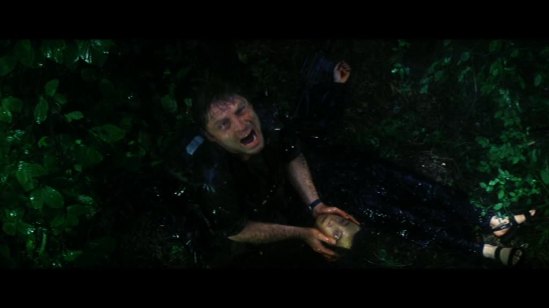
To make this technique work and to make it not become tiresome to the viewer, Blatty had to write some amazing dialogue and with him being a novelist and all, the dialogue was absolutely, 100 percent brilliant. Lets not also neglect to mention that with unrivaled dialogue, out of this world thespians must be accompanied to breathe life into the black printed words that are simply laying upon white pages. Scott Wilson’s and Jason Miller’s craziness is unparalleled while, on the other side of the spectrum, Stacy Keach delivers a melancholic performance that balances out the tone of the film from what could have been considered an anti-Vietnam war comedy at first glance that spun quickly with an unforeseen morph into a suspenseful thriller about the consequences of war PTSD and the affect it has on those surrounding.

Gerry Fisher’s cinematography encompasses the Gothicism of the remote Germanic castle to where every ghastly statue and crypt-like stone comes alive like in a horror movie. The setting couldn’t be any of an antonym for a loony-bin set. Even though the film is suppose to be set in North West America, the location used was actually in Wierschem, Rhineland-Palatinate, Germany at the medieval Castle Eltz and the story subtly explains how the castle came to be in “America.” To the opposition of such a barbarically beautiful castle, the score by Barry De Vorzon (The Warriors) in the first act into the second is playful, lighthearted, and childish in an appropriate story tone, but turns quickly sinister and angry during progression, building upon the revealing climax.
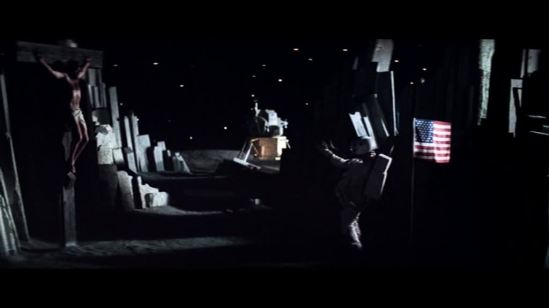
Classic film and TV distributor Second Sight brings this cult classic onto DVD and Blu-ray in the UK. Since this was a screener copy of the DVD, I’m unable to provide any audio or video technical comments, but the screener did include the generous amount of bonus material including interviews with writer-director William Peter Blatty, and individual interviews with Stacy Keach, Tom Atkins and Stephen Powers, composer Barry De Vorzon, production designer William Malley and art director J. Dennis Washington. There are also deleted scenes and outtakes and a Mark Kermode introduction. A substantial release for Second Sight and a fine film for any collection so make sure you pick up or order this Second Sight release today!
Tag Archives: dvd
It’s Not Eezzee Being Evil! “The Hoarder” review!

Ella suspects her handsome fiance is having an affair and strongly insists on breaking into his outer city storage unit to find proof. Ella’s felonious friend Molly tags along to aid in the break-in, but deep down in the basement level of EEZZEE storage, Ella and Molly release a terrifying secret that’s now running loose and causing a murderous campaign in the maze-like structure of the storage facility. Along with a handful of other unfortunate storage unit renters, Ella finds herself trapped in the facility’s after hours lockdown and in the bloody nightmare path of the Hoarder, who won’t stop seeking to stock his very own unique “collection” back in the belly of the dark basement.

Writer-director Matt Winn’s sophomore feature film “The Hoarder” stars Mischa Barton of “The O.C.” fame and Barton portrays the seemingly suspicious and risk-taker Ella. Barton has been through a string of B-horror and other B-movie films that’s far from more of her previous popular works, yet seeing her name headline a film simply entitled “The Hoarder” feels unexplainably awkward. If you’re not familiar with Mischa Barton, Amy Smart (“Mirrors,” “The Butterfly Effect”) is another one of those relatively known actresses that hang onto the B-horror and Hollywood horror fringe line and not securely rooting a place amongst the two very different planes. But Barton is surrounded by a formidable B-movie cast or an ensemble of television actors to where they’ve received their popularity and recognition. “Prison Break’s” Robert Knepper, “The Tudors” Charlotte Salt, and “The Fall’s” Valene Kane co-star alongside Barton. However, Andrew Buckley, as the EEZZEE storage unit manager, is the most entertaining and interesting character with his non-threatening physique, his deadpan comedy, and sheer intensity when provoked. Even though they’re storage units of talent, collectively the actors don’t play well off each other and don’t share the situation as a whole. Rather, each character tries to go into their own personal demons and not into the evil their neck deep at the current moment.

The Matt Winn script, co-written by Chris Denne and James Handel, and direction are well-paced for timing, are attentively consuming from the beginning to end, and are structured soundly to withstand a pretty good and unexpected finale twist. However, the script doesn’t come without its flaws, developing plot holes through the duration that are not explained well enough to extinguish post-viewing questions. Also, a few of the minor characters needed their story to be explored more to give them more worth. I wanted to care more about the character Willow and her drug addiction and the character Vince and his undisclosed corrupt cop business, but couldn’t quite grasp their backstories and their motivations, leaving Willow and Vince as inessential dust particulars instead of full-bodied hair ball critters that one can’t help by notice. The finale successfully satisfies the B-Horror mold that puts that welcoming final stake into “The Hoarder” of ever being a thought of a Hollywood production. And that’s a solid quality to obtain.

I did expect more of a gory display from special effects supervisor Scott McIntyre. While whatever effects made the film’s final cut were well executed, such as mouths being sewn or stapled shut, much of McIntyre’s talent wasn’t exhibited or perhaps even used. With big time feature credits such as “Enemy at the Gates,” “Mindhunters,” and a more under the radar credit in the more recent “Cockneys Vs Zombies,” “The Hoarder” could have been far more gruesome and unpleasant in a tasteful expo. Aside from the squandering of McIntyre’s talents, the Eben Bolter’s dull cinematography on a well made storage unit set and the Andrew Pearce and Xavier Russell repetitive and cheap soundtrack score blandly conveys menacing “The Hoarder” rightfully deserves.

RLJ Entertainment adds to their collection with the not rated DVD release of “The Hoarder.” Beneath the embossed DVD sleeve and casing, the DVD video quality is comprised of a sleek 2.40:1 widescreen presentation with a Dolby Digital 5.1 track. No flaws detected in either audio or video during the 86 minute runtime. Dialogue, soundtrack, and ambient tracks were appropriately balanced and clear and the video quality is sharp with natural skin tones and prevalent ominous yellow and blue hues. The only bonus feature is “The Making of The Hoarder” which consists of the cast and crew reliving their experience on set and how the feature became to be developed. Overall, “The Hoarder” concept has a strong story attraction, but the resulting film can’t seem to fully shake the teeter-totting performances and the sizable plot holes that water down the finer portions of the film.
Evil Hides Behind the Eyes of a Giant Crocodile. “The Hatching” review!
Tim Weber returns to his childhood home in Somerset to take claim over the family business from his father who recently deceased. When Somerset residents start to disappear and severed body parts are discovered, the idyllic and peaceful lands of the small village are stirred, whisking together an agitated hornets’ nest of confusion and trouble. The truth surfaces when two Nile crocodiles reveal themselves, snapping off the heads of ewes and shredding the shriveled bodies of elderly ladies. Hunting parties form and traps are set to snare and kill the semiaquatic predator, but are the crocodiles just a facade for something more nefarious? The crocodiles must be stopped at all cost, but the hidden beneath the very noses of the townsfolk stealths the true danger.
While Lionsgate’s distributed UK film “The Hatching” may sound like a serious creature feature, the Michael Anderson directed 2014 film, shot on the Somerset location, is actually a horror-comedy with tea kettle loads of dry English charm and wit. “The Hatching’s” cheekiness stems from deploring a misconception that it’s actually a creature feature story of two crocodiles lurking prey from the watery ditches of Somerset and does a good job at it. The tension stagnates of something far more sinister about Somerset is quite evident, but doesn’t slap you square in the face until the obvious pivot. Anderson is able to keep the attention on the crocodiles with the help of the story’s preface of young Tim Weber and his mate Baghi stealing two crocodile eggs from a zoological establishment and witnessing their other friend becoming crocodile dinner during the process. Yet, the farce still plays out until act three when the town masks a real threat to their residents.

To quickly sum up the impression of “The Hatching” is to be frank that if “Jaws” and “An American Werewolf in London” had a crack baby, “The Hatching” would be the epitome of that said crack baby. I had a strong inkling that “The Hatchling” felt too familiar with the John Landis’ iconic and pioneering werewolf comedy of an American backpacker becoming attacked by an English werewolf. That suspicion revealed to be more physically prominent as to learn that director Michael Anderson had worked on “An American Werewolf in London” as a clapper loader, so there may lie some inspiration. Even the townies Russell and Lardy discuss the possibility of werewolves in Somerset responsible for the killings of sheep and maybe even the disappearances and a few shots of the moment eerily donned that retro homage, an oral sign of respect to the Landis movie.

To get down to the brass tax, “The Hatching” may have the intentions to bite hard like a giant crocodile, but lacks coherency at times, as if time and space were not something considered for the sake of clarity and storytelling. The Nick Squires inaugural script is all over the place with transitions not quite hitting the mark as intended. Characters were also not set up well; point in case with Tim Weber and his employees loathing him for an unknown reason. I get why his uncle Stan despises him, but why Russell and Lardy? The butcher’s boy was the biggest exposition faux pas as his story was nothing more than a brief explanation to catch up on the events at hand.

“The Hatching” is listed as rated R with violence and gore, accompanied with brief sexuality and drug use. The crocodile gore is modest at best with more of the gore being delivered by way of other means and not by the two beasts. The overall horror related effects weren’t shabby or shoddy as most of it, if not all, were practical effects and, by the grace of God, not computer generated. Granted, scenes of the crocodile out of water were obviously of not a real creature, but still real looking enough to scare the bejesus out of some poor soul. Real enough to parade around the streets of Somerset on a shopping cart, as in one scene with Russell and Lardy.

Lionsgate presents “The Hatching” DVD in a 1.85:1 widescreen presentation with an English 5.1 Dolby Digital audio mix. The DVD also comes with an digital ultraviolet that can be played on any device. Bonus features include a behind-the-scenes segment entitled “Beneath The Surface of The Hatching” and a trailer gallery. “The Hatching” may not be for everybody; with the dry English comedy and the sub-genre identity complex, the film may even piss off some hardcore horror fanatics, but I firmly believe “The Hatching” has more respect for it’s elder films than it does in itself and that’s the quality most films seem to hone into for a quick stint of popularity.
Evil Bikers Take On Unstoppable and Unthinkable Savior! “All Hell Breaks Loose” review!

The spawned from hell biker gang, Satan’s Sinners, ride the dusty roads of west coast America in search of pure virgin women for their master’s ever growing domain. As they wreak hellish havoc along the way, they ride upon newly wed couple Nick and Bobby Sue, stealing the beautiful bride away from her loving husband and leaving him for dead on the side of the road. However, the Lord works in mysterious ways as divine intervention in a form of a boorish Cowboy, who may or may not be God himself, resurrects Nick from the dead again and again to save his wife from the ultimate damnation – Satan’s beautiful virgin slave. Armed and clueless, Nick finds help wherever he can, whether by the prideful local sheriff or the alcoholic priest who performed Nick’s marriage, to stop the bikers and to reclaim Bobby Sue.

“All Hell Breaks Loose” is one of those indie films that’ll fly under the radar of the indie film circuit, scraping and clawing at the surface and trying to create a name for itself. At face value, “All Hell Breaks Loose” is a hell of fun, devilishly entertaining, and so relaxed that it doesn’t take itself too seriously. Unfortunately, those film’s qualities are the complete antonym to a box office money maker or a breakthrough independent golden nugget. I get why money won’t just flow in, though. Director Jeremy Garner’s name won’t ring any bells and has dabbled more in the special effects field than the director’s chair, which I thought his 2009 special effects work on “Melvin” was fantastic, and the screenwriter Jacy Morris, under the pen name The Vocabularist, is also an unknown with only this film under his belt. There’s strike one. Secondly, the lead actor isn’t a big name; Nick Forrest name might seem similar to “Shaun of the Dead’s” Nick Frost, but, sadly, no. But Nick Forrest plays his character of the dimwitted, pee-wee hero character well enough for be recognized and respected. The last, and final strike, is film’s recognizable headliner – “Danger” Ehren McGhehey from “Jackass” fame.

Garner’s film doesn’t need to prove one damn thing to anybody. The horror-comedy story is simplicity thats surrounded itself with undying love, badass demon bikers, and God’s wish-washy methodology; there’s no symbolism or underlining message that suggest otherwise and there’s not much explanation here or there about the particulars of the Satan’s Sinner’s mission or why in that particular region they choose to run amok. Viewers looking for an untamed experience will just want to see the Bikers dish out violence and pain and see Nick die a horrible death over and over again. Even though Garner didn’t dip his hands into conducting the effects for his Sophomore film, Izzy Combs, Ray Kelley, and Steven Strop team up to pull off some amazing lunacy with the limited budget effects that get gory without being over-the-top and ridiculous.

Aside from a pipsqueak-to-a partial demi-god hero in Nick Forrest and “Danger” Ehren portraying a demon biker with an Elvis Presley obsession, the rest of the cast, like the Satan’s Sinners, is a motley crew of talent ranging from twenty years of B-movie experience in Todd Robinson to a slew of undiscovered actors, especially in the biker gang with Hunter O’Guinn, Joshua Lee Frazier, and Tommy Hestmark with leading lady Sarah Kobel Marquette as the damsel in distress while being undressed.
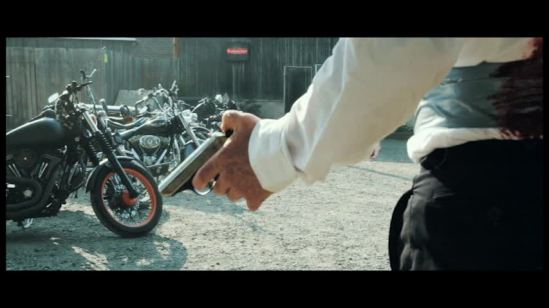
Wild Eye Releasing summons from the underworld “All Hell Breaks Loose.” The unrated, 92 minute feature might have cheesy and cheap DVD cover art, but the entertainment value speaks volumes. The release contains bonus features that contains an informative director’s commentary, a couple of deleted scenes, and trailers. Overall, give “All Hell Breaks Loose” a chance or two or three, just to be completely sure that you understand that what you’re about to see will be utter chaos that’ll make the Waco, Texas shooting look like a little girl’s tea party with her favorite stuffed animals.
Don’t Leave Evil On Hold! “Serial Kaller” review

Phone sex models broadcast their televised provocatively dressed bodies over the British airways while chatting with lonely customers. During their biggest broadcasting night, all the girls and crew become purposefully trapped in the sleazy studio, making the phone sex business a dead line. Disappearing one-by-one, each model falls viciously victim to a murderous psychopath who could by one of their most disturbed and perverted fans. With the power out and the studio on shambles, the survivors attempt to escape dead air by any means possible, even if that means coming face-to-face with their stalker.

The cast full of busty beautiful women enthralled to a murderer’s maniacal impulses sounds to be a bit of good horror movie fun untamed by the restrictive harnesses of big studio conventions. Director Dan Brownlie and his producing company Brand B Corporation develops “Serial Kaller” to be the limited budget archetype of the slasher films with an inkling into the very real world of broadcasting UK’s phone sex girls or better known as simply “babe shows.” Co-writer and star of “Serial Kaller” Dani Thompson once worked in the business, and appropriately proportionately so, that sparked the idea in her for a killer loose in the bare bones, deathtrap studio of a babe show. The diminutive budget project attached some B movie talent such as Suzi Lorraine and the iconic Debbie Rochon while rounding out the cast with top heavy talent in Jess Implazzi, Aisleyne Horgan-Wallace, Suzy Deakin, and Zoe Morrell.

With all the dazzling, easy-on-the-eyes women in the cast and a sweetly promised premise coinciding, “Serial Kaller” squirms itself onto the independent slasher scene with barely a thrill to offer and a death to deem applaudable. “Serial Kaller” stands out as much as pig in the middle of a stable of horses with mediocre kills, colorless dialogue, and disjointed concept that resembles more like an unfinished thought than a complete work. Brownlie’s and Thompson’s film subtly whispers similarities to, or homages to, that of the England’s 19th century prostitute murderer Jack the Ripper, with the start of an undefinable and causeless figure stalking sinfully innocent sex workers that happen to be, coincidentally, English. Yet, somehow that hint of respect becomes lost in translation; with a title like “Serial Kaller,” one might be under the impression that phones with have a significant role in the story, such as in Bob Clark’s “Black Christmas.” In reality, the phones are just, well, phones, while the story takes a rogue route that’s far from the intentions of the title, losing the motivations and the inspirations of a modern day Jack the Killer.
The co rrelation between the model’s baleful setup and the murderer circling nearby doesn’t jive to build successful suspense and when the moment finally comes to fruition where a model is about to bite the inevitable dust, there’s no jolt of anxiety toward the situation. The kill effects, consisting of minuscule budget practical and CGI effects, fail to heighten the murderous affairs. Probably the best kill scene in “Serial Kaller” is the electrocution through one of the babe show tech’s genitals, zapping up into the girl that’s unenthusiastically grinding his crotch with her clothes on and exploding out her eye balls. Zany death, but still kind of cool, right?

My good friends at Wild Eye Releasing brought “Serial Kaller” onto DVD, presenting the feature in a director driven retrofitted 4:3 full screen aspect ratio to give homage to once praised VHS nasties. Despite the slight lean toward a grindhouse appeal in the aspect ratio, the picture quality is clean, naturally toned, and detailed. The audio goes without hiss and is well balanced. Extra content includes director’s commentary, behind the scenes featurette, and trailers. The overall, “Serial Kaller” is the epitome of big concept packaged small and can’t quite muster a snowball effect to wrangle in the much needed thrill rush to go along with the scantily-cladded women, but Brownlie’s film redeems a little with Debbie Rochon phenomenal joker-esque performance that, unfortunately, has very little screen time.

