EVIL Sinks Its Teeth into the Reach of the Worldwide Web! (Full Moon Features / Blu-ray)

“Death Streamer” Now on Blu-ray!

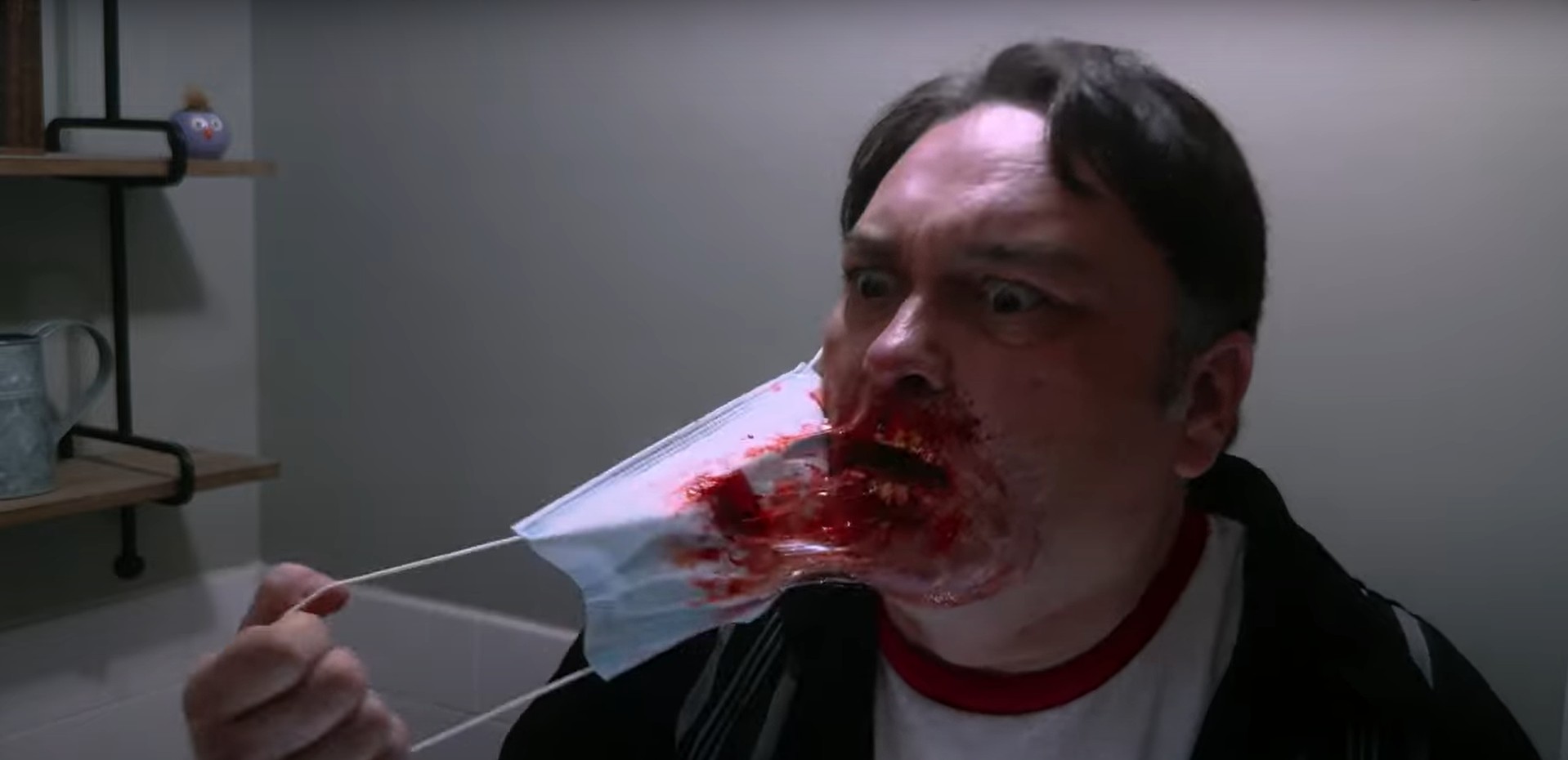
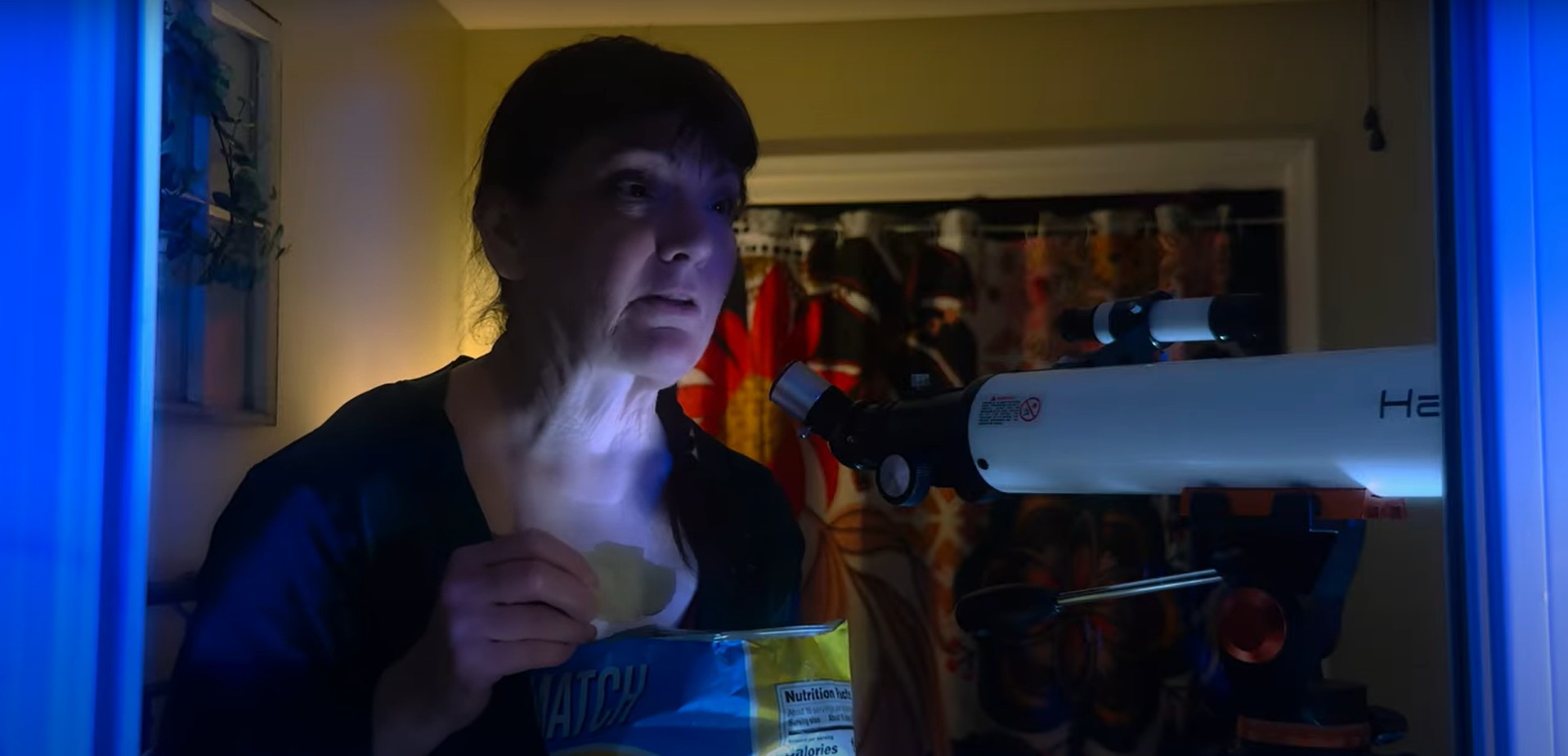
A trio of struggling horror video podcasters stumble across a dark web stream while content mining for their derelict house of God set macabre show Church of Chills.  When they stumble upon a bloodcurdling ritual of drugging women and man vampirically ripping out and feasting on their necks, the footage is all too real based on their research and investigation into the underground live streams that rack up thousands of views and subscribers.  Eager to piggyback off the streams’ success, the Church of Chills reveals the callous, artery puncturing content to the world.  The live streaming ancient vampire master, seeking sacrifices to bring the end of days upon the world, is none too happy with the intruders doxing his content that has amassed a large following and warns them with omnipotent power, sending the three into flight or fight for their very lives and the for the sake of the world.

As the famous chorus line from the legendary rock-n-roll band AC/DC once sang, If you want nudity, you got it!  Or was it blood?  Either way, Charles Band’s “Death Streamer” you get plenty of both!  The new tech, modernized vampire lurks from out of the classic, gothic shadows and becomes the next inspirational concept from the longtime, distinguished founder and filmmaker of Full Moon Entertainment and the “Trancers” and “Head of the Family” director, Charles Band.  The 2024 feature is written from Band’s concept into story detail and dialogue by Neal Marshall Stevens, the screenwriter behind “Thir13en Ghosts” remake “Hellraiser:  Deader” and who has since become a Full Moon staff writer with credits going from touching the “Puppet Master” franchise with “Blade:  The Iron Cross” to new content with “AIMEE:  The Visitor,” penned under Stevens’ pseudonym of Roger Baron as so too with “Death Streamer.”  Full Moon Entertainment’s Charles Band and Nakai Nelson produce their latest with a budget aid alley-oop by a crowdfunding campaign.

“Death Streamers” core cast has small but mighty with Aaron Michael McDaniel debuting in his feature film role as Alex Jarvis, the egocentric host of Church of Chills, and his two beautiful assistants in Emma Massalone as Edwins and Kaitlin Moore as Juniper struggling in a power dynamic over who has creative control over the show while staying financially afloat being unhoused living inside test in a defunct house of God.  Convincing audiences the trio of being adept and meticulous with computers and a video podcast is a hard sell when they live in popup tents and rariely leave the church grounds without much background other than short spats of the show’s brief history, but nonetheless, the three M’s – McDaniel, Massalone, and Moore – make their character emotions and pangs work to the story’s advantage rarther than have it feel like a detrimental free for all for the spotlight.  Creeping into that bright circle is the dark heart of vampire streamer Arturo Valenor, played Sean Ohlman.  The sex club proprietor, operating in the underground markets, drugs beauties with his own blood, rips their clothes off, and has his way sucking the lifeforce from their tender necks.  This dark web act is unearthed by the Church of Chills team and becomes the focal point for them to piggyback and drive-up subscribers with real life macabre only to be discovered and threatened by Valenor’s ever-present powers. Ohlman makes for a good hip vampire but doesn’t exact that gothic depravity of a classic bloodsucker in Valenor’s more erotically inclined sacrifices.  Only in the very showdown end do all four principals find themselves in the same scene together, previous working separately across the worldwide dark web or through Valenor’s giant floating eyes of foreboding.  Yes, floating giant eyes is pretty trippy and old school.  The rest cast constitutes as one half of Valenor’s vampiric acolytes with Chili Jean as the blood serving barkeep and Travis Stoner as the gimp-masked muscle and the other half half-naked Valenor victims in Llana Barron, Piper Parks, and it wouldn’t be a Full Moon Feature without an adult actress making an appearance with Maddy May going fully nude.

“Death Streamer” follows the same formula Full Moon has been following the last few years by pulling inspiration from the latest and greatest, perhaps even from the ugliest, flavor of the month cultural impact item has to offer.  2020 saw the release of “Corona Zombies” to bank off the pandemic, also from 2020 was “Barbie & Kendra Save the Tiger King” spun from the popular Netflix documentary of the same “Tiger King” title surrounding convicted felon Joe Exotic, “AIMEE:  The Visitor” featured sensationally the dangers of A.I. during the artificial intelligence concern of rise, especially amongst the arts industry, and, lastly, a slew of video content infused storylines as TikTok, Facebook Live, X Live, and many other platforms become an overconsumption of media with “Bad Influencer,” “Attack of the 50ft Camgirl,” and “Subscriber” being a few examples.  “Death Streamer” fits in the latter category as well by following a what seems to be an endless horizon of streaming content from music, to vidcasts, to live feeds in today’s highly consumable media world where everybody, and their brother, has streams to be viral.  “Death Streamer” using today’s tech to try and modernize the mythos of one of man’s longstanding lores, vampires.  Charles Band’s two-prong locations keep costs of the crowdfunded dollars down while pushing much of the cashflow toward effects, both practical with off-screen trickery and blood spurts, and compositional VFX that sees large floating eyes and thousands of chirping bats, as well as getting essentially all the female actresses at least to a bare-chested level with even one using her holy cross chest tattoo, nested right between her mammaries, as the final nail in the coffin for one unlucky, or maybe very luck, vampire with a death by a gratuitous emblematic exposure.  Hands down, “Death Streamer” has the best kill scene I’ve seen this year!

Be a subscriber to the end of the world with Full Moon Feature’s “Death Streamer” now available on Blu-ray. The AVC encoded, 1080p high-definition, BD25 seems adequate for the presentation flushed with warm red, blue, and green color filters. Details are sparse depending on the artistic alleyway inside Valenor’s club or inside his POV camera-specs, brighter the gels, lesser the finer points to the textures. The church setting, or the Church of Chills HQ, puts together a better angled lighting and a starker contrast by way of deeper shadows. Insignificant compression issues despite the single layer format but we’re not receiving the cleanest, most refined, looking picture image that’s presented in a 2.35:1 aspect ratio. Two English encoded audio outputs are both Dolby Digital compressed with a 5.1 surround sound mix and a dual channel 2.0 stereo. Not the strongest or dynamic reproduction of the original, raw audio as it suppresses the action and removes the multiple channel pathways, rendering over mostly in the front channels in what the listing is more 5.1 in name only. Dialogue comes over clean and clearly enough without a spark of obstruction and is layered above the environment as well as what’s usually an overpowering Full Moon carnivalesque or Gothic score. English closed captioned subtitles are available. Special features include a behind-the-scenes of the regularly archived and accompanying Videozone specials, the “Death Streamer” premiere held in Los Angele was cast, crew, and a few select Full Moon friends, such as Barbara Crampton, with a Charles Band pre-movie few words, and a lineup of Full Moon trailers. The standard release of the Blu-ray Amaray has a pulpy illustrative cover art of a bloodied mouth Valenor and his two acolytes splayed in red, blues, and purple. The region free release comes not rated and has a just above an hour runtime of 72 minutes.

Last Rites: As the vampire canon expands with age, new grooves are etched into the classical monster’s lineage tree and “Death Streamer” is a cyber-ghoul knot ready to leave its influential mark only to have its fangs nulled down and overshadowed by the all-powerful naked female figure in another fair-weather Full Moon Feature.

“Death Streamer” Now on Blu-ray!

The EVIL is Not Just in the Virus, but Also in the Cure! “Side Effects May Vary” reviewed! (Tempe Digital / Blu-ray)

“Side Effects May Vary” From This Blu-ray Drug!

COVID-19 virus has the world masked up and social distancing in full effect with experimental vaccines being rushed toward a rollout.  For Glenn Rollins, being under the weather now for weeks still hasn’t convinced him to inject himself with experimental Government drugs meant to combat coronavirus but when wife Janelle does everything in her persuasive power to convince him to take the vaccine, Glenn reluctantly agrees to receive the shot at his doctor visit the next day.  What Glenn is given is no ordinary coronavirus vaccine, but the new Alpha-21 concoction just released for public intravenous inoculation, an rapidly tested serum that boils subjects from the inside-out.  Instead of completely exploding in a pile of blood and sinew, Glenn’s rare blood type maintains a semi-rigid form and the only way he can maintain from melting into a pile of goo is to feast on the blood and meat of the living in his zombified state.

The cult director behind “The Dead Next Door” and “Robot Ninja,” J.R. Bookwalter, returns to take a hypodermic needle stab at a world-crippling pandemic horror inspired by the COVD-19 virus and how the FDA rushed to approve emergency vaccinations on U.S. citizens in a comically satirical, gore-and-goo-filled comedy-horror.  The movie, “Side Effects May Vary,” is Bookwalter’s first film in over 20-years, the last being “Mega Scorpions” that only saw a streaming release due to a folding in the financing of a distribution deal.  “Psycho Sisters” and “Her Name Was Crista” writer James L. Edwards, who’s collaborated with Bookwalter since the very beginning of the filmmaker’s career, pens the script and also stars in the disturbing desquamation of Glenn role.  “Side Effects May Vary” is the second direct-and-writer production between Bookwalter and Edwards with the first being 1996’s “Polymorph.  As like many of Bookwalter’s films, he produces under his longstanding own indie label Tempe Digital serving as executive producer alongside Edwards producing and wife Lana Bookwalter as associate producer.

I wouldn’t call Glenn Rollins a right-wing conservative antivaxxer but, instead, Glenn’s a doubter of the vaccine’s testing measures with a range of side effects from an experimental injectable could cause from a vaccine so unproven swirling inside his head.  That’s the satirical concept Bookwalter and Edwards put into motion and deliver fully charged as mild-mannered Glenn gorges on the innards of family, friends, neighbors and strangers after unpleasantries arise from an untested product.  The likeable Rollins rears an ugliness brought upon by pressures of vaccination, especially from his wife Janelle, played by indie horror scream queen Tina Krause (“Crimson Nights,” “Bloodletting”).  Another scream queen of legendary acclamation is in on the fun with Brinke Stevens (“The Slumber Party Massacre,” “Sole Survivor”) as the saucy nosy neighbor who knows all the sexual acts by their sporty designations.  We journey from the beginnings of a substance subjugation and are wiggled into a buddy cop scenario between Glenn Rollins’ best friend and former cop turned private eye Jack Murray (Drew Foriter, “Trivial”) and his former boss and one-night-stand Chief Tom Danvers (“Floyd Ewing Jr., “Robot Ninja”) and their sudden thrust into an investigation to find Glen under their distinct impressions of his character, plus that one sexual encounter between them, makes for a good dynamic of sidetracking diversion that interrupts a constant flow, which can get stale, of formality and responsibility of chasing a killer.  The cast Sasha Graham (“Trivial”) as the prescribing primary care physician Dr. Fisher, Wendy Zier (“Trivial”), Tom Hoover (“Ozone”), and David Bachmeier (“Bathtub Shark Attack”) as the first scene test subject of Alpha-21’s explosive results. 

A relief will wash over fans to know J.R. Bookwalter is not dead in the water when it comes to directing.  A long hiatus was exactly what Bookwalter needed to get back to form after a string of mediocre horror that didn’t leave a bad taste in our mouths but wasn’t quite the standard of the Ohioan director’s carnage-laden caliber.  “Side Effects May Vary” spoke to nationwide fears during the global pandemic, in a humorously horrifying way, and even extends beyond that now historical portion of our time into the forefront of our minds that we may have not have yet seen the actual long-term effects of the COVID shots, if any.  The intention of “Side Effects May Vary” is not to instill fear, though does create a fraction of concern, but is more to the tune of exaggerated those once media covered and one-sided fears to the extreme by turning injected patients into boiling potato sacks of putrid cannibalism.  It’s pretty damn funny and gross.  To create a vibrant visual veneer, Bookwalter plays with different lighting angles and color gels of primary neon illumination that takes characters out of the real world and places them into a fantastical neon-noir that surrenders to the sexualized, the scandalous, and the scary story bits and pieces. The buddy-cop, manhunt storyline works as bodies are left as breadcrumbs for the two conflicting investigators that are on the precipice of making a final decision on Glenn Rollin’s fate while Glenn himself battles internally, both physically and emotionally, his wretched state that needs blood to slow down the process of his metaphorizing melting but his mild-manner, nice-guy identity doesn’t want to harm a soul. 

Tempe Digital castrates the COVID cure scare with an incredible liquescent comedy-horror in “Side Effects May Vary” on a director’s cut Blu-ray home video.  The AVC encoded, 1080p high-definition resolution, BD25 comes with a ton of color, contrast lighting, and a decent compression codec that makes the low-budget production appear a step or two up the upscale staircase.  The heavy neon light cuts into the skin and textural details but scenes more naturally lit, such as in the outdoors, fair better with more granular inside a digital presentation in its original aspect ratio of 1.78:1.  There are two English audio mixes available for selection and audiophile setup in a DTS-HD 5.1 Master Audio and a Dolby Digital 2.0 Stereo.  The surround sound selection has a semi-fluid dynamic that works in a contained closed to medium shot arrangement and doesn’t expand to anything beyond to warrant an immersive experience aside from a healthier fidelity of the dialogue, proximity milieu, and the gruesome creature sound effects.  Dialogue can get out of the reigned in alignment that breaks in with sparse unfiltered hissing but otherwise renders cleanly and clearly through the 81-minute runtime.  English subtitles are available.  Special features encoded are an audio commentary with director J.R Bookwalter, a Harris Theater Q&A in Pittsburgh at the Roadshow Opening Night with film guests Bookwalter, writer-star James L. Edwards, and actor Floyd Ewing Jr., a theatrical roadshow cut trailer, a teaser trailer, and the theatrical trailer. Art from the Alex Sarabia and Karl Munster collaboration gives a pulpy artistic rendition of Glenn Rollins oozing deterioration inside a clear Amaray Blu-ray with no supporting supplements other than a cropped version of the art on the disc. The not-rated, region free disc is a perfect cure for what ails you – bad indie comedy-horror done right!

Last Rites: A global pandemic killed millions of people, the silver-lining is now we can look back at that time of isolation and fear and honor those deaths with a coronavirus and rushed-cure blend act worthy of being to the likes of “Bad Taste.”

“Side Effects May Vary” From This Blu-ray Drug!

Let EVIL Give You a Hand! “The Beast Hand” reviewed! (Cleopatra Entertainment / Blu-ray)

“The Beast Hand” Grabs A Blu-ray Release! Buy it Here!

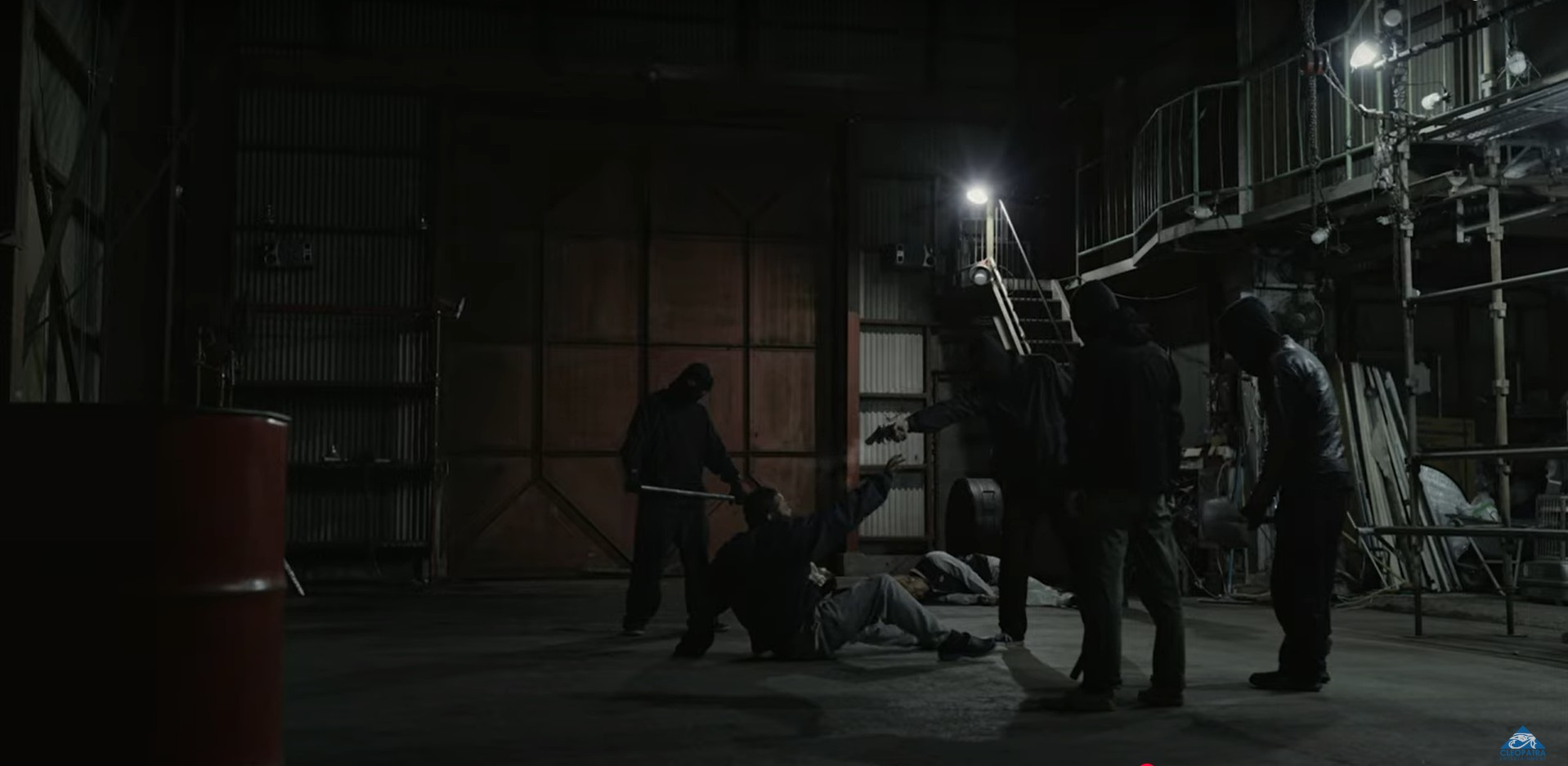
A derelict criminal Osamu Kogure finds himself back in the company of his jumped parole crime boss Akira Inui, Kogure is back to being a manipulated puppet at the whims of a conceited and aggressive Inui.  When Inui persuades Kogure to give up the whereabouts of an old, reluctant fling Koyuki Igarashi, who went through full body surgery to wipe away her past with Inui, Kogure and Igarashi are trapped by Inui’s bull-headed intimidation, forcing them into a rushed heist that ends with Korgure’s hand being severed.  A syndicate surgeon grafts a deformed, experimental monstrous limb on his wound that turns Kogure into a superhuman beast when provoked.  Now gone rogue out of the surgeon’s reach, Kogure and Igarashi are hunted down across the region by a powerful crime boss’s clan to extract the success of Kogure’s new, powerful extremity but the once timid and submissive delinquent will no longer go down without a fight. 

Taichiro Natsume, the director behind the Big Summer Psychic Team shark series, such as “Ring Shark,” “Love Shark,” and “Last Shark,” moves away from the supernaturally swimming maneater terrorizing the sands and lands surrounding the creature’s resident watering well and popping up out of the bathwater of those clutched in its curse, forgoes another shark infested entry for a monstrous transplant tentacle in his latest outrageous indie horror, “The Beast Hand,” aka “Koletise käsi,” or original titled “Kemonote.”  The Japanese film is one part science-fictional body-horror thriller and one part yakuza splatter strife and is all part penned from the mixed-up monstrosity and melancholy swirling inside Natsume’s mind with cowritten efforts from Yasunori Kasuga.  Lead actor Takahiro Fukuya wears multiple production for producing the production under his studio company Eigabatake that foots the partial budget combined with the crowdfunding remaining purse pieces to bring this splatter dream to reality. 

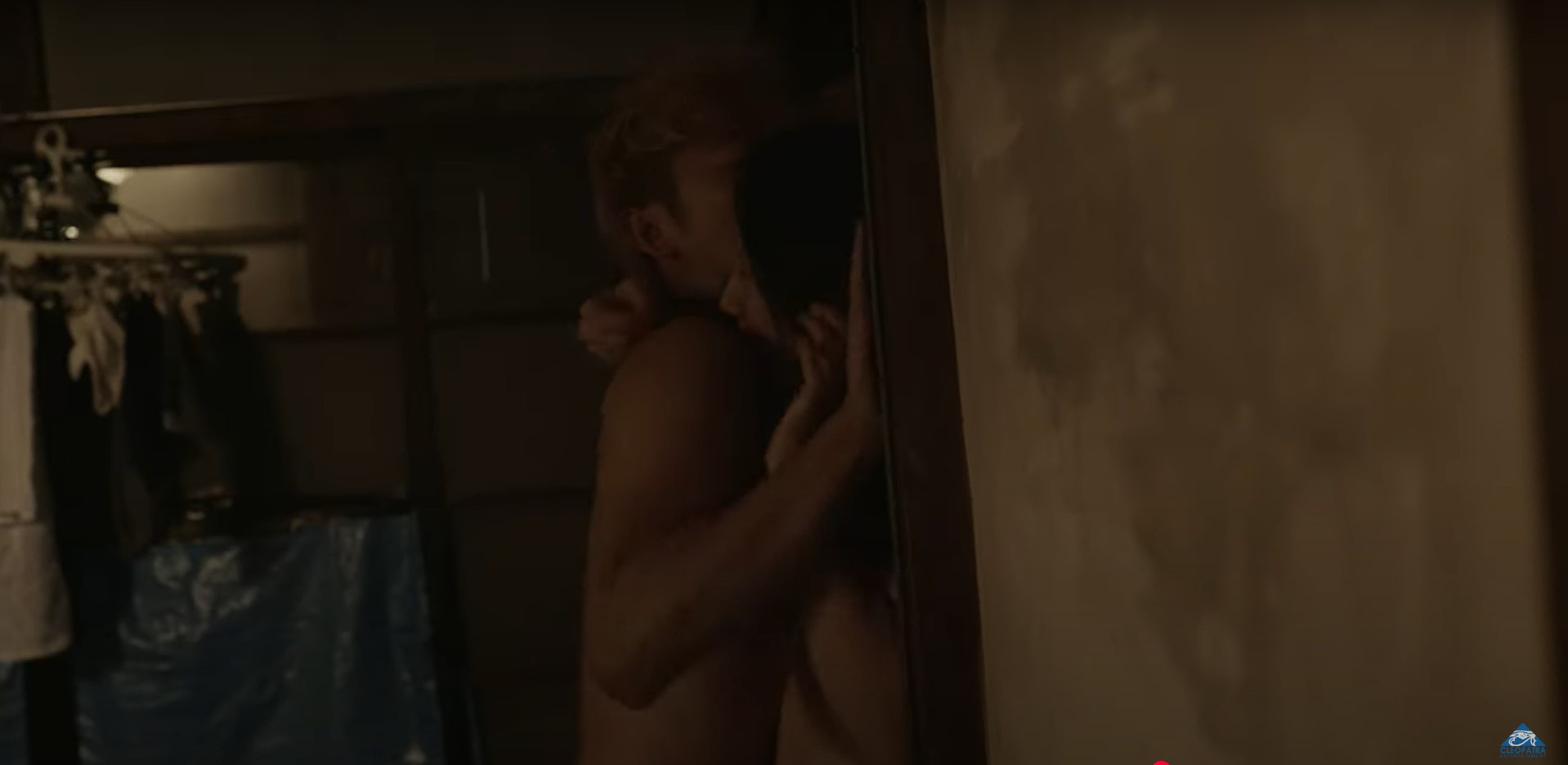
Takahiro Fukuya invests himself full throttle into the role of Osamu Kogure leading to his real life and role to nearly be parallel to each other as Fukuya quits his day job, spends most of his money, and, likely, leads a temporary pauper lifestyle, much like his character, in order to get his vision off the ground and into production.  Fukuya embodies the weak-minded aspects of a fragile delinquent, submissive to a much more apex predator in the recently prison released, escaped parolee Akira Inui (Yôta Kawase, “Slave Ship,” “Maniac Driver”) in a take-all, give-nothing leader position in what Inui considers is his gang, completed by Misa Wada’s objectified into sexual slavery of Koyuki Igarashi.  The pink eiga actress, of such hits as “Corpse Prison” and “Black Tears,”  has lingering anxiety and timorous defensiveness for her character’s subject of sexual and verbal abuse by Inui only for it to transfigure it into a slap-across-the-face affection for the even more cowardly Kogure in an unforgettable sex scene prior to the monstrous hand augmentation.  The second half of the story rather abruptly butts into Korgure and Igarashi’s departure of the city and into more humble means of making a go of their relationship, especially now Igarashi is months pregnant after their slappy-rollick on top of the sleeping bag sack.  Character exposition of the couple’s circumstances at this point is nonexistent as Natsume uses images and exterior shaping scenes to fabricate their current, still poor, state trying to make it work until the surgeon and the gang leader come to collect their handy work.

“The Beast Hand” embarks into different subcategories of splatter subgenre filmmaking.  Natsume certainly pays homage to the Japanese gore-and-splatter films in his own miniscule way but keeps the blood down to the minimal level allowed for labelling as such, but the filmmaker invests into the hardships of the accounted characters without unleashing too many background details or story dynamic particulars to that doesn’t allow audiences to become too involved leaving characters banally wrapped in their strife from point A-to-Z.  Instead, Natsume concenters around two sides of the story;  the first being the elegancy of Kogure and Igarashi’s unlikely and oddly misshapen relationship with scenes of beach walking, comforting, cheap meals in a humble home, and of course, the slap-happy sex scene of two belittled and downtrodden people tying one off in expressive fit of passion while the second part is more tension-riddled hearty with a yakuza hunt for Kogure’s one-of-a-kind beast hand.  Both sides balance awkwardly along a sporadically dotted line of limited detail and time passed but ultimately collide at a culminating point of a beast hand slaughterhouse when Igarashi’s safety boils up the beast from within Kogure, tracking “The Beast Hand” as a horror with to some extent a rivulet of romantism often clunky and riddled with holes. 

Cleopatra Entertainment distributes in association with Reel Suspects the Blu-ray release of Taichiro Natsume’s “The Beast Hand.”  The AVC encoded, 1080p high-definition resolution, BD25 decodes an anemic picture presented in widescreen 1.78:1 aspect ratio.  Visually, “The Beast Hand” has nothing going for it other than a clean experience with no aliasing, minor banding, and other immaterial compression issues.  The lack of color pop and the feather washed grading dampen with a lifeless aesthetic toward a Japanese splatter subgenre that’s literally soaked in a manga style or pop art.  Dialogue renders over cleanly and with clarity in a Japanese Dolby Digital 2.0 stereo that syncs timely with the forced, grammatically errorless English subtitles.  Immersive qualities are limited to the two front channels that are vigorous only during the intermittent action full of Lou Ferringo Hulk snarls and growls when Kogure goes full milky-eyed beast mode and good squishy Foley as stomachs and heads are eviscerated and sliced down.  Bonus features are typical run of the mill for Cleopatra Entertainment with a cache of trailers for the company’s recent releases.  There’s also marketing promo clips for “The Beast Hand” but in Japanese without English subtitles.  The standard Blu-ray Amaray encases a decent, and uncredited, original photoshop illustration that is, however, partly inaccurate, and awkwardly arranged with a beast hand resembling nothing like the body horror hand transplant in the movie.  The cover feels like right off the commercial printer, raw homemade art.  Inside is the same art pressed to the disc with no other accompaniments.  The region free, not rated Blu-ray has a runtime of 77 minutes. 

Last Rites: As far as J-horror goes, “The Beast Hand” has average appeal inside a strung along story and not enough absurd Japanese off-the-wall concepts and violence to stand out amongst the crowded subgenre.

“The Beast Hand” Grabs A Blu-ray Release! Buy it Here!

Scarf Michael and the Fiddler’s Power that Draws Upon EVIL! “The Outcasts” reviewed! (Deaf Crocodile / Blu-ray)

“The Outcasts” on Blu-ray Now Available Here!

Ireland 1810 – a small farming village sustains a livelihood off their crops, marital successors, and superstitious belief.  Widower Hugh O’Donnell and his three teenage-adult daughters find themselves in the midst of all three mechanisms with his eldest daughter forced to live with him into widowed spinsterhood, a middle daughter’s secretive betrothal to a neighboring farmer boy despite Hugh’s disdain for the family, and Maura, the youngest daughter, who acts strange and fearful making her an easy target for ridicule.  When the village crop faces blight, bad luck ensues many of the surrounding farmers, and a sudden, expected snow fall threatens harvests and income, Maura is accused of conspiring with witchcraft of a wraith fiddler known as Scarf Michael whose music invokes visions and creates mischief.  Nearly crucified by the fearful villagers, most of whom derided for her aberrating strangeness, Maura is saved by Scarf Michael to be taught his outlier ways that could lead the young woman to never return home again.

Through themes of folkloric belief, societal class structures, family, marriages, mental illness and how it’s ostracized in an early 1800s setting, “The Outcasts” is a cold, hard, and solemn look at daily affairs of a 19th century, poor Irish seaside village, fenced in with the unusual conducts of Maura whose mind is more curious and vastly hungry for knowledge than her peers’ and that creates an escapism component to try and be equal, or perhaps get even with, those that look down upon her.   English writer-director Robert Wynne-Simmons tackles his debut feature-length film with great understanding of tradition and human fear, elemental human nature bred from the uneducated and localized myth seen in his original devilish script from 1971’s “The Blood on Satan’s Claw” by director Piers Haggard.  “The Blood on Satan’s Claw” was certainly far better suited for success with Haggard’s additional scenes of brackish deviltry aesthetics, plenty of full-frontal nudity, and visible vibrant and rich blood.  “The Outcast” is a return to the slow born of an eventual decline and degradation of not just Maura but her family and her village.   “The Outcast” is part of an Irish production conglomerate of companies, including Arts Council of Ireland, The Irish Film Board, and the Toymyax Company with Tony Dollard producing.

Mary Ryan is the centerpiece of the fantastical and fraught tale because of her teenage character’s childlike innocence that’s deemed unusual, weird, and, eventually, in bed with a spiteful spirit, labelling her character, Maura, as a cursing occultist.  Ryan, who would go on to have minor roles in “Rawhead Rex” and “The Courier,” brings a balance of beauty and blamelessness to Maura’s undesired disposition, one that allows her no friends and is even on the edge of displeasure from her older sister Breda (Brenda Scallon) and father Hugh (Don Foley) whom both found love and lost them over a rough course of untimely death.  There’s still obvious love between them, but Maura likely reminds them of mother, especially from Hugh, and sees a same early grave fate for the youngest and adrift daughter.  Middle Daughter Janey resides on the opposite side of the spectrum with unconditional love and support for Maura only to be intertwined with her own serendipitous affairs with local farm boy Eanon (Máirtín Jaimsie), finding themselves rushed into proper marriage when Janey comes home expecting.  And while Maura made faultless inconsequential ripples through the family and the village, she was initially not on the forefront of everybody’s concern as Janey and Eanon became a jovial celebration that sought the joining of two well-known families and farms until Scarf Michael reappeared to play his fiddle.  Mick Lally fiddles as the musical wraith casting his violin strokes against those essentially bullying Maura with trickery that led to subsequent fears and accusations of agricultural assassination and magical maligned mischief that turn the rural villagers away from Janey and Eanon’s blessed marriage to an acute decline of rationality that put Maura in the crosshairs of suspected supernatural conjuring.  Scarf Michael’s intentions are not to whisk Maura away into what she sees and believes is as blissful freedom from those nasty looks and mocking that surround her as well as Michael’s tenderness to which she falls in love for the first time, like a child growing into adulthood.  “The Outcasts” round out with Tom Jordan, Cyril Cusack, Gillian Hackett, Brendan Ellis, Hilary Reynolds, Donal O’Kelly, James Shanahan, and Paul Bennett.

Not ever story about the loss of innocence from growing up is portrayed in a good light.  Maura wants to hurry grow up and be free of her childish qualities without realizing the consequences.  Falling in love with Scarf Michael proves to be perhaps folly of Maura who gives into the dream, or fantasy, of a man who quickly enters her life and charms her with the mystical fiddle.  By the end, indications of Scarf Michael nothing more than a rake leaves a sour and sad aftertaste that shutters Maura from the rest of her family as she willing joins him on the other side, practically begging him to free her from an unforgiving reality.  Perhaps Maura was also led to believe in no other choice, condemned to a watery grave, the same fate that befell Scarf Michael, by her fearful village peers and elders.  Robert Wynne-Simmons is often playing devil’s advocate by building up Scarf Michael as a savior and a romantic, but Maura drinks the Celtic Kool-Aid because, frankly, she knows no better and received no beneficial direction from those who surround her, leaving the alluring fiddler to warn her of the choices she desires.  Wynne-Simmons and Seamus Corcoran’s soft-and-dreamy fairytale indulges a bit of surrealism through soft-lighting, soft focus, and crude yet effective editing tricks to create a specter’s intermittent visibility amongst other slight of sight practical effects. 

If ever a time to be totally physical media inclusive toward all the obscure outliers, now is the time with “The Outcasts” arriving onto a newly restored 2K transfer for the first ever Blu-ray in the U.S. courtesy of Deaf Crocodile.  Presented in an European widescreen 1.66:1 aspect ratio, the AVC encoded, 1080p high definition, BD50, plus the restoration efforts conducted by the Irish Film Institute – Film Archive, retains that airy softness of a daydream inlaid to suggest a surrealism surrogation but the story is rooted in reality, the reality of early 1800s Ireland to be exact, and so this impoverish, austere, and salt of the Earth land and it’s people are often absorbed by superstition belief that’s awfully real for them but to the audiences, it’s bordering the illogical.  Details are generally soft but the upgrade increases the contours and create a nice layer of depth between foreground and background, bathed in the muted and ascetic green, brown, and tan color scheme of a traditional period piece wardrobe and materials, leaving behind any ounce of hue pop to not spoil the intended grading that lives and dies by somewhere between the RGB and the average grayscale, but there are times of an eerie dressed lighting of added backlit blues and bright whites to secure a fantasy, or spooky, flare.  The fidelity reproduction on the Irish-English DTS-HD mono track diffuses distinct aspects through the single channel without any vague overtaking.  The brogue English did, at least for me, require the optional English subtitles to be turned on for my untrained ear to decipher certain antiquated period terminology and the strong Irish accents that would drown out an entire sentence; this is not an issue concerning the quality of the audio track as it’s nicely achieved without any damage to note or crackling, hissing, or other obstructions to interfere.  The dialogue is also fairly robust and prominent.  Steve Conney’s lyrical and guitar score enchants with traditional Irish folk and is ascertains the mix of commonplace and otherworldly mood Wynne-Simmons seeks to create.  Bonus content includes a new video interview with writer-director Robert Wynne-Simmons, a new video interview with composer Steve Conney, producer and film professor Rod Stoneman, former head of The Irish Film Board, and physical media expert Ryan Verrill provide a video essay, and concludes with five Robert Wynne-Simmons’ short films:  “L’Eredita di Diavolo,” “The Greatest All-Star Advertial of All Time,” “Bomb Disposal,” “The Scrolls,” and “The Judgement of Albion – Prophesies of William Blake”  These shorts include appearances/cameos by Charlton Heston, Sammy Davis Jr. and Peter O’Toole to name a few.  The clear Blu-ray Amaray has an appearance that’s about a stark as the film’s aesthetic with a gray coverart composition of celebration fiddlers in their straw masks overtop an isolated Maura.  An insert advert with a QR code offers to access transcribed bonus content.  The disc is pressed with the same front cover image and the reverse side of the primary cover has a still from the film.  The unrated release has a runtime of 105 minutes and is hard-locked with region A encoding.

Last Rites: An obscure gem of Irish cinema, a folklore and social explication of “The Outcasts” outlives antiquation with a new Blu-ray release from obscure aficionados Deaf Crocodile!

“The Outcasts” on Blu-ray Now Available Here!

EVIL Chews Through Its Own Loved Ones as “The Vourdalak” reviewed! (Oscilloscope Laboratories / Blu-ray)

“The Vourdalak” Available Now at Amazon.com!

The special emissary of the King of France is ambushed by Turks in an isolated Slovic countryside.  With his carriage and clothes stolen and his driver-servant dead, Monseigneur Marquis Jacques Antoine Saturnin d’Urfé has nothing more than the clothes on his back.  He finds himself in the home of Gorcha, an enemy of the Turks, who resides with his three adult children, a daughter in law, and a grandson, but Gorcha was not presently there to greet his hapless visitor until his returns later that day from fighting the Turkish raiders.  Yet, aside from the oldest son Jegor, the family’s superstitious beliefs lead them to doubt Gorcha returning home human and instead has returned as vourdalak, or a blood hungry vampiric creature who feeds on his own loving family to turn them all into the same unnatural ilk.  From an outsider’s point of view, what Marquis d’Urfé witnesses initially is a strange peasant family’s irritational fear turn into a harrowing horror as one-by-one the family members reach an unfortunate end after the return of Gorcha.

Based off the gothic novella “La Famille du Vourdalak. Fragment inedit des Memoires d’un inconnu” from Russian author Aleksey Konstantinovic Tolstoy, a story that plays on the etymology of the Slavic folklore word Wurdulac, or a vampire-like creature, that exacts a similar transpiring fate as described in the above plotline of Adrien Beau’s “The Vourdalak.”   The writer-director fleshes out the 1839 Tolstoy story, one that’s predates Bram Stoker’s “Dracula” by nearly 60 years, for his own period set rendition created for modern times almost two centuries later in 2023 as his debut feature-length film.  The French film is cowritten alongside Hadrien Bouvier who doesn’t depict the vampiric creature as a nobleman, or even a man of wealth, but rather as a likely lowly serf of the countryside under a noble or lord.  Yet, the script, very much like Tolstoy’s novella, is contained within the family and their home rather than expanding across continents and seas, as in Stoker’s “Dracula.”  “The Vourdalak” is produced by “Alone in Berlin’s” Marco and Lola Pacchnioni and Judith Lou Lévy (“Zombie Child”) under the production banners of Les Films du Ball, Master Movies and, in association with, Cinemage 17 and Amazon. 

A period piece with an intimate cast brings closer together the targeted era of late 18th century to early 19th century costuming, articles, and, to extent, performances that sell the monarchial times of French aristocracy and Slavic provincials living humbly on the fringes of an everlasting Russo-Turkish war that spanned decades.  Leading the charge is the only French aristocrat portrayed character in the story played by Kacey Mottet Klein (“The Suicide Shop”).  Dressed in traditional Empiric style high collar shirt, petty coat, and a white wig and garishly garnished with white pale-looking makeup with mouche, an adhesive mole, to reflect their wealth and status, Klein’s prim-and-proper, yet prudish and prissy, Marquis Jacques Antoine Saturnin d’Urfé is finely out of his element with a satisfiable character arc that has the Monseigneur go from a squeamish snob to finding compassion, sympathy, and courage amongst darkness aimed to swallow a family whole as d’Urfé’s high society and fantastical life clashes with the real world with war, necessity, death, natural beauty, unconventionalities, and consideration through another type of fantasy lens, a troubling, insidious darkness that plagues and feeds on the blood from within a domestic design that’s ruthless as it is unfathomable.  Jegor (Grégoire Colin, “Bastards”) is the loyal eldest son, Piotr (Vassili Schneider, “The Demons”) is the sexual orient ambiguous second son with external emotions unlike his other brother, Sdenka (Ariane Labed, “The Brutalist”) is the free-spirited but melancholic beauty, Anja (Claire Duburcq, “She is Conann”) as Jegor’s more than practical and realistic wife and young Vlad (Gabriel Pavie) is Jegor and Anje’s preadolescent boy.  The aforenoted characters are all embodied by a physical, living person to play the role but Gorcha is a horse of another color.  In fact, Gorcha’s not a living thing at all and is actually a puppet personified by two puppeteers and voiced by director Adrien Beau.  The puppet has an emaciated appearance, resembling closely to those used in “Return of the Living Dead, and with the power of green screen, the animating arms and bodies are overlayed out and Gorcha lives and breathes with an animatism spirit that’s creepy as all Hell with an underscoring tow of vampirism. 

In its essence, “The Vourdalak” embraces the simplicity with a less-is-more atmosphere, a self-assured reliance in the palpable and practical, and a confidence in its cast to extract the drama and horror of a longstanding folklore and deliver its poignant potency with eccentric diversity and steady anxiety.  Beau drenches dread into every crevice that sticks like humidity to its subdued black comedy attire.  Yes, “The Vourdalak,” though grim and dark, has a sliver of comedy course through its bloodlet and lapped up veins from the main character’s perspective who, at first, is quite out of his comfortable, aristocracy element being wiggled into a lower-class family’s unusual dysfunctionality.  There’s also the puppet aspect integrated into living, breathing actors as if one of their own and that certainly as a basic layer of absurd surrealism, the French know a thing or two about liberal arts absurdism.  Beau’s shooting style resembles a blend between the fixed camera and low-key lit silent films, also implementing throwback spyglass shots that were widely used in the early cinematic period, and the Euro-horror movement of the 1960s to early 1980s with an ominous romanticism, a dark and creepy-fog environment, and tinged to cooler shades of soft blues and greens all the while lightly touching upon themes of sexuality, homosexuality, and family structures that often collide with one another to stir the pot and overshadows the imminent danger in front of them. 

“The Vourdalak” is unpredictably grotesque in the most amusingly macabre way and is now on a region free Blu-ray release from our friends at Oscilloscope Laboratories.  AVC encoded onto the BD50, the high definition, 1080p resolution, might throw audiences and purveyors of physical media for a loop when the picture isn’t as fine as expected for a modern released picture.  That’s because Adrien Beau shot “The Dourdalak” in Super 16mm that enlivens a grainy and soft toned picture that can appear slightly blurry, resembling the ilk of European horror from the 1960s-1980s  Presented in an anamorphic widescreen 2.35:1 aspect ratio, Beau is very committed the coldness of bleak grays, blues, reds and the variant fused shades of purple, pink, and teals that sparingly envelope the entire frame with a lens tint in surreal moments, such as fever dreams or emulated night shots.  Though unfocused at times, plenty of distinction can still be rendered, such as the very stooge features and qualities of the Gorcha puppet.  The French DTS-HD Master Audio stereo track is an audio sensory mini-triumph.  In its modest sound design, minor qualitative sounds instill creepy atmospherics, especially the sound prominence of a raw chewing theme associated with the vourdalak creature’s folklore.  Adrien Beau also better animates and personifies his Gorcha puppet with a wheezy and struggling voice over for who is supposed to be a very elderly father-grandfather in an undernourished and skeletal appearance with sunken, bulging eyes and a near fully exposed teeth. The special features include two of Adrien Beau’s short films “Les Condiments Irreguliers” and “La Petite Sirene” as well as a behind-the-scenes featurette that’s more of the raw footage of animating and acting the Gorcha puppet without the visual effects removing the puppeteers. The Oscilloscope Laboratories Blu-ray comes in a clear Amaray case with soft, airbrushed quality composition artwork of a calm Marquis Jacques Antoine Saturnin d’Urfé being feasted upon around his neck by the vourdalak. The reverse side contains a still image of a medium-far shot of one of the more powerful images in the film of a graveyard d’Urfé passes through as if it was a revolving doorway in and out of death. A simple yellow title and label name are splayed across the disc, consistent and normal per the company’s design, and the film is not rated with a runtime of 90 minutes.

Last Rites: Rarely do I give a five-star review for a film but Adrien Beau’s “The Vourdalak” is a fascinating and frightening visualization of Aleksey Konstantinovic Tolstoy story that trades visceral images for palpable ones in a folkloric entrancement of unnatural beings disrupting the natural world, a concept worth chewing on the nape of the neck for.

“The Vourdalak” Available Now at Amazon.com!