Just Because Your EVIL Dad Says Its Okay, It’s Probably Not. “Netherworld” reviewed! (Blu-ray / Full Moon Features)

Enter the Netherworld on Blu-ray!

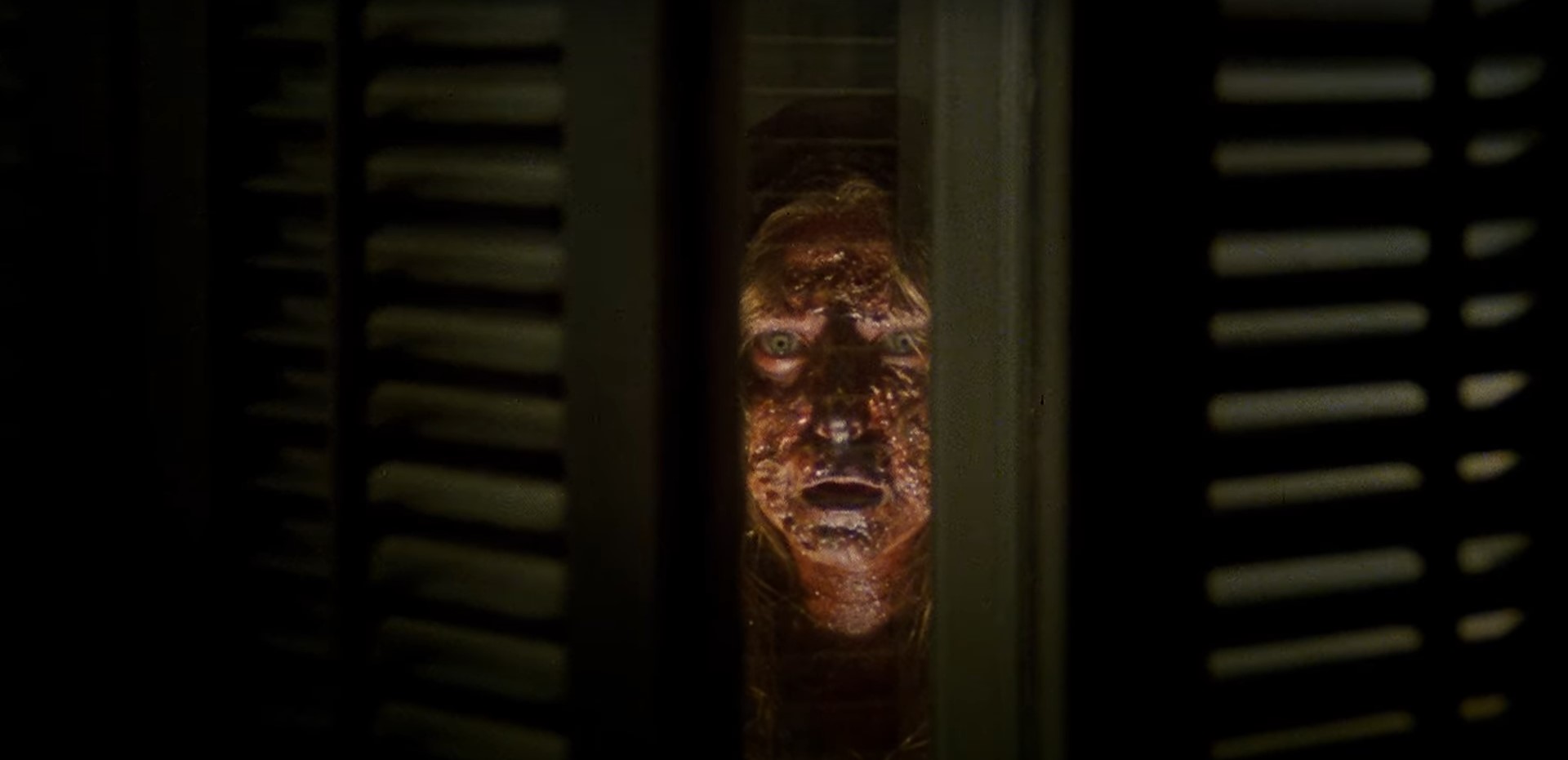
A wealthy owner of the Thorton plantation bequeaths to his willfully neglected son, Corey, his large Louisiana estate. He’s welcomed by the estate’s unusual lawyer, a house caretaker with an affinity for birds, and her beautiful daughter Diane who, despite her teenage muliebrity, immediately takes an interest and liking to the handsome young man. Corey is also met with his shirker father’s penned testament, to be resurrected from the dead by a sexually alluring brothel woman and necromancer named Delores who works at the local bordello and bar named Tonks. Fascinated by the idea, Corey hangs around the bar and becomes just as engrossed with Delores as his father as he seeks to abide by his father’s supernatural wishes but there’s a warbler cult connected to Delores and Corey’s father with an underhanded scheme that doesn’t favor the new, young estate owner trying to save and possibly get to know the father he never knew, the same one who abandoned him as a small child.

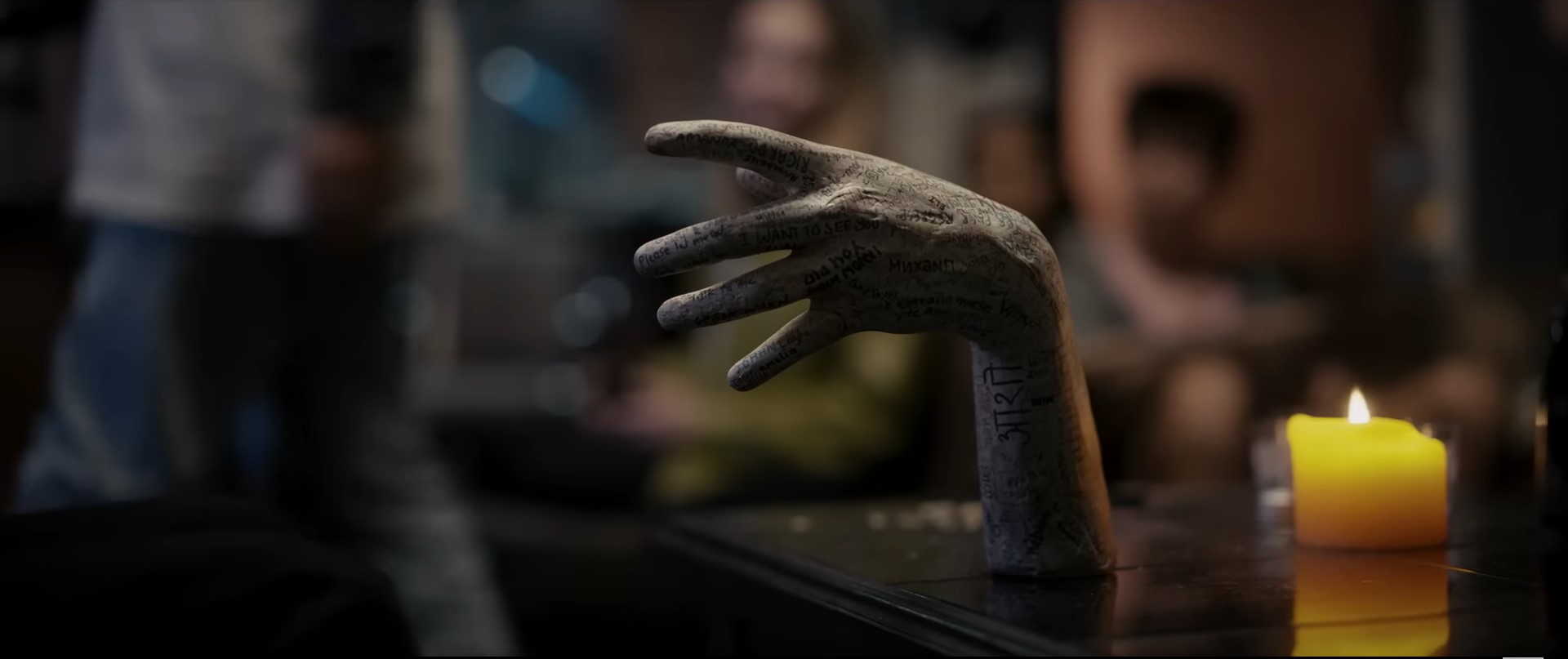
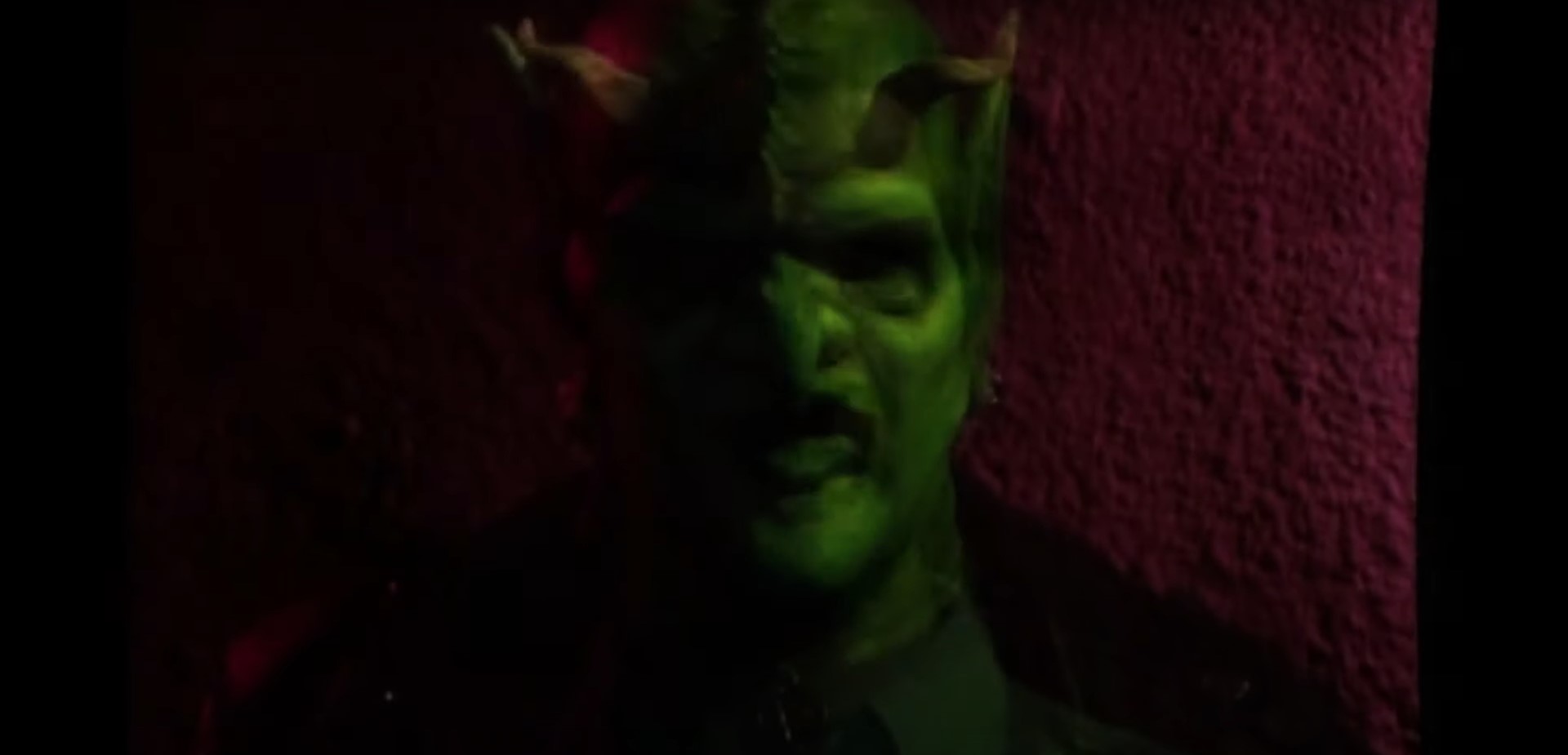
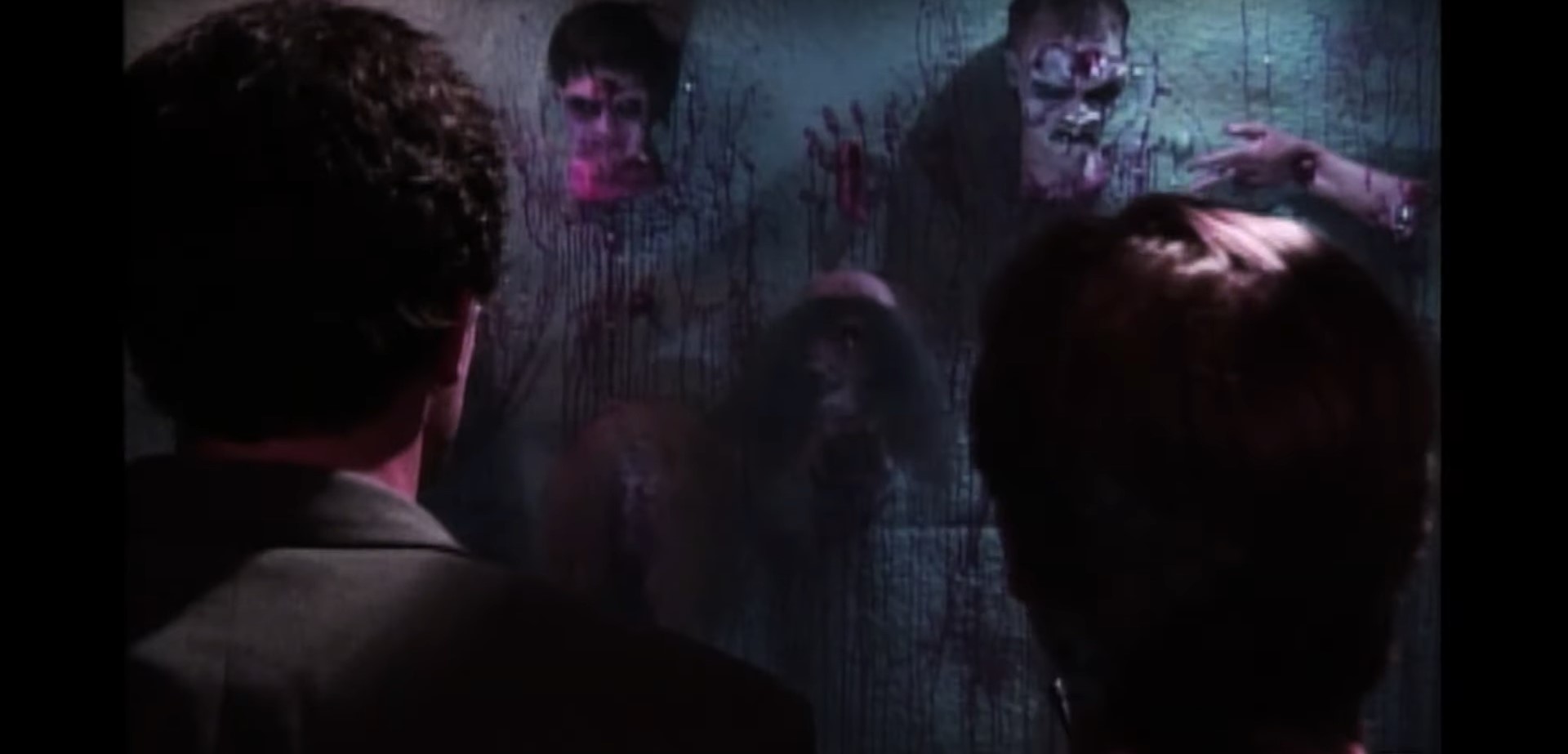
One of the more stranger Charles Band productions to every come out of Full Moon Entertainment, and that’s saying something for a media empire that made killing on hawking killer dolls amongst other oddity-saturated, carnivalesque sci-fi and horror for many decades, “Netherworld” is the early 90’s, Cajun-encrusted, occulter of the Full Moon legacy director of “Tourist Trap” and “Puppet Master,” David Schmoeller, who also cowrote the film alongside Charles Band. “Netherworld” harkens to a time before Band became visionally crazed by dolls, or miniaturized maniacs in general, with a plot that promises Cajun black magic beyond the traditional spells and curses of Louisiana Voodoo, a son desperate to reconnect with his long-lost father who abandoned him, and a flying stone hand with finger extremities that turn into vicious snake-like creatures when attacking the quarried head, but is “Netherworld” too extrusive of the regular and in vogue poured cement of solidified psycho-dolls? ‘Netherworld” is executively produced by Charles Band, produced by Ty Bradford (“Trancers II”) and is a part of the vast Full Moon Entertainment catalogue of productions.

Unsuspectingly walking into between the veil of the living and the dead is predominately television actor Michael Bendetti (“21 Jump Street”) embarking on his first ever horror feature as Corey Thorton, the city boy, or so we assume as he leisurely journeys down a windingly steamy Louisiana tributary in a button-down shirt and tie, who learns his deadbeat, rich father has left him a large amount of property. For having been left fatherless for all of his life, the pill that read as Corey’s deep-rooted longing to familiarize with a flake of a father is a hard one to swallow. The angle that Schmoeller should have attacked more resurrection motivation is the one that involves Corey searching for answers in his father’s disfavor, choosing to live without the flesh and blood legacy of a son, and why now, posthumously, does his father want to reconnect? Audiences will find the answer overly obvious, but Corey Thorton’s thickness proves more difficult to penetrate, especially when he’s beguiled by an enchantress who can summon a flying, snake-fingered hand that emerges an affixing binding wire out from its stony skin and can turn whorehouse johns into caged birdies, literally, if they misbehave or become indelicately frisky. The house keeper’s horseback riding daughter Diane is marred by Holly Floria (“Bikini Island”) with an excessive Southern Belle accent when her character’s status doesn’t stem from sophistication and affluency but rather from the blue collared starry eyes of Anjanette Comer’s (“The Baby”) motherly and hospitality position. When the climax arrives in grand temps and we’re face-to-face with Corey’s ghostly pops, living in the titular Netherworld, the story takes a sudden branch drop that executes any voyage into the void between worlds and there’s quite a bit of neglect for Robert Sampson (“Re-Animator”) as Corey’s father who barely has any scenes to live up to being the film’s primo antagonist pulling the strings of the marionette of his flesh and blood. “Netherworld” fills out the cast with Robert Burr (“Ghost Story”), Alex Datcher (“Passenger 57”), Holly Butler (“Vendetta”), George Kelly (“Jugular Wine: A Vampire Odyssey”) and Denise Gentile (“Ordinary Madness”) as the super-sexy, premium prostitute Delores with parapsychological powers that connect her to the land of the dead.

Off the tip of a gator’s nose, “Netherworld” offers a taste of Full Moon’s 90’s production, promising radically outlandish F/X with a monstrous airborne hand, saucy sexual content, and gore. Corey’s inner thoughts exposition and waterway introduction tends to be more private eye monologuing in the explanation setup of his unplanned inheritance and it also feels like the brittle beginnings of a trashy romance novel: young man travels down the river to his inherited late father’s estate, torn between a pubertal young daughter of the long-standing estate housekeeper and the haram brothel seductress with an eldritch, supernatural inveiglement. Corey’s past lacks backstory, leaving an even playing field across the board of all characters and participating audiences in what to expect from the wild card that is Corey. Immediately drawn to the wanton Tonks not for carnal desires but rather the one woman who her father says can restore his past expiration, Corey’s not a wild card of ambiguity as his role lacks the pull of tough decisions, often between character versus character conflict, with basically a mind already made up to visit the bar-and-bordello despite the ominous warning signs between George Kelly’s sloppy bayou cajuner wanting to dance with Corey at Tonks, Diane’s strong opposition for Tonks in general, and amongst others dubious gratifying points. “Netherworld” very much lives in a world of opposition, like Superman’s bizarro world that defies logic. Logic such as the transition of people into birds, or being inducted into a clan of avian cultists, or ciphering who’s a good guy and who’s a bad guy, or, and this is the most important or, the suddenly cleaved ending that not only doesn’t allow a satisfying ending but also doesn’t explain much, in dialogue or in action, what came into existence once Corey was stuck in the Netherworld other than the obvious trade his father wanted to force.

Full Moon Features brings Hell to Blu-ray with an uncut and remastered from the original camera negative transfer of “Netherworld” in the continuous effort by the empire to upgrade all their classics for a new wave of format availability. Scanned into 2K from the 35mm negative, the AVC encoded, 1080p, high-definition Blu-ray looks pretty darn good. Well kempt over the years, the negative appears to have sustained little age or wear that progresses the hi-def upgrade with relative ease. Color grading is warm and stoked with detail that encrusts every object – the lushy bayou forest, the stony power of a flying hand, Michael Bendetti’s layered curly-perm mullet – all of it is greatly textured and delineated for depth, presented in the 1:78:1, widescreen aspect ratio. Compression doesn’t appear to be an issue despite a lower storage BD25 but that might be due to the utter lack of bonus accompaniments. The release offers two audio options: an English Dolby Digital 5.1 surround sound and an English Dolby Digital 2.0 mix. Both options are equally suitable as the there’s not much more environmental oomph through the extra channels despite the full-bodied cacophonous cicada singing, which unfortunately doesn’t open up depth in the back channels despite the prevalence of the singing in the story’s background sonance. However, dialogue doesn’t feel cheated with a dominating layer and decent range to go with it. Along with essentially what is a bare bones disc, there are also no subtitles available with this release. What is available to view outside the feature is other Full Moon trailers and the original VideoZone segment that covers this particular 1992 gem. Physical features don’t stray too far from VHS, to DVD, to Blu-ray with the same flinty hand rocketing outward in a 3D-like position on the front cover. There are no inserts included with this release. “Netherworld” Blu-ray comes region free, with a runtime of 82 minutes, and, for the first time ever, uncut! An opposition to the usual spun of Louisiana voodoo-hoodoo, there’s another dark magic brewing in the bayou in “Netherworld,” but the promising story can’t coherently piece together down river in an uneven quagmire of quandaries.

Enter the Netherworld on Blu-ray!

EVIL Has the Right to Remain Dead! “Magic Cop” reviewed! (88 Films / Blu-ray)

No Two-Bit Magician In ‘Magic Cop” on Blu-ray!  

Hong Kong cops are confounded by a chaotic drug bust when learning that their female suspect, who had managed to overpower an entire unit of male officers and even take a bullet ambling deadpan into the streets, had died 7 days prior.  An outlying officer, and practicing Taoist, Uncle Feng is called to Hong Kong to not only quickly solve the narcotic crime but also investigate the unnatural properties of the case.  Feng is accompanied by his city eager niece Lin and two Hong Kong cops, a Taoist devotee and skeptic of Ancient Chinese spiritual mythologies.  Together, they track the drug trail to The Sorceress, a Japanese witch with powers that rival Feng and that can resurrect the dead into zombies and vampires to do her bidding, such as trafficking narcotics.  When the investigation closes in her business, The Sorceress and her right arm, skilled fighter plan to remove the only man worthy of stopping her.

Fans of Ricky Lau’s “Mr. Vampire” will once again be amazed and entertained by the fantastical and mystical action of Stephen Tung Wai’s “Magic Cop.”  Tung, a fellow martial artist and stunt man who had roles in “The Fatal Flying Guillotine” and John Woo’s “Hard Boiled,” helms his debut directorial penned by Chi-Leung Shum (“Vampire vs Vampire”) and the longtime Stephen Chow script writer Kan-Cheung Tsang (“Shaolin Soccer,” “Kung-Fu Hustle”).  The screenwriting duo brought lighting quick comedy to the mostly fictionally invented yet sprinkled with slivers of hard-pressed veracity and definitive entertaining occultism and what resulted resurrected “Mr. Vampire” semblance out of the being a period piece and into the modern day, backdropped in the year of 1990 when the film was released.  Long rumored to be the fifth sequel of the “Mr. Vampire” franchise, “Magic Cop” is a coproduction between Movie Impact Limited, Millifame Productions Limited, and Media Asia Film with star Ching-Ying Lam producing.

“Magic Cop,” and even “Mr. Vampire,” wouldn’t have such a cult following if it wasn’t for the Vulcan eyebrows and thin mustache of Ching-Ying Lam in costume.  The short-statured, Shanghai-born Lam delivers the same vigorous choreography and tranquil demeanor to this particularly stoic character of Uncle Feng, a Taoist practitioner to essentially wrangle unruly entities and please the spirits in the in-between our world.  Feng is old world and finds himself in surrounded by modernism when in Hong Kong, goaded by the young lead sergeant attached the case.  Practical as well as disrespectful, Sgt. Lam (Wilson Lam, “Ghost for Sale”) epitomizes today’s, or rather back then the 1990’s, modern man who has forgotten tradition and deference to those who came before.  Though padded with a fair amount of comedy coursing throughout, balanced against the impeccably edited tango fight sequences, Sgt’ Lam’s partner, known only as Sgt. 2237 played by “Centipede Horror’s” Kiu-Wai Miu, risibly wants to understudy Uncle Feng’s powers while Feng’s niece Lin, played by Mei-Wah Wong of “The Chinese Ghostbusters,” provides the subtle and quirky opposite sex that catches of the philandering eyes of Sgt. Lam.  The ragtag quartet of influx mindsets and personalities become challenged by their single common goal, to stop whoever is behind breathing life into the formidable dead and stop the unorthodox method of drug smuggling.  Former Japanese bodybuilder Michiko Nishwaki (“City Cops”) embodied that very dark magic antagonist.  Nishiwaki handles The Sorceress character with ease despite not having a surfeit army under her thumb; instead, this forces Nishiwaki to become the entire villain body with the slight, full-contact support for her right-hand bodyguard (Billy Chow, “Future Cops”) and a couple of undead lackeys, including Frankie Chi-Leung Chan of “Riki-Oh.”  “Magic Cop’s” cast rounds out completely with well-versed and seasoned, late actor Wu Ma (“Mr. Vampire,” “Return of the Demon”) as the chief inspector polarized in a complicated history with Uncle Feng.

What director Stephen Tung Wai boils down in essence is another variation of good executants of spirit humbled caretakers versus the wicked necromancers existing inside the fabric of the highly praised and cult-following “Mr. Vampire” universe.  Frankly, there’s nothing wrong with that derivativity since Ching-Ying Lam, Mr. Vampire himself, produces and stars as the titular hero.  Lam can conjure whatever-the-hell he wants in order to battle Hell itself.   “Magic Cop” is also a well-made, entertaining story, balanced between the contest wizardry, slapstick comedy, and the character dynamics, and stacked with improbable yet gratifying step-intensive fight orchestration that has gawked early martial arts films a wonder to behold and continues to do so to today but now trickles with pizzazz more-after-more due to put in place industry safety measures.  “Magic Cop” contains that lost art of potentially hazardous palatable physicality that beguiles more than the movie’s faux magic exhibited on screen.  To add to the authenticity, very little painted composited visual effects were used with makeup and the actors doing much of the heavy lifting with the editing team of Ting-Hung Kuo and Kee Charm Wu in full cut-and-paste fortifying mode to button up each sequence with comprehendible continuity of each punch, kick, and magical chopsocky.  One overtone made well known in “Magic Cop” is the unfillable chasms between old and new, respect and disrespect, and myth and science from whence solves no problems until some unified common ground can be reached in order to succeed, in this case, to stop a bitch of a witch.    

An age-resistance 35mm print scanned onto a buffed 2K Blu-ray that extracts the best print elements to-date. The AVC encoded, 1080p, Blu-ray presents Stephen Tung Wai’s picture in a widescreen 1.85:1 aspect ratio. A fine-tooth comb through the celluloid couldn’t unveil any major issue with the 88 Films release. Colors are richly grafted within the sabulous surfaces that are exceedingly defined with delimited, shadow-creating depth. Decoding speeds average around 35Mbps on a BD50, securing categorical choiceness amongst other releases and formats (that is until the potential 4K release). The release comes packed with four audio options to explore: The original Cantonese DTS-HD master audio 2.0 mix, a Cantonese DTS-HD 2.0 home video mix, an English DTS-HD 5.1 master audio dub, and an English DTS-HD 2.0 dub. Between the variated audio mixes, we preferred the original Cantonese DTS-HD 2.0 due to its cadence with the image and welcoming exactness through the lossless compression process. You can make do with the other three options, but the fidelity is much better with the original mix and only anti-subtitle sectarians would be pleased with an English dub. English subtitles are optional and synch well the dialogue but be prepared to speed read as the pacing is quick much like the dialect. Software special features include an audio commentary with Hong Kong film experts Frank Djeng and Marc Walkow, an alternate, standard definition Taiwanese cut of the film with alternate score, an interview with director Stephen Tung Wai, image gallery, and trailer. Endowed with a limited-edition, cardboard slipcover, the dark green Blu-ray snapper has newly illustrated, front cover artwork by Manchester graphic designer and 88 Films resident artist Sean Longmore, which is also on the cardboard O-slip. The reversible cover art has a reproduction of the original Hong Kong poster art. Stuffed in the insert is a mini-folded poster of Longmore’s front cover and a disc art, a scene moment captured in spherical rotunda, of the opening sequence. Available with a regional playback limited to A and B, the 88 Films release is not rated and has a runtime of 88 minutes. ‘Magic Cop, perhaps, wasn’t the sole proprietor of influence but certainly had a black talisman plying hand in the substrata of more Western favorites like “Big Trouble in Little China” and is a crucial cornerstone in representing the best of the Hong Kong Golden Age of cinema.

No Two-Bit Magician In ‘Magic Cop” on Blu-ray!  

What Russian EVILS Lie Beneath in “The Lair” reviewed! (Acorn Media International / Blu-ray)

“The Lair” Has a Deadly Secret!  Blu-ray Now Available!  

Royal air force Captain Kate Sinclair is shot down over the arid planes of Afghanistan.  Swarming with Taliban insurgents and her command officer killed, Sinclair takes shelter in an old, abandoned Russian bunker from the Russian Afghanistan invasion of the 1980s.  What she stumbles into is an experiment lair housing numerous stasis chambers and dark secrets.  Sinclair manages to barely escape with her life when one of the creatures inside the capsules is released, tearing to shreds her well-armed pursuers.  Rescued by a ragtag team of U.S. military outcasts based in the middle of nowhere as peripheral punishment and joined up by a trio of British special forces in the area, the Captain attempts to warn her rescuers what’s out in the desert only to be on the receiving end of a monstrous invasion that sees the slaughter of nearly everyone in camp, including the camp commander.  Miles from anywhere and not enough supplies to withstand another attack, those soldiers left alive band together to stage their own last stand assault on the creatures’ Russian bunker lair to ensure hostile eradication.

Acclaimed horror director Neil Marshall (“Dog Soldiers”) returns to his roots with a claustrophobic, high-energy, and violent creature feature known as “The Lair.”  Having experienced underwhelming success with the fiery Dark Horse antihero “Hellboy” remake in 2019, Marshall returns to independent scene for the 2022 released film having been shot in the barren lands of Budapest, Hungary to create the illusionary Afghanistan territory backdrop.  Marshall co-writes the script with “The Lair” star Charlotte Kirk, a reteaming affair from Marshall’s last feature “The Reckoning” from two years prior in which Kirk also produced and starred.  Also returning from “The Reckoning” and into the producer’s chair is Daniel-Konrad Cooper along with “Infinity Pool” producers, Jonathan Halperyn and Daniel Kresmery, and “Lords of Chaos’s”, Kwesi Dickson in this Shudder exclusive collaboration from Rather Good Films, Scarlett Productions Limited, Highland Film Group, and Ashland Hill Media Finance with Neil Marshall and Peter Shawyer’s private equity investment group, Ingenious Media, providing financial support.

Star Charlotte Kirk and Neil Marshall have a seemingly natural rapport that has transposed well from their collaboration on “The Reckoning” to the “The Lair,” crossing subgenre that involve the equivocal occult to a more plainspoken physical presence of foreign experiments gone wildly bloodlust.  Instead of being hunted by a 17th century witch hunters just for being a woman saying no to man, Kirk steps into a role of authority as military captain with loads of smarts and adept at close combat as she’s being, once again, chased by predators, but these uber-predators are unearthly, unremorseful, and ugly.  Marshall provides just enough character backstory for understanding the stakes and strengths of each of them but to reach a little more into their history might have been key to stronger motivations and for something to prove in not just being jarhead screwups.  Sinclair finds commonality and sympathy from Sgt. Tom Hook (Jonathan Howard, “Godzilla:  King of the Monsters”) who bears the guilt of losing men in battle and punishes himself to do better.  Psyche profiles for each soldier makes them rise above being flat by providing depth of flaw but what is vexing and irking about each, and this element may very well be intentional as an international thespian bout of poking fun, is the cast is nearly all British playing Americans with stereotypical drawls, ebonics, and punctuating southern accents so overexaggerated it’s downright sickening to hear, like watching a bad old war film, but what’s even worse and what drives a sharp claw talon into the inane heart of trite-tired audiences is the group slow walk before embarking into the battle of no return.  Again, this might be the work of intentional satire.  Some accents are gargantuanly worse than others, such as with “Titanic 666’s” Jamie Bamber’s pirate-patched Major Roy Finch and the Mark Arend’s Carolina-born Private Dwanye Everett.  From there, the elocution grades get better with less cliché but not by much with a cast rounding out of Leon Ockenden (“The Reckoning”), who I couldn’t understand because his accent was so Scottish-ly thick, Troy Alexander, Mark Strepan, Hadi Khanjanpour, Kibong Tanji, Adam Bond, Harry Taurasi, and Alex Morgan.

Neil Marshall not only returns to his horror origins but he also returns to the heyday of prime practical effects with inset creatures of a spliced appearance between the build, the dark full body achromia, and the facial configural layout of Marvel’s extraterrestrial antihero Venom with the eye-less, tongue-lashings and grabbings of Resident Evil’s staple adversaries, the Lickers.  Obvious a man in a prosthetic suit, the simplistic, brawny-framed humanoid basks in nostalgia despite being in a modern day movie, pining for the days when large or small men in full body, head-to-toe, terrifying imagery suits were the antagonists of our youthful nightmares while also providing the cast something to act against for a more realistic and rancorous on screen rendezvous.  The smaller scale production limits Marshall’s possibilities with his Kevlar-fleshed and razor-toothed creatures but the veteran director sells every act of “The Lair’s” story with trenchant action with hardly any downtime to catch one’s breath in between because the next blood-laden blitz rollout is upon us in a blink of an eye.  Between the action, the anomalous characters, and the pulsating, downbeat synthesizer score that courses through its veins, “The Lair” leans itself toward being a callback to the late 80s-early 90’s last stand dogfight subgenre and you can’t one second cease your attention for a director who appreciates the narrative surprise more than anticipated predictability.

Become lured into “The Lair” now on Blu-ray home video from Acorn Media International, a UK distribution subsidiary of RLJ Entertainment.  The AVC encoded, 1080p high definition release is presented in a widescreen 2.35:1 aspect ratio.  The BD25 offers sold flexibility for a film with hefty amount of night shoots and action as potential compression problems seem to stay at bay without any severe noticeable banding, blocking, mosquito noise, etc., however, the details are quite flat with a smoother finish, often in the blur of the fast camera workflow and editing because of the action sequences, leaving depth on characters, as well as in the scene, at arm’s length with monocular vision.  The warm hint of chartreuse embedded grading offers industrials color tones with a rich grit of oxidized bunker steel.  Don’t adjust your audio dial on the release’s English DTS-HD Master Audio 5.1 surround sound track, the dialogue only sounds wonky because its deliberate Americanized dialect set at the forefront and prominent amongst the audio layers which has significant range and depth with explosions, rapid gunfire from different calibers, and the guttural growls of the creatures that echo nicely through the rear and side channels when under the bunker or even affixed in a slightly decreased volume of its form in the attack of the basecamp.  There were no interference blights with the audio track, such as hissing, popping, or other discernible issues.  Special features included only a making-of featurette with clipped interviews during the shoot with director Neil Marshall, actors Charlotte Kirk, Mark Strepan, Jamie Bamber, Jonathan Howard, Leon Ockenden, and others regarding their admiration for the project in different aspects.  Acorn Media’s physical release comes in a slightly larger Blu-ray snapper, typical of the UK releases, with the cover art featuring an up-close and personal look at the creature’s ugly mug.  The same art is also on the disc with no insert inside the snapper case.  The release comes region B locked with a runtime of 97 minutes and is certified 15 for strong gory violence, language, and threat.  If you can stomach the fatuity at times, “The Lair” is a fast paced and staunch creature feature with a bunker full of gore.

“The Lair” Has a Deadly Secret!  Blu-ray Now Available!  

A Horde of EVIL Won’t Stop a Father from Seeing His Child for the First Time. “Day Zero” reviewed! (Well Go USA / Entertainment)

“Day Zero” on Blu-ray from Well Go USA Entertainment

Convicted on charges of assault, ex-special forces and all-around big guy Emon looks to keep his nose clean, banking off his good behavior to get him released from prison to see his wife and child, who he has never laid eyes on since being incarcerated.  When trouble finds him behind bars, Emon loses his chance with a dismissive warden until a mutated dengue fever virus sweeps through the city.  The virus turns people crazed and blood hungry, quickly engulfing the populated city and streets with chaos that fortuitously, as well as unfortunately, sets all the prisoners free in a tumultuous fight between the living and the infected dead.  Emon must battle through to save his family trapped inside their multi-storied apartment building but inside the dark, densely-packed corridors, the structure is infested with infected with not many places to hide and not much room to evade the bite of the hungry dead.

A running Z-charged, fight-for-your-life thriller hailing from the Philippines with “Day Zero,” the sophomore feature length film from brothers Joey De Guzman, the director, and Ays De Guzman, the screenwriter.  “The Ghosting” director, Joey De Guzman, revs up the slow-motion and high-octane gunplay and the barreling running zombie action set to the tune of a “28 Days Later” type virus that quickly spreads through the one of major metropolises of the Pilipino microcosm.  Ays De Guzman, authorial designer of a few independent Pinoy horror of the past decade with the horror-comedy “Da Possessed” and the dysfunctional family thriller “Santigwar,” Ays bends himself down a different avenue of anxiety-gear terror that taps into a semblance of Zack Snyder caffeinated zombie-violence.  “Day Zero” remarks the return of the “Rabid” producing team of Glenn Mark Salamat, Michaela Reyes, and Stacy Bascon under the production banners of Reality MM Studios and Regal Entertainment.

Speaking about Zack Snyder, I’m convinced hiring a leading man who looks like a Dave Bautista doppelganger playing a large-and-in-charge ex-special forces is undoubtedly derived from Snyder’s 2021 “Army of the Dead.”  Also, a shaved head doesn’t help avoid the lookalike image as Brandon “The Truth” Vera exits the mixed-martial arts arena for greener, lower-impact pastures of the picture business.   The Filipino-American made his feature film debut in 2018 with BuyBust, a narcotics bust and drug war shootout actioner filmed in Manila, going back to his heritage roots to be featured in homegrown productions.  Vera’s latest bout with action “Day Zero” has ingrained much of the same hand-to-hand and weaponry discharging skirmishes except with zombies.  Much like Bautista, Vera’s a broad shouldered, big dude and he’s massive in the tight corridors of the building interior sets yet the former arena fighter just doesn’t bring his large and imposing presence to the screen, he also brings his agility and grace choreographing complex tussles with the forsaken fiends trying to feast on him and others.  Amongst the axe slashing, neck breaking, face impaling, and gunplay galore, Vera also shows his softer side being a puppy-eyed father attempting to connect with his 7 to 8 year old daughter for the first time and rationalize with her on why he didn’t want her to see him in prison.  The softer side of the Emon incorporeally clashes with the rough and ready former special forces kill machine, diluting his character by pulling him in different directions that never consummated a mesh of the two sides.  Instead, we’re delivered a better arc in his wife Sheryl (Mary Jean Lastimosa, “Santigwar”) with initial discomfort with Emon’s troublesome woes only to then understand his internal hardships.  Coming out on top after injury over injury, Sheryl becomes a survivor for not only her deaf daughter but also for Emon who has finally made it back into their lives.  Because the Republic of Philippines is geographically limited, “Day Zero” has a relatively convey Pinoy cast that have crossed paths on previous projects; these actors and actresses include Pepe Herrera, Freya Fury Montierro, Yohance Levi Buie, Joey Marquez, Jema Galanza, Ricci Rivero, Shermaine Santiago, and Jovit Moya.

“Day Zero” is enjoyable, zombie destroying cannonade without the supplements of a patient zero other than radio chatter on the dengue fever mutation.  The well-traversed plot doesn’t ring any originality bells and adds nothing new overall to the zombie canon in what’s simplistically a good-ole fashion romp of the routine.  What Joey De Guzman renders well is progressing the intensity from a slow setup of familiarizing ourselves with Emon and his family to turning up the volume on the convulsing savagery between the rampaging infected and Emon busting out his full-on commando skillset that can eliminate scads of a charging herd.  Guzman’s able to deliver fast action and decent camera work with some satisfying scenes of sanguine splatter.  The sound design of the zombie war cry hones in on the maddening and frightening being cornered and out of options as survivors scatter in a deemed-derelict apartment building with junk-riddled hallways and sturdy but thin cardboard doors, the latter may denote poor set design, but the overall look and feel of enveloping darkness and cluttered walking spaces makes “Day Zero” have that original Resident Evil 2 environment atmosphere to a point.  By no means am I comparing “Day Zero’s” acclaim to the popular 90’s sequel of iconic survival horror but the narrative also plays into a similar storyline scenario which, ironically enough, is more parallel to the franchise than Paul W.S. Anderson’s adaptations aside from the lack of a diabolically Umbrella corporation.  Guzman shows his influencing hand with his latest venture and comes out unscathed with a tachycardia zombie-action movie that won’t flatline on you.

Not the usually novel, alternative horror Well Go USA Entertainment has released onto Blu-ray as of late, but “Day Zero” is no zero on our book with its nonstop, large scale, and gripping action on a limited budget.  The AVC encoded, high-definition 1080p, BD25 is presented in a widescreen 16:9 aspect ratio.  Graded with a grim cinereal of cadet blue and turquoise, the image has a nipping and snappy delineation within the heavily shadowed interiors with exteriors often bright but still greatly detailed and contoured for depth.  No issues with the format storage and transfer compression within those shadowy compartments that amply decode, or rather unload, the visual markers, perhaps aided by the limited color scale.  The Filipino, mixed with a smidgen of English, DTS-HD 5.1 track has immense depth surrounding the zombie war cry, hitting those rear channels nicely for distinct localization.  Though a lot of action is in confined spaces, depth also translate well to other environmental aspects of the sound design.  Muzzle fire has a brawniness with a consistent impact complimenting the nonstop action.  Dialogue is clean, clear, and intelligible with optional, error-free English subtitles in synch with the narrative flow.  Usually, Well Go Entertainment releases have promotional behind-the-scenes and interviews, special effects insight, or something in the bonus features content but, alas, this particular release only sees itself into our players with the film’s trailer on the static menu.  Same goes with the omitted slipcover that was present in their two previous horror releases. The Blu-ray is housed in a standard snapper case with Vera peering intently forward overtop a near silhouette of an apocalyptic Pinoy street with an odd, near-skeletal figure at the top right adjacent to Vera’s right shoulder and standing on a roof.  This particular, pretty-cool designed character is not in the film.  While the front cover can grab a prospective buyer or renter’s attention, the back cover diminuendos “Day Zero’s” appeal with a prominently goofy, white-eyed infected in the middle looking stupor than scary.  Inside, an advert tableau of other Well GO USA distributions, such as Donnie Yen’s “Sakra,” “The Tank,” and Jackie Chan’s “Ride On,” fill the insert section, which may vary per batch made.  Pressed disc art resembles “Evil Dead” with a red background and a profiled hand reaching upward.  Region A locked, the feature comes not rated at 82 minutes long.  “Day Zero” is my first Filipino horror film experience in nearly four years with the last being 1971’s “Beast of the Yellow Night” and continues to always be a pleasing sit-down with its taste for terror no matter how hackneyed or homage traced. 

“Day Zero” on Blu-ray from Well Go USA Entertainment

Amongst the EVILs of Digital, Analog Rises from the Grave! “Night of the Zodiac” reviewed! (SRS Cinema / DVD)

A Mock VHS Retro on a Mock VHS Retro DVD!  “Night of the Zodiac” from SRS Cinema!

A bizarre and grotesque dream about the once notorious Zodiac killer inspires Richard Gantz to create a movie worthy of his idol’s praise.  With little income and having just lost his girlfriend and his job, Gantz is on the brink of being homeless and unable to materialize his dream into reality until he receives a mysterious, unexpected phone call.  The Zodiac killer got wind of his project and is offering support to finance and bestow guidance to Gantz’s film as long as the struggling, yet eager, filmmaker can crack Zodiac’s cipher and stomach the enigmatic task before him.  Gifted the Zodiac’s iconic mask and murder knife, Gantz sets out to record his first kills that pays homage to his aging idol but his mentor wants him to be creative with the new chapter worthy of the Zodiac name and gathering a whole new set of slaves for his paradisal afterlife.  When Gantz hits a barrier of inspiration, he solely becomes reliant on the Zodiac’s encouragement that has become few and a far in between. 

Susana Kapostasy is who I like to label a mad genius.  Many filmmakers have attempted to create antiquated formats of yore with watered down imitations, but for the Michigan-born videographer and editor-by-trade Kapostasy, what has been a challenge to most to faithfully recreate has simply become second nature for the video production enthusiast.  Scraping up any and all elderly video camcorders she could find, the “Metal Maniac” director wrote-and-directed her sophomore feature film “Night of the Zodiac,” pulling inspiration from one of the most notorious unsolved murder cases in America by the Zodiac Killer in San Francisco.  From the West Coast to the Midwest, “Night of the Zodiac” is filmed in and around the backdropped Detroit area for the Zodiac’s next round of sliced-up slaves – only in the creative, moviemaking sense, of course.  The 2022 film has the spitting image of a 1980s/1990s SOV with ghastly, gory effects, a killer hair metal soundtrack, and video characteristics that’ll have you trying to adjust the tracking setting on your DVD/Blu-ray player.  The Johnny Braineater Production is produced by star Philip Digby with Kapostasy serving as executive producer alongside co-cinematographer Apollo David Zimmerman.

Stepping into the shoes of the infamous serial killer to embark on a theoretical continuance of the real life mass murdering character is Philip Digby.  Channeling his best Jeffrey Dahmer vibe in looks alone with a crazed and obsessive personality suited for Charles Manson, Digby plays a hodgepodge of America’s most notorious killers, adding his own flare for film into the fold to make him a full-fledged psychopath, as he internally celebrates the moniker after his disparaging roommate/Landlord (Victor-Manuel Ruiz) labels him with an ear-to-ear grin and a nearly whoopie jump for joy.  Digby’s eccentric mania thrusts us beyond a threshold we didn’t even realized we had crossed from the very first opening dream sequences of a rotting, coffin-thronged corpse oozing maggots and putrid viscera and, believe it not, my opinion is this thrust doesn’t do justice to Gantz’s character because of the lack of foundation of setting up viewers with an inbred psychosis that puts into question, how did he survive this long without killing someone before?  Dreams are power but are they powerful enough to twist a seeming normal film lover into a frantic frenzy of vile fates and videotapes?  I think only Freddy Krueger can answer that.  Gantz goes around town slaughtering people in parks, in their driveways, and even makes one very bad magician (Derek Dibella) wish he requested to hire Gantz as a videographer for a promotional video disappear as Gantz strangles him to death.  “Night of the Zodiac” completes the cast with Logan O’Donnell, Mark Polonia (director of “Splatter Farm”), Tim Ritter (director of “Truth or Dare?”), and Benjamin Linn as the voice of the Zodiac.

From the video production veneer to the set decorations and locations to the characters themselves, “Night of the Zodiac” perfectly captures SOV horror in this modern day time capsule.  Not until the credits, when I see master craftsman of SOV horror filmming, Tim Ritter and Mark Polonia, appear in the cast credits did it dawn on me that what Susana Kapostasy had accomplished was a labor of love for the niche market, resurrected four decades later and revered by horror fans who were likely still in diapers or weren’t even born yet – maybe to go as far as not even a twinkle in their parents’ eyes.  Yet, there were clues to “Night of the Zodiac’s” contemporary construction, such as the opening title which had a clean, well-polished illustration and Kapostasy’s film is very self-aware by slathering horror in every recessed corner with mountainous stacks of VHS tapes, posters, and  and often, perhaps every other scene, displayed tribute to filmmakers, like Ritter and Polonia, who were still counterparts and establishing themselves as independent videotape artists during the 80s-90s.  This self-awareness harnesses more comedic relief than horror, accentuated by Gantz’s matter-of-fact imbalance, and the humor loosens the reins on “Night of the Zodiac’s” cold cruelty a tad but what the gore spools back in audiences by spilling lots of blood. 

SRS Cinema releases “Night of the Zodiac” onto DVD with a single layer encoding and presented in a throwback letterbox 1:33:1 aspect ratio.  Kapostasy uses a slew of equipment – Cannon XL2, Sony Video 8 AF, Panasonic AG 450, JVC GY X2BU, JVC GY X3, Panasonic AG 456, Panasonic AG 196, Sony CCD FX 330, and a Sony VO 4800 U-Matic S VTR – with some be more present-time cams run through U-matic VHS playback to degrade for SOV quality.  The intentional SOV has a variety of distinct looks with distinct quirks that flexes higher magenta levels in earlier scenes as well as tracking lines and aliasing artefacts.  Detail levels also vary but the overall VHS brands generally remain the same with soft, indistinguishable contours with also a surprising amount of depth and hue range.  The English Dolby Digital 2-channel (2.0) mix can sound boxy at times and come accompanied with a piercing, underlining interference.   Telephone conversations have no distortion depth so the other person on other line sounds present in the room.   The soundtrack from Anguish, Locust Point, and the brunt of it provided by Stoker is metal madness but does overshadow the dialogue when shredding through the scenes.  Dialogue is often clear, but again, no depth and echoey.  There are no subtitles available for this release.  Bonus Features include an audio commentary by director Susana Kapostasy, star Philip Digby, and costar Victor-Manuel Ruiz that goes over a lot of technical aspects of “Night of the Zodiac’s” look and how they obtained the gore and blood for the film, a Tim Ritter conversation about how he became involved with Kapostasy’s video enthusiasm and provided analog input, a blood cannon showcase that’s instructionally descriptive as well as you’ll see Kapostasy’s foot accidently go into the 5 gallon Homer bucket, a gore score Ouija board gag, recreating the Zodiac cipher, and the trailer.  SRS Cinema’s release dons a retro VHS design front cover with an exact and beautiful illustration of Gantz’s copycat Zodiac attire with a cropped version of the front cover on the disc art inside the traditional black snapper case.  “Night of the Zodiac” has a runtime of 86 minutes, is not rated, and has an all-region NTSC playback. Difficult to immerse oneself into a half-a-century old unsolved murder while sticking to glorifying merely the guts and gore, “Night of the Zodiac” stuns more qualitatively with video techniques thought archaic and obsolete but Susana Kapostasy steadfast proves otherwise in her undying love for the flawed, yet nostalgic format.

A Mock VHS Retro on a Mock VHS Retro DVD!  “Night of the Zodiac” from SRS Cinema!