Beware of Friendly Strangers, They Just Might Be EVIL! “Speak No Evil” reviewed! (Acorn Media International / DVD)

“Speak No Evil” has Speechless Horror! Now Available at Amazon!

A Danish family on holiday in Tuscany meets a family from Holland.  The two families hit it off enjoying each other’s company on the final days at the getaway villa.  Weeks after returning home, a postcard arrives from the Dutch family, inviting the Danish family to stay with them for a weekend at their home.  What starts off as the pleasant beginnings of friendship slowly degrades to an unsettling suspicion something is not right with the Holland family.  Abel, the Dutch couple’s mute son, is held to a higher standard with uncompromising, punitive measure, the husband and wife’s acute uncouth behavior sets an uncomfortable stage, and their attention toward the Danes’ daughter, Agnes, is unconscionably overstepping parental boundaries.  An attempt to call out or even leave the home altogether has been met with disbelief, guilt, and pleads for stay and enjoy under their guise of sincerest apologies soon to be dropped for something far more sinister. 

Before James McAvoy grew a beard, got jacked, and attired himself in buffalo plaid for his manly maniac performance in the 2024, usurpative family thriller, “Speak No Evil,” directed by “Eden Lake’s” James Watkins, the Netherlands and Denmark were the original blunt forces behind the sociopathic caprices of those assumed normal and amiable adults.  Only released two years ago, the 2022 film that spurred the American remake and the feature’s namesake is directed by the Copenhagen-born Christian Tafdrup (“Parents’) and co-written between Christian and brother, Mads Tafdrup, as one of their numerous collaborations since 2017, beginning with a manipulative tale of a viperous female in “A Horrible Woman.”  Profile Pictures (“Holy Spider”), in a co-production association with OAK Motion Pictures, serves as the production companies on the Jacob Jerek, of Profile Pictures, and Trent, of OAK Motion Pictures, produced motion picture shot primarily in the southern portion of Netherlands in the Friesland region.

The Danish father and mother, Bjørn and Louise, are played by Morten Burian and Sidsel Siem Koch and before becoming ingrained into the crux of the story, the couple reflect a complicated complexion all on their own, especially and specifically with the focus toward Bjørn who seems unsatisfied or unhappy with his life as he’s shown staring off in the distance or mentally checking out at the dinner table.  The Danish are represented as a couple who are too nice to a fault, unable to say no most of the time, and try to keep to themselves mostly when a problem arises, skirting away without notice in a dust of avoidance.  That’s not so much the case with the Holland father and mother, Patrick and Karin, bordering as an equally amiable couple performance by Fedja van Huêt and Karina Smulders.  That is until the outer appearance of friendly strangers turns into an uncomfortable nightmare of being caught between a rock and a hard place of how other people live and do things, especially from another culture or country.  Patrick and Karin show more passionate displays of anger, sexuality, and bohemianism that wasn’t on display on their shared holiday with the Danes.  Then, there are the children.  Agnes (Liva Forsberg) is a lovely young daughter perhaps too coddled by her parents, especially by Bjørn who can’t resist saying no in going to find Agnes’s beloved stuff animal when she constantly loses it.  Abel (Marius Damslev), on the other hand, is shy and can’ talk due to a tongue malformation, but the overly critical parenting by Patrick and Karin keeps Abel on a silent edge.  The Holland family’s outer haul slowly regresses, facades drop, but still the Danes are reeled back in by their own niceties despite all the red flags.

I can’t help but think those comportment particulars are somehow a reflection of the Denmark peoples’ true nature as a statement to their culture and social relations between themselves and, in this case, their neighboring countries.  The Tafdrup brothers prelude the script with verbal contrast between the two countries, such as their similarities, but the Tafdrup’s firmly stamp that just because you’re similar doesn’t mean you’re the same.  The notion can be applied to anybody of people from groups to individuals living amongst each other in a neighboring fashion and that their differences are being conducted right under your noses.  Of course, the script then embellishes more a distributing sensationalism of a spider leading the innocent moth to it’s sticky web by an attractive, orienting glow of light.  The analogy is right up Bjørn’s alley as a man who is looking to loosen the chains of parental and marital, perhaps even inherent to his nationality, suppression in a misguided notion that his promises have put a limitation on freedom; he finds himself attracted to Patrick’s freewheeling way of life and wants to emulate that in some sort of way.  The psychology behind “Speak No Evil” runs rampant with a paralyzing inability to let wicked do what it wants without confronting it head-on or without fighting it.  “Speak No Evil” is a chilling story of the all too familiar Edward Burke phrase, the only thing necessary for the triumph of evil is for good men to do nothing

“Speak No Evil” arrives onto UK DVD from Acorn Media International co-presented as a Shudder Exclusive and IFC Midnight production.  The MPEG 2 encoded, upscaled 1080p, DVD9 is presented with an anamorphic aspect ratio of 2.35:1 that encompasses an array of landscapes from vast fields, rocky dunes, and Tuscany vistas.  Contrastingly, director of photography Erik Molberg Hansen goes for an austere, harsh grading with little less light to give everything surface a rough edge from skin to fabric to natural to synthetics.  Colors a held at neutral browns, tans, grays, and blacks to accentuate the severity that continues to increase as the story progresses when moving away from holiday in Italy to the morose, rock-strewn dunes in Holland and while details are generally lost in dense nighttime exteriors, the more brightly lit corners excel in isolated spots.  The Danish-Holland-English audio comes in only one format, a lossy Dolby Digital 5.1 surround sound mix.  Adequate for this type of interpersonal awkwardness, the score and sound design offers a plentiful mix free from compression issues or physical obstacles on the recording in post.  “Speak No Evil” is person-on-person violence in the most primal form that leaves the possibility of added effects from violence next to nothing in what is more of a less is more design under a suppressive audio format that’s akin to trying silence a low-talker.  Dialogue is clean, clear, and at the bow of all the other layers in the audio boat.  What’s interesting about the encoded English subtitles is that they’re only available for the Danish dialogue and not the Netherlanders’, which adds an additional layer of intrigue and suspension as the non-native Dutch speakers with not understand what Patrick or Karin are communicating between each other.  The static menu offers no special features option and there is no stinger at the end of the credits.  The clear DVD case showcases that austere black and gray look with one of the story’s most engagingly odd scenes involving Abel.  The insides are standard edition bare as well with this disc pressed with the same primary image.  THE PAL disc is hard coded with region 2 playback, has a runtime of 93 minutes, and is certified 18 for strong violence and injury detail.

Last Rites: The original “Speak No Evil” speaks volumes of the dangers of societal pleasantries that turn a blind eye to caution for the sake of not hurting the feelings of others, but those subconscious hints are a part of the innate, primal early warning system in us all. Once we ignore those insinuations, we might as well dig our own grave.

“Speak No Evil” has Speechless Horror! Now Available at Amazon!

The Stillness, the Quiet, and the Darkness evokes EVIL to Home In. “Skinamarink” reviewed! (Acorn Media International / Blu-ray)

The Kids Aren’t All Right in “Skinamarink” on Blu-ray!

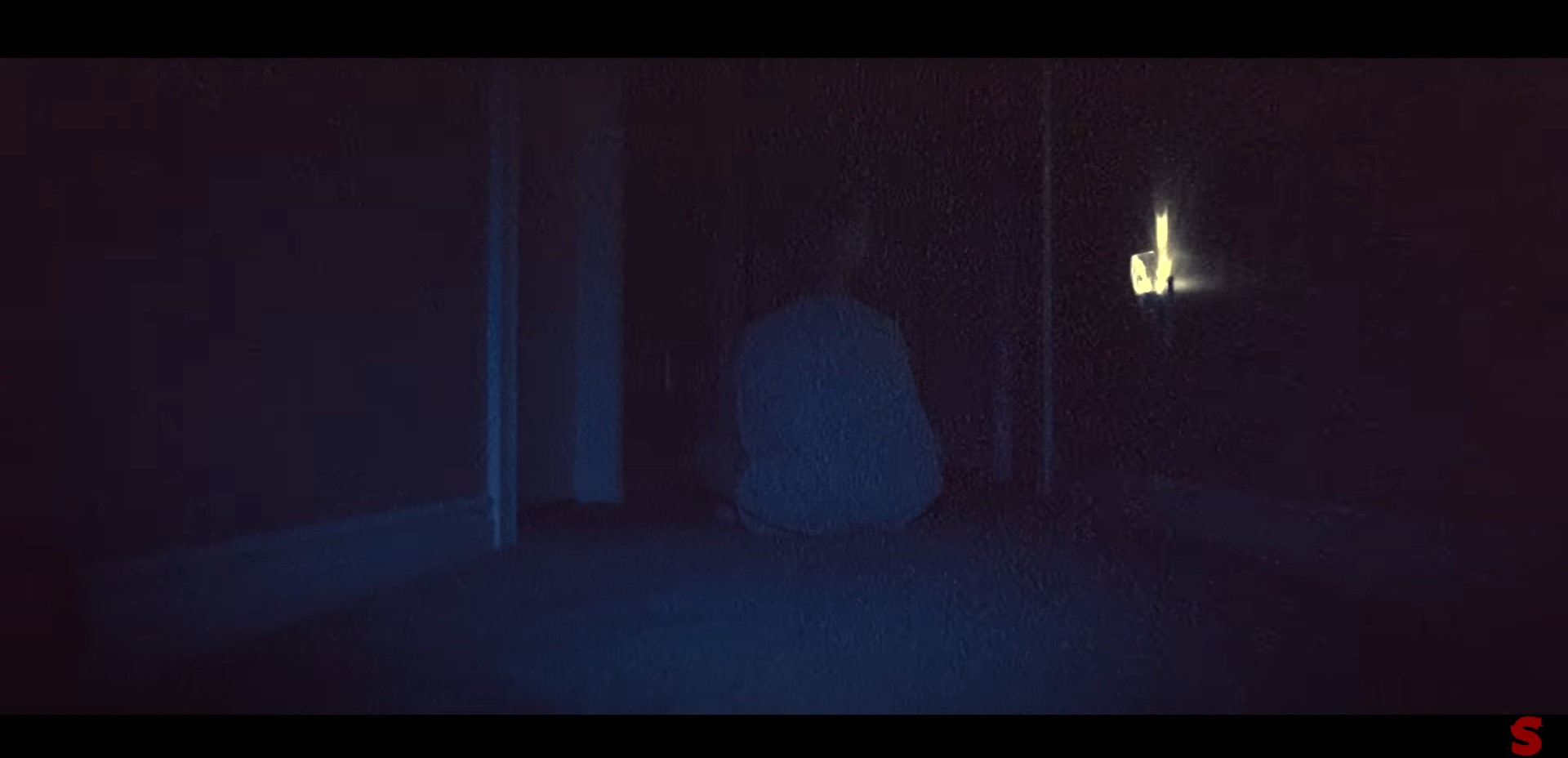
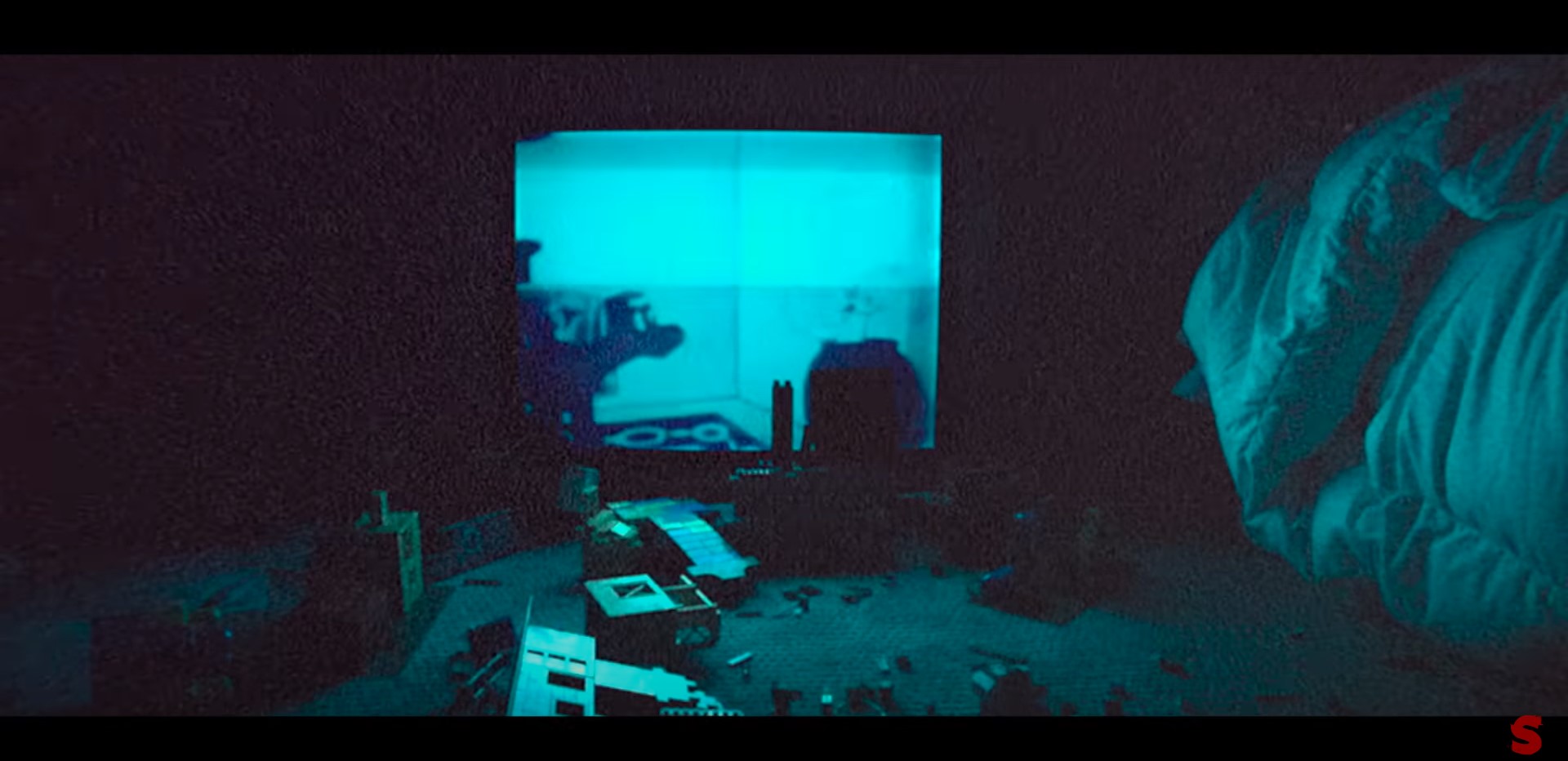
A night of silence is disturbed when a young boy, Kevin, falls down the stairs of his two story home.  Rushed to the hospital to return to the same silence-soaked house, the restless boy and his sister Kaylee search for their dad who has suddenly vanished from his bedroom.  Doors, windows, and even the bathroom toilet has strangely disappeared right from sight.  Feeling scarred under the cover of isolated darkness, the siblings head downstairs to sleep on the couch softly lit b0 the fluorescent glow of the television set.  As they watch old cartoons, crayon, and build with large Legos, while catching a few ZZZs in between, strange noises resonate through the home, floor based objects are found stuck onto the walls and ceilings, and a twisted, omnipresent voice slips the siblings commands that exposes them the darkness from within the house.

Schismatically different from any other spine-taut chills ever experienced before, Kyle Edward Ball’s written-and-directed 2022 Shudder exclusive “Skinamarink” is no joyful and innocent children’s song in the filmmaker’s debut feature film.  Based and expanded upon Ball’s 2020 short film entitled “Heck,” viewers will be enveloped and swallowed by the very core of childhood fears that plays like a fever dream, or a distant nightmare, where faces are a blur, spatial direction is nothing more than theoretical concept, and the voices around us are distorted, muffled, and cold.  “Skinamarink” offers little warmth under constant blanket of darkness and leaves no room for hope when parents are removed from the picture.  What’s Ball leaves behind is primordial and innate terror that rarely can be seen straightforward and lucid.  The Canadian picture, which was filmed in Ball’s childhood home in Alberta, is a micro-budget production of ERO Picture Company, distributed by Bayview Entertainment, Shudder, and IFC Midnight, crowdfunded by Seed & Spark contributors and produced by “Texas Road” producer, Dylan Pearce.

Shot over the course of a week’s time, “Skinamarink” works more like CCTV footage recording the static surroundings within the scope of the lens.  The cast is small, rarely visible, and when visible, they are often obscured or never directly focused upon to mint atmospheric dread.  Two parents.  Two children.  A nuclear family becomes the objective of an omnipresent, ominous presence, but there are concerning questions about the integrity of the family that Ball incites with clues of broken household.  Father and mother briefly make an appearance, or with one of them just their voice, throughout the course of the night, restricted their attendance exclusively around the children’s perspective that makes viewers shrink and become engulfed in childish fears – sometimes they are adult fears as well – of the dark and of being separated from parents.  Lucas Paul and Dali Rose Tetreault as kids Kevin and Kaylee kill their seldomly seen performances with the patter of little feet running through the house and up-and-down stairs, their soft, angelic voices whispering to each other and calling out for their father, and when briefly in frame, or at least the back of their heads, they manage to complete the succinct shot just in the way Ball intends to secrete fear from our every pore amongst the quiet and stillness.  “Skinamarink” is not a character-driven film in the least as Ball cherishes a chilling atmospheric horror so father (Ross Paul, Lucas’s real life dad) and mother (Jamie Hill, “Grotesque”) receive what essentially is cameo roles to establish a feeling of lost when they’re gone and are perhaps the easiest roles the two actors have ever taken and turn out to be the most eerily effective on screen and over the audio track.

“Skinamarink” experiments more with surroundings, audio and visual senses, and common inborn anxieties rather than progressed by traditional methods of character dynamics and that is where the film will be conflict-ridden and divisive amongst the niche group of diehard horror fans.  General audiences will find “Skinamarink” to be a bore without much popcorn pageantry to keep short-attention spans entertained and a disembodied villain.  Slow burn horror usually has an elevated element to it and Kyle Edward Ball certainly incorporates an open for interpretation access door for the deep-dive genre conspiratorialists to work overtime on reasoning and explaining “Skinamarink” to the masses still trying to process what they just experienced themselves after watching the film.  Theories will run amok with the most prominent being Kevin’s fall that reduced him to a coma state and what we experience is all in Kevin’s conscious-cracked cerebrum trying attempting interpret, at best guess, the dissolution of mom and dad’s relationship.  Again, this is just a theory as Ball aims for ambiguity to fester fathomable, one-solution explanations.   Perhaps in a type of narrative the world is not ready for, but in my opinion, “Skinamarink” fills in what is void from modern day horror, a uniquely fresh and chance-taking pervasive eidolon scare package to revitalize genre numbness with slow burn phobias.

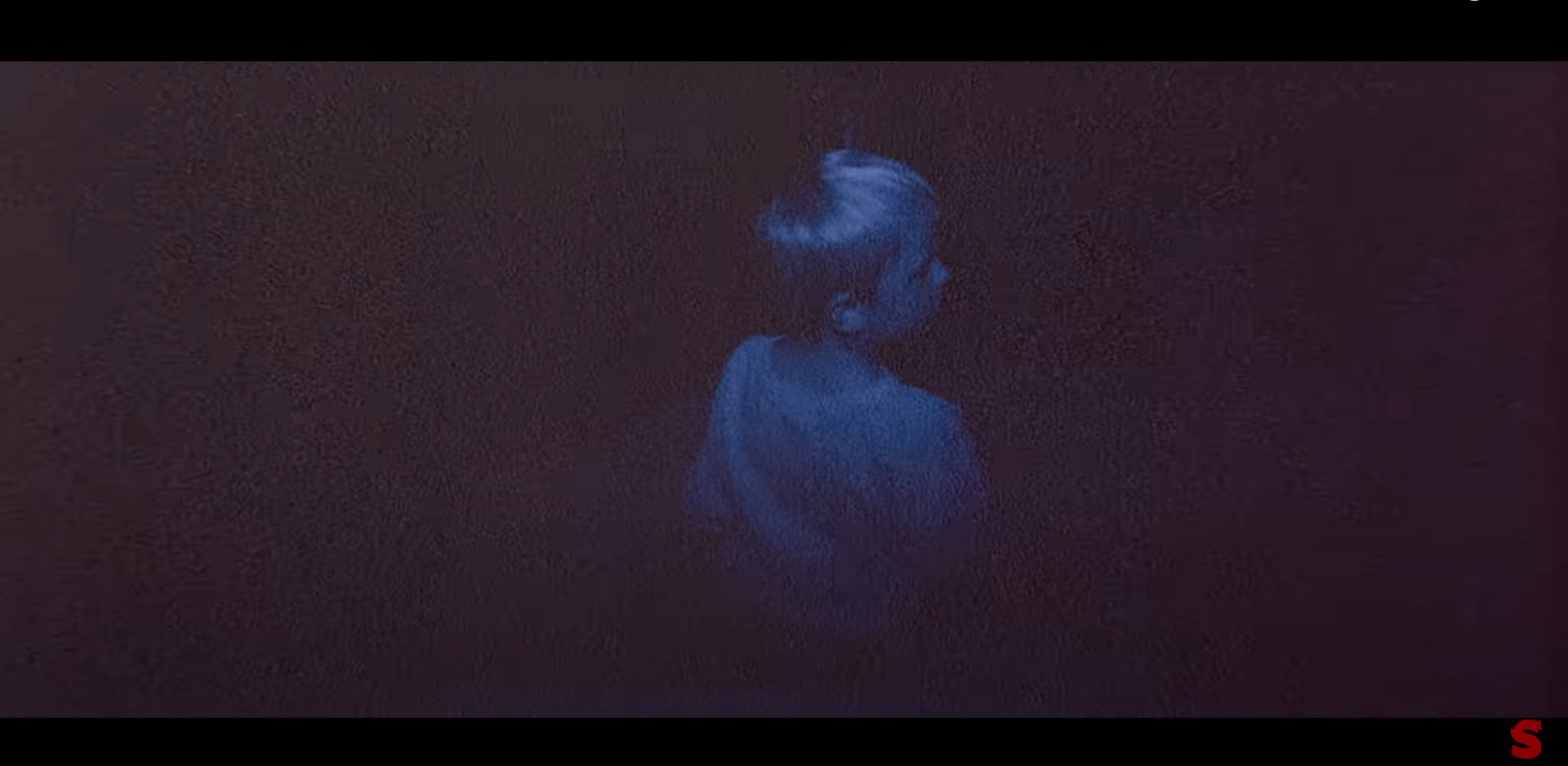
An original parapsychological paralyzer, “Skinamarink” arrives on a Blu-ray home video courtesy of Acorn Media International, the acquired UK distribution company of RLJ Entertainment.  Presented in a widescreen aspect ratio of 2.39:1, the AVC encoded BD25 sustains a purposefully intended lo-fi A/V feature, set to the date tune of 1995, much like when SOV quality films were abundantly popular because of their cost value and accessibility.  If you’re expecting depth of detail, you won’t get it from “Skinamarink’s” dense static approach that all but eliminates object definition.  Delineation is scarce to an effective scare tactic to which Ball tones the film; yet, the static is not, for lack of a better word, static as the current changes within the blips, increasing and decreasing visibility for desired poltergeist potency, if poltergeist is what we want to call it.  Set entirely in nighttime, sleepy home, the basking glow of tube television is the only semblance of color that emits a faint blue luminous while antiquated cartoons provide flat caricature coloring.  Certain scenes are shot in obvious night vision with the spherical focus that becomes unnatural in the frame, but there’s really nothing natural about Ball’s auteur style.  The lo-fi style choice continues into the English DTS-HD 5.1 surround mix that doesn’t exercise every channel.  Instead, we’re back to canned content with intentional hissing, popping, and distorted tracks.  Aside from a couple of innate audio recordings of a squeaking closet door, all the other ambient audio and dialogue is done after the fact in post-production to be rendered appropriately misshaped and muddled.  There’s also no score, retaining realism of a hushed house sound design to pay heed to soft footsteps and other delicate and mortifying milieu noises.  Depending on your audio setup, subtitles may be your friend here as the whispers are so low, they’re nearly inaudible.  There are a handful of scenes that have burned in English subtitles for that very reason, but full menu English captioning is available too for the minute amount of dialogue.  Special features only include an audio commentary track with the director and director of photography Jamie McRae.  Acorn Media’s release mirrors the U.S.’s RLJ Entertainment’s Blu-ray with the exception of a slightly thicker Blu-ray snapper. The front cover denotes essentially what to expect in the future, a low-resolution and a blue-toned, dark, inverted screenshot image of the young boy; this scene also translates to the disc art.  Encoded with a region B playback, “Skinamarink” comes UK certified 15 for strong horror and sustained threat in its 100-minute runtime.  Take my advice:  there’s nothing quite like “Skinamarink” outside the experimental gallimaufry but it’s sleepy time nature should not be viewed at the late-night weary hours or else it’ll lull you into a nightmare of your own.

The Kids Aren’t All Right in “Skinamarink” on Blu-ray!

A Stop-Motion EVILscape of Totalitarian Hell! “Mad God” reviewed! (Acorn Media International / Blu-ray)

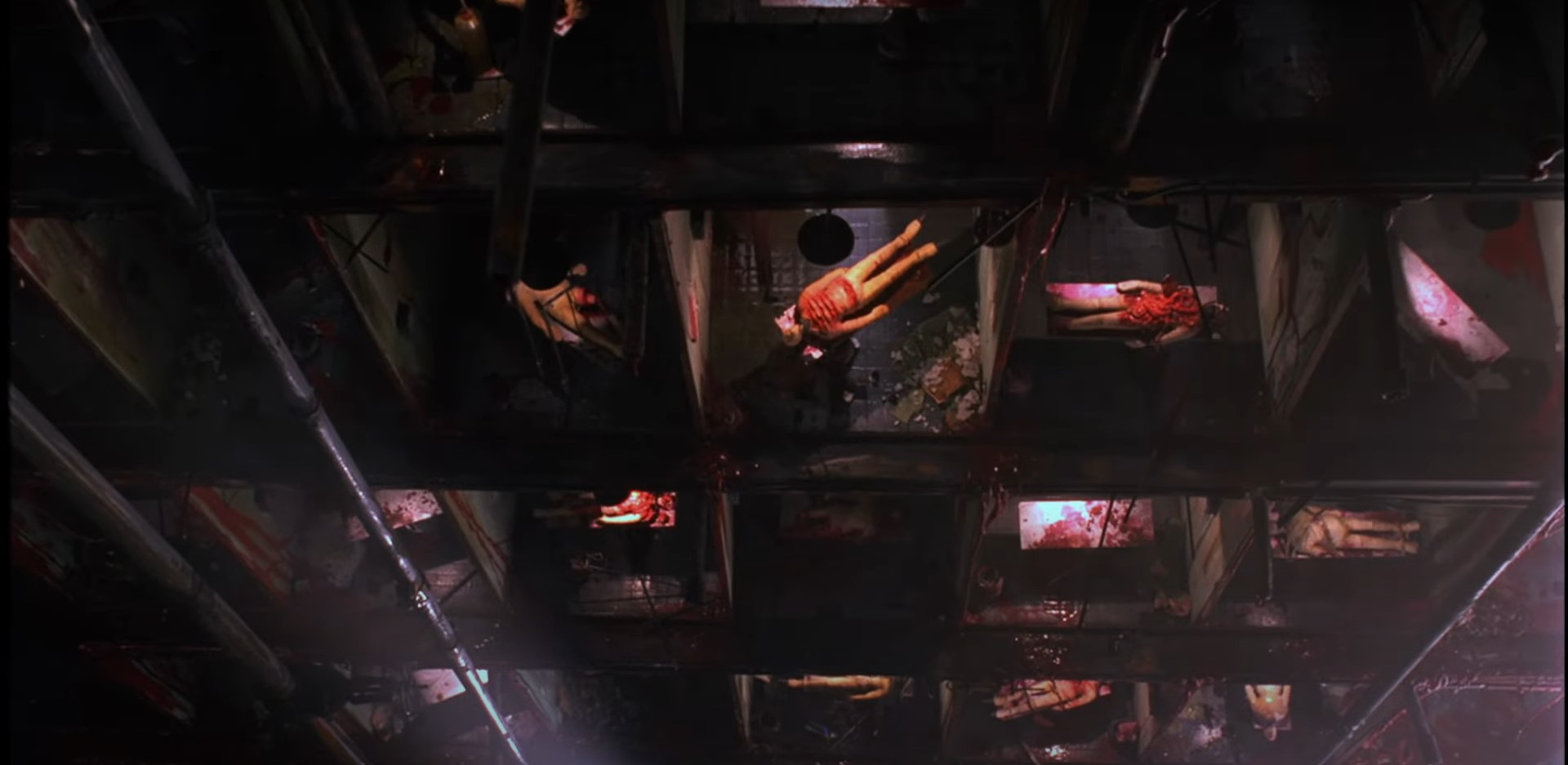
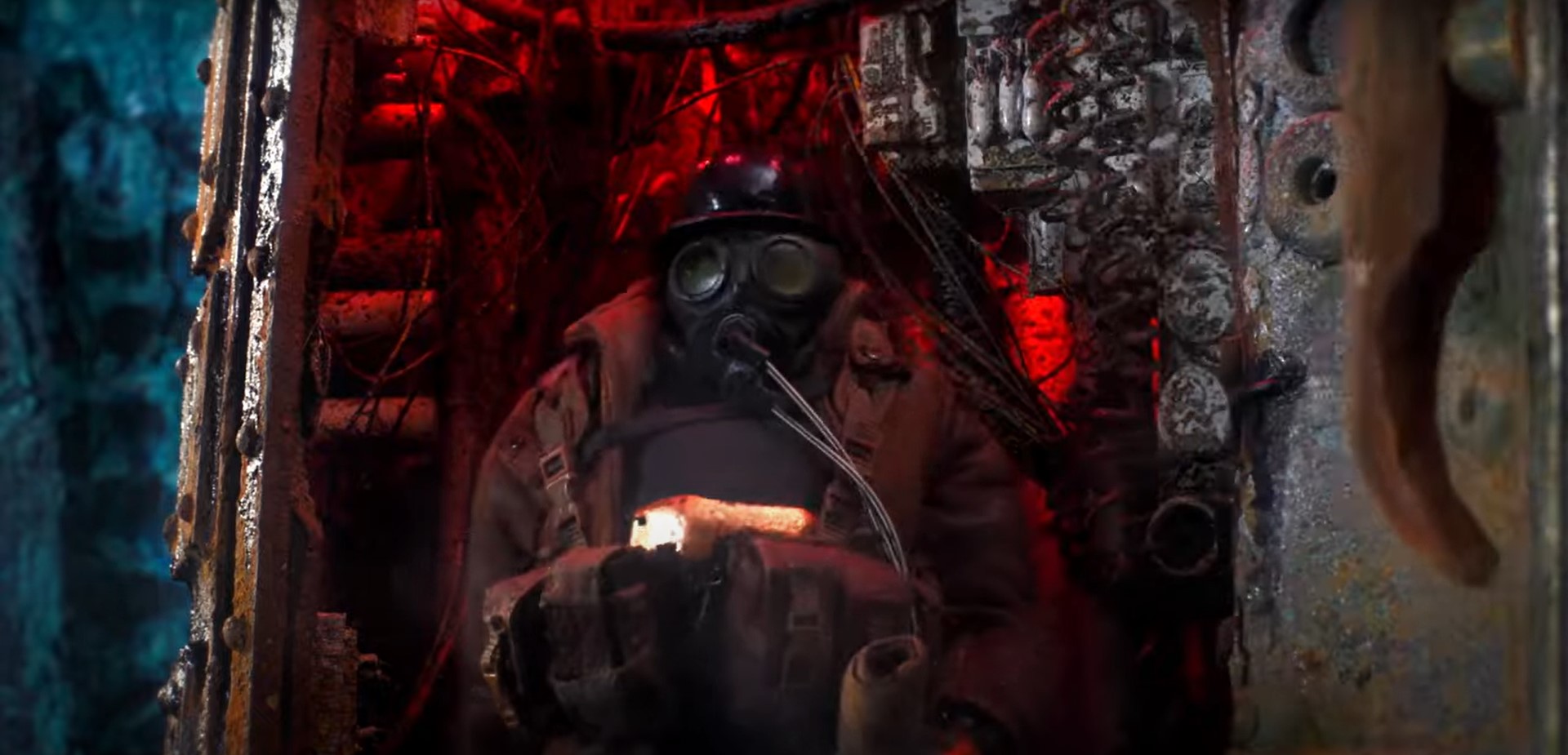
Descending from above into the depths of grotesque terror and suffering, The Assassin steps out of the drop pod with a gas mask, industrial armor, a suitcase, and a crumbling map.  Bearing witness to the surrounding horrors – cruel experimentations, enslaved beasts, tortured manufactured slave laborers, dog-eat-dog atrocities – The Assassin sallies forth, descending deeper into the primordial pit.  The missioned at hand is to set an explosive charge that will eradicate out the ruinous, oppressive filth that aims to corrupt the everything, but there the darkness won’t be so easily wiped away and The Assassin must stay in the shadows and out of sight or else become a tortured fixture in the fray. 

“Mad God?”  More like mad genius!  Phil Tippett’s 34-year, stop-motion, pet-project “Mad God” is the purest Hell I’ve ever seen.  Tippet, famed stop-motion and puppeteer effects artist responsible for the iconic visual effects and stop motion work in fan films such as the original “Star Wars” saga and the “Robocop” franchise as well as cult favorites “Howard the Duck,” “Piranha” and “House II:  The Second Story,” started “Mad God” in 1987 that become more of an ambitious project than originally thought and once the 1993 saw a computer generated effects revolution with a little prehistoric dino-disaster film called “Jurassic Park”, a film Tippett also did work on as dinosaur movement consulting supervisor because of his expertise on the short “Prehistoric Beasts,” the gifted animator had shelved “Mad God” for about 20 years with the though a newer, shiner, computer-driven animation would be the next best thing studios would ardently desire. This two-decade span gave Tippett time to outline objectives and really expand upon ideas of how “Mad God” should look and feel when conveyed. Tippett co-produces the film with Jack Morrissey under Tippett Studios and presented by IFC Midnight and AMC’s Shudder.

Just because “Mad God” is dialogue-less doesn’t make the “Mad God” voiceless. All around, in every scene, is a disturbing commentary or an unhinged metaphor bred mostly out of the animatable inanimate, but there are some live action performances weaved into the mad tapestry of monstrous titans and despot of cruelty. The most clearly discernible face of the lot comes from a director, “Repo Man” and “Sid and Nancy” director Alex Cox to be more exact. Cox plays the long nailed and regime-driven “Last Man,” representing divine leadership of a modest, dieselpunk heaven above a more organic and grotesque hell-type world. Only on screen for perhaps a total of 5-to-10 minutes, Cox grunts and gestures with precision articulation to give off a fair and just ruler impression. Niketa Roman plays the next real person to have some substantial screen time. Less of an actress and more of an animator by trade, with credits including “Blade II,” “Jurassic World,” and “Star Wars: Episode IX – The Rise of Skywalker,” Roman finds an expressive talent in her striking, heavily made-up eyes overtop a surgical mask and gown when whisking away one of the Assassin’s souls to be studied and experimented on by a broodingly ethereal entity. Other micro-performances include minor roles of tortured monkeys, various iron-cladded Assassins, witches, and gnomes from Satish Ratakonda, Harper Gibbons, Arnie Hain, David Laur, Chris Morley, Anthony Ruivivar, Tucker Gibbons, Tom Gibbons, Hans Brekke, and Jake Freytag.

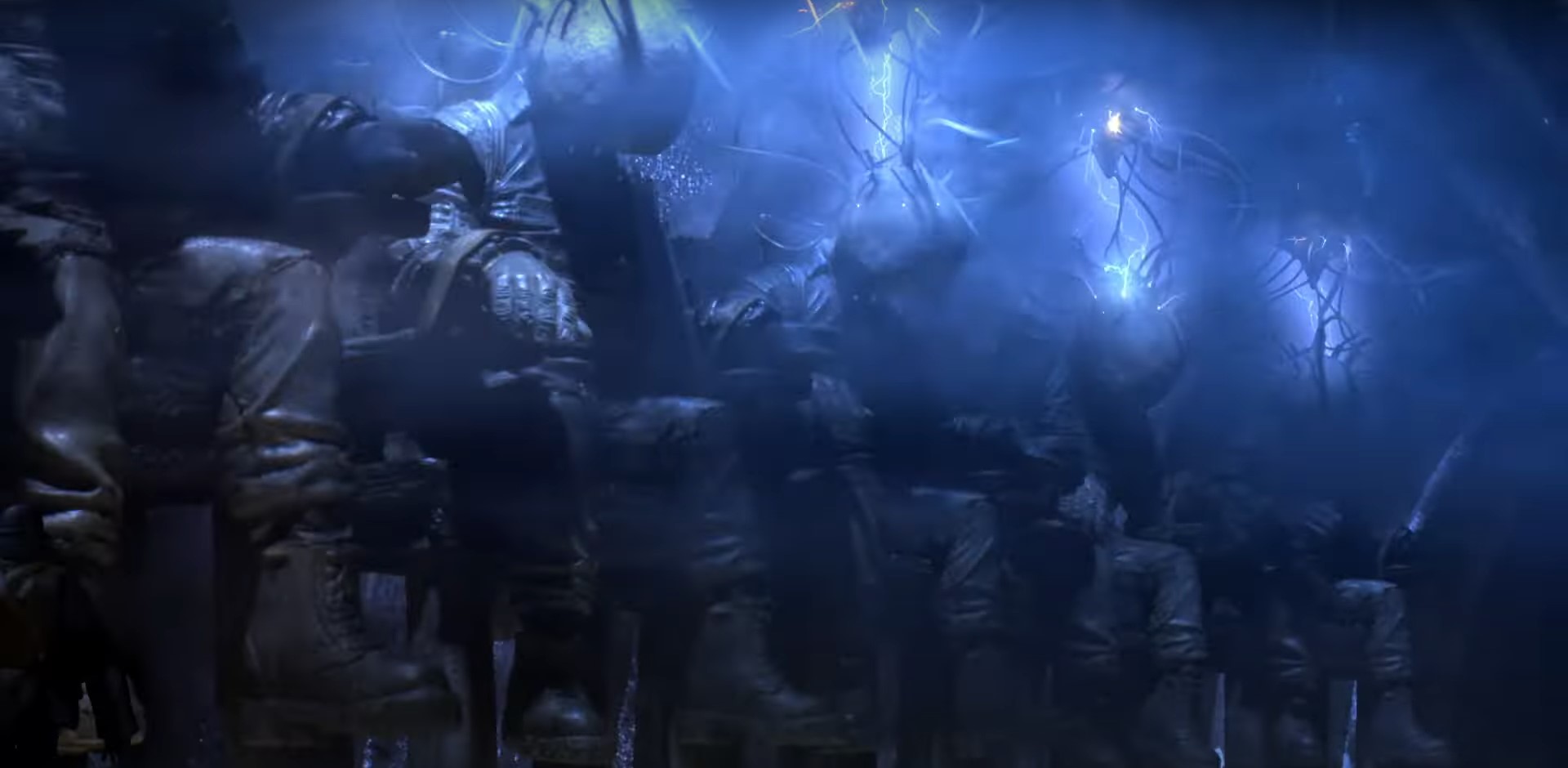
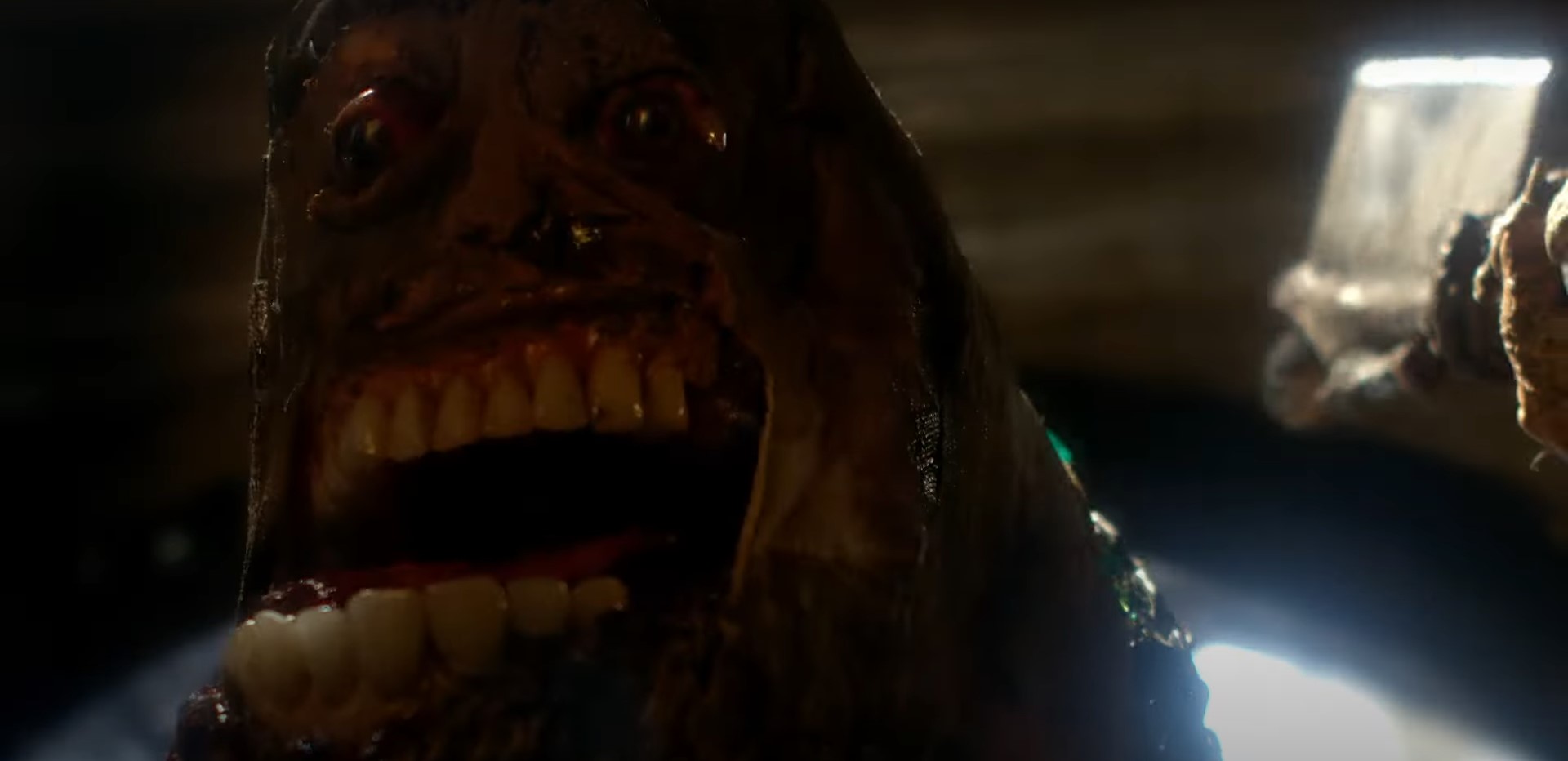
“Mad God’s” possibilities and interpretations are endless. Phil Tippett pulls from a motley of inspiration that includes, but is not limited to the fantastical, sometimes hellish, paintings of Hieronymus Bosch, the wacky, often gonzo animation of Tex Avery, the stop-motion titans of Nathan Juran’s “The 7 Voyages of Sinbad, and Dante’s Inferno. The mind is a deranged and wonderful creator of the macabre and of the aberrant and as a receiving device, the mind can also, if opened up enough, accept such visceral visuals of bowel fluids being jettisoned out by electric shock and into the mouth of an organic machine that manufactures fibrous, lumbering humanoids for slave labor. Like lemmings in a way, these exploited shadows of human beings will succumb under their own demise or at the gnarled and unforgiving hands of their master’s gargoyleish work-whippers. “Mad God’s” eye for detail is greatly disturbing to see cities in monolithic cities and cultures in ruins, the composite depth between foreground and background action in one scene reminds me a lot of older works like “The Neverending Story” or “Clash of the Titans” that create a vast scale with smaller objects, and the playful irony of a nightmare netherworld being commanded over by a baby’s babble doesn’t nearly seem to a stretch from the truth. As the multiple Assassins trek through the chaos and the insanity, an overwhelming sense of life is meaningless scores the landscape as there isn’t an ounce of compassion or empathy to be had or displayed for any of the malformed creatures and wretched humans. A laborer is crushed by a stone – no biggie. A cute and cuddle animal is attacked and whisked away for food storage – all in the day of cruelty. A man is stripped of his armored gear, injected with a mysterious substance, and prepped for exploratory surgery – all for show in front of a live clapping and cheering audience. The only compassion I can make sense is the Assassin’s mission to blow up this God-forsaken world of eternal suffering to restart the heart. Madness grinds bones, fillets spirits, and crushes souls in Phil Tippet’s Godless underworld and can haunt you even while you’re awake.

A surreal stop-motion wonder and excruciation, “Mad God” brings all the horrors of the subconscious mind to the surface with a high-definition, 1080p Blu-ray. The region 2, PAL encoded release from UK distributor Acorn Media International presents Tippet’s tour de force in a widescreen 1.78:1 aspect ratio and the image is purposefully varied to exhibit different strokes of craft as students would assist Tippet with contrastive topographies to carve out an apocalypse-riddled world that’s in a state of a violet retrogression. Tippet and Tippet Studio visual effects artist, Chris Morley, pivot to “Mad God’s” cinematography appearance with brooding, darker tones that illuminate and are erratically sparked with warm neon glows or brilliant voltage streaming through highly conductive bodies. Some earlier scenes from the late 80’s have natural grain from the 35mm stock and then later, more recent scenes have a cleaner, sleeker look with the digital recording. The Dolby Digital 5.1 surround sound mix has an all-embracing range, mostly with sudden and alarming blazons of guttural roars, unnerving baby babble, elongated zaps and shocks, and the indistinct yips and yaps of a mad world, that sustains on a line of being lesser than crisp, which might be contributed to the inexact capture of depth as sometimes all sounds casts like from inside the reverberations of a fishbowl. Descriptive SDH subtitles are available. Bonus features include audio commentary with Phil Tippett and “Pan’s Labyrinth’s” Guillermo del Toro, cast & crew commentary, an interview with Phil Tippett, “Mad God’s” various painter, cartoonist, animator, and psychology inspirations, the making-of “Mad God,” Maya Tippett’s Worse than the Demon – Phil Tippet’s daughter’s 12-minute thesis documentary of her father’s 34-year passion project journey, Academy of Art & “Mad God,” a behind-the-scenes montage, and a behind-the-scenes photo gallery. “Mad God” has a runtime of 84 minutes and is UK certified 18 for strong violence and gore. A motion picture diorama of Phil Tippett’s neoteric psyche, “Mad God” is wrath wrapped in heart and soul, two descriptors not topmost on the surface but are meticulously integrated into every frame of pain, suffering, and despair.

Starve EVIL With Unseen Faith. “A Banquet” reviewed! (Second Sight / Blu-ray)

After the long-term care of her terminally ill suffering husband, he suddenly commits suicide right in front of her and right in front of their oldest daughter who just came home.  Holly must now pull it together for her two teenage daughters, Betsey and Isabelle.  Drowning in debt to maintain a wealth front of normalcy, Holly puts on the facade to juggle life’s adversities to order to keep the family above water, but when Betsey is overcome by an apocalyptic vision that intermittently possesses her behavior, Holly’s unsure of how to cope as any threats of committing Betsey for treatment is rebutted by talks of suicide.   Betsey goes into deep trances, deep sleeps, and won’t eat despite not losing any weight and as imaginations run wild of what’s driving her unusual behavior, Holly must contend to survive and triumph not only in her daughter’s wellbeing but in all of the seemingly insurmountable problems threatening to tumble down and crush her spirit.

If you’re a fan of elevated horror then Ruth Paxton’s debut dysfunctional family drama horror, “A Banquet,” will tickle your thinking pickle.  While some would argue there is no need for elevated horror in the genre, sometimes exercising the old thinker can be immensely stimulating as well as scary in the same breath.  The 2021 psychological thriller-horror hailing from the United Kingdom was one of the first productions shot in the thick of government issued pandemic lockdowns that tossed the moviemaking job market into a frenzy, scary void of uncertainly and, what seemed like, an eternal limbo, similar to what “A Banquet” offers in its multifarious themes and interpretations that involve faith and religion, family hierarchy, and postural image.  With many departmental crews and cast out of a job and unable to find work during forced lockdowns, “A Banquet” became a beacon of hope and a chance to indulge a passion no matter how little it paid.  “A Banquet” is penned by Justin Bull (“Merge”) and was secured by first time producer Leonora Darby with Nik Bower (“Replicas”), James Harris (47 Meters Down”), Mark Lane “Cockneys vs Zombies”), and Laure Vaysse (“A Dark Place”) co-producing the conglomerated production from HanWay Films, Riverstone Pictures, Tea Shop Productions, and Reliance Entertainment Productions 8 LTD.

“A Banquet” surrounds around a nuclear family minus the patriarch who immediately removed from the picture within the first five-minute opener in a powerful scene of weary difficulty, distressing pain, and a harsh untethering of a burden that begins the inklings of the uncanny to come. Enter mother Holly (Sienne Guillory, Paul W.S. Anderson’s “Resident Evil” franchise) and her two daughters, Betsey (Jessica Alexander) and Isabelle (Ruby Stokes), into the frame weeks, maybe months later, and resided to the loss. Playing the center of concern is the raven-haired Jessica Alexander in what is one of her first feature film performances and it’s a doozy.  As Betsey, a mild-manner older teenage girl at the forefront of adulthood, Alexander earns the chance to showcase herself in a variety of ways with a role that transcends from a docile daughter to a variable vessel of unknown origin that’s haunting and unpredictable as you can never tell what’s taken control over Betsey is naturally good or evil.  Alexander even gets to dip her toes into, or rather dig her fingers into, gross and horrifying practical effects with brilliant results.  Opposite Alexander in the role of the mother, Holly, is Sienna Guillory, a beguiling veteran actress now in the throes of maintaining the routine and keeping appearances aggregated up to snuff.  Guillory exudes a bottled-up pressure that’s so immense it can be translate right off the screen and into the viewer.  There’s plenty of tension in the story but most of it is concentrated right on Guillory’s embodiment of a mother treading desperately in deep waters.  A maelstrom of frustration, fear, loathing, and neglect eviscerate Holly open to shoulder her family’s bleeding and she claws frantically, with poise, to cauterize the fissure.  Isabelle is a fascinating and almost unintentionally forgotten character that is meant to evoke that effect as the neglected younger sister.  While we’re constantly orbiting Holly and Betsey’s, we lose track of Ruby Stokes’s Isabelle yet the upcoming star for Netflix’s “Lockwood and Co.” Stokes paints a potent psychological picture of Isabelle being on the backburner.  Raw and tragic, Stokes subtly pushes Isabelle, who initially is the more cavalier and disobedient of the two sisters, to strive for attention in her own way whether be that longing glance into the stands when her mother isn’t paying her mind during figuring skating instruction or wanting to reluctantly engage in alcohol and sex just to outlet that notice me energy elsewhere.  Concluding this bloodline of women is the more draconian matriarch, Grandmother June, with an uncompromising and plain-spoken fascia erected by Lindsay Duncan (“Body Parts”).  Duncan’s fine snide performance compounds the pressure on Holly and is a cold bucket of ice water to her granddaughters when speaking her mind, telling them simply stop pretending, and remind them of their mother’s own historical mental problems in a matter-of-fact tone.  Between the four, there’s individualistic dominance over each of their domain without an ounce of withdraw or relief until the bitter end and that dreadful dynamic sets the tone for the “A Banquet” austere veneer and tone.

“A Banquet” is a lot to unbox and chew on in this women-driven created film.  Open for a many number of interpretations, based on one own’s spiritual outlook or personal opinions, Ruth Paxton tees up a broader theme of centrical growth of stepping outside another’s shadow.  The message can be applied to Holly and her two daughters as each one of them attempts to move forward or past a routine of some form of contempt.  Isabelle is trying to get out of her sister’s shadow, Holly bristles against her overbearing mother, and Betsey is being supernaturally guided through a symbolically painful transition of growing up into an adult as if the process came naturally. Blunt defiant moments shine Betsey’s overall separation from mother’s control, such as threatening to kill herself if her mother institutionalizes her or in during the number of elaborately prepped dinners that Holly slave over are just pushed aside and untouched by Betsey. Those dinners, in themselves, are a sign of privileged with fine dining right at their fingertips with no sign of hot dogs or sloppy joes in sight. Holly strives to maintain that sense of luxury, which is another form of control but, in this case, is Holly’s mother June whose elitist fundamentals enslave Holly to live up to the hype. Systematically, each member of the family, working up the ladder from youngest to oldest, breaks the inherent status quo. What Betsey undergoes is mystically charged after she emerges from the woods a changed woman and what might seem like a possession of sorts, we don’t exactly know if the extent of what inhabits her is wicked or actually good as the pendulum sways constantly between being enlightened and being cursed. There’s plenty of allusions toward a religious experience with encouragement of faith and rapture talk that not only spooks Holly but also makes her the primary subject of Betsey’s claim to save. When the time does come, and Betsey passes through a substitutionary atonement, the end scene shows Holly being embraced by a candescent light that illuminates from within her. Is it being saved or is it something else? Ruth Paxton smashes her first feature with an elevated deconstruction of a family obliviously rotting at the core and attacks the film with dispirited ambiance sewn to dread.

Feast your eyes on the new limited-edition Blu-ray set of Ruth Paxton’s “A Banquet” from Second Sight films. The region B, PAL encoded UK boxset presents the film in 1080p widescreen 2.39:1 aspect ratio with a frame rate of 23-24 fps. David Liddel’s deep and encroaching cinematography of somber is highly effective in dulling out any kind of hope that might try to sneak in and with Liddel’s close-to-mid shots of macro-sized foods of all fresh and decaying varieties and in the middle of the more volatile struggles between mother and daughter opens up “A Banquet” to a plethora scene being uncomfortable moments. Details are sharp and colors are about as rich as Liddel can make them inside a grey-covered world. The English language set comes with two audio options: a DTS-HD 5.1 and a LPCM 2.0 stereo. DTS is clearly more robust through the various channels with a well-balanced mix. Other than a few outlier moments in the forest that disperse the dialogue in a naggingly boxy echo that doesn’t fit the environment, dialogue is discerningly clean and clear of obstructions and damage, as if there would be any on a digital record. Optional English subtitles are also available. Bonus material includes an interview with director Ruth Paxton Deformity of the Flesh on creating her first film during the height of the pandemic, an interview with star Jessica Alexander Improvised Exorcism in which she discusses her experience soup-to-nuts from hiring to completion, an interview with producer Leonora Darby Producing a Feast who notes about the difficulties of being a first-time producer in pandemic time, an interview with cinematographer David Liddel Dark Edges on how he creates “A Banquet’s” gloomy aura and creative shooting angles, the Q&A from Glasgow Film Festival with Paxton, Alexander, and Sienna Guillory, and a making of featurette. The limited-edition physical boxset is a sturdy vessel of beauty with a rigid slipcase with new artwork by Jen Davies, a 56-page soft cover picture and essay book with thoughtful examinations by novelist Alexandra Heller-Nicholas (“1000 Women in Horror”), film critic and writer Jennie Kermode, and Heather Wixsn, the managing editor of the Daily Dead. The contents round out with 6 collectable art cards. The film has a runtime of 97 minutes and is certified 15 for strong threat, language, suicide, self-harm, and drug misuse. “A Banquet” is lavishly cataclysmic as a divinely damning dish of a broken, dysfunctional family made to order by first time director Ruth Paxton with more to say.

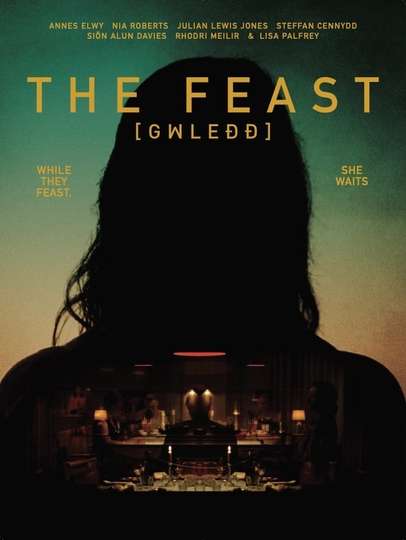
The Earth is Healing with EVIL Intentions. “The Feast” reviewed (IFC Midnight / Digital Screener)

Glenda is frantically planning a dinner party for seven people at her newly constructed, modern rural home in the Welsh countryside. In order to quickly prepare, Glenda hires a young waitress, Cadi, from the local pub-restaurant as a pair of extra hands, but becomes intertwined with Glenda’s eccentric and dysfunctional family and friends who are drug addicts, sexual deviants, narcissists, and greedily apathetic in respecting local Welsh traditions and lands. However, Cadi keeps her own secret, one that’ll will transform the joyous dinner party into a night of deadly retribution for all their sins upon Earth.

For a language once on the brink of extinction and only spoken by less than a million people, probably even more less than that estimate, director Lee Haven Jones’ debut feature film, “The Feast,” reintroduces the language to many of us with revitalizing the Celtic-tradition Welsh tongue by implementing it as the entire dialect for his introductory from the United Kingdom. Jones’ eco-horror clashes archaic Welsh lore and traditions with the newfangled inattentive and neglectful modernism from a script by Roger Williams, a frequent collaborator with Jones on previous credits such as the split-heritage documentary “Galesa” and the short-lived drama series drama series, “Tir,” about foreign invaders intrusively adding financial hardships Welsh landowners. Also known as “Gwledd” on script in Wales, “The Feast” is executively produced by Jones and Williams as well as Gwenllian Gravelle, and Paul Higgins under an amass of production companies in the British Film Institute (with funds stemming from the national lottery), Ffilm Cymru Wales, S4C, Fields Park and, in association with, Great Point Media and Melville Media Limited.

THE FEAST Still 1

A dinner party fit for the scum of society comes to mind as Jones rounds the horn introducing Glenda’s passively confrontational family whom all are on display for having vices unsuitable for polite society. Beginning with her sons, two brothers shamed by their parents into hiding from out of the public eye by whisking them away to their rural abode, are portrayed by actors Steffan Cennydd as the drug addicted and party loafer Guto and Sion Alun Davies as the an intelligent and sterile sociopath with a sordid past involving accusing women. There’s also her husband Gwyn (Julian Lewis Jones, “Elfie Hopkins: Cannibal Hunter”) with a sleazy demeanor and an quenchable thirst for money. The family friend Euros (Rhodri Meilir) lives and breathes squeezing every ouch of worth from the dollar signs he envisions plastered on everything to the point that his pigheadedness will eventually get the better of him. Lastly, there is Glenda (Nia Roberts) herself who is a pursuer of the finer, material things eager to display them proudly no matter the cost of bloodshed. Roger Williams’ characters are written absolutely lush with cancerous class and a vague sense of their surroundings as they stew proudly being one boldly intense personality to the next; however, they become becomes cleaved by the house party help, Cadi, with a shark-circling simplicity by Annes Elwy. Elwy barely has any dialogue as she submerses Cadi, quietly like a submarine silently churning the waters, into the family’s eclectic affairs and studying their every movement with a naïve gaze, but there is nothing naïve about Cadi’s uncomfortable silence that becomes heedlessly unnoticed by, no surprise here, the group of narcissists. “The Feast” rounds out the cast with Lisa Palfrey, the only rational head with surprising little screen time after briefly unveiling a shocking revelation about just exactly who Glenda let in her home.

THE FEAST Still 2

2021 has been the year for under-the-radar, but oh so good, eco-horror.  Among the ranks following this years Ben Wheatley’s “In the Earth” and Jaco Bouwer’s “Gaia” comes the all-things-Welsh cautionary outlier that when pushed too far, when disturbed too much, and when reeking virally infused putrid, a vindictive reaper will come calling.  In this case, that harbinger of death takes the form of a landbound spirit rooted in lore with an insidiously coy wolf in sheep’s clothing mounting a strike with subtle, rancorous fangs by smothering them with their own debaucheries and vices.  “The Feast” will take a couple of viewings to fully digest the complete airy extent of Jones’ lax editing, under the cut and paste thumb of Kevin Jones, that can infrequently blur character timelines and presence in the story, as if plot points were forced into an unsure elucidation to connect the dots.  With a simmering horror on a spoke of unsettling imagery, the editing should have slightly been more binding to tighten gray areas; instead, “The Feast” has an abstract quality third act that not only chops up scenes, but also chops up bodies influentially consumed by the already self-destructing aspects. Some time must pass, a few days maybe, to let “The Feast” penetrate an understanding as it’s one of those flicks, wrapped loosely in cultural folklore or maybe told with the assumption non-Welsh viewers will grasp, the more thought about or written about, the more appreciation the film will disclose way after the credits roll.

THE FEAST Still 3

Funny how gravitating cultural folklore and nature grow an impeccable theme of doom as if shaping mythologies and a life-growing ecosystem equate to nothing more than a foreboding sense that one day mankind will become extinct at their own hand. “The Feast” portions a slice of that ominous pie, topped with Welsh lore and gore, coming to North America theaters and digital on-demand this November 19th, just in time for America’s feasting activities of Thanksgiving. The 93 minute, unrated film will be distributed by IFC Midnight, the sister label to IFC Films, owned and operated by AMC Networks Inc. Bjørn Ståle Bratberg serves as cinematographer who options to start with the fresh-air, blue-sky landscape of the Welsh countryside than slowly guide us, step-by-step into the character delinking from the natural, beautiful world into a more menacing night of harsh darkness and fervent flame to reveal true identities. Bratberg’s dim lighting seemingly imprisons the sordid family in the new and modern home that’s like a prison with a gray brick interior and has a room of relaxation for Glenda that is noted by a guest in resembling a prison cell. The message of revenge resounded loud and clear; “The Feast” lays down coruscating repercussions in reaping the land for one’s own benefit and Lee Haven Jones’ wayward timebomb evokes an upsetting fear and tension for a dinner party finale that is surely to go way-wrong in this different kind of revenge thriller.