A Man Looking for Answers Finds EVIL in Tijuana Instead! “Cursed in Baja” reviewed! (Anchor Bay Entertainment / Blu-ray)

Jeff Daniel Phillips’s “Cursed in Baja” on Blu-ray!

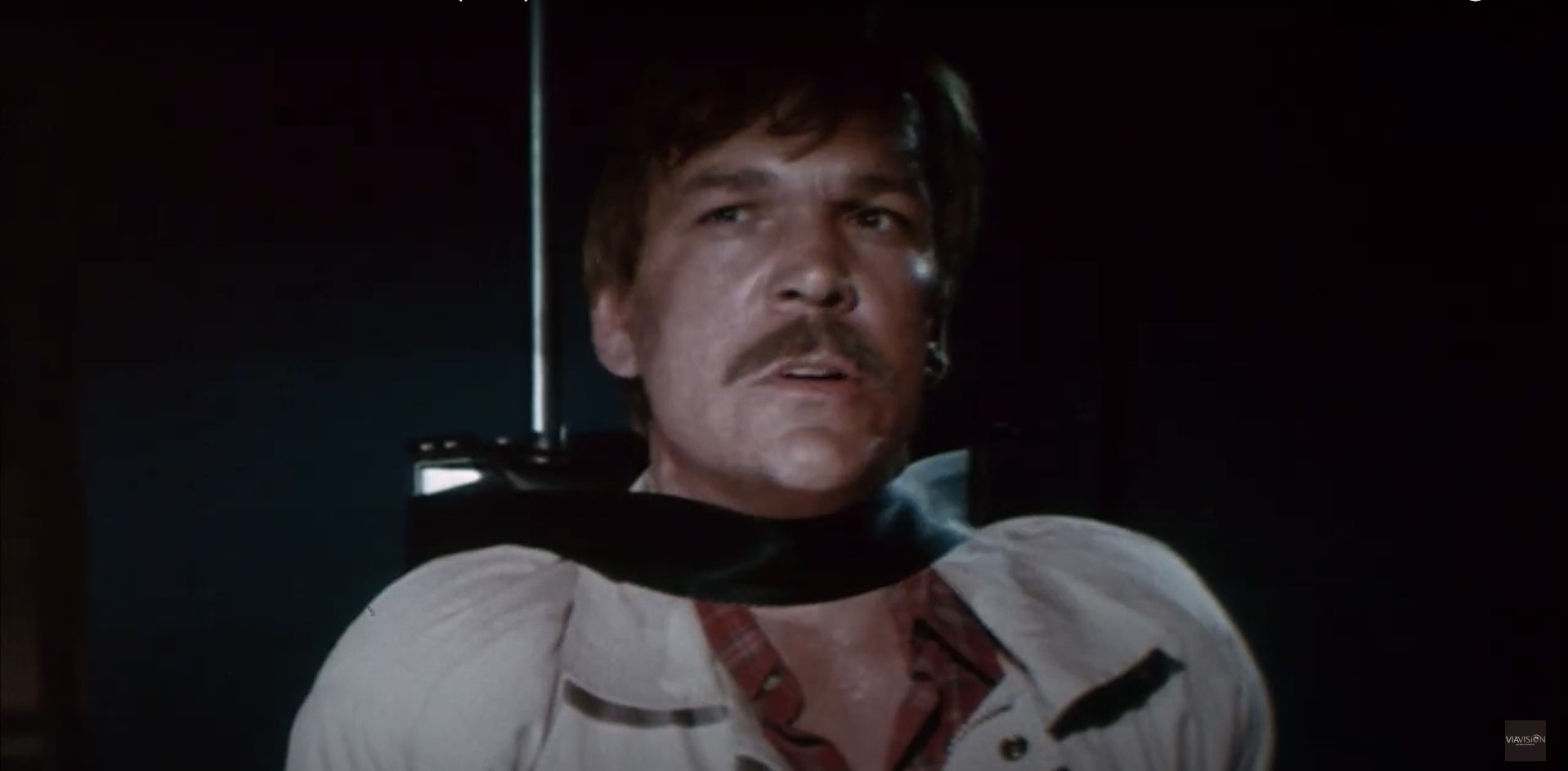
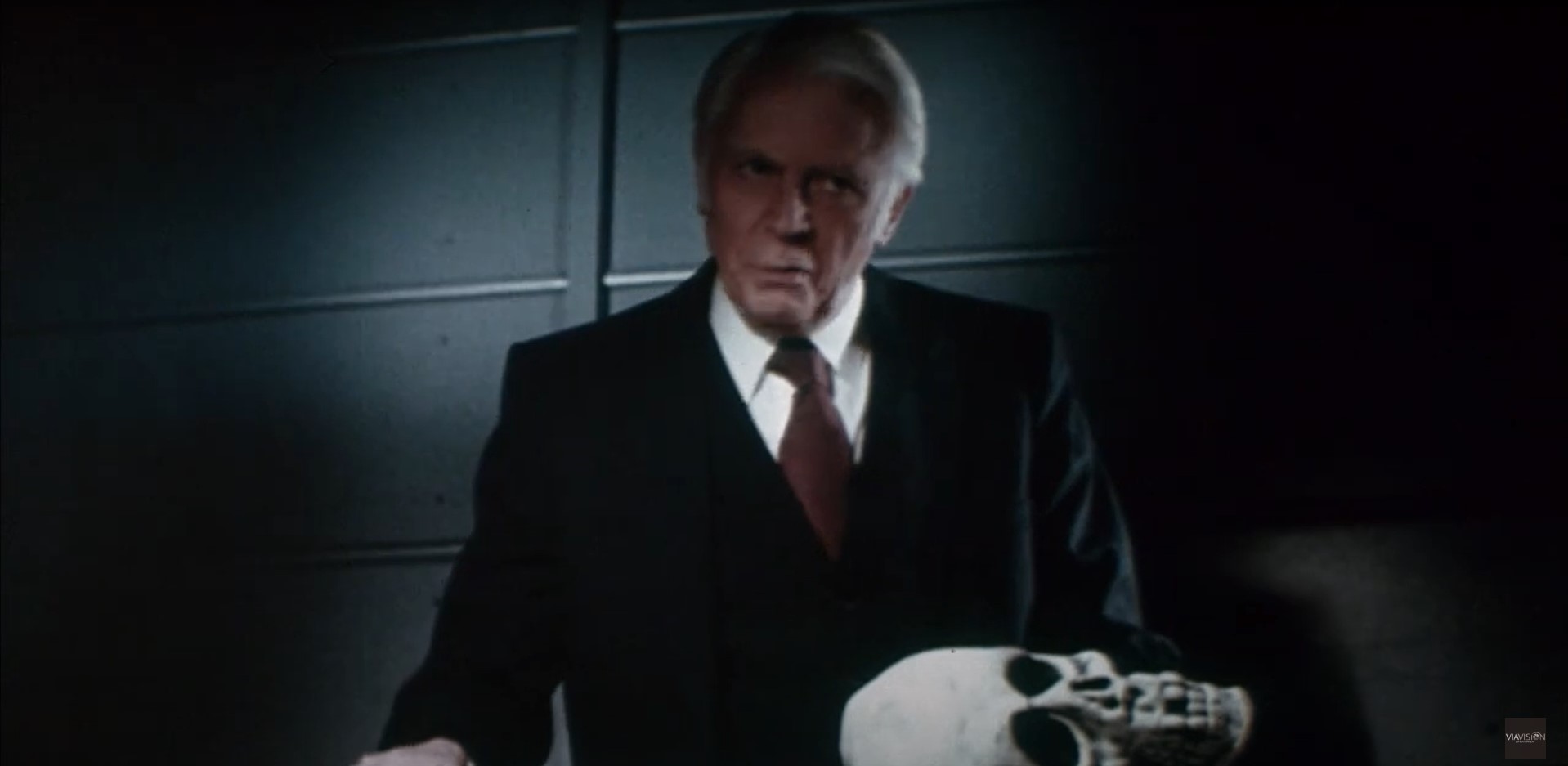
Ex-narcotics cop Pierlli is now a formerly incarcerated, rehabilitated man after suffering a mental breakdown from discovering the love of his life dead during a drug-fueled, kidnapping ordeal that sent him spiraling rogue.  Listless under medication and dragging his feet through the motions of a low paying maintenance man and janitorial job, Pierlli is contacted by his lover’s wealthy, depressed and dying parents to investigate and track down the disappearance of their grandson.  Reluctant to fall back into psychological swirl of pandemonium, he agrees to the case that leads him to Mexico despite the grandfather’s warnings of unsavory unlawful dealings with criminals .  After a few interviews with the grandson’s known associates, gathered by previous detectives who have since disappeared, he’s able to locate the now young man, living in cohabitation with a peculiar pair of outlying summoners who sacrifice the unwelcomed to a native beast of the land, a vicious chupacabra.

Out from under the cinematic and musical thumb the Rob Zombie rockabilly show, Jeff Daniel Phillips emerges with a project his shocking rocking collaborator and friend is not attached to in any way, shape, or form.  “Curse in Baja” is Phillips’s sophomore feature-length film in over a decade since the 2009 jailhouse thriller “Convict,” starring Kevin Durand, and too like his debut film, Phillips also provides the screenplay for the 2024 film that’s described as crime noir meets surrealist horror from Los Angeles to Tijuana.  “Curse in Baja” is a Camp Lee and Indigo Vision production with Kent Isaacs coproducing with Phillips as well as having a role and the revitalized Anchor Bay Entertainment execs Brian Katz and Thomas Zambeck supplying financials in support to release the movie on home video, co-presented with Traverse Terror, a company we’ve seen light of recently and covered films with “Bag of Lies” being the most recent.

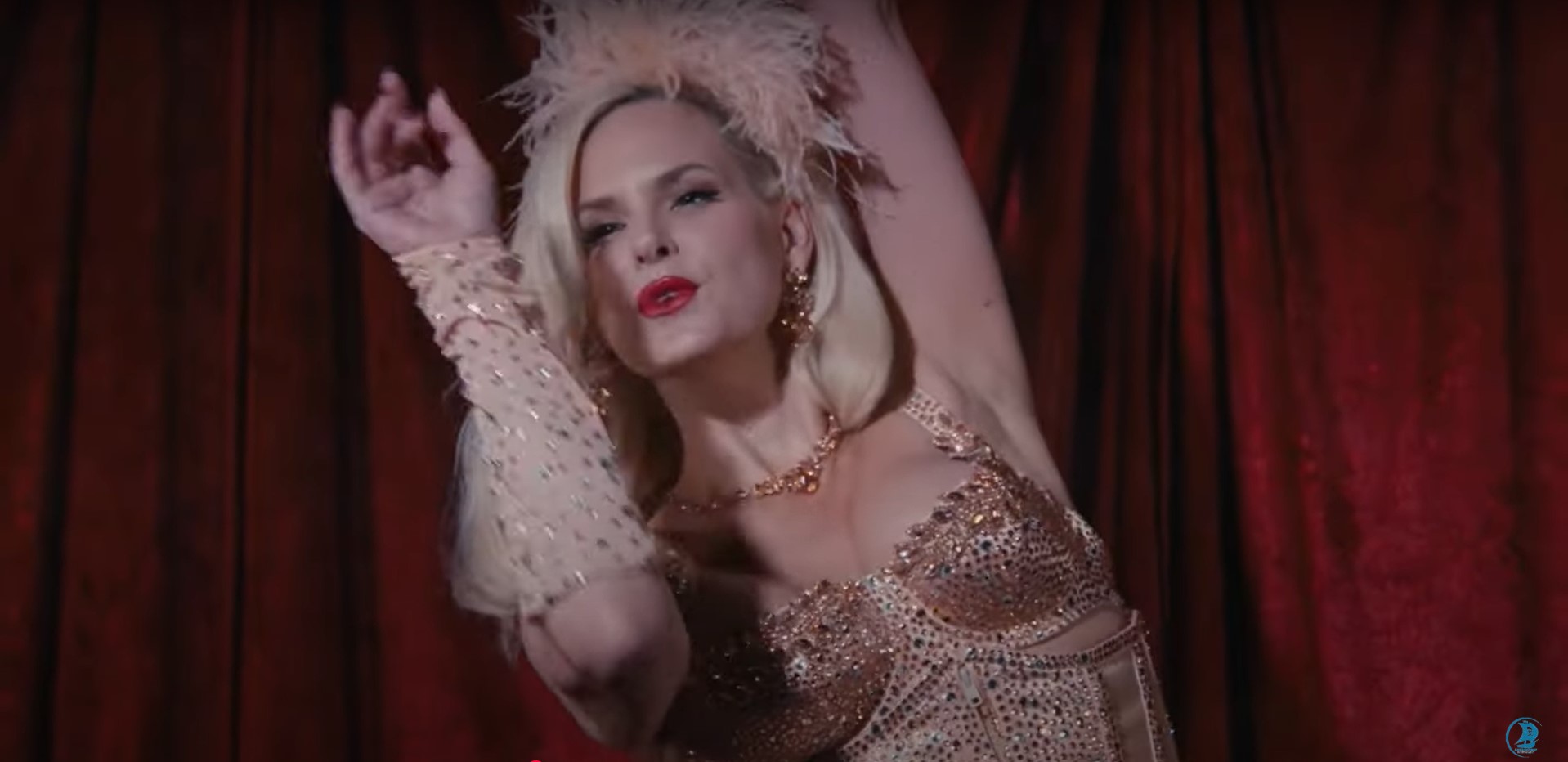
Phillips not only produces, writes, and directs, he also stars as the troubled Pierlli, opening up his introduction in a non-linear fashion under a character self-describing, self-loathing voiceover narration revolving around the woman he fell for, hinting at her forlorn fate, his own transgressions stemmed for lost, and how belittled his once formidable self has become after being released from prison.  Inner monologuing picks up here-and-there where narrative leaves off in a quasi-glint of personal elucidation about the characters and situations he finds himself amid, troubleshooting his own inners demons that could destroy him if he goes down the rabbit hole of grief again.  Yet, besides Pierlli’s vague thoughts and descriptions, characters brought not the fold have a prefabrication establishment that’s already patched them into narrative blanket and, for audiences, understanding these characters and see where they piece into the noir pie becomes very dense and chewy, tough to work out their role because much of the backstory is loaded into the chamber before viewers can digest everything mentioned in Pierlli’s opening narration of elongated events.  Jim Storm (“Trilogy of Terror”) and Constance Forslund (John Carpenter’s “Village of the Damned”) are tragic-saturated grandparents who will do anything to find their grandson, but their subtle persona richness filled with terminal illness, alcoholism, grief stricken, and a sordid past is greatly deprecated by little involvement in the rest of the story and their unexplained bad history in the network of how things came to be how they are now.  Instead, their retained lawyer (Mark Fite) has more skin and dialogue in the game of tracking down the grandson, played by the front man Finnegan Seeker Bell of alternative rock band Love Ghost in another character that’s spotty being sensical.  Kent Isaacs as a chupacabra keeper, Jacqueline Wright as a dancing evoker of the beast, Jacely Fuentes as a double dipping girlfriend, and Jose Conejo Martin as a Mexican music mogul and hardcore gangster, too, had shapelessness around defining themselves in character to serve what is a fever dream of past guilt and present lore clashing into a surreal tailspin from Pierlli’s visceral viewpoint.  The only character I could truly make sense and understand is “Re-Animator’s” Barbara Crampton’s short-stint warden role. 

I get “Cursed in Baja” is an indie production with nearly a zero-dollar budget and limited, on-hand advantages.  I get Jeff Daniel Phillips has a knack for the obscure, the off-putting, and the odd.  I get horror is subjective and you make what you get out of it.  With all that being said, “Cursed in Baja” doesn’t speak to me on a level I can fully appreciate, understand, or decipher through the opaque narrative stuck in its own adrift design.  Aspects of the nonlinear course and often repeating multiple same scenes doesn’t beat one down into following along but there’s also a rhythm that does denote Pierlli’s neurosis.  Though chaotic at times, Marc Cohen’s editing captures Pierlli’s agitational anarchy that plagues his nightmares and splits his reality seemingly down the middle of an already drug-and-crime fuel Mexicali affair the ex-con and lawman tries desperate not to repeat, but like any good sage person will tell you, we’re all given the opportunity to repeat dooming ourselves and relive past mistakes.  That’s Pierlli’s Pandora’x box and his Achillies heel, no matter how much he attempts to deflect himself out of the physically crippling investigation, he must sally forth again to find answers for the love he let down.  If he doesn’t, that do-nothing stagnation will ultimately destroy him faster.  I’m sure there are merits to Phillips’ first feature in over a decade, but “Curse in Baja” is all over the place, missing key interlocking points of the nomadic concepts to cement better coherency when switching gears between genres.

Anchor Bay’s third film of the first three releases released by the revitalized company by Brian Katz and Thomas Zambeck, “Cursed in Baja” receives exclusive at-home video rights with an AVC encoded, high-definition 1080p, BD25. The single layer is all this story requires with low-impact, mostly psychological thriller that relies heavily on Marc Cahon’s overlapping fade in-fade out and rough-cut, around-again editing to shoulder the burden of entertaining with Pierlli’s meandering mental melancholy. The compressed image quality provides no qualms for a standard, under-bedazzled indie production in widescreen 1.78:1 aspect ratio. Color saturation varies depending on toggling contrast levels, likely a result of the when-we-can shoot scenes methodology of low budget films. Blacks are not as deep as desired but there’s no signs of artefacts in the void and that suppresses any of kind of resentment toward a lighter shade of the grayscales darker side. The audio comes with an English Dolby Digital 5.1 surround mix. Though lossy, the format retains consistency in a rather heavily vague gumshoe of exposition with not too much crime centric and chupacabra chomping bytes to make or break the fidelity. Dialogue is clean in voiceover as well as in-scene with a favorable soundscape under Vaaal’s eclectic clouded haunt of industrial and discordant string. English subtitles are optional. Special features are limited to feature length commentary by Jeff Daniel Phillips and a making-of featurette with Phillips walking through a shooting location and discussing his ventured process. The Amaray case sports a grindhouse cover art character compilation with no other physical attributes included. The 80-minute, unrated feature is encoded with region free playback.

Last Rites: Jeff Daniel Phillips’s personal stick-and-glue “Cursed in Baja” works to a point off of the auteur’s ambition and who’s in his back pocket network of talented friends eager to lend their niche or locations to create noir delirium a la mode.

Jeff Daniel Phillips’s “Cursed in Baja” on Blu-ray!

Sleep Studies Tap into an EVIL Dimension! “Shadowzone” reviewed! (Full Moon Features / Remastered Blu-ray)

“Shadowzone” Available Now on Blu-ray!

The accidental death of a test subject during a highly immersive REM sleep project deep underground of abandoned nuclear fallout shelter resulted in the dispatch of a NASA investigator, Capt. Hickcock, to determine if the accident was a fluke or project negligence by the scientist staff.  The skeleton crew are eager to assist Capt. Hickcock with whatever he needs to wrap up his investigation and get back to the extreme deep sleep research aimed for NASA deep space pilots, but Hickcock is not so easily persuaded the research adds up, questioning the data that possibly lead to a volunteer’s brain to fatally hemorrhage.  A male and female volunteers rest in deep stasis sleep and while testing the lengths of the project’s capacity on the male subject, to sate Hickcock’s review, they inadvertently open a door to a parallel dimension through the unconscious mind and something has come through.  The facilities radioactive sensory system locks down the entire complex, trapping the captain, scientists, and staff with an unknown, and deadly, creature that will stop at nothing to return home. 

One of the few Full Moon productions to go outside their bread and butter of runt creatures and murderers, “Shadowzone” branches out with parallel dimensions and antagonistic alien creatures with molecular modifying capabilities in one hell of a star-studded, claustrophobic creature feature from the turn of the decade in 1990.  J.S. Cardone (“The Forsaken,” “8MM 2”) writes-and-directs cloistered camp of unseen terror that uses scientific research on REM, rapid eye movement, sleep research as the foundational base for breaking through the barrier of our existent and tap into another’s without cause or concern, until whatever comes out bites them.  Shot in and around the Griffith Park of Los Angeles, “Shadowzone” is produced by the master of dolls and everything small, Charles Band, as well as longtime collaborating producer Debra Dion and Cardone’s wife, Carol Kottenbrook, under the Full Moon Entertainment production company.

For a Full Moon production in the 90’s, “Shadowzone” had some unexpected star power between James Hong, the prolific Hong Kong-American actor who was a household name in the cult realm having been villainous black magician Lo Pan in John Carpenter’s “Big Trouble in Little China” as well as having roles in “Blade Runner,” “Revenge of the Nerds II,” and “Tango & Cash,” and Louise Fletcher, an equally prolific actress and a best actress Academy Award winner for her detestable Nurse Ratchet role in “One Flew Over the Cuckoo’s Nest, a wicked performance that suited Fletcher very well in her career with natural way to express a sarcastic tone.  Hong and Fletcher are not necessarily portraying bad guys in “Shadowzone” but they’re no heroes either as scientists eager to explore the unknown by ripping a hole in the plane of existence and both veterans of the trade give their best in this low run but highly thrilling Full Moon creature feature.  Hong and Fletcher are joined by an eclectically charged cast that while don’t have the recognizable charisma of established names, they each contribute a valued service in the parts portrayed, especially with David Beecroft (“Creepshow 2”) in the protagonist lead of the outsider Captain Hickock, investigating in toward the unknown.  Beecroft plays a suitable military-esque high ranking officer with a semi-relaxed demeanor that goes against the grain of the stereotypical stern and regimented leader you usually see in low-budget horror and sci-fi.  “Shadowzone” fills out the cast with bodies for the interdimensional meatgrinder with performances from Shawn Weatherly (“Amityville 1992:  It’s About Time”), Lu Leonard (“Circuitry Man”), Frederick Flynn (“The Forsaken”), Robbie Rives, Maureen Flaherty (“Bikini Traffic School”) and the always underscored, underrated, and understated horror supporting actor, Miguel A. Núñez Jr. (“Friday the 13th Part V,” “Return of the Living Dead”).

Where does “Shadowzone” fit into the grand Full Moon scheme?  Before the company solidified itself in the mid-1990s with miniature maniacs invading the majority of projects and their respective fast-tracked sequels, Charles Band took chances on other tales of titillating terror from all sides of the complex cinematic prism.  Sci-fi oddities, like “Trancers” and “Robot Jox,” of the legacy company Empire, took footing on beyond dystopian while more classical horror centric productions, like “The Pit and the Pendulum” and “Re-Animator,” provided a wider berth of subgenres under the phantasmagoria.  “Shadowzone” takes a little bit from both the horror and the science fiction tropes, coupling the scientific research of new age technology that rips a hole in the fabric of space and time to introduce an unimaginable, supernatural creature that virtually goes unseen as it morphs into the subconscious fears of the people it hunts down one-by-one.  What audiences will enjoy is the medley of figures this particularly nasty being can warp into when going for the kill.  What audiences will not enjoy is the sorely underutilized creature potential that’s left more to the imagination than to screentime.  All but one kill is off camera and in two of those instances, the creature isn’t even in frame as a burst of blood splatter becomes the demising indicator.  This shortchanging affects “Shadowzone’s” longevity for repeat viewings with no outstanding or satisfying purge of fated characters in an otherwise underground and dark corridor deathtrap of otherworldly proportions.

Full Moon Features continues to toot their own catalogue with remastered, high-definition releases of their older features with “Shadowzone” being one of the latest and greatest to be remastered onto a new Blu-ray.  The AVC encoded, 1080p, single-layer BD25 offers a soft, metallic palette to a harsh subterranean laboratory where shadows run thick, and lighting is keyed on exact spaces and people for effect. I quite enjoy the softness of stark industrial that does not even relieve primary color as this remastered version sees no color correction, but rather color reduction retainment of a sunless, cavernous crypt.  Healthy grain against the details brings more attention to the textures, especially when we do get the see the true form of the being in a bone-chilling scene of its final war cry moment, a scene that will often haunt me because solely of its A/V compositional construction.  The matted visual effects don’t hold true to original first look during its brilliancy dissimilarity when compared to the rest of the film’s cold tone.  The English language LPCM 5.1 and 2.0 disperses through the multiple channels to convey echo location of the front and back while the 2.0 does the job to channel audio layers through with a balance for differential treatment, especially separating Richard Band’s less than jaunty score that’s replaced with more common composition of intensifier notes.  Nothing overtakes the dialogue layer that runs clear and prominent without any hissing or crackling.  English subtitles are optional available.  Other than the original theatrical trailer, the only other special feature is Full Moon feature trailers.  If it’s not a Jess Franco sexploitation special, these remastered releases of originally Full Moon produced titles receive a touched-up version of the VHS cover art and, fortunately, “Shadowzone” already had an eye-catching art, gorgeously illustrated to the point of what to expect.  Like usual, there are no inserts or other tangible bonus materials included.  The disc is pressed with almost a lenticular look of the toothy creature in a scientist coat.  The 63rd title to be released from Empire has a new Blu-ray that comes rated R, has region free playback, and a runtime of 88 minutes.

Last Rites: “Shadowzone” definitely has the feeling of a little film that could, and for a better part it it did with fantastic casting, an isolating atmospheric tomb, and a transmogrifying creature of our personal stress inducers. The Remastered Blu-ray caps off the success with high definition not from this world.

“Shadowzone” Blu-ray is Here to Stay and Is Coming For You!

God Works in Miracles, Man Works in EVILs. “Immaculate” reviewed! (Neon / Blu-ray)

Mary Didn’t Have This Much Trouble. “Immaculate” on Blu-ray!

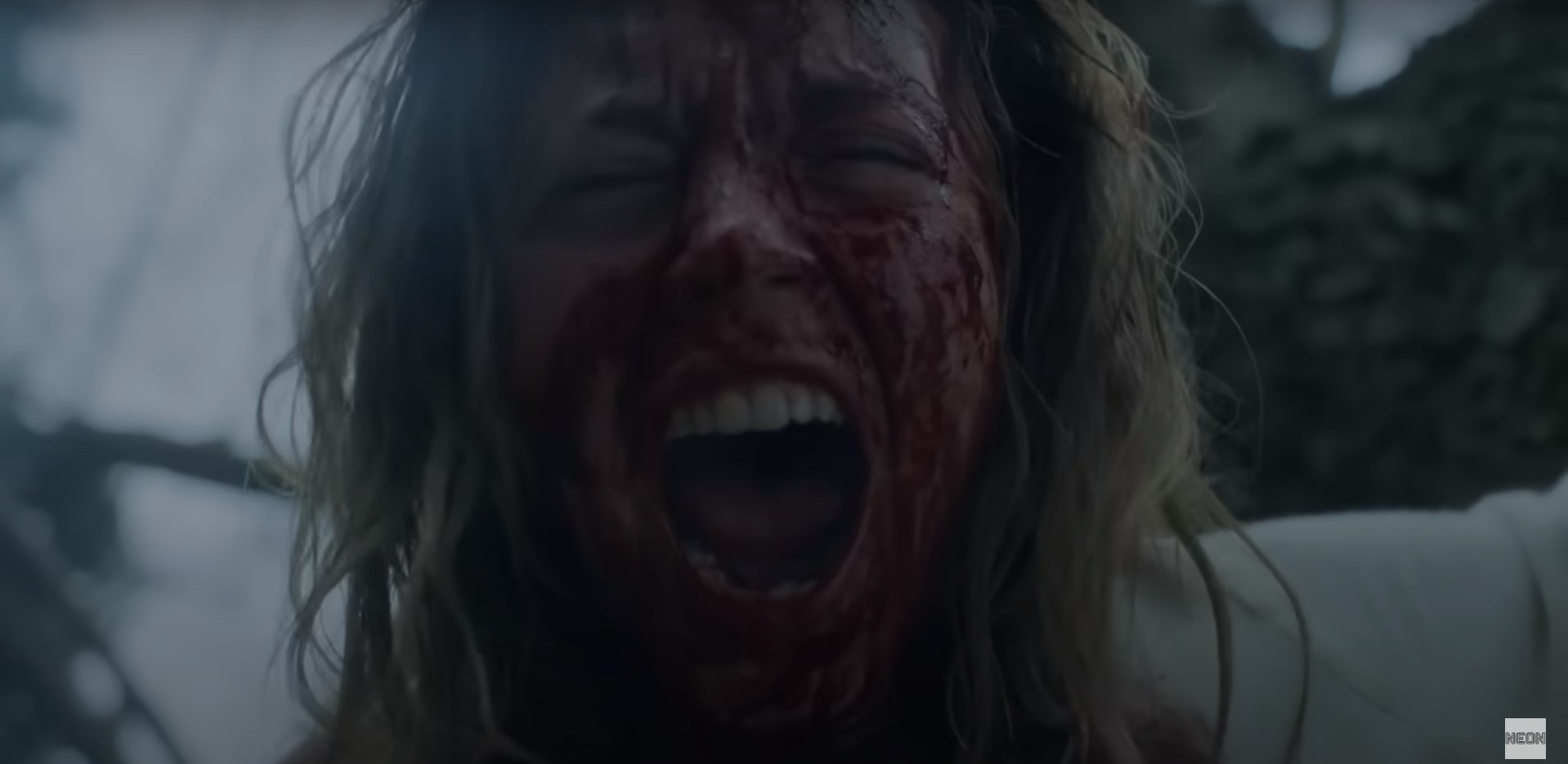
Devout American nun, Sister Cecilia, has been appointed a position in the Italian countryside, a historical convent where terminally ill nuns live in the sisterly comfort of hospice.  Feeling blessed for the opportunity to serve and her faith remaining second to none, the young nun believes she found her true calling and takes her devotional vows in the eyes of God and Jesus Christ, amongst other young nuns in confirmation.   During her training of changing out bedpans and beheading chickens for meals, an uneasiness washes over Cecilia ever since the night of her confirmation reception and being granted to behold one of the stakes that was impaled through the hand of Christ.  As if by miracle, an explanation suddenly and terrifyingly reveals itself not only to her complete shock but the entire convent when she’s discovered to be pregnant through immaculate conception.  As weeks turns to months, Cecilia is forced to focus on baby instead of chores but there’s something dark and malevolent happening behind the convent doors that result in her unable to leave the convent grounds, fellow outspoken nuns disappear, and one sister commits suicide.  The once blessed opportunity has turned into unimaginable terror with no way out. 

Sydney Sweeney is so hot right now.  With her provocative success on HBO’s take of youth and vices in “Euphoria” and a nihilistic teenage daughter in the same premium channel’s series, “The White Lotus, the now 26-year-old Washington state-born actress has also peppered her career with horror films, even at a childish age with her first appearance, a minor role, in a comedy-horror “ZMD:  Zombies of Mass Destruction” and continuing her fresh and new vocation with notable parts directed by notable directors, such as John Carpenter’s “The Ward” and Tibor Takács “Spiders,” that would subsequently offshoot into principal leads of less heeded, moderately successful thrillers when in adulthood with “Along Came the Devil,” “Dead Ant,” and “Nocturne.”  Her latest venture is one she became personally invested in, a modern-day nunsploitation titled “Immaculate,” reteaming Sweeney with her 2021 “The Voyeurs’” writer-director Michael Mohan at the helm of their latest collaborative effort.  Mohan, however, did not write the film with feature film newcomer Andrew Lobel taking the job that would take a decade to fruition once Sweeney, who auditioned for the role when she was 17 years old, made it her passion project to see it come to life  Alongside Sweeney producing is Ben Shafer, Riccardo Neri, Michael Heimler, David Bernard, Jonathan Davino, and Teddy Schwarzman with Neon distributing the Black Bear presentation of the Fifty-Fifty Films and Middle Child Films coproduction. 

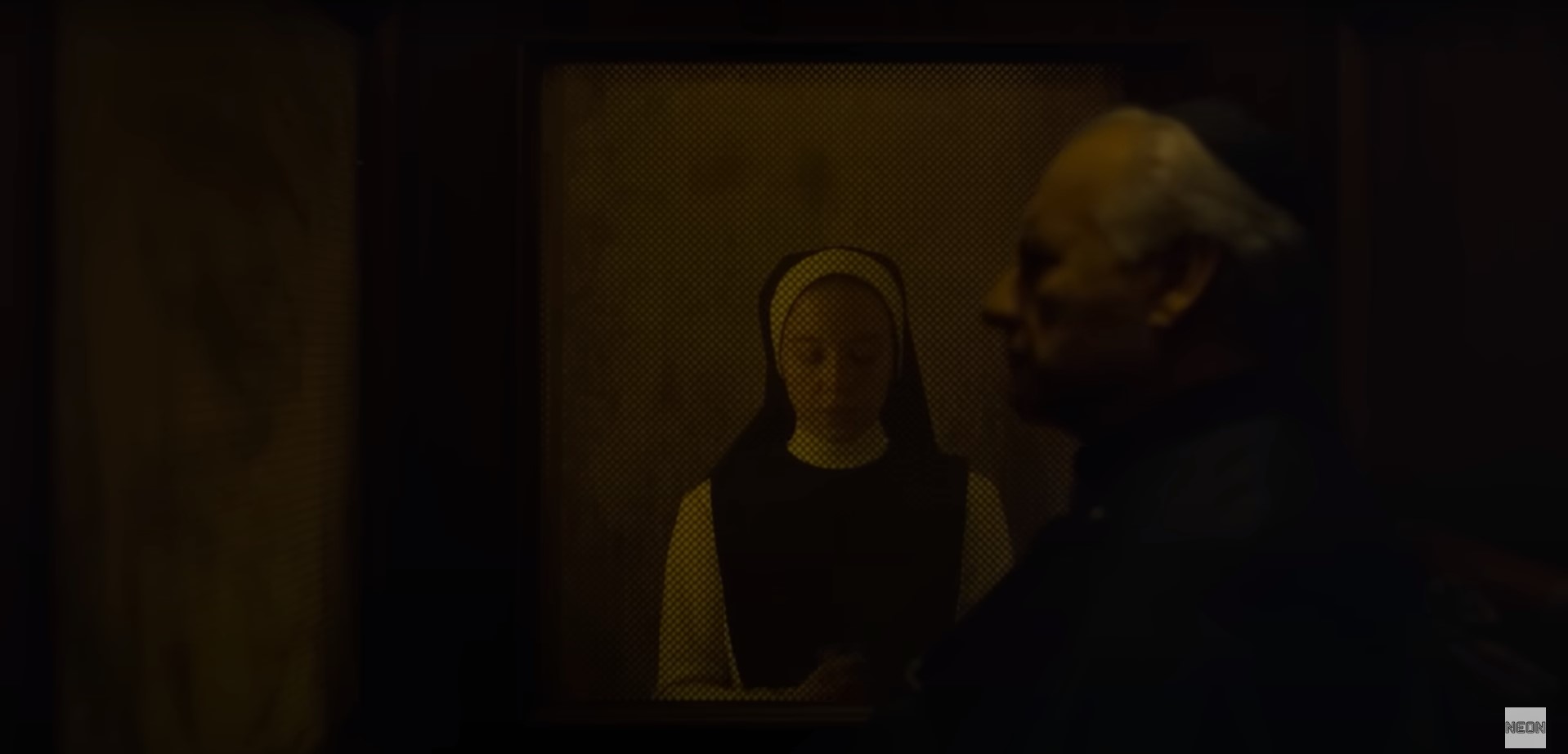
Sweeney exacts the very definition of virginal innocence, a small-town girl with a miraculous backstory that nearly cost her her life.  As a sincerely devout Catholic in Sister Cecelia, Sweeney must shape up an intake of naivety that blinds her to the subtle sinisterism amassing around her.  To do that, a medley of personalities must dupe her, sway her, disparage her, and comfort her to keep the character balanced before the blindsiding shock that surprises her with a twisted misconception and exploitation of God theme. Heading up the mix of madness is the convent’s resident priest, Father Sal Tedeschi, played by Spanish actor Álvaro Morte, indoctrinating a warm welcome as a guise for advantageous deceptiveness, but for what, we yet don’t yet know.  The alarming setup pins Cecelia to the convent grounds, surrounded by equally unconscionable characters in an insistent Cardinal Franco Meroa (Giorgio Colangeli), a benignly sweet Mother Superior (Dora Romano), and a disparaging Sister Isabelle (Giulia Heathfield Di Renzi”), and with little options of escape, or even allies within the walls, Cecelia is truly alone against a rogue Catholic sect that seeks to resurrect Christ in an unconventional and unnatural way against Canon law.  Cecelia’s arc fully embraces the change through Sweeney’s rather transfigured understanding of the religious institution Cecelia devotes her life to and, in the same breath, the nun keeps with the organization’s traditional principles of God’s will and not man’s interference and must be the righteous hand of wrath.  “Immaculate’s” cast rounds out with Benedetta Porcaroli, Giampiero Judica, Giuseppe Lo Piccolo, and Simona Tabasco, who has a “White Lotus” connection with Sydney Sweeney.

If you’re like me and avoid most trailers, reviews, or spoilers to try and keep an unbiased opinion, you may be taken aback by “Immaculate’s” gargantuan twist that goes against everything you may know and believe about the Catholic Church’s dogma and principles.  Granted, several non-Catholics likely believe the Church is corrupt and with recent years’ newsworthy scandals, those Church cynics’ fire has had a continuous stream of fueling fodder.  “Immaculate” plays into the fear, pessimism, and beyond reproach suspicion by subverting religion as a false façade and integrates unlikely, go-against-the-grain coupled themes of genetics tampering, bypassing God, murdering in His name, and even exploiting the Catholic hierarchy with slivers of patriarchal governance over a woman’s body.  We get the latter from the very first opening sequence of Cecelia having just arrived in Italy and is brought before two custom officials who remark, in Italian in order for her now to understand, that her religious vocation to be obedience, impoverished, and chaste wastes her youthful beauty. Then again, “Immaculate” is not beautiful; it’s grotesque, perverted, and shocking and at the core, a purity that’s being sullied by deranged power and evil enlightenments.  Cecelia represents a beacon of hope in a maelstrom of immorality. 

Shudderingly intense and sordidly messed up, “Immaculate” arrives onto a Neon Blu-ray home release.  Presented in a widescreen, Univisium aspect ratio of 2:00:1, the AVC encoded, 1080p high-definition, feature is housed on a single-layered 25 gigabyte disc.  Curious the reason why Neon would choose a lower capacity for such a purposefully soft and dark videographic image that creates a solemn tone inside a harsh appearance of an unpronounced period piece, perhaps set around the 1960s-1970s judging by the wardrobe, suitcases, and other set dressings.  Not also to exclude the premature notions of genetic manipulations that have made giant modernized leaps in the contemporary day-and-age.  Even with emaciated encoded, “Immaculate” looks pretty good around skin tones and textures and not a tone of compression follies to report.  With darker images on lower capacities banding and blocking rear their ugliness but there’s not a tone of that here. Saturation reduction plays into the time period and mood and the specified range of grading is kept to a modestly warm yellow, greens, and reds surfacing above ever so slightly through thick shadows of inkier, key-lit or candle-lit frames and even making a miniscule presence in daylit moments, boarding classical noir on some occasions.  The English-Italian DTS-HD 5.1 Master Audio has lossless appeal that wriggles out clean atmospheric genre cues through the multiple, surrounding channels.  Creaky doors and floors, deep footsteps, cavernous echoing, all play into the ambience track’s gothic timbres.  Conversating dialogue mounts a clear fixed positioning that sharp and clean through Sweeney’s character’s slight Midwestern intonation to the heavily and broad Italian accents from native vernacular to second language English speakers.  A descriptive English 2.0 audio track is also available as well as optional English and Spanish subtitles for the primary track.  One reason “Immaculate” is on a BD25 is because of the only bonus feature available is a feature length commentary track with director Michael Mohan.  The physical side of the Neon release includes a slipcover with the same tones mentioned above with a pious looking Sydney Sweeney in habit and also covered stoically in blood from the collar down.  The backside of the slipcover scarcely has technical information which is pleasant to see the limited real estate being used for something else other than the nuts and bolts that should remain on the Blu-ray’s Amaray case.  Its slightly reminiscent of the way certain boutique labels design their limited slips.  However, what’s not reminiscent of boutique design is the same slipcover front and back image is used for the Blu-ray case too.  Inside is sparse with only the disc with a simple yet effective black background, red titled pressing.  Rated R for Strong and Bloody Violent Content Grisly Images, Nudity, and Some Language, the Neon release has a runtime of 89 minutes and is encoded for region A playback.

Last Rites: “Immaculate” is blessed be the fruit of present-day Nunsploitation themed with power trips that attempt to bypass God and the laws of nature. The finale powerfully depicts and deciphers the principles of one’s firm held faith under God’s will, and perhaps wrath, in its ugliest form.

Mary Didn’t Have This Much Trouble. “Immaculate” on Blu-ray!

Happy, EVIL Halloween, Halloween, Halloween. Happy, EVIL Halloween, Silver Shamrock! “Halloween III: Season of the Witch” reviewed! (Via Vision / Limited Edition Blu-ray)

“Halloween III: Season of the Witch” Available on Limited Edition Blu-ray from Via Vision!

Just days before Halloween, a man stumbles hurt and delusional rantings into the hospital of Dr. Daniel Challis.  Clutching a Halloween mask to his chest, Challis figures the man to be crazy before stabilizing his vitals for rest but when the man is heinously murdered in his hospital room and the murderer burns himself alive in the hospital parking lot, Dr. Challis doesn’t know now what to make of the man’s rantings about something or someone is going to kill us all.  In walks Ellie Grimbridge, the man’s daughter, who has been investigating her father’s mysterious death.  Intrigued not only by the case, but also by the lovely Ellie, Dr. Challis and Ellie’s investigative work leads them to the Silver Shamrock mask factory in Santa Mira, the same mask factory that created the mask Ellie’s father was clutching before he died.  What they uncover is a plot of sacrifice on Halloween night, spearheaded by an Irish toy maker in Conal Cochran.

With a novel concept in the hands of one of horror’s most promising filmmakers, John Carpenter, a script penned by an uncredited yet famed British science fiction writer in Nigel Kneale and touched up by Carpenter, and a young Carpenter protégé, Tommy Lee Wallace, at the helm, “Halloween III” attempted to be an off-the-beaten path of success new story for what would have an annual Halloween-themed anthology going forward.  Unfortunately, and regrettable, “Halloween III:  Season of the Witch” failed to connect with an audiences and Michael Myer fanboys too stubborn to let go of The Shape.  It wasn’t until years later that the 1982 feature, released on the coattails of 1981’s part II of the original Michael Myers saga, found footing with fans who now appreciate the unique story, its practical effects, and the bold, yet defunct, vision Carpenter and crew once envisioned.  Carpenter and Debra Hill returned to produce, alongside Joseph Wolf, Irwin Yablans, and Barry Bernadi, with Universal Pictures as the backing studio. 

Now, “Season of the Witch” just didn’t star a bunch of nobodies in this offshoot of a newly branded “Halloween” concept.  Before playing the quasi-alcoholic, deadbeat father Dr. Challis, Tom Atkins was already a rising star in the land of John Carpenter films with “The Fog” and “Escape from New York” In 1980 and 1981.  Atkins’s usual confident and charming qualities underneath the rugged good looks and trimmed mustache serve him the better part of man doing his bit part in a not-his-business investigation of a man’s death to please a good-looking woman that happens to be the dead man’s daughter.  That good-looking woman is Ellie Grimbridge, embodied by the Mad Magazine Production’s “Up the Academy’s” Stacey Nelkin, and if you blink, you might miss Atkin’s Dr. Challis being perhaps the worst father ever to his two children and ex-wife.  The subplot is so subtle and overshadowed by the Silver Shamrock Halloween plot that being invested in the crumbling family dynamics doesn’t even hold substantial weight and it truly works to subvert the subconscious and plant a destructive pipe bomb smartly into your moral compass because if you think Dr. Challis is the hero of the story, which in many perspectives he is, he’s also doesn’t keep up with his own children interests or current events, numerously bails on their planned care, runs off and sleeps with a much younger woman he hardly knows, is an active alcoholic, and is quite the handsy philanderer at that when he grabs his much older nurse’s bottom in a playful moment.  No, Dr. Challis is every ounce an antihero hidden in plain sight and in the guise of a potential savior of the children, the world, as he takes on Silver Shamrock and its founder, an Irish toymaker named Conal Cochran with tremendous evil genius and mastermind appeal by Dan O’Herlihy (“The Last Starfighter”).  “Halloween III:  Season of the Witch” rounds out the cast with Ralph Strait, Jadeen Barbor, Al Berry, Michael Currie, Garn Stephens and Essex Smith in key support roles.

Lots of previous opinionated chatter surrounding “Halloween III” collectively concludes to if the filmmakers decided to title the film anything else, maybe just the tagline of “Season of the Witch,” then the film would have won over audiences with a fresh take of science fictional horror and would not have been wrongfully panned by critics and moviegoers.  I call BS on this take.  The original intention was to deliver a new, Halloween-themed horror film year-after-year with John Carpenter attached in some way, shape, or form of bringing novelty terror to our eyeballs and brain.  Instead, public persuasion and studio submissiveness rendered the concept powerless and as a result, and no disrespect to any Michael Myers films that followed, was the departure of John Carpenter and Debra Hill and a string of mediocre and wacky Michael Myer sequels that went deep off the far end.  “Season of Witch” is not a teeny bit at all slasheresque, separating itself far from Michael Myers as much as possible by unconfining itself from location concentration by expanding the threat domestically, if not globally, with a parlor trick plot that involves special, laser-shooting masks that make kids’ heads melt into glop of crickets, snakes, and other creepy-crawly sui generis of the animal kingdom.  While strange in the cause and effect, the practical effects and superimposed visuals work to convey some taught gore and prosthetic knots that can be unraveled, even retrospectively critiquing them by today’s standards.  Wallace masters the film while, at the same time, hitting the ground running on his debut feature that has a look and feel of a graduate from the film of the John Carpenter. 

Halloween season may be months away, but Christmas comes early with Via Vision’s limited-edition Blu-ray set of “Halloween III: Season of the Witch.” The AVC encoded, high-definition 1080p, BD50 presents the film in a widescreen aspect ratio 2.35:1. Much like the Via Vision’s companion release with “Halloween II,” “Season of the Witch” mirrors the same resolution picture quality and stellar package presentation. Dean Cundey’s delivers another smoky noir realism that definably hard-edged and hard-lit that while isn’t the most colorful contrast it does create an abundance of inky shadow to lost in and sink into. A cleaner picture does bring with a reveal of how obsolete some of the composite matte effects but, simultaneously, revives what once was, nostalgia and a more tactile truth in movie magic. Details come through within contour delineation and textural elements. The English language DTS-HD Master Audio 2.0 has dual channel balance and strength with lossless fidelity. Dialogue retains saliency throughout from a rather middle-of-the-road strength ambience albeit a wide range of effects from explosions to laser beam bursts and its constructed, catchy Silver Shamrock jingle, often muted through the television programming, and John Carpenter’s and Alan Howath’s synth collaboration that’s tonally reminiscent of previous “Halloween” films but stands by itself in distinct measure to garner new-sound tension. English subtitles are optionally available. Also, like Via Vision’s “Halloween II” Blu-ray release, a 2024 commentary is recorded and encoded with film critic/historian Lee Gambin and a special appearance by “The Howling” director Joe Dante. Archival commentaries from Tommy Lee Wallace and Tom Atkins are also on the disc with all three commentaries in the setup menu. Special features content includes 2012 Scream Factory-Red Shirt productions with Stand Alone: The Making of Halloween III: Season of the Witch documentary surrounding a Micheal Myers-less picture, it’s critical shockwave, and its ultimate cult following and Horror’s Hallowed Grounds: Revisiting the Original Shooting Locations hosted by Sean Clark visiting a few of the locations used for the film. A still gallery, theatrical trailer, and television spots round out the rest. Of course, my favorite part is the lenticular cover on the limited-edition and numbered cardboard sleeve case of the three, silhouetted little trick-or-treaters with a crone-ish face coming down from above the fire red dusk sky. The slightly thicker Blu-ray Amaray case cover art is stark still image from the movie with another, different image on the reverse side. The black background disc has the skull mask and title across from each other in nice compositional juxtaposition. Next to the Amary case is an envelope with 6 art (picture) cards taken from the film. The Via Vision release is rated M for Mature for moderate violence and moderate coarse language, has a runtime of 109 minutes, and has region B playback only.

Last Rites: Who knew being the outcast looked so damn good. “Halloween III: Season of the Witch” deserved better and received the best on this Australian, limited-edition, lenticular Blu-ray set that’ll leave you whistling the Silver Shamrock jingle and fearing Halloween masks more than ever.

“Halloween III: Season of the Witch” Available on Limited Edition Blu-ray from Via Vision!

Classic Sequel Gets a Lenticularly EVIL! “Halloween II” reviewed! (Via Vision / Limited Edition Blu-ray)

“Halloween II” Limited Edition Blu-ray + 6 Photo Lobby Cards! Order here!

The horrific Halloween night massacre in Haddonfield where a masked escaped mental patient named Michael Myers murdered the close friends of Laurie Strode has not yet ended.  Hurt and in shock after narrowly escape Michael’s relentless pursuit, Laurie is rushed to Haddonfield Memorial Hospital to receive treatment from a skeleton shift while Dr. Loomis, who shot Michael six times, continues his hunt for the hard-to-catch, hard-to-kill killer.  Frantic about the evil inside his former patient, Dr. Loomis will not stop at nothing to track him down with police assistant and try to puzzle together just why Michael had returned to his hometown in the first place.  As Laurie recovers from her injuries and copes with her friends’ deaths, The Shape arrives at the hospital, continuing his emotionless killing spree of hospital staff in order to get to Laurie, and with nowhere to run, Laurie’s only hope is in the hands of a determined Dr. Loomis. 

Picking up where the highly successful independent horror, John Carpenter’s “Halloween,” that changed the slasher genre to what we know it as today, “Halloween II” provides more illumination on The Shape, Laurie, and shuts the door on the significant open-ended and fear-inducing mystery at the finale of Carpenter’s masterpiece.   The 1981 sequel, released three years after the first film, was not helmed by Carpenter whose success skyrocketed post-“Halloween.”  Instead, Carpenter and creative producer Debra Hill agreed to the executive producer title with some creative control in penning the script that would be a what-happens-immediately-next continuation with newcomer Rick Rosenthal sitting in the director’s chair.  The director who would helm later the follow year’s “Bad Boys” with Sean Penn had a goal to retain the same Carpenter stylistic choices to make the sequel seemingly seamless.  Alongside Carpenter and Hill in the melting pot of producers, the more narratively opinionated Moustapha Akkad and Dino De Laurentiis served as executive producers along with Joseph Wolf (“A Nightmare on Elm Street”) and Irwin Yablans (“Tourist Trap”) in what became a coproduction between Universal Studios and Dino De Laurentiis’s production company.

“Halloween” converted the then unknown Jamie Lee Curtis into a couple of things.  She instantly became a household name that at the same time also made Laurie Strode a household icon.  Curtis also became what was a relatively new coined term at the time of a scream queen, propelling her career in the horror genre with “Halloween” subsequent films such as “The Fog,” “Prom Night,” “Terror Train” and, of course, the more recent titular television series “Scream Queens” and the contemporary “Halloween” sequels.  What also emerged post Lee’s performance is the actress was eager for the role and effortless to work with making the 23-year-old daughter of Janet Leigh and Tony Curtis a treat to work with, malleable toward her role, and enthusiastic about returning as Laurie Strode for the sequel.  Curtis falls right back into the role as if filming didn’t stop rolling with Strode in a confounding state of shock and injury from her the relatively short scuffle with Michael Myers until Dr. Loomis intervenes with six gunshots into The Shape at the key and climatic moment, saving Strode from being strangled.  The difference in the sequel is Curtis’s instilled knowledge for her frightened character.  It’s that kind of touch that doesn’t hesitate to react to a force of evil.  Returning as Dr. Loomis, and again as if he never stopped performing as the paranoid and fervent good psychiatric doctor, is the iconic and late Donald Pleasence tracking down his former patient with trench coat sagacity, an understanding that no one else shares except for maybe Myers’ ultimate prey, Laurie Strode.  A new cast of relegated kill fodder magnifies part two’s grislier death count with Lance Guest (“Jaws: The Revenge”), Pamela Susan Shoop (“The One Man Jury”), Leo Rossi (“Maniac Cop 2”), Tawny Moyer (“Looker”), Ana Alicia (“Romero”), Gloria Gifford (“Virgin Paradise’), Hunter Von Leer (“Trancers III”), Cliff Emmich (“Hellhole”), Ford Rainey (“The Cellar”), and Dick Warlock putting on the mask as The Shape with Charles Cyphers and Nancy Stephens returning in their respective roles as Sheriff Brackett and Marion Chambers.

What new can be said about “Halloween II” that hasn’t been already said?  Dichotomously, “Halloween” and its sequel share a single narrative that emanates the same stylistic tone; however, both films couldn’t be more different in their surface level and underlying intentions and that gnaws raggedly on the connective tissue that binds them.  Carpenter’s original embraces the mystery enshrouding Michael Myers motivations with a merciless, yet nearly bloodless, killing spree of horny hopped-up teenagers who wiggle themselves out of responsibility for a little trick-or-treat fun under the sheets or for just being alone in their house.  Myers unneeded and unheeded explanation formed The Shape as evil personified, an incarnate force compelled to return home where the light switch was flipped to an expressionless compassion for human life.  Rosenthal’s part two subverted the unknown by providing Michael reason and that reason being Laurie Strode, anyone else who gets in his way, could foil his plans, or are just in the vicinity of the hunt are eliminated with extreme prejudice, and that leads into the ramped-up gore with large pools of blood and other gratuitous displays of damage to unsuspecting soon-to-be stiffs.  Despite the different strokes, the sequel is not bad by a longshot.  In fact, “Halloween II” is just an extension spiraling in intensity and terror, a product of its time when everyone and their brother had directed gore-ladened slashers during the steep beginnings of the slasher renaissance. 

Though a many number of “Halloween II” video media exists between the current formats, the collaboration of Via Vision and Lionsgate release from Australia is beyond reproach for any kind of transfer print woes, lackluster bonus features, and drab packaging.  The limited edition and numbered 2-Dsic Blu-ray set is a physical media thing of beauty with an AVC encoded, full high-definition 1080p, BD50 on both discs.  Disc one houses the theatrical cut of film, presented in a widescreen 2.35:1 aspect ratio, from pristine print, likely the original negative licensed through Universal Pictures for this very release, with the Via Vision caveat of every effort has been made to produce the highest quality on the back cover.  Not a single reason comes to mind on that statement being false as the Dean Cundey’s cinematography retains an undiluted facsimile of the original “Halloween,” represented here with phenomenally suitable contrast that can presumably hide Micheal Myers in every shadow and create the apprehension in every darkly lit scene with minimal key lighting in various, sometimes neon, shades of red, yellow, and white.  The 35mm film grain has a pleasant consistency of a low-to-medium low visual viscosity that never reaches levels of blotting out picture quality, presenting no issues with zoomed in images or any other touchup enhancements to note for that matter.  Perceptible details sanction The Shape’s tactile and weathered look of a rough night in Haddonfield.  Colorfully warranted scenes, such as the Nurse Alves on a gurney in the middle of a pool of her blood, are robust to display the carnage whereas other, more minimalistic approaches detail just enough for the imagination to take over.  Disc two contains the standard-definition, upscaled to 1080p, television cut of the film, presented in a made-for-TV 1.33:1 aspect ratio, that omits some of the gorier moments, suitable for broadcast viewers.  Audio options include two lossless English language selections with a DTS-HD Master Audio 5.1 and a DTS-HD Master Audio 2.0.  The audio codec distributes punchier ambiences of Myers’s rhythmic breathing through the mask, the jarring alert of a hospital room buzzer, and the impactful moments of Myers slamming his fist-loaded weapon into the skull, back, and….a pillow with the cringe-worthy associated crunch and thud.  No impediments on the dialogue track that’s free of crackling, hissing, and popping and is consistently prominent and mixed well within more chaotic, milieu-mania scenes, such as with the finale with hissing air tanks and scalpel swoops.  Optional English subtitles are available.  Special features are consolidated to the theatrical cut disc only with Shout Factory’s inaugurated 2012 documentaries – The Nightmare Isn’t Over:  The Making of Halloween II and Horror’s Hallowed Grounds:  The Locations of Halloween II – featuring cast and crew interviews with director Dean Cundey, Tommy Lee Wallace, Dick warlock, Leo Rossi, and more as well as visiting locations in a modern time with host Sean Clark, and two commentaries featuring director Rick Rosenthal and Leo Rossi in one and stunt man/The Shape Dick Warlock in the other.  There’s a brand new 2024 commentary with author Dustin McNeill, co-author of Taking Shape:  Developing Halloween from Script to Scream.  The encoded features round out with the alternate ending with more explanation on the fate of a certain left ambiguous character, deleted scenes, a theatrical trailer, TV and radio spots, and a still gallery.  What makes the Via Vision a limited, numbered set is the neat package and physical goodies inside.  The rigid lenticular cardboard sleeve of the skull pumpkin has eyes that follow you at every angle.  Inside is a slightly thicker Blu-ray Amaray casing with reversible cover art displaying notable stills from the feature.  The extra disc, disc 1 likely, is in a clear push-lock, page-turner disc holder.  Six photo lobby cards featuring stills from the movie come alongside the Blu-ray.  Via Vision’s release has a region B playback encoding, a runtime of 93 minutes on both cuts, and rated R.

Last Rites: Michael Myers has been slashing away in the cinema for nearly half a century and “Halloween II” has been a staple entry that, to this day, is a memorable fan-favorite in the grand scheme of most of the franchise’s sequels. Via Vision’s limited edition, lenticular Blu-ray packaging just sweetens the deal with a crystal clear and top-tier quality release worthy in any physical media collection.

“Halloween II” Limited Edition Blu-ray + 6 Photo Lobby Cards! Order here!