House Music is EVIL’s Jam! “Rave” reviewed! (Scream Team Releasing / Blu-ray)

Get High and Get Pumped for “Rave” on Blu-ray.

Free flowing Mimmi and her timid pal Lina are invited to an underground night club for one more illegal rave party before the building is vacated for unlawful occupation.  As the two dance the night away, Lina becomes steadily ill and as she tries for the bathroom, she begins to bleed from her skin.  Other rave goers begin to feel the same effects, spewing blood, dripping skin, and a melting away existence while the strobe lights unceasingly flicker and the deep house music pulsates into a fixed one-note bass.  Mimmi and another friend escape the party before even the first signs of the illness, hiding away to do a line cocaine, but when they’re followed by those turned into slow walking bags of oozing flesh, no longer resembling something human, her friend is brutal killed and she barely eludes the ill-fated ravers, becoming trapped inside by those liquifying creatures and a pair of masked individuals seemingly unaffected by what’s occurring around them.

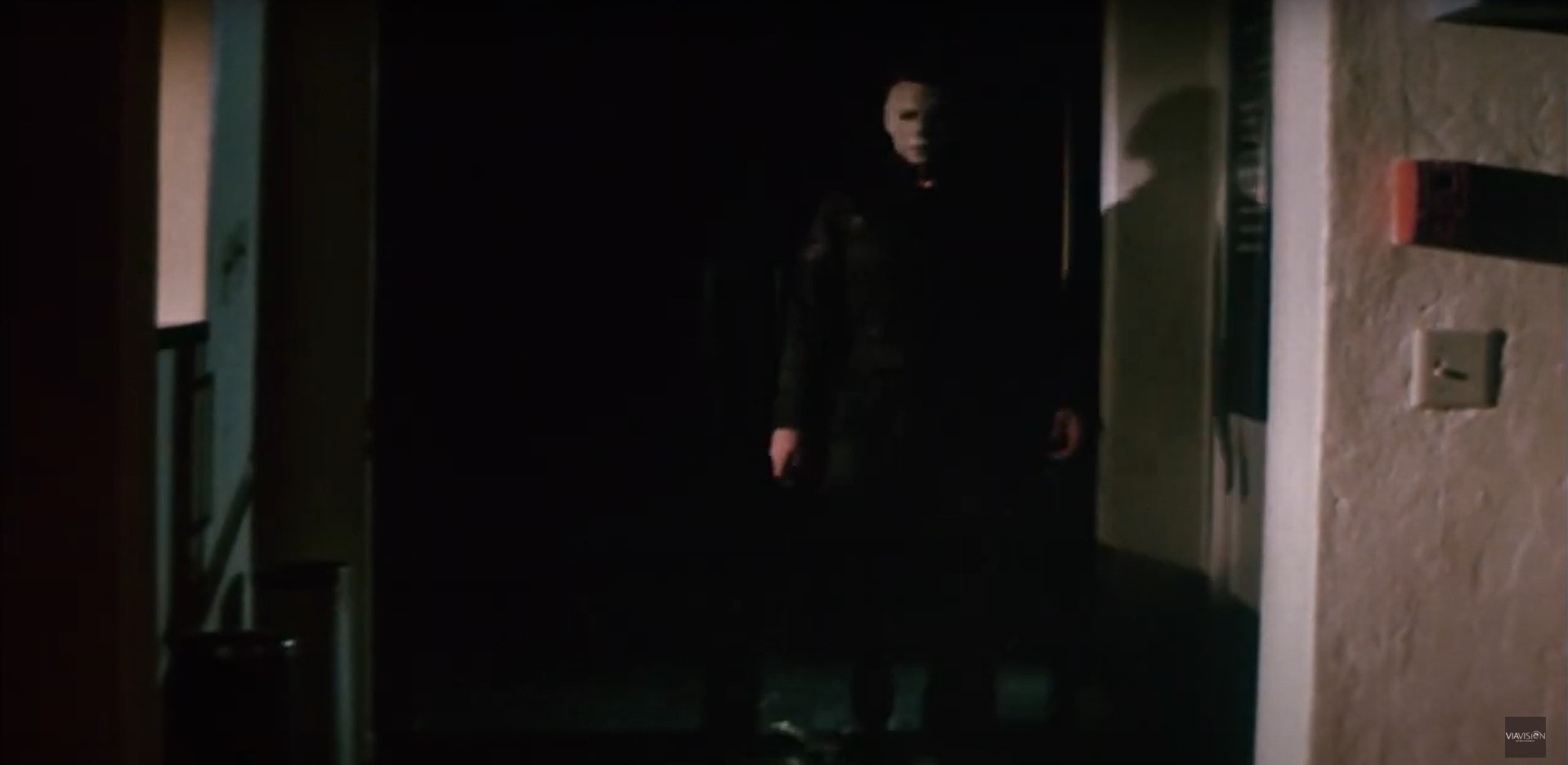
Often times there comes a film that sneaks under the radar and may warrant a second watch for it to sink under the skin or into the recesses the brain’s grey matter.  For writer-director Nils Alatalo, his Swedish melt horror “Rave” is the epitome of context.  The 2020 released independent production, known as “Svartklubb” in the Swedish language, is Alatalo’s debut feature that catapults the filmmaker into the same melt movie categories held in reverence by fans of “Body Melt” or “Street Trash” while kissing the outer edges of vintage and cult iconic eurotrash from the 80’s.  “Rave” will be our consecutive watch, analyze, and review into body horror, following the more gore-gorging merge of man and machine of Davide Pesca’s “Re-Flesh” released last year.  “Rave” proclaims a more stylized and abstruse approach compared to Pesca’s grossly unconcealed transgressions of the body.  Haveri Film is the production company behind “Rave.”

“Rave” asynchronously follows two central characters beginning with the rave-reserved and dry-hesitant Lina before a switcheroo into dipping into the carefree, go-with-the-flow, drug-positive Mimmi.  Played correspondingly by Tuva Jagell (“Girls Lost”) and Isabelle Grill (“Midsommar”), the main principals are a dichotomizing pair of personalities mutually connected to each other by friendship and though Alatalo ultimately decides not to fully explore the intimacies of a cherished bond in post-climax, there’s certainly a relatability audiences will be able to understand amongst their own friendship terms, such as seemingly tired of the meekness or revel in being the dominating friend, as being fostered with empowerment, or on the opposite side of the spectrum, needing a friend to take charge, provide reassures, and be a beacon of exuberance.   However, all the letting go on inhibitions come at a cost, a deadly one at that, and when they essentially are the peak of being identical for perhaps the first time in their lives together, the closeness of Lina and Mimmi become mortally unraveled by what could be described as pure, unadulterated Hell.  What also unravels is their friendship in the midst of drugs coursing through their bloodstream and their minds have shutoff with the trance rhythm of the house music, both aspects of which put up walls to deflect the danger from within and around them, making them clueless to the clues.  Jagell and Grill’s performances have more physical importance than whatever come be extracted from their slim dialogue written for the characters and the two young actresses convert themselves into the roles of psychedelic terror. “Rave’s” partygoers round out with Victor Iván, Sophie Lücke, Ebba Gangoura, Sebastian Norén, Christer Wahlberg, and Celina Braute.

“Rave” is a flash of brilliance tightly confined and bottlenecked to not be bigger than needed by squeezing to contain its claustrophobic purgatory that’s wrapped like a nightmare on molly.  “Rave” is also not a straightforward line of coke, glow sticks, and fleshy fluid fiends within what is an ambiguous narrative that requires an open mind to its reverence for elder Euro horror.  That’s what I suspect Alatalo was shooting for here, an immense adoration and respect for European horror peppered with inspirations from American filmmakers as well.  Soft brilliance of Dario Armento lighting, silhouette eeriness of Lamberto Bava cinematography, and the slow bloodletting of Lucio Fulci’s gore represent the best qualities of same continental yore while including a John Carpenter story-ingrained synth score and paying homage to American melt horror filmmakers, such as J. Michael Muro, Gregory Lamberson, and Philip Brophy to name a few, with his own rendition of what it means to have skin slink and blood secrete from inside the body out.  While the first viewing doesn’t quite stimulate immediately the senses with its slow burn dread, ambiguous cause and effect, and dialogue adverse script, “Rave” glues itself to the psyche and lingers in that cranial netherworld that nags and gnaws at the subconscious and does it enough that a second viewing becomes necessary.  Instantly, piecing together the puzzle through a second visual overlay can jumpstart the engines on what exactly we’re witnessing – Alatalo’s patience with the structure, meticulous details in the scene, and admiration for the genre.  “Rave” is also an indie picture on a budget but considering the composition of the final product, “Rave” strongly accomplishes a persistent uneasiness without exposition that parallels subtle strikes of sharp, startling dread only seen by a handful of filmmakers.    

A whole new version of neon dead arrives onto a special edition Blu-ray of Nils Alatalo’s “Rave” from Scream Team Releasing.  The AVC encoded, 1080p high definition, BD25 presents the film in a widescreen 1:78:1 aspect ratio, scaled down from the original aspect ratio of Univision 2.00:1 causing some minor compressed looking scenes.  Not to be deterred, the range of scene setups under the cinematography trio of Jakob Ivar Ekvall, Amelia Finngåård, and Gustav Råström offer an eclectic mix often in the humblest of fashions, such as using just a camera flashlight in a windowless room or the red and blue neon lighting through fog machine.  Silhouettes delineate nicely on screen with the use of backlighting and camera angles.  Framing is a hit or miss coupled with energetic editing, but the overall atmosphere is agreeably chafed with tension.  Minor banding and some aliasing creep out as artifact side effects of a dark-laden story with some of the quicker moments evading the slimy-secretors through the building trying to keep up through the decoding of data.  The compression issues are not terribly invasive during viewing, but they are annoying consistent and notifiable.  The Swedish uncompressed LPCM 5.1 surround mix has lossless binding and sounds really good environmentally albeit many of the tracks are done in post, such as some of the exterior dialogues, which sound natural but softer in the scene, and the itemized milieu ambience.  The Joakim Martinsson and Christer Wahlberg house music and soundtrack are the real victors here integrated into “Rave’s” overall sound design of having the discordant industrial rhythms and irregularities become an antagonistic competitor breathing through the back and side channels, reminiscent of how intrinsic Giuliano Sorgini’s score heightened the intensity of the impending zombie attack.  English subtitles are optionally available.  Bonus features include an English commentary by director Nils Alatalo providing insight on nearly every shot, a soundtrack featurette alternating between Joakim Martinsson and Christer Wahlberg discussing and sample their individualized tracks, a making of montage with soundtrack only, and the film’s trailer.  The physical characteristics of the release contain a beautifully macabre composite in neon coloring and lace slipped into a standard Blu-ray snapper with latch.  Front cover is reversible with a more disheveled and strung-out Isabelle Grill looking blankly upward, which has a variation of her facial posture on the factory-distributed cover.  Disc art contains one of the gloppy ghouls bathed in red with a black background.  “Rave” release comes region free, not rated, and has a runtime of a brisk 72 minutes.  A slow burn melt movie capturing the essence of “Rave” to the grave.

Get High and Get Pumped for “Rave” on Blu-ray.

Nothing Left To Lose Wants to Plunge It’s EVIL Blood Into Everyone! “L.A. AIDS Jabber” reviewed! (Visual Vengeance / Blu-ray)

A Dirty Needle Party in the “L.A. AIDS Jabber” Now Available on a Blu-ray Collector’s Edition

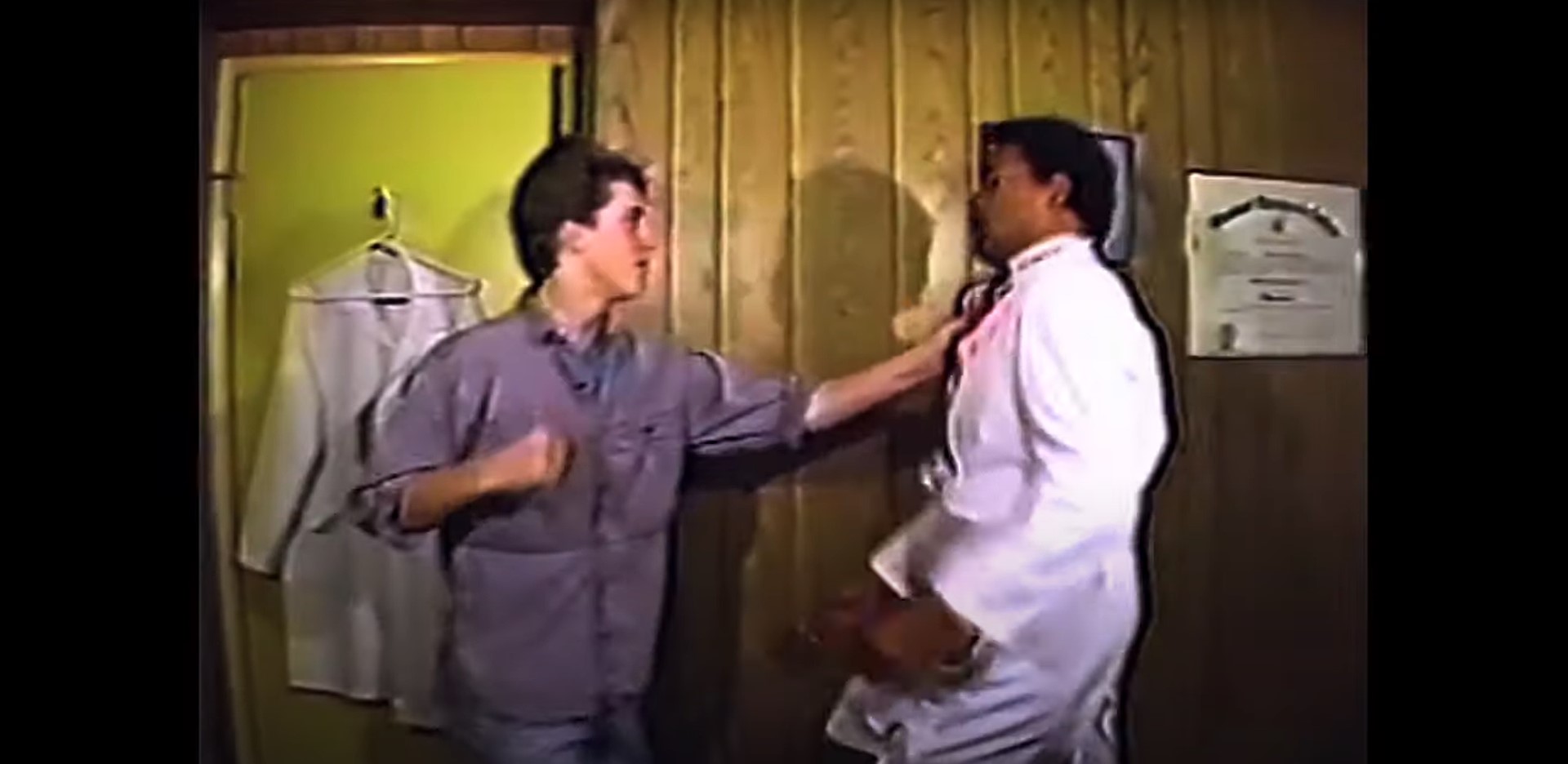
Jeff has just received terrible news about his health. He has contracted the deadly disease AIDS. Already mentally imbalanced with uncontrollable rage and a preconceived kill list, his damning diagnosis enrages him to act on his list of quarries. Isolating himself as a loner by kicking his endearing girlfriend to the curb, a furious-fueled Jeff uses a syringe to extract his blood and turns the needle in a weapon of mass infection by condemning others to the same diseased fate, starting with a high-turnover prostitute he suspects infected him six months ago. L.A. cops are hot on his trail as the unhinged hypodermic needle jabber continues his stabbing-spree, puncturing contaminated blood into anyone who has crossed him. A news reporter becomes Jeff’s next target after chiding his attacks on televised news and as the police keep close tabs on the potential next victim, Jeff aims to outsmart them with a single pinprick tactic.

AIDS. The very mention of the acronym rocked the U.S. nation to its knees in the late 80s-early 90’s as the country went through an epidemic inflation and the numerous scared communities and unprepared medical professionals were still learning from and evolving to the disease that took lives in rapid succession. Initially, no one knew how it spreads and so the scientific body had to dredge through tons of research and trails to determine cause and effect and get a sense of the true death sentence percentage from those infected. This was the turbulent scare baseline of Drew Godderis’s “L.A. AIDS Jabber, also formerly known as simply “Jabber,” the 1994 shot-on-video feature that became Godderis’s first and only written-and-directed work to deliver, in turn, a lasting impression revolving around the AIDS epidemic with a spin on fear mongering. Self-produced on a microbudget and shooting on the weekends paled in comparison to the extended year of principal photography that became the tedious portion in the making of the “L.A. AIDS Jabber” come to fruition.

Godderis printed a casting call in the Los Angeles periodical Drama-Logue to find his principal players in this would-be crime thriller and lessened slasher of sorts. The film scored its leading man in the fresh-faced Jason Majik. Majik’s introductory leading role as Jeff the jabber hardened the then teenage actor to discover depth and motivation of a character but ended up playing on screen an angsty young man bent out of shape and taking his revenge against the world he saw unfair, downtrodden, and hopeless. There’s a love interest that would seemingly be a good de-escalation of drama or tap into the vein of choice between revenge and love; instead, Godderis completely benches Jeff’s love interest by literally having Jeff run away from his adoring girlfriend like a 5-year-old who didn’t get a lollipop. At the opposite side of the law spectrum is a heroine, a detective Rogers played by Marcy Lynn. Lynn’s by-the-book L.A. detective performance is practically wrought iron with her character not only determined to catch the AIDS jabber but also to be an antagonist against her fellow cops’ corruptive wrongdoings. Lynn does a solid job being the tough cop while also being a sensitive soul going through a workaholic-stemmed separation from her husband and child, another excursion, like Jeff’s tumultuous relationship with his girlfriend, that goes unexplored. Since the principal photography extended way beyond the usual indie feature timeline of 7 to 14 days with slight differences as well as major changes to the actors. Lynn’s weight fluctuates throughout the story and Lynn’s costar, Tony Donangelo as Detective Smithers, was quickly written off having died in an accident since the actor was no longer available. Justin Mack replaces Donangelo as Rogers’ new partner, Detective Smithers, and continues the pursuit the protection of the in danger female report (Joy Yurada) from being punctured by an AIDS infected crazed maniac.

Despite a fluid cast of changes and a shooting schedule’s full of weekend work and on a tight budget, Drew Godderis was able to pull off a provocative themed project without having to go into the details of how AIDS, back during the initial flareups and scares, transmitted mostly between homosexual men. Godderis purposefully skirted around the issue with the intention of not declaring a rooted spreader event. Godderis only ever so delicately alludes to Jeff’s pansexual flings. We know for a fact that Jeff has two sides to him: a gentlemen side who refrains from sleeping with his good-natured girlfriend and a libidinous side to get his jollies off by paying a hooker by the hour, the latter he suspects his point-of-contact with the disease. There’s a moment of monologuing early on, shortly after his diagnosis, suggesting to the audience other sexual endeavors that made purposefully ambiguous and this is where Godderis sidesteps the homosexuality angle without having to completely forgo it. As for a SOV feature, an earnest approach would be that even though “L.A. AIDS Jabber” is a killer title that rolls right off the tongue, the film itself doesn’t appeal itself in a Super Video cassette. The feature would have likely done better and would have certainly looked better if kept on the original recording format of 35mm, but due to constant technical difficulties with the camera, the decision to change video formats was decided since video was seeing better outputs. The story isn’t strong enough for the then already rickety format at the time and there’s not spectacle gore to subsidize the playing field. “L.A. AIDS Jabber” is more of a stab to the face approach toward a 1980’s hot topic whereas more cryptic stories, such as John Carpenter’s “The Thing,” use allegories with the ferocity facade of carnage hungry monsters to mask any kind of conspicuously conceived thought regarding AIDS.

Now, I’m not saying “L.A. AIDS Jabber” shouldn’t be on the Wild Eye Releasing SOV sub-label, Visual Vengeance, but as spined number three on the newly curated SOV-horror and cult line, Drew Godderis’ film probably should have been a later constituted release and not in the top five. That’s just my two cents. Yet, the newly illustrated and design crafted slipcover and Blu-ray cover art is top notch from a marketing standpoint and an overall aesthetic. Much like “The Necro Files,” this Visual Vengeance release also comes with a technical disclaimer regarding the acquiring the best-known source materials, standard definition master tapes, and that the quality of the image presentation is by far the best known to exist. Presented in a fullscreen 1.33:1 aspect ratio, the feature lives up to the disclaimer with highly visible aliasing, macroblocking, and soft details that render any delineation fuzzy at best. Blacks see the worst of the compression issues and daytime scenes are often one-sided washed in contrast. The lossy English Dolby 2.0 is unable to withstand some of Jeff’s temper tantrum moments yet still holds up well enough to provide clear enough dialogue throughout. There’s a slight hum from start-to-finish that can takes away from the experience but isn’t a fatal blow to the audio presentation. Special feature is where it’s at with these Visual Vengeance releases with bonus content including a new director’s introduction to the film, a making-of featurette Lethal Injections: The Making of L.A. AIDS Jabber, a lengthy and in-depth interview with star Jason Majik Bleeding the Pack, an interview with “Blood Diner” director Jackie King, interviews with Drew Godderis’ son Justin, who had a small role in the film, costar Joy Yurada, cinematographer Rick Bradach, actor Gene Webber, a 2021 location tour around L.A., photo gallery, and the L.A. AIDS Jabber 2021 trailer as well as Visual Vengeance trailers. The physical release holds just as much bonus material with a cardboard slipcover, collectible mini-poster, Retro Wild Eye Releasing stickers, and reversible cover art of the original Drew Godderis mocked up VHS cover. Interesting concept that misses the vein and tries to cash in on shockvertising by not necessarily making a statement in “L.A. AIDS Jabber” purely exploitation bio-hazard waste.

A Dirty Needle Party in the “L.A. AIDS Jabber” Now Available on a Blu-ray Collector’s Edition

EVIL is Only in Your Nightmares. Or is it? “Retribution” reviewed! (Severin / Blu-ray)

Severely depressed artist George Miller attempts suicide by jumping off from his apartment building.  During the exact same time, a low-end gangster is brutally killed by cruel loan sharks.  Being both born on Aril 1st and dying at the same time, the tortured spirit of the gangster possesses the meek artist’s body right before being resuscitated by EMTs.  After a long recovery filled with horrific nightmares, the affable artist returns to his apartment building where he’s welcomed by fellow tenants and an overly warm landlord.  Still plagued by nightmares that have seeped into his awake conscious state, George medicates himself to sleep but the nightmares continue as he sees himself using psychokinetic powers to kill random individuals with extreme malice.  The nightmares are so real he wakes up in a sweaty panic to find out that that exact person was killed the night before the very way it played in his dreams.  When George realizes the gangster has inhabited his body for revenge, he and his friends take measures to put an end to the vindictive carnage. 

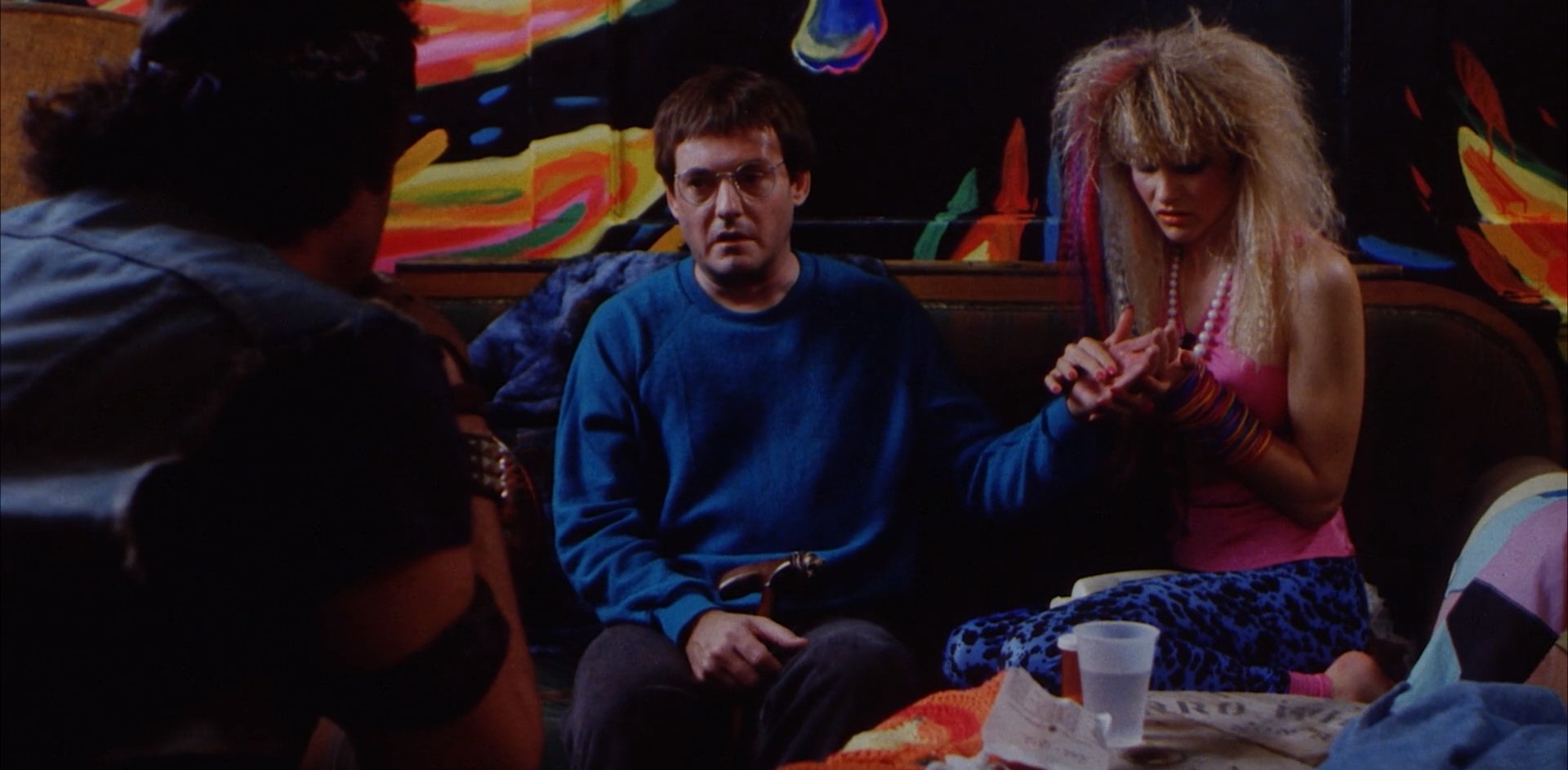
Santa Maria.  Mother of God.  Help me!!!  That phrase, attached to the very last seconds before a gruesome death and announced blankly from fiery, dagger eyes, has forever been seared into the recessed corners of my eardrums as the death cry that echoes throughout Guy Magar’s 1987 gory and visceral possession identity crisis, “Retribution.”  Magar’s ultra-violent and super-chromatic film is the filmmaker’s grand inaugural entrance as a full-length director following up behind a string of director chaired television episodes, including episodes from “The A-Team,” “Blue Thunder,” and “The Powers of Matthew Star” that regularly contained quickly charged, action packed sequences.  The Egyptian-born director translates those intense moments of frenzied disturbance into his mean-spirited and unforgiving vindicator of a script cowritten with then first time screenwriter, Lee Wasserman.  Shot in Los Angeles, “Retribution” is a virtual tour of the city, using the streets of L.A. and real locations, such as the Don Hotel for George’s residence and the nearby House of Neon Art, as a lively, eclectic, and wallet-saving convenient giftwrap for the film’s Dr. Jekyll and Mr. Hyde complexion that feels totally normal compared to L.A.’s divergent glamour.  Magar and Wasserman produce the film with Renegade and Unicorn Motion Pictures serving as the production companies and presented by Taurus Entertainment, formerly connected with United Artists. 

There are probably many actors that could been imagined for the role of George Miller, the suicidal artist plagued with visions of him committing murder, but it’s hard to imagine that venomous stare of complete satisfaction in madness spread across the face of anyone else other than Dennis Lipscomb.  No disrespect to the “Eyes of Fire” and “Wargames” actor but Lipscomb isn’t a chiseled-jawed and muscular leading man; in fact, Lipscomb is quite the opposite, but his range into mild-manner, all around nice guy George Miller into the lust for hatred and murderous revenge George Miller hangs on with complete chasmic permanence.  However, George’s love interest with the street working prostitute and fellow Don Hotel resident, Angel (Suzanne Snyder, “Return of the Living Dead II,” “Killer Klowns from Outer Space”), hardly ever seems natural in not only in the characters’ surreal age-yawning dalliance but also the chemistry looks and feels flat between Lipscomb and Snyder.  Magar and Wesserman neglect diving more into that bond between them but their enamored gleamy eyes for one another is apparent and strong without the context to back it up.  “The Dungeonmaster’s” Leslie Wing also is placed as a George Miller sympathetic advocate in her role as hospital psychologist Dr. Jennifer Curtis, but Dr. Curtis has more background to contend with in comparison to the suddenly conjured fondness from Angel as Curtis is a mental health professional caring for a suicidal patient from at his rock bottom worst to a complete positive turnaround in his mental transformation.  Curtis has more skin in the game with George’s supposed delusions of actually killing people in his nightmares as she defends not only George’s unique supernatural circumstances, but, in a way, herself as a licensed medical profession following HIPAA laws.  “Retribution” holds many dear and unforgettable characters that essentially captures the entire 1980’s spectrum of personalities and, even for a brief scene, the cast gives each role their all, including performances from Susan Peretz (“Dog Day Afternoon”), Clare Peck (“Teen Wolf”), Chris Caputo (“Ghost Warrior”), Danny Daniels (“Voodoo Blood Bath”), Ralph Manza (“Godzilla”), George Murdock (“The Sword and the Sorcerer”), Mike Muscat (“Hunter’s Blood”), and Hoyt Axton who doesn’t stray too far from his good intentions, but naïve, father role in “Gremlins” to being a detective tracking down suspect George Miller. 

I’m in total awe of Guy Magar’s “Retribution.” That opening scene of the suicide attempt with Alan Howarth’s building tension score drops not a single piece of dialogue yet opens with a gripping life and death situation, musically synced to progress toward a harrowing climax, and every frame is dripping with vintage 80’s appeal. Magar definitely knew what strings to pull to get the blood pumping, to get you excited, and to drop an excellent mystery right in the lap, or the middle of the street in this case with George Miller’s body after it flops off the car it just smashed onto. From that point on, “Retribution” peddles forward following the recovery, recouping, and ruination of George Miller’s life at the unseen hands of an exploiting, malevolent spirit that seeks to track down the top-tiered gangsters that shot and burned him alive and exact his own brand of harsh psychokinetic justice. Does it matter how George and this gangster, both born on the same day and both nearly died at the same time, came to fuse transcendently together? Don’t worry. Magar didn’t think it was important either and he’s right! “Retribution” snags all the attention for the sole purpose of the ride and that ride being a beautiful, color-coded daymare. The one aspect that ultimately retracts the buzzing high, stemmed from most 80’s films, is the sluggish love interest subplot between George and Angel stutter stepping into an awkward phase of interactions that hard stops much of core plot and though the plot is neurotically nonsensical to begin with, George and Angel’s desires for each other are about as cringeworthy as they come. Stick with the gore by honing in on Miller’s subconscious alter ego of a gangster serving his killers their just desserts via Kevin Yagher (“Nightmare on Elm Street 2: Freddy’s Revenge”) and his highly effective special effects on a low end budget that, along with a brilliant showing of cinematography by Gary Thieltges, tips into the categorical likes of “The Evil Dead” or “The Exorcist.”

“Retribution” delivers a fervency unlike ever seen in one of the utmost, must-see, shamefully overlooked horrors films of the 80’s.  Now, with a deserved boost and in style, “Retribution” gets the royal restoration treatment with a jammed-packed and sleek 3-disc Blu-ray set from Severin Films and distributed by MVD Visual.  Disc one’s theatrical cut, clocking in at 107 minutes, comes from the recently discovered 35mm pre-print elements, shot on an Arriflex 35 BL3 per IMDB, and has been digitally scanned in 2K, presenting the region free film in 1080p Full High Definition inside the original widescreen 1:85:1 aspect ratio.  “Retribution’s” image pleasingly pops with fine delineating attention to the details that reach out to the point where they’re nearly tactile textures.  Every single setup of Robb Wilson King’s production designs are rich to begin with but are even figuratively injected with a smoother compression growth enhancing hormone, adding more layers of surface level details that personify and personalize the space.  Magar’s chromatically fluorescent vision is a literal tilt-a-whirl palette blast of phantasmagoria.  Disc tow is the extended Dutch video version that adds back in the extended seconds on the longer, gorier kill scenes.  The English language DTS-HD Master Audio 2.0 is the sole mix on the release and, honestly, sates the need with the dual channels.  You obviously don’t get the surround sound, which considering this release would have been ideal, but the stereo mix, as well as the dialogue track, is still full-bodied, identifiable, and spotless of blemishes.  John Carpenter understudy Alan Howarth scores his solo synth-laden story on tenterhooks with a tinge of a Miami Vice theme as well as setting tonal moods that add depth to character layers.  If you want the entire OST, you’re in luck!  The third disc is a compact disc of the entire soundtrack.  Special features includes over two hours of content with Severin exclusive looking back at the experiences with the late director Guy Magar and the ins-and-outs of making “Retribution” interviews with co-writer Les Wasserman Writing Wrongs, actress Leslie Wing Shock Therapy, actress Suzanne Snyder Angel’s Heart, actor Mike Muscat Santa Maria, Mother of God, Help Me!, soundtrack composer Alan Howarth Settling the Score, special effects artist John Eggett Visions of Vengeance, artist Barry Fahr The Art of Getting Even, production designer Robb Wilson King Living in Oblivion.  Other special features include Guy Magar’s student film “Bingo,” stills and poster galley, and the theatrical trailer all packaged under a cardboard slipcover and a reversible snap case cover. Severin Film’s “Retribution” release is a triumph, a proper regenerarcy of revenge cinema, with all the gory details being the star of the show.

Own this Amazing 3-Disc set of “Retribution” from Severin Films!

Tune Into EVIL’s Overnight Radio Programming! “Ten Minutes to Midnight” reviewed! (MVD Visual / Blu-ray)


Veteran night shift disc jockey, Amy Marlowe, has hosted her own renowned punk rock show for the last 30 years.  On the night of a major hurricane rolling through town, the broadcast must go on as radio never sleeps, but Amy is bitten on the neck by flying bat prior to arriving into the station.  If things couldn’t get any worse, she’s trapped inside the station with the sleazy station executive who surprisingly introduces the disc jockey’s much younger and beautiful replacement.  As Amy deals with the sudden aftershock of forced retirement, she slowly descends into a topsy-turvy reality full of unannounced secrets, movements through her own past and present, and the unusually strange staff transforming into monsters inside the station walls.  To top it off, Amy craves blood.  Between the possibilities of unexpected grief and anger, rabies, or becoming something far more evil, Amy Marlowe, either way, is losing her grip on the real world.

The amount of thought and expression on blunt force change, numb appreciation, and profound existentialism worked into the allegorical dark vampire comedy, “10 Minutes to Midnight,” never steals from the narrative’s basic element, a breed of classically fed undead horror.  Writer-director, Erik Bloomquist, helms his sophomore feature film directorial that is also the second film written collaboratively with brother, Carson Bloomquist, following their 2019 debut thriller, “Long Lost.”  The Connecticut based siblings shoot “!0 Minutes to Midnight” at the ABC affiliated WILI radio station in Willimantic over the course of seven week nights, self-producing under the Bloomquist Mainframe Pictures banner alongside the third “Long Lost” screenwriter-turned producer, Adam Weppler, who also has a major role in the film. 

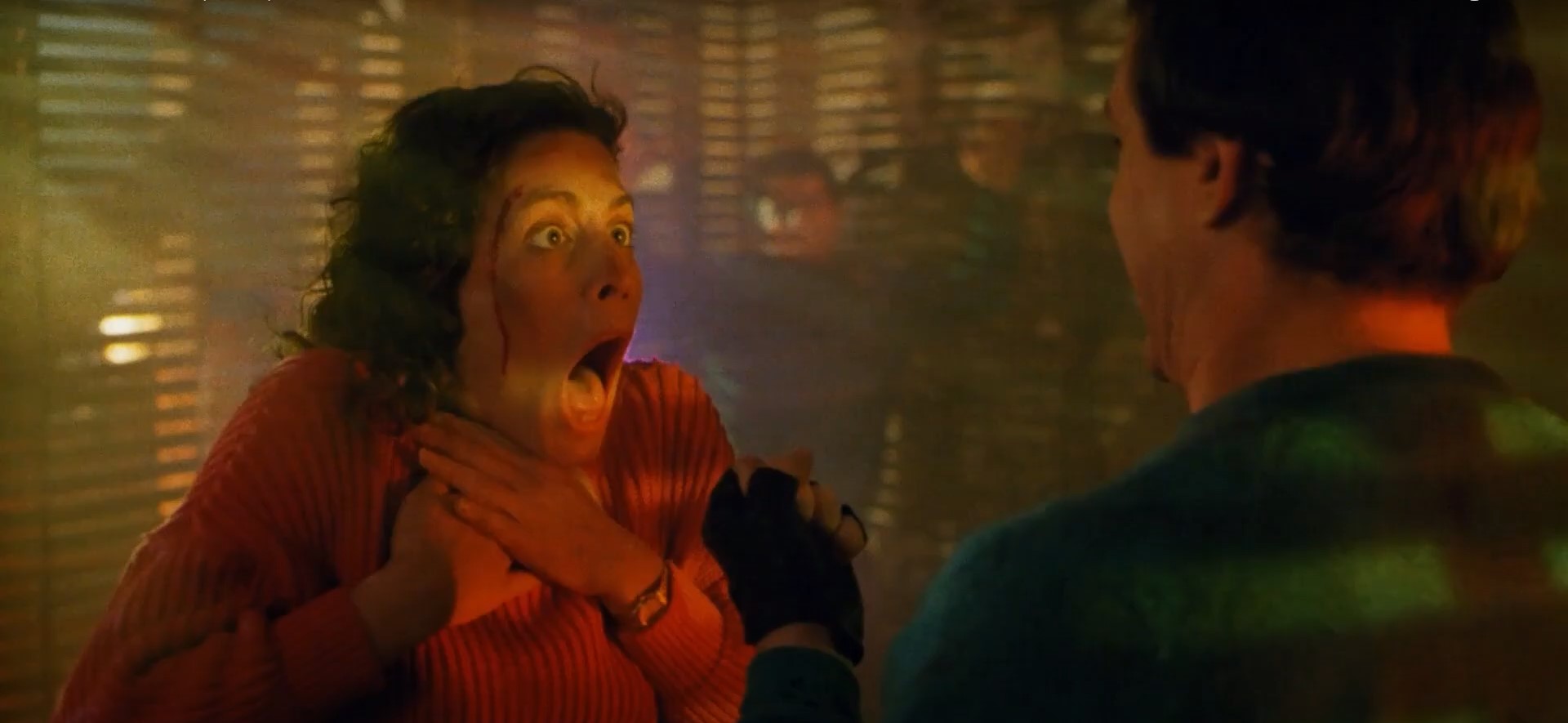
A soulful, applause-all-around performance by headlining scream queen Caroline Williams who makes her return to the DJ booth 35-years later after going face-to-face with Leatherface’s chainsaw in “Texas Chainsaw Massacre 2” and, by God, Williams still has the cold-cocking charisma of her 1986 self.  Pinned to be discarded by station exec Robert (William Youmans), Amy Marlow loses control of her on-air persona for the first time in 30-years of broadcast radio.  Williams is on target with Marlow’s salacious-pointing meltdown rant with a viperous, quick-witted tongue spurred by the very news of her canning that started the hamster wheeling rolling, putting the pieces together of how much backstabbing, ungratefulness, and all-for-nothing hard work (and her younger days’ sexual servitude) becomes a deafening cacophony of noise before her Ten Minutes Before Midnight broadcast segment airtime.  Watching Williams work never gets dull from the one moment she’s rightfully screaming and ripping someone a new one to being overwhelmingly fractured by the venom that courses through her veins in a transformative and stunning performance.  Accompanying Marlow on her sudden career nosedive are a trio of dividing personalities that pull a different versions of the radio star.  Marlow’s seemingly only workplace friend and confidant, Aaron (Adam Weppler), has been a fan of hers ever since he was little, even providing a touching anecdote about him listening to her broadcast when he was a little boy, and there’s something between them, but teeters between admiration and desire that doesn’t flesh out because, again, it’s another problematic thematical item being circled around.  The other two characters rile up Marlow’s inner angst with their threatening postures or their maddening babble.  Nicole Kang (“Swallow”) and the late Nicholas Tucci (“You’re Next”), in their roles of hotshot millennial newcomer, Sienna, and the quirky and rambling security guard, Ernie, achieve just those respective levels of kicking someone when they’re already down with a flurry of annoyance.  Kang and Tucci deliver concentrated performances.  The acting is so entrenched into their characters, as well as with Weppler and Youmans’,” that when Marlow enters a status interchangeable, role-reversal, and nightmarish last stage of her existence coming to a conclusion, “Ten Minutes to Midnight” reups another thought-provoking scenario; one that has you frantically rewiring the tightly woven profiles your brain has determined about the characters to keep up with Bloomquist who is clearly three steps ahead.

Martin Scorsese once compared certain films to theme parks, noting their cinematic worth only in their high octane action entertainment and special effects that draw audiences in like moths to a flame and never letting the actors do the meaningful work themselves.  “Ten Minutes to Midnight” is a blue-chip, character driven vampire story rare to these parks.  Bloomquist’s themes on ageism, sexism, regret, change, grief, millennials, and more, snake through Marlow’s multifaceted transitional experience in a stylishly cynical fantasy.  Much of Marlowe’s perception isn’t tenaciously reliant on the consequences of the vampire bat bite to her neck.  Reoccurring as an example of perception throughout the film, whenever the camera hovers over a clock displaying 11:50 P.M., is the fading disc jockey finding herself stuck in a timeless rut, eternally clinging to her show in a disparate attempt to be relevant despite the inevitability of change as often noted by each idiosyncratic character – Aaron changing up her normal broadcast set start to call-ins, Robert axing her for younger talent, Ernie incessantly pointing out her symptomatic changes after the bite, and Sienna embodying the very epitome of change.  Marlow’s mind melds with her physical transformation as she goes through the seven stages of grief to at which one point she talks to who might be her younger self over the phone.  Marlow, initially hesitant, does not guide change, but to rather embrace it in a moment of accepting her own checkered past.  However, the dialogue I found to be most poignant was during the retirement party with sunken-eyed celebrators who just randomly show up for the event and Marlow turns to Aaron and comments on not exactly knowing who these people are.  There’s depth and soul in that comment for someone going through the process of retirement who sees unacquainted, new faces and perceiving them with only a tinge of familiarity and a lot of isolating loneliness.

If looking for wildly crafted and superbly acted vampire celluloid, I highly recommend Erik Bloomquist’s “Ten Minutes to Midnight” to sate your thirst now on Blu-ray home video from MVD Visual in associations with Jinga Films and Danse Macabre. The region free Hi-Def 1080p Blu-ray is presented in a widescreen 1.78:1 on a BD25 and has a runtime of 73 minutes. Shot in a shadows of hard lighting, the picture quality is relatively sharp in the lack of natural light, but that sharpness scatters like roaches when a spectrum wave of neon hues or a bathe of vivid tint casts a psychotomimetic inducing trip through Thomas Nguyen’s tightly quartered medium and close up angles. The overall coloring on the location and characters falls into a matte flatness that works to the lightings advantage when using rich exterior color sources. The atmospherics are Amsterdam sultry under the heat of a carnal fluorescent red and Nguyen’s lofty present steady cam endues a nostalgic flame of eerie dreamscapes similar to early John Carpenter, such as in “The Fog” or “Prince of Darkness.” The English language audio tracks come with two options, a 5.1 surround sound and a stereo 2.0. “Ten Minutes to Midnight” is an audio-visual probe into the mind and senses and so the obvious choice here is the 5.1 surround sound; however, the lossy dialogue track becomes quickly overwhelmed by the behemoth sound design and soundtrack, the latter being original music by Gyom Amphoux. Musically, not my cup of tea, but will find an audience and fits into the narrative perfectly. Bonus materials include a behind the scenes entitled “Take One,” audio commentaries by director Erik and Carson Bloomquist as well as star Caroline Williams, multiple featurettes, a Grimmfest interview with the Bloomquists, Williams, WIlliam Youmans, and Thomas Nguyen, Grimmoire Academy and Popcorn Frights intros, and a festival teaser trailer. “Ten Minutes to Midnight” is a dusk till dawn decimator of sanity, a wickedly fun vampire oddity, and has an unforgettable, batty performance from Caroline Williams.

Recommended!  “Ten Minutes to Midnight” now on Blu-ray!

Unleashed, Nature Inspires the EVIL in All of Us! “In The Earth” reviewed (Neon / Digital Screener)

A deadly virus has ravaged the world, placing the inhabitants on a high alert edge of incessant sanitation and relentless paranoia. Martin, a scientist from the city, ventures to an ecological nature preserve to convey equipment for tests being conducted deep in the forest. Park Ranger, Alma, guides him on a two day trek toward a camp in total isolation supervised by Dr. Olivia Wendle, but during the second day of the journey, Martin and Alma are attacked in the middle of the night, left with no gear and a vague sense of what happened. The virus has yet to stake a claim on those living within the woods, but another malicious-driven presence, entombed by superstition and mental manipulation, enacts the forest to come alive around them, forcing them into a direction that presents a summoning of nature’s folkloric revenant.

COVID-19 has brought a tremendous amount of sorrow and an unforgiving plight upon the world, but for a few filmmakers, a global pandemic has been a source of inspiration that been a silver lining amongst the Earth’s population upheaval. Director Ben Wheatley tapped into that filament, you could say ,with his man versus nature mystery horror “In The Earth.” The filmmaker of “U is for Unearthed” short from the “ABCs of Death” and soon-to-be helming the follow up big screen sequel to novelist’s Steve Alten’s widely popular monster shark book series with “Meg 2: The Trench,” Wheatley writes and directs a quarantine start-to-finish feature that also incorporates the pandemic into the story, much to the same likes as Rob Savage’s “Host” that uses the virus as a means to drive the characters into doing something they normally wouldn’t be doing. The UK production is from Wheatley’s founded Rook Films and Neon, who last co-produced Brandon Cronenberg’s violent sci-fi thriller, “Possessor.”

With the pandemic resulting quarantine and a story set in the thicket of woods, “In The Earth” is innately slim around the casting waistline that concentrates the performance zest amongst a few, beginning with the introduction of Martin the scientist walking up to the sentry lodge located at the forest edge. Played by Joel Fry (“Game of Thrones”), the London born actor must endure as a hapless city boy taking woodland shots on the chin without much complaint, but definitely a grimace, a whimper, and a pass out. Guiding Martin through the woods is Alma, a seasoned park ranger under the eye of “Midsommar’s” Ellora Torchia who balances out her travel companion’s near ill-equipped, yet hazardously attempting, roughing the outdoors. Martin and Alma are nearly mirrored by the only other two people they come across in the forest – Zach and Dr. Wendle. Yet, Zach and Dr. Wendle’s similarities channel through how they instrument a link to the forest being, known as Parnag Fegg, that calls them to release it from the timber and foliage prison. Zach (Reece Shearsmith of “Shaun of the Dead”) honors Parnag Fegg with ritualistic images and symbols while Dr. Wendle (Hayley Squires) uses a combination of technological lights and experimental music to speak with the powerfully alluring presence. Shearsmith is devilishly certifiable with Squires backing up his character craziness with her own version that never places Martin and Alma into a safe haven’s circle. “In The Earth” rounds out the cast with Mark Monero and John Hollingworth.

“In The Earth’s” binary coding of nature versus urban, plus sublets of traditions versus technology, runs as a seamless motif to a bigger theme that nature has a global network web of personified communication and reason. I imagine Wheatley succeeded in what M. Night Shyamalan tried to accomplish in the Mark Walhberg’s headlining “The Happening” with bringing nature to the forefront stand against man who continuously seeks to destroy themselves and the world, forcing nature’s hand to take drastic measures, but Wheatley’s film more so tells not the story of a worldwide assault on mankind but rather as the resurrection of a single entity, an archaic necromancer of local legend, eager to walk the Earth once again after being driven to disembody their spirit to the forest. “In The Earth” also provokes a literal meaning toward an age old saying of “nature calling” by using the aforesaid network to unconsciously lure specific individuals into the woods and gather near a gateway relic or stone,. This act of intention calls for a sacrifice of purity and so one of the four individuals – Alma, Martin, Zach, and Olivia – will involuntary be the vessel of Parnag Fegg’s return while the others, under the persuasion of forest spirit, due it’s song-and-dance bidding. Ben Wheatley taps into a very John Carpenter archetype of people on the cusp of unleashing certain doom upon the world, invoking not only a spirit but also that very sense of last stand against damnation as epitomized in “The Thing” and “The Prince of Darkness.” “In The Earth,” however, isn’t so easy to see the forest through the trees with an first act setup that zips through the situation that leads Martin and Alma trekking through the woods and Parnag Fegg is only briefly dappled to be a dangled carrot for bigger things to come.

A chiseled, fey story with a dark, ominous cloud of impending doom lingering overhead, “In The Earth” is transcendence horror at it’s finest. Neon is set to release the R-rated, 107 minute film, “In The Earth,” in theaters on April 30th. The scaled down budget didn’t hinder Wheatley’s grand platform and with Nick Gillespie’s sophomore credit as feature film cinematographer, the playbook was unwritten for Gillespie to rework how to shoot a film under the confines of a pandemic with limited cast, a living forest, and still maintain safe social distant practices under strict mandated guidelines. Gillespie formulated wide-angles to capture an expanse of trees diminutively enshrouding the characters, almost like the forest was going to gulp them at any moment. A composition of artful imagery compiled together in a collage of intoxicating colors and feverish styles interprets nothing concrete in the heroines journey of an nearly unknowable presence only knowledgeable by world of mouth, leaving also the audience induced with a psychedelic vision at the whims of Wheatley’s direction. There were no bonus scenes during or after the credits and the perfunctory ending opens the door for interpretation that can be more impacting than a firm resolution. Born and bred from the depths of the coronavirus pandemic, “In The Earth” dispatches a diversion from the immediate, the real world, and the tumult of a virus with a bewilderingly diversion of troubling folk horror sown directly into Mother Nature herself.