After EVIL Was Executed, A Movie Was Released! “Monster” reviewed! (Second Sight Films / Blu-ray)

Own Second Sight Films’ Blu-ray of “Monster.” Order Here!

Aileen had big dreams and big ambitions to be someone in life.  Growing up, she did what she had to do to get ahead, even if that means selling her body at a young age when she had no advantages unlike her peers.  Now getting longer in the tooth, Aileen still unhappily hooks to live hand-to-mouth, day-by-day, just to survive cruel circumstances.  When she meets Selby, a young, lonely lesbian looking for friend, the two become attached at the hip becoming exactly what each other need at that moment.  The two become intwined was not only friendship but passion as Aileen promises to quit the streets and make a better life for her and Shelby but when one of the last nights of prostitution winds up almost killing her and her unloading bullets into attacker, Aileen succumbs to a taste for murdering sleazy men in order to satisfy Selby’s love.  How far will Aileen go to achieve her dream?

The sad story of Aileen Wuornos life is much more than the serial killer segment she’s most infamous for.  Wuornos unlucky dealt hand could be considered the archetype of white trash narratives being born to teenage parents, practically raised without role models or stable parents, sexual and physically abused by those close to her, impregnated during the middle of her high school teen years, kicked out of her grandparents’ house, and learned to survive through the old profession of prostitution.  Yet, all that tragedy is not in the story that is about to unfold before you in “Monster,” the 2003 biopic thriller from “Wonder Woman” director Patty Jenkins.  Mostly authentic with bits and pieces adjusted to protect individuals from the public eye, “Monster” accounts for what Aileen is responsible for, the multiple slayings of clients who were accused by Aileen as rapists and abusers during their sexual transaction.  Also touch upon, and in a very heart-rending sense, is Aileen’s love for another woman and how their relationship crumbled under the stress of life’s tremendously unfair hard knocks.  Jenkins writes-and-directs the film with Wuornos’ blessing under the multiple production umbrella of Media 8 Entertainment, New Market Films, Denver & Delilah Films, K/W Productions, DEJ Productions, and, in association with, MDP Worldwide. 

To play labeled America’s first female serial killer, Patty Jenkins sought after Charlize Theron who, at that time of the early 2000s, was hitting the height of her career having starred alongside Keanu Reeves and Al Pacino in “The Devil’s Advocate,” Johnny Depp in “The Astronaut’s Wife,” and Mark Wahlberg in the remake heist film “The Italian Job.”  Theron, a stunning woman who became the epitome of glamour and beauty in the eyes of Hollywood, put herself through a transfiguration for the role of Aileen Wuornos.  Gaining weight and capturing Wuornos mannerisms and thoughts-process to play, as close as possible, the woman who would go on to murder 7 men in late 80s, early 90s.  Play is perhaps too broad of term for Theron who depicts a drastic overhaul of her looks and her idiosyncrasies to recreate Wuornos in the flesh and in the mind, creating a lifelike illusion of Wuornos on screen that garnered her an Oscar.  Theron’s costar, however, did not dress the part of Aileen’s real-life lover who opted to remain in the shadows of a private life, disconnected from her past sordid by true life crime.  That costar is none other than Christina Ricci.  The “Addams Family” and “Sleepy Hollow” star adds a slender, petite, fictional companion as lonely-lesbian Selby Wall against, who we know more about today, was a heavier set and butch woman that was Aileen’s romantic partner, Tyria Moore.  Jenkins invokes a sense of loneliness between the two women who find each other when they need each other the most, at the lowest point in their lives, and when their journey together seems hopeful, bright, and prosperous, life’s muck and judgement comes raining down life hellfire.  Aileen’s series of johns make up the rest of the cast and a few have familiar faces, such as Pruitt Taylor Vince (“Identity,” “Constantine”), Scott Wilson (“The Walking Dead”), Marc Macaulay (“Wild Things”) and Lee Tergensen (“The Texas Chainsaw Massacre:  The Beginning”) with Tim Ware, Brett Rice, Marco St. John, and the Oscar winner Bruce Dern (“The Burbs’) rounding the cast out. 

Having been released over two decades ago, “Monster” still retains relevance even when the real-life Aileen Wuornos no longer breathing after her execution in 2002.   “Monster’s” focus isn’t about the episodic killings of a laundry list of varietal behavioral clients who either seek sex out of loneliness or seek it for other devilish, wicked means as Patty Jenkins hones in on a more strung along motif of loneliness that connections not just our principal characters but, in a way, most of the Aileen’s men, the clients.  Baked and weathered by the hot Floridan sun and about as vocally turbo-charged as they come, Aileen isn’t the most beautiful street girl, and not even the most pure and refined soul, but provides a service, a service of warm skin, closeness, and pent-up relief.  In turn, that same service becomes her jailor and her undoing, shackling and imprisoning her growth form an early age, stemmed by a childhood she didn’t have, that didn’t allow her to become somebody and to make something of her downtrodden existence.  The murders are in a backseat, second fiddle to that blossoming love story between her and Selby that engulfs and drives the violence that seeks no end.  Itty-bitty details shine through into Aileen’s humanity, as a perk of the person rather than the monster she’s perceived after the fact, after the trail, and after her capitalized death.  Patty Jenkins sought to make an homage as the reason rather than just the basic news coverage of Aileen Wuornos and achieved eye-opening success.

Second Sight Films invests into a new Blu-ray release with new content encoded onto AVC, 1080p resolution, 50-gigabyte disc, scanned in 2K from the original 35mm film and presented in a 1.85:1 widescreen aspect ratio.  What’s impressive about the Second Sight release is retaining the natural looking grain of celluloid film.  Hues are approached organically without an overabundance of grading and this release sees to preserve “Monster’s” hard-edge and enough definitional nooks-and-crannies, especially around the weathered skin and fibrous features of Aileen Wuornos biological appearance.  The Blu-ray comes with two lossless, English audio options:  DTS-HD Master Audio 5.1 and a LPCM stereo 2.0.  Both offers true fidelity through the layers of range and depth but whichever A/V setup you have will dictate the format you choose.  However, the Stereo option is a good, well-rounded, full-bodied option for all as “Monster” is more a talking narrative than a caffeinated spear of action, but the rear and side channels due funnel a nicely diffused environmental ambience of highway traffic and some supplementary crowd noise underneath a well-verbose and amply clean and clear dialogue track.  New, exclusive content line the special features option on the fluid menu, such as a new interview with Patty Jenkins Making a Murderer that goes into depth about her relationship with muse Aileen Wuornos through conversation and letters as well as Charlize Theron’s transformation and performance, a new interview with producer Brad Wyman Producing a Monster, and a new interview with Director of Photography Steven Bernstein Light from Within that captures a late 80s-early 90s without infusing artificial concealer.  Other supplementals available are an audio commentary with director Patty Jenkins, actress Charlize Theron, and producer Clark Peterson, the evolution of the score featurette, deleted and extended scenes with Patty Jenkins commentary, a making-of featurette that bases the film out of being a true story, and the original theatrical trailer.  For a standard Blu-ray release, Second Sight provides a ton of content; however, there are no physical goodies, nor does the standard release come in a rigid box.  Inside a green Amary case, the single sided front comes, in what has become a prolonged motif amongst Second Sight releases, with a two-tone of black and blue or black and purple and austere cover art of Theron’s portrayal of Wuornos looking worn down.  The UK certified 18 release for strong violence and sexual violence has a runtime of 109 minutes and is hard encoded region B locked so you’ll need either a region B or region free player for playback in the Americas.

Last Rites: A beaut of a Blu-ray for the now over 20-year-old “Monster” that sees new content and insights that cast less shade over a troubled existence that inflicted real life killer Aillen Wuornos. Patty Jenkins and Charlize Theron do the story justice and Second Sight Films just follows suit with enhancing its story told quality.

Own Second Sight Films’ Blu-ray of “Monster.” Order Here!

A Little Space Can Asunder the Strongest Bond. “Alien Love” reviewed! (Sector 5 Films / Blu-ray)

Its Not Strange Love, It’s “Alien Love” now on Blu-ray!

Ryan Van Hill-Song and his wife Sadie are a happily married couple despite their age gap.  Ryan’s ardent journey and dream to reach beyond the clouds and into space is on the verge of coming true while Sadie decides to take a break from the vocational rigmaroles of her young life.  Ryan’s NASA mission goes without a hitch except for a brief loss in communication with headquarters.  Upon his return home, Sadie notices a behavioral difference in her once loving husband who now acts strange in his own surroundings and around her.  Despite a few amorous encounters, Ryan becomes strangely obsessed with the extraterrestrial concept through alien themed movies, local artistic murals, and anecdotal accounts that are engrained into their home city’s culture.  As Sadie begins to suspect Ryan is no longer her husband after learning about her pregnancy, NASA agents move in to chase down Ryan and capture his true being.

Strap yourself in to blast off into the great unknown of extraterrestrial copulating with Simon Oliver’s 2024, Sci-Fi romance-drama, “Alien Love.”  The serial Australian documentary director puts a pause on the confluence of beings from the space frontier, the mysticism of the occult and supernatural, and historical contexts to land terrestrial blending-aliens amongst us, hiding under human skin as our family and as our lovers; in this case with “Alien Love,” as astronaut and husband Ryan Van Hill-Song with a concealed agenda.  The script, that presses themes of usual relationships and their potential inertia, is penned by the principal male lead, Nathan Hill, and Simon Salamon, both of whom are coming hot off the script press of their last feature “Lady Terror” from the previous year.  Hill dons the producer hat as well under his production company NHProductions with Sector 5 Films’ Warren Croyle footing and distributing the microbudget feature. 

Nathan Hill producers, co-writes, and stars in most of his pictures.  However, for “Alien Love,” the accomplished filmmaker breaks up the routine monotony by taking a backseat in the director’s chair to enhance focus on Ryan Van Hill-Song, the astronaut who returns to Earth and is not the same man who left his planet.  Aside from a few lines in flashbacks and a quick, laconic replies here and there, Hill mostly lounges about or takes a run while in character, leaving the brunt of the dialogue and emotional work in the hands of Ira Chakraborty, a model-actress in her full-length feature debut in the role of Sadie.  Ira carries the story that mostly just stagnates with scenes of Ryan’s wandering alien obsession and absence seizure indifference all the while Sadie frustratingly can’t decipher her husband’s acute loafing and lack of any kind of emotion in contrast to the flashback lovey-dovey affections.  The craftier part about this devolving dynamic is the theme it represents between fantastical expectations and grim reality, especially between two considerably different people on a collision course of marital decline.  Throw a baby in the mix, a more calamitous cocktail ensues.  NASA agents, supervised by Colonel John Smith (Edward Mylan), are on the hunt for the close encounter, and if you’re wondering what the hell is NASA is doing in Australia, well, let me school you on that there is a NASA deep space communication center in the land of Oz to allow seamless communications to spacecrafts when the Earth rotates.  The more you know…  “Alien Love” fills out the cast with Eleanor Powell, Demz Lato, Sam Ready, Chase Kauffman, John Robertson, Robert Rafik Awad, Ben Bramwell, Savita Bungay, Emily Farrell, and Dan Heubel.

Preboarding the “Alien Love” ship saw an audience collective view of similarities toward the Rand Ravich directed, Johnny Depp and Charlize Theron-starring “The Astronaut’s Wife,” and after soaring through “Alien Love’s” story, that general consensus is spot on as the Simon Oliver helmed, Nathan Hill production is a remake of the 1999 New Line theatrical release on a much smaller scale.  Going into the film knowing this, there ironically emerges less subjectivity because expectations were set and the cognitive ability to examine “Alien Love” for more than just a remake is formed.  The aforementioned theme of wedging differences between two people is characterized by the age gap and ambitions.  Ryan’s an older man, this fact is mentioned a few times early on, chasing a space dream and Sadie is somewhere 20-30 years his junior and judging with conversations with friend Abbey, Sadie is or was in university.  Love at first is healthy, vibrant, exciting, and hopeful like any first-time marriage but the gap, symbolized by Ryan’s change, becomes alienating, literally, and the once strong bond between the two lovers is now reduced to the occasional sex and just being in proximity of each other as interests change and connections become stale.  This unfortunate walk-through of life is told through the sensationalism of an alien inhabiting human form, but the message of marital decay is loud and clear with all the hallmarks of a souring union between two very different people.  When the alien does make the screen, the simplistic mask man works here with a decent alien archetype look without it being overly schlocky; however, the need more for more context is sorely missing as Oliver goes for more style than substance as the need for digital lens flares and art compositions unbraid the build of the story.

From Sector 5 Films comes “Alien Love” on an Australian Blu-ray home video.  The AVC encoded, 1080p high-definition resolution, BD-R has lossy picture quality simply because it’s a BD-R; however, the bandwidth appears to be adequate to suppress artefact issues and sustain a stable, reliable quality throughout.  Details and colors are generally soft, textures lack distinction, in what is more of a hazy aura veneer with muted colors and no dense shadows, over kneaded by warm pink and rich blue gels to heighten the dreamy affect.  Delineation works for the cityscapes and some handful of land planted with powerlines and towers coupled with interesting camera angles and work.  The only audio option is a lossy English Dolby Digital 2.0 Stereo mix that heavy on exposition and Jamie Murgatroyd’s mingling with epic soundtrack.  Dialogue layer has dynamic change depending on how cavernous rooms can be or if background ambience levels are higher that suppress vocal projection.  Overall design diffuses fine from a stereo output with clean and clear dialogue.  Special features include a feature parallel audio commentary with stars Nathan Hill and Ira Chakraborty, an interview with Hill and Chakraborty going over fan questions, interview with esteemed John Hipwell (“Lady, Stay Dead”), deleted scenes with commentary from Nathan Hill, a blooper reel, still gallery, and trailer. With the encoded special features packed with goodies, the Blu-ray design and package leans toward more standard fare with a traditional Amaray case with no inserts or other tangible accompaniments.  Primary cover art looks inexpensive, air brushed, and circa science films of the 1950s.  Disc is pressed with the same image.  The 75-minute feature comes unrated with region free playback. 

Last Rites: “Alien Love” will not be the knock-your-socks-off science fiction film of the year nor will it dazzle with awe-inspiring special effects. What Simon Oliver and Nathan Hill specialize with their latest film is storytelling of a disintegrating couple during alienating times, plain and simple, with a heavy emphasis on the plain and simple.

Its Not Strange Love, It’s “Alien Love” now on Blu-ray!

EVIL Wants to Cut Out Your Unborn Child. “Inside” reviewed! (Second Sight / Blu-ray)

Order The Limited Edition Copy of “Inside” From Second Sight!

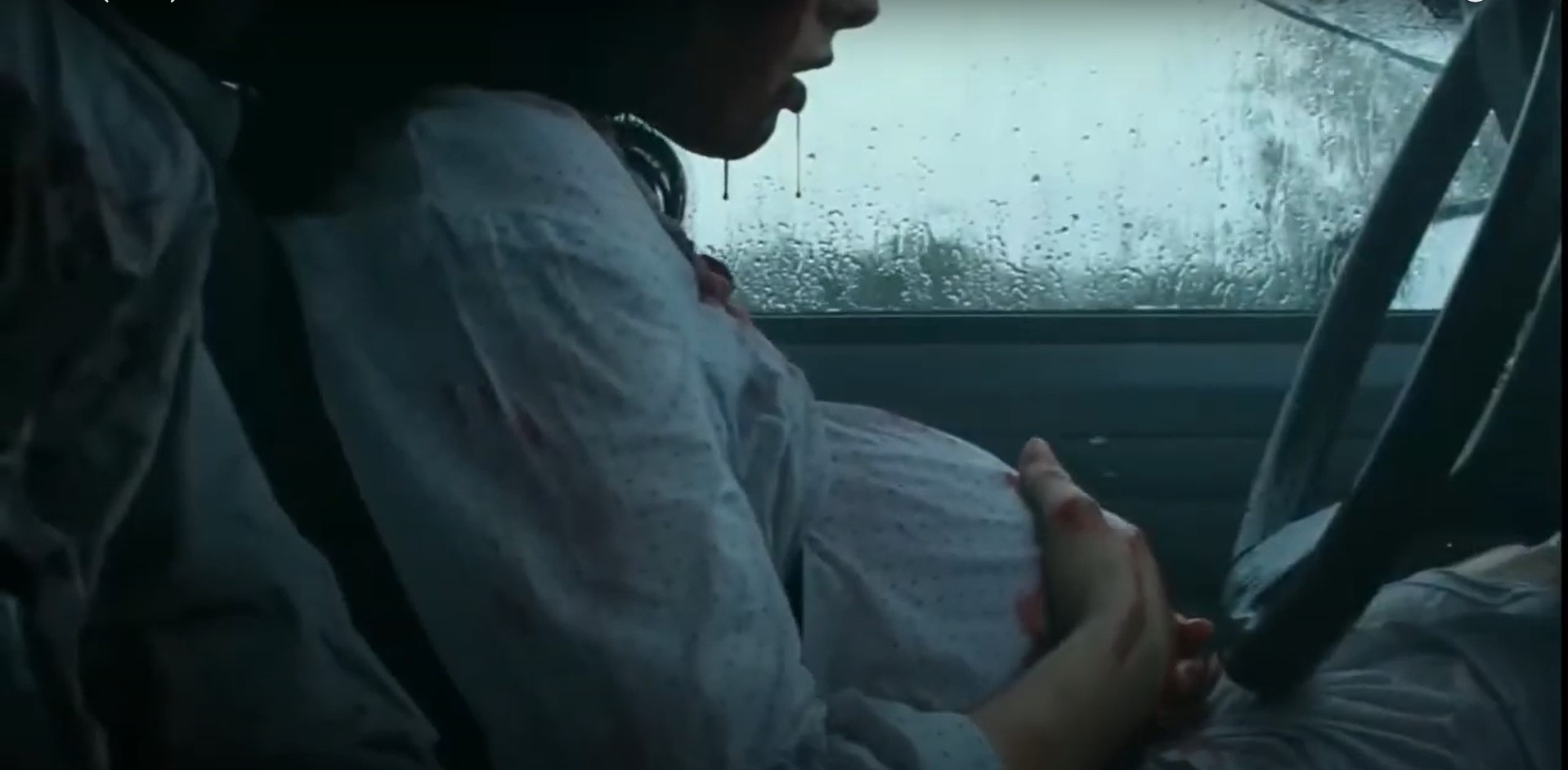
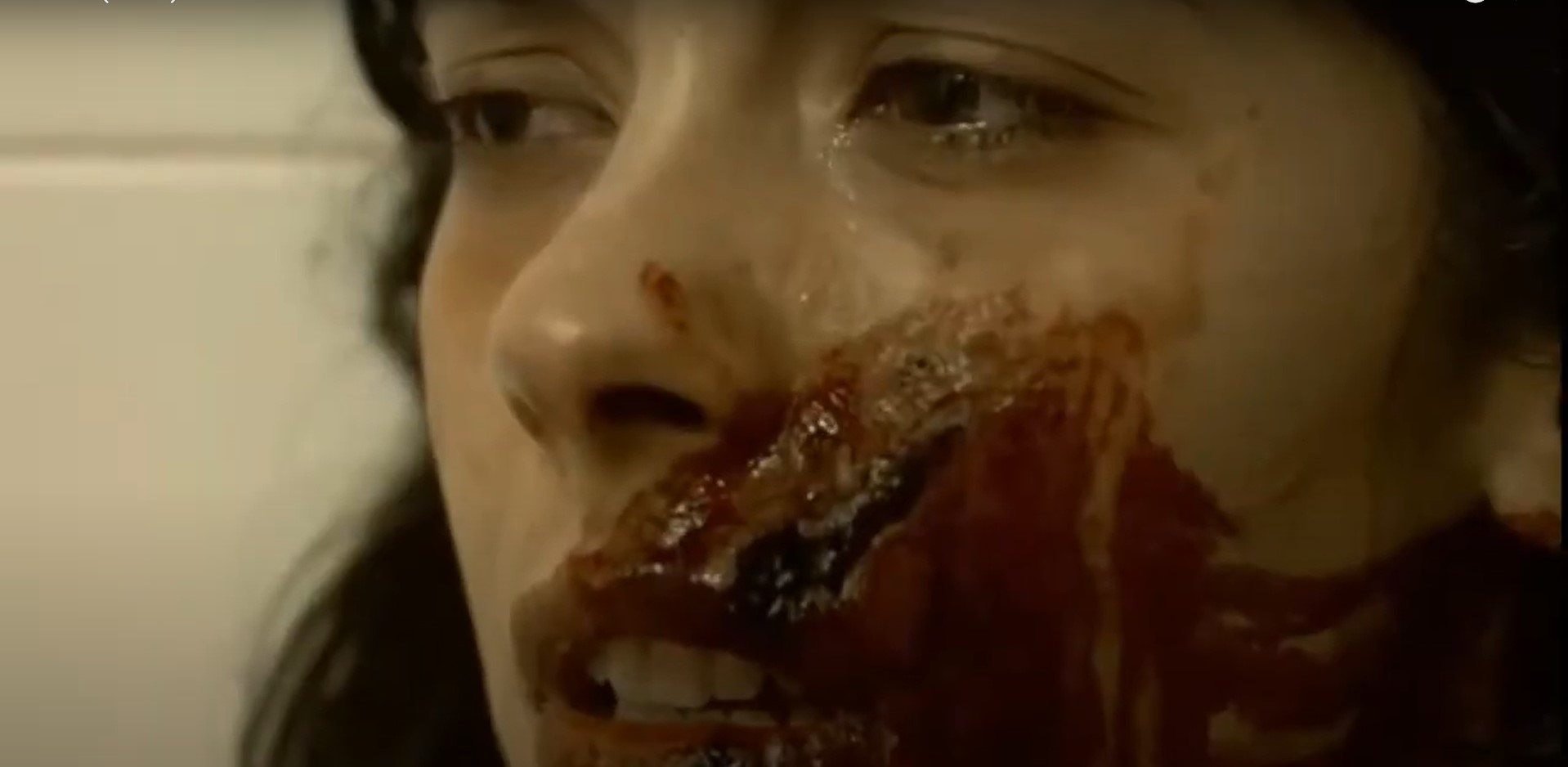
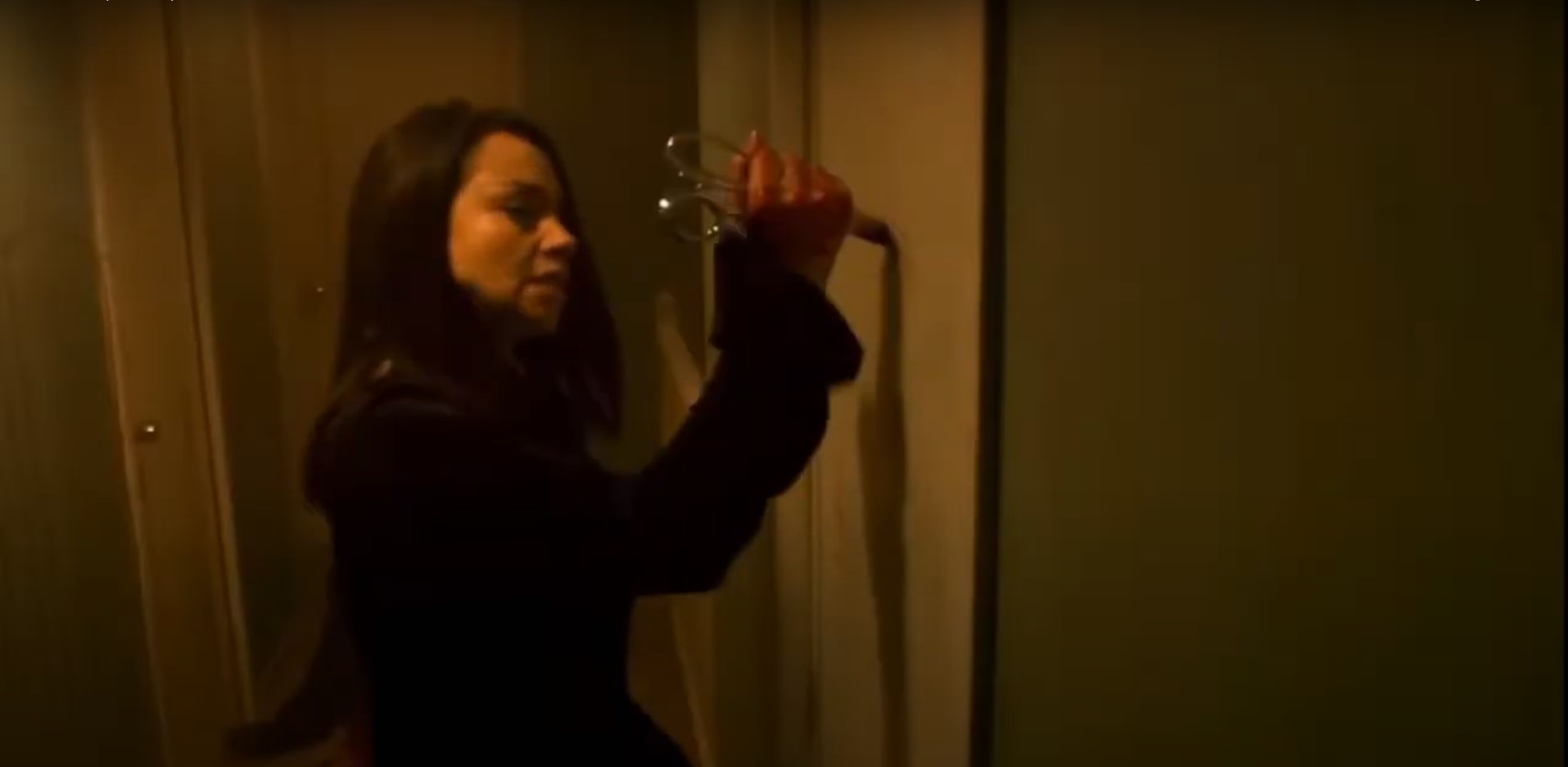
Four months after deadly car crash that claimed the life of her husband, a disheartened and depressed Sarah is 24 hours away from being induced into labor on Christmas day.  Just wanting to be left alone, Sarah is eager to lower her head into her work as a photojournalist of capturing horrifying images that bear a resemblance to her own accident and inviting her editor over later to discuss the work ahead.  As the even lingers into night, an unexpected woman knocks at the door and menacingly tries to break into her house.  As the police arrive to investigate the incident, the woman is nowhere to be found and brush off the incident with little concern, but the woman returns, finds herself inside Sarah’s home, and is determined to cut the baby directly from Sarah’s womb to be her own child.  The tormenting violence becomes a cat-and-mouse game between the two women with an unborn child hanging in the balance. 

Extremely violent and soul biting, “Inside” is one of the more corrosively dehumanizing and destructive films under the French New Extremism, French New Wave Horror, flag.  The 2007 French feature cowritten-and-directed by Alexandre Bustillo and Julien Maury broke the duo into the industry as formidable and fearless filmmakers, reaching global heights having helmed later in their careers a segment of the popular anthology “ABCs of Death 2” and tackling one of America’s more renowned and bred-and-buttered horror franchises with the chainsaw-wielding cannibal in “Leatherface.”  “Inside” comes after the tremendous success of Alexandre Aja’s “Haute Tension,” opening the flood gates to other extreme French horror films in early 2000s with also “Martyrs” and “Frontier(s).”  La Fabrique de Films and BR Films in association with Canal+ server as production companies with later “Frontier(s)’s” Teddy Percherancier, Frederic Ovcaric, Rodolphe Guglielmi, and “Witching and Bitching’s” Franck Ribière and Vérane Frédiani producing the film known as “À l’intérieur” in France.

Not your typical home invasion ultraviolence, Sarah and who we know as labeled only as The Woman are two vipers circling each other, ready to strike when the guards are let down.  Of course, both have distinct personalities and strategies in the measured way of attack and survival that will impress on viewers preconceived notions about them.  As Sarah, Alysson Paradis, younger sister of Johnny Depp’s wife Vanessa Paradis, is bathed in exposed light, literally and figuratively, as the pinpointed principal woman from the start, battered and bloodied in the opening two car accident, to the end, in the final harrowing moments with the relentless Woman but though Paradis performance reeks greatly of depression and perhaps hopelessness with the death of her husband with a baby soon to be brought into this world without a companion by her side, the momentum shifts towards proposed surface villain of the story, The Woman, in a frightening portrayal of stony guile and grim severity by the established, character provocateur French actress Béatrice Dalle (“The Witches’ Sabbath”) in comparison to Paradis relatively filmic beginnings.  Dalle’s role expresses more physically than vocally with motivation coursing through her eyes, facial expressions, and body language that strikes a transfixing chord, turning Dalle’s the Woman into not only an unpredictable killer but an on-screen killer with a lighted purpose without confounding arbitrary slaughter as the yearning for The Woman’s reason never breaks silence until the shocking end.  François-Régis Marchasson, Nathalie Roussel, Ludovic Berthillot, Nicolas Duvauchelle, Aymen Saïdi, Emmanuel Lanzi, and Dominique Frot (“Among the Living”) fill out “Inside’s” cast.

Most will plainly see and interpret “Inside” as a regular home invasion thriller of a pregnant woman defending herself to survive a mad woman’s unborn baby obsession, and maybe that’s how Alexandre Bustillo and Julien Maury mostly intends the narrative to be as an overly graphic portrayal of hate and envy that makes us uncontrollable sinners at heart.  However, there’s something inside me to dig deeper below the face value of terrorizing prenatal torment of a young, expecting mother-to-be in what could be construed as a double-edged explanation.  The Woman doesn’t hold a name as she symbolizes all the worst qualities of a mother, such as anger, deceit, and she even smokes, in Sarah that could be considered a split persona or an archetype of duality.  Sarah is cladded in a bright white nightgown while The Woman is dressed all in black from head-to-toe, contrasting a good versus evil, and both want the same child.  The climax does rebuff the split duality theory to an extent but the way the script is written and how the film is shot very much suggest these two women are cleaved from the same whole with a patriarch-less presence and, to add as an interesting note to further examine and contemplate, all the male characters in the story are slain by the same women while the only other female character is brought down by the other in what is a powerful suggestion of split gender and how gender plays a role in their individual lives.

In what can be said to be the most definitive edition of one of the most brutal films ever produced, Second Sight Films’ Limited-Edition boxset of “Inside” is amply packed with goodies, in application and in a tangible sense. Presented in a widescreen 1.78:1 aspect ratio, the AVC encoded, 1080p high-definition, double-layered BD50 from the UK label holds tremendous value with not only new special features and neat and attractive corporeal contents but also valued by retaining image fidelity with a gritty 35mm print. Natural grain and low-fi celluloid present the seedy grindhouse overlay that’ll take audiences from the comfy, cozy reality into a dark, anomalous atmosphere with warm muted coloring, lambency, and an overall light general haze suffused into the setting. The cinematography has been purposefully constructed with analog building blocks for a rough look for a rough story. Not technically applicable here but “Inside” is set around Christmas, Christmas eve into Christmas day to be exact, but the choice production dressing exhibits little holiday spirit with a far less ostentation presentation and in how the characters dress the season feels more fall like than winter. The lossless French 5.1 DTS-HD master audio offers plenty of spatial awareness during intense pocket skirmishes inside the quaint two-story home, which is the primary setting of the story. The range provides laceration slits and surgical squishes of blades and scissors while gunfire shocks with an innate immediacy. Even with a mostly prominent inconversable back-and-forth, the dialogue that does come up carries through with robust confidence without overbearing the action or feeling out of synch. Speaking of being in synch, English subtitles are available with the French audio track and are error-free and pace well. Special features include a new audio commentary by The Final Girls’ and film critic Anna Bogutskaya, new audio commentary by editor Elena Lazic of the online magazine outlet Animus, a newly produced interview with writer-directors Alexandre Bustillo and Julien Maury First Born as well as newly produced interviews with principal actress Alysson Paradis Labour Pains, producer Franck Ribière A New Extreme, cinematographer Laurent Barès Womb Raider, and stunt coordinator Emmanuel Lanzi Reel Action, with The Birth of a Mother, a Jenn Adams analytical essay focusing on a denied mother’s perspective and the opposite. The limited-edition physical elements of the release add additional magic to the whole package with a rigid, cardboard sleeve case with new artwork by Second Sight retainer artist James Neal. Inside the “Inside” sleeve is a 70-page book with color pictures and thematic essays from film historians and critics Chad Collins, Kat Ellinger, Annie Rose Mahamet, and Hannah Strong. There are also 6-5×7 collector art cards adjacent. The green Blu-ray Amary case houses the same Neal front cover from the rigid sleeve, likely will be the face of the standard release, with the interior disc art having a simple yet effective image of a blade open pair of scissors and psycho-split or -sliced title in red and while. UK certified 18 for strong bloody violence and very strong language, this Second Sight release is B region locked and has a runtime of 83-minutes.

Last Rites: Second Sight invests in “Inside” and its first-time French directors nearly two decades after initial release with a comprehensive package that not only elevates beyond what many labels sought to get out of the gore-laden entropy, quick cash, but this premier release also has depth and range into the film’s applied style and dives into demystifying the breadth of thought preluding random terror.

Order The Limited Edition Copy of “Inside” From Second Sight!

We Are All Just Playing Characters in an EVIL Movie! “Virtual Reality” reviewed! (Artsploitation Films – Kino Lorber / Blu-ray)

Believe Everything You See.  “Virtual Reality” on Blu-ray at Amazon.com

A horror movie about a supernatural Celtic killer has just wrapped production and goes into post.  The cast and crew what to succeed at all costs, not only in the movie but also in their stagnant careers.  However, the director, Matias, craves fame and legacy to the point of committing his soul to whatever it takes to cement his film in acclaimed success.  Matias and the arcane producer form a pact with a diabolical computer program and artificial intelligence that’ll bind their movie to esteemed infamy as well as bind their cast and crew to their characters.  When Matias invites select cast and crew to a private screening at his home, they realize the movie has scenes of their characters that weren’t shot during principal photography and that whatever happens to their characters in the movie, being chased by the Celtic killer, will happen to them in real life.  The only way to survive the movie is to last the full 90-minute runtime.

Hailing from Argentina, the South American country that brought us “Terrified” and the “Plaga Zombie” films, comes another tale of terror with the metaverse horror “Realidad Virtual,” aka “Virtual Reality.”  The 2006 “Director’s Cut” and 2009 “Breaking Nikki” shot caller Findling continues his traipse through psychotronic land with a story that couldn’t be more relevant today than if artificial intelligence synthesized the narrative itself out of binary ones and zeros.  The script comes from Findling and cowriter Lourdes Prado Méndez, an Argentinian romance novelist.  Having virtually no romance in “Virtual Reality” whatsoever, the 2021 film stretches Méndez’s range into crafting characters with a foot in two planes of existence while under immense fear and pressure to survive a supernatural slashening.  “Virtual Reality” is produced by Gabriel Lahaye under Lahaye Media, who has supported and collaborated on a number of Findling’s previous films, such as “Breaking Nikki” and “Impossible Crimes,” and is also a production of Wit Producciones, Cine Argentino, APIMA, FilmSharks, and INCAA of Argentina.

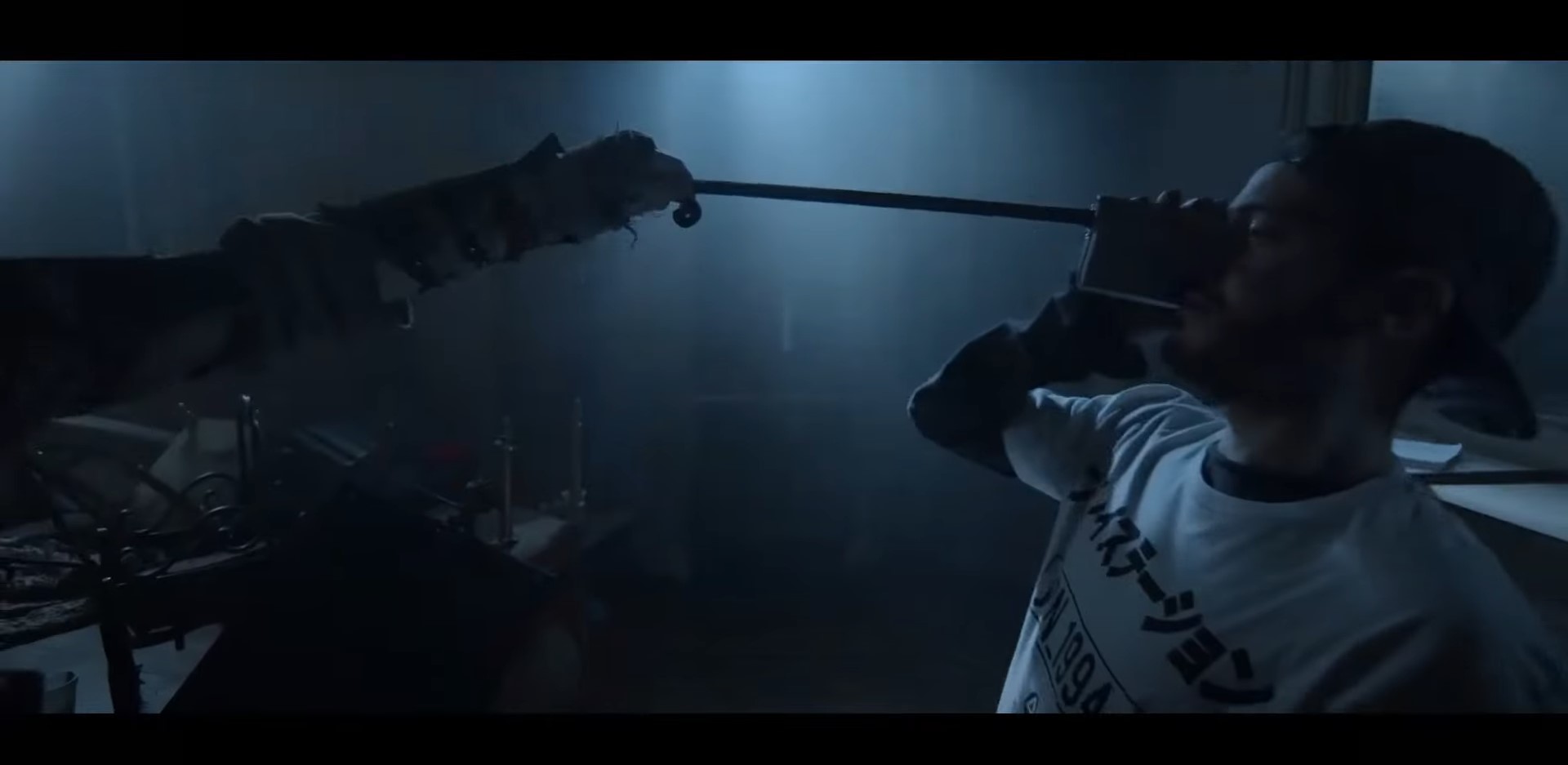
The story circles around a selectively small and independent film cast and crew finishing up a concluding scene of another to-be-forgotten horror movie by director, Matias (Guillermo Berthold), who has had multiple failed films before now.  Yet, the production team remains positive, hopefully the film with jumpstart careers as desperately expressed through the first act, especially with the film’s final girl star Guadalupe (Vanesa González, “Hypersomnia”), or Guad as she’s called by her friends, and her director’s assistant brother Pablo (Santiago Magariños).  Berthold plays the sneaky-sadistic director about as a well as most with a fervent penchant to do anything for his creative filmic art even if that means colluding with a shady, mysterious producer in César Bordón (“She Wolf”) whose performance’s obscured or lack of purpose is due in part to the character’s flimsy connection to the diabolical computer program.  Bordón can’t help but just be an inhuman human, violent by necessity instead of being violent with a purpose.  The producer seeks success for every single one of his films with a subsequent plotted course for the next idea – whether be a sequel or a brand new story – yet his connection to the network of evil of unexplained runes, sporadic pixilation, and artificial intelligent adaptations that can re-edit recordings into a new and inexplicable account of the story has been sorely severed in regard to understanding his background and his motivation of mortal sacrifice for movie fame.  Other connects that were left on the cutting room for, so to say, were between the siblings Guada and Pablo and their dying mother in what I suspect was an attempt to shove the sister and brother some sympathy, clearing the way for the two to be the unambiguously heroic duo, but the scene with their mother on her deathbed offered little-to-no compassion, producing a gelatinous lasting effect in what was a more visual one-off of two children spending the time they have left with their mother versus an incentive or arc scene that would hopefully rally up character expectations to look after each other.  “Virtual Reality” rounds out the cast with Frederico Bal (“Impossible Crimes”), Francisco González Gil (“El último zombi”), Sofia Del Tuffo (“Luciferina”), and Christian Sancho in a Johnny Depp inspired dressed part of a self-centered actor with a suspected pill addiction. 

As far as plot designs go, “Virtual Reality” has an interesting concept that involves filming two different harrowing situations and joining them into one parallel plight with the actors reacting more to the events happening on the television screen, which in itself becomes living, breathing character of sinisterism, rather than what’s happening outside the box in the present.  Both realities are virtually live and in play for their very being and whatever happens in one, affects the other.  “Virtual Reality’s” state of duality, not only in character, but also in linear lines of an alternate universe with lifeline connections, is smart, fresh, and terrorizing to know that your life depends on an A.I. created character coursing through a maze for their very lives.  This mirror-meta-effect continues to evolve as the story plays out that leave survivors questioning reality and questioning their individuality of some higher force that has used them like some free-thinking avatar for filmdom fame.  This is where “Virtual Reality” starts to become complicatedly crisscrossing as instances of a distorted reality spiral down a rabbit hole of what we thought was true.  Findling is nonapologetic for his layered universes that spins and wraps a narrative around another in what is a show of forced fantasy subsisting in that gray area of reality.  The Celtic slasher storyline is just a sublevel to the story’s higher level view that defines greed and worth amongst people longings for more and also models itself to reflect that thin line some people cross between reality and fantasy, as foreshadowed early on into the film during the shooting of the final girl scene when method actor Julian gets into the headspace of his Celtic killer character and really starts to strangle Guada in a climactic moment.  By the finale, you’re comprehensible pencil might have wandered off the connective dot trail in trying to see the bigger picture of Hindley’s meta-movie but “Virtual Reality” is innovative tech horror that just requires a smidgen of tweaking to be impeccable.

2020.  That was the last time I reviewed an Artsploitation Films title.  The long 3-year hiatus was due in part of King Lorber purchasing the boutique Philadelphia label that specialized in bringing independent global horror to the U.S.  Artsploitation Films and Kino Lorber continue that pursuit with Hernán Findling’s “Virtual Reality” from Argentinian now on a Stateside Blu-ray disc courtesy of the joint label.  The AVC encoded, 1080p High-Definition, BD25 is presented in a widescreen 1.85:1 aspect ratio.  Cinematically, the format storage is able to capture the true quality of the image with hardly any compression artefacts.  There’s not a ton of visual augmenting but what’s presented is a draining of color to a near black-and-white image with pigmented primary color lighting to give the scenes a dash of color that’s in contrast to the moderate-to-heavy in-movie, trope-heavy lack of lighting to create deeper shadows for that gloomy horror movie effect of interior trapped victims running for their lives in the dark.  Two Spanish language audio options are available on the release, a DTS-HD 5.1 Master Audio surround sound and a DTS-HD Master Audio 2.0. The 5.1 track has good balance between the ambient, soundtrack, and dialogue tracks albeit a little heavy on the score to clutter, at times, a clear exchange, especially when everyone’s yelling at the television set.  Other than that, no technical issues throughout the multi-channel output. English subtitles run at startup but can be turned off.  The unrated, region A encoded release has a runtime of 84 minutes but doesn’t come with a menu for special features; however, there is the film’s trailer and, if you stay tuned after the credits, there’s a bonus scene where you, the viewer, becomes the star of your own movie.  Artsploitation Films is back, baby!  Courtesy of Kino Lorber, “Virtual Reality” is barely tapped meta-horror, that has become all the craze nowadays, and Hernán Findling unboxes that fine line between real and unreal to only merge them together to be one and the same in a twisted interpretation of when art imitates life. 

Believe Everything You See.  “Virtual Reality” on Blu-ray at Amazon.com

Tell, Don’t Ask, Evil to Go Away! “The Addiction” review!


NYU Philosophy doctoral hopeful, Kathleen Conklin, has a run-in with a woman on the night streets of New York City, attacking her into a secluded dark enclave, and biting her on the neck after Kathleen is unable to comply with the woman’s bizarre instructions of ordering her to go away. The incident instills fear into Kathleen that quickly turns to a painful vampirism transformation that involves aversion to sunlight, self-antipathy, and a craving for blood. She continues to her studies that evolve into a deeper analytical parallelism of her newly acquired immortality, the results of it, and the human aspect that’s affected by it while along the way, feeding and turning friends, colleagues, and strangers into her brood of own image. Kathleen happens upon Peina, a vampire like herself, that has claimed to conquer his own addiction to blood and can even mirror himself as human, such as eating normal food and jogging. The agonizing withdrawal with Peina drops a slither of a notion into Kathleen that her gargantuan thirst for blood will overdose her soul to pure evil and she has to come to terms with her immortal being on the life she wants to live.

Abel Ferrara’s “The Addiction” has such anti-Hollywood tenacity that the black and white aurora of the 1995 noir vampire film goes against the more conventional grain that is Ferrara’s body of work, but still maintains a healthy amount of the director’s trademarks and his dispositional motifs to give the feature enough claim to clearly become his imprint of a screw you onto the big money motion pictures. The “Driller Killer” and “Bad Lieutenant” director orchestrates a film from without the complications of a union, with producers breathing down his neck to do this or that, and on such a minuscule budget; the vampires here are not transforming in bats, their eyes do not glow in the dark, and they even don’t have jugular piercing canines. Nicholas St. John’s script was written to portray monsters as just people with a severe addiction this particular drug of choice – the blood. The symbolism is so potent that’s hardly symbolism as the main character literally injects a syringe full of blood into the crook of her arm to get a fix.

Ravished without hesitation, Lili Taylor seizes Kathleen Conklin as if Taylor herself was addicted to the character, overtaking the character to an enlightened savagery of an academic disciple on the cusp of achieving stress-inducing doctoral status. Through the studious muck and death of mankind’s prior carnage, the “The Haunting” star goes for the full throttle transformation in the blink of a bite and never blatantly displays the hesitation of her former mortal self until the tide turns to whether stay blood thirsty or to live with the embattlement of struggling addiction. Kathleen crosses paths with Peina whose been undertaken by a classic Walken, Christopher Walken that is, and the New York City born “Communion” star had a big year in horror as “The Prophecy” was released the same year – 1995. Though Peina is crucial to Kathleen’s ultimate survival, the character has little screen time and Walken nails the performance with credence and gusto as some sort of subversive mentor to the young vampire protégé. The cast rounds out with Edie Falco, Paul Calderon (“Fear the Walking Dead”), Fredro Starr, and “The Hand That Rocks the Cradle’s” Annabella Sciorra as Casanova, the female nightstalker who takes a bite out of Kathleen and initiates the carnage.

Ferrara’s choice for black and white isn’t all surprising. At the time, numerous notable directors were doing the very exact concept in the 1990s, examples being Steven Speilberg’s award winning “Schindler’s List” in 1993 and Tim Burton’s dark comedy biopic “Ed Wood” with Johnny Depp in 1994, but Ferrara had a conceptually aesthetic noir appearance that created distance between the rest and established a solid black and white film that renders being akin to, perhaps, George Romero’s “Night of the Living Dead.” Not only did Ferrara’s film fit in the scheme of the 90’s fad, but extended “The Addiction’s” disturbing dramatic value and horror sensationalism in which color would have for sure diluted the story due in part to the pocket change budget. Taylor, Walken, and Sciorra very much believed in the project and that belief brought their characters to the formidable forefront to where a color picture didn’t really matter in the end.

Arrow Films presents “The Addiction” onto Blu-ray home video and is distributed by MVD Visual. The Blu-ray has been newly restored 4K scan of the original camera negative and approved by director Abel Ferrara and director of photography Ken Kelsch. The high definition 1080p widescreen, 1.85:1, picture has a clean palate and despite the lack of the color palette, the black and white has virtually little-to-no blotching or DNR, leaving a flawless image. The English 5.1 DTE-HD MA and 2.0 LPCM soundtracks, with optional English subtitles, is well-balanced, at least in the 5.1 DTE-HD Master Audio. Dialogue in the forefront with a brooding and jarring score by composer Joe Delia has great distinction and range, but there’s a curious lack of ambiance that focuses more on direct action of characters. NYC should be booming with surrounding noise; yet the direction Ferrara takes with reduced ambiance is risky, but exquisitely done to add a more personal touch to Kathleen Conklin’s struggle. Bonus material includes an audio commentary by Abel Ferrara, moderated by critic and biographer Brad Stevens. There also includes a new documentary, entitled Talking with the Vampires, directed by Abel Ferrara that features new interviews with composer Joe Delia, Ken Kelsch, Christopher Walken, Lili Taylor, and Ferrara himself. A new interview with Abel Ferrera going into the background of the film’s construction and the era of filmmaking, a new appreciation by Brad Stevens, an achival piece from the time of production, original trailer, and a reversible sleeve featuring original and newly commissioned artwork by Peter Strain. A supremely inclusive Blu-ray release by Arrow Films and MVD Visual of Abel Ferrara’s grittiest work of his gritty catalogue and the very spartan vampire film has an outlook of what future vampire films should aspire to with great beneficial expectations.

Buy “The Addiction” today!