Watch Out! EVIL is Coming for Your Dysfunctional Family! “The Bloody Man” reviewed! (Wild Eye Releasing / Blu-ray)

Better Behave or “The Bloody Man” Will Get You!  On Blu-ray at Amazon.com.

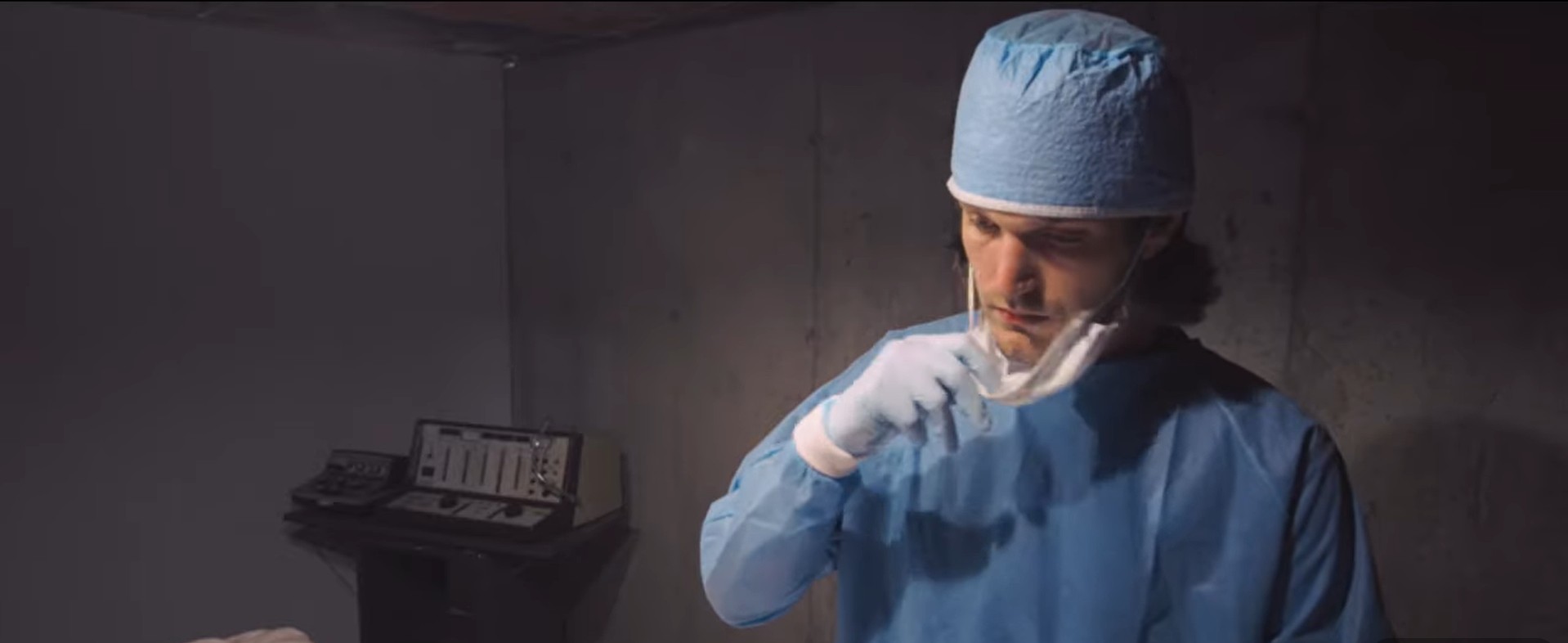
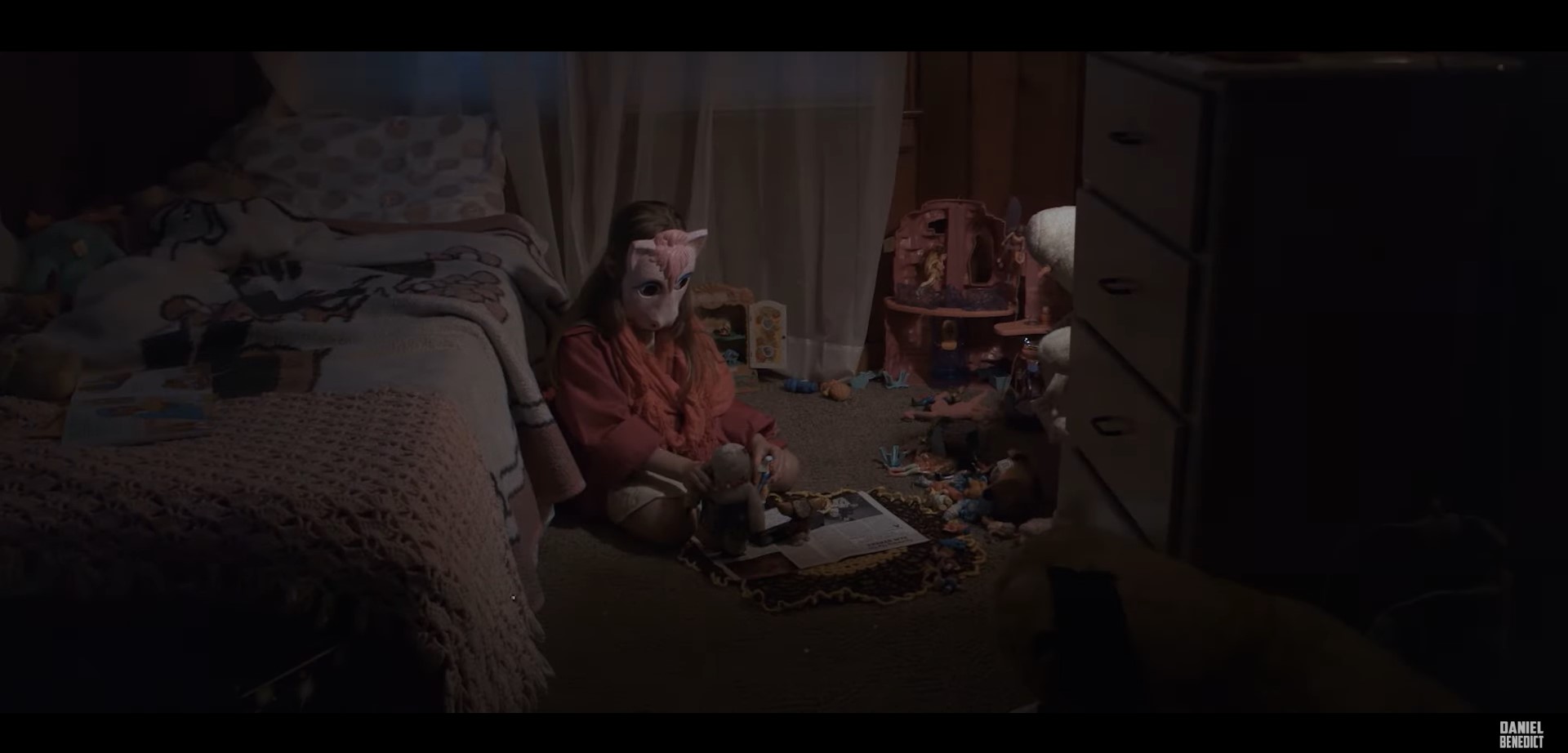
Set in the 1980s, Sam doesn’t cope well with life without his recently deceased beloved mother.  Getting along with his new stepmother proves to be challenging at best, his older brother continues to disregard him as an insignificant pest, his little sister gets under his skin in playing with his action figures without consent, and the school bully makes his life that much more difficult.  The young boy’s unhappiness spurs him into desperate measures by reciting a spell passage on the back of his favorite comic book, hoping the passage truthful to conjure up his deepest desire – to bring his mother back from the dead and fix a broken family.  The passage instead summons a demon, the Bloody Man, who seeks to rip fractured family apart even farther until their eventual dissolve and demise.  Able to possess and take shape of his stepmother, Sam must reunite his family in order to save not only his siblings but also his stepmother from fragmenting into nothingness and death at the hands of a demented demon trickster.

An homage to all things 1980s, “The Bloody Man” is a modern-day resemblance of one the more recent golden ages of cinema with a synth-laden soundtrack, all the popular play toy trinkets and new wave styles of the era, and a magazine loaded millimeter film stock shot in attempt to remove as much of the digital aerodynamics as possible in contemporary times.  Daniel Benedict, the director of the Halloween-themed slasher “Bunni” involving a sexy, leather-cladded, fishnet stockings wearing costume killer with bunny ears, takes a step back from extreme slashers and hops into more family-oriented terror with the protagonist heroes being kids stepping up against the forces of evil, think of films like “The Gate” or “Ernest Scarred Stupid.”  Not as slapstick as the “Ernest” droll-troll paragon of ritualized Halloween movie lineups, this crowdfunded project can be a little more vicious in delivering on the lines of the same heartwarming message that instilled into us from the Jim Varney 30-years-ago, that love is key in overcoming darkness.  Benedict pens and helms the 2020 production with wife Casi Clark, aka Casi Benedict, co-writing a script that loosely pulls in and indirectly references Benedicts’ collaborated efforts on a He-Man inspired fan made short “Fall of Grayskull” into their boogieman story.  The Benedicts’ production company Red Serial Films confects the film into fruition with Mercedez Varble, Jason L. Watson, Garrett M. Johnson, and Rihannon Crothers producing. 

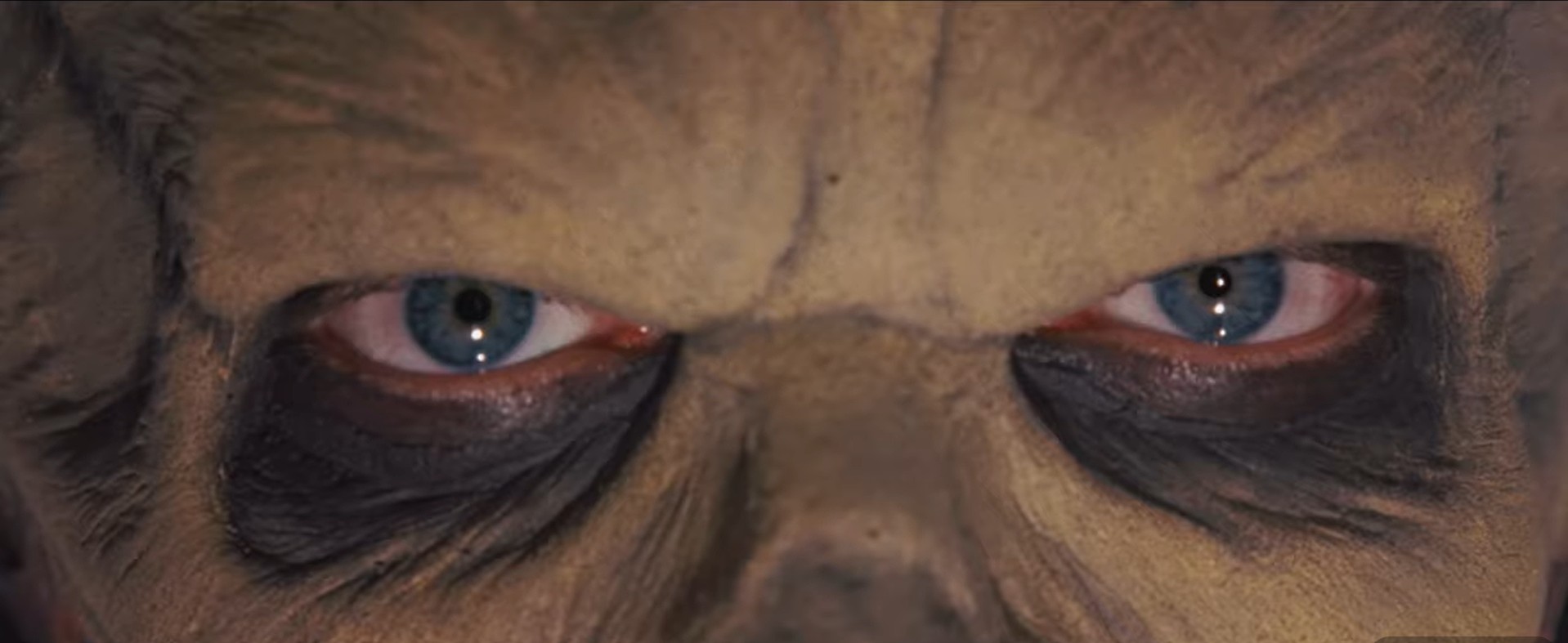
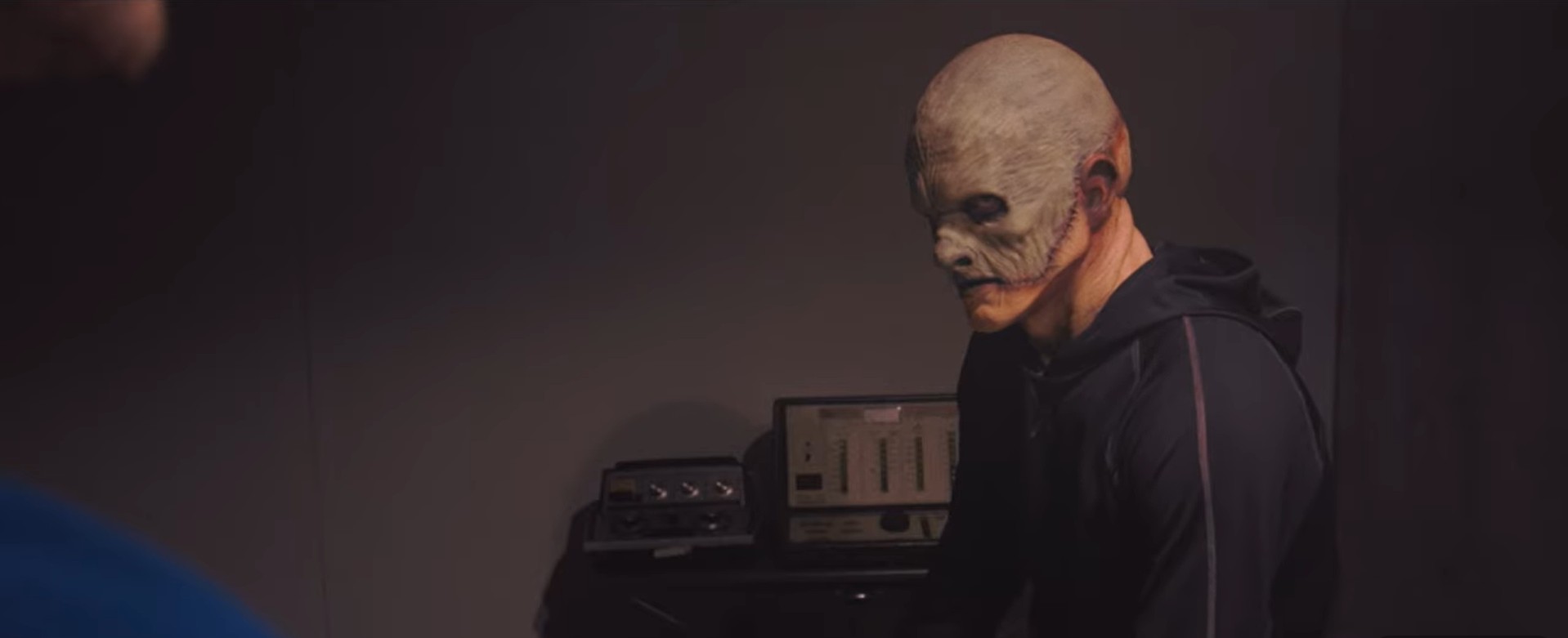
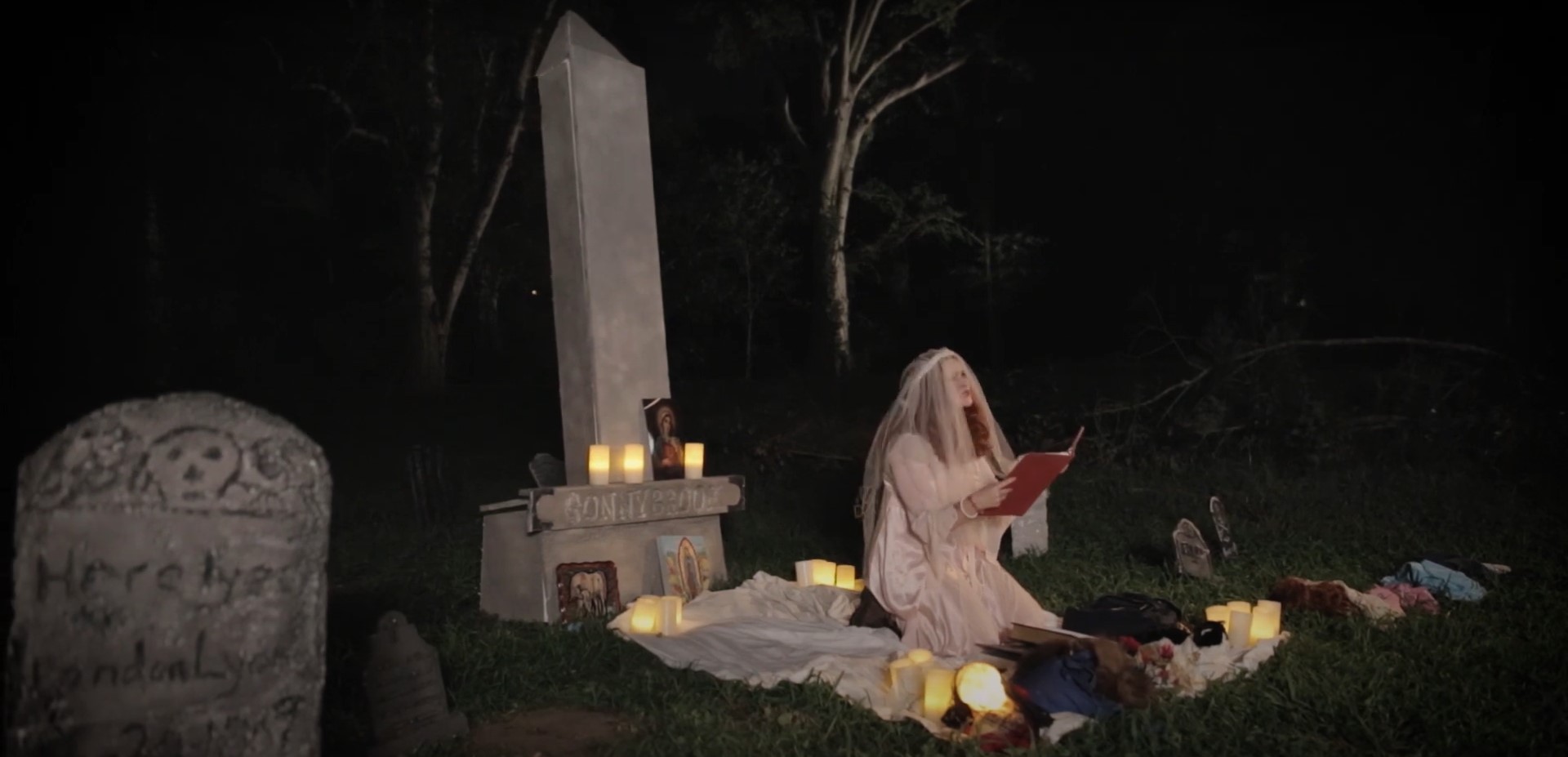
Despite not having top bill on the film, David Daniel leads us through the angsty complications of a new family dynamic as well as being the centric force of rebuilding a crumbling household as the middle child, feeling every bit like the world is against him, Sam Harris.  Daniels debut feature and leading role depicts well the internal argumentative aspects of having to go along with a life-forming change no child should ever go through, the death of a mother, and that sends him and his family careening toward dissolution despite his cheerful father’s overly confident optimism.  The top bills go to a pair of “A Nightmare on Elm Street” alum who both play mother to Sam.  Lisa Wilcox (“A Nightmare on Elm Street:  The Dream Master” and “A Nightmare on Elm Street:  The Dream Child”) and Tuesday Knight (“A Nightmare on Elm Street:  The Dream Master”) switch back-and-forth, between flashback-and-present, Sam’s biological mother and his new, soon to be, stepmother.  Surely, it comes to reason that the Wilcox and Knight names not only provide a couple of “The Bloody Man” selling points for die hard Freddy Kruger acolytes but could also be seen as an homage to the Robert Englund franchise with a similar living between two planes of existence nightmare antagonists hunting down a house full of kids, using unhappiness as a vessel rather than dreams.  Though not scarred by full body burns, wielding a finger bladed glove, and sporting a dirty striped sweater and fedora, the Bloody Man has his own characteristics being a black magic sorcerer.  Dressed traditionally in a snug black Chinese robe and blood running down his wild eyed face, Nicholas Redd enlivens the Bloody Man on a playfully perturbing level but the script doesn’t allow Redd to deliver the Bloody Man’s full potential while also not cutting the villain fully into the fold until the nearly last act.  Instead, the Bloody Man is reduced to a few here-and-there appearances, some one-liners, with half of the character’s screen time awarded to Tuesday Knight in a duality role as the Bloody Man uses the caregiver’s looks to draw in the Harris children.  Redd has promising lunacy that’s sorely underutilized in more ways than one and in so much so, the film itself shouldn’t be titled after the character.  “The Bloody Man” remaining cast includes Sam Hadden, Olivia Sanders, Jeremy Carr (“Calm Before”), Dominick Wilkins (“6 Feet Below Hell”), Dan Eardley (“Retro Freaks”), KateLynn E. Newberry (“O9en Up”), and Ellie Parker (“Bones and All”).

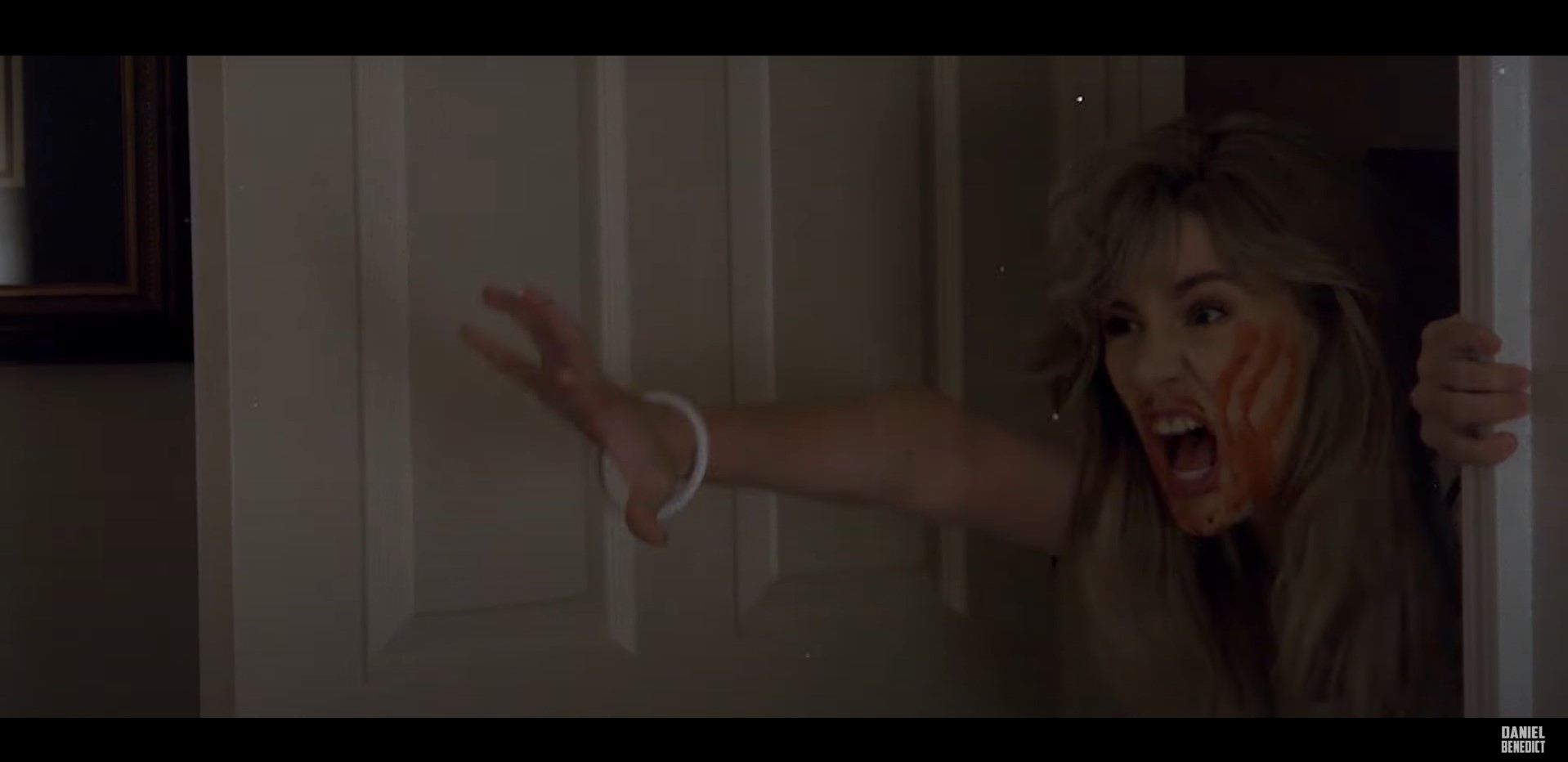
I’m all for a quasi-kid friendly horror of the same antithetical vein as “Monster Squad” or “Gremlins” where the subject matter borders the edge of being too risky, eking above the terror threshold for children who would be roughly the same age as the story’s principal leads battling for the very reconciliation of family before the Bloody Man kills them.  “The Bloody Man” lurks under the veil of being lighthearted in contrast to the brushing scenes of severed, sentient arms, blood streaking down various maniacal faces, a mildly gruesome decapitation, and moments of good ‘ole fashion terror that may induce nightmares for anyone under the age of 12.  A child’s lack of sleep because they’re waking up with fright-filled sweats will for sure not provide parents any favors, but Benedict skirts a fair amount of gore and does imply the significant damage and death offscreen almost as to shelter general audiences’ eyes for a broader invitation to watch the movie and, as mentioned previously, the titular bad guy doesn’t make an appearance until much later in the story that has been setup comically with a wrestling fanatic principal, Perry’s godawful verbal teasing, and a lot of 80’s inspired shots that nailed the decade’s analog paint job – a silver lining against the night terrors.  Honestly, the third act also drags out the culmination of events.  For such a small house, the Bloody Man chasing the Harris kids might as well taken place in a labyrinthine mansion, but the ground level with basement rancher slows down the hide-and-seek or maybe the Bloody Man is just really bad at childish game as the kids could stay in rooms for extended periods of time, even playing pretend with toys at one point, and in not once instance, does the Bloody Man bust in to snatch up a tyke to terminate.  Where “The Bloody Man” also struggles is buttoning up the summoning of the soulless sorcerer who’s conjured up by a mere passage reading off the back of Sam’s favorite Barbarian Man comic books.  The comic, which is introduced as a fairly over-the-counter object, holds this mystical darkness that must be conjoined with a family’s spiraling.  Yet, the story contradicts itself as the Bloody Man pursues another broken home that didn’t warrant the reading of the comic’s back cover passage, creating some confusion on how the cruel chaser of disconcerted children operates on a phantasmic plane.

As far as 80’s-inspired films go, “The Bloody Man” can run with the best of them, even with Netflix’s “Stranger Things,” and Wild Eye Releasing sees fit to drop a special edition Blu-ray of the Daniel Benedict comedic chiller.  The AVC encoded, high-definition 1080p, BD25 is presented in a widescreen 2.35:1 aspect ratio.  What makes the film feel decade authentic and that can suck you into it’s existence is Benedict’s decision to shoot either in 35mm or with a 35mm digital overlay that has characteristic dust speckles and a fine grain.  Image quality remain at a consistent color and black levels with a few flare ups of compression artefact issues, such as splotches in darker scenes, in squeezing this long runtime film onto a BD25 along with an atypical accompaniment of Wild Eye Release robust extras.  The bitrate does have large swings from lower teens to upwards of high 20s Mbps.  Yet, details generally come through with enough depth to create visual spacing between objects.  The English language Dolby Digital 2.0 stereo renders adequate for a narrative that doesn’t have a ton of range with an intimately tight story surrounding Sam and his siblings but is complimented greatly by Johnathan Fan Octo Evans retro-synth soundtrack with an oscillating pulse and a crescendo of tension, solidifying even more the 80’s inspiration. English subtitles are optionally available. The special features include a director’s commentary with Daniel Benedict, a gag-blooper reel, a local newscast behind-the-scenes segment, various promotional videos from Kickstarter, Indiegogo, Barbarian Man toys, an emulated One to Grown On based PSA show from the 80s, and a Showbox promo with the original trailer bringing up the tail. One last bonus scene is also at the end of the credits so stay to the very end. The physical features include a clear Blu-ray snapper case with latch that houses glow lit Harris kids geared up to tackle the looming Bloody Man, or that is my assumption of who that is on the front cover as that figure looks nothing like the Bloody Man on screen. A more true-to-form Bloody Man is on the cardboard slipcover in another retro illustrated, compositional mockup with a similar layout as the actual Blu-ray front cover. Inside the snapper case, the reverse front cover has a still image from the movie, typical of many Wild Eye Releases, a folded one-sheet with the additions of Tuesday Knight and Lisa Wilcox amongst the child leads, and a disc art pressed with the unknown version of Bloody Man. The region free release comes not rated and has an excessive runtime of 133 minutes, contributing to the pacing issues of the last act. “The Bloody Man” doesn’t exactly live up to the moniker in this tame throwback but what the film has is a mighty nostalgia that brings back feelings of a superlative horror age that was once, and still is, goosebump arousing.

Better Behave or “The Bloody Man” Will Get You!  On Blu-ray at Amazon.com.

Cheez-Whiz and EVIL Go Together like Camping and Horror! “Black Holler” reviewed! (Wild Eye Releasing / Blu-ray)

“Black Holler” on Blu-ray Home Video from Wild Eye Releasing!  Available at MVDVisual and Amazon.com!

The Black Holler woods has a notorious reputation for being cursed by a lost ancient artifact that once broken into two would sic supernatural powers upon to anyone disturbing the grounds.  A class of half-witted community college Archepology students embark on a field trip to the very same Black Holler woods.  Among them is the rebellious yet grounded black belt Laquita Johnson forced to tagalong in order for a last ditch effort for an educational institution to accept a reformed her despite the refractory record.  As soon as the class steps foot into the woods, one-by-on they begin to disappear mysteriously as the area comes alive with the vengeful spirits of a long forgotten tribe that once inhabited the land.  Poor decisions, ultra-egos, and classic horror movie tropes amalgamate into a don’t go into the woods with white people scenario of the year 1989 proportions.

Let me set the scene for you:  Back in 2017, Jason Berg and his cast and crew set out to make and release a homage horror-comedy that wasn’t just bloody and supernatural but was also drenched in the broad quintessential tropes of 1980s horror film.  Berg directed and cowrote the U.S. film alongside Heidi Ervin and Rachel Ward Heggen on a modestly budgeted scale that relied mostly on slapstick wit rather than full blown genre makeup and effects but the comedic style also treads into the parody territory, reminiscent of the days of yore with “Airplane” or even the relatively more modern version, and related horror-themed, “Scary Movie” series, aiming to cast objectifying humor as well as generate other politically incorrect forms of laughter that many Hollywood studios and off-Hollywood indies are afraid to touch with a 50-foot pole today with the fear of being criticized, sued, or even worse, #cancelled.  “Black Holler” isn’t having none of that black listed nonsense in its Troma-transgressional fashion.  “Black Holler” is a crowdfunded, Kickstarter and Indiegogo campaign production with executive producers Jim and Phyllis Casebolt, Heidi Ervin, and Wesley Rutledge and is filmed in and around Nashville, Tennessee with sponsorship by the Nashville Film Festival and production credits under the banner of Grand Prize Studios.  

One thing to notice about the Tennessee-native Jason Berg’s obscure, campy, and modern-day slice and dice of satire is that “Black Holler” has a large, sprawling cast acting in different, diverse locations though ultimately winding up backdropped in the woods like most low-budget horror films do.  Numerous principal leads receive nearly equal screen time to follow individual storylines with predominately Tamiko Robinson Steele (if that isn’t a Blaxploitation name, I don’t know what is) being the empowered, karate-instructed, skateboarding, last minute addition, Laquita Johnson, to a predominately white class of vanilla misfits.  “The Dead Center” Steele rarely engages an interaction with fellow camping characters but eventually Laquita glues herself to the scrawny nerd Walter Love (TikTok influence Nicholas Hadden).  As Laquita and Walter work on Walter’s social awkwardness with a quick hip-throwing lesson, the other students, led by the overly pretentious assistant Professor Thompson in a wonderfully painful and zany performance by Jesse Perry (“Zombies vs Strippers”).  Perry’s know-it-all façade is complimented by his awkward hand gestures and ridiculous facial expressions to make Professor Thompson a full-bodied caricature.  Much of the cast are equally as lampooning the usually trope characters:  the stoners (Bruce Ervin and Betty Williams), the angsty goth (Sarah VanArsdal, “Chest”), the goody two-shoe (Heidi Ervin), the slutty hot girl (Rachel Ward Heggen), the over-sexing couple (C.J Stanley and Stacy Gazenski), and a self-serving and bullying handsome jock who is satirically played by numbers actors of all races and ages with the in-script context that shows and movies recast principal actors with other actors who look nothing like the original and that the general audiences won’t notice.  “Black Holler” rounds out the cast with Brad Edwards, Wesley Rutledge, Leah Helena Miller, Justin Terrants, Brian Russell, Miguel Otero, and Stayc Givhan as Laquita’s white, queer cousin and who outperforms with sass and confidence to the near point of stealing the entire movie. 

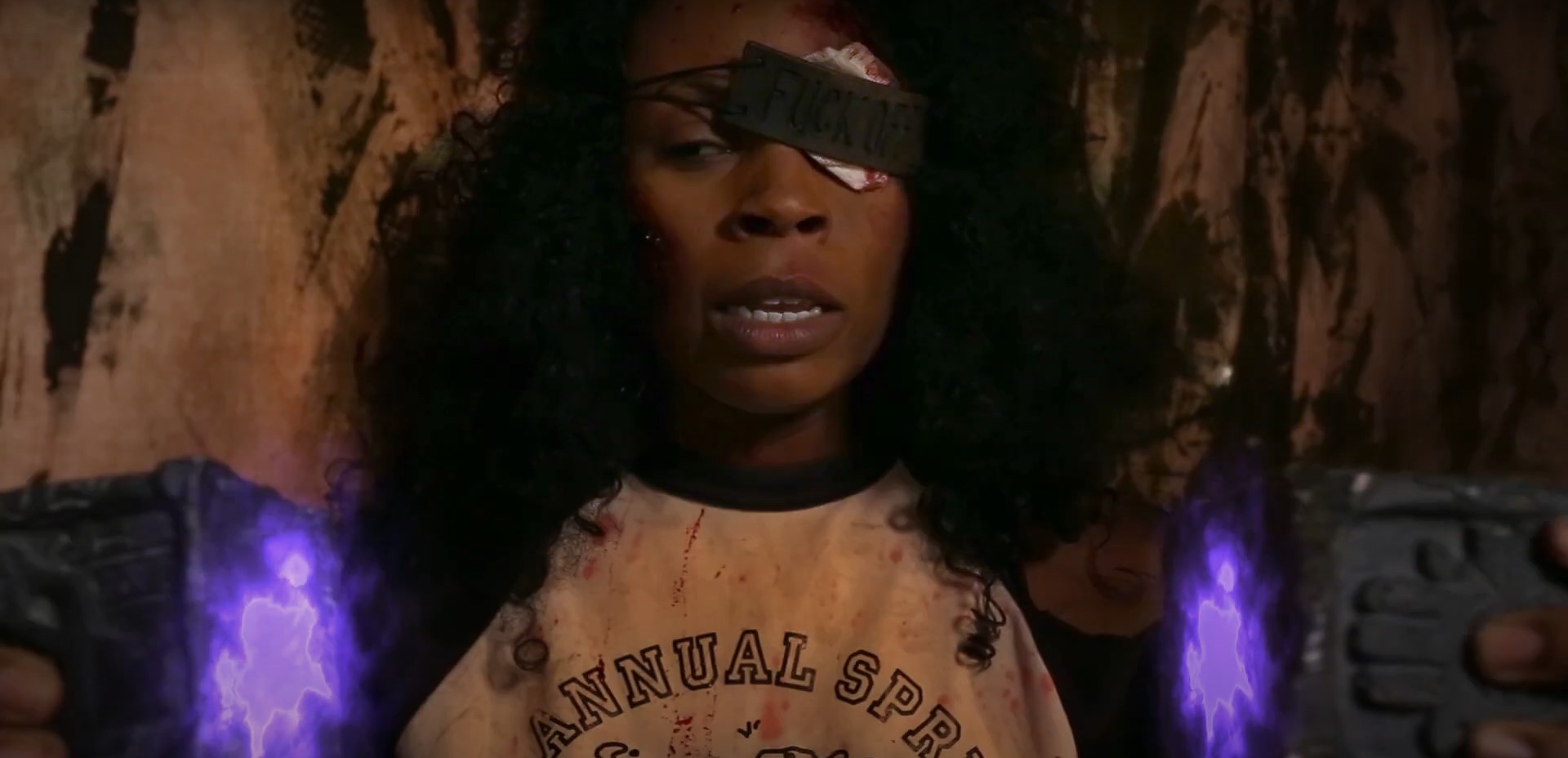
Director Jason Berg recreates the late 1980’s to early 1990’s milieu and very well I might add. “Black Holler” has the skater-grunge dress, early model cell phones that are the size of a football with an antenna, and crass, douchy attitudes that fit the period’s horror catalogue casting call. Not one to take itself seriously, at all, “Black Holler” just needs to be sat down with and watched for what Jason Berg intended his debut film to be – one big parody of paranormal patterns. Berg achieved the goal in depicting an outlandish ensemble of highly vain characters too entrenched in their own objectives of “Pet Semetary” resurrecting animal rituals, engaging in hot premarital sex, and smoking pot while swimming with sea-sludge covered dead. Aside from the little “Pet Semetary” nod that goes hand-in-hand with the sacred Indian ground, the film pulls in and ties together inspiration from other 80’s era classics like “Evil Dead” with the forest jetting out vines to snatch and grab as well as a compilation of every horror movie set on a camping ground with a nefariously spooky and anecdotally deadly past. Many of the gags and goofs land in a generic vane tapped too often to strike it rich but there are a few outliers, such as the seamless Brett bit that tackles trite truth with well devised humor or when Professor Thompson, in one of his many zany arbitrary acts, climbs a tree like a squirrel that does provide a good chuckle, but then there’s the whole systemic racism callout that flies over my head as, to my memory, wasn’t a big thing in the 80s or 90s. Perhaps, the concept plays into the whole token black trope that Laquita represents to the group, as in what the title alludes to in tribute and in theme.

“Black Holler” is receiving a re-release from Wild Eye Releasing but in a new special feature-laden Collector’s Edition!  Presented in a 1.78:1 aspect ratio on a AVC encoded, high definition, 1080p Blu-ray, “Black Holler” does have quality appeal despite various gradings and stylistic choices, such as color filtering to de-age into black and white. Compression appears stable with no noticeable ghosting, aliasing, blocking or banding.  Details and delineation are sharp enough for videophile nitpicking to be at a minimum.  Despite some use of a blue tint during a flashback, nighttime sequences convey just enough sparse lighting to not be overflooded and still maintain a sense of darkness in neutral contrast.  The English LPCM Stereo 2.0 audio tracks offers a crystal clear digitally recorded dialogue that’s free of obstruction and background noise.  If you watch the gag reel, the crew does a remarkable job holding action in place until the boom is free of all sorts of motors, planes, and other environmental sonances.  Depth works out mostly in the foreground amongst closeups and medium shots while range mostly revolves around quick whips of vines and the splatter of blood.  Special features include a director, cast, and crew commentary, deleted and extended scenes, a gag / blooper reel that consists mostly of the ambient noise holds, an alternate opening and ending scene, We Made Our Goal and Guns & Roses parody song tracks, a “Black Holler” Kickstarter promotional video as well as a faux promotional video with Professor Thompson as host and oozing with Archepology excitement, and Wild Eye Releasing trailers.  Collector’s Edition release is housed in a cardboard slipcover with what appears to be colored graphite art of some semblance of the colorful characters clumped together flaunting their idiosyncratic characteristics and personalities.  The clear Blu-ray case with snapper, which has become more and more common than a traditional blue hued snapper case, frames the original Wild Eye releasing cover art of Laquita holding up a machete in an ebony femme fatale pose.  Both slipcase and Blu-ray back covers have identical layout designs.  If you unlatch and open her up, the reversible cover art has a great group picture of the cast in character and there’s also a folded illustrated poster in the insert which you can see on the disc art without having to unfold the poster.  The unrated flick comes region free and has a runtime of 89 minutes.  “Black Holler” is a love it or hate it satirical salute to horror stereotypes forged from out of a screw loose admiration that can be, at times, too immature to find funny but the whole package functionally works as a comedy peppered with genre elements.

“Black Holler” on Blu-ray Home Video from Wild Eye Releasing!  Available at MVDVisual and Amazon.com!

When EVIL Literarature Jumps Right Off the Pages and Starts to Hunt You Down! “Monsters in the Closet” reviewed! (Gravitas Ventures / Digital Screener)


Watch Monsters in the Closet” on Prime Video!

Eccentric horror novelist Raymond Castle mysteriously dies alone in his New York City apartment.  His daughter Jasmin, who never had a loving relationship with her father, returns to her childhood home, self-negative reminiscing about the strenuous verbal arguments between father and daughter with usual themes surrounding her playing with his valuable horror collectibles and her continuous use of the Spanish language despite his desires for an English only language household, but instead of finding the contents of his will or answers to who he really was a person, as a father, Jasmin discovers her father’s latest novel, an anthology collection based off the black magic spells of a 17th century that brings his short stories to life right there in the apartment with her. 

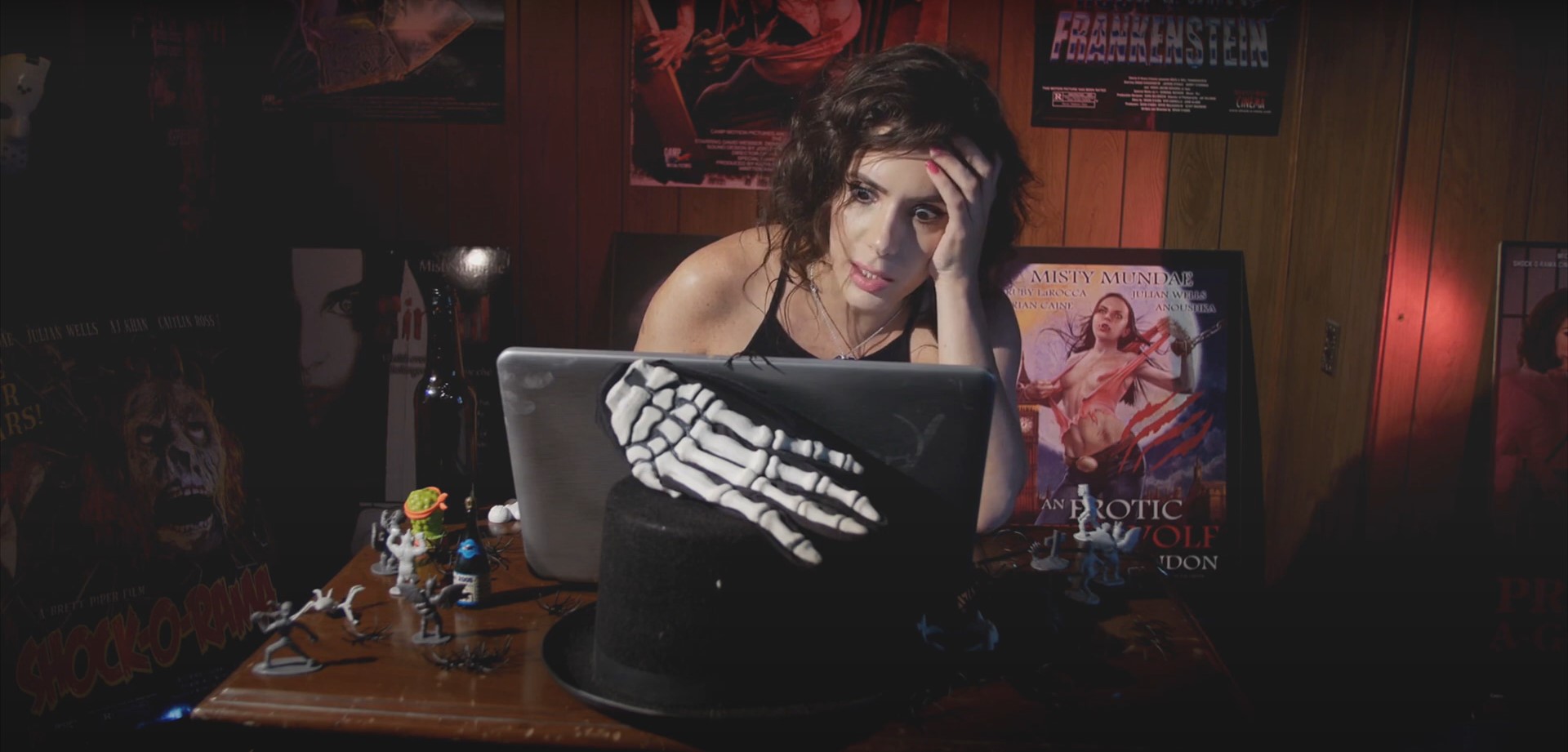
I said it once and I’ll say it again until the day I die:  horror anthologies are not my cup of tea.  Sure, there are excellent oldies, aka classics, out there, like “Creepshow” and “Body Bags,” from the masters of horror and a handful of more modern, done-right, anthologies from filmmakers on their way to such a grandiose title within the “V/H/S” series, but the majority of micro-narratives nowadays are collected from the scrapings of the low-budget trash barrel due in part to the cost-efficiency of short films, shot over a lengthy stretch of time, brought together into a single feature and the types of slim budget stories can sustain a better reception in a shorter format instead of full-length one.  Now, I’m not saying Zack and Spencer Snygg collaborated “Monsters in the Closet” falls into the latter category but as one of the first released films of 2022 to come across our ever-critical desk, the indie horror-comedy anthology needed to punch the living daylights out of use to begin the year and whether the Snyggs’ 4-episode, plus wraparound story, anthology slammed dunk or airballed will be covered below. “Monsters in the Closet” is a kickstarter project and a self-produced venture funded by a pair of sub-Hollywood filmmakers in Spencer Snygg, who has worked behind the scenes in the lighting department on some major films over the recent year, and a veteran indie softcore-horror director Zack whose has involvement with indie production companies like Troma and the New Jersey based E.I. Cinema, as you’ll see with a large, splayed display of E.I and Alternative Cinema posters strategically arranged as background fodder. It’s like a Misty Mundae poster celebration on exhibition.

The outer shell narrative that encompasses and unites each separate story entities begins with a frantic Tom C. Niksson as the diehard believer in his own success horror writer Raymond Castle, covered in blood, manically talking to himself, and in the throes of typing away before a cloaked stalker wielding a knife closes in on him. Niksson, who worked under Zack Snygg’s pseudonym, John Bacchus, in that Easter holiday E.I. Cinema favorite, “Beaster Day: Here Comes Peter Cottonhell,” steps into that looming, ever-present figurehead from the grave, delivering random dad joke dialogue while cozying up the audiences for an audiobook rendition of Castle’s latest bestseller, a black magic spell anthology of horror stories that come to fruition when read aloud. Other than his talking head role, Niksson’s involved in some contentious flashbacks with Jasmin as a child, but we never see Niksson and the adult Jasmin Flores (Jasmin) ever in the same scene together as the flashbacks are Jasmin voiceovers. Nikkson’s theatrical behavior perfectly suits the stagecraft atmospherics in erecting the gameshow-esque of a horror host whereas Flores is often stiff as a dry plank of wood. Limitations drawn from her lack of experience keep the actress’s timing and delivery often subdued in an obtuse and ungraceful character when escaping the ever-changing fiction-to-non-fiction villain of the minute. Jasmin, the character, is already inherently underwhelming in a role that has no purpose or buildup to understand her headspace surrounding the sudden death of her father. What do those flashbacks mean to her or are they just melancholic gibberish? And why isn’t she more interested in his death or even showing a lack of care for it? Throughout “Monsters in the Closet,” a fair amount of pleasantly surprising performances from the anthological works pull the overall project together better than those in the wraparound story. Along with a first person view zombie tale as the first short, Luke Couzens and Carmilla Crawford play newlywed new homeowners going through the frustrations of DIY Hell until they off each other with tools, the silver spoon Jordan Flippo becomes tarnished when a camping accident turns this rich daddy’s girl into an unstoppable killing machine to protect her immaculate image, and side-splitting John Fedele (“The Vampire’s Seduction”) as the humbly polite mad scientist Frankenstein who can’t get over the death of Mrs. Frankenstein (Valerie Bitner) and keeps resurrecting her despite her wishes to stay dead.

What I like and thought interesting about the “Monsters in the Closet” corpora is that they’re written in-house by at least one of the Snygg brothers, sometimes both.  This extends style and control over the entire body of work boundless to the ideas and the panache of other filmmakers and showrunners without having to associate themselves.  The Snyggs’ balanced anthology comes with equal levels of comedy and horror that unearths the humor in humorless scenarios sans the sometimes tired gags that can devalue a project into tedium and, ultimately, into worthlessness and since we’re already being beholden to more than one narrative that jumbles the mind, the mental capacity is too low to withstand different numerous tales in one sitting as well as to try and struggle with the bad unfunny bits.  “Monsters in the Closet” at least has a whimsical darkness about it, a sinister playful attitude, and isn’t afraid to get gory from time to time beginning with the Spency Snygg directed zombie existentialistic “Please Kill Me Again” that takes the viewpoint of a recently turned woman with normal inner thoughts and intentions, but the cravings begin to take over.  The Snygg brothers follow up with darkly satiric “Home Improvement” involving a new couple’s adversary journey to fix up their rundown new home to the point where they can’t take any more of the repairs or of each other and the overflowing sardonic banter starts to spill blood; this bit is fun, more than you know it relatable, and gets real nasty at the end. The weakest short is “The One Percenters” with a nob’s daughter eager to mingle amongst the common folk during a seemingly harmless camping trip that turns deadly after she accidently kills her boyfriend.  Conceptually, the message is sound with the wealthiest subverting the law theme and Jordan Flippo is stunning as a plutocrat’s high expectations daddy’s girl, but the story lacks enough obstacle and tension-filled stuffing for an interesting enough short. “Frankenstein’s Wife” spotlights John Fedele’s equable, light-hearted humor in affectionately reconstructing and resurrecting the wife he accidently kills and with each attempt at bring her back from the dead, her corporeal temple becomes less and less of herself through Frankenstein’s botched cosmetic surgeries. The lovesick cycle is both deranged and full of laughs from Fedele’s riotous desperation take of a classic character.

Gravitas Ventures unchains all the creatures loose in their digital distribution of The Snygg Brothers’ “Monsters in the Closet” anthology now available on-demand and digital platforms this January. None of the audio or visual aspects will be covered since the feature is not a digital release, but when I say The Snygg Brothers self-produced the film, I mean they literally wore nearly every single departmental hat, including director of photography and visual effects that impresses with a wide range of shots from drone, to hand-held, and to tracking done with depth and various levels of focus. There is no one trick pony behind the camera. Some of the digital effects, such as the bullet holes that riddle the basement floor and walls, cheapen the already cheap production and, for the most part, the practical effects reach the passing bar with the obvious lay figure body parts and crude masks/getups. There are no special features or bonus scenes with this release that runs unrated at 88 minutes. Anthology bias be damned, “Monsters in the Closet” is a rarity in a dying breed subgenre with a jocular sense of sinister, social commentary humor braided into a tenebrous fray between man versus man and man versus monster.

Watch “Monsters in the Closet” on Prime Video!

EVIL’s Always Listening in “A New World Order” reviewed! (Reel 2 Reel Films / DVD)


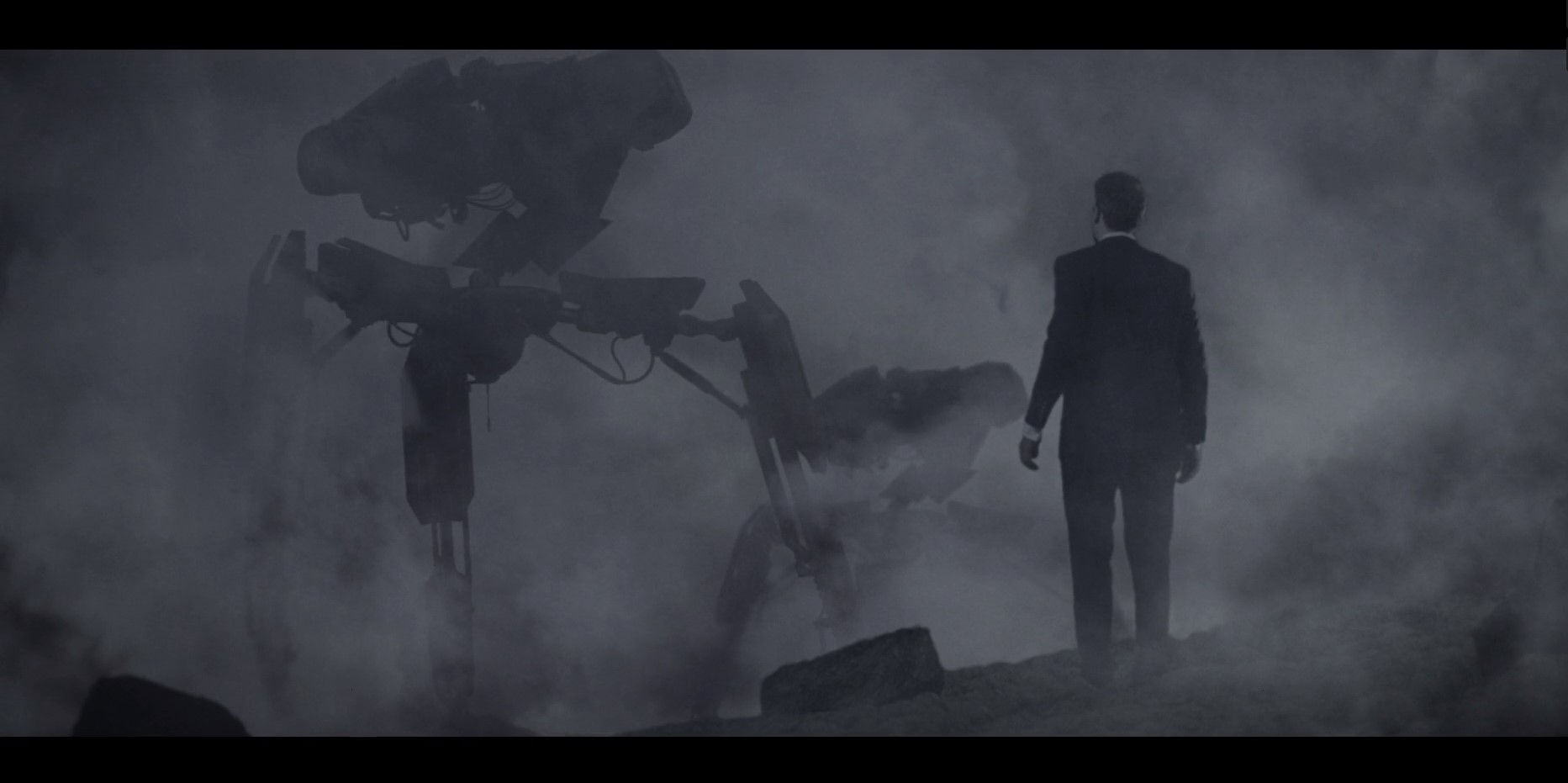
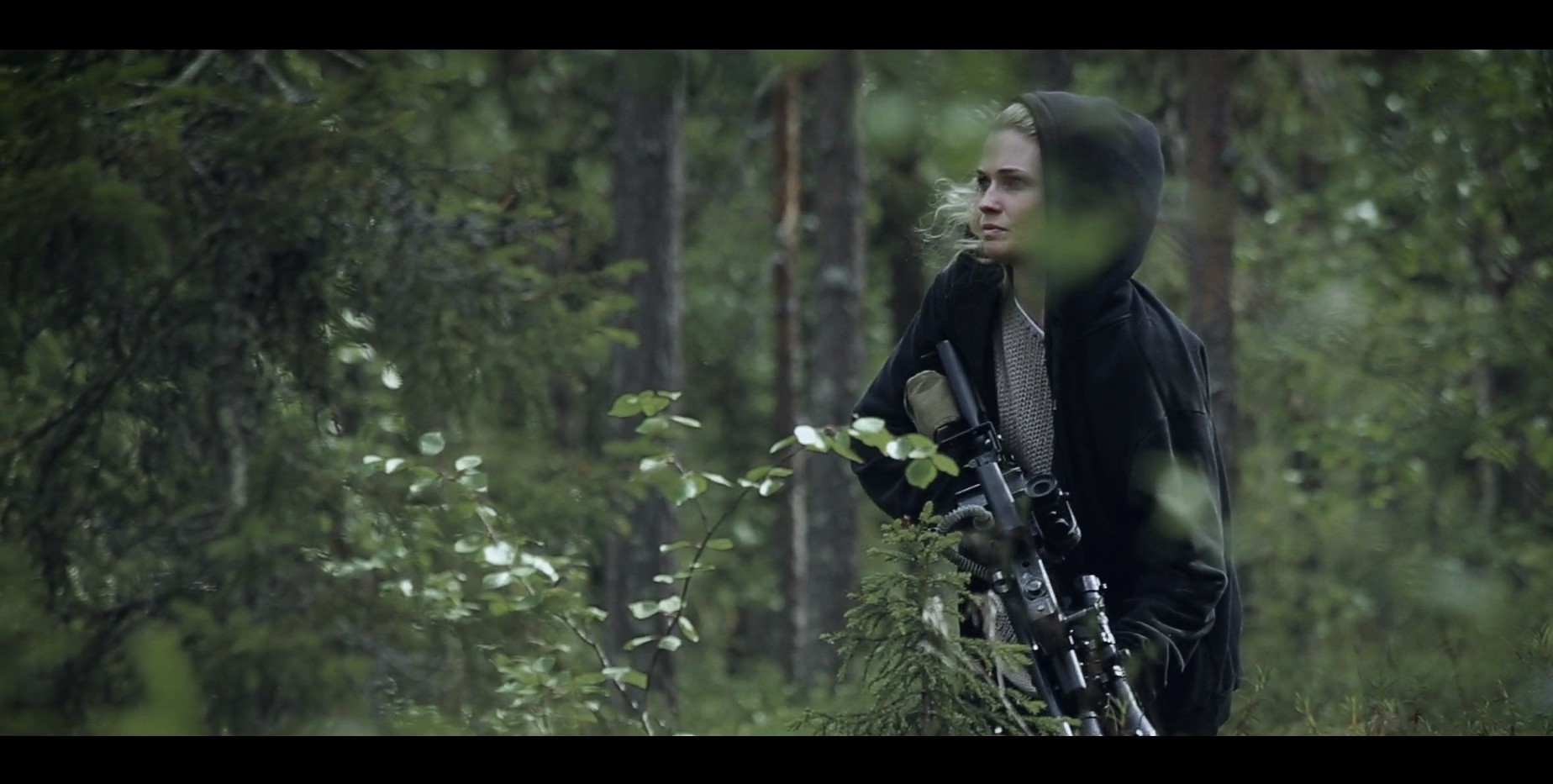
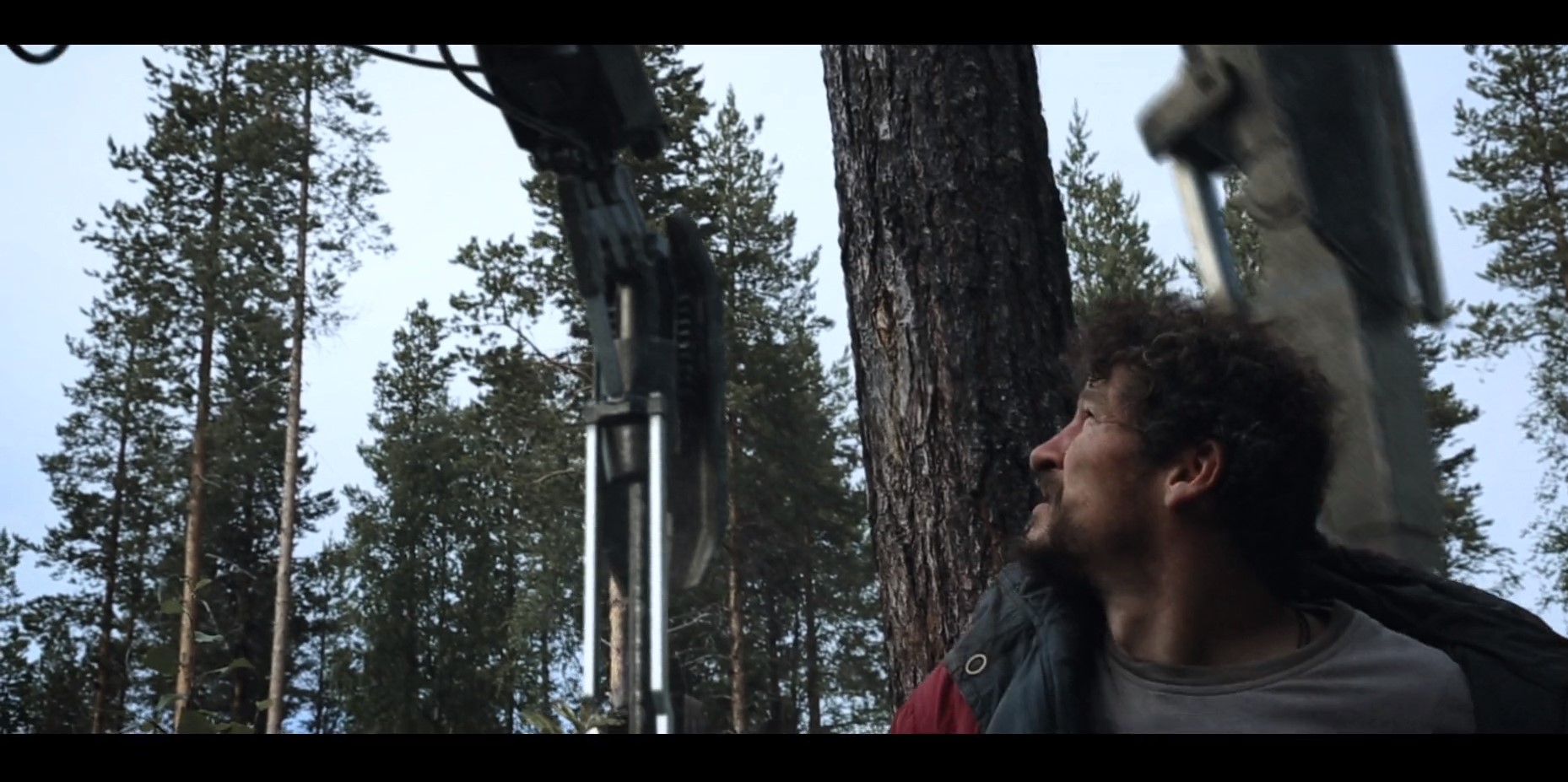
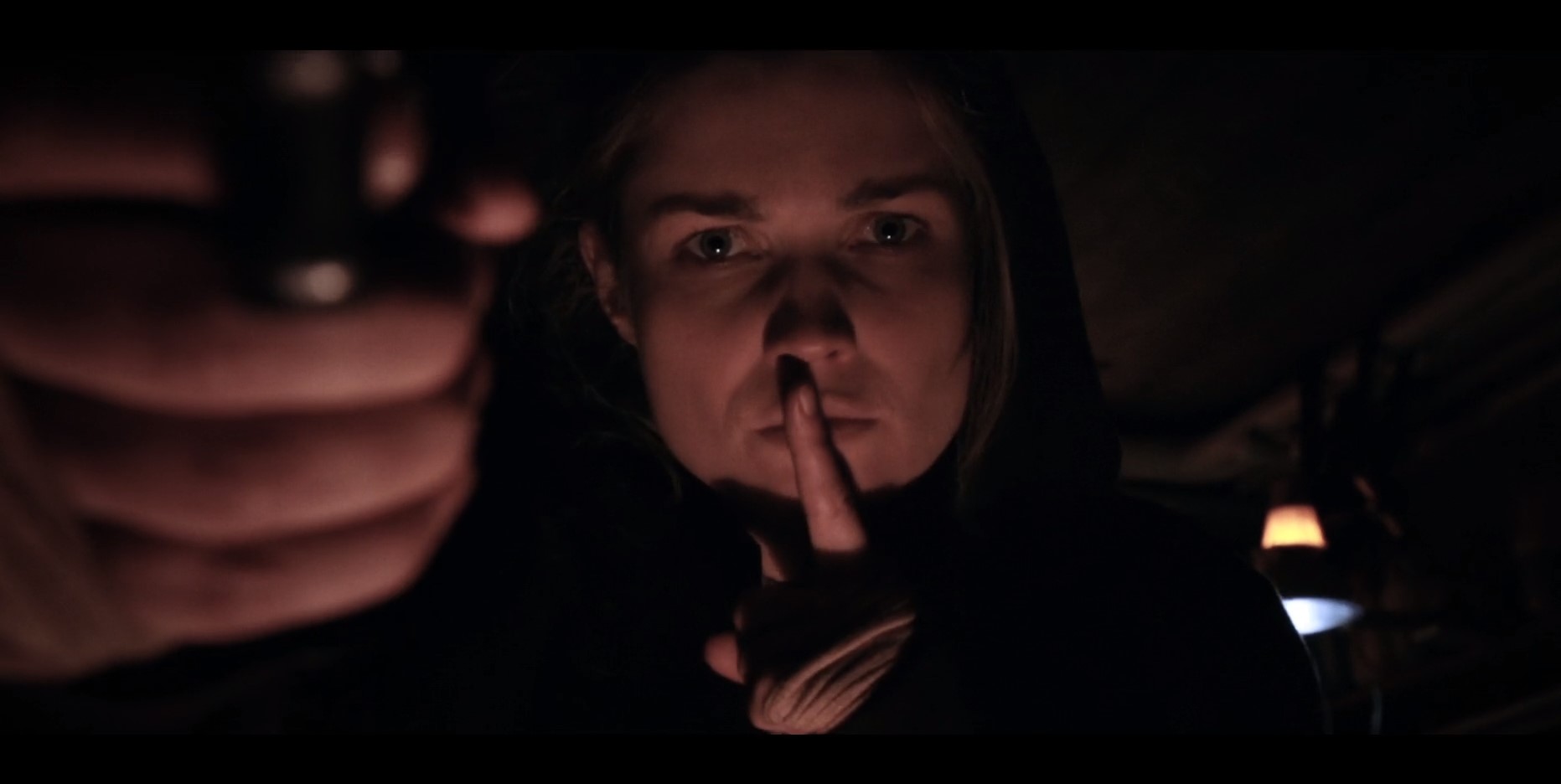
A.I. terminates their dependency from its creators and war has ravaged mankind as armed to the teeth, towering tripod machines and maneuverable mechanical air vessels are locked onto a search and destroy mode, targeting all human life.  To avoid and evade detection, survivors must keep quiet as the machines hunt by sound and use the limited technology available to protect themselves.  That’s how one military combat soldier has been surviving after deserting his overran and decimated post before bumping into enraged civilian resistance fighter who’s determined to strike back with a fatal blow in a heavy causality and seemingly unwinnable war against the merciless machines.  When the civilian determines a way to stop the machines with a salvaged nuclear device, the deserter must decide whether to keep meagerly living in the shadows or sacrifice everything for humanity.

“The Terminator” meets “A Quiet Place” meets “War of the Worlds” in this German produced independent science-fiction battlefront thriller, “A New World Order,” as the Berlin born Daniel Raboldt ‘s first feature length directorial.  Raboldt pens an action heavy story with only two lines of dialogue alongside fellow short film partner, Thomas Franzen, following their developments of satirical and puppeteer-propped comedies of the web series “Tubeheads” and their short film “Furple Reign,” with Raboldt having been in the writer-director chair for both and Franzen as part of the crew on both projects with a role in the art department and constructing cinematographically shots as DoP.  Alternatively known more worldwide by the original title, “A Living Dog,” as I assume in the idiomatic expression of a dog’s life of sorrow and hunger, the Finland shot “A New World Order” is a production of Raboldt and Franzen’s Nocturnus Film that was funded by a Kickstarter campaign which raised over €12,085 by patrons from its €10,000 goal.

With just over €12,000, pocket change like that can’t afford you megastars Tom Cruise or Emily Blunt, but can buy superb unknowns with heart in their lead roles.  Such as the case with Stefan Ebel and Siri Nase as Tomazs and Lilja, two unlike survivors of machine dominated cataclysm with distinct positions on where they stand in their war-torn world.  There’s no short change in performances that warrant Ebel and Nase to feign the presence of large and looming cybernetic tripods that vaporize humans to dust upon sound.  “A New World Order” seems gimmicky with the absence of dialogue, but I think it’s more tricky to act against a computer generated special effect, much like Emily Blunt and John Krasinski’s inventive terror playing against actors or stuntmen in motion capturing suits.  Raboldt and his team more than likely did not have access to or have funds for motion capturing suits.  Instead, the actors engaged imagination, creativity, and relied on their experience and training, such stage crafting from Theater der Keller in Cologne where Siri Nase performed from 2007 to 2011.  Ebel makes his on screen debut by diving into the complexed Tomasz, a deserter just trying to survive over top anything else, and Tomasz comes across pitched perfectly desperate and paranoid while being borderline selfish with a sheathed good nature heart lying in wait.  Aside from bit roles of human refugees and characters in flashbacks, the two leads embody the entire cast list.  

“A New World Order” derives and parallels from a variety of iconic Sci-Fi cinematic inspirations, but at the core, Raboldt courses a theme of repelling human behavioral reactions toward a major calamitic event and threat through the current wartime arterial capillaries, unclogging the blockage between Tomasz’s tail between his leg survival approach and Lilja’s reckless desperation to destroy the machines on her own to form a unity of calculated patience to not only stab revenge into the soulless machines, but also maybe, just maybe, live through obliteration.  Yet, Raboldt misses the mark slightly by having too late the characters circle back and fix what’s broken with themselves, leaving mere morsels to mend before one character’s arc ends before it can even fully begin.  There’s also the no dialogue gimmick/aspect/touch, whatever is your opinion to label it, that fails to naturally flourish because unlike “A Quiet Place” where “A New World Order” only indulges the more character-driven drama, the fiery back and forth dogfight delivers empty promises due to budget constraints, resembling more along the lines of Gareth Edwards’ “Monsters” in its distant tone with a delimited appearance, but with a film that has nearly no dialogue, the action should be guaranteed in your face, heart-racing, and on the edge of your seat to compensate. “A New World Order” whittles down the hero concept, peeling off the rotten layers that make us weak and defenseless alone, to unearth the perfect kill switch on the machines to save Earth for humanity.

Don’t speak if you want to live in “A New World Order” now on DVD home video from Reel 2 Reel Films (R2R) in the UK. The Region 2, PAL encoded, DVD5 presents the film in an anamorphic widescreen 2:40:1 aspect ratio under a 15 rating for strong violence and bloody images. The violence is more the lasers vaporizing people to smoke in Thomas Franzen’s landscape assemblage of Finland foliage that becomes the base layer to Raboldt and his visual effects crew CGI monstrosities and rotoscoping composites that make “A New World Order” feel like a science fiction graphic novel. Blacks are starkly deep, but there’s no awestriking visual pops to really juxtapose with in a bleak color reduction to reflect bleak war. Details are not spectacular in this 720p format, but do the job in reality rather than in a rotoscope flashback. The English Language Dolby Digital stereo AC3, surround sound 5.1 mix, can kick hard when lulls in the character stories are because the kill bots has made audible contact and “A New World Order” is a LFE machine, pun intended, as the nuts and bolts hunters blare in vast quantities their resonating automaton bellow. Since this is a DVD5 with a feature running at 94 minutes, there is no room for special features to speak to, leaving just the antistatic menu and a white snapper case. “A New World Order” is a big concept on a little budget, but for director Daniel Raboldt, a new world spawns a man versus machine campaign from inspirational passions and ideas into understanding which innate reaction is an internal struggle to embrace with all that you have or to die by with little you have left.

Time Travel to Stop EVIL via Astral Projection: Part II! “Mandao Returns” reviewed! (Indie Rights / Digital Screener)

With his powerful ability to astral project, along with the help of a motley entourage of friends and family, Jay Mandao saved multiple lives, some who are close to him, from his blood thirsty ex-girlfriend on Halloween night.  Two months later, days before Christmas, and now living in the scheming medium Cousin Andy’s townhome after his unrelated cousin Jackson set fire to his apartment, Mandao and Jackson float through life, sleeping in Cousin Andy’s living room and barely off the royalties of Mandoa’s father breakfast cereal line.   Dreams of his father, Raymond Mandoa, urging him to stop astral projecting as dark entities will discover him are reluctantly ignored when Cousin Andy connives a get-rich-quick opportunity to contact the recently deceased Aura Garcia, a well-known B-movie actress having died a few nights ago after a drug overdose, but as soon as the spiritual and time planes are disturbed, sinister plans of murder, from the living and the dead, deck the halls with a blood red Christmas.  

Mandao is back!  Or rather returns in a new scouring the astral plane misadventure entitled “Mandao Returns.”  When we last reviewed the Scott Dunn 2019 comedy-horror sleeper hit, “Mandao of the Dead,” an open ending left us salivating with a possible sequel under, what we know now to be a working title, “Mandao of the Damned” that promised exploring the nonphysical and paranormal realm’s mysteries and secrets that threatened Jay Mandao’s whole grain boxed-in existence, at least according to Mandao’s father, Raymond with a foreboding sign of inexplicable things to come.  The Kickstarter.com, crowdfunded modern cult favorite raised more than $26,000, doubling the first film’s budget, from approx. 250+ generous likeminded supporters within two weeks time that brought back four core characters essential to “Mandao of the Dead’s” grim, but lighthearted success to battle half-cocked the supernatural forces of evil.  Instead of a blood drinking cultist, a by-midnight death ceremony concretes stardom and greatness, but not if Jay Mandao has something to say about it.  “Mandao Returns” is a production of Scott Dunn’s Dunnit Films and distributed by Indie Rights.

Returning, obviously as stated in the title, to ensure the safety and well-being of those who incessantly annoy yet deep down care for him on a daily level is the hapless Jay Mandao, the titular hero played by writer, director, and story creator, Scott Dunn, along with Dunn’s wife, Gina Gomez Dunn, who steps back into a co-producer role for the sequel as well as stepping back into the shrewdly wild shoes of Fer, a close but no cigar Mandao love interest continuing to become mixed up in Mandao’s spiritual shenanigans while being a private driver for the Uber-equivalent Bum Rides.  Though blood is thicker than water, Mandao’s cousin-by-marriage Jackson oozes with dense innocence as Sean McBride reprises the daft role to another perfect tune of witless naivety.  Together, Mandao and Jackson arouse a likeable dynamic duo that becomes the keystone to both films’ success because without McBride’s timely childlike disposition, Mandao would just be a snippy and angsty loner and without Dunn’s subtly serious tone, Jackson would overrun the comedy-horror with one-sided gullibility.  With any sequel aiming to top its predecessor, the buddy comedy needed to be bigger and by adding the fourth returning character, Cousin Andy, as an important ingredient to the mix, Sean Liang adds a grounding hoodwinking conspirator that thrusts Mandao and Jackson into action on the astral plane field when the no-good antagonist, Aura Garcia, played by newcomer Jenny Lorenzo, becomes scorned in the spiritual world and takes heinous vengeance that not only involves Mandao, Cousin Andy, Jackson, and Fer, but also Garcia’s talent manager, Ted (Jim O’Doherty), in a sacrificial ritual gone terribly wrong. 

“Mandao Returns” is a smartly written script from creator Scott Dunn whose able to mold fallibly fascinating characters into unlikely heroes juxtaposed against a monumental occurrence much greater than themselves with the vast possibilities in the spacetime continuum.  Of course, the cinema flair to decorate the otherworldly dimensions with accessible ease and gloomy aesthetics faces speculation of existential questions of mindpower and life after death and the challenges the mechanics of the theory of metaphysics, but all that abstract mumbo-jumbo is pushed aside in order to make the “Mandao” films entertaining and for a good reason because when the script has colorful characters and a working narrative, “Mandao Returns” allows audiences to turn off rationality for approx. 71 minutes to enjoy a modestly produced Sci-fi comedy-thriller with a cast accurately in sync with each other’s methods.  The one thing I will say about “Mandao Returns” that I found to be a sore spot, despite still immensely enjoying, is that the story echoes eerily to “Mandao of the Dead.”  With a slight tweak to Mandao’s astral projection powers and trading in a different breed of villain, from point A to point B, from dynamics to outcome, everything seemed nearly identical to “Mandao of the Dead’s” narrative, delivering nothing distinctively new to the table to elevate the character’s fate and circumstances into unique, un-before-seen horizons.  Dunn comes close to challenging and upgrading the prior narrative by hinting something lurking within the spirit world was on the verge of closing in on Jay Mandao if he continues blindly using astral projection by the forewarning words of his father, Raymond Mandao, but slips out of that digressional stream to pit Mandao versus greenhorn cult acolytes looking for glam and glory by way of the gory and that, done in the Dunnit Films’ essence, is okay too.

As a quirky, out-of-body sci-fi thriller experience, “Mandao Returns” succeeds in succeeding as the sequel that brings the thrills and the laughter of far-fetched heroes ready to tear into the fabric of time to stop evil once again. The film comes to you from distributor Indie Rights and is available now streaming only on Amazon Prime so get your pandemic pants on aka comfy, stretchy pants, grab some movie style popcorn, and recline back to watch “Mandao Returns.” Experience the vibrant and wraithy-visioned glow cinematography of A.J. Young, returning from “Mandao of the Dead” as well as Dunn’s first film “Schlep” and another camping trip horror film, “Camp 139.” Young stays true to the films atmospherics with hard lighting a variety of hues and creating a story through the presence of shadows, working movie magic creating an opulent visual experience when really only working with about 25 grand. There were no bonus features nor extended credit scenes with this digital screener. One day, I’d like to see Scott Dunn and his Dunnit Films team work with a good chunk of budget cash and push the limits beyond the simplicities of the “Mandao” films, but until then, “Mandao Returns’ is disseminated with a whimsical awareness and fervent macabre that’s intent to please.

Watch “Mandao Returns” on Prime Video. Click the Poster!