

“The Ugly Stepsister” on 4K UHD Blu-ray from Second Sight!
Elvira’s mother weds a wealthy estate owner to re-establish life and permanence in high society. Alongside living with her sister Alma and her new, beautiful stepsister Agnes, Elvira keeps on smile on her braced teeth though she’s passively mistreated by those around her. When Agnes’s father suddenly passes away and it’s unearthed the estate has no money to its name, the opportunity to attend the monarchy ball for the prince to select a wife from a pool of available the virginal maidens is Elvira’s persistent dream to marry a prince and get her family back in wealth and power. Elvira attends finishing school to learn proper lady etiquette but her braces, round nose, and pudgy exterior pushes her aside of teacher’s attention in favor of the beautiful, blond Agnes. Primeval cosmetic surgeries, tape worms, and no sympathy from her mother send Elvira down a path of obsession despite the harm to herself as she eyes the prize of landing the prince of her dreams over her stepsister.
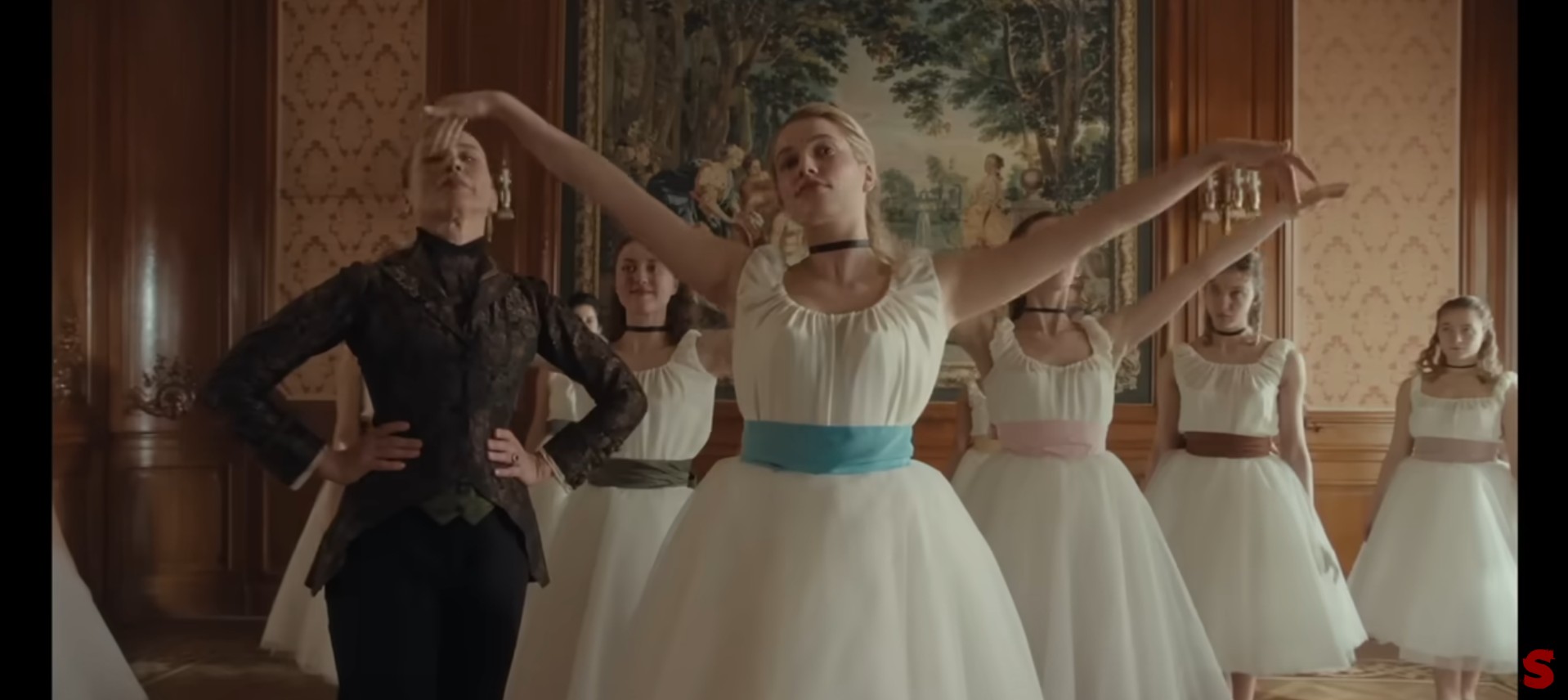
Based off the classic folk and fairy tale Cinderella, debut feature film director Emilie Blichfeldt takes a different perspective on the story that retains its roots in happily ever after but redirects the core narrative to the eldest stepsister in immense obsession, pain, and suffering to obtain the seeming unobtainable, to marry a prince. “The Ugly Stepsister” the 2025 dark comedy and body horror from Norway that emphasizes the lengths one will take to become noticeably perfect in every aesthetic way. Blichfeldt regularly visit the concept of a deranged perception of beautiful in her short films from the 2013 documentary “Do You Like My Hair?” that aims to spin a reinvention on beauty standards by finding it from within and the more body fantastical “Sara’s Intimate Confessions” that follows a big and tall disproportional woman exploring what it means to be feminine with her overly talkative vulva. “The Ugly Stepsister” also tackles beautiful in a more painfully, cathartic way in order to achieve, much the same way a cheerleader sustains a lower body weight to make the squad or the self-harm models put themselves through to stay thin and beautiful. The film, entitled in it’s native Norwegian as Den stygge stesøsteren, is a coproduction between Lava Films, Film i Väst, Scanbox Entertainment, Zentropa International Sweden, and Mer Film with Lizette Jonjic, Ada Soloman, Mariusz Wlodarski, and Maria Ekerhovd in the role of international producers.
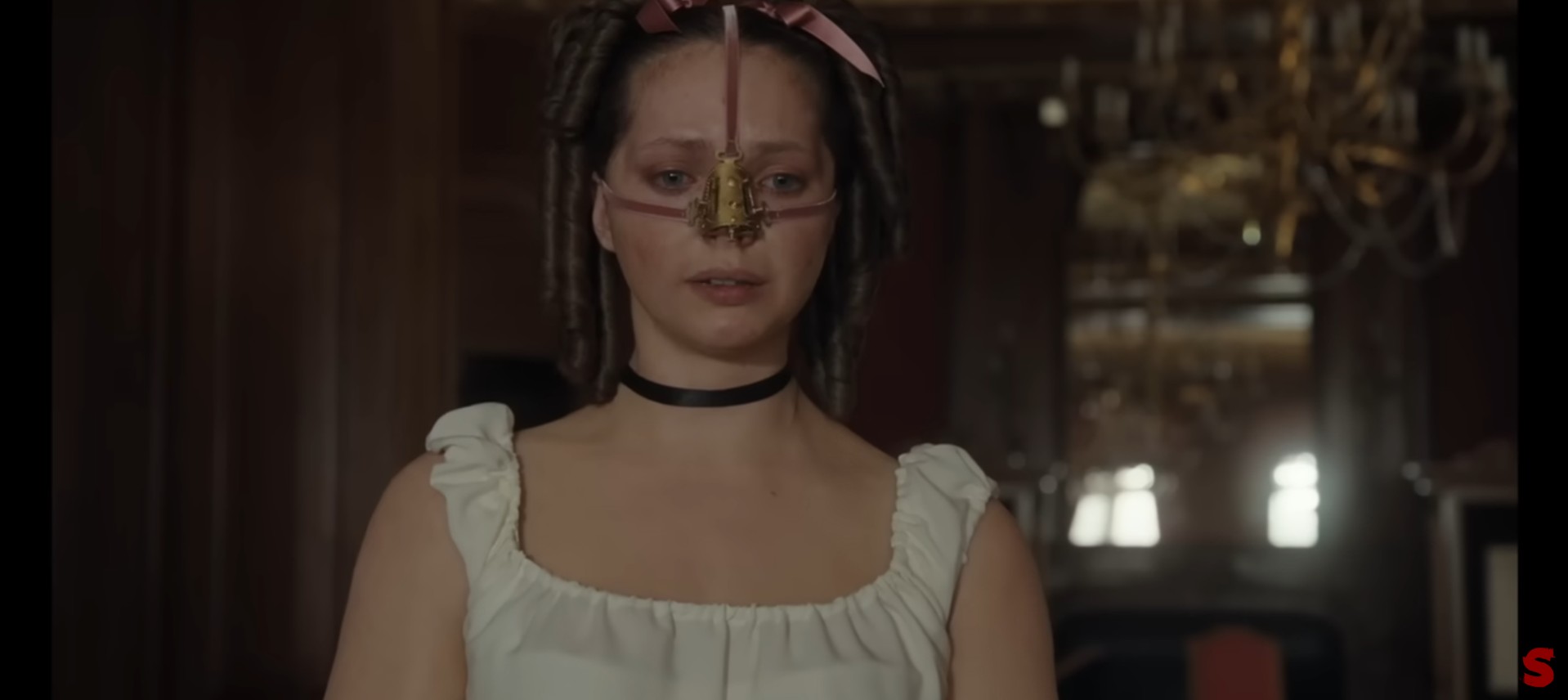
Though a beauty already in her own right, Lea Myren donned prosthetics and makeup for the titular Elvira to make the appearance of later teen, early 20s woman just on the verge of losing the baby fat. Other personal traits added to Elvira’s character are braces, dark corkscrew curls, and muted toned outfits to further and contrast as a perceived ugliness within the context of the era, but in reality, Elvira’s beautiful young woman already with soft, large eyes, a curvy physique, and a natural gift of goodness within her that’s twisted by exterior conventions on what is defined as beauty. Shedding some of those elements, like the braces and weight, transform Elvira into a more desirable young lady now visible to all, from her draconian etiquette teacher who initially wouldn’t give her the time of day to the Prince who first looked upon Elvira with disgust in her natural state before become an exquisite creature stemmed from surgery and other unnatural body manipulations. Myren wonderfully careens the character right into the dirt as Elvira cuts off her nose to spite her face, damn near literally, on the quixotic quest to change her outer shell that ultimately changes her from the inside. Constants in Elvira’s life, or way, are Agnes, who’s only referenced as Cinderella once in a look that isn’t too cinder-y, played by Thea Sofie Loch Næss (“Arctic Void”) who doesn’t struggles with her character’s looks but contends with her new family’s acute empowerment, mostly rooted in family favoritism and jealousy, as well as Alma, Elvira’s younger sister with a by far majority much more comfortable in her own skin despite having dressed similarly with frizzier, unkempt hair by way of Fo Fagerli’s approach. Loch Næss doesn’t portray the as pure and innocence of the Disney classic, with her passionate romance with the stable boy in the hay barn, but the character is fairly close in all other regards with the more significant change to the characters being the stepsisters, especially Elvira’s reserved notions turned bitter when being compared to Agnes. Alma is altogether out of the equation with no bitterness in her heart nor with any malice whatsoever to anybody but tends to her sister’s rise and downfall with little pushback. Ane Dahl Torp (“The Wave”) is in the role of the mother Rebekka who will do anything to advance her daughter in society, mostly for selfish reasons as we’ll gather later on through a course of characters, such as the Prince Julian (Isac Calmroth), stable boy Isak (Malte Gårdinger), brutal plastic surgeon Dr. Esthétique (Adam Lundgren), and finishing school head mistresses/lesbian lovers (Katarzyna Herman & Cecilia Forss) who have contrasting approaches, both negative, toward Elvira’s waistline.
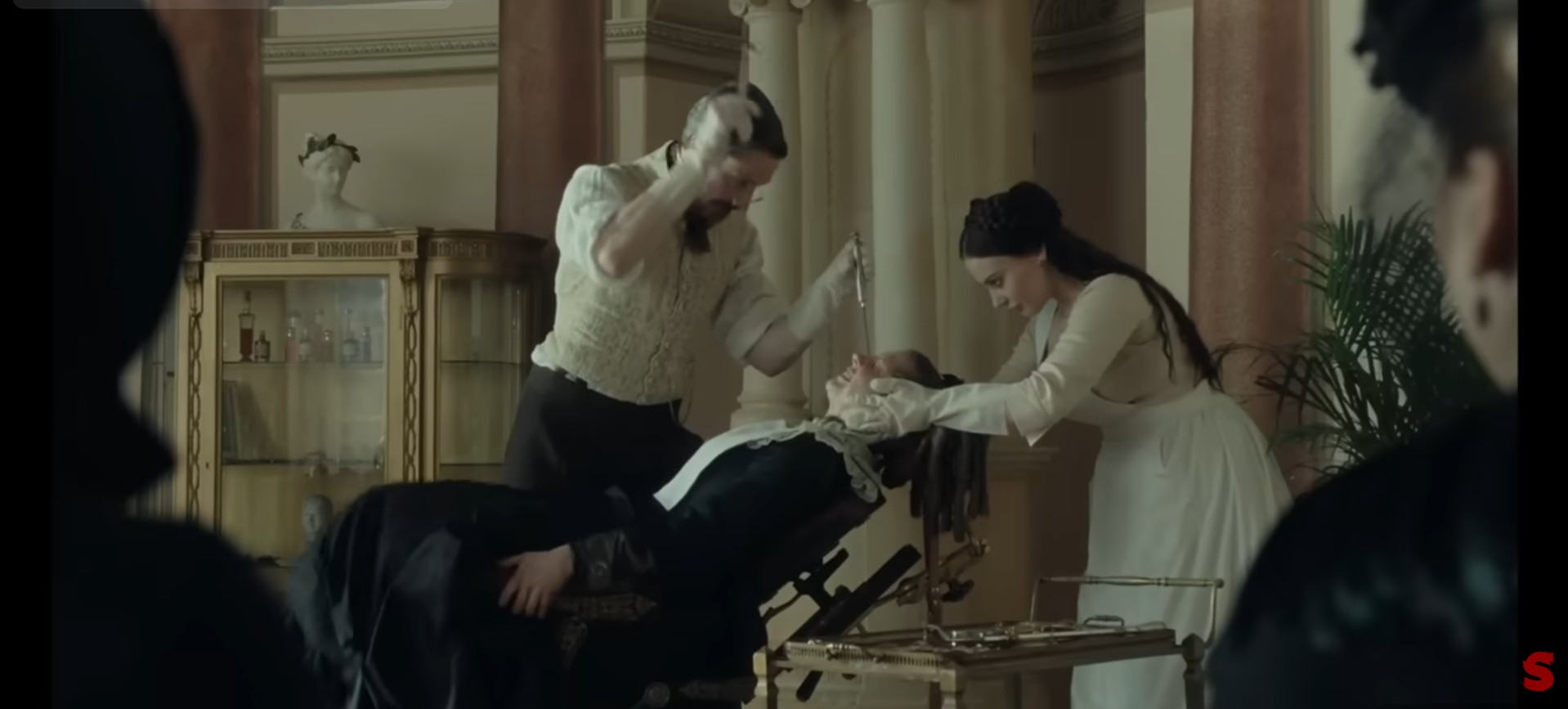
“The Ugly Stepsister’s” body horror is more than just a serious manipulation in losing weight and cutting more than corners toward image perfection. The real horror is in the shame, the shaming of the body that’s overlooked, called out, and humiliated and to make matters worse for Elvira, her body type is by all of today’s standards curvy in the right places and beautiful albeit a body double was used for her pre-trim down nude scene. Prosthetics are in place around the face and arms to make Lea Myren appear a little weightier, but the difference is extremely negligible and that’s the real power of horror when it’s terribly subtle, an already beautiful young girl succumb to peer and societal pressures that induces crazy self-harm for opinionated ideals and appearances. Blichfeldt’s ideas of body-shaming extreme measures done by Elvira are not a far stretch from what self-conscious people do today about their weight. Instead of swallowing a tape worm egg, one can stick a figure down their throat to achieve the same effect. Instead of breaking a nose to re-mold with a hammer and chisel, surgery and medicines are abused ot be the new, easy, fast weight lost solution. Blichfeldt comparative shots linger on Agnes with Elvira seething with envy and with the director’s bold choice of provocative nudity, exposing genitalia and depiction of X-rated acts, engages an alluring perversity that sheds light on a superficial world of beauty and sex, shielding the core, deeper problem of societal shame.
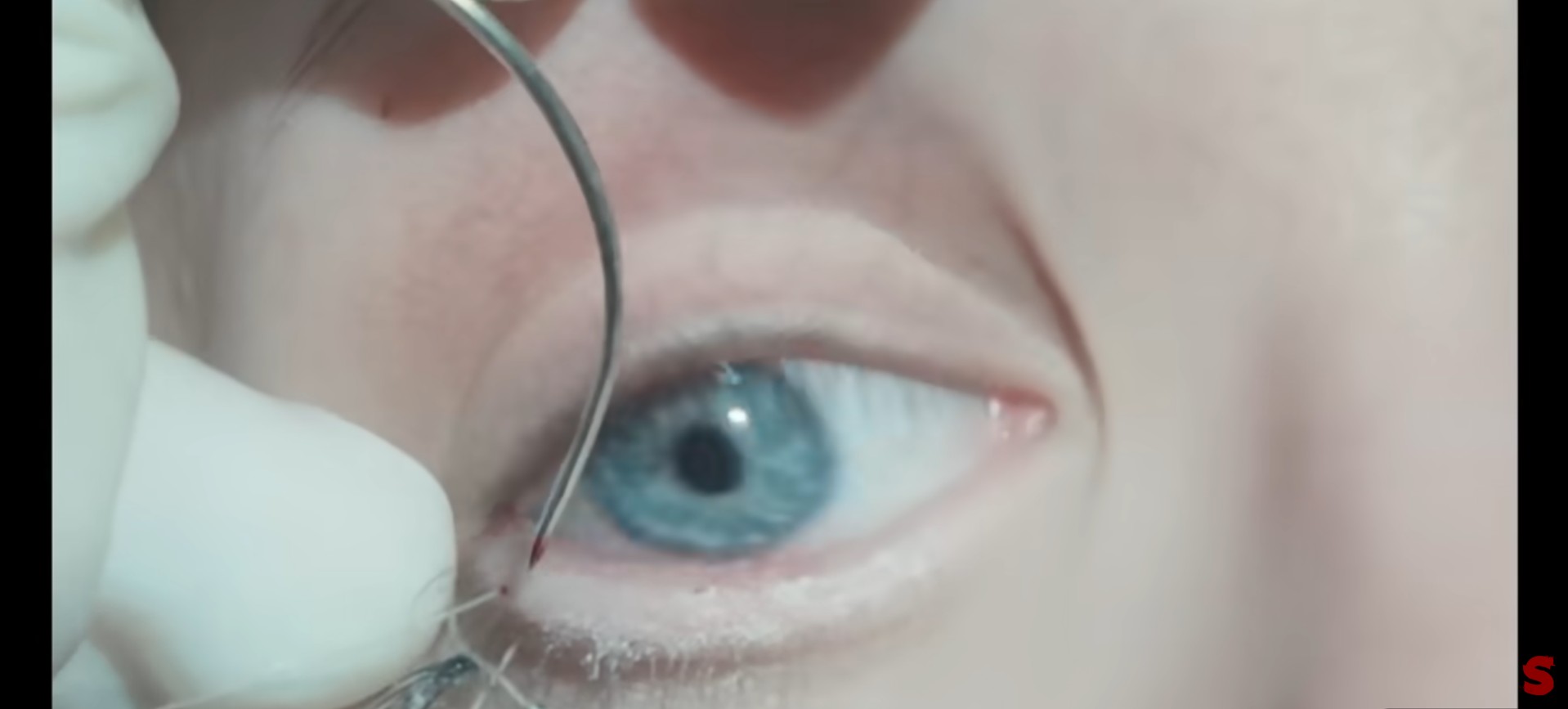
Second Sight Films brings the Shudder and Vertigo Releasing North American marketed “The Ugly Stepsister” to 4K UHD Blu-ray. The ultra high-definition release is HVEC encoded onto a BD66 and presented in HDR10 with Dolby Vision, at 2160p, and in it’s the original aspect ratio, a European 1.66:1 widescreen. Match the dark toned nature, the grading also exacts a somber coating with mahogany and ebony wooden structures and dimly lit castles of a Victorian era to bask in an austere state were, more so with personal happiness, is hard to come by. Details are hard to stomach, in a good way, with proximate detail in the special effects closeups, such as in the mutilation scene where a nearly severed toes are hanging on for dear life by what little skin in left tethered to the foot, that go into macrolevel detail and is accentuated by the additional pixels. Skin tones appear natural and unique to each individual in a purposeful contrast of fair and tanned skin along with different layers of texturing between organic qualities and the fabric outfits they wear, such as Agnes more single block outfit with a smoother design compared to Elvira’s multiple layers and pattern garb. The Norwegian DTS-HD Master Audio 5.1 has an eclectic powerhouse soundtrack of synth and string orchestra from John Erik Kaada and Vilde Tuv. The story doesn’t have a great deal of direction use for the 5.1 mix with mostly a conversating piece with mostly diegetic ambience, leaving the 5.1 less immersive than required, but there is vitality and strength behind the dialogue and action, clear and unobscured in its clean presence. The multitude of squishiness, again the severed toes and also the removal of the tape worm through an orifice, is highly emphasized more max effect. Areas of depth mostly lingers around the front but there are opportune moments in medium shots for audio expression. English subtitles are clean, accurate, and well-paced. Special features on the standard 4K release include a new audio commentary with director Emilie Blichfeldt and filmmaker Patrik Syversen, a new audio commentary with critic Meagan Navarro, a new interview with Blichfieldt This is my Ball, a new interview with star Lea Myren Generational Trauma, a new interview with Cinderella actress Thea Sofie Loc Naess Take Up Space, a new interview with special effects artist Thomas Foldberg Character and Gore, a special effects featurette The Beauty of Ugly: The Effects of the Ugly Stepsister, a visual essay from Kat Hughes A Cinderella Story, deleted scenes, and both the Blichfiedt short films mentioned earlier in this review: “How Do You Like My Hair?” and “Sara’s Intimate Confessions.” The review here is for the standard 4K UHD Blu-ray set but there is a limited edition set that includes the 1080p Blu-ray as well. The black Amaray case features a character still of Elvira on the front cover in all her dark maiden and sweet-faced glory. There are no physical extras inside. UK certified 18 for strong sex, nudity, and gore, “The Ugly Stepsister” from Second Sight Films is region free and has a runtime of 109 minutes.
Last Rites: “The Ugly Stepsister” is a yarn not yet explored in other Cinderella tales, especially when it involves body horror and a sexually explicitness that that will forever make watching the Disney classic now uncomfortable when a recalled thought from Blichfeldt’s film pops into the visual cortex. Yet, it’s a remarkably twisted story from a different perspective that isn’t magically fantastical but grim and tragic.




 It's Bloggin Evil!