Creating the Perfect EVIL Race Takes Needless Amounts of Surgery and a Good Pair of Balls! “S.S. Experiment Love Camp” reviewed! (88 Films / 4K UHD and Standard Blu-ray)

“S.S. Experiment Love Camp” 4K and Blu-ray is Ripe for the Taking!

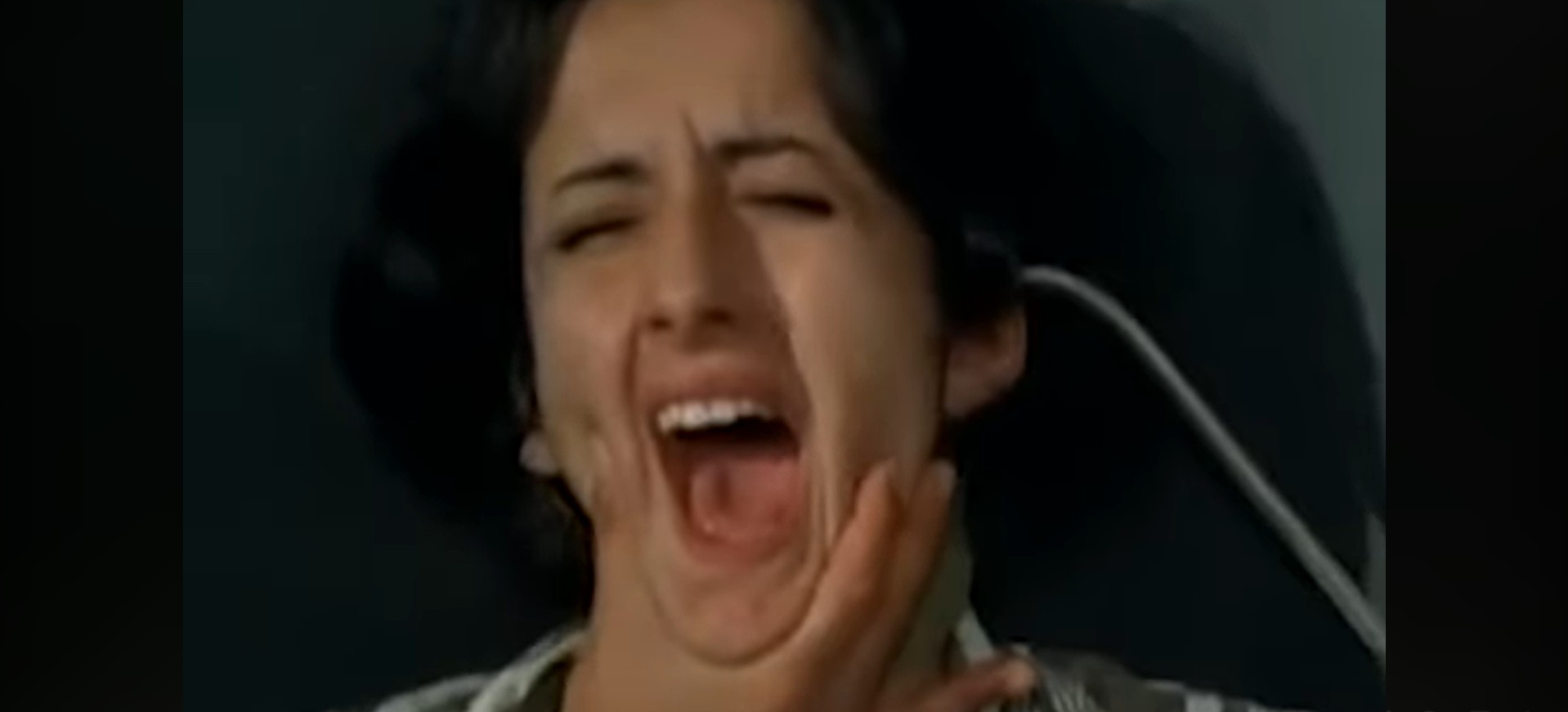
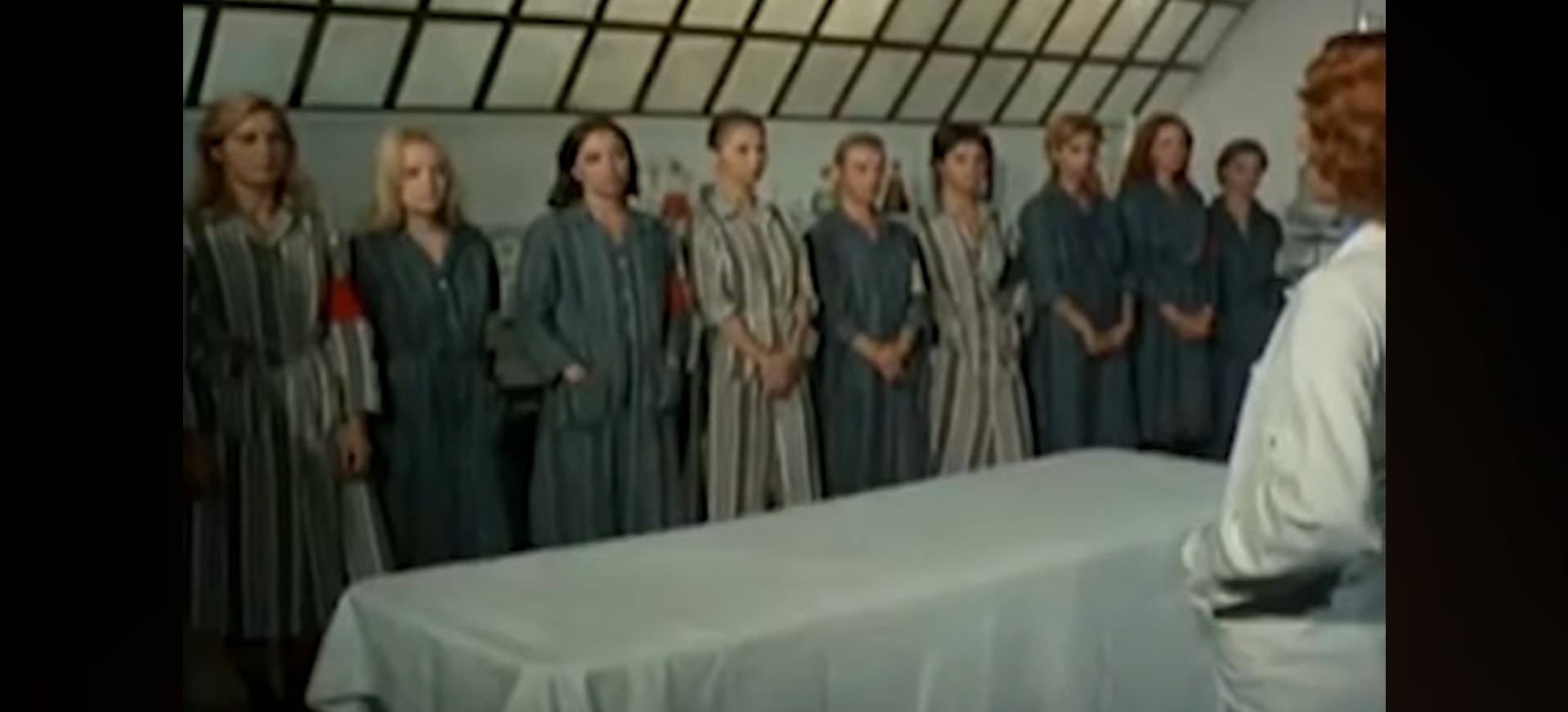
Nazi officer Colonel von Kleiben heads a concentration camp where he experiments of young Jewish and Russian female prisoners.  His experiments bore through the encampment lot with unconventional reproductive system surgery for the good of and in the name of purifying the Aryan race, experimentations that also including nonconsensual sexual activities between the women captives and the top physical specimens of the Nazi ranks.  Kleiben’s masked, real intentions are to practice for his own sake in a testicle transplant after a Russian woman castrates him during his attempted raping of her during conflict.  Woman after woman is sacrificed for the surgeon’s rigorous rehearsal by having their uteruses removed and replaced by another and when they expire on the table, their corpses are discarded into the camp’s incinerating ovens.  One Nazi solider is earmarked to be Kleiben’s hope to be whole again and uses the soldier’s affections toward a female prisoner to gain power and control in coercing him blindly into the experiment. 

If pleasure seeking banned films from certain sovereign states, then perhaps “S.S. Experiment Love Camp” should be on your short list.  The 1976 Nazisploitation film from Italy depicts a semblance of torture simulations used from Hitler’s Reich and lays the groundwork for total absurdity with a plot coursed with nonsense motivation at the disadvantage of a minority group under the threat of torture and death.  Also known as “Captive Women II:  Orgies of the Damned,” as more of a sequel in the collective Naziploitation subgenre popular in the 70’s, or most widely known as simply “S.S. Experiment,” the film is from the “Django the Bastard” and “Kill Django… Kill First” director Sergio Garrone, who co-wrote the script alongside “The Weapon, the Hour, & the Motive” co-screenwriter Vinicio Marinuci.  The Società Europea Films Internazionali Cinematografica produced the video nasty venture and expressed no regret the depictions of Nazi terror with the continuation of the subgenre by producing “S.S. Camp 5:  Women’s Hell” as well as other rape-inclined exploitation, such as “Mandinga” between master and plantation slaves and the caged women narrative of “Barbed Wire Dolls.”  

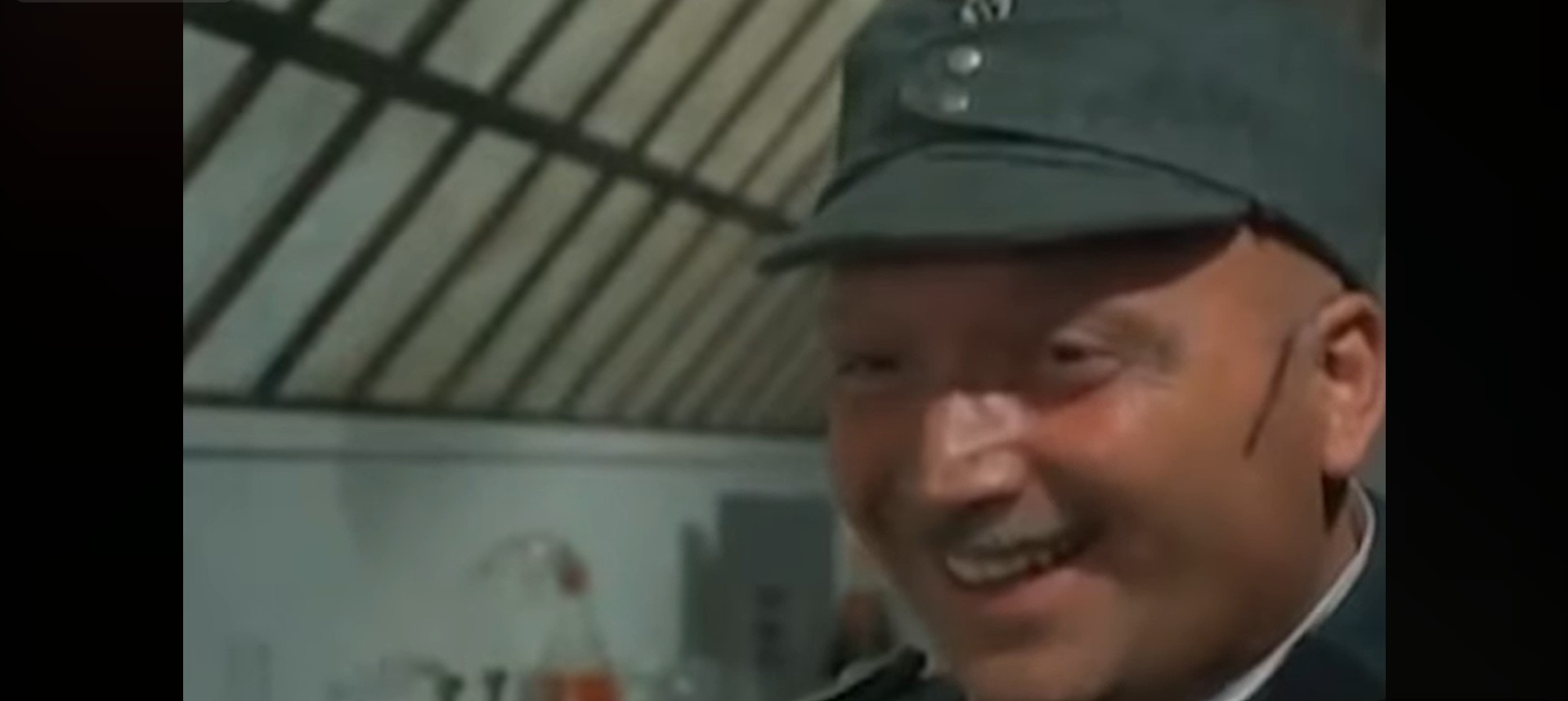
Sifting through the atrocious Nazi experiments, the unabashed sum of nudity, and the ridiculously selfish plot of one Colonel’s lengths to restore his manhood, “S.S. Experiment Love Camp” has a handful of mainstay principals key to the premise’s perpetuation encircled around Colonel Kleiben’s clandestine reasons to willingly and uncompassionately order a new type of surgical procedure on innocent civilian women prisoners.  Played by the square jawed, blonde haired Italian Giorgio Cerioni, who after “S.S. Experiment Love Camp” went on a string of playing a woman abusing Nazi in nazisploitation films between ’76 and ’77 with “Deported Women of the SS Special Section,” “SS Camp:  Women’s Hell,”  “The Red Nights of the Gestapo,” Kleiben’s a stoic, behind-the-scenes force and Cerioni dons the decadence evil well behind German medals and sense of false soldier duty as he works both the known to Kleinben Jewish world class surgeon Dr. Steiner (Attilio Dottesio, “The Sinful Nuns of Saint Valentine”) pretending to be German and Kleiben’s targeted German solider Helmet (Mircha Carven, “Death Will Have Your Eyes”) sought for his textbook testicles.  Dottesio’s Dr. Steiner is a conflicted man brought to do surgery on his fellow Jews that will result in their certain death and while he knows this, and it weighs on his conscious, the stuck doctor keeps himself from being exposed from other than the Colonel who knows and exploits his little secret for advantage; Dottesio wears a burden upon the surgeon’s face but doesn’t do enough to provide the body language of resistance in being doctor death against his will.  Yet, Carven wholly depicts an outlier amongst the typical German national who rather read books than shoot the sexual gab of his countrymen, which is in itself a nice slice of visual irony with the Nazi being known for burning literature.  Carven keeps Helmut relatively quiet, reserved, and a watcher from afar, noticing blonde prisoner Mirelle as the two fall for each other at the moment of locking eyes.  Carven and Paolo Corazzi (“SS Camp:  Women’s Hell”) sizzle with chemistry that’s left pieced too far apart and with not enough relationship context toward their insta-love connection.  There are other peripheral dialogue characters that keep the story spicy in their debauchery with Serafino Profumo (“Escape from Hell”) who had that perfect thin mustache and bald and stout look that makes him a formidable slimeball as the Nazi Seargent, Patrizia Melega (“SS Camp:  Women’s Hell”) as Dr. Steiner’s sadistic lesbian colleague Dr. Renke, and a handful of German soldiers to be the plug to the female prisoner outlet, such as with Matilda Dall’Agilio, Agnes Kalpagos, and Almina De Sanzio.  One of the more details to gripe about the cast is that they’re all Italian bronze that dilutes the allusion of the nationalities their portraying. 

“S.S. Experiment Love Camp” comes with a smidgen of notoriety having been banned in select western European countries over its depiction of violence, especially at the hands of Nazis, and its controversial poster of a naked woman crucified upside.  To this day,  Garrone’s film is still shocking and abhorrent with the aforesaid but also the emotion confliction etched into characters like Dr. Steiner or Helmut who must make a choice, weighing the balance of self-preservation over the salvation and safety of others, and that’s what really drives this nazisploitation to have tremendous impact in an absurdist plot of colonel cajones.  Garrone favors a more realistic approach to the tortures and horrors of a Nazi concentration camp by including close reenactments to their torture methods and Garrone also lingers ever so uncomfortably on the complete discard of corpses into the oven without any dialogue, expression on any faces, and even adds a surrealist glance into the oven of the bodies moving, in an artful dance way, when the flames are ignited.  There’s also the given, often gratuitous nudity that accompanies most nazisploitation films and while nudity usually arouses, stimulation stalls under the barbarism that’s present in the air, the context of which the sex acts are being conducted for, and the outcome of ghastly blood and sinew that follows to the end of the mortal coil.  There’s sensuality between lovers and transactions between prostitution and paying customers but even those innocuous instances rapid degrade into unnerving anticipation. 

88 Films’ new 2-disc, dual format 4K UHD Blu-ray and Standard Blu-ray set is a marvel of physical media engineering.  The 4K UHD is HVEC encoded and presented in Dolby Vision HDR10, 2160p ultra high-definition, and stored on a BD100 while the Standard Blu-ray is AVC encoded with a 1080p resolution on a BD50, both brand new 4K remastered transfers stem from the original negatives and displayed in a widescreen 1.85:1 aspect ratio.  Between the two formats, there’s identical visuals to the naked eye but the 4K UHD does provide a slightly sharper image that has more an immersive pop when comparing the two formats side-by-side.  Colors are rich with a complete hue saturation that isn’t present in previous, more muted DVD or other Blu-ray editions.  Darker scenes have an intention rough quality about them as well as the concrete and unpigmented concentration camp as intended by director Sergio Carrone to put forth as much realism as possible.  No identifiable issues with compression as the picture quality looks clean through-and-through with blacks retaining an inky bide, grading remains consistent and stable, and the minutiae of fabric and skin color doesn’t contest with any ambiguity as Nazi uniforms distill a gray cotton-wool blend, you can also touch the little fuzzies on their garb, and the stubble and sweat greatly show the length of detail on strained and tense faces during torture or combat scenes.  The formats both have the same audio mixes:  an ADR English 2.0 LPCM and an ADR Italian 2.0 LPCM.  The uncompressed audio brings an unfiltered and considerate quality to the front channels with clean and clear dialogue under a diminutive amount of interference and an ambience track that puts its best foot forward, or rather the front, with distinct, sundry range of electronic voltage, machine gun fire, and the surgical slippery stickiness of organs being handled.  The new translated English subtitles are paced well and have no grammatical or misspelling issues.  Special features include a feature tandem audio commentary with Italian film experts Eugenio Ercolani and Nanni Cobretti.  Plus, Italian audio only interviews subtitled in English, including an interview with the late director Sergio Garrone Sadistically Yours, Sergio G., an interview with music historian Pierpaolo de Sanctis SSadist Sound, an interview with editor Eugenio Alabiso The Alibiso Dynasty (a back cover misspelling error perhaps?), an interview with cinematographer Maurizio Centini Framing Exploitation.  The special features conclude with the Italian title credits for the opening and closing of the film and the original Italian trailer.  88 Films and Joel Robison bring a newly illustrated, censored and uncensored cover art with the censored version on the rigid dual-sided slipcover that’s crazily detailed in all its tempestuous glory with the backside depicting the original poster art of a reverse crucified naked woman, both images are impressed with a pop-pulp coloring and chrome effect. The uncensored version lies within the plastic slip of the black 4K Amaray with a reverse side depicting also the original cover in its more traditional coloring of the horrendous and country-banning portrayal.  Inserted on the left interior is an uncensored illustrative cover, of the original poster art, atop of a 11-page English essay from Tim Murray entitled “Nazisploitation, Punks, and The Nasties…”  The Not rated, 95-minute film is region free for global player use. 

Last Rites: If nazisploitation or Eurosleaze just isn’t what tickles your movie mania, any cinephile can appreciate the pristine transfer, the raw and uncompressed audio, and its physical accoutrements that rise “S.S. Experiment Love Camp” into a must-have release.

“S.S. Experiment Love Camp” 4K and Blu-ray is Ripe for the Taking!

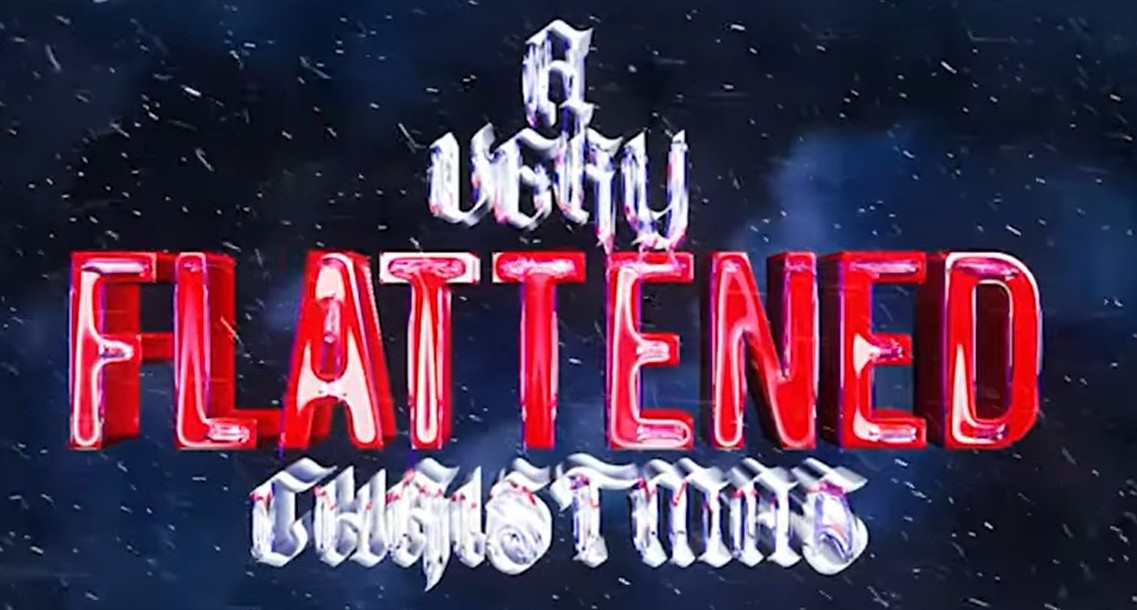
EVIL Will Run You Over and Scrape You Off the Road Just to Kill You Again! “A Very Flattened Christmas” reviewed! (SRS Cinema / Blu-ray)

Merry Christmas, You Filthy Reindeers! “A Very Flattened Christmas” Blu-ray on Amazon.com!

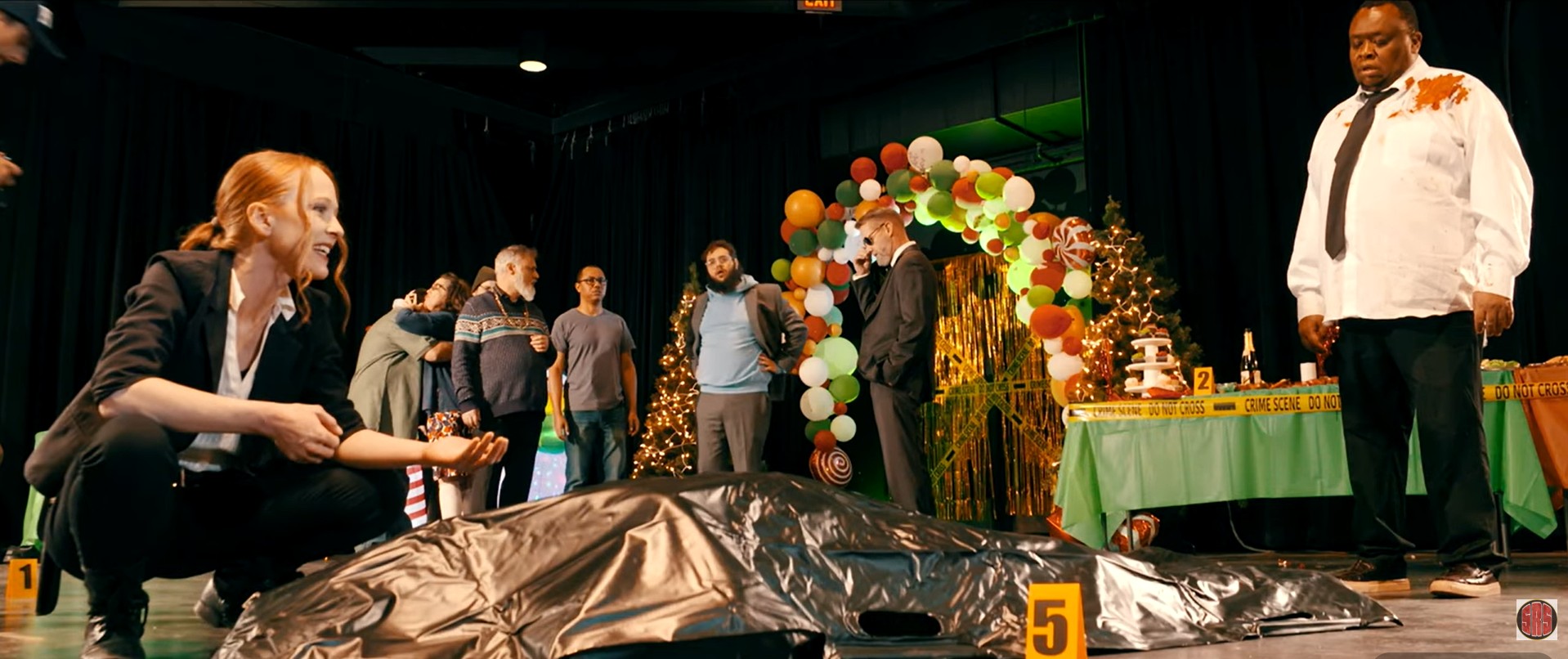
A roadkill collection company mourns the sudden death of one of their former employees who was murdered in a seemingly drug deal gone bad. Max, also a former roadkill company employee, returns to town to pay his respects to his close friend and colleague but the funeral is everything but cordial and of decorum when Rick, another former roadkill company employee turned famous yet narcissistic filmmaker on the verge of releasing another installment of his popular Dick Puncher series, makes trouble not only at J’s funeral but also at the company’s Christmas party. Max’s friend, conspiracy theorist Dan, becomes lead suspect in J’s death, and detectives Bradley and Francine search for clues and interview those involved with the deceased. Soon, they and all other employees become intwined in all the roadkill company drama for all the wrong reasons when a killer dressed in a menacing reindeer outfit has set out to slay all employees, past and present, this Christmas.

Based on the Shane Wallace created six-episode comedy web series “Flattened,” premised with precursory characters Max, Dan, and J involved in roadkill company hijinks and drugs, Wallace’s feature length, Christmas holiday-themed, and company slasher film serves as a direct follow up to the web series filmed in and near Wichita, Kansas and released between 2016 and 2017. Titled “A Very Flattened Christmas,” the 2024 story continues the trio’s story, picking up years later after all the interned employees have moved on with their lives from scooping up animal carcasses from off the local highways and backroads and started different career pathways, such as becoming a highly famed filmmaker, and but their newfangled lives become jeopardize by an evil reindeer taking them out one-by-one. Different Day Pictures returns to produce the venture backed by crowdfunding through GoFundMe with film’s star Key Tawn Toothman serving as producer.

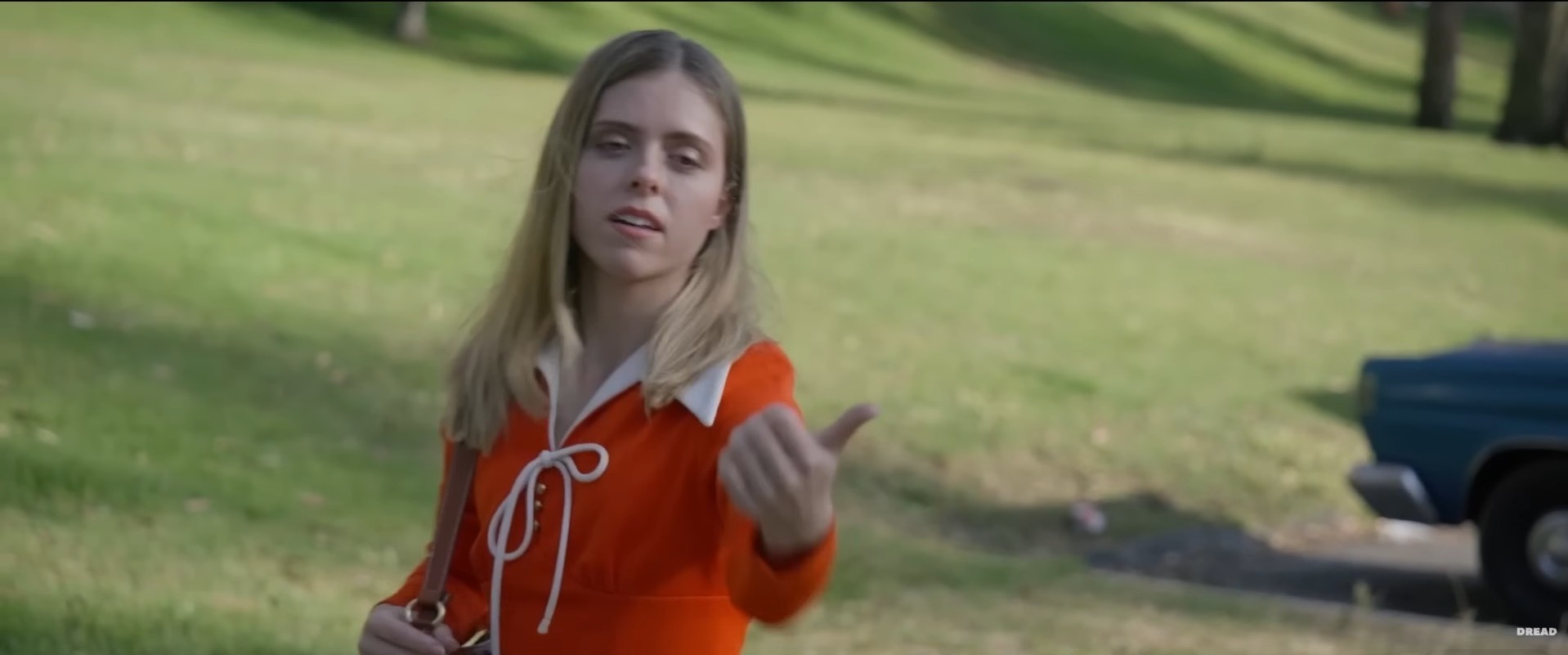
The returning web series cast carry little over from the series into the feature film other than selective series moments displayed in a snow globe during the credits, which doesn’t explain much if, like in myself, you’ve never seen, or even heard of, the web series, and the multiple mentioned fact that characters once worked at the roadkill company.  That’s about as much backstory you’ll get to catch up into a whole new venture for Max and gang that are no longer in the dirty business of carcass removal but are in the business of being preyed upon by a reindeer masked killer, a complete 180 degree turn of events from the comedic web series.  This particular Christmasy, slasher sequel follows Max (Key Tawn Toothman) having returned to town to attend his friend J’s (Naythan Smith) funeral.  Max’s grounded for social facets with level-headed awareness and a good sense of judgement making him well liked amongst current employees of the company but that also makes him an easy target for former employees turned narcissist filmmaker Rick (Jesse Bailey) and conspiracy theorist Dan (Trevor Vincent Farney) who clings on him with his paranoia drivel.  Between the two, Rick receives substantial backstory material with news story and commercial hype for his upcoming Dick Puncher film but receive little context to Dan’s rants and ravings that are more like an annoying friend’s unconscious conversational narcissism.  Max is balanced out by allies within the company like receptionist Jerry-Ann (Beckie Jenek) and mobile carcass scraper Lorribell (Paul Makar), both of him have to work on Christmas, begrudgingly, but all are fair game for Red Eyes (Lucas Farney) with a mangy Reindeer mask in a mall Santa suit killing off Max’s friends and enemies alike and while Max and his love interest Maddie (Kaemie McCanless) along with detectives Bradley (Mark D. Anderson) and Francine (Shanna Berry) work to uncover the truth, led on red herring, and fight for their own survival, the body count continues to collect those staple to the “Flattened” series, turning every character fair game to be trampled by the Reindeer masked killer.  Mark Mannette, John Doornbos, Noah Farney, Blaine Frazier, Nora Graham, and Dean Kavivya costar.

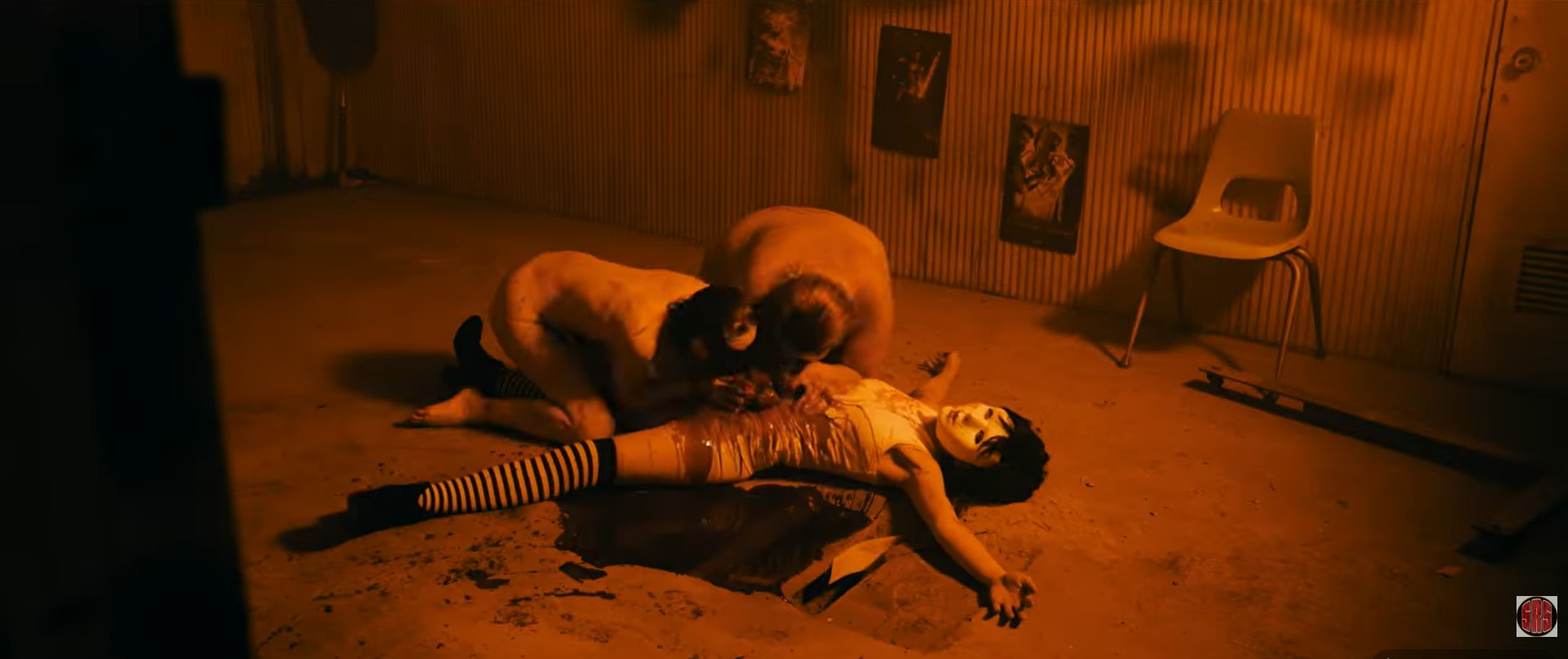
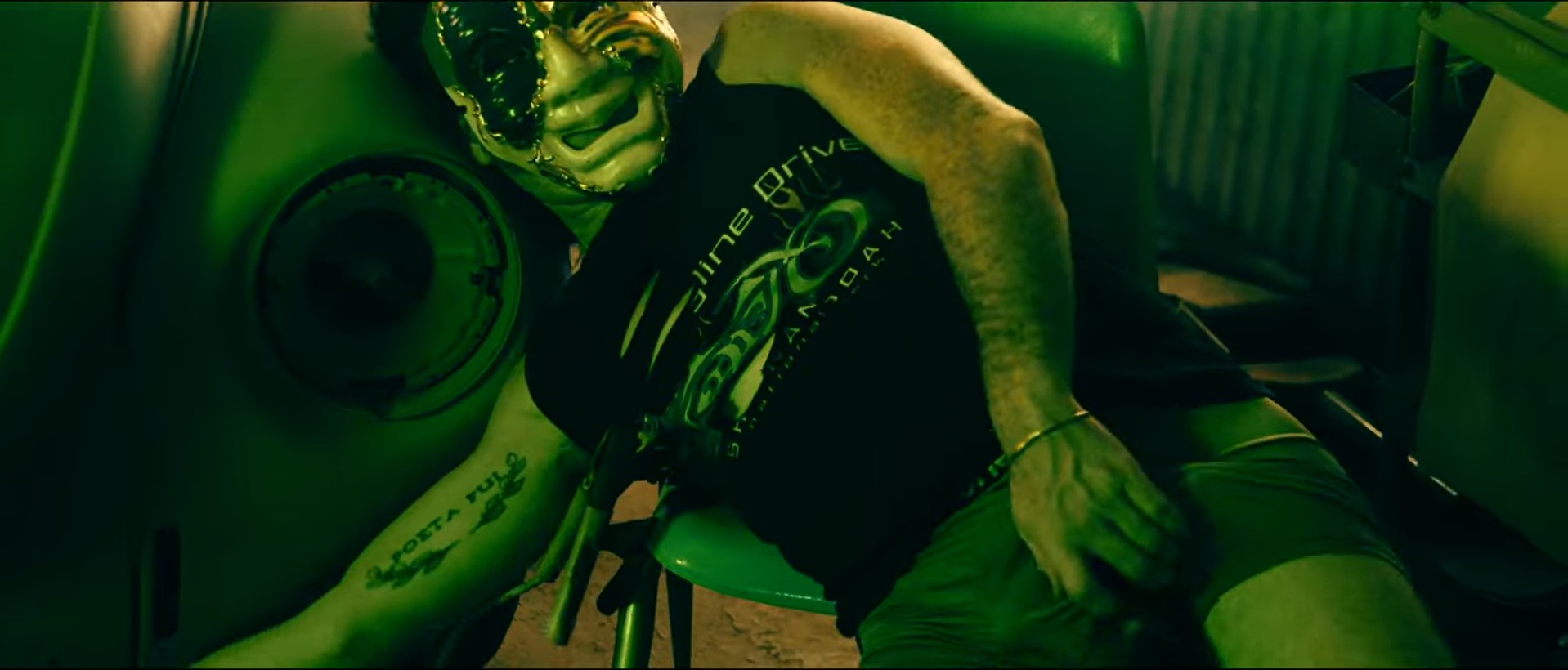
The Christmas season may be over and Santa has packed it in for another 364 days, but no Christmas horror movie, especially released during the season, should be left unturned over and “A Very Flattened Christmas” receives a platform as we continue to celebrate the 12-days of Christmas with a series-based slasher that concludes the “Flattened” troupe’s run by killing off its beloved characters.  “A Very Flattened Christmas” continues the campiness with a dry humor, dark comedy affair that plays like a family get together that has gone down the drain with rekindled friends and enemies swirled into a nutmeg batter of one maniacally, reindeer-and-Santa Claus-garbed killer’s cake mix.  The feature tiptoes ever so gradually away from the roadkill company despite keeping the series’ Flattened in the title as the chaos spills out into other portions of town without the whiff of decaying animal corpses; instead, the corpses of Max’s acquaintances are the ones who are being flattened, literally.  The masked killer has strong threat appeal and wields an array of offings in favor of the story as Wallace uses death gags and some practical effects to shoulder the horror weight but there’s also a fair amount of visual blood spurt’s that speak to its budget limitations and crowdfunded castrations.  The killer twist is palpable enough though leans into overt tells some but the one thing this themed slasher really needed, as much as it also needed more series context in the jump from a television show to a feature film, is to up the Christmas tinsel with seasonal carnage to turn the merriness on its head by decapitating it.

Keep the holiday spirit going with “A Very Flattened Christmas” on an SRS Cinema Blu-ray. The AVC encoded, 1080p resolution, 25 gigabyte BD-R offers a solid image quality under the technical low bar circumstances. Details are sharply outlined, distinct, and without fuzzy aliasing, splotchy spots, or other associated compression issues. There’s some banding along the darker shades but nothing too big to gripe about. The details are hit or miss depending on the scene difficulty and substandard lighting but the achievement of corporal tactiles on an SRS Cinema Blu-ray is a little triumph for the release and that is what is accomplished here. The full-blown animation portion is top-notch work for something of a skit gag that lands with confidence. The English language LPCM 2.0 has little authority behind it’s acoustical dynamics and projecting strength, but the dialogue is overall clear and present, ample and adequate by all means of the sound design without underscoring the horrific highlights of a holiday horror film, such as the hits and action of the evil reindeer’s sojourn slaughter through the Max’s rolodex of friends. Daron Kelp and Dave Baker’s eclectic soundtrack of rattling synth keyboard and haunting sustained chords peppered with full length vocal tracks. There are no subtitles available. Special features include a director and producer commentary track parallel to the feature, an alternate scene, deleted scenes, the film’s trailer, an animated trailer, “Flattened” series pilot episode, and other SRS Cinema trailers. The Amaray Blu-ray is about as physically scanty as they come with only an illustrated cover art of the Santa-cladded reindeer (looks like a rat to me) overtop and about to take hold a snowy covered town in its bloodied shovel grasp. SRS Cinema has always been able to produce neat art for their releases to bedazzle slightly the rudimentary in-hand. The not rated release has a runtime of 92 minutes and is region free unlocked.

Last Rites: Santa has packed it in for the year but in horror, Christmas can come at any time of year. “A Very Flattened Christmas” is a welcomed addition to the holiday clash subgenre with a formidable villain, decent kill decimating, and great soundtrack but be forewarned of its spotty at best storyline, some bad CGI bloodletting, and humorlessly dry jokes.

Merry Christmas, You Filthy Reindeers! “A Very Flattened Christmas” Blu-ray on Amazon.com!

To Bring Life into Existence, One Must Go Through the unscrupulous EVIL Trials and Tribulations. “The Last Frankenstein” reviewed! (DiabolikDVD / Blu-ray)

“The Last Frankenstein” on Blu-ray from DiabolikDVD

Jason Frankenstein is the great grandson from a long ancestorial line of corpse reanimators.  Feeling unfulfilled in life and his destined legacy, Jason goes through the motions of being a hospital’s physician assistant and putting up with his less ambitious girlfriend, Penny.  When a disfigured serial killer is brought into his hospital, Jason immediately recognizes the shell of a man as his grandfather’s reanimated corpse brought back to life with the family’s secret elixir, Adrenarol.   Hiring two crooked, drug-dealing EMTs to do his kidnapping bidding in exchange for medical grade drugs and with the assistance of a confidential nurse with a disreputable past, Jason sets to complete what his grandfather started by creating his own living, breathing, thinking monster with the family reanimating formula.  Selective hacked up body parts, double-crossing henchmen, and a troublesome manmade man goes against his birthright grain with the only path forward soaked in the blood created by his own hands. 

Resurrected from the depths of just a concept and electrified by crowdfunded, “The Last Frankenstein” is alive, ALIVE!, from writer-director David Weaver in his debut feature length film.  The U.S. film from 2021 was set and shot in Weaver’s hometown of Amsterdam, New York, just northwest of the state capital of Albany.  Labeled as an existential slasher, extracted from Mary Shelley’s classic gothic novel, Weaver sought to recreate exploitation films of the 1970s-1980s with a raw façade, gruesome practical effects and gore, and an assortment of cynical characters in a story that tells of generational expectations, the pressures of living up to greatness, being the last of one’s family surname.  The Kickstarter production raised $13,500 for mostly the shooting costs with much of the post work being completed by Weaver to maintain low costs and is a production of Gila Films with Jay Leonard producing.

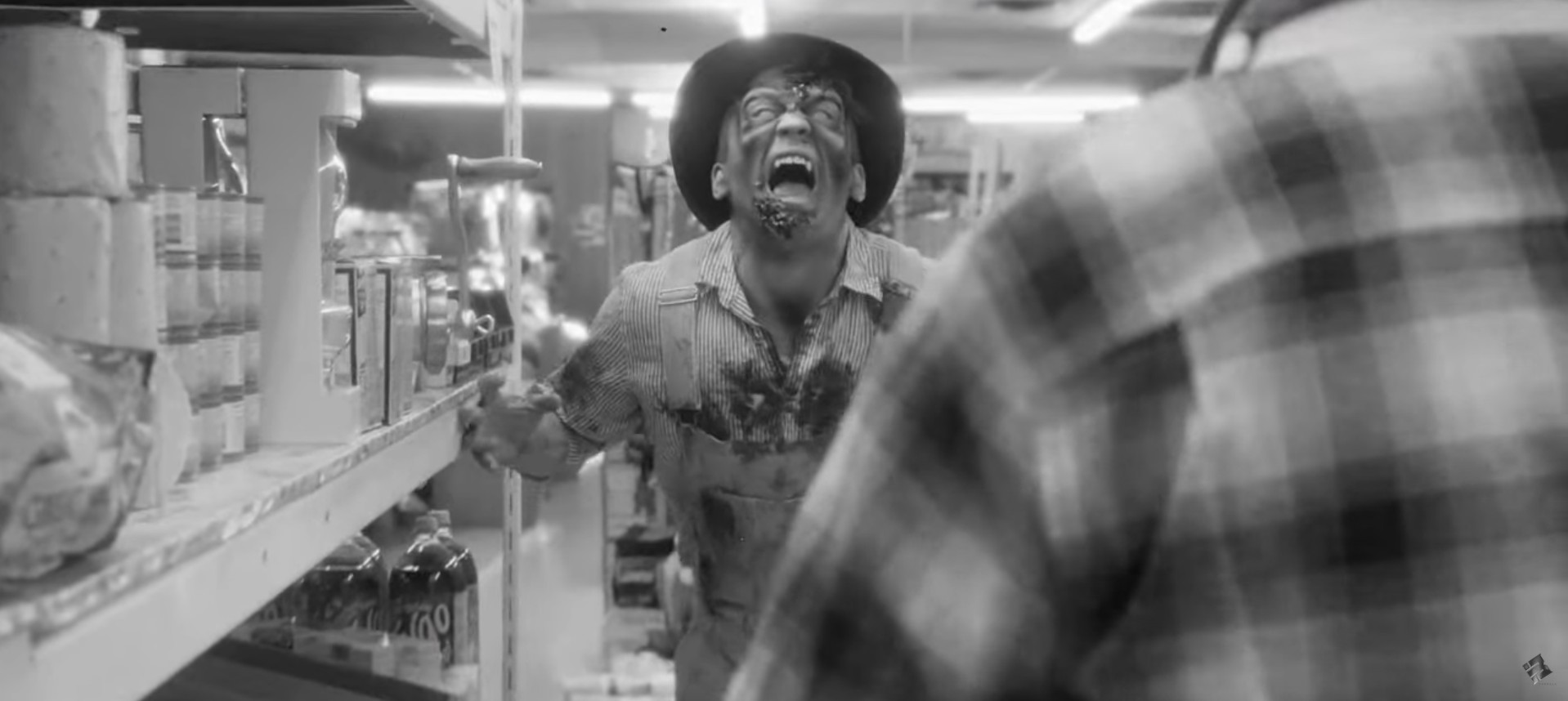
“The Last Frankenstein’s” acting tone is a curious one.  Complex with the desire to conquer death with footnotes of drug peddling and murderous EMTs, longing relationships and carnal stress releases, and death, much death, there’s a severe lack of emotion amongst the character pool, delivering a consistent and constant cadence of flat intonations.  The same expression is pretty much splayed onto each face with attitudes and personalities to match in a widespread of white bread acting.  In a way it works toward the story’s apathetic and cynical nature but while Frankenstein’s monster lives with a new life, “The Last Frankenstein” cast utterly is lifeless, beginning with the lead actor William Barnet in the titular role and though a doctors are conventionally attributes plainspoken, carry an unbiased inflection, and eve have some sense of being on the spectrum, perhaps, Barnet’s lukewarm woodenness extends beyond his reach and to the rest of the lot.  There’s no concern or fear in Nurse Paula’s (Keelie Sheridan) eyes when her acquaintance is killed by Jason Frankenstein or that the doctor is trying to resurrect the dead, no anger, resentment, or guilt from the two stoic ambulance drivers (Jeff Raiano and Ulisses Gonsalves) covertly dealing drugs and doing Frankenstein’s dirty work, and there’s definitely no life behind Frankenstein’s monster’s eyes, neither his grandfather’s nor his, that’s very opposite to the legacy portrayals by Boris Karloff’s sadness, Robert De Niro’s revenge, or Peter Boyle’s joy and fear.  This different take on the canopied story has the creature boiled down to a Jason Voorhees type, especially with eldest creature (Roderick Klimek) that looks very much like hockey mask slasher from the backside and even kills like him too.  Jason Frankenstein’s version, played by Michael Wetherbee, at least shows some reserve, some kind of calculation happening behind the flesh-stitched face, and does abide by his apathetic opportunity to kill but also resists the juggernaut chase to slaughter even if detrimental to his existence.  What that resistance is that holds him back goes without exposition or a vague sense of implicit explanation but it’s a performance that renders the most feeling in a rather frozen stiff guild of actors.  Jana Szabela plays Jason’s girlfriend Penny, Brett Owen plays Jason’s father in flashbacks, and cult actors Jim Boelsen (“Strange Behavior,” “The Curious Case of the Campus Corpse”) and the late Robert Dix (“Forbidden Planet,” “Horror of the Blood Monster”) also costar.

The creature’s Gothically enriched surroundings, darkly and bleakly trimmed with elaborate castles inside sinister castles and grotesque in unordinary shapes, styles, and hauntings, are more than replaced by David Weaver’s backwoods entry into the electrified monster.  Trading castles for cabins and grandiose laboratories for makeshift surgical rooms, “The Last Frankenstein” utilizes what’s immediately around, and in this case it’s Weaver’s hometown of Amsterdam, New York, a quaint, post-industrial smalltown surrounded by brick homes, rundown factories, and woodland that gives the story an unconventional look and approach while keeping true to the basic principles of Frankenstein and his monster.   With the idea that small towns hold secrets, “The Last Frankenstein” leans into the problematic drug problem less populated areas encounter with most turning a blind eye or ignorantly keeping their blinders down to the transgressions that are happening right underneath their noses.  In this instance, the drug dealing EMTs are utilized via blackmail but deal to come out better than before with more peddling product than before without risking exposure through a doctor approved sign out sheet for narcotics, which is how Frankenstein caught onto their scheme.  To dig deeper into that latter statement, Frankenstein is the smartest amongst his living peers but can’t seem to understand and figure out his and his ancestor’s creations that go against his family tree in a visceral and violent protest of what it means to live, promoting once again that anti-God actions spoil the fruits of man.  There’s a show of arrogance and false omnipotence to cheat the natural course of death found in all the Frankenstein subject films and those who create variations of the filmography, such as with “Re-Animator” and “The Lazarus Effect.”  

The film may be called “The Last Frankenstein” but it’s the first title with the DiabolikDVD label as a company release.  The AVC encoded, 1080p high-definition, BD50 Blu-ray is presented in the original widescreen aspect ratio of 2.35:1.  “The Last Frankenstein” favors a neutrally saturated raw image, capturing a lot of the natural greenery and aesthetic of nearby woods, creeks, and other characteristics of rural America, including trailer parks, post-industrial buildings, and wood paneling interiors.  The surrounding intricacies of a clearly puttied and latex mask used for the Frankenstein grafted facial skin looks like a true mask instead of skin but that’s the very intention of a created being, pieced together in slapdash stitchwork to add a layer of differentiation much like the original monster’s scars or bolt.  General particulars around exteriors and interiors are clearly defined with the consistent laid out image quality that produces ordinary smalltown charm contained to limited landscapes and mostly the direct environs that are not exactly cinematically picturesque but does depict the visual boredom of the vicinity.  The sole audition option is an English LPCM 2.0 stereo that reproduces faithful fidelity of the dialogue and diegetic action within the front channels.  The foley and Steve Noir’s poignant trance of a synth score are a little more girthier bodied to fill the entire medium that get to being comical in action (in foley) yet powerfully bleak and hypnotic (in score).  Dialogue is clean, clear, and in the forefront mostly, often vying for position with Noir’s repetitive and pulsing soundtrack portions. English SDH are optionally available.  Special features include feature-length commentary with writer-director David Weaver and producer Jay Leonard, a second commentary track with Weaver, a making-of featurette Reanimating the Last Frankenstein that goes through cast and crew interviews, the Kickstarter campaign, and a creation thought process for the concept and its materialized conception, deleted scenes, outtakes, still gallery, and a mentioned bonus easter egg listed on the back cover but unable to locate it on the disc. The reviewed copy isn’t the DiabolikDVD exclusive with limited slipcover, but the standard Blu-ray comes one-side cover art that actually requires the slipcover in its muted and dark composition of characters with no title, only the subtitle Nothing Lasts Forever, which makes me believe the slipcover is the one and only primary cover art. The 102-minute featured release comes not rated and region free.

Last Rites: Not to be a wash, rinse, and repeat of the canonical Frankenstein films, “The Last Frankenstein” is creature feature-lite in toneless, small-town adversities of creating an existence that requires life and limb…many, many limbs.

“The Last Frankenstein” on Blu-ray from DiabolikDVD

The Most Dangerous EVIL Isn’t the Hunter! “Slave Girls from Beyond Infinity” reviewed! (Full Moon Features / Blu-ray)

The future for beautiful women holds little promise as they are slaves across a patriarchal-oppressed galaxy.  Daria and Tisa are two of those women, scantily cladded and stowed away in shackles on a galactic starship.  Their harrowing escape crash lands them on the shores of a jungle planet where they’re recovered and hosted by game hunter Zed and his two robot servants in his lavish castle abode.  Dressing, feeding, and providing them comfortable room accommodations, Zed appears to be Daria and Tisa’s savior against those who have enslaved them and from the wreckage of their getaway ship, but along with another couple of salvaged survivors from another ship, Zed has nefarious plans for each one of them.  Plans that put the survivors back into the mutant-infested jungle where fervent game hunter Zed’s need for worthy sport aims to capture and kill his pampered and mount their heads on his trophy room wall.

In a male-controlled universe, the battle of the sexes rages on!  “Slave Girls from Beyond Infinity” takes gender warfare into the jungle thicket with assumed male insuperability going up against the strength and will of woman.  The amalgamating sex, violence, and horror director Ken Dixon, known for his credits in exploitation with “The Erotic Adventures of Robinson Crusoe,” “Filmgore,” and the documentary “The Best of Sex and Violence,” helmed his last entry in 1987 with this underclothed and campy science-fiction chase of human game.  Dixon, along with John Eng, Mark Wolf, and Don Daniel produce progressive gender boundaries with the film’s opposition to the laid ideology of Charles Darwin who once said man have a higher eminence, in whatever he takes up while woman intuition powers are characteristic of a lower race.  “Slaves Girl from Beyond Infinity” worked to balance the scale with women who won’t lie down and die because of man-favored gifts of sexual selection.  Beyond Infinity and Titan Productions served as the co-production companies and distributed theatrically by then Charles Band’s Full Moon Entertainment subsidiary, Urban Classics, until It’s sequential acquisition by Band and its assimilation into the Full Moon collective.

With the title like “Slave Girls from Beyond Infinity,” there better be a skimpy garbed cast of gorgeous women pew-pewing with futuristic laser guns and using their sexual promiscuity as a dangerous weapon.  Fortunately for us, Ken Dixon doesn’t drop the ball fulfilling the fantasy or, how I see it, is necessary for such a midnight showing title.  The film follows the imprisonment, escape, and into the hands of a human hunting madman story of Daria and Tisa, played by the super fit, super sexy blondes Elizabeth Kaitan (“Necromancer,” “Friday the 13th:  The New Blood”) and Cindy Beal (“My Chauffeur”).  Kaitan edges out Beal as the lead set early with Daria’s relentless confidence and better adept at taking advantage of a situation but both women play into the strong female heroine as they knock out well-armed and body-armored male guards, intoxicate the male, and even to the implied extent of a male identifying robot, gaze, and take on the murderous Zed in his own devious game albeit both barely having any clothes on for most of the duration in the cold of space and in the heat of the jungle.  Kaitan and Beal are not the only bodacious bods in the cast with the 80’s household scream queen Brinke Stevens (“The Slumber Party Massacre,” “Sole Survivor”) puts a foot out of the girl in a shower and other unnamed nude girl role and into a more principal character with Shala, a fellow planet stranded survivor from a previous crash told anecdotally, and in an opening, nonspeaking minor role, but definitely bursting with screams, and at the seams, of a barely covered flesh, is the unknown beauty Sheila White.  Stevens is sister to whom would become the “The Dark Half’s” special and visual effects supervisor, Carl Horner, as he plays Rik, a handsome, young man with a sneaking suspicion about their too-gracious of a host and a toying, on-the-brink love interest to a firm and more confident Daria in a steamy show sex scene to throw Zed off their conniving scent toward his do-no-good plans.  Zed’s a hard card to turn over and understand his true nature.  Played with impeccably classy and sporting glittery adorned, gun metal leather like a Niel Diamond on-stage outfit, Don Scibner has a traditional charm about him that he’s carried with him from his debut role in this Dixon film to other B-pictures laced with cult impression, such as “Moon of Scorpio,” “Night Shade,” and “Witchcraft XI: Sisters in Blood,” and really sells it as a game hunter giddy with the opportunity for new blood to track – male and female.  Between starship guards, robots, and planetoid mutants, Kirk Graves, Randolph Roehbling, Bud Graves, Jeffery Blanchard, Fred Tate, Jacques Schardo, Mike Cooper, and Gregory Lee Cooper fill in the supporting role gaps. 

“Slave Girls from Beyond Infinity” sounds like a busty-bust-up from the likes of Jim Wynorski but whereas Wynorski goes after a blend of buffoonery and boobs, and we’re talking about to the likes of really big, Russ Meyer-sized voluptuousness, Ken Dixon’s takes on a more earnest and natural approach, to an extent that “Slave Girls from Beyond Infinity” feels like a science fiction film of yore, circa 1950s with starship models, impractical attire, men in creature suits, and a timeless tone that is at odds with a futuristic setting.  A subtle whiff of campiness keeps the film from being monotonically stale.  The story itself is constructed from a historical literary framework, loosely based off the 1924 short story “The Most Dangerous Game” by Richard Connell with a big Russian aristocrat and game hunter, bored out of his gourd hunting animals, has turned to hunting shipwrecked people that find themselves stranded on his island.  Dixon replaces the Russian aristocrat with a lavishly leathered bachelor served by robots and skilled with a laser crossbow and the prey is technically shipwrecked but no longer worthy game man bur rather half-naked women comfortable in their loincloths and confident in their survival in an alien jungle amongst mutants, zombies, and a deranged hunter.  “Slave Girls from Beyond Infinity” certainly has that sublevel of sexual objectification and fantasy, or even perhaps is on par level with the murder of another human for sport premise as Kaitan, Beal, and Stevens not only bare most of their bodies, but their bodies are used as tools to subvert Zed’s snooping and are used by Zed in an exploitational sex act stemmed for this post-hunt thrill.

Full Moon delivers the most dangerous game in space down to insatiable fans of 80’s sex symbols and sci-fi oddities with a new Blu-ray release.  Unlike previous re-issue catalogue releases, either from standard definition to high-definition or high-definition to high-definition, “Slave Girls from Beyond Infinity” does not notify of any restoration or remastered efforts onto the AVC encoded, 1080p resolution, BD25.  However, not much needed to be improved on the already stellar picture from a virtually clean 35mm film.  I will say that the transfer did buffer out the natural grain of the film stock, but the details appear greatly featured amongst bronze and near blemish free skin tones from the model-esque actresses with big, teased hair down to the stubble and scarred faces of Rik and Zed, respectively.  Fabrics also come out on top with Zed’s outfit showing the stress marks of a leathery hide to the entirety of jungle epidermis, and even the forced perspective effects of composite mattes to enlarge the jungle setting, though an obvious matte effect, looks positively punctuated in detailed.  The soft lighting used to make the women stargazing eye candy does go against the detail grain but more accentuates the warm tones of a portrayed early science-fiction capture-and-kill.  The English LCPM audio comes in two formats:  a 2.0 stereo and a 5.1 surround sound mix.  The latter immerses you quite effectively but keeping the bass level and handled by the subwoofer reigns, dialogue comes over clean and clear in the front channels, and the sides offer atmospheric chitter of a strong world jungle.  Plus, all the laser fodder presents a satisfactory electric discharge familiar with the genre over the decades.  This suggests an optimization of the audio design for a full package of a sci-fi sonic palette.  This release does not contain a subtitle option.  The modest special features bundled with the feature include a skin-idolizing tribute to Elizabeth Kaitan that showcase her most memorable clothes-on and clothes-off moments from her film credits, the original theatrical trailer, and other Full Moon Features trailers.  The new HD suffers from the company’s consistent business structure of re-issue the film onto just a standard release with barely an encoded special features and little-to-no physical content, but the original film one sheet for the one-sided cover art offers an illustrated sexy and science-fiction splendor and the disc is pressed with select faces from the cover art floating amongst the stars in near translucency.  “Slave Girls from Beyond Infinity” Blu-ray is the R rated cut with a well-paced 75-minute runtime and is region free for global players, presented in a 1.78:1 aspect ratio.

Last Rites: Entertaining and easy on the eyes, “Slave Girls from Beyond Infinity” is an homage to the old science fiction psychotronic that’s vixenly sexy and savagely saucy under the guise of a cruel and deadly hunt on another world.

“Slave Girls from Beyond Infinity” Blu-ray Now Available! Order Here!

To be a Rich and Famous Rockstar, You Must Sign with EVIL! “Hell’s Bells” reviewed! (SRS Cinema / Blu-ray)

Sign Your Soul To Satan for the “Hells Bells” on Blu-ray!

A pair of middle-aged best friends and rockers named Arthur and Herb have minimum waged jobs, no ambitions, and two level-headed wives on the brink of divorcing them if nothing changes.  All the friends have is their band, Devil Music, and their glam rock music. Out of the blue, a music talent agent signs them in a heartbeat and before they know, Devil Music is rocking out to a packed-full arena full of adoring fans and obsessed groupies, raking in money beyond their capabilities of higher counting.  What they’re oblivious to is the band’s collective souls now belong to the Devil under the contract terms with the servile music agent doing the Devil’s fear-based bidding and whose life and soul hangs in the balance.  When the Devil comes to collect, sending his demonic minions to slay each member of the band, Arthur and Herb must find a way to save themselves from the Devil cancelling their life show forever. 

For over a decade now, filmmakers Jim O’Rear, who’s minor zombie role in George Romero’s “Dawn of the Dead” has launched a career in indie horror in front and behind the camera with “Hayride Slaughter,” “Three Tears of Bloodstained Flesh,” and the “Cruel Summer” trilogy,” and Scott Tepperman, who’s more recent filmography into the indie market also saw highlights of horror, have been in business together ever since co-starring in the 2013 haunted hospital flick, “Hospital.”   From then on, the two had formed their own production company, Los Bastardz Production, specializing in low-budget horror with a select entourage of talent.  The devil and his contract film, underscored with a rock-n-roll fame theme, released in 2020 is duo’s “Hell’s Bells,” a horror-comedy built around if it seems too good to be true, it probably is narrative.  “Hell’s Bells” is also produced by the two filmmakers.

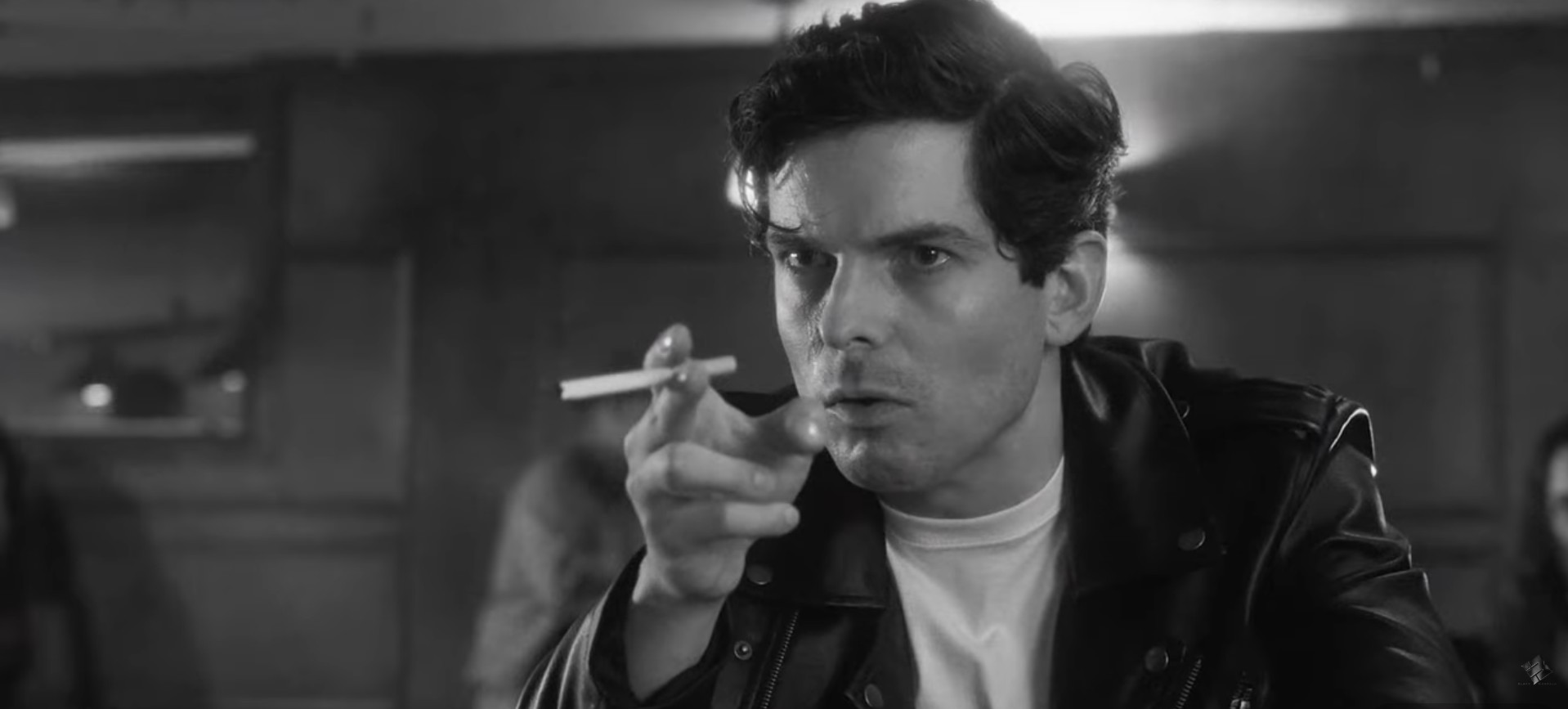
Like most of their produced product, it comes to no surprise that the Los Bastardz themselves, Jim O’Rear and Scott Tepperman step in the principal leads of a Beavis & Butthead or Bill & Ted type of heavy metal music centric duo who are daft beyond repair.  Any innovation aimed for the setup is instantly dissolved by the derivative tepidness as we’ve seen these characters before over the decades now, but O’Rear and Tepperman make for a good dimwitted and guileless pair with a gullibility and an innocence that makes them appear sympathetically simpatico, even when their levelheaded wives (Rebekah Erb, “Death Care,” and pornstar Layla Dawn. “Slumber Party Slaughter Party”) use threatening divorce language to motivate their one-track mind toward another desire in life.  The jokes are a bit long in the tooth and there are a handful of needless fart jokes, but the overall gags do land even if the terrain they contextually touch down on is rocky at best as they play to their individual character strengths of being a grocery bagger enthusiastic about making it big and a loafer who actualy has some intelligence underneath his Jesus hairstyle.  Their band mates, the cocky loudmouth drummer Vic (Paul Van Scott), the butch backup singer Shirley (Lisa Kirk), and the catatonic bassist Gary (Cameron Scott), all have their own quirks, and all are played by actors familiar with El Basterdz having donned roles in previously produced films from the company, such as the “Cruel Summer” series.  As the band Devil Music, they are targeted for soul reaping as a part of a contract byproduct against their music agent Caleb (Tom Komsar), drawn up by the devil himself in Marc Price (“Trick or Treat”) by duplicitous means with deceitful promises.  Without the horns, pitchfork, and red skin, Marc Price makes for a good Devil in human skin with only the economized visual effects fashioned glowing eyes.  Harold McLeod II preludes the story as a victim of contract, Cayt Feinics draws attention with a show of toplessness as Shirley’s lover, Jerry Reeves plays the demon x many going after Devil Music, and a sorely underutilized Jimmy Maguire, as the exasperated grocer manager tired of Arthur and Herb’s lack of common sense, fill out “Hell’s Bells” cast.

To preface with my previous experience with El Basterdz films, “Cruel Summer” didn’t do it for me with a dowdy slasher that’s didn’t leave impression.  Yet, “Cruel Summer” has two sequels plus a 4th soon to be on home video, making this series their most popular commodity.  What can I say?  Cinema is subjective.  That bad taste didn’t deter “Hell’s Bells” from the ever-growing review pile and a second chance to get this long-time horror fan aboard with Jim O’Rear and Scott Tepperman’s blithe outlook toward the horror genre, one that doesn’t take itself too seriously.  With that understanding, going into “Hell’s Bells” was rather easy with no expectations for commentative material and top-notch gags and laughs, but what El Basterdz provides has been long appreciated and continuously favored in genre films:  decent VFX, decent practical effects, and, of course, the provocation of nudity.  There may be times when films can get away with having only one of those key elemental pieces present with great immensity and intense projection that the film can’t be denied it’s due right to seen and heard as a well-made film but have all three and the formula works like a charm amongst genre fans no matter how bad the storyline gets and no matter how bad the acting is portrayed, leveling up a mediocre production to potentially the penthouse of the independent skyscraper.  To be fair, neither the story nor the acting in “Hell’s Bells” is atrocious but the technical aspects during principal photography and post-production throw the film off-balance into slapdash hogwash and that can be rather off-putting right out the gate for most audiences.

“Hell’s Bells” finds itself being a story having been told before, many times over in its airheaded budding duo faced with great task none think possible to complete, but O’Rear and Tepperman manage to befit themselves satisfactorily in archetype with a rock-n-roll nightmare by sticking to their character quirks and incorporating the backbone preferences of shoestring genre filmmaking.  SRS Cinema is a distributing house built on shoestring films and “Hell’s Bells” is another brick in its schlock-sturdy foundation with a Blu-ray release.  Encoded with AVC compression, presented with 1080p high-resolution, on a 25GB BD-R with the purple underbelly, “Hell’s Bells” looks pretty good for commercial grade encoding and minimal capacity.  Details are sharp enough to cause no concern to capture skin variations, the contrasting wardrobe textures, and the shifting compositions between reality and fantasy stemmed from visual effects and fade-in/fade-out montage sequences.   Scenes are mixed bag of grading, some more intense than others that are set with a brighter natural veneer, but all retain their intended quality without any substantial issues from compression.  The English language LPCM 2.0 stereo renders a mix of feeble commercial equipment and green technical knowledge that permits a large noticeable swing in all areas of principal sound recording with most of the pain points affecting dialogue with retreated vocal presence in certain scenes while robust in others, and even an in-moment change of the same scene at times.  Post sound design isn’t marred by the same scenarios that’s a clear as crystal with the added rock soundtrack, crowd cheers, and demonic gutturals.  No English subtitles are offered.  Special features include a commentary track with writer-directors Jim O’Rear and Scott Tepperman, a behind-the-scenes featurette, Arthur and Herb’s Devil Music music video, blooper reel, the feature trailer, and SRS Cinema catalogue trailers.  SRS Cinema’s Blu-ray mirrors their limited 100 count release without the director’s signatures, retailed with a regular Blu-ray Amaray case with illustration composition artwork of mostly the chief principal characters, and as always, the graphic artistry SRS uses is always 100x better the film.  There are no other physical accompaniments.  The not rated release has a runtime of 80 minutes and has region free playback. 

Last Rites: Throw up the sign of the devil horns for “Hell’s Bells’s” comedic contract with a hair metal Satan, but don’t let this narrative fool you by hawking new something old and done before.

Sign Your Soul To Satan for the “Hells Bells” on Blu-ray!