Everything is EVILLER in Texas. “The Hoot Owl” reviewed! (Brink Vision / Blu-ray)

“The Hoot Owl” on Blu-ray is Slasher-iffic! Available at Amazon.com!

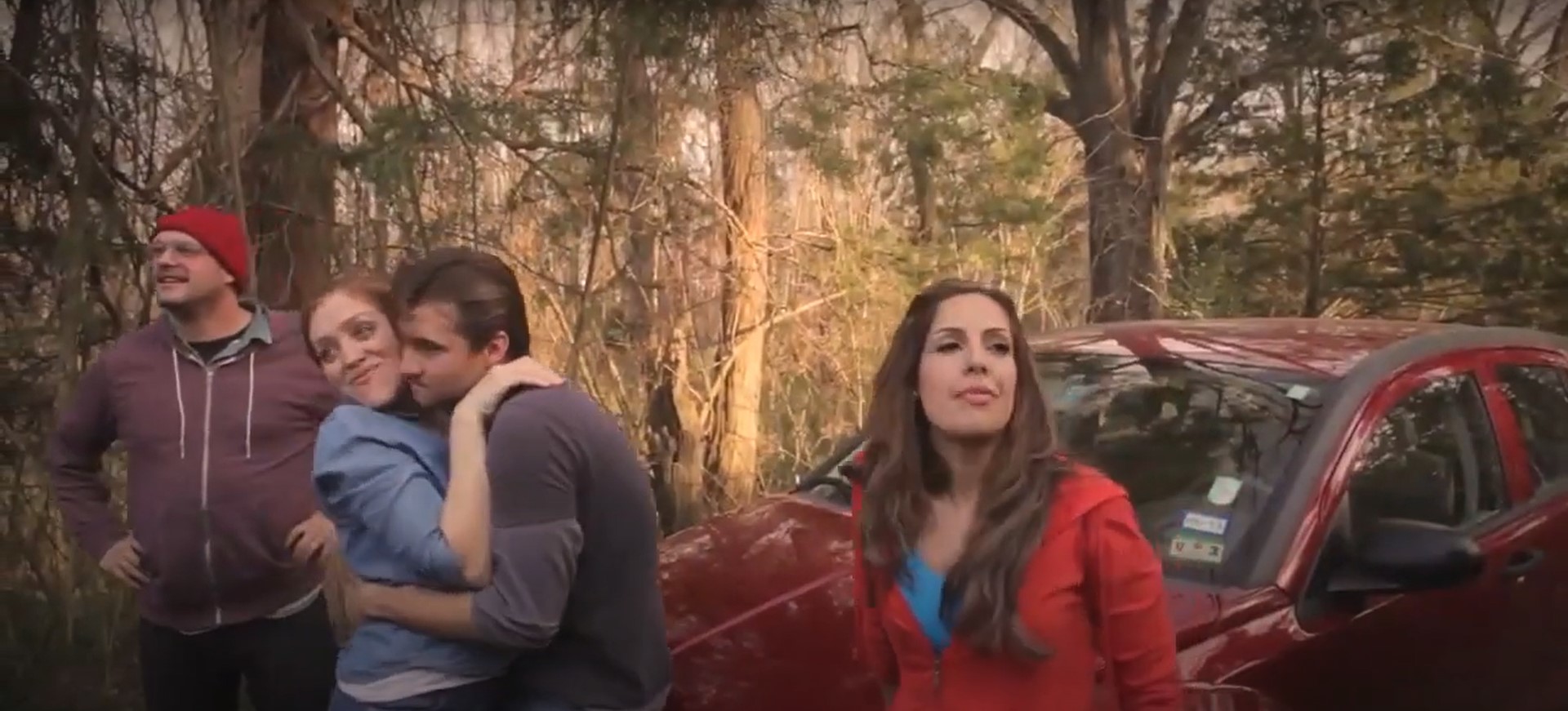
Blind buying a house is never good idea.  Blind buying a murder house in the middle of nowhere should be on the list of if you bought it, you deserve what’s coming to you.  Scott and April do just that as the recently troubled couple start afresh with a purchase of a fixer upper after suffering a late term miscarriage.  Deciding to not have Chip and Joanna Gains to rehab the dilapidated new residence set deep in the woods, the couple invite a small group of friends and family to assist in the much-needed repair and cleanup.  Interrupting their pass-the-doobie high and their positive high spirits while renewing an old house into a home, death and destruction erupts as a pair of demented squatters don’t take too kindly to the new homeowners. 
As far as debut feature films go, “The Hoot Owl” is a gory practical effect driven, true-to-form independent slasher film born and bred out of the great state of Texas.  The co-directing, co-writing Jasons, Jason Rader and Jason Von Godi, are the masterminds behind the cow head-boned masked killer and the very pregnant and very inbred wild woman lying in wait for the naive trespassers to drop their guard and thin out before the slaughter.  Having worked together for years making short films together, the 2022 released slasher was setup by Rader and Godi as a crowdfunding campaign on Indiegogo, but out of the filmmakers’ flexible 20K goal, “The Howl Owl” concept received a measly $275 from four backers.  That roadblock was only temporary and didn’t stop the aspiring retro-slasher artists to complete their foot-in to the passion project that took over 9 years to complete from pre-production-to-post-production under their co-created company banner, Vanishing Twin Productions, in association with Rise Above Productions and producer Raymond Carter Cantrell.
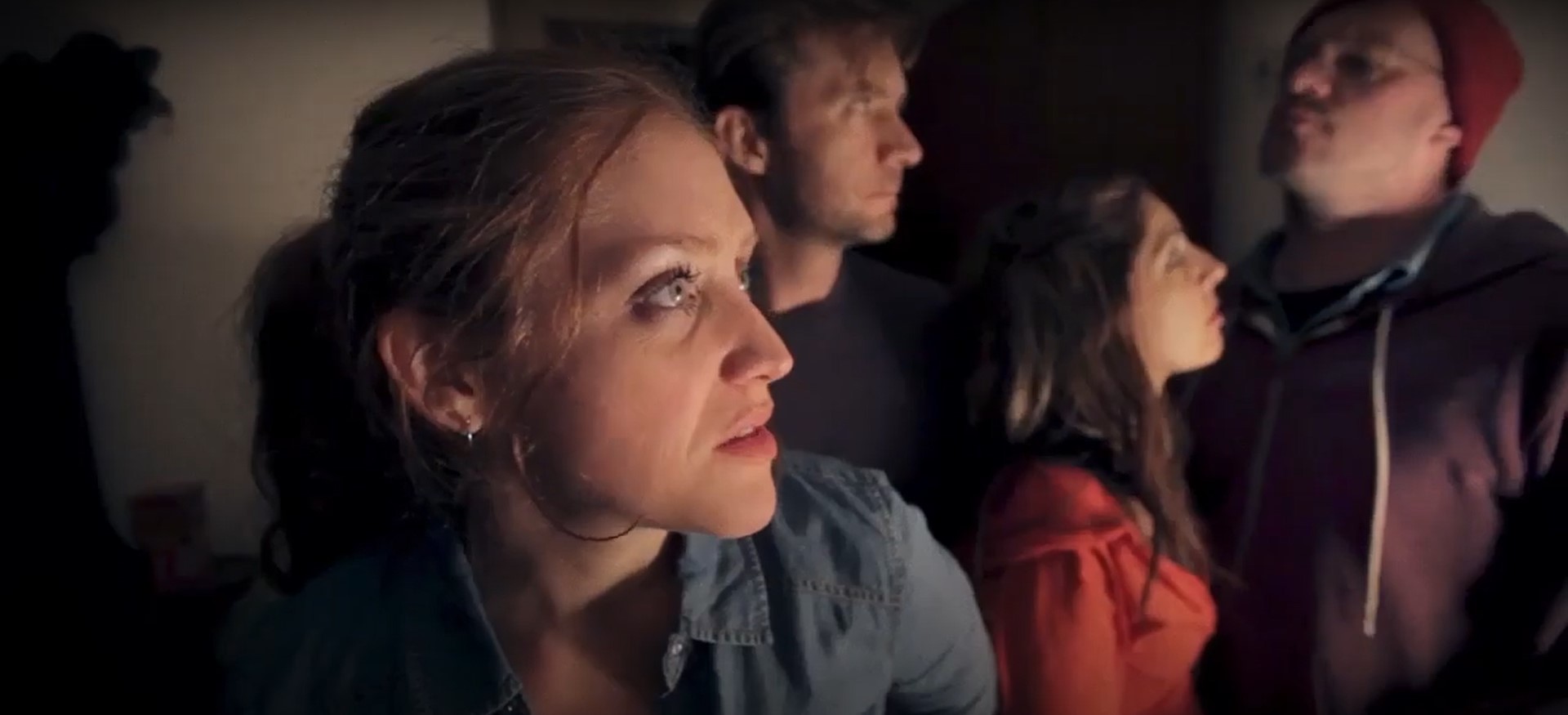
If you’re going all out to make a slasher film, then you’re going to need victims to slash! Most indie slashers nowadays have a synopsis that begins something like this, “a group of teens go into the woods…,” and just by those few key introductory words, we know perfectly well what to expect as the drinking, smoking, and sex-crazed youth meet the homicidal maniac with a bloody machete in one hand and a decapitated head in the other. There’s a rhythmic comfort in that classic symbiosis. The downside to the structure always boils down to the shot in the dark cast and cast of characters that can make or break a slasher film’s success. Scott (Jason Skeen, “By the Devil’s Hands”) and wife April (Augustine Frizzell) bring along Scott’s longtime good friend Drew (J.D. Brown, “Cross Bearer”) and April’s estranged sister Suzy (Katharine Franco, “The Inflicted”) offer a little bit of everything in a hodgepodge of backstories that don’t quite become reinforced in the end with the exception of April whose miscarriage and loss transcends into twisted maternal madness. Frizzell’s glow for the first two acts doesn’t really yell grief but when the ardency takes over, stemmed by her vivid gruesome dreams of her miscarriage, the Texas-born actress steps up to the plate of a psychotic break. Suzy’s also interesting enough character to spark curiosity with the enigmatic contentiousness in a heartfelt scene of two sisters rekindling their bond while actually actioning those same emotions on screen; instead, Franco enjoys the blithe nature of Suzy’s indecisiveness about school and about her family but discovers a quick and sudden fascination with Drew, the least interesting principal that hires two colorful buddies: Hank (Carl Bailey, “A Ship of Human Skin”), a father of two who a penchant for sexual harassment, and an obvious long hair wig-wearing oddball Bugs (Roger Schwermer Jr.). Bailey resembles pure Texan posture but is stiff as a board in his sleazy contractor role. “The Hoot Owl” rounds out the cast with Joshua Ian Steinburg playing the boned-face killer and Johnny Wright reaching inside to extract his inner Neanderthal-like wild woman ready to emulate a putridly picturesque birth.
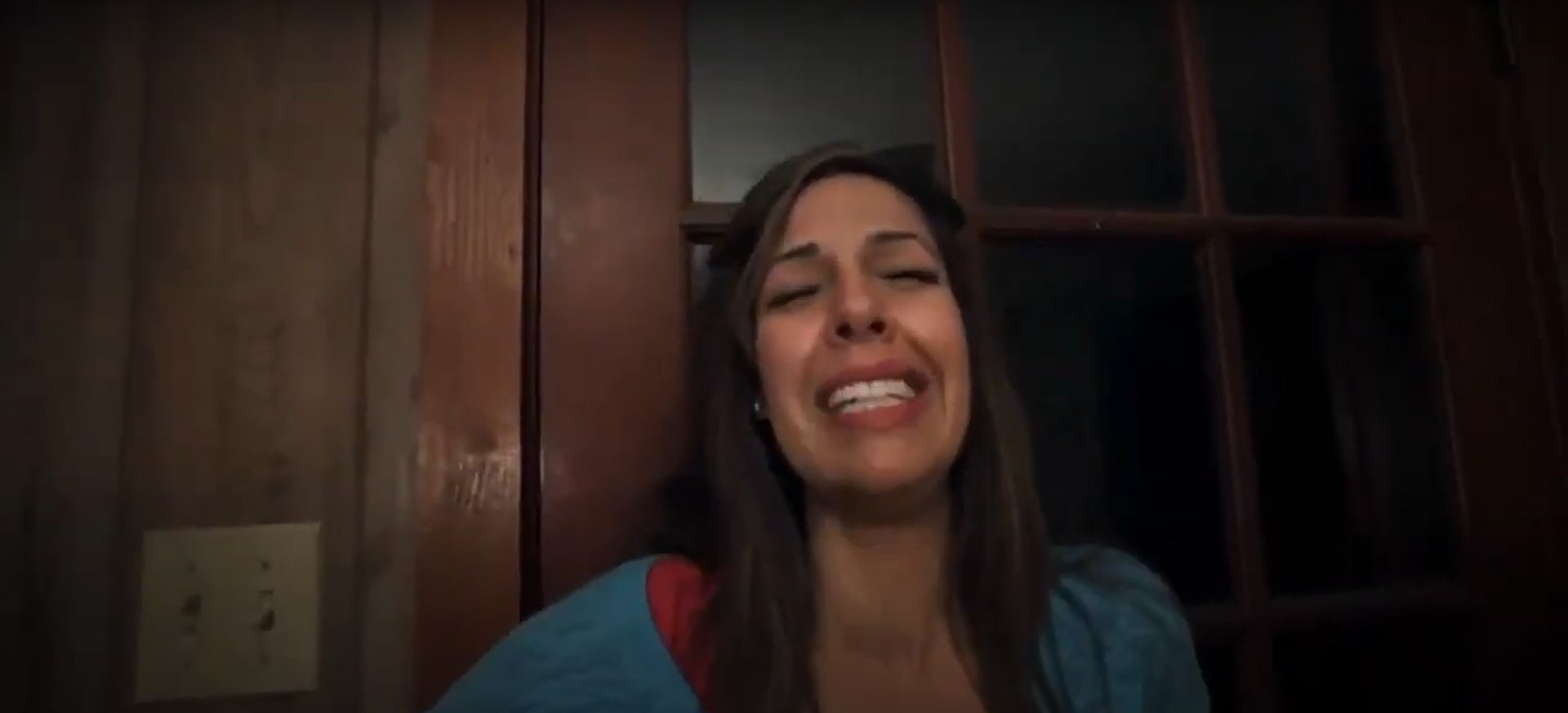
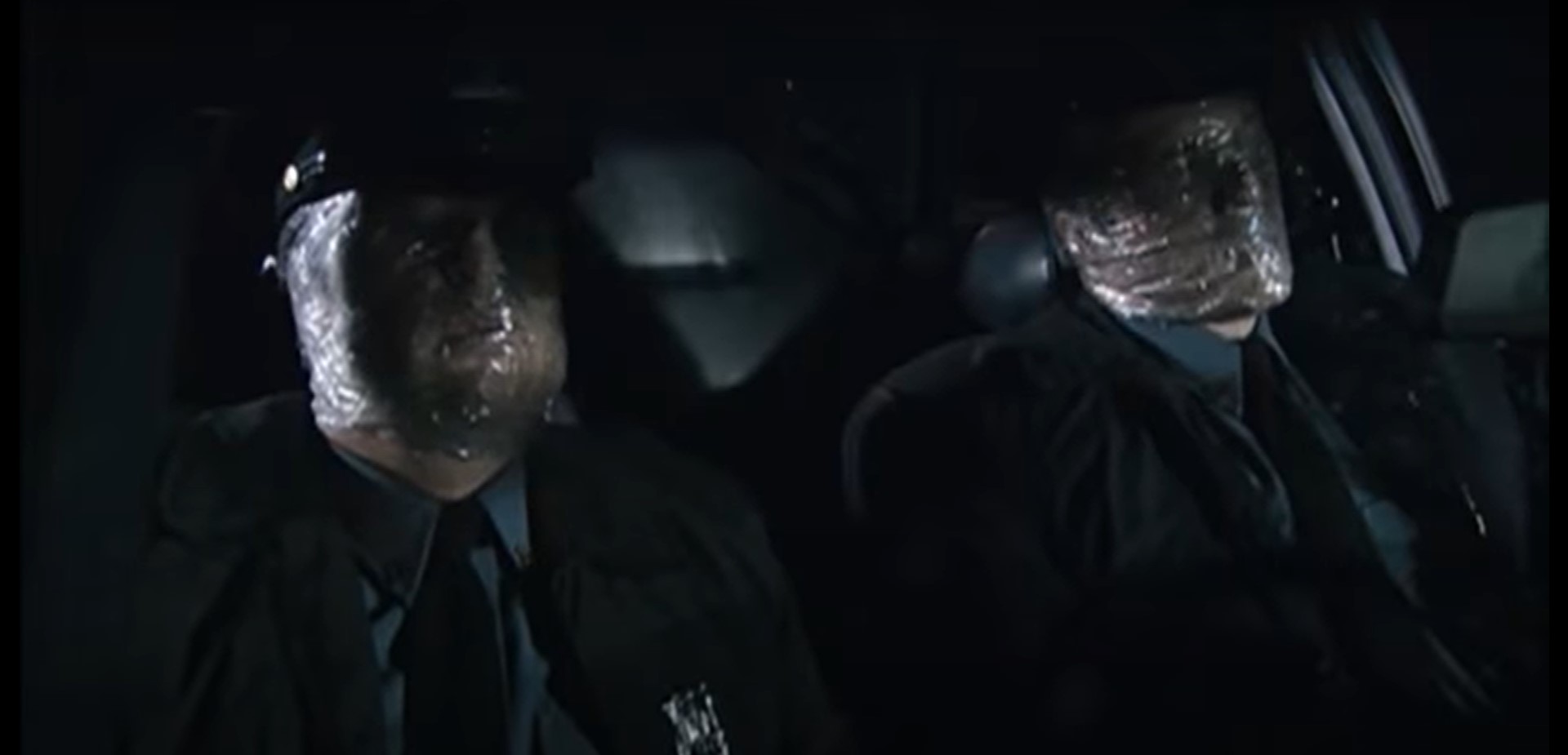
“The Hoot Owl” is a by-the-numbers man-in-a-mask slasher riddled with familiar tropes and conventional clichés.  Baseline fact is that the film is not breaking any molds here and won’t be a contender for horror picture of the year.  With that said, and as harsh as that may sound, what “The Hoot Owl” represents is pure spirit and appreciation for what the film ultimately represents – a love for the heyday horror. Rader and Godi firmly believe in their film with a sincere attempt at a feature and pulling all the material together during a near decade-long process to get the film released out into the world. Far from perfect, “The Hoot Owl” relies heavily on the gruesome practical effects and there are some good gory terminations with a piledriving beartrap, a split-head decapitation with a large chain, and a long, rusty drill bit through the eye socket that ends in a spurting splatter of blood. The expo is an impressive effort from Allan David Caroll in his first go-round with the effects trade that could rival the early works of Tom Savini or Greg Nicotero. What breaks up the story most of all are the secondary shoots used to swell and cut into the first-round material shots to beef up a feature production. For instance, the opening credit chase sequence of a maniac cop (at least I think it was a cop) hunting down a man and his pregnant wife is a moment that is never clearly referred backed to, but the assumption is that the pregnant woman is the encountered savage later on in the unveiling climatic and the bone-head killer is her child from the rundown who then impregnates his own heathenized mother…? Connectively, it’s all unclear in unfused ends, causing a break in the signal from the lead-in to the trunk of the story, and that underdevelopment pursues throughout with loops never coming to a close.
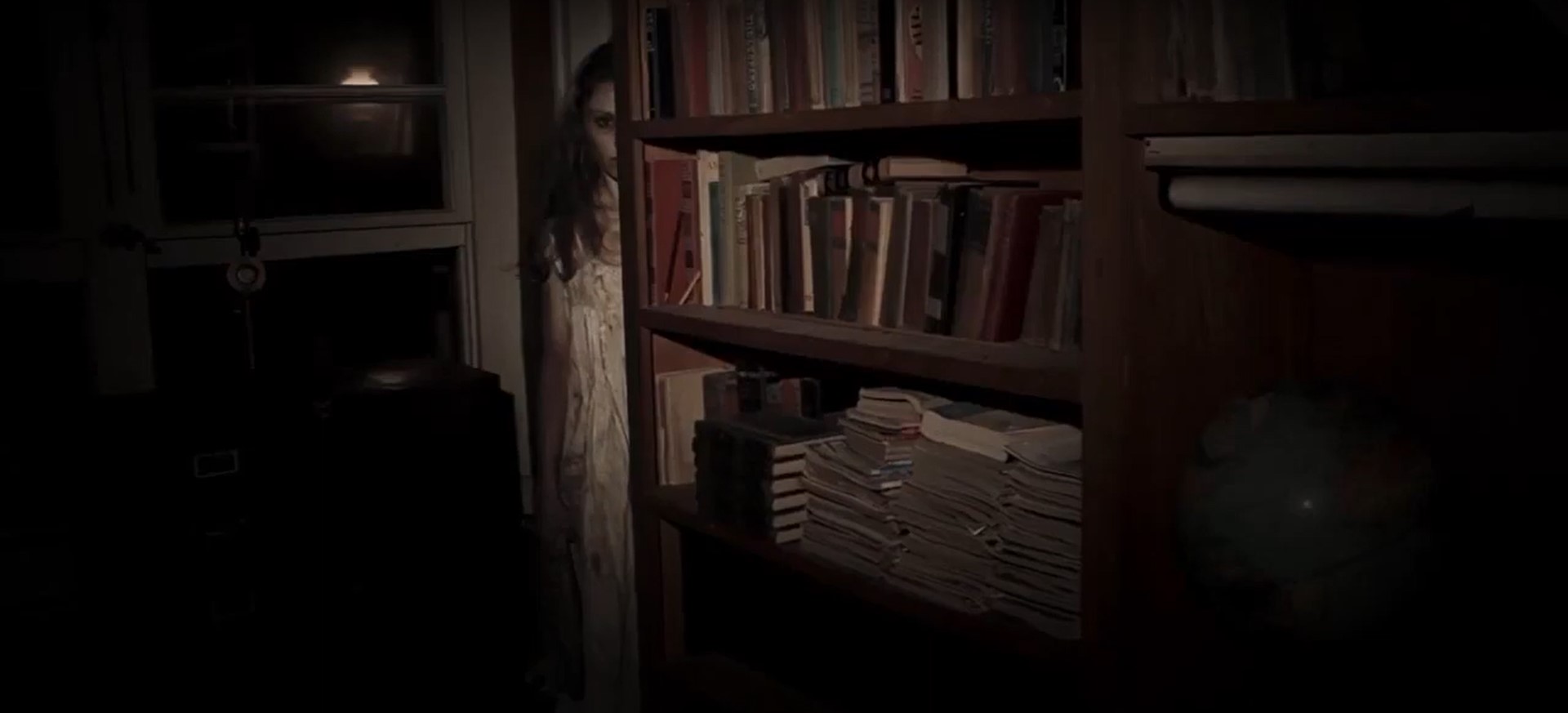
In my first brush with Brink Vision since reviewing their DVD release of the 2008 alien transmitted dead-resurrecting bacteria film, “Evilution,” a tinge of satisfaction embraces my little heart to see Brink Vision come back across with a Blu-ray release of their latest “The Hoot Owl,” distributed by MVD Visual. The quick-paced 72-minute film is presented in a widescreen 1.78:1 aspect ratio, is not rated and is region free. Video quality doesn’t represent the best-of-the-best of the 1080p high-def resolution with a commercial standard definition equipment and know this mainly because compression that doesn’t display a myriad of issues. Details are not as sharp and there is banding more obvious in one scene of negative space, but the picture is otherwise free of artefacts and other data loss issues. The English Language 5.1 surround mix fairs much of the same albeit the electrostatic noise. While not overwhelming the dialogue to a point of murkiness, the steady shushing combined with the poor audio recordings can vary the quality and depth with a blunt flatness. Bonus features includes a commentary with directors Jason Rader and Jason Von Godi, a second commentary with Creepy Peepy Podcast, a featurette of Rader and Godi looking back at their 9-year pilgrimage to completion, Godi’s short film ‘The Voyeur,” trailer and still gallery. The physical release has beautiful artwork of the Hoot Owl killer in a throwback, almost Scream Factory-esque, illustration. The back cover is a little wonky with a composite that’s hard to read with deep purple lettering on the credits and bonus material listing almost invisible amongst the black background. “The Hoot Owl” endears the slasher fandom with a callback to the brute strength of a wanton villain and if only the script was smoothed over, this little indie film from Texas could have better laid a stronger foundation.

“The Hoot Owl” on Blu-ray is Slasher-iffic! Available at Amazon.com!

Hypothermia is EVIL’s Coldest Best Friend. “Frost” reviewed! (Cleopatra Entertainment and MVD Visual / Blu-ray)

Get the Bluray and Soundtrack for “Frost!”

Seeking to reconnect with her estranged father, Grant, after five years, pregnant Abby drives up the mountainous rural cabin.    Though not the warmest welcome she was expecting with the sudden pregnancy announcement dropped into her father’s lap, the two manage to find common ground and connect again while reliving memories of Abby’s mother.  Their threadbare bond sparks an impromptu finishing trip to the local creek and as the begin to open up a little more with each other, their car accidently runs off the road and declines down a gradual mountain decline before becoming wedged in a thicket of tree branches.   Abby, stuck in the passenger seat facing a steep cliffside dropoff, is trapped and injured.  As Grant goes for help up the mountain, a severe storm rolls in bringing harsh weather and freezing temperatures down upon Abby who desperately tries to keep warm and prays to not go into early labor before emergency rescue can come to her aid. 

Snowy winter thrillers can be harrowingly exciting as much of the plot is fused with the icy and treacherous environment that make lives at stake higher. The snow and the ice become threatening characters and when combined with, at times, a more conventional and concentrated story antagonists, foreseeing path for survival can often feel frigidly impossible. There’s little room for error, there’s little room for warmth, but there’s always an unpredictable heap of bone-chilling snow as far as the eye can see and the elements are only but nature’s natural attributes man has yet to confidently conquer. “Frost” plays into mother nature’s strength when squalling down below freezing wind and snow upon a woman trapped in her own car. The 2022 released, Brandon Slagle (“Attack of the Unknown”) directed “Frost” goes for the jugular in a woman versus nature survival suspenser penned by frequent Slagle aide-de-camp Robert Thompson. The “Aftermath” and “Crossbreed” screenwriter adapts “Frost” from a story by “From Jennifer” writer-director James Cullen Bressack. Shot during the winter in the San Bernardino mountains, “Frost” is produced by the film’s star Devanny Pinn and Cleopatra Music’s Vice President Tim Tasui under the bankroll and production support of Bressack’s JCB Pictures, Inc., Snow Leopard Entertainment, Sandaled Kid Productions, Multiverse Cinema, and Cleopatra Entertainment founders Brian and Yvonne Perera along with Pinn’s co-star Vernon Wells and The Asylum’s Jarrett Furst serving as associate producers.

“Frost” fits into the solo survivalist subgenre category and only characterizes with three actors and a trained wolf. At the tip of the cast spear is independent film producer and broad-brush horror actress and filmmaker Devanny Pinn (“Nude Nuns with Big Guns,” “The Dawn”) in the principal role of Abby, a woman seeking to rekindle her relationship with her reclusive father living in the mountains because of her pregnancy. Genre legend actor Vernon Wells (“Innerspace, “Commando”) opposites Pinn as Abby’s estranged father who’s happy to see his daughter but feels initially threatened by the pregnancy announcement. Understanding the dynamic between Abby and her father was easy as we’ve seen this type of teetering relationship before from a slightly rebellious, new age child returning home to find familiarity with a widowed and waning parent. Pinn and Wells pull off the several stages of reconnecting from the heated exchanges to the sappy moments of loss to the unexpected joy the two characters can bring out of each other, but what’s more difficult to comprehend is the source material. What causes the father and daughter to divide in the first place and how does that division’s role play out in the perilous predicament of an isolating car crash during a severe winter storm? For the sake of critique, one could say that their dissolving disputable divisiveness ends in irony as if the cosmos ultimately pulls them a part in a fitful storm of rage. Wells does what he can to make the initial crash scene comforting while exuding a positive outcome, but the veteran actor appears blank to severity, especially as a woodsman father soon to be a grandfather. Much of “Frost’s” edge of your seat trepidation is shouldered upon Devanny Pinn to take reins of providing the emotional embattlement against the unforgiving weather elements and animal food chain. Armed with nothing more than the dwindling car’s battery to provide heat and a charged lighter as well as whatever lures and first aid accompaniments in her father’s tacklebox, a rather lightly dressed, nearly to term pregnant Abby is pinned to her seat, backed to the edge of a cliff, and must face the cold and wolves until her father retrieves a rescue party. Pinn does what she can to fill in a quivering battle between life and death with a story that’s heavily reliant on a cigarette outlet to ward off a snarling wolf and can burn through seat belts in a single charge. That’s independent move magic for you, folks!

Any kind of solo act surrounding a single location, remote at that, with no other actor or other mobile organic object to feed off and bounce off its energy is a difficult task to undertake, especially on a hyper cost-efficient production.  Slagle’s “Frost” is certainly not immune to the difficulties and the filmmakers, and his crew and cast are well aware of the challenges to make the survival thriller engaging despite fluffing and padding the story with filler clichés and needless setup.  The production and location value are comparatively impressive against the limitations of the budget with a practical and computer-generated encroaching tundra of snow, ice, and wind that can insidiously invade a cold snap into the viewers bones, creating that intended atmospheric of a hell freezing over complete with the teeth of a hungry wolf, a biting rime, and deadly falling icicles.  More obvious than what perhaps Slagle and creative team realize is that “Frost” relies terribly on the shocking climatic scene, a scene so unimaginable and so appalling that it hits all the right gut-checking spots, but the setup to the scene and all the trials and trepidation Abby has to endure doesn’t quite mesh with a well-rounded plight that usually cradles an emotional pull string for the viewer to continuously root for and support those in the thick of the predicament.   Honestly, that heaviness for empathy never provides the emotional weight toward the character and never sparks that flame of hope to keep us warm and fuzzy on the inside to then quickly be extinguished by merciless mother nature. There’s also the plausibility of survival and the way that survival instinct is applied that makes “Frost” too far-fetched to be a strong contender in the subgenre. At near subzero temps, Hypothermia can set in in under an hour. In “Frost,” three days of severe snowstorm pummeling has past, segued by scene time stamps, before Abby becomes a popsicle and is delusional. I’m pretty sure with almost nothing to eat and very little warmth, Abby would have expired in under 48 hours. Yet, the 72-hour mark becomes the most chilling, literally and figuratively, in “Frost’s” invigorating third act snack that’s more abominable than it is nutritional!

Cleopatra Entertainment, the cinematic subsidiary of Cleopatra Records delivers a 2-disc Blu-ray set for Brandon Slagle’s icy thriller “Frost.” Presented in a widescreen 2.35:1 aspect ratio, the 91-minute film has a crisp, lively picture compressed without much to complain about. Banding issues are held to barely any and the details don’t whiteout during the wintery whiteout, leaving key delineations to be present in bold contrasts, especially during the severe snowstorm scenes. Foliage looks thick and green before for the storm with a lot of good textural details on the impaling branches that perforate the car and Abby. The English language 5.1 surround mix conveys the problematic sound design issues that have been consistently found in many of Cleopatra’s releases. Mostly in regard to the dialogue tracks, the dialogue tracks pick up static and other minute ambient noise during microtonal intervals, creating an unwelcoming and stark contrast with a dialogue mix that cuts obviously cuts in and out between character speak and isn’t simultaneous with the score. However, much like with other Cleopatra releases, the score is production and distributor company’s best trademark with a full album including music from various artists, such as L. Shankar, Big Electric Cat, Terry Reid, Rick Wakeman, and amongst others. The 2nd disc, an audio CD, contains the 15-song soundtrack. Other physical noteworthy aspects of the release include the double-sided cover art – one filmic and the other CD listing with both include different variations of the front cover as well as a translucent Blu-ray snapper cast that adds to the snowy theme. Software bonus features include only the theatrical trailer and a still gallery slideshow. Exposure to “Frost” is deep freezing frills for most of the picture but if able to withstand the coldshoulder of cliches, the mare peaks with a blood-filled and tasty horrific morsel that makes the frippery first half worth the wait.

Get the Bluray and Soundtrack for “Frost!”

The Devil Is Never Pretentious with His EVIL! “Satan’s Little Helper” reviewed! (Synapse Films / Blu-ray)

Bluray is Currently Cheaper than DVD!  Grab “Satan’s Little Helper” Fast!

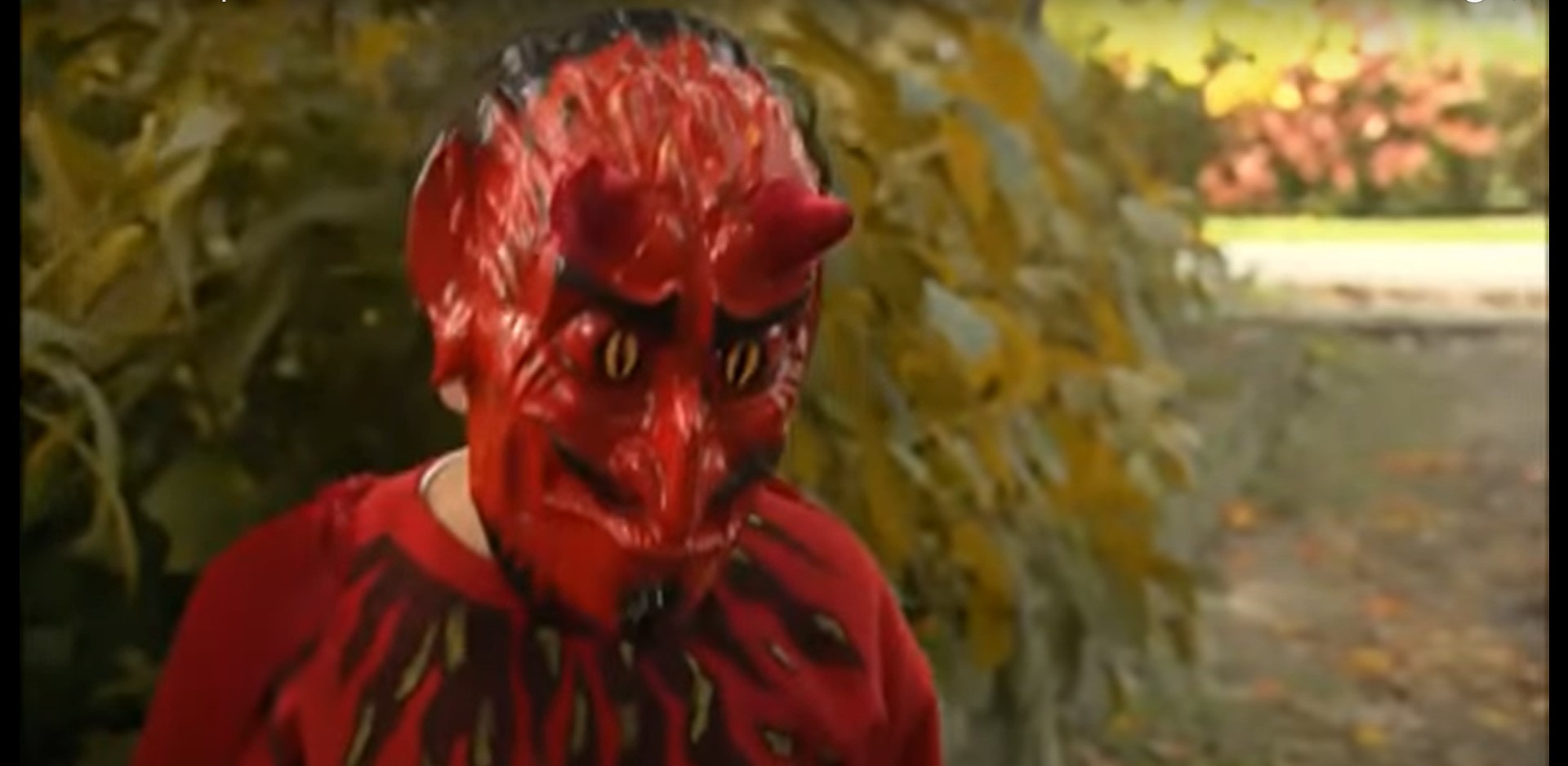
Obsessed with his new video game Satan’s Little Helper, where a little boy helps the Satan dispense murderous bloody mayhem, naïve Dougie, sporting his own hot red Satan costume and mask, swears he’ll have a chance to meet Satan himself during Halloween.  Who Dougie believes he stumbles upon is the master of darkness but, in reality, the overactive and imaginative adolescent has discovered a deranged, untalkative serial killer in a Satan costume going house-to-house setting up realistic looking gruesome displays as Halloween lawn decorations.  Feeling slighted when his college-age sister comes home to Bell Island with a new boyfriend unexpectedly, an upset Dougie wants Satan to kill the boyfriend, but the killer insidiously uses the boy as a pawn and works his way into Dougie’s family home and everyone thinks it’s the new boyfriend masked as Satan to impress and please the difficult child.  Set in motion is a flight of wickedness throughout the night on the island town that’s unprepared for the chaos yet to come. 

Jeff Lieberman is already something of a cult horror director amongst fans. Having written-and-directed obscure classics “Just Before Dawn,” “Blue Sunshine,” and “Squirm” within 5 years between 1976 and 1981, Lieberman took horror by varietal storm by dipping his toes into different subgenres and doing moderately well at it., establishing a legacy with re-releases of his films into the new millennia. Though quiet for many years in the realm of horror, Lieberman makes a return with 2004’s “Satan Little Helper,” a killer horror-comedy filled with an innate fear of the unknown with what or who is truly behind that devilish mask. Lieberman wrote and directed the feature with a dark and morbid stamp perfect for the Halloween season. If you’re looking for a good Halloween movie, “Satan’s Little Helper” should be on your short list. Set on the fictional location of Bell Island, which is actually Long Island, New York, “Satan’s Little Helper” is a production of Intrinsic Value Films (“The Last Thing Mary Saw”) and the limited liability company under the alteration of the film’s title with Satan’s Little Company and is self-produced by Lieberman as well as Mickey McDonough, Isen Robbins, and Aimee Schoof with Carl Tostevin serving as executive producer. Screen Media Films waived the theatrical rights route by releasing the insta-cult film directly onto the video market.

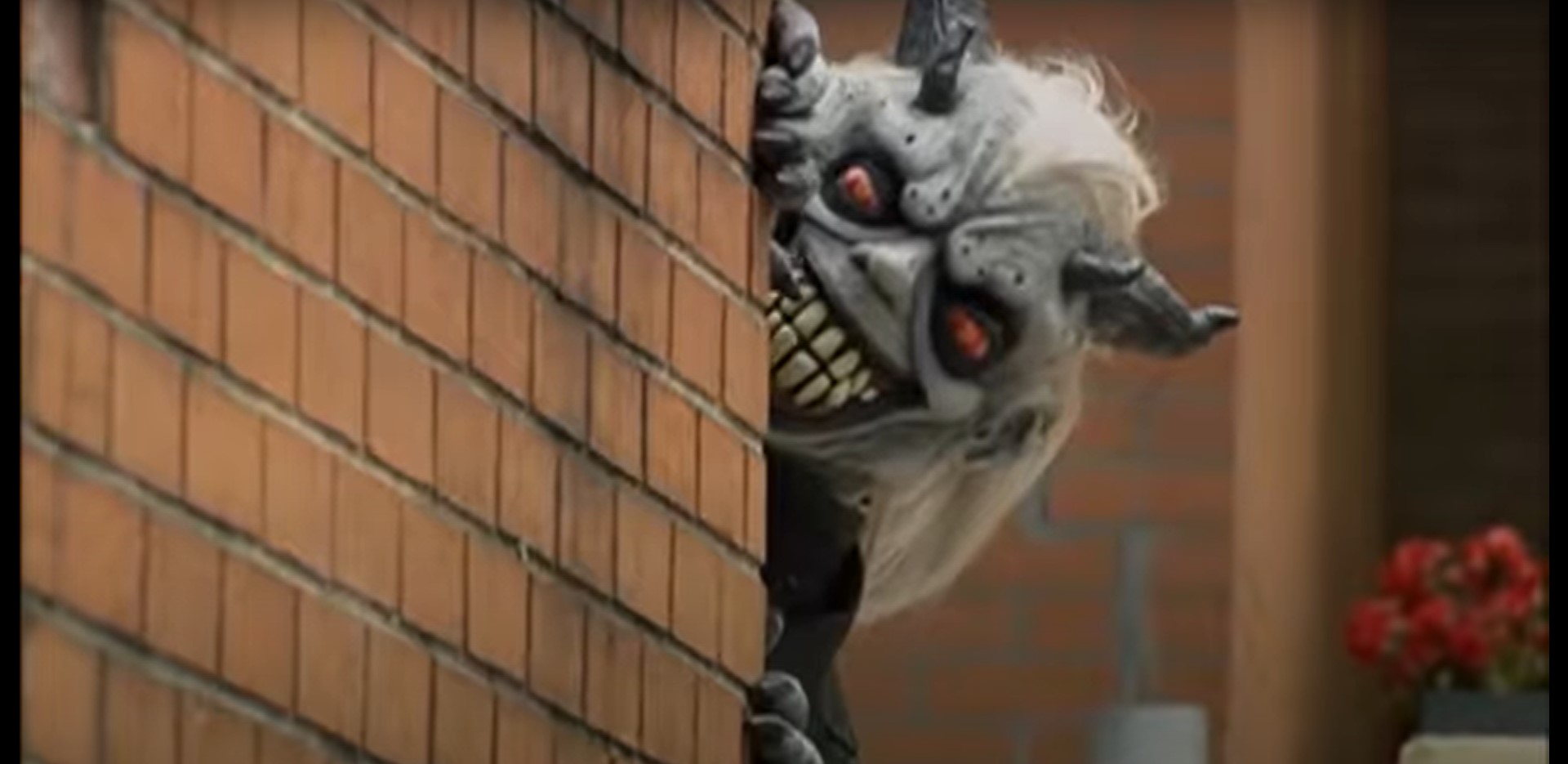
Gracing prominently most physical releases with a sinister grin is a dialogue-less and faceless principal character, who with every centimeter of his latex teeth and showing a lackadaisical posture as he turns Bell Island upside down as his own massacring playground, is obviously the serial killer, played by Joshua Annex. Annex spin on Satan Man reaps the story’s benefits by creating a mischievous antagonist to the likes we’ve never seen on screen before despite being playing the murderer behind the mask trope. Annex might be playing Satan but the actor is not playing the titular character, or is her? The double entendre can be interpreted in two ways: the masked killer is actually Satan’s helper on Earth or Dougie, the annoyingly naive brat with an unhealthy infatuation with the Lord of Darkness. Played by a then adolescent Alexander Brickel in his debut performance, Dougie’s only kicks the hornet’s nest even more for not only the residents of Bell Island, but also for his family as the young loutish lad invites the killer his family abode under false pretenses and never revels the truth until it’s too late. Brickel is intense in an aggravating Dennis the Menace kind of way, but the act works all too well with the flanking character players who need to feed off of Dougie’s hellion deposition that all stems from wanting to marry his sister. Is there some kind of symbolism or metaphor there? Speaking of the sister, Katheryn Winnick (“Hellraiser: Hellworld,” “Polar”) levels the eccentricity with normal reactionaries as the sister Jenna. Counterbalancing to make sure her normalcies don’t overstay their welcome is the great Amanda Plummer (“Pulp Fiction,” “The Prophecy”) with sublimely odd mother that only Amanda Plummer could pull off and make it feel right. Stephen Gramham, Wass Stevens, Melisa McGregor, and Dan Ziskie round out the cast.

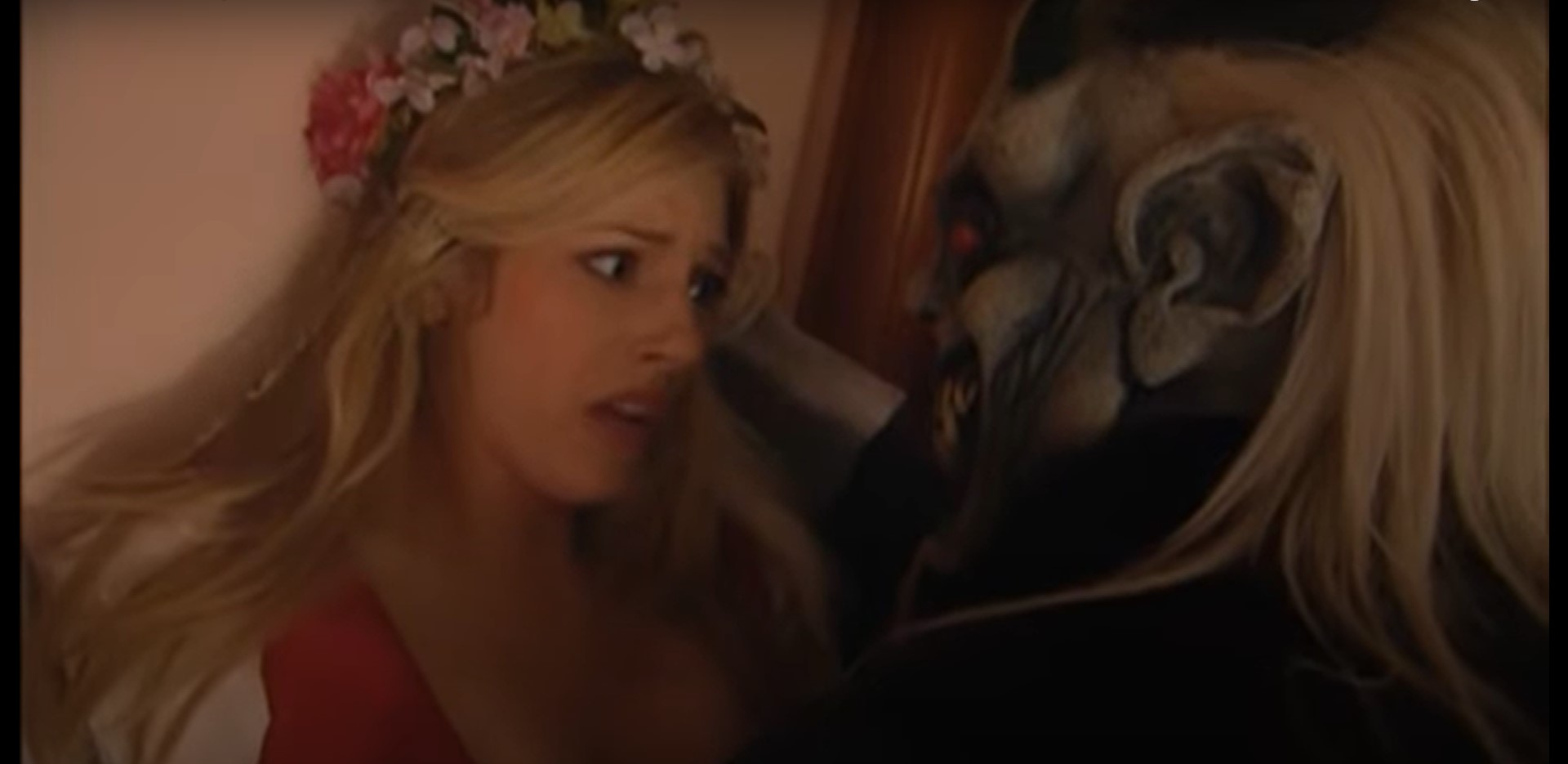
Perfect for the season, perfect as a cult film, perfect to just be for everyday viewing, “Satan’s Little Helper” has been kept in the shadows far too long and needs to be risen from the netherworld for all to bear witness the unsystematic carnage from someone who just wants to see the world burned. The Lieberman film intoxicates with spontaneity as you never know what to expect or happen next. The script is simple, yet smartly contrived to work as a haphazard horror with a foundation foe with no limits, no boundaries, and no motivation. There’s a relief that there’s no supernatural or actual Satanic force driving the plot and, instead, unravels in a prevailing fashion with an accepted and logical fear that the person behind the mask is not always the person you believe wearing it. While Lieberman’s script does a nice job fleshing out a feature length film where the doesn’t have one single word of dialogue, there are moments when suspicions amongst the family would have or should have come a lot sooner and that stretches the reality some, making act two gummy around the midsection when the serial killer is playing the part of Jenna’s boyfriend. Lieberman caveats Jenn and her boyfriend, Alex, as a pair of studious actors and Alex is just immersed in his role as Satan to please Dougie and while that seems very plausible, how long the act maintained its course did not. Eventually, Lieberman became wise to the Satan costume’s stagnancy and moved the character along into another facade of choice that then goes into a guess who game of deception. An aspect of the killer’s intelligence that makes the character uber-clever and that much more deadly.

“Satan’s Little Helper” is one of Synapse Film’s more contemporary releases that doesn’t require a hefty image upgrade but the new 1080p high-definition upgrade and a supplemental bonus features make this new Blu-ray release very attractive. Presented in a widescreen 1.78:1 aspect ratio, the AVC encoded Blu-ray craves out a resolute image as expected since the modern film is digitally recorded and hasn’t been affected by the wear-and-tear of age and neglect. Perhaps not as glossy as an expensive Hollywood type production with a late 90’s-early 2000s glaze, gel, or filter, “Satan’s Little Helper” keeps a more than adequate showing of details and a medley of colors amongst is more natural cinematography with a handful of night scenes shot in a day under a dark filter. Only one scene of concern stands out on the ferry pier and in what’s supposed to be a close up of Dougie’s dumbfounded face when meeting Jenna’s boyfriend for the first time has somehow turned into a blown up shot that stretches the image fuzzy and masking the delineation. The English language DTS-HD master audio shows no signs of issues with a flawless and lossless sound design. The clean and clear dialogue raises the bar on Dougie’s testy tantrums and cleans out with the ambient effects toward the killer’s actions to compensate for his lack of chit-chat. Optional English subtitles are offered on this release. Bonus features include a commentary with director Jeff Lieberman, an archival behind-the-scenes featurette, The Devil in the Details making-of featurette that goes into cast and crew interviews with Lieberman, Alexander Brickel (now older and with longer hair), director of photography Dejan Georgevich, and special effects artist Anthony Pepe, a tour of the filming locations guided by Lieberman in Mister Satan’s Neighborhood, and the promotional trailer. The physical release comes in the nifty blackout Blu-ray case with a Synapse catalogue insert in case you want to buy their releases via mailed order form. Synapse Film’s “Satan’s Little Helper” new Blu-ray comes home at the most opportune time during this 2022 Halloween season and is sure to be viewed as a delightful deluge of dark comedy carnage and destruction, some of the best attributes of any good horror film.

Bluray is Currently Cheaper than DVD!  Grab “Satan’s Little Helper” Fast!

EVIL Bigfoot is All About the Amputating and Mutilating! “Suburban Sasquatch” reviewed! (Visual Vengeance / Blu-ray)

“Suburban Sasquatch” On Sale Now at Amazon.com!

A mystical, murderous beast of lore has suddenly appeared in the woods of a small Pennsylvanian town.  Hikers, fishermen, urbanites, and even grandmothers are not safe from the carnage dished out by Bigfoot.  Sniffing around crime scenes is eager freelance reporter Rick Harlan to unearth the truth about the recent string of grisly attacks and make a name for himself as a journalist.  Harlan finds himself in the middle of a police coverup, a Native American woman-warrior, and one suburban playground where a phasing in-and-out Sasquatch can make a killing whenever and wherever.  The Native American, Talia, is destined to square off against the evilest anthropoid her tribe has ever faced, one that thirsts for blood and does the unspeakable with the women it abducts.  The story and clash of the century may be Rick and Talia’s last in this brutal man versus beast showdown. 

As an aficionado of the horror genre, I’m on what seems to be an eternal quest to unearth the best (I’ll even settle for just good at this point) Bigfoot/Sasquatch film that really can scare the pants off viewers while providing a good storyline and solid special effects for the hairy big guy. Is that so much to ask?  The next undertaking to flash across our eyes, like a brisk fur of man-beast in the forest thicket, is the classic SOV-shot and shamelessly spooled special effects endeavor that is “Suburban Sasquatch.” The 2004 Dave Wascavage film is the sophomore project for the writer-director, following up from his deadly fungi party comedy-horror, “Fungicide,” with a shot at the title for best-worst, or is it worst-best, Bigfoot movie in the early 2000s. Shot in my old stomping grounds of West Chester, Pennsylvania, the suburban setting is authentically captured in that piece of the Commonwealth state with sprawling neighbors that give wide berth of land between houses and plenty of parks and wooded areas to Sasquatch-suit tramps. Wascavage produces the film himself, while also wearing multiple hats in many other crew roles and creates the feature under the filmmaker’s very own Troubled Moon Films, a production company that prides itself on low-cost video production and storytelling in which Wascavage self-proclaims Z grade movie making results.

“Suburban Sasquatch” is a pendulum swing between character perspectives, disassociating any one character from being a main lead and focusing more on a group of principals that even includes the suburban sasquatch itself.  If focusing on the heroes of the story, or the hero-ish types, then Rick Harlan (Bill Ushler, “Viscera”), Talia (Sue Lynn Sanchez), and the two officers – John Rush (Dave Bonita) and Steve Parker (Juan Fernandez) – would be your best bet as the unorganized protagonists deal with the beastly menace in their own way.  The acting is forced and rigid all around but not entirely at the cast’s culpability.  The script is extremely breathy and scenes last too long by lingering exposition that resulted in the film’s too-lengthy 100-minute runtime, likely drafted as a shorter run film but dialogue was added to flesh out a full-fledged feature.  Even so, performances are blankly vanilla and, to be fair, that’s to be expected inside the low-budget market. Dave Weldon, Rush, Parker, and even director Wascavage himself enact Bigfoot’s posturing and behavior familiar to a mountainous silverback gorilla with wild cupped hands waving overhead and while this seems silly in the obviously cost-efficient makeshift suit packed with unnatural folds of the stomach, a bulging bosom, and a mouth that chews like a latex-fitted gumming grandmother, the trio make the best of Bigfoot’s monstrosity and hirsute lumbering to the point of knowing what you’re getting in a sasquatch for the rest of the film. It’s all about consistency, especially when four actors interpret the movements. Wes Miller, Dallas Quinn, Troy Stephen Sanders, Loretta Wascavage, Edward Wascavage, and David Sitborn, who I thought had the most natural dialogue in the entire story, rounds out “Suburban Sasquatch’s” mania.

Has “Suburban Sasquatch” become the Bigfoot film of my long-awaited dreams? Unfortunately, no. However, what the 2004 inexpensive picture offers is invaluable cabbalism that theorizes one reason why Bigfoot is only briefly caught out of the corner one’s eye, a peripheral phantom, with a phasing feature that allows Bigfoot to go in and out of reality. Like a good b-movie horror writer-director, Wascavage also capitalizes on the creature’s stature by not only arranging a towering comparison against his enemy and food but also by fabricating a big hairy foot, larger than man’s chest, to emphasize more on the beast’s epithet. In order to achieve the height, Wascavage uses easy, practical tricks to jumboize, such as playing with different depths, but Wascavage, in another one of his many hats, also attempts his hand at crude computer generated graphics that stretch beyond the images’ limits to achieve his desired effect. Pixelated and warped without any depth or any amount of smoothness, the cut and paste photoshopped animation is jerry-built “Monty Python” at its worst in a so bad its worth seeing phenomena and certainly priceless for internet memedom, especially when coupled with severed appendages doctored from the local Spirit Halloween flying in all different directions in a Bigfoot’s fit of animalism. A couple of slashing eviscerations, a head-popping decapitation, caricature arrows and tomahawks, attack crows, and a whole lot of thwacks summarize much of the monkey business violence “Suburban Sasquatch” unfurls and while not completely bottom-of-the-barrel terrible, translating better than most SOV post-work, this Bigfoot berserker extends the search for a better entry in the subgenre.

Much like the first three predecessors on the Wild Eye Releasing Visual Vengeance banner, “Suburban Sasquatch” receives a massive, special features loaded Blu-ray upgrade coming in catalogued at number four. Also, like the first three volumes, Visual Vengeance precautions viewers about the source material quality, an array of standard definition master tapes. The region free release is presented unrated in full-frame 1.33:1 aspect ratio and the picture quality fairs better than most SOV releases. While still heavy on the electrical interference with dancing pixels finding difficulty delineating the image, there is less tracking line obstructions and no macroblocking. Details are standard definition quality with softer details, more like smudgy, in the natural color tones and lighting. The English language lossy stereo audio mix has no punch behind unlike Bigfoot who comes out swinging like Rocky Balboa in every human encounter. I would take a wild guess and say the audio is more mono as every aspect from the dialogue to the soundtrack sounds muffled or muted, likely door to poor audio recording equipment and no boom mic, making the actors’ articulation often difficult to hear. Sound effects are the only mix that has any kind of stereo potency with an overboard variation of the impact or ambient sound that adds to “Suburban Sasquatch’s” slipshod satire. Optional English subtitles are available. But if you’re buying the release because you’re interested in the special features, then Visual Vengeance has you covered with a brand new 2021 audio commentary featuring director David Wascavage, a second commentary with Sam Panico of B&S About Movie and Bill Van Ryn of Drive-In Asylum, and a third commentary track, a RiffTrax episode special, that provides hilarious MST3K-like comedy throughout the feature. Other bonus material includes an archival behind the scenes featurette, the designing of the Bigfoot costume, outtakes, the so-called CGI making-of, an interview from David Wascavage, a behind-the-scenes image gallery, the original teaser and theatrical trailer, and other Visual Vengeance trailers. The physical release itself comes with a cardboard slipcover with artwork with new artwork, a reversible Blu-ray cover with the original artwork on the inside, a two-sided insert, retro VHS stickers, and a mini poster. All that is missing, beside the link, is the kitchen sink. To conclude, Visual Vengeance ample format and bonus material enrichment doesn’t take away from the fact that “Suburban Sasquatch” remains the trashiest sasquatchsploitation on SOV ever!

“Suburban Sasquatch” On Sale Now at Amazon.com!

Problems Arise When Your Brother is an EVIL Mutant Octopus! “The Kindred” reviewed! (Synapse Films / Blu-ray)

“The Kindred” on Blu-ray at Amazon.com!

Before the passing of his brilliant molecular scientist mother, scientist John Hollins fulfills his mother’s adamant dying wish to destroy her life’s long work at their old seashore home. She also spills out that he must put a stop to his unbeknownst to him brother named Anthony. John, who followed his mother’s footsteps by becoming a lead geneticist, devotes the efforts of his team to assist in the removal and destruction of the data but the extent of her work was severely underestimated. Digging through journals upon journals and computer data to find any mention of a long-lost brother, John delays the rescinding proceeding. That is until a member of his team is attacked by an unknown creature and that his brother might not be actually human. On top of it all, John’s lab supervisor, Dr. Phillip Lloyd, is hellbent on obtaining his mother’s covert creation and embeds a spy on John’s team to locate it by whatever means necessary. The simple deathbed request has become a monstrously frightening ordeal that will pit brother versus brother and place everyone’s lives in mortal danger with a tentacled creature set loose.

As Vin Diesel once said in 9 “Fast and the Furious” movies, family is everything. “The Kindred,” however, is not a Vin Diesel movie, does not have supercharged, illegal street race cars or even any high-octane action, and definitely pinpoints family to be more of a burden-riddled, hazard to your health kind of deal when the little brother you never knew existed turns out to be a hybrid surf-and-turf creature with a thirst for blood. That’s the barebone synopsis of “The Kindred”, a U.S. bred sci-fiction-horror from the directors of “The Dorm That Dripped Blood” and “The Power” Stephen Carpenter and Jeffrey Obrow. The 1987 creature feature is penned by the two filmmakers alongside John Penney (“Return of the Living Dead III”), Earl Ghaffari, and “The Exorcist” screenwriter, Joseph Stefano to give the script a little extra supernaturally special to make it stand out. The indie film is a production under the limited partnership of producers Jeffrey Obrow, Stacey Giachino, and executive producer Joel Freeman (“Love at First Bite”) and was theatrically distributed by the now defunct F/M Entertainment.

As a geneticist, “Manhunter’s” David Allen Brooks gives a fairly convincing performance as a strong jawed, blonde haired, and tall statured scientist wearing the now hackneyed glasses to make him appear nerdy and scientific. Honestly, the L.A.- born actor could have gone without the glasses and would have made no difference in the geneticist maven that is John Hollins but on screen, it’s a good look for the part. Yet, all the scientific studies in the world couldn’t prepare what’s to come for the level-headed researcher: a long weekend at the seashore house with direct report whizz-kids and a British acolyte of his mother’s with the blatant hots for him despite his longtime girlfriend (Talia Balsam, “Crawlspace”) tagging along to help with the cleanout. Romantic tensions flare, jealousy ensues, and personalities clash as a house full of emotional cannonballs are being launched in every direction, blinding them to the real threat at hand – a genetically spliced mistake roaming the grounds and full of bloodlust. In its rampaging path are a varied of vaguely hormonal and youthful scientist and administrative blend with a hilarious Peter Frechette (“The Unholy”), the nice guy in Timothy Gibbs (“Witchboard 2”), the Betty Childs from “Revenge of the Nerds'” with Julia Montgomery in a stepdown supporting role, Bunky Jones (“Hide and Go Shriek”), and the dubious dame of Amanda Pays (“Leviathan”) in her best Kelly LeBrock impression. The cast rounds out with a couple of veterans in Kim Hunter (“Dark August”) as mother Hollins and in an almost unrecognizable in appearance but unmistakable in performance from Rod Steiger (“Modern Vampires”) with hair (likely a wig).

“The Kindred’s” promising 80’s creature feature showstopper is marvelously slimy, grotesquely anthropomorphic, and stunningly conceived and manipulated creature effects by a team under Michael John McCracken’s supervision. The palpable, practical special effects works for “The Kindred’s” era that offers technology limited f/x options, but for this type of subgenre to be constructed in the late 80s, “The Kindred” takes advantage of the wide birth of possibilities from makeup to creature mechanics to pyrotechnics, and to be made would have less memorable as just been another bargain-basement botch job of trying to skirt around the cost at the monster’s expense. Plenty of love is poured into showcasing the monster movie madness that includes a watermelon sinking its barbarous tentacles under human skin and an open floorboard cavity into the creature’s watery pit where the hybrid emerges and slinks back into the abyss. While the practical effects menagerie is a gawker’s paradise, I find the story is only a firecracker’s worth of entertainment in comparison to the Yonshakudama-sized starburst that is McCracken’s Kraken-like monster. Rod Steiger plays the obvious mad scientist, experimenting on the recently traumatized who’ve suffered head wounds, with the nefarious creation of mindless, mutants who are held in the basement of his lab because, well, to be a reminder of his failures? How a dying molecular scientist’s genetic splicing-gone-wrong and Rod Steiger’s version of playing God with the “People Under the Stairs” intertwines is either above my intelligence or doesn’t have one ligament of connective tissue to bind them together. Dr. Lloyd often feels like a very separate story, not dovetailed to the slippery and octopus-shaped antagonist John Hollins and his team face. The only smidgen of connection between the two conflicting plot titans is Melissa Leftridge who’s blackmailed by Dr. Lloyd to retrieve a specimen or die from the same exposure that’s mutated the creature under the seashore house. What befalls Leftridge, in itself, is another substory left shamefully abridged given the spectacle transformation of human-to-fish that randomly flares into the fold.

With an all new 4K high-definition remaster of the unrated print, Synapse Films doesn’t hold back their Blu-ray release of “The Kindred” that’s presented in 1080p, open matte 1.78:1 widescreen aspect ratio.  The AVC encoded picture quality caters to the upscale class from a nearly mint transfer print.  The color is vivid, and details come through nicely with every bit of goo and glop spewed from the creature.  Any kind of issues with compression are either minor or non-existent in the 93-minute runtime and this is typical high-level execution as on many of Synapse’s upgraded and first-time ever on HD released products.  The English language DTS-HD 5.1 master audio surround sound cuts a vigorous soundtrack with ample range.  Depth is not really tested since most of the action is in the foreground but never does the action top the dialogue that remains free from obstruction and imperfections.  Optionally, the release offers the original theatrical 2.0 mono soundtrack as well as English SDH subtitles.  Ample bonus features on the unrated release include a commentary with directors Jeffrey Obrow and Stephen Carpenter that’s moderated by horror journalist Steve Barton, a near full length making-of featurette with directors and writers John Penney and Early Ghaffair in Inhuman Experiments that digs into genesis and principal photography, never-before-seen on-set compilation footage of Michael McCraken’s creature effects, a still gallery and storyboard concepts, TV and promotional spots/trailers, and the original theatrical trailer.  The physical release comes with a blackout Blu-ray snap case with a Synapse catalogue insert.   For a middle of the road creature feature, Synapse knocks the release out of the park, elevating by particularizing the details with care that makes the pint-sized “The Kindred” feel monolithically 100 feet tall.

“The Kindred” on Blu-ray at Amazon.com!