Cheese Isn’t the Only Snack on this EVIL Rodent’s Diet! “Rat Man” reviewed! (Cauldron Films / Blu-ray)

See Nelson de la Rosa as the “Rat Man” on Blu-ray!

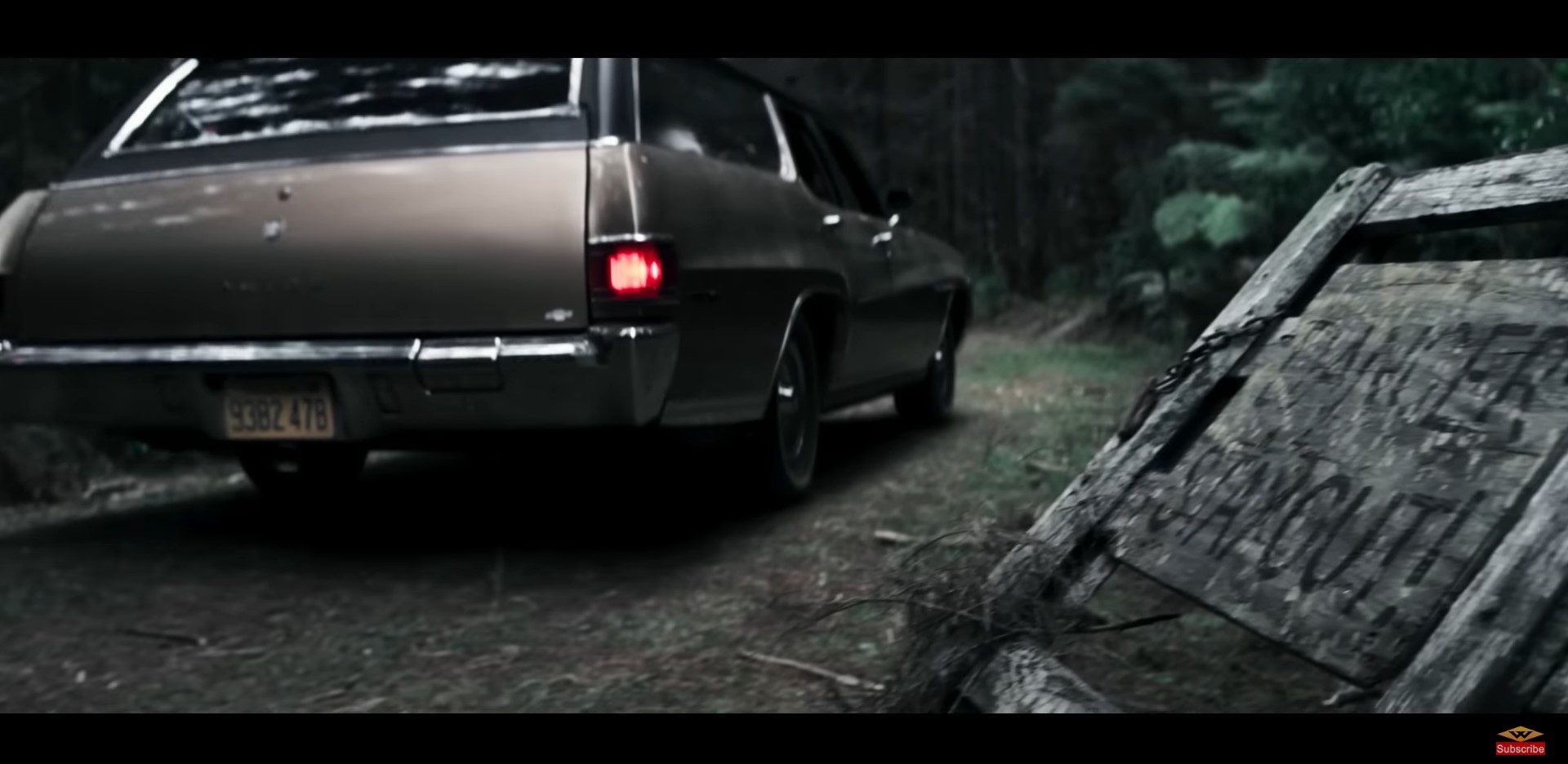
On the Caribbean Island of Santo Domingo, a genetic fiend scampers on the streets.  By injecting the sperm of a rat into a Monkey embryo, one fervent geneticist’s desires to be globally renowned creates a small yet deadly human rat.  Intelligent, agile, and with a lethal poison under its fingernails that could kill a normal size human in a matter of seconds, the creature escapes confines and roams the streets looking for fresh meat to eat.  One of the victims is a photoshoot supermodel from New York City that prompts an unofficial investigation of the mistaken sister to the supermodel and a mystery writer who are now on the hunt for the whereabouts of the others from the photoshoot group.  As the bodies pile up, the rat man wreaks havoc on the small island villages where the survivors and investigators must fight for their life to avoid being gnawed upon.

“Rat Man,” aka “Quella villa in fondo al parco,” translated to “That Villa at the End of the Park,” is the 1988 the Italian-made, creature feature of predominant spaghetti western and poliziotteschi director Giuliano Carnimeo in what would become one of his last feature films  Credited as Anthony Ascot, the western “Sartana” franchise and “The Exterminators of the Year 3000” director tackles the horrors of genetic manipulation with survivalist rodent given primate intelligence, a far cry from Carnimeo’s usual genres.  The screenplay comes from “Demons” and “The Ogre” writer Dandano Sacchetti under the penname David Parker Jr.  Carnimeo and Sacchetti Americanize their credits to appeal more to western audiences who, in the late 80’s, were lapping up Italian horror and creature features starring known international actors in tropical republics and “Rat Man” falls perfectly into that category.  “Zombie” and “The Beyond” producer Fabrizio De Angelis produces the film from production companies Surf Film and Fulvia Film.

While usually Italian productions go after American names, like John Saxon, Christopher George, or Robert Vaughn, “Rat Man” looked elsewhere amongst the surrounding Anglo-Saxon countries and plucked a few names that lead the charge in what would become a cluster of principals to become ensnared by tropical bred, genetically tainted vermin standing just over 2-feet tall, with elongated sharp teeth, and poisonous fingernails.  Without a defined lead, the script swirls through possible hero and heroine tropes, such as the investigating team-up between New Zealand actor David Warbeck (“The Beyond”) and Swedish actress Janet Agren (“Eaten Alive”) who are no strangers starring Italian productions.  Agren plays Terry who flies into Santo Domingo under the impression her supermodel sister was brutally murdered, and she happenstance meets at the same hailed cab Warbeck’s character, work vacationing mystery writer Fred Williams, who for some reason, some how becomes involved in helping Terry without significant cause or benefit other than possibly the mysterious case being a good plot for his next book.  There’s also the case of the false hero and final girl with the pursuit of photoshop photographer Mark, played by Austrian actor Werner Pochath (“Devil in the Flesh”) and his hot model Marilyn, by Italian actress Eva Grimaldi (“Covent of Sinners”).  These intended, or perhaps not intended, red herrings do make “Rat Man” favorably unpredictable as well as grim in regard to centric characters.  Grimaldi becomes the object of obsession with gratuitous nudity and a showcase of her other assets.  In more forgiving times when the diverging physical differences subjected actors into selective roles, the film employed one of the shortest men in our lifetime with Nelson de la Rosa.  Standing all of 2’ 4 ¼” because of Seckel Syndrome, the Dominican Republic born actor donned the makeup, false teeth, glued-on nails, and the ratty clothes to be transformed into the titular villain.  Limited movements and with no dialogue, de la Rosa’s underrated, give-it-his-best performance reveals to be a bright spot in story about a rat spliced with a monkey with the assistance of some movie magic; that one scene where he climbs up the window drapes and looks over his shoulder at Eva Grimaldi as she sleeps in a dark room and he’s slipping into the shadows gives proper chills.  Cast rounds out with Anna Silvia Grullon, Luisa Menon, Pepito Guerra, and Franklin Dominguez. 

Out in the cinema land, there have been worse genetical abomination movies through the decades.  “Rat Man,” surprisingly enough, champions for the middle ground as a solid, campy, man-made creature-on-the-loose feature with, dare I say it, okay performances, competent camerawork, and a villain unlike any other scampering around.  Sure, there are cheesy moments, but rats do like cheese, or so the stereotype goes, and that adds a layer of relaxation and ease knowing Giuliano Carnimeo had a sense of acceptability rather than trying to make a absolute, serious horror movie.  The one aspect I will mention where there was difficulty in swallowing was the scattered story flow.  “Rat Man” seemed to be everywhere all at once from beaches to the jungle to the vacant streets of Santo Domingo without rhyme or reason.  For a while I ran with the theory the Rat Man followed the photoshoot group, targeting the eye candy for its own perverse desires, but that promising concept was blown to smithereens when the little village of St. Martin had been terrorized and abandoned in a moment of exposition awareness.  Carnimeo’s jump from out of the western pot and into the horror fire translates his eye for the lingering and peripheral dread, much like a showdown of glares that has revolutionized to the lie and wait of the rat man cometh but if only the director could yoke the loose story for a straighter edge, “Rat Man” would have been acute as pestilence in the Italian horror mercati.

The “Rat Man” chews its way onto a brand-new Blu-ray release from Cauldron Films.  The restored in 4K transfer is pulled from the 35mm original negative and presented on an AVC encoded, high-definition 1080p, dual-layered BD50, exhibited in the original European widescreen aspect ratio of 1.66:1.  Primarily in low key, shadows run the range of a creature lurking in every nook and cranny, turning “The Naked Doorwoman’s” Roberto Girometti’s, credited as Robert Gardner, cinematography from darkened eyesore to a penetrating thriller of what’s scuttering beneath the shadows.  Emerging from the color is the perfect diffusion of color and texture underneath the natural looking stock grain.  There also isn’t a compression blemish insight or any kind of unnecessary enhancements from this good-looking print.  The only audio optional available is an English dub 2.0 mono track.  Despite an assortment of nationalities, the English dub does make the distinct accents go away with language uniformity.  Foley strength lies principally in the forefront but does champion the beast with a low growl always at your feet, or face depending on the camera angle.   English subtitles are optionally available and synch well with no errors in spelling or in grammar. Cauldron Films exclusive bonus features include an audio commentary, also available on the audio setup portion of the fluid menu, with film historians Eugenio Ercolani, Troy Howarth, and Nathaniel Thompson, and three Italian language with English subtitles interviews with cinematographer Robert Girometti, camera operator Federico Del Zoppo, and post-production consultant Alberto De Martino. “Rat Man’s” trailer rounds out the special features encoded content. The standard release comes in a clear Amaray Blu-ray case with new illustrated artwork that gives a real sense of what to expect by Justin Coffee. The reverse has the original, and if I might add beautiful, poster art that’s less surmising but more intriguing. Authored for region free playback, Cauldron Films’ “Rat Man” scurries with an 82-minute runtime and is not rated.

Last Rites: Forget setting out the poison, “Rat Man” can’t be exterminated with a phenomenally invincible release from Cauldron Films. In the slim pickings of the killer rat subgenre, “Rat Man” leads the pack rats as one of the more bizarre, degrading, and omnipotent villains ever to be on prowl.

See Nelson de la Rosa as the “Rat Man” on Blu-ray!

Breathtaking, Private, and Full of Blood-Hungry, EVIL Amphibians! “The Tank” reviewed! (Well Go USA Entertainment / Blu-ray)

“The Tank” on Blu-ray from Well Go USA Entertainment!

A financially struggling San Franscisco family of three learn their recently deceased grandmother had a large, secluded property on the oceanic foothills of Oregan. The coastal property was kept a secret for 30 years from the mentally unstable woman’s youngest child, the father, for reasons unknown. Rundown and off the beaten path, the vast acreage promises lucrative income from interested land developers at a time when the family needs the money the most. Included with the home is a water tank system built into the cliffside that can house thousands of gallons of fresh water underground from a nearby spring. Activating the system awakens a sinister breed of anophthalmia creatures, revealed to have plagued the family for generations and answers a number of troublesome family secrets that now terrorize the current inhabitants.

Initially beginning the backstory of a vital family turning point stemmed in the 1940s, “The Tank” succeeds 30 years later in the 1970’s with an execrable house understanding with a loving but desperately coursed family walks into its deadly den and sharp-teethed, subterranean dwelling. The creature feature thriller is the sophomore feature written-and-directed by New Zealand filmmaker Scott Walker, ten years after the director’s debut full-length biographical drama “The Frozen Ground,” starring John Cusack and Nicholas Cage. “The Tank’s theme toils with the troubling idiom, if something looks too good to be true, it probably is, as opportunity turns oppressive when ignoring red flag secrets and throwing caution to the wind when taking chances for the love of your family to relieve financial troubles. The looming debt and inevitable curiosity, who we all know killed the cat, sends a family into the fire, produced by Walker, wife Minna, and Lesley Hansen and is a coproduction from Ajax Pictures, General Film Corporation, and Happy Dog Entertainment with Ingenious Media presenting.

“The Tank” contains a slim six characters: three principals and a handful of support. However, another can be added to the list but in a non-speaking role, unless you consider Regina Hegemann and her contortionist craft as an articulate performance with her hands, feet, arms, legs, and, well, her entire body. In fact, I do consider those crooked twists and bends of a slender anatomy to be able to speak louder than words sometimes – think the archetypical Doug Jones. Hegemann’s debut film role builds a gap in between the contortionist’s regular vocational circus acts and instructions of physical sinuous spiraling of the human body to bring practical effects to slithering, vicious life in “The Tank’s” underground dwelling monsters – yes, she plays more than just one creature. Hegemann’s innumerable creatures are pitted up against a nuclear family made up of a strictly New Zealand cast beginning with Matt Whelan as Ben, the father and inheritor of the secluded cliffside cabin whose drowning in family closet skeletons and ambiguity, Luciane Buchanan as Ben’s wife Jules who drowns in a different way with debt as she tries to earn her degree in zoology while raising a family and running a pet shop, and Zara Nausbaum as daughter Reia caught in the middle of her parent’s woes and in the clutches of the undiscovered and eyeless salamander never imagined to be extant. With a secret home laid out in Ben’s mother’s postmortem belongings, an opportunity to dig themselves out of debt seems now feasible for a family treading profusely to keep their head above water, but the script only nibbles at what the family is doing at the cottage. Sure, a real estate agent comes a-knocking to offer them an interested buyer’s more than generous offer to build upon the land, but that doesn’t keep the family from loafing about the property, reissuing a there’s always tomorrow stance even when all their current problems can be obliterated with a firm yes. Instead, thinking about the supposedly large offer doesn’t quite kickstart negotiates but rather belays the inevitable, a family’s forgotten dark and dastardly secret is now gnawing on them – literally. Ascia Maybury, Graham Vincent, Mark Mitchinson, Holly Shervie, and Jack Barry fill “The Tank’s” cast list up.

Following up on “The Tank’s” main theme of some family secrets should never be explored, investigated, dug up, analyzed, or even the slightest looked for its potential value because the secret is secret for a reason. Usually, those grounds are odiously detrimental and, in this case, the grounds have hidden a longstanding life form unbeknownst to man. “The Tank” has a hard time selling the message with the one most affected by the family’s history, with a father and sister having perished under mysterious circumstances and a mother committed to a mental institute, having little interest in unravelling the truth. Instead, the reverse happens when Jules immerses herself into Ben’s past, unable to shake the freaky feeling of the cabin’s ominous atmosphere and checkered past around the land that had claimed the lives of her husband’s father and sister. Jules continues to surpass her husband’s faults and failings with a reminiscent climatic “Aliens” strap up for battle when her child is snatched by the insidious creatures, with attributes and coloring very similar to the xenomorph but on a smaller scale and telluric, and to their water-filled, underground tank-habitat. Using an aerosol flamethrower, we again get that Ellen Ripley vibe as she uses her motherly strength to go toe-to-toe with a terrestrial creature who took down a well-built cop with a gun. All the while Jules wades through multiple encounters with the slippery salamander with razor sharp teeth, her husband Ben, who had previously failed in collapsing the cavern with explosives, becomes invalid with injury and so she stands alone up into the final act of one-lining a car creeping-in creature with, “Get out of my car!,” before shooting it’s head off with the dead cop’s sidearm. Comparably not as influential or heavy-duty with force and violence as “Aliens,” “The Tank” still manages to hold water with a strong, female heroine willing to jump into the jaws of death to fight for her child without backup.

“The Tank” doesn’t run empty with a solid Blu-ray release from Well Go USA Entertainment. The AVC encoded BD50 is presented in 1080p, high-definition, in a widescreen 2.39:1 aspect ratio. Faced with a lot of low-lighting scenes, the digitally captured picture offers up good detail levels with spotty compression banding when introducing light into darker scenes. The larger format storage leans to non-compromised video quality that provides enough storage to maintain consistent grading stability and pixel sharpness all along the way. The English language DTS-HD 5.1 surround sound mix provides a wide-berth of sound elements that hit in the right audio channels. I found dialogue to be quite soft, especially against the prehistoric boom-roar of the creature resonating across the channel board, but the overall dialogue track is clean and clear despite its lack of boost. “The Tank” features fair range elements involving the slinking creatures, cabin creakiness, and outdoor ambience; this also includes a well-rounded depth to create space albeit the creature’s ferocious roar that doesn’t have any directional positioning and swallows output space. Bonus features include A Look into the Tank – a compositional cut of cast and director interviews regarding their experiences in the making of the film, Making the Creature is a full-blown look from spark idea to complete realization of the creature-look and design to fit the outward and physical capabilities of Regina Hegemann’s contortionist craft, and the original Well Go USA trailer to bring up the rear. The Blu-ray comes in traditional casing with latch with an advert insert on the inside for three other Well Go USA Entertainment titles. Though not as sexy as some other covers, the still highly effective front cover embodies the mysterious circumstance of looking into the belly of a dark-laden tank. The region A encoded Blu is rated R and has a runtime of approx. 100 minutes. A salamandroid reservoir that supplies a deluge dose of devilish, aquatic quadrupeds, “The Tank” is yet another title of alternative, out-of-the-box horror courtesy of Well Go USA Entertainment!

“The Tank” on Blu-ray from Well Go USA Entertainment!

EVIL in the Family Tree Makes for a Terrifying “Reunion” reviewed! (101 Films / Digital Screener)

Recently separated from her philandering fiancé, a pregnant Ellie moves in with her estranged mother, Ivy, whose staying at Ellie’s recently-deceased grandparents family home and packing up home furnishings to put the house on the market.  Strained with going through a pregnancy alone and tirelessly working on her theoretic book of modern medicine deriving from the roots of barbaric magic and medieval practices, Ivy pledges to take care of her while providing space to let Ellie continue research work, but the house lends to the painful memories long thought suppressed in Ellie’s mind, manifesting visions of her adopted sister, Cara, who died suddenly in house when they were children.  As the visions become more prominent, stronger, and real, Ellie questions her remorseful memories and her mother’s recollection of events that sheds light on her family’s horrendous secret of anatomical science.

From the start, the realization that Jake McHaffy’s “Reunion” isn’t going to be a happy one comes as soon as Ellie crosses the threshold into her late grandparents’ home and is immediately swathed with a blanket of unsettling ambiance.  The “Wellness” and “Free the Deed” McHaffy writes-and-directs his third film with a steadfast sense of dread in the New Zealand mystery-thriller that tackles human inbred themes of long suffering guilt, prenatal anxiety, and the role of an estranged family during a time of need.  McHaffy compounds layered fears by compositing them with the confines of an old dark and creaky house witness to all the past secrets.  “Reunion” is a production from a conglomerate of New Zealand and U.S. companies that embark on independent filmmaking endeavors by Greyshack Films, the strong female character supporting Miss Conception Films, Overactive Imagination, and Water’s End Films in association with New Zealand Film Commission, MPI Media Group, and Department of Post.

“Reunion” obviously isn’t going to be your typical relative gathering shindig with your bad joke-telling uncle wisecracking over his 10th Miller Lite or a nose picking brat of a cousin cheating at horseshoes near the pit; instead, “Reunion” a tightknit cast playing the roles of mother, father, daughter, and adopted daughter drawn together not by the sake of longing for bloodline companionship but by necessity and circumstance and imploding by the unfun games of revelations hidden inside the closest deepest and darkest of descendants. “Witches of East End” stars Julia Ormond in a nearly unrecognizable far cry of her more glamourous bewitching role in Joanna Beauchamp on the FOX produced Lifetime Television series. The English actress, who hails from Surrey, assumes the matriarchal presence of a helicopter mother overextending herself beyond the limits of her control in order to seize some kind of power she once had living in the archaic house. Ormond bounces off mother-daughter indignities with her sole child, Ellie, played by Emma Draper in her first feature lead performance. Thick tension between them causes reserved friction Ormond and Draper do well to nurture throughout while a stammering posture by “Lord of the Rings” actor John Bach as the wheelchair bound infirmed father adds a whole new layer of irregular rigidity to Ellie’s nerves and to Ivy’s patience. Aside from being blood related, father, mother, and daughter also have another thing in common – present in the moment of the death of Cara (Ava Keane). Peeling back each emotion output struggles, in a good way, to grasp the character mindset made murky by uncontrollable shaking and crying, sneaking and conniving, lies and deceits, and the disillusioned rambles that vortex around the house without pure clarity. “Reunion” rounds out the cast with Nancy Brunning, Cohen Holloway, and Gina Laverty as young Ellie.

Jake McHaffy’s “Reunion” has the hairs on the back of your neck standing from beginning to end with prolonged foreboding leading up to a shocking finale.  Between the manic and enigmatic performances from Julia Ormond and Emma Draper, a chance to rekindle the past feels like a distant thought and a lost cause being blockaded by the past’s poignant trauma they share.  McHaffy isn’t hesitant about revealing a stymieing history with flashes of image splices and flashbacks cut with an antiquated VHS-style playback producing a statically charged visual incumbrance.  The stress and strain burden’s Ellie’s pregnancy, dam breaking flood of memories, her research into the occult, and the surrounding chaotic state of the house contributes to teetering mental stability creating a visceral unintelligible and augmented reality that is too real for Ellie to keep an authentic perspective and the longer she stays and the more she’s immerse into Ivy’s poisonous maternal supremacy, only fabricating a new and scary world can Ellie dig herself out of her family’s troubling past.  There’s much going on in McHaffy’s story to be bog down fully understanding what you’re seeing and trying to piece together the puzzle is nearly impossible – I, frankly, still don’t understand much of it – but the beleaguered attention of beguiling imagery and that overwhelmingly wild ending entrusts “Reunion’s” place in psychological terror. 

Modern gothic has never looked this good as “Reunion” rises to be a stalwart of horror. 101 Films and MPI Media Group has released “Reunion” digitally this month of March, one year after the start of the pandemic that has kept families away from each other and when eases of restrictions set in that’ll shorten the gap between estranged loved ones that becomes a distressing reunion in itself. Quite a masterful brush stroke from director of photography Adam Luxton building the house into the frame and framework of the story, which goes hand-and-hand with a house that’s deemed a toxic surrounding symbolized by the black sludge that drips out of the sink and into Ellie, as well as crossing video outputs and weaving them in as well. Luxton’s imagery has formulation maturity that combines hard and soft lighting, blurring, a range of depth shots, delineated night scenes, and the capitalization of utilizing the clutter of boxes and knickknacks to tell an eclectic visual odyssey culminating toward an all-consuming finale. The 95 minute runtime film is presented in a widescreen 1.85:1 aspect ratio with no bonus scenes during or after the credits. “Reunion” creeps unsuspectingly into the skin, eyes, and soul as a metastasizing slow growth of appalling family drama.

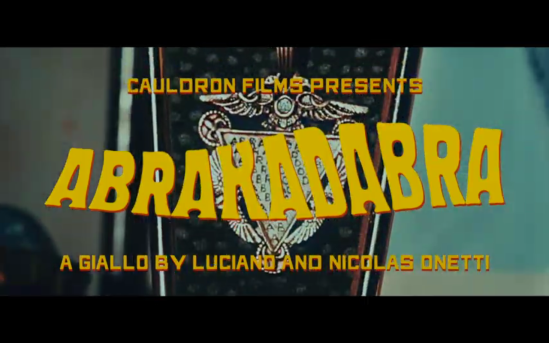
EVIL’s Greatest Trick Was Convincing The World Giallo Was Dead. “Abrakadabra” reviewed! (Cauldron Films / Blu-ray Screener)


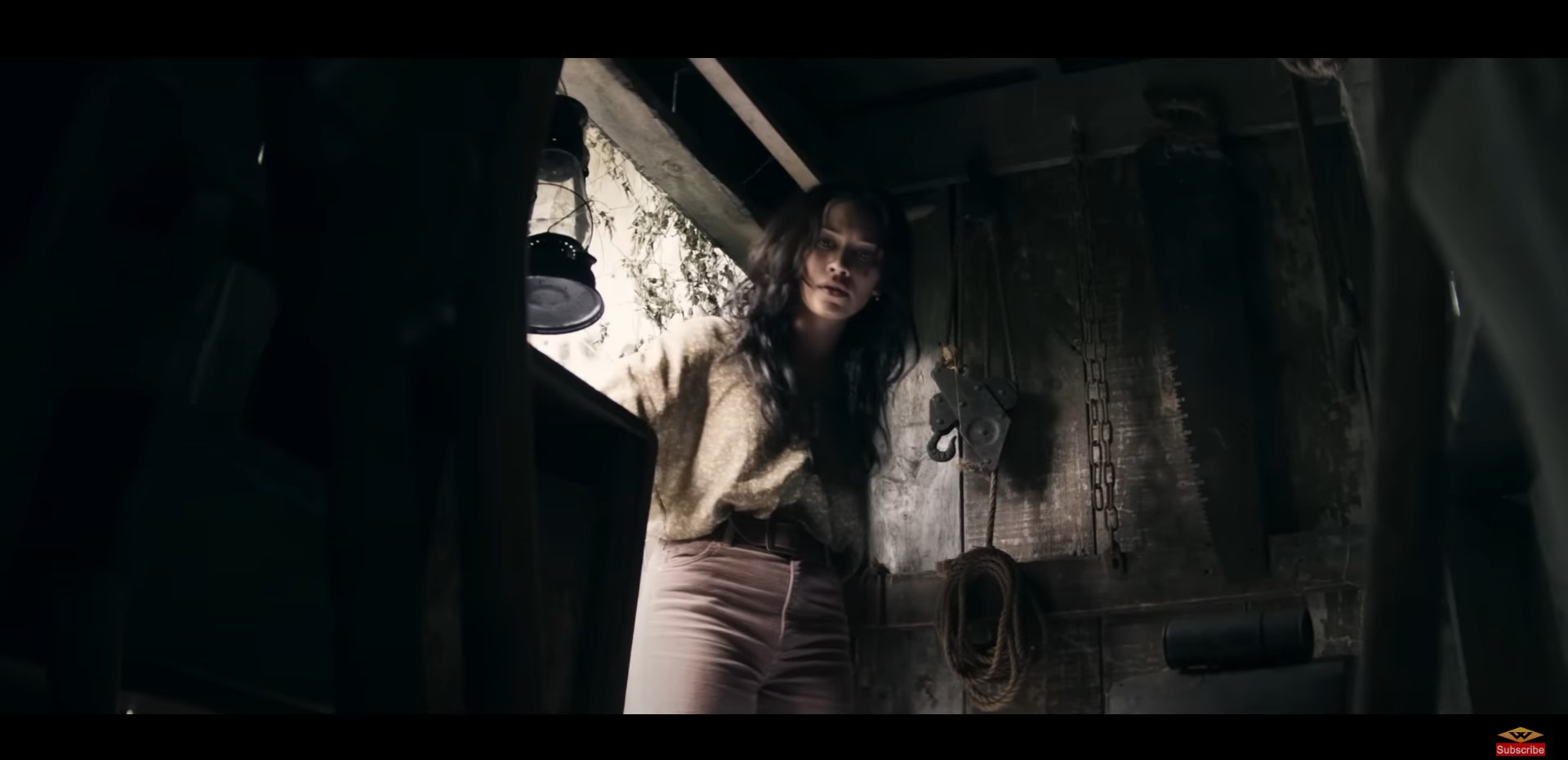
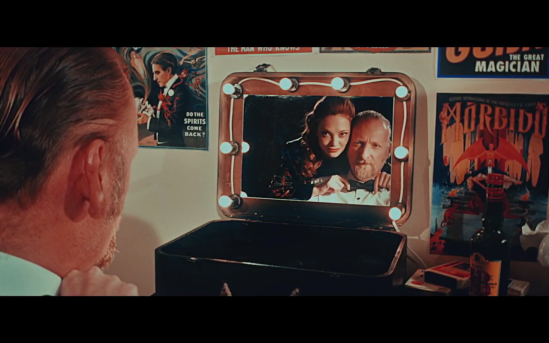
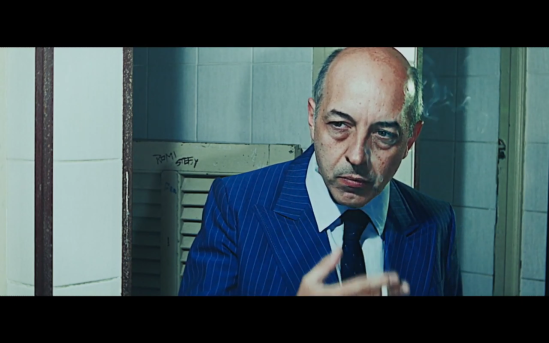
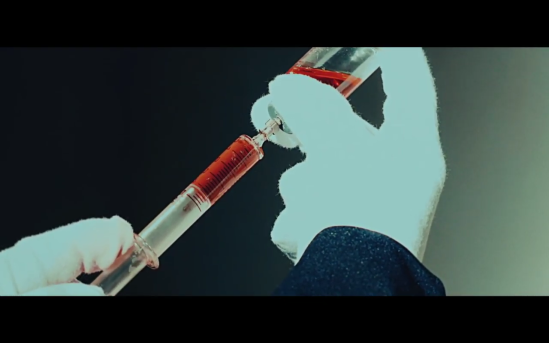
In Milan 1951, a prestigious magician, Dante the Great, is tragically killed when a deadly trick goes wrong. Fast forward 30 years later, the magician’s son, Lorenzo Manzini, has trouble finding his own success following his father’s footsteps as a struggling magician. The night before his grand debut, a woman has been gruesomely murdered on the very stage his father had died. As a compulsive gambler and an excessive drinker in over his head in debt, Manzini goes on with the show, but the events following his performance inspire a grisly, sadistic murderer to uses magic tricks to kill and point all evidence toward him. Hounded by a mysterious, chain-smoking detective, a frantic Manzini must split his efforts toward his own investigation into the murders, but as the bodies start to pile up and the evidence grows even more against him, there may not be anything left in Manzini’s bag of tricks to prove his innocence.

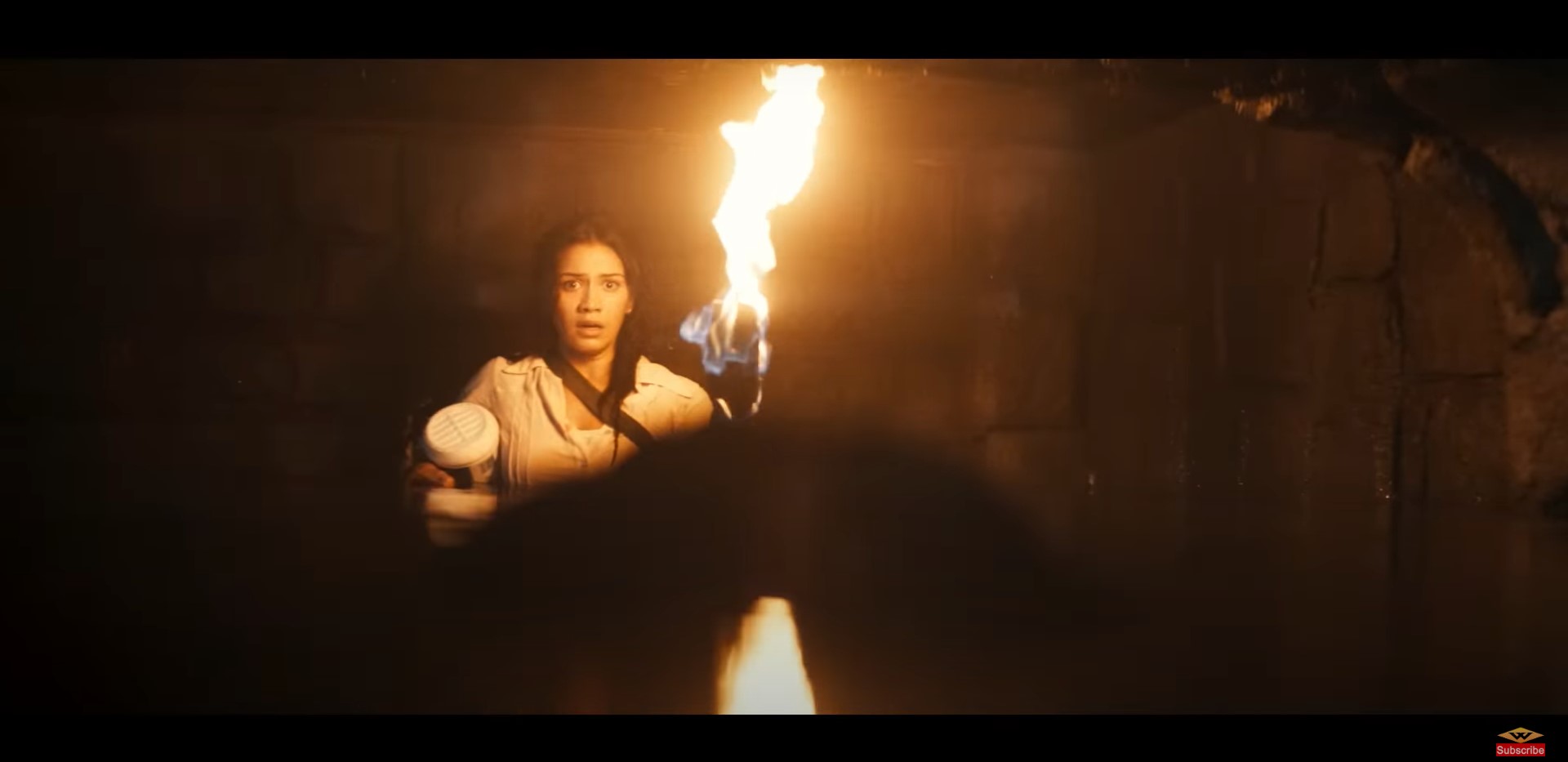
In the old traditions of an Italian murder-mystery, “Abrakadabra” is the 2018 released giallo inspired film from the Argentinian filmmaking brothers, Luciano and Nicolas Onetti, along with Carlos Goitia serving as the third wheel scriber on the script. The trio have worked previously on one other project from 2017, another horror of course, with the haunted ruins premised, “What the Waters Left Behind.” With the Onetti’s being brothers, their collaboration runs deeper, sharing an affinity for the genre that has inspired the duo to collaborate on another giallo thriller, “Francesca” in 2015 and “Deep Sleep,” where Nicolas served as producer to Luciano’s writing and directing duties. “Abrakadabra,” as well as “Francesca,” are not only far cries from the haunting and terrifying reminiscence of the ruins in “What the Waters Left Behind,” but also varies in direction, cinematography, and production design that more in lines with giallo hallmarks, such as extreme closeups, awkward camera angles, and posh interiors. “Abrakadabra” is a production of the Nicholas Onetti and Michael Kraetzer New Zealand founded company, Black Mandala, and another Nicholas production company on a more localized level with Guante Negro (Black Glove) Films co-founded with brother, Luciano.

Despite being dubbed in a fine-tuned homage of an Italian overlay track, the actors involved are hail from South America, as where the film is shot. The story centers around Lorenzo Manzini, played by German Baudino (“2/11: Day of the Dead”), and Baudino shepherds Manzini toward the brink of desperation, spinning out of control from the malevolent forces that seem to be binding his hands to gruesome murders. Baudino captures the marks of the giallo fervor in his animated performance, especially when running through a memorial park with arms flailing and a streak of fear across his face, but since it’s a murder mystery swarming around Manzini, the magician’s encounters with other rich characters comes key to unravelling Manzini’s dubious circumstances. His lovely assistant Antonella (Eugenia Rigon), the lurking chain-smoking detective (Gustavo Dalessanro), and a hospice-housed convicted murderer (Abel Giannoni) become cryptic pawns that turns “Abrakadabra’s” into a deadly game of chess soused deep into the thralls of a calculated whodunit. The remaining cast, including Clara Kovacic (“Jazmin”), Ivi Brickell, Raul Gederlini (“Francesca”), Pablo Vilela, Alejandro Troman, and Luz Champane, are perhaps the weakest link in the chain to hold “Abrakadabra” back from being a well-rounded giallo. There presence seemingly come into the fold without much creditability to their substance toward the story are, some of them, are easily dispatched with the same loosy-goosiness that firmly dilute their characters.

You have to give the Onetti brothers tremendous credit. Their attention to detail techniques, production design, and overall wardrobe schemes accomplished a toppling feat in taking the natural aesthetics, textures, and sounds of an Argentinian setting shot film and transformed all the blatant aspects to resemble an Italian giallo filmed in Italy from the 70’s or 80’s. Yet, does the veneer alone make “Abrakadabra” a good giallo film or just an immaculate carbon copy? The Onetti’s certainly know enough to exact a perfect replica as seen in “Francesca,” which was my first experience with the Onetti brothers, but “Abrakadabra” is a step backwards form “Francesca” from a story standpoint with some mishmash editing and character underdevelopment around the midsection of the second act that immobilizes the story from going forward properly, leaving the lead character Manzini in a circular rut rather than a tailspin to the climax. The prologue of Dante the Great’s accident and the twist ending that harks back to a opening Harry Houdini quote, “What the eyes see and the ears here…the mind believes,” solidifies as the best riveting acts of the Onettis’ film that becomes equalized negatively by a drab dynamic interior. In any case and though an Argentinian production “Abrakadabra” is an invigorating slice of Italian cinema with razor-sharp characteristics and a well shrouded and gloved killer.

Open sesame on the inaugural, limited edition Blu-ray, release of “Abrakadabra” from the new genre distributor on the block, Cauldron Films, who plans to release a full slate of cult films from 70s and 80s in the coming months. Limited to only 1000 copies, the Blu-ray release will include inserts of promotional artwork, a limited edition high quality slipcase with original poster art, and a CD soundtrack with music by Luciano Onetti. However, I won’t be able to review in full the finished package or the audio and video qualities as this review is based off a disc screener, but I can tell you reaffirm that DP Carlos Goitia’s scenes are amazing well established, lit, and a glimpse into the past. The Luciano Onetti score can be invasive at times, but a pure product of the electro-synth rock that goes hand-in-hand with the giallo cinematography. Audio options include an Italian 5.1 surround sound, and an Italian and English 2.0 stereo that come with optional English and Spanish subtitles. Accompanying the unrated 70 minute film is the theatrical trailer and raw behind-the-scenes footage without subtitles. As Cauldron Film’s maiden release, “Abrakadabra” is anything but hocus-pocus with a bloody homage to Italian giallo films complete with a vital synthesizing soundtrack and a shocking twist finale.

“Abrakadabra” Available on Prime Video!

Where Does Evil Stand in the Post-Apocalypse? “Blue World Order” review!


Nuclear war had demolished the quiet rural areas harboring bio-engineering plants and has crumbled societies in a post-apocalypse. The nuclear fallout caused a deadly bacteria to thrive and spread amongst the region, wiping out millions of lives in its path. A group of scientists seek to rebuild the devastated population by devising a plan to send an electromagnetic pulse that will directly input inhibitors in the brain to block the bacteria from overwhelming a dwindling human race, but the success of the pulse came with a severe cost involving the death of every child on the planet. Also embedded in the pulse is a mind altering virus that encoded itself into every person’s brain to act as a mind control device. The only person virally immune, a fallout survivor, is a struggling father, Jake Slater, trying to protect his adolescent daughter, Molly, at all cost as she’s the only child left on Earth due in part to her father’s immunization. Malevolent creators behind the virus aim to get their hands on Molly and experiment on her immunization before inevitably releasing upon the world a much more sinister version of the virus from the pulse tower that only Jake can destroy.

“Blue World Order” is the martial arts, post-apocalyptic, science fiction flick from first time feature directors Ché Baker and Dallas Brand. Baker and Bland co-wrote the screenplay with Sarah Mason that flaunts a major concept, perhaps better suited as a major Hollywood studio concept, but wouldn’t quite cross that threshold of positive public opinion stemmed from cramming too much into the a non-stop, action-packed contiguous acts laid simply out to illuminate an aged old theme of power hungry Government against meager do-right resistance. To further add on top of all that doesn’t feel right about this film, we’ve all seen this film before or, perhaps, a similar rendition of it. The 1989 Jean-Claude Van Damme film, one of many Van Damme guilty pleasures, “Cyborg,” blends martial arts with a futuristic wasteland decimated by a deadly plague and while the gritty and dark “Cyborg” carries itself vastly different from Bland and Baker’s more flashy and glossy approach, the story’s core is virtually the same with oppositions desiring to save the world for an interior motive.

Since this is an Australia production set on location in Australia, seems like a no brainer that Melbourne born actor, Jake Ryan (“Wolf Creek” the television series), would snatch the lead of Jake Slater. Ryan’s beefy build and rugged appearance have him a prime candidate for a hero, a fighting father, in a world in turmoil, but the way the film’s edited, Ryan comes off a bit aloof and a droll warrior. Ryan is joined by a few other familiar Australians and New Zealanders such as Jack Thompson (“Star Wars Episode II: Attack of the Clones), Bruce Spence (“Mad Max”), and Stephen Hunter (“The Hobbit” trilogy) as a screw loose rebellion leader with a awful martial arts stand-in that dons a lighter shade wig. There’s also Billy Zane. Zane, a native of Illinois, has a knack for hitching himself onto foreign products; his last venture we reviewed was a Greek production entitled Evil – In the Time of Heroes, but Zane’s a remarkable actor whose able to morph into the essence of any character, especially characters that sport lopsided power like his character Master Crane, a martial arts instructor turned catastrophic savior post-fallout. The cast rounds out with newcomer Billie Rutherford, Kendra Appleton, and Bolude Fakuade.

One headache smoldering as a consistent motif throughout is the lack of character development. Before his calling as the one to save humanity, a dream sequence exposition touches upon Jake Slater’s time before nuclear war. Slater’s seen engaging in a friendly, if not slightly competitive, martial arts bout with instructor Master Crane. The two have an important, intrinsic history, involving Jake contracting a debilitating disease and able to bounce back with rehab through Master Crane’s teachings, that goes sorely unexplored. Most likely, the lack of development can be a direct result of the aforementioned with too much jammed into an already cluttered heap that jumps from one thought to the next without a proper seque. Even the introduction and the removal of characters has a nauseating sway. For example, when Stephen Hunter’s Madcap is introduced, he suddenly runs up to a fleeing Jake Ryan and the overweight, disheveled, rambler is able to best the physically fit, martial arts instructed, desperate father in more than one occasion. More instances like these can be exploited throughout, but we could be here all day breaking down the details or lack there of.

Random Media delivers Ché Baker and Dallas Brand’s fantasy-action “Blue World Order” onto DVD and VOD nationwide. A DVD-R screener was provided and can’t officially comment on the presentation or the audio tracks, but if there’s one issue to be said about the image quality, the special effects are horrendously Sy-Fy channel cheap with superimposed flames reaching six feet high in a monolithic-like pose. With effects like that, the indie Sci-Fi picture’s intended purpose is to solely entertain on a round house kick and uppercut punch level and not to invoke too much thought into a series of concepts. Instead, to sell the next Billy Zane installment, the selling point long shot of a “Back to the Future” Delorean car chase through the Australian desert is nice and attractive and proven to work. Shoddy blaster sounds and crumbling CGI put the last few straggling nails into “Blue World Order’s” vast coffin for a film that aimed really high for the bar but missed really low with unfocused material and devastating plot holes on a world-ending scale.

Rent “Blue World Order” at Amazon Video today!