A Talking Black Lab with EVIL Red Eyes Target Children. “Where the Dead Go to Die” reviewed! (Mountain Oddities Home Video / Blu-ray)

“Where the Dead Go To Die” Now Lives on Blu-ray!

The first story in a disturbing 3-part omnibus tale concerns a little boy named Tommy.  Constantly at each other’s throats, Tommy’s troubled  parents don’t burden him down in their mini bickering wars and abusive verbal tirades where he becomes the passive aggressive fodder for each of them to shell the other with, but when Labby, a talking, red-eye dog proclaiming to be a messenger of God’s word, tells Tommy to kill unborn brother because he’s the antichrist, Tommy’s world is turned upside down when Labby murders both parents and the unborn child in the name of God.  In another story, a man steals liquid memories by killing people and extracting an intoxicating substance from their memory glands to inject them into his own body.  One particular liquid memory of a dying prostitute sends him through a warped nightmare of the underworld, one where he may never return to normal.  The last story focuses on a mask-wearing deformed boy named Ralphie, whose Siamese twin brother’s face protrudes out of the side of his face, and his infatuation with schoolmate and neighbor Sophia.  When trying to impress Sophia by relating to her father, Ralphie learns the father records VHS tapes of Sophia being molested by older men and is coerced to partake in an act Sophia is an unwilling participant.  At the behest of Labby, what Ralphie does next will put a fatal stop to the madness that surrounds him and his soulmate crush. 

In the same clunky spirit of crude early 1990’s computer generated imagery or in the early days of the original Playstation graphics, Jimmy ScreamerClauz’s “Where the Dead Go to Die” fully embraces the ungainly graphics in a 3D world of unimaginable horror where kids and demons intersect with wretched results.  The 2012 omnibus reflects three short narratives from ScreamerClauz and combined into one seriously screwed up tale, orchestrated by deal brokered wit Unearthed Films’s Stephen Biro who was sent two of ScreamerClauz’s short films – “Tainted Milk” and “Liquid Memories” – and challenged, or maybe even championed, ScreamerClauz for a third to build toward, and the eventual release of, a feature length product.  With the challenge accepted, the full-time musician and 3D animation artist succeeded with an unforgettable story that’s pure evil at heart and a surreal kaleidoscope of ghastly phantasmagoria.  ScreamerClauz not only writes, directs, and composes the film he also produces under the Draconian Films and Chainsaw Kiss production companies.  

As it has been already established Jimmy ScreamerClauz wears many hats in his production, we can add another with his voice acting of the demonic, fireball-eyed dog, Labby and along with the director’s voiceover participation, other genre actors and filmmakers are casted to voice one, or possibly more than one, of the crudely animated, disturbingly souled characters.  “Subject 87” director, “Reality Bleed-Through” actor Brandon Slagle tackles a double voiceover with the memory addicted man as well as Sophia’s sleazy abusive father.  As Sophia, the once upon a time softcore horror actress Ruby Larocca (“Witchbabe:  The Erotic Witch Project 3,” “Dr. Jekyll & Mistress Hyde”) has real innocent palpability up against Slagle’s aggressively toned, VHS-recording, and peeping perve that is her in character daddy.  Larocca also voices the mysterious advice-giver with the Lady in the Well and as the dying Hooker in the arms of the serial killer-for-liquid memories Man.  Another multi-voice player in the film and who also had a stint in the sex and violence category is Joey Smack with a string of strangler themed films (“Vampire Strangler,” “The Masked Strangler,” “The Bizarre Case of the Electric Cord Strangler, etc.,”).  Smack extends himself into a child and parent performance as the deformed Ralphie in “The Masks That the Monsters Wears” and Tommy’s dad in “Tainted Milk” that gives provides range albeit the quintessential grown man mimicking a child’s voice unmistakableness in the cracking high voice.  Much like Larocca, there’s something pleasant in seeing names like Linnea Quigley (“Return of the Living Dead,” “Night of the Demons”) and Devanny Pinn (“Nude Nuns with Big Guns,” “Bloodstruck”) be credited to voice because that takes the focus on their physical appearances and gives them a chance to actually be seen, or rather heard, with their dialogue performance.  In this instance, Quigley and Pinn embody the rancid maternity of Sophia and Ralphies’ mothers respectively.  “Where the Dead Go to Die” rounds out the cast with more B-movie actors in Trent Haaga (“Terror Firmer,” “Killjoy 2:  Deliverance from Evil”) as Ralph’s ashamed dad as well as Carlos Bonilla, Victor Bonacore, and Joshua Michael Greene. 

How a filmmaker chooses and utilizes his brand of CGI landscape is how that filmmaker’s film should be judged in the gelling of those areas, in my opinion.  “Where the Dead Go to Die’s” crude 3D animation is the intended result from Jimmy ScreamerClauz’s choice in conveying his short story narrative, but that intention won’t stop audiences and critics from browbeating and disparaging the film.  Yet, if accepting the former viewpoint and watch with understanding eyes through that recognition lens, “Where the Dead Go to Die” is one messed up and horrifying dystopia accentuated by the animation that gives each chapter more weight toward wretchedness and wrongdoing, gelling with tremendous intent to scramble the proverbial innocence with demonic forces and human perversions.  Some of the ideas and concepts swirling around ScreamerClauz’s head and make it into the three tales were just images he thought were visually neat but that speaks loudly on the dark mindset of creativity and many of those images are now temporally seared, scarred permanently into our long-term memory lobes.  Granted, tale transitions and recycling back to their sole connection with each other route into choppy territory at best, creating a windy, bumpy road in braiding the three chapters together under a single umbrella of animation style and storytelling, but “Where the Dead Go to Die” is a poignant and throbbing like touching a raw, exposed nerve through gouged muscle and tissue.  Every inch of surreal, sawtooth imagery is like a knife twisted into our virtuous side because upon closer look at Jimmy ScreamerClauz’s story containing children being hurt is only separated by the mere stylistic choice of cinematography. 

Out from the distribution shadows of Unearthed Films and in the hands of adult animation distributor Mountain Oddities Home Video, also in partnership with MVDVisual, for a new Blu-ray release, one we haven’t seen since Unearthed Films released the DVD and Blu-ray in 2012.  The first of two initial releases from Mountain Oddities Home Video, the Blu-ray comes AVC encoded, 1080p high-definition release, on a BD50 packed with extras.  Being mostly rudimentary 3D animation installed into a complexity of kaleidoscopic imagery, critiquing the quality is beyond our control but the compression is amply successful with no artefacts to note and the colorful saturation and grading levels provide an enriched, amalgamated dough of diabolic devil-bread, presented in a 1.78:1 widescreen aspect ratio that’s more compromised to its now out of print Unearthed Films counterpart from more than decade earlier.  Two English audio options are available:  a DTS-HD 5.1 surround sound and a DTS-HD 2.0.  At home audio recordings outside the sound barrier studio boxes are not as refined, capturing mic interference and hissing as well as the differences in varying audio volumes that don’t match between interacting characters in the same scene, creating that unshared space and gap.  Dialogue is unimpeded and clear and ScreamerClauz’s original gloomy-looming score fuels the deep morosity and malevolent themes.  English subtitles are option available.  Extras include a director’s commentary track with Jimmy ScreamerClauz, deleted scenes, an online video-conference interview with ScreamerClauz hosted by Quality Violent Cinema, behind-the-scenes featurettes of snipped dialogue recordings and interviews, including Linnea Quigley, Youtuber Diamanda Hagan’s video review of ScreamerClauz’s animated shorts “The Scuzzies,” and the director’s short film catalogue with “The Scuzzies” (that includes commentary), “Labby vs Mr. Pickles Rap Battle,” “Clinical Sodomy,” “Affection,” “Mutwa,” “Reality Bleed-Through Remix.”   Mountain Oddities Home Video’s Not Rated release is listed as the uncut version with a 95-minute runtime available with region free playback. 

Last Rites: An adult animation pushing the envelope with taboo themes involving kids and when you mess with kids, the public taste goes sour, but “Where the Dead Go to Die” swirls surrealism with poignant acting and strange fever dreaming amongst the basic, albeit creepy, animation.

“Where the Dead Go To Die” Now Lives on Blu-ray!

Nothing Will Stop Detective Belli from Bringing Down EVIL Heroin Traffickers!

Perhaps the Best Itali-Crime Film Ever!

A hot-headed and determined police commissioner will not stop his pursuit until all the drug trafficking in Genoa is annihilated but the insidiousness of the crime’s reach within society is proving to be difficult to root out.  With the help of one of Genoa’s long-in-the-tooth drug kingpins, living out the last of days before terminal illness overcomes him, the commissioner is able to put a dent into a rival organization’s trafficking schemes.  When a case-building chief commissioner, aiming to get the very head of the organization’s snake, is brutally gunned down in the middle of the street and his evidence files stolen, more pressure is placed upon the criminal syndicate with more arrests, more drugs seized, and a bigger impact is made by one resolute cop while attempting to build a more damning case file his predecessor had worked on for years but the drug traffickers will not be deterred and mercilessly go after the commissioner’s loved ones.

Enzo G. Castellari’s “High Crime” is quintessential poliziotteschi.  “The Inglorious Bastards” and “Keoma” director’s 1973 Italo-crime feature is about as fast-paced as it’s energetically loose-cannon of a principal protagonist.  The screenplay, under the original Italian title of “La Polizia Incrimina, La Legge Assolve,” is treated by a conglomerate of Italian writers in Tito Carpi (“The Shark Hunter”), Leonard Martin (“Tragic Ceremony”), Gianfranco Clerici (“Off Balance”), and Castellari himself based off a story by producer Maurizio Amati (“The Eroticist”) and shot on and near the story locations of Genoa, Italy and the French city of Marseille.  “High Crime” is actually a sequel to Romolo Guerrieri’s 1969 “Detective Belli” in which that titular character reappears in “High Crime” but more righteous and justice-prone compared to the corrupt background of Belli in antecedent film.  Both movies star the same actor in the main role but have little connective elements.  The feature is a production of Star Films and Capitolina Produzioni Cinematografiche and is coproduced by Edmondo Amati, father of Maurizio. 

The blue-eyed “Django” actor Franco Nero is that actor portraying Commissioner Belli in both films.  In “High Crime,” Nero is an exuberantly moral cop to the point he looks to be almost throwing a temper tantrum when in the face of his superior Chief Commissioner Aldo Scavino, played by American actor James Whitmore of “Them!” and “The Shawshank Redemption.”  The two characters resemble night and day of how they handle crime; Scavino’s reserved nature evokes a cautionary tale to run down crime slowly but surely in building a case that would settle everything all at once whereas Belli’s take is to chase with wild abandonment that’ll risk all that he holds dear as he chips away toward a heavily fortified crime lord.  Nero and Whitmore exact the personas down to the letter, nailing in the thematic message from Scavino that that the chair he sits in is hot, heavy, and full of responsibility, much the way Uncle Ben tells Peter Parker about great power carries great responsibility.  In Belli’s ear, working his way into the mind of a gung-ho lawman, is drug kingpin is Cafiero by Fernando Rey, who two years prior played in a similar story of William Friedkin’s American, lone-wolf cop story “The French Connection.”  Rey adds sophisticated demure to his really bad guy character to appear like an ally in not only the eyes of Belli, who really puts his trust in Cafiero, but also the audiences who will forget he’s an equal in the drug game.  What’s interesting and dynamic about “High Crime” is the woven character arcs and fats that quickly develop and quickly diminish through Belli’s investigation.  In the mix of this unsafe space for any character is Della Boccardo (“Tentacles”), Silvano Tranquilli (“The Bloodstained Butterfly), Duilio Del Prete (“The Nun and the Devil”), Mario Erpichini (“Spasmo”), Ely Galleani (“A Lizard in a Woman’s Skin”), Stefania Castellari (“1990:  The Bronx Warriors”), Bruno Corazzari (“Necorpolis”), and Luigi Diberti (“The Stendhal Syndrome”).

“High Crime” deals in high impact.  Car chases, shoot outs, foot pursuits, murder hits, and more that genetically makeup Castellari’s film with a centralized hero destined for tragedy spurred by his own ambition, texturing the character with an anti-hero wallpaper as he can’t see past his own objective and the direct danger that blind ambition poses.  Kneaded into this notion is Caastellari’s fantastic use of editing and scene transition that provides a seamless continuity as also misleading truths.  Editor Vincenzo Tomassi (“Zombie”) cuts and splices with great continuity care to arrange multiple shoots of one scene, such as the opening car chase between Belli’s squad car pursing a Lebanese drug supplier, to match every angle without losing track or bewildering audiences with implausibility.  The transition scenes also stun with zoom-in and zoom-outs that segue different scenes, a previous moment may bleed into another with deceptive infiltration of the next scene, and Castellari uses sounds too to transition to the next shots.  These on-your-toes transitions commingling with the ever-dynamic, fast-paced crime story with a high mortality rate, high character development, and high emotional roller coaster loop-the-loops whirling around the abundant and impressively rounded characters solidify “High Crime” as the holy grail of highly valued and highly entertaining poliziotteschi!

If you’ve ever wanted more out of Enzo G. Castellari’s “High Crime,” Blue Underground has you covered with a limited edition 3-Disc, UHD HD Blu-ray, Standard Blu-ray, and soundtrack CD set packed with content in the HVEC and AVC encoded double layers of the 2160p 4K UHD BD66 and 1080p Blu-ray BD50.  The brand-new 2024 Dolby Vision HDR 4K master stuns.  Image resolution connected with balanced contrast results in a vibrant, crisp-sharp quality rendered from a stellar original 35mm print, presented in the original aspect ratio of a widescreen 1.85:1.  There’s not an arresting softness to be had as details emerge in the various Genoa and Marseilles ship ports, manufacturing parks, and concrete city landscapes bursting with infrastructural texture.  There’s also plenty of minute detail on skin textures with a touch of technicolor process for a dash of properly installed pigmentation.  This sort of scrutinizing care translates also to the post-ADR English 1.0 DTS-HD audio mix with an uncompressed, lossless fidelity.  Dialogue is post-recorded with the original actor’s voices providing better authenticity in comparison to other voice actors, especially over the gruff American voice of James Whitmore.  Environmental ambience doesn’t miss an action with a complete and broad line of virtual city sounds coupled with in-scene ambient sound, all converted and individualistic defined through the single channel, supported by Oliver Onions brothers Guido and Maurizio De Angelis providing a catchy copper beat whether be car chase or foot pursuit.  There also an Italian dub 1.0 DTS-HD.  English subtitles for the deaf and hard of hearing are optionally available as well as French, Spanish, and English for the Italian audio feature.  Hours of bonus materials lined the encoded BDs, more so on the second disc, the Standard Blu-ray, due to capacity.   Disc 1, the 4K UHD, houses an audio commentary with director Enzo G. Castellari, a second audio commentary with star Franco Nero, a third audio commentary with film history Troy Howarth, Nathaniel Thompson, and Eugenio Ercolani, an alternate ending that fades to black rather than the original freeze frame, and the theatrical trailer.  Disc 2, the standard Blu-ray,, has all of the above plus interviews with Castellari and Nero The Genoa Connection, an separate interview with Castellari From Dus to Asphalt, an interview with stuntman Massimo Vanni Hard Stunts for High Crimes, an interview with camera operator Roberto Girometti Framing Crime, an interview with soundtrack composers Guido and Maurizio De Angelis The Sound of Onions, a Mike Malley directed featurette The Connection Connection featured in EUROCRIME!, and a poster with still gallery.  The double wide Amaray case also comes with its own special attributes, such as a rigid O-slipcover with compositional illustration of pretty much all the action you’ll see in the film.  The slipcover also contains embossed textile elements for a junior-sized 3D effect.  The set has a reversible front cover with the primary art the same as the slipcover’s while the inside contains an original poster art replica.  The insert side contains a dual-sided cardboard track list and soundtrack info on top of the back and red original motion picture soundtrack CD.  The 4K UHD and Blu-ray on the opposite side are staggered in individual push locks where you have to remove the top disc in order to get the bottom disc and they’re too pressed with the same art from the reversible front cover.  Blue Underground outdid themselves with “High Crime’s” first Blu-ray release, curated to perfection, in the U.S.  The Not Rated Blue Underground set is playable on all regions and has an uncensored, uncut runtime of 103 minutes.

Last Rites: To simply write positively about “High Crime” and Blue Underground’s merit 3-disc set is simply not enough. Fans of William Friedkin’s “The French Connection” and other moviegoing fans can find this Eurocrime thriller to be captivating from start to finish.

Grab this Limited Edition Set of “High Crime” Before Its Gone!

Playboy Discovers Vengeful EVIL’s Hidden BDSM Room A Little Too Snug. “Emanuelle’s Revenge” reviewed! (Cinephobia Releasing / DVD)

Emanuelle’s Revenge now on DVD from Cinephobia Releasing!

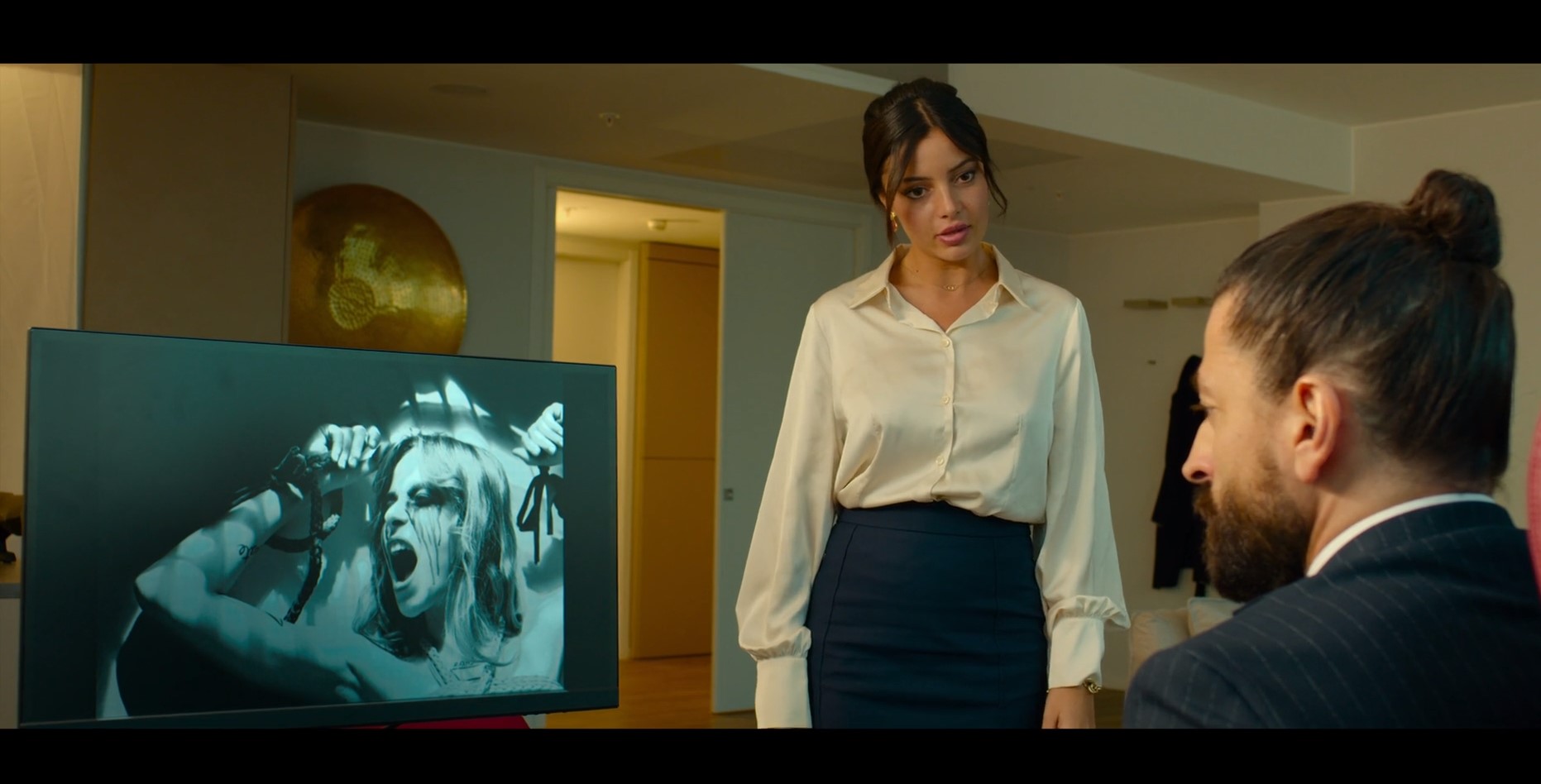
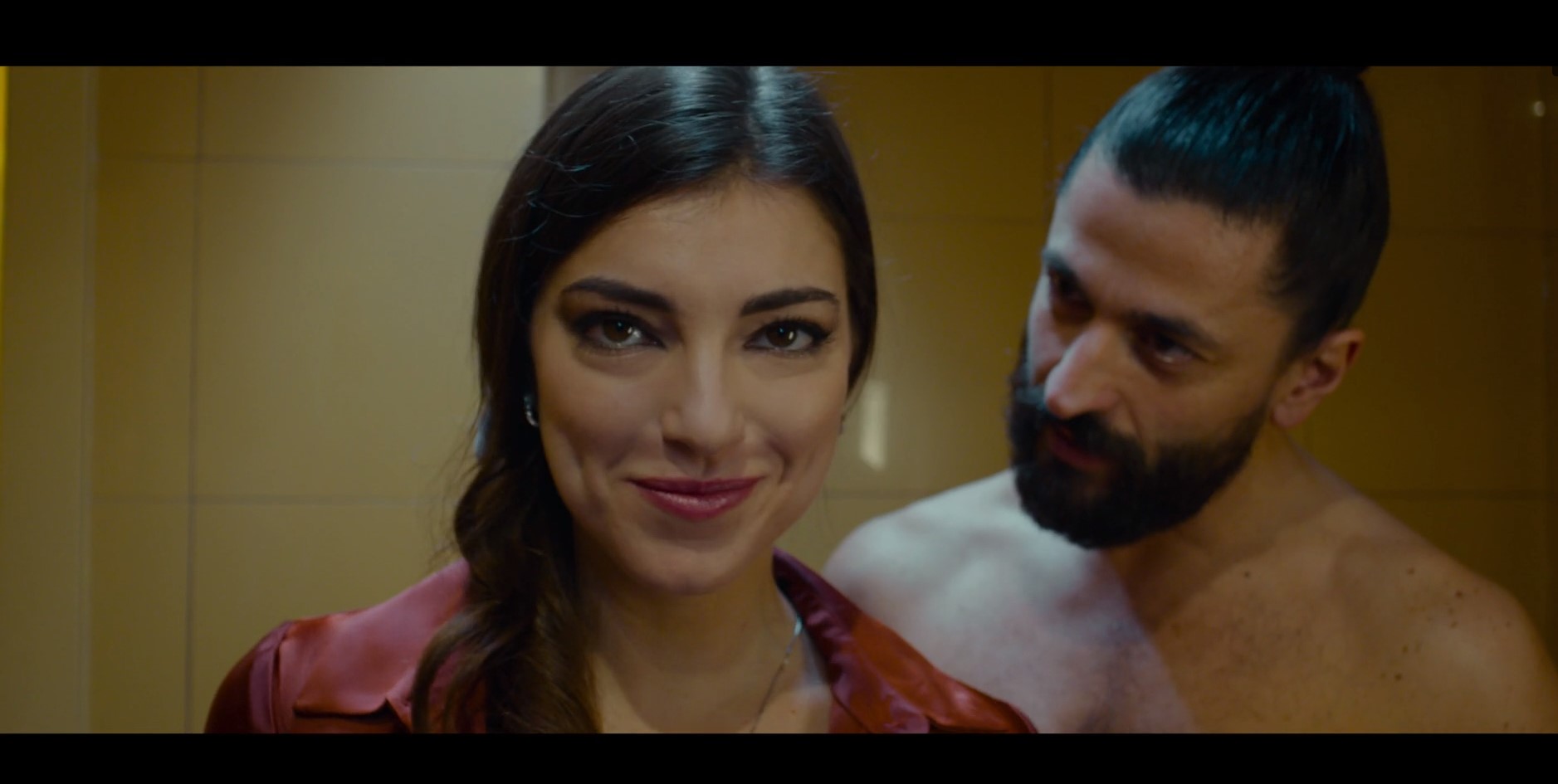
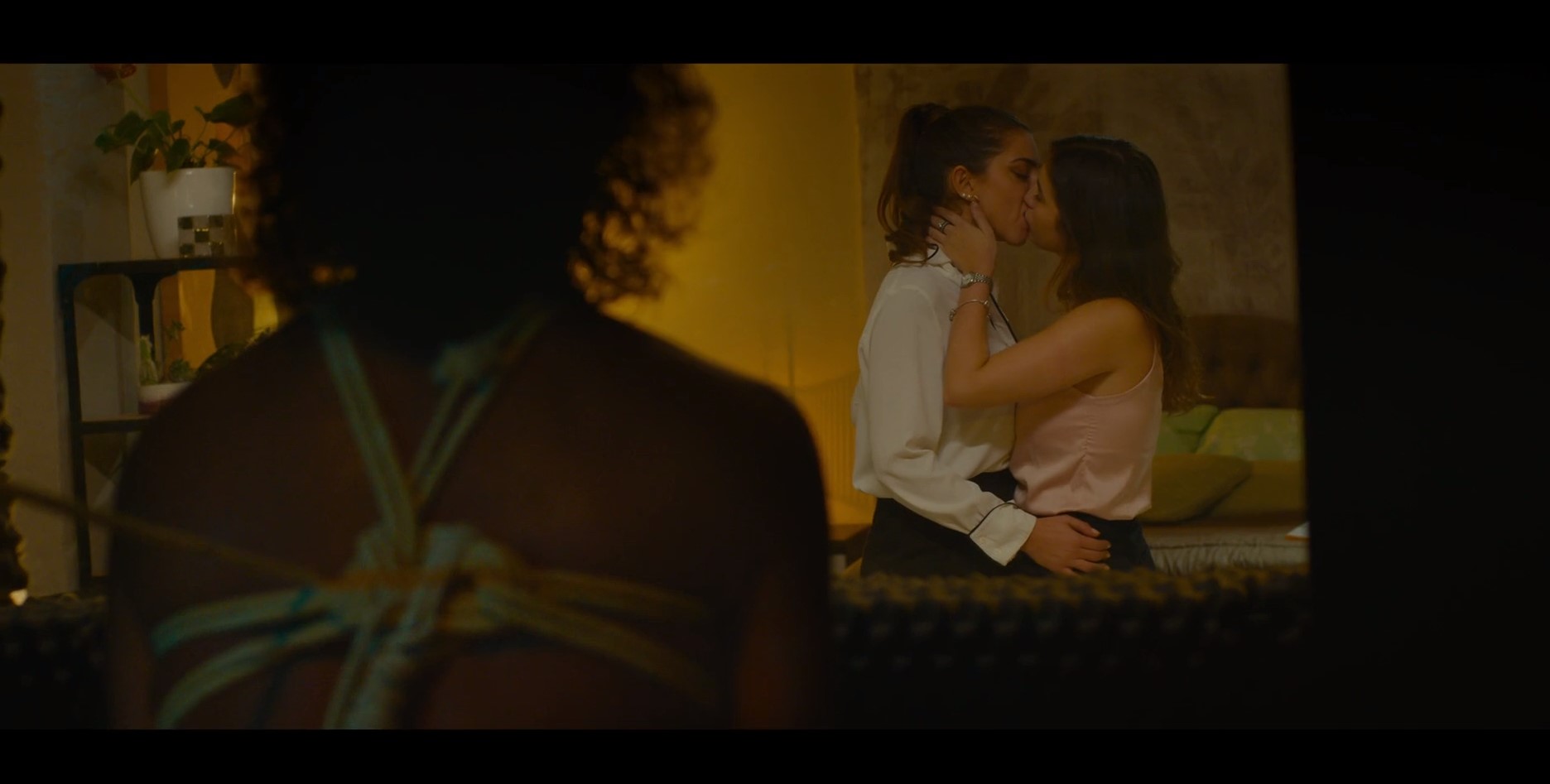
A wealthy businessman philanders his way through woman in a pursuit of satisfactory conquest.  The formidable challenge of bedding a hard-to-get woman arouses him and the chase is all that more thrilling and erotic.  His persistence and perfect man act pays off with up-and-coming model Francesca, but for the playboy, Francesca becomes another notch in his belt and quickly implodes Francesca’s romanticized relationship after a sexual tryst in the public eye.  A year later, he begins his surmounting quest again with Emanuelle, a renowned writer in a lesbian relationship.  The beautiful and darkly seductive woman catches his eye and the game begins as he uses every excuse to rendezvous with her despite the Emanuelle’s partner standoffish opposition, but as his tenacity appears to be paying off as she leads him on, awarding his constant charm with favorable kittenish returns, Emanuelle is actually leading him straight into the jaws of a deceitful plan.

Italian co-directors Monica Carpanese and Dario Germani are copiously inspired by the heyday of Italian Eurotrash cinema.  The actress-turned-debut director Carpanese has starred in a handful of erotic and horror thrillers of the prolific trashy filmmaker Bruno Mattei, such as “Dangerous Attraction” and “Madness,” while also having a principal performance in the 2022 sequel to Joe D’Amato’s notorious cannibalism film “Anthropophagus.  Her colleague Dario Germani is also the cinematographer for the spaced-out follow-up as well as establishing himself in the genre not as a filmmaker behind the lens but also a director with genre films under the belt with “Anthropophagus II,” a dissimilar lover’s anguish in “Lettera H,” and a snuff-slasher “The Slaughter.”  Carpanese and Germani’s next collaborating venture continues with another D’Amato influence mixed with the popular erotic series, and its tangent spinoffs, of Just Jaeckin’s “Emmanuelle” that has official and unofficial sequels spanning all through Europe with enticingly, titillating erotic stimuli and thrills.  Their explicit explication of the near 50-year-old sexy-laced franchise comes in the form of “Emanuelle’s Revenge.”  Dropping the second “m” along with the choice of similar story and title moves the film closer to being a remake of the Joe D’Amato “Emanuelle and Francoise,” aka “Emanuelle e Francoise” or “Emanuelle’s Revenge.”  Carpanese pens the Marco Gaudenzi and Pierpaolo Marcelli produced script under the production flags of Flat Parioli, Haley Pictures, and TNM Productions. 

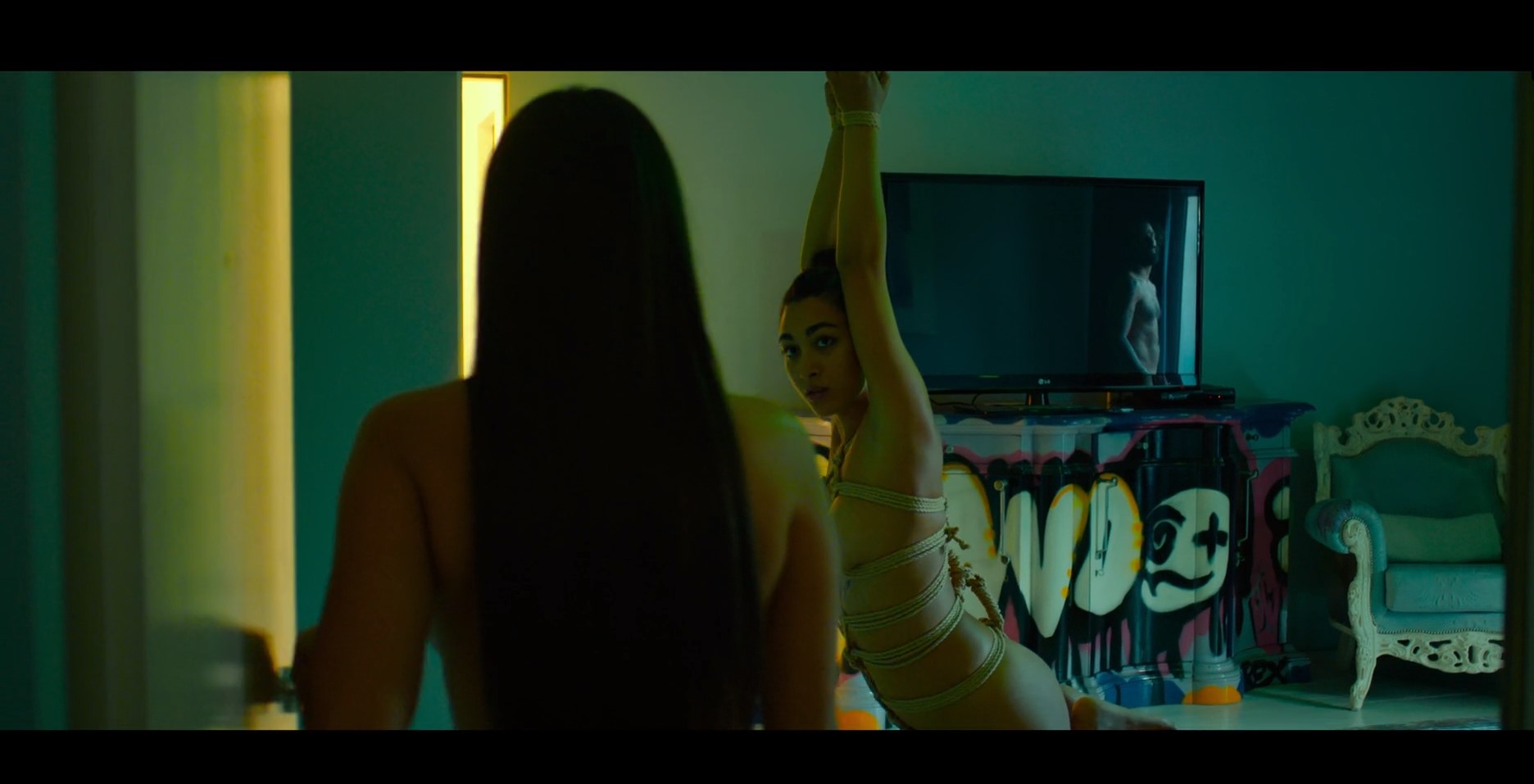
“Emanuelle’s Revenge” is carried by a small, four-person principal cast and half that for peripheral players within a dual-timeline story that provides the same cat-and-mouse game but with different, yet shocking outcomes on both of them.  At the tip of the spear is playboy Leonardo played by Gianni Rosato.  Sporting his best bandholz beard and pony bun, Rosato’s aggressive entrepreneurship extends beyond the working stiff hours and into the extracurricular activities of hunting down and dominating the opposite sex to sate his kicks for kink.  As the primary principal, Rosata receives the screen time that digs further into Leonardo’s psyche and what’s revealed about Leonardo’s nature is obvious trouble with an aggressive flirtation to the point where his whole game is akin to a stalker, showing up unannounced where he knows his targeted woman will be, obtaining their property that he has no right to, and essentially sucking their face with really bellicose kisses that look like they hurt.  Okay, maybe the latter is more overzealousness on Rosata’s part but certainly adds to Leonardo’s alarming behavior to which women seem to be attracted to as if giving into the idea that women prefer bad boys.  Such as the case in the first narrative with Francesca, a promising model with a now sex-relationship smart attitude after a previous relationship went terribly wrong with revenge porn.  Played by Ilaria Loriga in her own credited role, the young actress isn’t quite the epitome of innocence but is understandably weary to fall in love again with the persistent Leonardo but with all the foretell warnings of a disaster in the making, Francesca’s penned as sorely naïve and having learned not one single lesson of her past relationship with promiscuous men.  A year later, in the second act’s story, Emanuelle strolls into the picture under the olive-skin and deep eyebrows of Beatric Schiaffino who bats enticing eyes of the titular character’s hidden agenda. Schiaffino’s crafts a demeaner starkly different against her previous year counterpart as Emanuelle’s coquettishness doesn’t refrain from the fact she’s already in a hot-and-heavy relationship and matching Leonardo’s hot-to-trot escapade with a come-hither that’s just out of his reach. If a rake beckons a game of amorous desire, then Emanuelle enacts a game of her own, one of a lure to lead the blind right into her spider’s web and Schiaffino properly tightropes pleasure and purpose to a somatosensory stimulation level. “Emanuelle’s Revenge” rounds out with Luca Avallone as Leonardo’s licentious friend and business understudy, Ilde Mauri as Emanuelle’s lesbian partner, and Miriam Dossena as Leonardo’s 20-something daughter who suddenly pops into play in the Emanuelle story.

Even though “Emanuelle and Francoise” has never traipsed across my eyes, from what I’ve read the Joe D’Amato and the coproduction of Monica Carpanese and Dario Germani share a lot in common, but the modern-day version of this sordid tale of lust and revenge sticks to the venereal veneer only whereas D’Amato engages a cannibalism and other ghastly horrors. “Emanuelle’s Revenge” seduces with melodramatics, frisky fantasies, and contemptible thralldom because of one man’s wandering libido, focusing tremendously on the building game of mostly pavalar rather than diving into shock value. The narrative begins with a suicide of Francesca, jumping half nude off a busy passenger vehicle bridge, and this segues into Leonardo’s assertive activity into Francesca’s life and so the tale’s non-linear format is already incredulously fated with tossed in opening scene just to grab attention. When following Leonardo’s uncomfortable pursuit, and uncomfortable henpeck kissing, of Francesca, the audience is just along for the ride up to the point of incident where they’re abruptly blue-balled by cut-to a year later without knowing why Francesca decided to throw in her life towel. The brain and our movie-watching experience eventually catchup with the fact everything will be explained at the climatic, but the format jars the assimilating process a tad. Throughout the narrative, there’s plenty of a T&A to go around as I believe nearly every actress with speaking lines drops at least her top, living up to the long history of “Emmanuelle’s,” or “Emanuelle’s” fleshy affluence and erotic elements. Considering the plot twist, Carpanese’s approach doesn’t compel any creativity into the mostly remade erotic-revenger and makes contact with formulaic properties that poison any kind of novel ideas that might have been indited in the inner story layers.

Arriving at number 8 on the spine for Cinephobia Releasing, “Emanuelle’s Revenge” is now on DVD, presented in a widescreen 2.35:1 aspect ratio. The MPEG-2 encoded DVD9 has a sleek look albeit tumbling through a bitrate spread of 5 to 7 Mbps. Some surface coloring suffuse, especially on skin where similar tones seep into the adjacent due to block boundary artifact, but the amount is very little and doesn’t sully much to render the picture an admixed wash in the lion’s share of soft lighting. Details are okay here with the stunning urban landscapes and more opened metropolitan venues, such as a rooftop party, opening up audiences to the chic levels of high society’s profanation of control and sex. The release offers two Italian language audio tracks: A Dolby Digital 5.1 surround and a 2.0 stereo. If asked, I would suggest less channels as they are redundant and useless and go for the 2.0 stereo as there’s not much frequential range in what is essentially a talking head film with an exposition driven narrative. Dialogue is clearly and cleanly stated overtop other audio layers with a powerfully boosted stock file soundtrack in parallel unison to the theatrics. English subtitles are optionally available and the error-free translations keep up with dialogue pacing. Only other Cinephobia Releasing film trailers, including “Brightwood,” “The Goldsmith,” “The Human Trap,” and “Amor Bandido,” are available bonus content. The black background front cover delineates deliciously Beatric Schiaffino as the titular Emanuelle sitting open robed, in thigh-high laced stockings, and on her wicker chair throne. This image reminds me of a mistake in this revealing scene with the very first image of Emanuelle sitting in the oversized back chair resembling closely the front cover image, but the subsequent scenes have her once flesh exposed chest to midriff covered up with censurable continuity. Inside the DVD Amary case lie no insert and the same provocative front cover Emanuelle image more centrally cropped down and blow up to emphasize the seductive siren. The not rated, 83-minute feature is limited to a region one playback. “Emanuelle’s Revenge” spices up the contemporary franchise with erotic entails, exorbitant egos, and illicit indecencies despite its sacrificing of pacing and organization for sleaze, skin, and a side dish of kink.


Emanuelle’s Revenge now on DVD from Cinephobia Releasing!

An Evil Hangover is No Match Against…”Rotgut” review!

vlcsnap-00011
Six patrons become trapped inside a dilapidating New Mexico drinking hole when tainted Mexican tequila infests an unlucky boozer, turning him into a host for flesh-eating larvae and into an unwilling hand against the rest in seeking desperately for more flesh to feast upon. With the back and front doors inoperable and the phone lines dead due to lack of payment, the bar regulars must use every ounce of their fleeting sobriety and every aspect of the small hole in the wall bar to keep hope carbonated and afloat if they want to escape alive.
vlcsnap-00016
If you’re a fan of “Night of the Creeps,” “Slugs,” or “Slither,” this campy creepy-crawler will be your go-to session brew of choice because, finally, 2012’s “Rotgut” infests inside a home video distributor, courtesy of always delightful Camp Motion Picture. Director Billy Garberina helms the charge collaborating with another of Devin O’Leary’s scribed films involving a drinking establishment’s handful of thirsty-allured anti-heroes finding themselves literally fighting through their inebriated state against almost exactly the same intoxicating liquid they so desperately crave. Sure beats the hell out of an AA meeting.
vlcsnap-00014
“Rotgut,” simply put, is just not another run-of-the-mill creature film, oozing a path toward lovers of the said genre while still managing to follow a familiar suit within a typical bar location that becomes the death ensnarement, but this time around, a congregation of alcoholics are the hapless victims that are pitted up against the odds, similar to that of Robert Rodriguez’s “From Dusk till Dawn” and John Gulager’s “Feast,” but with more enticing and gross body horror and less antagonizing vampires and monsters.
vlcsnap-00015
Structurally, O’Leary individually sets up the players – Leon, Tom, Sloppy, Verna, Deena, Allen, and The Professor – to instill a developing persona or just provide an interesting backstory into each body that adds flavor to their character that would evidently punch you in the face when that character bites the fateful bullet and instead of creating good natured, outstanding personalities to fight a ghastly force, as if to underline good versus evil, the roster consists of deplorable and degenerative drunks embodied with past, present, and future hiccups and are on the cusp of not being redeemable toward being a part of society until faced with life and death choices to expose their true nature. Then, there is trio of ATF officers who are literal to each of the words of the acronym they represent; one officer smokes cigarettes, another drinks out of a flask, and the last official carries a sidearm. The dialogue-stricken characters need no exposition as they’re cleverly written into the story that’s already exchanges heavy in confabulation amongst the main roles mentioned above.
vlcsnap-00013
The impressiveness with Hank Carlson and teams’ practical effects don’t go unnoticed while, at the same time, the composite shots from visual effects artist Luke Fitch were just as effective. Both departments relayed the visceral consuming nature of the worms, splattering eye-popping blood everywhere, and transmitting their antibiosis organism through some fairly gnarly ways. Working with sluggishly minuscule organisms, whether digital, inanimately practically, or real, can be problematic, but Gaberina and team had the precision and the talent that made “Rotgut” outlandishly enjoyable with a half gallon handle of smeared blood slicked over the cast including Jeremy Owen, Aaron Worley, Megan Pribyl, Paul Alsing, Merritt Glover, Isreal Wright, and Whitney Moore.
vlcsnap-00018
Four years have swiftly gone by since this film quietly made debut in 2012 and has finally landed onto DVD from the fine folks at Camp Motion Pictures! “Rotgut” has undeservingly gone under the radar, but it shall no more, gifting audiences with supreme worm mayhem and bloodshed. The not rated DVD is presented in a 16×9 widescreen format with bonus features including a trailer vault and a lengthy behind-the-scenes featurette that displays the good times, and sometimes stressful times, of independent filmmaking. In the end, “Rotgut” come out on top with the gooiest, slimiest, and stickiest creature feature this side of the 2010.

You can BUY “Rotgut” at Amazon! Let it slither into your soul!

Evil Spanning Four Decades! “Dangerous Men” review!

output_acdWjK
Recently engaged lovers Daniel and Mina take a trip to visit Daniel’s brother. When they stop to take in one of California’s breathtaking beaches, two vicious bikers, looking for kicks, intrude on the lovebird’s romantic getaway, looking to rape Mina but ending up mercilessly murdering Daniel. Mina’s grief turns the distraught lover into a vengeful bitch, taking the lives of all salacious and beastly men who wish to exploit Mina’s virginal beauty. Meanwhile, Daniel’s brother, a praised police detective, personally takes on the case despite his Captain’s insistence of not getting to close due to his personal connection. The detective tracks down the drug dealer Black Pepper, the head of a notorious biker gang connected to the slaying of his brother, that results in an all out war!
vlcsnap-2016-05-01-19h51m41s138
“Dangerous Men” is an action film you hate to love, being so bad it’s good. The film was the non-aborted child of Iranian born, U.S. bound director John Rad, a pseudo name, who had a life-long vision from way back in 1979 to put an eternal awesomeness on the big silver screen and, in one way or another, completed that feat no matter how long the creative process. Only 26 years stood in between John Rad and his masterpiece “Dangerous Men” from being completed and theatrically released to the public, but, low and behold, “Dangerous Men” didn’t succeed into billions or even millions of box office dollars; instead, Rad’s film gained popularity in its notoriety, gaining almost instantly cult status through a niche group of garbage cinema aficionados. By the grace of the provocative arthouse film brew masters at Drafthouse Films and their continuous begging toward Rad’s daughter, “Dangerous Men” redefines the term guilty pleasure.
vlcsnap-2016-05-01-19h52m19s3
But what makes “Dangerous Men” so irresistibly appealing? Is it that fact that Iranian born Peter Palian from “Samurai Cop” fame is the most experienced crew member on John Rad’s amateurish, if not solo performing, team? To properly answer that conundrum-filled riddle, looking at what makes “Dangerous Men” so standardly terrible would ultimately lead to the answer. For one, a prominent lead character doesn’t exist in a plot that can’t focus due in part of the two decades the film was shot that resulted in the actors or actresses not being available or unwilling to complete Rad’s work. Various characters, like Mina (Melody Wiggins) or the cop brother (Dutch Van Delsem), come and go in their respective, decade housed plot paths and like one of Drafthouse Films’s bonus features makes light, the film ends on a still frame of characters who have had less than half an hour of screen time. Secondly, the amateur acting in exposition, the cut and dry editing, and the cartoonish foley, by the also writer-director John Rad, hones straight toward gut-punching you to explode into outrageous, painful laughter. “Dangerous Men” is a serious film that’s full of wacky action and some great moments of exploitation, especially scenes involving women knees, but when all the punching and exasperating is of the identical sound bite, like in a “Street Fighter” video game, taking Rad’s film seriously is hard to fathom. Thirdly, the longevity of filming created many production goofs that mistakenly implied the decade. From props, to haircuts, and to clothes, hints of years were obvious to the naked eye. Lastly, a title like “Dangerous Men” should end on an detonative high note; instead, falls just short of a chuckle and a “WTF.”
vlcsnap-2016-05-01-19h50m03s178
“Dangerous Men” snuggly finds a spot within the realm of other bad movies not to be missed. “Troll 2,” “Silent Night, Deadly NIght 2” with the infamous garbage day line, “Leonard Part 6,” and “Jaws: The Revenge” would gladly welcome “Dangerous Men” with open arms as a peer in preposterousness. With a little over a measly $2,300 in ticket sales on opening weekend from a film that probably cost John Rad thousands upon thousands of dollars to produce and a whole hell of a lot of time to construct, “Dangerous Men” is most likely an action-packed feature you’ve never, ever heard of before. One positive remark is the soundtrack, which is also composed by John Rad, was, in my humble opinion, swanky and, well, rad – a true testament to the era and the best effort for such bad film. Unfortunately, John Rad never saw his film blossom as he died soon after the release of his masterpiece, sometime mysteriously between 2005 and 2007.
vlcsnap-2016-05-01-19h52m32s133
Drafthouse Films, in association with MVDVisual distribution, courteously releases “Dangerous Men” on a sleek not rated two-disc, 1080p 1.85:1 widescreen Blu-ray and DVD set which has a region free presentation that still manages to hold in the cigarette burns and the faded coloring in a sort of time capsule from the 80’s and 90’s. The original print looks to have been kept in good condition for an easy upgradeable and cleanable transfer. The Dolby Digital mono stereo mix is fairly clean aside from some misaligned dialogue tracks with the video and the prevalence of background noise in certain scenes of poor record quality such as the Daniel and Mina restaurant scene. Drafthouse Films doesn’t discriminate amongst the quality of their releases when considering the bonus features. A 16 page booklet featuring documented full-length interviews with director John Rad, audio commentary featuring “Destroy All Movies” authors Zack Carlson and Bryan Connolly, “That’s So Rad,” an epigram stemmed from this film, is an original documentary about the film and its initial 2005 release, an interview with cinematographer Peter Palian, Rare footage of John Rad’s appearance on local access television, and the original theatrical trailer. Quite the laundry list of extras! “Dangerous Men” is so spectacularly unspeakable and trashy it shouldn’t go unseen for absolutely anything, not even for the birth of your first born child!