After EVIL Was Executed, A Movie Was Released! “Monster” reviewed! (Second Sight Films / Blu-ray)

Own Second Sight Films’ Blu-ray of “Monster.” Order Here!

Aileen had big dreams and big ambitions to be someone in life.  Growing up, she did what she had to do to get ahead, even if that means selling her body at a young age when she had no advantages unlike her peers.  Now getting longer in the tooth, Aileen still unhappily hooks to live hand-to-mouth, day-by-day, just to survive cruel circumstances.  When she meets Selby, a young, lonely lesbian looking for friend, the two become attached at the hip becoming exactly what each other need at that moment.  The two become intwined was not only friendship but passion as Aileen promises to quit the streets and make a better life for her and Shelby but when one of the last nights of prostitution winds up almost killing her and her unloading bullets into attacker, Aileen succumbs to a taste for murdering sleazy men in order to satisfy Selby’s love.  How far will Aileen go to achieve her dream?

The sad story of Aileen Wuornos life is much more than the serial killer segment she’s most infamous for.  Wuornos unlucky dealt hand could be considered the archetype of white trash narratives being born to teenage parents, practically raised without role models or stable parents, sexual and physically abused by those close to her, impregnated during the middle of her high school teen years, kicked out of her grandparents’ house, and learned to survive through the old profession of prostitution.  Yet, all that tragedy is not in the story that is about to unfold before you in “Monster,” the 2003 biopic thriller from “Wonder Woman” director Patty Jenkins.  Mostly authentic with bits and pieces adjusted to protect individuals from the public eye, “Monster” accounts for what Aileen is responsible for, the multiple slayings of clients who were accused by Aileen as rapists and abusers during their sexual transaction.  Also touch upon, and in a very heart-rending sense, is Aileen’s love for another woman and how their relationship crumbled under the stress of life’s tremendously unfair hard knocks.  Jenkins writes-and-directs the film with Wuornos’ blessing under the multiple production umbrella of Media 8 Entertainment, New Market Films, Denver & Delilah Films, K/W Productions, DEJ Productions, and, in association with, MDP Worldwide. 

To play labeled America’s first female serial killer, Patty Jenkins sought after Charlize Theron who, at that time of the early 2000s, was hitting the height of her career having starred alongside Keanu Reeves and Al Pacino in “The Devil’s Advocate,” Johnny Depp in “The Astronaut’s Wife,” and Mark Wahlberg in the remake heist film “The Italian Job.”  Theron, a stunning woman who became the epitome of glamour and beauty in the eyes of Hollywood, put herself through a transfiguration for the role of Aileen Wuornos.  Gaining weight and capturing Wuornos mannerisms and thoughts-process to play, as close as possible, the woman who would go on to murder 7 men in late 80s, early 90s.  Play is perhaps too broad of term for Theron who depicts a drastic overhaul of her looks and her idiosyncrasies to recreate Wuornos in the flesh and in the mind, creating a lifelike illusion of Wuornos on screen that garnered her an Oscar.  Theron’s costar, however, did not dress the part of Aileen’s real-life lover who opted to remain in the shadows of a private life, disconnected from her past sordid by true life crime.  That costar is none other than Christina Ricci.  The “Addams Family” and “Sleepy Hollow” star adds a slender, petite, fictional companion as lonely-lesbian Selby Wall against, who we know more about today, was a heavier set and butch woman that was Aileen’s romantic partner, Tyria Moore.  Jenkins invokes a sense of loneliness between the two women who find each other when they need each other the most, at the lowest point in their lives, and when their journey together seems hopeful, bright, and prosperous, life’s muck and judgement comes raining down life hellfire.  Aileen’s series of johns make up the rest of the cast and a few have familiar faces, such as Pruitt Taylor Vince (“Identity,” “Constantine”), Scott Wilson (“The Walking Dead”), Marc Macaulay (“Wild Things”) and Lee Tergensen (“The Texas Chainsaw Massacre:  The Beginning”) with Tim Ware, Brett Rice, Marco St. John, and the Oscar winner Bruce Dern (“The Burbs’) rounding the cast out. 

Having been released over two decades ago, “Monster” still retains relevance even when the real-life Aileen Wuornos no longer breathing after her execution in 2002.   “Monster’s” focus isn’t about the episodic killings of a laundry list of varietal behavioral clients who either seek sex out of loneliness or seek it for other devilish, wicked means as Patty Jenkins hones in on a more strung along motif of loneliness that connections not just our principal characters but, in a way, most of the Aileen’s men, the clients.  Baked and weathered by the hot Floridan sun and about as vocally turbo-charged as they come, Aileen isn’t the most beautiful street girl, and not even the most pure and refined soul, but provides a service, a service of warm skin, closeness, and pent-up relief.  In turn, that same service becomes her jailor and her undoing, shackling and imprisoning her growth form an early age, stemmed by a childhood she didn’t have, that didn’t allow her to become somebody and to make something of her downtrodden existence.  The murders are in a backseat, second fiddle to that blossoming love story between her and Selby that engulfs and drives the violence that seeks no end.  Itty-bitty details shine through into Aileen’s humanity, as a perk of the person rather than the monster she’s perceived after the fact, after the trail, and after her capitalized death.  Patty Jenkins sought to make an homage as the reason rather than just the basic news coverage of Aileen Wuornos and achieved eye-opening success.

Second Sight Films invests into a new Blu-ray release with new content encoded onto AVC, 1080p resolution, 50-gigabyte disc, scanned in 2K from the original 35mm film and presented in a 1.85:1 widescreen aspect ratio.  What’s impressive about the Second Sight release is retaining the natural looking grain of celluloid film.  Hues are approached organically without an overabundance of grading and this release sees to preserve “Monster’s” hard-edge and enough definitional nooks-and-crannies, especially around the weathered skin and fibrous features of Aileen Wuornos biological appearance.  The Blu-ray comes with two lossless, English audio options:  DTS-HD Master Audio 5.1 and a LPCM stereo 2.0.  Both offers true fidelity through the layers of range and depth but whichever A/V setup you have will dictate the format you choose.  However, the Stereo option is a good, well-rounded, full-bodied option for all as “Monster” is more a talking narrative than a caffeinated spear of action, but the rear and side channels due funnel a nicely diffused environmental ambience of highway traffic and some supplementary crowd noise underneath a well-verbose and amply clean and clear dialogue track.  New, exclusive content line the special features option on the fluid menu, such as a new interview with Patty Jenkins Making a Murderer that goes into depth about her relationship with muse Aileen Wuornos through conversation and letters as well as Charlize Theron’s transformation and performance, a new interview with producer Brad Wyman Producing a Monster, and a new interview with Director of Photography Steven Bernstein Light from Within that captures a late 80s-early 90s without infusing artificial concealer.  Other supplementals available are an audio commentary with director Patty Jenkins, actress Charlize Theron, and producer Clark Peterson, the evolution of the score featurette, deleted and extended scenes with Patty Jenkins commentary, a making-of featurette that bases the film out of being a true story, and the original theatrical trailer.  For a standard Blu-ray release, Second Sight provides a ton of content; however, there are no physical goodies, nor does the standard release come in a rigid box.  Inside a green Amary case, the single sided front comes, in what has become a prolonged motif amongst Second Sight releases, with a two-tone of black and blue or black and purple and austere cover art of Theron’s portrayal of Wuornos looking worn down.  The UK certified 18 release for strong violence and sexual violence has a runtime of 109 minutes and is hard encoded region B locked so you’ll need either a region B or region free player for playback in the Americas.

Last Rites: A beaut of a Blu-ray for the now over 20-year-old “Monster” that sees new content and insights that cast less shade over a troubled existence that inflicted real life killer Aillen Wuornos. Patty Jenkins and Charlize Theron do the story justice and Second Sight Films just follows suit with enhancing its story told quality.

Own Second Sight Films’ Blu-ray of “Monster.” Order Here!

Blind, Witchy, EVIL! “Beezel” reviewed! (Epic Pictures / Blu-ray)

“Beeze” is the Witchiest Blu-ray of 2024! Get it here!

May, 1966 – a young boy is murdered, eaten, in his Northeast home.  Nearly six decades later and a series of disappearances and strange deaths in between, a young couple inherent the property that the locals have feared haunted, cursed, and possibly even inhabited by a witch.  As the house-inheriting husband is eager to sell the house to get rid of the reminder of his mother’s abandoning betrayal, the wife is equally eager to keep the house, settle in, and start a family.  The house possesses a presence captured by the corner of the eye, the hairs on the back of the necks, and the overall sense of dread that lies heavy in the pit of the stomach as the more the couple stay in the house, the more the Beezel, a blind evil witch lurking and hiding in the basement, influences their dreams and reality.  Beezel also wants a child and will take what it desires and kill anyone standing the way. 

What the horror genre needs nowadays is a ferocious witch film and I’m not talking the spellcasting, broom-riding, cauldron-congregating kind of witches with black pointed hats, large warty noses, and catty familiars.  I’m talking about hardcore old and ugly broads with an extreme hunger for not just children but for all of humanity, capped off with, perhaps, a good, solid cackle that’ll redefine the iconic figure from the traditional sense to a reverse revolutionized hag rooted in folklore but scorned by life itself.  A few filmmakers have tackled the idea and filmmaker Aaron Fradkin has taken a stab at it with “Beezel,” a 2024 Northeast-shot, visceral supernatural witch tale that was originally a short film expanded into a full-length feature film based on the short’s positive feedback.  The “Val” director cowrites with wife and fellow “Val” actor-writer, Victoria Fradkin under their cofounded independent film production company Social House Films. 

Because “Beezel” was first a short film, to flesh out a full length, the Fradkins smartly built around the short story an episodic series around it that spans decades.  Different actors are casted to reflect different periods, circumstances, and develop a variety of reactions to keep with and keep going a timeline of change, connected all by one single element, the carnivorous blind witch lurking in the basement shadows.  1966 starts off with more of child’s perspective who opens a secret bathroom hatch to the basement to see his pleading-for-food mother before his arm is snatched and he’s rip-to-shreds off camera.  The vicious and quick opener doesn’t leave open the door of development and we don’t get a real sense of anything or anyone until LeJon Woods (“The Hangman”) meets Bob Gallagher (“I Don’t Want to Drink Your Blood Anymore”) about 20 years later outside the home as the documentarian and homeowner, Apollo and Harold Weems.  Having seen now three films his this year, LeJon Woods feels very much like a one-note actor playing the same person throughout those roles.  Gallagher dips into a more sinister cover as the seemingly Mr. Rogers or Ned Flanders neighbor that drops breadcrumb clues of his dark secret and its one scary in-character conversation he has with Apollo.  From there, we jump another 20 years into the early 2000s with what was initially the original short film of an at-home nurse named Naomi (Caroline Quigley) replacing another nurse who disappeared in the Weems house.  This leads into the third act really sets up nicely Harold Weems second wife, Deloris (Kimberly Salditt Poulin), who’s on her deathbed in hospice care and solidifies the tone with a girth of suspense that leads into what would be the final moments left unseen of young couple Lucas and Nova (French actor Nicolas Robin and the director’s wife Victoria Fradkin).  Lucas, who inherited the neighborhood blighted house from his mother Delores, is eager to remove all denotations of his mother from memory, the free-spirited and more forward Nova wants to settle, have children, and start living her life.  Their bond sours overtime with the witch influence invading the subconscious and conscious body for her own ravenous gain in a blood-spilled buffet of knives, guts, and videotape.  The film rounds out with Elise Manning, Leo Wildhagen, and Aaron Fradkin dons the makeup and prosthetics to play the blind witch Beezel.

Fradkin’s able to capture desolate mood with limited production sets.  Most of all the “Beezel” story is set inside Fradkin’s childhood home in Massachusetts and with real, cold, New England snow that latter half of the story takes place.  Every tight and cobwebbed crawl space, every radiator-induced floorboard creak, and every outdated, antiquated, and obsolete feature of his parent’s home gave every ounce of spooky energy to “Beezel,” which, ironically enough, is what Beezel actually inflicts upon the current residents of the house.  Editing and the practical witch effects build the tension and suspense without giving too much away of Beezel’s hideous figure, cherishing Beezel for timely appearances rather than relying on its overuse which often leads to exposing too many rubbery and prosthetic flaws.  The episodic nature also keeps the story from being stale by jumping years, if not decades, that shepherd new characters and new scenarios into the fold as the story evolves through the difference lens of technology, in a half-ominous and half-found footage perspective with the latter being shot in super 8, VHS, and digital handheld camcorder and the original short breaking up the pattern with a microcassette tape deck.  “Beezel” perfects the blend of live-action and found footage without feeling forced and unnecessary with a truly frightening approach to the witch trope that’s worth devouring whole. 

The Social House Films brings the meanest witch this side of 2024 and Dread, the subsidiary label of Epic Pictures Group, who also pushes their own boundaries with “Beezel’s” visceral path, as well as sport some uncommon nudity in one of their films, has the Blu-ray for you! The AVC encoded, 1080p resolution, single-layer BD25 manages to scare through the lower end of capacity format with really no issues with compression. No banding, no blocking, nor any other noticeably ostentatious artefacts to speak about as the rendered image, despite its softer detailer markers, pulls off a passable and potent portentous story through a digital, anamorphic 1.78:1 aspect ratio lens, often switching between media parallels of POV Super 8mm, VHS, and DVX camcorder that vary in levels of detail and grain. Dread Central presents two English audio options, both lossy: a Dolby Digital 5.1 and a Dolby Stereo 2.0. Surrounding, multi-level house atmospherics, various media equipment, in-and-out of the dream subconscious, and, of course, the blend witch herself, create an unfaltering, ample, and competent sound design although the format doesn’t reproduce true fidelity. Back and side channels flourish with frightful house creaks and other environmental elements while basking in the silence for a solid jump scare or building palpable tension. English subtitles, as well as Spanish subtitles, are available for selection. Special features include an in-depth look at the making of the film, Aaron Fradkin’s short films “Doctor Death” and “The Sleep Watcher,” and other Dread Central distributed film trailers. I had aforementioned Beezel not being shown too much in the film but her rather grotesque, bloodied-mouthed face captured in still image, glammed up and embellished for public consumption, graces Epic Pictures’ one-sided, front cover image, warmly soaked in a reddish-orange glow. The disc is pressed with a Scolopendra, or Giant Centipede, coiled over the title. No other tangible items come with the release. The not rated release has a runtime of 82 minutes and is region free for all!

Last Rites: As we close out 2024 with an evil old hag, “Beezel” is one hell of a movie to close out on. Soul-tattering story that spans decades, “Beezel’s” the witch with an incredible insatiability and her hunger will have you recoil in fear of being the main course.

“Beeze” is the Witchiest Blu-ray of 2024! Get it here!

Beware of Friendly Strangers, They Just Might Be EVIL! “Speak No Evil” reviewed! (Acorn Media International / DVD)

“Speak No Evil” has Speechless Horror! Now Available at Amazon!

A Danish family on holiday in Tuscany meets a family from Holland.  The two families hit it off enjoying each other’s company on the final days at the getaway villa.  Weeks after returning home, a postcard arrives from the Dutch family, inviting the Danish family to stay with them for a weekend at their home.  What starts off as the pleasant beginnings of friendship slowly degrades to an unsettling suspicion something is not right with the Holland family.  Abel, the Dutch couple’s mute son, is held to a higher standard with uncompromising, punitive measure, the husband and wife’s acute uncouth behavior sets an uncomfortable stage, and their attention toward the Danes’ daughter, Agnes, is unconscionably overstepping parental boundaries.  An attempt to call out or even leave the home altogether has been met with disbelief, guilt, and pleads for stay and enjoy under their guise of sincerest apologies soon to be dropped for something far more sinister. 

Before James McAvoy grew a beard, got jacked, and attired himself in buffalo plaid for his manly maniac performance in the 2024, usurpative family thriller, “Speak No Evil,” directed by “Eden Lake’s” James Watkins, the Netherlands and Denmark were the original blunt forces behind the sociopathic caprices of those assumed normal and amiable adults.  Only released two years ago, the 2022 film that spurred the American remake and the feature’s namesake is directed by the Copenhagen-born Christian Tafdrup (“Parents’) and co-written between Christian and brother, Mads Tafdrup, as one of their numerous collaborations since 2017, beginning with a manipulative tale of a viperous female in “A Horrible Woman.”  Profile Pictures (“Holy Spider”), in a co-production association with OAK Motion Pictures, serves as the production companies on the Jacob Jerek, of Profile Pictures, and Trent, of OAK Motion Pictures, produced motion picture shot primarily in the southern portion of Netherlands in the Friesland region.

The Danish father and mother, Bjørn and Louise, are played by Morten Burian and Sidsel Siem Koch and before becoming ingrained into the crux of the story, the couple reflect a complicated complexion all on their own, especially and specifically with the focus toward Bjørn who seems unsatisfied or unhappy with his life as he’s shown staring off in the distance or mentally checking out at the dinner table.  The Danish are represented as a couple who are too nice to a fault, unable to say no most of the time, and try to keep to themselves mostly when a problem arises, skirting away without notice in a dust of avoidance.  That’s not so much the case with the Holland father and mother, Patrick and Karin, bordering as an equally amiable couple performance by Fedja van Huêt and Karina Smulders.  That is until the outer appearance of friendly strangers turns into an uncomfortable nightmare of being caught between a rock and a hard place of how other people live and do things, especially from another culture or country.  Patrick and Karin show more passionate displays of anger, sexuality, and bohemianism that wasn’t on display on their shared holiday with the Danes.  Then, there are the children.  Agnes (Liva Forsberg) is a lovely young daughter perhaps too coddled by her parents, especially by Bjørn who can’t resist saying no in going to find Agnes’s beloved stuff animal when she constantly loses it.  Abel (Marius Damslev), on the other hand, is shy and can’ talk due to a tongue malformation, but the overly critical parenting by Patrick and Karin keeps Abel on a silent edge.  The Holland family’s outer haul slowly regresses, facades drop, but still the Danes are reeled back in by their own niceties despite all the red flags.

I can’t help but think those comportment particulars are somehow a reflection of the Denmark peoples’ true nature as a statement to their culture and social relations between themselves and, in this case, their neighboring countries.  The Tafdrup brothers prelude the script with verbal contrast between the two countries, such as their similarities, but the Tafdrup’s firmly stamp that just because you’re similar doesn’t mean you’re the same.  The notion can be applied to anybody of people from groups to individuals living amongst each other in a neighboring fashion and that their differences are being conducted right under your noses.  Of course, the script then embellishes more a distributing sensationalism of a spider leading the innocent moth to it’s sticky web by an attractive, orienting glow of light.  The analogy is right up Bjørn’s alley as a man who is looking to loosen the chains of parental and marital, perhaps even inherent to his nationality, suppression in a misguided notion that his promises have put a limitation on freedom; he finds himself attracted to Patrick’s freewheeling way of life and wants to emulate that in some sort of way.  The psychology behind “Speak No Evil” runs rampant with a paralyzing inability to let wicked do what it wants without confronting it head-on or without fighting it.  “Speak No Evil” is a chilling story of the all too familiar Edward Burke phrase, the only thing necessary for the triumph of evil is for good men to do nothing

“Speak No Evil” arrives onto UK DVD from Acorn Media International co-presented as a Shudder Exclusive and IFC Midnight production.  The MPEG 2 encoded, upscaled 1080p, DVD9 is presented with an anamorphic aspect ratio of 2.35:1 that encompasses an array of landscapes from vast fields, rocky dunes, and Tuscany vistas.  Contrastingly, director of photography Erik Molberg Hansen goes for an austere, harsh grading with little less light to give everything surface a rough edge from skin to fabric to natural to synthetics.  Colors a held at neutral browns, tans, grays, and blacks to accentuate the severity that continues to increase as the story progresses when moving away from holiday in Italy to the morose, rock-strewn dunes in Holland and while details are generally lost in dense nighttime exteriors, the more brightly lit corners excel in isolated spots.  The Danish-Holland-English audio comes in only one format, a lossy Dolby Digital 5.1 surround sound mix.  Adequate for this type of interpersonal awkwardness, the score and sound design offers a plentiful mix free from compression issues or physical obstacles on the recording in post.  “Speak No Evil” is person-on-person violence in the most primal form that leaves the possibility of added effects from violence next to nothing in what is more of a less is more design under a suppressive audio format that’s akin to trying silence a low-talker.  Dialogue is clean, clear, and at the bow of all the other layers in the audio boat.  What’s interesting about the encoded English subtitles is that they’re only available for the Danish dialogue and not the Netherlanders’, which adds an additional layer of intrigue and suspension as the non-native Dutch speakers with not understand what Patrick or Karin are communicating between each other.  The static menu offers no special features option and there is no stinger at the end of the credits.  The clear DVD case showcases that austere black and gray look with one of the story’s most engagingly odd scenes involving Abel.  The insides are standard edition bare as well with this disc pressed with the same primary image.  THE PAL disc is hard coded with region 2 playback, has a runtime of 93 minutes, and is certified 18 for strong violence and injury detail.

Last Rites: The original “Speak No Evil” speaks volumes of the dangers of societal pleasantries that turn a blind eye to caution for the sake of not hurting the feelings of others, but those subconscious hints are a part of the innate, primal early warning system in us all. Once we ignore those insinuations, we might as well dig our own grave.

“Speak No Evil” has Speechless Horror! Now Available at Amazon!

EVIL Doesn’t Take Rejection Well. “Village of Doom” reviewed! (Unearthed Films / Collector’s Edition Blu-ray)

“Village of Doom” now on Unearthed Film’s Collector’s Edition Blu-ray!

Tsugio Inumaru is considered the smartest young man in his village.  Illness took the life of his parents, and he raised by his grandmother and lives off her land’s income, looking after him and dreading the day Tsugio becomes drafted as a soldier in war service, which bestows great honor from the villagers.  While husbands are away serving their country, bored and lonely housewives and bachelorettes desire the carnal company of the men remaining and with Tsugio’s youth and his own sexual yearnings bubbling to the surface, he’s prime Kobe beef for the hungry village women.  When Tsugio’s health examination reveals a tuberculosis diagnosis, he’s acutely shunned by the villagers, drying up his sexual escapades, as well as potential betrotheds.  Rejection by his village, and even his country, sends the young man into plotting a massive killing spree, targeting all of those who’ve forsaken or scorned him to a life not worth living. 

In the Tsuyama outskirt village of Kamo of 1938, 21-year-old Mutsuo Toi cut the village’s electricity, strapped flashlights to the side of his head, and took a mini arsenal that included a Browning shotgun, a katana, and an axe to 30 villagers, including his grandmother, in an act to revenge killing for being rejected socially and sexually because of his tuberculosis diagnosis.  What is known as the Tsuyama Massacre, Mutsuo Toi’s cold and merciless act of carnage was the basis for Noboru Tanaka’s “Village of Doom.”  The pinkupsloitation director of “Rape and Death of a Housewife” and “Angel Guts:  Nami” helms the Japanese, semi-biographical tale, penned by Takuya Nishioka (“Tattoo,” “Female Teacher:  Chain and Bondage”), that follows closely the bullet point events of Mustuo Toi but with different named characters and a strong pink eiga touch.  “Village of Doom” is one of Kazuyoshi Okuyama’s (“R100,” “Self-Bondage:  All Tied Up with My Own Rope”) first produced ventures and is a production of the Fuji Eiga and Shochiku Eizo Companies. 

While Mutsuo Toi is not directly portrayed, his downward spiraling steps are indirectly followed by Tsugio Inumaru, played by the late Nikkatsu actor Masato Furuoya.  Furuoya’s relationship with director Noboru Tanaka is well established within their director-actor collaborating context with Furuoya having roles in Tanaka’s previous credits of “Rape and Death of a Housewife” and “Angel Guts:  Nami.”  There’s a blanket of comfortability within Furuoya who must treat his character as one-part pink paramour and one-part biographical massacrer, seducing with a tantamount tease of fantasy and authenticity.  Furuoya’s beleaguered performance is a jagged mountainous range of emotions from confidence and compassion to hormonal desires, to the stressed misgivings from cold shoulders and bad fortune mishandled by Tsugio’s own sense of worth to his himself and the village that has turned its back on him.  In keeping with the simulated practice of Yobai, the night crawling sexual escapades amongst young men and women, typically unmarried men and women, Tanaka portions heavily toward Tsugio’s internal grievances with the suddenly thrusted into the primitive and stimulated needs of a young man’s novice sex drive awaken with a morsel nude photograph.  Furuoya’s costars are the collective antagonist from the perspective of Tsugio with their geniality turned hostility of the TB diagnosis.  Sexualized warmth and freedom run rampant, peppered in between with subdued duty to village and country, that cradles an shy Tsugio’s into his manhood but when his manhood is threatened and the village neglects and rejects his contributions, Tsugio’s acute ostracization from within the only community circle he’s ever known disfigures his rationality into revenge.  The cast is surprisingly pink vet lite with the actors coming from other Japanese oriented popular subgenres like samurai films, erotic but tasteful comedies and romance, and horror with Misako Tanaka, Isao Natsuyagi (“Female Prisoner #701: Scorpion,” Kumiko Ôba (“Hausu”), Shino Ikenami (“Evil Dead Trap 2”), Midori Satsuki, Yashiro Arai, Renji Ishibashi, and Izumi Hara (“Island of the Evil Spirits”).

“Village of the Doom” is a two-toned down spiral to build up only to crash down the hopes of an impressionable young person.  Similarly seen in later works like Gus Van Sant’s “Elephant” where the visually intense, raw, and viscerally slicing culmination of enough-is-enough points back to the series of occurrences that significantly mile mark every step lead to the slaughter.  Set inside a valley surrounded by green mountains, the idyllic and rural riverside village impresses more backdrop tranquility than doom with slower pace and dutiful lifestyles but like most cutoff societies, the slow, insidious corruption of morality courses with infectious infidelity under the guise of Yobai, upends rightful justice and trades in for lynch mobs, and wanes promises for easy streets and exploitation run out dates that run its course for one but not the other.  All these aspects have relevant translatability to today’s cliques and inner circles that oust the unusual to where a sense of belonging feels hopelessly frustrating.  The isolation is so engrained that it highlights, in a very matter-of-fact way but does speak to it quite a bit, is the incestuous relationships between related villagers with the instances of Tsugio and cousin Kazuko’s flirtatious meetups and talk of marriage as well as Tsugio accidental arousal around his cousin’s aunt.  This adds to the tension and the corruption of that old idiom of don’t shit where you eat and the evident sourness spoils relationship ties when family is important to lessen the blows of life’s subsidiary problems.  For Tsugio, who is already dealt a bad hand with both parents deceased and his illness, the whole village rots what’s left of his innocence and ambitions and, in turn, aims to exterminate those who’ve foiled his purity.

A wicked, notorious true crime story now for the rest of the world to visual in “Village of Doom” on Blu-ray, courtesy of Unearthed Films on their Unearthed Classics sublabel.  The new Collector’s Edition Blu-ray is format encoded onto an AVC encoded, 1080p high-definition, BD50.  The picture is tempered with the muted colors, or rather the scaled grays, of an archaic Japanese village coupled by the browns and straw hued housing set amongst in and surrounded by a sea of green foliaged valley, and while objects are delineated nicely without any saturation bleeding or compression issues, the colors don’t necessary pop.  What does pop are the textures of the same articles mentioned above.  The groves of thatched wooden abodes are remarkable deep, the greens, though seamless, are nicely touched upon in the foreground, and skin consistencies vary person-be-person within idiosyncratic personal brackets with dynamic sweatiness and emotion-delivery contouring to accentuate.  The Japanese LPCM 1.0 mono has no problem discerning elements.  Though all funneling through a single channel, the dialogue and ambience works together thanks to the clean, more immersive ADR.  Mashanori Sasaji’s tests the soundscapes of traditional Japanese drum rhythms of Oo-daiko with then modernized synthesized notes to create a forebodingly, entrancing composition.  With any post-production voiceover work, dialogue is very robust, and the synchronized English subtitles offer an error-free and organic translation.  The original audio file is compressed cleanly with no issues with crackling, hissing, or any other damage for noting. Unearthed Film’s 17th spined Classics title supplements with an audio commentary by Asian film experts Arne Venema and Mike Leeder, a look at the Tsuyama Massacre in Dark Asia with Megan: Case #57 Japan’s Darkest Night, a promotional gallery, and the theatrical trailer. The Amary Blu-ray case is housed in a cardboard O-slipcover featuring Mutsuo’s iconic night-crawlin’ getup on Masato Furuoya’s Tsugio in colorless black-and-white. The case has the same image used for the cover with no reversible sleeve and the inside does not contain any tangible inserts or materials. The disc is pressed with not the same image but the same head flashlight Tsugio, this time looking right at you in unison with his shotgun barrel. The not rated feature has a runtime of 106 minutes and is region A locked.

Last Rites: “Village of Doom” depicts the same sad story that strikes the hearts of today’s mass shootings, spurred by the dispel from those in proximity, intimate, and friendly. “Village of Doom” is a true classic of casted out carnage relit by Unearthed Films to retell the notorious narrative of Japan’s deadliest mass killing ever.

“Village of Doom” now on Unearthed Film’s Collector’s Edition Blu-ray!

The James Brothers’ EVIL May Not Compare in “Killers” reviewed! (Synapse Films / Unrated Director’s Cut Blu-ray)

“Killers” Unrated, Director’s Cut on Blu-ray from Synapse!

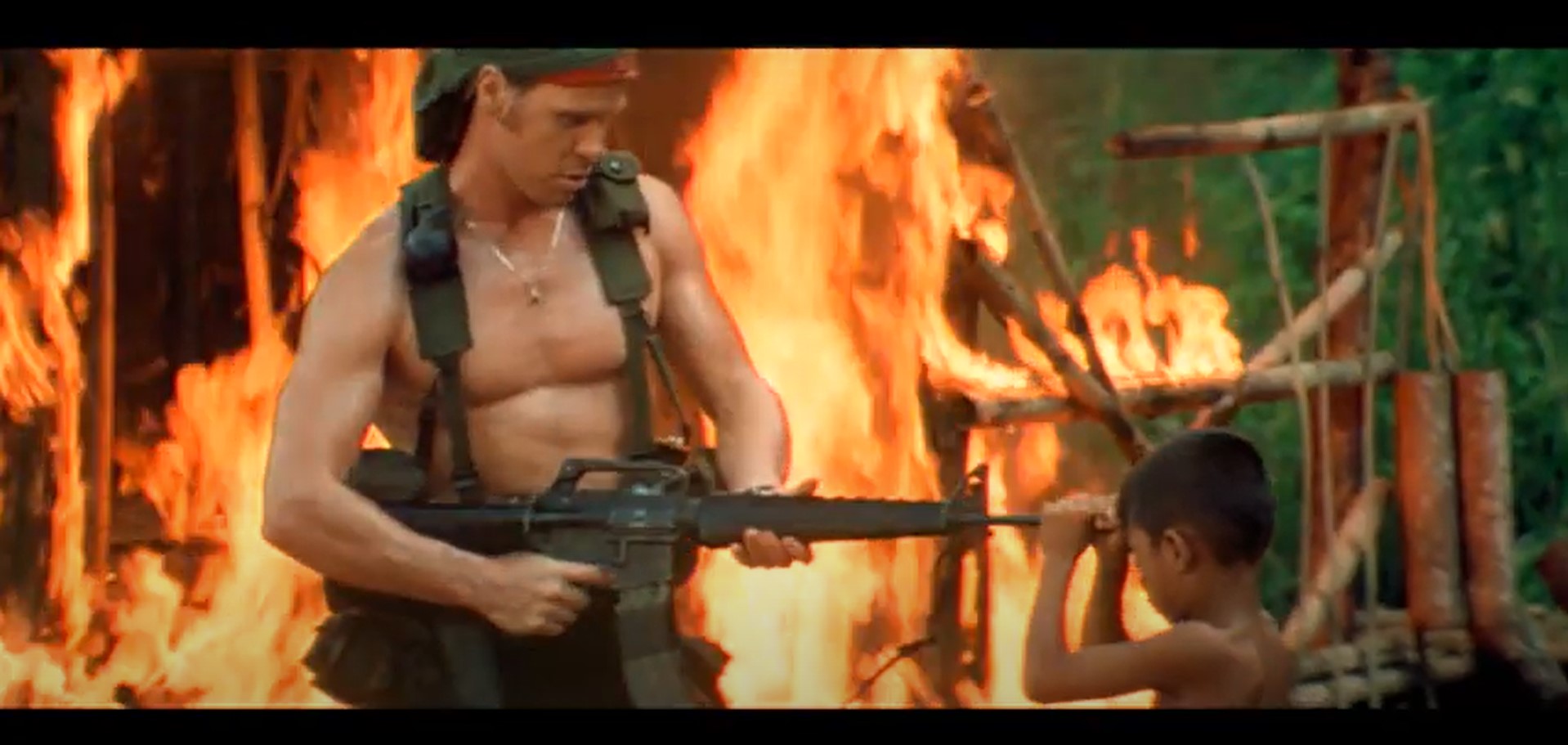
Odessa and Kyle James paint half their faces with skull imagery, don their Santa hats, and load their pump action shotguns and on Christmas Eve, walk into their parents’ bedroom and unload multiple shells into them where they lay without mercy.  A trial sentences them to death row for their crimes despite their calm efforts to dismiss the State and prosecutor’s case against them.  Years later, the brothers escape from the maximum-security prison and are the loose in the town of Beatty where the Ryan family happily watch television and play board games on a stormy night.  With U.S. Marshalls hot on their tail, Odessa and Kyle invade the Ryan home where their strangely more than warmly welcomed by the mother and two daughters.  It quickly becomes clear their usurpation of the Ryan household is more of a sheep in a wolf’s clothing and the meager, goody-two shoes Mr. Ryan will reestablish dominance and show the James Boys the real man of the house.  

1996 marks the year of Mike Mendez’s debut feather-length film, titled simply “Killers.”  “The Covenant” and “Satanic Hispanic” segment director writes and direct a philosophical and brutal home invasion thriller cowritten by one of the film’s principal actors, the late Dave Larsen (“Vampire Centerfolds”), full of unusual twists that can second guess everything you know about storytelling.  “Killers” cements under his greenhorn feet novel elements of twisted character studies while finding homes for bad boy cool characters, stylized shootouts, and a smoky noir and dark dwelling cinematography to commingle with his anarchic structure and tale.  The U.S. produced film is independent funded by star-producer Dave Larsen under the LLC of The Lost Boys, a reference from the film’s story that labels the escaped convicted brothers as such, with Joseph E. Jones-Marion as coproducer.  Most of the funds were secured by Dave Larsen’s father, S.E. Larsen, after remortgaging the family home.  Eventually, the home was foreclosed upon after Dave’s premature death.

Dave Larsen and David Gunn entrench themselves into the sordid souls of sociopathic brothers Odessa and Kyle James, inspired almost to the exact murder by real-life killers the Menendez Brothers who committed parricide in nearly the exact shotgun-loaded manner in Beverly Hills 1989.  Portraying mindful. ruthless killers with intellectual monologues and a panache that’s very Mickey Rourke pastiche, the solemn faces and confidence carrying Larsen and Gunn go greatly above and beyond the call for the titular types.  Thinking the summit has been reached and there could be nothing more grave than two brothers snuffing their own mom and dad without hesitation, who kill Beatty locals with intent, who steal daughters (Nanette Biachi, “The Killer Eye,” and Renee Cohen) and a wife (Damian Hoffer) for their own carnal pleasures, and who bully and insult a respected husband, father, and man (Burke Morgan, “Bloodsucking Babes from Burbank”) of the Beatty community, the tables suddenly and jarringly turn and viewers will be knocked unbalanced when the police storm the door, lead by U.S. Marshal Lorna McCoy, played by the quick and sarcastic lip of Wendy Latta, and discover just then who that two killers are actually more in this seemingly quiet and small suburban house, rivaling the James boys, if not surpassing their malevolence even if just a little.  The “Killers’” cast doesn’t stop there as Ellis Moore (“Femme Fontaine:  Killer Babe for the C.I.A.”), Ivan Vertigo, Chad Sommers, and Carol Baker becomes a part of the fray.

“Killers” defined is simply a conceptual paradox.  If two unstoppable forces collide, the logical result would be an unfathomable outcome as nothing can stop an unstoppable force.  Instead, what may occur is a massive particle explosion, a rift in dimension time and space, or a vast nightmare so bizarre nothing can compare to it.  “Killer” embodies every quality of the latter in its maniacal melting pot of phantasmagoric potpourri, especially through the Mendez lens of engulfing shadows and mostly Duke blue and poker hot red gel tints.  Following the progression is a guessing game unto itself with welcoming and shocking pivots that parade forth a Hell on Earth turn of events.  You think the story’s going one way then it acutely shifts, and this happens more than once to the point where none of the previous groundwork or what’s instore for the future can be taken for granted in this fluid, subversive, kill-or-be-killed home invasion and cannibal bipartite.  For a first-time independent production, weapon props are extensive, gory moments are effective, makeup has grotesque appeal, and the dialogue indulges in shades of conversation complexity that equally match the complexity of the characters’ MacGuffin backgrounds.  Mike Mendez’s impressive start to his career has provocative monologue and stylish notes of Quentin Tarantino and William Freidkin bathed in primary color gels and a tale zigzagging with zeal.

Available for the first time in high-definition, the director’s vision, restored by the Multicom Entertainment Group, is in the hands of Synapse Films, delivering “Killers” to the cult physical media table with an AVC encoded, 1080p high-definition, BD50 Blu-ray. Presented in the 1.78:1 aspect ratio, “Killers” has a stylistic choice of being tenebrous, whether in shadow, in night, or just to over exuded a sense of gloom and doom in tone and in what’s visually shown. Delineated blue and red gel lighting beam through and glow the necessary bits for effulgence effect to contrast the darkness. Another popping source of lighting and colors are the individualized, punchy Christmas colors because, for all who don’t know, “Killers” is actually a Christmas movie. Because of the cheerless grading, details are not inherently sharp but Synapse and Multicom’s restoration enlightens quite a bit than previous versions, putting rightfully on display the details where once shrouded by lower resolution or otherwise mishandled. Skin tones appear natural as well as the grain with a scintilla of white speckle. The lossless English DTS-HD Master Audio 2.0 stereo has an organic dual-channel dynamic, catering a central focus on the monologuing, that translate to the dialogue exchanges also, with great enthusiasm and clarity. Not the best in edited sound design that has layer slippage but pulls enough ahead and into the fold to not be an unsynchronous, incongruous mess. “Killers” could have greatly benefited from a surround mix with the varietal exchanges that emits a full-bodied arrangement of resonations, mostly in the interiors and playing to those specific in locations. English subtitles are available. Special features include a feature-paralleling audio commentary with director Mike Mendez and horror journalist Michael Gingold going over backstory, tidbits, and the goals of making “Killers,” an alternate, pared-down ending that’s loses a lot of the original film’s feasting flavor, and the original promotional trailer. The black Amaray case comes with new illustrative cover art without a reversible option. Inside contains a 6-page essay My Brother Death: Mike Mendez’s Killers by cult film enthusiast Heather Drain, a Synapse 2025 product catalogue, and a disc pressed with Odessa’s half-skull covered face. The region free release has a 96-minute runtime and is unrated.

Last Rites: Synapse Films have brought “Killers” from out of the shadows of obscurity. A schismatic, soulless killer of a film, “Killers” has the heart of madmen and madness meshed together in one seriously sideways story.

“Killers” Unrated, Director’s Cut on Blu-ray from Synapse!