When Marriage Sours, EVIL From Within Manifests. “Possession” reviewed (Umbrella Entertainment / Blu-ray)

After his return from a lengthy time abroad, Mark finds himself in a contentious and spiteful relationship with his skittish wife Anna unveils her infidelity.  Unable to pry any kind of information from her before her sudden disappearance, Mark results to all the stages of grief and heartache:  denial, isolation, anger, bargaining, depression and, finally, acceptance.   Anna comes-and-goes from Mark and their son’s life, but their spats continue, increasing in anger and violence which each encounter.  Mark hires private investigators to track down Anna’s whereabouts.  He evens confronts her flamboyant and Zen-mastering lover.  But when Mark comes face-to-face with Anna’s sinister secret, a sub rosa affair unlike anything Mark has ever seen, he will go to unimaginable lengths to protect the wife he obsessively loves. 

Polish filmmaker Andrzej Zulawski’s “Possession” spans over a number of parallels that, in abstract theory, reflect social political matters of a post-war, Berlin wall divided Germany and the personal matters of Zulawski as a mirror of his ugly and bitter divorce from actress Malgorzata Braunek.  The 1981, Berlin shot, inimitable horror is a speeding melodramatic bullet train racing down a tracklayer of surreal rails and planks, ripping toward destruction with two turbulent people who about to slam, engine first, into an unforeseen mountain façade of towering despondency. That unforeseen mountain takes form from the tug-a-war of within, materializing duplicity, in every sense of the word, unnaturally. Frederic Tuten cowrote the emotionally florid and easily post-grad thesis dissecting film with Zulawski that was French mounted by Gaumont Film Company under producer Marie-Laure Reyre. Two other French companies, Oliane Productions and Soma Films, co-produced.

Watching Mark (“Jurassic Park” and “Event Horizon’s” Sam Neill), and Anna (“The Tenant” and “Diabolique’s” Isabelle Adjani) go at each other’s throat in a vicious cycle of matrimony madness can be in itself, maddening. Neill and Adjani radiate such loathing and desperation that’s seeing the two interact could possibly ignite World War III right there in the heart of Germany. What makes the contentious and hyperventilating scenes more interesting and alluring are the actors’ stage-like, full of hyperbolic melodrama, performances that somehow don’t quite register as the feisty interactions playout in what can only be concluded being pinpoint precision. Even Heinrich (“A Young Emmanuelle’s” Heinz Bennent”) is blatantly over-the-top with erratically wild movements of his body during scenes of emotional and physical struggle. Zulawski and “Possession” embraces the international cast with individual methodology on acting from Britain, France, Germany, and with even Zulawski who’s Polish and though you know the film is set in a divided Berlin between East and West Germany, there’s never this sense that “Possession” is strictly locked down to be anything but German. Aside from the Berlin Wall and some signage, maybe even the architecture, the multinational cast thins out the inklings of thinking, “oh yeah, this is filed in Germany!” “Possession” cast concludes with Margit Carstensen, Shaun Lawton, Johanna Hofner, Michael Hogben and Carl Duering.

Being that this was my second sit down with Andrzej Zulaski’s “Possession,” the first being Second Sight Films’ DVD release over 10 years ago, you begin to fathom the pattern of surrealism Zulaski aims to bombard viewers with through incessant bickering and an unspoken love-and-hate undertone. The doppelganger theory that’s attached itself to “Possession” from over the years warrants merit because those in a relationship on the precipice of implosion always wish the other person to be a better version of themselves, of who they want them to be, or of who they fell in love with in the first place. One can’t go deep into the doppelganger theory without totally exposing all of “Possession’s” secrets, surreal or not, and that infestation of preference takes shape for Zulaski as, ironically enough, a shapeless creature. The desire is tremendously powerful for Anna she can’t avoid being away from it for long stretches of a time, popping in to her and Mark’s old apartment for just enough time to have Mark stir the pot with his own manifested infernal creature, himself. Anna, an extremely passive woman, rarely confronts Mark about her infidelity and is always Mark who has to extract that information with every tooth and nail. “Possession” will forever be hailed a film that can analyzed over and over again without ever finding a concrete interpretation and, you know what, we can live with that.

As I said, last time “Possession” was visited by these aging eyes was over a decade ago on a UK DVD. Now, I had the fortunate opportunity to sit down with a new Blu-ray release from Australia. Umbrella Entertainment, in conjunction with The Film Institute (TFI) Films Production, releases a single disc, full 1080p Blu-ray, registered as their volume #11 on the spine, as part of the banner’s Beyond Genres collection. Presented in European widescreen 1.66:1 aspect ratio, this “Possession” release has a giant leap of negative exposure in comparison to Second Sight’s DVD, retreating away from a more natural and textural palpable transfer, full of detail and good amount of grain, to a blue-tinged headscratcher with a higher contrast that renders details and shadows nearly wiped out. The transfer is also conveyed with slight damage seen in approx. minute 14 with a vertical scratch and some image destabilization that makes discernability dematerialize right before your eyes near minute 44 and 57. The English language DTS-HD 2.0 master audio renders better with cleaner tracks seeing little-to-none hissing or static. The dialogue’s apparent and unobstructed thought slightly isolating without much depth. Despite some limited capacity with the dual channels, “Possession’s” more adrenalized scenes/ranges – i.e., speeding car flip, shoot outs, apartment explosion – sound effective and robust. Special features include an archival audio commentary with director Andrzej Zulawski and co-writer Frederic Tuten, an archival interview with the late Zulawski The Other Side of the Wall: The Making of Possession from 2011, a U.S. Cut of the film with a following featurette Repossessed, a location featurette A Divided City, the musical compositions in an interview with composer Andrej Korzynski The Sounds of Possession, an interview with producer Christian Ferry Our Friend in the West, a poster analysis, and the international and U.S. theatrical trailer. What’s presented by Umbrella is the fully uncut 123-minute version in a region B-code format though, weirdly enough, rated 18. Another weird note about the release is the back cover credits are displayed in French on the cardboard slipcover housing the reversible DVD artwork featuring a new illustrated snapcase cover art by Simon Sherry. I’m a clear fan of “Possession’s” clear ambiguity despite being not sure positive about the new Blu-ray release. Zulawski’s tale of corrosive dissolving of wedlock definitely fits the Beyond Genres banner and is a fine edition to Umbrella’s celebratory bank of classic horror.


Possess Your Own Copy of Umbrella Entertainment’s Blu-ray Release of “Possession” Today!

A Concentration Camp of Desecrated Flesh and Pure EVIL. “The Gestapo’s Last Orgy” reviewed (Blu-ray / 88 Films)

After nearly escaping war criminal charges for his role as Commander of a bordello operated Nazi concentration camp that mistreated and murdered multiple thousands of Jewish women, former office Conrad Starker meets his lover Lise Cohen, a former Jewish prisoner of his he fell fond of during their time of occupation, at the same barbaric camp now in vacant ruin. Alone together and wandering the grounds, Lise recalls her first arrival at the camp and how the then ruthless Starker made it his mission to break Lise of her guilt-based nihilism by exacting cruel torture upon her and those close to her in camp. Commander Starker’s direct reports, a dominatrix SS officer named Alma and a sordid Lt. Weissman, serve as his deviant and sadistic right arm, assisting him in striking fear into his new pet project. While troves of Jewish women are being raped by a slew of German soldiers on leave, as well as being tortured and even tested as a source of delicacy, Lise’s alleviated guilt turns her to play Starker’s game, making her become his own mistress, but Lise will never forget the camp atrocities at the hands of the Gestapo.

Never in my life would there be the time I salivated over the thought – dang, what a poignantly awesome title. Far from a generic, uninspired appellation that has completely captured my attention, lured me in like a fish by a dangling sex and exploitation worm, is the 1977 Italian-made Naziploitation “The Gestapo’s Last Orgy.” Understanding that the Cesare Canevari written-and-directed exploitation extravaganza is fabricated fiction from the mind of the Italian filmmaker sexploitation films such as “The Nude Princess” and “A Man for Emmanuelle,” and amongst other popular genres of that particular Italian era, there still lies a contrite underlayer deep inside my bowels for knowing “The Gestapo’s Last Orgy” is inspired by a baseline of truths – aka – the rounding up of Jewish people, forcing them into work and slavery in some sort of servitude compacity, and ending their lives as many were murdered in concentration or extermination camps by incinerations while still alive; all of which are displayed in graphic detail by Canevari in his film. Also known as the “Last Orgy of the Third Reich” and co-written with fellow “The Nude Princess” collaborator, Antonio Lucarella, no words can describe the depictions of Aryan abomination better than Canevari with a display of a wide-range of depravities from the master race in this shocking Cine Lu.Ce. production that Canevari produces.

Only two main characters span the narrative’s timeline between the active war and in the post-war clampdown of former Nazi officers.  We’re first introduced to Commander Conrad Starker (Andriano Micantoni aka Marc Loud, “LSD Flesh of Devil”) in an unofficial capacity as a voice over of a heated war crime trial rages over his driving around a small village before arriving at a dilapidated camp to meet with his beautiful lover, Lise Cohen, an introductory feature film role for then model, and presently a UNICEF Goodwill Ambassador, Daniela Poggi (aka Daniela Levy, “Olga O’s Strange Story”).  From then on, the story goes back-and-forth between the camp horrors from most of Lise’s perspective and her present day melancholy strolling through the now empty camp.  Just between these two, a burdensome and destructive self-contained bubble ignites a prudent connection for a means to an end, whether be Commander Starker’s from merciless lust to love or Lise’s reversal of her exploitation to gain a survivalist’s upper hand by playing right into Micantoni’s sadistic impulses.  Micantoni and Poggi, despite their vast difference in age with Micantoni in his mid-50’s and Poggi in her early 20’s, have shuddering, knee-buckling chemistry in the more abhorrent scenes, one particular involving the fellatio act on a German Lugar.  There are other various scummy characters and if you like girls in uniform, the Doberman-loving Alma (“The Stepdaughter’s” Maristella Greco) is as beautiful as she is a gestapo femme fatale.  Greco’s domineering performance matches her male counterparts in enthusiasm but with a bonus side dish of sultry sadomasochism that can’t be forgotten as Alma whispers her viperous tongue into the camp Commander’s ear (while also sticking the blunt side of her whip into his rectum – ooph!).  “The Gestapo’s Last Orgy” is a perverse party with respectable size cast, including roles played by Fulvio Ricciardi (“Killing of the Flesh”), Vittorio Jorderi (“Gang War in Milan”), and Caterina Barbero (“Raptus”), enlarged by a grand amount of extras from German soldiers to the Jewish women creating the allusion of an inhuman love camp.

“Ilsa:  She Wolf of the SS,” “Love Camp 7,” “S.S. Experiment Camp,” “Nazi Love Camp 27,” “Achtung! The Desert Tigers,” S.S. Hell Camp.”   I’ve seen my fair share of Nazisploitation and, aside from Tinto Brass’s erotica-elegant “Salon Kitty,” Cesare Canevari’s wartime rape and ravager hails to be one of the more distressingly twisted and disturbingly beautiful entries in the exploitation subgenre.  For Canevari, every scene counts by not making every scene gratuitous.  Yes, “The Gestapo’s Last Orgy” has it’s preposterous moments where sex-crazed Nazis aggressively dominate unarmed, vulnerable women, especially when they decide to soak an unconscious naked woman in brandy and set her on fire to taste pork-like flesh; however, even in that instance of out of left field cannibalism, the atrocities are all in the name of progressing Germany in the wake of victory and to leave nothing to waste in Germany efficiency when utilizing inferior races, whether for labor or food, after Germany has conquered opposing forces.  Most of the second and third acts returns back to Earth with smaller scale plot devices surrounding Lise and Conrad locking horns in a battle of wills to extract fear from Lise’s, mostly nakeda nd suspended, fearless body.  “The Gestapo’s Last Orgy” can be said to be a film about challenging will power, enduring strength, and patience and for when the opportunity is right for the taking, strike while the iron is hot.  Or, for many, Canevari’s lopsided carnal lark can be viewed as a wicked sex fest reaped from the backs of other the people.   Canevari rides that thin line and never pushes the gratuitous full monty  down our throats.

For the first time on Blu-ray, anywhere, “The Gestapo’s Last Orgy” arrive onto a remastered in 2K transfer scan Blu-ray from UK distributor 88 Films who have crossed regions with one of their first North American releases!  Still currently banned in the UK, the stored film’s Blu-ray, remastered from the original print negatives, is region free and in full 1080 high definition, presented in a widescreen 1.85:1 aspect ratio.  The restoration is frankly flawless.  The composition of skin tones and textures and contrasting hue scheme offer a perceptible palate of every shadowy contrast and infinitesimal detail, especially in the impeccable facial diversities.  The release has offers two restored audio options:  An English dub 2.0 DTS-HD master audio and an Italian DTS-HD master audio with in-built English subtitles.  Both tracks share an ambient and soundtrack equality quality through the dual channel stereo; however the original Italian track is inherently smoother with the dialogue with accurately synched English subtitles. The Blu-ray snap case comes with reversible cover art, original poster art are in the inside along with a mini poster of the same art as one of two inserts. The other insert is a 21 page booklet brimming with stills, different country posters, and an essay from film historian Barry Foreshaw entitled Taking on the Censors: Italian Excess. All of this limited edition tangible goodness is housed under a limited edition cardboard slip cover with new art by illustrated Richard Davies. Inside the coding on the BD50 is also a work of art with audio commentaries by Italian film experts Tony Howarth and Nathaniel Thomason as well as a separate commentary with critic and author Samm Deighan. Special features also include an alternate Italian ending (rather an extension of the feature cut), an interview with Pierpaolo de Sanctis on Remembering Alberto Baldan Bembo the soundtrack composer, an interview with Luigi Cozzi in One Thing on His Mind in regards to director Cesare Canevari, and the English trailer. Movies like “The Gestapo’s Last Orgy” are completely in bad taste beyond a shadow of doubt. Luckily for me, and perhaps those reading this review, we’re a tasteless bunch of sleazy celluloid purveyors glad to see 88 Films praise Cesare Canevari’s most controversial and infamous film with a snazzy new Blu-ray treatment.

Don’t Miss Out on Owning 88 Films’ “The Gastapo’s Last Orgy” on Blu-ray!

Tune In to EVIL’s Frequency. “99.9” reviewed! (Cult Epics / Blu-ray)

Lara, a paranormal radio show host, learns her close friend and former lover has been tragically killed in an accident at small village of Jimena.  Determined to find out what happened after a mysteriously mailed tape unveils disturbing images of her friend, Lara travels to Jimena to investigate the accident she believes was intentional.  Entangled amongst the village’s strange residents, suspicions are high on just about everyone who had contact with the deceased, but Lara is certain about one thing, at the center of her investigation is an abandoned house with a ghastly urban legend, afflicted by the entombment of murdered women and children souls and, one-by-one, the faces of the torture souls are manifestly etched out from within the walls onto the surface.  As Lara inches closer to the truth of her friend’s research of the phenomenon, the shocking truth will reveal a dark power trying to keep the house’s secrets contained.

Estranged lover.  Tortured souls.  Witchcraft.  Secret experiments.  Murder mystery.  Agustí Villaronga’s “99.9” depicts a loaded, shrouded ethereal thriller with a thin translucent layer of homosexuality draped over so delicately you almost don’t realize the Spanish filmmaker’s subtle exhibition of lifestyle exile.  The 1997 film, also known as “99.9:  The Frequency of Terror,” a subtitle moved from the main title to tagline status, is shot primarily in Madrid as well as certain exterior shots in La Vereda, Guadalajara to provide the intimate essence of a small village’s ever-watching glower.  Villaronga, along with cowriters Lourdes Iglesias and Jesús Regueira, stitch an argyle style narrative sweater of consistent checkered behavior inside an ostentatious presentation of simmering hostility toward foreigners and homosexuals, stirring an isolating heroine into a mixture of local animus and lingering occultism.   “The Black Moon” and “Ninth Gate” executive producer Antonio Cardenal solely funds “99.9” and with Impala and Origen Producciones Cinematograficas serving as co-productions. 

Bearing most of the story’s weight is lead actress María Barranco (“Witching and Bitching”) in an unfamiliar to her thriller role polar opposite of her profound previous work as a comedienne in the vocational genre.  Yet, Barranco grabs the role with undue hesitation or eager to professional please Villaronga with her character entering a spurning atmosphere seething with mistrust and ill-intent.  Playing a single mother enduring the unknown status of her estranged lover, also the father of her fatherless child, it isn’t until a package containing a VHS tape of mostly recorded static and a naked man, her estranged lover Victor (Gustavo Salmerón, “V/H/S Viral”), briefly seen fleeing for his life instills a strong uncompromising need to find the truth.  Barranco captures being rocked and shaken by Victor’s footage so much so that her tension and fear contagiously transmit to the viewer and that hardly lets up in a deluge of suspicious and dread curiousness compelling her to investigate the gruff and oddly civil villagers.  One of those village inhabitants, Juan Márquez, reeks of nervous energy that’s poured into his hunky local mechanic Mauri who becomes the mystery’s weakest link amongst the unbreakable locals, especially under the rigid impatience of Mauri’s girlfriend Julia (Ruth Gabriel), house owner Lázaro (Ángel de Andrés López, “Sexy Killer: You’ll Die for Her “), and the creepy committed bruha mother Dolores (Terele Pávez, “The Day of the Beast,” “Witching and Bitching”).  Pávez stamps her presence into “99.9’s” grim resolve that links Dolores to the souls trapped in the house with fanatical obsession.  The cast rounds out with Simón Andreu (“Flesh+Blood”), Pedro Mari Sánchez (“Creation of the Damned”), Maite Brik, and Paula Soldevila (“Immortal Sins”).

If I had to compare another film to “99.9’s” persistent bleak atmospherics and a singular principle quietly poking around to solve a cryptic scene-turner, a more widely known and recognizable title with a familiar cast, I would put up Villaronga’s film against Robert Zemeckis’s circa 2000 Harrison Ford and Michelle Pfeiffer thriller “What Lies Below.”  Both works are saturated with melancholy stuffing and are beautifully shot in their own stylistic right, but Villaronga adds an undercurrent of homosexual persecution as well as a xenophobic aspect that seeks to discourage, dismay, and disconcert nosy foreigners poking around in local business with a gray area of a big city versus little community vibe and scientific fact versus yokel superstition.  Yet, the script renders omission at more pivotal character junctures that go in-depth about backstory, such as the case with the forgotten Victor who, despite being a major plotpoint in the opening scene of the movie, is more a name thrown around as device to stir commotion amongst the locals.  Victor’s experiments in capturing the images and sounds of tortured souls aimlessly floating inside an ethereal plane in the electronic noise of television broadcast during his very much alive subjects’ REM sleep practically dissipates faster than a bottom burp with the window open and the breeze blowing. As loose as the script may be, Villaronga makes up for it with a tone of stern pall, a delicate theme of bigotry mitigated by the tortured souls and mischievous plot ingredients, and the timorous determination exuding from Maria Barranco’s portrayal.

“99.9” is Lara’s radio station frequency; a frequency in the story that nurtures and embraces the abnormal paranormal from callers night in, night out. Instead of sitting comfortably behind a mic and headphones, cozy in her sound proof studio, her frequency is a barrier that is flipped on it’s head as she becomes involved in like the stories of her callers. Speaking of flipping, in more of a “99.9” is Lara’s radio station frequency; a frequency in the story that nurtures and embraces the abnormal paranormal from callers night in, night out. Instead of sitting comfortably behind a mic and headphones, cozy in her sound proof studio, her frequency is a barrier that is flipped on it’s head as she becomes involved in like the stories of her callers. Speaking of flipping, in more of a layman, satanic sense, “99.9” inverted is also the sign of the beast. Either way, two solid possible metaphors for “99.9” give meaning to the tuning title that’s now available on a dual-layer Blu-ray and DVD combo from Cult Epics who present the film in the original European preferred widescreen 1.66:1 aspect ratio from a 2K scan of the original 35mm negative. Villaronga’s chromatic vision finds unadulterated success in the crisp, clean picture of the Cult Epics release with almost no damage from the original transfer. There’s a slight, and extremely brief, scratch noticeable in the first half of the film, but the amount of grain is perfection and no evidence of manipulation of enhancing. Details are insanely delicate on every tactile texture, even the skin. Aforesaid, Villaronga expresses in color, using a cool blue tints, which is actually toned down some with the transfer, and implementing different lighting techniques to reinforce Javier Aguirresarobe’s breathtaking scenic wide wide shot cinematography. The Spanish language DTS-HD Master Audio 5.1 on the Blu-ray packs a punch with balanced channels funneling not only clean, unobstructed dialogue, but also “Pan’s Labyrinth” composer, Javier Navarrete,’s brooding baritone, chordophone score. There are two other audio options for the DVD: a LPCM 2.0 Stereo and a Dolby Digital 2.0 Stereo. Optional English subtitles are available and do match up well with no faults. Special features include a new-ish interview with director Agusti Villaronga conducted by Cult Epic’s Nico B, the making of 99.9 that has archival interviews with the director, María Barranco, and other cast and crew, an isolated Javier Navarrete score, and Agusti Villaronga trailers. Both formats are region free and not rated with a runtime of 111 minutes. Back in the 90’s when Spanish supernatural thrillers peaked, “99.9” was right there with a captivating ghostly gossamer from Spain.

Own 99.9 on Blu-ray DVD Combine from Amazon.Com!

One EVIL Deed Doesn’t Correct The First EVIL Deed! “Cannibal Man” reviewed (Severin / Blu-ray)

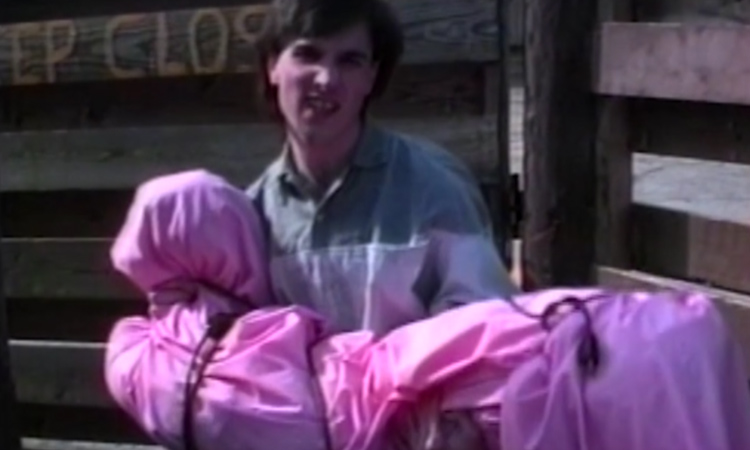
Marcos, a middle-aged abattoir worker, resists the pleas of Paula, his young girlfriend, to confess their self-defense killing of a taxi driver.  When Paula decides she’s inform the police without him, Marcos strangles her and stows her body in the bedroom of his outworn house.  The killing continues when loved ones come poking around to find answers about the disappearance or discover the macabre scene in Marcos bedroom.  Bodies pile up, the smell reaches decaying levels, and Marcos is plagued with nervous guilt.  Every day using his meat clever, he chops up bits and pieces of each victim and takes them to the slaughterhouse processing to rid the evidence and the smell, but no matter how many body parts he unburdens or how much fragrance he sprays, the sweet smell of death sticks with him. 

If someone would have said to me – you need to see a flick from Spanish director Eloy de la Iglesia – would you have ever guessed my first stop would be with his 1972 “The Cannibal Man” shocker?  To get to know a filmmaker’s directorial style and personal themes, the most gruesome horror can sometimes be a reflection into the soul of full disclosure because life, as most of us know from our own personal accounts, demons, and happenstances, can be ugly, nasty and unfair and can be cathartically expressed through film by a wretched shell navigating an undercurrent message to others.  That’s how Eloy de la Iglesia’s “The Cannibal Man” speaks to me.  Also known as “La semana del asesino,” or “The Week of the Killer,” as well as “The Apartment on the 13th Floor,” don’t expect an archetypical slasher and cannibal framework from this picture with many names.  “The Cannibal Man” is no “Texas Chainsaw Massacre” or similar to that of “Wrong Turn” as the film stands alone, conveyed as unsurmountable struggles of renewing oneself, a social commentary of class structures, and, also, dabbles in homosexuality suggestion.  Executive producer José Truchado, who also produced “Hundra” and had bit roles in Jesús Franco’s “The Mistress of Dr. Jykell” and “Killer Tongue,” finances the film under his self-titled production company and presented by Atlas International Film (“The Blind Dead Collection”).

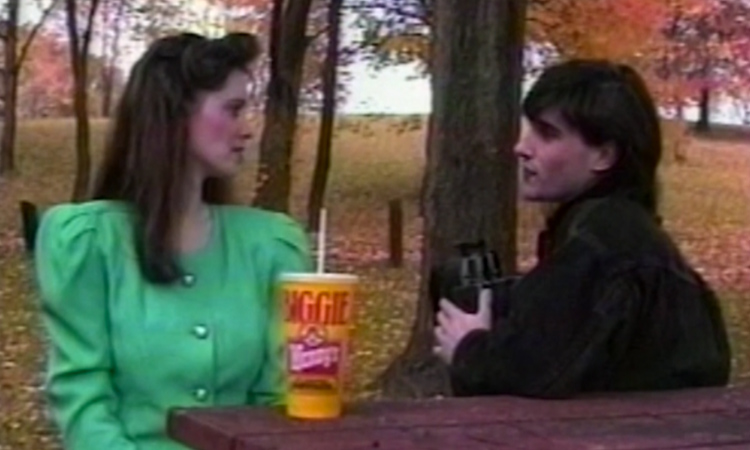
Looking to separate himself from strapping hunk typecasting and to show the world he can do more than just romantic comedies and action, the Madrid born Vincente Parra undertook a massive risk with the lead role Marcos, a meat processing factory worker in his, presumably, late 30’s to early 40’s with little education and social status who’s keeping company with a younger woman still living with and under the rules of her parents.  Let’s not to forget to mention Marcos’s grisly acts of murder and the homosexuality suggestions during his middle of the night rendezvouses with new best bud and neighbor Néstor (Eusebio Poncela, “The Death of the Scorpion).  Nothing sexual happens but the innuendo is there as, aside from his dog, the single bachelor Néstor often invites a tense Marcos out for a late night café visit, an afterhours swim at the local late night pool, and up to his swanky apartment where Néstor often watches Marcos from his high-rise balcony through Marcos’s makeshift skylight with binoculars.  Iglesia, who is gay, puts his own spin on the characters to allude to, and often over played as well, the two men as equally interested parties without ever having to speak a single word or make visible a single touch that would confirm otherwise.  Parra and Poncela couldn’t have acted better a disinterested-interested pair full of sexual tension and naïve foreplay.  Aside from the significant love interest characters from Vicky Lagos, who plays local waitress, Rosa, at the eatery Marcos patrons and “Night of the Walking Dead’s” Emma Cohen, Marcos’s girlfriend Paula, no other character have reoccurring scenes and are simply drafted as what should be major roles in the story to then be cut down by Marcos’s undervaluing psychopathy.  Charly Bravo, Fernando Sánchez Polack, Goyo Lebrero, and Lola Herrera fill in the rest of the cast list.

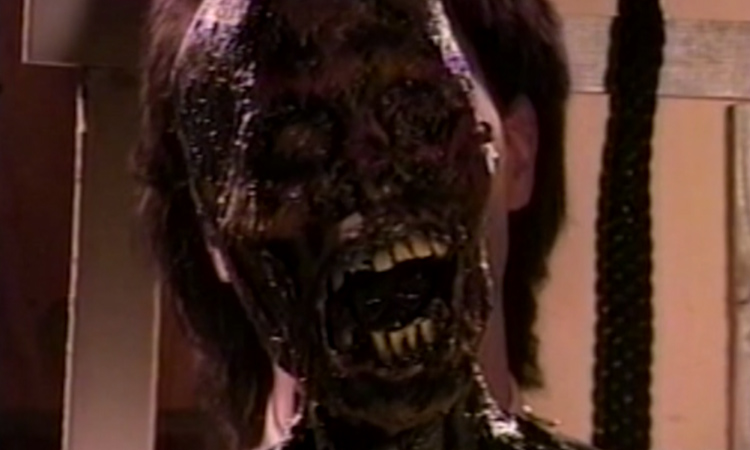
Strike out the slasher category for “The Cannibal Man” as Iglesia offers more than just a mindless, demented, hack’em up killer.  Behind Marcos brown eyes lies a reason of cold truth about his place in the world as a man who is ultimately and foremost stuck.  Stuck at a dead-end job.  Suck in his relationship with Paula.  Hell, Marco is even stuck living in a small bygone bungalow sticking out like a sore thumb right in the middle of new and wealthy high rise buildings.  He’s unskilled and uneducated, living in his brother’s house, and with no end to his personal wedging between his lackluster coursed life and his own short failings as a man until all that mediocre and mundane misery begins to ooze and shape into the one thing he tries to control – murder.  Even murder starts to spin out of control and heavy, burdensome guilt sets as seen in scenes with Néstor who’s choice of words perk up Marcos’s jumpy ears with fear of being caught.  Iglesia is a master at scene compositions that use audio cues, along with a jarring, tonal reversing soundtrack, to accentuate Marcos’s ascending paranoia as well as accentuating the scenes of the more period radical grasping social commentary on homosexuality and the unthinkable back-to-back-to-back-to-back murders.  Editor José Luis Matesanz also slyly cuts transitional scenes together in a stunningly seamless and crafty way that resemble close to Robert Wise (“Citizen Kane,” “The Andromeda Strain”) with harsh cuts that form a directional track and utilizes semi-abstract panning and reverse panning to fill in less significant gaps between the action.  Don’t expect a large amount of cannibalism in the story either.  Marcos isn’t gnawing on bones or baking a flesh brisket; instead, his act of cannibalism falls upon irony in that the bodies he tries to purge from his home ends up coming back to haunt him in more ways than one. 

If you love obscure, foreign horror that sustains a fresh packaged air about it, in story and in a remastered transfer, I highly recommend checking out Severin’s newly scanned, region free Blu-day distributed by MVD Visual.   The BD50 comes with two versions of the film, the 98-minute international cut and the 107-minute Spanish version extended cut, newly scanned from the original 35mm negatives for the first time.  Both transfers have excellent picture quality, some of the best I’ve ever seen come out of Severin, presented in 1080p in a widescreen 1:85:1 aspect ratio.  Not a lot of age wear and tear on the either transfer with each cut having only minor and light scratches scarcely throughout.  There’s sufficient, natural grain in both versions, but the extended cut’s grain flattens up, looking coarser, in the extra scenes.  Coloring grade is gorgeous with natural looking skin tones and you can see the details were refined and redefined.  Both versions come with an English dub and Spanish language DTS-HD Master Audio 2.0 track with some back-and-forth forced English dub in those coarser grained scenes that make the flow unsettling.  Both versions render hearty range and fidelity with a strong dialogue track that syncs well with the option English subtitles, but slightly off sync with image unity.  Underneath the double-sided cardboard sleeve, Severin’s special features include Cinema at the Margins – a Stephen Thrower (author of “Beyond Terror: The Films of Lucio Fulci”) and Dr. Shelagh Rowan-Legg (author of “The Spanish Fantastic: Contemporary Filmmaking in Horror, Fantasy and Sci-fi” on director Eloy de la Iglesia, The Sleazy and the Strange – interview with Spanish film scholar Carlos Aguilar on director Eloy del la Iglesia, deleted scenes, and trailer.  An engrossing bodega of vile Euro horror is what “The Cannibal Man” presents as a first-rate cutthroat thriller from the shamefully underrated filmmaker, Eloy de la Iglesia.

Own “The Cannibal Man” on Blu-ray!  Buy at Amazon.com

Fortuity Can Be EVIL’s Plaything. “Like A Dirty French Novel” reviewed! (Blvd. Du Cinema Productions / Digital Screener)


An organized crime and deceitful milieu sets the stage for a missing bag of stolen cash, an unscrupulous bunch of characters, and a mysterious omnipresence being persuasive behind the curtain of a rotary phone.  When ex-lovers Crystal and Hue are not in heated spats over past infidelities, trapped inside their quaint apartment, Crystal moonlights as an adult cosplaying model secretly having an relationship with a stranger while Hue locks himself away in the bathroom conversing secretively and flirtatiously with an unknown woman he knows nothing about.  They become entwined in a heist gone wrong by a group of halfwit robbers that leaves a trail of death, lies, and an evil charting their fates in the shadows. 

Desultory pulp basking in noir fiction, “Like A Dirty French Novel” flaunts a chicly awkward and brazenly unmethodical black comedy and crime drama front from Cuban-American writer-director Mike Cuenca.  The “By the Wayside” and “I’ll Be Around” auteur stitches together a vivaciously satire and minuscule budgeted drama comedy shot in the zero hours of a time crunching, less than a week, schedule with an editing style, edited by Cuenca himself as one of his many production hats, of five chaptered, non-linear tale of sectionalized cynicism and infringing transgressions.  Cuenca co-write the script with Ashlee Elfmann and “I’ll Be Around” co-writer, Dan Rojay, with Cuenca self-producing under the filmmaker’s East Los Angeles-based, DIY encouraging production company, Blvd. Du Cinema Productions.

With an ensemble cast, “Like A Dirty French Novel” spreads out with five chapters, two interludes, and a prologue that begins with three men walking in a desert and approached by a mysterious woman in a chintzy, but intrinsically detailed, Japanese resembling Oni mask.  Before we can invest into these bewildering circumstance that leave the three men screaming for their very lives, Cuenca whisks up away right into Chapter One, introducing bickering ex-lovers Crystal (Jennifer Daley, “Blood Born”) and Hue (Rob Vally, of gay themed Steven Vasquez pictures such as “Angels with Tethered Wings” and “Dancing on the Dark Side of the Moon.”) snooping into each other’s hidden extracurricular activities that leave Crystal daydreaming about romance and Hue surrendering to smutty phone talk.  Not much is revealed in the first chapter before segueing into the second with Forrester Dooley (Grand Moninger), an unhappily married man who switches places with his twin brother and the recently unincinerated Bugs Dooley (also Moninger), but, as fate would have it, Bugs turns out to be a standup, wonderful guy whereas Forrester need for a break ironically places a bullseye on back and he ends up stranded in the desert with two unsavory fellows, circling back to the film’s vague prologue.  The cause for their stranding is because of Lane, a manic drifter delightfully captured by “We Take The Low Road’s” Amanda Viola.  Lane is approached by cool cat Jake (Aaron Bustos) and what ensues next is a montage of innocent dalliance before he suddenly vanishes and is seemingly dead to the world.  Remaining chapters unravel more about the principle players, spilling their hidden agendas and their scheming roles surrounding a duffle bag of thieved cash pinched from a local ruthless kingpin Filmore Demille, played by Cuenca himself donning yet another hat.  The cast rounds out with Dominic Fawcett, Samantha Nelson, Laura Urgelles, Claire Woolner, Dan Rojay, Joey Halter, Miles Dougal, Steven Escot, Arko Miro, and “Murder Manual’s” Brittany Samson as the interlude’s stammering and obsessed fanatic of the masked and sexy graphic novel cosplay model.

“Like A Dirty French Novel” pulsates with pulpy fiction with hints of Lynchian notes through Cuenca’s back and forth pacing of connecting the dots to his equivocal crime thriller.   Cuenca’s gray area, faltering more than any other, lies in making that relating and understandable so important connection of reverting scenes back to earlier ones in order to have actions make sense.  A once over is not enough to fully grasp “Like A Dirty French Novel’s” abstract features and to be recursive would not be a sign of weakness or simplemindedness on our part.  Still, smoothing out the rough patches like with the peculiar finale, which I’m speculating to be the grounds of Hell, would have made “Like A Dirty French Novel” more of an easy read than a confusing one as well as completing most characters arcs with a satisfying tell all fate. Cuenca’s filmic message of what comes around, goes around comes across more clearly with those who reap what they sow. A faux book entitled Porter du Fruit or Bear Fruit yields to positive results and, in which this case, none of those characters who go to the grounds of Hell are saints by any means. Constrained by a shallow pocket budget, settings are simple outdoor public areas, small apartments utilized with polygonal angles, and, if you’re working in L.A. much like this shoot, then more than likely a scene or two, at the very least, is filmed in the desert, but seasoned cinematographer, Jessica Gallant (“The Control Group,” “Shevenge”) spruces up scenes with neon red lighting, dabbing in black and white, and centralizing characters with focal spotlight, adding little classic techniques that still pop in the camera’s eye. Gallant’s wide berth of techniques, from hot pink tints to emulating grindhouse celluloid grain and scratches, keeps a stylized profile wanting to be watched. However, most cast performances are not so debonair as they come across a bit prosy, staged, and without too much magnetism that usually trends with pulp-noir trademarks and, of course, trashy novels érotiques bon marché.   With the exception of the underused Amanda Viola and Cuenca’s solo-scene monologue, sleeping at the wheel performances drives no other standouts in this cast.

“Like A Dirty French Novel” premiered this past August at the independent showcase, Dances With Films film festival, held in Los Angeles at The Chinese Theaters as part of their Midnight lineup; however, no current confirmations on when the first home release – whether physical release or digital releases – will be available yet. Briskly paced at 78 minutes, Cuenca squeezes into one more hat among his list of production duties as author of the eclectic sometime brooding and sometime high energy score along with Carlos Colon composing the pieces that could resemble the minor league notes of Michel Legrand. Alas, Michael Cuenca’s “Like A Dirty French Novel” aims to be more bourgeoisie than an obvious low cut of a few francs with an ingrained pulpy style and more twist and turns than Grand Prix race car driver, but lacks that tour de force it strives to assimilate as because of stiff performances and a wildly untraceable storyline.