EVIL Wants the Industry Hot and Desired Jana Bates to be in His Movie! “The Last Horror Film” reviewed! (Troma / Tromatic Special Edition Blu-ray)

“The Last Horror Film” is Now Available on Blu-ray to Obsess Over!

Obsessed with horror scream queen Jana Bates, New York City cabby Vinny Durand heads to France’s Cannes Film Festival to cast her in his own horror movie, “The Love of Dracula.”  Halted at every entry point of the private, star-studded events that include Jana Bates and being intercepted and rejected by Bates’s producer ex-husband, a rival producer, current boyfriend-manager, her agent, and a director, all of whom are in an intergroup conflict concerning the starlet, Jana, nothing will deter Durand from his perfect star.  When Jana walks in on the decapitated corpse of her ex-husband, a series of murders and missing persons involving her close friends and colleagues ensues in the days after and in all the while, Durand tries every attempt to meet the actress, stalking her with a video camera to film the perfect leading lady in his secret horror movie, invasively stepping into her life in the same instance the murders began to occur. 

A deranged NYC taxi driver flying to Europe for an aggressive meet, greet, and casting of a totally unaware horror actress to be in his own B-picture is the plotline everyone could, should, enjoy!  What’s not the love?  “The Last Horror Film” takes us from the grimy streets of the Big Apple to the exquisite sights and sounds of the seashore Cannes along the scenic French Riviera.  Helmed by London-born David Winters (“Thrashin’”) and penned by Winters, Tom Klassen, and Judd Hamilton (“Maniac”), “The Last Horror Film,” also known as “Fanatic,” is one of the best obsessed fan thrillers out there, such as containing the same context of the Clint Eastwood picture “Play Misty for Me,” but is lesser known to mainstream audiences because it features genre icons Joe Spinell and Caroline Munroe and has been primarily distributed under the unconventional indie picture and filmmaking risk taker, Troma Films, who at times isn’t everyone’s cup of tea distributor.  David Winters’s Winters Hollywood Entertainment and Shere Productions with Judd Hamilton and David Winters producing the 1982 American feature. 

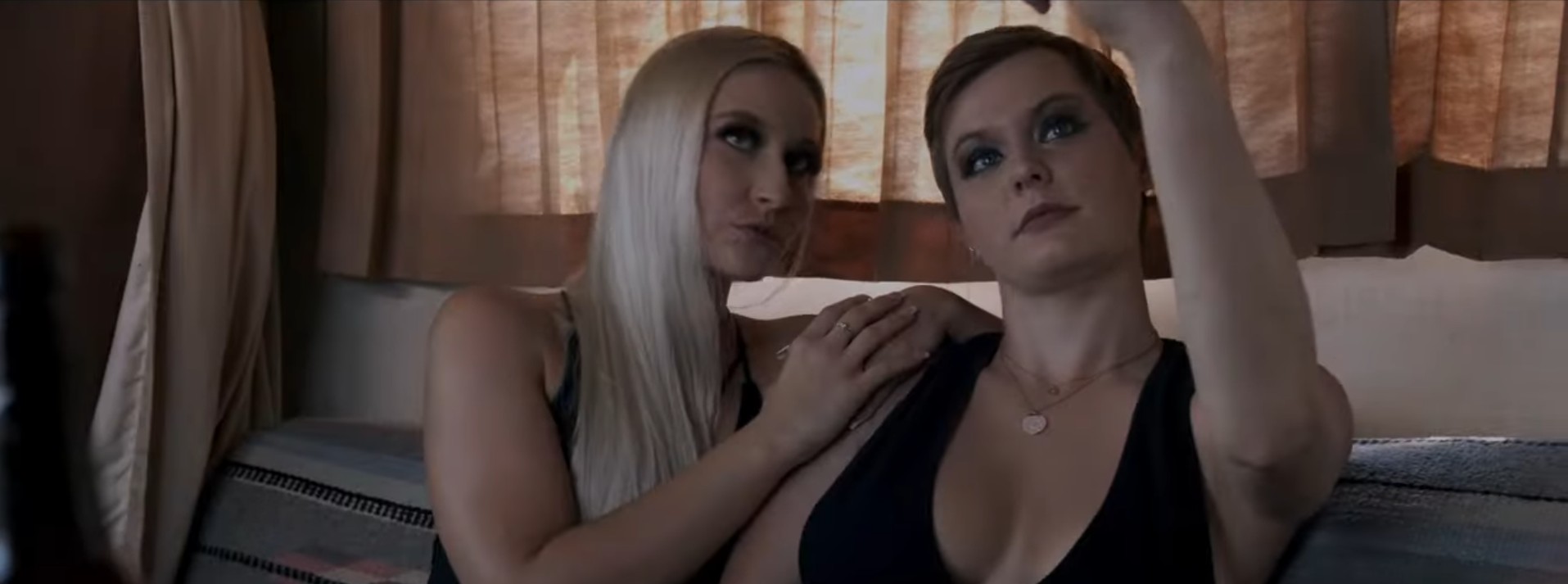
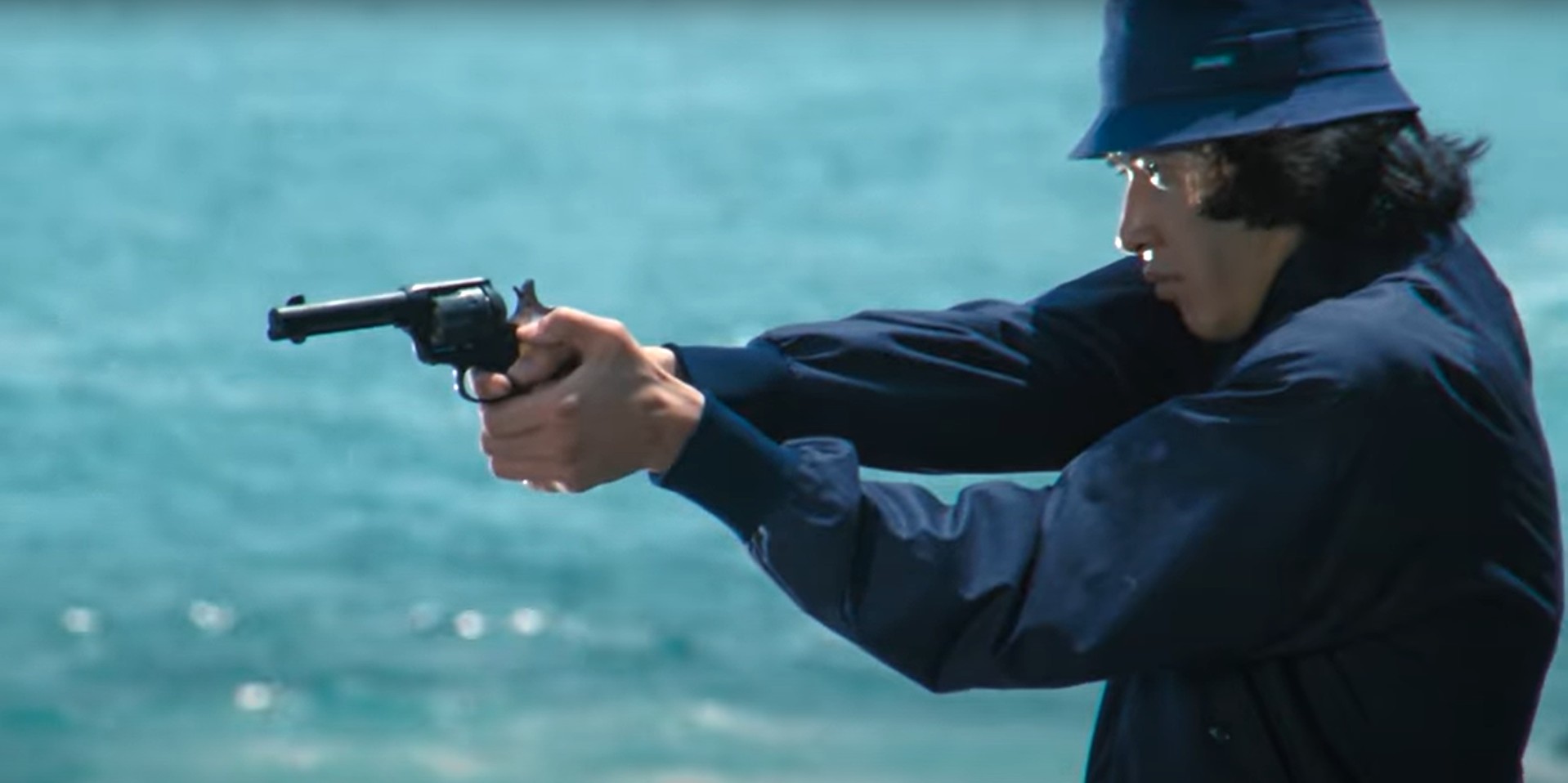
Fans of Joe Spinell (“Maniac,” “Rocky,”) already know this but those who haven’t experienced the New York City-born and bred actor, “The Last Horror Film” role of Vinny Durand is one of his best.  Spinell obviously suits psychosis well, but Vinny Durand takes it down a different path and, believe me or not, Spinell finesse with the character is beyond magnificent in all his mannerisms, expressions, and intonations, in addition to his egg-shaped physical, slick greasy hair, and thin black mustache, that make Vinny Durand a likeable and infatuated with obsessed crazy.  “The Last Horror Film” is the third costar collaboration with female lead, and genre icon in her own right, Caroline Munroe behind “Starcrash” and “Maniac.”  The “Dracula A.D. 1972” and “Captain Kronos:  Vampire Hunter” Munroe essentially plays herself in the role of Jana Bates but with a role that comes with more glamour and prestige as horror actresses rarely received such recognition in the major industry circuits.  Munroe equals Spinell in performance but in her own right as more of normie actress with accolades living it up at Cannes and eventually landing in the final girl trope, exceled into terror within the radius of her killer.  Being embroiled in a different kind of love triangle, one that includes her silver fox husband ex-husband Bret Bates (Glenn Jacobson, “Wild Gypsies”), current boyfriend Alan Cunningham (Judd Hamilton, “Starcrash”), and rival producer Marty Bernstein (Devin Goldenberg, “Savage Weekend”).  As the potential body count rises, so does the continued cast list with David Winters himself in a reflected cameo role as a horror director named Stanley Kline, Susanne Benton (“That Cold Day in the Park”) playing an orthographic variant of her namesake in Susan Archer, and Sean Casey as a rockstar lending his castle to Alan and Jana for retreating safety.  The cast rounds out with Spinell’s mother, Flilomena Spagnuolo, playing Durand’s mother in a convincingly nagging and comedic way that makes me it’s not terrible too far from the truth of their off-screen relationship. 

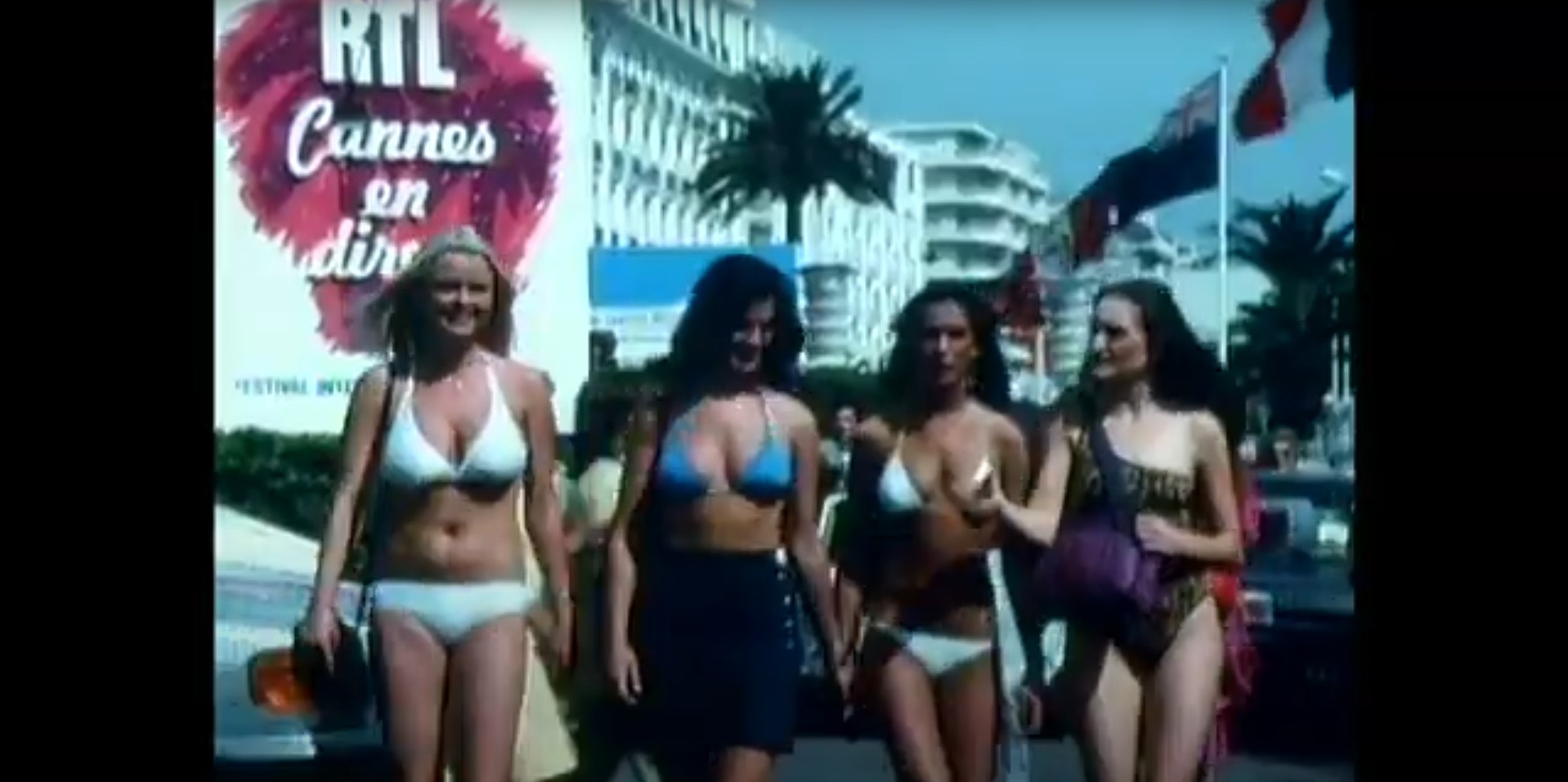
For a Spinell, Munroe, and David Winters production, “The Last Horror Film” is surprisingly vaulting with ambition for an unpermitted guerilla shot feature through the streets of Cannes.  Large parapet roof signs, gothic castles, the ritzy and beachy French Riviera, a score of happenstance and scripted extras,  and lots of topless women on the beach shots, Winters musters moneyed shots to coincide the well-dressed interiors of Durand’s apartment and hotel room and a slew of exteriors to play into the stalking fold.  Couple these manifested scenes of grandeur with the shocking moments of precision and effective gore and Spinell’s theatrically pleasing, creepy behavior performance and you got yourself a halfway decent meta slasher full of red herrings and a high body count, circling and overlapping itself within Duran’s directorial vision, the fake films within the critic panel and festival screenings and, as well as, the gotcha moment ending that gives one pause to think if what was just witnessed was actually the story, but while you’re scratching your head, perhaps feeling like a cinematic dummy of storytelling comprehension, there’s no doubt that David Winters successfully produced one hell of a horror picture starring Joe Spinell.

The new Tromatic Special Edition of “The Last Horror Film” is seemingly a repeat in some ways to the Blu-ray release from a decade earlier down to the exact cover art without the Tromatic Special Edition banner.  The AVC encoded, 1080p resolution and 1.78:1 widescreen aspect ratio, is compressed onto a BD50, an uptick in format storage from the 2015 to warrant it a Tromatic Special Edition.  However, image refinement is not in this re-release’s repertoire with a mirrored result of a lightly anemic look that still fails to color pop the feature in its eclectic set designs.  Darker scenes are in and out based of contrast, losing definition, and are inclined to be grainer negatively in the negative spaces.  In the brilliance of light, details can rooted out, especially in skin textures as Spinell’s pot marked face is exhibited in great detail amongst the other casts’ individual facial features.  Winter’s diverse and organized framing, plus with a little editing garnish, elevates whatever kitschy content there might have been into a grade-A B-picture; yet that doesn’t go without saying that there weren’t any editing flaws in the print that was subsequently transposed to the Troma transfer as horizontal cut lines and breaks in recurrent cells kink the chain ever so slightly.  The release also features the same English Dolby Digital 2.0 mix, a fidelity lackluster that doesn’t reflect the power the action medley and the score, the latter from composers Jesse Frederick, the vocalist of the “Full House” theme, and musical instrument compliment, Jeff Koz.  Dialogue renders above the layers but is on the softer side of volume, diluting the more intense moments of chase and murder without that impact punchiness.  Troma, like in my instances, flaunt a noteworthy tidbit in their releases, if there is one to flaunt, and in “The Last Horror Film’s” case, Depeche Mode’s track Photographic is the quoted feature music, says in big white and yellow font on the front cover.  What primarily separates the 2015 and the 2025 releases are the special features.  Archived commentary with Joe Spinell’s assistant and associate producer Luke Walter commentary moderated by Evan Husney from 2009, “The Return of Dolphin Man” short film by director John Patrick Brennan, a segment entitled “Kabukiman’s Cocktail Party,” the feature scrapped “Maniac II:  Mister Robbie’s” promotional trailer, the theatrical trailer, and a Lloyd Kaufman intro that dresses him in drag in the streets of an uninterested NYC are included on the special edition that features additional supplements with two more, 2023 produced, re-used commentaries from 1) Caroline Munro moderated by FrightFest’s Alan Jones and 2) again with Luke Walter by moderated by Severin Films’ David Gregory for the label’s own 2023 release.  Also from the Severin vault is the Like a Father Figure:  Sal Sirchia Remembers Joe Spinell interview with Sirchia’s memories and phoned tape recordings of Spinel’s voice messages, My Last horror Film Ever audio interview with producer Judd Hamilton, and “The Last Horror Film” location revisit featurette from New York City to Cannes, plus additional trailers under the title “Fanatic” (2) and the main title (1).  There are additional Troma materials with trailers from “Return to Nuke ‘Em High Vol. 1” and “Vol. 2,” The Toxic Avenger,” “Class of Nuke ‘Em High,” and “#Shakespeare Shitstorm.”  Aforementioned, the physical properties of the release nearly identical aside from the special edition banner across the top and the additional bonus content.  The 2015 Troma release is region locked A but a decade later Troma realized region free is the smarter move with the single 87-minute cut defining the release that comes not rated.

Last Rites: Take “Maniac” out of the equation, “The Last Horror Film” is Joe Spinell’s finest performance not taken lightly and though the story’s lurching flashes the check engine light, David Winters is able to still cruise along in his fanatic slasher.

“The Last Horror Film” is Now Available on Blu-ray to Obsess Over!

Dark Force Rides into the Sunset with EVIL Flannel, Stirrups, and a Brothel Full of Stolen Women! “Ride a Wild Stud” reviewed! (Dark Force Entertainment / Blu-ray)

About as Obscure as They Come! “Ride a Wild Stud” on Blu-ray!

During the Civil War, the Wild West lives up to the name between advantaging exploiting gangs of bandidos running rampant alongside the Southwest terrain and the hard-pressed law outmanned and outgunned to never be able to gain apprehending ground.  One determined law man, Lieutenant Mike McDermott, has a plan to infiltrate William Quantrill’s plundering murders, thieves, and sex traffickers and take them down from the inside-out by portraying to be a likeminded criminal escaping the law.  Successfully penetrating Quantrill’s ranks, McDermott takes young Marsha under his watch; Marsha has become enslaved in Quantrill’s house of pleasure brothel, supervised by his right-hand man Bill Doolin after Doolin mercilessly guns down her father and rape and murders her older sister in a home invasion of their simple life assets.  When another of McDermott’s steady female informants is shot dead by Doolin, the lawman becomes judge, jury, and executioner on a gang of no-good Western raiders and sexual profiteers. 

A western exploitation epitomizing B-movie babes, brawls, and bad guys, “Ride a Wild Stud” surmounts as sleazy cowpoke overtop classic, 1960s Western vibes of machoism, duty, and exciting gunfights.  Profound Western film filmmaker Oliver Drake during the Golden Age of cinema (“Bordering Buckaroos,” “Deadline”) quietly transitioned from run-of-the-mill westerns to a handful of grindhouse and exploitation B-movies by the 1960s under the pseudonym of Revilo Ekard, Drake’s name spelled backwards, who produced under that credit this 1969 adult-oriented oater as well as the even saucier and scandalous “Angelica:  The Young Vixen” where the titular young woman seeks older man comforts.  “Ride a Wild Stud” is penned by the assumed husband and wife due of Rachel and William Edwards of the sex-schlocker “Dracula (The Dirty Old Man)” released the same year.  The writing pair also served as producers of the film under the production of Vega International. 

Director: Oliver Drake

“Ride a Wild Stud” is an interesting oddity of it’s time.  Usually in exploitation pictures, the lead male actor has his get busy share with the ladies but for Hale Williams, as the gang-infiltrating Lt. McDermott, there’s no hanky-panky with the actress lot.  Williams, whose role is his only listed credit, plays a respectable and honorable law-abiding man without any inkling of perversion of sensuality in his most defining John Wayne respect.  Instead, romping in the haystack is no stranger to the transgressing Quantrill gang in quite a handsy show of rough, unwanted affection with those characters unwilling to go along with the brothel or are being raided invaded elsewhere.  Frenchy Le Boyd does a lot of fondling and groping as second in command Bill Doolin along with an assortment of bandido backdrop actors really getting into the sleazy deviant role.  This sets a clear hardline of contrast between good versus evil, respect versus the disrespectable, to never blend the characters even when McDermott becomes the sheep in wolves clothing.  Josie Kirk plays as one of those unfortunate pilfered women in Marsha and is, in a way, the leading or mainstay characters Doolin’ drools over and McDermott fights for but it’s the blonde C.C. Chase as house of pleasure vet Irene who has is deeper into the dredges and is has complexities as McDermott’s informant rather than just a chest-bearing pretty face being taken advantage of and succumbing to Doolin’s woos when it fits her need.  The rest of the cast rounds out with a bunch of no-names, yet get protracted screen time for coldhearted perversities, with William Fosterwick, Burke Reynolds (“The Mummy and the Curse of the Jackals”), Helga Hanshue, Cliff Alexander, Chuck Alford (“Corpse Grinders 2”), Richard Smedley (“The Suckers”), Bill Johnson, Tex Gates, S.T. Alexander Sr. and Bob Goldfarb. 

“Ride a Wild Stud” has all the hallmarks of a typical exploitation picture with a double entendre title, unprovoked and gratuitous violence, and plenty of feminine skin.  Yet, the story leaves much to be desired.  The lawman infiltrating the criminal organization, becoming one of their own to take down from the inside out, tale is no Martin Scorsese’s “The Departed.”  In fact, the story is rather lazy akin to low-rent porn or softcore titles with a story garnish.  Focally, “Ride a Wild Stud” harnesses the men-take-want-men want mentality with rarely any Western damsel enjoying herself in the arms of musky flannel and gun-belt thrust grizzled by a scruffy 5 o’clock shadow and for the story, there’s too little progression to compel with empathy or be at the edge of your seat with intense anticipation for the in the lions’ den hero and heroines and the gunfights are grotesquely tame after the initial film opener of a multi-horseback chase gunfight.  The whole good versus bad cowboy roundup is stiffer than normal of its era heading into the time of the famed and profound spaghetti western.  The exploitation action has some noteworthy clout with busty, slender women being manhandled like a hogtying a pig at a rodeo and the ample scuffle between Doolin and McDermott might be bordering repetitive but scratches the itch of a good ole fashion fist fight, but by the telltale strum of a rhythmic and recurring guitar riff, that is when the salacious sex ensues and without that change or evolution in the score, that plays every a few minutes with another intertwinement of two bodies, not even the charge of gratuitous nudity can re-spark “Ride a Wild Stud’s” Western-exploitation mojo back on the snakebitten and dysentery-riddled Oregon trail. 

An Adult Adventure awaits in this womanizing Westerner released by Dark Force Entertainment for the first time in high-definition.  The film was originally shot in 16mm, but Dark Force Entertainment unearths the rare blown up 35mm reel for their Hi-Def transfer that produced decent picture quality from the AVC encoded, 1080p resolution, BD25.  Preserved to the extent where the 16mm could be on the fence of being native 35mm if it wasn’t for the degrading emulsion layer and the lower contrast with exterior lighting that creates washed out blacks.  There are the typical speckle blips and faint vertical scratching in the one-off scene that seems low-carb for a stock that’s vulnerable to exposure, storage, and handling elements.  Dark Force Entertainment Blu-ray back cover lists the film being displayed in an anamorphic widescreen but with a 1.33:1 aspect ratio.  This is likely a misprint as the film is definitely presented in a full frame format with no sign of a compressed image.  Color grading falls flat but is touched up enough to see some semblance of the spectrum and that’s always pleasant with an ISO 100-200 stock that doesn’t absorb contrast very well.  The English PCM mono track simply does the job handling the pale dialogue, ambient, and soundtrack layers.  Dialogue receives recognition amongst the limited array, but the post-provided scores is right behind it, breathing down the dialogue’s neck, with the incessantly low toned rhythm guitar that denotes upcoming deviant sexual encounters.  It literally sticks with you even when the credits roll and long after.  Moments in the dialogue do experience some faint crackling and muffled interference but, as well as some intermittent pops, but nothing to warrant overly critical marks.  There are no subtitles available.  Dark Force’s release is a feature only.  Physical artwork includes an illustrated action rendition that’s grindhouse include and sleazy just a smidgen inside the traditional Blu-ray Amaray.  The disc is pressed with three of the actresses in plain-looking clothes looking smug and curious from their line of sight, though we don’t really know what they’re looking at.  The region free release has a sexually coincidental runtime of 69-minutes and is rated R.

Last Rites: “Ride a Wild Stud” is the perverse cowboy caper you’ve never seen, but will watching it enrich your life? No. Will it salivate your taste for sleazy exploitation? Absolutely. Giddy-up!

About as Obscure as They Come! “Ride a Wild Stud” on Blu-ray!

Never Trust an EVIL Trucker with a Drug and Prostitute Addiction! “The Bunny Game” reviewed! (Jinga Films, Danse Macabre, MVDVisual / DVD)

“The Bunny Game” is Not for a Weak Stomach! Now on DVD!

Bunny, a prostitute on the streets of Los Angeles, subjects herself to the lowest of clientele lists looking to exploit her services with their own abusive fetishisms.  Just to get by to her next meal.   Bunny is constantly in coked out state when tricking becomes nearly unbearable.  Manhandled, abused, and unconsciously raped, there seems to be no end, and she must persevere to survive the streets, beautifying and feeding herself physical and mental nourishment to keep up strength.   When she encounter’s a trucker named Hog, Bunny’s just looking to endure another insufferable John, but Hog has other plans for Bunny, kidnapping her, driving somewhere isolated, and chaining her up deep within his trailer, and tormenting and torturing her to a different kind of no end Bunny has never experienced.  Hog’s derangement is fueled by his extreme drug use in what is not his first rodeo with working in whores for his own personal enjoyment and the girls’ own personal Hell. 

Banned in the UK, “The Bunny Game” is an extreme torture porn horror based off the real events that happened to principal star Rodleen Getsic with being abducted.  There’s not much publicly known on her own horrible experience, but the “The Bunny Game” is a baseline shockumentary written in collaboration between Getsic and filmmaker Adam Rehmeier with in the director’s chair of his debut feature film.  Rehmeier, director and cinematographer of numerous music videos and shorts, conjures up a story and a completed film with singer-actress Getsic without ever materializing an official script.  Instead, improvising and extemporizing fluff up Rehmeier’s storyboarding bullet points of where people and places should be in the narrative construct, hence why much of the story goes without dialogue, replaced with frenetic visuals and montages of recalcitrant convention.  Rehmeier co-produced the film under his company Death Mountain Productions alongside Rodleen Getsic.

For having been abducted herself and for the film to be an overemphasis of it, Getsic steps into the main role’s fishnet stockings to be the used and abused sex worker, known only in the credits as Bunny, and the role is no walk in the park or for the faint of heart.  Bunny is a self-inflicted punishing performance and mostly what you see on screen being inflicted upon Bunny is genuinely be done to Getsic which includes branding of the caduceus symbol on her back, as well as the same symbol seared into the flesh of Getsic’s friend, Drettie Page, who was game to receive much of the same for-the-story, for-the-film punishment as another victim of Hog in, supposedly, flashback sequences.  Hog is played by Jeff F. Renfro, a regular in the industry for his transportation services owning a big rig and tractor-trailer, but as the formidable serial killer Hog, Renfro brings and matches the intensity of “The Bunny Game’s” near free for all improvisation and experimentation provocation.  Getsic’s willingness to go the extra mile, from being branded, lighting scored by knife play, having her head shaved, is equally matched by Renfro’s being the recipient of being spit in the face, handling the fondling and the other physical exploitation of Getsic and Page, and being a total wild eyed, masked and shirtless, top of his lungs maniac with a mindset that’s cruel and oppressive with another human being’s life in his hands.  Dynamically, it’s a cat playing with a mouse, a deplorable show of chauvinism, and a callously cruel picture of control with the players in full control and full acceptance of their characters.  Gregg Gilmore, Loki, Curtis Reynolds, and Norwood Fisher cast a supporting line to trawl the Rehmeier, and what Rodleen Getstic refers to, monsterpiece

Rehmeier and Getsic have both been recorded stating every action on screen, aside from the excess drug and alcohol use, is 100% real.  Now, “The Bunny Game” immediately slaps viewers in the face with Bunny on her kneeds giving extended, adult industry-enthusiastic, fellatio to some unknown man only shown from his clothed backside at mid-section down to the top of the knee.  While not as sloppy as one might think despite Getsic’s vigorous efforts, the opening oral provides that provocative, eye-opening, banned-in-the-UK scene that now has snuck insidiously in the recesses of our minds and, in conjunction with the previous Rehmeier and Getsic authentic claims that never really specifying sex as one of them, audiences will wonder if what they’re subjected to is in fact a real act of oral sex.  To digress briefly, what’s the deal with movies with Bunny in the title (“The Bunny Game,” “Brown Bunny”) and oral sex?  From there, if you’re not disgusted by the voyeurism and chauvinism of sex work and misogyny, you’re digging Rehmeier’s film and hooked with curiosity tied to Bunny’s unfortunate fate, but what ensues embodies the essence of a crazed industrial music video of minor, discordance chords that produce harsh sounds and tones to envelope the choppy and cutting editing that shatters linear time, as well as the struggling soul, especially in montages of maniacal torture and onset introspective  between the punishment giver and taker in the Hog and Bunny intersection that will instill a catalytic crossroad for one of them.   There’s plenty of empathy to be had for Bunny, or maybe even sympathy if one has gone through similar abduction, torture, or has had a previous life on the streets, but the coarse nature of Hog’s slow and measured wrath can certainly be felt in the 1 hour and 16-minute runtime as revisiting Bunny for another dash of screaming, laughing, and misuse of her body and being at the hands of Hog is often on a wash, rinse, and repeat cycle of cynicism, an unavoidable problematic staleness often associated with films that do not have a shooting script, or any script for that matter.  Ideas tend to run dry and the then cornered concept is to bedazzle with nonstop bedlam but the fresh frenzy of exploitation is often fleeting and expires a lot quicker than the film’s runtime does.

A tale of street tragedy and what should be an always constant reminder that deranged killers are here, there, and everywhere, “The Bunny Game” scores high in extreme exploitation within its experimental execution.  Jinga Films, Danse Macabre, and MVDVisual bring the corrosively cuddly film back onto DVD after the original Autonomy Pictures release has been out of print for a while.  The single layer DVD5’s codec is of MPEG-2 compression and presented in 720p resolution in a widescreen 1.85:1 aspect ratio.  The achromatic black and white image stacks additional bleakness to the already soulless content with a low field of contrast creating borderless shadows but the use of handheld key lighting, aka flashlight, does create a miniscule delineation at times when under a blank of black.  Blacks succeed in being solid for the most part with only a couple instances of minor banding which is pretty good DVD compression, likely a result of the zero color to encode and decode.  The English LPCM Stereo is not a girthy mix of dialogue, soundtrack, and ambience.  Now, all three elements exist, but since “The Bunny Game” has zero script, there’s not much in the way of conversating and what’s there is prominent enough amongst the layers of industrial jarring dissonance that, at times, beats in sync with the visceral montages.  Inside the mic recording scope, ambience comes and goes based off the intensity of the scene and score but there are quieter moments to reflect on the improper handling of Bunny with Hog and the other indiscriminately disgusting Johns her life as a prostitute absorbs.  Special features include an archival Caretaking the Monster behind-the-scenes interviews with cast and crew, including actors Rodleen Getsic, Jeff Renfro, Greg Gilmore, and director Adam Rehmeier, discussin the original concept that was more aligned with Getsic’s personal abduction accounts but then evolved into something more horrifying that lead to the casting of Renfro, their isolated locations, and the realism inflicted upon Getsic as well as the teaser and theatrical trailer.  The DVD packaging is much the same as previous editions with a video aesthetic resembling black and white contrast but unlike previous releases, the cover art shows off its graphically artistic masked bunny in shackle design that speaks to the content.  The Jinga, Danse Macabre Danse, and MVD release lists this as a rated R release whereas the previous version was unrated; however, both releases have a 76-minute runtime.  A quick review suggests this “R” cut is actually the same as previous versions.  The DVD also has region free playback.

Last Rites: This game is not for the faint of heart. “The Bunny Game” tests willpower to stay through to the end, through the torture, rape, and the real violence in a one-sided acrid affair. If you can survive the brutality, this game is for you.

“The Bunny Game” is Not for a Weak Stomach! Now on DVD!

An EVIL Drug That Can Cure Your Crabs and Boil Your Insides! “Private Blue” (SRS Cinema / DVD)

“Private Blue” is on the case! DVD Now Available.

A new drug is on the streets of Edmonton, Alberta.  Call Shrink, the drug can produce a massive high and contains a high level of antivirals that can cure any sexually transmitted disease, but there’s a side effect.  If taken in a single excess amount, the drug can boil your insides, leaving nothing left.  The Edmonton police are stuck on the case with no leads and to make progress on the fast-moving drug epidemic that has now claimed the life of a daughter of a prominent sports booky, the department hires Tony Blue, an ex-cop now private investigator who can use unconventional means outside the scope of police authority to get the needed information, such as where Shrink is being peddled and produced.  Working down the vine, Blue runs through the hierarchy from street pushers to the manufacturing kingpin, a brusque and brutish strip club owner named Wanda who will stop at nothing and will not let anyone get in her way to fill the streets with her deadly, venereal disease-curing drug.

A comedic spin on the 1980’s lone wolf cop-thriller, “Private Blue” immerses itself into every trope manageable inside its indie budget with business in the front, party in the back mullets, bad guy chases and beatdowns, and a smoke-filled and color gel-brightened assortment of atmospheres that propagates the cop film neo noir aspects.  The accountable party behind this crass cop caper are a pair of brothers, Devin and Robert Burkosky, based in Edmonton, Alberta, Canada.  The brothers produce, write, direct, and one-half star in what is their sophomore feature film behind the 2018 comedy-horror “Load Shark Massacre” that’s about a murderous loan shark who bites off more than he can chew.  Continuing the trend of drugs, violence, and psychotronic absurdities, “Private Blue” is an extension of their creative effort into crime action with a horror edge but with this time, they add a science-fiction element straight out of the boondocks of left field.   The feature is produced under the Burkosky company, Beechmont Entertainment. 

Robert Burkosky jumps into the titular role of “Private Blue” as a wisecracking and arrogant Tony Blue, an expelled detective because of his purloining of the evidence locker for his own needs, but Blue is a great chase-down detective, if not the best with his quick wit and adept situational skillset that makes him valuable.  Burkosky hams up Blue’s cocky attitude and Miami Vice-lite dress with linen blazer overtop a white tank top, sporting aviator glasses, and flaunting a greasy-looking mullet to accentuate the arrogance and confidence.  Opposite Burkosky is Moira MacKinnon as the larger-than-life adult industry head honcho and criminal mastermind Wanda who’s behind the manufacturing and distribution of the Shrink drug.  Having had a role in the Burkosky’s debut feature “Loan Shark Massacre” and was recently in their last film, the 2025 “Heat Score” that’s currently in post-production, MacKinnon’s a Burkosky go-to regular and her performance in “Private Blue” is perhaps my personal favorite with the Rita from “Power Rangers” voice and cackle and a maniacally expressed face as she bulldozes people into what she wants, no matter friend or foe.  “Private Blue’s” colorful cast doesn’t end there as there’s plenty of outrageous personalizes that are typical of a Burkosky brothers production, such as Tommy Grimes in drag playing the role of a female assigned stripper named Candy, Wolfgang Johnson as a low-level, guitar-playing, drug pusher, and Rod Wolfe as an older, mid-level dealer who wears various peppers around his neck like a necklace.  Dean Lonsdale, Ian Rowley, Dave Qurik, Kaley Leblanc, Jesse Hicks, Arielle McCuaig, Christian Stahl, and Brandi Strauss fill out the cast.

For what the Burkosky’s try to achieve in churning out “Private Blue” as a throwback of hard-boiled sleuth work, there’s success is select areas.  One of those successful portions is the phenomenally pastiche 80’s soundtrack by Robert Burkosky and the general aesthetic of the said decade with smoke-filled room illuminated by the gel lighting.  Wardrobing occasionally lands in the same era but there’s really no set point in time the story takes place but rather a mishmash of decades.  Devin and Robert, the latter quickly establishing himself as nearly a one-man show for the entire production, are competent editors that make “Private Blue” an easily digestible narrative.  What’s not easily digestible are the jokes that, for the most part, land flat.  The colorful characters do indeed entertain in their ineloquence and idiosyncrasies, but the script lacks that gut punch humor.  Instead, the script is riddled with fart gags, which personally I’m not a terrible fan of its audiological stink, and the jokes continue periodically throughout in every, or every other, scene of just randomized farting when a character sits, squats, or actually flatulates purposefully as a way of gag-inducing defense.  While most jokes don’t jive in jest, there are a handful that do, such as Tommy Grimes convincing our sexuality as dolled up sex worker Candy or Robert Burkosky’s lengthy slow-motion dance scene with a bunch of strippers at Wanda’s club.  Hilarity, as well as spurts of graphic violence, continue through whenever the story perversely changes course and mostly for the better. 

“Private Blue” is on the case.  Or, rather, is inside the case of an DVD Amaray with the release from ultra-indie underground label SRS Cinema.  The MPEG-2 encoded, standard definition 420p, DVD-R with the purple underbelly has a less-than-desired picture quality that’s par for the course with SRS Cinema.  Yet, all the sub-def eyesores are not terribly off-putting thanks to some decent camera equipment and know-how by the Burkoskys.  The palatable image has a flat grading only targeting contrast during it gel-lit scenes and the film is presented in 1.33:1 full screen that’s shot-on-videotape with uniform moments of interlacing.  Imaging produced is a result of a macro lens, encompassing even less within the standard framing and providing a flatter field that loses a bit of the depth.  The LPCM stereo mix that offers an ample dialogue track and range of audio layers that create a fair separation.  Robert Burkosky’s soundtrack epitomizes the balance between the layers when amplifying to make it the star of the scene.  Gun shots, thrown punches, and, even to an extent, the fart gags find the relative right level within a campy mix.  English captioning is available on this DVD.  Special features include a paralleling director’s commentary track, a blooper and outtake reel, the film’s trailer, and other SRS Cinema trailers.  SRS Cinema’s physical copy is standard fair but does showcase a blue-hued illustrative artwork that’s appealing and accurate with the same, but cropped, design pressed on the disc.  The 96-minute film comes not rated and is region free.

Last Rites: A debased tribute to the hard-boiled 80’s cop actioner, The Burkosky Brothers “Private Blue” has potential to be a great accolade of the subgenre as well as be funny but falls short with an overuse of pass gas gags and its inability to surpass that tenor.

“Private Blue” is on the case! DVD Now Available.

Under Hypnosis, You’ll Do Anything For EVIL! “Vampire at Midnight” reviewed! (MVD Visual / DVD)

“Vampire at Midnight” is now on DVD!

Gripped by a serial killer dubbed the Vampire Killer, Los Angeles is on high alert as not one single piece evidence could be recovered from the more than a dozen crime scenes where women’s’ necks are ripped to shreds, their bodies are drained of blood, and their corpses dumped for police to discover.  With detectives baffled, cowboy cop Roger Sutter is ordered by the reckless antics-frustrated Captain to stay away from case but when Roger follows a lead that lands in his lap, two people wind up dead and the killer slips through his grasp, the captain suspends him from the force.  Focusing all his energy into a newfound romance with apartment complex neighbor and aspiring pianist Jenny Carleton, Roger finds himself back onto the killer’s trail when his time with Jenny goes from special and exciting to acutely avoiding his every advance.  Roger suspects the Vampire Killer behind Jenny’s sudden change in behavior.  Unofficially back on the case, the off-duty Los Angeles homicide detective finds himself in the middle of the Vampire Killer’s ritual to seduce Jenny into his coven as one of his blood brides. 

The maverick cop versus the serial killer narrative “Vampire at Midnight” is the 1988 investigative thriller with a horror edge from editor-producer Gregory McClatchy (“The Great American Girl Robbery,” “Terror in the Aisles”) in his first, and only horror credited, feature length directorial.  Also, lesser known as “L.A. Midnight, “Hypnos” or “Murder at Midnight,” the entrancing, modern vampire script is penned by “Danger Zone II:  Reaper’s Revenge” writer Dulany Ross Clements from a story by fellow “Danger Zone II” collaborators Jason William (actor in “The Great American Girl Robbery” and “Flesh Gordon”) and Tom Friedman (“Time Walker”).  Skouras Pictures served as the production company and the theatrical distributor with Friedman and Williams also in a producing capacity.

Much like with his lead kidnapper role in “The Great American Girl Robbery,” as well as other skin-a-matic films like “Alice in Wonderland:  An X-Rated Musical” or “Flesh Gordon,” producer, conceptual storyteller, and principal star Jason Williams puts himself into the rough-and-rugged hero to get the girl, or girls, half naked in his arms.  As unorthodox method cop bending procedure to get results, Williams molds handsome homicide detective Roger Sutter to the quintessential trope of a good cop doing everything he can to get the job done, even if that means skirting around lawlessness.  Roger is pitted up against pure vampiric evil who welcomes the lawlessness under the façade of a doctor of hypnotism specializing in unleashing clients’ frustrating mental blockages in their careers and goals.  Argentine-born Gustav Vintas has the physical look of a sophisticated villain (see “Lethal Weapon,” “Verne Miller,” and “Midnight”) with his stage 6 receding hairline and foreign accent and “Vampire at Midnight” also fits the bill with Dr. Victor Radikoff, a smooth talking and charming manipulator who can literally hypnotize his clients into anything, such as serving their necks up to his fangs or be beguiled assassins.  Caught in the middle is aspiring pianist Jenny Carlton, Roger’s beautiful blonde neighbor turned girlfriend turned slave to Radikoff’s hypnosis powers.  Jenny is played by the one-and-done feature film credited Lesley Milne in a rigid performance that’s critically subsided by her well-defined figure, one of several to go topless alongside “Saturday the 14th Strikes Back’s” Jeanie Moore, “Hollywood Chainsaw Hookers’” Esther Elise, and “Angel III:  The Final Chapter” Barbara Hammond.  The film rounds out with Christopher Nee, Robert Random (“Toke”), Jonny Solomon (“Peephole”), Ted Hamaguchi, Richmond Shepard (“Simon, King of the Witches”), and Ceclia Kaye (“Don’t Be Afraid of the Dark”).

“Vampire at Midnight” is the modern vampire film that tries to blend the old tropes with the new folds.  The malevolent Dr. Victor Radikoff has the menacingly creepy charm and suavity of Bram Stoker’s tale of Count Dracula flirting up against Max Schreck’s appearance as the horribly grotesque Count Orlok in the F.W. Murnau’s bastard film, “Nosferatu:  The Symphony of Horror.”  While the latter may just be an opinionated statement or judgement on Gustav Vintas’s physical naturality, not to say Vintas is grotesque or horrible looking at all, but rather his physical characteristics are atypical of the master vampire, resembling more closely to the baseline Nosferatu with a receding hairline, slender stature, and a uniquely contoured face. Being set in Los Angeles, the gothic qualities that instill fear, dread, and medieval facets from Dracula origins are all but lost, but you must remember, this isn’t Dracula.  This is Dr. Victor Radikoff, the prestigious hypnotist of the affluent, and that speaks true to the hip city of angels setting full of funky-sexualized interpretative dancing and late-night comedy standups as well as fitting into the budget to keep the indie film costs low for the sleek new take of the vampire trope to freshly entertain late 80s audiences.  However, “Vampire at Midnight” doesn’t go plot unscathed with the first act leaning heavily into L.A. paralyzed with Vampire Killer fear and the cops nervously on edge and disheartened by the lack of evidence and leads; the atmosphere felt more despairing and darker with the killer staying one step ahead and a body count slowly rises upward.  Then, the tone shifts slowly from a tough terrorizing case to crack to Roger’s incessant hard-on for a rather focused and naïve pianist.  The case only becomes interested in again when Roger receives a happenstance call in and he’s back in the saddle of his cowboy cop antics until he’s not again, being, in my opinion, unjustifiably suspended for shooting down a suspect trying to kill him and the suspected Killer getting away.  It’s as if the police, as well as the media and the public perception, left the case to fizzle out while the relationship between Roger and Jenny builds up for the sole purpose of being broken by, again, happenstance in Radikoff’s chance meeting with Jenny at a socialite party where she’s hired to play piano.

Arriving onto a MVDVisual DVD, this obscure hypno-vampire gem is entranced with new life.  Unfortunately, however, the new release is not a technically impressive one with its 720p resolution and pillar box 1.33:1 aspect ratio in regard to video.  The MPEG2 DVD5 handles the compression without a substantial hitch.  Other than the lower resolution that creates some blurry/fuzziness, here are no seemingly other issues in the codec, such as macroblocking, or banding.  Blacks retain its void inkiness even inside the confines of a lower contrast, but the grading is nonexistent that results in flat coloring and little life in the range spectrum.  The film has a shot-on-video look, but the transfer is rendered from a 35mm print digitized with little touchup for DVD.  The original print has only minor imperfections, a brief scratch here and there, but no major damage to note.  The English language Dolby Digital 2.0 Mono doesn’t elevate the new release either.  Dialogue isn’t terribly feeble, but it definitely isn’t robust through the single channel where depth doesn’t have an influence.  The overall quality of the recording is not bad with a clean presentation that’s layered in an expertly designed arrangement; big kudos should go to editor Kaye Davis and sound mixer Vic Carpenter who enrich “Vampire at Midnight’s” filmic posture as the two do competently dance together between the audio and video editing.  English subtitles are optionally available.  MVD’s standard release is bare bones without special features.  The standard DVD Amaray sports the beautiful gothic and blood dripping poster as the front cover; however, the backside contains three out of the five stills of Ester Alise, one involving Robert Random, and one with Random and Gustav Vintas and what makes the backside a curiously funny duck is the four blocked together stills are not from the film and were plucked directly from IMDB.com.  Instead, they are from different cult films starring Random and Alise, such as Alise’s “Hollywood Chainsaw Hookers.”  The disc is pressed with the same cover art image.  The rated R release is region free and has a runtime of 93 minutes.

Last Rites: Gregory McClatchy keeps this L.A. vampire picture in constant postulation with an unconscious red herring that’s stable until the very end, but the story pivot strains too far from its gritty and dark cop-chase-killer opening by focusing more on a love polygon of sex, deception, and true devotion, a swivel that puts a stake right in the heart of this 80’s exuberant story.

“Vampire at Midnight” is now on DVD!