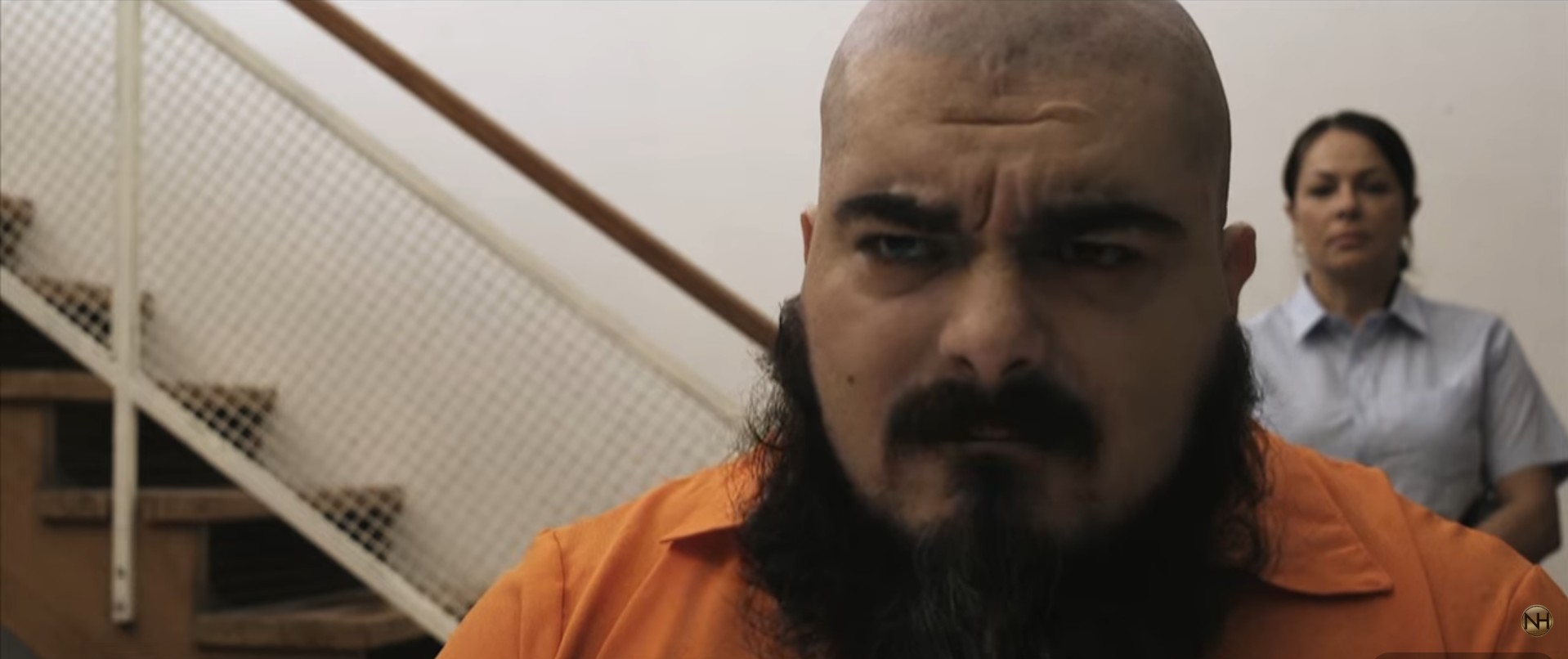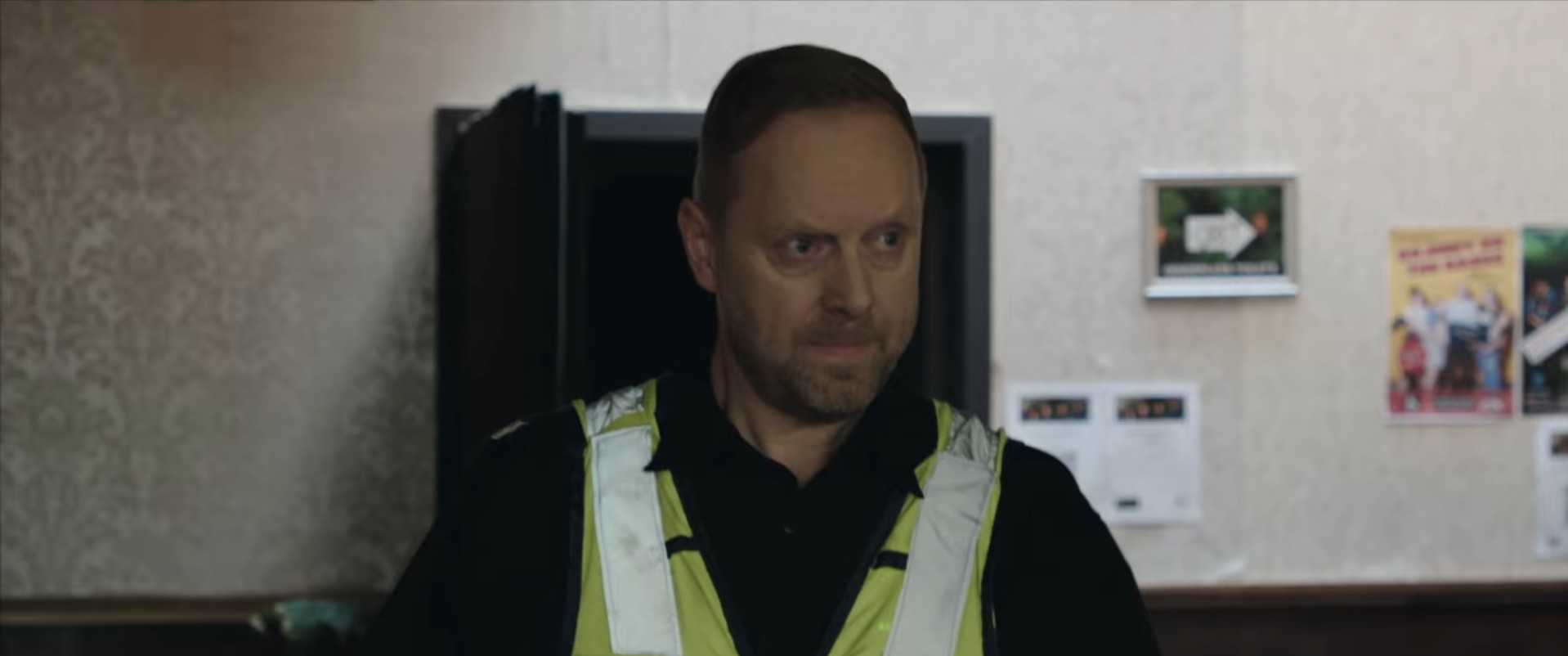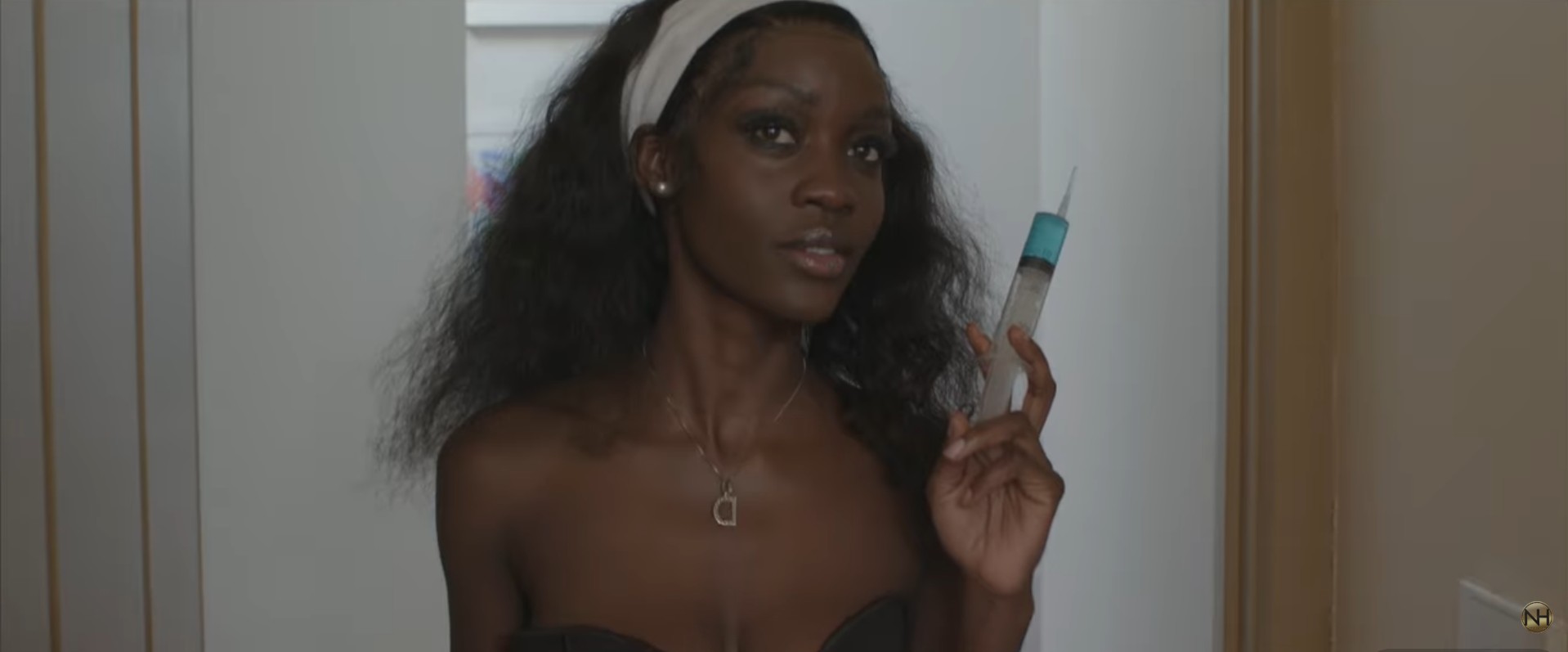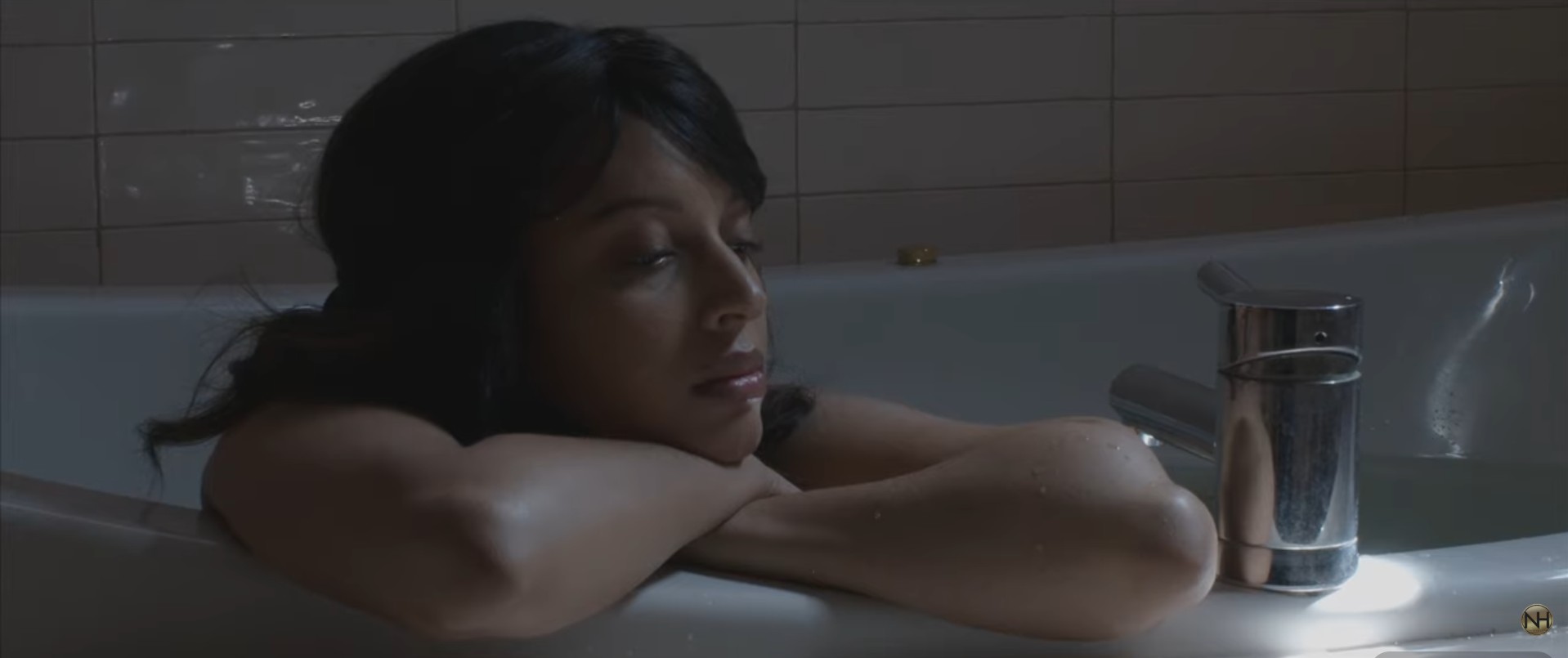
Football, God, Family, and EVIL! “Him” reviewed! (Universal Pictures / Blu-ray)

“Him” Collector’s Edition Now Available from Universal Pictures!

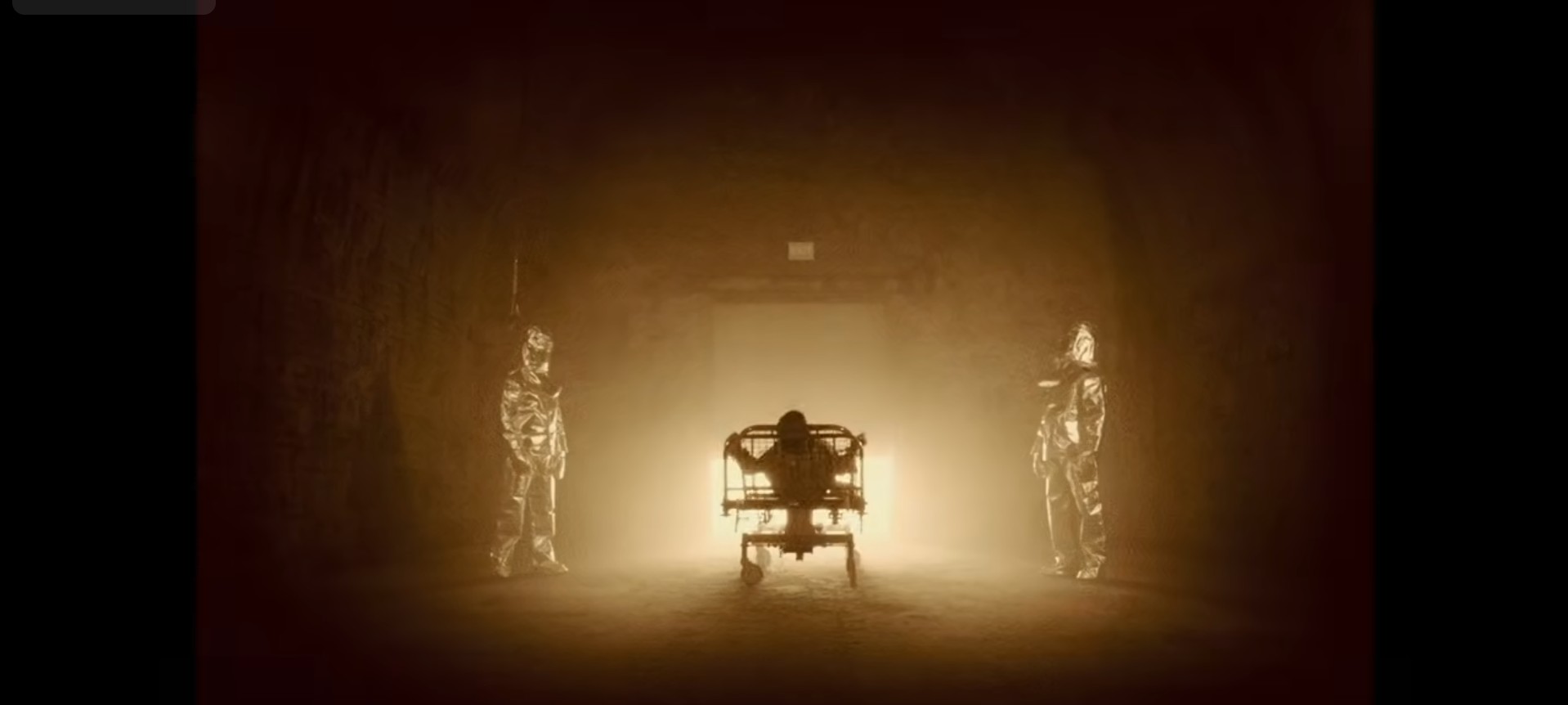
Cameron Cade’s father has been firmly preparing his son to be a football GOAT since Cam was a young boy.  Inspired by the 8-time champion Isaiah White, star quarterback of the Saviors, Cam had trained and played through the years and ranks to be the game’s next promising rising superstar athlete.  When a mascot-dressed manic derails Cam with a head trauma-induced attack, Cam takes a step back from competing in the football showcase but receives hope when he receives an invitation from the Saviors to work with Isiah White at his isolated training camp deep in the desert.  Before long, a dream-come-true turns into a terrifying nightmare as the training sessions go deeper into something far more sinister and Isiah’s greatness may be contributed to unnatural forces bound by limited contracts.  How far and how much will Cam have to sacrifice to be the best football player ever and to live up to his idolized hero before the game and those who control it swallow his own soul. 

Jordan Peele, once skit comedian with Keegan-Michael Key in “Key and Peele” turned provocative social commentary director of such films as “Get Out” and “Us,” produces the next potshot at cultural critiquing with 2025 released “Him,” a football themed psychological horror that puts sacrifice for the game over family, intensifies the pressures of equating performance with success, and a misguidance from fatherhood/mentorship that intends on grooming a young person into superstardom.  “Him” is the sophomore feature length film for Justin Tipping who also cowrite the script along with Two-Up Productions cofounders Skip Bronkie and Zack Akers as the first major movie release for the company associated with Peele’s Monkeypaw Productions that not only produces his Peele’s own films but also invests into minority-driven projects, such as “The Candyman” remake, “Monkey Man” with Dev Patel, and Spike Lee’s the “BlacKKKlansman.” 

At top bill of “Him’s” roster is an established comedian, writer, and producer with an even more well-established and famous last name.  Marlon Wayans’s breakout project was the sketch comedy TV show “In Living Color” that also highlighted and rocketed the career of Jamie Fox and Jim Carrey but was also considered a family affair as Marlon’s siblings, Shawn, Kim, Keenan Ivory and Damon Wayans, cohosted with him the African-American centric comedy show.  In “Him,” Marlon plays the 8-time champion quarterback for a football team that is as venerated as his character Isiah White playing for the Saviors.  Wayans, known for his comedic role stints in favorites “Don’t Be a Menace to South Central While Drinking Your Juice in the Hood,” “Scary Movie,” and “White Chicks,” has a surface scratched darker side to his onscreen personas that leave him no stranger to a role like Isaiah White that’s dispassionate yet ferocious – his drug addiction role in  “A Requiem for a Dream” is one of those examples.  Opposite Wayans is the strong, muscular facial features underneath soft, piercing eyes of Tyriq Withers.  The then mid 20-year-old is in peak physical condition for his rising star quarterback Cameron Cade under the pressure cooker of family, agents, and a football league that expects greatness on every level.  Withers’ recent principal parts in perceptively pointless and under-the-radar remakes of classic cult films, “Don’t Tell Mom the Babysitter is Dead” and “I Know What You Did Last Summer,” didn’t elevate the Florida born actor into the spotlight, preparing him for an upcoming lead in a more visible original psychological horror themed around one of America’s favorite sports, but Withers meets the challenge with a promising performance for his promising character that makes “Him” standout above the rest and being his biggest role of his career catalogue.  Wayans and Withers battle out with testosterone trumping into a gray area of occultism that’s not so unlikely from the reality of professional sports.  The principal leads are supported by an eclectic supporting cast of eccentric oddities of the isolated training camp with Julia Fox (“Presence”) as Isiah White’s fast-and-loose, high-end wife Elise, standup comedian Jim Jefferies as White’s personal athletic physician Marco with baggage regrets, Tom Heidecker (“Us”) as Cade’s hype manager Tom, Indira G. Wilson (“The Perfect Host”) as Cam’s mother, and Richard Lippert (“Scare Us”) as the saviors behind-the-scenes owner. 

“Him” came and went from its theatrical run so fast it feels like only yesterday trailers were being played on commercial breaks and on online previews, denoting Justin Tipping’s movie offering not finding a significant audience for the anti-pro sports treatment of players message.  That’s what “Him” powerfully engrosses with is an anti-football message of dog-eat-dog cruelty that cannibalizes itself for what’s best of the sport and discard those who give the sport it all once their eliteness has been completely emaciated, as if the sport is a vampire and drains their athleticism through the carnivorous canines of fans, team, and ownership.  Tipping and his cowriters integrate religious and Roman motifs that relate the gridiron as Church or the blood of the GOAT coursing through another that offers divine playing sacrifice and supremacy while certain aspects of the film regard the football fields as coliseum with players being gladiators with even the finale reenacting scenes similar to that of “Gladiator.”  Along with those strong imageries, iconographies, and representations, Tipping’s linear telling of the story feeds off the phantasmagory and being on the edge of experimental that, in turn, puts into question Cameron Cade’s reality as everything he experiences from the ominous weirdness pulsating his path forward in football to the macabre training and cultish indoctrinations of Isiah White’s desert training camp don’t come about until Cam’s whacked over the head with a long handled and ornate hammer.  Then, the question becomes, is Cam in dead and a warped purgatory?  Is Cam hallucinating?  Or is Cam actually experiencing the darker side of a game he’s been bred to believe in and be the best at.  All of those existential and surreal components overload “Him’s” highbrow and social commentary horror that will fly over the audiences’ head like pre-game ceremony fighter jets. 

“Him” arrives onto a collector’s edition Blu-ray and digital combo set from Universal Pictures.  The AVC encoded, 1080p high-definition, film is stored on a BD50, ensuring room for a visually and audibly stimulating tryout of pigskin piety.  Infused darker tones of shadows, Brunswick greens, and plenty variations of brown from the football to the desert located training camp, there are a very few contrasting moments that embolden cinematographer Kira Kelly (“Skin in the Game”) to emerge out from the hefty draping shadows that obscure much of the compounding and confounding irrationality of the insular football fanaticisms.  Kelly utilizes an array of long to closeup shots from different scenes or even the same scene to throw off the balance and provide depth when needed for the moment.  In addition, the same moments can be implanted with a personal bubble of surrealism through Cameron’s perception of events, never leaving other characters to define the atmosphere or the behaviors that are inherently set by the principal lead character, who or who may not be suffering from an intense concussion untreated unintentionally by the internal turmoil of family politics.  Detailed textures and skin tones have organic qualities, and the X-ray vision has seamless segue with all its intensified bone crunching hits.   “Him” is presented in a widescreen 2.39:1 for an extra stretch of spherical sighted surroundings that work to enclose on Cameron the deeper he’s in with the mentor’s program as well as to fully embrace his destiny with obstinance in the grandest of finales.  The Blu-ray has encoded four audio option a with English Dolby Atmos, a Dolby Virtual Speaker 2.0, a Spanish Dolby Digital Plus 7.1, and a French Dolby Digital 7.1.  All options offer extended reach into the audio localization areas of the compressed, multiple channel formats, and even the DVS adds a little extra to throw sound inside a three-dimensional space which is important for “Him’s” haunting and bizarre oneiric structure.  The Atmos provides more depth and richer lagniappe effort where it comes with Cameron’s perceptive discords of racing arguments and whispering inceptions.  Dialogue is clean and clear throughout, and no issues imposed on The Haxan Cloak aka Bobby Krlic’s subtle descent of a score.  English, French, and Spanish subtitles are available.  Bonus contents include feature commentary with director Justin Tipping touching upon production areas and the cast to create his footprint as a movie artist, an alternate ending, a removed end credits scene, a handful of deleted scenes, two deconstruction of scenes on how they’re made, Becoming Them looks at Tyriq Withers and Marlon Wayans transformation into elite athletes, The Sport of Filmmaking featurette offers a behind-the-scenes look at production of “Him,” and the Hymns of a G.O.A.T. has composer Boby Krlic’s detailing the elements in creating his movie score for the film.  The collector’s edition also comes with a digital code insert to stream or download from anywhere on any device.  The physicality of the collector’s edition is more to the tune of a play fake that doesn’t allow the release to run with an overloaded package.  Instead, Universal laterally passes with a cardboard slipcover with an embossed title for some smooth font texture.  Instead, the standard VIVA case houses the same artwork as the slipcover without the raised lettering and the disc is translucently pressed with the title and film and format technical credits.  “Him” has a runtime of 97 minutes, region A encoded playback, and is rated R for strong bloody violence, language, sexual material, nudity, and some drug use.

Last Rites: If you’ve ever thought professional sport players were commodities before, “Him” brings the blitz of putting football above it all by bringing divine blood, sweat, and tears into a cult of sadists and stardom.

“Him” Collector’s Edition Now Available from Universal Pictures!

The Key to EVIL is to Kill Each Other For It! “A Hyena in the Safe” reviewed! (Celluloid Dreams / Blu-ray)

“A Hyena in the Safe” is on Black Friday sale! Get It at Amazon.com

Eleven months after a jewelry safe heist at the Bank of Amsterdam, a group of specialized international thieves from all over Europe reunite at an Italian mansion estate during a city carnival celebrate used as a distracting facade for their gathering.  Each have a key that form a coalescence to open the safe to ensure not one of them will swindle the others and make off with the jewels worth millions.  Their ringleader Boris, who’s now deceased, hid the safe in his mansion with this wife Anna overseeing his plan and portion of their lifted prize.  When one of the keys end up missing, a series of deceptions and murders begin a feisty vying for the each of the keys.  One-by-one, the criminals fall for inconspicuous laid deadly traps and engage in murderous rendezvous until there’s only one left standing as the old saying goes, there is no honor amongst thieves.

Italy director Cesare Canevari, notable for his contribution to the exploitation subgenre with “A Man for Emmanuelle,” “The Nude Princess,” and the notoriously renowned “The Gestapo’s Last Orgy,” wrote-and-direct a post-caper, bordering giallo in 1968 titled “Una iena in cassaforte,” aka “A Hyena in the Safe.”  Coming in on the incline toward giallo’s height of success, Canevari’s whodunit has less the conventional murder mystery elements but does have arouse that lack of trust amongst the principal characters, a high body count, a vaguely mysterious killer, and definitely a highly stylization of camera angles and visuals that’s correlates with the time period and give this giallo less of a terror firming shape and more of a “Clue” like profile.  Canevari cowrites the script with Alberto Penna and is a production of Fering SRL based in Milano, Italy where the film was shot.

“A Hyena in the Safe” is carried by an eclectic, ensemble cast of international actors and actresses playing the roles that are not of their respective nationalities.  Going around the horn first with the keyholding thieves begins with Stan O’Gadwin’s Klaus, the German, Ben Salvador’s Juan, the Spaniard, Karina Kar’s Karina, the Tangerine and the only non-European of the group, opera singer Dimitri Nabokov’s Steve, The Englishman, and “The Slasher … Is a Sex Maniac!’s” Sandro Pizzchero’s Albert, the Frenchman.  The aforementioned cast primarily reduces to Italian and German actors in a virtually performance only role to exact and exude their character personality types in with Salvador, who gives Juan a thinking man’s confidence within a patient self and has a way of seducing women to extract information, or with Klaus, who’s aggressive pressing as an authoritarian German leans toward pursuit efficiency, or Steve, who’s quietly plotting multiple reserved schemes to deploy later.  Those not a part of the heist crew from the Bank of Amsterdam is Anna, the criminal mastermind’s wife portrayed by Maria Luisa Geisberger, and she, too, is a keyholder but only because the attractive femme fatale takes over the helm with the storage of the jewel vault and implants her own brand of deception after announcing her husband’s demise from an illness.  Jeanine (Cristina Gaioni) and Callaghan (Otto Tinard) are the last two who round out the ensemble in their corresponding roles of Albert’s blonde bombshell girlfriend who’s folded into the scheme at the chagrin of the others, and boy does she take a humiliating beating when Albert comes up short on his key, and the jewel appraiser who watches all the backstabbing unfold from the sidelines and counts down the bodies with the metaphorical removal of their party favor baggies, ones that would have been used to split the jewels between them upon opening the safe.

What’s interesting about “A Hyena in the Safe” is the beginning of the story plotted at the act of reassembling the team and only provide expositional context to a heist well after it’s been done, eleven months ago in fact.  All the characters are fresh and unknown to the audiences, we don’t know their personalities, their skills, their habits, or their attitudes toward one another, and all that dynamical odds and ends has processed, forcing those new to the film to watch, listen, and learn their way through the personality types and the situation at hand.  The tension is quickly laid out amongst the already side-eying and suspicious group of sophisticated thieves that react no differently from the lower class of thief with same cutthroat intent.  Keeping up with Canevari’s edited pacing and unconventional angle shots that squeeze out the tension with taut framing on expression-filled cutting of eyes and fear-induced faces, the mounting intriguing factors wet story hungry appetites with playful catering of the imagery that also consists of fixed and tracking shots.  Considering the film’s more conservative decade, Canevari builds tasteful implied sexual acts between conniving characters and is only explicitly, in physical means, when the scene calls for it, leaving gratuitousness begging to be let in.   One aspect with the pacing that hurts the enticingly heightening pressure cooker between the first act’s slow trot through choppy seas of character dynamics to elucidate taciturn behaviors and backdoor alliances and the last act’s spit firing and cutdown of those who are left standing, there is seemingly no middle act to funnel the trepidation and mystery from one end to the other in an abrupt ease into a quickly diminishing situation that goes from murder mystery to battle royale with switchblade umbrellas, electrifying door handles, and an indoor garage that can turn into an asphyxiating fish tank in a matter of minutes.  There’s an early James Bond campiness to the story’s temperament that can’t be ignored while be positively and simultaneously interesting.

Celluloid Dream’s third release title today “A Hyena in the Safe” arrives onto a new high-definition Blu-ray for the first time that’s AVC encoded onto a BD50 and presented in 1080p and in its televised pillar boxed full screen 1.33:1 aspect ratio.  The restoration of the original, likely, 35mm film stock was done by Rome’s Cinelab Services from the original camera negative, which also included the color grading.  The resulting transfer is peak restoration quality with a fresh coat of brilliant paint, a clear coating of texture producing details, and a virtually flawless image within the spherical lens picture.  Perhaps slightly on the orange side, skin tones come through a variety of shades to match the nationalities of the criminal enterprising collective.  Juan’s dinner jacket evokes tweed textures while Jeanine’s high, golden hair style never loses individual strands in the near all-bright-and-golden wash.  The original Italian mono mix was secured from the optical sound negatives attached to the filmstrip.  The mix had processed the Italian ADR in post and attached to synch to the celluloid, creating a near perfect pace and synchronicity with the conversational action though the lips doesn’t exactly match the actual words being spoken.  Speaking of dialogue, for a mono track the nice and robust with clarity from an untarnished negative albeit it’s lack of depth and not from the true source, and that goes for ambience as well.  English closed captioning is available.  Special features pack the encoding with a commentary track by Celluloid Dreams found and film critic Guido Henkel, interview featurette 7 Guests for a Massacre with Cesare Canevari (misspelled Canevaro on the back cover), Albert actor Sandro Pizzochero, Nini Della Misericordia, journalist/critic Adriana Morlacchi, and journalist/critic Diego Pisati discussing the film’s influence and pizzas from cast, crew, and critic perspective, a video essay by Andy Marshall-Roberts Schrodinger’s Diamonds:  The Duplicitous Mystery of Hyena in the Safe, a location featurette of the shooting setting The Mysteries of Villa Toeplitz, an image gallery, and the theatrical trailer.  The two-faced cover art, same art of dead bodies falling out of a safe, is set with the primary English language on the cover with the Italian language title cover on the reverse side.  The cover art on the encasing O-slip with a character composition design of a shadow-induced, high-contrast illustration by graphic artist Thu-Lieu Pham of Covertopia.com has slip art similarities with same art on both sides but with the title in either in English or Italian.  In the insert is advert for Celluloid Dream’s previous two releases – “The Case of the Bloody Iris” and “Short Night of Glass Dolls” and its upcoming fourth release “The Black Belly of the Tarantula” while the reverse side gives credits and acknowledgement in regard to the film restoration.  “A Hyena in the Safe” comes not rated, clocks in at 92 minutes, and is region locked for A, North America.

Last Rites: “A Hyena in the Safe” is a no laughs, all bite giallo caper once obscured from the public view now brought to the forefront of our attentions with a new Blu-ray release worth backstabbing for!

“A Hyena in the Safe” is on Black Friday sale! Get It at Amazon.com

To Be or Not To Be EVIL? That is the Question! “#Shakespeare Shitstorm” reviewed! (Troma / 3-Disc 4K UHD and Standard Blu-ray)

A Wild and Crazy Shakespearean Parody of “The Tempest!” Own it here!

Inspired by William Shakespeare’s revenge and restoration themed play, “The Tempest,” the ostracized pharmaceutical scientist Prospero plots his revenge with whale laxative as gushes of multiple killer whale defecation shipwreck the excrement slathered global elite to the shores of Tromaville, New Jersey where Prospero owns a nightclub and laboratory for his mad experiments.  Miranda, his beautiful daughter blinded by the Trauma of her mother’s suicide, falls for Ferdinand, son of the rich pharmaceutical king Big Al who, along with Prospero’s twin sister Antoinette, betrayed Prospero to exile and displacement.  Revenge is a dish best served as cocaine tainted with mutant growth hormones concocted in Prospero lab.  With the help of a wheelchair bound crack-whore as his right-hand pusher, Prospero’s vindictive plan melds bodies and bodily fluids together in one flesh heap of disfigured dysfunction against the conglomerating corporate greed in the midst of two lovers formulating a bound beyond partisan lines.

Troma Entertainment president Lloyd Kaufman returns to the director’s chair to helm a classical rendition of William Shakespeare’s “The Tempest” with the NSFW eloquent title “#Shakespeare Shitstorm” and, as any self-respecting Tromaville fan knows, Troma titles can be extreme literally and, in this case, the adaptation is one big splash park of diarrhea.  “The Tempest” isn’t the company’s first re-imagining of a Shakespeare’s work with “Tromeo and Juliette” being the humble career beginnings of now mega-MCU and DCU director James Gunn (“Guardians of the Galaxy,” “Superman”).  For Kaufman, “#Shakespeare Shitstorm” might be one of the last directing efforts for the independent filmmaker and social justice warrior as he reaches into his 80th year of age, but that doesn’t stop the 50-year moviemaking vet from passionately wanting to create art from behind the camera to in front of it with this Brandon Bassham script based off a story between Kaufman, Gabriel Friedman (“Slashing:  The Final Beginning”), and, of course, the Bard of Avon.  While Shakespeare doesn’t foot the bill for the budget, him and Troma do have something wildly in common being masters of the low-cost arts as Kaufman, Troma cofounded Michael Herz, Doug Sakmann, Justin A. Martell, and John Patrick Brennan produce “#Shakespeare Shitstorm” on a shoestring budget put muster together a wild and crazy story and effects movie.

Kaufman’s so passionately about making art and filmmaking, and also watching his bottom line, that he also dons a dual role playing the revenge-seeking and masterclass scientist Prospero and crossdressing, which he’s done frequently and without a morsel of shame, to become the treacherous twin sister and marketing guru Antoinette.  Kaufman’s continues to throw caution to the wind in an unabashed performance that’s outrageously crude and lined with verbose dialogue that’s definitely memorized with monotonic intention but none of that should be surprising as Troma was built on fervor absurdity, and all the actors have a range of tactlessness that runs the gamut.  The eclectic personalities never conflict with overlapping or feel forced as sometimes they often do with Troma or with farce comedies in general.  Each character shines on an idiosyncratic level, such as Abraham Sparrow’s Big Al’s magnified pompous and drug-fueled pharmaceutical big shot, Amanda Flowers (“Werewolf Bitches from Outer Space”) crack-whore cripple Ariel, and Dylan Mars Greenberg (“Psychic Vampire”) as a social media influence and justice warrior.  Kate McGarrigle and Erin Patrick Miller, like Kaufman’s Prospero and Antoinette, play two characters from the Shakespearean play with Miranda and Ferdinand respectively.  Their opposite sides, Romeo & Juliet-esque affair has more an even keel, still absurd without a doubt, but better balances the stranger side of the deep character pool.  Let’s also note that “#Shakespeare Shitstorm” is also a musical that puts more effort in synching action and lyrics into a frame already filled with slapstick surrealism and socio-political satire.  The cast rounds out with Frazer Brown, Monique Dupree, Teresa Hui, Ahkai Franklin, Zoë Geltman, Zac Amico, Elizabeth D’Ambrosio, Nadia White, Dai Green, Vada Callisto, and special guest stars Ming Chen, Tommy Pistol, Bill Weeden, Julie Anne Prescott, Doug Sakmann, and Catherine Corcoran.

If afraid to get down and dirty with drowning in logs of whale feces, be offended by the large, and small, phalluses and other nudist behavior, be enraged by the comedic appropriation of the disabled, transgendered, and race communities, or just become upset at the smallest off-kilter behavior and uncouth conduct, then “#Shakespeare Shitstorm” should be on your top ten list of must watch because that’s Troma’s whole schtick is to challenge the uptight and corporate commercial narrative that has everyone on edge and afraid to walk on the permissible wild side, especially in art that’s supposed to covered by freedom of expression and speech.  Kaufman puts the light on the irony, the preposterousness, and the two-faced hypocrisy that is the dark side of social media, such as cancel culture, which is in itself is an ironical dig at far liberal thinking, a stance bred from the same gene pool that has supported Troma over the last half a century, but that doesn’t mean Troma stops parodying and caricaturing the gentrifying and oligarchical elite with their own brand of downright vulgarity, and being funny and rights advocating while doing it, such as an extreme deluge of whale feces being evacuated right onto a luxury yacht, shipwrecking the survivors onto the seedy shores where a tainted drug nightclub brings revenge to a fleshy, body-horror amalgam finale that is Brian Yuzna’s “Society” on steroids and Viagra.  Characters Miranda and Ferdinand represent the best parts of both worlds, restoring and evolving out from their parental trauma induced wormwood ways into love and hope, two core values Troma preaches from the rooftop.

“#Shakespeare Shitstorm” receives a huge 3-disc UHD Blu-ray and standard Blu-ray release that’s….not a shit storm.  The UHD is HEVC encoded, 2160p ultra-high definition resolution, BD66 with an HDR10 range and the standard Blu-ray is AVC encoded, 1080p resolution, BD50.  Troma pulls out all the stops for what could have been Kaufman’s last feature film directorial, leaving nothing to chance with detail and sound immersion to make sure audiences get into the sticky crevices of every mutated orifice.  Cloudy with haze, bathed in neon lighting, and lots of rough, low-lighting doesn’t provide the utmost specifics surrounding every textural aspect but there’s plenty to field in both formats that warrant squeamish reactions and repulsive states through the mound of transformative flesh that for the most of the time show their fabricated prosthetic qualities.  While both formats produce a vivid image, neither one of them really stand out above the other with only minor, insignificant detailing coming through the UHD.  The film is presented in a widescreen 1.78:1 aspect ratio.  An English DTS-HD 5.1 master audio mix is surprisingly utilized!  Environmental ambience, diegetic and non-diegetic, has isolated channeling, such as the pitter-patter of rain through the back channels, that provide a layered sound design and added depth to the picture.  The dialogue, through regular conversation and musical numbers, retains a clear understanding without any feebleness and often times with Troma productions, the audio can sound one-dimension, but this Kaufmann film is a multi-diagonal product with an abundance of surround sound through all the bodily fluids and it’s acts of secretion sounds.  Rob Gabriele, Filipe Melo, and Louise Aronowitz music and compositions run with the Troma tide in executing highlighted whimsical and comedically inclined numbers for the actors to either be engulfed by or lip-sync.  English subtitles are available.  Two discs packed with extras extend the endless absurdity.  First disc includes a typical introduction from Lloyd Kaufman, also available before running the feature, who teases the road ahead and shows enthusiasm for the film’s UHD properties, there’s also two commenter tracks – one with Lloyd Kaufman and fellow producers Justin Martell, John Brennan, and Mark Finch and the other with actors Zac Amico, Teresa Hui, Amanda Flowers, and Dylan Mars Greenberg, producer John Brennan and production designer Yuki Nakamura, who both also work on the Last Drive-in with Joe Bob Briggs, regaling their tales through production designing, a music video Tromatized featuring Abbie Harper, a Troma Now advert featuring two lone Tromettes bored and looking for something to do/watch when Uncle Lloyd gives them Troma streaming guidance before locking lips, and the teaser plus three theatrical trailers for the feature.  The bonus 2nd disc includes the full-length, behind-the-scenes documentary Brown is the Warmest Color (a riff on “Blue is the Warmest Color”) that follows the pre-principal-and-post production and all its departmental successes, problems, and day-to-day that though even shows how ardent Lloyd Kaufman is about his on-set direction for art, love, and expression, it also does show how tyrannical, at times, he can be on set with an impatient nature and rigorous time productivity.  Also including on the disc is Tromalbania as the production goes to Albania to finish the yacht sequence, Troma in Times Square is another video marketing maneuver for the company’s streaming service by having Toxic Avenger face off against the evil Netpix, isolated musical numbers from the film in #Shakespeare’s Shitstorm:  Musical Numbers, and the auditions for select roles, including but not limited to Dylan Greenberg Mars, Nadia White, and Amanda Flowers.  The encoded features are definitely good insight and tourist attraction beacons that depict movie magic, intent, and can offer comedic and cringeworthy states of independent filmmaking, but packing a punch as well is the packaging that offers embossed tactile elements of the O-slip with some sick (awesome) illustrative, back-and-front artwork by Sadist Art Designs  The black UHD Amaray sports a white trimmed version of the O-slip backside artwork and inside is a hinged flap that tightly secures discs 1 (UHD feature) and 2 (standard Blu-ray feature) with the third disc snapped securely onto the interior back cover.  Each disc displays a different story depiction with either the front O-slip art on the UHD disc with the standard Blu-ray and the bonus disc with memorable movie imagery.  The self-labeled comedy-epic, with gashes of unhinged body-horror, has a runtime of 94 minutes with the not rated 4K UHD disc is encoded as region free while the Blu-rays are region A.

Last Rites: “#Shakespeare Shitstorm” may be a lot of things – crude, offensive, over-the-top – but Lloyd Kaufman’s supposed last magnum opus seizes every opportunity to make a statement, one that’s literally on a crapload of sociopolitical and cultural renaissance level!

A Wild and Crazy Shakespearean Parody of “The Tempest!” Own it here!

EVIL is the Will of the Gods. “Malpertuis” reviewed! (Radiance Films / Limited Edition Blu-ray)

“Malpertuis” Now Available at Amazon!

Jan, a young sailor returns home from a voyage to find his family home gone.  After getting into a scuffle with pimp at a night club, he’s knocked unconscious by a blackjack and wakes up to his sister Nancy taking care of him and in the bed inside the Malpertuis home of his draconian uncle, Cassavius, a wealthy, stern, and impatient man on the verge of death with terminal illness.  The sailor finds they’re not alone in the large labyrinth estate with peculiar relatives, nearby acquaintances, and longtime servants.  Before his death, Cassavius has his will read with everyone present bedside, announcing the distribution of the immense inheritance amongst the close assembly who’ve either worked and slaved hand and foot for Cassavius or have been on the outside clawing up into his good graces for their greed.  Yet, to receive their portion, they must abide by one stipulation:  they can never leave the Malpertuis.  Jan plunges himself into Cassavius’s unfathomable parting will and design, seeking to unearth Malpertuis’s warren secrets, but all a while, a killer begins to pluck away potential beneficiaries.

The 1943 gothic novel of the title by Belgium author Jean Ray serves as the film adaptation source for Harry Kümel’s 1971 gialli-like and surreal maddening “Malpertuis.”  Released in the U.S. as “The Legend of Doom House,” the Belgium and Dutch co-production creates phantasmic journey down the rabbit hole that unravels a mystery of pantheon proportions.  The “Daughters of Darkness” directing Belgium filmmaker helms the faultlessly fantastical adaptation and script by Jean Ferry, who would also collaborate with Kümel on “Daughters of Darkness” as well as pen original and adaptations of Franco-Italiano melodramas from “The Wayward Wife” to “The Foxiest Girl in Paris.”  Pierre Levie (1969 “The Witness”); and Paul and Ritta Laffargue (“The Mushroom”) produce the gothic and Greek movie under Artemis Film and Les Productions Artistes Associés.

“Malpertius” houses an international cast that ranges from the native English-speaking countries of Britain and America to the European republics of France, Belgium, Germany, and the Netherlands.  The biggest headliner out of the bunch, and perhaps the biggest drunk at the time too, is none other than “Citizen Kane’s” Orson Welles in the boisterous patriarchal role, Cassasvius, on the brink of death.  Welles commands the screen in his short lived but striking hard every note performance that simply overpowers an otherwise Eurocentric cast fashioned with off the wall characters.  The narrative circles around the ingenuous Jan freshly off the boat for a little R&R.  Played by Mathieu Carrière in one of his earliest performances of his copiously filled career that includes horror-based credits like “Born for Hell,” “Nurse Massacre” and “The Murdered Young Girl,” Jan refrains from mostly having a voice but rather actions his will to discover Cassavius’s secrets within Malpertius’s walls as well as extract his fellow beneficiaries aenigmas, such as why the lovely Euryale won’t ever look him in the eye though she’s destined to be his wife per Cassasvius’ will, his sister Nancy’s inexplicable need to leave Malpertuis with her lover, and Alice, one of three intrusive and gossipy sisters, with her cozy up urge to bed Jan while also sating the sexual desires of his greedy cousin and sneaky creep Charles Dideloo (Michael Bouquet, “The Bride Wore Black”).  All three women are played by a single actress.  Hailing from the UK, “The Violent Enemy” actress Susan Hampshire goes into complete incognito mode that disguises her physical attributes and character personalities with mere makeup and temperament tonal shifts too genuine to easily notice Hampshire being all three women.  Hampshire deserves much of the credit and earns a trifecta win by facing down the challenge without compromising character.  Perhaps a little unfair to single out Hampshire as such but the entire “Malpertius” cast deserves recognition for their titan acts, representing humanity-cladded divinity in the most simplistic of human limitation that none of them, apart from one being more recognizable against the others, can be pinpointed definitively who they’re roleplaying.  Charles Janssens, Jean-Pierre Cassel, Walter Rilla, Dora van der Groen, Daniel Piol, Sylvie Vartan, Jenny Van Santvoort, Jet Naessens, Cara Van Wersch, Fanny Winkler, and Bob Storm fill out the cast.

There’s nothing quite like a good film adaptation of a novel.  Author Jean Ray’s four-part narrative isolates characters more exclusively that delineates the individual storylines of the whole gothic affair inside , and outside in parts, of the crumbling Malpertuis estate.  The Harry Kümel and Jean Ferry vision set out to make “Malpertuis” cinematic by collapsing the subset storylines into a single perspective narrative bestowed upon Jan, who is also the main protagonist in Ray’s novel under Jean-Jacques Grandsire, but less involved in comparison to the film version.  This forces audiences to see through Jan’s eyes, a curious, naïve and perhaps good nature fellow, a nationalized sailor of sorts who cares more about his home and sister than the depravity of sailors on shore leave, and what Jan experiences is nothing short of exploitation, sexualization, and torment amongst Cassasvius’s most prized collection of heirs.  Which brings me to uncle Cassavius who is set up, through the remarks of his nephew Jan, as nothing more than a gruff and stern, ill-tempered man living in the gloomy prison-like structure that is Malpertuis, but Cassavius transforms in a postmortal light as no longer a wealthy grouch but as an omnipotent collector that instills a great power upon him albeit his once feeble condition that took his life.  His house is very much like himself, confounding, mysterious, and surreal now pact with peculiar beings that look, sound, and feel human, or at least to Jan, and in appearances to the audiences too.  There’s a theme of limitless power over power itself but with the caveat that everything must come to an end and “Malpertuis” has one Mount Olympus-sized end. 

What’s also definitive is the limited-edition Blu-ray set from Radiance Films.  A beautifully curated boxset encasing a dedication to the undervalued “Malpertuis” with a AVC encoded, 1080p resolution, BD50 set that’s presented in a 1.85:1 widescreen aspect ratio.  In the midst of Malpertuis’s dark corridors and staircases, its classically drab common rooms, and a bleakly deserted grayness to the seaport town that exemplifies the intentionally restored stark and severe grading overseen by director Harry Kümel, the 4K scan, compiled by the shorten Cannes cut and Kümel’s directors cut, depicts quite a bit of localized saturation that pops into play that creates stand out characters in tandem with their eccentric personalities.  There’s a meticulousness in the details that greatly heighten Malpertuis into a prison-like character, one that is personified holding the living, breathing characters into a stasis though they’re freedom to leave is unobstructed, the Lamplighter is a good example of this by appearing to be a near skin and bones, unkempt in appearances, and wailing in disquietude about Cassavius putting out the light, as if Cassavius himself was some sort of jailor and, in a way, he is.  No compression issue within the dim-lit black areas, the ruckus of various action, or any macroblocking during the decoding.  Though there is a language version somewhere in the world, Radiance Films supplies only the original Dutch ADR mono.  The post-production dialogue does have an asynchronous measure between picture and sound, especially between the non-native Dutch speakers, but the track is clear and prominent overtop a mysterious and unobtrusive Georges Delerue (“Platoon”) soundtrack, letting the actors and the action take the helm of the narrative with a low-toned menacing as well as hopeful score pieces that drive their curiosity and individual pecularities.  The diegetic dynamism denotes a defined design to be character driven rather than creating the immense suspense built by an edge of your score and omnipresent nondiegetic sounds.  The faultless and well-paced UK English subtitles are available and can be toggled.  Encoded special features include a 2006 audio commentary from director Harry Kümel and assistant director Françoise Levie, new interviews with Kümel and gothic horror writer Jonathan Rigby, an archival and behind-the scenes documentary on the making of the film with interviews Kümel, lead actor Mathieu Carriere, and director of photography Gerry Fisher, archival interviews with Kümel, Michael Bouquet, and Jean Ray with an archival featurette on Orson Wells and actress Susan Hampshire, Malpertuis Revisted takes audiences on location where the movie was shot with Kümel’s descriptions, the Cannes cut of the film, which is approx. 20 minute short than Kümel’s director’s cut and is viewable in the English and French language for selection, Kümel’s short film “The Warden of the Tomb,” and the trailer. Limited to 3000 copies, “Malpertuis’s” physical presence is palpable with a hard cardboard slipbox with Greek themed compositional artwork with a wraparound Obi strip denoting synopsis, bonus features, and technical aspects. Inside, a clear Blu-ray Amary comes primarily with a front and back still image cover given the artistic liberty treatment. The cover can be flipped from more traditional cover artwork, and all artwork provided is by Time Tomorrow. Heavier than the slipbox and the Amaray is the accompanying 78-page booklet with cast and crew acknowledgements, transfer notes and special thanks credits, and 2025 produced essays by Jonathan Owen, Willow Catelyn Maclay, Lucas Balbo, Maria J. Perez Cuervo, and David Flint. The region free release is region free and houses two runtimes with the main feature being the 125-minute producer cut and the Cannes cut, domiciling in the special features, clocking in at 100-minutes.

Last Rites: No one can top Radiance Films’ “Malpertuis” limited-edition Blu-ray set with its comprehensive insight into one of the more original adaptations surrounding Greek mythology, the harnessing and control of great, immense power, and the how that power is transposed and shaped into the human context where greed, sex, and love are the core contentions.

“Malpertuis” Now Available at Amazon!

EVIL’s Ready to Rock! “Hard Rock Zombies” reviewed! (MVD Visual / DVD)

“Hard Rock Zombies” Rocks out on DVD! Check it Out Here!

A hair metal rock band will a killer ballad Holy Moses is on the verge of making it big time.  With a scouted gig at a venue in the small-town of Grand Guignol, Jesse, Tommy, Robby and Chuck are ready to rock the house with the help from band manager Ron but Grand Guignol’s narrowminded men and women, including the sheriff and government officials, will stop at nothing to cancel the show that has their children and teenage daughters enthralled with what the parents call scandalous rock’n’roll.  In favor of canceling and to sate their unquenchable bloodlust, a strange but wealthy eccentric family of perverse killers invite the band to play at their mansion only to kill them one by-one in a horrible death.  The town is not all full of bigots and murderers as Jesse’s rockin’ romance with Cassie, a daughter of Grand Guignol, plays an incantation cassette tape that rises them from the grave to seek hang-banging revenge! 

Femme fatales.  Dwarf-sized ghouls.  Werewolves in wheelchairs.  Voyeuristic snuff photographers.  Gas-crazy Nazis!  “Hard Rock Zombies” may thematically state rock’n’roll lives forever by way of tuneful necromantic resurrection, but the 1984 comedy-horror is a complete smorgasbord of absurdity.  Helmed by the India-born and Ivy League educated Krishna Shah  “Hard Rock Zombies” is a multifaceted vaudeville act set to the rock is the devil music trope.  Also alternatively known as “Rock Zombies” or “Heavy Metal Zombies,” Shah cowrites the metal music metastasizing script alongside David Allen Ball, both of whom would collaborate once and final more with the follow year’s teen comedy “American Drive-In.”   The in and around Los Angeles shoot is a production of the Patel/Shah Film Company with Shah producing and Shashi Patel serving as executive producer along with the debut of “Candyman” and “Lord of Illusion’s”  Sigurjon Sighvatsson and Steve Golin as associate producers. 

E.J. Curse, Geno Andrews (“Dr. Alien”), Sam Mann (“Roller Blade”), and Mick McMains make up the hair metal band Holy Moses and none of them had real acting experience.  The novice lot do their best to express themselves as an 80’s metal with large and heavily teased hair to produce maximum body and volume, tight and outlandish leather and revealing clothing, and apart from the competent and skilled skateboarding, move in antiquated dance moves familiar to the era.  They may not have a single convincing acting bone in their performance but credit to their overall appearance that speaks to the film’s title.  Though the band is intended central focus, they share a copious amount of screentime and development with the family of frightening agendas and secret identities.  The story even begins with attractive blonde Elsa (Lisa Toothman, “Witchcraft III:  The Kiss of Death”) seducing two young men to their demise while a slicked dress man takes pictures from the nearby bushes alongside two playful, dressed-in-black dwarfs, one human Mickey (Phil Fondacaro, “Willow”) and one monster Buckey (Gary Friedkin, “Cool World”).  It’s like a scene straight out of a David Lynch movie.  We learn this group belongs to an eccentric grandfather patriarch (Emanuel Shipow, “Biohazard”) and his wheelchair bound wife Eva (Nadia, “Dark Romances Vol. 1”) eager to strike down their next victims with clandestinely goosestepping and small mustache fervor.  Frazzled but loyal band manager Ron (Ted Wells) and Jesse’s Grand Guignol lover girl Cassie (Jennifer Coe) are seemingly the only two sane and rational characters who favor the sweet ballads of Holy Moses rather than the sinister genocide of an experiment happy dysfunctional family.  “Hard Rock Zombies” has an abundance of supporting characters and extras to give weight toward a Shah and company’s first-time production with a select secondary cast list of Jack Bliesener (“Crime Killer”), Richard Vidan (“Scarecrows”), Vincent Albert DiStefano, Christopher Perkins, David Schroeder, Michael David Simms (“Scarecrows”), David O’Hara (“Star Worms:  Attack of the Pleasure Pods”), and Donald Moran.

“Hard Rock Zombies” was probably more fun writing and performing in than it was piecing together a coherent narrative that spins like an unruly top going in unpredictable and varied wandering ways.  The amount of subplots against the core resurrection of a metal band erode the very essence of their supernaturally charged revenge because the primary focus on their rise from dead and how that resurrection incantation came into the rockers’ possession can quickly be forgotten as the exposition and the defining titular moment can be easily missed if you blinked for 0.0002 of a second.  There’s also the aforementioned circumstantial subordinate themes of adults and/or parents unwavering, harsh rebelliousness against the adolescent swooning hard rock and of the concealed true malevolent nature of the town’s murderous hodgepodge of a family that turn out to be bloodlust Nazis with an assumed case of monstrous, experimentational evil coursing through their veins, as seen with the unexpected shape-shifting wheelchair bound grandmother who can transform into a werewolf, complete with dual switchblades, and the ghoulie-like dwarf who eventually feasts upon himself into nonexistence.  “Hard Rock Zombies” transcends viewers into a bizarro world where, initially, seemingly plausible issues around an older generation’s labeling of infernal rock’n’roll music, stirring up townhall meetings and protests they see has harmful influence of the younger generation but then the topsy-turvy and screwball antics of heinous villainy goaled with and having already done committing atrocities is a complete farce on the actual, factual, historical events of ethnic cleansing.  Shah definitely makes light with the tone-deaf analogy with great zest and jest but without a more honed in effort and concentration on just the rockers back from the dead, this absurd 80’s comedy-horror fails to address its intentions.   

If not looking to spend a ton of money on the Vinegar Syndrome’s Blu-ray “Hard Rock Zombies,” the MVD Visual DVD is an economic alternative that won’t downsize your wallet.  The MPEG2 encoded, standard definition 720p, DVD5 suits this eccentric horror-comedy just fine, retaining its campy nature in the ballpark of an unrestored scan into 2K territory but still have the working print Vinegar Syndrome used for their high-def transfer, still presented in a widescreen 1.85:1 aspect ratio.  What’s encoded has not been sheened into an apt color correction and buffed with a higher pixel count for better, digital vivid saturation and better, digital defined textures, but “Hard Rock Zombies” is innocuous as the scenes require less eye squinting for finer details and a perverse need for range of color in what’s more of a surface-level squall of rock-infused, nonsensical horror.  Again, a technical spec that won’t knock your socks off and does muddle the fidelity quite a bit, the English Dolby Digital 2.0 Stereo has less amp, and this is where any kind of impact “Hard Rock Zombies” would have had hurts the most.  Extended Holy Moses montages and concerts, alive and dead, should be an unharnessed power of ballad rock and supernatural discords for a story driven by monsters and music, especially one that uses an Iggy Pop-like mumbling incantation to rise Jesse and his band mates from the grave.  English subtitles are available for selection.  MVD’s release is a purely a feature only substitute with no special feature and the standard DVD case has the same artwork as the Blu-ray counterparts, nicely tinged on its rad rock’n’roll and death illustrated cover art.  Another difference is the rating with MVD’s release coming in at a R-rating versus the NR Blu-ray from Vinegar Syndrome, yet this is most likely either incorrect rating or a re-cut of the film as both format features have a runtime of 97 minutes.  MVD’s DVD has region free playback. 

Last Rites: Rock’n’roll never dies! For “Hard Rock Zombies,” the phrase rings true with undead rockers seeking revenge from beyond the grave. For the DVD, there’s not enough overall elan behind the release to bang your head to in this barebones and untouched alternative that’s a good budget friendly option for the features only enthusiasts.

“Hard Rock Zombies” Rocks out on DVD! Check it Out Here!