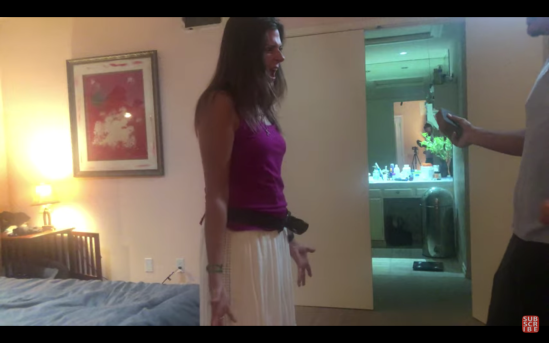
Believe the Bruja When She Says There’s an EVIL Demon Inside You! “The Old Ways” reviewed! (Blu-ray / Dark Star Pictures)

Drug-addicted and depressed American journalist, Cristina, travels to her ancestral home of Veracruz, Mexico to investigate local folklore and shamanism.  Upon visiting the local feared and shunned caves of La Boca, the next thing Cristina knows she awake locked up in and chained inside a makeshift cell and is told a demon is inside her by an elder Bruja and her assistant who still practice the old ways of exorcism.  Skeptical and scared, Cristina endures the primitive, and sometimes painful, religious rituals to extract the demon out from her soul, hoping they would eventually let her go if she feigns the demons release from her body, but when plagued by strange visions and unexplainable occurrences, Cristina comes to realize the real danger is actually from within.    

Shot on location in Catemaco, Veracruz, Mexico, “The Old Ways” clashes good versus evil in one small corner of the world while also enhancing the already enriched central American state known for its cultural brujo, or sorcery, celebrations and activity.  “The Old Ways,” which aims to symbolize spiritual demons to confront personal ones, is the first feature length venture from director Christopher Alender over 20-years since his first feature that was also, too, a horror, an off brand federal holiday themed slasher from 1999 entitled “Memorial Day.”  The 2020 demonic possession thriller reteams the “Memorial Day” writer and director as Marcos Gabriel pens the script that has become a miniscule reflection of himself being a Puerto Rician expat losing his own sense of heritage and culture of his ancestral land.  Full pin drop scares and profound depth of personal complexities, “The Old Ways” is a production of Soapbox Films (“The Wind,” “Southbound”) from Alender and Gabriel as executive producers along with Christa Boarini (“Spree”), David Grove Churchill Viste (“The Voyeurs”), and T. Justin Ross producing.

The lean characters keeps the story intimate and personal, rarely straying away from the rough-and-ready holding cell single location.  Only in Cristina’s backflashes of her Stateside office or the caves of La Boca do we dip into non-linear fractions of the what, when, why, where and how she became a befuddled prisoner to her Bruja host. No white washing here as the main cast is comprised of Latin-American actors and at the lead is “Fear the Walking Dead’s” Brigitte Kali Canales as the journalist with a death wish. You see, when Cristina embarks on her journey down to the La Boca caves of Veracruz, the troubled druggie searches for relief against an emptiness she can’t shake. Most of this narrative is backlogged backstory eventually worked on and worked out through flashbacks and through the excavation by her national residing cousin Miranda (Andrea Cortés). Canales really leans into her Americanized impediment delivering impatience, ignorance, patronization, and scoffing at Miranda and the Bruja teams’ beliefs and cultural responsibilities. The Bruja team, what I like to call it, is comprised of Julia Vera (“All Souls Day”) and Sal Lopez (“Return of the Living Dead III” ) as the last practitioner of primordial exorcism techniques, aka the old ways, and her assisting son, Javi, and the mother-son dynamic teeters of the customs and exercises of combating evil, a task that has been long withstanding against a beaten down and weary Javi. AJ Bowen (“The House of the Devil”), Julian Lerma, Michelle Jubilee Gonzalez, and Weston Meredith as the demon Postehki.

Now, Postehki is not a real demon from any culture’s cache of fiends. In fact, the whole mythos of “The Old Ways” is entirely fabricated for the sole sake of the story and I find that to be thrilling. Anything is possible with new folklore if done soberly without ostentatiousness and if mixed with some realism of the surrounding area, such as the Bruja element, that grounds the story with that much more of a terrifying blueprint. Plus, the allegories give the story tremendous depth with the demon inside Cristina that mirrors her addiction with drugs that initially obscure the audience from knowing if the evil within is real or is the drug effects the underlining culprit. Cristina’s addiction also plays into her immense sadness after her mother, the last connection to her heritage identity, dies and that melancholy she suffers forms a device that motivates her to return home looking to die herself. Cristina situation resembles being a satellite vessel cut off from the mothership and is lost and alone, leaving it up to Miranda to be that beacon of reconnection with not only her heritage but also her family. The third theme is the carryover of traditions from an older generation to a younger one that becomes very prominent between the Bruja, Luz, and Cristina to come to way of understanding the importance of keeping with the tried and true no matter how beyond crazy it may seem. The first two acts set up perfectly the puzzling nature of Cristina’s imprisonment and unraveling while touching upon subtopics and crowd pulling moments of breath holding terror, but the third act begins to spoil the salivating juiciness of what’s next behind each layer after a couple of false endings, a cheesy transition of character, and an eye-rolling one-liners essentially kill the visceral vibe.

Old habits, old feelings, and old origins pry open the emotional armor to a pervading and harbor-seeking evil in “The Old Ways” now on Blu-ray home video from Dark Star Pictures.  The not rated, dual-layer, region A BD25 is a presented in 1080p High-Definition with an aspect ratio of 2.39:1 anamorphic widescreen.  Cinematographer Adam Lee shoots a terrene-cladded and flat color incubus with strategically placed shots that trigger strong reactions that go toe-to-toe with a thumping tribal score and piercing ambient track from the 5.1 DTS-HD Master Audio track in the English and Spanish language.  Robust and formidable, the score packs a punch with a pulsating drum and pan flute score by “The Wolf of Snow Hollow” composer, Ben Lovett. Dialogue is clean and clear and the errorless subtitles align nicely with the vocals. English SDH subtitles are also optional. Special features include over 2 hours of bonus content with a feature length behind-the-scenes documentary The Old Ways: A Look Beyond that provides cast and crew opinions, history, and everything else in between about “The Old Ways” origins and reactions, a commentary track with director Christopher Alender and writer Nicholas Gabriel, deleted and extended scenes, and storyboards. “The Old Ways” is old world horror for the modern age, poised rightfully so to be a part of the possession genre canon even if coming off the tracks just a tad.

A Diary Full of EVIL Secrets. “The Darkness” reviewed! (Reel2Reel / Digital Screener)

David inherits his ailing grandmother’s countryside cottage and holidays with his novelist girlfriend, Lisa, who seeks a little refuge to inspire her next big bestseller.  As soon as they arrive and Lisa discovers an old storage chest in the attic, Lisa’s is pulled by a call of a supernatural entity that lures her outside to an unmarked grave, an ominous cave suspected with evil fairies, and a diary that tells the horrifying accounts of a murdered woman.  Their time at the cottage take a toll on Lisa who’s strange behavior places concern on David.  An ostracized priest forewarns possession, death, and the stakes if Lisa remains in the area that’s haunted with witches, ghosts, changelings, and betrayers. 

Originally titled “Dorcha,” an Irish term for dark, and then rebranded as “The Darkness” for the remainder of the English speaking residents of the world, the 2021 released multifaced specter and fairy Irish folklore spectacle is the directorial debut of Tharun Mohan, a current producer for the 2021 United Kingdom vampire versus human boiling point coexistence television series, “Age of the Living Dead,” co-starring our good genre loving friend and actor, Bill Oberst Jr.  While Bill Oberst Jr. is not a part of “The Darkness” (my apologies if I gave a sense of false hope), Mohan, from off the pages of his screenplay, aspires to illuminate Irish mythology as an alluring gothic horror mixture of mystery with fear sans the more popular little green men defending pots of gold.  The self-produced film under the Tharun Productions is the banner’s first feature with Aoun Khan, Neenu Mathai, Anoop Pillai, and Monique R. White serving as executive producers.

While we don’t get Bill Oberst Jr. (still hurts), we do get someone just as good with “The House of Bly Manor’s” Amelia Eve!  The UK actress headlines “The Darkness” in the role of Lisa, the struggling novelist looking for a slice of inspiration but instead receives the whole pie of possession.  Eve lives it up as an entity puppeteering her youthful outer shell in the filth and muck, stuffing her face with all the food in the cottage, and, at times, imitating an urbanity style of death.  Meanwhile, her boyfriend David (Cyril Blake) would have probably unintentionally babe’d her to death if she wasn’t already being haunted by a vindictive Victorian spirit.  “The Darkness” is Blake’s introductory role into feature films and the 36 year old, South Yorkshire actor can’t quite capture sincerity when it comes to his girlfriend’s unusual behavior.  David also just wanders to-and-fro around town in an aloof manner for more than just one reason until things become dire with Lisa and  then is that only when he’s starts to get really involved and attempt to fix whatever’s afflicting  Lisa, even if he has to entertain an informed, but shunned, eccentric priest (John Sudgen) with tea and biscuits in order to get just what the hell is going on.  A number of side characters pop up with an inclining of importance, such as the nosy waitress (Marian Elizabeth), a powerful witch (Gillian Kirkpatrick), and a determined historian (Mary Drake), but fall short of any real significance by fluttering in with just enough motivational tidbits and then flutter out of the scene and let the principle characters work out the rest.  “The Darkness” is a dual timeline narrative with the current story focusing on Lisa’s bubbling black enchantment slowly taking over her body with the backbone base layer account of events providing a tell-all mystery driving Lisa mad with a menacing spirit.  Occurring around a few decades ago before Lisa and David arrive, Niav O’Connor (Katherine Harthshorne) mysteriously disappears from her husband Bryan (Adam Bond), but much of this is revealed through the Lisa’s obsessive reading of Niav’s diary which begs the question, how did Niav write her demise in the diary pages if she was already dead?

And that last sentiment ultimately describes Mohan’s film, as an unfocused and trite expression of amateur storytelling.  There’s difficulty in trying to nail down, or taking a stab at anything as the saying goes, in the “The Darkness’” many moving parts and many fiends in the off shoots Mohan tries to tie in from all various directions.  Even in the film’s final scenes, Mohan had to pen in one more twist that corrodes even further the integrity of a much desired narrative about Irish mythologies and the malevolencies that spur them. Myths are the heart of “The Darkness,” more specifically with the changelings who are fairies that replace real people, and Niav and Bryan O’Connor’s ghastly tale echoes the non-fictional account of Bridget Cleary, an Irish wife murdered by her husband under the suspicion that his wife was a changeling. Connections made between the past and present are roughly tied together at best with only Niav’s unearthed and charmed diary serving as a conduit to possess Lisa’s curious id. The pursuit of revenge for her untimely demise falls upon… well, that part of the story is undoubtedly vague as Niav seems to be resurrecting from the grave, so to speak, to reveal dubious secrets held by relatives from the lineage of her husband Bryan and cling her spiteful lifeforce to that bloodline and haunt O’Connor descendants like a severe post traumatic stress disorder; yet the vapid ending doesn’t justify the means, falling short the buildup of the hallmarks of folklore horror in witches, changelings, fairies, dark arts priests, and ghosts with anything but spectacular.

No cheap thrills, no gore, no nudity. “The Darkness” relies heavily on the suspense of the gothic tale itself to drawn in and spook audiences as the Mohan film creeps onto digital streaming services and video on demand this month, May 3rd, from the fresh-faced independent UK distribution label, Reel2Reel. The production value on “The Darkness” catches the passing aesthetically expensive eye while still being an economically financed and that’s a big credit to director of photography, Ariel Artur, getting the artistic shots that displays time and patience in getting the minor key angles right to at least extract a gripping moment of apprehension, resembling 60’s and 70’s European horror to likes of Hammer Horror or Amicus in appearance alone. As far as bonus scenes during or after the credits, there are none. As a starting line feature, “The Darkness” is not terrible. Let’s be clear on this as Tharun Mohan understand the fundamentals of filmmaking with sound positioning of characters in scenes, a superb, expensive look on a value size budget, and the Amalie Eve’s crazed performance is a thrill in itself, but envisioning the structure still remains behind the blinders, leaving “the Darkness” just an aimless shot in the dark.

One Can’t Just Pray Away EVIL in “The Banishing” reviewed! (Shudder – Vertigo Releasing / Digital Screener)

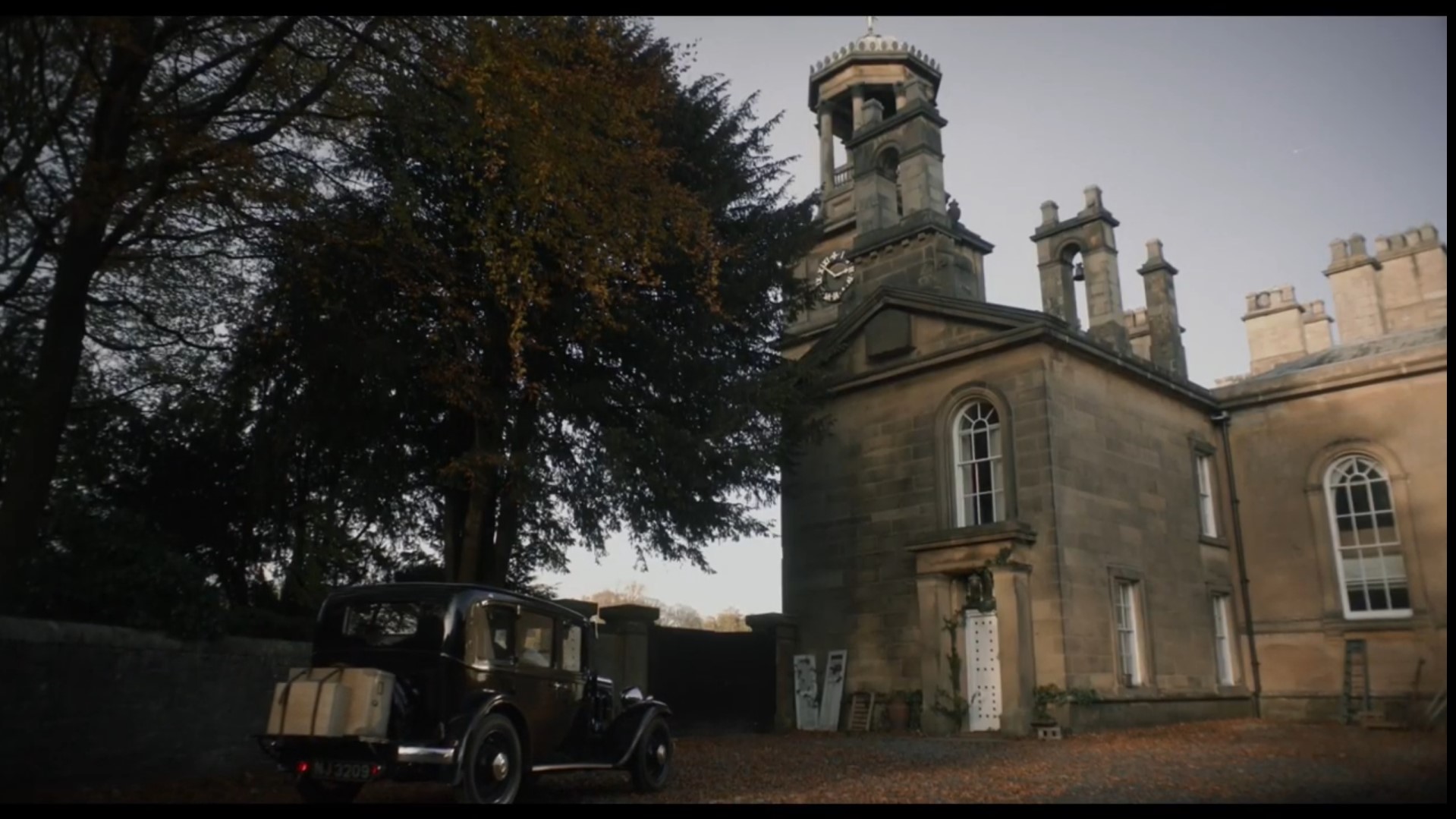
Set in a backdrop of Great Britain on the very brink of world war against Nazi Germany in the late 1930s, a small English community has nearly lost it’s entire faith in the Catholic church after the last priest suddenly and mysteriously died.  When a young vicar is offered a generous stipend, the village parish, and a large estate by the region bishop to restore a congregational foothold, he brings with him his new wife and stepchild to make the house their home, but the house has a dark history that might have played a role in the previous vicar’s death and a lone, eccentric occultist urges the family to vacate the premises immediately before the house swallows them into grave danger at the haunted hands of sadistic monks, ghastly visions, and a tormented soul roaming the corridors. 

If the prim-and-proper social class structure of Julian Fellows’ “Downton Abbey” collided with the volatile and tormented spirits of James Wan’s “The Conjuring,” then Christopher Smith’s pre-wartime staged haunted house feature, “The Banishing,” would be the outcome.  The period piece horror marks the latest installment into the genre from the Bristol, English-born Smith who made a name for himself with 2004 dark subway corridor heartstopper, “Creep,” and went on to make cult favorites amongst genre fans with the workplace violence satire, “Severance,” and the medieval bubonic plague film, “Black Death” starring Sean Bean and Eddie Redmayne.  “The Banishing,” a term used as the practice within the supernatural ambit of dark magic to ward off negative spirits, is a UK feature co-written between David Beton, Ray Bogdanovich, and Dean Lines.  Maya Amsellem and Sharon Harel-Cohen serve as producers under the London-based WestEnd Films production banner with “The Banishing” marking their fifth completed feature film product and with the nearly worldwide distribution rights landing with AMC Network’s popular horror streaming service, Shudder, in partnership with Vertigo Releasing in the UK.

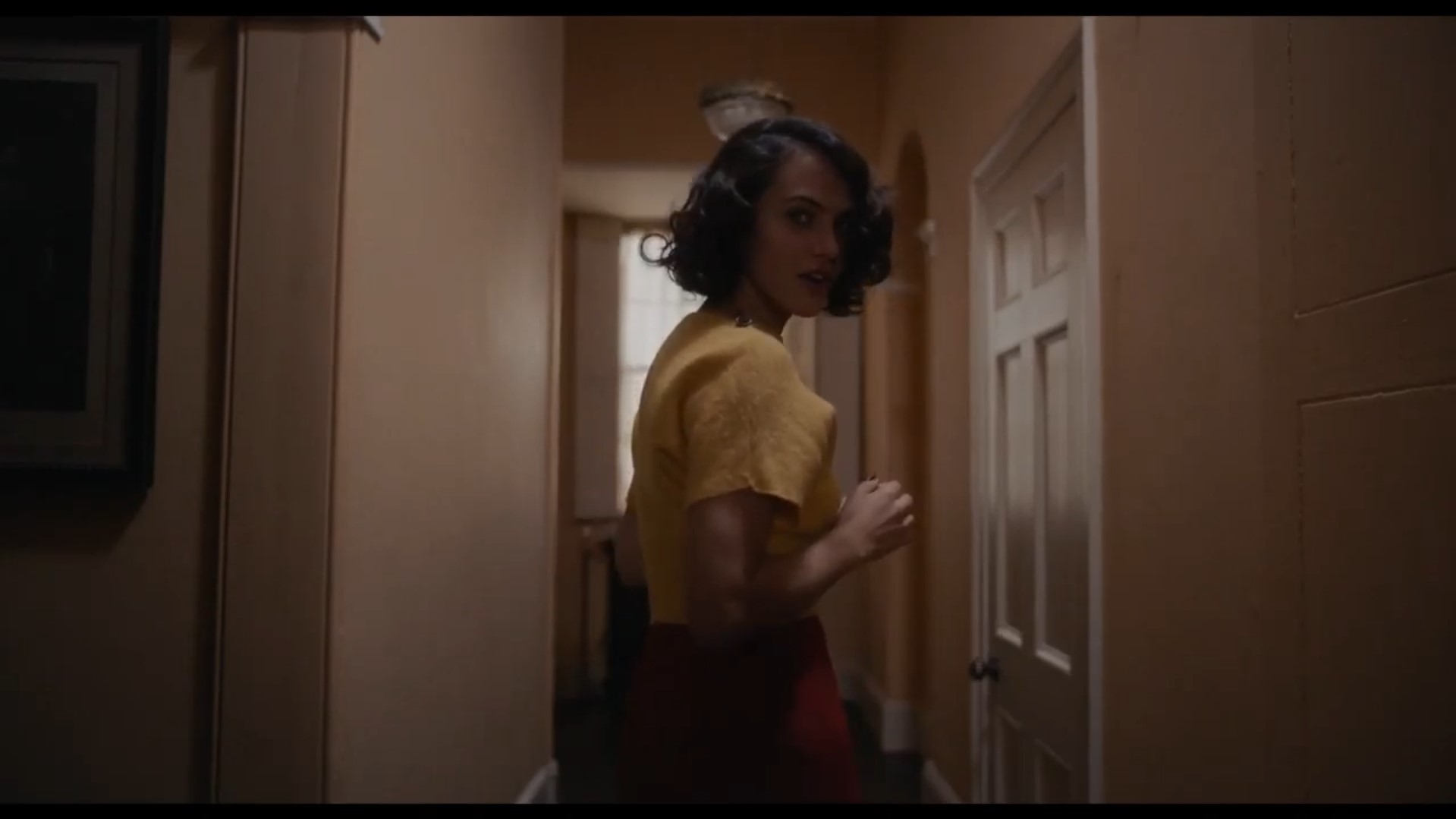
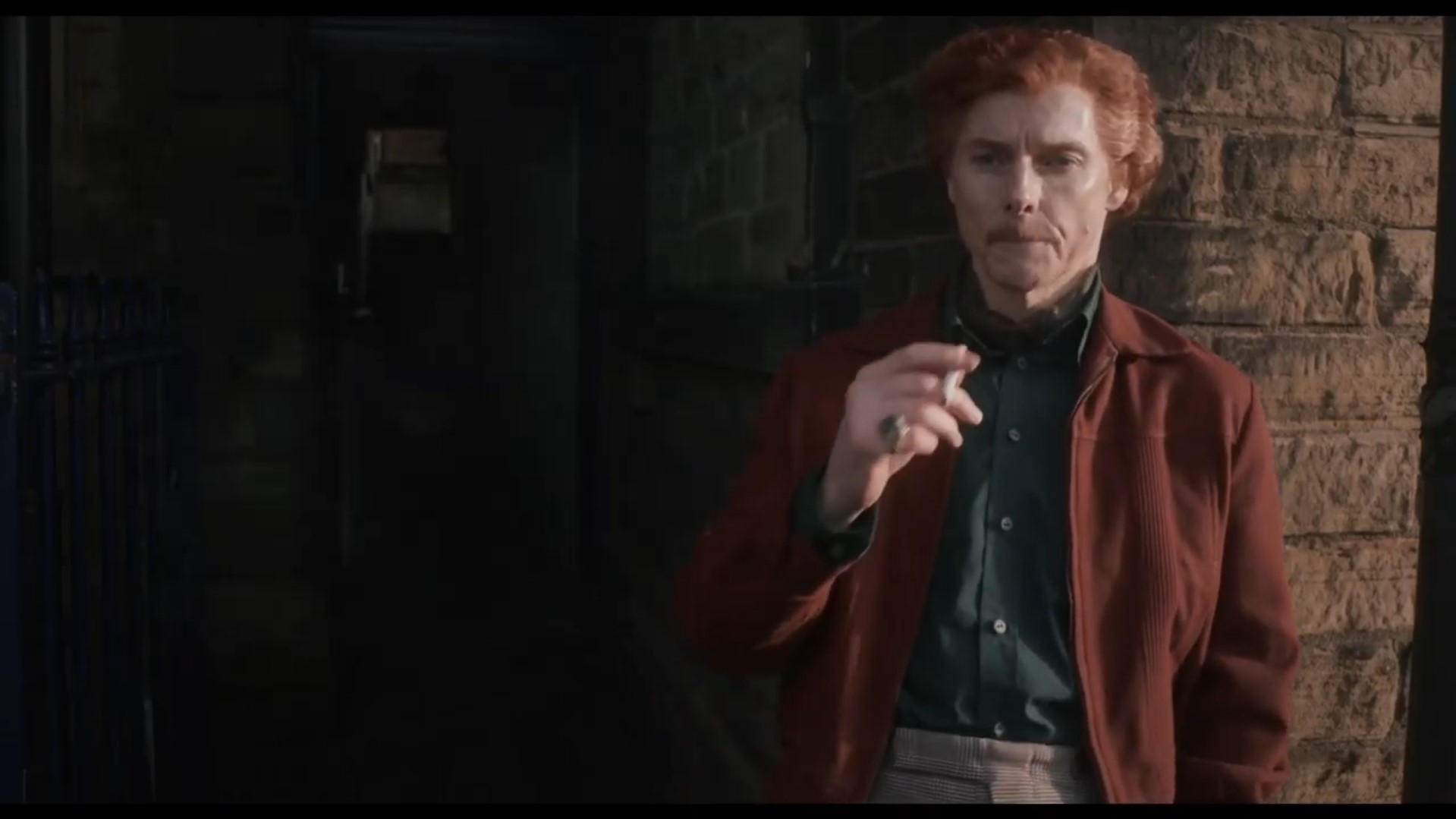
“The Banishing” revolves mainly around Marianne, the newly-wed vicar’s wife with a young girl along for the ride, played by Jessica Brown Findlay (“Downton Abbey,” “Victor Frankenstein”). Findlay endows Marianne with vitality as a woman who must meet the vicar’s standards of Godliness, but still be a strong mother to her child despite disreputable social standing. The priest Linus (Essex-born John Heffernan) lacks experience in the field of his cleric position, lending to question why the region bishop would appoint him to a muster a flock of faithful Christian followers during turbulent times. The husband and wife dynamic between Linus and Marianne is marred by dissonance backgrounds of a priest who doesn’t know to be with a woman and a woman who can’t escape her socially unflattering past. Heffernan and Findlay ignite as repellants of the same magnetic currents when the harder they try to extend their relationship, they push each other way, with Findlay giving a fervent performance. Speaking of performances, Sean Harris bares the most intriguing and rollicking local occultist. The “Mission Impossible: Fallout” actor parades around as Harry Price, a likable, straight-shooting outcast and a believer in the supernatural with extensive, and ghastly, historical knowledge on Linus and Marianne’s new home. As Price aims to extract the hapless from danger, he butts heads with a headstrong region bishop, a stern and solemn role secreted with distrust from John Lynch who has worked on a Christopher Smith film previously in “Black Death.” “The Terror” actor juxtaposes starkly against Harris as a character who dons a likeness to the clown prince of crime in costume than a dull agent man of the cloth…with secrets to uphold. “The Banishing” rounds out with a supporting cast in Adam Hugill, Jason Thorpe, Jean St. Clair, James Swanton, and Anya McKenna-Bruce as Marianne’s daughter, Adelaide.

Set convincingly in a quaint, 1930s English town, Christopher Smith transports the audience back in time to the predated anxious moments before World War II that would upheave turmoil across all across Europe, but though that fretted lingering of war is set as the backdrop for “The Banishing,” and is coiled around every man who served in the first Great War that brought up more than once, the root of the narrative ultimately becomes the house Linus and Marianne have come to call their home.  Haunted house films surmise the house as a built-in principal character because of either the way the architecture affects the mental or physical wellbeing of it’s flesh and bone counterparts or if the abode is actually possessed and set to harm the inhabitants in a personification of pure evil, as such with various films of this caliber (“House,” “The Haunting,” etc,). Yet, Linus and Marianne’s estate failed to become a part of the narrative limelight despite the immense grounds that compromised of a large greenhouse and a robust library complete with fireplace and the disconcerting labyrinth of a dungeon-esque basement full of barred enclosures and close quartered corridors.  Nearly every interior shot felt like a new section of the house hat kept extending upon, what would be assumed, a grand mansion that had a longer rap sheet by reputation in being a former religious torture chamber run by sadistic monks hellbent on whipping the sin out of the mentally tormented. Smith always had an eye for the unsettling visuals and sustains that feng shui by allowing time and space to be the inner horrors of a funhouse, but doesn’t evoke clean, unadulterated terror that continues to profusely bleed into the film’s climatic cause-and-effect unraveling. There is a lack of a transformative realization and a small hurtle of sedated possession to figure out that the main presence in the house, amongst the other more malevolent presences, wants something and the characters are spoon fed each and every morsel to get them up to speed. The final scene of the bishop meeting with the Nazi regime intended to leave the story open for supernatural possibilities, but felt like a more poignant and compelling crux leading into Nazi occultism, hinted by the eccentric resident occultist Sean Harris.

Morosely dramatic and haunting, “The Banishing” is an aggressive salvo of facing shame head-on, creeping into UK cinemas and digital platforms on March 26th courtesy of Shudder and Vertigo Releasing. Director of photography Sarah Cunningham has an remarkable ability to engulf the actors in the space of the shot, making them seem diminutive to the rooms that feel like a giant hand looming overhead, and with the bare, hard lighting, the cinematography is really where “The Banishing” shines as gothic cladding without a stodgy spot to speak visible. Cunningham adds all the hallmarks of a horror film with titled angles, brilliant reds, and tight shots on tense faces to garner a more anxiety that never actually pans out by the end. The organic electro duo TOYDRUM score the 97 minute film with a single note droning hums at various pitch levels that can really get inside your head. The “Prevenge” composers set up scenes with a ill-founded fears when nothing presently visible is intended to fright. There were no bonus scenes during or after the credits, but one scene to note is Sean Harris waltzing with an uncredited woman during the opening credits that seems out of place but speaks to the aberrated decorum of his character. “The Banishing” works tirelessly to discredit shame by confronting truth and while we’re being beat over the head by the message, the overlay of horror is lost despite some brilliant and engrossing performances from Findlay and Harris who usher us through to the imperfect conclusion.

Youtubers EVILlog a Malevolent Presence Inside Their Home! “8ight After” reviewed! (PovertyWorks / Digital Screener)

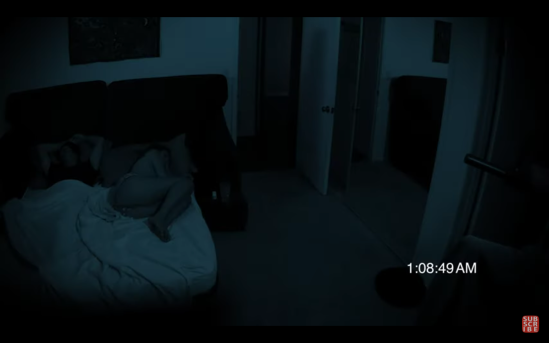
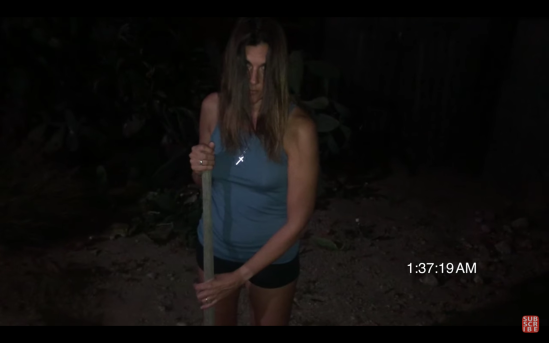
Vlogging husband and wife, Vince and Deanna, digitally showcase their married life to the world from their vacation travels to exotic coastlines to the day-to-day, mundane tasks that includes home renovations.  When they demolition a wall in order to install a French door in the master bedroom, they discover a mysterious box containing a Portate (carrying) cross hidden within the wall.  Every night since then, Godfearing Deanna has felt a profound presence in the house, experiencing supernatural phenomena, such as grabbing at her feet and possessing her body, almost on a nightly basis, especially 8 minutes after 1:00 AM.  The compilation of footage from Vince and Deanna’s vlog cameras around the house capture the seemingly malevolent events, but Vince, being the ever agnostic skeptic, tries to invalidate any paranormal occurrences, passing them off as more feasibilities explanations.  Yet, the bumps in the night continue to place Deanna in inexplicable danger, forcing Vince to reconsider his position on God in order to save his wife.

CCTV horror has been quiet over the last few years, but 2020 has seen a fair share of the stale, declining genre that’s become more repellant than a draw for audiences; yet these new ventures into CCTV horror have splashed into a Lazarus pool, rejuvenating a slither of lifeforce within genre, with limited theatrical and VOD releases into the volatile cinema market.  Vincent Rocca’s written and directed multi-camera spectral thriller, “8ight After,” is a found footage horror-comedy that is an analogue releasing on the heels of moderate success, following the making-of an active shooter thriller, “Mother of Monsters,” and the hellish hotel imprisonment of souls of “Followed,” another apparitional aghast blending CCTV and handheld footage in a vlog style.  Rocca’s sophomore directorial comes nearly a decade and half after his 2006 feature film debut, a comedy entitled “Kisses and Caroms,” and is produced by Rocca’s less-is-more production company, PovertyWorks Productions, that aims to produce funny and profitable films and shorts on a miniscule budget.  In “8ight After’s” case, the production cost totaled a whopping zero being Rocca’s own actual camera footage of and around his home and the use of handheld’s and phone cameras when out and about. I’m also positive he didn’t pay his wife a dime.

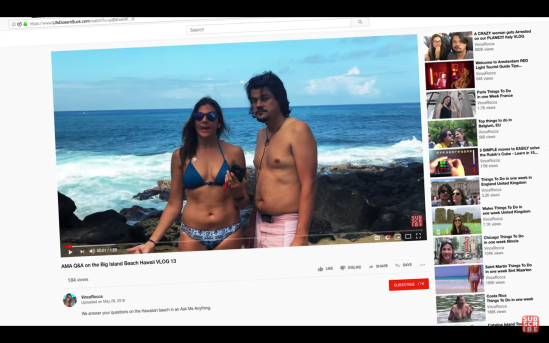
“8ight After” fits right into the PovertyWorks’s comedy portion of its business model, especially with Vincent Rocca in the lead role as a practical joker-goofball of a husband (who really has the vocal projection of the late Bill Paxton), leading the charge of the voyeuristically invasive vlogging lifestyle as well as being a religiously laidback soul with an atheist belief set.  In stark contrast to his convictions is his wife Deanna, played by his real wife Deanna Rocca, who brings a knowledge of faith for a subplot of inner family squabbles about their mixed relationship to God.  When I say “8ight After” is invasive, I mean the film is a truism of invasiveness that not only is a near tell all of Vincent’s life as a videophile and Deanna’s vocation as a zoo vet but also fractures into the story their recorded travel escapades from their VinceRocca Youtube channel show, “Life Doesn’t Suck,” that discusses and logs their destination highlights of various locations from around the world.  The energy from their Youtube channel transcends over into the scenes committed to the necklace narrative with a bout between comedy and horror that peers Vince and Deanna’s religious fervors.  Deanna shoulders more of the in character plights with the subtle, but effective, person plagued by a unremitting presence and has to become possessed, sleepwalk, and look menacing toward her husband when the time is right for the all-seeing camera.  

Compiled like a documentary (or mockumentary?) and presented in a meta format by spinning and weaving the Rocca’s exuberant régime of life and love into an undercurrent of hidden terror, “8ight After” has unique cinematic properties, utilizing his reality television fluff techniques and editing, and tackle themes of family upheaval contentious topics like religion and gun control, to wrap “8ight After” complete on a zilch budget that rides the seams of fact and fiction.  For the most part, “8ight After” tenderly progresses organically with little staged affect as the high school sweethearts play to their most innate strength – 20 years of marital bliss – and chips in sparsely the sarcastic wit of Vince Rocca (did I mention he sounds exactly like Bill Paxton?) through a tech-recorded compiled story that’s well built up initially with convincing acting and strange and spooky incidents that, like most found footage films, point to specifics pieces important to the narrative. There are even a couple of homages to great horror classics like “Jaws” and “Exorcist III.” But then in a turn of sudden events, the revealing climax fizzles like the air wheezing quickly out of an inflated balloon.  The finagled ending stinted completing something uniquely branchlet from the found footage genre and something that had solid momentum and steam of an escalating snowball toward the essence of a presence, but became grounded by the acute conclusion to the matter in such a matter-of-fact fashion that it completely killed the mood, tone, and disposition “8ight After” carried in preponderance.

Become wrapped up in the lives of a pair of vloggers and see them suffer the wrath of a stubborn spirit in “8ight After” that was released October 15th on various digital retailers, including Amazon’s Prime Video. The film is unrated and has a runtime of 97 minutes and has an accompanying English language 5.1 surround sound audio mix with optional English subtitles. There were no bonus material included, but you can live vicariously through Vincent and Deanna’s touristy adventures of swimming with manatees, paddle boarding, and visiting breathtaking waterfalls. Also, you can purchase Vincent Rocca’s journal notes put into paperback, of the same title as the movie and also on Amazon, that goes hand-and-hand with the film; it’s also available as an audiobook. “8ight After” tempers with a well braided blend of found footage comedy and horror from a pair of seasoned Youtubers that then suddenly trails off, leaving us holding the baby in trying to make sense of an nonsensical ending.

Watch “8ight After” on Prime Video!


Read or listen to the book on Prime Video!


EVIL’s Brush Stroke of Genius in “Art of the Dead” reviewed!


The Wilsons’ are the perfect portrait of a nice family; they’re wealthy but charitable and kind without exploiting the humility of others. However, when Dylan and Gina Wilson bid and win on the SinSational art collection at auction and hang the enchanted paintings strewn through their mansion estate, a strange succumbing to sin overwhelms their moral fiber. The paintings of Dorian Wilde, an eccentric and obsessive 1890’s painter who achieved eternal soul longevity by making a pact with the devil, created the art, depicting primal animals symbolic of the seven deadly sins, by using canvas and paint out of flesh and blood of his victims. The Wilsons’ become corrupted and carry out the sins of Pride, Lust, Gluttony, Sloth, Greed, Envy, and Wrath and the only way to save the family from damnation lies in the hands of a former priest, Father Mendale, and a girlfriend, Kim, of the oldest Wilson boy engulfed by Wrath.

“Art of the Dead” is what people call when art comes to life, or in this case, death. From the selective “Emmanuelle” film series and “There’s Nothing Out There” writer-director, Rolfe Kanefsky comes a story woven with the seven deadly sins theme as a foundation that approximates a 90’s grade thriller of epically gory proportions. With a catchy, yet dead horse beaten “of the Dead” title, “Art of the Dead” uses the seven deadly sin theme and blends it with an obvious homage to the gothic literary novel, “The Picture of Dorian Gray,” by Oscar Wilde. The main antagonist, Dorian Wilde, is the merging of the author and his fictional creation. Oscar Wilde wrote the novel in 1891, the same era the story enlightens in which Dorian Wilde makes a pact with the devil. Unlike another notable film, “Se7en,” where a practical killer exploits the capital vices to thwart a pair of detectives, “Art of the Dead” introduces dark, supernatural forces of Oscar Wilde’s work into the fold that are not only abject in what makes us human, but also biblically condemning, spearheaded by a satanic maniac who will do everything and anything to maintain his precious work and eternal soul, Produced by Michael and Sonny Mahal of Mahal Empire productions, the financial investors have also backed a previous Kanefsky film, another occult gone astray thriller entitled “Party Bus to Hell,” and in association with Nicholas George Productions and Slaughtercore Presentations.

Another pair of producers are also a couple of headlining actors who are household names – “Sharknado’s” Tara Reid and “21 Jump Street” actor and avid painter, Richard Grieco. Reid plays a snooty and shallow art gallery curator who sells willingly the Dorian Wilde set knowing well enough of their malignant history, but Grieco has a personal connection toward a film regarding art more so than the dolled up Reid because of his nearly 20 year passion as an painter of Abstract Emotionalism. His character, Douglas Winter, is obsessed with the SinSational collection to the point where it uses him as an instrument to kill his artistically unappreciative family; a sensation washed over as parallel and broad among all artists alike fore sure. Jessica Morris (“Evil Bong 666”) and Lukas Hassel (“The Black Room”) also headline. Morris provides the sultry and lustful-influenced mother, Gina, and her golden hair and blue eyes has a fitting innocence that’s is tainted and provocatively shields the cruel intentions of lust and power while Hassel, a giant of a man, immediately becomes capitulated to greeds’ warty influence. Each actor renders a version of their paintings and each dons the sinful presence gorgeously with individual personalties and traits; those other actors include Cynthia Aileen Strahan (“Dead End”), Sheila Krause, Jonah Gilkerson, and Zachary Chyz as well as “The Black Room’s” Alex Rinehart and Robert Donovan along with Danny Tesla playing the demonic proxy of Dorian Wilde.

“Art of the Dead” embodies an innovated spin on a classic tale of self-absorption and deferring one’s own detrimental sins upon others to carry the burden. Kanefsky grasps the concept well and visually sustains a contextualized 98 minute feature that carries a straightforward connection to the Gothicism of Oscar Wilde while cascading a family tree (pun intended) of problems that pinpoint each sin’s affecting destruction upon the soul through a wide burst of dispersive poison. While the idea is sound enough, the script and narrative channelling hardly carries the equivalent weight of the idea and comes off clunky, cheap, and sometimes uncharismatic. “The Black Room” was the last Kanefsky film critiqued at ItsBlogginEvil.com and the script was noted with the characters that hardly progress up toward and out of the despondent and deviant muck and it was the filmmaker’s softcore cinema background that attributed to the characters over-saturated girth of lust, which elevated and hindered “The Black Room’s” incubus storyline. With “Art of the Dead,” Kanefsky redresses the lust to quench just the respective sin with the right amount of perversion, represented by the mythical, sex driven Satyr that was created beyond being a nice touch of storytelling, disturbance, and meta kinkiness. Kanefsky continues to proportionally feed each sin the same manner with the exception of Pride that lures in a specific victim; however, the paintings’ insidious nature wonders to a circumstantial level at best with Kanefsky’s tongue-and-cheek dialogue and uncouth playfulness of Dorian Wilde while possessing the flesh of a black-laced, Fredrick’s of Hollywood-cladded Gina.

Umbrella Entertainment and ITN distribution release “Art of the Dead” onto a region 4 DVD home video and is presented in a widescreen, 2.35:1 aspect ratio. The sterile and polished look of the image renders doesn’t invite stimuli to visual senses, but is superbly clean and free of blotchiness that can routinely be a contrast issues with darker, indie productions; however, the digital source is nicely maintained and the darker scenes and colorfully deep portions of the paintings, the viscous blood, the modernized Wilson house, and the anywhere else have quality caliber. Visual and practical effects are necessarily key for “Art of the Dead” to be successful and the film scores a combination of talent to enhance the ho-hum photography with renaissance man Clint Carney, whose visual effects work on his own written and starred in film “Dry Blood” was flawless and who also painted Dorian Wilde’s works of art, and some solid practical and Satyr creature effects work by “Child Play’s 3” Victor Guastini and the VGP Effects team. The English language Dolby 5.1 surround sound audio is clear, precise, and no inkling of issues with the range and depth of ambient sound. Like most standard DVD releases from Umbrella Entertainment, this release comes with no bonus material or even a static menu. To observe his work as a whole, filmmaker Rolfe Kanefsky has nothing to prove with a body of work spanning over nearly three decades, but in reducing “Art of the Dead as a singular film, there in lies a double edged sword. A true sin is to headline a film with actors with brief roles just to draw in investors and an audience, yet “Art of the Dead” also finds innovated modernism out of classical creativity, giving new life by homage, and displaying some maximum carnage fun with plenty oil and water color.

“Art of the Dead” available to own and rent!