Everything is Bigger, and EVILLER, in Texas! “Deep in the Heart” reviewed! (Fun City Editions / Blu-ray)

“Deep in the Heart” on a Fun City Edition Blu-ray! Here for Purchase.

Boston born Catholic Kathleen was raised in a good home by Irish immigrant parents.  Having moved from the liberal Northeast America to Dallas, Texas, Kathleen finds employment as an American history teacher at a local high school.  She meets born-and-raised Texan, attorney, and gun enthusiast Larry Keeler at a colleague’s outdoor barbeque and the two casually see each other off and on with Kathleen not interested in something more serious with the charming and handsome, budding attorney, but Larry believes Kathleen’s too uptight to see how madly desirable she makes him and rapes her at gunpoint when he can longer steady his urges, proclaiming her sexual hangups and rigidness as faults against her immense drawing of sensuality during post-coital.  Reporting her attack to law enforcement and her Catholic priest for prosecution and spiritual relief, both agencies fail to side with Kathleen’s trauma based on the facts of the case and God’s ever-tolerant forgiveness toward everyone.  The anger seething inside impels her to chop off her long, blond hair, dress more matronly, and join a handgun gun club after Larry continues to casually insert himself into her life like nothing ever happened and down the barrel’s site, Kathleen plots her vengeance. 

If there was an ever a more culturally relevant and timely film today produced and released decades ago, encapsulating the worst parts of American history, “Deep in the Heart,” aka “Handgun,” is that very film.  Through the perspective of the expatriate filmmaker Tony Garrett, having been born and raised in a country without an intense gun culture, “The Prostitute” English writer-and-director entrenches his outsider take on America’s unique, and unhealthy, gun fascination around an equally powerful systematic rape culture that ignores the severity of the transgression and assigns blame to the victim and, in turn, has the attacker come out unscathed due to being an upright citizen and a pillar of the community amongst his, also male, peers.  Filmed entirely location in Dallas in 1981 but not released in 1983, Tony Garrett co-produces the film with American producer David Streit (“The Prowler”) under United Kingdom production companies EMI and Kestrel Films where American distributors were eager to bank off the sexy rape-and-revenge thrillers of “Ms. 45” or “The Last House on the Left” but received a more thought provoking and provocative thriller that analyzed more of a problematic inward of U.S. culture and global societal toxicity. 

A daunting and difficult role for any actress to play, Karen Young had captured the epitome of a formulaic victimized women in an injustice system for her first major feature-length role.  Young, who went on to have roles in “Jaws:  The Revenge,” “Daylight,” and “The Orphan Killer,” embodies the American dream of the young, educated woman, Kathleen, from humble beginnings living away from home and having a career as a high school teacher in Dallas, Texas.  Kathleen’s American dream is crushed by the methodical mentality of Larry Keeler, representing America’s grasping of the past of taking what you want, even if that means by way of force.  Keeler is played by born-and-raised Texan Clayton Day (“Osa”) with a fast-talking, full of himself reproach to a debut performance that involve rape at gunpoint and being fully nude with your equally green costar.  Garrett’s able to convert the two inexperienced actors into raw talent, extracting their singular qualities into a combined effort of a sordid cultural subtext and cat-and-mouse rape-and-revenge suspenser.  Kathleen’s transitional arc from the shy and innocent Catholic outsider to the hate-filled, pro-gun, self-serving vigilante proved to be a dazzling gem of range and moxie pulled from the rough depths of untapped talent and getting to that point is a journey expressed vividly and thoroughly to build up both characters’ constitutions without a ton of exposition or visual insight.  Keelers intentions never slip but we understand through his conversations with Kathleen he’s a gun advocate and collector, he’s a good-time, good ol’ boy party animal at a colleague’s bachelor party at the Foxy Boxy – a Women’s see-through T-shirt boxing competition, and he has overt charm pasted thick with insincerity with out on dates with the high school teacher from Boston.  “Deep in the Heart” is centrically designed around these two principals with an already established built around gun-toting, fast-and-loose, and blinders on male dominated environment inhabited by smaller, yet key roles from the denizens of Dallas.

“Deep in the Heart” is not the sexy, rapey, glorified femme fatale film every will think it is.  “Deep in the Heart” is what Tony Garrett understand and believe in from the interpretation of dark side, misguided American values and how those cultural thorns that prick into the side of the free world change the course of all that is good and pure in the foundational basis America is built upon.  Engrossingly tied to modern day hot topics, Garret had incredible foresight or, maybe, was just brazen enough to go against the grain being an foreign expat shocked by not only the legal system but by the backwards ideas and beliefs of everyday citizens in different regions of the country.  In not only the rape but the whole pre- and post-rape setup is surrounding Kathleen’s inquietude is noticeable and uncomfortable to watch.  Men and women alike should feel icky of the transpiring contexts of spirituality failure, justice system failure, and an overall human being failure that lets Kathleen suffer in silence without the hoopla of scandal and punishment.  Instead, Kathleen’s bottled anger works inward toward a radical, retribution fix, resurrecting her from downtrodden ashes like a phoenix carrying a six-shooting revolver poised to a point of no return in DIY selfcare. 

Fun City Editions understands the power from “Deep in the Heart” by showcasing a new, restored transfer for their Blu-ray release.  Restored in a 4K scan from the original 35mm camera negative, making its first Blu-ray appearance globally, “Deep in the Heart” is stored on an AVC encoded, 1080p high-definition, BD50 and presented in an anamorphic widescreen 1.85:1 aspect ratio.  Not a whisper of image infraction, “Deep in the Heart” has a gorgeously graded picture that sees hardly any signs of aging or wear and the Fun City Edition’s restoration keeps the elements in alignment with the feature’s period of a late 70’s to early 80’s harsh filmed layer.  Color hues are vibrant and bold without appearing washed, presenting near perfect textures on clothing, skin, and environment and darker scenes keep contours and some details present without being completely dense or lost in any compression banding and splotches.  A lossless English DTS-HD mono track is more than ample audio for a very tight knit thriller mostly for indoor acoustics.  Exteriors capture the and highlight the appropriate milieu ambience, managed well within the single layer monaural to keep dialogue front and center.  Dialogue does not go without some crackling and hissing but not enough to be a nuisance, just noticeable.  Mike Post’s soundtrack is eclectic between night club boogies and harrowing hangers.  English subtitles are optionally available.  Special features included are a newly recorded audio commentary by Erica Shuliz, co-host of the Texas-based Unsung Horrors podcast, and Irish filmmaker Chris O’Neill providing in-depth insight and analyst of Tony Garrett’s underappreciated film, a brief archive interview with directory Tony Garrett on his perspective route as an outsider looking at the celebration and de-celebration of guns in America, an image gallery, and the theatrical trailer.  Tactile elements and striking rigid slipcase art from graphic artist Tom Ralston makes this Fun City Edition highly desirable as the U.S. title “Deep in the Heart” graces one side and the U.K. title “Handgun” can be found on the back (or front depending on how you look at it).  Sheathed inside is a clear Blu-ray Amaray casing with reversible cover art of three different country posters from the U.S. (primary) and U.K. and Japan (on the inside).  Disc is pressed with more Ralston imagery while the opposite side insert is of a 10-page color booklet with a new essay from film critic and author, Alexandra Heller-Nicholas.  Rated R with a region A playback, “Deep in the Heart” has a runtime of 99 minutes. 

Last Rites:  “Deep in the Heart” is an important film.  For some, the rape-revenge thriller can be either be eye-opener and another reminder added to the long list that America is gun crazy and legally not perfect.  For others, those expecting the sleazy, sexy rape film followed by the subsequent gratuitous violence will quickly go limp by Tony Garrett’s call-it-as-he-sees-it narrative that, for an intensive purposes, coincides with the rest of the world’s perception. 
“Deep in the Heart” on a Fun City Edition Blu-ray! Here for Purchase.

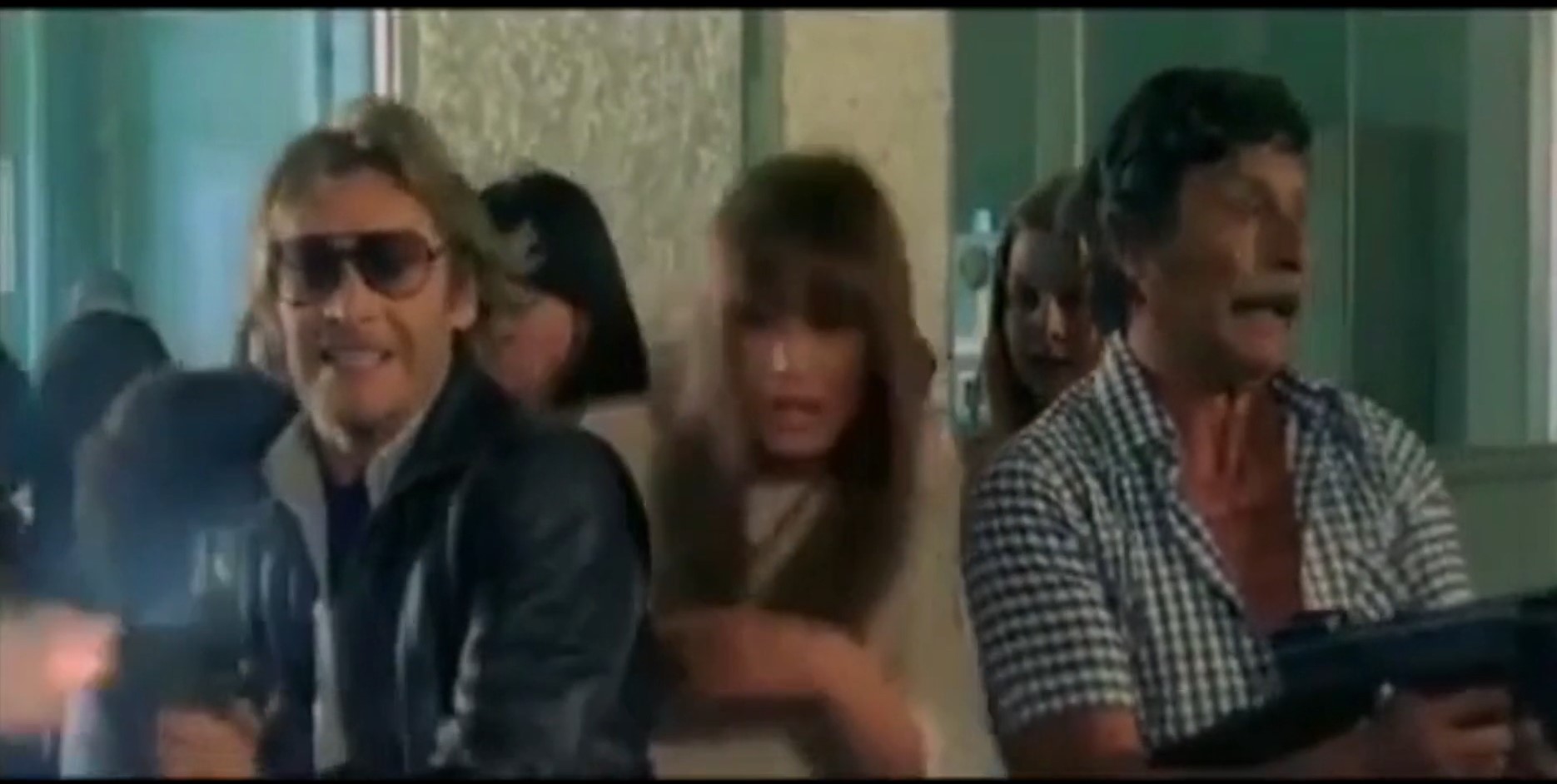
He’s a Beast. He’s Ferocious. He’s EVIL! “Mad Dog Killer” reviewed! (Cheezy Movies / DVD)

“Mad Dog Killer” Unleashed onto DVD!

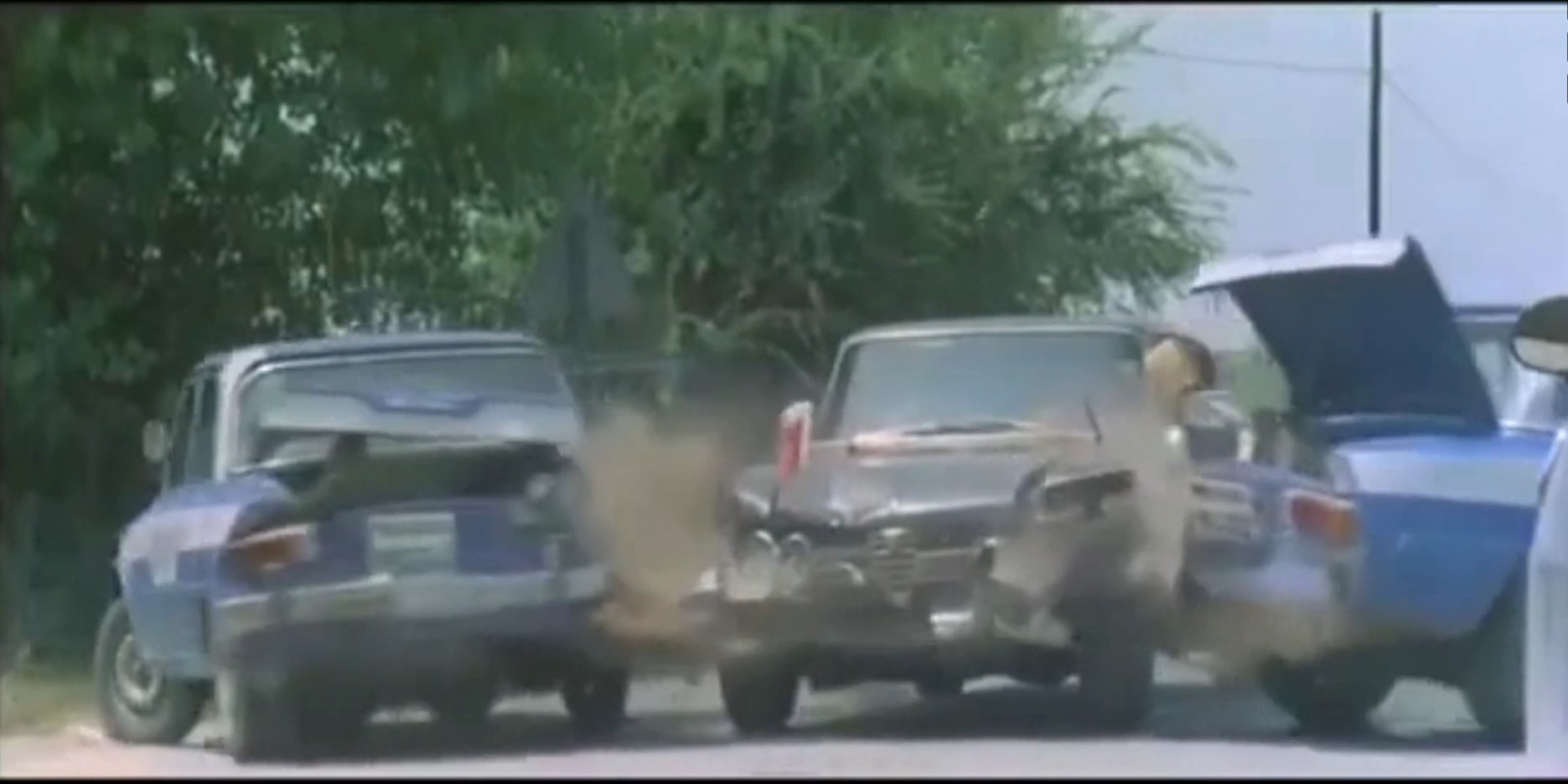
A daring hostage-taking breakout of an Italian prison puts four of the most ruthless killers back on the streets.  Sadistic and full of revenge, Nanni Vitali, the leader of the gang, has one thing of his mind before he begins a reign of outlawing terror, to find and exact due mortal punishment on a stool pigeon that cemented his incarcerated fate during the trial.  Hot on his trail is officer Giulio Santini who will stop at nothing to bring Vitali back into custody or even put a bullet between his eyes, that is until a young woman, Giuliana Caroli, girlfriend of the police informant, becomes caught unwillingly in Vitali’s web of sexual obsession and deviant plans as she’s raped and exploited for Vitali’s personal pleasure and robbery schemes.  When the frightened Caroli betrays Vitali’s trust, she becomes a kill target while Santini’s family also falls into the miscreant’s violence coursing crosshairs. 

“Mad Dog Killer,” aka “Beast with a Gun,” aka “Ferocious Beast with a Gun,” aka “La Belva col mitra,” is an Italian action-crime thriller from the late “The Sinful Nuns of Saint Valentine” and “Violence for Kicks” director Sergio Grieco in what would be his last directorial before his death five years later.  The Rome-born filmmaker also writes the 1977 exploitative and violent caper with additional dialogue from fellow Roman screenwriter, and furthermore director, Enzo Milioni who has had a hand in “The Sister of Ursula” and “Escape of Death.”  A part of the larger, multi-faceted Euro Crime subgenre, or better known as Poliziotteschi, “Mad Dog Killer” hits all the trademark elements, squeezing in a packed lot of similar content as well as stretching out for breathing room by elbowing out the era popular Italian subgenre of the phasing-out Spaghetti Western and bracing for impact against the up-and-coming Giallo films which starts get a footing with Dario Argento and Lucio Fulci paving the way.  The Supercine production is produced by Armando Bertuccioli (“The Sister of Ursula”).

In the crazed-eyed, take-no-prisoners, sandy-blonde shoes of a handsome yet hardnosed criminal in Nanni Vitali is the Austrian born Helmut Berger.  The “Salon Kitty” and “The Bloodstained Butterfly” star is another international actor who found modest success in the Italian film industry of the 1960s-1970s as well as the German movie industry afterwards, but as Nanni Vitali, the rugged actor with piercing eyes doesn’t hold back in a defining performance that’s nowhere near a one-time paltry pass over.  Vitali is so animated and over-the-top, the hot-headed character completely overshadows Inspector Giulio Santini as a counterpart, played by American actor Richard Harrison of “Orgasmo Nero” and portraying many Ninja Master Gordon films in Hong Kong in the late 80s.  No Ninja kicks or ostentatious smoke screens with officer Santini in a rather matter of fact, routine chaser of escape convicts.  The personal connection he has with Nanni, where Santini’s Judge father (Claudio Gora, “The Nun and the Devil”) was Nanni’s convicting judge, is greatly underused to extrude the ferocity needed to match Nanni’s, as so he is described in one of the many titles – a ferocious beast.  This beastly criminal takes captive and tries to psychologically manipulate through sex and threat the wrong place, wrong time victim Giuliana Caroli by the chiseled facial features of Marisa Mell (“Violent Blood Bath”), a fellow Austrian actress.  Caroli’s tall and beautiful on screen but lacks that damsel in distress in initially helpless apprehension of a woman who must restructure her bearings to take matters into her own hands.  Mell’s acting is forced throughout her span, and without that frightened bird despondency in her eyes, she looks as if she could handle Nanni Vitali by herself with ease in stature, broad shoulders, and a fierce look, diminishing Richard Harrison’s Santini role almost out of the picture entirely.  “Mad Dog Killer” rounds out the cast with Marina Giordana, Luigi Bonos, Ezio Marano, Albert Squillante, Nello Pazzafini, Antonia Basile, Sergio Smacchi, and Vittorio Duse.

“Mad Dog Killer” lives up to the designation that attentively develops the lengths the titular principal will go to achieve a wrongful debt that must be paid in full with excessive violence to spare.  Sergio Grieco lays Nanni’s nihilistic sleaze and transgressions on thick, coating the character with monolithic and enduring characteristics of a sordid and lawless bandido with Spaghetti Western type intensity, especially inside a compositional scene where he slowly walks back to the car toward a frightened Giuliana Caroli, eyes affixed onto her soul, and the all-pervading, debut score by Umberto Smaila just swallows you into the moment.  Like a true mad dog, the story never lets up on an unpredictable temperament and trajectory; it foams at the mouth with rabid blackguard that is true Euro Crime fashion, but unlike most Euro Crimes, “Mad Dog Killer” ends on an unconventional note, perhaps an unsatisfactory to some, but definitely askew yet fresh compared to the genre’s dominantly preordained doppelgangers. 

A film that goes by many names usually suggests numerous releases from around the world.  “Mad Dog Killer” receives a cheapie DVD release from our friends at Cheezy Movies with a MPEG-2 encoded, standard definition 480i, DVD5.  Not an upscaled presentation, the transfer used retains the lower quality pixel count that bleeds the definition, often better in brighter contrast scenes than in the darker settings. The forced English dub LPCM mono track, though you can clearly lip read that most principals actors are speaking English, has auditory value; the lossless quality removes compression from the table, offering a clean and robust dialogue and Smaila score through just a thin, faint even, layer of interferential static, and pops. The English dub track is the only audio option available with no optional English, or any other language, subtitles. Cheezy Movies primary goal favors a feature only release so there are no special features encoded or tangible supplementary content. Cheezy Movies pulls the stark front cover image, laced intently with suspense, sex, and violence, from one of the marketing one sheets, used by other labels such as foreign companies like 88 Films and Polar. The disc is pressed with the same image. Not rated and region free, “Mad Dog Killer” has a runtime of 91 minutes.

Last Rites: An enjoyable sadist manhunt romp, “Mad Dog Killer” does criminals gone wild Italian style. Without a higher resolution release, quality of life with this Euro Crime actioner is not at peak levels but the film, by itself, lays waste to many counterparts with a fiercer hand and a charismatic leading villain in Helmut Berger that tips the scale in the film’s favor.

“Mad Dog Killer” Unleashed onto DVD!

This Little Pit Stop of EVIL Doesn’t Have Gumdrops and Lollipops. “Candy Land” reviewed! (MVD Visual / Blu-ray)

Visit “Candy Land” On Blu-ray. Purchase Here!

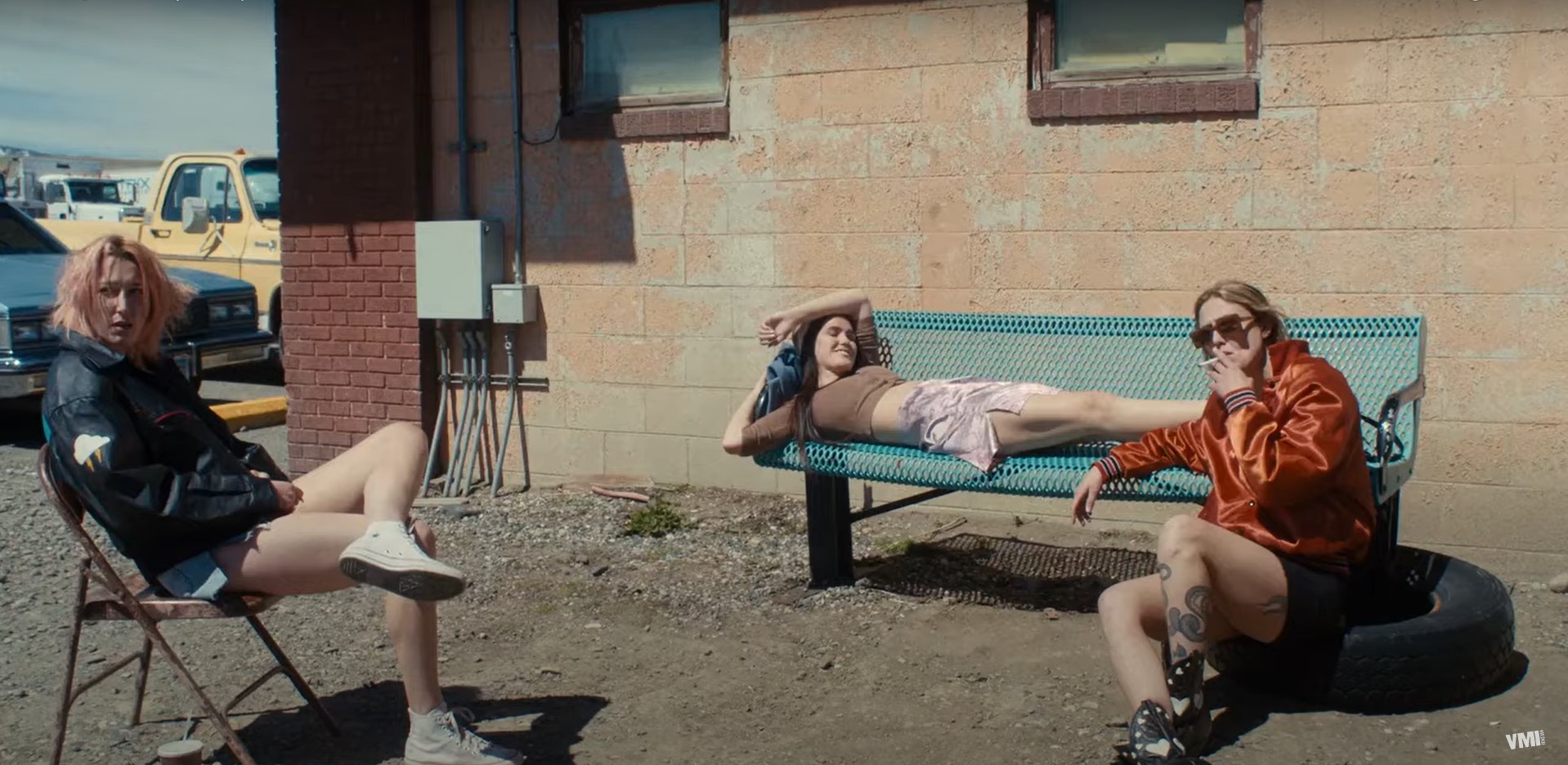
Candy Land is the bestowed designation of a truck stop at one of the last exits through Bible Belt country.  The monikered hotspot is home to four prostitutes, Sadie, Riley, Levi, and Liv, who work for ends meet, servicing all the needs of commercial truckers, those passing through, and even the local sheriff as long as they can cough up the cash.  The only ones not seeking pitstop sex worker services at Candy Land is a religious cult trying to spread the world of the lord around the same stretch of space.  When one of the members, a young and naïve Remy, shows up ostracized from the zealot sect, the sex workers take her in, treat her with kindness, and convince her to be worked into their profession.  Shortly after, gruesomely murdered bodies are found in and around the truck stop turning the once desired Candy Land into a life-threatening place to work, and enlightening the lot lizards that Candy Land is more seedy than once believed.

Shot in the foreground of the scenic Montana mountains, John Swab’s “Candy Land” is a lewd offering that screams the ugly part of something beautiful.  The 2022 USA horror-thriller is a written-and-directed by the “Run with the Hunted” and “Body Brokers” filmmaker Swab in the director’s first go at fringe horror that involves sex work, crazy cults, and hidden knife sheathed inside a large wooden cross.  Swab’s script takes a path less trodden perspective to most similar narratives and pulls inspiration heavily from the 70’s grindhouse era with lots of skin and lots of blood.  Swab produces his own film alongside fellow “Run with the Hunted” and “Body Brokers” producer Jeremy Rosen (“I Am Fear”), with Robert Ogden Barnum (“31”) and Michael Reiser (“Abandoned”) as executive producers, under the production banner of Roxwell Films.

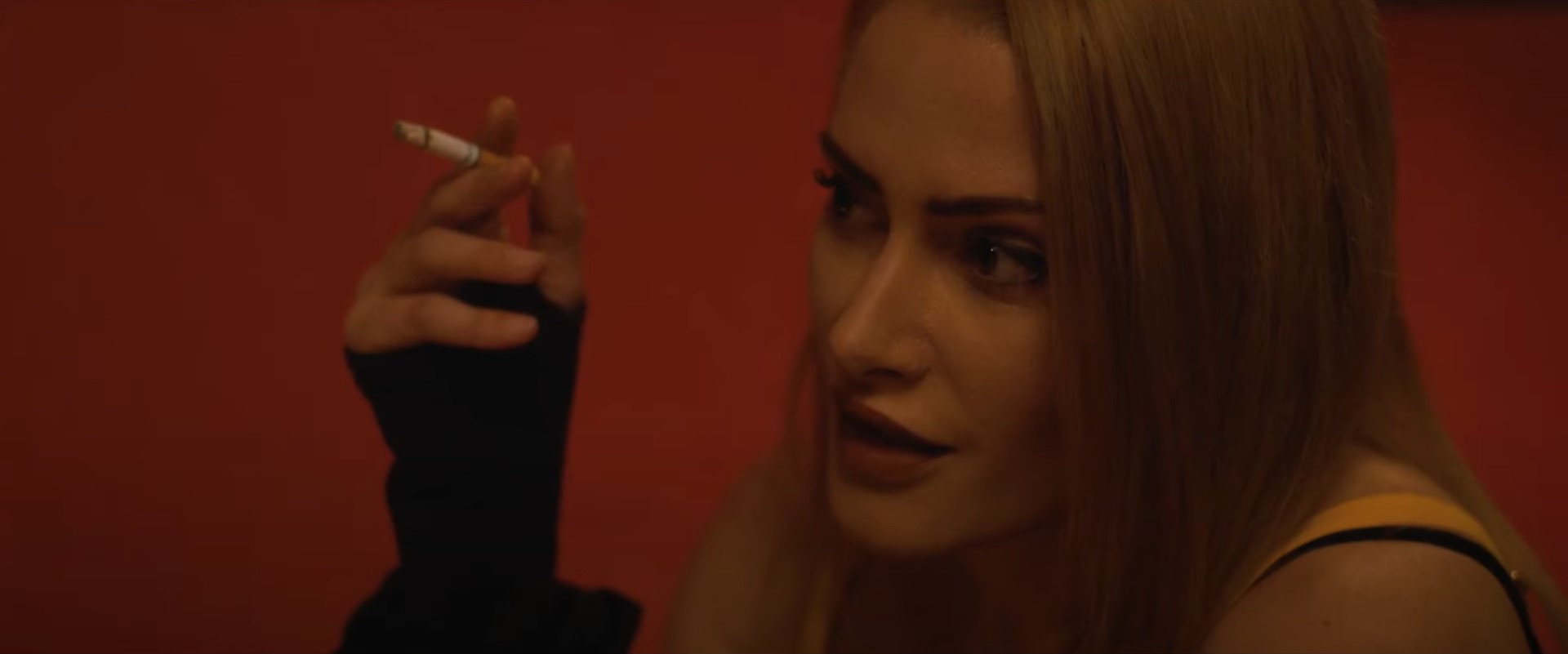
The ensemble cast is comprised of Hollywood veterans, up-and-coming actors, and even a famous last name.  The latter would be then 29-year-old Eden Brolin, daughter of Josh Brolin (“No Country for Old Men”) and granddaughter of James Brolin (“The Amityville Horror”), who is quickly paving her own path having landed as a season regular on the widely popular modern western series “Yellowstone.”  The “Blood Bound” actress is joined by equally young and hungry talent of Sam Quartin, a multi-time John Swab collaborator with roles in “Run with the Hunted” and “Body Brokers,” Virginia Rand (“I Am Fear”), and Owen Campbell (“X”) who are definitely not shy showing of their bodies, simulating explicit sex acts, and step into a compromising prostitute’s shoes as “Candy Land’s” unashamed lot lizards, or that’s what they portray for their characters on screen.  Together, a bond is formed between the working stiffs of sex workers, leaning on each other for support while seemingly living a free and uninhibited life with a good chunk of change in their pocket, but their profession is no walk in the truck lot as taxing moments in sidestepped affairs of the main plot show the darker side of prostitution, mostly involving Owen Campbell’s Levi as a straight man willing to anything for cash in a male dominated over-the-road trucking industry.  Their chimera’s end of the beginning is when Remy strolls into their lives like a lost puppy.  “It Follows’” Olivia Luccardi plays the meek and underestimated cult girl turning tricks as a way get a foot-in the door to cleanse damned souls to send to Gods’ pearly gates in Heaven and while Luccardi has the substantial feign madness well set in her eyes and actions, her story slips below that of the original four truck stop hookers as much of Luccardi’s backstory or even her perpetual motion through her perspective loses to the arbitrary wanes of killing for the sake of killing when the chance is at hand.  Cast rounds out with Guinevere Turner (“American Psycho”), Brad Carter (“The Devil to Pay”), Bruce Davis (“Agnes”), Billy Blair (“What Josiah Saw”), Mark Ward, and another famous last name from William Baldwin (“Flatliners”) as the daunting, downlow Sheriff Rex who has a strong, affectionate thing for Levi. 

The very first opening scene and montage of a sandy-blond Sadie going truck-to-school bus-to-bathroom stall to give a sense of what to expect and the down-and-dirty daily workload for our principal prostitutes sets the tone of Swab’s lickerish thriller with grindhouse endowments.  “Candy Land” is more than just a nutso cult film with all the hallmarks of sordidness as the interpretation received from the story is this temporariness in these characters’ lives.  From the transient paying clients of a truck stop, to living in the impermanence of a hotel room, to even the things they ingest, such as the smoke of incessant drags of cigarettes as a brief coping mechanism and the food they eat with the Hostess Snowballs that have fleeting substance in them to stave off hunger for a little while and only provide negligible nutrition, the temporarily speaks volumes toward the plot of a killer under the influence of a radicalized cleansed ideology wasting away those in provisional moments.  Swab finely sets up character quirks, an unsavory, realistic world, and distinct dynamics to enmesh the characters in a life they attempt to put a pretty face on only that pretty face is a pig wearing lipstick, forcing them into uncertainty and wearing them down to a point they can’t face what’s important and dangerous right in front of them – a young, confused girl led astray and looking for answers.  Instead, that girl, teetering on the edge of purity and dissolution having nowhere to call home, is not safeguarded and is folded into their own licentious lives and, like a Trojan horse, she ultimately become their downfall. 

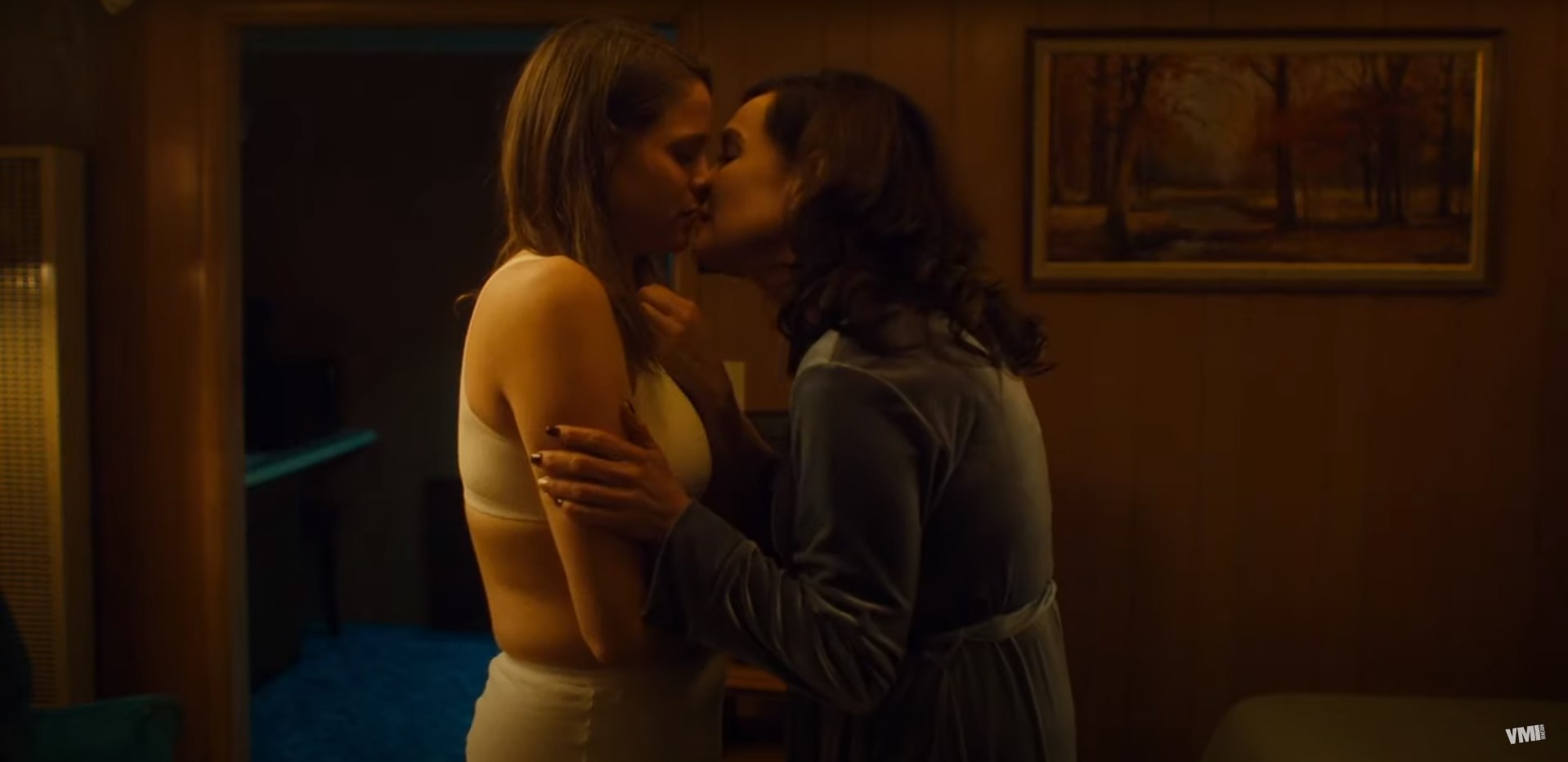
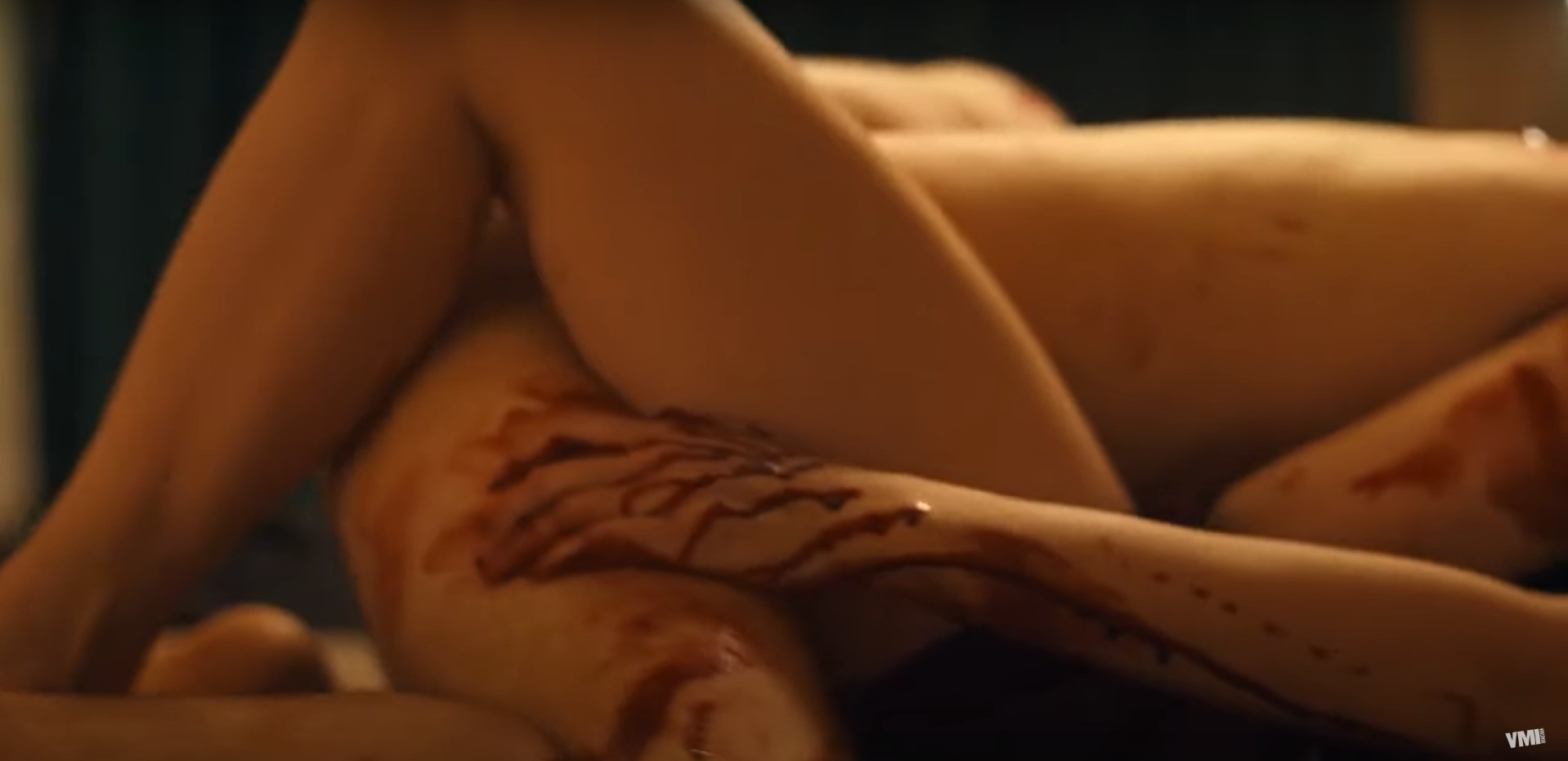
For “Candy Land’s” inaugural home video release, VMI Distribution and MVD Visual releases the John Swab horror onto Blu-ray.  The AVC encoded, high definition 1080p, BD25 conscripts not a single compression issue in the breathtaking, mountainous landscapes of Montana, affixing great distance between Candy Land and the rest of the world to describe the troubled brief getaway from reality without actually saying it. Presented in a widescreen 1.78:1 aspect ratio, details are greatly appreciated here with the graphic and vulgar markings inside the restrooms, skin tones fair a natural coloring, and a good amount of the whole film is lit naturally with the occasional greenish-yellow gel work to enhance the dinginess of a seedy truck stop. The English language, lossy Dolby Digital 5.1 surround track settles the best fidelity that it can muster, reining in unbridled tracks for a more subdued approach that befits more the lowkey motel suspenser than a fueled high-rise stimulator. Dialogue is clean and clear enough; a few instances cause for mumbling concern but quickly pass and that link is quickly made in the off word that’s missed. Soundtrack contains well-blended, well-intermingled snippets of classic rock, alternative and R&B from the 90s, and a quaint Christmas selection. Yes, “Candy Land” could be considered a Christmas movie! English subtitles are optionally available. Special features are limited by the disc capacity that houses only John Swab’s commentary track and retroesque, in-character stills of a digital zine. The standard Blu-ray Amaray snapper case for this limited-edition release is nothing short of pedestrian with a homage cover art that, I must admit, made me suspect Candy Land” was more a vampire film than a cultist’ coup of truck stop sex workers because of my lack of doing any kind of film prep for any of the screeners I receive – keeps me objectively aligned. You’ll find the same image pressed on the disc itself with no insert accompanying. Not rated and locked on a region A playback, this release has the film clocked in at 93 minutes.

Last Rites: “Candy Land’s” sweetness derives from its in-your-face sexual audacity that rings a certain truth inside the unsavory cash-making aspects of the oldest profession and Swab takes us out from the game’s usual vivarium of the darkened streets and the dingy underpasses into the brightly lit and very populated desert with a different breed of the species. The instilled cult angle feels more slapdash in comparison that sunders the acts more acutely and without a clear reason, leaving the finale unsatisfactory like a $20 handy.

Visit “Candy Land” On Blu-ray. Purchase Here!

EVIL Has Now Been Digitized. “August Underground’s Penance” reviewed! (Unearthed Films / Blu-ray)

“August Underground’s Penance” on Blu-ray/DVD Combo Set. Purchase Here!

Armed with a digital camcorder and a dark desire to kidnap and brutally torture, rape, and murder random people, deranged serial killers Peter Mountain and his girlfriend Crusty are now a gruesome twosome after the demise of Crusty’s brother Maggot.  The couple’s documentarized carnage continues forward near Pittsburgh where fooling around in metal clubs and on the isolated outskirts of city is balanced out with a healthy dose of basement snuff as body after body after body begins to strain their warped relationship.  What unveils is a descent of their paired destruction as Peter’s rage and undying fascination with female flesh, and internal organs, gaslights Crusty’s simmering and unhinged toxicity.  During the stretch of the Christmas holiday season, the gift of gory packages will be unwrapped and sexualized cookies will be enjoyed before the festive filleting of body parts and December dismemberments trail off into a tale of grim totality. 

Fred Vogel’s third and final film to shut the book on the story around the atrocious Peter Mountain and his extreme exploitation and degrading of people is back on limited-edition physical media for snuff salivating audiences as “August Underground’s Penance.”  Nothing short of gratuitous ultraviolence, the final chapter of “August Underground” marks another successful viscerally visual installment in a clearly digitized effort, elevating the graphic nature with ooey-gooey detail in a vividly discernible image resolution.  A reuniting four years later between Fred Vogel and his cowriter/costar Cristie Whiles after their collaboration on “August Underground’s Mordum,” the second sequel provides a level of continuity, a very low level at that, not seen between the 2001 series starter and “Mordum.”  Under Vogel’s Toe Tag Pictures banner, the company behind the trilogy, the shock realism filmmaker co-produces the film with wife, Shelby Lyn, and Cristie “Crusty” Whiles and special effects artist Jerami Cruise servce as associate producers. 

Aforementioned, Peter Vogel and Cristie Whiles lace up yet again for the Peter Mountain and Crusty show of sadism.  Vogel returns as the mania screaming and overall brute Peter Mountain, a juggernauting maverick amongst murderers with no moral principles, a cynical constitution, and a weak-ish stomach that can’t handle his own gutting of bodies as Mountain, like in the first two features, wretches and coughs and nearly loses his lunch in most graphically intense scenes of spilled blood and guts and other appalling perversities.  Whiles’s Crusty is a carbon copy counterpart, a demented love interest under a loveless veneer, but the Crusty character certainly has evolved between “Mordum” and “Penance” as the coquettish amoralities at the beginning devolve shown in an unconventional narrative way with rough-hewn rough cuts that avoid structuring time and guiding in segues.  It also doesn’t help that the two often have screaming matches or are yelling at their lifeless victims to get a better understanding of melting down mutual relationship based on common callousness and, probably, rough sex, just the way they individually like it.  This is how Peter Vogel circumvents a “Mordum” repeat; not that “Mordum” was terrible as it did convey a Mountain, Crusty, and Crusty’s on the suicidal brink brother Maggot breaking down whatever threadbare bond that kept them for killing each other, but “Mordum” departs with uncertainties surrounding the characters in that memorably haunting final sequence.  “Penance” then takes the two remaining nihilists out in the backyard to basically shoots them, figuratively speaking, to put them out of their misery in an artistic way, as if to say, “that’s it.  I’m done.”  Like previous “August Underground” films, killers are centrically focused with not a lot of repeat characters popping in and out (because they’re all being snuffed out by the killers)  but those played victims round with Selby Lyn Vogel, Jeremi Cruise, Anthony Matthews, Rob Steinbruegge, Ed Laughlin, Matt Rizzutto, Autumn Smith, and Trevor Collins.

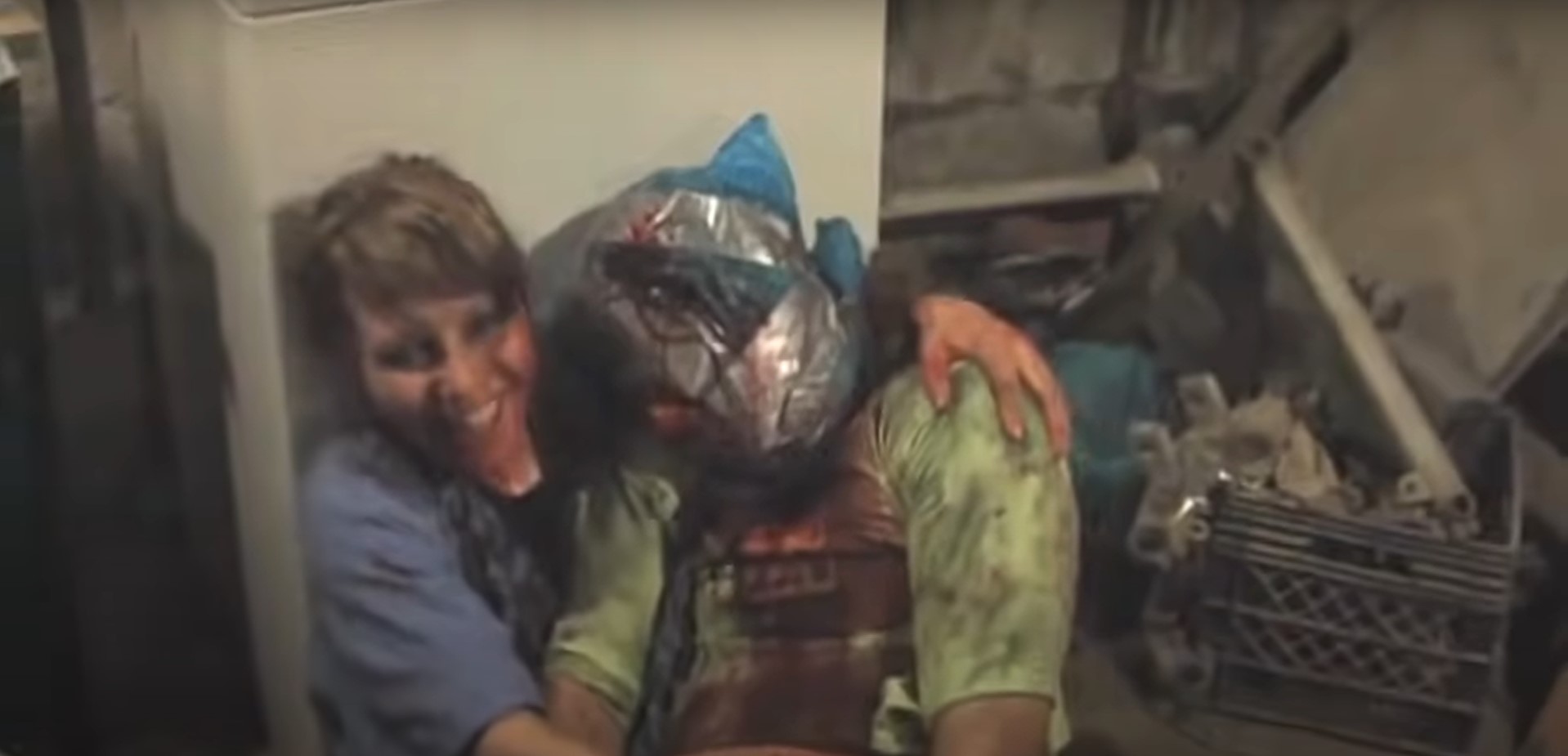
While Vogel and Whiles psychopathic performances will make your skin crawl, the real star of “Penance” spurts onto the floor, oozes from the entrails, and has a nasty crunch sound when being sawed into.  I’m speaking of none other than Jerami Cruise’s nauseating blood, guts, and all the colorful viscera in between practical effects that extinguish any kind of comfortability you might have had going into the scene.  Animal intestines are once again used to for seamless builds.  The lines between what’s real and what’s not has no definition, is smoothed over well into the folds, or is vaguely blurry at worst that when the cutting, gouging, severing, perforating, slicing, or whatever other harmfully human puncturing wound words come into the scene, your mind is your greatest enemy unable to tell the differences in the gruesomeness acts all of which are accentuated by Vogel’s dry heaves.  While the story itself begins to shutdown “August Underground’s” pseudo snuff run, the third entry is as much as a regurgitation of the previous two installments peppered with noticeable yet minor differences that less often than more separate themselves from each other.  One of the biggest, advantageous differences in “Penance” is the move away from the fuzzy standard definition analog tape and into the digital world with a widescreen ratio camcorder that details more of the ghastly dissections and without any modifications to the camera, a cleaner sense of raw realism is better conveyed. 

I remember a time, not too long ago, when the “August Underground” films were nothing more than rumor, urban legends of the physical media world, lost archetypes of extreme horror seemingly nonexistent to the everyday joe, like me, and only those who are close to Vogel and his Toe Tag family or willing to fork over large amount of money for a long out of print and rate copy were the lucky ones to ever experience the trilogy. Yet, now, we’re living in the golden age of physical media, paradoxically smackdab at the height of new age and ever-growing streaming platforms, and Unearthed Films has released all three films onto a 2-disc Blu-ray and DVD limited collector’s set. The Blu-ray is an AVC encoded, 1080p high-definition, 2K scan on a BD50 while the DVD is a MPEG2 encoded, dual-layered, DVD9. Obviously, switch from tape to digital video makes is a tremendous step for image processing and clarity as “Penance” tops the trilogy with a better pixel resolution, a wider angle (1.78:1 aspect ratio), and much less quality degradation than analog. All the nasty bits and pieces are visual described in great realistic detail in what is an ungraded showing of a full-on display not for the weak of stomach. The raw image, even with all it segued pauses in between scenes, punctuates practicality over the conceptual nihilistic serial killer construct. Unearthed Films preserves that through the looking glass, unfiltered video with more than sufficient capacity. The English language uncompressed PCM 2.0 stereo mirrors the same caliber with a home video disharmony of an onboard camera mic that manages well to create distance where needed also while capturing every innate surrounding sound element, such as the whooshing of passing cars, Mountain’s echoed screams in a confined basement, or the overburdening decibels of daunting death metal. There’s a steady amount of low-level interference too that doesn’t hurt the variable levels of dialogue depending on where the principals are and what they’re doing. Between the Blu-ray and DVD, the hi-def format has more capacity for bonus features with most of the new bonus material on the Blu-ray. What’s on both formats are a new audio commentary by special effects artist Jerami Cruise, producer Shelby Lyn Vogel, director Fred Vogel, and Ultra Violent Magazine editor Art Ettinger, a second commentary with Vogel and editor Logan Tallman, a third commentary with the Toe Tag Team, and a fourth commentary with just Fred Vogel. Also included of both formats are a behind-the-scenes documentary Disemboweled and the feature’s very own commentary track, deleted and extended scenes, music video Poppa Pill – “The Murderer is Back,” music video Rue – “The Locust,” original trailer, and new extended photo gallery and teaser outtakes. Exclusively to the Blu-ray is a conversational interview with editor Logan Tallman, going through the nuts and bolts of the most disturbing scene with Peter Vogel, superfan Rob Steinbruegge’s experience and bit role in “Penance,” a new Zoë Rose Smith, creator of “Zobo with a Shotgun” and editor-in-chief of Ghouls Magazine, interview with Peter Vogel, a second new interview with Peter Vogel Voyage to Perdition with Severed Cinema’s Chris Mayo, a discussion roundtable with Peter Vogel, wife Shelby, Logan Tallman, and Ryan Logsdon moderated by Dave Parker, and Unearthed Films’ Stephen Biro’s new interview with Peter Vogel to wrap it up. The physical presence of the release clearly states its homicidal intentions with the thin cardboard O-slipover of Peter Mountain caressing power of his bound and bloodied victim. The clear Blu-ray Amary case displays new, religious art spoofed cover illustration by San Diego artist Paul Naylor; the religious art also continues on the reverse side of the cover with a marred icon of the Virgin Mary being engulfed by the darkness. With the DVD punch-locked at the right and Blu-ray at the left, there’s really no room for an insert to be crammed in but the silver lining there is the pseudo data-cast captures of notable scenes that are the disc pressed art. Unearthed Films’ release is region A locked (region for the DVD is not listed but assumed to be region 1), is not rated, and has a runtime of 81 minutes.

Last Rites: While ever so slightly different from the previous films, “Penance” is more of the same snuff but in its truest, purest form legally allowed on video. Unearthed Films are match made in a human abattoir, like the tacky peanut butter and bloodred jelly. Their collaborated, limited collector’s set release of “August Underground Penance” is nothing short of phenomenal and, if you’re lucky and quick enough, grab all three before they disappear back into obscurity.

“August Underground’s Penance” on Blu-ray/DVD Combo Set. Purchase Here!

Sooie EVIL Sooie! “Pig Killer” reviewed! (Breaking Glass Pictures & Darkstar Pictures / Blu-ray)

On This Farm There Was a “PIg Killer” now on Blu-ray!

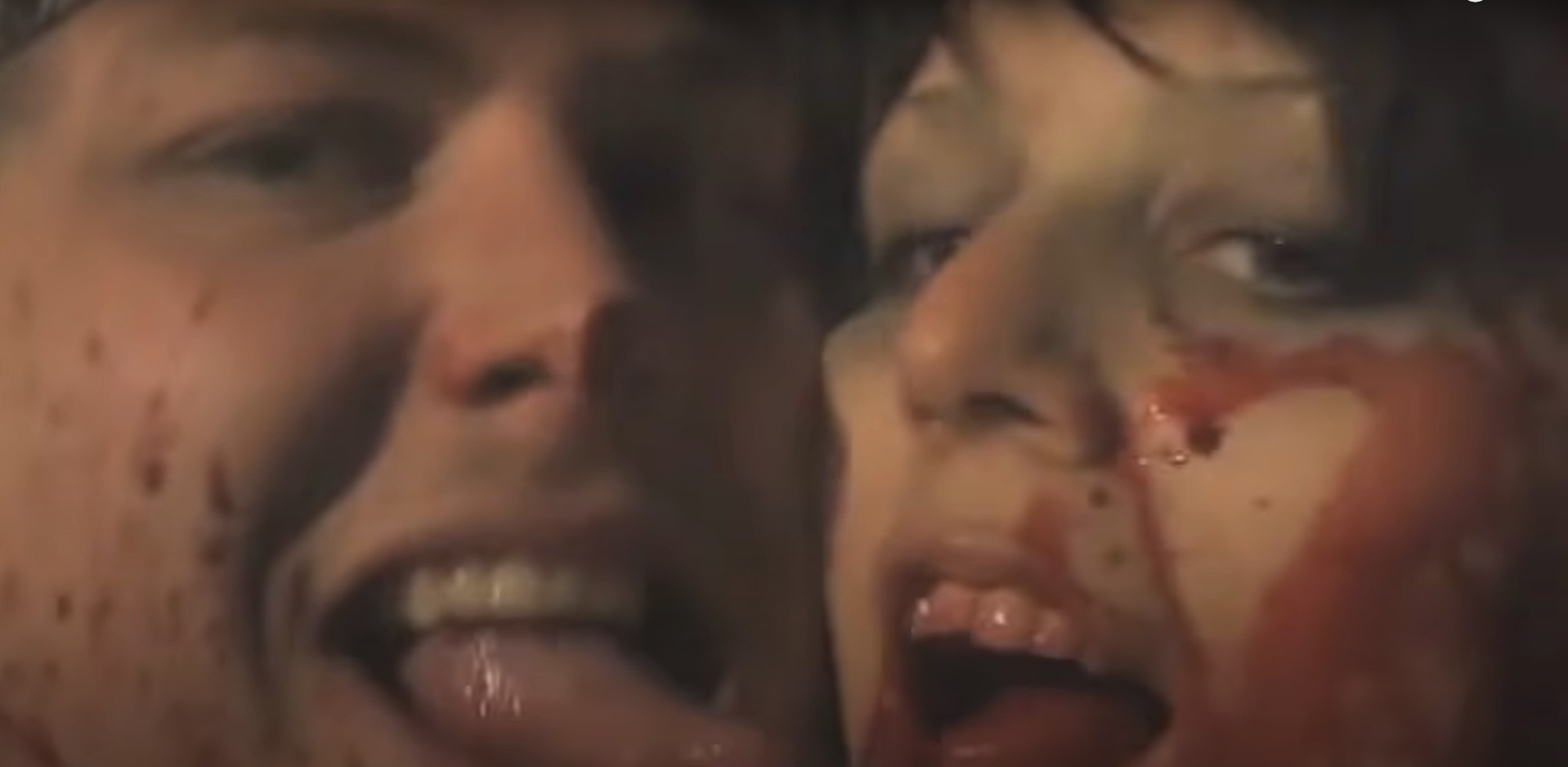
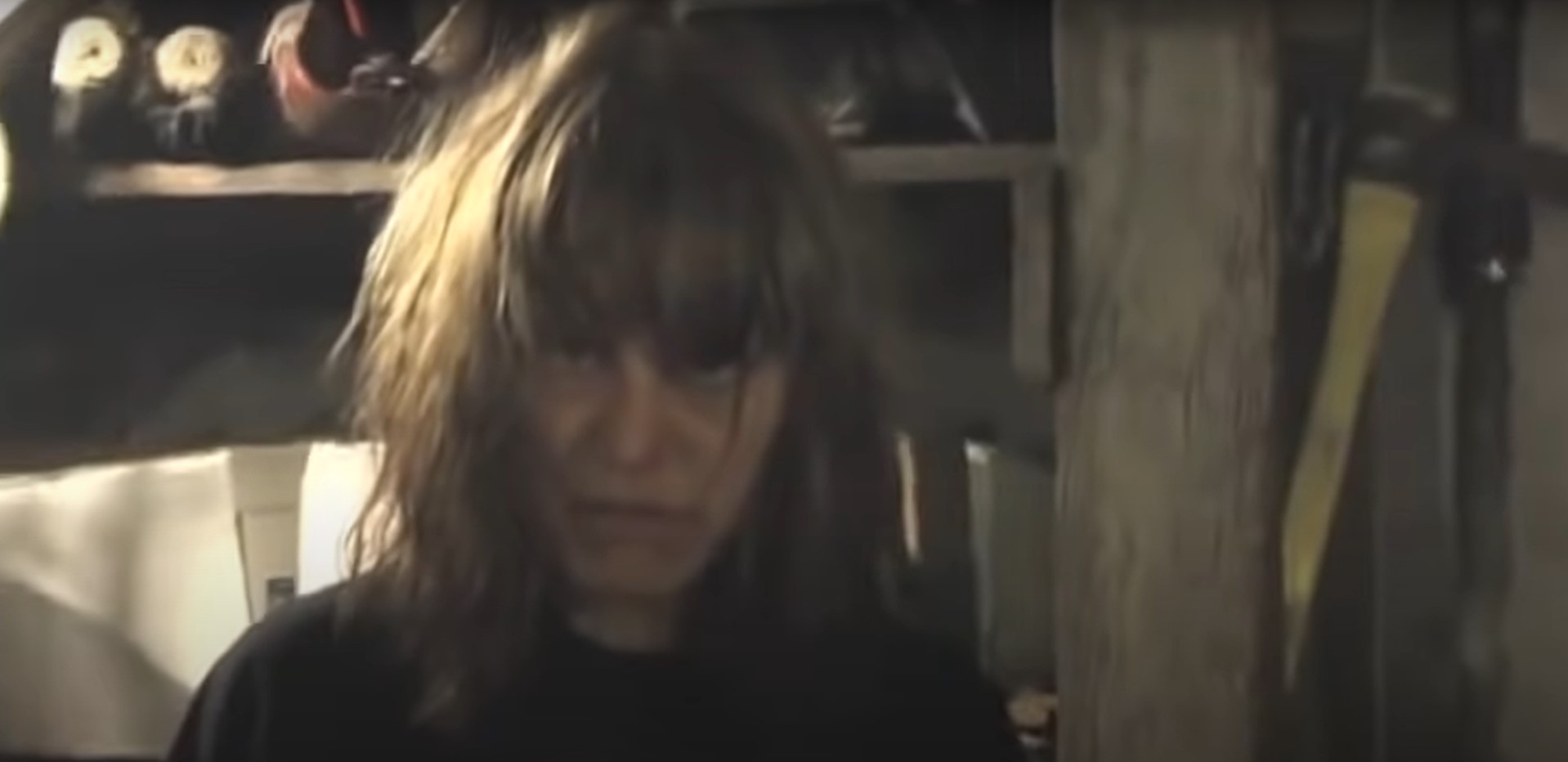
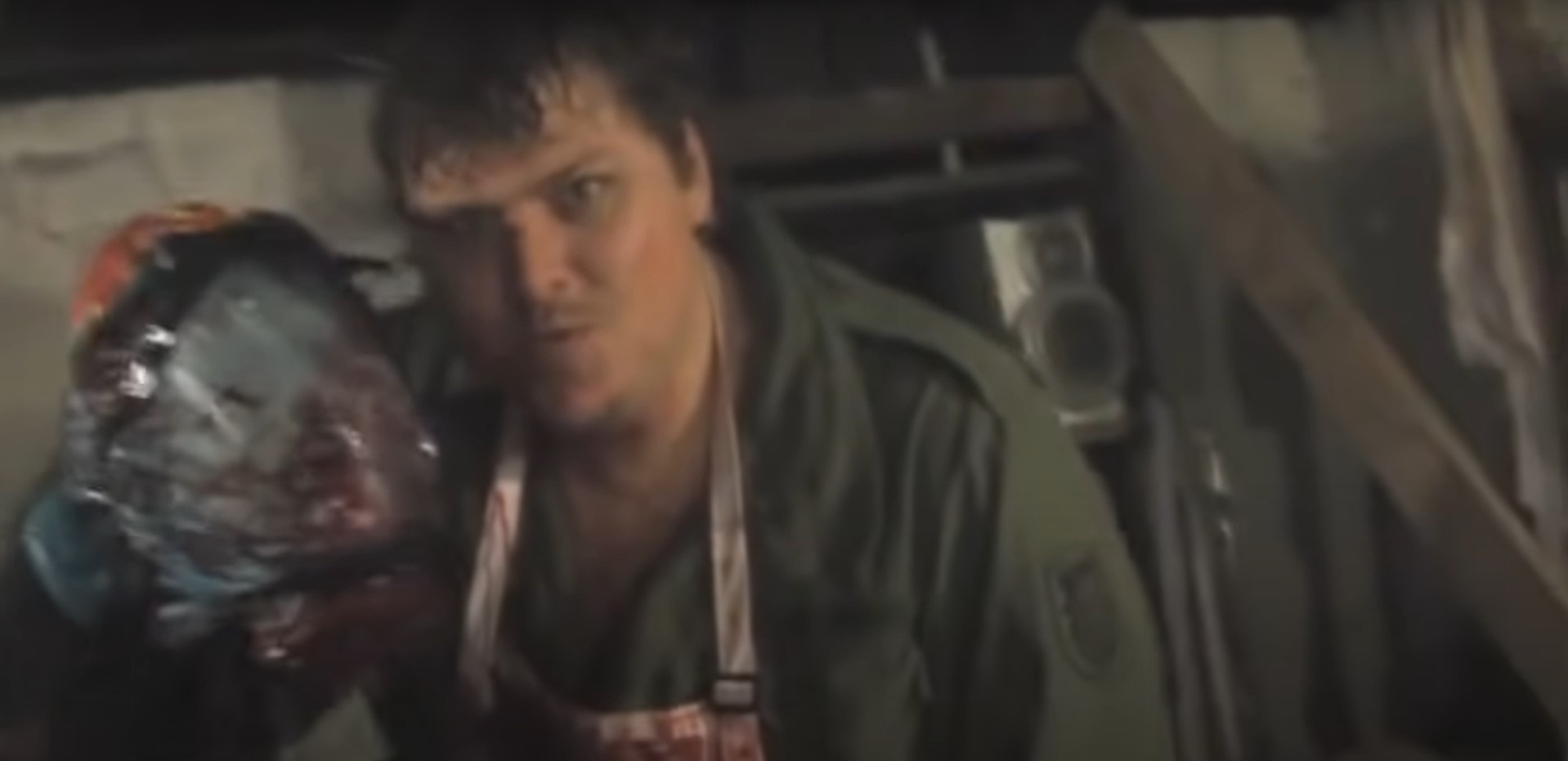
Pig ranching landowner Robert “Willy” Pickton’s compulsions to pick up unprincipled women involved in prostitution and drugs and horrifically rape and murder them in the name of salvation stems from a severely abusive childhood with the father’s physically and mentally tormenting as well as a scornful mother sexually assaulting him.  Willy’s fanatical obsession threatens his drug-fueled, orgy-laden, rock-n-rolling Piggy’s Powwow party, a regular throwdown held at his ranch that has elicited a cease and desist letter from the city, but Willy pushes the party forward despite his brother David and their lawyer’s stern opposition.  Paralleling Willy’s story is Wendy Eastman who almost dies of an accidental drug overdose.  The incident stirs more the already contentious bad blood between her uncompromising stepmother and insecure father that leads to storm out and bump into Willy at a bar with the feeling of destiny bringing them together only to horrifically discover Willy’s unsavory secret the hard way. 

Part one of my reviews on serial killer biopics, headfirst we go into the psychotic world of Robert “Willy” Pickton, a pig former turned one of Canada’s most notorious serial rapists and killers living in Port Coquitlam, British Columbia.  While the extent of his butchery is vague at best and even in some ways evolving over the course of the last two decades, Pickton was able to be the filmic inspiration for the Chad Ferrin brazen biopic “Pig Killer.”  The “Easter Bunny, Kill! Kill!” and “Someone’s Knocking at the Door” director wrote-and-helmed the interpretation of the egregiously presumed methods Pickton executed upon his female victims, mostly drug-addicted sex workers from the Eastside of Vancouver.  Once under the working ttile of “Pork Chop Rod,” Ferrin’s Crappy World Films, Girls and Corpses (of Robert Steven Rhine’s Girls and Corpses Magazine), and the post-production company Laurelwood Pictures served as co-productions with 50-year acting vet Robert Miano (“Malevolence,” “Giallo”) co-producing.

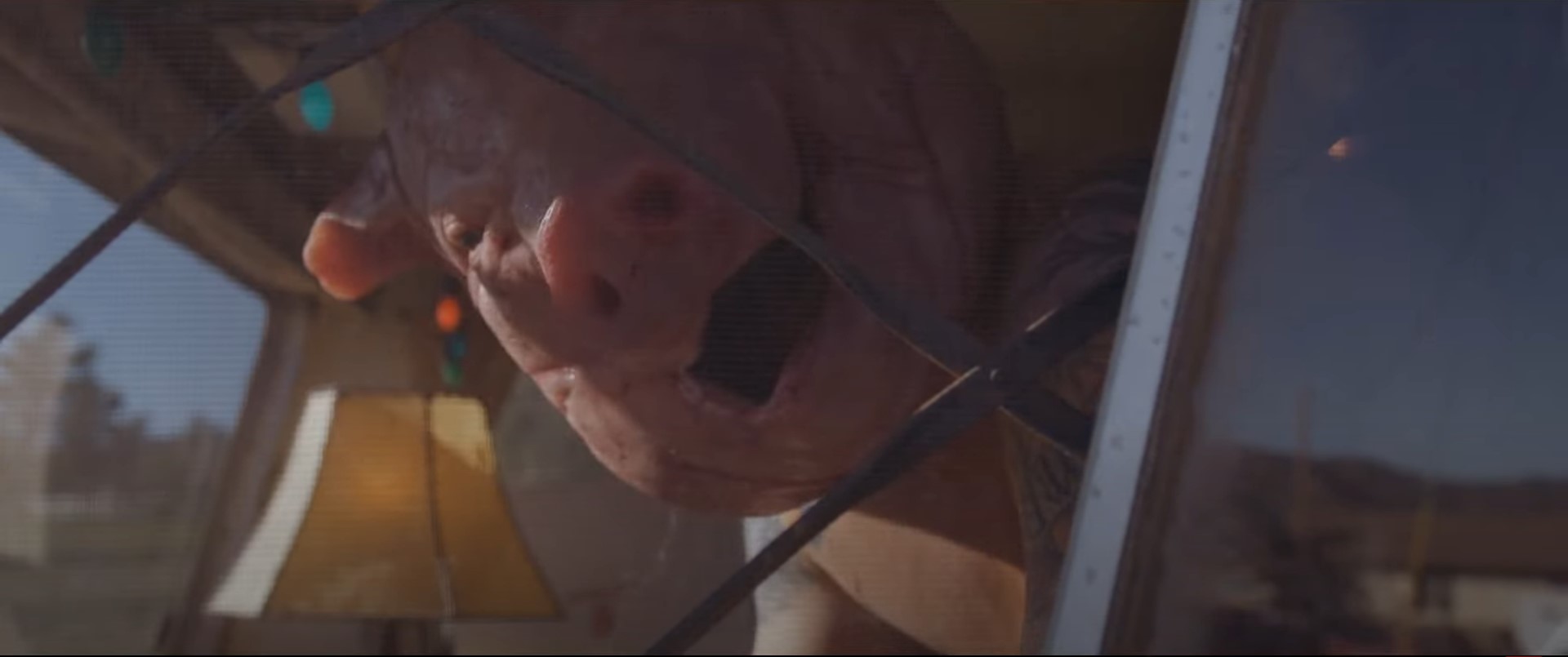
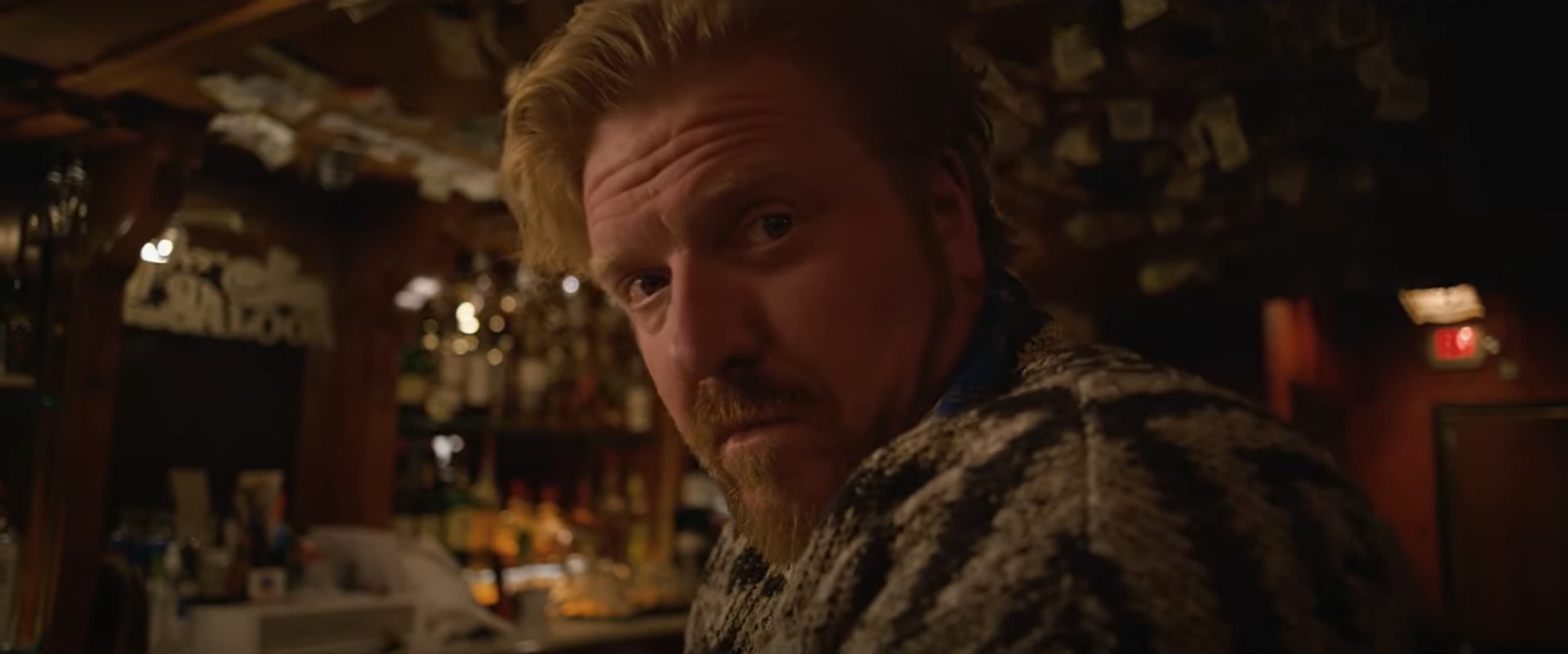
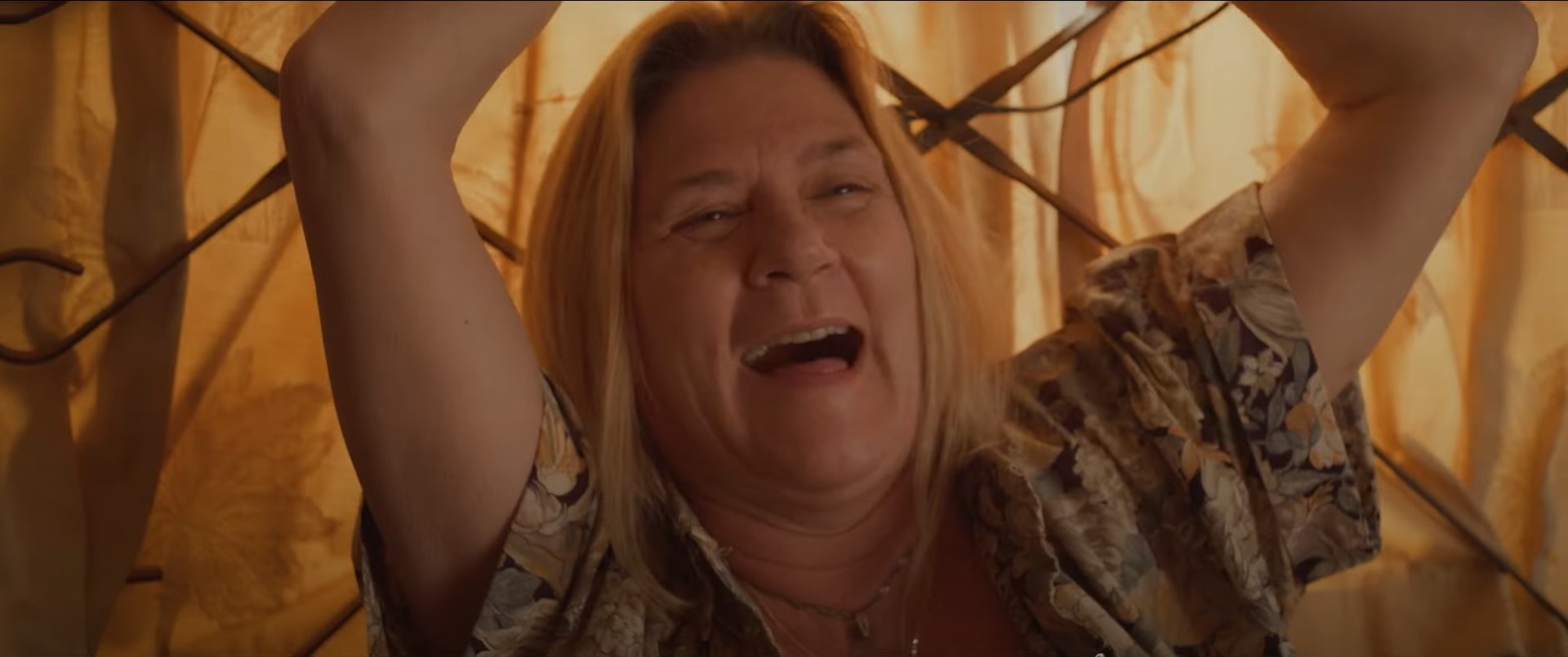
Even though this actor has portrayed serial killers in “Identity,” “The Hitcher II,” and “The Frighteners,” and even a deranged zealot in “Contact,” I would never have imagined in a million years “Starship Troopers” actor Jake Busey would have stepped into the sordid shoes of Willy Pickton in a Chad Ferrin production.  There’s something to be said for Jake Busey’s nerve in moving forward with eccentric and controversial and Willy Pickton is every fiber of those infamy traits and all that is in between.   Disheveled and dirty, maniacal and demented, prosthetic phalluses and dildo revolvers, pig masks and masturbation – Jake Busey doesn’t hold back on an exigent script important to Pickton’s state of mind.  Creepy and apathetic blanked by his deceased mother’s devout spitefulness and her incestuous sexual abuse, Busey secretes these irascible qualities held dormant in Pickton until the sleaze is sated and his patients runs out then it’s time to go hog wild, literally. Lew Temple (“Halloween,” “Devil’s Rejects”) plays Willy’s brother David who also has mother issues, but that avenue is not as profoundly travelled as Willy’s, both men see delusional visions of their mother’s tirades but definitely lopsided in disfavor of Willy and that leaves David left in the dust some to not have his mental faculties inspected.  Their flashback, foul-mouth, and Electral loving mother goes to an unabashed by former adult actress turned low-budget horror scream queen Ginger Lynn Allen (“Murdercise,” “31”) in what her scenes can only be described as uncut and uncomfortable lewdness as she bares it all at the ripe young age of 60 years old.  Another standout performance goes to Kate Patel as the debut actress, who in her own right is an Amazonian goodness buff beyond rebuff in black lace underwear, finds her voice as a young woman named Wendy Eastman in a complicated and dysfunctional household after the death of her mother, at odds with a wicked stepmother, and an insecure father with passive fortitude.  The only obstacle that can be rendered cleanly from her performance is how her character’s written to be drawn to Willy Pickton as because between age gaps and social differences, the two have nothing tangible to drawn them together mutually.  “Pig Killer” rounds out the cast with producer Robert Miano as Wendy Eastman’s father, Michael Paré (“Streets of Fire”) and producer Robert Rhine as Detectives Oppal and Schneer, Silvia Spross (“Parasites”) as Wendy’s disparaging stepmother, Jon Budinoff (“Someone’s Knocking at the Door”) as Wendy’s friend and drug source, Elina Madison (“Caged Lesbos A-Go-Go”) as a druggie sex worker, Bai Ling (“Exorcism at 60,000 Feet”) as also a druggie sex worker, and Kurt Bonzell (“Parasites”) as Willy’s disfigured and throat-cancer suffering friend Pat. 

Sensationalized for cinematic charm, the story behind the “Pig Killer” hits near the bullseye of all major bullet points from the escape of Wendy Eastman (actual person being Wendy Eistetter) and her coinciding her drug addiction to the wild gathers at the Pickton farm known as Piggy’s Powwow (actual title being Piggy Palace Good Times Society) where motorcycle gangs and prostitutes congregated for a drug-fueled good time.  If having viewed a few of Ferrin’s credits before, some of the unrestrained gore and shock will not come at a surprise.  The benumbing unconcern of misanthropy is poignant amongst Ferrin’s soft-pedaling of horror with a whimsical manner within a gritty film that doesn’t feel as gritty as it should be considering the subject and subject material.  Another mitigating moment, one that’s more counterproductive to the Pickton storyline, is the parallel melodramatics of Wendy Eastman that eventually rendezvous with the titular “Pig Killer” and become the rendition of Wendy Eistetter supposed personal backstory and escape from death.  Wendy’s overdose and family issues provide reason for her subsequent run away from home, but the extent of the backstory unnecessarily rivals Willy Pickton’s and the whole destiny meetup enlists some deeper rooted significance that isn’t neatly fleshed out, turning awkwardly impertinent that waters down their entanglement. 

Arriving onto a Breaking Glass Pictures and a Darkstar Pictures collab, “Pig Killer” oinks itself onto an AVC encoded, 1080p, High-definition Blu-ray.  Presented in an anamorphic widescreen 2.39:1 aspect ratio, “Pig Killer” under the warm glow and desert dry eye of cinematographer Jeff Billings (“The Deep Ones”) sundries the shot types in various techniques, such as closeup slow motion to be inside Willy’s moment of divination, to provide Ferrin’s feature with comely appeal even in the vilest of moments. Details are sharp and delineated nicely albeit the quick editing for intensity purposes and to float Willy in and out of psychosis. Coloring is more natural than anything else with a few gels scatter about to spruce up the vibrancy. The lossless English DTS-HD 5.1 master audio renders clear dialogue without any distortions or other audible disturbances; however, the strength of the dialogue favors an infirm conveyance to grasp a few exchanges, especially in the exterior. A maximal Gerard McMahon soundtrack scores the entire biopic from start to finish with a range of 80’s power ballads to 90’s pop rock; the 76-year-old not only scores the project but also has a concert performance role with his band G Tom Mac. Depth and range supplement greatly as sound design cater to the surrounding atmospheres, such as the echo vibrations under the Eastside bridge or the pig-pen oinks and frenzies when feeding bits and pieces of sex workers to his farmyard swine. English SDH is optionally available. Packed with extra content, supplements included are an interview intercut with scenes with Ginger Lynn as well as a few of her clothed adult industry spreads/modeling, a behind-the-scenes footage with Michael Paré, deleted and extended scenes, and Q&A from Cine Excess, the making-of the Pig Mask, a making-of the film entitled Canadian Bacon, an introduction to Spunky the Pig aka Willy’s pig, a screen test of Kate Patel in the role of Willy, which was considered before Jake Busey landed the role, “Pig Killer” auditions, and the trailer. The clear Blu-ray Amaray case sports a dark-and-dirty gilt image of a half-naked Kate Patel and a menacing pig-masked person holding a clever overhead. Reverse side contains a still image of the insides of Willy’s pigsty camper while the disc is pressed with the same menacing pig and clever but more prominent. The collab release has a region A playback, a runtime of 122 minutes, and is not rated. The back cover also lists a 2000 production date, conflicting with the 2023 release states elsewhere, but the 2000 date would be before Willy Pickton’s arrest and so that might be a misprint. Chad Ferrin and Jake Busey jointly tackling the monster that is brutal serial killer Willy Pickton with an inkling of lighter material coursing through its arteries, style secreting through the madness, and, of course, gore, the most important ingredient to the likes of a film entitled “Pig Killer.” 

On This Farm There Was a “PIg Killer” now on Blu-ray!