Following a successful premier, Syfy’s Z-Nation follows up with a great second episode that develops more on a couple of character backstories while still raking in the gory bits and pieces of flesh and bone of zombie deaths. Z-Nation can deliver unsuspecting turns making this show unpredictable and entertaining.
Still considered to be a carbon-copy of The Walking Dead, Z-Nation slowly begins to journey itself away from the widely popular AMC series. I’m also seriously impressed with the special effects that Z-Nation (zombie stuck in the truck carriage, burnt to a crisp zombie, and zombie fuel tank) and while the series is not gored up by effects guru Greg Nicotero, there does lie some great talent behind Z-Nation’s blood.
The characters are starting to come to light with Pisay Pao’s Cassandra and her pack of dark secrets and as well as Keith Allan’s Murphy character and his struggle to maintain his convict past. Critics might be a bit harsh at first, but I think Z-Nation’s like-ability will come around with critics and see that’s not to compete with the drama of The Walking Dead. Instead, Z-Nation will stand on it’s own to dead feet and come out on top as an entertaining zombie series.
Discovering ancient gyms in the literature world is like finding $5 in your pocket that you didn’t know you had. The feeling is a rush, an enlightening feature that emits from your soul making you glow with enjoyment. That feeling is so powerful because that means there lies hope and there lies new prospects, in all walks of life, out there for all of us. Coming across D.A. Stern’s novel “Black Dawn” in a second hand book store was a great find amongst the vast rows of books because of the novel’s timeless nature, something we’re all in fear of coming one day, the apocalypse.
“Black Dawn” follows multiple story lines of people, some good of heart and some not so much, when two waves hit. The first wave knocks out all electrical devices much like an E.M.P. does. The second wave sends a rush of anger into the bowels that makes people want to rape, rob, and kill. The story lines eventually connect to a finale that involves awaking an ancient, world ending entity.
Released in October of 2001 (yes, now I feel old), “Black Dawn” could have been read today or thirty years ago and still have the same affect. Why? Part of the agelessness of this book due to the author’s writing style. D.A. Stern’s style is blunt, to the point, and without mercy. Some critics might consider it dry and bland. In hindsight, Stern’s articulation of the events, jumping back and forth from story to story, would have been mass confusion if done in a more colorful, descriptive manner. Just tell me a character was shot and that convey’s the character’s death or seemingly death; this type of writing is perfect for “Black Dawn’s” as it lays down a serious tone.
Also, Demons never seem to go out of style. Though Stern never labels the undead creatures as demons, the idea that a character is killed and then resurrects to doing the bidding of an evil, soon-to-be-awakened threat spells out Demon from afar. The apocalypse happens in stages and so does the outing of each villain and hero creating a grip on your eye balls so you can’t look away from the words that tell how the events unfold.
Certainly a good read and a fast read. Quick, easy, and to the point but still giving you the edge of insanity, fear, and horror which is always refreshing especially since this novel is 13 years old. D.A. Stern wrote a couple of Blair Witch sequel novelization: “Blair Witch:: Graveyard Shift” and “Blair Witch: The Secret Confession of Rustin Parr”
Who doesn’t love Bill Moseley? The loud mouth, sarcastic-trash talking, balls-to-the-fucking-wall, maniac characters swirl him into a familiar role that have been overly typecast by general audience standards, yet we, as the audience, love every minute Moseley is on screen – Otis Firefly from Rob Zombie’s “The Devil’s Rejects” for instance. Hell even Johnny from Tom Savini’s “Night of the Living Dead” gave Johnny a more twisted outlook on his short lived life. The same maniacal Moseley archetype reveals itself once again in House of the Witchdoctor along side a timeless buxom blonde and reoccurring co-cast member Leslie Easterbrook.
A young and beautiful Leslie Van Hooten and her four grad-study friends retreat to the Van Hooten home to help Leslie cope with the anniversary of her fiance’s brutal and shocking death one year ago. Peter (Bill Moseley) and Irene (Leslie Easterbrook) Van Hooten leave the family home for the weekend, giving the young group a chance to give Leslie a feeling of peace and relaxation during her time of suffering. However, a peaceful weekend is interrupted by a career criminal Cliff (played by Allan Kayser) and his drug fueled sidekick Buzz as they break into the Van Hooten home looking to rape and torture the women and steal from Leslie rich parents. What Cliff and Buzz don’t realize is that they have unleashed hell upon themselves breaking into a house that isn’t all quaint and innocent as it seems.
“House of the Witchdoctor” prides itself more toward the torture, rape, and murder that falls upon the young grad students than more toward the actual focus of what the title suggest – the Casa de El Witchdoctor. And while I enjoy a good torture scene between dirty old criminals and the naive youth of the nation, the witchdoctor intrigued me more because the subject matter of voodoo and witchdoctors are hardly explored anymore. “The Serpent and the Rainbow,” “American Horror Story” Season 3, and, well the “Candyman” trilogy, is all I can really account for voodooism. Aside from the lack of witchdoctor and witchdoctor activities, the misbehaving activities of Cliff and Buzz are quite enjoyable as their rampage is non-stop, their carnage reaping is continuities, and their true to their snake tongue speak. Buzz especially since this is actor’s David Willis feature film and his long, yet balding greasy hair and beer-belly gut attributes really play to Buzz’s low-life persona. Cliff is a bit of an enigma; coming from a religious home and being just release from prison, my first thought is that Cliff is a converted convict. The two minutes of his scenes are deceiving and you’re beliefs about Cliff will turn your head around so fast your neck might snap.
Leslie (Callie Stephens) travels home with a group of stereotypical archetypes that are commonly used in horror films such as the sex-crazed best friend Regina (Emily Bennett), her jock boyfriend Tom (Danny Miller), their religiously prude friend Patty (Summer Bills) and the nerd wimp Thad (Jonathan Helvey). I’m surprised that wasn’t a token black actor who tossed around quick quips, but I guess you just can’t have it all. Surprisingly enough, all three lead actresses show their racks! Woohoo! That in itself makes up for the usage of common archetypes and yet those scenes were more-or-less gratuitous – some more than others. Character development could have been improved especially since Thad and Patty had some sort of weird relationship arrangement where they together, yet not on holding hand terms due to religious beliefs. In turn, their religion background, along with Cliff’s religious background, would have been a good contrast with the Haitian voodoo, but the mark was missed. Also, Regina and Tom couldn’t stop with the overzealousness of their hormones and so their development was skewed. Leslie had more going for her character in which she would reminisce alone about her murdered fiance, but this is confusing in later on scenes when the shit hits the witchdoctor’s fan. We’re more in tune with Buzz and Cliff’s characters than really anybody else’s. Even Leslie parents, Peter and Irene, are simplified characters who deserve more background. But like I said at the start of this review, Bill Moseley could bring any character life even a limp one.
“House of the Witchdoctor” breaks the mold with a couple of good scumbags and will forever terrorize your dreams about being home alone. Also, a good amount of iconic cult star power doesn’t hurt and along side Moseley, Easterbrook, and Kayser are Dyanne Thorne (the ferociously buxom and nasty nazi Ilsa of the “Ilsa She Wolf of the SS”) and Howard Maurer (Also famed from an Ilsa film “Ilsa Harem Keeper of the Oil Shieks). Breaking Glass Pictures plan to release “House of the Witchdoctor” on DVD on September 16th!
“The pit wants what it wants.” Sometimes it is that simple. That saying could be the meaning of life for all we know? Could be the answer to the mysterious universe? Hell, could tell us what happened to Jimmy Hoffa and if there really lives a Loch Ness Monster. For the backwood folks of the movie Jug Face, that phrase is life and death. A backwoods community just on the outskirts of civilization serves an unseen entity in a deep muddy pit. The pit psychically connects with Dawai, a local simpleton who loses consciousness when connected to, to create a ceramic jug face of the face the pit wants to sacrifice in order for the community to keep sustaining their health. When young and out of wed-lock pregnant Ada’s face becomes the jug face, she steals the jug and hides it in the woods in attempt to not only save her life but her baby’s too. When the entity is ignored, the wrath of a gruesome death comes down upon the whole community by taking one person at a time until the pit gets what it wants.
Jug Face strikes an originality chord in this reviewer’s bones. Usually when too much is happening one could easily become lost in the thick of the story, but where the thick might be the thickest, Jug Face fiercely cuts through and weaves a story of a women coming into her own to face responsibility and a story about fate in which no matter how much you try to re-arrange it, you’ll receive your rightfully due diligence in the end. The story ends up being grim for everyone and nobody has a one speck of happiness. A great parallelism to reality if you ask me because not every ending is sugar plums and puppy dog tails.
The pit entity doesn’t seem like the “bad guy” villain that we might expect. Ada is not saint as she commits carnal sins and her actions result in the deaths of her friends and family and not all at the hands of the pit, but some by the community as well. Granted, not all the victims were innocent – some just as guilty as Ada – but we struggle with Ada’s compelling reason to live and to keep her unborn baby alive too. We’re more partial to Dawai, who like I said earlier is the community nitwit, and her father Sustin who tenderly loves her more than anything as a father should but obeys the pit’s commands when a jug face is revealed.
The ensemble cast headlines with Lauren Ashley Carter as Ada. A relatively unknown actress with a great pair of breasts; she’s topless in the first 5 minutes of the movie. Carter is a wide eyed beauty with a face like Kristen Stewart except without that dumb glare. Indie genre favorite Larry Fessenden (I Sell The Dead, Habit) takes on Ada’s father Sustin. Sean Bridges plays a great village idiot as Dawai and the other Sean, Sean Young, Ray Finkle him-herself, is Ada’s sadistic mother.
Overall the movie watchable value and cult status written all over it (I has saying cult status, but what else is there to label it?). In reality, the MVDVisual distributed film with come and go with much of the straight-to-DVD market and that is a grisly disappointment because this little bizarre script from first feature film direct received a little money behind it and has a great cast, but the names aren’t big enough, the distributor isn’t big enough, and the story will fly over most people’s heads. MVDVisual and Modern Distributors did do a great job with the 5.1 Surround Sound and the clear 2:35 Widescreen format. Everything is pretty sharp here, but don’t expect jug Face to make waves amongst the masses.
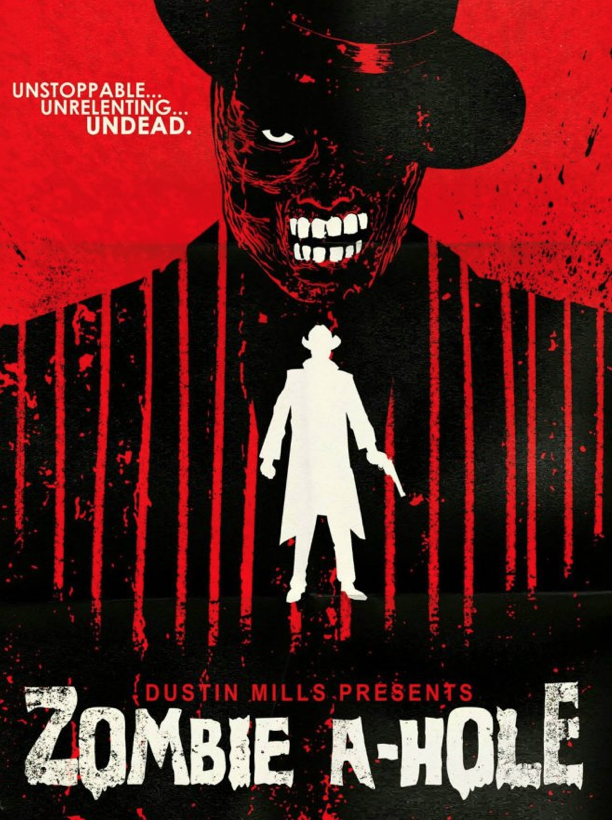
Slowly and slowly, there has been a increase of likability toward director and writer Dustin Mills and his hugely creative and widely entertaining horror films. This might sound like a creepy man-crush, but the Kevin Smith like-a-like director has his own production company, he pulls from his own stable of actors, and his movies are not your typical, run-of-the-mill independent boringness trash. The experiences had with Dustin Mills have been in backwards motion where I’ve started Mills recent projects and have worked backwards ending with Zombie A-Hole – so far. Zombie A-Hole involves a hellbent cowboy, a psychic twin brother, and a one-eyed engineer superstar all seeking the same evil – the other twin brother who gave his soul to an evil living inside a medallion that has given the brother unlimited power and has returned him from the grave! This a-hole stalks and kills twin siblings for their brain matter to give him everlasting power making this zombie a-hole the most depraved, the most senseless, and the most hated being on this twisted earth!
What impresses me more about Dustin Mills is his use of effective special effects when compared to a $1,000 budget. The man must be good with a computer because even though I can see the slight mistakes or the slight cheapness of the prosthetics, his special effects can please even the most critical critics. Mills even uses quick editing techniques to create the illusion of twin siblings. Seven “twins” will trick your mind by having the “twins” seem to be in the same scene, but with some quick camera work and some flawless editing the same actor will only seem to be in the same scene with their twin when they’re talking to each other. If that last sentence doesn’t confuse you, then you’re special. Mills can also make Party City skeletons looks like some grade A Sam Raimi Army of Darkness skeletons by brushing them up in makeup and using filter techniques to create his own smart ass undead army.
Two regular actors of Mills’ work turn grueling indie project into a highly entertaining horror film. Brandon Salkil portrays three characters in Zombie A-hole as the twin brothers and the zombie. Jason Eal takes on the rough and tough, zombie asskickin’ cowboy. Both actors feature in Mills’ later films such as Bath Salt Zombies (another great, based on a true story film) and both have had their own starring roles in Mills’ films as well as working behind the scenes on the production crew. Versatile and hardworking, these two actors’ on screen performances are poetic. Salkil’s animated personality homes in on a Jim Carrey while Eal tough guy schtick is well welcomed when dealing with any evil force.
Zombie A-hole markets itself as a zombies are cool and hip while being brutal and deadly. Though Salkil’s zombie is brutal and deadly, the prey could have been more lively. The “twins” are mainly alternative girls who for some reason always get the ax when they’re taking a bath or in the shower…? A pre-shower, during shower, post-shower motif I don’t completely understand. Perhaps to show some gratuitous tits or maybe to show how helpless these victims are with no fight in them when the Zombie A-Hole is cracking open their skulls, ready to eat their brains!
Zombie A-Hole’s all out mentality will leave you with great appreciate for independent filmmaking. Thank you MVDVisual for releasing Dustin Mills work and exposing the writer and director and also his two main actors Brandon Salkil and Josh Eal. MVD’s presentation runs 108 minutes with a standard definition 16×9 widescreen ratio, but Mills purposely grains the film to give the a grindhouse film feel and the standard definition goes right out the window. There are no extras and its a bit of a shame because I would want to see the behind the scenes of Zombie A-Hole, but that shouldn’t come between man and his urges to see blood, boobs, and the zombies!





 It's Bloggin Evil!