Eric Bana Embraces EVIL’s Infamy! “Chopper” reviewed! (Second Sight Films / Blu-ray)

Mark “Chopper” Read is one of Australia’s bestselling authors.  Read is also one of Australia’s most notorious criminals having wrote his autobiography in prison.  The pathological criminal’s life begins in the H Division of the Pentridge Prison in the late 70s where he quickly establishes himself a leader of a small three-man gang and viciously murders a rival leader at the chagrin of his acolytes, Jimmy Loughnan and Bluey Barnes.  When Jimmy turns on Chopper, stabbing him multiple times and then accusing him of attacking first, the ordeal has a subtle effect on the wildly shrewd and wayward Chopper who 8 years later is released with massively suppressed paranoia as old flings and old acquaintances are believed to be going behind his back or contracting a kill order on his head.  Under the delusions of working for the police, a paranoid, suspicious-filled, and unpredictable Chopper takes the opportunity to revisit old accomplices, such as the treacherous prison mate now turned drug addicted family man Jimmy Loughnan, after rumors circulate of Loughnan’s involvement in placing a contract on Chopper that results in conspiracy and murder.

Not to be confused as being completely autobiographical, or even semi-biographical, “Chopper” is a highly-stylized and self-proclaimed embellished account of the late Mark Brandon Read.  The Australian feature written-and-directed by Andrew Dominik (“Killing Them Softly”) was once the highest grossing Australian films of all time and still marks as a predominant, early 2000 release to accentuate Chopper’s high energy, erraticism, and violent behavior along with a stellar, method-acting performance from the lead star Eric Bana, who before turning into one of Hollywood’s most recognizable Australian actors was a former sketch comedian and stand-up comic.  Shot in Melbourne, Victoria, “Chopper” is produced by Michele Bennett and Michael Gudinski (“Wolf Creek,” “Cut”) with Al Clark (“Gothic”) and Marin Fabinyi (“Bait’) as executive producers under the state funded Australian Film Finance Corp. as well as Mushroom Pictures and Pariah Entertainment. 

As mentioned, Eric Bana, star of Ang Lee’s “Hulk,” and having villainous roles in the J.J. Abrams “Star Trek” prequel and “Deadfall” alongside Olivia Wilde, helms the titular character with a plumped-up version of himself, grows a wicked handlebar mustache, and engrosses himself into the peculiar persona that is Mark Brandon Read.  “Chopper” really puts Bana’s range on display with a crucial to success performance and the actor lets Read sublease headspace in what is an aberrated humor and darkly concerning ball of a biography.  Bana manages to make Chopper likeable yet terrifying, funny yet ferocious, and human yet monstrous as an unpredictable juggernaut of paranoia and survival that only knows how to protect himself by thwarting violence with violence.  Chopper mingles with other unsavory, carnivalesque characters in his journey through a jailbird’s life with what he considered his number one mate in prison Jimmy Loughnan (Simon Lydon, “Blackrock”), an old foe in Neville Bartos (Vince Colosimo, “Daybreakers”), and druggie girlfriend Tanya (Kate Beahan, “The Return”).  In Chopper’s post-near death eyes, enemies and friends are now subject to his suspicions, making him truly lonely in his own world of crime.  Performances shepherd in waves of volatility, intensity, and even immodest humor that force the scenes between them and Chopper into a pool of frigid and death-calling ice water, yet somehow, in the same breath, Dominik is able to take those performances in “Chopper” and turn them into one-giant joke at Read’s expense while still managing to keep afloat some sort of baseline truth to this period in time of his existence.  “Chopper’s” cast fills out with other colorful roles from Dan Wyllie, David Field, Gary Waddell, Hilton Henderson, Kenny Graham, Brian Mannix, Sam Houli, Robert Rabiah, Skye Wansey, and Terry Willesee. 

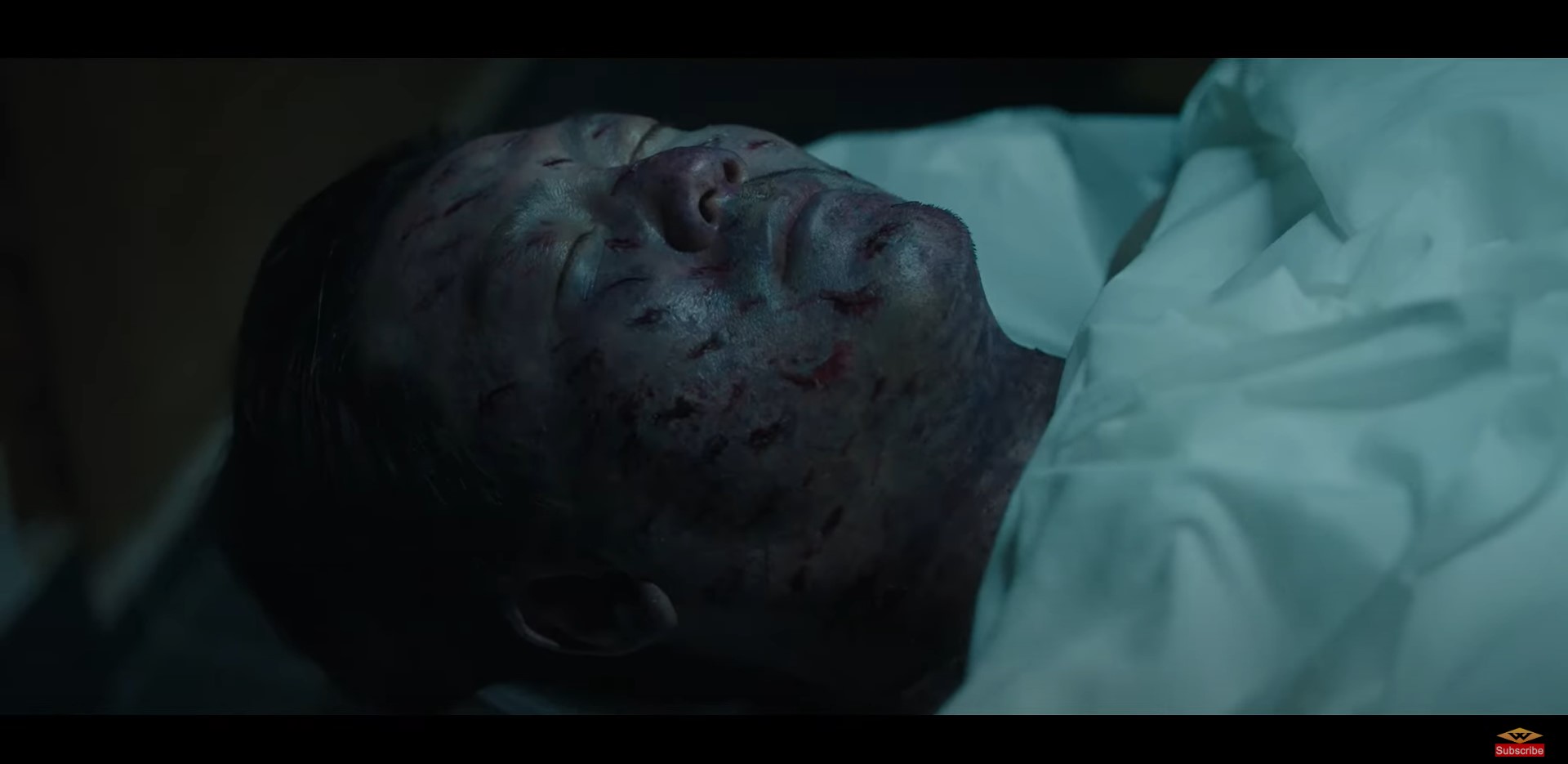
Most Americans will likely never understand “Chopper” as the comedy Dominik intends.  Bana does so damn good at his job, especially in his feature film debut, and Dominik’s black humor becomes murky by subsequent and sudden jerks toward humanization that audiences will grasp in different directions on how they’re supposed to feel and relate toward a character who stabs a man to death in the face and then cry in compassion for him or beats his girlfriend and then next scene unzips his pants and pulls out his manhood under the bar countertop to show his now ex-girlfriend while talking to two police investigators about his delusions of undercover responsibilities at the other end of the bar.  In its two-tone theme of the 1970’s thin, assured, and incarcerated Read and the decade later bulkier, paranoid, and free Read, “Chopper” has paradoxical and against the grain tones of wildly encompassing visualized thoughts stitched stylistically in the same fashion for pure entertainment value to symbolize Read’s emotively internalized expression.   Though fully linear, Dominik’s narrative structure can also be off-putting to audiences, digging into the entertainment value with crude edits and choppy segues that hardly shapes a timeframe and that can be tough for viewers invested in a particular storyline only to be abruptly pulled out of it and placed into another decade and an entirely different situation altogether.  Then again, “Chopper” essentially has no conventional plot other than the fleeting, distinct stages of a bumpy and insecure Mark Brandon Read’s course through crimes of contract and charisma of character. 

“Chopper” arrives onto a Second Sight Films Limited Edition Blu-ray set and a Standard Edition Blu-ray in association with Vertigo Releasing.  This reviewer was able to get hands on the Standard Edition that’s an AVC encoded BD50 with 1080p High-Definition resolution of a 2K graded, restored scan presented in a widescreen 1.78:1 aspect ratio.  A steely graded first act leads into vivid variability with color, matching Chopper’s descent tenor from shaking stability to a rocky road of mistrust. Decoding at a bitrate of approx. 23Mbps, Second Sight Films’ scan has elevated the details within the tumble of stylistic choices that closely symbolizes specific Chopper eras in which a very different Chopper is exclusive to one or the other while retaining a great amount of natural grain of the 35mm print. Audio specs include an English DTS-HD Master Audio 5.1 which, though lossy, has great compressed fidelity mostly in the dialogue department. Plenty of reverberations captured onsite at the Pentridge Penitentiary scenes that add a slither of realism instead of isolating solely the actors’ discourse. Dialogue itself is clean and clear without obstruction. When moved past Pentridge, the environment layers are scaled back to more isolated effects driven by the actors, i.e. gunshots, scuffles, etc., and so we lose that bit of realism deeper we go into Chopper’s psyche and the soundtrack from “Deliver Us From Evil’s” Mick Harvey pumps a little harder. Optional English subtitles are available. Though missing out on some of the physical lot in the bonus content, the standard release still offers a bountiful built-in special feature of old and new with fresh commentaries by Australian critic and author Alexandra Heller-Nicholas and Australian film scholar Josh Nelson, new interviews by writer-director Andrew Dominik Stand-up Comedy and Violence, new interview with composer Mick Harvey Not your Typical Film Composer, and a new interview with editor Ken Sallows A Tale of Two Halves. Archived bonus material regains new life and traction with commentaries from Chopper himself Mark Read and one with Andrew Dominik, a behind-the-scenes that sees raw film footage and cast and crew tidbits, a Weekend With Chopper is raw and untouched home video footage of Andrew Dominik and Eric Bana spending a couple of days with a wildly excited Read giving anecdotal accounts of his prison life and discussing his disbelief with a film where the subject is himself, and deleted scenes with optional director’s commentary. This particular Second Sight release comes off a little different than past dispersions in physical attributes with a clear green Amary Blu-ray case, something I have not seen before from the UK label. Detail illustration of Eric Bana as the titular Chopper holding a gun to his head in ebullience is quite striking and explicit in its purple-green coloring. Inside is what you roughly get with any standard release with no insert, but the disc is pressed with the same cinereal-alike art representing one of the Chopper’s frequent locations in the story. ”Chopper” is regionally locked on B for the feature that has a 94-minute runtime and is UK certified 18 for strong bloody violence and very strong language. Unlike any criminal to have ever lived and to have ever been represented on screen, “Chopper” wily tussles with Western audiences despite the dedication of Eric Bana but the work and the film can’t be denied as anything but great about an unusual man in a hyper dramatization that pierces more truth than fiction and now Second Sight cements a next level, Hi-Def release to better legitimize the irregular gang member and thug Chopper into cinema homes around the globe.

Eating Disorder? More Like EVIL Disorder! “Binge and Purge” reviewed! (SRS Cinema / DVD)

“Binge and Purge” on SRS DVD Home Video!  This One Is Hard to Keep Down!

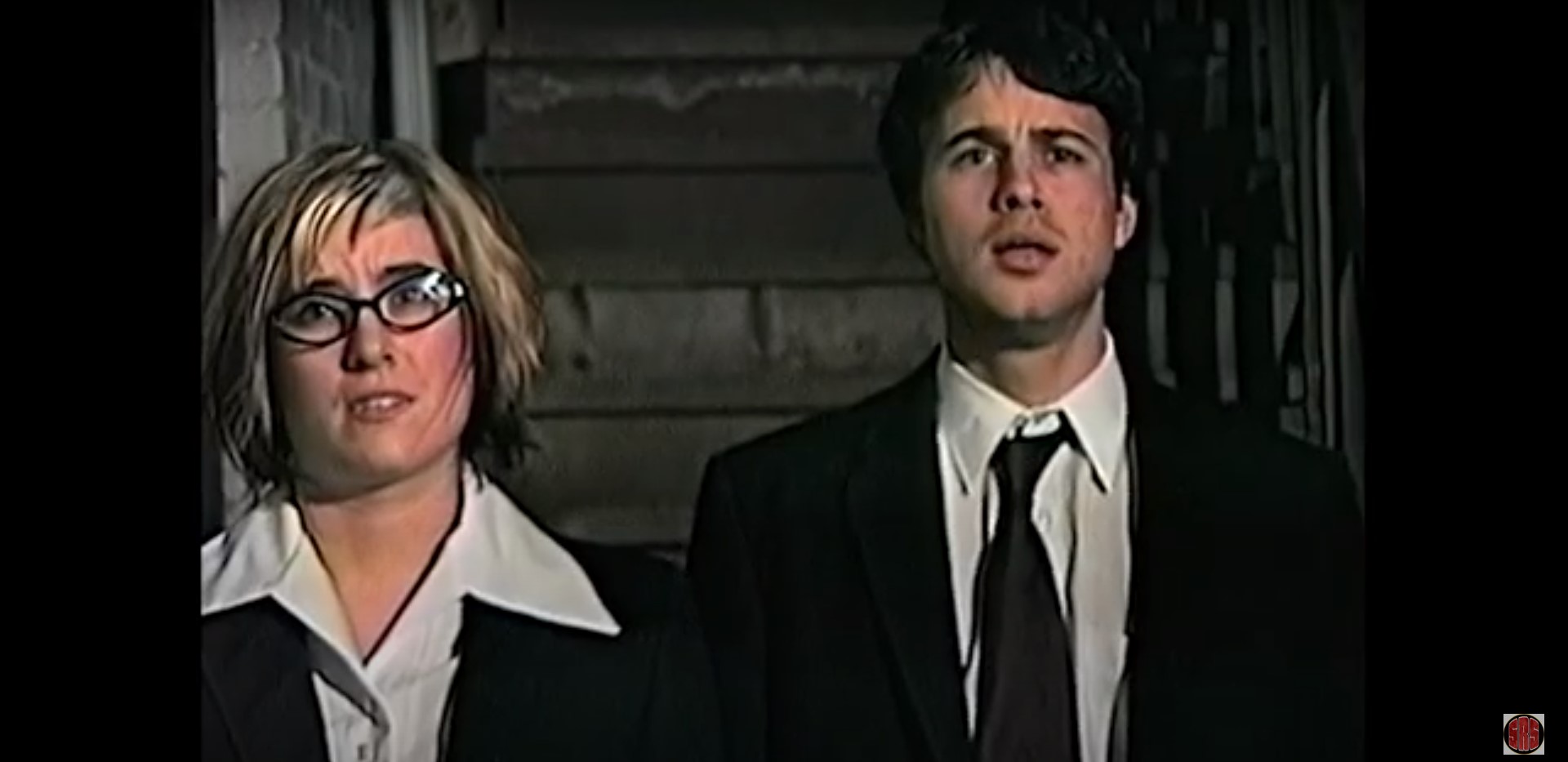
Three former police officers now private sector detectives find themselves embroiled in a cannibalistic frame up by the police state in a near dystopian future.  Their no choice, self-preservation investigation leads them to a group of models who consume people in order to stay vibrant and young as if frozen in time.  The mastermind behind the models’ ravenous new diet is a former Nazi science experiment-turned-fashion designer who has not only spread his indelicacies throughout the fashion world but also into a corrupt authoritarian police department helmed by a sordid chief.   As more and more people succumb to the ghastly craving of human beings, the rebellious detectives embark on an ambitious plan to cut off the head of the snake by working up the fashion designer’s human-hungry hierarchy but are they too late to stop the meat-eating madness?  Has the world been forever infected by the touch of pure evil? 

The first Christmas horror film review of 2023!  Brought to you by the Canadian-born, “Meat Market” trilogy director Brian Clement, the filmmaker’s written-and-directed third feature, “Binge and Purge,” is the 2002 genre melting pot of action, horror, and comedy set in an undisclosed urban jungle of North America where a person’s legal rights no longer exist, beauty and fashion insidiously influence, and normalcy becomes rebel factions’ reason to fight tooth and nail to hang on to it despite the coursing corruption and taking refuge from repressive authorities on their tail.  While sounding glum and despondent, Clement’s addition of black humor adds a loose layer of lurid levity to the bizarro-world society mirroring our own that teeters toward a path of culture and humanity deterioration with radical political and influential figures.  Once considered being the third film in the “Meat Market” series and alternatively known as “Catwalk Cannibals” in other countries, “Binge and Purge” is produced by Clement under Frontline Films. 

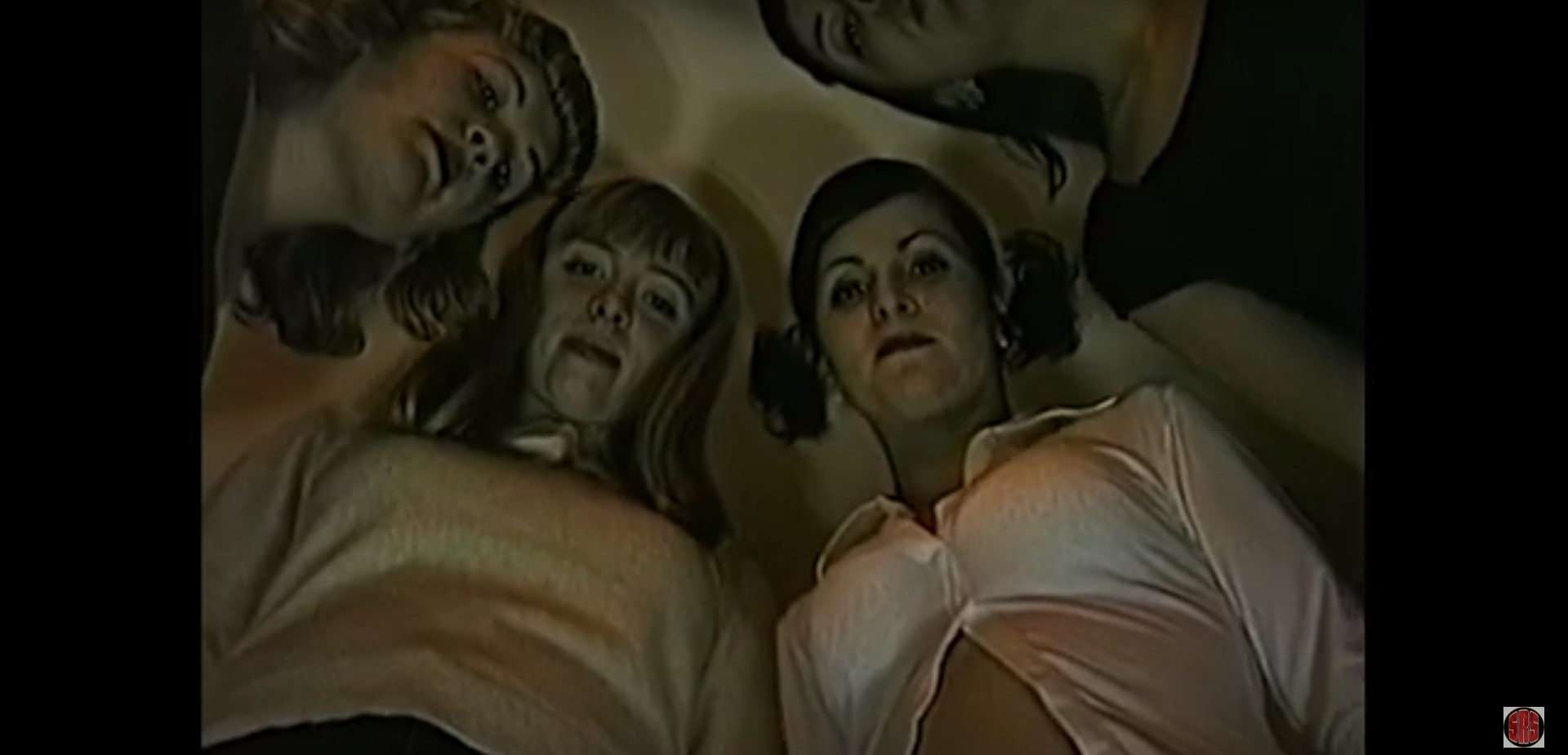
One thing to note about SOV independent production is the impressive number of cast involved.  The large cast helps manifest Clement’s ambitious dystopia and chaos-riddled world.  Without it, “Binge & Purge” would have been too anorexic to sustain selling grandiose on the cheap.  Typical formula for flesh-eater films persists with secluding a handful of principal roles, majority only speaking roles, fleshed out with an epic apocalypse contextualization of little-to-no dialogue, story arc, or any other sort of prominent screen time stock or background characters in a horde of the undead in crude bloodstained suits.  Clement establishes good guys and bad guys clearly but doesn’t necessarily the focal characters with an ebb and flow pattern between the three detectives May (Tamara Barnard), Vanzetti (Stephan Bourke, “Exhumed”), and Number 11 (Fiona Eden-Walker), who we gather was a former highly trained operative so engrained into the training and operations that her name was lost or forgotten, reduced to a number and the troupe of man-eating models under the eternal fashion designer Karl Helfringer (Gareth Gaudin). The models consist of not your slender-hip vixens with shaved down noses and hungry-looking figures but rather the curvy, pin-up types to wet a seemingly heathy appetite. Moira Thomas, Samara Zotzman, Amy Emel, Becky Julseth, Terra Thomsen and Melissa Evans lavish in so much delight over the sticky glop and spilling intestinal scenes of shoulder-to-shoulder cannibal chow downs that there isn’t an ounce of hesitation or disgust before enamel stabs into the fresh viscera but where the enthusiasm mostly falters is with the monotone dialogue deliveries with hardly any swing in inflection, tone fluctuations, or any kind of gesturing during the more emotive occurrences. “Binge and Purge” rounds out with Robert C. Nesbitt and Chuck Depape respectively as a fashion magazine reporter turned human hungry minion and the coke-snorting corrupt police captain.

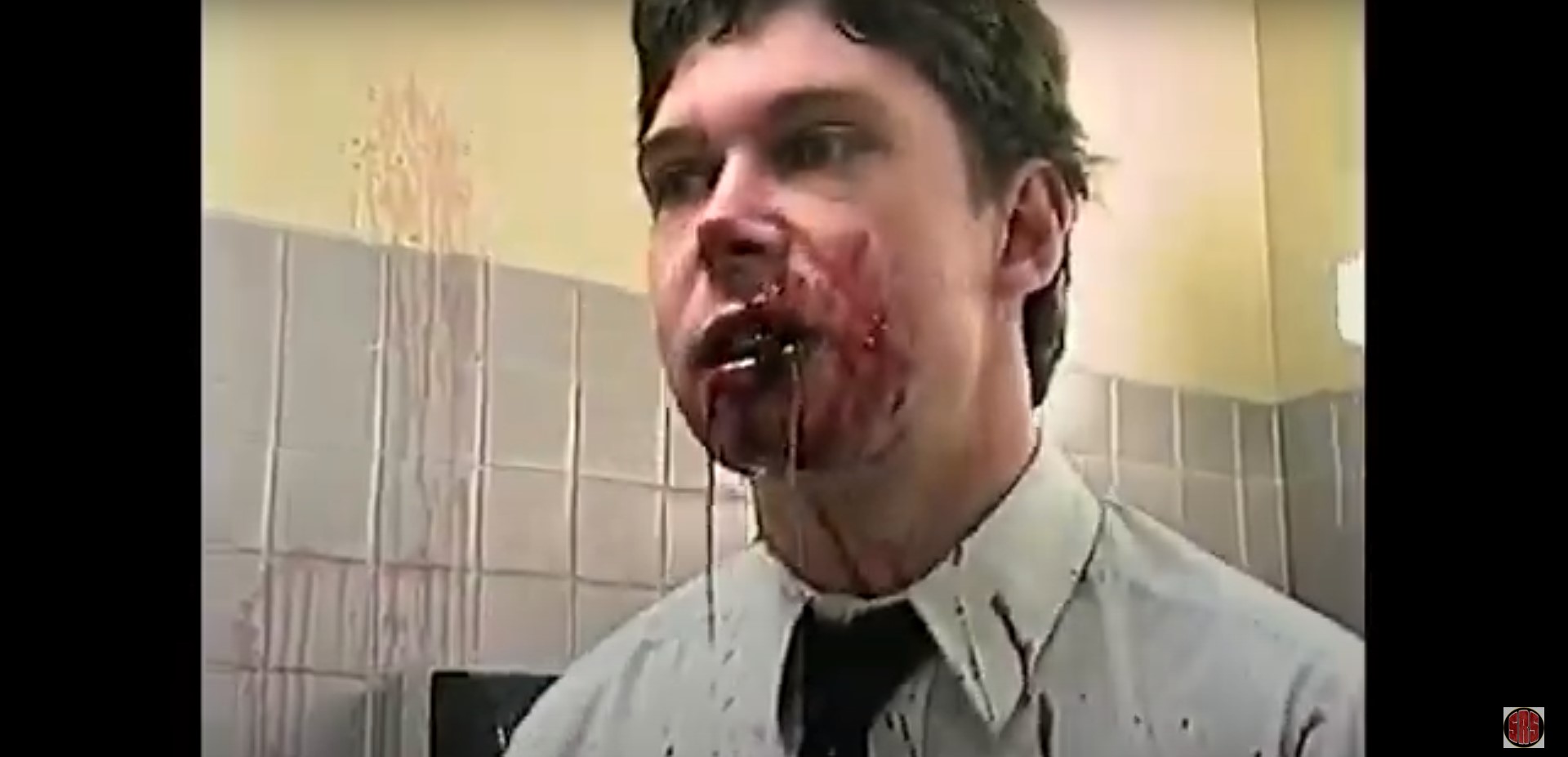
“Binge and Purge” is more than just a Christmas horror.  Amidst the meandering storyline of touching points in time and space with numerous characters and flashbacks skating on thinly laid context ice, such as the Spanish Civil War of the 1930s, Nazi experiments of the 1940s, and how America became a police state, the girth of “Binge and Purge’s” main coarse actually spans across the end of the holiday season in that week between Christmas and New Year’s, approximating a Y2K scare vibe of total chaos and confusion by way of cannibalism contagion instead of a feared computer bug, but that’s one area lacking in Brian Clement’s production laced with insatiable consumerism and consumption with in regard to really hyping up the cheerful holiday atmosphere to become besmirched by the corrupted filth of dirty cops, a plague of death, and a conspiratorial coup by high fashion.  The occasional Santa hat makes an appearance in a model shoot and the end of the year countdown denotes the pinnacle of a MP5 massacring finale, and though I can’t be certain, even the soundtrack sound to be distorted versions of the perennial Christmas classics, but that’s the extent of Clement’s holiday backdrop that would have easily fissure a chasm between “Binge and Purge” and the next low-budget cannibal shocker.  If you’re going to set the film during Christmas, deck the freaking halls, man!  Where Clement bedecks the film is with blood and gore that sees stringy sinew and a high body count’s insides become outsides over an encircling of edible entrails and on literally finger food trays.  Another shining highlight area is the action with agreeable submachine gunfire and the creative pyrotechnic-flares for explosion special effects that does rich up production value, inching the film more toward a magnetic, practical effect-laden, SOV spectacle worth the viewing calories. 

Shot on S-VHS, SRS Cinema gets their hands on the best master print director Brian Clement could carve out of his body of work. The MPEG2 encoded DVD presents the feature in 1.33:1 pillarbox aspect ratio in a 480p resolution. S-VHS master looks pretty darn good despite the caliginous reflection that produces more shadows and illumination on the tape, even if S-VHS offered better illumination as a format, and a lower, poor resolution than S-VHS’s Betamax predecessor. Still, this print has enough delimiting factors to produce a well-oiled image suitable for public distribution with a mix of neon warm and soft color capturing and crude lighting for maximum gritty-palpable product. The English LPCM mono track also has admirable lossless fidelity with a bitrate decoding of 192kbs, that has come typically standard, and greatly appreciated for audiophiles, on SRS releases. Some scenes are better than others, but the dialogue does retain some tail-end hissing and can be soft in spot. Otherwise, dialogue renders clearly enough. The release offers no subtitles. Bonus features include an archived audio commentary and a new SRS cinema produce audio commentary both of which include a self-deprecating Brian Clement going through his “least favorite” work’s production wishful do-overs, where the cast are nowadays, and his favorite gags and setups, a handful of deleted scenes, a slideshow, a new SRS cut trailer, and other previews for other SRS distributions. SRS Home Video release is mocked up with a retro VHS box-impression Amaray DVD case complete with graphically printed-in Please Be Kind, Rewind and Horror stickers. The not rated film has a runtime of 83 minutes and is region free. Nowhere near being a bulimic gorge for expulsion to empty one’s cinematic capacity, “Binge and Purge” is fully digestible grubby grub of horror, action, and comedy. 

“Binge and Purge” on SRS DVD Home Video!  This One Is Hard to Keep Down!

The Maestro Delivers Us From EVIL! “P.O. Box Tinto Brass” and “IsTintoBrass” reviewed! (Blu-ray / Cult Epics)


Tinto Brass, whose very name is synonymous with erotica cinema, presents a tantalizing series of letters and videotapes, written and recorded for him by adoring women executing their most sensual fantasies, exploiting their carnal desires, and giving the director a peak into their wet dreams. Brass’s lovely young assistant retrieves numerous submissions from his P.O. Box and as Brass scours through the countless correspondences, attempting to penetrate through the mundane to find that special something from his female fans, the stories become animated from text to short film visuals that involve spread eagle voyeurism, reluctantly desiring wife swapping, and a little husband and wife role playing to spice up their drab marital sex life by incorporating home movies. Each woman is able to confide in the maestro who harbors a gift for delivering classy and joyous erotica to not only the cinema market, but also into his admirers’ private lives.

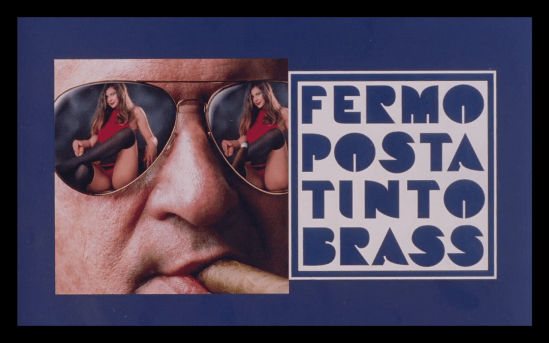
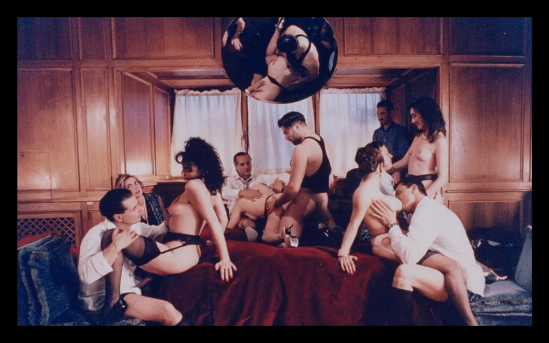
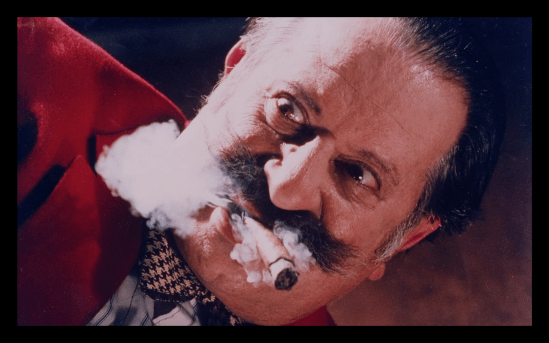
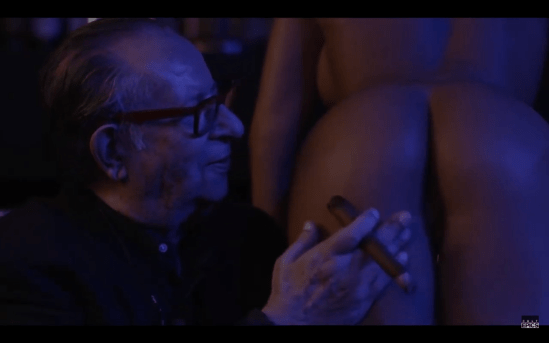
While America became gradually engrossed by the Showtime syndicated erotic drama series, “Red Shoe Diaries,” hosted by “X-Files” David Duchovny that showcased unconnected sensual stories from women who bared it all in heated encounters with male companions, the Italians’, who were experts in erotica cinema that this time, had their very own, slightly more explicit, version released in 1995 in full-length feature form, cleverly titled “P.O. Box Tinto Brass,” from director, and as titular presenter, the erotic master himself, Tinto Brass. Originally titled “Fermo posta Tinto Brass” in the native dialect,” “P.O. Box Tinto Brass” arrives on a new and restored 2-disc Blu-ray release from Cult Epics and acts as a celebration on not only the filmmakers’ immensely arousing body of work, but also a celebration on the director himself who has the uncanny ability to unearth the hidden away desires in all from his tongue-and-cheeky intimacy story arcs that relieve suppression for exploration of our natural sexual ambitions without the culpability instilled by taboo cultures. Granted, some of the material presented might feel dated and not as salacious as every John and Jane Smith can now utilize their God-given bodies to amass a modest fortune across the world wide web of sex, but to understand today’s culture, which still seems a fair share of sexually oppressive forces, we must look at Tinto Brass’s gift in normalizing what once was bedroom only material. Brass, who sport smoking a signature cigar throughout the film, uses his platform and becomes the vessel of expulsion to remove the privacy and shaming barriers that hinder healthy sexual appetites and, literally, creates a tactile representation of sexual jubilee with little-to-no seething judgement other than that of the character’s own restrictions. There are a ton of Brass trademarks shots that include, but not limited to, the hairy vulvas, a playfulness toward the vagina, exhibitionist flaunting, loads and loads of butt and breast angles in and out of clothes, elaborate location patterns on a grand, maybe art deco, scale, and, perhaps his most notable trademark, the expansive range of setting up elegant shots reflected off mirrors. As a whole, “P.O. Box Tinto Brass” brings a lighthearted and free atmosphere that’s uninhibited and sexy during and between each segment and while Brass is no doughy-eyed David Duchovny, I would be remiss in the lascivious eyes of Tinto Brass if I didn’t mention that after immersing ourselves in the “P.O. Box Tinto Brass” anecdotes, me and my wife had the most passionate, free verse sex we ever had since we’ve tied the knot 8 years ago, an experience that’s akin to an economically-friendly version of sex therapy. Thank you, Maestro!

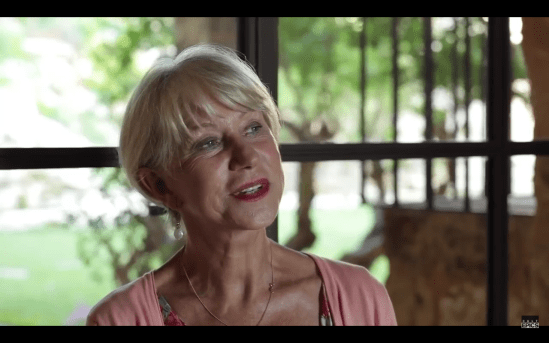
This leads us into the second disc of this Cult Epics epic release with a 2013 documentary, entitled “IsTintoBrass,” from a longtime Tinto Brass colleague and good friend, Massimiliano Zanin, who delves more into Brass’s political, experimental, and monumental work compositions that shaped the director into who is now the renowned eroticism auteur with a belief and a slogan that the ass is the window into the soul. Thought being born, bred, and flourish as an Italian filmmaker, “IsTintoBrass” speaks volumes about his French influences and his life guiding time at the Cinémathèque Française in Paris where he met Henri Langlois and Lotte H Eisner who exposed Brass to rare, unseen films His time Cinémathèque Française afforded him praise on his first films, such as “Who Works Is Lost” and “Attraction,” that were to the likes of French directors like Jean-Luc Godard and were labeled as a blend of part French New Wave movement and pop cinema. Zanin guides us through Brass’s continuous battles with censorship boards whose biggest problem with his filmic formations was not the nudity, but the supposed transgressions against conventional cinematic norms, especially with “Salon Kitty” that was an atypical example against the latter half of his career and used sex as a means of power of another person. His entrenched struggles didn’t end there as the documentary also shed lights on filmmaker’s most controversial work, “Caligula,” which became not his work due to a an underhanded producer who decidedly desired more sex than story and fought Brass, in more than one court of law, for the rights. Notable friends, colleagues, and film critics go through the eclectic Tinto Brass timeline, recalling and reexamining his decisions and aspirations into a multinational praise of his work. Some of these speakers included Franco Nero (“Dropout”), Helen Mirran (“Caligula”), and Sir Ken Adams (“Salon Kitty”). Plus, there is plenty of T and A to go around,

If Tinto Brass didn’t have a stroke in 2010, Zanin’s documentary wouldn’t have been made three years later as it’s a highlighted tribute of one remarkable Italian filmmaker’s life achievements stemmed from something as terrible as a life threatening ailment; yet, that’s how these things usually go, right? A retrospective acknowledgement, usually overwhelming positive in general, of a great artist whose work is greatly admired, frequently in a posthumous manner. In this case, Zanin saw fit to encase a historical record on Tinto Brass before meeting his maker, beginning with a really vigorous look into his inspirations at the Cinémathèque Française, chalking up much of his earlier work to his time spent looking through reels upon reels of avant garde films, but then Zanin quietly fades out of the path that elevated Brass as the cherished erotic connoisseur. Zanin’s story takes this awkward tangent to only skim the surface of Brass’s erotic films, which is strange since Zanin’s known and collaborated with Brass the last 20 years, about 13 years when this documentary was released, and penned a pair of his Brass’s saucy scripts, “Cheeky” and “Monamour.” Yet, the last 20, if not 30, years is surprisingly fleeting in Zanin’s capsulated effort to immortalize Tinto Brass. Still, the overall film is perhaps more endearing than Tinto Brass would have ever imagined, especially as brash and as perverse as his image portrays him outside the parameters of the filmic dome. Inside that dome, Brass has obtained throughout the decades a following of professional admirers and adoring fans who see him for what he truly is, himself. “IsTintoBrass” isn’t a gratuitous or perverted exhibition of an old man’s horniness; it’s an intoxication of what it means to actually be free from the repressive nature of censorship, the rapturous high of being an unchained artist, and being an obsequious master craftsman of cinema.

Cult Epics delivers a 2-disc limited edition Blu-ray of Tinto Brass’s “P.O. Box Tinto Brass” and Massimiliano Zanin’s “IsTintoBrass.” “P.O. Box Tinto Brass” has been newly restored and re-mastered in 4K high definition from the original 35mm negative and presented is a widescreen, 1.85:1 aspect ratio. The picture is absolutely stunning that revels in the burst of primary colors Brass was keen to implement. The details and the tones on the naked skin flesh out every beauty mark, fiber of hair, and every pore. Typically, Tinto Brass films run purposely a little soft to create a dreamlike, if not fantasy-like, setting to obtain a jovial mood setting for the uninhibited moments, but the details are still strong throughout. “IsTintoBrass” is presented in a widescreen, 1.85:1 aspect ratio, from a 2K transfer scan of digital video, aside from the snippets of Brass’s work. Video presentation is like crystal that obviously wouldn’t distinguish any kind of transfer anomalies because there wouldn’t be any. The Italian language 2.0 Mono LCPM/DTS-HD Master Audio 2.0 Mono (“P.O. Box Tinto Brass”) and the DTS-HD Master Audio 5.1 Surround (“IsTintoBrass”) are clearly discernible in all regards, especially in the Tinto Brass directed feature form ’95 with a clarity in the speech, a softer ambience that supports the dialogue rather than be level with it or overwhelm it, a range that mingles to support the dialogue as well. English subtitles are available on both discs. To smooth off any rough edges is a score by Riz Ortolani (“Cannibal Holocaust”) with a vibrant, cheeky score that fits perfectly into Brass’s wheelhouse of curvy, adventurous women. Bonus features on the first disc includes a 2003 interview with Tinto Brass who gives a brief background on his cinematic start, poster and photo gallery, and the trailer. Disc 2’s bonus material includes an interview with writer-director Massimiliano Zanin providing his reasoning for this documentary, a Tinto Brass achieve photo gallery, a couple of short interviews praising Brass’s passion, and trailers The package is also a work of art sheathed inside a cardboard, black and blood red slipcover and inside the casing is a 48-page booklet of Gianfranco Salis stills from the Tinto Brass achieve which are beautiful and almost Playboy-esque. To experience Tinto Brass is invaluable enough, but to experience his films in high definition is without a doubt worth it’s weight in gold with the powerhouse release of “P.O. Box Tinto Brass” and a retrospective documentary “IsTintoBrass” from Cult Epics!

Check out the LIMITED EDITION “P.O. Box Tinto Brass” release!

Syfy’s “Z Nation” S1Ep4 ‘Full Metal Zombie’

fullmetalzombie

Another episode of Syfy’s “Z Nation,” and another great night of television. Z Nation just keeps getting better and funnier. Doc, played by Russell Hodgkinson, plays the lovable, father-like, product of the 60’s survivalist whose one liner deliveries get me rolling with laughter every time and as Doc learns more about the zombies of his post-apocalyptic society, he learns more about his friends. I’m talking about 10K and his backstory with his deceased father and the promise 10K made to him. You learn something new about each character every week it seems. We’ll have to catch next week’s episode to find out more.

Also, fucking Bill Moseley made a special guest appearance. Yes, that just happened. Moseley’s character is a one and done of an gone-batshit-insane general holding a last stand building in McClean, Virginia. Our survivors are looking for air transportation and the information received was that the general had a helicopter. Things don’t look bright as the general has lost, not only his men, but his marbles. Mr. Moseley is fantastic as always with his iconic badgering and his unique voice. More screen time could have made warranted for a legend like ‘Otis Firefly,’ but overall ‘Full Metal Zombie’ is a solid episode. The special effects get crazier, the story lines get whackier, and the gruesome fun just gets funner.

Now, bring on Znado!

Judgment of Evil Looks: “Blackbird” review!

blackbird1

Columbine. Your first thought? I bet your first thought is a Columbine high school massacre of 15 students and teachers in April of 1999. Two armed to the teeth individuals walk into a school wearing trench coats and black clothing giving the look of Goth a bad name and forever giving the once questionably fashionable outfit of the early nineties stigma of hate, anger, revenge, and murderous intentions. The film “Blackbird” explores what happens when fear takes over a community because a Goth 15 year old boy makes insubstantial threats among his peers. His life is forever changed because he dresses the part of historical mass murders and lives in a cycle of despair because his right to freedom of speech is revoked by just a few expressive words written on a blog.
vlcsnap-2014-10-01-17h43m20s179
Sean is an outcast. His black, satanic laden clothing, thrash metal music, and pacifist persona make him an easy target for popular kids, say the entire hockey all star team. When popular hottie Deanne shows interest in Sean’s life, the angst of high school becomes more of a burden upon Sean’s shoulders Deanne’s boyfriend threatens him. Sean’s counter threats go public and he is thrown into youth detention center by a community who fears a school-shooting massacre. From then on, Sean is force to conform and lie about who he really is and tries to regain his dignity and self from in and out of jail and in a community that fears him.
vlcsnap-2014-10-01-17h43m39s113
Bravo writer-director Jason Buxton for producing a freshman film that is powerfully anecdotal, well performed by young actors, and well down in a production sense. Lead actor Connor Jessup serves as a force driven by his bottle emotions in the character of Sean. Jessup, who might remember as from TNT’s sci-fi series Falling Skies, harks up being a gothic pacifist as if he was one himself. Another stand out actor is Alex Ozerov as the relentless youth detention center bully Trevor. These two actors, plus a just as equivalently strong cast with Alexia Fast and Michael Bule, represent a strong contingency of intermediate Canadian actors that need more international exposure.
vlcsnap-2014-10-01-17h44m56s116
While Blackbird doesn’t rely on major effects, the captivating storytelling is worth the price of admission. There are numerous underlying issues in Blackbird that are current in today’s world which makes this film so compelling and interesting. Topics like bullying, being true to yourself, high school shootings, parenting, and the broken court system are just a few of many touched upon and exploited for our own good. We, as people, can learn a lot from Blackbird. We can all relate to being bullied and being the bully and facing all the consequences in between.
vlcsnap-2014-10-01-17h45m15s49
This multiple festival award winner is being released on VOD platforms and on DVD home entertainment by Breaking Glass Pictures on October 21st here in the States. This release should be a big win for Breaking Glass and a big win for whomever goes and grabs a copy.