What Russian EVILS Lie Beneath in “The Lair” reviewed! (Acorn Media International / Blu-ray)

“The Lair” Has a Deadly Secret!  Blu-ray Now Available!  

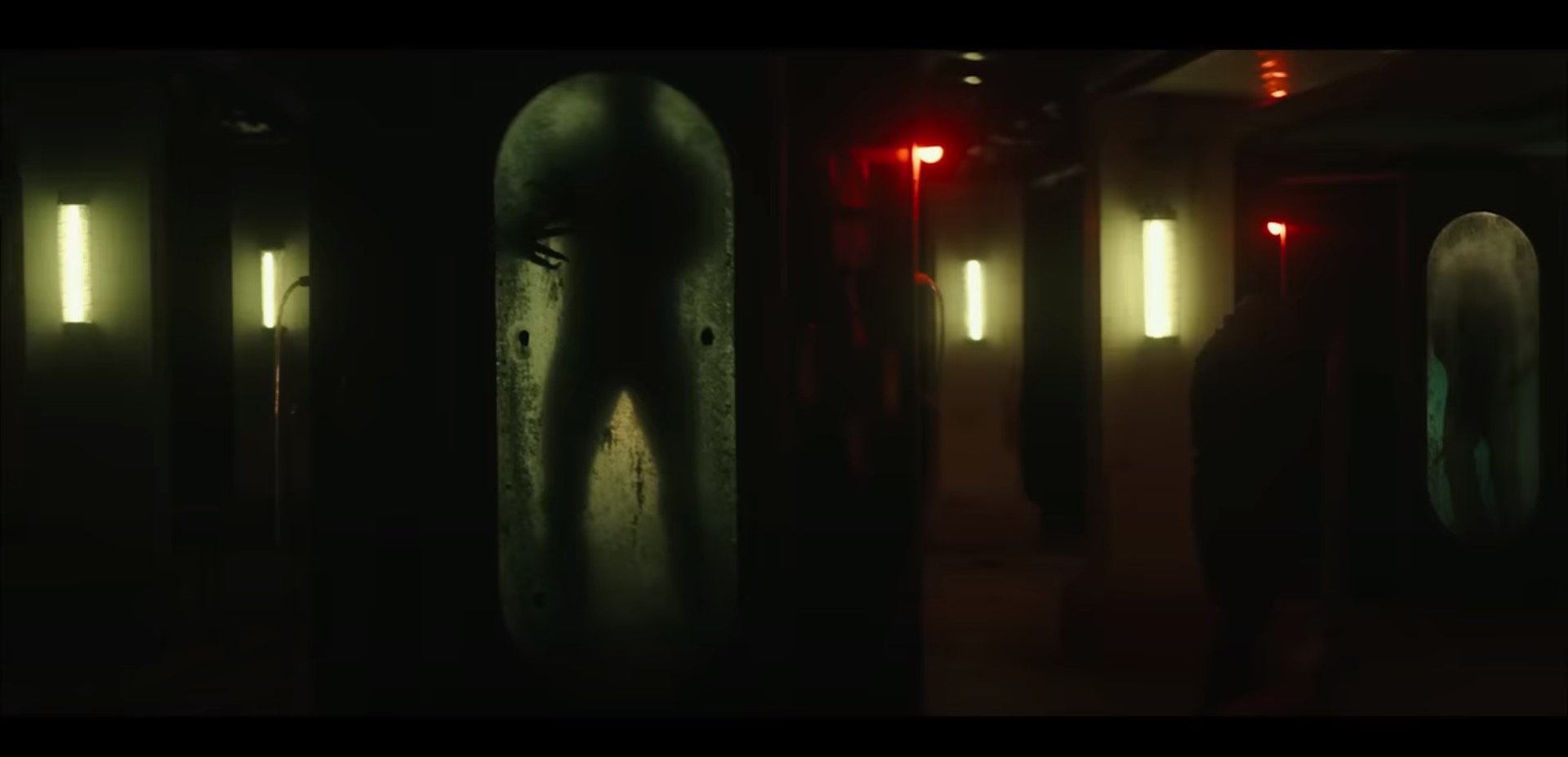
Royal air force Captain Kate Sinclair is shot down over the arid planes of Afghanistan.  Swarming with Taliban insurgents and her command officer killed, Sinclair takes shelter in an old, abandoned Russian bunker from the Russian Afghanistan invasion of the 1980s.  What she stumbles into is an experiment lair housing numerous stasis chambers and dark secrets.  Sinclair manages to barely escape with her life when one of the creatures inside the capsules is released, tearing to shreds her well-armed pursuers.  Rescued by a ragtag team of U.S. military outcasts based in the middle of nowhere as peripheral punishment and joined up by a trio of British special forces in the area, the Captain attempts to warn her rescuers what’s out in the desert only to be on the receiving end of a monstrous invasion that sees the slaughter of nearly everyone in camp, including the camp commander.  Miles from anywhere and not enough supplies to withstand another attack, those soldiers left alive band together to stage their own last stand assault on the creatures’ Russian bunker lair to ensure hostile eradication.
Acclaimed horror director Neil Marshall (“Dog Soldiers”) returns to his roots with a claustrophobic, high-energy, and violent creature feature known as “The Lair.”  Having experienced underwhelming success with the fiery Dark Horse antihero “Hellboy” remake in 2019, Marshall returns to independent scene for the 2022 released film having been shot in the barren lands of Budapest, Hungary to create the illusionary Afghanistan territory backdrop.  Marshall co-writes the script with “The Lair” star Charlotte Kirk, a reteaming affair from Marshall’s last feature “The Reckoning” from two years prior in which Kirk also produced and starred.  Also returning from “The Reckoning” and into the producer’s chair is Daniel-Konrad Cooper along with “Infinity Pool” producers, Jonathan Halperyn and Daniel Kresmery, and “Lords of Chaos’s”, Kwesi Dickson in this Shudder exclusive collaboration from Rather Good Films, Scarlett Productions Limited, Highland Film Group, and Ashland Hill Media Finance with Neil Marshall and Peter Shawyer’s private equity investment group, Ingenious Media, providing financial support.

Star Charlotte Kirk and Neil Marshall have a seemingly natural rapport that has transposed well from their collaboration on “The Reckoning” to the “The Lair,” crossing subgenre that involve the equivocal occult to a more plainspoken physical presence of foreign experiments gone wildly bloodlust.  Instead of being hunted by a 17th century witch hunters just for being a woman saying no to man, Kirk steps into a role of authority as military captain with loads of smarts and adept at close combat as she’s being, once again, chased by predators, but these uber-predators are unearthly, unremorseful, and ugly.  Marshall provides just enough character backstory for understanding the stakes and strengths of each of them but to reach a little more into their history might have been key to stronger motivations and for something to prove in not just being jarhead screwups.  Sinclair finds commonality and sympathy from Sgt. Tom Hook (Jonathan Howard, “Godzilla:  King of the Monsters”) who bears the guilt of losing men in battle and punishes himself to do better.  Psyche profiles for each soldier makes them rise above being flat by providing depth of flaw but what is vexing and irking about each, and this element may very well be intentional as an international thespian bout of poking fun, is the cast is nearly all British playing Americans with stereotypical drawls, ebonics, and punctuating southern accents so overexaggerated it’s downright sickening to hear, like watching a bad old war film, but what’s even worse and what drives a sharp claw talon into the inane heart of trite-tired audiences is the group slow walk before embarking into the battle of no return.  Again, this might be the work of intentional satire.  Some accents are gargantuanly worse than others, such as with “Titanic 666’s” Jamie Bamber’s pirate-patched Major Roy Finch and the Mark Arend’s Carolina-born Private Dwanye Everett.  From there, the elocution grades get better with less cliché but not by much with a cast rounding out of Leon Ockenden (“The Reckoning”), who I couldn’t understand because his accent was so Scottish-ly thick, Troy Alexander, Mark Strepan, Hadi Khanjanpour, Kibong Tanji, Adam Bond, Harry Taurasi, and Alex Morgan.

Neil Marshall not only returns to his horror origins but he also returns to the heyday of prime practical effects with inset creatures of a spliced appearance between the build, the dark full body achromia, and the facial configural layout of Marvel’s extraterrestrial antihero Venom with the eye-less, tongue-lashings and grabbings of Resident Evil’s staple adversaries, the Lickers.  Obvious a man in a prosthetic suit, the simplistic, brawny-framed humanoid basks in nostalgia despite being in a modern day movie, pining for the days when large or small men in full body, head-to-toe, terrifying imagery suits were the antagonists of our youthful nightmares while also providing the cast something to act against for a more realistic and rancorous on screen rendezvous.  The smaller scale production limits Marshall’s possibilities with his Kevlar-fleshed and razor-toothed creatures but the veteran director sells every act of “The Lair’s” story with trenchant action with hardly any downtime to catch one’s breath in between because the next blood-laden blitz rollout is upon us in a blink of an eye.  Between the action, the anomalous characters, and the pulsating, downbeat synthesizer score that courses through its veins, “The Lair” leans itself toward being a callback to the late 80s-early 90’s last stand dogfight subgenre and you can’t one second cease your attention for a director who appreciates the narrative surprise more than anticipated predictability.

Become lured into “The Lair” now on Blu-ray home video from Acorn Media International, a UK distribution subsidiary of RLJ Entertainment.  The AVC encoded, 1080p high definition release is presented in a widescreen 2.35:1 aspect ratio.  The BD25 offers sold flexibility for a film with hefty amount of night shoots and action as potential compression problems seem to stay at bay without any severe noticeable banding, blocking, mosquito noise, etc., however, the details are quite flat with a smoother finish, often in the blur of the fast camera workflow and editing because of the action sequences, leaving depth on characters, as well as in the scene, at arm’s length with monocular vision.  The warm hint of chartreuse embedded grading offers industrials color tones with a rich grit of oxidized bunker steel.  Don’t adjust your audio dial on the release’s English DTS-HD Master Audio 5.1 surround sound track, the dialogue only sounds wonky because its deliberate Americanized dialect set at the forefront and prominent amongst the audio layers which has significant range and depth with explosions, rapid gunfire from different calibers, and the guttural growls of the creatures that echo nicely through the rear and side channels when under the bunker or even affixed in a slightly decreased volume of its form in the attack of the basecamp.  There were no interference blights with the audio track, such as hissing, popping, or other discernible issues.  Special features included only a making-of featurette with clipped interviews during the shoot with director Neil Marshall, actors Charlotte Kirk, Mark Strepan, Jamie Bamber, Jonathan Howard, Leon Ockenden, and others regarding their admiration for the project in different aspects.  Acorn Media’s physical release comes in a slightly larger Blu-ray snapper, typical of the UK releases, with the cover art featuring an up-close and personal look at the creature’s ugly mug.  The same art is also on the disc with no insert inside the snapper case.  The release comes region B locked with a runtime of 97 minutes and is certified 15 for strong gory violence, language, and threat.  If you can stomach the fatuity at times, “The Lair” is a fast paced and staunch creature feature with a bunker full of gore.

“The Lair” Has a Deadly Secret!  Blu-ray Now Available!  

The Stillness, the Quiet, and the Darkness evokes EVIL to Home In. “Skinamarink” reviewed! (Acorn Media International / Blu-ray)

The Kids Aren’t All Right in “Skinamarink” on Blu-ray!

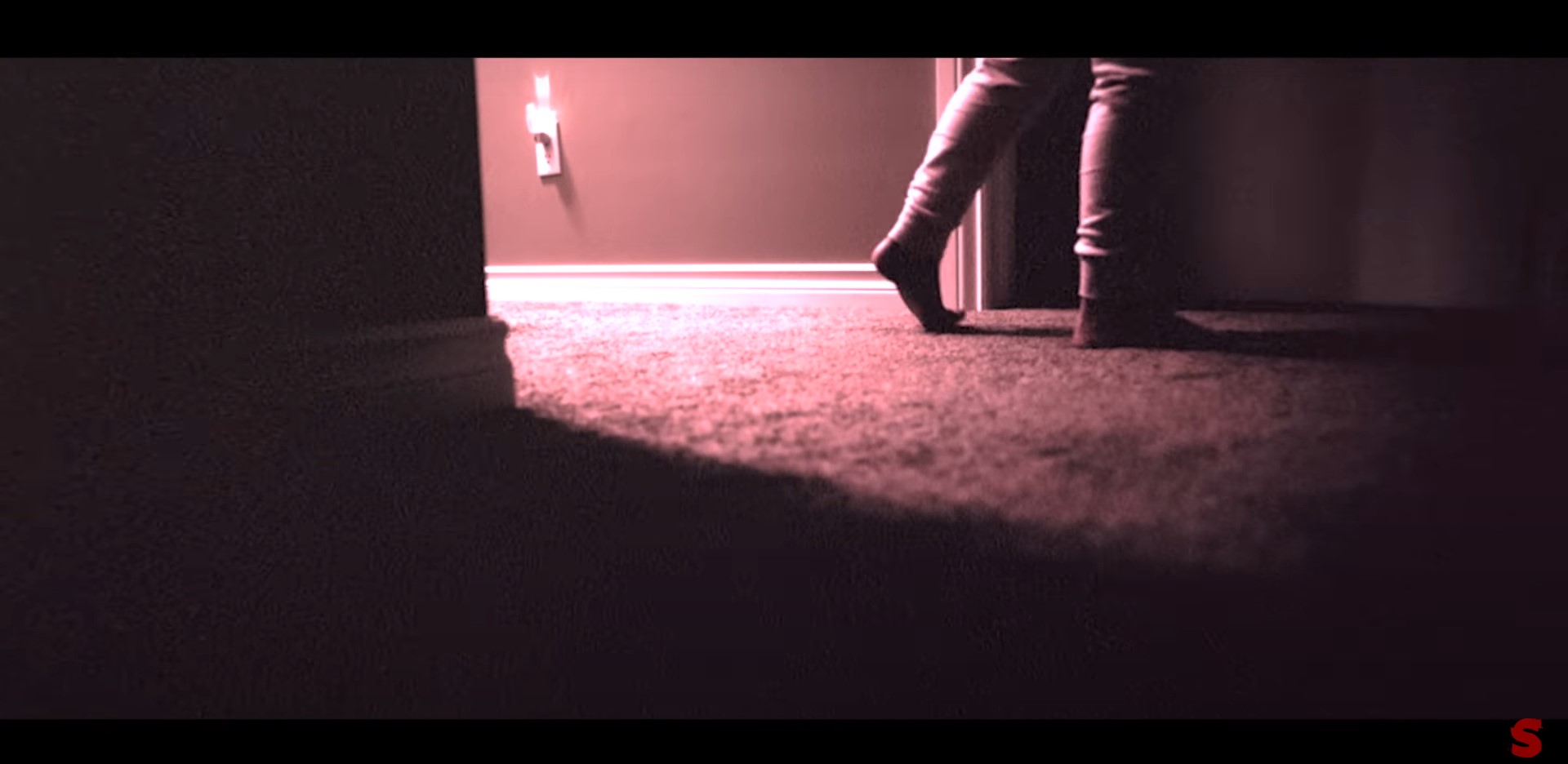
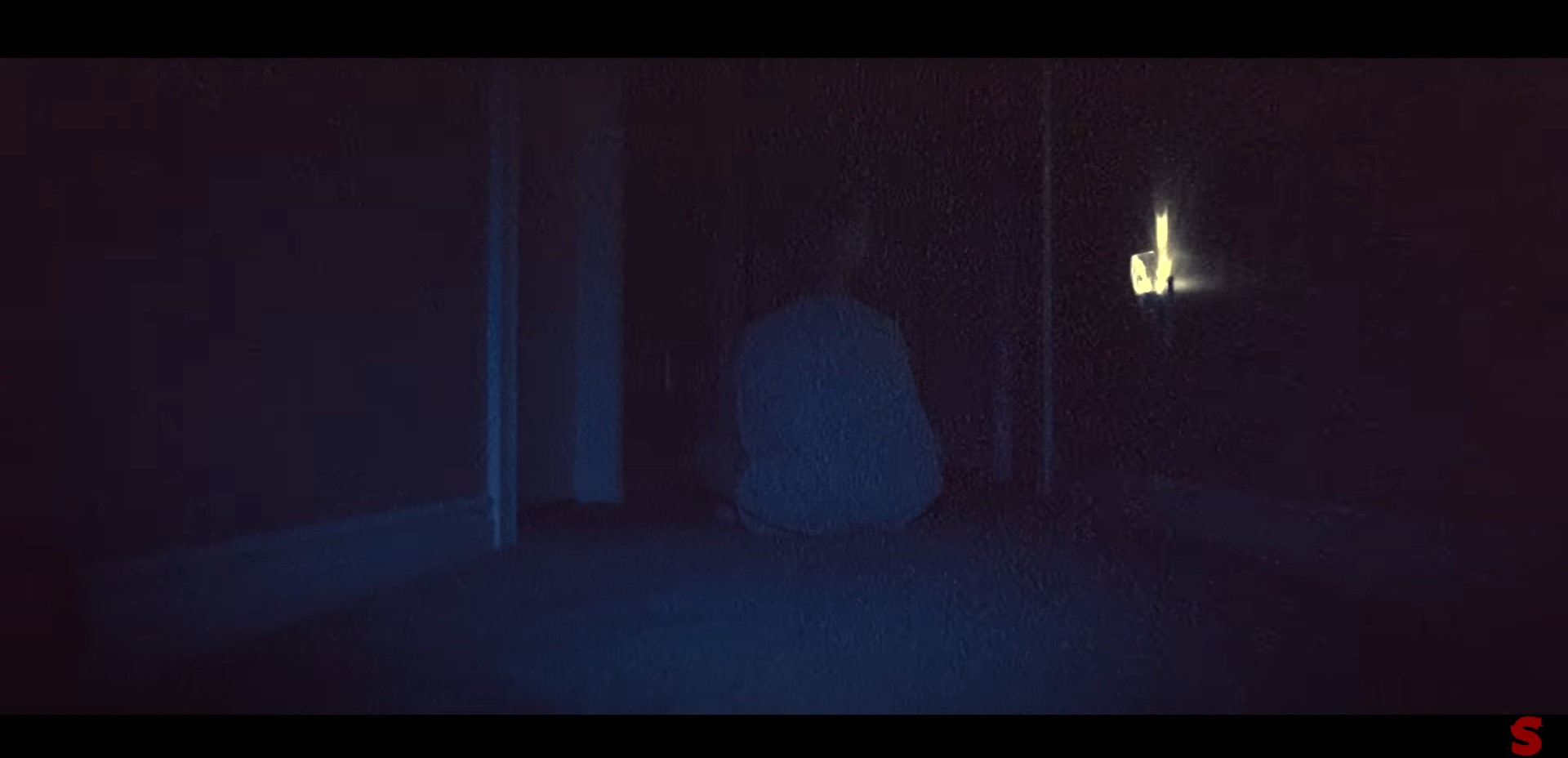
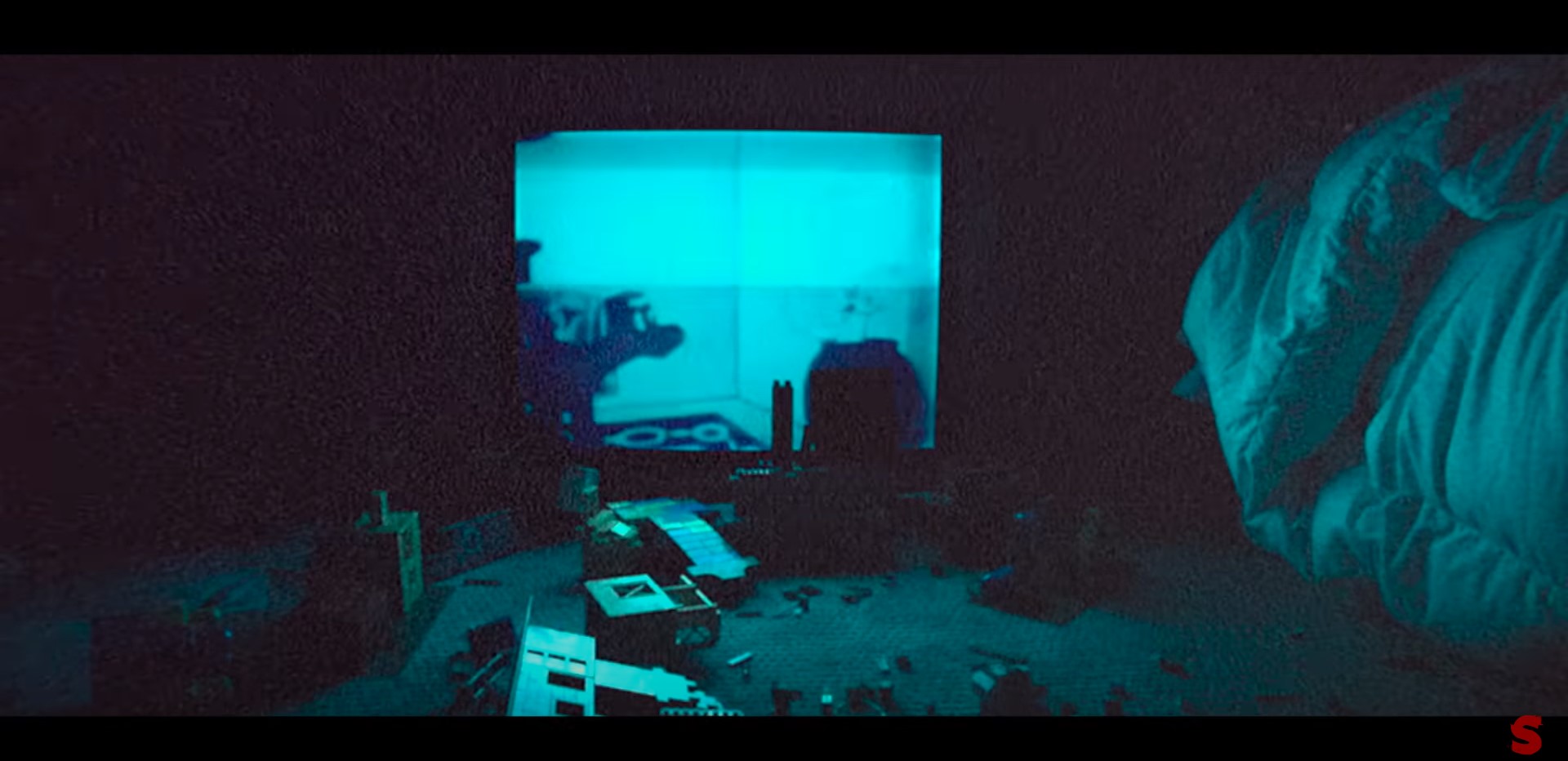
A night of silence is disturbed when a young boy, Kevin, falls down the stairs of his two story home.  Rushed to the hospital to return to the same silence-soaked house, the restless boy and his sister Kaylee search for their dad who has suddenly vanished from his bedroom.  Doors, windows, and even the bathroom toilet has strangely disappeared right from sight.  Feeling scarred under the cover of isolated darkness, the siblings head downstairs to sleep on the couch softly lit b0 the fluorescent glow of the television set.  As they watch old cartoons, crayon, and build with large Legos, while catching a few ZZZs in between, strange noises resonate through the home, floor based objects are found stuck onto the walls and ceilings, and a twisted, omnipresent voice slips the siblings commands that exposes them the darkness from within the house.

Schismatically different from any other spine-taut chills ever experienced before, Kyle Edward Ball’s written-and-directed 2022 Shudder exclusive “Skinamarink” is no joyful and innocent children’s song in the filmmaker’s debut feature film.  Based and expanded upon Ball’s 2020 short film entitled “Heck,” viewers will be enveloped and swallowed by the very core of childhood fears that plays like a fever dream, or a distant nightmare, where faces are a blur, spatial direction is nothing more than theoretical concept, and the voices around us are distorted, muffled, and cold.  “Skinamarink” offers little warmth under constant blanket of darkness and leaves no room for hope when parents are removed from the picture.  What’s Ball leaves behind is primordial and innate terror that rarely can be seen straightforward and lucid.  The Canadian picture, which was filmed in Ball’s childhood home in Alberta, is a micro-budget production of ERO Picture Company, distributed by Bayview Entertainment, Shudder, and IFC Midnight, crowdfunded by Seed & Spark contributors and produced by “Texas Road” producer, Dylan Pearce.

Shot over the course of a week’s time, “Skinamarink” works more like CCTV footage recording the static surroundings within the scope of the lens.  The cast is small, rarely visible, and when visible, they are often obscured or never directly focused upon to mint atmospheric dread.  Two parents.  Two children.  A nuclear family becomes the objective of an omnipresent, ominous presence, but there are concerning questions about the integrity of the family that Ball incites with clues of broken household.  Father and mother briefly make an appearance, or with one of them just their voice, throughout the course of the night, restricted their attendance exclusively around the children’s perspective that makes viewers shrink and become engulfed in childish fears – sometimes they are adult fears as well – of the dark and of being separated from parents.  Lucas Paul and Dali Rose Tetreault as kids Kevin and Kaylee kill their seldomly seen performances with the patter of little feet running through the house and up-and-down stairs, their soft, angelic voices whispering to each other and calling out for their father, and when briefly in frame, or at least the back of their heads, they manage to complete the succinct shot just in the way Ball intends to secrete fear from our every pore amongst the quiet and stillness.  “Skinamarink” is not a character-driven film in the least as Ball cherishes a chilling atmospheric horror so father (Ross Paul, Lucas’s real life dad) and mother (Jamie Hill, “Grotesque”) receive what essentially is cameo roles to establish a feeling of lost when they’re gone and are perhaps the easiest roles the two actors have ever taken and turn out to be the most eerily effective on screen and over the audio track.

“Skinamarink” experiments more with surroundings, audio and visual senses, and common inborn anxieties rather than progressed by traditional methods of character dynamics and that is where the film will be conflict-ridden and divisive amongst the niche group of diehard horror fans.  General audiences will find “Skinamarink” to be a bore without much popcorn pageantry to keep short-attention spans entertained and a disembodied villain.  Slow burn horror usually has an elevated element to it and Kyle Edward Ball certainly incorporates an open for interpretation access door for the deep-dive genre conspiratorialists to work overtime on reasoning and explaining “Skinamarink” to the masses still trying to process what they just experienced themselves after watching the film.  Theories will run amok with the most prominent being Kevin’s fall that reduced him to a coma state and what we experience is all in Kevin’s conscious-cracked cerebrum trying attempting interpret, at best guess, the dissolution of mom and dad’s relationship.  Again, this is just a theory as Ball aims for ambiguity to fester fathomable, one-solution explanations.   Perhaps in a type of narrative the world is not ready for, but in my opinion, “Skinamarink” fills in what is void from modern day horror, a uniquely fresh and chance-taking pervasive eidolon scare package to revitalize genre numbness with slow burn phobias.

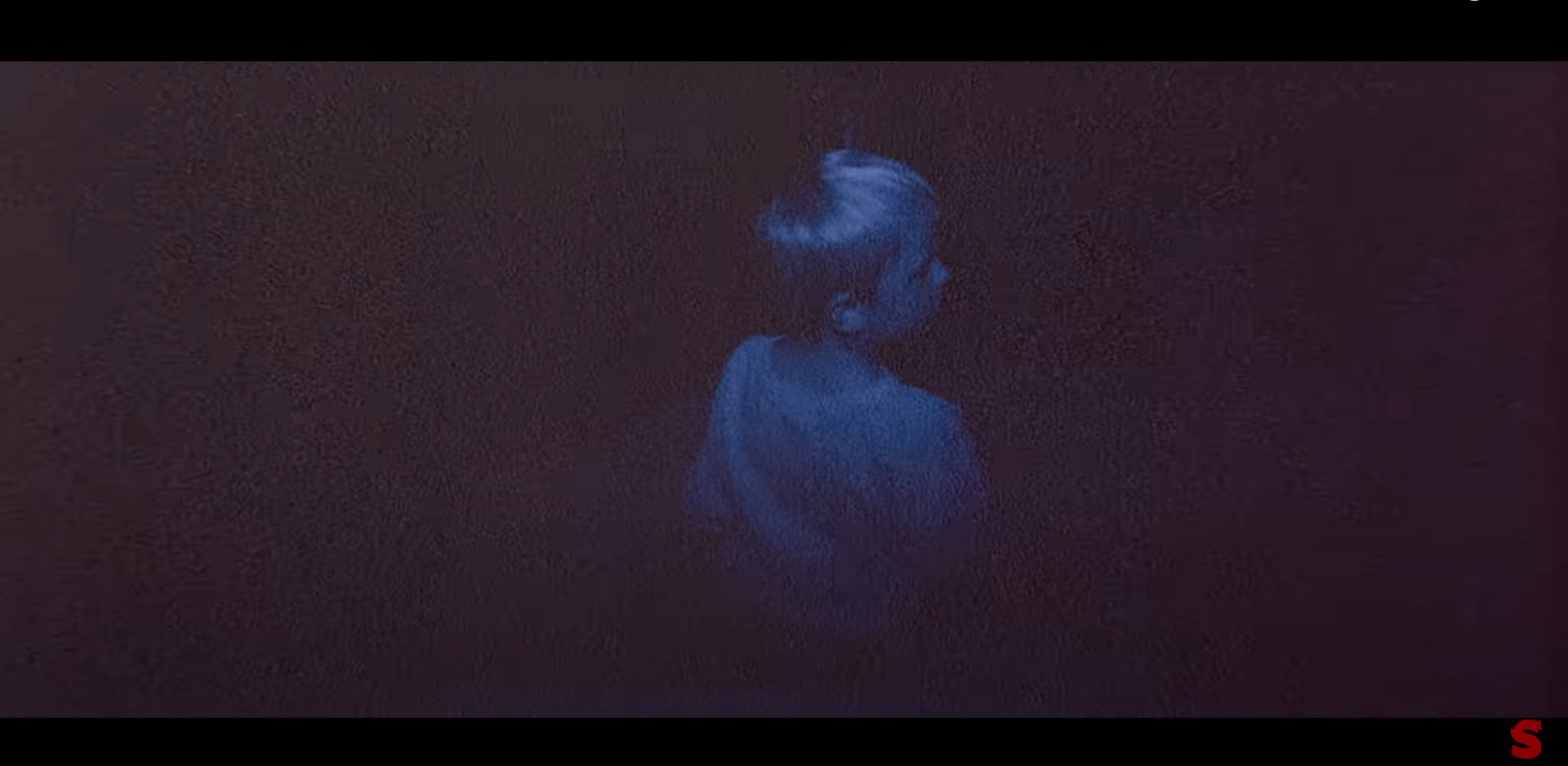
An original parapsychological paralyzer, “Skinamarink” arrives on a Blu-ray home video courtesy of Acorn Media International, the acquired UK distribution company of RLJ Entertainment.  Presented in a widescreen aspect ratio of 2.39:1, the AVC encoded BD25 sustains a purposefully intended lo-fi A/V feature, set to the date tune of 1995, much like when SOV quality films were abundantly popular because of their cost value and accessibility.  If you’re expecting depth of detail, you won’t get it from “Skinamarink’s” dense static approach that all but eliminates object definition.  Delineation is scarce to an effective scare tactic to which Ball tones the film; yet, the static is not, for lack of a better word, static as the current changes within the blips, increasing and decreasing visibility for desired poltergeist potency, if poltergeist is what we want to call it.  Set entirely in nighttime, sleepy home, the basking glow of tube television is the only semblance of color that emits a faint blue luminous while antiquated cartoons provide flat caricature coloring.  Certain scenes are shot in obvious night vision with the spherical focus that becomes unnatural in the frame, but there’s really nothing natural about Ball’s auteur style.  The lo-fi style choice continues into the English DTS-HD 5.1 surround mix that doesn’t exercise every channel.  Instead, we’re back to canned content with intentional hissing, popping, and distorted tracks.  Aside from a couple of innate audio recordings of a squeaking closet door, all the other ambient audio and dialogue is done after the fact in post-production to be rendered appropriately misshaped and muddled.  There’s also no score, retaining realism of a hushed house sound design to pay heed to soft footsteps and other delicate and mortifying milieu noises.  Depending on your audio setup, subtitles may be your friend here as the whispers are so low, they’re nearly inaudible.  There are a handful of scenes that have burned in English subtitles for that very reason, but full menu English captioning is available too for the minute amount of dialogue.  Special features only include an audio commentary track with the director and director of photography Jamie McRae.  Acorn Media’s release mirrors the U.S.’s RLJ Entertainment’s Blu-ray with the exception of a slightly thicker Blu-ray snapper. The front cover denotes essentially what to expect in the future, a low-resolution and a blue-toned, dark, inverted screenshot image of the young boy; this scene also translates to the disc art.  Encoded with a region B playback, “Skinamarink” comes UK certified 15 for strong horror and sustained threat in its 100-minute runtime.  Take my advice:  there’s nothing quite like “Skinamarink” outside the experimental gallimaufry but it’s sleepy time nature should not be viewed at the late-night weary hours or else it’ll lull you into a nightmare of your own.

The Kids Aren’t All Right in “Skinamarink” on Blu-ray!

On the Verge of a New Millennium, New Faces and Stories Tell Their Terror on the Same Old EVIL Video Format! “V/H/S/99” reviewed! (Acorn Media International / Blu-ray)

Found Footage is all the 90’s Craze These Days! “V/H/S/99” Available at Amazon!

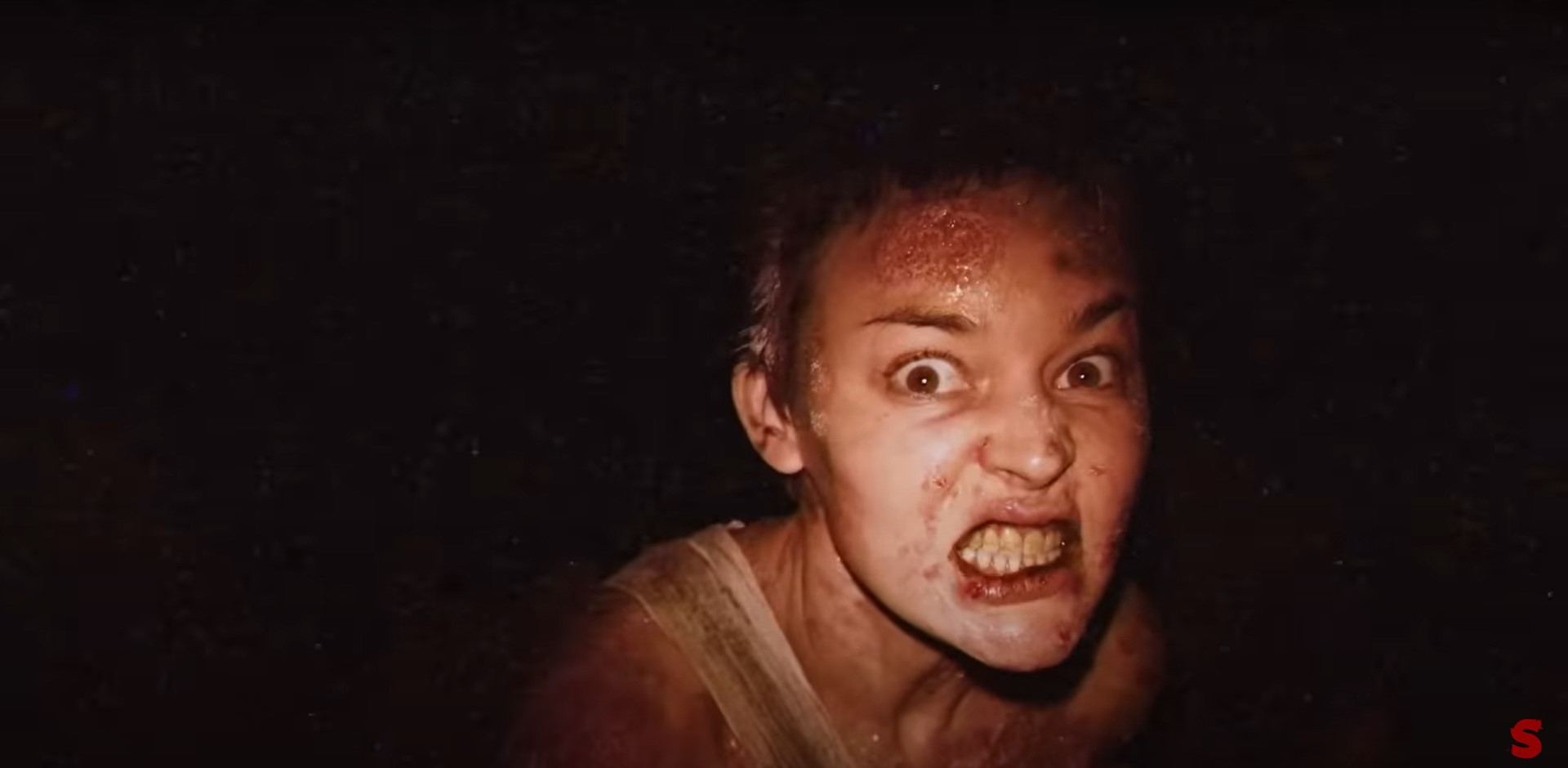
The year:  1999.  The format:  VHS.  The theme:  The most horrifying experiences caught on found footage camera.  A horror anthology for the turn of the century puts together five of the most terror-drenched short films that resurrects the punk-rock dead, turns urban legends into vindictive playthings, televises Lovecraftian game show frights, peers into the stone-cold eyes of a Gorgon neighbor, and goes to Hell and back!  All caught on camera from a first-person view as VHS vicariously relives the glory days through a digital world, capsulated by the horror realm and all its fanatical acolytes for the analogue video format to live undead forever. 

Living in the age of a VHS comeback is admittedly kind of weird.  VHS has become a hot collectible, especially and obvious the rate and obscure that mostly resides in the horror and cult genre.  Most recently, a discovery on a Brazilian VHS cut of Jaws 2 has a couple of minutes of shot footage that no other release holds to this day.  That, being just one example, is sought after power of VHS that saw various versions of one film be disperse far and wide across continents, which the same could be said about DVD that too saw a variety of different cuts due to the diversity of playback formats, distribute cuts, and numerous levels of censorship between countries.  VHS is also making a comeback in format style with gritty, faded, flat colored image veneer and tracking lines and the absent transmission signal of snow statically adorning the screen with beautifully hypnotical and flickering white dots.  So, it’s now surprise that on the heels of 2021’s “V/H/S/94,” another analog anthology is greenlit in 94’s wake with “V/H/S/99” for 2022, written and helmed by newcomers to the series but not necessarily newcomers to the horror scene.  The movie’s sequential lineup Is as follows:  Short filmmaker Maggie Levin writes-and-directors “Shredding,” taking a break from killer sharks is Johannes Roberts to oversee his “Suicide Bid” entry, musician Flying Lotus directs and co-writes with Zoe Cooper with “Ozzy’s Dungeon,” “Tragedy Girls’” director Tyler Macintyre writes-directs “The Gawkers” along with co-writer and fellow “Tragedy Girls’” screenwriter Chris Lee Hill, and the husband and wife tag team of Joseph and Vanessa Winter, filmmakers of “Deadstream,” helms-and-pens “To Hell And Back.”  The Shudder exclusive series latest is produced by Josh Goldbloom (“V/H/S/94”), David Bruckner (director of “Hellraiser” ‘22), Chad Villella (producer of the of 2022’s “Scream”), Bloody Disgusting’s Brad Miska, and “Scream” ’22 and “Scream VI” director Matt Bettinelli-Olpin under the production banner of Studio 71 and presented by Cinepocalypse Productions and Bloody Disgusting.

A new set of five tales of analog rendered terror invoke a new set of actors in each short film that carrier with them a broad range of experience. While a couple of the stories shred the narrative with hectic editing (I’m looking at you “Shredding”), performances throughout come over with blistering consternation and definitely a late 90’s grunge attitude with “Shredding” and “The Gawkers” delivering the full blunt force of period, heckling away in their baggy clothing, bohemian hairstyles, and a penchant for skateboard thrashing. The other films are merely timeless with only mere mentions of date, or their timestamped on the video tape recording, or are just a thematical proverbial nod to the specific point in time, lacking the keep it real essence that is quite idiosyncratic to the hop from a phasing out decade and into a whole new other. The cast of these shorts play their roles with exuberance and wackiness, which if you have lived in or can look back to the converging decades/millennium and see some of the gameshows or cultural shenanigans that defined America as people or, if you want to go smaller, just the pop culture, wacky is a pinpoint descriptor. The short films’ of “V/H/S/99” are comprised of a cast including, selectively, Steven Ogg (“The Walking Dead”), Ally Ioannides (“Synchronic”), Keanush Tafreshi, Jesse LaTourette (“There’s Someone In Your House”), Dashiell Derrickson, Isabelle Hahn, Sonya Eddy (“Blast”), Emily Sweet (“Castle Freak” ’20), Melanie Stone (“Deadstream”), Archelaus Crisanto, Luke Mullen, and Ethan Pogue.

Anthologies have been around for decades and are a great medium to showcase a multitude of individual storytelling from a variety of filmmakers walking different paths in life.  Fans can often salivate over these types of jump-the-shark formats that can start off with the zombie undead, transition 10 minutes later into a supernatural spooky, and then segue into a creature feature with a wraparound bonus story that may or may not connect them all and squeeze each episodic terror vision in a full-length feature runtime.  Though I enjoy a good collection of short and sheer frightful films, anthologies are not my cup of sanguinary tea.  Hopefully, no partisan takes seep out of this review as I attempt to examine “V/H/S/99” objectively.  Out of the five segments, three have landed strong with a right amount combination of style, gore, performance, narrative logic, and, of course, terror, and if you like comedic sugar in your black cup of horror then “To Hell And Back” is a perfect Venti-sized, well-blended mulatto of choice that thrusts two dimwitted demonic ritual documentarians into the pits of dark, gloomy, and malformed creature Hell and fight their way back to their own plane of existence.  Though one flaw some make catch when watching the caboose film of the anthology is that it doesn’t particularly reflect 1999 other than the small caveat, which is pivotal to the story, that at the turn of the millennia is when the veil between our world and Hell is as it’s thinnest.  The other two better entries capture more infinitesimally in detail of the late 90s, early 2000s clothing and discourse.  “The Gawkers” taps hard into the weird aggressive hormones of a teenage boy while exploring the newfound ways to use technology as spyware.   Webcams aboard big boxy desktops chauffeur in a whole new way to be creepy that lands them in hot water not by the law but by the wrath of ancient femme fatale of Greek mythology.  Johannes Roberts rounds out the better half with a sorority haze gone wrong that evokes an urban legend to become more than just a story and Roberts “Suicide Bid” offers, again, that period presence that feels like a tribute throwback to the 1998 “Urban Legend” film itself, but adds a supernatural surprise that utterly creepy and not as deep with only 6 feet underground rather than a 47 meters down, the director is slowing raising his fear to the surface.  The shorts left hanging below the bar are “Shredding” and “Ozzy’s Dungeon” and for reasons that have to do with their style and story. “Shredding” promising premise is plagued not by punk phantasms back from the dead but simply pilfered of focus with a hectic, if not severely chaotic, VHS-graded editing scheme that shocks the perception senses while “Ozzy’s Dungeon” is inspired by Nickelodeon’s Legends of the Hidden Temple gameshow where kids have to compete in toned down ancient society games to race up the temple to win the big prize. “Ozzy’s Dungeon” definitely is weird, sadistic, and Lovecraftian-inspired for sure but its story design loses motivation and often cheats rounding the bases in order to reach the shocking climatic finale.

Acorn Media International brings tape to the United Kingdom with a Blu-ray home entertainment release of “V/H/S/99.” Presented in a widescreen 1.78:1 aspect ratio, though doesn’t cater to the standard 4:3 ratio of video tape, the provided image quality purposefully varies to give audiences the titular analog experience. Faded grading, tracking lines, static and that jittery playback is all part of the visual environmental experience and even a few of the filmmakers shoot the film digitally to then run it through VHS to garnish with unnatural base video turbulence. The English DTS-HD 5.1 surround sound mix heightens the exposure and familiarity to of being that person behind the camera as all of these shorts of short POV. Intense and, often, cacophonous, the audio tracks still manage to level out, be discerned, and manage to relay the chaos no matter how much bedlam is thrown at the screen. From the zoom in-and-outs of the video tape recorder, there’s a clean sense of depth and the range is bountiful as the ambient track runs the gamut of omnifarious sounds that give each episode an individualized stamp. English SHD is optional. Bonus content includes an exclusive panel from New York’s Comic Con with guests producer Josh Goldbloom, “The Gawkers'” Tyler Macintyre, and “To Hell And Back’s” Joseph and Vanessa Winter as well as a total arc gag reel. After that encompassing project feature, the girth of the bonus content breaks down into the individual shorts with “Shredding” having a deleted scene and the complete fictious band BitchCat music video, “Ozzy Dungeon” has two deleted scenes, “The Gawkers” has a deleted scene as well as bloopers, camera tests, and The Making of Medusa, and “To Hell And Back” rounds out the features with a hefty look at the raw footage, scouted location, and a storyboard and blocking rehearsals. There are no bonus features for Johannes Roberts’ “Suicide Bid.” Physical features include a slightly thicker traditional Blu-ray snapper, a Europe standard, with a cover art that matches the North American RLJE release, a city being loomed over by skull made out of colorful galactic stars and a pair of video lenses for blank eyes. The disc art is pressed with the same front cover image. Though no mention of a region playback on the back cover, I suspect a region B encoded release as per usual with Acorn Media Interntional. “V/H/S/99” has a total runtime of 109 minutes and is UK certified 18 for strong blood violence/gore. “V/H/S/99” is not my kind of off the heasy subgenre, but the latest series anthology packs a punch and I would never discourage anyone from not experiencing firsthand an homage trip through terror.

Found Footage is all the 90’s Craze These Days! “V/H/S/99” Available at Amazon!