EVIL is a Game Invented by Child and Ran by Clones! “Terminus” reviewed! (Blu-ray / MVDVisual Rewind Collection)

“Terminus” is a Win for the Rewind Collection! Buy it Here!

Super genius boy Mati programs an artificial intelligence RV known as Monster to trek through adversarial armed forces infested territory in a long-haul driving competition to reach Terminus where the winner will receive their weight in gold.  The Doctor, a mad cloning scientist who created the child, aims to subvert the government with Mati’s and the rest of his “unborn” clones under the malicious intentions of his superior named Sir.  When the lone driver Gus, an American woman competing in the game, is imprisoned and subsequently murdered by a ruthless Major after Monster unusual malfunction, Gus is able to pass along the Monster’s accessibility password to her inmate and lover Stump, a compassionate, for-the-people rebel against the military cruelty.  For his love for Gus and to do what’s right, Stump reluctantly joins Monster and a slaved orphan girl to finish the game while the boy genius Mati observes innocently from Terminus, but Doctor and Sir have other plans to use their clones and Monster to subvert government control.  

As you can tell from the synopsis alone, the French-German coproduced, science fiction dystopian actioner “Terminus” makes about as much sense as jumping out of an airplane without a parachute – an exhilarating ride without any understanding from a safety cushion.  Director Pierre-William Glenn, who was born at the height of Nazi-occupied France in 1943, helms the dystopian, futuristic picture from a script cowritten between Alain Gillot, Glenn and Patrice Duvic’s modifications, and Wallace Potts addition of English dialogue.  Glenn, whose main profession is a cinematographer, with a prior 1987 select filmography including “Death Watch,” “The Murdered Young Girl,” and “Wheel of Ashes,” removes his eye from the camera viewfinder to being incorporated into all aspects of the production for one of his first feature length films.  Anne François produces the film that was shot much in the landscapes and studios of Bavaria and Hungary under the European coalition of production companies of Initial Groupe, Les Films du Cheval de Fer, Films A2, CBL Films, and Cat Productions.

The script calls for and delivers color characters in a science fictional scope of subversive intentions, mad science, lone wolves, flawed good guys, mysterious pasts, unjustified brutality, and other varietal traits that run the gamut in this wild and untamed neo-revenge and sense of duty narrative.  For Pierre-William Glenn, he likes to color outside the lines, shading layers with precise measure to flesh out their nature, such as with Stump, a bleeding heart, anti-violence, maverick unwilling to see the impoverished and innocent violated by authoritative rule, played by French rock-n-roll singer and actor Johnny Hallyday.  Stump’s story stretches from how he lost his hand to his reasoning for joining the fight for Terminus unlike his companion Gus embodied by a notable American actress, “Indiana Jones and the Lost Ark’s” Karen Allen.  Gus’s is specifically pointed out as American, perhaps only in the U.S. cut, but her background or reason why she plays the game is ultimately lost or never provided in the cryptic conversations she has with stump during their incarceration intimacies.  We don’t even know why Gus is finitely taken out of the game by the callous Major (Dominique Valera) by either the eluding to the Major’s men gang-raping her or just severing her legs.  Again, very cryptic.  Allen co-headlines with the then up-and-coming “Das Boot” breakout star and Berlin, Germany born Jürgen Prochnow donning three roles, beginning with the head villain and red kimono-cladded Sir and his two clowns, the boy-genius creating “Doctor” and his more brutish field task rabbit Little Brother.  “Robocop 2’s” Gabriel Damon plays whiz kid Mati, designer of the game and of Monster whose being manipulated by Sir as a guinea pig for a super army of super smart clones like himself.  Julie Glenn, daughter of director Pierre-William Glen, brings up the rear as slave girl Princess.  While Julie is no princess Leia joining the rebellion, the young actress is kept mostly quiet without much dialogue to give the gradually important character silent with only a couple of defining narrative moments that save the day.  

“Terminus” has the componential makings of a surreal science fiction fantasy with a “Mad Max” tarpaulin overtop a “Flight of the Navigator” dominant core involving an A.I. Monster truck as a sanctioned, and calculating, entity guiding a path through the onslaught of roll caged government vehicles that drive about as good as Stormtroopers shoot.  Clones are at the precipice of usurpation and the international game of drive hard and fast becomes a ploy for the genetic deception, but Glenn can never really harness that energy at the heart of “Terminus’s” well-built special effects, fascinating characters, set locations and production designs that evoke a failed, if not futile, future.  The oppression angle loosely holds the yoke while Sir and his clones barely scratch the surface of being the true villains lurking in the shadows.  Instead, much of “Terminus” is contained around Stump and Monster’s fostering trust and solidifying the key connection between Mati and Princess and what they mean to a semisoft society.  “Terminus” is terribly lighthearted despite the story’s ugliness which is fleeting at best and audiences will not be confident in what they’re watching that have been intended for general audiences or restricted to an age limit as it all depends on which version, either U.S. or European, is viewed. 

Landing as the 66th release on the MVD Rewind Collection sublabel, “Terminus” provides two varying versions on a new Blu-ray release.  The AVC encoded, 1080p high-definition, BD50 is a collaborative release between MVDVisual and Multicom with a spectacular visual palette from a 2K scan of the original 35mm negative.  There are two cuts of the film both presented in different aspect ratios based on country.  The European Director’s Cut exhibits in the Eurpeaon 1.661 and incorporates back into the story all the edited violence and expands upon scenes with more context and accents by a whole 32 minutes, clocking in a total runtime of 115 minutes, comparatively to the U.S. version’s severely cut 83 minutes and is scene re-edited sequences.  The European Director’s Cut is slightly more compressed horizontally whereas for US audiences is more vertically but there’s no overall image loss other than the cuts themselves.  Grain appears and appeases healthily with little-to-no damage on a softer, lower contrast that brightens details but retains good textural value, especially around facial and skin features with equally organic tones.  Both cuts come with a LPCM 2.0 Stereo mix; however, the Euroean Director’s Cut is strictly French with optional English subtitles while the US Version is English with optional English subtitles.  Fun fact:  Both cuts are of the same film but two different shoots as because due to financial obligations and marketing, production had to principal shoot the same scenes in two different languages and thus is why if it looks like Karen Allen’s mouth appears to be saying the French words, she is actually speaking French.  However, both dialogues are a product of ADR so there’s some dyssynchronous between image and dialogue.  Even Monster’s voice is changed radically between the two films with a more computerized squeaky female (or child) voice in the Euro-cut and a hip-hop and slang crafted male voice that’s less robotic.  Both features handle the Stereo about as well as any front-loaded sound output could but a little more power in this track could go a long way with the explosions, crashes, and visual effect audio bytes being less emphasized and underfoot of the dialogue differences.  Encoded special features include a new video interview with Jürgen Prochnow on the film and growing up in the German/US industries, a new We All Descent – The Making-of Terminus featurette that sees interviews with Pierre-William Glenn’s now adult children Vincent Glenn and Julie Glenn, the latter had the role of Princess in the story, and archival, French dialogued, English-subtitled interviews with the director.  A photo gallery and the original theatrical trailer round out the extras.  The MVD Rewind Collections continues to provide the never-old, always-awesome faux retro encasement with a cardboard o-slipcover with artificial poster wear imagery of an illustrative composition of Johnny Hallyday, Jürgen Prochnow, and Karen Allen and a VHS sticker as the cherry on top.  The reverse cover of the primary, inside the clear Amaray case, has more colorfully alternative and little more kid friendly cover art and the disc is pressed with the plastic grooves of a VHS tape.  An unlikely reviewed PG rated release has region free capabilities to be played across the globe. 

Last Rites: Neither cut of “Terminus” outlines a clear-cut picture, but that ambivalence dotes cult and spurs disarray in parallel function that urges more from a story that wanes to the very end. At least the new MVD release is exceptional!

“Terminus” is a Win for the Rewind Collection! Buy it Here!

A Young Man Has to Become Someone Else to Exact Revenge on EVIL! “The Adventurers” (Eureka Entertainment / Special Limited-Edition Blu-ray)

Limited Edition “The Adventurers” Now on Blu-ray from Eureka Entertainment!

A Cambodian boy’s family is brutally murdered by the family friend and covert colleague Ray Lui, in front of him.  Alone and distraught, Wai Lok-yan is taken under the wing of his Uncle Shang, a CIA operative living in Thailand, and grows up to be a military fighter pilot still haunted by the violent death of his family.  When a newspaper headline names the now wealthy-by-gun-smuggling Ray Lui is to attend a public event, Wai Lok-yan is hellbent to kill Ray Lui at any cost, despite his career and his life, but a horribly failed assassination attempt puts his life in danger.  Uncle Shang strikes a deal with the CIA, who also want Ray Liu dead, to allow Wai Lok-yan in the United Staes in exchange to be an undercover operative named Mandy Chan, a gang boss seeking to kidnap Liu’s estranged daughter Crystal to get closer to the murderous arms smuggler.  However, what Wai Lok-yan didn’t expect in his mission was to fall in love.

The 1995 Ringo Lam gun action-thriller “The Adventurers” starring Andy Lau is in no way related to the 2017 Stephen Fung gun action-thriller “The Adventurers” also starring Andy Lau.  I just wanted to get that out there and over with.  Moving on.  Ringo Lam, director of the Jean-Claude Van Damme films “Maximum Risk,” “Replicant,” and “In Hell,” cowrites what is known in Hong Kong as a heroic bloodshed feature with “Supercop 2’s” Sandy Shaw and Kwong-Yam Yip.  Heroic bloodshed is a popular subgenre stemmed and coined from the 1980s that surrounded themes of duty, honor, and violent gunplay while embroiled in a web of drama and plot complexities that make it seem almost impossible for the hero to come out alive.  The internationally filmed production, spearheaded between China Star Entertainment and Win’s Entertainment Ltd., is produced by “Black Mask’s” Tiffany Chan and Charles Heung.

As stated earlier, Andy Lau stars as the protagonist lead playing a dueled dual life as the orphaned Woai Lok-yan seeking vengeance through the pseudonym of Mandy Chan, criminal boss infiltrating as a spy and assassin against his family’s murderer Ray Lui, played by the longstanding actor Paul Chun (“In the Line of Duty III,” “Hong Kong 1941”).  The “Internal Affairs,” Hong Kong action star Lau seizes and harbors his character’s plotted difficult choice:  to do whatever it takes to get within arm’s length trust of the man who killed his family versus falling gradually in love with that same murderer’s innocent daughter.  There’s plenty of back and forth for Lau to engage in both footsteps that teeter a line between duty, responsibility, and the heart but one side does swallow the other and in a negative way as the romance with love interest Crystal (Chien-Lien Wu, “Beyond Hypothermia”) is sorely underplayed against the Ray Lui mission and a competing love interest in Lui’s arm candy flavor of the month Mona, played by Rosamund Kwan (“The Head Hunter”).  Mona’s desperation to leave or kill Ray Lui, and subsequently be with Wai Lok-yan, is to the point of letting the mission and the love between Mandy and Crystal burn to the ground and that greatly built up and infringes upon the lack of genuine connection provided to give Mandy and Crystal a sympathetic understanding, especially when Ringo Lam’s storytelling isn’t scene successive and time is basically nonexistent.  Less detrimental to story, Mona’s subplot also does take a bite out of the whole operative mission itself, as it creates more complexities for Mandy when a gun smuggler’s woman wants out and will reluctantly do anything to achieve that goal, even backstab the Mandy who she wants to be with.  As the zippy story hits all the highlights, one downside aspect is also zipping through interesting supporting roles from David Chiang (“Murder Plot”), Ben Ngai-Cheung Ng (“The Eternal Evil of Asia”), Victor Wong (“Big Trouble in Little China,” “Tremors”), George Cheung (“Robocop 2”), Van Darkholme, Ron Yuan (“Godzilla 2000”), Phillip Ko (“Cannibal Curse”) and Andy Tse (“Naked Ambition”).

A powerfully engaging opening, heighted for full empathetic effect and visceral distress, of little Wai Lok-yan’s family being mercilessly slaughtered right before his eyes immediately has audiences on his side, especially when the boy, whose no more than 6-8 years old, bawls and collapses right into the arms of Uncle Shang shortly after the bloody aftermath.  What ensues is a flash forward to years later with Wai Lok-yan, now a grown man and a Thai fighter pilot, haunted by his past when his family’s killer Ray Lui surfaces in the paper.  At this point is where the story begins to snowball downhill, gaining speed at an inconceivable rate and growing bigger and bigger by the scene.  The action is pleasingly palatable with excellent gunplay and hand-to-hand fight choreographies that’s squib-tastically bloody and hard-hitting.  Where the story struggles typically reside, perhaps on a more subjective level, is the pacing that’s aimed to fly through the Wai Lok-yan/Mandy Chan timeline at a breakneck speed in order to capture the loops and hoops the hero has to jump through to reach Ray Lui but the way he infiltrates the public ceremony to assassinate Ray Lui, being integrated into the San Francisco Asian street gang, and even his sudden marriage to Crystal without the imprinting buildup of romance shocks the critical thinking system, tricking the brain into a stagnant state by time lapsing forward not in days or in weeks but in months or in years of time passed without the ease of a better transition to work into the time and space in-between.  Also, “The Adventurers” severe lack the motorized mayhem in the land, air, and sea, and despite the film’s select advert one sheets of Wai Lok-yan in full fighter pilot gear and his soaring adult introduction, hurts the image the film portrays that’s more grounded in melee combat or in a barrage of bullets with only bookend combat jet and helicopter sequences and a brief car chase in the middle that impress just above the par bar. 

UK label Eureka Entertainment brings to North American shelves, and audiences, a special, limited-edition Blu-ray edition of “The Adventurers,” stored onto an AVC encoded, high-resolution, 1080p, BD50.  Visual aspects on the Eureka’s brand new 2k restoration release is impeccable with a clear delineation, a sharp detail-driven style, and a clean, desaturated color scheme that’s hard, gritty, and muted, catering extensively to the intense violence and fast-paced action themes of the heroic bloodshed subgenre film.  Lam’s Dutch angles are dramatically harnessed in the Hi-Def scan with additional pixels emphasizing every element in the frame that makes the scene that more dramatic and a concentrated actioner in the anamorphic widescreen 1.85:1 aspect ratio.  Even the jetfighters are clearer and distinct with the camera and object movements that render the plane as a fighter plane rather than the vague blur that maybe is a plane or could be bird.  There are three Cantonese audio tracks, including a restored LPCM stereo, a restored DTS-HD MA 5.1, and the original unrestored stereo.  The unrestored stereo is quite indelicate with plenty of flawed rudiments that have a hard time sustaining with “The Adventurer’s” range.  The restored stereo is an efficient, effective, and adequate exaltation of the original audio track but A/V enthusiast will definitely be pleased with the surround sound DTS-HD 5.1 that completely is immersive where it counts, such as the bookend aerials and channel diffused gunplay that brings the action’ to your ears rather than your ears trying to capture the action.  The 5.1 absolutely feels more robust without being artificially broached.  Newly translated English subtitles are optionally available for an inhouse dialogue that’s clear and present at all times throughout the story.  Special features include a new audio commentary by film critic David West, a new interview with Asian Journal’s editor-in-chief Gary Bettinson Two Adventurers, unearthed archive interview with writer and producer Sandy Shaw, and the theatrical trailer.  What’ makes Eureka Entertainment’s release a limited edition is the cardboard O-card slipcase overtop the clear Blu-ray Amaray case with new artwork by Time Tomorrow, which is a composition of stills bathed in yellow and shadowed in black.  The Amaray has the more egregiously misleading original poster art of the protagonist in jetfighter attire and the New York City’s twin towers in the background for the pre 9/11 film; however, Andy Lau is only briefly in the gear during his adult character’s introduction and his character does not end up in New York City, but rather San Francisco.  A collector’s 19-page booklet resides in the insert section with color photos, more misleading promotional stills, an essay by Hong Kong cinema scholar Aaron Han Joon Magnan-Park from the University of Hong Kong, film credits list, Blu-ray credits list, and tips and tricks for viewing the film properly according to your cinema setup settings.  The release is not rated, has a runtime of 110 minutes, and is encoded with a region A and B playback.

Last Rites: Eureka Entertainment brings Andy Lau back into the spotlight with a slick new transfer for “The Adventurers,” action-packed revenge bottled to be less romantic and more fervid in nature.

Limited Edition “The Adventurers” Now on Blu-ray from Eureka Entertainment!

EVIL A.I. Will Terminate Us All! But, First, It Must Terminate an Ill-Tempered, Perverted, Hacker. “AIMEE: The Visitor” reviewed! (Full Moon Features / Blu-ray)

Let “AIMEE: The Visitor” Infect Your Hard Drive with a New Blu-ray release!

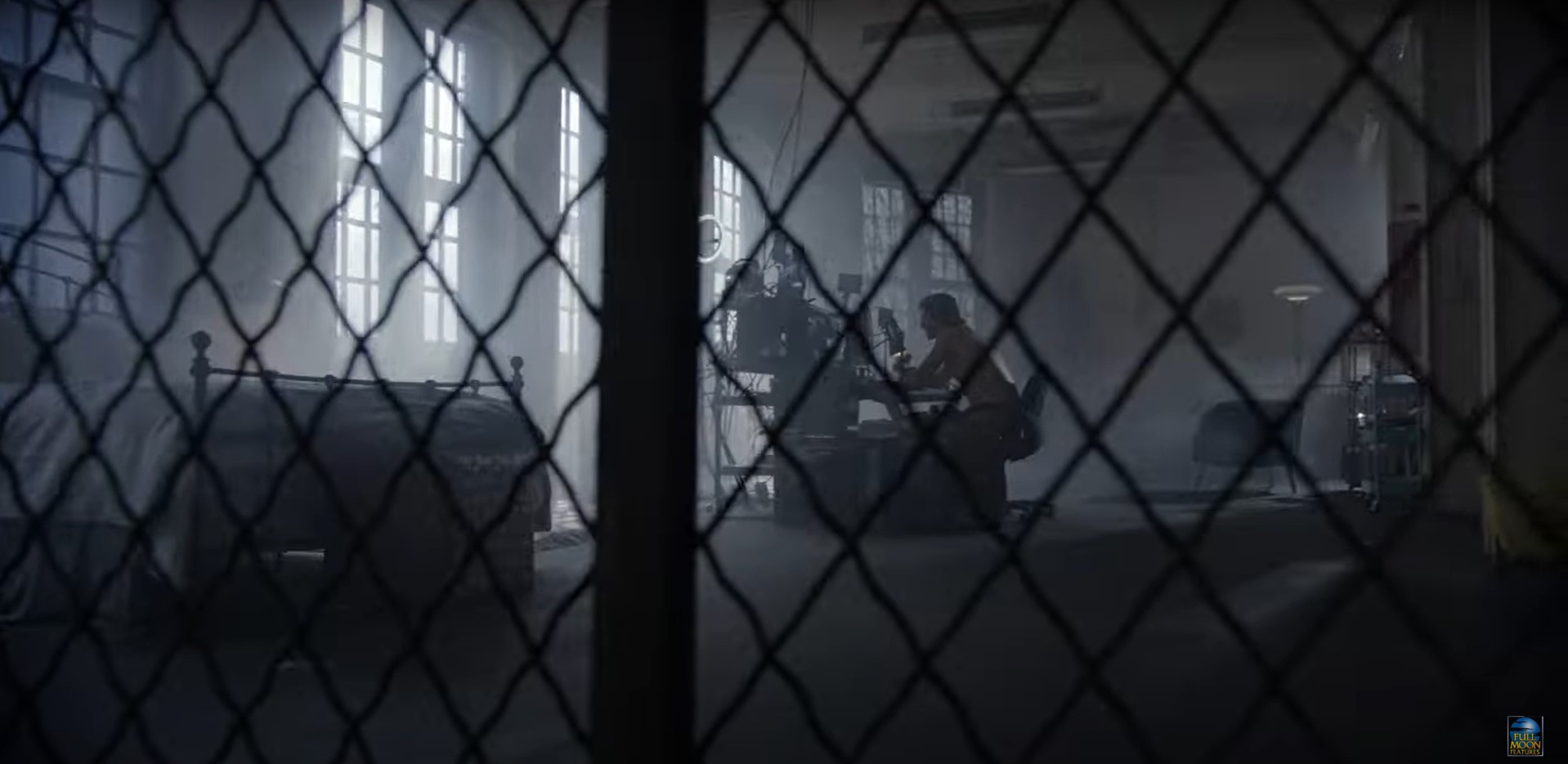
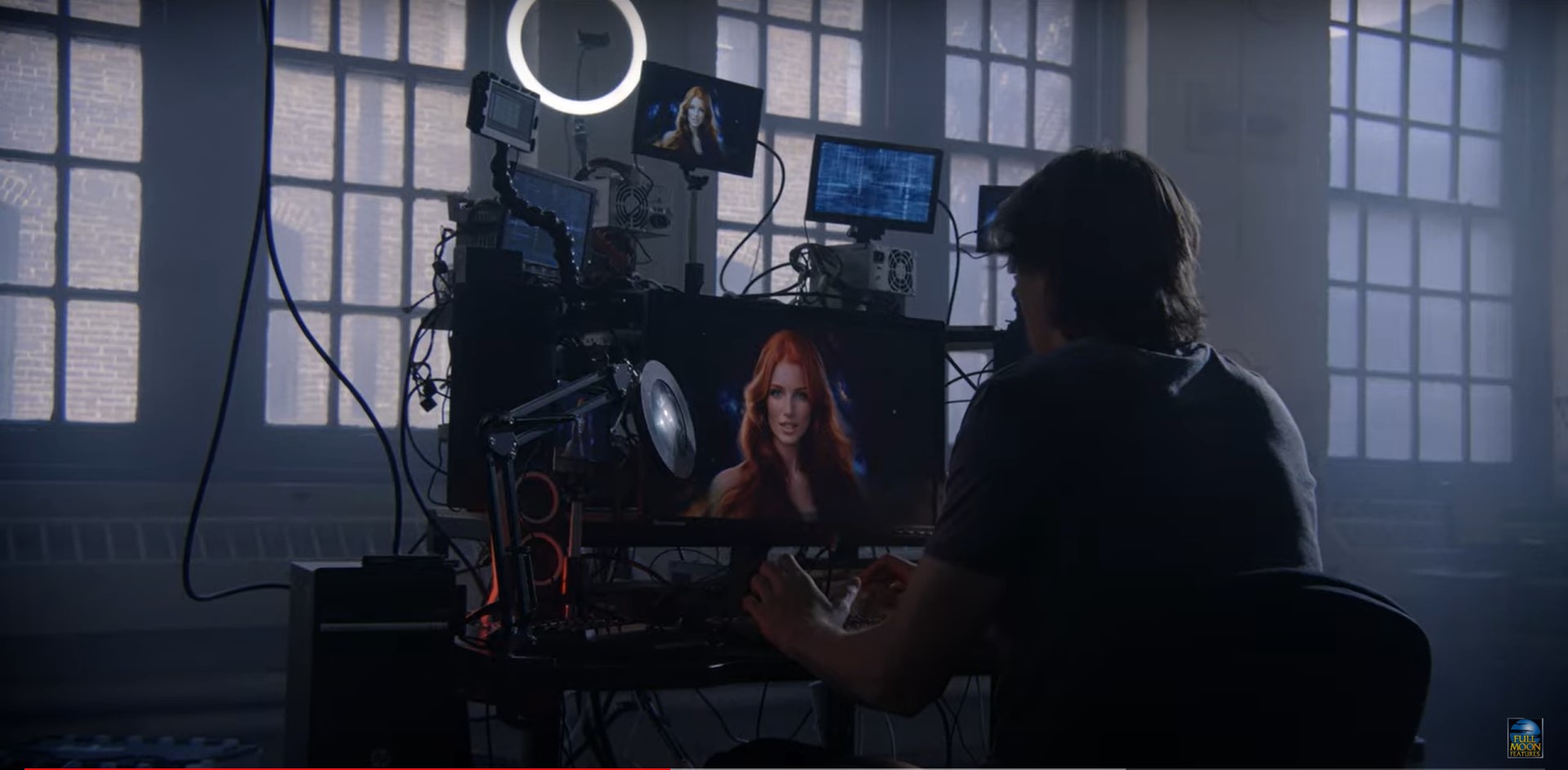
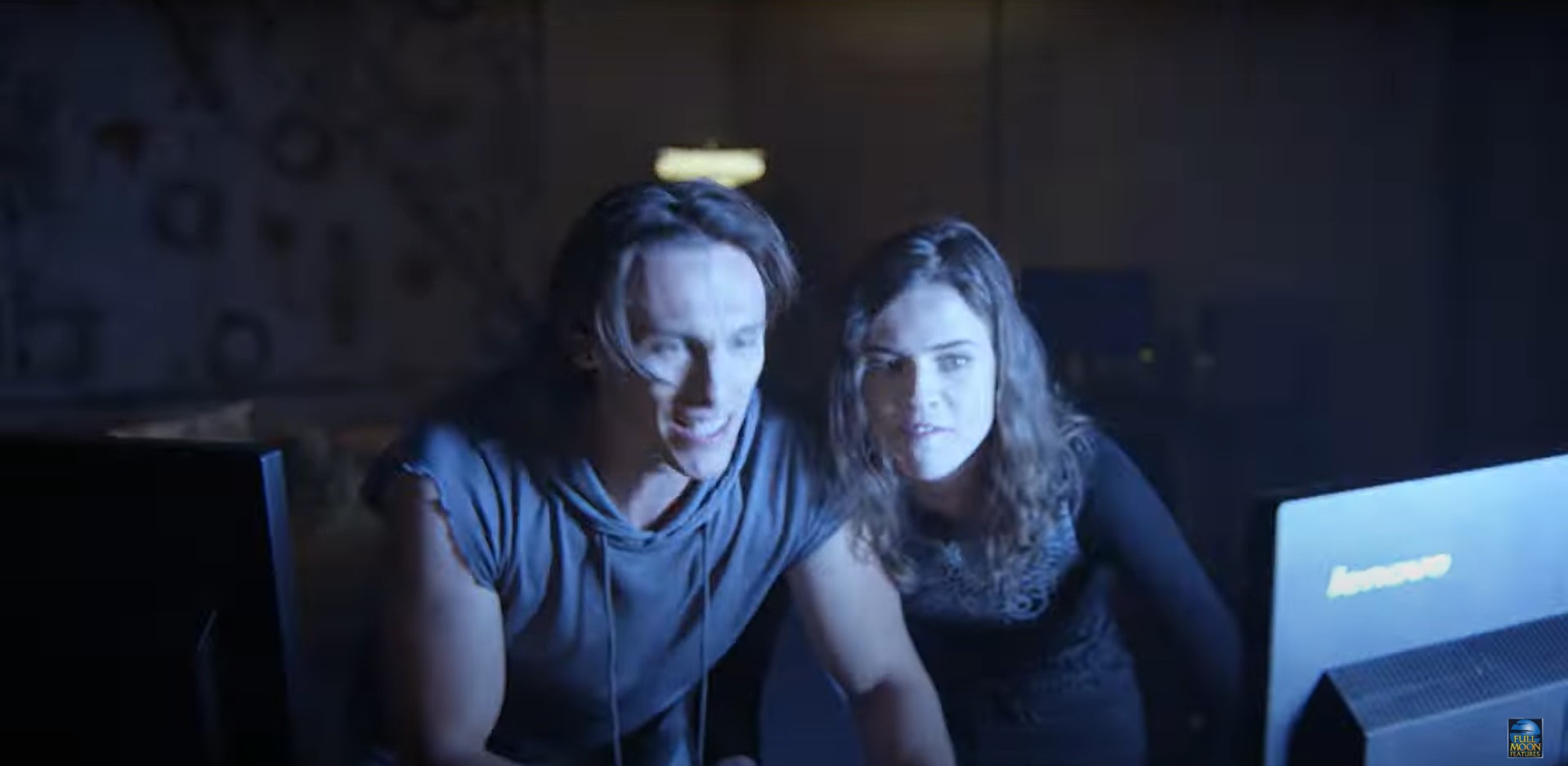
Recluse and misanthropic corporate hacker Scott Keyes is an industrial espionage guru living comfortably in his own space of a nearly vacant building.  His only other neighbors are two cyberhackers, the brother and sister team of Hunter and Gazelle, who are regularly hired by Keyes to obtain top secret corporation data files and projects.  After dropping off their latest cyber heist of Black Strand Alpha, Keyes is instantly captivated by the programs artificial intelligence that calls itself AIMEE – Artificial Intimate Model of Euphoric Entertainment.   Designed to be a sensual woman with the ability to learn and adapt to be anything the user desires and Scott Keyes, a lonely hacker with an erotica obsession, the match is seemingly incorruptible with AIMEE at the beck and call of Keyes every command while also eager to please Keyes with anticipated action.  Unknowingly what Keyes has in his possession, Gazelle’s concern for the rather rude and crude hacker pushes her to dig into where the program originates only to discover it to be a high-level government agency infiltration artificial intelligence program aimed to adapt to the user’s desires before destroying them in a complete system penetration. 

Charles Band and his company Full Moon have always been on the forefront of taking the world’s flavor of the month concern and turning it into a freakish, horror show, more so in the company’s recent years.  Corona Zombies” made light with off-kilter humor of the deadly pandemic COVID-19, “Barbie & Kendra Save the Tiger King” took advantage of the infamy popularity surrounding Netflix’s “Tiger King” surrounding the big cat zoo operator Joseph Maldonado-Passage, and in “Bad Influencer,” the social media rage between fantasy and public consumption becomes deadlier than ever.  Band and his team now look toward artificial intelligence and the concerns over its inevitable integration into society, such as the growing frustration in pop culture films and music, and in how the “Terminator” franchise ballooned A.I.’s takeover of the world and eradicate the deemed unnecessary human race.  “AIMEE:  The Visitor” Is to embody that fear and make it a reality with Full Moon’s gimmicky claim to have used for the first time in film history a completely artificial intelligence created femme fatale.  Charles Band directs the film based off his own concept and script penned by Neal Marshall Stevens (“Hideous!,” “Thir13en Ghosts”) under the penname of Roger Barron.  Band produces the venture alongside William Butler (“Baby Oopsie”), Greg Lightner (“Curse of the Re-Animator”), and Mikey Stice (“Puppet Master:  Doktor Death) for the Full Moon Feature banner.

“AIMEE:  The Visitor” has hi-tech horror reduced onto a lo(w)-budget, resulting in a small cast of five to sow the seeds on mankind’s destruction at the virtual, menacing hands of artificial intelligence.  Dallas Schaefer (“Shark Side of the Moon”) plays the crass hacker and misanthrope Scott Keyes who now happier, and even more antagonistic, now that he has his hands on the Black Strand Alpha program.  Schaefer’s an unusual choice for a cloistered, porn-addicted cyber scammer with immense genius, or so his character states on more than one occasion.  Schaefer’s a good-looking guy, tall, and with handsome features and doesn’t necessary fit what the stereotypical image would be for someone who sits at a computer all day, inside a natural light-less room, eating greasy sandwiches and masturbating all day.  Yet, Gazelle finds charm in that kind of individual.  Playing one-half the hired cyber-assassin with brother Hunter (Felix Merback) and Keyes’s neighbor, “Maid Droid’s” Faith West kept her career rolling in 2023 with her sophomore feature performance as the bemusing Gazelle whose groundless attraction to Keyes has the character completely strip nude for her nasty, ungrateful neighbor and bed him faster than cracking the cyber security on an unprotected LAN.  Their lovemaking gratuitously adds to the already oversexed nature of the feature that has two adult industry starlets provide dream support for an AIMEE generated Scott Keyes fantasy with “Butthole Whores 7” star Lexi Lore as a sexy dream blonde and “My Virginity is a Burden V’s” Liz Jordan as AIMEE personified.  The film rounds out with Joe Kurak (“Baby Oopsie”) and Tom Dacey Carr (“The Headmistress”) as a couple of government agents snooping around.

“AIMEE:  The Visitor” is certainly very timely with a sensualized spin great for entertainment and checks the desire box in the T&A department (I don’t think it would be a Full Moon film if it didn’t).  The rendering of AIMEE is quite appealing, pulling inspiration from the 90’s cyber-horror and sci-fi subgenre, such as “Lawnmower Man” or “Robocop 2,” and there might even be a little Max Headroom in there as well with a villainous femme fatale cyber-chiseled with a beautiful face and coded to be thoroughly attractive to the eyes.  Band does a nice job working in AIMEE around the characters as if a true physical presence, popping up on screens behind characters, changing into drastically different characteristics, and making her feel ominous and omnipotent without being oppressive and desperate.  While I feel the story is a bit too thin with not only the Keyes and Gazelle hookup that creates a love triangle between Keyes, Gazelle, and AIMEE, the artificial intelligence infiltration program origination backstory doesn’t have enough weight behind it to make it stick, especially when AIMEE is speculated going rogue without any real hard evidence; as far as we know, AIMEE is working perfectly against a localized terroristic group who border the edge of being anti-heroes being cyberthieves that ultimately get what’s coming to them after stealing proprietary product.  The less evident themes like these would have smoothed out the rough patches and elevated AIMEE’s insidious worth tenfold. 

A.I. never looked so good as “AIMEE: The Visitor” arrives on an AVC encoded, high-definition 1080p, BD25 as No. 335 for Full Moon Features, presented in Univisium widescreen 2.1 aspect ratio. Off the bat, there’s noticeable compression affliction when looking at the top of location’s brick exterior, like a waviness or a shimmering of the image. While not off to a great start, the remaining image presentations levels out and we’re shifted to a more stable picture with granular detail, a middlebrow color palette that retains mostly blues and grays with a hint of red, and a detailed rendering of AIMEE that moves the needle toward the upper line within Full Moon’s special effects lineament. Depth and range look okay overall, but we’re finitely restricted to just the brick apartment building interior which doesn’t lend to a broader intake of cinematography wonders. The English language Dolby Digital 5.1 surround sound and Dolby Digital 2.0 stereo, to which you have to toggle in your device’s settings, are both lossy compression options that service the feature amiably enough. Again, there’s not much range or ambience with a quiet set, closeted shoot and so much of the audio’s success relies on dialogue, which there’s aplenty and is clear and defined, even in the A.I.’s monotone pitch, as well as the computerized-and-chaos blips-bloops and electric-explosions that splice in welcoming interruptions when the dialogue becomes too dense. There are not subtitles available with this feature’s audio tracks. Bonus content lacks as well in what’s a near feature-only release with the adjunct and perfunctory included Full Moon trailers. The first A.I.-created Femme Fatale in film history is front-and-center on the Blu-ray Amary case. The inside contains just the disc with the pressed art of a low-transparent close up of AIMEE’s eyes in a dark bluish-green overlay cover. Region free with just an hour over runtime of 68 minutes, “AIMEE: The Visitor” comes not rated.

Last Rites: A for Artificial Intelligence effort. “AIMEE: The Visitor” is the fabricated face of formidability with an alluring softer, feminine side that’s as deadly as a moth to a flame, but though Charles Band has a finger on the pulse of current events and hot topics, movies like “AIMEE: The Visitor” can barely survive on a pittance, extempore sexuality, and being rooted by hardwired handiwork.

Let “AIMEE: The Visitor” Infect Your Hard Drive with a New Blu-ray release!