At Odds With Each Other Can’t Stop the EVIL That’s Coming for Them! “House of Dolls” reviewed! (VMI Releasing / Blu-ray)

“House of Dolls” Is Ready to Play! Blu-ray Available at Amazon.

Estranged sisters Jenn, Diana, and Adalene are summoned to reunite by their dying father.  Greeted by their grandmother and a lawyer informing them of an inheritance within their father’s will, the verbally combative sisters are more than eager for their fair share of the will and be happy to never see each other again as they go on with their lives, but the will’s stipulation states the sisters must work together and revitalize the long severed kinship within the walls of his hand-built estate, a life-size representation of a doll house constructed for the love of his life where clues to their inheritance lie hidden inside.  Before even the first ounce of hope to mend their broken bond, one of the sisters is found brutally murdered in one of garish rooms and a masked maniac hunts for not only the two remaining sisters but also those close to them outside the house of dolls.

Juan Sala’s “House of Dolls” is the return to horror for the Texas taught director since his urban-thriller “Alp” in 2016 and the first independent story helmed that didn’t involve Sala’s going pen-to-paper with a script.  That task was handled by another Texas film school graduate, Iv Amenti, in her first feather length screenwriter credit aimed to label itself as a mystery-slasher under the guise of grueling family rejuvenation.  The 2023 released film’s story was shot on location in Los Angeles with Juan Salas solo producing the feature.  Salas is no stranger producing his own work as he’s done with most of his own repertoire (“The Triple D,” “The Wolf Catcher,” and “The Devil’s Ring”) while also branching out occasionally to support and/or fund other creative minds, such as with Brian King’s “Hell of a Night.”  Polar Bear Films produced the film along with Vantage Media International, or VMI Worldwide, who produced and distributed the film.
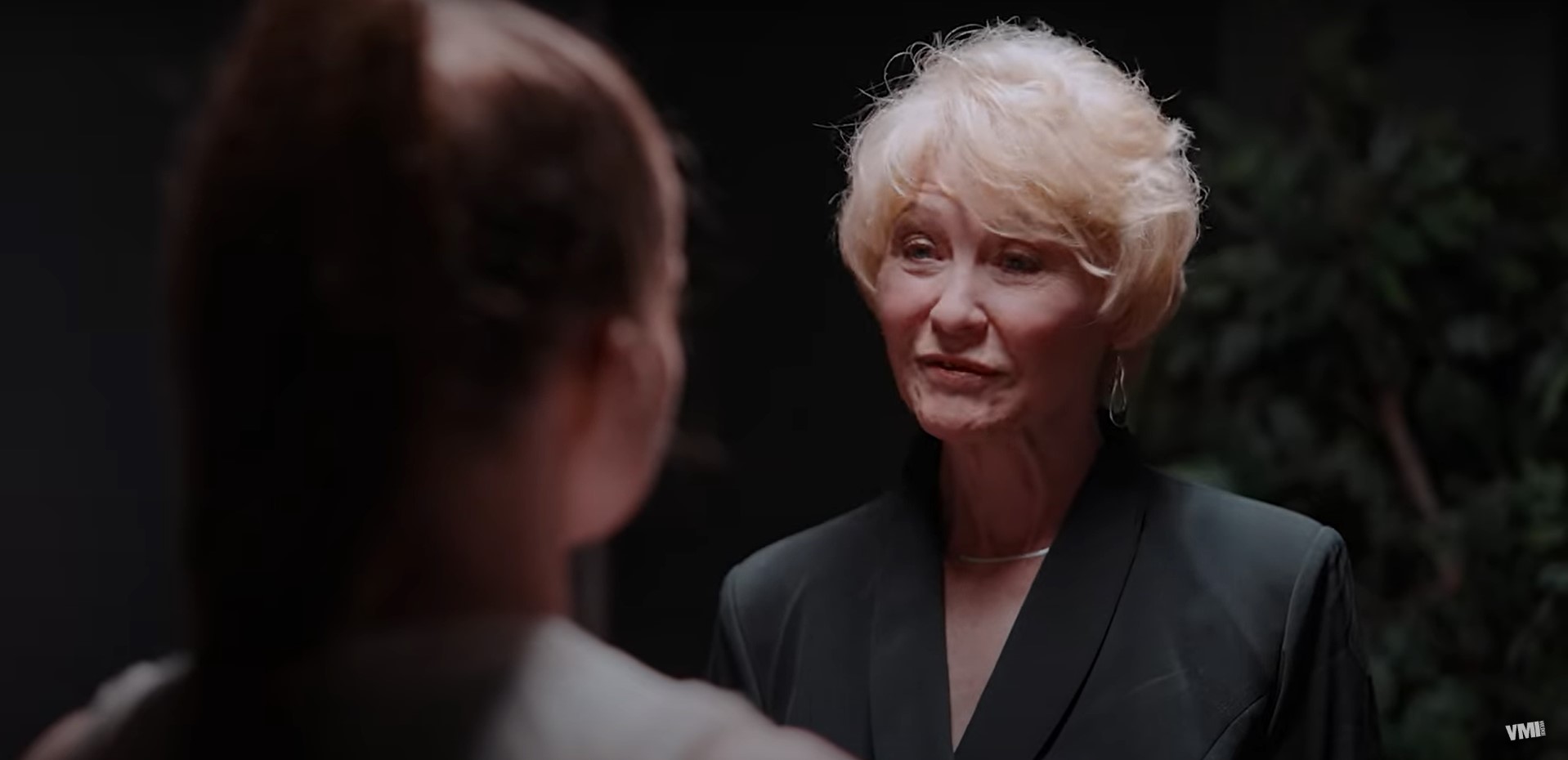
Powering “House of Dolls” vessel into explicit view is headliner Dee Wallace.  The “Cujo” and “Critters” scream queen has been on a junket of mom-and-pop productions for the better part of the last decade for aspiring horror filmmakers to leech off that eye-catching and weight-bearing Dee Wallace name.  Wallace reminds me of Linnea Quigley once said in an interview, if producers meet her price, she’ll star in pretty much anything.  Wallace seemingly has the same philosophy with a continuous stream of projects that screen her for no more than a total of 15-minutes, tops.  While this works to an extent, based off the prominence or the memorability of the role, most of that bankable name and face do little elevating the film, resulting in just a paycheck performance.  Sure, Wallace’s fans will check it out for the sake of Dee Wallace but for “House of Dolls,” as with the story or just as with the entity of the film, the gimmick doesn’t leave a mark.  The plot crux favors the three bickering sisters, Adalene (Violeta Ortega), Jenn (Stephanie Troyak), and Diana (Alicia Underwood).  Sibling diverging personalities uphold their seething hate for each other, that is much as obvious, but for what specific reason is never unfolded, or is unfolded but made unclear in the wake of its untidy heap.  What’s definingly unclear is the mother of these unlikeable brats.  Mentions of individually owning the unfortunate event of a mother’s death makes the ambiguous ruling that there is at least one half-sister.  They could all be half-sisters, but the unbridled dialogue and no conveyed backstory strays away from important pieces of the puzzle that make it as frustrating as trying to match a 2D puzzle piece within a 3D puzzle scheme.  The story also incorporates flimsy relationships with the sisters, Jenn’s drug buddy Justin (Jack Rain) who unexpectantly arrives with the sisters at their father’s estate, Adalene’s semi-sweet boyfriend Caleb (Phil Blevins), Diana’s vague friendzone coworker or perhaps boyfriend Lenny (Matt Blackwell”), and Diana’s out-of-nowhere go-to detective who just happens to be at her father’s hospital, dressed in beat cop fatigues, in Det. Ramierz (Meeko).  All these seedling characters are detached in their gravitational encircling around the sisters, pulling in zero weight on a story that’s quickly deflating.  Rounding out the fleeting supporting cast is Trey Peyton. 

Following “House of Dolls” plotline might as well be riddles with attention deficit disorder.  Too much is happening without the ease of transition or even sense to hold down a floating story that’s constituting forced uniformity and civility amongst rival siblings by way of a mysterious house with mysterious clues. Yet, those clues don’t flesh out and intrigue over what could have been a backstory backbone turns into gelatinous indiscretion of kill-after-kill by a leather coat-wearing masked-maniac with knives that offers up in the end being nothing more than surface level, superficial slasher.  Salas pulls off some decent, gory kills, such as a slimy disembowelment and a bisected torso that spills guts, to add some value to the production that’s ultimately equalized by areas of cut-rate props, such as the obviously flat and dull large knives that look more like cardboard than metal.  Like in true slasher tropes, the killer is seemingly everywhere at once, hopping from one location to the next, even if the other locations are across town, but this punk-cladded, homicidal maniac appears in-and-out of the alternating scenes too lackadaisically without systematic care to at least in try and make it plausible.   

VMI Releasing and MVD Visual handle the physical media distribution with a 1080p, high-definition Blu-ray.  The AVC encoded BD50 has the capacity for the eclectically ranged front lit key lighting and neon lighting, delivering a clean picture without compression issues.  Details waver between certain aspects of lighting, which is expected, but the details that do emerge pinpoint textural qualities and the key lighting reveals appropriate, vivid coloring and skin tones when contrasted against heavier background shadows.  Jorge Villa’s sizzling neon gives a warm glow in purple, blues, reds, and orange that enhances to a near music video quality outside the normal lighting and production parameters.  The film is presented in a 1.78:1 aspect ratio.  The uncompressed DTS-HD 5.1 English audio mix is an upbeat combination of verbal jabs, deregulated dialogue, and a medley of pop music and low-tone beat creator for the villain peppered with hip-hop rhythms, violin and piano down tone, and some suspense synthesized keyboard notes that do lean into what makes a decent horror soundtrack.  No complaints on the dialogue track that’s fairly level but doesn’t explore much in depth as characters are often up front and center on the camera.  There’s also not enough range to really utilize the multi-channel network and so the lack of miscellany fight for audible supremacy. Subtitles are available in English only.  Bonus features are aplenty on this larger capacity disc with Juan Salas commentary track that runs parallel to the feature, Juan Salas and Dee Wallace have a Halloween special video chat to converse about their time in production, a Natasha Martinez hosted cast Q&A for the U.S. premiere, a making-of featurette, and a MiB Legacy music video The Man Who Was Death.  On the outside, VMI’s standard Blu-ray comes with an appealing touchup of the killer in full dress from the chest-up, singled out by a black background and the title just overhead.  The disc is pressed with the same image with no other tangible features.  The film is not rated with region free capabilities and has a runtime of 84 minutes.    

Last Rites: “House of Dolls” crumbles as a clunky attempt at a slasher with a twist ending. The story shatters like someone pulling a pin on a grenade and pieces of act structure shrapnel propel in all different directions and never once hit target in the latest from director Juan Salas.

“House of Dolls” Is Ready to Play! Blu-ray Available at Amazon.

Return Home to Discover Dad’s An EVIL SOB! “The Abandoned” reviewed! (Unearthed Films / Limited-Edition Blu-ray)

Don’t Be Left Behind. Get Your LE Blu-ray Copy of “The Abandoned” from Unearthed Films

Marie Jones never knew her parents.  Born in Russian, raised in the London, and now lives in the U.S., the low-budget movie producer receives news from a Russian estate notary providing her details on her murdered mother back in 1966 and her existence entitles her to the isolated family farm.  Unable to resist the urge to find out about her mysterious past, Marie travels to her parents’ dilapidated farm settled on an island encircled by a river.  There she meets Nicolai claiming to be her twin brother and that he also, after a similar call from the notary, felt pulled to their family home on the verge of their upcoming birthday, but they’re not totally alone.  Trapped on land that won’t allow them to leave, Marie and Nicolai run into their undead doppelgangers that impel them to dig into their family history and uncover the gruesome truth to what happened to their mother.  All the while, the house around them rewinds back in time before age and weather have taken a toll and the souls living in what was once a home return to bring the family back together again.

A past drawing near story stretching from 1966 and 2008, “The Abandoned” is a haunted house, supernatural, and circular tale that bears down a forlorn ancestry nightmare onto ensnared curious lineage wanderers, bringing them back into a vicious cycle of a family history that should have been left alone.  “Aftermath” and “Genesis” short film director Nacho Cerdá tries his hand at less necrophilia and gore for more daring, open-to-interpretation horror with the Karim Hussain (“Subconscious Cruelty”) original script with some rewrites and sprucing done by “Dust Devil” and “Hardware’s” Richard Stanley.  Filmed in Bulgaria to double as the scenic landscapes and to use the country’s looming, enveloping trees as another margining aspect of being trapped, “The Abandoned,” initially title as “The Bleeding Compass” on Hussain’s original script, is produced by Julio and Carlols Fernández, Kwesi Dickson, Stephen Margolis, and Alexander Metodiev under Castelao Producciones, Filmax International, and Filmstudio Bojana with Future Films’ Carola Ash and Albert Martinez Martin serving as associate producers.

“The Abandoned’s” modest budget regulates casting to, at that time, relative unknowns for the U.S. market but certainly not an experienced lot between English actress Anastasia Hille (“Snow White and the Huntsman,” “Martyrs Lane”) and Karel Roden (“Orphan,” “Hellboy’) playing reunited brother and sister Marie and Nicolai who have not been together since infancy.  Separated at the demise of their mother, Marie and Nicolai have undoubted hesitation to their relation, especially both are met by grisly versions of themselves in the old family homestead.  The double versions of themselves represent a dual life, one connected to their current path, and one connected to their past, and Hille and Roden play into that theme with fortitude and fear in how the past haunts their characters connected to a shadow world in a very “Silent Hill” way.   Hille brings complexity to Marie’s own troubled relation with her daughter, a character we don’t necessarily see physically on screen, but we understand through phone conversations and brief interactions with Uncle Nicolai that the foundation the mother-daughter relationship stands on is shaky and that pushes Marie to pursue the truth about her own mother to avoid that disconnection with her daughter.  For Nicolai, Roden instills a more tragically inclined façade without overcompensating with tremendous evidence in the loss of a woman he loved, aside from their matching tattoos, and his melancholic state is staid by the newfound opportunity to discover his past until unless it also becomes his downfall.  Again, we’re back to the past should stay dead, or in the past.  Hille and Roden underpin “The Abandoned” and its ghostly enigma with brief interjections of supporting ancillaries in Valentin Ganev, Carlos Reig-Plaza, Paraskeva Djukelova, and Marta Yaneva. 

“The Abandoned” is one of those circular narrative stories working toward a revelational end, one that likely won’t be pleasant.  An endless loop of trying to leave Marie and Nicolai’s childhood home only for them to be brought right back into the same room from which they started lend into a couple of preconceived notions of their ringlet wretchedness, both in circumstance and in life, and that being either they’re already dead and in a purgatory or their grieved existence has warped them into a psychological break when returning to a decaying land left in the memories of the heinous death of their mother.  Both theories incorporate a supernatural element where time reverses and, coinciding with the twins’ upcoming birthday, a clock ticks down that will bring the family whole again, this time in the afterlife if the unnatural powers to be have anything to say about it.  That’s the definitive beauty of “The Abandoned’s” open air forbidding allegories with the more than one interpretational rivulets spreading in different directions, shaped idiosyncratically by Marie or Nicolai’s life.  What helps the impervious fate outcome of the principals is that “The Abandoned” also has strong, poignant visuals as a foothold into keeping audiences intrigued on what could be a slippery slope of symbolism.  A mix of practical and composite effects, done amazingly through the editing process, sell duality on every layer as if we’re experiencing two worlds during a collision and waiting with anticipation for one to engulf the other. 

Unearthed Films brings “The Abandoned” home on a limited-edition Blu-ray home video. The AVC encoded, 1080p high-definition, BD50 capacity houses plenty of breathing room for the claustrophobia details to writhe within. Middle-to-higher contrast levels that throw out good shadows without being extremely inky, there’s spectrum discoloration from blotchy-banding, suggesting a good encoded transfer that deciphers more details rather than squeezing everything in under a lossy codec. Range of the darker graded feature does favor a generous bluish green for the interiors while natural light swarms and illuminates into the exteriors, brighten up Anatasia Hille’s already blonde enough hair to almost pure yellow. Fine details pervade over much of the duration, only relinquishing details for dark, cavernous moments to scare up apprehension levels. The English DTS-HD 5.1 and the PCM 2.0 give viewers lossless fidelity and flexibility with audio setups. I preferred the stereo with robust dual channel dialogue; however, the 5.1 showed signs of directional awareness – rustling of leaves, ghostly voices, etc. – through the back and side channels. Dialogue is prominent and clear on both audio options and free of intrusion and interference. English and Spanish subtitles are optionally available. Special features include an abundant of new material exclusively produced by and curated from Unearthed Films, including new, individual interviews with director Nacho Cerdá, screenwriter Karim Hussain, and screenwriter Richard Stanley; there are also new furnished for this release alternate endings that more so involve Marie’s daughter, deleted and extended scenes cut for timing and flow, and outtakes. Archived bonus content has a Making of featurette, location vision in “The Abandoned’s” den, a featurette of Nacho Cerdá: The Trail of Death that looks at the director’s earlier horror inspirations of his trilogy of death shorts, The Little Secrets of Nacho Cerdá goes further into the director’s insights for his varied take on “The Abandoned” story, Nacho Cerdá has a conversational horror discussion with friend Douglas Buck, director of 2006’s “Sisters,” promotional and storyboards gallery, trailers, and a BD-ROM storyboard collection. The limited-edition release has a lissome cardboard slipcover with original poster art of the blood-crying doll from “The Abandoned” on the front. Inside, a standard Blu-ray Amary case has the same cover art image that’s also pressed on the disc. There are no inserts included. The rated-R release has region A playback only and a runtime of 99 minutes.

Last Rites: A step back from the gore and revulsion, Nacho Cerdá is able to scare stiff with “The Abandoned,” a dead and buried family abstrusity squaring the score for lost time by reversing time to welcome back those left living, and Unearthed Films’ limited-edition release is the best version to date that deserves a warm homecoming for its icy, taciturn atmosphere.

Don’t Be Left Behind. Get Your LE Blu-ray Copy of “The Abandoned” from Unearthed Films

Magnetism Will Separate the EVIL from the Rest of You! “Black Circle” reviewed! (Synapse Films / Blu-ray)

Cosmic horror is the “Black Circle.”  2-Disc Blu-ray/CD on Amazon!

After Isa manages to clean up her life and obtain a upper management job, she’s eager to share her tremendous focus secret with sister Celeste, a university student hitting a mental wall with an important term paper.  Isa says the key to her success came after cleaning out the belongings of their grandmother’s deceased cousin, where she unearthed a record LP on magnetism produced decades ago by a master of the craft.  Celeste is instructed to listen to the LP’s backside right before going to sleep with the promise of her life changing for the better.  After setting the needle, Celeste wakes up next morning feeling unburdened by the challenges ahead and is able to knock out her paper in one day, but she senses another presence following her, watching her, and having vivid dreams of a monstrous double of herself from being inside what the LP calls the black circle.  Shortly after, Isa has disappeared, exiting her new job with erratic and paranoid behavior, only to resurface on Celeste’s doorstop ranting about LP’s frighteningly powerful suggestion and that she’s being followed by someone driving her car.  The sisters track down Lena, creator of the LP and master of magnetism, where they also meet a pair of young psychics who explain the unforeseen, accidental harmful side effects of the LP she thought were all destroyed.  Lena agrees to save the sisters who are faced with losing themselves from themselves. 

Hypnotism has diminutively entranced storytelling, scratching only a limited surface of films with only a few being widely known, such has “Office Space,” “Stir of Echoes,” or “The Cabinet of Dr. Caligari” to name a select few recognizable titles.  To further hypnotism into obscurity, a similar spellbinding field is introduced by filmmaker Adrian Garcia Bogliano.  The Spanish writer-and-director of “Here Comes the Devil” and “Come Play with Me” chills us with a cosmically laced and existentialism albatross with his 2018 “Black Circle.”  The Swedish production, natively titled “Svart cirkel,” pulls loose inspiration from the often-controversial works of German physician Franz Anton Mesmer, as in mesmerize, who first coined animal magnetism as an invisible force within the human body that can be manipulated by skilled magnetizer.  “Black Circle” is produced by Bo and Rickard Gramfors and Bogliano’s longtime collaborator Andrea Quiroz within a conglomerate of production companies that include Klubb Super 8, Njuta Films, Salto de Fe Films, and Evilinski Productions.

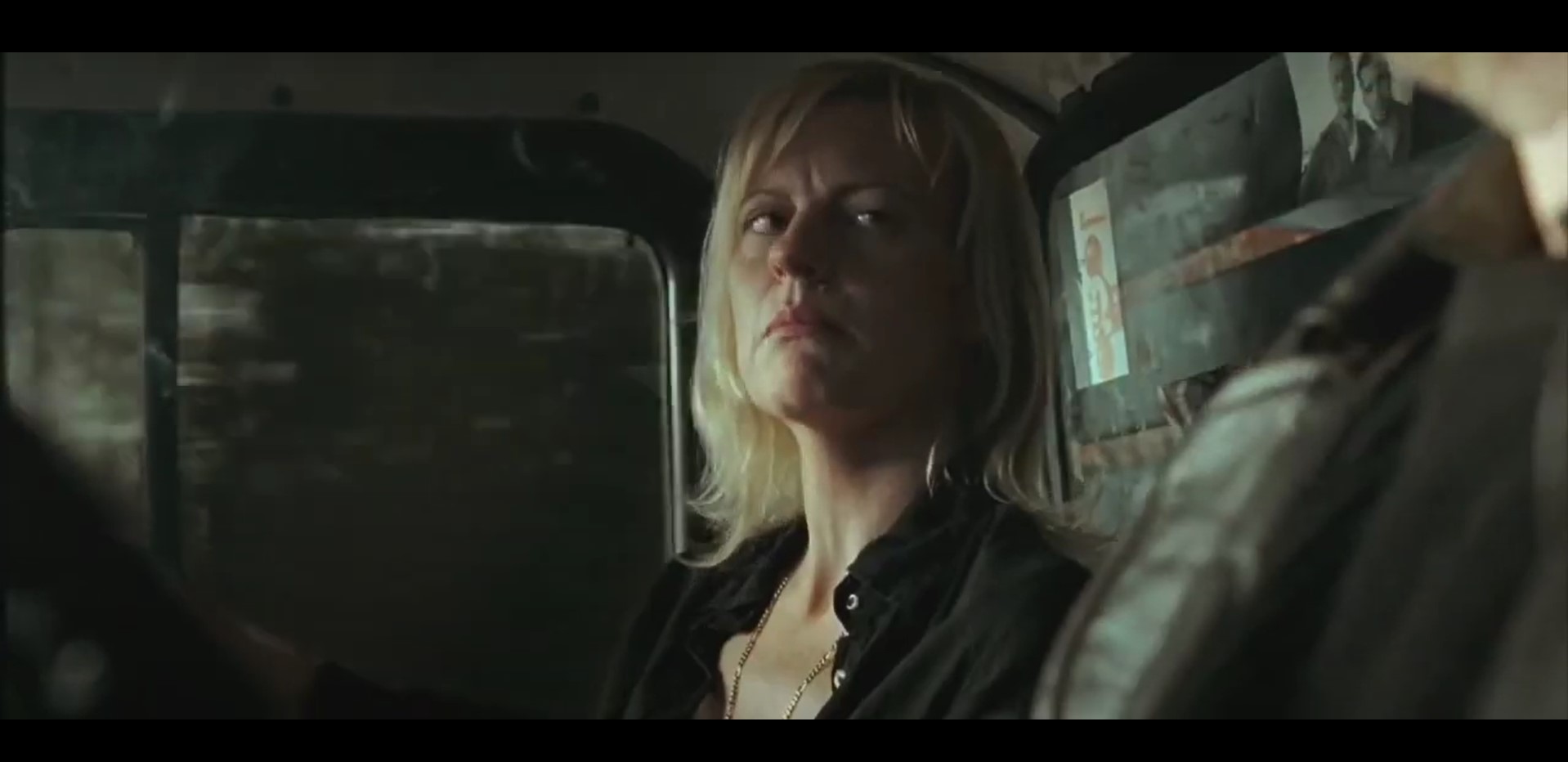
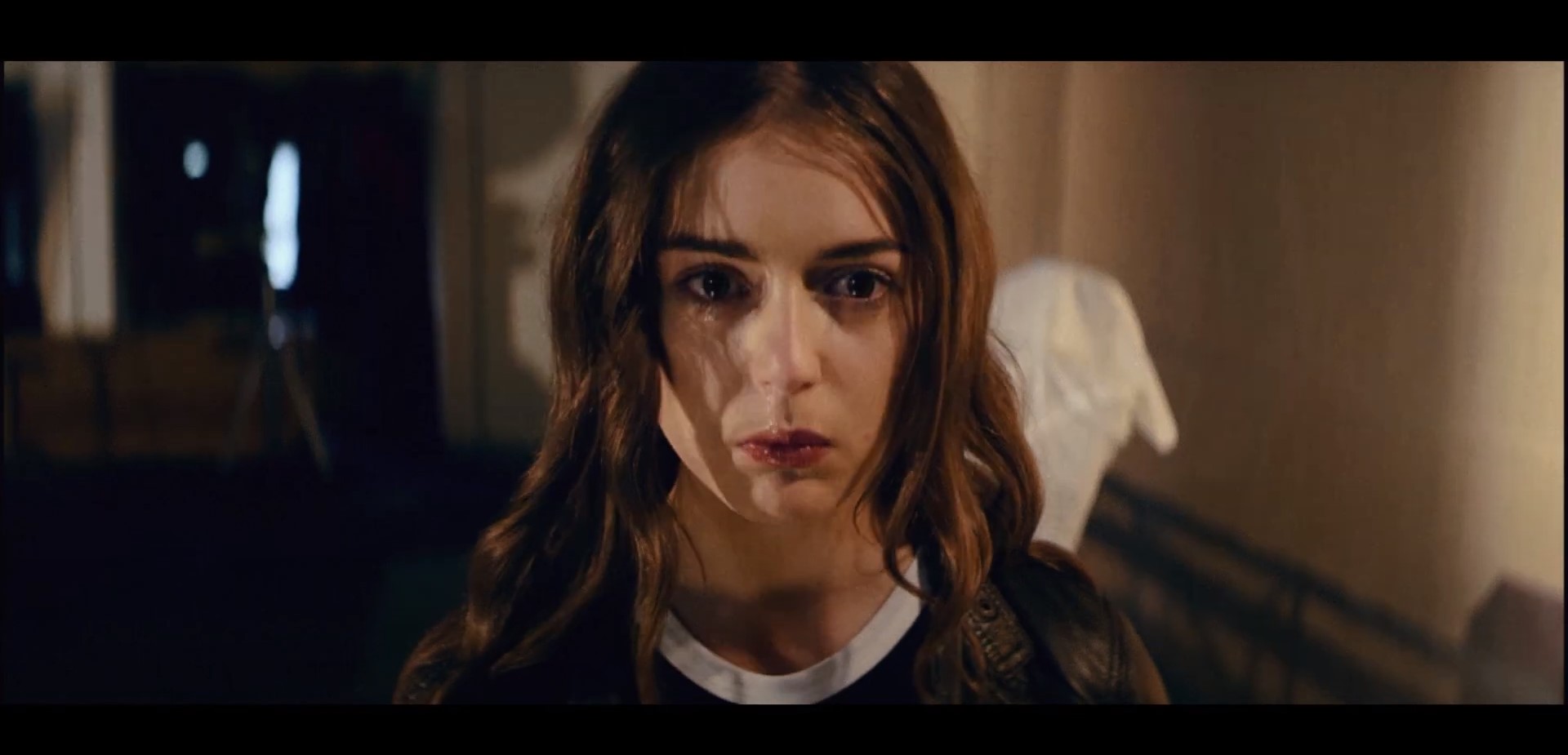
Felice Jankell (“The Bunker Game”) and Erica Midfjäll play the two sisters, Celeste and Isa, embroiled in magnetism bad luck happening up on an old of circ 1970s-1980s LP in today’s age.  There’s quite a bit of tension between the two sisters who are not conjoined at the hip like most close-in-age siblings as they battle their own personal demons that are only talked about rather than exhibited.  Yet, we get the sense of their daily struggles through Jankell’s body language for Celeste and the recollecting conversations both sisters have regarding Isa’s troubles keeping glued together and those existential problems are what connects them, or rather what connect us all as sentient beings, making the characters relatable.  Isa exposes Celeste to the LP in hopes to help Celese regain control over her life but what ensues is not only a weight lifted off her capacity to overcome but also an underlining fear of being followed, watched, and frightened by grotesque dreams of herself in a monstrous form.  At this point, Isa and Celeste are experience parallel psychosis spurred by the record that leads them, and us, to the headliner of film, genre icon Christina Lindberg   The once sweet-faced Swedish brunette, who once donned an eyepatch and took a shotgun to her rapists in the role of Madeleine in “Thriller:  A Cruel Picture” and who once debuted as a 16-year-old virginial maiden in the sexploitation “Maid in Sweden,” has now grown up to become a woman basking in the essence of power and control at all times with Lena, a magnetism expert attempting to rectify unintended mistakes distributing a soul separating, charmed-grooved vinyl from decades earlier.  Lena has rich history that’s dropped in segments from the moment she’s introduced on screen, almost immediately displaying her limitless power on two young, intrusive psychics (Johan Palm and Hanna Asp) who enter her home by the summoning Supreme, an exterior planed creature who supervises the psychic realm.  Performances are incredible skintight as actor brings an elevated show for their individual role, including the rest of the supporting cast in Hans Sandqvist, Iwa Boman, Inger Nilsson, and Erica Midfjäll’s twin sister, Hanna, to sell the “Black Circle’s” premise and promise more convincingly terrifying.

If you were forced to only see one indie contemporary release this year, “Black Circle’ should be it.  Bogliano’s “Black Circle” doesn’t dazzle with a ton of effects nor is production value or exotic and grand set locations applied to lure in viewers, but what Bogliano does do well, and what ultimately instills a fascinating story, is the well-written script, character developments, and the subtle effects that bore a fear of the unknown dread persistently and consistently throughout.  Bogliano delivers a unique story sold on the rarity of proto-hypnosis with a premise fashioned around the development of his own mythos of psychic realm rules and beings. Best part about Bogliano’s piece of the macrocosmos is the way he chapters the narrative, ushering viewers gently and with explanation inside a context construction that uses phantasmagorical visuals and voice over narration to interpret magnetism jargon or to provide inside to setup the next chapter. This processing style of breaking up the acts accentuates, or offsets, the rather raw Dario Goldgel cinematography of the reality story, turning “Black Circle” in pedagogic inside into the basis of the wildly scrutinized, often criticized, hypnosis. What’s also neat about “Black Circle’s” story is the lack of a clearcut antagonist. Neither Lena, the two psychics, or even the monolithic, fazing Supreme serve as opposition against the two sisters but, in a twist of the tale, the sisters are actually their own worst enemies with doppelganger trouble in what afflicts us all at one point or another – existence. Yes, “Black Circle” is about the existential encounter that relates to good and evil, a theme of duality done without a tale of twins (or if you want to get technical, “Black Circle” was casted with a set of twins) and involves more with a separation of, what the story calls, an ethereal double that will eventually absorb itself into being the stronger, dominant replacement if the magnetism vinyl continues to be listened to in enough times it will weaken the original, strengthen the evil carbon copy, and there will be no going back.

Become entranced by Adrian Garcia Bagliano’s “Black Circle” now available on a Synapse high-definition Bluray release. The AVC encoded, 1080p, dual-layered BD50, presented in a 2.40:1 to really grab the space of tighter quarters and lengthen the berth, has less transfer complications than let’s say most of Synapse’s catalogue. The digitally recorded video doesn’t require as much remastering as a decades old production on celluloid or videotape, but the narrative does feign video degradation or aging in the more elucidation scenes on magnetism 101. Details are fine and textured, blacks are especially inky and void-encompassing, and no signs of compressions issues with a bitrate average around low-to-mid 30s. The light sepia grading envelopes a welcoming, steely coldness around the characters and their astral plight. The Blu-ray comes with a Swedish DTS-HD 5.1 surround sound mix and an English dub Dolby Digital 2.0. With being reliant on pulsing waves to match the hypnotic scheme, the backdropped soundtrack adds to the unsettling pensiveness, like the metallic hum of a tuning fork, that never protrudes outright and even into the character’s dialogue space. Not a ton of spacing depth between dialogue and ambient but enough to sate directional awareness and atmosphere. English subtitles are optionally available. Bonus features include an audio commentary with the director, two individual interviews with director Andrea Garcia Bogliano and star Christina Lindberg, both in fluid English, an Inside Black Circle behind the scenes featurette, a still gallery, and the original teaser trailer. Synapse’s release is actually a 2-disc set containing a CD of producer Rickard Gamfors score. Inside the black Blu-ray casing, a red and black insert card with the three faces of main principal characters, the sisters and Lena, in linear composition overtop the black circle with the title underneath. On the backside, the complete 18-piece CD track list complete with instrument and mixing acknowledgements. Also in the insert liner is a 2023 Synapse product catalogue. Front cover art has retro appeal with a black background emphasizing the perfect spiral red and black circle being touched by disembodied and flat matted red hands. The disc itself mirrors the front cover’s spiral but sheens like a vinyl LP but in red and black alternate rings. Dread the duplication, fear the far-side of yourself, when becoming magnetized by magnetism of the underutilized genre that knows no limits and has a plethora of petrifying possibilities inside the “Black Circle.”

Cosmic horror is the “Black Circle.”  2-Disc Blu-ray/CD on Amazon!

When the Heart Loses is When EVIL Invades the Head! “The Twin” reviewed! (Acorn Media International / Blu-ray)

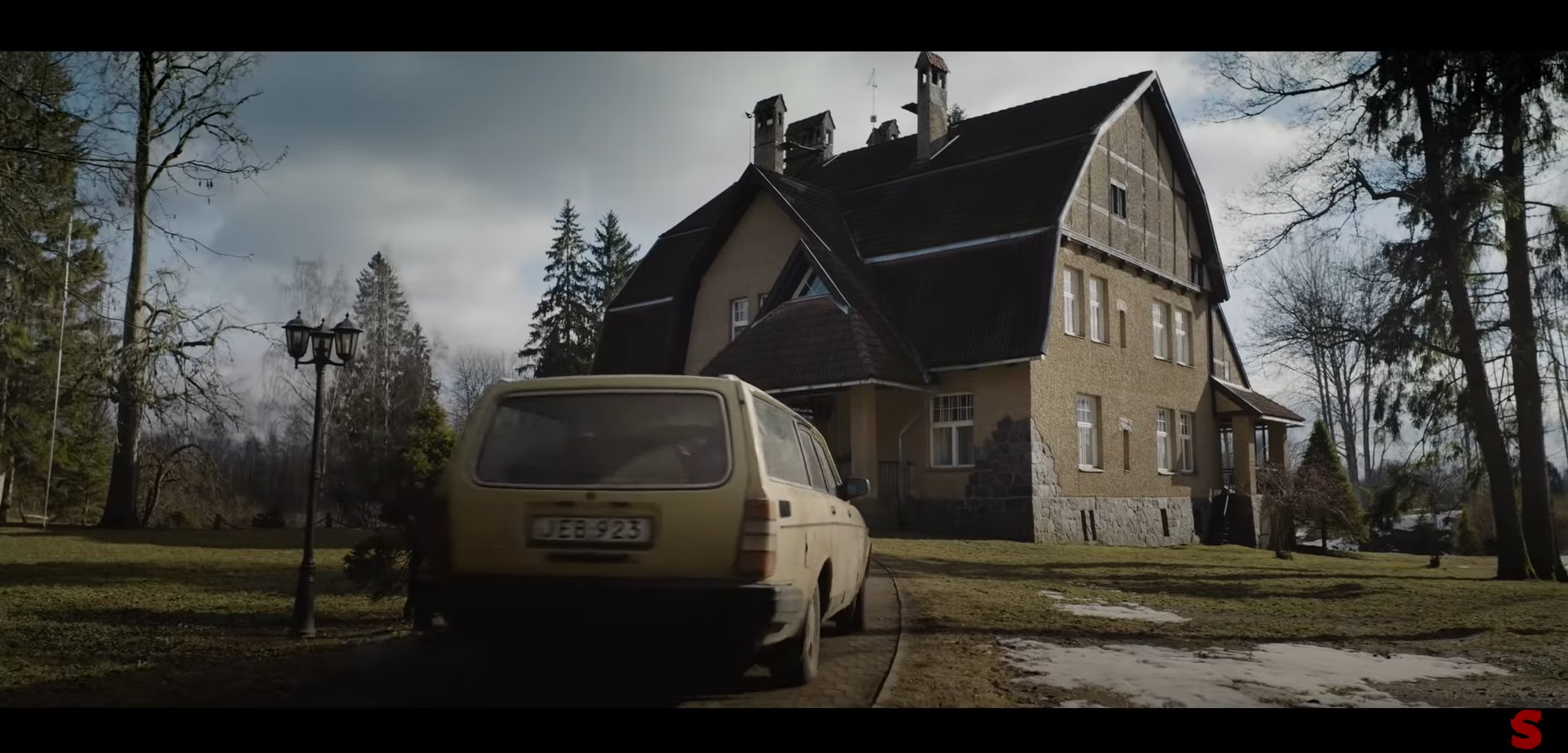
After the tragic car accident that claims the life of their son Nathan, grieving Rachel and Anthony move from New York City to a sublime region of Finland, a place where Anthony’s lineage lies and where he spent time as a child. Nathan’s twin brother, Elliot, is frequently overprotected by his mother after the loss. When Elliot begins to exhibit troubling signs in his behavior that links to his deceased twin brother, Rachel grasps out for explanations, looking for a rational and irrational answer that could contribute to such erraticism in her son. One possibility, paved by a local outsider with her own personal demons, is the Finnish community is beholden to a supreme darkness that seeks to possess the child from the beyond. With nowhere to turn for help, Rachel relies of her motherly instinct to protect her child at all costs and from all malice from all forms. but what the evil that plagues Rachel and Elliot might be closer to her than she realizes.

Identical twins are already at about a 10 on the creep factor scale. Margot Kidder in the dual psychotic role of Brian De Palma’s “Sisters”, the unnerving Jeremy Iron performance of manipulation and cruelty in David Cronenberg’s “Dead Ringer,” and even those Grady twin sisters from Stanley Kubrick’s “The Shining” are an eerie extract overlooking the fact that two people can look so exactly alike. The biological phenomena goes against what proclaims us to be human in the first place – our individuality – and to be regularly utilized as a factor of the strange and unusual in a horror film just fills the cup up with a whole bunch of, and I quote Jordan Peele, nope! Finnish writer-director Taneli Mustonen is the next filmmaker to implement the oddity of identical siblings in his latest horror-thriller entitled simply “The Twin.” Co-written with Aleksi Hyvärinen, “The Twin” is the sophomore horror feature behind 2016’s “Lake Bodom” to emerge from the writers who have found cadence writing, producing, and directing comedies. Spun from Mustonen and Hyvärinen’s production company, Don Films, Don as in the title of respect, along with collegial line producer Mika Pajunen. Responsible for funding “The Twin” are returning “Lake Bodom” executive producers Fabian Westerhoff, Joris van Wijk, and Toni Valla with Shudder’s Emily Gotto acquiring distribution rights with financial backing.

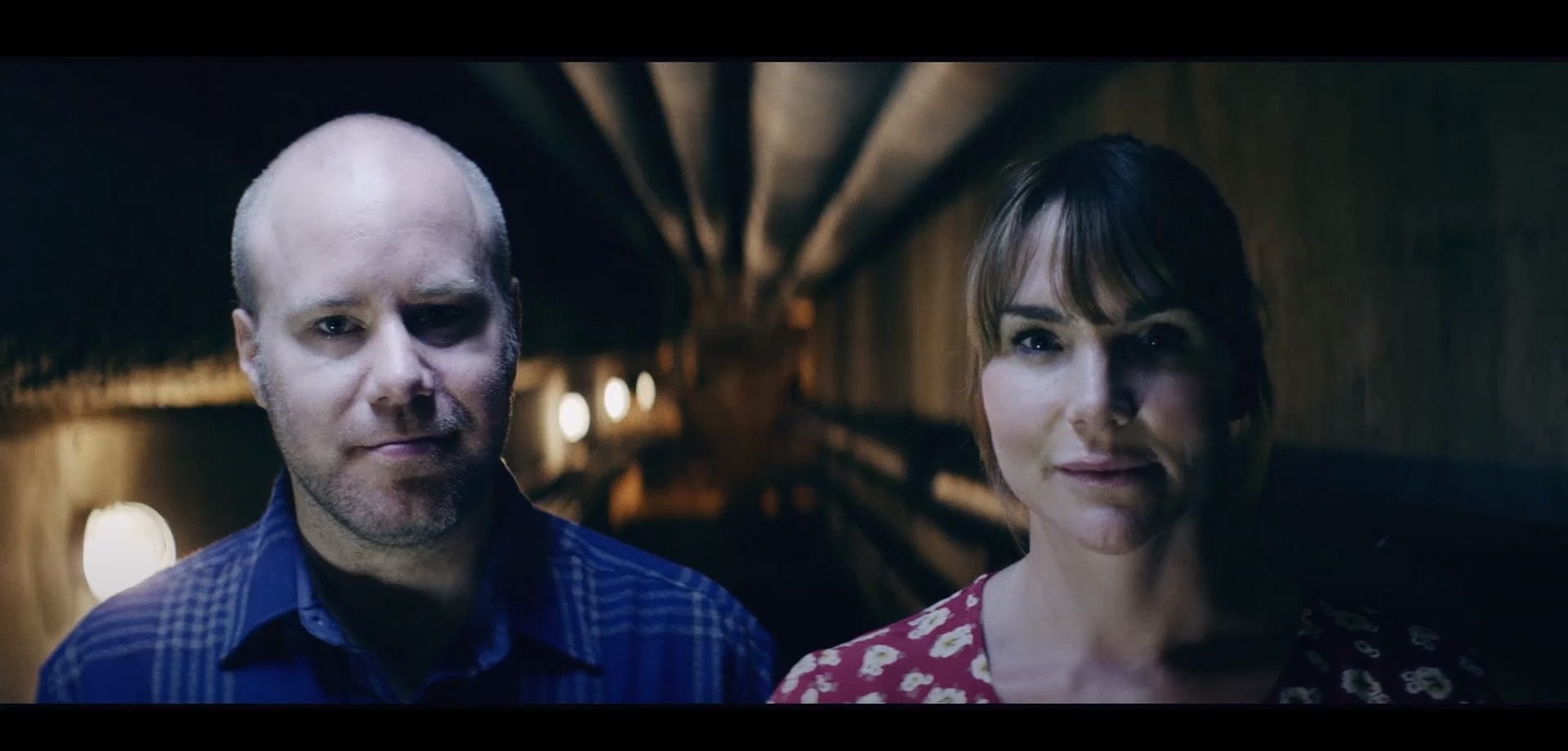
Like most films about twins, the 2022 released twists and turns of a back-and-forth intrapersonal thriller uses one person to Eddie Murphy the roles. That person in “The Twin” is the pintsized Tristan Ruggeri who made his television debut as young Geralt in the hit Netflix book-adapted dark fantasy series “The Witcher.” Unlike most films about twins, Ruggeri really only has to play one but teeter the personality of the other in a symbolic showing of painful sorrow manifested to sorely miss what’s essentially your exact self. Imagine you’re a twin of a deceased sibling and you look at yourself and see your brother or sister. Rugger’s able to capture that emotional payload at such a young age despite being rigid as many child actors typically unfold early in career. Much of the story is seen through the eyes of Rachel, a distraught mother coping with the tragic loss, and the audience experience darkening, supernatural plot that’s unravelling a Satanist cult’s clandestine desires to bedevil her now only son Elliot.  “Warm Bodies” and “Lights Out” star Teresa Palmer plays the now the mature and safeguarding motherly role in the grand horror scheme alongside fellow “Discovery of Witches” costar Steven Cree (“Terminator:  Dark Fate’) playing her novelist husband, Anthony. For “The Twin” to actually work for the viewer to understand on a sympathetic level, you need to feel the love between them and finding love between Palmer and Cree is about as loveless as a platonic relationship. Aside from sharing a bed and a child, the romance and amorous has been removed from play, but that of frigid factor could have very well been intentional for the story. The principal casting concludes with Barbara Marten (“The Turning”) and the town eccentric, a foreigner who Rachel relates to and latches on to when the crisis with Elliot worsens.

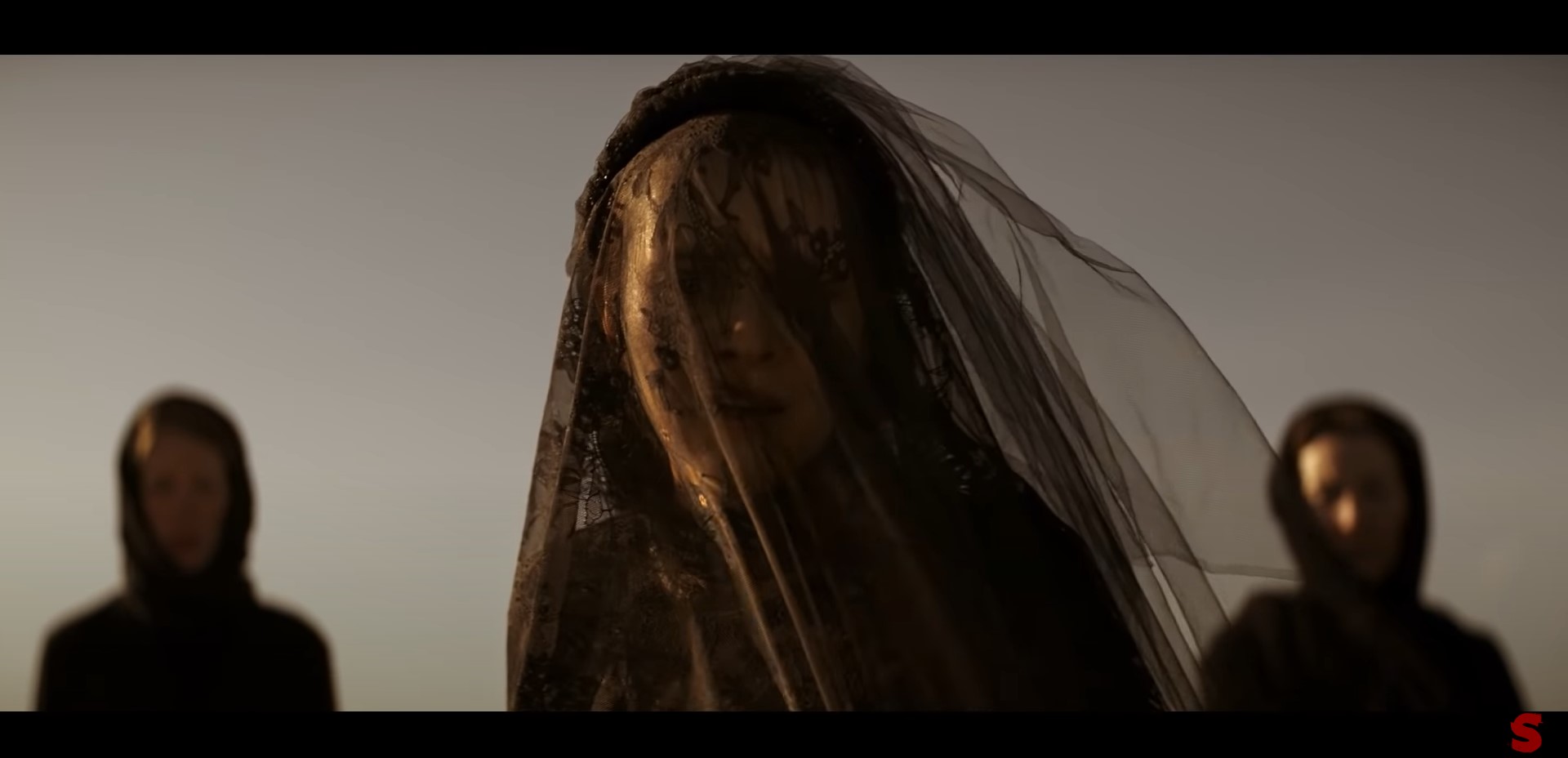
“The Twin” is small principal cast with big background actors that menacingly swallow nonconformers alien in nature to their surroundings. Foggy atmospherics, looming, creaky wooden house, and the dissociative difficulties that put Rachet through a tizzy compound the fear and the affliction of anxiety that turns everything close to you against you in a heap of isolation. All the dead silence and surreal nightmares build tension effectively, keeping the audience on the edge for that peak moment. Mustonen and Hyvärinen throw in a capacious curveball that lets characters wander and explore then develop and action against before pulling the rug from under our one-directional firm footing for a twist. That twist, however, is a play fake we’ve seen before in recent years with the armor of horror shielding the true trepidation. When the peeling begins and the revealing shows us more complicated layers beneath the rotten onion, the once randomized vectors formulate a picture and within the systematic process of slowly uncoiling initial perceptions and believed facts, the story takes on a whole new meaning and, sometimes, even begs the question if what we just watched is still a horror picture after all? “The Twin” very much fits into this goose chase genre but fits like a size two times too small. The path Rachel follows is a yellow brick road to Oz. Oz being the satanic cult is scheming kid-snatch in place of the Beast more vigorous. Mounds upon mounds of hearsay, circumstantial evidence, and even a factoid or two lead the film by the nose to an unwittingly demise of its importance to the story as a whole once all the cards are laid out before us. “The Twin” then goes into heavy exposition to try and explain much of what Rachel experiences and it really felt like a bunch of hot air, a passive attempt to briefly summarize the last 109 minutes without really telling us much about anything. There’s still lots of questions concerning Anthony’s wealth, background, and mental fortitude. Questions also arise about the story’s hook that suddenly drives the characters to make radical changes in a blink of an opening montage eye. “The Twin” has shuddering moments of stillness suspense and a disorienting subcurrent that severs safety at every turn but flirts with unoriginality too much for exhilaration in an all-been-done-before dogleg…with twins.

Acorn Media continues to be the leading UK home video rights distributor for exclusive Shudder releases as “The Twin” makes it’s Blu-ray debut in the region. The PAL encoded region 2 Blu-ray is presented in 1080p high definition with a 2.40:1 aspect ratio. Retaining mostly in gray and blue hue to convey melancholia to the fullest extent possible, the picture quality doesn’t retain a terrific amount of detail. Textures are often softer during gel-night scenes with no well-defined lines and when compared to day-lit scenes, the details are starkly steelier. The English language Dolby Digital 5.1 surround sound caters to a sound design that can differentiate between the bumps in the night as well as the stock-still silence that strikes at the nerves. Dialogue amplitude is on the softer side but very clean and very clear to comprehend. English subtitles have optional availability. Special features include a making-of featurette with cast interviews spliced in. The standard Acorn physical releases for Shudder remain the same for “The Twin” with a common blue case snapper with one-way cover art of uninspired creation. The film is certified 15 for strong horror, threat, bloody images, and violence. As far as doppelgänger bearing horror, “The Twin” is nowhere near identical to others but as for its fraternal individuality, there’s little unique about the Taneli Mustonen picture involving paranoia and primal maternal instinct.

Those Little EVIL Buggers Ruin Everything! “Ankle Biters” reviewed! (Dark Star Pictures / Digital Screener)


Injured hockey goon Sean Chase has severe on-ice anger issues but leave from the game curbs his temper for the better after meeting an internally distraught Laura Haywood.  Enamored by the mother of four who enjoys rough sex as much as he does, Sean decides to willingly plunge into marriage by asking Laura for her hand against his friends and family passive advise him of the hefty, multi-kid baggage in Laura’s tow.  To set the romantic mood, Sean takes Laura and her young kids to his family’s lakeside cabin where all the locals know him, personally and professionally, but when the girls discover cell phone footage of Sean and Laura’s bedroom exploits and interpret them as Sean hurting their mother, they devise mischievous retribution on Sean in order to protect mommy. 

From being a bare knuckler enforcer using the rink as his boxing ring to becoming the haplessly smitten and blind to four little girls’ perception of him as the bad guy, the once penalty box denizen Sean Chase is now the penalized good guy in the Canadian dark-comedy “Ankle Biters” from writer-director Bennet De Brabandere.  Also known as “Cherrypicker,” the title used in the film, the film is Brabandere’s first feature length film based off a story by lead actor, Zion Forrest Lee (“Hit It”), who oft puts delicate notes of misperception as the main theme in his tale.  Shot primarily in the harbor village of Ontario’s Tobermory “Ankle Biters” is produced by Michael Flax of Flax Films, director Bennet De Brabandere, long time makeup artist Sean Sansom with credits from “Land of the Dead” and “eXistenZ, and special effects company, Mindwarp Productions’, Francois Dagenais (“Saw” franchise, “Chucky” SyFy series).  The film is presented in part by APL Films.

As if seeking some sort of self-punishment, story originator Zion Forrest Lee takes the form of a punching bag for four overprotective little girls; four real life sisters, in fact, played by Rosalee, Dahlia, Violet (“Bad Santa 2”), and Lily Reid, the latter Reid having played a significant role in Johannes Roberts’ recent “Resident Evil” reboot as young Claire Redfield and will be involved in another Lee and Brabandere collaboration in the upcoming apocalypse thriller, “Salvation.”  As a father of three girls myself, the Reid girls are nothing short of genuine, killing their roles with tweaked difference in each of their individual personalities as cute and morbidly curious children and siblings.  Lee offers up a rather over-the-top approach toward Chase’s Mr. Perfect in a way that doesn’t come across naturally as the performance is stuck somewhere between Phil Hartman in “Jingle All the Way” and Chevy Chase in “Christmas Vacation” (I’m in the Christmas spirit with my films, if you can’t tell) with a suave sexy toward the women who swallow it up and dorky goofball toward kids who don’t understand it. Chase’s legendary hockey status has been interweaved into the community surrounding his family’s lakeside cabin, such as the local cops with Officer Brian (Gareth Moyse), local shopkeepers like Jordy (Jordan Mills), and even other vacationers, a pair of lakeside neighbors in Anthony (Doru Bandol) and Caprice Gaddis (Maria Sant’Angelo) with their blossoming teenage daughter Matia (Matia Jackett, “Crimson Peak”). By far one of the more interesting characters, Matia doesn’t actually progress the story with her flirtatious crush on Chase as she’s used as more of a device to propel the Haywood girls into full-blown psycho-kiddies as Matia bites off more than she can chew on a what should have been a routine babysitting gig. The biggest name in the film is the “Who’s Line is it Anyway?” comic Colin Mochrie in an unfunny role as the town’s police chief. “Ankle Biters” houses many curious characters come and go, adding little to story or not adding enough, with select bit performances from Evert Houston, Michael Copeman, and Jani Lauzon amongst the Canadian cast.

Not one single member the cast had that it factor that sparks allurement, intrigue, laughter, hate, or any other kind of emotion they’re trained to extract from you or intent on to make you feel in certain crucial points in the story. As a dark comedy, “Ankle Biters” lacked, well, comedy with an overreaching and flat satire on the innocence of mistaken circumstances. When the opening credits roll with the Gary Glitter “Rock and Roll” sampling “The Hey Song,” a track used for decades at sporting events, and we’re immediately exposed to a confrontational and bearded hockey player punching the eye out of an opposing team player into the title sequence, investing myself was easy as the synch of melodious Jock Jams and brutality is promised for the horizon; however, quickly skating from the ice is our beloved bloody-knuckled goon gone in a matter of oddly edited and sequenced scenes and is rarely seen again, even in flashbacks, as we’re dumped into post-hockey career, clean shaven, and on the behavior mend of Sean Chase trying to quickly nail down a woman with four kids who obviously dislike him a whole lot. I fail to see the transition, I don’t want to see the transition, and I’m angry “Ankle Biters” ended up in this transition whereas having Chase continue to be the injured, but still a fisticuffing and bearded enforcer, going toe-to-toe with brats would have been much more (Canadian) of an amusing watch. The better side of this genre blending coin is the darkness portion that really elevates during the latter half of the lakeside trip. Dead bodies, baby spiders crawling out of an ear, open wound fractured skull, a knife to the eye are just a few of the effective practical and composite applications from Francois Dagenais’s special effects company, MindWarp Productions, that keeps the story grounded with destroying the human anatomy as well as keeping up with the human fallibly in order to not have the film fall completely on its face with everything else erroneous.

Released back in mid-November, “Ankle Biters” landed onto On Demand platforms and DVD home video courtesy of Dark Star Pictures. Even though I’m unable to fully cover the audio and video details from any digital screener, I don’t think what was provided was even a finished version of the film that came complete with top left corner running timestamps and some obvious missing special effects, such as the missing prop knife tip when removed from the eye socket and then the tip is back whole on the next shot. No information on the DVD specs was given to me either. Brabandere and Lee do tease with a follow up sequel involving the “Son of Cherrypicker,” named after the lakeside penned “Cherrypicker murders” in the film which, again, was never made a solidifying connection to other than a brief news report ticker on television. If comparing a film close to “Ankle Biters,” Peter Berg’s “Very Bad Things” fits that gruesome bill with one gross misstep in front of another that eventually culminates to a shocking and even deadlier kill or be killed ending with a grown man versus four little girls.

Watch “Ankle Biters” On Amazon Prime Video