When the EVIL Hammer Strikes. “Student Body” reviewed! (1091 Pictures / Digital Screening)


“Student Body” now available on digital from Prime Video

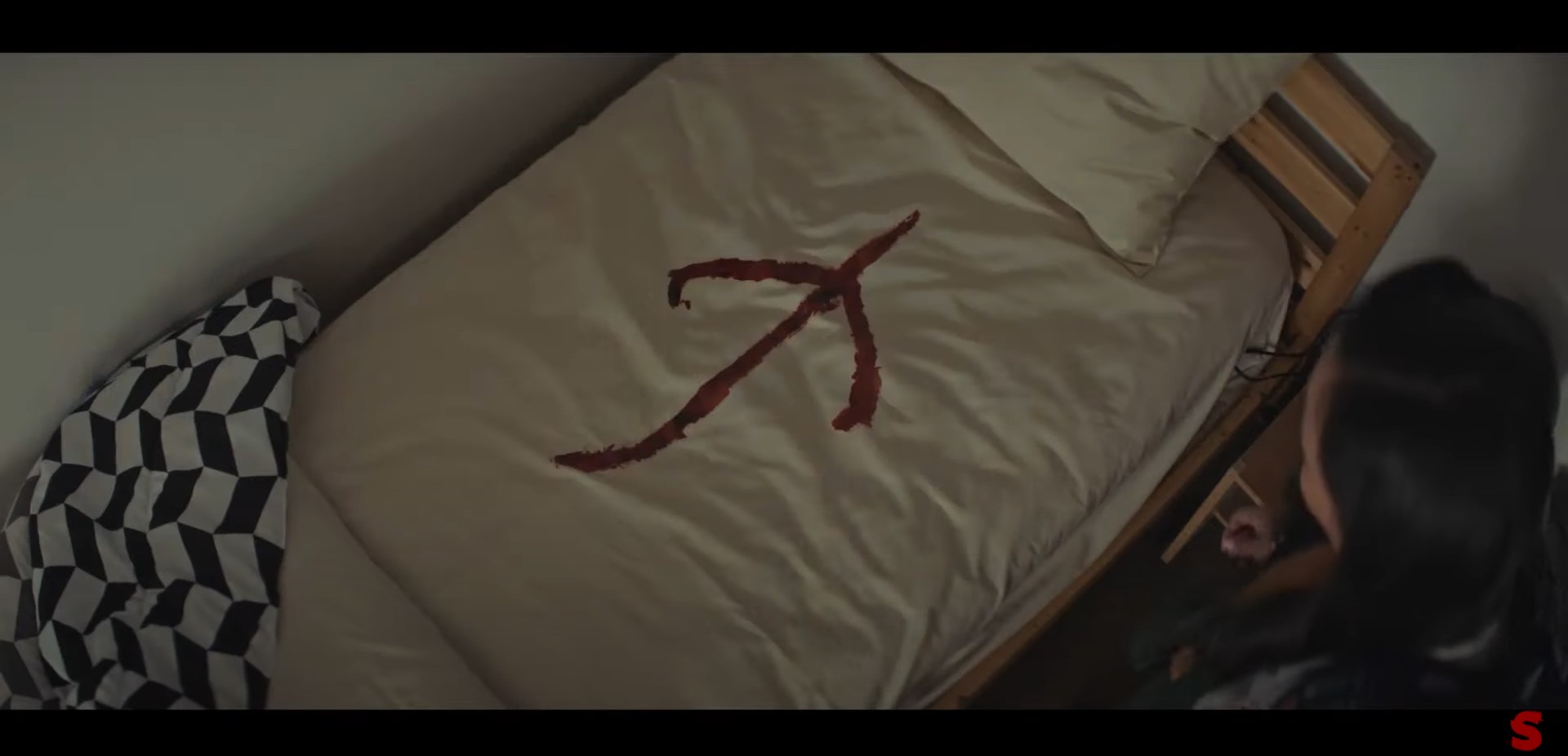
Trying to integrate herself into a close group of slacker friends, high school genius Jane Shipley can’t seem to win with neither her friends nor her passionate for hard work teachers as she has a foot in both contrasting worlds. When peer pressure forces Jane to convince a stern calculus teacher into a re-test her friends had flunked and fails, Jane is forced into another uncomfortable and injustice situation by her friends with exploiting the teacher by turning their meeting into an overstepping of boundaries with a student. The administration, threatened with school board interference, dismisses the teacher that gives the five friends freedom to think they can do whatever they want, including sneaking around school at night and raiding the gym teacher’s liquor stash for some fun. The night not only strains close relationships within the group but also brings a reign of terror when a killer, dressed as the high school sledgehammer-carrying mascot, hunts them down one-by-one.

In her feature film directorial debut, writer-director Lee Ann Kurr hits the ground running with a subgenre all horror fans should be familiar with, the high school slasher. “Student Body” is led by a crew of female filmmakers telling female-driven story about two close, yet very different, best friends with diverging goals about their relationship, touching upon the fluid complexities of growing up and growing apart. Kurr’s classical acting trained background and her music video experience guides Kurr to develop an austere narrative with a sleek contemporary look while expressing relatable themes of school-aged fears, such as never meeting other’s expectations and envy driven intentions. “Student Body” is produced by Rachel Liu, whose comedy romance-horror “Bite Me” is currently on the press release circuit as it releases the same day as “Student Body,” under her Hyberbolic Media production company and Sandra Leviton in her first feature film product credit under her production company, Under the Stairs Entertainment.

In the role of the vacillating Jane Shipley is the Texas born Montse Hernandez. Jane, set sometime after the passing of her mother’s terminal illness, leans solely on her childhood best friend turned the snobbiest and most popular girl in school, Merritt Sinclair, on keeping up her personal upkeep and social connection to others. Played by Cheyenne Haynes, Merritt’s the most equivocal character with trust fund motivations that steer her decisions, gaining reluctant confidence by playing people against each other. Haynes is very tight on Merritt’s conceited and resentful green-eyed behavior that has been stowed away in hopes to keep her image above all else’s whereas Jane wears a few imperfections, and many perfections, on her shoulders. Hesitant in displaying her gifted talents, yet obliviously showy in her unkemptness, Jane submits to Merritt’s whims and plans based off what once was a longtime friendship. Through only a pair of Polaroids and a few lines of dialogue, we’re led to assume at one point in time, pre-high school perhaps, their bond was extremely close but since then, Merritt embroiders herself into high school popularity status that creates a wedge from being authentic to Jane. Hernandez plays well into being the agreeable patsy as she’s coerced throughout the story by not only Merritt but also by her daunting teacher (Christian Camargo, “Penny Dreadful“) with straining persuasion to show off her to intelligence and her other friends, the class clown (Austin Zajur, “Scary Stories to Tell in the Dark”), the brutish athletic competitor (Harley Quinn Smith, “Once Upon a Time….in Hollywood”), and the level-headed and confident hunk (Anthony Keyvan). While nothing to flaw with the cast performances, the characters themselves fall into tired tropes of the high school slasher with the token goof, the token jock, token good guy, and token self-centered snob that eats into any of the novelty Kurr attempts to put forth into her film.

“Student Body” is held back in after school detention by the very same stumbling blocks that trip up its banal and flat character body. The one-dimensional narrative hardly strains any effort into the possibility of other outcomes within its formulaic slasher design and even struggles with its own thematic voice of internalized growing pains in angsty youth that usually run the spectrum of emotions. Kurr cradles to cautiously Jane’s development from a smart, weak-minded follower to a smart, self-respecting person by thrusting the leading principal, who’s unable to bloom being stuck in tug-a-war limbo, into a do or die situation, hinging her growth solely on the masked killer to draw it out with a murderous spree that’s a metaphorical kick in the pants to unravel an undercurrent of problems. In other shades, the killer represents Jane’s subconscious desires for growth and confidence, eliminating the suppressing influences that serve as a roadblock against her ability to move forward and flourish naturally without social consequences and setbacks. The problem that plagues “Student Body’ boils simply down to fine tuning themes, especially revolving around sacrifice, as well as rounding the jagged edges of backstories and the hammering of disrespectful teenager’s heads to be not terribly black and white for Jane’s extrication into maturity.

When we use to get bad grades in school, the typical automatic response from most of us, usually in our heads, was the self-punitive expression, our parents are going to kill us! In Lee Ann Kurr’s “Student Body,” receiving a F can literally be deadly as the slasher arrives onto digital platforms today, February 8th. The independent film distributor 1091 Pictures, the company behind the releases of “What We Do in the Shadows,” “Verotika,” and “10 Minutes to Midnight,” distributes the film for purchase and rent on Apple TV and Amazon’s Prime Video. Since the release will be digital, the audio and video aspects will not be covered in this review; however, Luka Bazeli’s hard lit cinematography often times feels very soft while also commanding the space, providing a rich depth, especially in more confined hallway scenes, with a longer lens on the ARRI camera that encroach upon a constant sense of dread. Alex Liberatore’s score offers a low-toned and pulsating centric theme that sticks tension into you like a knife alongside a complimentary string instrument accompaniment piece in the overwrought buildup. There’s a bit of teen synthpop-rock to bring you down. If you’re looking for bonus scenes, in or after credits, there are none. “Student Body” has strong and arduous performances from Montse Hernandez, Cheyenne Haynes, Christian Camargo and among the others, but sleeps on its own message of growth and has a soporific slasher surface under its sleek cinematography and diverse soundtrack.

Rent or Purchase “Student Body” on Prime Video!

Gather Around. We Must Call Forth EVIL For the Sake of Our Lives! “Seance” reviewed! (Acorn Media International / Blu-ray)

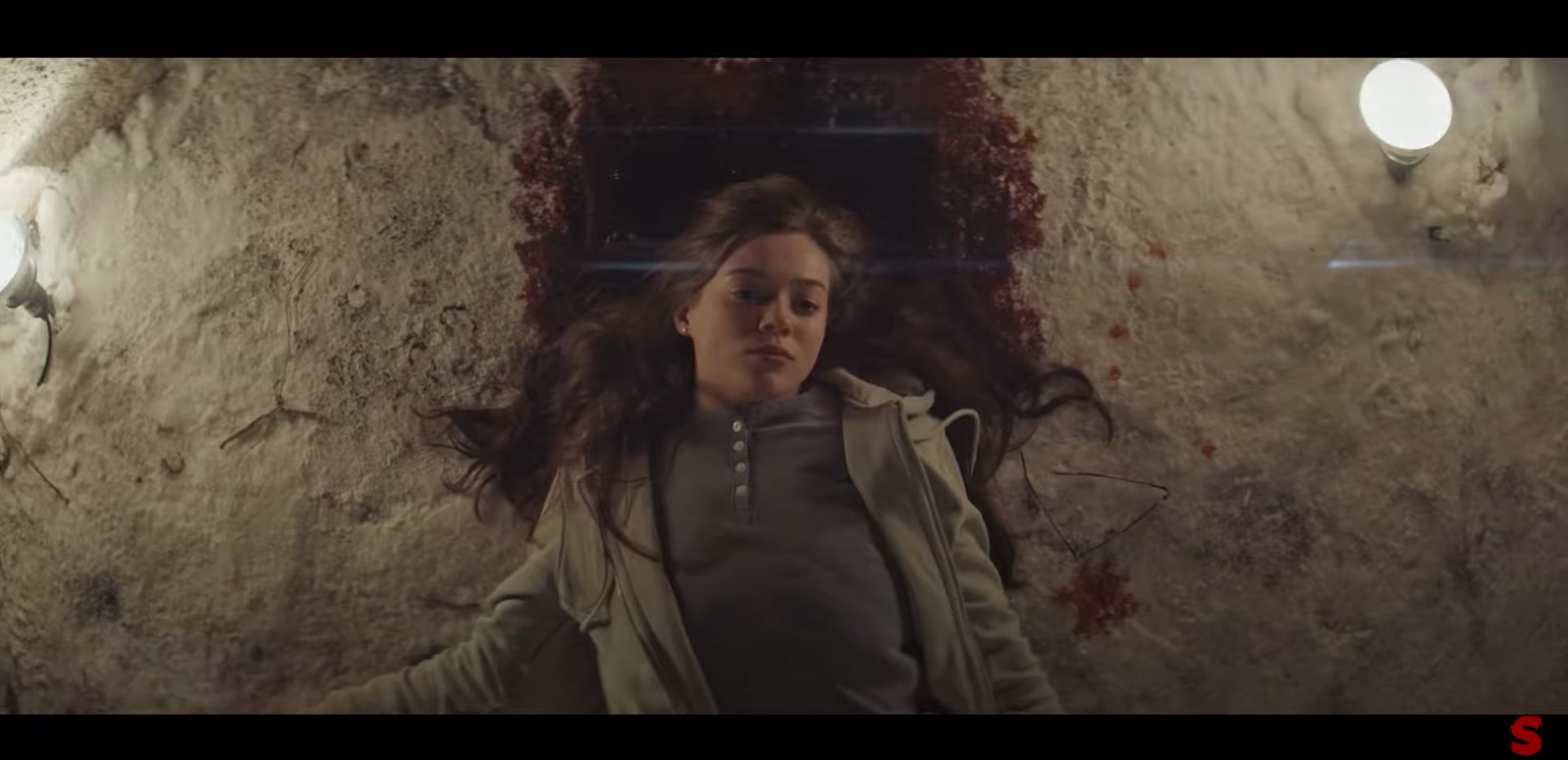
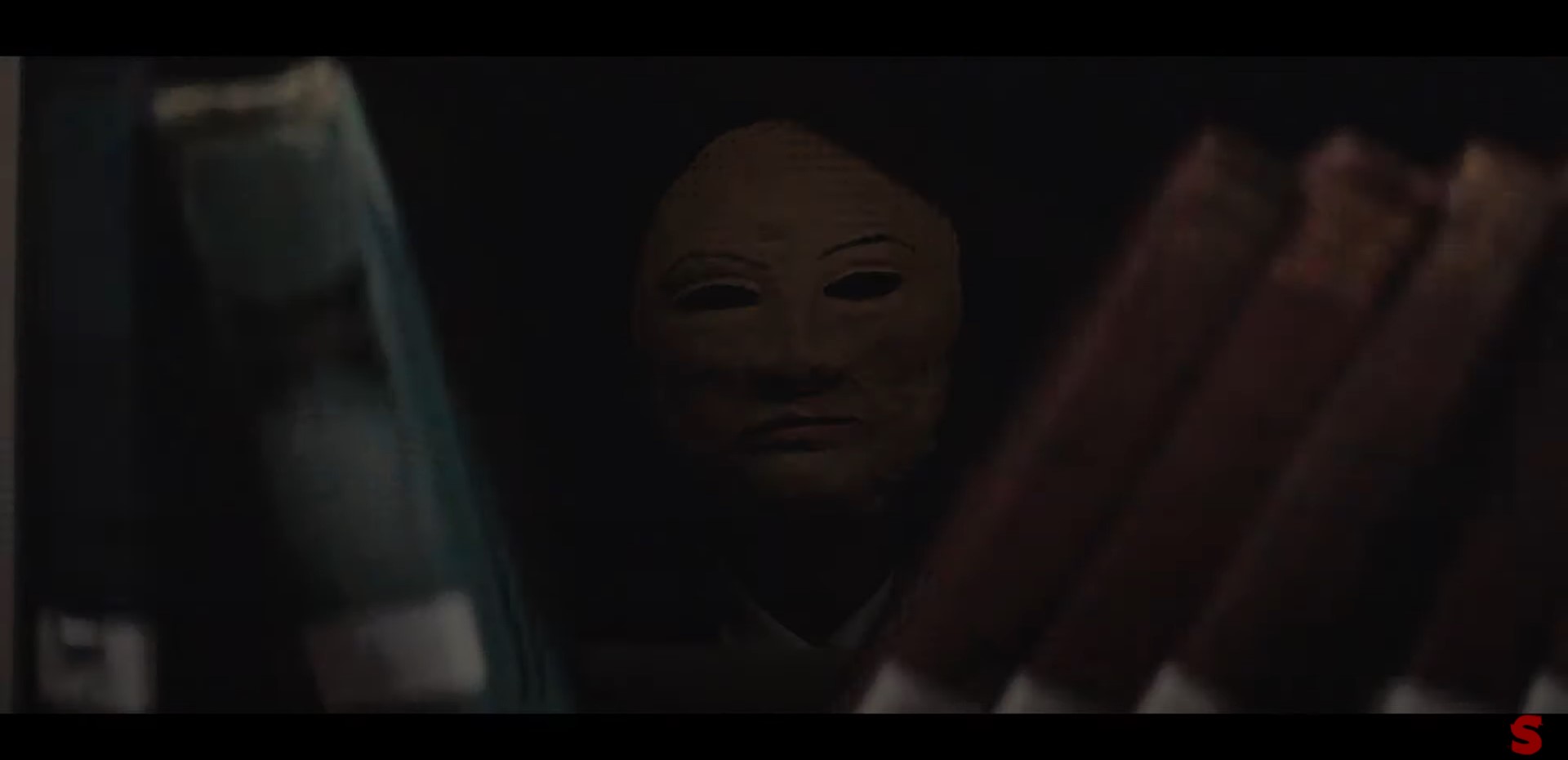
A practical joke in summoning a spirit sends one girl to die of mysterious circumstances at the isolated and elite all-girls boarding school of Edelvine Academy. At the top of the wait list is Camille Meadows who finds herself in mid-semester adversity with not only her studies but also the deceased girl’s group of browbeating friends as Camille replaces their friend’s now vacant opening. When another friend disappears and another dies in a freak accident, differences and quarrels are put aside before one of them becomes the next victim. The group conducts a seance to call their friend from beyond to discern whose taking them out one-by-one and the spirit’s cryptic response determined one thing evident, a killer, whether supernatural or real, will stop at nothing until every last one of them is dead.

In what feels like an extremely unquantifiable amount of time that has passed since the last high school teen slasher has graced our once beholding subgenre, “You’re Next” and “The Guest” screenwriter Simon Barrett ends up sneaking one into the fold before the grand fourth sequel release in the “Scream” series come mid-January 2022. “Seance” is the first feature length film directed by Barret who pens the supernatural slasher encrusted with snarky teenage melodrama agitated by a mysterious, unknown killer wreaking havoc upon the catfighting girls of Edelvine Academy. The adolescent cutthroat temperaments give way to actual throat cutting macabre in this whodunit thriller lessoned with a mix of the power of friendships and an attenuated lesbian aura presence throughout up until the very affirming finale in an allegorical show representing hiding in plain sight. The snowy and serene Manitoba-shot Canadian film is a production of HanWay Films (“The Guest”), Ingenious Media (“Unhinged”), and the Gothically-inclined Dark Castle Films (“Thirteen Ghosts”) with select producers Adam Wingard, who has a long his filmic history collaborating with Barret, Tomas Deckaj (“The Green Knight”), and Devan Towers (“Day of the Dead” television series).

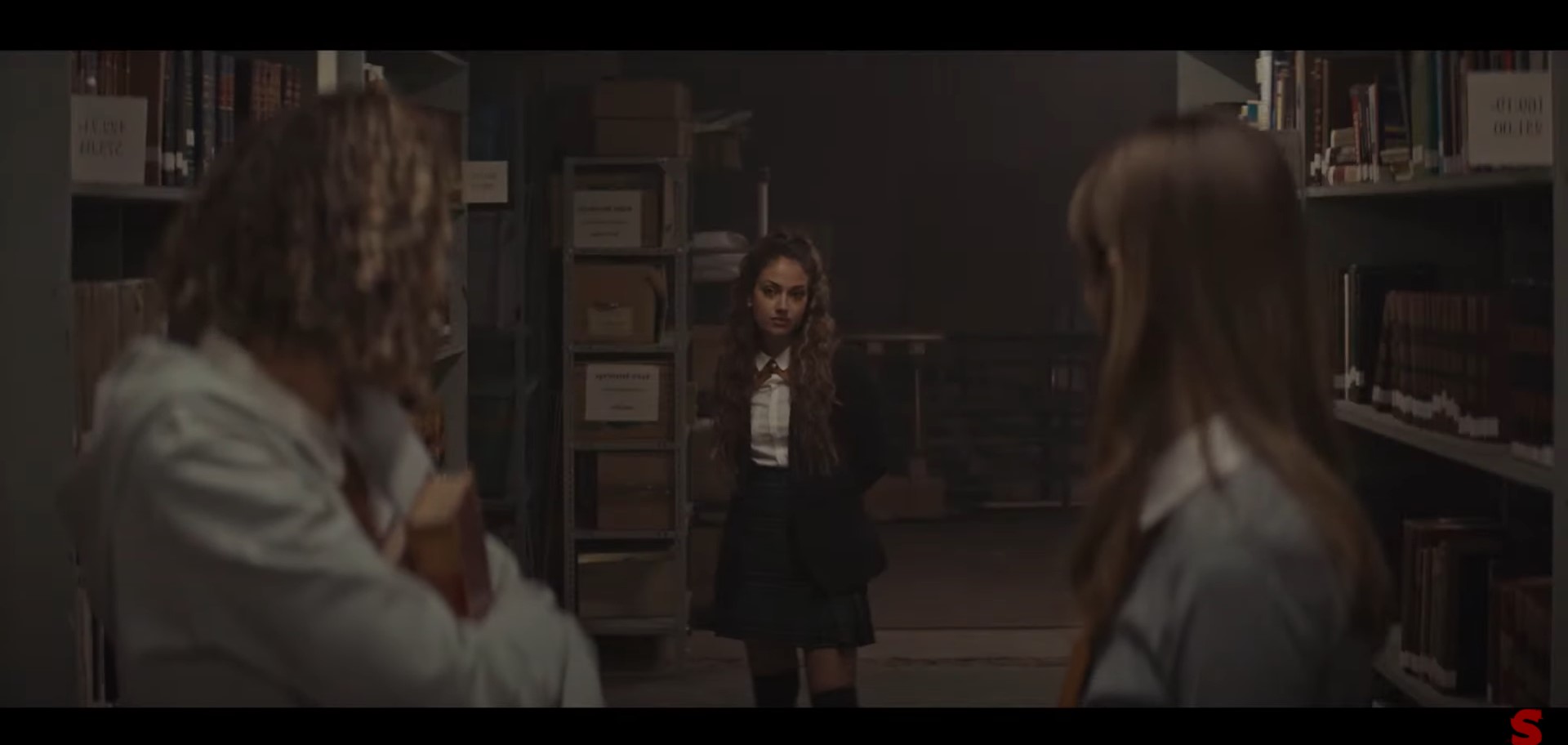
For High School girls, all the actresses with the exception for Ella-Rae Smith are mid-to-late 20’s with lead actress Suki Waterhouse (“The Bad Batch,” “Pride, Prejudice, and Zombies”) tipping the pendulum nipping at her 30s. However, Waterhouse and the others defy their actual corporal ages portraying teenagers in the throes of adolescent social clique.  Waterhouse plays the cool as a cucumber newcomer Camille to Edelvine Academy, befriending right off the bat with her personal Academy introductory host, a solitary Xanax-popper Helena (Smith).   Immediately, new girl Camille becomes public enemy number one with Edelvine’s most smug impractical prankers led by Alice played by Inanna Sarkis. On paper, Alice might have been the group’s ringleader, but the character doesn’t throw around a lot of power or is admired by followers, albeit Sarkis role permanency as the uptight and sarcastic bully or rad bad gal. Following Alice are ancillary player pieces to the group’s effort as a whole to be a thorn in Camille’ side just for being the unfortunate replacement of their dear dead friend. Between the brainy Bethany (Madison Beaty, “The Clovehitch Killer”) and the more elegant Yvonne (Stephanie Sy, “Tales from the Hood 3”) vie the potential right hands of Alice deduced from the dialogue and screen time hierarchy of their roles but they are definitely more interesting than Alice with a punch of flavor in the personalities, especially in Bethany who is built to be a master-whiz in conjuring up devilish pranks to play on her friends and enemies. Furthermore, there’s also the hint of pizzaz that is shamefully cut short and slidden under the radar with the last two in the coterie with the playgirl subtilties of Lenora (Jade Michael, “Fatal Friend Request”) and the unexplored suggestions of Roselind’s (Djouliet Amara, “Tales from the Hood 3”) sexuality, leaving their arcs unfulfilled. “Seance” cast fills out with “Books of Blood’s” Seamus Patterson in the single speaking male role in the entire film, “Cult of Chucky’s” Marina Stephenson Kerr as Edelvine’s firm-handed headmaster, and Megan Best playing the narrative’s lamented backbone of mysterious tragic circumstances.

Portions of where “Seance” flourishes are within the parameters of the teen slasher, a subgenre that lingers on into severe tedium much like the zombie films of the early 2010 decade. The late 90’s and well into the 2000s saw a slew (pun intended) of killer adolescent atrocities in film. Moviegoers were intrigued by the allusive masked killer that, for most of the time, had a palpable-to-satisfying twist ending after roughly 90 minutes of frantic chases, dooming nudity clauses, merciless kills, and one stupid decision to go back into that ominous house after another. Then, when 2010 came along – poof – teen slashers were now a thing of the past, literally. Attempts were poor renditions of previous successes, rehashes of the once was, and didn’t quite tickle the right places. Slowly and surely, the wheels are turning on a rejuvenation of a new generation and Simon Barrett’s “Seance” serves a prime candidate for admittance. Isolated in the stillness of a snow-covered all girl school sets the intended mood for a campus killer, the girls have a warring dynamic mended by a need to survival commonality, and the what or the who that is slaying them is well kept out of sight with misdirection cues to make audiences think they have it all figured out. Plus, the climatic finale has not one twist, but two in its full of blood and surprise double twist spectacular. “Seance’s” character development is one annoyingly flawed aspect that bends the elbow at the wrong angle at times is how characters wonder off alone having just filled their youthful, spongy minds with knowledge that something or someone malevolent is after them. “One friend is missing. My other friend has mysteriously died in an accident. The Ouija board spells out certain doom and gloom. Yet, I’m going to practice my recital routine alone on a dimlit stage with my noise cancelling headphones on,” says nobody ever. “Seance:” “hold my beer!

“Seance” is more than a teen slasher, it’s Simon Barrett’s genre-bending good time and this Shudder-streaming 93-minute horror from Edelvine Academy is coming to Blu-ray home video courtesy of Acorn Media International come January 17th. The Region B UK release, PAL encoded, BD25 is certified 18 for strong bloody violence and presents “Seance” in a widescreen 2.39:1 aspect ratio. Many of the scenes circulate through repeatedly – the snow-covered school, the drab hallways, the quaint rooms, and the bleak storage room – that don’t offer a ton of vivid aesthetics within a limited range, but quality-wise, there’s a dour, shadowy coating accompanying the coarsely, unpretentious realism. However, the fishbowl lens on certain scenes poorly captured smaller spaces, leaving already thin actresses looking anorexic, and for some reason, the decision to position the actresses shoulder-to-shoulder does antagonize that realism as those, who were mischievous back in the day and sent to the principal’s office, never sat right up against a fellow classmate. The English Dolby Digital 5.1 surround sound has favorable qualities with a well diverse mix of ambience, a strong dialogue track, and a Sicker Man aka Tobias Vethake laying down a spectrum from brooding synth string pops, piano, and cello bass that stands out with profound poignancy to a lo-fi hip-hop beat and EDM noise of embroiled sounds. Special features include a commentary with Simon Barrett, a behind-the-scenes with select cast, minor outtakes, deleted scenes, a crude pre-production setup for the VFX decapitation scene, and a behind-the-scenes still gallery. “Seance” isn’t all Ouija boards and flickering candles as there’s more obscurity to the slasher than what meets the eye with its mania-driven motives and orientational undertones making this little-known film worth a look.

Dan Stevens. The New Face of EVIL? Freakin’ Love It! “The Guest” reviewed! (Second Sight Films / BD-R Screener)

Recently hospital discharged combat soldier David Collins visits a fallen brother in arms’ family, The Petersons, to convey their son’s last moments of love for his family.  Taken immediately in by the grieving mother, David stays for a few nights at the Peterson home, quickly befriending the family of four with his military “yes ma’am” charm and good looks.  When a string of accidental and homicide related deaths begin to flare up in what’s typically a quiet rural town, eldest daughter, Anna, suspicions turn to David.  As Anna digs deeper into David’s past, nothing can stop the elite special forces soldier from taking steps to protect his identity and his mission, even if that means turning the Petersons’ hometown into a deadly warzone. 

One part action, one part slasher – Adam Wingard’s “The Guest” is a hot take on the infiltrator horror subgenre.  The “Pop Skull” and “You’re Next” director, who went on to helm the epic clash of the two biggest creatures in all of creature feature history with this year’s “Godzilla vs. Kong,” directed “The Guest” to challenge the slasher narrative with an atypical, slightly campy, American indie thriller with an unanticipated and surprising twist that’s more than just your run-of-the-mill snapped war-traumatized soldier gone shell-shocked rogue.  The script reteams “Dead Birds’” writer Simon Barrett with Wingard for their eighth collaboration that pits all the story’s action into the rural confines of an unnamed small town in America while the actual shooting location takes place in New Mexico.  “The Guest” is a production of the UK based HanWay Films, which also oversaw the production of Wingard’s “You’re Next,” and Snoot Entertainment of the zomedy “Little Monsters” from the producing management team of Keith and Jess Wu Calder.

To put things simply, Dan Stevens is scary good.  The “Downtown Abbey” star plays the titular troublemaker and, now, I will never look at Matthew Crowley the same way again.  Stevens trades out the proper aristocracy of British English with a slight American English Southern draw, a heavily used trope portrayed with U.S. troops in cinema, but Stevens does more than just talk-the-talk.  The Surrey born actor who once played the Beast in Disney’s live-action version of “Beauty and the Beast” plays a different kind of monster that’s akin to a wolf in sheep’s clothing with David, adorning his physically fit character with a clandestine depth in his ambiguous background and sociopathic tendencies that makes him very much a mysterious maniac much in the same fashion as iconic slasher villains.  Trying to stop David’s undermining reign of controlled carnage is Anna Peterson, played by Maika Monroe (“It Follows,” “Independence Day:  Resurgence”).  Ana’s a levelheaded, yet rebellious, teenager adverse to being told what to do to much of her parents chagrin from dating a pot dealer to her objection in David’s stay with them.  Monre puts angsty effort behind Anna Peterson’s eyes, but the character herself is rather flimsy willing to put her trust in an unsponsored secret organization agent, “John Wick” films’ Lance Reddick, and his request to get into his car urgently without hesitation, but has a difficult time swallowing at her own pace her dead brother’s fellow soldier even with the stamp of whole heartily approval from her parents and little brother and photographic evidence of her brother’s relationship with David.  Yet, Barrett’s openly oblivious characters play into the slasher/thriller campiness of accepting everything at face value without ever an inkling of doubt.  Perfect examples of this would be 3/4th of the Peterson family: the mother (Sheila Kelley, “A Passion to Kill”) trust him with handling routine tasks like picking up her son from school or laundry, the father (the great supporting actor Leland Orser, “Alien:  Resurrection,” “The Bone Collector”) trusts him with personal secrets, and even the school outcast brother (Brendan Meyer, “The Color of Space”) desperately believes David is his friend.  Tabatha Shaun, Joel David Moore, Ethan Embry, Chase Williamson, and Steven Brown co-star.

Pulling loads of admiration and inspiration from the “Halloween” franchise, “The Guest” not only rocks as an action thriller but also mimicking a retrograded slasher in a subgenre slapped with a label I like to call the infiltrator subgenre.  David Collins is no mindless, walking and not talking, killing machine like The Shape, but instead gains trust, backdoors problems, and has the quick confident moves to see the job through with hand-to-hand combat and other more visceral merciless methods.  Barrett and Wingard purposefully leave much to the imagination with David’s past, turning what would usually outcome as frustrating ambiguity for an essential character to more of an enigmatic antagonist allure similar to the way we don’t have a clear-cut motivation why Michael Myers or Jason Voorhees shish kabob horny teens without a second thought.  Sure, there are sequels that try to enlighten reasons, such as being pure evil, but abstract is not concrete.  Same with “The Guest” with a control spoon feeding of just enough backstory to wet one’s thirst for more on David’s ruthless sociopathic behavior.  David’s also a very likeable with the impression that his good deeds done in violence speaks to a justice-driven character, but what’s brilliant about David, and enhanced profoundly by Dan Stevens, is that when he does kill someone in cold blood for this first time, the impact is tremendously unreal because it’s unexpected and off brand from the Barrett and Wingard’s buildup of him being a standup and do-what’s-right soldier.

Second Sight Films invites you to be their guest for their limited edition 4K Ultra Hi-Defintionand Blu-ray of Adam Wingard’s “The Guest” that hit retail shelves this month on October 25th.  The stunning makeover of this cult favorite, limited to 5,000 copies, offers a brand new color grading for both formats supervised by Wingard with 4K UHD presented in Dolby Vision HDR.  Since a BDR was provided, commenting on the exact audio and video quality of the release isn’t possible, but rest assured, knowing the care and attention Second Sight Films put into their releases, “The Guest” will surely not overstay it’s welcome in the image and audio department.  The film has runtime at 100 minutes and a UK 15 certification; however, there is much more to this 3-disc release that includes the film’s 80’s inspired soundtrack on a compact disc.  Special features include new Adam Wingard and Simon Barrett commentary plus an archive commentary track from the two filmmakers, a new interview with actor Dan Stevens The Uninvited Guest, a new interview with actress Maika Monroe A Perfect Stranger, a new interview with Wingard and Barett By Invitation Only, a new interview with producers Keith and Jessica Wu Calder Producing the Guest, a new interview with director of photography Robby Baumgartner Light and Fog, a new interview with production designer Tom Hammock Lightning Strikes, a new interview with composer Steve Moore The Sounds of The Guest, and deleted and alternate including an outtake gag with optional director commentary.  With this limited release comes a rigid slipcase with new artwork by Adam Stothard, 160-page booklet with new essays by script to screen storyboards and extracts, behind the scenes photos, Wingard’s soundtrack notes, and new essays about the film, and, lastly, 6 collector’s art cards. In a time when modern horror desperately needs a solid sequel, “The Guest” is a good candidate with it’s captivating villain with so much story still left to tell. Hopefully, Second Sight Films’ irrefutable powerhouse release will ignite step-taking action amongst the rumors.

Grab it fast!  Liminted Edition “The Guest” on 4K UHD and Blu-ray Now at Amazon.com!

No Sam Raimi. No Bruce Campbell. Just the EVIL! “Evil Dead Trap” reviewed (Unearthed Films / Blu-ray)


Nami, a Japanese late night show host, is seeing her ratings dipping.  Though not in danger of losing her all-female produced show, Nami decides take her team on an investigation of a mysterious snuff tape that was mailed to her specifically.  Left for her is a bread crumb trail of directions to an abandoned military base, Nami and her crew explore the campus’s rundown structure, searching for evidence, a body, a story that they can televise.  Ignoring the dangerous presence around them, they dig deeper into the dilapidating labyrinth where they horrifying discover something waiting for them laid out in a cruel plan of deadly traps with a maniac pulling at all the strings. 

Bred out of a pedigree of pinkusploitations and a nation’s crisis of identity after the Second Great War, “Evil Dead Trap” is a greatly symbolized Japanese machination tale helmed by pink film director Toshiharu Ikeda (“Sex Hunter,” “Angel Guts:  Red Porno”) and penned by an equally historical pink film screenwriter and “Angel Guts” manga series creator Takashi Ishii (“Girl and the Wooden Horse Torture,” “Angel Guts” series).  Also known under its original Japanese title, “Shiryô no wana,” as well as, and my personal favorite, “Tokyo Snuff,” in Spain, “Evil Dead Trap’s” smorgasbord of rape, torture, and gory death naturally shocked viewers upon release and continues to do so as one of J-Horror’s branched out films that segued out from the brutal and depraved pink film inspired context into the new longstanding ghost genre we’ve seen over the last few decades with “Ringu” (“The Ring”) or “Ju-on” (“The Grudge”).  The production company Joy Pack Films, behind the 1980’s obscure Japan films, such as Genji Nakamura’s “Go For Broke” and Banmel Takahashi’s “Wolf,” houses the “Evil Dead Trap” from executive producer Tadao Masumizu.

If you recognize a couple cast members, or maybe just their naked bodies, then there’s something depraved about you!  With all kidding aside, but no seriously, if Rei (Hitomi Kobayashi) or Kondo (Masahiko Abe) look familiar, then you my friend are pink film aficionados as Kobayashi has starred in “Hard Petting” and “Young Girl Story” and Abe was in these pink film hits the “Pink Curtain” trilogy and “Female College Dorm Vs Nursing School Dormitory.”  If these faces didn’t touch you in any kind of sensual way, no worries, leading lady Miyuki Ono brings the star power.  The “Black Rain’s” Ono plays Nami, a go-getter television host/personality with her sights set on ramping up her late night show’s ratings, but also sucked into the posted snuff film’s darkest allure that’s personally calling her into to a precarious story lead.   Nami could also be a homage to one of screenwriter Takashi Ishii’s manga-inspired pink films entitled “Angel Guts: Nami” and the title might not be the only aspect paid honor to with that particular Nami written with a journalistic vocation drawn into and obsessed with a serial rapist’s attacks, making a striking parallel between the two stories that are nearly a decade apart. Eriko Nakagawa and Aya Katsurgagi fill out Nami’s investigating team as Rei and Mako. As a whole, the characters lack personality; Rei and Kondo tickle with relationship woes that are snuffed out before fruition, Rie’s timid innocence barely peaks through, and Nami and Mako’s thicker bond compared to the rest of the team is squashed to smithereens way before being suckled into note worthy tragedy. This late night show team has been reduced to slasher fodder and, honestly, I’m okay with that as we’re only here for the deadly traps. Noboru Mitani, Shinsuke Shimada, and Yûji Honma, as the mystery man looking for his brother, complete “Evil Dead Traps” casting.

“Evil Dead Trap” boasts a melting pot of inspirations, a mishmash of genres, and spins a nation’s split identity variation crowned in aberration. Diversely colorful neon-hazy lighting complimented by a Goblin-esque synth-rock soundtrack from Tomohiko Kira (“Shadow of the Wraith”), Toshiharu Ikeda shadows early Dario Argento inside and outside the popularity of the Italian giallo genre as the “Evil Dead Trap” murder-mystery horrors resemble more of a westernized slasher with a killer concealed behind a mask stalking a fringed, neglected compound in a conspicuous outfit. While the killer dons no hockey mask or snug in a mechanic’s jumpsuit, an equally domicile, yet more calculated, antagonist taunts more brains than brawns, especially with the severity of traps that seemingly float from out of nowhere. The fun is chiefly in the imagination of how the trap designs operate in the void of physics of a slasher fodder film so wipe clean the Jigsaw and the “Saw” films from your mind completely and relax to enjoy the outlandish kill scenes. Some of the kills are imperialistically inspired by Imperial Japan, that is, to blend the wartime nation’s atrocities with how the proud country wants to distance itself from that old-fashion, war-criminal, stoically perverse superstratum layer, but that’s were “Evil Dead Trap” pulls for most of the juicy parts as well as supplementing with Argento lighting, some, believe it or not, “Evil Dead” elements of that menacing presence bulldozing through the spiritual world, and an divergent climatic finale stuck to the narrative body that’s akin to pulling off the head of a doll and replacing it with T-Rex head’s. The uniformity quells under the pressure of how to end Nami’s and her attacker’s coda with pageantry weirdness that’s typical status quo Japanese cinema. Lots of symbolism, little modest explanation.

Get caught in “Evil Dead Trap” now back in print and on Blu-ray courtesy of Unearthed Films, distributed by MVD Visual, as part of the extreme label’s Unearthed Classics spine #5. The Blu-ray is presented in a matted 1.66:1 aspect ratio, a format rarely used in the States but widely used in other countries. Reverting to the 1.66:1 from Synapse’s 1.85:1 crop, Unearthed Films showcases more of the European feel, heightening that colorful vibrancy of the Argento-like schemes. Image quality has peaked on this transfer with natural grain with the 35mm stock, but details are not granularly sharp in an innate flaw of the time’s equipment and lighting. Shinichi Wakasa’s unobscured practical effects heed to the details and don’t necessary suffer the wrath of miniscule soft picture qualities when you’re impaling someone or birthing a slimy evil twin…you’ll see. Add in Ikeda’s wide range of shooting techniques, you’d think you’re watching Hitchcock or Raimi and the focus really lands there with the differently camera movements and techniques. The Japanese language single channel PCM audio fastens against that robust, vigorous quality to make “Evil Dead Trap’s” diverse range and depth that much more audibly striking, but there’s a good amount of silver lining in there being no damage albeit discernable, but not intrusive static to the audio files, dialogue is unobstructed and prominent, and the stellar synth-rock soundtrack nostalgically takes you back to when you first watched “Suspiria” or “Dawn of the Dead.” English subtitles are available but display with a few second delay which can be cumbersome if trying to keep up. Special features includes three commentaries that include director Toshiharu Ikeda and special effects supervisor Shinichi Wakasa, filmmaker Kurando Mitsutake (“Gun Woman”), and James Mudge of easternKicks. Plus, a Trappings of the Dead: Reflecting on the Japanese Cult Classic retrospect analysis from a Japanese film expert, Storyboards, Behind the scenes stills, promotional artwork, trailers, and a cardboard slipcover with phenomenal artwork. Highly recommend this atypical Japanese slasher, “Evil Dead Trap,” now on Blu-ray home video!

Own “Evil Dead Trap” on Blu-ray!

The EVILs of Slasherman! “Random Acts of Violence” reviewed! (Acorn Media / Blu-ray)

Comic book writer Todd has hit a writer’s block wall on the last issue of his one-shot, popular and extremely graphic series Slasherman based off the gruesome string of I-90 murders of the late 1980s where the killer murdered and mutilated his victims without ever being caught.  Looking for inspiration to conclude his life’s work, Todd, his girlfriend, investing publisher, and assistant head out on a road trip from Toronto to America, specially through the small town of McBain where the murders took place, but when recent mutilated bodies resemble the grisly deaths inside the colorful pages of his comics, the semi-fictional Slasherman story becomes full blown reality that places him and his friends in a maniacal killer’s path whose flipping through the pages of Todd’s murder-glorifying comic for inspiration of his own. 

Like many opinionated reviews before mine, I never imagined Jay Baruchel directing a horror movie.  The long time comedic actor with solid relationships working with other high profile comedians, such as Seth Rogen, Jonah Hill, and Danny McBride in some of the best notable comedies on the side of the century, has stepped into the shadows and professing his admiration for the genre we all love – horror. Baruchel cowrites and directs his first horror film, the big screen adaptation of Justin Gray and Jimmy Palmiotti’s “Random Acts of Violence” graphic novel. Fellow collaborator on the “Goon” movies, Jesse Chabot, branches out with Baruchel on the script and the two Canadian filmmakers yield an intense meta-gore picture focusing toward themes of lopsided public perspective and the glorifying of violence on other less physical mediums. Published in 2010 under Image Comics, the Gray and Palmiotti publication supplied a wealth of visceral material that unfolded faithfully in Baruchel’s Shudder distributed film as a stylish comicbook-esque narrative under the Toronto based Elevation Pictures, Wicked Big, and Manis Film production in association with Kickstart Comics and JoBro Productions. Palmiotti and Gray also serve as executive producers.


Struggling in the search for his perfect ending to Slasherman, Todd immerses himself in a cerebral fixation that envelops him more so then he would like to think.  Todd’s played by social activist and “Cabin in the Woods” actor Jesse Williams whose character is thrust into essentially making a choice, entertain his profession that earns blood money off the backbones of the I-90’s victims or subside his eagerness to finish his graphic novel and be team victim alongside his girlfriend Kathy (“The Faculty” and 2006’s “The Texas Chainsaw Massacre: The Beginning’s” Jordana Brewster) researching a novel that gives the slain victims a voice over their killer.  Brewster hasn’t changed one bit in a role that resembles a mature version of her “The Faculty” Delilah Profitt character complete with glasses and a thirst for reporting.  As a couple, Williams and Brewster hit little on their unconditional love  that’s apparent in the film’s final scenes.  Aside from their opening segment in their Toronto flat, their road trip is filled with Kathy berates Todd at times or Todd never seeming interested in Kathy or her work that’s seen counteractive to his own.  Affection is thin between them and I’m wondering if that’s more of the script writing than a flaw on Williams and Brewster who are credibility solid in their roles.  Same can be said about Jay Baruchel’s Ezra, the indie publisher sponsoring Slasherman, as the writer-director plays little to a publisher’s position of pushing the sales and marketing envolope and appears more to just be a tagalong friend with moments of quietly hawking.  Without much competition surrounding him, Slasherman is the most interesting character of the bunch from prolific stuntman, Simon Northwood.  With a 1000 yard stare that’s more menacing inducing than stemmed by trauma, Northwood brings the graphic novel character to all his glory as an aspiring artist in a contemporary parallelism to Todd who both see one another as their muse.  Northwood’s Slasherman is silently frightening, even more scary when he has to psych himself up to kill, and brings the physical stature of an unstoppable slasher genre maniac.  No one is safe from the merciless Slasherman, including those rounding out the cast in Niamh Wilson (“Saw III”), Clark Backo, Eric Osborne (“Pyewacket”), Nia Roam (“Polar”), Aviva Mongillo, and Isaiah Rockcliffe.   

The hyper violence lands more with a firm hand making good on film title.  Baruchel doesn’t hold much, if anything, back when rectifying violence as the monolithic theme while hitting a few thought-provoking notes involving the public’s perspective on the infamous legacy of serial killers and the tragic, forgotten memory toward their victims.  Somewhere in the gutting-clutter is a message of meta-existentialism tearing between that thin line of a person’s cause and effect actions.  Without the I-90 killer, Todd would not been stimulated into creating the deeply grim anti-heroic antics of Slasherman and, visa-versa, Slasherman would not have returned, coming out from retirement, if it wasn’t for Todd’s life’s work and lack of series conclusion for the Slasherman character speaking to Slasherman’s sanguinary artistic side.  One aspect stiffly hard to place your finger on is Todd’s connection with the town of McBain.  Other than a brief voice over exchange with Ezra, who mentions Mcbain is Todd’s hometown area, not much more of that pivotal connective tissue seizes grounding Todd, but the graphic novelist experiences a multitude of images streaming through his far off gazes, thoughts, and dreams. A boy, the boy’s mother who we know to be one of Slasherman’s victims because of Kathy’s research book, and the collateral damage of some great magnitude of violence surrounding them carry little weight to Todd’s psyche when struggling to piece his visions and these people’s bloodshed moment together and one reasonable theory that might explain that disconnect on our part is partially racially motivated, a detail indicative of gross assumption but a detail that can easily deceive you if you’re not knowledgeable enough about the cast you’re watching. My two cents is not randomized at all on Jay Baruchel’s “Random Acts of Violence” as it’s a brazenly deep and vicious first attempt horror in his own manic words from the glossy, leafy pages of the same titular graphic novel to the tellies of terror now on home media release.

Classified 18 for strong bloody violence and gore, “Random Acts of Violence” hits Blu-ray media shelves courtesy of Acorn Media International. The region 2, PAL encoded single disc BD25 has a runtime of 81 minutes and is presented in a slightly cropped widescreen 2.38:1 aspect ratio. A diverse hue palette of neon extricates Baruchel’s off-brand, real-time comic layout, creating a gritty, yet vibrant world all his own in a near window-blinds noir fashion. The tinkering of tints reaches almost Italian giallo levels without playing much with lighting and fog, relying heavily on the different neon vibrancy as if a colorist was right there pigmenting each scene as it played out. The English language Dolby Digital 5.1 surround sound discerns very well across the board with robust dialogue that even with Williams’ slight lisp, every single word can be hung on. I didn’t think there was a ton of opportunity for depth and range as much of the action is in staged front side of the camera, but for what little there was, those areas saw solid, identifiable outputs. Bonus features include a zoom interview with a very animated Jay Baruchel providing the in depth inner works of the conception of his film while sporting a retro Montreal Expos ballcap, a showreel-esque promo entitled More Than Just A Scary Movie offers brief opinions, thoughts, and highlights on the film edited from longer, on-set interviews, and a look inside how to make an action scene. An on-your-toes, gut-wrenching slasher with a juicy slice of meta proves Jay Baruchel can wander into any genre and come out on top, but “Random Acts of Violence” has kinks to straighten out in this young director’s sophomore feature.