Mother Russia’s Most EVIL Serial Killer is “Evilenko” reviewed! (Unearthed Films / Limited Collector’s Edition 4K UHD and Blu-ray)

Limited Collector’s Edition 4K and Blu-ray Available Here!

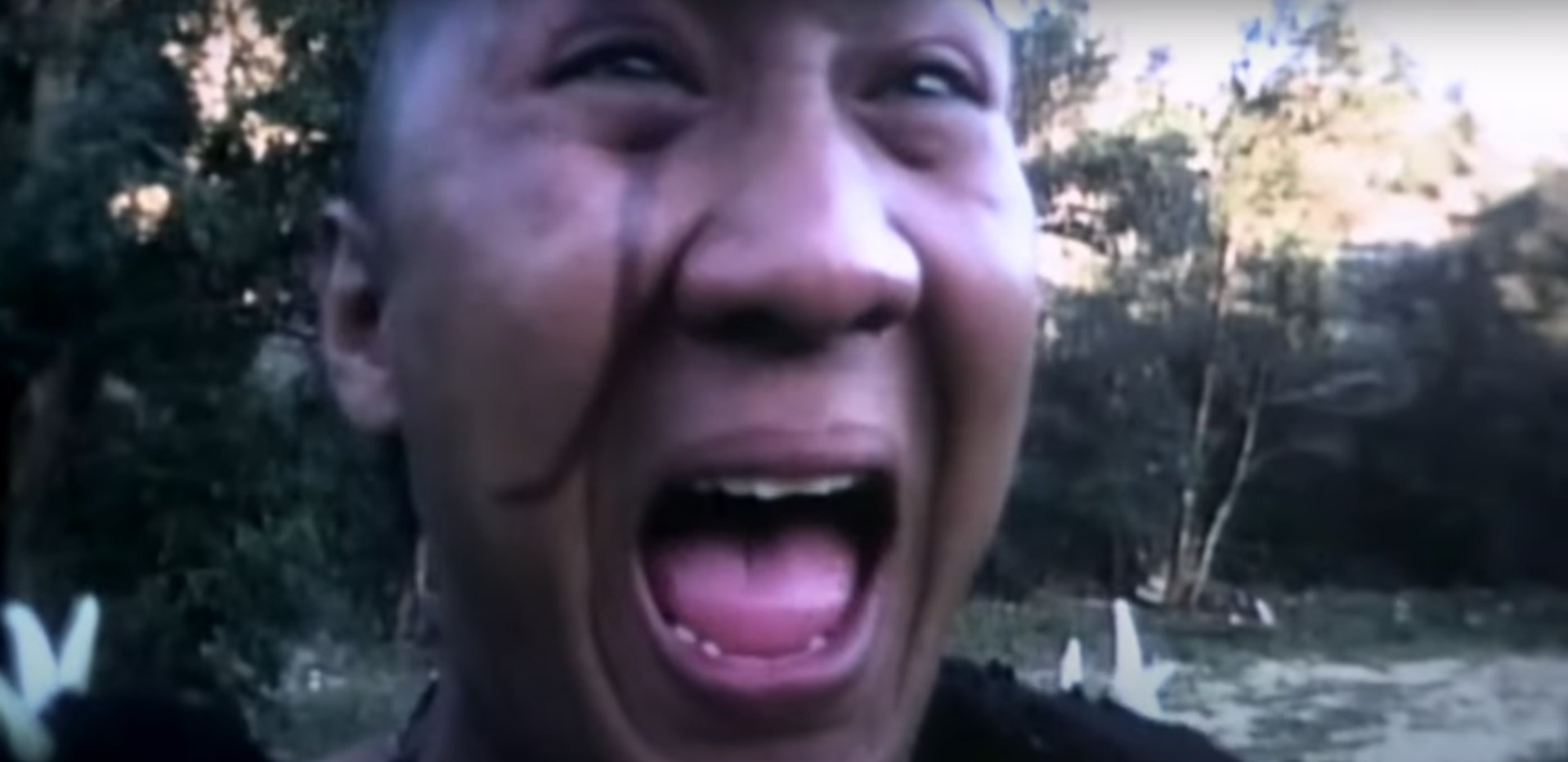
Kyiv, 1984 – An aging schoolteacher named Andrej Evilenko is stuck in Josef Stalin’s quickly dwindling sociopolitical communism party and finds himself dismissed from the school after being accused of attempted rape of one of his preteen students.  His release from vocation obligates him to write letters to the Communist party still clinging to control and from those letters comes a job with the KGB under the guise of a railroad inspector.  Evilenko’s empowerment by the party drives his dangerous urges to rape, kill, and cannibalize women and children over years around Kyiv and Crimea, using his position of inspector to travel.  In 1987, Magistrate inspector, Vadim Lesiev, is assigned by the D.A. to hunt down the serial killer who has by then murdered over 30 victims.  Over the course of the next eight years, Lesiev finds himself chasing his tail and fearing for his own family’s safety against a monster that has all of Kyiv frightened. 

Based off the true crime story of notorious Soviet Russian serial killer Andrei Chikatilo, “Evilenko” tells the fantastically frightful tale of the real “Butcher of Rostov” who did confess and was convicted for rape, murder, and the cannibalization of 52 young women and children, of both sexes, from 1978 to 1990.  The Italian-English production is spearheaded by Italian filmmaker David Grieco who directs the film as well as supplies the story’s base material from his own semi-biographical novel on Andrej Chiktilo, entitled “The Communist Who Ate Children” (“Il comunista che mangiava i bambini”).  Grieco, the son of the of the founding members of the Communist party, finds a financial means to produce a visual adaptation from Britain’s Pacific Pictures consisting of Michael Cowan and Jason Plette of “Killer Tongue” and produced by Italy’s Mario Cotone (“Malena”), representing the MiBAC, the Italian Ministry of Cultural Activity.
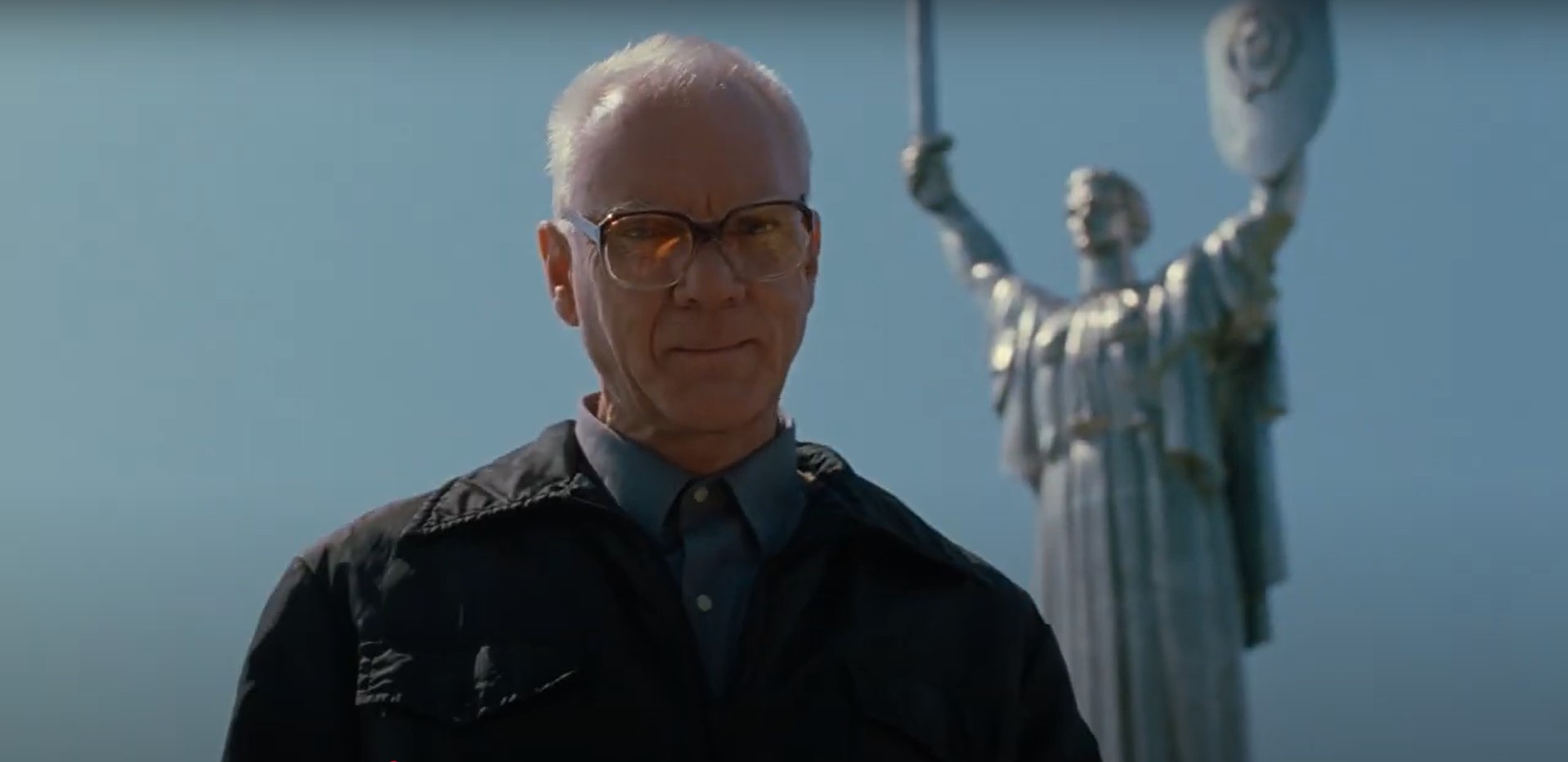
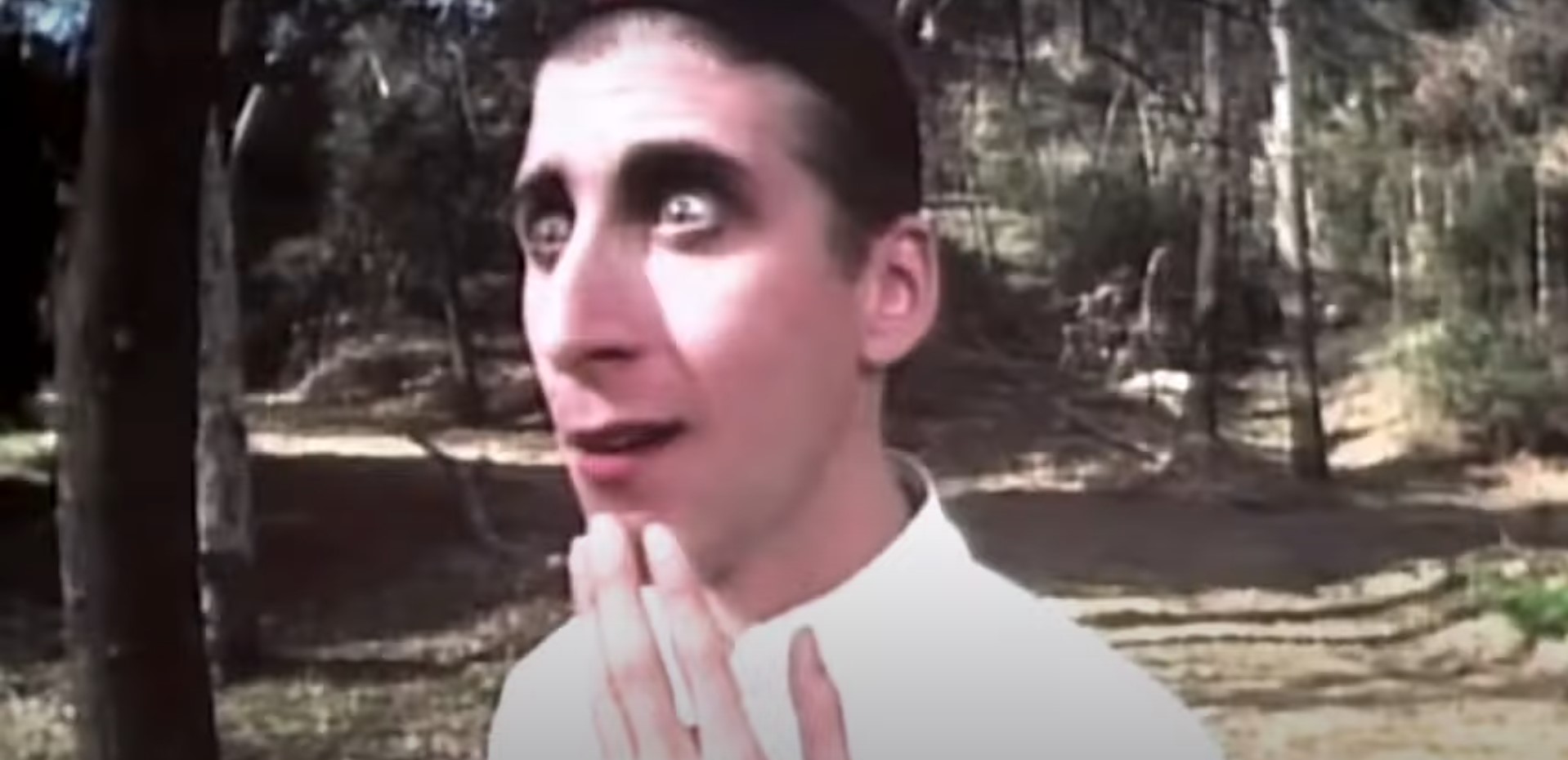
Who better than to portray a variant of the child molesting, murdering, and eating Soviet Andrej Chikatilo than Malcolm McDowell, the British actor who is no stranger to controversial films and performances having the lead roles in both Stanley Kubrick’s celebrated violence in a dystopian society in “A Clockwork Orange” and in the pornography spliced infiltrated titular performance film of the sultry period drama “Caligula.”  Being older and wiser doesn’t phase McDowell to shy away from committing to difficult scenes involving minor aged costars, especially scenes with sexually ambiguous dialogue and being pants less while speaking it, and while not a physically demanding role for McDowell nor is it filled with the intense-eyed actor’s usual fiery fervor, but in the shoes of Evilenko, he nails down the real serial killer Chikatilo’s exterior appearance, despite attempting to make McDowell appear younger with just only a wig to convince audiences of the 20-year span in the story, and touches upon the oddities and the quirks that make Chikatilo a delusionally faithful comrade, justified by his own investment into the communist party.  Evilenko’s archnemesis comes in the form of district attorney magistrate investigator Vadim Lesiev, played by the underutilized New Zealand born actor Marton Csokas (“Lord of the Rings,” “Cuckoo”).  “Evilenko” is clearly the Malcolm McDowell show but Csokas gives his all to a man not only doing his duty as an official of the Russian pervading prosecution but also as a family man haunted by his inadequacies and his inabilities to catch the perverted serial killer that might just strike close to home, putting Lesiev on edge with that nagging worriment.  Grieco’s editing and story development greatly undercurrent Csoka’s motivations and plights, distorting his complexities to a minor key of his true self, and letting McDowell have free reign over his subsidiary counterpart.   Yet, neither character is fleshed out definitively, none to compel a reason for their idiosyncratic methods and behaviors, which goes hand-in-hand with the purgatorial editing that is loose with the timeframe.  Ruby Krammer (“Alien Exorcism”), Frances Barber (“Superstitition”), Vladimir Levitskiy, Ihor Ciszkewycz, John Benfield (“Hitler’s S.S.:  Portrait in Evil”), and Ronald Pickup (“Zulu Dawn”) as a psychotherapist assisting tracking down the killer.  
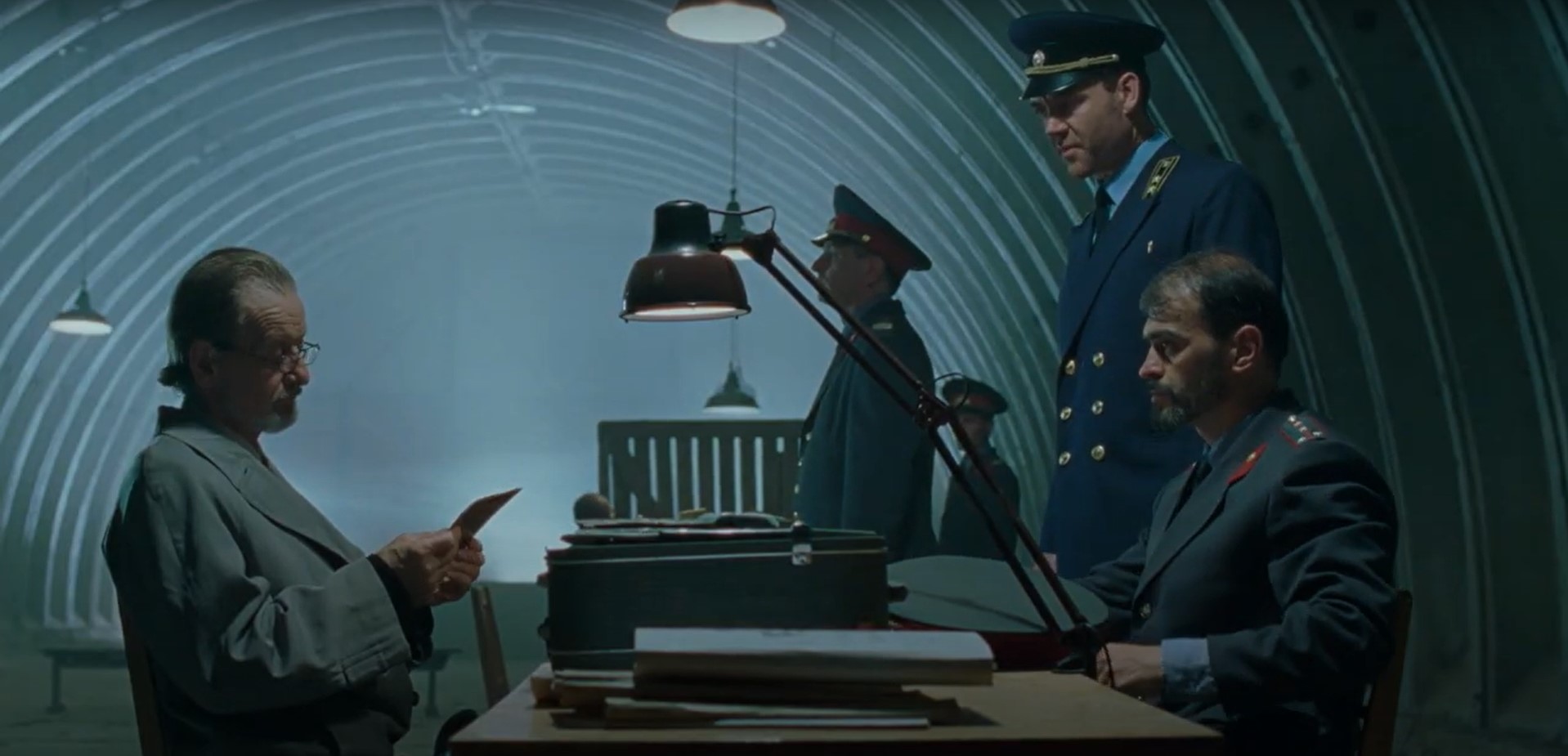
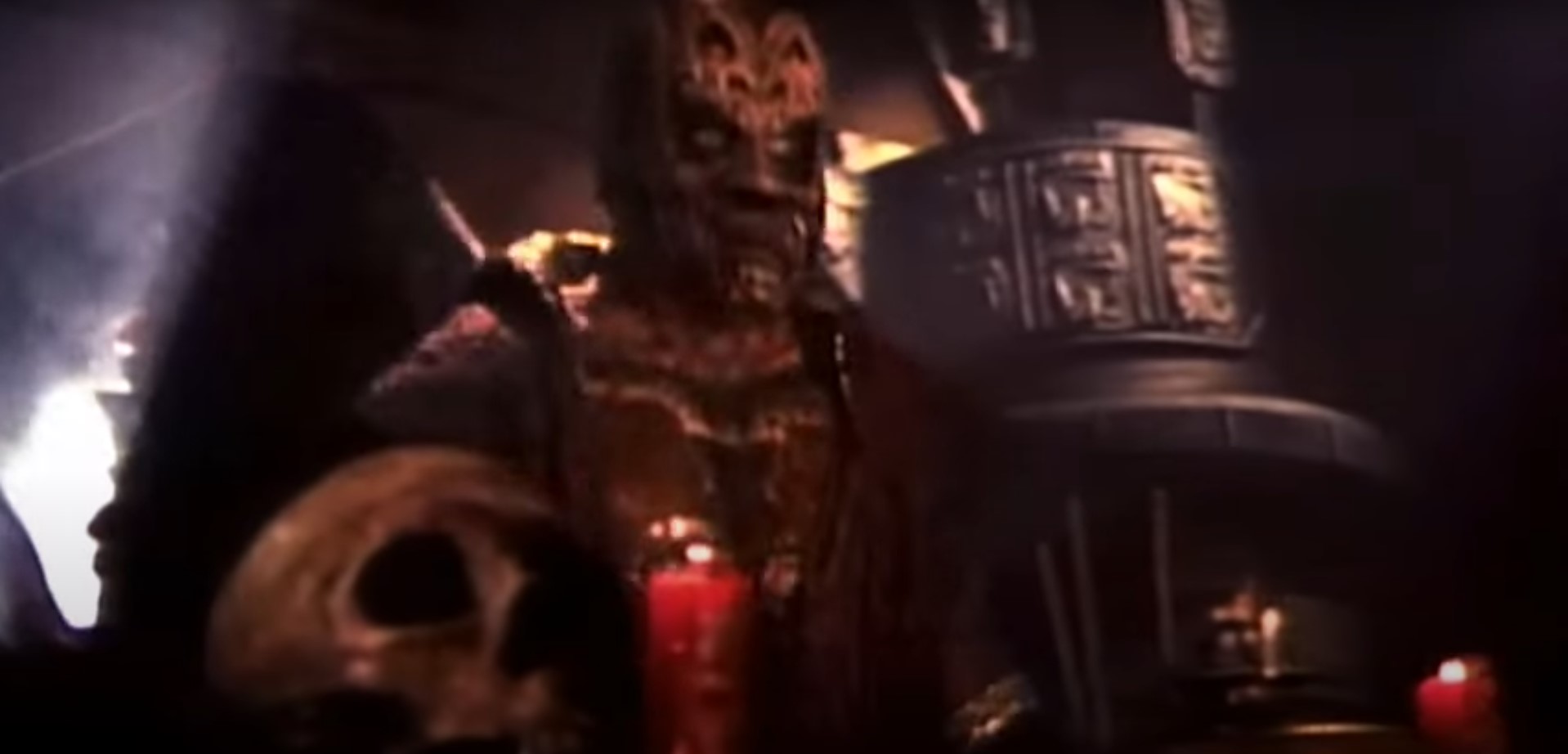
As much as the Grieco and McDowell dynamic works to monstrously depict a coldhearted and crafty serial killer coupled with a sliver of slithering supernatural propensities to lure women and children in a fixed trance or, in more conventional means, into doing what he wants with an spellbinding combination of stares, manipulative conversation, or just overall emitting a towering communist cloud of authority, “Evilenko” is deflated by the story’s time lapsing.  Opening with Kyiv 1984 and then subsequently in Crimea five years later in 1989, the noting of years or periods is hereafter eliminated from the narrative that becomes a back-and-forth yarn between a select of Evilenko’s pied piper lures and kills and magistrate Lesiev always behind the eightball pursuit of the elusive, unknown killer.  There’s a loss of sight on Lesiev’s psyche that is very important to the story and more so at the climatic interrogation scene where both men are stark-naked in a power and controlling situation that harks back to Evilenko’s mesmerizing tactics used against the adolescent prey and Lesiev’s fear and obsession of losing his family to what once was an uncatchable slaughterer who hallmarked with mutilation and devouring.  Grieco’s willingness to be grisly is tamer than the expected based off the prologue scenes of Evilenko exploiting and nearly raping a preteen girl but doesn’t take away the effect that the entire narrative arouses an uncomfortable experience teased to always be on the edge of overly graphic but never breaking that threshold; “Evilenko” is one of the biggest blue balls instigators is in last 20 years and that rush of not seeing or knowing can be more thrillingly charged for some than anything totally explicit ever could produce. 

Unearthed Films limited collector’s edition has 2-disc, dual format capacity with a 4K UHD and Blu-ray.  The second 4K UHD from the label, behind their release of “The Guyver,” solidifies the extreme horror company a player in the ultra high-definition game.  The New 4K transfer restoration of the original camera negative is HVEC encoded, presented in a widescreen 1.85:1 aspect ratio with 2160p UHD, on a massive three layered BD100.  The Blu-ray comes AVC encoded, 1080p high-definition, on a BD50, presented in the same aspect ratio.  What’s gathered from both presentations is that there’s nothing to fault them with as both excel to their max output abilities.  In fact, the transfers are pretty much identical, integrally achieved by digital optimization of an already optimized digital camera, a Sony PMWEX3 with 35mm adapters, which at that time was the bigger brother and flagship model of the Sony line.  A slight grading reduction instills a sense of austere or lackluster coloring that mocks a communist Russia veneer.  Close ups on McDowell’s unique features and the expound of particulars in the surroundings, especially when engulfed in leaf-covered and tree-thick woods, tell of the emerged details and textures in a higher pixel count.  An English DTS-HD 5.1 Master Audio is the sole mix available.  The back and side channels are essentially used sparing for a few flakes of brief ambient hubbub in what’s mostly a frontloaded conversational piece of mostly McDowell in one of his great monologuing moments. We get some nice oblong orchestral pieces from the late David Lynch regular composer Angelo Badalamenti (“Lost Highway,” “Twin Peaks”) that incorporates haunting harmonies and soft, ethereal vocals that play into the loss of innocence theme. Dialogue’s healthy and prominently favorable next to the unchallenged low ran range. English subtitles are available for selection. The BD100 offers only the feature, and a new commentary track with director/writer David Griece and star Malcolm McDowell while the Blu-ray offers the same commentary plus Evilenko Dossier: Andrei Chikatilo, the examination of the real killer against the onscreen rendition, cast and crew interviews with Grieco, McDowell, and Badalamenti, a photo gallery, and the original film trailer all within the bonus content of a fluid menu with Badalamenti’s and vocalist Dolores O’Riordan’s main track “Angels Go to Heaven.” The limited collector’s edition is housed in a cardboard slipcover of one of the many variants of Malcolm McDowells face slathered in soviet red. The black Amaray has the same cover art with no reversible cover. The discs are snap-locked in place on opposite sides, pressed with another slathered in red image pulled from powerful interrogation scene between Evilenko and Lesiev. Both formats are not rated, locked region A encoded, and have a runtime of 111 minutes.

Last Rites: “Evilenko” is a heavy story that needed to be told. You don’t hear much about the USSR vulnerability and the real-life serial killer had frightened the proud, the stoic, and the impoverished alike as “Evilenko” seers as a case study mental illness, is a metaphor for deteriorating Communism, and a tale too terrible to forget and despite some pacing issues and timeline infractions, Grieco and McDowell pull off a rather nasty semi-doc of one of the worst killers to ever live.
Limited Collector’s Edition 4K and Blu-ray Available Here!

Etiquette over EVIL Shot in Super 8! “Kung Fu Rascals” reviewed! (Visual Vengeance / Blu-ray)

Kung Fu Rascals Kicking Butt on Blu-ray!

Chen Chow Mein expertly steals an ancient tablet from the evil overlord Bamboo Man from Ka Pow whose plan is to seek complete and total dominion with the tablet stone.  Chen regroups with this acolyte pupils, Reepo and Lao Ze, to visit an old wise man for translation of the tablet’s mysteries and follow it’s mapped out quest that’ll lead them to glory over the land’s malevolent beings, but the Bamboo Man from Ka Pow will not let their journey be so easy by dispatching head minion Raspmutant the Mad Monk to hire the corrupt Sherriff of Ching Wa County and his two apprentices, Dar Ling and Ba Foon, as well as summoning the monolithic Neo Titan to stop them at all costs.  Always training their Kung-Fu etiquette, the trio embark on a journey through a land filled with evil ninja henchmen and must fight together to finish the journey.

Sculptor and creature effects guru Seve Wang might be best known for his work on some of the genre’s most memorable and favorite characters, such as designing the final extraterrestrial jungle hunter of John McTiernan’s “Predator,” created the Mohawk Spider Gremlin in Joe Dante’s “Gremlins 2:  The New Batch,” and sculpted the failed Ripley clones in “Alien Resurrection” amongst other notable cult and blockbuster films.  What you might not know is that Steve Wang had also directed, incorporating too his special effects and sculpting talents behind the camera in a debut feature, a homage to the Kung-Fu and Kaiju genres, titled “Kung Fun Rascals.”  Wang also cowrote the 1992 film with another special effects artist and actor Johnnie S. Espiritu (aka Johnnie Saiko) of “Hell Comes to Frogtown” and “Aliens vs. Predator:  Requiem.”  Wang self-produced the film after a series of short films to gain financial backing for a feature-length production.

On any self-produced, independent film, the cast usually wears multiple hats.  “Kung Fu Rascals” was no different as writer-director-producer-caterer-sculptor-and etc., Steve Wang also starred as Chen Chow Mien, an expert Kung-Fu fighter who steals a pivotal stone tablet from the Bamboo Man of Ka Pow, one of the many roles played by Ted Smith.  Wang and Smith are friends, and that age-old motif of a friend casted film holds very true for “Kung Fu Rascals,” comprised of mostly the director’s friends, who are also special effects and makeup artists, to accomplish his dream of branching out into a different field in filmmaking.  Johnnie Saiko is also one of those friends and is one of the two actors in this Kung-Fu romp playing Reepo, the trio’s good-natured goofball stylized like a character out of a “Mad Max” movie garbed in black and with a standing mohawk.  The third that rounds out the team is Lao Ze from one of the few actors initially not a part of Wang’s friend pool in Troy Fromin (“Shrunken Heads”).  Quaintly and quietly inspired by the antics and approaches of “The Three Stooges,” the “Kung Fu Rascals” march to a different dynamic drum as quasi-foolish, good-hearted good guys acted with slapstick, sure-fisted parody against a hapless army of animal-flavored mutants and their master with a flair for villainy.  Along with that master villain role, Smith continues his trend of being the guy in the suit throughout the film by being a giant Kaiju Meta Spartan and hilariously plays out of the suit with Dar Ling, a queer flamboyant henchman alongside fellow henchmen and Chicken-style Kung-Fu fighter Ba Foon (Aaron Simms) as they add a sense of diversity and daffy under the leadership Les Claypool’s Sherriff of Ching Wa County.  Yes, the same Les Claypool from the band Primus.  The cast rounds out with Cleve Hall (“The Halfway House”) as an old wise, creepy, and slightly uncouth clairvoyant, Matt Rose as the wild-eyed torturer, Michelle McCrary as The Spider Witch, Ed Yang as the other Kaiju Neo Titan, Tom Martinek as the hoppy Frog guard, and Wyatt Weed (“Predator 2”) doing the devil in the details with every step as the fully anthropomorphic Pig fitted Raspmutant the Mad Monk.

“Kung Fu Rascals” is the tastier, punchier, made with more heart version of “Kung Pow,” and I don’t mean the Chinese spicy stir-fry chicken dish with hints of peanut and accompanied with vegetables and peppers.  For an independent, first-time feature on a budget, Steve Wang and friends sculps and fashions meticulous creatures from head-to-toe.  Not one latex ear, not one molded snout, and not one full-body outfit appears shoddy or cheap overtop encased actors who know what to do underneath all that masking makeup and rubber.  On top of that, the fight choreography, editing, and dimensional effects are high level pointing in all the right directions with interesting camera visuals and angles to turn a little production like “Kung Fu Rascals” into a fully-fledged feature that audiences of 1992 weren’t ready yet until Power Rangers explosively came onto the scene a year later.  Of course, there was “The Guyver” a year earlier, also from Steve Wang, but “The Guyver” was geared for a limited audience that blended science-fiction with gory elements.  “Kung Fu Rascals” settles at the other end of the spectrum with a more family-friendly façade with an homage to Asian cinema and medieval monsters.  “Kung Fu Rascals” might not have been made today being quite politically incorrect with its play-on-names, stereotypes, and white-washing Asians but in the end, it’s Kung-Fu etiquette is entertaining chop-socky. 

Visual Vengeance once again delivers.  A high-end presentation and package of Steve Wang’s “Kung Fu Rascals” finds Blu-ray gold with a high-definition release despite the film being shot in Super 8 film.  The AVC encoded, 1080p resolution, BD50 is presented in a 1:33:1 aspect ratio.  Super 8 is not peak definition or color saturation as the image is captured straight onto the celluloid, color and contrast in all, in a direct positive process that left hardly any room for cleaner reprocessing.  Scenes often look darker at a higher contrast on a lower, blockier resolution, decoding at a broad range of 8 to 25Mbps, and the editing, though keeping continuous fighting scenes seamless, fluctuates with surface finish inconsistency in shots that make some scenes appear dark in the daylight; this could also be result in the filming time-of-day.  Yet, the cinematography is excellent in capturing interesting visual angles and the lighting setup is stunning despite the unpolished Super 8.  Visual Vengeance continues to supply the technical disclaimer with the caveat of using the best possible source materials for their releases, including this director-supervised version of the standard definition master tape and original film elements, which had a few, very minor, linear scratches and dust/dirt speckles.  The English language Dolby Digital Stereo mix is quite sharp and clean that emulates the boxiness of Asian dubbing/ADR.  Thrown punches and kicks hit their audio marks with timed whack and thud Foley and the dialogue, through the cheesy and cheeky antics, suffers from no fidelity loss or reel damage.  I’m surprised how clean the track is with little-to-no static, crackling, or hissing. English subtitles are available though no listed on the back.  If looking for special features, Visual Vengeance has the definitive special features for the Steve Wang’s obscurity with a brand new feature length documentary The Making of Kung Fu Rascals containing interviews with cast and crew, two new feature-parallel commentary tracks with the first being the “Kung Fu Rascals” themselves, Steve Wang, Troy Fromin, and Johnnie Saiko, as well with composter-actor Les Claypool and actor Ted Smith and the second with film superfans Justin Decloux and Dylan Cheung, an exclusive reunion of the Rascals with a sit down conversation between Wang, Fromin, and Saiko, a Steve Wang and Les Claypool reunion, Film Threat editor Chris Gore interview on distributing the VHS, a behind-the-scenes video diary, the 30-minute “Kung Fun Rascals” Super 8 short film, the 9-minute “Code 9” Steve Wang short film, Film Threat video #6 behind-the-scenes article, film and behind-the-scene stills, and Visual Vengeance cut version of the “Kung Fu Rascals” trailer.  Visual Vengeance also has your physical needs covered, and no I don’t mean sexually, with a cardboard O-Slipcover illustrated with a new art design by Thomas “The Dude Designs” Hodge overtop the clear Blu-ray Amaray case.  The reversible sleeve contains two compositional, Asian cinema-homage illustrations that an eye-appealing.  Inside contains a 13-page, Marc Gras illustrated, official comic book adaptation, a 2-sided single sheet insert with a fourth artwork design and Blu-ray acknowledgements, a folded mini-poster of the primary Blu-ray art, and a Visual Vengeance rental stick sheet containing 12-rental theme descriptor stickers.  The unrated release comes region free and has a runtime of 102 minutes.

Last Rites: Phenomenal creature suits and makeup, a lost sense of irreverent, spot-on comedy, and butt-kicking Kung Fu, Steve Wang’s little-known picture is the poster child for satirical, independent comedy-action and a good time overall.

Kung Fu Rascals Kicking Butt on Blu-ray!