Second Sight Delivers the EVIL Goods Yet Again! “You’re Next” reviewed! (Second Sight Films / Blu-ray)

Limited Edition and Standard Edition Sets of “You’re Next” Available At Amazon!

Celebrating 35 years of marriage, Paul and Aubrey Davison invite their four children – Drake, Crispian, Aimee, and Felix – to their rural weekend manor along with their respective spouses for the occasion.  Tensions amongst strained family ties begin to boil over as siblings quarrel before they even share the first meal all together.  Yet, that’s the least of the family’s problems when animal masked intruders shoot crossbow arrows through the windows and are found hiding, waiting under the bed with machetes.  The surprising attack sends a surge of shock through them but not Crispian’s girlfriend Erin who intends on fighting back and defending herself with survival knowhow.  As the night carries on, the family is being brutally executed one-by-one in what is seemingly random acts of violence.  Unsure how many assailants are outside and the cell service not working, Erin and the rest of survivors attempt to survive the night until help arrives. 

Before being the directorial face behind the recent string of mega blockbusters, literally, in the “Godzilla vs. Kong” films, Adam Wingard had more humbling beginnings as an original horror storyteller.  From working with “Texas Chainsaw Massacre: Part II’s” Bill Moseley as a demented door-to-door salesman in “Home Sick,” to interlacing themes of drug addiction and haunting visions in “Pop Skull,” to thrill with an abusive pursuit of an escaped convict tracking down his ex-girlfriend in “A Horrible Way to Die,” Adam Wingard had a knack for extracting small time horror in a big way.  Although all three of those examples saw success at some level, the glass ceiling never really broke until a juncture point just after the turn of the decade in 2010 with “You’re Next.”  Screenwriter Simon Barret, who also before writing “Godzilla x Kong:  The New Empire,” wrote the U.S. home invasion and slasheresque horror-comedy as the fourth film under Wingard’s direction, following “A Horrible Way to Die,” “Autoerotic,” and “What Fun We Are Having;” however, Barrett has found moderate success of his own with “Frankenfish” and, one of my personal favorites, “Dead Birds,” with an early performance from Michael Shannon.  Barrett, alongside Jess Wu and Keith Calder of Snoot Entertainment, Chris Harding, Kim Sherman, and Brock Williams produce the Snoot Entertainment in association with HanWay Films production.
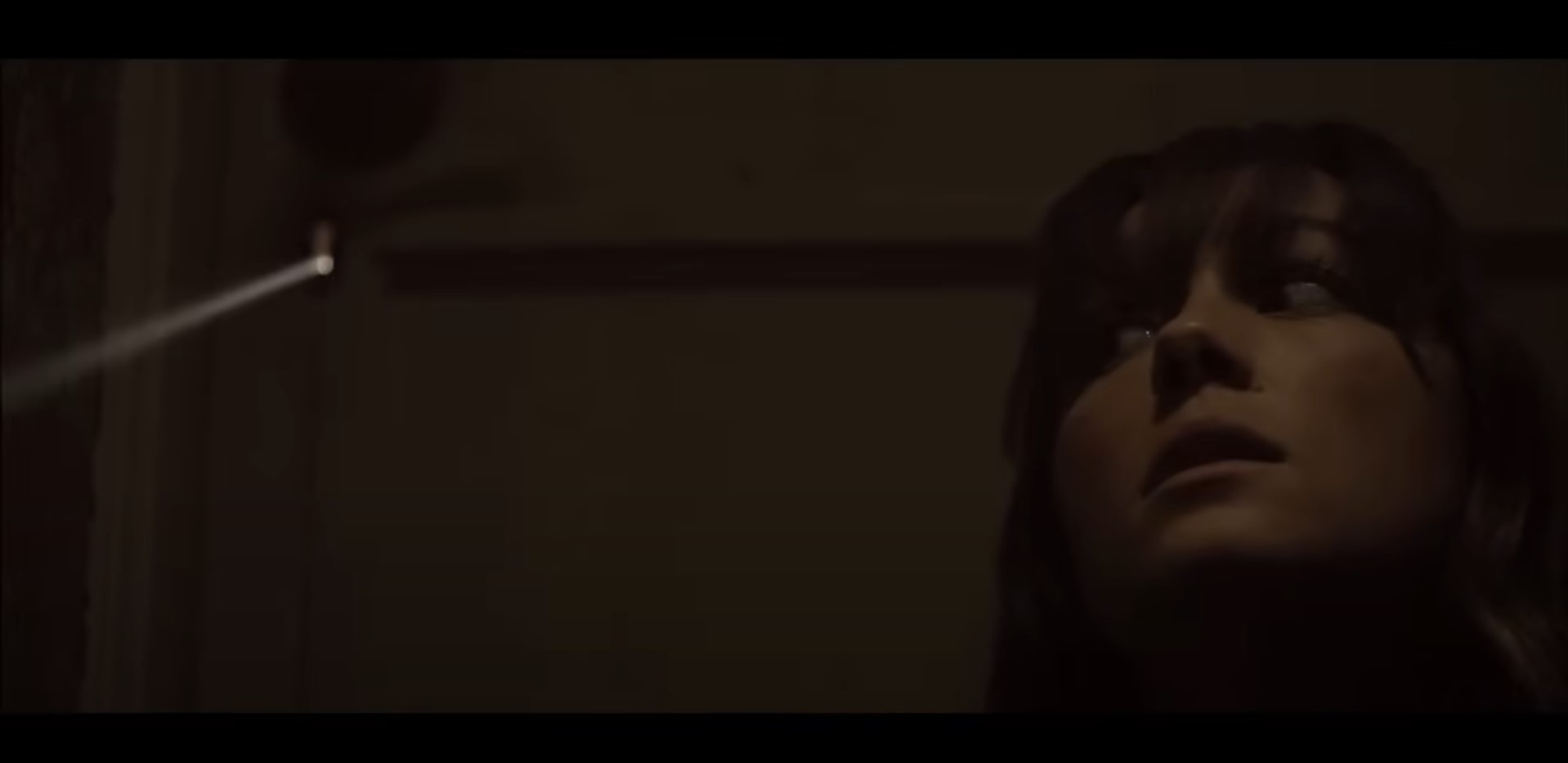
“You’re Next” reunites a cast of Wingard regulars, interchanged with good friend and fellow horror filmmaker Ti West (“The House of the Devil”) that has all but nearly faded the higher the filmmaker climbs the Hollywood latter.  The entourage includes “Hatchet II” and “The House of the Devil’s” A.J. Bowen as the pacifist academic Crispian, “Alien:  Covenant” and “Pet Semetary’s” Amy Seimetz as Crispian’s starving filmic sister Aimie, “The Sacrament” and Autoerotic’s” Joe Swanberg as the pompous older brother Drake, and “Pop Skull,” and “V/H/S’s” Lane Hughes as the Fox masked killer all of whom were in Wingard’s “A Horrible Way to Die” a year earlier.  Plus “Home Sick” and “Pop Skull’s” L.C. Holt dons a killer’s mask and director and friend Ti West of the highly popular X film series also has a brief role that plays into their whole dark nature of storytelling.  The inner circle of friends and usual casting smooths out to fills voids by adding a couple of marketable and genre renowned names to add a solidifying agent to “You’re Next’s” magnetism with “Habit” and “The Last Winter” actor-director Larry Fessenden as well as un-retiring one of the genre’s more respected and timeless scream queens and final girls in Barbara Crampton (“Re-Animator,” “Frome Beyond”) to be playing matriarch and host of the family being invaded upon.  Though marking her return back to horror, Crampton relinquishes her reins on the final girl trope, swallows her stardom by moving aside, and letting have that particular subcategory role to Australian actress Sharni Vinson (“Bait”) in one of her first handful of roles in a feature film.  Vinson will send shockwaves through audiences on her quick turn of character from a lovely, liberal oblique woman to a complete cutthroat badass that not only turns the tables on the attackers but also shepherds in a new fear or thrill – a worriment encompasses over the sociopathic bad guys.  “You’re Next” puts up a high body count with the rest of the cast body including the late Nicholas Tucci (“Choose”), Wendy Glenn (“11-11-11”), Margaret Laney (“Absence”), Rob Moran (“There’s Something About Mary”), and Kate Lyn Sheil (“She Dies Tomorrow”).

Before the film’s release in 2011, the home invasion genre saw an explosion of examples from class that wasn’t exceeding in quantity but rather rocketing skyward in quality.  The French had a good handle on concept with a bleak, ultra-violent coating that completely engrossed viewers as well as rocked their core with how nihilistic and cynical characters could become without a heroic, saves-the-day, or survival outcome, such as is the cast with 2007’s “Inside” and 2008’s “Martyrs.”  The American industry also attempts to capitalize on the niche market with “Funny Games” released in 2007 but that too is based off a European script from Austrian filmmaker Michael Haneke’s original film a decade earlier of the same title.  In all fairness, Haneke also helmed the remake starring Tim Roth and Naomi Watts.  Yet, American audiences adored their own success with Bryan Bertino’s “The Strangers” in 2008 and a remake of Wes Craven’s “The Last House on the Left” by director Dennis Iliadis in 2009 that conveyed that sort of callous violence and anarchial analogies.   Then in steps Adam Wingard and Simon Barrett’s entry of “You’re Next” of shared sadism and pessimism but sprinkles it gallows humor through the dialogue exchanges and impressions of character attitudes to make a hybrid that pulls inspiration from the likes of “Funny Games,” “The Strangers,” and “The Last House on the Left” and still finding individuality amongst the like without suffering from an identity crisis.   Protagonists and antagonists swerve through an interchangeable junction, flipping the script just when you think you’ve plotted the course of the storyline, and yet, a found sense of cold cock shock lands squarely when all is said and done and bits and pieces of the royale rumble characters are strewn about the battled ground mansion. 

“You’re Next” arrives at the UK label and friend to physical media Second Sight Films.  Second Sight’s single disc Blu-ray comes AVC encoded with 1080p hi-def resolution and dual layered with a BD50, projecting a consistent 24FPS.  There’s not much to terribly note about Second Sight’s quality release of Adam Wingard’s over 20-year-old, 4K shot film as digital stock hasn’t necessarily changed significantly for the better over the last two decades.  Presented in a widescreen 2.39: aspect ratio, Wingard and cinematographer Andrew Droz Palermo (“The Green Knight”) choose a warmer color pallet of mustard yellows and burgundies, accentuated by enveloping three-point lighting and the tweed dinner jackets and turtlenecks, to give it a retro 70s or 80s veneer in a modern time.  No banding issues or digital compression anomalies with the ample disc space.  Range is fine but limited to mostly the aforementioned color scheme.  Depth is almost limited in what is mostly a series of medium to closeup shots in an interior setting, but we’re treated to a mixed melee of close-up violence that sees splatter scatter the dark syrupy blood.  A DTS-HD 5.1 Master Audio mix layers a lossless fidelity consistency.  Dialogue has no issues with obstructions, favoring a clean and clear presentation of exchanges without losing inflection, tone, and vitality during the chaos, calmer moments, and tensioned exchanges.  A fugitive depth doesn’t sustain any kind of depth; again, with the close quarters action, we tend to forget Larry Fessenden’s blaring music left on repeat and noted to have at least three layers of depth from within the stereo’s room, between rooms, and outside the house.  Organic and inorganic ambience and action have seamlessly admixed without a sense of artificial notice.   A compilation of artist soundtrack isn’t invasive or intrusive with the assailants and that kind of dampens the effect but it’s an overall workable mix from Mads Heldtberg, Jasper Justice Lee, Kyle McKinnon, and Wingard himself.  Optional English subtitles are available.  Second Sight Films reliability to earn the right to re-release another modern production stands through again another special features laden release that includes a brand-new audio commentary with director Adam Wingard and writer Simon Barrett as well as archive audio commentary with Wingard, Barrett, and actresses Sharni Vinson and Barbara Crampton.   Another new feature is an approx. hour long interview Children of the 80s with Wingard and Barrett recollecting and going through the details for the genesis of the story and film.  Other new interviews include producers Keith and Jess Wu Calder the Most of Us, actor AJ Bowen Script is a Blueprint, actor Joe Swanberg Down in the Basement, actor Amy Seimetz Be Funny or Die, and production designer Tom Hammock Falling into Place.  Animated storyboards, an archival making of What’s Next?, and a video essay from Tim Coleman Slashers Don’t Die fill out the immensely packed second layer.  House in the standard Second Sight green Blu-ray Amaray for their standard lot, the front cover is gruesomely beautiful with a blood illustration of Sarni Vinson in character that’s also very telling of the film’s tone.  Like all their standard releases, this one comes with no inserts inside or other tangible bonus content.  The disc is pressed with another illustration of one of the masked killers.  The UK certified 18 release contains strong bloody violence, as well as language and brief nudity for those of us Americans wondering at home, in a 95-minute duration to which is encoded with a region B playback. 

Last Rites:  “You’re Next” denounces the helpless and the defensive character topes aimed to be slaughter like cattle in an abattoir.  Instead, this final girl and ferocious slasher and home invasion thriller goes against the grain and has gruesomely fun with its kills and thrills.   
Limited Edition and Standard Edition Sets of “You’re Next” Available At Amazon!

DCU Can’t Handle this EVIL! “Swamp Thing” reviewed! (MVD Visual / 4K & Blu-ray)

“Swamp Thing” on 4k / Blu-ray Combo!  Now Available on Amazon.com!

A top-secret government project in the Louisiana swamps concern the combination of aggressive animal genes into plant DNA to result in creating super food for the potential famine and overpopulated future.  Agent Alice Cable becomes assigned to the project when her predecessor is unexpectedly devoured by a gator and becomes acquainted with the passionate head scientist, Dr. Alec Holland.  However, the government isn’t the only interested party in obtaining a formula when a faction of cutthroat mercenaries invade the swampy compound in the name of Arcane, a mastermind sociopath looking to hold the fate of the world in his hands.  Storming the compound with force, all the government agents are slaughtered except for Cable who managed to escape while Dr. Holland suffers a tragic accident of combusting with his volatile formula during the attack.  Believed to be dead, Dr. Holland returns transformed into a half-man, half-vegetal thing with superhuman abilities.  Now, Arcane is after him with Cable trapped in the middle. 

Having success in the grisly rape-revengers and mutant-cannibals section of his career in the 1970s, Wes Craven tussled with creating and securing another hit film to pay the ever mounting bills.  Before “A Nightmare on the Elm Street,” one of two biggest titles that have gone synonymous with the director’s name, the other being “Scream,” Craven dived into a DC Universe project before the DC Universe ever existed as such with the script adaptation and the helming of “Swamp Thing,” a vegetational anthropomorphic superhero inhabiting elemental powers, such as regrowth and superhuman strength.  What Craven originally scripted may not have been the same as the finished product on screen but the 1982 captured audiences attention and created lifelong fans of an underappreciated hero still germane to what is now a large universe of revitalized superheroes films and television shows.  Film in and around Charleston, South Carolina in the Cypress Gardens doubling as deep South everglades, “Swamp Thing” is produced by long time DC films coproducers Benjamin Meiniker and Michael E. Uslan as their first DC superhero venture as a Melinker-Uslan production and distributed by Embassy Pictures and United Artists.

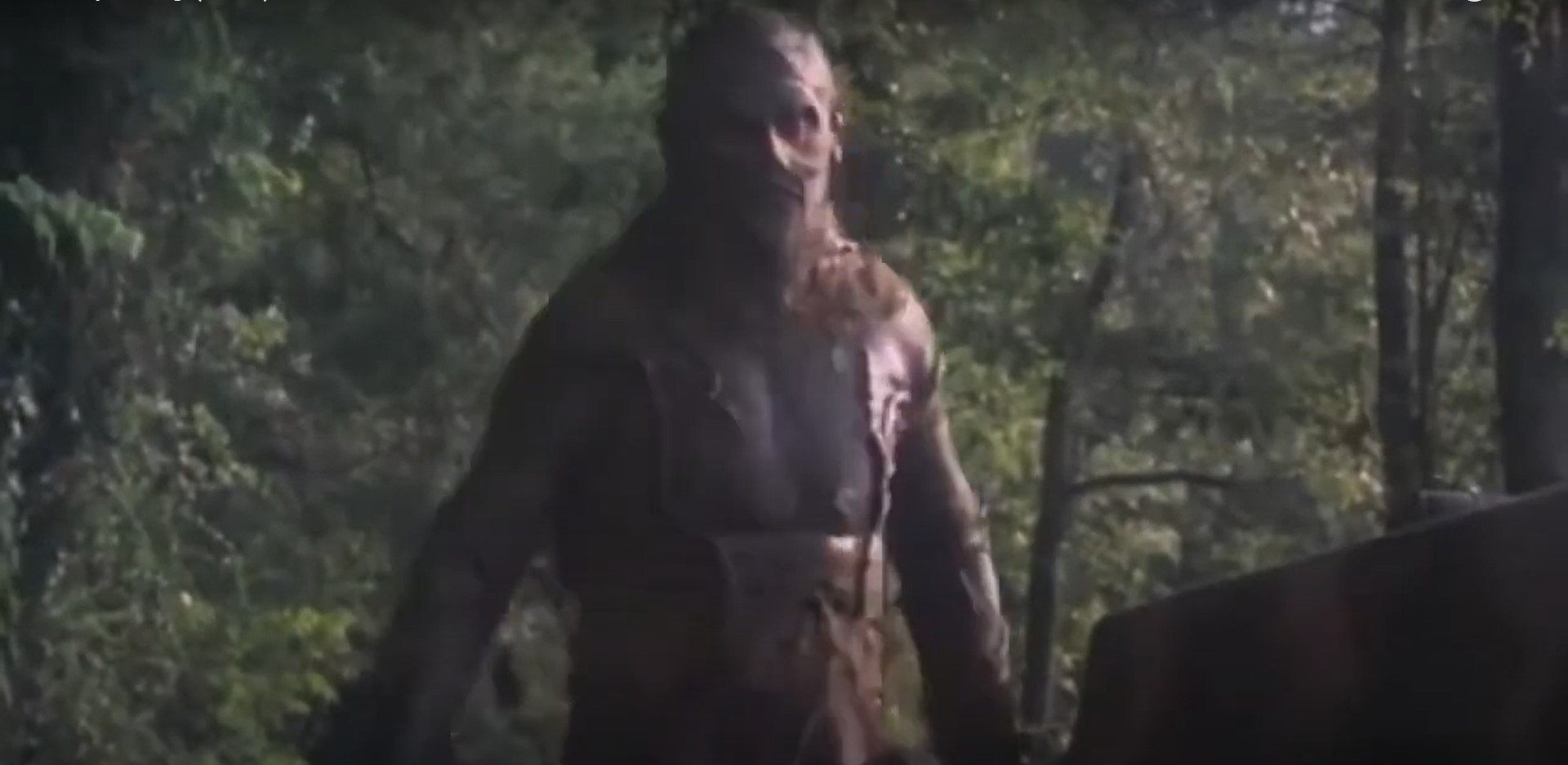
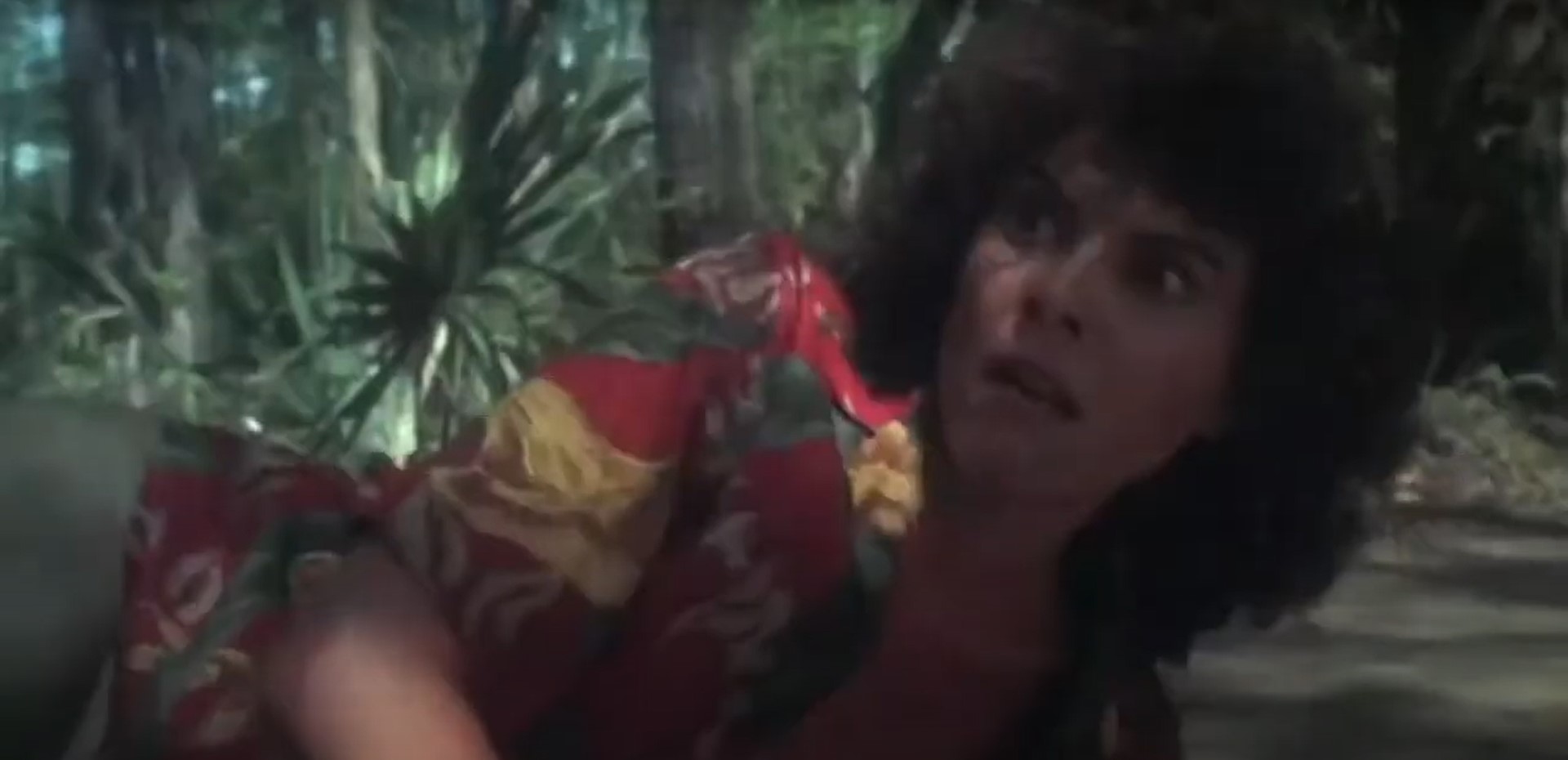
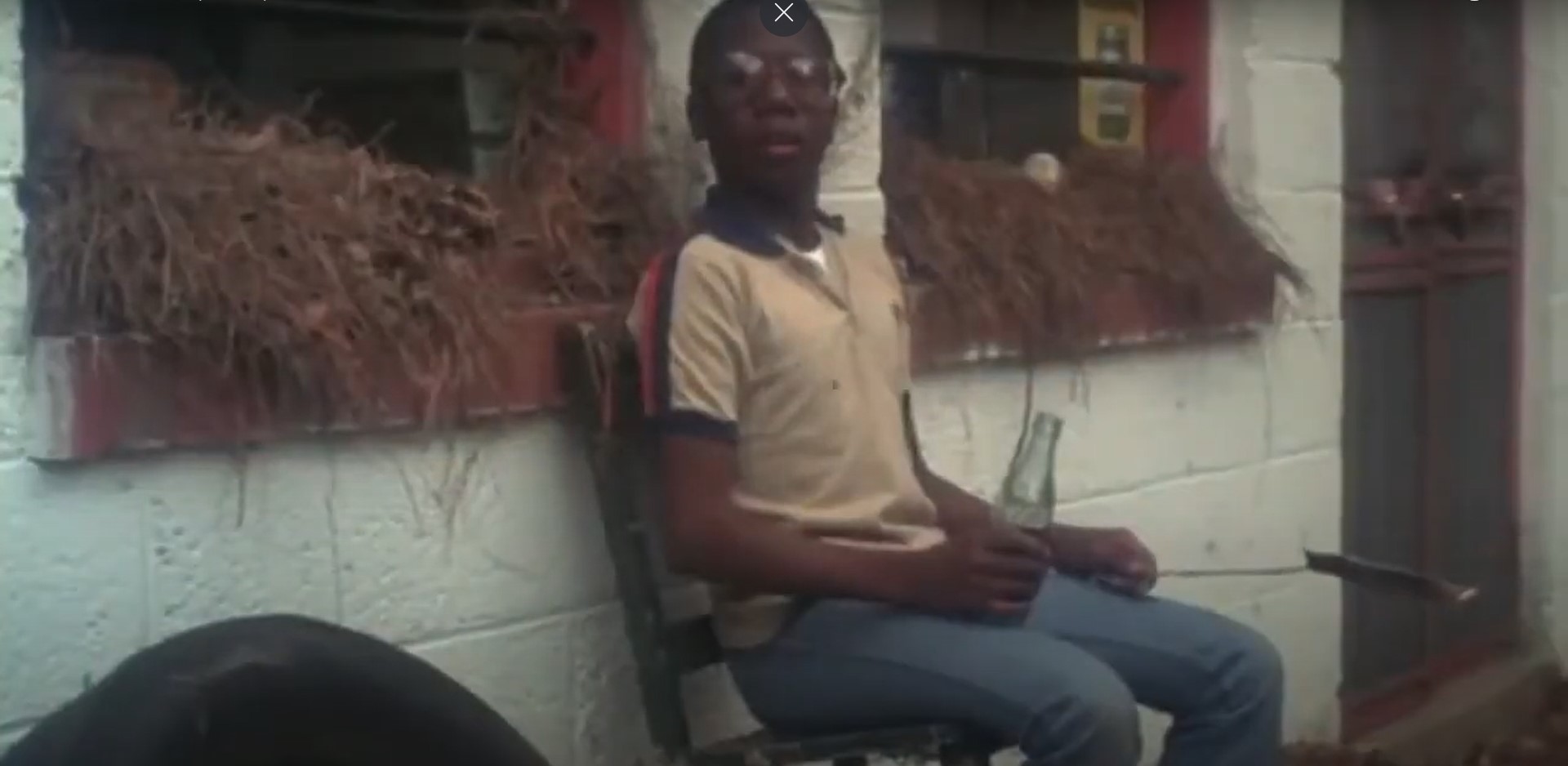
The question of who would bring this monolithic human-hydrangea?  Answer:  Dick Durock.  The 6’5” former Marine Durock was not afraid to jump into character skin, no matter how hairy, tight, or otherwise uncomfortable it might have been.  Durock may not have been the face of Dr. Alec Holland, played by genre cult actor Ray Wise (“Robocop,” “Twin Peaks”) before succumbing to transformational injury and rebirth, but the Indiana born actor certainly became the face of “Swamp Thing” throughout a decade with the sequel and the subsequent television show.  Durock captures not only the strength but also the humanity of the superhero in this origin story, a feat hard to accomplish for a man in a skin-clinging green and bulky suit.  Not to diminish Ray Wise’s performance by any means as the charismatic Wise is charming, passionate, and invested into making his Dr. Jekyll jive with the soon permanent Mr. Hyde to come, but as titular principal, Durock becomes the face of foliage on steroids.  Before solidifying herself as a scream queen, a young Adrienne Barbeau would have more difficulty in her Alice Cable role reflected in having some kind of feelings for essentially the same character in two versions played by different actors.  Yet, Barbeau beats the buggy Carolina heat as well as the differentiate obstacles by being a kickass government agent able to handle herself around the frighteningly new swamp creature and Arcane’s goon squad.  Before he was a James Bond villain in “Octopussy,” Louise Jordan donned the arrogancy of a tyrannical thinker yearning for the unique powers of others.  Jordan’s quite pretentious as the unrelentless Arcane and that makes the actor be the quintessential antagonist but I would not say his performance places his character in complete rivalry as “Swamp Thing’s” archnemesis.  Something is missing from their dynamics within their broad encounters that make the struggle appear impersonal and distant.  Even when Arcane ingests the formula and turns into a werewolf-like beast and the two superpowers clash, I wouldn’t label their conflict personally intertwined.  Perhaps Alec Holland and Alice Cable’s pre-mutation passion wasn’t strong enough or Swamp Thing’s deep-seeded desire for Alice wasn’t rooted well that makes Arcane just whither like a sun-beaten plant without water.  Another character that’s beaten into the ground is Ferret played by David Hess (“The Last House on the Left”) as head mercenary without any real power or absolute authority over his men, turning Hess more into like Tracey Walter in Tim Burton’s “Batman” but not as cool or as likeable.  “Swamp Thing” cast rounds out with Nicholas Worth (“Darkman”), Don Knight (“Death in Space”), Nannette Brown (“My Boyfriend’s Back”), Al Ruban (“1,000 Shapes of a Female”), Mimi Craven (“Last Gasp”), Karen Price, and Reggie Batts as the unlikely best child character in all of the film as an interesting and lone gas station attendant with hilarious, deadpan wisecracks. 

“Swamp Thing” may not be the first comic book superhero to be pulled from the DC lined colorfully illustrated and action-packed pages and adapted to the big screen but what separates the mucky-dwelling plant hero from the other is he’s cape-less, without ray guns and jetpacks, and appears as a monstrous humanoid rather than a regarded normal looking servant of justice as with Superman, Batman, or Wonder Woman.  “Swamp Thing” intrigues viewers with their own internal conflict stemmed from a foundationally laid idea that mutant creatures or unnatural monsters are inherently bad guys.  “Swamp Thing” becomes a part of that trailblazing group of grotesque good guys with hearts of gold.  Yes, the 1982 feature hasn’t held up over time with some of the low on the totem pole creatures suits and makeup I’ve seen, even with the agreeable Swamp Thing suit showing the rubbery creases and fold overs when Dirk Durock has to hold an object; however, to balance out the cut-rate features, special features picks up the tab with stunt boat chases, invisible pull wires, and a man set on fire that’s intense.  With a slashed budget, Wes Craven scripts on the fly to churn out a watered down but still flavorful cinematic origin story that’s full of heart and humanity and partly carried by the sweat and endurances of an eclectic cast and a handful of popcorn action patches.

“Swamp Thing” emerges from out of the muck yet again and onto a 2-Disc 4K/Blu-ray combo set from MVD Visual’s Rewind Collection label, specially marked as the first release on the LaserVision Collection.  The restored 4K UHD Dolby Vision is presented in 2160p and in a 1.85:1 widescreen aspect ratio on a BD100 while the Blu-ray is presented in 1080p high definition with the same aspect ratio on a BD50.  Each format presents two cuts of the film – a PG version and an international Unrated version – both of which have collated from various cuts of the film, resulting in some impressively rich grading that offers refreshed saturation levels of a lusher swamp environment.  More of that richness is conveyed through the UHD with providing deeper tones to make the swamps isolate and swallow characters while also have a sense of being alive amongst the hazy, knee-high fog, opaque waters, and thick vegetation.  Black levels look fine with the amount of grain that can vary from scene-to-scene but not compression issues to talk about on both spectacular approached formats.  The 4K offers a remastered DTS-HD MA 2.0 mono, which is same as on the Blu-ray, that unjustly limits “Swamp Thing’s” audible potential.  Dialogue has some deficiency projecting with all the tracks transmitting through a single channel that’ll force the up arrow on the volume setting or require a punchy soundbar or headphones to get to a clearer understanding of what characters are conversing.  The intrinsic ambience would have been better suited for multi-channel network to extract everything the swampy milieu had to offer, plus punchier fights, but if not an audiophile, these tracks will ultimately sate a viewer’s goal.  Range decently enough limps through despite the surround sound as we receive enough explosions and barrages of bullets to check that box, but depth struggles through the audio layers.  Both formats also include a Spanish language mono track and optional English subtitles.  Special features vary across the two releases with the UHD having limited extras due to storage but what is included is the PG version, the Unrated International version that includes Adrienne Barbeau’s topless scenes, an archive commentary with writer-director Wes Craven moderated by commentary director Sean Clark on both versions of the film, commentary with makeup artist William Munns moderated by Michael Felsher of the commentary/documentary conducting Red Shirt Pictures, also on both versions.  The Blu-ray contains the same extras above plus another Red Shirt Pictures’ interview with Adrienne Barbeau Tales from the Swamp, an interview with Reggie Batts Hey Jude, a discussion with Len Wein, the creator of “Swamp Thing,” the featurette Swamp Screen:  Designing DC’s Main Monster, the featurette From Krug to Comics:  How the Mainstream Shaped a Radical Genre Voice, photo galleries, and theatrical trailer. This must-own set, that caters to paying homage to the Laserdisc, comes retail green 4K Ultra HD snapper that in holds the 4K and Blu-ray on each side of the interior wall. The exterior features an illustrated encirclement of the main players – Dirk Durock and Andrienne Barbeau in comic character – on a single-sided front cover, sheathed inside a cardboard O-slip cover with the same cover art. Both disc presses also represent the original Laserdisc art. The insert contains a folded mini poster of the slipcover design. Two version, one release headline both the 91-minute PG and 93-minute Unrated version of the film with the entire package region locked in A. I may have finally watched Wes Craven’s “Swamp Thing,” but I won’t be the last as I highly recommend this stellar launch into ultra high-definition territory with the original quagmire superhero.

“Swamp Thing” on 4k / Blu-ray Combo!  Now Available on Amazon.com!

Nothing Will Stop EVIL From Being EVIL! “Chaos” reviewed! (Dark Force Entertainment & Code Red / Blu-ray)


Visiting home on break from UCLA, Angelica visits her close friend, Emily, at her parents’ secluded country home. With nothing else better to do in the small rural town just outside Los Angeles, the two teenage girls set off early to attend a local rave deep within the woods at the reluctance of Emily’s overprotective parents and to kickstart what could be a drink and dance fueled night, they aim to push the limits and find a drug pusher to score ecstasy as the first priority to make a dull party fun. They run into Swan who promises the best ecstasy as he leads them to his cabin away from the rave. What Angelica and Emily find is themselves caught in the middle of a ploy by a sadistic gang lead by the ruthless Chaos, whose wanted in 4 states for his barbaric and merciless methods and looking for something fun to play with and torture. The cat-and-mouse game with the girls makes an interesting turn when the gang arrives at Emily’s parents’ house when their van breaks down and the parents suspect them in Emily’s sudden disappearance, veering the night into unreserved chaos.

“Chaos” is the intended true love song remake to Wes Craven’s 1972 sadistically vile “The Last House on the Left” that’s co-produced by Marc Sheffler, who play Junior Stillo in Craven’s film, and, at one time, Krug himself, David Hess, was attached to the project. “Chaos’s” conception is the brain child of Steven Jay Bernheim and David DeFalco, with the DeFalco wielding the hammer of writer and director, and the pair have collaborated a few years earlier on another DeFalco directorial, a comedy horror entitled “The Backlot Murders.” In the eyes of the filmmakers, the amply charged exploitative “Chaos” shares more in common with the original “The Last House on the Left,” despite having no official connection other than the ties with Marc Sheffler, and that the more commercialized remake of the same original title, released four years after “Chaos” in 2009 by Universal Pictures Home Entertainment (UPHE), lost that raw camerawork and visceral storytelling that depicted the abhorrent human malevolency that’s capable from within us all. “Chaos” is essentially a self-funded project from Steven Jay Bernheim’s Bernheim Productions.

Though Sage Stallone, the late son of the iconic action movie star, Sylvester Stallone, receives front cover bill due to, in perhaps, his name alone, but the film is called “Chaos” which centers the story around the “Heat” and “Laid to Rest” actor, Kevin Gage. In some kind of cosmic circumstances in regards to recent events, before the Kelly Preston settled into married life with John Travolta, she was once wedded to Gage, marking “Chaos” as a timely film from 2005 and a just so happened upon my lap occurrence for this review. Yet, Gage, a seemingly giant of a man with a resemblance build toward WWE/WWF’s legendary Bill Goldberg, utilizes his intimidation appearance, transferring all the good and gentleness that’s described of him from fellow costars into a pure embodiment of evil whose misogynistic, bigoted, a killer, and just a downright bad guy giving way a testament to the character’s adverse moniker. Gage brings to the table a formidable tone, viperous wit, and a clean cut brutality in the most sordid and unforgettable ways that makes him stick out as portraying one of the most inhumane villains in the last 15 years of the cinematic universe. Chaos’s infamy is by ingenious design from the Marc Sheffler and David DeFalco collaborations who, along with the actors’ faux backstories, meticulously craft each of the gang’s personalities. Sage Stallone’s Swan seems like a similar parallel version of Sage in reality as a chain-smoking, reserved individual sans the perverse context. “The Love Witch’s” Stephen Wozniak is a complimenting character that offerings a different personality with Frankie and Frankie’s feels like a two-bit slime ball with long, greasy hair, an unkempt beard, and a scrawny figure but can produced an evil that’s step or two back from Chaos; Frankie is a character you’ll love and you’ll love to hate, making Wozniak’s performance singular and one of the best in the film. Then, there’s Daisy, the only female of the group though more butch than delicate, and Kelly K.C. Quann (“Baberellas”) adds a dose of Southern inhospitality to Daisy’s brutish beauty. “Chaos” rounds out with a bunch of victims; hell, everyone’s a victim, but the cast includes Deborah Lacey, Scott Richards, Maya Barovich, Chantal Degroat, Ken Medlock, and Jeb Barrows.

“Chaos” absolutely equates toward the unflinching callous themes from “The Last House on the Left” of violence amongst various degrees of people, youthful ingenuousness, and systematic racism with the latter being extremely relevant and on point, years earlier, of the current social climate in America. Yet, with any remake, “Chaos” yearns to stand on its own by instituting an unmeasurable sense of graphic violence that will churn stomachs, advert eyes, and belly-up the throes of disgust. For a good portion of “Chaos,” the exploitation narrative is fairly run-of-the-mill, damn near walks the same line as Craven’s story, with a sadistic gang kidnapping two young women for their own amusement only to then wander unknowingly into the arms of retributive parents, but two scenes sticky out and go beyond the course of customary exploitation fodder and into necrophilia, mutilation of body parts, and a perverse way to kill another human being with such tactless intentions that the act makes the other gang members splay questions, doubt, and fear amongst their faces. The film opens up with a written warning, not so much on the intense scenes themselves, but resembling more of a public service announcement for parents that what you’re about to see does and will happen to the youth of land, but these shocking scenes are just that, for shock value, and that a small percentage of people partake in such grisly matters. “Chaos” is violence upon violence, leaving no room for conscious absolving resolutions in the unofficial capacity of a remake that pungently separates itself with extreme violence and that’s saying something considering Craven’s visceral first course.

As the bestow flagship release of Dark Force Entertainment, “Chaos” arrives onto a deluxe special edition Blu-ray in association with Code Red and distributed by MVDVisual. Transferred through to a 1080p, high definition scan, from the original 35mm negative, complete with extensive color correction, and presented in a widescreen, 1.78:1 aspect ratio. “Chaos” doesn’t look very chaotic anymore in regards to the image quality; instead, the before stardom cinematography by Brandon Trost (“Lords of Salem” and “Halloween” remake) creates the voyeuristic position of the audience is now visually distinct with stable color markers that are more in tune with the premise’s raw approach. The English language dual channel stereo mix renders softer than desired, especially in the first act as Angelica and Emily converse through the woods. The teenagers dialogue are nearly mumbling on their rave trek with depth issues perplexing their relation to camera. Range seems to be well faceted: rustling leaves through the woods, the clank-clunks of a rustic van, the ground skirmishes. All seem to exude exact decimals of their intended value. Even the firing of firearms has a pleasantry about it. The special features include brand new interviews with co-producer Marc Sheffler, who goes in-depth pre-production and production while also touching upon his other interests before concluding with director David DeFalco and a man in a banana suit making an appearance and offering up dick jokes, and actor Stephen Wozniak with a fountain of information about his time on production, his fellow cast, and about the filmmakers as he is being interviewed in front of a locomotive museum. I love the absurd, obscurity of it all. The bonus material rounds out with commentary from the director and producer as well as the original theatrical trailer. The lewd and radical “Chaos” has engrossing roots of violence that burgeon into realm of rarity or, if not, into sadomishsim extended by the filmmaker’s deepest darkest desire, but what’s transpires on screen is difficult to look away from which begs the question, is it morbid curiosity or is there something far more sinister within us all?

Own “Chaos” on on the new “Blu-ray” release!

It’s Bloggin’ Evil Interviews “Love is Dead” director Jerry Smith!

js

Horror Film Journalist and Filmmaker Jerry Smith

I would like to start off with the readers receiving some slight background on you. Can you provide us with a short bio about where you’re from, where you’re at now, and what prominently influenced you into the person you are today?

I was born and raised in the Central Valley of California, in a mid-sized City named Visalia. It’s grown into a city without any real film culture or following so I try to stay away as much as possible. I spend my days going back and forth between Los Angeles and Visalia due to my kids.

I came from a really rough childhood. As a kid, I was taken by my stepdad to see “The Accused” in the theater and being around six or seven, watching a film focusing on the gang rape of a woman really affected me. It scared me and made me uncomfortable for both Jodie Foster’s character and myself. That night, when we got home, my stepdad molested me, something that lasted for a good while. It turned a wild and outgoing kid into a scared little boy who was afraid of everything and everyone. He was a real piece of shit and an alcoholic, so my mom would give me enough money to go to the nearby theater to stay there all day watching movies. It was pre-Columbine obviously, so they didn’t give a shit about carding people. I saw “Child’s Play“, the latest “Friday the 13th” and the latest “A Nightmare on Elm Street” and in those films, I found solace in how the survivors would go through hell and come out ahead. It made me feel safe and horror became the love of my life because of it. Seriously though, I love the horror genre as much as my kids. Because I was a horror (and just films in general) fanatic, I would write stories and sequels to films as a kid and I became enthralled with Stephen King and Clive Barker at an EARLY age. I was sent to the principal’s office for bringing and distributing a backpack of Stephen King novels to the kids because one girl’s mom had an issue with “The Tommyknockers.” So I read and wrote and always wanted to be a writer and a filmmaker.


How did you begin your journalistic career toward some of today’s top horror news outlets, such as Fangoria, Shock Till You Drop and being editor-in-chief at Icons of Fright?

I owe my whole career in horror journalism/film critique to Rob Galluzzo (Co-Founder of Icons of Fright and Senior Editor at Blumhouse.com). I had read Icons of Fright for years (it was started in 2004) and kind of became acquaintances with him online via Facebook and at the time he was working at Amoeba in LA, so I would talk to him when I was there for something and he was always so friendly and kind. He’s seriously one of the most giving individuals I know. Well one day, a few friends went to LA and I was stuck in Visalia doing something and it frustrating me that I wasn’t doing anything with my love for writing. I messaged Rob and asked him for advice on starting your own site. He said he would give me advice, or if I wanted to, I could just start writing for Icons of Fright. I was blown away. Here there was a site that I read for years, and now I was getting to write for them. As time went on, I was pretty crazy about being on top of Icons and Rob took a job at FEARnet (RIP), so he asked me to be the Editor in Chief and steer the ship, so to speak, and I did that for five years. It was because of Rob that I began my writing career and it was because of him that I was vouched to Rebekah McKendry (Then at Fangoria, now Editor in Chief of Blumhouse.com) at Fangoria to start writing for them as well and when it was because of Rebekah, that I vouched to Chris Alexander, who not only was running Fangoria at the time but started Delirium Magazine and in time, moved over to Shock Till You Drop. When Rebekah and Rob went to Blumhouse.com, they were nice enough to allow me to write for Blumhouse. So my career has been full of wonderful people. Those said individuals, as well as genre professionals, like Heather Buckley and Ken Hanley, have all been wonderful to me. As far as Icons of Fright, the site is kind of in sleep mode. I was offered the position of Senior West Coast Correspondent for Fangoria and we’re all so very busy with our other professional writing gigs, that it felt like a disservice to pay little attention to it and post stuff here and there, so we kind of just put it in sleep mode for the time being to focus on other things.

Rob Galluzo

Rob Galluzo

According to your IMDB.com page, you’re a self-proclaimed workaholic. Can you describe how you manage your time between contributing, being editor-in-chief, and producing films while juggling, if any, a personal life?

It’s quite difficult to be honest. I’m a divorced father of three (two of my kids live with me), I write for three sites and two magazines and I’m a filmmaker as well. I have three film projects in the works, all with my wonderful collaborators over at Sickening Pictures in Cleveland and one with Turnstyle films helping out. As with any film journalist, we’re sent quite a few films to review, we got press junkets and premieres, conduct interviews, etc. It’s fucking insane, but I love it…and a plus side, my kids love the genre, so they’re always watching the more friendly horror films with me.

What possessed you to pursue your own production company, Dexahlia Productions, in 2010, creating your own pieces of filmic art?

I started Dexahlia back in 2010 and began to make short films here and there, but in all honesty, none of them were that spectacular at all. I just made them with friends and such. The closest to being “happy” with one was one called “Damnation Woods,” which was a relationship drama that had a handful of scenes I REALLY liked in between my incompetence at the time haha. I put a lot of that on hold in favor of my writing career for some time, but after meeting Zach and BJ, decided to just do both.

Can you delve into the personal inspiration behind your current short “Love is Dead” and what compelled you make a film about the circumstance?

Yikes. The inspiration behind the film came from my own life and my former marriage. It was something that began as a really wonderful joining of similar spirits, but somewhere along the way, things got DARK. All on my side of things. I began to drink a LOT and had other issues I won’t list and it made me into somebody who was never physically abusive but angry a lot and I took that anger, which in all honesty was anger that came from hating myself at the time, and directed it at her. Things got crazy and she tried to take her own life and it really woke me up and made me realize that I had pushed somebody I cared about to the absolute brink. I felt disgusted with myself and HATED myself for a long time, something that eventually made things bad. We divorced but remained best friends (we’re still very close) and I wanted to kind of tell the story of that, in a somewhat fictional way. Also, as I’ve said a lot over the years in many conversations with people: John Carpenter is my God, but I also worship John Cassavetes. His films were always so raw and unhinged as if you felt like something was going to blow up at any time. Cassavetes was a major influence in “LOVE IS DEAD.”

How did you approach the creation of “Love is Dead” with the association of BJ Colangelo and Zach Schildwachte’s Sickening Pictures?

There were a few false starts with the film. I did a crowdfunded campaign on Kickstarter and got 95% to the goal but was just short of making it so we got nothing. We went to another crowdfunding venue and ended up getting, I think, 1/4 of the original budget, so I was pretty bummed. BJ has been a really wonderful friend of mine for years now and Zach and I became friends because of their personal relationship, so their professional relationship came into play as well eventually. Zach and I had written a feature script together (which we’re still going to make) and were trying to pitch that around LA for a while. When “LOVE IS DEAD’s” campaign ended, Zach and BJ offered to come aboard and FORCE me to make the film. They flew into LA and we made the film. They were and are two of the most talented people I know and I owe them so much. I love those crazy motherfuckers. Ps- BJ Colangelo is one of the best film journalists around as well.

How did Joanna Angel, Aaron Thompson, and Ruben Pla come to star in this short?

I was familiar with Aaron from his work in the Adult Film Business and, also, I saw him play bass once when he was in the band Fenix TX. He really fit the exterior of what was in my head and I just had a great feeling about the guy so I reached out to him. He read the script and signed on, saying he’d drink a bunch of Jack Daniels and listen to Nick Cave until shooting to get into character hahaha. Ruben did the film almost as a favor to me. He’s been such a huge supporter of my writing and I’ve known him through the horror community. He directed an EXCELLENT short film called “HEAD” (look it up, it’s awesome!) with Matt Mercer and I loved the hell out of that and just loved Ruben’s work in everything he’s been in. The guy can play anything. His work in “24” was great. I remember watching “INSIDIOUS” in the theater and thinking to myself “that guy has a presence to him.” So when it came time to cast the role of Michael, the psychiatrist, I asked Ruben if he’d be down and he had the shooting date open and came and did such a great job and was so very professional. I love that guy. Love him. Originally, we had a different actress cast as Mara and throughout the crowdfunding campaign and right up until three days before shooting, she was attached. There was something of a misunderstanding (nothing bad or drama-related, she’s absolutely great) and so we had to postpone shooting and literally at the same time, I got a text from BJ and an email from Aaron saying we should cast Joanna. Truth be told, I didn’t think Joanna would ever do it, so I had never even thought of asking her. When they mentioned it, I sent her the script, she signed on and we were good to go.

Being an actual couple off the camera, was there some coaching to get Angel and Thompson in the right mindset before the pouring of assorted emotions into the shower scene? Or how did Angel and Thompson prepare for their characters Mara and Peter?

I was worried that they would be able to go to those dark and sad places being that they were (and are) a real life couple. So I was nervous right up until the first take of the shower scene. It took literally ONE take for that nervousness to go away because, holy shit, were they both amazing. It broke all of our hearts to watch them act, they were so passionate and just genuine in their performances. I talked to them here and there mostly about altering the dialogue to what would feel more natural to them, but aside from that, they were all set to get dark right from the beginning. I’m still shocked by how great Joanna, Aaron and Ruben were. I watch the short and it makes me sad, in a good way. They did their job, they destroy the viewer.

I feel like Joanna Angel would be very enthusiastic about an emotional roller coaster of a story of this magnitude and a bit of a change of pace from her staple work. Was that the case along with the rest of the cast and crew being equally as enthusiastic?

Joanna and Aaron were both stoked to do something different and the crew were professional but giddy as fuck the entire time. I mean c’mon, it’s fucking Joanna Angel. There’s no playing around or lying. She’s a legend in her field and as huge fans of everything Burning Angel does, we all were excited to work with them. The best part for me, aside from the actual filming, was the times in which we would take a lunch break and just talk about stuff. We all are into the same things: bands, movies, etc., so it quickly became a tone of feeling more like you were making a film with friends. It led to us wanting to work with them again, which we are going to do.

ja

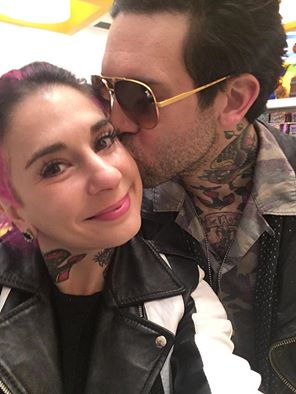
Joanna Angel and Aaron Thompson

Ruben Pla is a trained actor whose had roles in major productions such as “Insidious.” How was the dynamic between Pla and Aaron Thompson whose background is comprised of being a bartender, a musician, a screen printing business owner, and, most recently, a porn star?

They clicked right away. We were with Aaron for hours and hours before Ruben showed up for his scenes, so Aaron had all of his questions about the scene already figured out and such. When Ruben showed up, I had to surprise him with the fact that we had to change the scene from a scene of his character leading a men’s group to a one-on-one psychiatrist angle because of one of the actor’s having a heart attack!! Ruben literally took five minutes to alter his script, and was ready to go. He was dialed in and the two of them really just worked well together. It was great.

Even though “Love is Dead” completely tells Peter and Mara’s story in just over 10 minutes, there seems that there could have been an ample amount of content that might have been left untold. Your previous short “The Heart of Evil Things” also focused on problematic relationships. Could we expect another short, or perhaps a feature, in the future that would be a continuation, or as it’s own entity, that would extend more into the enduring human condition of struggling compatibility?

Yes, most definitely. Because of “LOVE IS DEAD,” I’ve kind of become the guy who casts porn stars in non-porn roles. My next two projects have adult film stars leading the cast and one of them is a continuation of the theme of a dysfunctional relationship. That one is more about accepting somebody for who they are and a look at a relationship within the adult film industry. I’m also working on something completely different and that’s probably what I’m going to be doing next. It’ll flip the southern noir thriller subgenre on its head. It’s kind of my cross between “Blood Simple” and “Bound.”

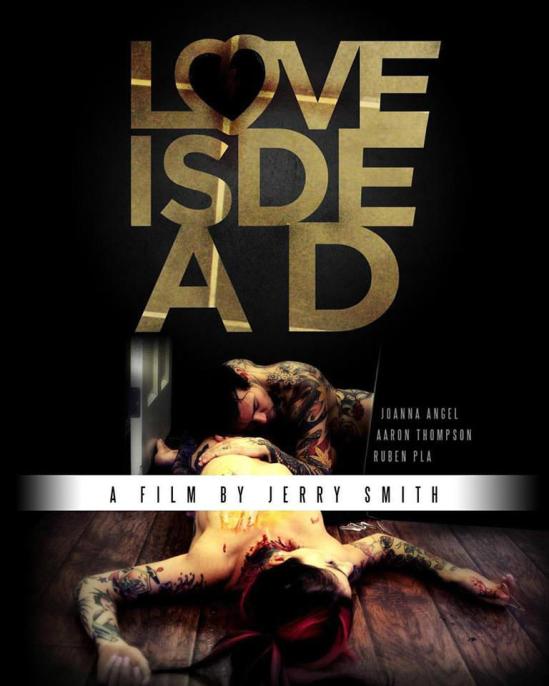
lodposter

Aside from deriving from personal experiences, what else drives or influences your creative process?

I’m just obsessed with how people talk and the power of words. That was why I called “LOVE IS DEAD” an emotional horror film. It’s about using words as a weapon and how they could be just as dangerous as knives or guns.

I read your blurb on Icons of Fright that you “adore all things [John] Carpenter,” but absolutely despise the Michael Myers and Laurie Strobe sibling connection in “Halloween 2.” I’m sure fans of “Halloween 2” and of yours could go toe-to-toe in a debate about the Myers’ legacy. Can you elaborate on your disgust with that film and discuss your thoughts on how Myers has progressed, or treated, over the years?

The “HALLOWEEN” franchise is like my baby in a lot of ways. I love it, but sometimes it does things that i don’t approve of or like. It’s like a child. The magic of the first film, which in my opinion is the greatest film EVER made, is the mystery of Michael Myers. He’s a pervert almost, watching the girls, stalking them for no reason other than Laurie dropped the key at the Myers house. It’s terrifying that a stranger would do that, that the person would stalk and kill people with no reason at all. The decision to make Laurie Michael’s sister just takes the mystery out of it and suddenly turns the entire series into that angle. It’s frustrating. That being said, HALLOWEEN 4 is still one of my FAVORITE films of all time, even with it being Michael trying to kill his niece, so I guess I’m a bit of a hypocrite. HALLOWEEN 3 is pure perfection and always has been. I’ve loved it since childhood. HALLOWEEN 5 is 70% terrifying and 30% off the rails crazy and the series never recovered. It just went down and down and down. I mean, in the Producer’s Cut of HALLOWEEN 6, Paul Rudd stops Michael with FUCKING MAGICAL RUNES. I want to start a band called, “Paul Rudd’s Magical Runes,” we’d rock. Luckily, the series is at Blumhouse now and with Jason Blum, Ryan Turek and John Carpenter involved in the development, I’m excited as hell for the next film.

Since you’re a John Carpenter fan, is it say to safe that your top three favorite movies of all time are Carpenter films?

Actually no. “HALLOWEEN” is my favorite film, but the other two go to Wes Craven’s “THE LAST HOUSE ON THE LEFT” and “FRIDAY THE 13TH PT. IV.” Recent films like “BEFORE I DISAPPEAR”, “COMET” and “DARLING” are edging close to the top though.

What’s next on the horizon for Jerry Smith? Are there any future projects on your docket that you can discuss with us at this time? Or is there any projects that you’re not helming that you’re highly anticipating?

Just the projects I spoke of earlier in this interview, the relationship drama and the southern noir thriller. As far as projects I’m NOT helming, there’s a script I co-wrote with Zach Schildwachter that he’s going to direct that I am DYING to see happen. He’s such a talented director and it shows in his films “SCUM” and “GETTING OVER.” It’s another fucking weeeeeeird movie.

In conclusion, is there anything you would like to add or share with your readers, fans, or enemies?

Thank you to everybody who has read anything I’ve written or watched “LOVE IS DEAD.” The reception has been amazing and I couldn’t be happier or more grateful to have so many awesome people tell me it affected them in one way or another. As far as fans or enemies, I doubt I have either. I don’t have any enemies, at least on my part.

Bonus Question: For all those who experienced “Love is Dead,” I’m sure there is a bit of curiosity surrounding one particular scene. Considering two of your three actors, was the shower fellatio scene simulated or did Joanna Angel go full blown Chloë Sevigny on actor/director Vincent Gallo in “The Brown Bunny?”

Funny question that leads to a fun story. When we were filming, Ruben kind of pulled me aside and asked, “So uh, Jerry, I know that Joanna and Aaron are into the Adult Film Industry,…the fellatio scene isn’t going to be real, is it? I personally don’t really want to do porn.” and was so friendly about it but had to ask and I told him the truth, which I’ll tell you now: It’s fake. They’re just great actors and as far as a certain fluid shown in the film…that’s a secret I’ll keep.

I appreciate your time once again, Jerry. We hope to hear more from you and your production company soon in future film endeavors and look forward to reading more of your work as well.

Evil’s Calling… “Cell” review!

screen-shot-2016-10-06-at-9-04-17-pm
Clay Riddell just landed in Boston after scoring a huge deal in New York involving concepts for his graphic novel. With all the cellphone charging stations occupied, Clay calls his estranged wife from a pay phone to speak with his son, but when the landline severs communications, that’s when it started. People on their cellphones turn into Phoners, murderous maniacs who tear through anyone in a destructive path mindless insanity. Clay, in the midst of panic, bumps into subway train conductor Tom McCourt and fight their way out of the city, barely escaping with their lives. Fleeing a burning Boston overran by Phoners, Clay is determined to track down his family in New Hampshire with the help of Tom and two teens, Alice and Jordan, but the Phoners are not just absentminded anymore as individuals start to flock together exhibiting the beginning signs of their telepathic network lending to something far more sinister than just temporary mayhem.
screen-shot-2016-10-06-at-9-01-05-pm
“Cell” is the feature film adaptation to Stephen King’s novel of the same title and reunites John Cusack with Samuel L. Jackson once again since their last costarring venture of King’s book-to-silver screen production of “1408.” King shares screenplay credits with Adam Alleca, who co-penned “The Last House on the Left” remake in 2009, and with “Paranormal Activity 2” director Tod Williams at the helm. From the first inkling of a “Cell” movie, back with Eli Roth was attached, the excitement couldn’t be contained as I read the Stephen King novel and was captivated by the unique story of mixed and varied human emotions and the uncontrollable yearnings to be a part of the collective through being electronically connected that ultimately becomes mankind’s undoing.
screen-shot-2016-10-06-at-9-20-28-pm
However, “Cell” was heading in the direction of certain doom from the moment Roth unattached himself from the project, sending “Cell” into the annoyance of limbo until a production company conglomerate formed to pull “Cell” from it’s stagnant state and attached Williams to direct. Yet once again, King’s beloved story goes into the throes of uncertainty with distribution after filming wraps in 2013. 2016 comes and Saban Films, along with Lionsgate , distributes “Cell” theatrically and within the home entertainment market respectively.
screen-shot-2016-10-06-at-9-02-05-pm
After all the monumental problems, I personally wanted to “Cell” to be one of the most entertaining and frightening horror films of the modern age, but as fate would have it, the Williams’ film disappoints. An film adaptation of a King novel needs more minutes to cover the story’s girth and “Cell” lacked pages of warranted minutes to be a full tell all for Clay, Tom, and the Raggedy Man. Portions of the novel were translated to the screen, but for the majority of the film, a rushed version of the story debuts to silver screen audiences that loses the book’s essence and dilutes character development, such as with Raggedy Man who has a sizable role in the book, but the character in Williams’ movie barely scratches the surface with being just a figurehead for the Phoners and not the collective’s soap box looming leader. The film started out great with intense chaos at Boston airport, pictorializing to life the Phoners from the King’s book with pinpoint precision, but from there on, the story’s time span goes vague whereas the book stretches out the length of time. Only a matter of two or three days does it seem the survivors jump from Boston, to the school, to the bar, to the story’s final location of Kashwak, but in reality terms and in the amount of devastation and character portrayal, weeks have passed.
screen-shot-2016-10-06-at-9-03-17-pm
The ending has been rewritten from a surprisingly mixed reaction to the book’s and yet, the unravelling of the finale does more than convolute matters when Clay finds his son. There lies almost a dual ending where one’s interpretation can be the film’s own storybook ending. Stephen King’s “The Mist” had an ending that, when compared to Frank Darabont’s totally new ending for the film, was totally inferior to Darabont’s and I feel like that’s the stage that was trying to bet revisited here with “Cell” and it just missed the mark completely. Not all changes are for the worst. Character Tom McCourt, whose white in book, went to Samuel L. Jackson who absolutely fits the role without question, nailing PTSD stricken McCourt with little emotion but with untapped hurt. If I ever had to choose an middle aged white actor for the role of Clay, John Cusack would be my first and only choice even before casting began for the film. I do feel like having a white Raggedy Man was purposefully steered away from social sensitivities with an antagonistic young black male in a hoodie. The cast rounds out with Isabelle Fuhrman, Owen Teague, and Stacy Keach (“Slave of the Cannibal God”).
screen-shot-2016-10-06-at-9-01-43-pm
The digital visual effects were so poorly constructed and composited that I’m not surprised “Cell” didn’t have a longer theatrical run. The book had a number of jaw-dropping visuals the imagination could run with and now with seeing the depictions of those visuals on screen, they seemed seriously slapped together in such haste to where the devastating sensationalism turns inane and bland. King’s apocalyptic story warrants Hollywood scale effects, but received a few levels below that bar, failing to deliver major catastrophe on a world ending scale to the likes of “War World Z” or to cleverly style the film through a smaller medium such as George Romero accomplished with this first three “Living Dead” films.
screen-shot-2016-10-06-at-9-20-59-pm
Lionsgate’s Blu-ray release is presented in widescreen 2.40:1 aspect ratio and the 1080p Hi-Def resolution becomes a disadvantage that clearly outlines the quality of the effects. The English 5.1 DTS-HD master audio is par for the course, but slightly in-and-out with dialogue that’s difficult to balance. The 98 minute feature’s bonus features includes an director’s commentary and “To Cell and Back: The Making of the Film” which is redundant if you’ve read the novel. Bottom line is if you’re fan of Stephen King’s novel, you’ll be sorely disappointed with Tod Williams’ “Cell” that’s nothing more than a long awaited entertaining rated-R apocalyptic horror with obsolete effects and with star-studded names attached to this Stephen King story adaptation.

Buy “Cell” on Amazon! Cusack and Jackson reunite!