Piloting Toward a Path of Mob Hired EVIL! “Flight Risk” reviewed! (Lionsgate / Blu-ray – DVD – Digital)

“Flight Risk” Blu-ray Takes Off and Is Now Availablle to Own!

After tracking down and arresting a criminal kingpin’s accountant in an Alaskan hotel, U.S. Marshall Madolyn agrees to a plea deal with the accountant in exchange for his incriminating testimony that would lock away the mob boss for years, but before prosecution can get underway, the U.S. Marshall must get her witness to New York City.  Charactering a Cessna 208 light aircraft to escort them out of Alaska, the more-than-eccentric rustic pilot is more tirelessly inquisitive than charismatically charming toward the Marshall about having a suspect chained to the seat in the rear of his plane while also gabbing about casual, byway pleasantries and his rural, for-hire lifestyle as a pilot.  Little do Madolyn and the accountant know is that their pilot is a sadist assassin hired by mob boss and by the time they reach cruising altitude, Madolyn finds herself confined with a relentless killer and without the knowhow to fly a plane herself.  

Not since 2016 has “Lethal Weapon” and “Mad Max” actor Mel Gibson directed a film, that film being the World War II action-drama, “Hacksaw Ridge.”  Gibson returns to being behind-the-camera in 2025 with his latest venture, an aerial, hitman thriller “Flight Risk” from a contained debut big picture script by Jared Rosenberg.  “Flight Risk” strays from the normal course of being an epic feature that usually draws the cinematic eye of Gibson with being a smaller production, an intimate cast, and isolated mostly on a deconstructed light aircraft in front of what is essentially a floor-to-ceiling, 180-degree IMAX screen simulator to depict coursing through the snow-topped mountains of the Alaska Range.  Gibson produces the story along with Bruce Davey, John Fox, and John Davis in a Lionsgate presented combined company production from Davis Entertainment, Icon Productions, Media Capital Technologies, Hammerstone Pictures, and Blue Rider Pictures.

Three onscreen principals and a handful of voiceover work is all there is to “Flight Risk’s” casting with many of the scenes “high” above ground inside the tight confines of a personal aircraft to intensify the close-quartered combat with the unspoken caveat of nowhere to run, nowhere to hide thousands of feet up in the clouds.  Actress Michelle Dockery, known for her role as Lady Mary Crawley in the dynamic upstairs, downstairs period drama series “Downton Abbey,” exchanges her glittering ballroom gowns and British accent for a sidearm Glock and a flat American-beurocratic accent as U.S. Marshall Madolyn with a complicated backstory that places her back into the field after being assigned desk duty when a witness dies in her custody.  Dockery is all business and no pleasure with a retaining wall that holds all her emotions in so she can focus on the important opportunity to be back into the field.  Audiences will be thrusted right the middle of the opportunity and experience her unpleasant history being unraveled exposition as she begins to empathize and sympathize with her current witness, Winston, a skilled accountant with a harmless, passive proclivity played by with the sarcastic reflex of a frightened squirrel in Topher Grace (“Predators,” “Spider-Man 3”).  Madolyn and Winston slowly, simmering bond, merging into a fight or flight friendship out of from being an authoritative escort and detainee, is forged by fire when Mark Wahlberg’s receding hairline, eccentrically crazy, sadistic rapist of a hitman pilot attempts to restrain Madolyn and divert Winstown for his own personal pleasure on the behalf of the Mob Boss instruction.  Likely Wahlberg’s most depraved role since 1996’s “Fear,” the “Transformers” and “Daddy’s Home” actor puts forth less of his muscular tone and good looks by stepping into a balding, gum-chewing wild eye maniac, relentlessly bloodthirsty with the gift of grotesque gab, in a cat-and-mouse tit-for-tat game for the plane yoke and control.  A voice cast rounds out the rest that push the story in deception and direction with Leah Remini (“Old School”) and Paul Ben-Victor (“Body Parts”) as Madolyn’s colleagues who may or may not be corrupt and Maaz Ali (“Anxious”) as your friendly and flirtatious pilot instructor. 

An absolute different kind of project for director Mel Gibson that’s not historical, period, or epic as he takes off into unknown territory and elevating as a director who can remove himself from the bigger picture for a smaller one.  “Flight Risk” is a prime example of what Hollywood should be putting into production rather than squandering millions on grand flops but limited the budget that, in turns, limits the star power and conceding the story to saturate with substance rather than with ostentatious effects.  “Flight Risk” proved to be a modest profiting film on what is now considered a meager budget of $25 million, but a profit is a profit, and the thriller is highly entertaining and engrossing with solid performance supporting a step-by-step, linear story arc.  Granted, the film isn’t completely without flaws.  While Johnny Derango (“Fatman”) can capture the correct angles in the plane’s small, confined space and gratifying the depth with the visual screen through the plane windows, these aspects are negatively counterbalanced by visual effects that stunt the aesthetics with cheap-looking knockoffs of exteriors at the beginning and end of the film.  Fortunately, these scenes are scarce and does continue the yard forward without looking back as girth of Mark Wahlberg, Michelle Dockery, and Topher Grace vie for their moment in the spotlight with their character’s idiosyncrasies. 

The Lionsgate presented “Flight Risk” takes cue from the locomotive folktale being the little film that could, replacing the small train for a small plane and chugging, climbing up the Alaska mountain of nonstop thrills.  The new combo format Blu-ray, DVD, and Digital set from the company evokes many ways to enjoy the latest, and humblest, Mel Gibson picture.  The Blu-ray is AVC encoded, 1080p high-definition, BD50 while the DVD is MPEG2 encoded, upscaled to 1080p, on a DVD9.  In covering the Blu-ray, the picture is near perfect without compression issues faulter a landscape of whites, blues, and the spotted greeneries in between that make up the Alaska geography on the big 180’ volume screen for pseudo flight. The matte visual mixed with the angle of the cameras work to the location’s authenticity and the camera angles solidify that the illusion while the pixel range sharpens any loose ends that might occur in presentation.  Coloring and breadth of saturation diffuse fine with an organic look except for the VFX that stands out like a sore thumb.  English Dolby Atmos creates an immersive audible impression, splicing through the channels that reflect more in the back channels of Mark Wahlberg’s frantic, and sordid, diatribes from the plane’s cargo tail.  Exteriors are not as explosive around the plane as expected with the Dolby’s loss of fidelity but, to the advantage of the story, the engine him and the turbulence has an agreeable depth muffle to it in the surrounding channels and into the frontloaded dialogue, which is intelligible and without unintended equipment interference.  Also included are French and Spanish Dolby Digital 5.1 tracks and an English descriptive audio.  English, Spanish and French subtitles are optional.  Risk Management:  Making flight Risk is the standard fare behind-the-scenes cast-and-crew interviews with some raw behind-the-camera shots surrounding the genesis of “Flight Risk” and the how certain aspects of the film, such as cinematography and Mark Wahlberg’s devilish persona, are achieved.  The theatrical trailer rounds out the encoded special features.  Personally, I was not impressed with the cover art that’s on the Amaray and the cardboard O-slip with a sheen coating that puts Wahlberg front-and-center of a misleading campaign of the ruthless killer looking oddly unflappable while zipping fighter jet theatrics are composited over his midsection; the whole illustration just doesn’t speak the “Flight Risk’s” disposition.  Nothing else to note tangibly other than the 4K digital code insert in its usual slot.  Rated R for violence and language, Lionsgate Blu-ray is region A encoded and has a textbook runtime of 91-minutes.

Last Rites: “Flight Risk” cruises at a palatable attitude of flight dynamics, aerial assassinations, and the rehabilitation of broken character in Mel Gibson’s smaller, but mighty, latest feature.

“Flight Risk” Blu-ray Takes Off and Is Now Availablle to Own!

Black Mamba Wriggles Only for EVIL! “Venom” reviewed! (4K UHD and Blu-ray / Blue Underground)

Slither into “Venom” on 4K UHD and Blu-ray Combo Set!

American family, the Hopkins, live in London and while Mr. Hopkins travels the globe to attend to his international hotel business, Mrs. Hopkins and son Philip, live wealthy in their three-story row home along with visiting, Safari-expert grandfather Howard Anderson.  When Mrs. Hopkins plans a trip to see her husband after a month a part, she’s worries for Philip’s severe asthma attacks but with the assurances of the grandfather, the housekeeper, and Philip’s rudimentary zoo in his room, full of furry creatures in vivarium cages, Mrs. Hopkins half-heartedly boards her international flight.   Not everything is going to fine, however, when the housekeeper schemes with the family chauffeur and an Interpol criminal Jacmel to kidnap Philip for ransom.  The foolproof plot commences to plan with departure of Mrs. Hopkins and the arrival of Jacmel but one little mishap causes the plan to quicky unravel when a Black Mamba, one of the most aggressive and poisonous snakes in the world, is mistakenly crated and provided to exotic animal enthusiast Philip instead of his harmless ordered common variety garden snake and when the Black Mamba gets loose, it slithers in the house’s ventilation system, the house they’re all hold up in when the police swarm the outside perimeter. 

What was once going to be a Tobe Hooper (“Texas Chainsaw Massacre”) directed production before his eventual and sudden departure from the film after a few weeks, the 1981 crime-thriller with a creature feature twist, “Venom,” is then picked up by the late director of  “The Blood on Satan’s Claw,” Piers Haggard, to finish the Robert Carrington (“Wait Until Dark”) adapted screenplay off the Alan Scholefield novel of the same title.  The American screenwriter Carrington writes nearly a faithful iteration of the Scholefield novel but with more emphasis on the serpent’s over-lurking presence as an important reptilian character to the story, serving as a catalyst for the upended kidnapping plot and determining the fate of certain characters.  The UK film is American produced by Martin Bregman, the spear runner for “Dog Day Afternoon” and “Serpico” as well as “Scarface” and “The Bone Collector” later in his career.  Morison Film Group served as production company on the mostly LLC entrusted venture.  

If the American Tobe Hooper did helm this picture, directing Leatherface as an actor would been child’s play in comparison to what would had been if he had to corral a pair of strong-willed, A-type personality Europeans in Germany’s Klaus Kinski and Britain’s Oliver Reed, both with well-known and formidable career of not only in genre films but also to be problematic and difficult to work with.  The “Nosferatu the Vampire” and “Aguiree, the Wrath of God” Kinski was perhaps mostly misunderstood for his not understanding of inflections, innuendos, and gestures of the English language that made him often sounds gruff and antagonistically questioning the director’s every choice whereas the “Paranoiac” and “The Brood” Reed was plagued with alcoholism and was equally gruff in his own right as a dedicated actor saturation with austere method stratagem.  Yet, on screen, Piers Haggard manages to get the two hurricane forces to be on-the-edge cooperating, backed-into-a-corner kidnappers without cutting any tension when interacting with each other.  Distinct in demeanor, Kinski as a calm, trench coat KGB-type and Reed as an anxiously and trigger-happy, hotheaded brute put on a good show in their respective performances and beat the odds of two notorious personas colliding.  Haggard doesn’t coddle them either and lets them loose to exact the carrier in their own right even if off-book and they’re even more vilified by taking hostage a young boy Phillip, the introduction of Lance Holcomb (“Christmas Evil,” “Ghost Story”), his Safari-seasoned grandfather Howard Anderson, played by beard-laden and serial gesticulating Sterling Hayden (“Dr. Strangelove,” “The Long Goodbye”), and a zoo toxicologist named Dr. Marion Stowe who is caught in the middle when checking up on the mishap switcheroo of the snake, played by Sarah Miles (“Blow-up”), neither in shape or in vigor to be a proactive hero.  The no-nonsense Police Commander William Bulloch, shoed with “The Exorcist III” actor Nicol Williamson, a brazen candor and stoic expression with Williamson offering frank wit and a sarcastic dryness that barely gets him one step into the house; instead, it’s the Black Mamba that’s the real and unintentional hero that seemingly only has a fork tongue and fangs for villains, leaving the other hostages alone.  “Venom’s” also has Susan George (“Straw Dogs”) as the traitorous housekeeper, Mike Gwilyn, Paul Williamson, Hugh Lloyd, and the first Butler of the 1980s-1990s Batman quadrilogy Michael Gough playing real life snake wrangler David Ball in tribute. 

From the pages of Alan Scholefield’s novel to the big screen, “Venom” has a slithery way about slipping into between the crosshairs of a crime-thriller and a venomous creature feature.  Leading “Venom’s” charge is an undoubtedly great, if not iconic, cast giving their all to a farfetched plot of bad luck Ophidiophobia.  While the snake seems to have heat vision eyes only for the Klaus Kinski, Oliver Reed, and Susan George trio of kidnap-for-ransom criminals, who amongst themselves are in a deceitful love triangle that’s doesn’t quite come to a head as one would expect, there’s no animal kingdom peril to the other victimized threesome who, on a physical, first glance surface, are less equipped to handle a dangerous snake with a young, asthmatic-plagued boy, an elderly grandfather, and a nerve-bitten woman but, in reality, Phillip Hopkins, Howard Anderson, and Dr. Marion Stowe are respectively the best equipped to handle the black mamba as an small animal atrium hobbyist, a former African safari survivalist and animal expert, and a venomous snake toxicologist.  Perhaps, this is why the Black Mamba avoids these three at all costs and never interacts with them on a perilous level.  The fantastical mist that’s sprays us lightly with a crimefighting snake has comical properties that standout against what is a palpable thriller involving an international criminal, cop killing, child abduction, and the mutilation of a corpse. 

Blue Underground continues to update their catalogue with a 2-disc, 4K UHD and Blu-ray combo set of ‘Venom.” The UHD is HVEC encoded, 2160p ultra-high-definition, BD66 and the Blu-ray is AVC encoded, 1080p high-definition, BD50. In regard to picture quality, both formats are nearly identical transfer that’s stems from an all new 4K 16-bit restoration from the original 35mm internegative, with the UHD receiving Dolby Vision HDR. UHD is slightly sharper around delineation when gliding between dark and light, which is often inside a merge of a half-lit house to draw more tension toward the potential presence of a deadly snake. The 1080p presentation also provides a pleasing clarity that offers little to negatively note. Color grading and saturation between the two formats show signs of varying quality by a thread with the 4K saturating that much more intently across the board with a better control over the grain levels with the Blu-ray appearing a touch thicker for the pixels to flare optically. The native 4K and 1080p come with an English Dolby Atmos as well as options for either an English DTS-HD 5.1 or a DTS-HD 2.0 stereo. Speaking only to the Atmos, the all-encompassing mix shepherds in a clean, discernible quality without any audible seams. Skirmishes, dialogues, and all the commotions in between find isolated channels of distinction that can put you immerse you into the action. And there’s plenty of action to be had coupled with a Michael Kamen’s brass horn and string score that’s both memorably building with excitement and thrilling that preludes Kamen’s orchestrated composition work of “Die Hard,” starring Bruce Willis. Despite the circumference of sound spaced mostly in interiors with a hodgepodge medley of a street full of police, reporters, and gawkers, the dialogue is equally distinct, discernible, clean, and clear without signs of hissing and crackling strains. Subtitles included are in English, French, and Spanish. The 4K special features include a new audio commentary with Film Historians and Blue Underground commenting regulars Troy Howarth, Nathniel Thompson, and Eugenio Ercolani, an archived commentary with director Piers Haggard, and film trailers. The Blu-ray disc contains the same commentaries and trailers but extends further with new exclusives in an interview with editor-second unit director Michael Bradsell Fangs For the Memories, an interview with makeup artist Nick Dudman A Slithery Story, a film historian point of view interview with British critic and author Kim Newman, and an interview with The Dark Side’s Allan Bryce providing his in-depth two cents and historical surveying. TV Spots are finish out the encoded extras. “Venom” 4K and Blu-ray combo set is physical appeasing to hold and behold with a muted black slipcover with tactile elements on both sides of embossed letters and stark coloring that’s striking in its simple snake fang design arraignment. The black, thick Amaray case has the original “Venom” artwork with the optional reverse cover art. I’m not a fan of the inside design that houses a disc on both sides as there is no room place for 18-page collectible, color picture booklet which just floats inside. The booklet features an essay by Michael Gingold, cast and crew acknowledgements, and chapter selection on the back. The discs are pressed with one or the other cover arts. This gorgeous-looking release, on the outside and inside, comes region free, has a runtime of 92 minutes, and is Rated R.

Last Rites: “Venom” might have been snakebitten back when selling book adaptations of crime capers stopped by a single snake might have seemed farfetched but, today, the 1981 film remains a cult classic of the ophidian nature being one of the earliest serpentine creature features with an imposing, impressive cast. Blue Underground proudly presents the film with a new, and improved, ultra high-definition release.

Slither into “Venom” on 4K UHD and Blu-ray Combo Set!

An EVIL Auction Decides One Girl’s Self-Inflicted Fate or the Entire School Massacre of Goth Students. “Eating Miss Campbell” reviewed! (Troma Films / Blu-ray)

“Eating Miss Campbell” on Blu-ray from Troma Films and Refuse Films!

Vegan-goth Beth Connor contemplates suicide daily while attending a high school with a student body that’s cliché to a 90’s horror film and living with her grossly affectionate father and stepmother who are nonchalant and oblivious to her own self-destruction.  When a new, radical, American headmaster is hired at her British school, he creates the “All You Can Eat Massacre” contest that grants one winner a chance at a fully loaded handgun to either kill those of the winner’s choosing or blow their own brains out.  Apart of the accompanying American contingent on school staff, a new English teacher, Miss Campbell, catches Beth’s eye, and she falls heads-over-heels for her.  The contest is Beth’s way out of this clichéd life but her feelings for a morally complicated Miss Campbell and Beth’s sudden urge to consume human flesh puts a small damper on her chances to win the “All You Can Eat Massacre” that’s also highly sought after by a trio of stuck-up, TV themed-named girls aimed to eradicate every freak, geek, and goth on campus grounds.

“Eating Miss Campbell” is the meta-horror-comedy that amplifies stains of the American way, history, and culture in a concurrent saturation of satire.  The Liam Regan film is everything Lloyd Kaufman and Troma Films dreams of in a Troma presented production with a goal to subvert the routine machine of mostly rightwing establishments and conventional, cherry-coated filmmaking.  The United Kingdom film, shot in Yorkshire, is a sequel to Regan’s “My Bloody Banjo” of 2015 but only with a few returning characters in a new situation rather than direct follow-up.  Regan’s sophomore film is the second chapter to what’s being labeled as the Bloody Banjo saga and is a production of Troma, Refused Films, and the “Bad Taste” inspired-company name Dereks Don’t Run Films with Regan and Kaufman producing and Dereks Don’t Run Films’ Danny Naylor serving as executive producer.

A cast made up UK and US actors, “Eating Miss Campbell” marks the return of some familiar faces and character names from Regan’s “My Bloody Banjo” with Vito Trigo (“Return to Nuke ‘Em High Vol. 1,” “Assassinaut”) as Mr. Sawyer now the progun, proviolence American headmaster of Beth Cooper’s school, Laurence R. Harvey (“Human Centipede 2,” “Frankenstein Created Bikers”) as Mr. Sawyer’s indelicately charming number one Clyde Toulon, Dani Thompson (“No Strings 2:  Playtime in Hell,” “Rock Band vs. Vampires’) as Mr. Sawyer’s well-endowed lover with an affection for younger high school boys, and, of course, no Troma production would be complete without a Lloyd Kaufman appearance or cameo as he re-enters the role of Dr.  Samuel Weil for a brief spell on a how-to dispatch oneself.  These returning personalities are integrated into a new grotesque story that surrounds high school goth and aware of the third wall girl Beth Cooper, played by “Book of Monsters” actress, and who has killer bangs, Lyndsey Craine.  Coopers looking to break out of the horror movie cliché by nixing herself before being consumed by the prosaism of it all, and she expositions this all to the camera, talking right to the viewers, to express her discontent and reasoning.  The tongue and cheek affair doesn’t end there with Emily Haigh (“The Lockdown Hauntings”), Sierra Summers, and Michaela Longden (“Book of Monsters”) playing into that 90’s theme by being Clarissa, Sabrina, and Melissa, all different television role iterations of one of the 90’s most iconic actresses Melissa Joan Hart.  The film rounds out with real life couple James Hamer-Morton (“Dead Love”) and Charlie Bond (“The Huntress of Auschwitz”) playing Beth’s parents, Justin A. Martell (“Return to Nuke ‘Em High Volume 1”) as school board member Tusk Everbone, Annabella Rich (“Powertool Cheerleaders vs the Boyband of the Screeching Dead”) as Nancy Applegate the bloodthirsty racist, Alexander J. Skinner as the girl chaser jock Ethan Rembrandt (Hotel Paranoia), and Lala Barlow in the titular role of English teacher, flesh eater Miss Campbell.

“Eating Miss Campbell” is completely satirical, completely outrageous, complete overtop, and a Troma contemporary classic.  Director Liam Regan understands the Lloyd Kaufman’s market audience to provide an unfiltered, unfettered independent production careening with uncontrollable momentum of bloody cannibalism, screwball antics, and topless gratuitousness and, in turn, solidifies himself as a Troma archetype director.  “Eating Miss Campbell” is a practical effects believer that implements squibs, prosthetics, and buckets of stainable blood to use in borrowed locations and while gruesome aspects work for the film, the pacing and storytelling is quite patchwork.  Covid-19, like the virus did for most films in production prior to 2020 lockdown, halted Regan’s progressive flow and caused a year-and-half, 18-month gap, that required additional weeks’ worth of shots, disrupting the flow in story and in character. There’s not a ton of filler to build history, storylines, or even give a moment to connect the pieces and absorb Regan’s revolving madcap that include references to cherry-picked scenes from “My Bloody Banjo” and the whole meta concept that beleaguers audiences with rants and rancorous tudes about reliving a certain period in time, such as a cliched 90’s horror movie for example, or a culture bastardized by violence and grotesque, maligned shapeshifters, and this becomes more than providing protagonist insight and protest propaganda no matter which way you slice and rearrange the story, and that goes without saying that’s most of Troma’s cuckoo-tastic catalogue.

Troma Films and Refuse Films proudly presents “Eating Miss Campbell” onto a Lloyd Kaufman introductory stated unrated director’s cut, Hi-Def Blu-ray. The AVC encoded, 1080p, BD25 presents the film in a 1.85:1 aspect ratio. A feature and a trunk load of extras on the lower shelf of capacity format, keeping in tune with most Troma home releases, shouldn’t surprise or phase the physical media aficionados to know there are compression issues along the darker tones with banding and some posterization, smoothing out textures in poor lighting. When details do emerge, they’re noticeable and visually enriching a right-to-rebel indie production without going overboard into the clarified butter that is major studio glossiness and precision. Often heavy shadow contrasting doesn’t dispel the vivid and appeasing coloring scheme that pops intermittently and skin tones, though skin texture in general bleeds into the adjacent shade, appear about as natural as initially captured without filter, gels, or post work enhancements. The British/American English track in a lossy Dolby Digital 5.1 surround sound mix lessens what should be a quite robust hitting of every audible mark. The scale of “Eating Miss Campbell” is quite expansive from start to finish, carrying over into a number of interior and exterior sets, as well as a lucrative range of diverging, differentiating noisemakers but what’s at hand does the job adequately with plenty of emphasis on the more foolish sense of humor. Depth is rarely utilized in what’s mostly medium-to-closeup scenes and replaced with just a level playing field loading of dialogue, which is clean and clear. An English Dolby Digital 2.0 Stereo is also available. Troma releases are good for special features and “Eating Miss Campbell” is another testament to a haul of extra content, including an audio commentary by director Liam Regan, editor Jack Hayes, and foley artist Finn Brackett, a 7 Days of Hell behind the scenes documentary that looks at the making-of the film with the post-COVID pickup shots, deleted scenes and outtakes, a gag highlight reel, raw b-roll footage, even more behind-the-scenes footage that’s nearly an hour long, the FrightFest premiere, cast interviews, VFX reel, the Troma radiation march against pollution, Troma in Time Square takes a look at Troma’s streaming service, Abbie Harper’s music video Tromatized, and the trailer. There are also a couple of prologue introductions with a Ukraine support intro and a Lloyd Kaufman as character Dr. Samuel Weil with intercut video of director Liam Regan. The traditional Amaray has a dim cover with colorful lettering in a compilation of characters overtop the high school. The disc is equally black with the same colorful lettering and a black and white penciled razor blade encircled by stark red blood. The region free release has a runtime of 94 minutes.

Last Rites: “Eating Miss Campbell” has edge that favors, or even flavors, Troma’s taste with a high school shooting, cannibalistic, no holds barred, teacher-student affair alternate societal universe that’s tough to digest but easy to chew.

“Eating Miss Campbell” on Blu-ray from Troma Films and Refuse Films!

This Serial Killer Clown is Nothing More than an EVIL Romantic. “100 Tears” reviewed! (Unearthed Films / Blu-ray)

“100 Tears” Extended Director’s Cut Available Here!

Mark Webb and Jennifer Stevenson are two tabloid journalists looking to cover something more substantial than chasing cheap thrill information for quick cash.  When Jennifer raises the topic of covering serial killers and their cases, she focuses onto the Teardrop killer, a local serial killer who savaging murders and leaves behind a blood-stained mark in the shape of a teardrop as a calling card.  The deeper they dig into older and new cases, some of the incidents cross reference with a circus act was in town, believing the killer to be somehow involved with the travelling carnival but their investigation leads them to Gurdy, a deranged maniac dressed as a clown, fueled by a wrongfully accused of crimes past that resulted in the separation of him and the woman he loved.  Decades of slaughter culminate to the journalists’ confrontation with not only the killer clown but also his estranged, equally demented, daughter. 

A reconfigured inspiration of John Wayne Gacy, “100 Tears” is the extreme blood-soaked and vehemently violent killer clown picture from ultraviolent special effects artist and filmmaker Marcus Koch.  The 2007 feature is directed by Koch from a script penned by writer-actor Joe Davison (“Experiment 7,” “The Bell Keeper”) and more-or-les solidified Koch and Davison as independent artists in their own right, launching Koch orchestrating behind the camera instead of hands deep in practical gloop and glop of special effects as well as giving Davison a voice as a writer and a chance as an actor to which continues onto this day.  “100 Tears’ is a coproduction between Manic Entertainment, Pop Gun Pictures, and Starving Kappa Pictures initially released under the now defunct Anthem Pictures, but a legal issue with Unearthed Films eventually landed the extreme horror boutique label the rights for at-home release and would be not the only Marcus Koch film to be distributed by Unearthed Films under founder Stephen Biro as the two entities would reteam for the American Guinea Pig series with Koch directing “Bloodshock” and supervising special effects on the Biro-directed “The Song of Solomon.”  Davison would produce the film with Melissa K. Webb.

Not a direct replica of John Wayne Gacy, who’s modus operandi was to lure men and boys to his home to force unspeakable acts on them before eventually killing them, the Teardrop Killer, Luther Gurdy, shares with Gacy a large and portly frame, a full clown getup with makeup, and an indeterminable coldness when whacking and slicing into victims with an oversized cleaver.  Whether or not actor Jack Amos (“Unearthed,” “Experiment 7”) channels Gacy’s black heart spree is not exactly clear, but Amos does fashion Gurdy’s black-and-white patchwork bag of tricks when it comes to molding a formidable facade and approach to an unstoppable killing machine of malaise, hence the teardrop calling card soaked in blood.  Gurdy’s a sad, angry, and vengeful clown, the very antithesis of what the usually zany circus performance is supposed to be, and the gothically stitched macabre of an empty shell man is ultimately what Amos can strive to make of it as Gurdy is completely mute and exacts very little-to-no emotion other than an occasional smile when interacting with estranged daughter Christine (Raine Brown, “Nightmare in Shallow Point”) as they merrily slaughter, catching up for lost time after two decades.  Gurdy and Christine’s bond doesn’t quite reach a level understanding or development to quench ties of nature over nurture when it comes to their sociopathic tendencies in what is a more happenstance run that’s not fleshed out fully by the script.  A better, more robust duo, but still lacks the finer details is journalist colleagues, best friends, sexually pressurized roommates, or however they define their living arraignment and relationship status, Mark Webb (Joe Davison) and Jennifer Stevenson (Georgia Chris, “Vampire Biker Babes”), the tabloid founders chasing the Teardrop Killer story for more substantial, worthwhile content.  Their motivation is clear after a minor conflict of what to investigate and publish next and as they hit the streets, cross-reference facts, and interview persons of interest, Mark and Jennifer effectively become well-oiled investigators under the table of an ongoing police case that has seemingly hit dead-end after dead-end by clueless detectives Spaulding (Kibwe Dorsey, “Dead End”) and Dunkin (Rod Grant, “Noxious”).  “100 Tears” fills out with mostly with a kill fodder cast of adults playing troubled teens or rave party revelers but there’s Norberto Santiago as the carny connection to Gurdy’s baleful past that made him who he is now and the tabloid investigators looking to score substance.

Rooted by its sought after extreme gore, “100 Tears” is not just a simpleton story gorged with guts and blood.  Davison does his due diligence building character backgrounds, especially around Gurdy, despite his clown’s marginal motivations for going maniacally murderous the last 20 years in what was essentially unsubstantiated gossip that got out of hand with retaliation real quick under the circus tent in a black-and-white filtered backstory of carny love and loss.  Marcus Koch, however, didn’t want to make a drama about hurt feelings and harsh reactions of a melancholic clown but rather a melancholic clown that hurts people in a show of extreme prejudice and in an arbitrary, randomized course of mass murder for the sole purpose of our viewing pleasure, and when I say “our,” I mean viewers with visceral responses to decapitations, dismemberments, and spewing blood splatter.  The opportunity for Koch to show off his special effects talents are then delivered tenfold as a charcuterie of cuts, literal slice and dice cuts of Gurdy’s cleaver and the editorial process of cut and taping footage, not only excel Koch into the world of underground practical gore effects but also certifies him as a filmmaker-director that can be cohesive, coherent, and a challenger against censorship and convention, as we see later in his career with the American Guinea Pig films amongst others.

As far as killer clown movies go, “100 Tears” is pleasingly brutal in a stoic maniac manner in its less than spirited, disjointed story.  In a continuing effort of updating their DVD catalogue to high-definition, Unearthed Films release “100 Tears” onto AVC encoded, 1080p, 50 gigabyte Blu-ray.  Barebones information regarding the transferring process on the back cover doesn’t shed any light on the upgrade but the film, the extended director’s cut presented 1.77:1 widescreen aspect ratio and dropping the NC=17 rating, retains a lot of the grittiness inside a lack of color saturation, likely a Koch stylistic choice rather than a print concern, but this also retains a darker, indefinable image that becomes murky around low-lit scenes.  Even the lit scenes have a paleness about them, almost twinning the black and white clownish trappings and makeup of Gurdy’s jester attire.  There are miniscule posterization issues in the deeper negative spaces that makes me think the BD50 is not enough space to handle the feature plus all its bonus content, which includes the original NC-17 cut of the film.  The English language LPCM 2.0 track has lossless fidelity culminating through the front two channels.  Dialogue is clean and clear, but commercial grade equipment and unfiltered sound design does product a consistent buzz or hush of electro-interference.  Not a ton of range or depth to note in shots that are limited to closeups and mediums but a great amount of dominating squishy hacks when the big cleaver is brought down on limbs and heads with a blunt force hit that sounds, well, blunt.  English subtitles are optionally available.  Aforementioned, extras include the NC-17 original cut  as well as a feature length audio commentary with director Marcus Koch and Unearthed Films founder Stephen Biro, a lengthy online video interview with Koch, the making-of “100 Tears” in Blood, Guts & Greasepaint, the original and raw behind-the-scenes footage, bonus behind-the-scenes footage 16-deleted scenes, outtakes or goofed takes, Marcus Koch’s childhood short films, and a pair of “100 Tear” trailers.  Physical package is not much different from the DVD with a standard Amary with the same front cover image of Jack Amos in full Gurdy attire, holding a giant clever, and a tied-down body at his feet.  Disc is pressed with a similar image of Gurdy, and no other bonus material included.  The extended director’s cut Blu-ray has runtime of 95 minutes and is region A locked for playback.

Last Rites: “100 Tears” is all special effects, moderately dialogued, and feeble in story and this upgrade dominates more so with encoded special features with an A/V staying the course in the jump between formats.

“100 Tears” Extended Director’s Cut Available Here!

Three Million and Staying One Step Head of the Cops is EVIL’s Masterplan! “The Cat” reviewed! (Radiance Films / Limited Edition Blu-ray)

“The Cat” Limited-Edition Blu-ray From Radiance Films Now Available!

Two ex-cons hold up a Düsseldorf bank for 3 million German marks.  Armed with handguns and brazen with their daytime theft, the two men hold hostage a handful of alarmed employees, rounded up before the bank opens for business, including the bank manager.  Going into the heist with a money figure in mind, the vault is discovered with only 200,000 inside, but that was to be expected as the arrival of the police surround the building adjacent to the towering Nikko Hotel where a third man, the mastermind, spies down from one of the upper floors, instructing the two armed men inside of his plan as well as spying on the police activity aimed to thwart the robbery.  Always one step ahead, police, bank employees, and even the bank manager’s wife are all a part of the organized crime for the riches, and maybe even exact a little retaliation in the process too. 

The 1988 released, German crime-thriller “Die Katze,” or “The Cat,” is an intense ruse engrained with deception, affairs, and a saturated with emotional weight.  Helmed by directed Dominik Graf (“The Invincibles”) put the Munich-born, drama-comedy filmmaker to the test with the Christoph Fromm script, adapted from the 1984 novel Uwe Erichsen, entitled Das Leben Einer Katze, aka The Life of a Cat.  “The Cat” would be Graf and Fromm’s second feature together who, four years previously, collaborated on the slice of life for carefree, bike friends suddenly finding themselves in the unemployment lane of “Treffer” and who would then go to after “The Cat” with the gambling comedy “Spieler” two years later.  “The Cat” is a production of Bavaria Film and Zweites Deutsches Fernshehen and is produced by George Feil and Günter Rohrbach (“Das Boot”), shot on location at the Hotel Nikko in Düsseldorf as well as in studios in Munich.

“The Cat” contains a hierarchy amongst the thieves with Britz (Ralf Richter, “Das Boot,” “Sky Sharks”) being at the bottom as a hot-headed hired gun, Jungheim (Heinz Hoenig, “Das Boot,” “Antibodies”) is next step up as the managerial ex-con looking to score big with reprisal, untamed purpose, and, lastly, the only man who can keep Jungheim from spiraling out of control and the spying eye from the tower radioing orders is the mastermind behind the heist plan with a calm as a cucumber demeanor and a cool cat, or katze, finesse and his name is Probek (Götz George, “The Blood of Fu Manchu,” “Scene of the Crime: A Tooth for a Tooth “).  But, as we all know and as the old proverb goes, there is no honor amongst thieves, yet Graf’s filmic adaptation does instill some counterbalance against that adage by keeping a sliver of diligence within their circle but there is an underlining truth well-hidden under-the-table, only informing those down the ladder what they need to know, when they need to know.  As tension ebb and flow from each personality type, throw into the mix an equivocal loyal woman (Gudrun Landgrebe, “Rosinni”), an intelligent officer in charge of hostage operation (Joachim Kemmer, “The Vampire Happening”), and a stubborn and quick to catch-on bank manager (Ulrich Gebauer) and the ensembles ensues an edge of your seat volatility elevated by the steadfast performances with the actors unhinged and let loose to exact their roles.  With lots of moving pieces to the characters’ actions, supporting parts are key to the success, adding flavor to their persona types and unravelling more about who they are and how audiences are supposed to perceive them as either friend or foe.  Sbine Kaack, Heinrich Schafmeister, Claus-Dieter Reents, Iris Disse, Water Gontermann, Bernd Hoffman, Uli Krohm, and Klaus Maas co-star. 

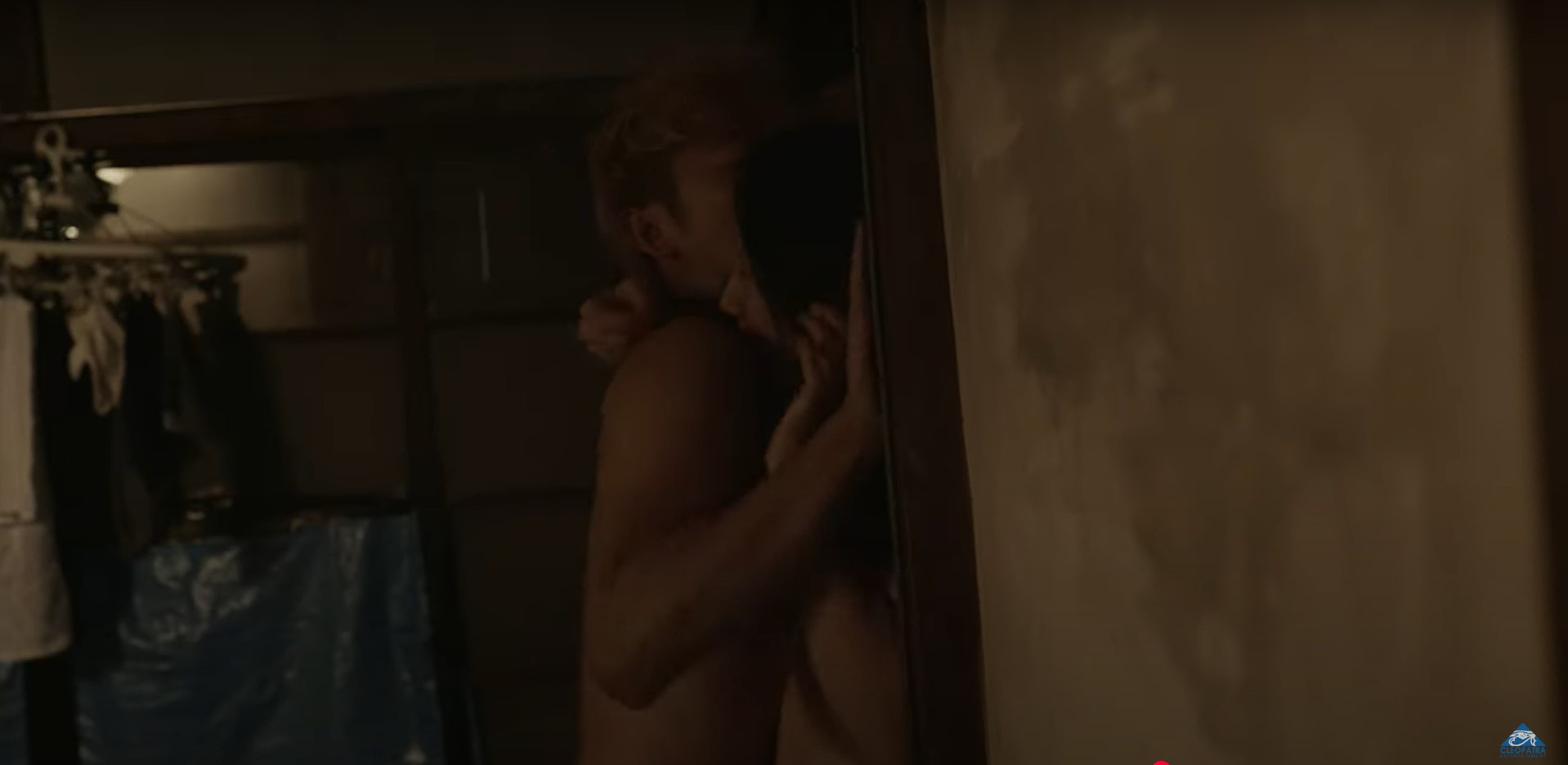
Hardboiled in a game of pursuit and evasion, Dominik Graf finds without difficulty the essence of Uwe Erichsen’s thrilling crime novel staying mostly in one location, evolving the story as the police try every trick in the book to thwart who they believe to be ordinary bank robbers and as the confidence, and perhaps a little brazen cockiness, slowly builds self-assured success. This constant stream of checks and balances between the hard focused, unobservant antitheft division of Germany’s finest and the cooperative crooks consisting of brawns following instructions of the brain keeping ahead of a fate less fortunate never lets down, never idles, and never diverts attention. “The Cat,” in a way, feels very much like 1988’s “Die Hard” from director John McTiernan, a steady source of one-upping the good guys peppered with moments of unvarnished, graphic violence and dark, unforeseen levity, minus a lone wolf John McClane hero behind enemy lines. The very opening scenes of Götz George and Gudrun Landgrebe engaged sexually are raw, sensuous, and sweaty but are under top a jaunty soundtrack that mismatch the heat of the moment in its cheerful, breezy Eric Burden and the Animal’s tune “Good Times,” a track with lyrics that speak of regrets of negating better moments with unsavory choices finds more of a potent meaning at the gun blazing finale where facing death is an inevitable outcome for one’s poor decisions.

UK label Radiance Films releases “The Cat” in the North American market for the first time with English subtitles in a limited-edition Blu-ray with a Dominic Graf approved high-definition transfer, newly graded by Radiance Film, onto an AVC encoded, 1080p, BD50. While the heist concept may be familiar conceptually to “Die Hard,” the look of the film also has that natural grading of “Die Hard” as well with Radiance infused punctuations on skin tones with a natural hardness. The print used was a digitized file, likely already spruced from an extracted print used by Euro Video in 2017, but Radiance retains the organic grittiness as well as the grain in their own sprucing up that sees a muted hues appear more intense. Presented in a widescreen 1.85:1 aspect ratio, I’m curious to know if “Die Katze” was cropped in post to avoid nudity in the love scenes between George and Landgrebe that appear stretched with more pixelation and are oddly framed, as if portions were sliced off and positioning did not change. The German audio mixes include lossless DTS-HD 5.1 Master Audio and a stereo 2.0. The surround mix lets loose and gives way to all to all of “The Cat’s” range in securing side and rear channels with ambient police activity, fireball explosion crackling, and the echoing of cavernous settings juxtaposed against more intimate and cozy locations. Dialogue renders clear, robust, and prominent with a seemingly errorfree, newly translated English subtitle synchronicity albeit the pacing being a little rapid. No signs of compression issues nor any print damage or unpleasant hissing or crackling. Special features include new German-languaged, English subtitled interviews with Dominik Graf, screenwriter Christoph Fromm, and producer George Feil, a scene-select commentary with Graf, and the film’s trailer. Like the rest of Radiance’s catalogue, “The Cat” comes with a clear Amaray with an OBI strip overtop the reversible cover art. The reverse side displays the original home video and poster art. A 19-page color picture booklet features an essay by freelance culture writer and film critic Brandon Streussnig All the Good Times That’s Been Wasted, plus cast and crew credits and transfer information and acknowledgements. The region A/B encoded playback release has a runtime 118 minutes, is not rated, and is limited to only 3000 copies.

Last Rite: A masterful crime thriller, “The Cat” claws away the fuss to unsheathe realism and Radiance Films delivers the Germanic, harrowing heister in all its glory with a Hi-Def release.

“The Cat” Limited-Edition Blu-ray From Radiance Films Now Available!