When the Artist Becomes the Art, EVIL Takes Over Their Soul. “Stopmotion” reviewed! (Acorn Medial International / Blu-ray)

“Stopmotion” Available on Blu-ray!

Living under her arthritis-enfeebled mother’s tremendous stop motion reputation and browbeaten into being the hands of completing her overbearing mother’s last film, Ella Blake can’t find her own voice in the animated art form.  During one already tension filled morning, Ella’s mother has a stroke and falls into a comatose state.  The unfortunate opportunity opens a door for Ella to complete her mother’s final masterpiece on her own as she moves out from the traumatic memories of her home and into a vacant high-rise apartment to be left in occupied solitude, but when a curious and brash little girl finds her mother’s story mundane and offers an alternative, more grotesque story, one which insidiously fascinates with disturbing themes and grisly creativity, Ella finds herself starting afresh, listening to the yarn of a young girl’s chilling vision, whole slowly cracking under the immense pressure of completing a film worth calling her own. 

With the timesaving, cost-efficient computer-generated imagery, many once popular animation techniques have nearly become a lost art in the recent feature film pool.  Stopmotion is one of those dangerously close to extinction animation styles, which has played a pivotal part in some of the most thrilling and magical films in history, such as, but not limited to, the live-action dominion of Desmond Davis’s “Clash of the Titans,” Sam Raimi’s “Evil Dead” films, and Tim Burton’s “Beetlejuice” to the fully animated features of Henry Celick’s “Caroline,” another Burton film in “A Nightmare Before Christmas,” and Phil Tippett’s “Mad God.”  Stopmotion animator and filmmaker Robert Morgan aims to add his entry to the dwindling, yet sustaining for now, artform with his 2023, debut full-length film “Stopmotion” co-written by Morgan and Robin King (“Mnemophrenia”).  The UK film is produced by Alain de la Mata and Christopher Granier-Deferrere under the French production company Blue Light and is presented by the UK’s British Film Institute, or BFI, with IFC Films and Shudder.

In the tragic lead role of spiraling down through pressurized suffering , trying to surface and take a breath from Ella Blake’s domineering mother’s shadow, is Aisling Franciosi, an Irish actress who also had a principal role in the segmented Dracula tale of “The Last Voyage of the Demeter” released the same year.  As Ella Blake, Franciosi plays into the young woman’s meek and submissive behavior as a subservient daughter to her conceited mother (Stella Gonet, “Spencer”).  All the while on the inside, Blake’s bottled voice contains lethal doses of self-destruction, barring her indefinitely inside the mental boundaries of her psyche, and never surfacing between the already emotional scarring and the grief for mother’s authoritarian parenting as Blake herself becomes very much like the armature puppet she manipulates into position for her film, needing that command structure to follow orders.  That need to be creative is so strong within Blake she fabricates another persona splitting soul into a dissociative disorder that takes the yoke and, ultimately, control over her and her project.  And, in some distressing and grim fairytale type of way, the voice recreates a story that parallels Ella’s life with the Ash Man (effects and prosthetic-cladded actor James Swanton, “Host”) chasing down and manipulating a wax puppet version of Ella in a grotesque mirror dynamic between Ella and her mother.  Tethering Ella ever so barely to reality is flexible boyfriend Tom (Tom York) and his flaunting animation corporate head Polly (Therica Wilson-Read, “Suicide Club”) to what’s in front of her rather to the voice inside of her but their truth is far too combative for Ella to stay fastened to a much strong influencing voice that’s far too close to her.   The upcoming “The Beast Within” actress, Caoilinn Springall, rounds out the cast as the little girl of the apartment building. 
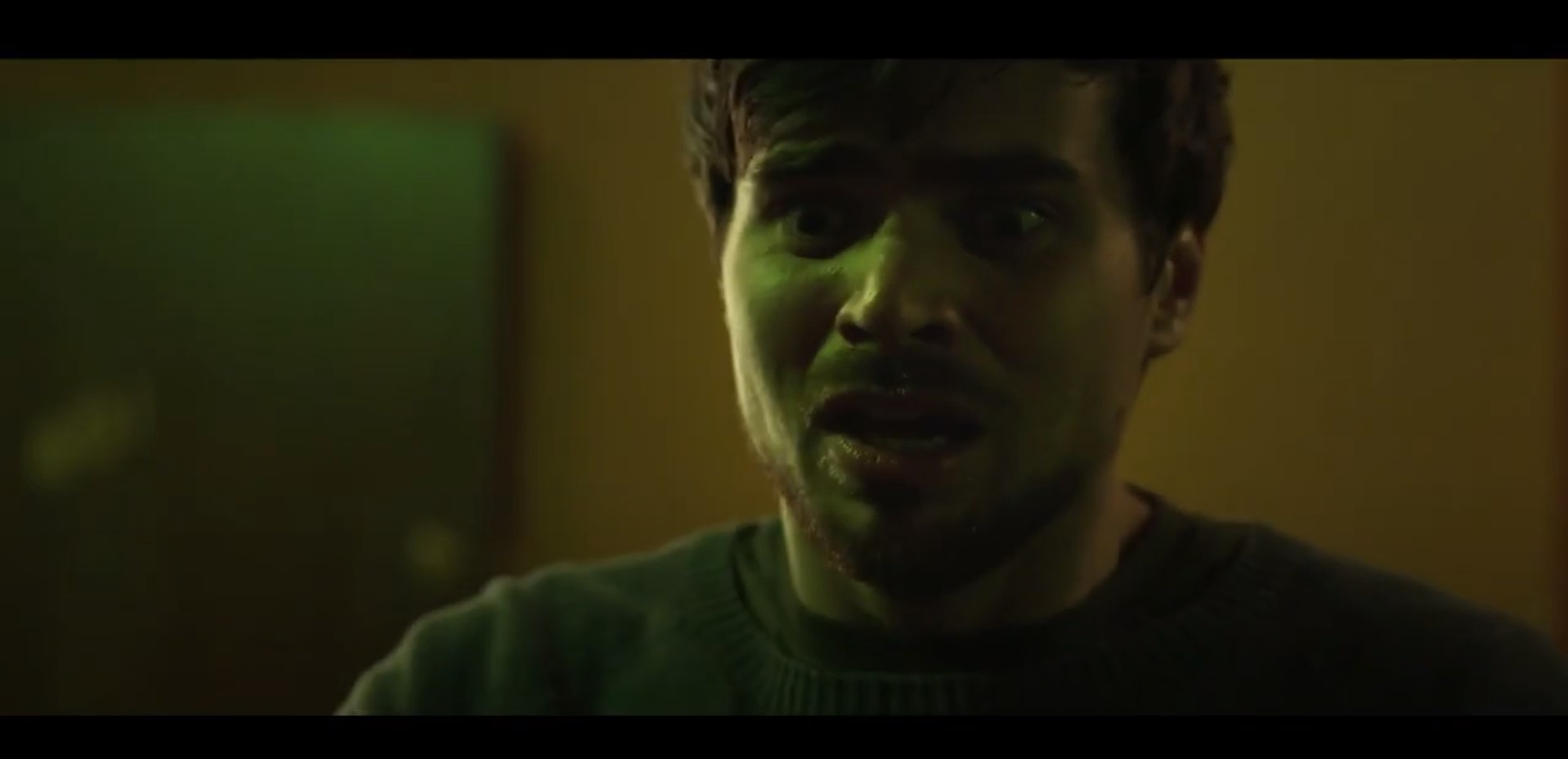
As much as I wanted to seep and soak into “Stopmotion’s” one-frame-at-a-time madness, I couldn’t help but to think I’ve seen this story before.   A sort of déjà vu encircles me and hits me squarely in the gut as I lament over the possibility of feeling the same way I felt before with another film.  Then, it struck me like a bolt of lightning that this storyline shares similarities with the 2021, Prano Bailey-Bond film, “Censor.”  Now, I’m not saying “Stopmotion” is a direct carbon copy but follows a familiar pathway, a movie industry outlier forced by life and submersed under the weight to finishing what the heroines have started only to crack in deep obsession.  On a high level, character impetuses that lead to the same conclusion are in stark contrast and Ella Blake’s descent fathoms family trauma and fixation with trying to be an individual and not just a minor component of a bigger, more impressive, machine that overshadows the necessary cog that makes the whole operate.  Coupled with surreal imagery, otherworldly stopmotion animation, and physical effects that’ll make your skin crawl, or melt like wax, “Stopmotion” enlivens an animator filmmaker’s creativity outside the personifying vocation, blending genres and animations to exact a reality bending mania.  Morgan’s fragmented segues evoke an alternate reality that skips the portions where the audiences’ minds might fill in the gaps.  There is no gap filling, only essential, contextual moments, as if Morgan is the puppeteer to his story by arranging the movements one frame at a time reflect Ella’s poignant reminders and dour moments that mold her.
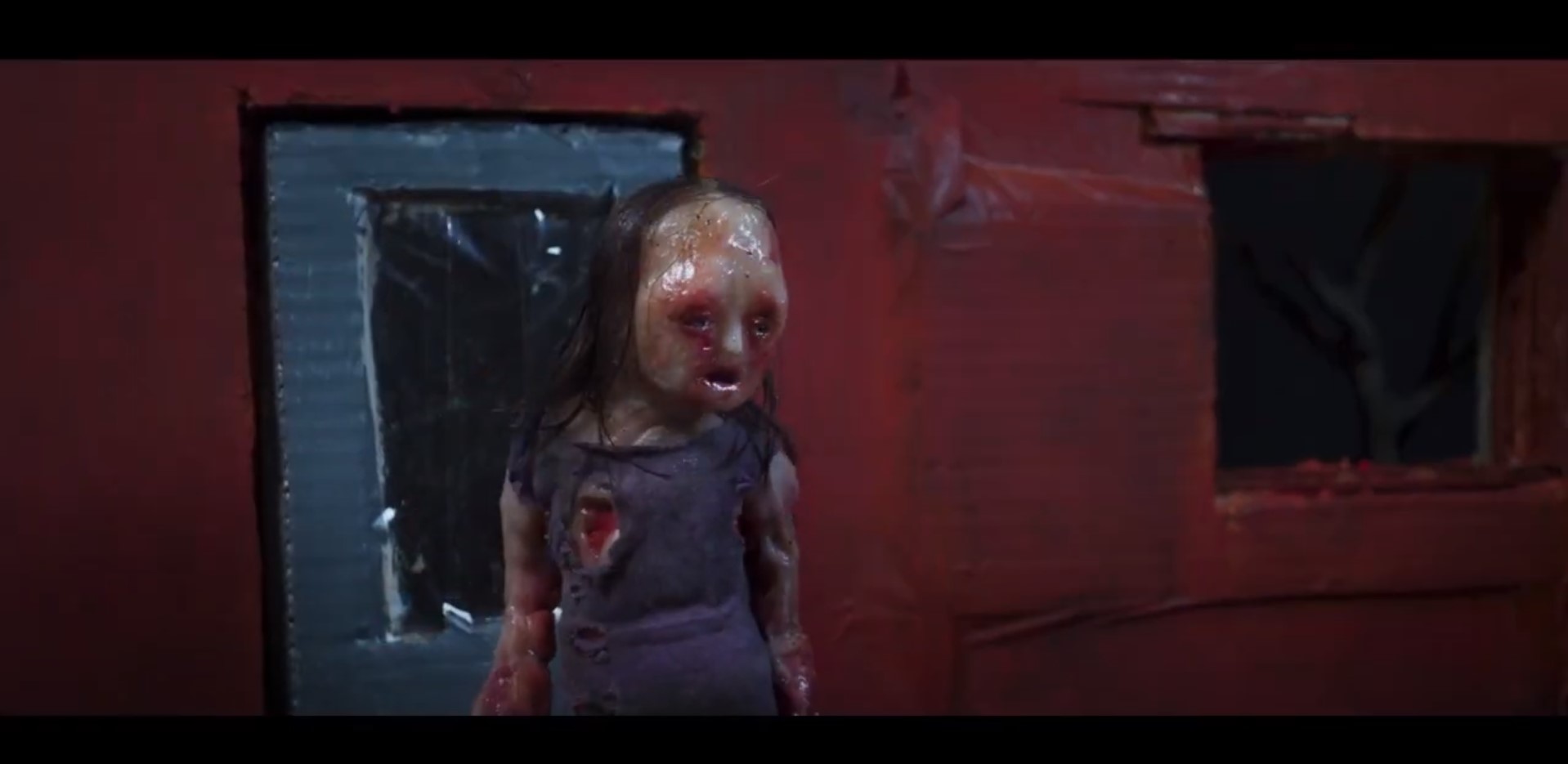
“Stopmotion” animates a living hell.  The Shudder exclusive lands onto a RLJ Entertainment subsidiary UK label, Acorn Media International, Blu-ray release.  The Blu-ray is presented in a widescreen 2.35:1 aspect ratio encoded with AVC, high definition 1080p, on a BD25.  Though in spartanly stark and gritty-glum set dressings, “Stopmotion’s” grading is on the lighter side of saturation diffusion, held mostly to a shade array of reds, greens, browns, and yellows.  There is numerous isolating, low key-lit scenes concentrated on the framed charactered and engulfing them in darkness but with that, there were no notifiable issues with posterization or banding.  Depth, especially in the stop-motion portion of reality, has spatial length and dimensional delineation, a testament to Morgan’s stop motion animator’s background and experience as some examples of the craft often look flat.  The English DTS-HD Master Audio 5.1 offers a lossless fidelity through the broodiness of Lola de la Mata’s compositional vocal and violin score, stringing through the surrealistic switch of cerebral crossfire.  Dialogue creates no challenges with a clear and clean presentation, range of effects heighten in animation’s Foley, and, again, depth creates that an enwreathed sound field through the back and side channels.  English subtitles are optionally available.  Special features include an interview with star Aisling Francosi, interview with writer-director Robert Morgan, and a behind-the-scenes featurette.  The Acorn Media release is rated 18 for Strong Bloody Violence and gore, has a runtime of 94 minutes, and, though not listed, played in region A playback so does seem to have at least dual-regional encoding between A and B.  The tangible Blu-ray comes in a standard Blu-ray case with a creepy, head-nesting puppet artwork.  The interior has standard appeal with just the disc inside, pressed with the same front cover art. 

Last Rites: “Stopmotion” depicts a tragic fall but not from grace in what is a more sad and sullen reality, and the escape is a freshly personified hell of one’s own making. 

“Stopmotion” Available on Blu-ray!

Out With the Old EVIL. In With the New! “Modern Vampires” reviewed! (Ronin Flix / Blu-ray)

“Modern Vampires” available for purchase on Blu-ray at Amazon.com

Blacklisted for not killing the vampire nemesis Dr. Van Helsing, Dallas is shunned by most of the underground Los Angeles vampire scene now presided over by Count Dracula himself, but as he returns to the city after decades of being gone and gathers with old – very old – dear friends, Dracula threatens him with being burned alive if he overstays his begrudged welcome.  When a newly turned rogue vampire under the pretense of a corner prostitute starts ripping the throats out of unsuspecting Johns, Count Dracula doesn’t want the potential public attention drawn on his species.  Taking a shine to this mysterious woman’s insubordinate nature, Dallas finds her, cleans her up, and introduces her to his inclusive friends, but little do any of the bloodsuckers know is that the Van Helsing is in town and has recruited local Crips to be the holy servants of God in wasting away the vampiric filth that plagues humanity.

Here I thought Casper Van Dien’s only good film was 1997’s galactic war with the extraterrestrial bug species in “Starship Troopers!”  Nope, one year later, Dien follows up his iconic global militant-nationalism and gory-filled sci-fi blockbuster with the little-known American comedy-horror “Modern Vampires.”  Better known around the world as “The Revenant” to not confused American audiences with a highly ingrained British term, “Modern Vampires” is directed by a principal one-half of the 80’s American new wave band Oingo Boingo in Richard Elfman.  The other half of that duo is Richard’s brother, who we all know and love in his unmistakable musical scores of “Batman” ’89 and “Edward Scissorhands,” Danny Elfman who also scores the opening theme to “Modern Vampires” with recognizable and trademark notes from those previously stated Tim Burton pictures.  The script was also penned by a fellow Oingo Boingo original member and the Kiefer Sutherland and Reese Witherspoon “Freeway” film, and its sequel, screenwriter Matthew Bright.  Bright and Richard Elfman had previously collaborated on the comedy-musical “Forbidden Zone” surrounding sixth dimensions and damsels in distress as well as the Charles Band produced “Shrunken Heads.”  “Modern Vampires” is produced by Elfman, Brad Wyman (“Barb Wire”), and Chris Hanley (“American Psycho”) under the Storm Entertainment and Muse/Wyman productions.

Ladies, if you thought you’ve seen the last of Casper Van Dien’s backside in “Starship Troopers,” then worry not! As the hunky, cigar-smoking, former World War II pilot Dallas, Van Dien, once again, shows off his hind parts in a steamy sex scene one top of Dallas’s car with costar Natasha Gregson Wagner (“Vampires: Los Muertos,” “Urban Legend”). As the indifferent vampire Nico under the pretense of a prostitute who seduces men into vulnerability before gashing open their necks, Wagner adds a bloodthirsty ferocity to her uncouth, undead character’s tremendous and tragic depth surrounding a trailer park trash childhood of sexual abuse and a grandstand mother. As a pair, Dallas and Nico are essentially made for each other or, rather, Dallas turned Nico because under all that pretty boy veneer, Dallas still has a beating heart for compassion and friendship as noted with Dr. Frederick Van Helsing’s crippled son, Hans, and the choice made between the two young men before the whole debacle of nixing to the fearless and relentless vampire killer of all time. Rob Stieger plays that character beautifully manically. “The Amityville Horror” and “End of Days” actor graces the production with seasoned vitality while also trying something new himself, a slightly fascist German vampire hunter who hires L.A. gangsters to help him do his dirty work and has to be the butt of the joke at times at the hands of Count Dracula (“Striking Distance”) as well as Dallas. Stieger does his scenes with great earnest yet great fun that puts the legendary actor into a new perspective. “Modern Vampires'” star-studded cast doesn’t end there was Dallas’s friends include performances from Kim Cattrall (“Big Trouble in Little China”), comedian Greg Furgeson, Natasha Lyonne (“Slums of Beverely Hills”), and the legendary Udo Kier (Andy Warhol’s “Dracula”) as well as a cast round out with Natalya Andreychenko, Gabriel Casseus, Peter Lucas, Victor Togunde, Cedric Terrell, Flex Alexander, and Conchata Ferrell.

Gory, sexy, and overflowing with politically incorrect humor, Richard Elfman’s “Modern Vampires” more than likely would not be a film made today, but definitely suits the 90’s scene.  There are stereotypes and jokes radically exaggerated for comical effect and land with such insouciant ease that the entire production felt at peace with the humor, emitting “Modern Vampires” as an enjoyable, blood-soaked, outrageous vampire comedy unearthed from over 20-years ago and landing onto a new Blu-ray release where the Elfman film deserved an upgraded treatment.  Los Angeles in ’98 didn’t look extremely different than what’s depicted in the film – late night clubs with half-naked patrons doing all sorts of weird and bloodletting fetishes, leeching prostitution on the delinquency riddled streets, and unsavory, unwilling gang bangs but, in “Modern Vampires’ case, the one tied to the bed is a female vamp fully-transformed into a human-sized bat and those who have sex with her, turn into a vampire themselves.  See the humor and symbolism in that?  Almost as if having unprotected sex with a creature of night is akin to contracting a sexually transmitted disease.  Despite the waggishness, “Modern Vampires” holds other staid themes as well with an arteria one being reflective in the title.  The genesis of the species emerged from Count Dracula who had moved from his old Germanic country to the hip and upcoming L.A. area. With each generation of vampire, the loyalty gap becomes wider until the turned from the 20th century are fully unmanageable by the Count’s supreme power. Nico, the youngest turned is in her vampiric infancy often noted throughout the film, can’t be contained and won’t be told what to do, much like teenagers butting heads with their parents on every little subject. Traditions are broken, heads are severed, bodies are burned, and the “Modern Vampires” is a wildly funny and gruesomely gnarly.

“Modern Vampires” is now the vintage vampires that hit the silver screen some 24 years ago and is now basking with the great 90’s flair of special effects, clothes, and hair on a new Blu-ray release from Ronin Flix in association with Quiver Distribution (“To Your Last Death”). Newly scanned in 2K of the Richard Elfman’s personal film print, the picture retains an unsullied quality with impeccable detail delineation for a story that’s mainly set/shot at night. There’s quite an overlay of purple flush that I’m fairly positive is not intended that pulls away, at times, from clearcut contrasting and blend the objects in the scene together. The film is presented in full high definition1080p in a widescreen aspect ratio of 1.85:1 with an English language DTS-HD master audio 2.0 stereo that retains the amplitude of every categorical track. Dialogue track provides a clean depth and clarity that doesn’t swerve into boxy territory like many indie productions do. Ambient and foley range is quite limited for a bunch of different locational shots and in a crowded location full of extras but the extent of the quality is good enough. The 91-minute film comes not rated and has an exclusive extra with an introduction by director Richard Elfman plus archival features, such as audio commentary with Richard Elfman and star Casper Van Dien, a behind-the-scenes featurette with on set mini-interviews with the cast and crew. and the theatrical trailer. “Modern Vampires” might now be long in the tooth (get it?) but has the classic campy escapades of an unpretentious good time and, that my friends, is timeless.

“Modern Vampires” available for purchase on Blu-ray at Amazon.com

Tell, Don’t Ask, Evil to Go Away! “The Addiction” review!


NYU Philosophy doctoral hopeful, Kathleen Conklin, has a run-in with a woman on the night streets of New York City, attacking her into a secluded dark enclave, and biting her on the neck after Kathleen is unable to comply with the woman’s bizarre instructions of ordering her to go away. The incident instills fear into Kathleen that quickly turns to a painful vampirism transformation that involves aversion to sunlight, self-antipathy, and a craving for blood. She continues to her studies that evolve into a deeper analytical parallelism of her newly acquired immortality, the results of it, and the human aspect that’s affected by it while along the way, feeding and turning friends, colleagues, and strangers into her brood of own image. Kathleen happens upon Peina, a vampire like herself, that has claimed to conquer his own addiction to blood and can even mirror himself as human, such as eating normal food and jogging. The agonizing withdrawal with Peina drops a slither of a notion into Kathleen that her gargantuan thirst for blood will overdose her soul to pure evil and she has to come to terms with her immortal being on the life she wants to live.

Abel Ferrara’s “The Addiction” has such anti-Hollywood tenacity that the black and white aurora of the 1995 noir vampire film goes against the more conventional grain that is Ferrara’s body of work, but still maintains a healthy amount of the director’s trademarks and his dispositional motifs to give the feature enough claim to clearly become his imprint of a screw you onto the big money motion pictures. The “Driller Killer” and “Bad Lieutenant” director orchestrates a film from without the complications of a union, with producers breathing down his neck to do this or that, and on such a minuscule budget; the vampires here are not transforming in bats, their eyes do not glow in the dark, and they even don’t have jugular piercing canines. Nicholas St. John’s script was written to portray monsters as just people with a severe addiction this particular drug of choice – the blood. The symbolism is so potent that’s hardly symbolism as the main character literally injects a syringe full of blood into the crook of her arm to get a fix.

Ravished without hesitation, Lili Taylor seizes Kathleen Conklin as if Taylor herself was addicted to the character, overtaking the character to an enlightened savagery of an academic disciple on the cusp of achieving stress-inducing doctoral status. Through the studious muck and death of mankind’s prior carnage, the “The Haunting” star goes for the full throttle transformation in the blink of a bite and never blatantly displays the hesitation of her former mortal self until the tide turns to whether stay blood thirsty or to live with the embattlement of struggling addiction. Kathleen crosses paths with Peina whose been undertaken by a classic Walken, Christopher Walken that is, and the New York City born “Communion” star had a big year in horror as “The Prophecy” was released the same year – 1995. Though Peina is crucial to Kathleen’s ultimate survival, the character has little screen time and Walken nails the performance with credence and gusto as some sort of subversive mentor to the young vampire protégé. The cast rounds out with Edie Falco, Paul Calderon (“Fear the Walking Dead”), Fredro Starr, and “The Hand That Rocks the Cradle’s” Annabella Sciorra as Casanova, the female nightstalker who takes a bite out of Kathleen and initiates the carnage.

Ferrara’s choice for black and white isn’t all surprising. At the time, numerous notable directors were doing the very exact concept in the 1990s, examples being Steven Speilberg’s award winning “Schindler’s List” in 1993 and Tim Burton’s dark comedy biopic “Ed Wood” with Johnny Depp in 1994, but Ferrara had a conceptually aesthetic noir appearance that created distance between the rest and established a solid black and white film that renders being akin to, perhaps, George Romero’s “Night of the Living Dead.” Not only did Ferrara’s film fit in the scheme of the 90’s fad, but extended “The Addiction’s” disturbing dramatic value and horror sensationalism in which color would have for sure diluted the story due in part to the pocket change budget. Taylor, Walken, and Sciorra very much believed in the project and that belief brought their characters to the formidable forefront to where a color picture didn’t really matter in the end.

Arrow Films presents “The Addiction” onto Blu-ray home video and is distributed by MVD Visual. The Blu-ray has been newly restored 4K scan of the original camera negative and approved by director Abel Ferrara and director of photography Ken Kelsch. The high definition 1080p widescreen, 1.85:1, picture has a clean palate and despite the lack of the color palette, the black and white has virtually little-to-no blotching or DNR, leaving a flawless image. The English 5.1 DTE-HD MA and 2.0 LPCM soundtracks, with optional English subtitles, is well-balanced, at least in the 5.1 DTE-HD Master Audio. Dialogue in the forefront with a brooding and jarring score by composer Joe Delia has great distinction and range, but there’s a curious lack of ambiance that focuses more on direct action of characters. NYC should be booming with surrounding noise; yet the direction Ferrara takes with reduced ambiance is risky, but exquisitely done to add a more personal touch to Kathleen Conklin’s struggle. Bonus material includes an audio commentary by Abel Ferrara, moderated by critic and biographer Brad Stevens. There also includes a new documentary, entitled Talking with the Vampires, directed by Abel Ferrara that features new interviews with composer Joe Delia, Ken Kelsch, Christopher Walken, Lili Taylor, and Ferrara himself. A new interview with Abel Ferrera going into the background of the film’s construction and the era of filmmaking, a new appreciation by Brad Stevens, an achival piece from the time of production, original trailer, and a reversible sleeve featuring original and newly commissioned artwork by Peter Strain. A supremely inclusive Blu-ray release by Arrow Films and MVD Visual of Abel Ferrara’s grittiest work of his gritty catalogue and the very spartan vampire film has an outlook of what future vampire films should aspire to with great beneficial expectations.

Buy “The Addiction” today!