To be a Rich and Famous Rockstar, You Must Sign with EVIL! “Hell’s Bells” reviewed! (SRS Cinema / Blu-ray)

Sign Your Soul To Satan for the “Hells Bells” on Blu-ray!

A pair of middle-aged best friends and rockers named Arthur and Herb have minimum waged jobs, no ambitions, and two level-headed wives on the brink of divorcing them if nothing changes.  All the friends have is their band, Devil Music, and their glam rock music. Out of the blue, a music talent agent signs them in a heartbeat and before they know, Devil Music is rocking out to a packed-full arena full of adoring fans and obsessed groupies, raking in money beyond their capabilities of higher counting.  What they’re oblivious to is the band’s collective souls now belong to the Devil under the contract terms with the servile music agent doing the Devil’s fear-based bidding and whose life and soul hangs in the balance.  When the Devil comes to collect, sending his demonic minions to slay each member of the band, Arthur and Herb must find a way to save themselves from the Devil cancelling their life show forever. 

For over a decade now, filmmakers Jim O’Rear, who’s minor zombie role in George Romero’s “Dawn of the Dead” has launched a career in indie horror in front and behind the camera with “Hayride Slaughter,” “Three Tears of Bloodstained Flesh,” and the “Cruel Summer” trilogy,” and Scott Tepperman, who’s more recent filmography into the indie market also saw highlights of horror, have been in business together ever since co-starring in the 2013 haunted hospital flick, “Hospital.”   From then on, the two had formed their own production company, Los Bastardz Production, specializing in low-budget horror with a select entourage of talent.  The devil and his contract film, underscored with a rock-n-roll fame theme, released in 2020 is duo’s “Hell’s Bells,” a horror-comedy built around if it seems too good to be true, it probably is narrative.  “Hell’s Bells” is also produced by the two filmmakers.

Like most of their produced product, it comes to no surprise that the Los Bastardz themselves, Jim O’Rear and Scott Tepperman step in the principal leads of a Beavis & Butthead or Bill & Ted type of heavy metal music centric duo who are daft beyond repair.  Any innovation aimed for the setup is instantly dissolved by the derivative tepidness as we’ve seen these characters before over the decades now, but O’Rear and Tepperman make for a good dimwitted and guileless pair with a gullibility and an innocence that makes them appear sympathetically simpatico, even when their levelheaded wives (Rebekah Erb, “Death Care,” and pornstar Layla Dawn. “Slumber Party Slaughter Party”) use threatening divorce language to motivate their one-track mind toward another desire in life.  The jokes are a bit long in the tooth and there are a handful of needless fart jokes, but the overall gags do land even if the terrain they contextually touch down on is rocky at best as they play to their individual character strengths of being a grocery bagger enthusiastic about making it big and a loafer who actualy has some intelligence underneath his Jesus hairstyle.  Their band mates, the cocky loudmouth drummer Vic (Paul Van Scott), the butch backup singer Shirley (Lisa Kirk), and the catatonic bassist Gary (Cameron Scott), all have their own quirks, and all are played by actors familiar with El Basterdz having donned roles in previously produced films from the company, such as the “Cruel Summer” series.  As the band Devil Music, they are targeted for soul reaping as a part of a contract byproduct against their music agent Caleb (Tom Komsar), drawn up by the devil himself in Marc Price (“Trick or Treat”) by duplicitous means with deceitful promises.  Without the horns, pitchfork, and red skin, Marc Price makes for a good Devil in human skin with only the economized visual effects fashioned glowing eyes.  Harold McLeod II preludes the story as a victim of contract, Cayt Feinics draws attention with a show of toplessness as Shirley’s lover, Jerry Reeves plays the demon x many going after Devil Music, and a sorely underutilized Jimmy Maguire, as the exasperated grocer manager tired of Arthur and Herb’s lack of common sense, fill out “Hell’s Bells” cast.

To preface with my previous experience with El Basterdz films, “Cruel Summer” didn’t do it for me with a dowdy slasher that’s didn’t leave impression.  Yet, “Cruel Summer” has two sequels plus a 4th soon to be on home video, making this series their most popular commodity.  What can I say?  Cinema is subjective.  That bad taste didn’t deter “Hell’s Bells” from the ever-growing review pile and a second chance to get this long-time horror fan aboard with Jim O’Rear and Scott Tepperman’s blithe outlook toward the horror genre, one that doesn’t take itself too seriously.  With that understanding, going into “Hell’s Bells” was rather easy with no expectations for commentative material and top-notch gags and laughs, but what El Basterdz provides has been long appreciated and continuously favored in genre films:  decent VFX, decent practical effects, and, of course, the provocation of nudity.  There may be times when films can get away with having only one of those key elemental pieces present with great immensity and intense projection that the film can’t be denied it’s due right to seen and heard as a well-made film but have all three and the formula works like a charm amongst genre fans no matter how bad the storyline gets and no matter how bad the acting is portrayed, leveling up a mediocre production to potentially the penthouse of the independent skyscraper.  To be fair, neither the story nor the acting in “Hell’s Bells” is atrocious but the technical aspects during principal photography and post-production throw the film off-balance into slapdash hogwash and that can be rather off-putting right out the gate for most audiences.

“Hell’s Bells” finds itself being a story having been told before, many times over in its airheaded budding duo faced with great task none think possible to complete, but O’Rear and Tepperman manage to befit themselves satisfactorily in archetype with a rock-n-roll nightmare by sticking to their character quirks and incorporating the backbone preferences of shoestring genre filmmaking.  SRS Cinema is a distributing house built on shoestring films and “Hell’s Bells” is another brick in its schlock-sturdy foundation with a Blu-ray release.  Encoded with AVC compression, presented with 1080p high-resolution, on a 25GB BD-R with the purple underbelly, “Hell’s Bells” looks pretty good for commercial grade encoding and minimal capacity.  Details are sharp enough to cause no concern to capture skin variations, the contrasting wardrobe textures, and the shifting compositions between reality and fantasy stemmed from visual effects and fade-in/fade-out montage sequences.   Scenes are mixed bag of grading, some more intense than others that are set with a brighter natural veneer, but all retain their intended quality without any substantial issues from compression.  The English language LPCM 2.0 stereo renders a mix of feeble commercial equipment and green technical knowledge that permits a large noticeable swing in all areas of principal sound recording with most of the pain points affecting dialogue with retreated vocal presence in certain scenes while robust in others, and even an in-moment change of the same scene at times.  Post sound design isn’t marred by the same scenarios that’s a clear as crystal with the added rock soundtrack, crowd cheers, and demonic gutturals.  No English subtitles are offered.  Special features include a commentary track with writer-directors Jim O’Rear and Scott Tepperman, a behind-the-scenes featurette, Arthur and Herb’s Devil Music music video, blooper reel, the feature trailer, and SRS Cinema catalogue trailers.  SRS Cinema’s Blu-ray mirrors their limited 100 count release without the director’s signatures, retailed with a regular Blu-ray Amaray case with illustration composition artwork of mostly the chief principal characters, and as always, the graphic artistry SRS uses is always 100x better the film.  There are no other physical accompaniments.  The not rated release has a runtime of 80 minutes and has region free playback. 

Last Rites: Throw up the sign of the devil horns for “Hell’s Bells’s” comedic contract with a hair metal Satan, but don’t let this narrative fool you by hawking new something old and done before.

Sign Your Soul To Satan for the “Hells Bells” on Blu-ray!

To All the EVIL Devil Horns Out There “Death to Metal” reviewed! (Wild Eye Releasing / Blu-ray)

“Death To Metal” available on a Collector’s Edition Bluray!

Already with the traumatic distaste for heavy metal music, the fire and brimstone preacher, Father Milton Kilborne, addresses his congregation with a bigotry homily aimed to categorize not only heavy metal music as a sin, but also homosexuality, internet porn, and other indulging vices. When Father Kilborne is suspended by the church’s head priest, the zealous Kilborne drives himself into a stuporous accident that upends his car into a toxic waste dumping ground. The accident mutates the ardent Father, still blinded by God’s Wrath rather than his Mercy, into a superhuman and disfigured killing machine who stumbles into one of the biggest heavy metal concerts of the year – The Holy Saturday Metal Massacre. Metal bands and metalheads unite for a headbanging, guitar-rifting, super loud four-show rockfest and what was supposed to be the best part of metalhead Zane’s abysmal day has now turned into a bloodbath as he and his friend Mariah are caught in the middle of Father Kilborne’s devout judgement and faith cleansing.

The tritonic Devil’s music needs not to fear God but fear his misguided instrument of destruction! “Death to Metal” is the 2019 Metalsploitation mutant slasher from written-and-directed by Tim Connery (“Black Web”) and cowritten by Kevin Koppes. What began in the Summer of 2016 under the working title of “Good Friday,” an Indiegogo fundraising campaign was launched with a goal of $50k and with a modest turnout of supports, “Good Friday” received more than half its goal, plus additional private contributions that provided enough moola pull off the campy thrasher-slasher filmed in mostly in New Vienna and Dubuque, Iowa with latter scenes of the downtown Dubuque area and in the historic, post-industrial converted, cultural arts and music venue building appropriately called the Smokestack because of its monolithic warehouse smoke funneling circle chimney. Double Dubuque Films in association with DreamCatcher Productions presents the Smoking Section Films’ “Death to Metal,” a holier-than-thou slasher produced by Connery and Samantha Cihak and associate producer Gary Greco with executive producers Noel Kapp, Trent Lind, Joe Scherrman, and Charlie and Lara Lind, most of all of whom were involved previously in Connery’s freshman feature “Black Web.”

“Death to Metal’s” parallel story follows two unfortunate souls connected by church and who are having the worst day of their lives. For Father Kilborne, his stubborn, one-sided dogmatism lands him in hot water with the residing church priest. Going through the stages of grief having lost the right to perform a holy sacrament and been punished for what he wholeheartedly believes, Kilborne bends the word of God while going on a bender that sends him hurling into a monstrous “Toxic Avenger” fate that isn’t as anti-heroic and doesn’t come with a melee mop but comes with a sharp edged broken wooden cross. Andrew Jessop’s enthusiastic performance glorifies the evilly enthusiastic Father Kilborne’s human form while Trent Johnson takes the lumbering approach of the mutated, Knights of the Templar version of the fanatical Father. As Kilborne becomes a toxic terror, churchgoing Zane has just been dumped by his band Withered Christ and girlfriend. Played by Alex Stein, Zane ventures to self loathe in the comfort on longtime friend Mariah (Grace Melon). Stein’s the unlikely head banger with a quietly spoken and easygoing demeanor but can be a sleeper metalhead with vehemence for the genre, candidly naming off bands and their technical attributes with excitement in their eyes is a telltale sign of fan no matter what they’re wearing, how they look, or how docile they act. “Death to Metal” fills the mosh pit crowd of characters with supporting bit performances from Charlie Lind, Steve Thompson, Sean Weis, Dean Wellman, Neal Kapp, and Dan Flannery.

Being not a tremendous metal fan, I find that metalsploitation is not terribly hard to love. Horror and metal have gone hand-and-hand for decades since the 1980s with films such as “Hard Rock Zombies” and “Trick or Treat” but has soared under the radar for much of that time and only recently has horror and metal has found some commercial success in the indie market with hits “Deathgasm,” “Lords of Chaos,” and I would say “Psycho Goreman” with its Gwar inspired grotesque costuming. “Death to Metal” is another entry that has had a rough go of breaking the surface with a lack of financial supported marketing, yet the Tim Connery film is a campy crusade to highlight and farce religious sectarianism as well touch upon the hypocrisy of band politics. In a modest showing of practical special effects, first timers Trent Johnson and Brad Vondra bang out simple, yet credible death metal death strokes of broken bottle nipples, a bleach chug, and a metal show circumcision abortion. In contrast, Vondra and Johnson show very little of their bloody work against a slather of offscreen kills that coat “Death to Metal’s” more gritty-grungy veneer and its metacognitive reason for being, to be a sweaty mosh pit of knavish metal and horror. Conner and Jackson Cooper Gango reteam from “Black Web” to not only providing a dingy and smokey atmospherics and stylize with stark blue filter gels but they also make up where special effects lack with impressive camera work with subtle zooms to narrow the center focus, crane shots to make visualize the body-high carnage, and a stationary car-cam next to the wheel well to enrich and stretch “Death to Metal’s” humble budget. One of the best parts of “Death to Metal” is the opening prologue of Romans 1:18, speaking to the wrath of God being revealed against all ungodly and unrighteous men, and then quick cuts to title track “Fuck Your God” in big, bold red lettering.

Compiled of horror and metal, with actual metal bands such as Telekinetic Yeti and Mutilated by Zombies, “Death to Metal” arrives on a collector’s edition Blu-ray from Wild Eye Releasing. The AVC Encoded BD50 presents the film in high definition, 1080p resolution with a widescreen 1.85:1 aspect ratio. Not the most tapered image for an indie scaled, indie market distributor with banding issues at every dark-toned turn. Textures on the skin, liquids, and clothing do have a tactile decking that can’t be ignored, especially on the higher contrast focus to create tension-laden semi-opaque shadows. The release comes with two English audio mixes, a Dolby Digital 5.1 surround sound and a stereo 2.0. Honestly, I had difficulty distinguishing between the two mixes flipping back-and-forth. Both tracks appear to be identical in a quizzical effort to not make the metal music stand out in a more than dual channel output. Dialogue renders over fine, clear and clean with a nice balance between the club patron and club skirmishing chaotic ambience. The soundtrack’s a phenomenal plethora of metal band sampling with music from Mutilated by Zombies, Exmortus, Boar, Driftless Sisters, Inquiring Blood, Netherworld, Monolithe, and The Rising Plague. Optional English subtitles are also available. Special features include raw Snapchat behind-the-scenes footage, music video for the fictitious metal band Grandma Incinerator’s End of the Elderly, Indigogo fundraising videos back when the film was under the working title “Good Friday” with dark humored skits and pleas for funding, a behind-the-scenes photo gallery, the official “Death to Metal” drinking game rules, and Wild Eye Releasing trailers. The physical features include a clear Blu-ray snapper case with an illustrated father Kilborne gracing the dual sided cover art. The reverse side displays an iconic scene from the film enveloping a mini poster in the Blu’s insert. There’s also a more grotesque rendering of Father Kilborne and one unlucky impaled metalhead screaming in agony illustrated on the cardboard slipcover. “Death to Metal” comes unrated, region free, and has a runtime of 80 minutes. A slaying entry into the niche metalsploitation subgenre, “Death to Metal” goes hardcore with deathcore when church and metal clash!

“Death To Metal” available on a Collector’s Edition Bluray!

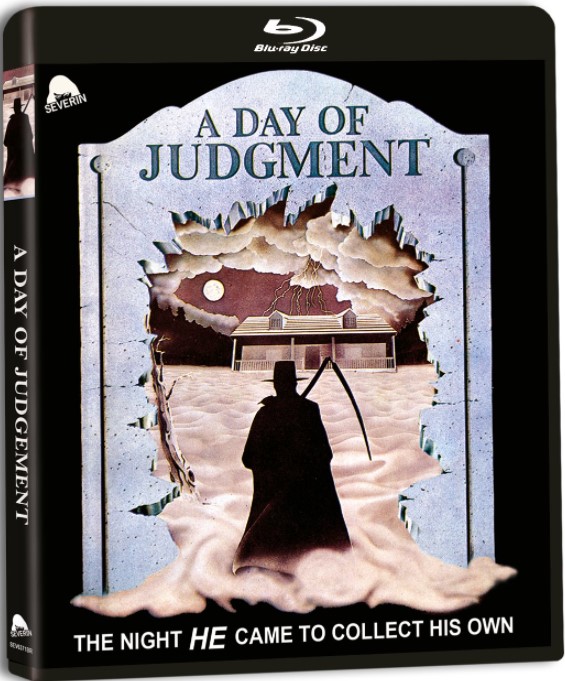
Do EVIL, Get Dead! “A Day of Judgment” reviewed! (Severin Films / Blu-ray)


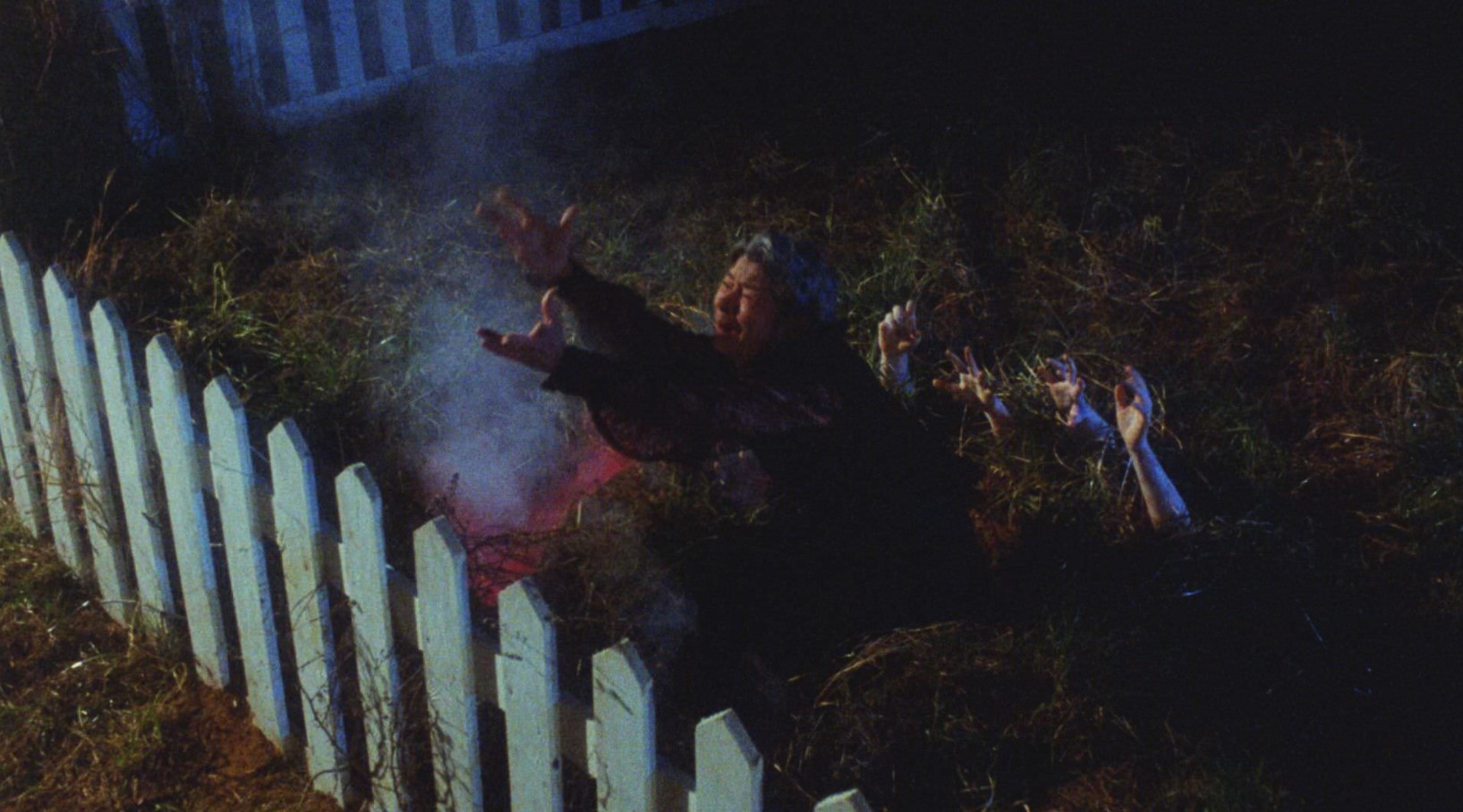
1930s rural America – the dejected town priest resigns his congregational duties after failing the local townsfolk who have all but returned to the Church and reclaim their faith in the savior lord Jesus Christ and God.  On his exit of the town’s border, the priest crosses paths with a shadowy figure riding an austere wagon and holding a scythe.  A town full of heartless schemers, adulterers, swindlers, and murders have their unforgiving stories told that leave their fellow townsfolk, their friends, and even their families left suffering in their wake.  The shadowy figure tracks each sinning stray down to face retributing judgment.  The righteous and terrible punishments send the unsavable souls to an eternal existence in Hell.

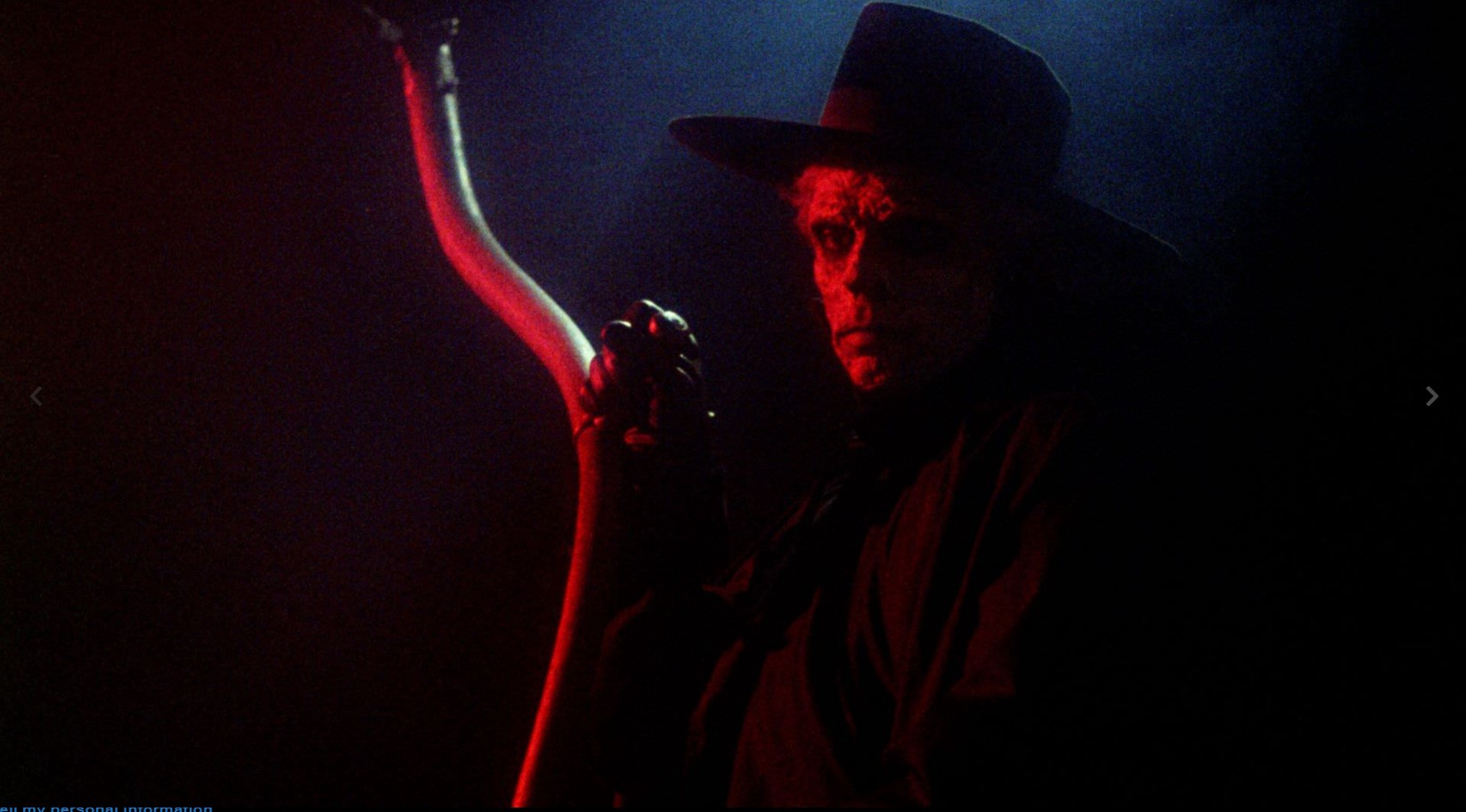
The Grim Reaper cometh. Screen cap courtesy of Severin.

What was once considered to be a Christian-centric educational project had turned into a Christian-centric damnation of horrors in the quasi-anthology “The Day of Judgment,” where the sinners of sin town deviate from the Godfearing path and into a vat of immorality and ungodly aberration.  “The Day of Judgment,” occasionally under the U.S. bootleg title of “Stormbringer,” is the one and only directorial from C.D.H Reynolds (aka Charles Reynolds), an academic educator turned briefly to film working under the legendary, North Carolina based Earl Owensby Studios that produced the 1981 released film.  The script is penned by Owensby Studios’ regular writer, Thom McIntyre, who inked the film between a pair of genre credits, including the incarcerated grindhouse actioner “Seabo,” also known as “Buckstone County Prison” a few years earlier and a snippy flick of a pack killer Rottweilers terrorizing a mountain resort in “Dogs of Hell” a couple of years later.   Owensby, obviously in regard to his own studio work, took part as the fire and brimstone tale’s producer along with associate producer and longtime “Power Ranger” director Worth Keeter curating the final touches as the creative architect of the script’s grimmest portions or more line as the assistant director of adding the bleaker, bloodier fates of the sinners.

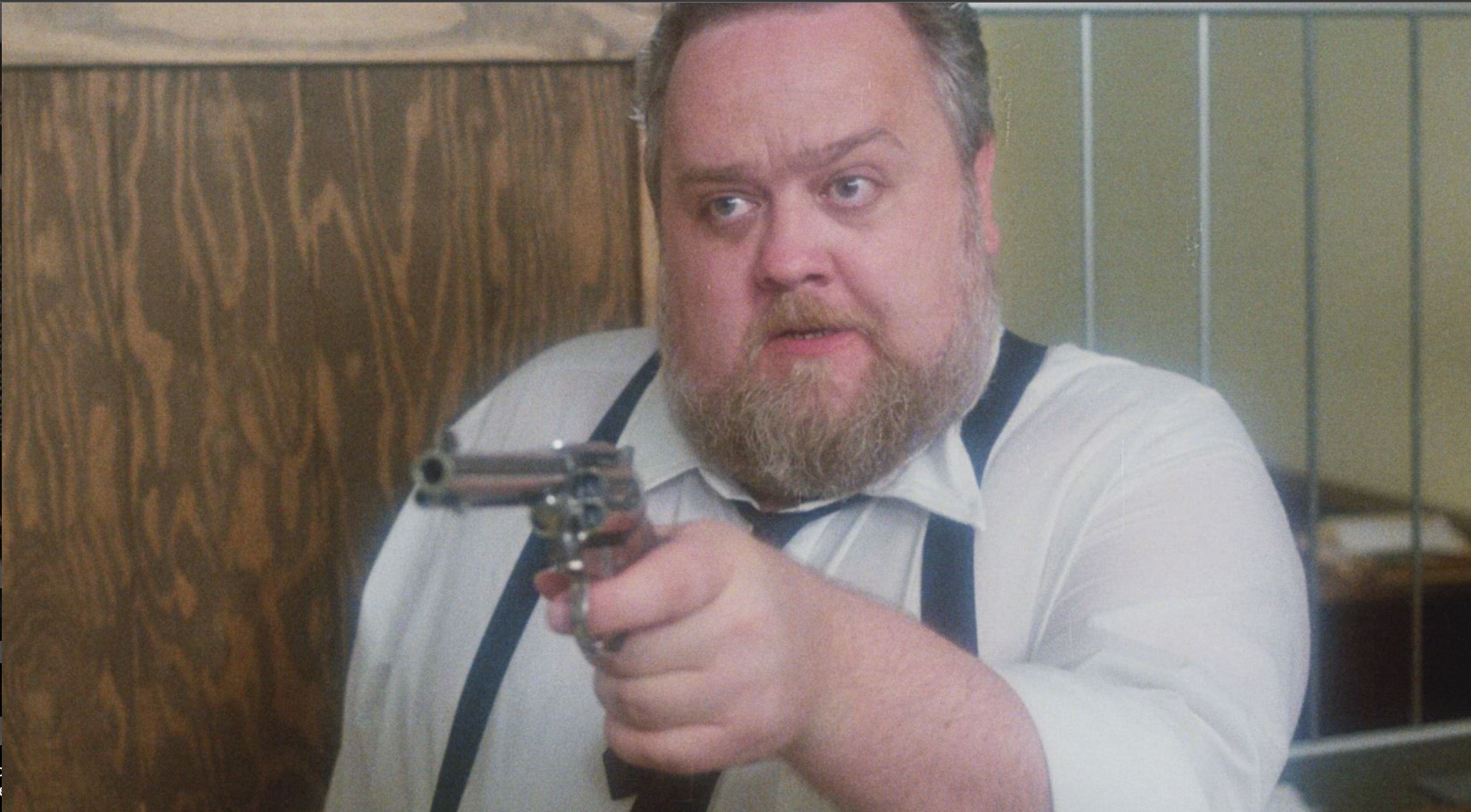
William T. Hicks. Screen cap courtesy of Severin.

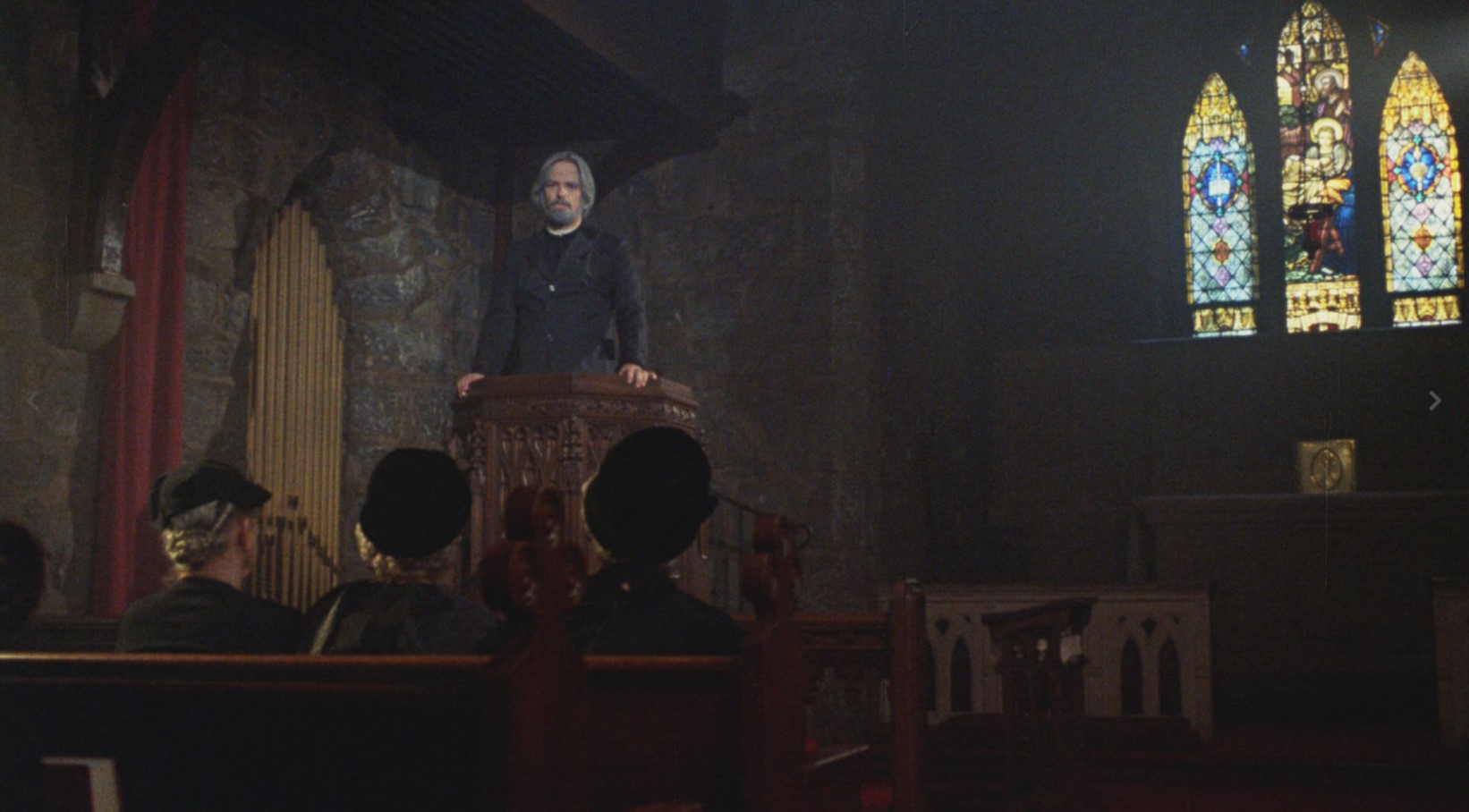
“A Day of Judgment” has a non-linear anthology-like structure that swings back and forth between different character scenarios of wickedness.  You may meet one character at the very beginning of the story and don’t meet them again, until you’re already through having sent a good chunk, if not all, of the sinners to Hell in a handbasket.  But McIntyre hones in well on setting up nicely each character’s backstory, those who the priest crosses paths with as he exits the town and delivering their ultimate demise (with an assistant from Worth Keeter’s gloomier approach).  The director himself Charles Reynolds plays the crestfallen Reverend Cage in a classic expository preacher riding out of town and crossing paths with soon-to-be-troublesome townies in William T. Hicks (“Death Screams”) as a greedy and heartless bank owner, Careyanne Sutton and Larry Sprinkle (“Trick or Treat”) as man slaughtering, pretense adulterers. Toby Wallace as the hometown disparaging mechanic scheming to steal the family business out from his parents noses to sell, Helene Tryon (“Dogs of Hell”) as the frettingly kook and paranoid old lady poisoning the local children’s pet goat, and Brownlee Davis (“Wolfman” ’79) as the delusional and disgruntled former employee of his best friend looking for a finality in revenge.  “A Day of Judgment” had this weirdly transitional acting style for an 80’s released horror that resembled the Golden Age of cinema through the 1950s and 1960s where everything is loud and pronounced without much reflection, pause, or change in tone.  Though the style sticks out like a sore thumb, perhaps Reynolds made a shallow attempt to recapture the 1930s as which the narrative period is set.  The acting isn’t terrible but is more staged and reactionary to the course of events.  The cast rounds out with Carlton Bortell, Richard Dedmon, Inga Dennis, Denise Myers, Jerry Rushing, Harris Bloodworth and Fred Roland.

C.D.H. Reynolds as Reverend Cage. Screen cap courtesy of Severin.

Earl Owensby produced films were not known to be big box office hits as they coursed the grindhouse, drive-in theater circuits with relatively unknown talent nearly strict to the back pockets of the Owensby Studios and still meeting profitable margins on low budgets.  “The Day of Judgment,” which doesn’t feel like a grindhouse film, carried meager success by way of production design and wardrobes alone.  Give credit where credit is due with an Owensby film that can dole out a variety of era appropriate automotive roadsters and specific period garments for the illusion.  Some sets are dressed scarcer than others with lots of blank spaces and sparse knickknacks to build upon the 1930’s décor but the overall impression is quite effective, transporting one out of the 80’s and into the depression era the narrative frequently suggests.  I also favored the non-linear anthology of individual hell bound circumstances as that structure rendered “A Day of Judgment” as a whole rather than a pie sliced into six-even segments with a common core connection that, at times with other films, individual stories can feel untethered to the main theme.  In today’s times, “A Day of Judgment” is severely antiquated but the more “bleaker” character demises often landed with underripe special effects and a fair amount of cheesiness that’s a Loony-Toons illustrated representation of Hell that looks more like Wile E. Coyote’s Southwest American desert home.  I was anxiously awaiting the beep-beep of Roadrunner, speeding across the screen, and the drop an ACME anvil on top of the sinners’ melons. 

Helene Tryon being dragged to Hell. Screen cap courtesy of Severin.

The overall message in “A Day of Judgment” is clear that sin and crime doesn’t pay, and the wrath of God’s retribution will come down hard in the form of a scythe.  Severin Films presents up a new Blu-ray, scanned in 2K of the original interpositive print now in full 1080p HD resolution of the widescreen 1.85:1 aspect ratio. Preserved pristine and having virtually no wear from age, “A Day of Judgment” is an amazing picture to behold for its first Blu-ray release with heightened resolution that extricates more details than possible than any other release can provide, especially when those other releases are the official VHS and DVD bootlegs. Here the color grading excellently pops with deeper hues of prime colors to provide more life into the death that’s onscreen. One thing to note about the release is the immense phosphorescence glow around whites and other lighter colors that can be eye-catchingly distracting when a piece of white paper becomes the main focus due to a conspicuous radiance. Other than that, the picture is clean, the grain is healthy, and no obvious signs of alterations to enhance the visual spectrum. The English language mono audio track, though emitting crystal clarity without any audio blemishes, is not terribly clear on whether Severin went with Dolby Digital or the DTS-HD. Other listings on the web offer up “A Day of Judgment” with a dual channel DTS-HD Master Audio while the back cover displays the Dolby Digital logo with a detached written description as a mono track, which coincides with Severin’s official site. With the film’s outmoded ingrained technology, Dolby Digital would be, to me, the obvious format that produces higher quality sound using a lower bitrate. Special features include a pair of new Severin exclusive interviews with British author Stephen Thrower of “Nightmare USA” in The Atheist’s Sins and snippet interviews from Worth Keeter and Thom McIntyre in Tales of Judgment. Final spec notes on the Blu-ray are a region free coding and has a runtime of 97 minutes. Stuck in stasis of prim and conservatism, “A Day of Judgment” has become this oddball labeled slasher of the 80s era that aimed to explore new and unusual stories and techniques on every avenue, but still leaves this impression of Bible-thumping Christian values that serve as a stern warning for all ye sinners!

“A Day of Judgment” on Blu-ray and DVD from Severin Films.  Click Here to Purchase at Amazon.com

Evil is a Long Trip Home. “Earthrise” review!

output_2QuEEb
Earth has become an uninhabitable wasteland. The human race have resettled and colonized on the red planet of Mars. Years have past and the younger generation has never had the experience of living on Earth. Every year, a select few, those who pass multitudes of tests and reach the age of 30 years, will join the Revive Program and will travel through space on a seven day journey to Earth in order to aid in the planet’s rehabilitation of their once ancestry home. The journey between Mars and Earth is this story, a story of psychological perplexity between three travelers who get to go home for the first time.
vlcsnap-00049
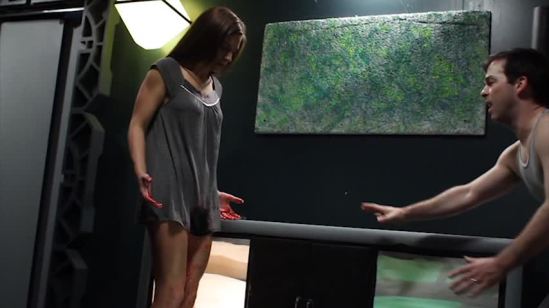
“Earthrise” is the creation of writer-director-producer Glenn Payne, tackling the production limits of a space film in an independent market. Payne and his production team effectively generate the illusion of being a single speck in a vast universe without getting overly galactic (i.e. “Moon”) and widely interstellar (i.e. “Interstellar”). Yes, “Earthrise” embodies a minuscule budget that’s certainly evident, but the ambitiousness to recreate the innards of a spaceship without being too blatantly cheap gives creativity credit to the crew. The brief transitional moments outside the ship are about as good as money can afford, but still don’t quite cut the mustard with some big Hollywood blockbusters or even larger independent films.
vlcsnap-00050
Along with much of the crew, Payne’s experience mainly stems from a variety of short films with “Earthrise” being his latest full length feature out of a total of four. The three actors who portray the focus-centered characters also mostly come from a short film background. Meaghin Burke (“Trick or Treat” short), Casey Dillard (“Blackout” short), and Meaghin’s husband, Greg Earnest (also from “Trick or Treat”), portray the three protagonist Dawn, Vivian, and Marshall, voyaging to Earth. Within a non-linear story, their tensions cut through finely as an unexplained terror has overtaken, not only their flight to Earth, but their minds that visualize apparitions of people and creatures that shouldn’t be there. Giant spiders, man-eating alligators, alarming amounts of blood – just some of the psychological tensions testing the characters. Is it a form of space dementia? Or the inability to grasp leaving your home, your family, to live on another planet and not having the ability to contact anyone from home for a year, per the Revive Program’s policy? Or is it something else? “Earthrise” domes the answer fairly well until the end.
vlcsnap-00051
The sequence of events surround a near catastrophe involving a sudden meteor collision. One side of the collision tells the story prior to their insanely dangerous visions, building upon their backgrounds and delivering their soon obtained new found hope, while the other side explores their descent into madness and, eventually, the two stories meet in the middle with the major calamity. Contrasting the two sides defines, in a good light, director Glenn Payne’s editing style while still able to clearly convey the crews plight. Mise-en-scene clues were used to differentiate the catalyst, such as Marshall’s head wound or Vivian’s limp, but these details were minor enough to not pose an extravagance in order to make clear the outer edges of the story.
vlcsnap-00001
The 2014 sci-fi thriller is presented by Indie Rights Movies and MVD in a widescreen 2.35:1 aspect ratio. The details are richly sharp, drenched in a metal tone to create a ship’s inner hull racing through space atmosphere. The dual channel Dolby Digital mix is clear and balanced and purposefully isolating to get inside the loneliness of the great big infinite. Accompanying the 100 minute runtime, a couple extras include the film’s trailer and a commentary. Sci-fi on a budget, “Earthrise” is enjoyably subtle, sleekly structured, and soaked with heart and soul. Many will not be attracted to “Earthrise” and it’s slow-to-build momentum, leaving only true film aficionados and appreciators to find Payne’s work entertaining.