In Medieval times of Sussex, England, a powerful English king, who has kept the seething Viking savages at bay for decades, has died, vacating the throne to his son, Rollo. The Vikings seize the opportunity during this time of transition and storm the Saxon Castle, nearly killing the monarchy and all of throne’s subjects left to oppose them. With their daughter Avery kidnapped and themselves on the brink of death, King Rollo and Queen Silvia are revived by two women of the woods, a pair of witch sisters known as Constance and Millicent, who use their mystical healing powers and offer the king retribution by summoning the Yuletide monster, Krampus. In return for slaughtering the Viking usurpers, the Krampus will collect his debt in exactly 10 years, taking whatever is precious and dear as payment from the vengeful King Rollo.
Krampus has become a major media trend over the last decade, popping up in all forms of popular culture that compounded lore inside the leafy pages of books and magazines to the beast’s frighteningly half-goat, half-man exterior making for great big screen monster entertainment. The inverse icon of jolly Saint Nicholas offers punitive measures for bad little girls and boys and is sometimes referred as a companion to Saint Nicholas who probably turned a decisive blind eye to little brat Johnny’s enjoyably thievery and torture of chickens from a neighboring farm. “Pagan Warrior” is yet another narrative of the Christmas creature spun with different fabric and woven into a bitter feud of two contending enemies told modestly by director Louisa Warren (“Tooth Fairy”), produced by Warren’s London, UK based production company, ChampDog Films, a creative outlet for independent film ventures that are mostly in the horror genre and are sometimes inferior versions of bigger budget films, in the same vein as Asylum Entertainment. The script comes from Shannon Holiday (“Bride of Scarecrow”) that conveys an ageless theme of beware of what you wish for and the price of blind vengeance.
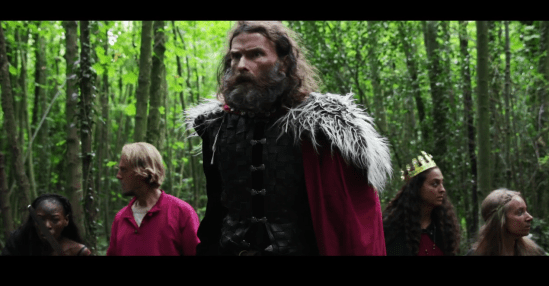
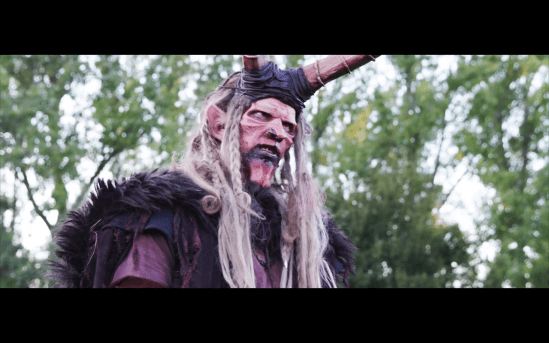
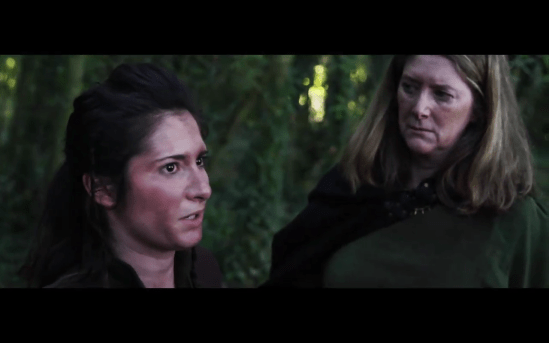
“Pagan Warrior” hones in on numerous character stories, never clearly defining a single perspective. King Rollo, played by “Escape from Cannibal Farm’s Peter Cosgrove, becomes the royal fate sealer as what he deems necessary and right is, in fact, the worst possible scenario a mad king could bestow upon himself by calling upon the supernatural death dealers for revenge. Cosgrove cleans up nicely as an English blue blood whose bequest incorporates a lineage of fighting kings with Cosgrove taking his role with due importance despite a humbling filmmaking production. King Rollo’s counterpart, the merciless Viking Ubbe fitted for Carey Thring (“Scarecrow’s Revenge”), combats a war on two fronts – the contentious bout with King Rollo and an internal family squabble that beleaguer the bond between him and his wife (Kate Milner Evans, “Pet Graveyard”) and child (Adam Sugawara, “Virtual Death Match”) as he tries to court princess Avery with a crude sexual advances. Thring’s vision of Ubbe is a classically depicted villain whose stronger with allies and a whimpering coward when alone in a fight, especially when the Krampus comes calling for his head. Darrell Griggs dons the makeup, prosthetics, and wardrobe of the horned beast, becoming the folklore of a cursed death who not only pursues the 12 month progression of horrible children, but also the appointed damned when conjured for a hit. Krampus’ outward appearance is pleasing and Griggs provides the lumbering and slight preternatural motions that give Krampus that dreaded paranormal mysticism. “Pagan Warrior” rounds out with Sarah T. Cohen (“ClownDoll”), Jessica O’Toole (“Pet Graveyard”), Mike Kelson (“Scarecrow’s Revenge”), Hattie Willow (“The Mermaid’s Curse”), Will Todd (“Mummy Reborn”), and Tara MacGowran (“Mother Krampus”) and director Louisa Warren as the women of the woods.
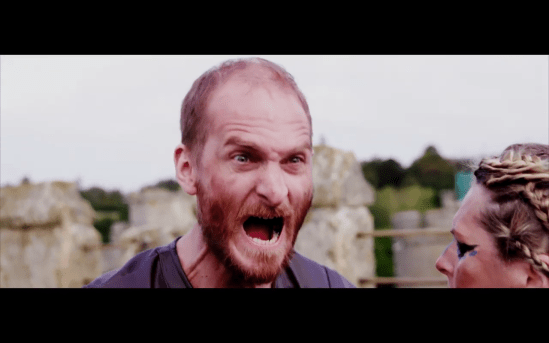
ChampDog Films uses a tightknit group of actors and filmmakers to sell archaic swordplay action fastened against demonic folklore and despite the underwhelming band of Vikings versus an equally small English contingent squaring off in front of a historic English castle with virtually no ample practical or CGI era enhanced presentations, the production just barely eeks by with Feudal times. Wisely, Warren shoots a number of character closeup shots, avoiding much of the surrounding modern elements and forcing audiences to focus just on the characters who are dolled up for Medieval times roleplay. Where the battle scenes and smart camera work flourish, the Shannon Holiday script becomes the ultimate weak link in the chain with a predictable plot storied with terribly cliched and uninteresting characters that couldn’t grip a sword let alone one’s attention. The story begins with its most shocking ending scene, thwarting any possibility of surprise for even the most dense and cinematically uneducated individual for the ruse play out. There is also this millennium goof in the opening backstory credits indicating events take place in 812 AD and in the same breath, mentioned also is the three days of December 1812 that this episode occurs. Since 1812 England was all about redcoats, guns, and war with America colonies, I would assume 812 AD would be the correct time period against a Viking invasion.
In what is not exactly a Christmas holiday horror movie, the malediction of the “Pagan Warrior” spread little holiday cheer and more yesterday fear onto an ITN Distribution and Mill Creek Entertainment DVD. Presented in a widescreen, 2.35:1 aspect ration, on a single layer DVD, sheathed inside a DVD cover that looks cooler than the actual movie itself, the lower end production avoids stylizing a historical based feature with tinted mattes, computer imagery, or any other miscellaneous camera effects seeking more toward a naturalistic cinematography that utilizes the hues at hand. Pastel blacks jump with noise and posterization from the electronic interference whereas the existing hues exhibit a less than rich approach of a more vapid green, brown, and stonewall beige. The English language Dolby Digital 2.0 stereo audio mix maintains a level of consistency. Sometimes, Krampus’ dialogue is murky because of the extra gnarling effect parroting an LFE emitting voice; however, dialogue is mainly clear and prominent. English SDH is an available option. For a time period action-horror, the lack of rudimentary range and depth troubles with little sense into the effort of adding skirmishing swords and Krampus’ reverberating growls always seem to be right next to the camera. The only bonus feature available is the trailer. With conventional means of dispatching people, “Pagan Warrior” shadows more of the slasher concept conjured by the breath of the desperate who misfires judgment rather than being an omnipotent being summoned like a djinn for total annihilation in exchange for a debt in this good faith effort by Louisa Warren of Krampus diabolism.
Tag Archives: UK
War Brings All Sorts of EVIL. “Under the Shadow” reviewed! (Second Sight / Blu-ray)

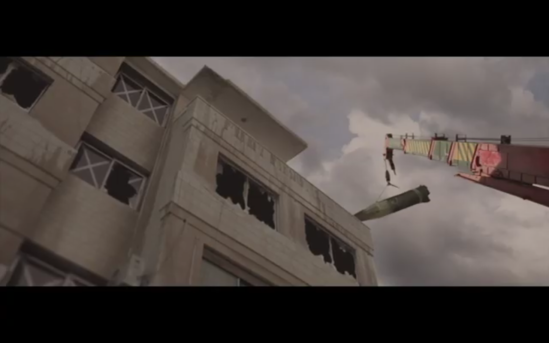
Set in conflict of the Iran-Iraq war, the young and educated Shideh living in war-frightened Tehran becomes forced to succumb to patriarchal dogma after participating in a revolution against Iran’s standing principals. Her husband’s conscription sends his medical experience to the battle front while she settles into her role as a stay at-home mother to their young daughter and despite pleas from her husband, the stubborn Shideh will not vacate her apartment building home even when the threat of an Iraqi attack is imminent. When a dud ballistic missile crashes into the apartment about them, nearly breaking through their ceiling, the fear of a sinister presence circulates amongst the tenants that drives them one-by-one from the building with the prospect of an Iraqi attack to further motivate as a logical decider. An unsuperstitious Shideh remains until her daughter’s imagery whims and unwavering fever begin to form a more terrorizing atmosphere that even has her questioning the shadowy company of evil.

Not many horror films scare nowadays. “Under the Shadow” is not one of those films. The debut feature film of writer-director Babak Anvari posses a rare commodity of grueling fear set inside an already tense backdrop of the 1980’s Iran-Iraqi war. Anvari, the Tehran born Iranian nationality who was engulfed religiously in the culture, borrowed and rendered his from his family’s stories of supernatural pre-Islamic demons whisking through the wind toward those swimming in sorrow and fear; those demons were also labeled djinns. As a child born in the 80’s, Anvari had to rely and family to obtain a sense of the anxious air suffocating those taut by potential missle strikes as well as political and social punitive measures going against the grain. The UK based independent production company, Wigwam Films, financed the BAFTA winner for an Outstanding Debut by a British Writer, Director or Producer as well as receiving other nomination nods in other categories, serving as one of young production company’s shining stars early in the tenure.

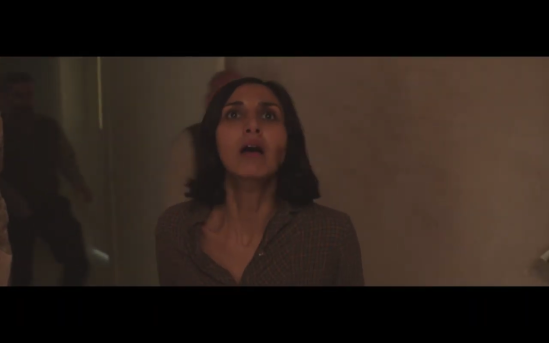
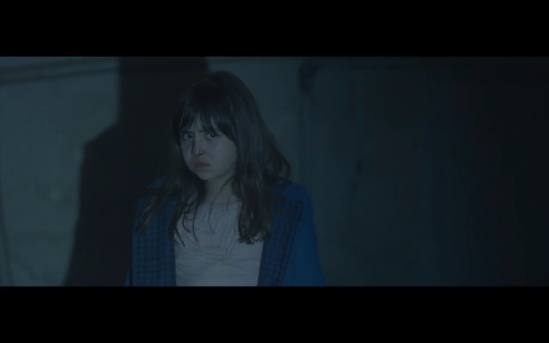
Wrought by the explosive squabbles of two sovereign nations and incepted with archaic folklore, Shideh’s bound and torn between reality and the prospect of superstition, a role dutifully played by another Iranian born, Narges Rashidi, whose family moved to Berlin and she studied acting, scoring a minor role in the motion picture adaptation of the science fiction television series, “Aeon Flux,” and in the 2009 comedy-horror “Must Love Death.” Rashidi courts Sheideh approvingly with sincere strife over how women serving beneath men in 1980’s Iran as well as struggling to overcome that internal conflict as the mirror image of herself, meaning her daughter, when a phantom prowler is afoot. Portraying Shideah’s daughter, Dorsa, and the frequent link between the Djinn’s world and her own is Avin Manshadi in her debut performance. Manshadi’s round cheeks and doughy eyes set upon a physique stilling lingering some ounces of baby fat has little range, but most creepy kids and in creepy kid horror films rarely do. Rashidi and Manshadi fend well for themselves as the sole two characters cornered by war and Shideh’s personal vendetta against her country, her husband, and even her daughter to prove she isn’t useless as the motif lets on. “Under the Shadow” rounds out with Bobby Naderi (“Bright”), Aram Ghasemy, Soussan Farroknia, Behi Djanati Atai, and Ray Haratian (“A Girl Walks Home Alone At Night”).

“Under the Shadow” finds itself in a subgenre nearly all it’s own as the variety of djinn-horror anemically pops up every so often as an unpopular and uncoiled viper, unlike the antagonist powerhouses of zombies and ghosts that’ve reigned supreme over the last two decades, and though Anvari’s film shares little with Robert Kurtzman’s demonic djinn of 1997’s “Wishmaster,” “Under the Shadow” has more in common with the late Tobe Hooper’s last film, entitled simply Djinn, before his death. Both are built on the substructure of an Arabic/Muslin mythology, set on an apartment building locale, and exhibit the malevolency side of the djinn, but Babak Anvari accomplishes a great feat on his very first attempt – a stiffly frightening air of a phenomenally harrowing horror story. Anvari patiently stacks blocks of tension, one on top of another, without a hint of quivering throughout the acts and what’s more astonishing is that all the acts deliver different notes prosed to detail that secures a simmering, shivering plot. To praise Anvari more, the young filmmaker leaves nothing to chance by closing with an open ending for the mind to assemble information and interpret the events; a classic directorial tool used by some of the greats.

Shuttering in the dark has never been so delectable with “Under the Shadow” inside a packed, limited edition Blu-ray from Second Sight Films. The LE runs with only 2000 copies sheathed inside a rigid slipcover with covert art by science fiction artist, Christopher Shy. Global horror aficionados will rejoice to learn that the UK BD disc is region free and presented in a widescreen, 2.39:1 aspect ratio, that’ll be available February 10th. Unfortunately, Second Sight Films provided a DVD-R Blu-ray screener so I’m unable to speak upon the video and audio aside from what’s already been stated. I will say the subtitles were accurate and timely paced. There were special features on the disc, including segmented interviews with director Babak Anvari, lead actress Narges Rashidi, producers Lucan Toh and Oliver Roskill, cinematographer Kit Fraser along with an audio commentary Babak Anvari and Jamie Graham and Anvari’s short film “Two and Two.” Press release also mentioned the release includes a soft cover book with new essays from Jon Towlson and Daniel Bird plus behind-the-scenes photos and concept illustrations and a poster featuring new artwork. “Under the Shadow” must be watched in the dark, alone, and with the volume up, maximizing the crawling chill down the spine and raising all the micro hairs on every square inch of skin.
Kindergarten Field Trips Was Never This EVIL! “Little Monsters” reviewed!

Dave, a failed, down on his luck musician with a penchant for doing the wrong thing, volunteers to chaperone a kindergarten field trip to a popular outdoor petting zoo park attraction intent on gaining the affection of his 5-year-old nephew’s perky teacher, Miss Caroline. Also at the attraction is an American children’s’ television personality, Teddy McGiggle, travelling the world with his latest stop in Australia. All seems well and dandy until the U.S. stationed Army base adjacent to the petting zoo loses control of the highly aggressive rejuvenation test subjects and are overrun by the lemming of slow, flesh-eating zombies that stagger bit by bit toward the park’s touristy patrons. With every last living, breathing thing either turned undead or eaten to the spinal cord, Dave, Miss Caroline, and Teddy McGiggle must fight against the outbreak for not only their survival, but for the troop of young and impressionable kindergarteners thinking what’s happening is nothing more than a prolonged game of tag before the gung-ho U.S. military sanction of eradicating airstrike right on their location.

The lumbering zombie canon enjoys a delightfully endearing and rousingly tucked zom-rom comedy, “Little Monsters,” with children being the heartfelt conquerors to slay the funk the genre has been stagnantly lingering inside. Written and directed by up and coming filmmaker Abe Forsythe, the internationally collaborated production from the U.S., United Kingdom, and Australia delivers a brashly funny film under the guise of long-pigged zombie horror shot primarily in Sydney, Australia at Centennial Park. Not to be confused with the Fred Savage children’s film of the same title from 1989 that also starred funny man Howie Mandel, Forsythe’s “Little Monsters’” head lopping, guts coiling, and every four letter word in the profanity bible goes to infinity and beyond the parental guidance rating.

Perfect performances all around from a dynamically intercontinental collaborative cast starting off with Lupita Nyong’o. The “Us” actress, who should have won an Oscar for her performance in the Jordan Peele film, astounds again with a delicately frank and beautifully sage performance as the alluring kindergarten teacher Miss Caroline whose number one priority is to protect her class of 5-year-olds, physically and mentally, at all costs. Counter to Miss Caroline seemingly having her stuff together, the raucously detached Dave immediate sets his whirlwind claws right into Miss Caroline, attempting to attract her with disinformation about his stable state of mind and being; however, Dave to the core is a good guy harnessed by Australian actor Alexander England (“Alien: Covenant”) who adds the rough edges around Dave’s stagnant and serrated lifestyle. Though different on the surface level, Caroline and Dave do have rooted similarities that spark romance after some convincing through zombie tribulations and scenario finesse; Nyong’o and England singe around the edge of attraction that’s goes from a seething disaster to being playfully coy and tender that works confidently on screen. When you through Josh Gad into the mix, you never know what to expect in terms of a wild card character. The “Frozen” star pulls off Olaf on hard drugs as Teddy McGiggle as Gad’s voice is unmistakably the overly friendly snowman who likes warm hugs but with a lot more F bombs and a dee seeded disgust for kids show personality that results him bedding many of his toddler fans’ moms. I wasn’t sure how Gad was going to pull off a zombie epic, but his gas-riot performance is a spiked drink compared to other who dances around the children’s innocence and the fact Teddy McGiggle is a kids show personality elevates his crude conduct to that more pungent. “Little Monsters” round out with Kat Stewart, Marshall Napier (“The Beast”), Diesel La Torraca as Felix.

The word from my inner circle of moviegoers, those who have little interest in horror and more interests in fast cars and vast explosions, say something along the lines that “Little Monsters” was “okay,” “Didn’t really do it for them,” or “I didn’t watch the last 20 minutes.” Disclaimer: These people are really not close friends, but barely colleagues, and since “Little Monsters” is being cut down by popcornist naysayers, their opinions have itty-bitty merit awarded to their poor judgement in taste of good, funny, and superbly acted eye-candy horror cinema with pocket messages of insufferable loneliness, hidden internal commonality, and the caliber in what makes us human that piece together as collectively relatable. If these aspects do not register with you, then you’re not human, but rather a 7-headed martian with tentacles and a pea-size purple brain. “Little Monsters” has some good gritty zombies at work here that juxtapose against the tender nature of children and the only thing between these children being lunch are three damaged adults searching for something meaningful. The apocalypse becomes a fork in the road, an ultimatum, that tests their worth and Aby Forsythe bombards that fateful decision with little notes of comedy, witty banter, and a clear case carnage.

“Little Monsters” takes a field trip to Blu-ray DVD home video, and digital download February 10th from UK distributor, Altitude Film Entertainment. “Little Monsters” is a production of Made Up Stories, Protagonist Pictures (“31” and “Lords of Chaos“), and Snoot Entertainment (“Dude Bro Massacre III” and “You’re Next”). Unfortunately, a DVD-R was provided for review so no audio or video quality critiques will be touched up, but the upcoming region B Blu-ray is listed as a BD-50, 1080p Full HD, and presented in the original 2.39:1 widescreen aspect ratio with an English language DTS-HD Master Audio 5.1 track. There were no special features listed in the press release and there were none available on the DVD-R. Finding a way to harness everything sacred from the zombie genre and then creating something new, interesting, and captive from start to finish to blend is a victory melange of wall-to-wall wit and feral monsters leaves “Little Monsters” as the horror romantic comedy that has it all.
High School Musical Meets EVIL in “Anna and the Apocalypse” reviewed!

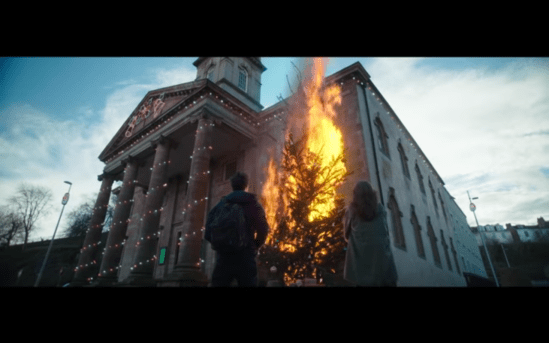
Anna’s a senior at Little Haven high school whose not thinking about what University to attend after she graduates. Instead, Anna focuses on working all the time as a shoe counter girl at the local bowling alley to pay off a year’s worth of traveling despite her father’s wishes, even working through Christmas, but when a sudden zombie apocalypse derails her and the worlds’ plans, Anna’s friends and father are her first priority. With her father trapped at the high school, Anna and her closest friends must trek and battle through a horde of the undead from the bowling alley before striking out dead themselves. Despite social differences and teenage angst, they must dance and sing to put now frivolous juvenile issues aside and work together if to not become one of the living dead.

Timed just right from 2019’s Christmas holiday season is Second Sight Films’s two-disc set of “Anna and the Apocalypse,” a contagiously fun, well performed, and cheekily gory musical comedy-horror by the United Kingdom’s John McPhail directing a script written by Alan McDonald and the late Ryan McHnery, based off McHenry’s short student film “Zombie Musical.” As true to the marketing behind the film, “Anna and the Apocalypse” is certainly the “High School Musical” with teeth-gnashing, putrid-walking, and flesh hungry zombies. The Scottish bred production comes from Blazing Griffin Films, Parkhouse Productions, Constellation Creatives and Creative Scotland to flash mob dance and sing in chorus through the apocalyptic melee while figuring out their complicated adolescent troubles, such as what to do after graduation, turbulent romantic emotions, and being different and alone.

The ensemble cast is heftily made up of unknown talent beginning with, then 17 year old, Ella Hunt in her debut lead performance as the titular character. Hunt’s a fresh, young face with an astonishing amount of acting range with Anna whose defiant against the wishes of her father, but, deep down inside, still wholeheartedly cares for him as he’s her only parent left alive, and Hunt has natural poppin’ dance moves and pop-star vocals. In Anna’s core group of friends, Sarah Swire’s Steph North stands amongst them as the LGBTQ representative whose strongly portrayed as courageous, caring, and independent while her characterization at the beginning of the films focuses on downing her life to the pit of despair with parents, who Steph claims wants nothing to do with her, are on holiday in Mexico and her romantic partner won’t be spending the holiday with her. Swire’s choreographic and musician background, along with an edgy look, make her a perfect fit for Steph. There’s also Anna’s best friend, a boy named John, played by Malcolm Cummings in his first feature film. Cummings has to be the hapless friend zone boy that remains sidelined when trying to find the opportune time in expressing his true feelings for Anna, but finds himself the third wheel in a high school love triangle conscripted with Nick, a hot-to-trot prick and bully colorfully depicted by Ben Wiggins. Christopher Leveaux and Marli Siu are the gang’s love birds, Mark Benton is Anna’s custodian father, and “Game of Thrones'” Paul Kaye antagonizes with a power hungry assistant headmaster gone crazy!

Honesty, I wasn’t sure how “Anna and the Apocalypse” was going to work, or be successful, or be entertaining at all as a horror movie. Horror-musicals are a rare breed that come with a mind-boggling quantitative algorithm to make them truly work wonders and, somehow, John McPhail dusted off his abacus, powered up his TI calculator, and put note to pen to paper and delivered a holiday spectacular on a horror scale stage. The horror, though very prominent and unmistakable, takes a backseat to the powerful soundtrack by the ensemble cast, ranging from caricatured with Fish Wrap to the desolation of personal connectivity with Human Voice to a couple of Christmas satires to bring a little joy with the merry mayhem. The mayhem is absolute with all the trimmings of a zombie apocalypse, even right down to the military being the butt of a joke when they’re overrun by a slow-moving force, but while there’s some gore early on with a dead head decapitated by a see-saw and a pair of bowling balls pop the top of one alleyway corpse, the blood flows downward to a little more than a dribble and “Anna and the Apocalypse” cobbles together a mere mediocre zombie film from then on out.

Already seen a couple of standard releases from other distributors, Second Sight Films reserved “Anna and the Apocalypse” to the royal treatment with a special features heavy region B, two-disc Blu-ray set containing two versions of the film – the theatrical release cut and the extended version which will include a musical number that didn’t make the theatrical cut. The Arri Alexa SXT shot film is presented in 1080p and in the film’s original aspect ratio, a widescreen 2.37:1, with a featured ProRes 3.2k format that allows upscaling to UHD quality providing a high resolution output that’s clean and bright. The color palate has real vibrancy under the director of photography’s, Sara Deane, direction to use colorful outfits and neoned and darkened sets. Some scenes become a little choppy with some sloppy editing work, but as a whole, the story remains coherent. The English language DTS-HD Master Audio 5.1 vivaciously energizes the soundtrack with alternative pop numbers, harmonious melodies, and a synchronized chorus, but there are times the dialogue falls into a lossy grey area. A stereo 2.0 track is also available as well as optional English SDH subtitles. The Second Sights Films’ release is chock full of extras with disc one including an audio commentary with director John McPhail, writer Alan McDonald, composers Roddy Hart and Tommy Reilly, a behind-the-scenes featurette, an alternate opening scene, a deleted song “What Side Are You On?”, a deleted bathroom scene, the Hollywood Ending cast and crew lip dub, footage from the EdinBurgh Film Festival, and, of course outtakes. Disc two includes a brand new feature-length documentary with new interviews by the actors and filmmakers. Plus, the original short film – “Zombie Musical.” A definite definitive two-disc set from Second Sight Films goes hand-in-hand with “Anna and the Apocalypse’s” feel good charm and unruly undead charisma complete with catchy tunes and bloody zombie goons in a modern day holiday cult classic.
When EVIL Becomes Obsolete, Its Time for an…”Upgrade” reviewed!

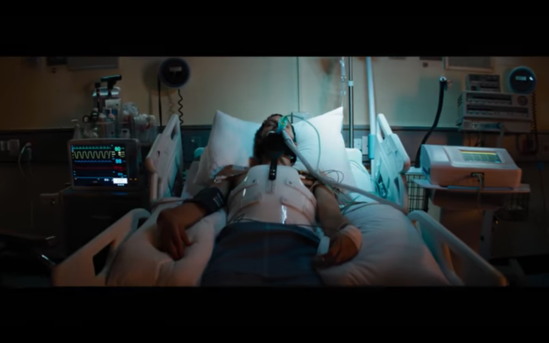
In the near future where assistive technology serves as the cultural way of life, a very manual Grey Trace still clings to being self-independent while his loving wife, Asha, laps up and embraces new and innovative tech. When an fatal shooting strikes down Asha and cripples Grey to an automated wheelchair, Grey is forced into a depressive world he no longer recognizes. Desperate to find his wife’s killers, he accepts experimental computer chip implant known as STEM to send the signals from his brain to his extremities; however, that is not all STEM can do. The smart technology can also scan, record, and reactive to all of Grey’s experiences, be a voice of knowledge, and enact super human abilities that will aid in Grey’s vengeance, but without much control over his own body, how much will Grey continue to use the smart device that becomes smarter every minute.

In a cinematic age when remakes, re-imaginings, and sequels really do rule supreme, a breath of innovation and compelling storytelling in Leigh Whannell’s 2018 science fiction, action-noir “Upgrade” is a technological advance that’s feels lightyears ahead in comparison. The “Saw” and “Insidious” writer, who indulges in all of horror’s gracious qualities, tackles the future with a synergetic and brutal vengeance film on indie-budget proportions; however, “Upgrade” feels no where near being low budget in a futuristic world that includes monochromatic self-driving cars, bio-weaponized forearms and hands, and a robotic protein shake slingers for those meal replacement pick-me-ups. With the assistance from Blumhouse Tilt, a Blumhouse production sublabel that seeks to release projects onto multi-platforms, Whannell gained freedom to script, in every sense of the world, his own vision of cyborg horror and crime thriller.

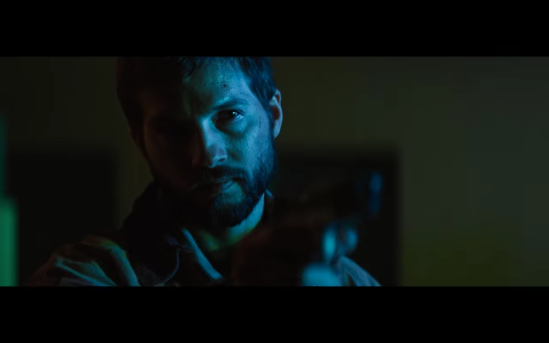
Logan Marshall-Green stars as Grey Trace, an analog man living comfortably in a digital world. Trace is a dying bred as the technology ecosystem slowly creeps into all that earned by hard work, even in his small classic car restoration business. The “Prometheus” star tackles a unique physicality aspect of an action film that involves the robotic responses of hand-to-hand combat while also being the emotional punching bag of pelted heartache and turmoil. Portraying his character as a man’s man, Marshall-Green has to find humility in not only unable to self-serve himself as a cripple, but then also rely on the one thing he withdrew himself from for help….a machine. “Upgrade” primarily focuses on Trace to even having the camera affix to his character during fight sequences, but though most of the narrative is through Trace’s vindictive narrative, a cascading effect of his destruction brings one of his nemesis’s into reactive defense. Fisk, Benedict Hardie from the upcoming remake of “The Invisible Man” that’s also directed by Whannell, is a mysterious soldier of fortune whose backstory, that salivates at the tip of the tongue to be told, is only sampled at best with his cybernetic implants or why he was even chosen to be a deadly, robotic killing machine. Perhaps Fisk’s backstory, and those of his fellow veteran comrades, are another misrepresentation or the maltreatment of veterans by conglomerate, privately owned tech and weapon companies that lean more toward involuntary experimentation rather over anything else that’s an allegory of owning a person, a piece of property, as we also see with STEM attached to Grey Trace’s spinal cord. “Upgrade” rounds out with performances from Melanie Vallejo, Harrison Gilbertson (“Haunt”), Betty Gabriel (“Get Out”), Kai Bradley, and Simon Maiden as the voice of STEM.

Shot in urban Melbourne that’s quasi-reflective of the gritty streets of Chicago, Leigh Whannell aimed for a fatalistic mystery that breaks down relationship barriers and sustains a punitive jurisdiction of grime. Whannell surely achieves the desired affect that goes from a classy futuristic society to the bottom barrel of human existences that have been tainted by the dark side of tech including addiction and dangers of being fully aware as a sanctioned being. “Upgrade” capitalizes on every inch of its capital to enlarge the quality of a miniature budget and utilizes local talent, who, aside from Logan Marshall-Green, never wane from their unnatural American English accents, to offer heartfelt human performances despite their mechanical transitions. “Upgrade” isn’t “Robocop” or “Nemesis,” but rather more “Terminator” where organic and inorganic don’t exactly coincide to benefit as a single entity. Unlike the autonomous killing machine portrayed by Arnold Schwarzenegger, “STEM” acts like a computer virus working off commands, coding, and complex algorithms to infiltrate and deploy executions to subverse the man over the machine and Whannell’s concept brilliantly contextualizes that dynamic without having too much exposition to divulge and is easily computed without having to be deciphered from binary code.

Coming November 18th is Second Sight Film’s limited edition Blu-ray release of “Upgrade” presented in full HD, 1080p, and clocks in at 100 minutes under a region B UK coding. Unfortunately, a screener disc was provided for review and so I will not be critiquing the video or audio quality at this time so this review is solely about the film only. A static menu including chapters were available on the disc as well as bonus features including a commentary by writer-director Leigh Whannell, a new Second Sights’ interview with the director about his envisioning and how it came to fruition, more new interviews with producer Kylie Du Fresne, cinematographer Stefan Duscio, editor Andy Canny, and fight choreographer Chris Weir. All the interviews showcase depth with the material to their respective roles and opinions about “Upgrade.” Don’t think it necessary to refer filmmaker Leigh Whannell as the “Saw” guy now that “Upgrade” has completely overshadowed the franchise in a single sitting entertained with action, gore, and a heart-rendering story. Surely to be Whannell’s break out film from the horror genre.