Eric Bana Embraces EVIL’s Infamy! “Chopper” reviewed! (Second Sight Films / Blu-ray)

Mark “Chopper” Read is one of Australia’s bestselling authors.  Read is also one of Australia’s most notorious criminals having wrote his autobiography in prison.  The pathological criminal’s life begins in the H Division of the Pentridge Prison in the late 70s where he quickly establishes himself a leader of a small three-man gang and viciously murders a rival leader at the chagrin of his acolytes, Jimmy Loughnan and Bluey Barnes.  When Jimmy turns on Chopper, stabbing him multiple times and then accusing him of attacking first, the ordeal has a subtle effect on the wildly shrewd and wayward Chopper who 8 years later is released with massively suppressed paranoia as old flings and old acquaintances are believed to be going behind his back or contracting a kill order on his head.  Under the delusions of working for the police, a paranoid, suspicious-filled, and unpredictable Chopper takes the opportunity to revisit old accomplices, such as the treacherous prison mate now turned drug addicted family man Jimmy Loughnan, after rumors circulate of Loughnan’s involvement in placing a contract on Chopper that results in conspiracy and murder.

Not to be confused as being completely autobiographical, or even semi-biographical, “Chopper” is a highly-stylized and self-proclaimed embellished account of the late Mark Brandon Read.  The Australian feature written-and-directed by Andrew Dominik (“Killing Them Softly”) was once the highest grossing Australian films of all time and still marks as a predominant, early 2000 release to accentuate Chopper’s high energy, erraticism, and violent behavior along with a stellar, method-acting performance from the lead star Eric Bana, who before turning into one of Hollywood’s most recognizable Australian actors was a former sketch comedian and stand-up comic.  Shot in Melbourne, Victoria, “Chopper” is produced by Michele Bennett and Michael Gudinski (“Wolf Creek,” “Cut”) with Al Clark (“Gothic”) and Marin Fabinyi (“Bait’) as executive producers under the state funded Australian Film Finance Corp. as well as Mushroom Pictures and Pariah Entertainment. 

As mentioned, Eric Bana, star of Ang Lee’s “Hulk,” and having villainous roles in the J.J. Abrams “Star Trek” prequel and “Deadfall” alongside Olivia Wilde, helms the titular character with a plumped-up version of himself, grows a wicked handlebar mustache, and engrosses himself into the peculiar persona that is Mark Brandon Read.  “Chopper” really puts Bana’s range on display with a crucial to success performance and the actor lets Read sublease headspace in what is an aberrated humor and darkly concerning ball of a biography.  Bana manages to make Chopper likeable yet terrifying, funny yet ferocious, and human yet monstrous as an unpredictable juggernaut of paranoia and survival that only knows how to protect himself by thwarting violence with violence.  Chopper mingles with other unsavory, carnivalesque characters in his journey through a jailbird’s life with what he considered his number one mate in prison Jimmy Loughnan (Simon Lydon, “Blackrock”), an old foe in Neville Bartos (Vince Colosimo, “Daybreakers”), and druggie girlfriend Tanya (Kate Beahan, “The Return”).  In Chopper’s post-near death eyes, enemies and friends are now subject to his suspicions, making him truly lonely in his own world of crime.  Performances shepherd in waves of volatility, intensity, and even immodest humor that force the scenes between them and Chopper into a pool of frigid and death-calling ice water, yet somehow, in the same breath, Dominik is able to take those performances in “Chopper” and turn them into one-giant joke at Read’s expense while still managing to keep afloat some sort of baseline truth to this period in time of his existence.  “Chopper’s” cast fills out with other colorful roles from Dan Wyllie, David Field, Gary Waddell, Hilton Henderson, Kenny Graham, Brian Mannix, Sam Houli, Robert Rabiah, Skye Wansey, and Terry Willesee. 

Most Americans will likely never understand “Chopper” as the comedy Dominik intends.  Bana does so damn good at his job, especially in his feature film debut, and Dominik’s black humor becomes murky by subsequent and sudden jerks toward humanization that audiences will grasp in different directions on how they’re supposed to feel and relate toward a character who stabs a man to death in the face and then cry in compassion for him or beats his girlfriend and then next scene unzips his pants and pulls out his manhood under the bar countertop to show his now ex-girlfriend while talking to two police investigators about his delusions of undercover responsibilities at the other end of the bar.  In its two-tone theme of the 1970’s thin, assured, and incarcerated Read and the decade later bulkier, paranoid, and free Read, “Chopper” has paradoxical and against the grain tones of wildly encompassing visualized thoughts stitched stylistically in the same fashion for pure entertainment value to symbolize Read’s emotively internalized expression.   Though fully linear, Dominik’s narrative structure can also be off-putting to audiences, digging into the entertainment value with crude edits and choppy segues that hardly shapes a timeframe and that can be tough for viewers invested in a particular storyline only to be abruptly pulled out of it and placed into another decade and an entirely different situation altogether.  Then again, “Chopper” essentially has no conventional plot other than the fleeting, distinct stages of a bumpy and insecure Mark Brandon Read’s course through crimes of contract and charisma of character. 

“Chopper” arrives onto a Second Sight Films Limited Edition Blu-ray set and a Standard Edition Blu-ray in association with Vertigo Releasing.  This reviewer was able to get hands on the Standard Edition that’s an AVC encoded BD50 with 1080p High-Definition resolution of a 2K graded, restored scan presented in a widescreen 1.78:1 aspect ratio.  A steely graded first act leads into vivid variability with color, matching Chopper’s descent tenor from shaking stability to a rocky road of mistrust. Decoding at a bitrate of approx. 23Mbps, Second Sight Films’ scan has elevated the details within the tumble of stylistic choices that closely symbolizes specific Chopper eras in which a very different Chopper is exclusive to one or the other while retaining a great amount of natural grain of the 35mm print. Audio specs include an English DTS-HD Master Audio 5.1 which, though lossy, has great compressed fidelity mostly in the dialogue department. Plenty of reverberations captured onsite at the Pentridge Penitentiary scenes that add a slither of realism instead of isolating solely the actors’ discourse. Dialogue itself is clean and clear without obstruction. When moved past Pentridge, the environment layers are scaled back to more isolated effects driven by the actors, i.e. gunshots, scuffles, etc., and so we lose that bit of realism deeper we go into Chopper’s psyche and the soundtrack from “Deliver Us From Evil’s” Mick Harvey pumps a little harder. Optional English subtitles are available. Though missing out on some of the physical lot in the bonus content, the standard release still offers a bountiful built-in special feature of old and new with fresh commentaries by Australian critic and author Alexandra Heller-Nicholas and Australian film scholar Josh Nelson, new interviews by writer-director Andrew Dominik Stand-up Comedy and Violence, new interview with composer Mick Harvey Not your Typical Film Composer, and a new interview with editor Ken Sallows A Tale of Two Halves. Archived bonus material regains new life and traction with commentaries from Chopper himself Mark Read and one with Andrew Dominik, a behind-the-scenes that sees raw film footage and cast and crew tidbits, a Weekend With Chopper is raw and untouched home video footage of Andrew Dominik and Eric Bana spending a couple of days with a wildly excited Read giving anecdotal accounts of his prison life and discussing his disbelief with a film where the subject is himself, and deleted scenes with optional director’s commentary. This particular Second Sight release comes off a little different than past dispersions in physical attributes with a clear green Amary Blu-ray case, something I have not seen before from the UK label. Detail illustration of Eric Bana as the titular Chopper holding a gun to his head in ebullience is quite striking and explicit in its purple-green coloring. Inside is what you roughly get with any standard release with no insert, but the disc is pressed with the same cinereal-alike art representing one of the Chopper’s frequent locations in the story. ”Chopper” is regionally locked on B for the feature that has a 94-minute runtime and is UK certified 18 for strong bloody violence and very strong language. Unlike any criminal to have ever lived and to have ever been represented on screen, “Chopper” wily tussles with Western audiences despite the dedication of Eric Bana but the work and the film can’t be denied as anything but great about an unusual man in a hyper dramatization that pierces more truth than fiction and now Second Sight cements a next level, Hi-Def release to better legitimize the irregular gang member and thug Chopper into cinema homes around the globe.

Being Lesbian is Not as EVIL as Being a Homophobic Subverter. “Herd” reviewed! (High Fliers / DVD)

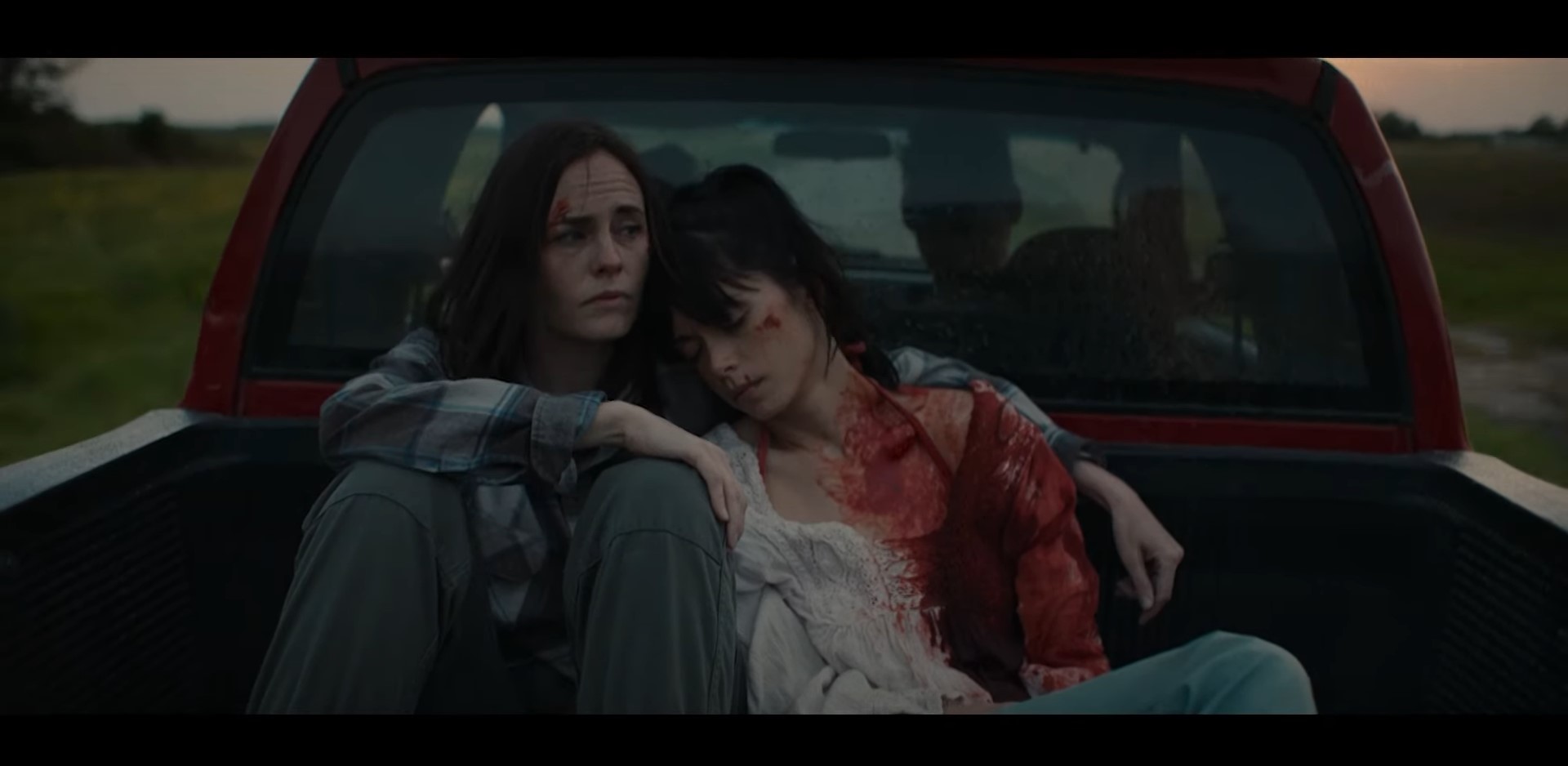
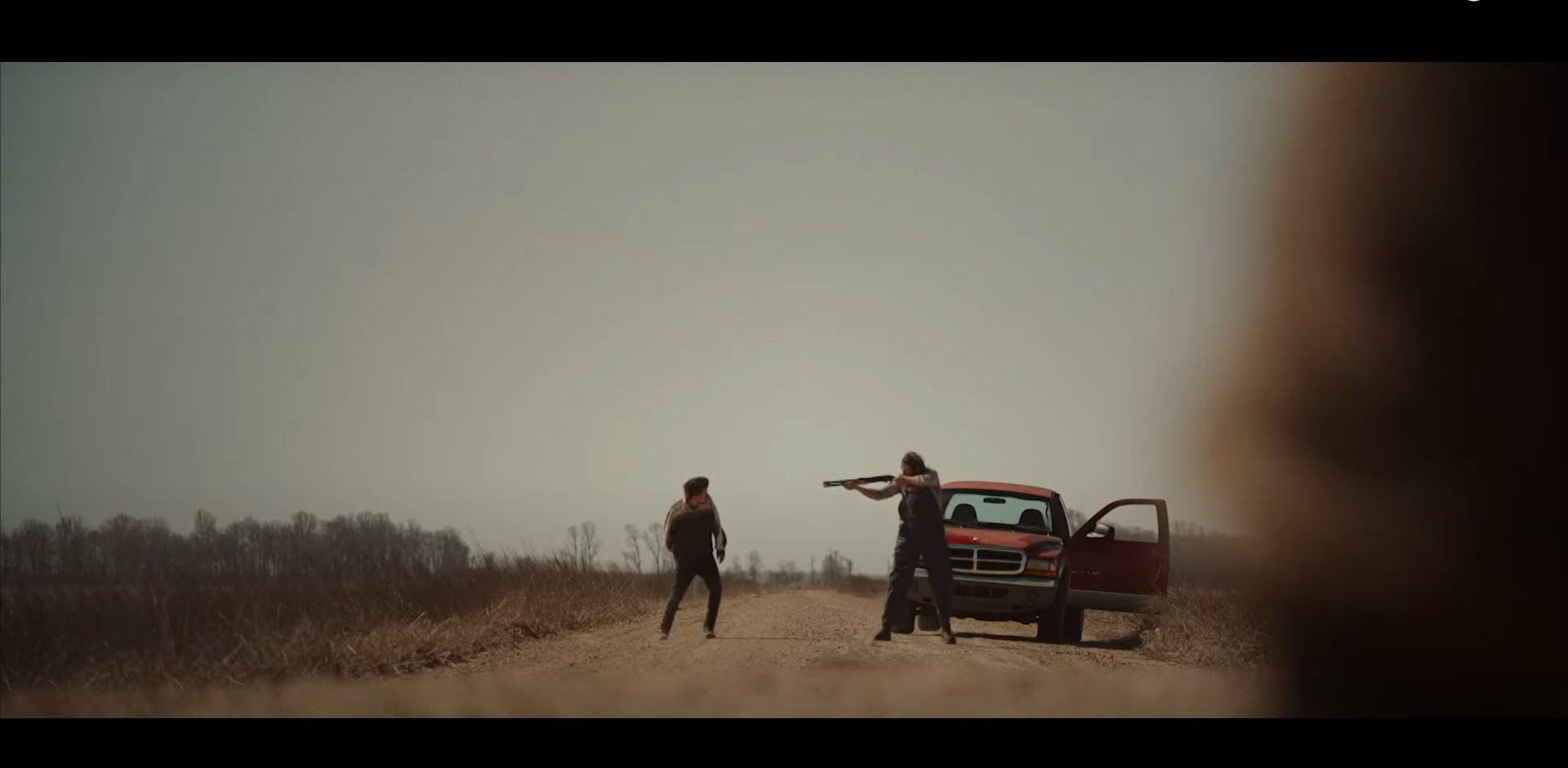
Having been banished by her abusive and intolerant father, Jamie Miller struggles inside her once amorous relationship with girlfriend Alex as they make a new life for themselves in the city.  The dwindling connection between them forces their hand into a couple’s canoe trip retreat down a river near Jamie’s hometown to hopefully rekindle what was lost.  When Alex accidently breaks her leg after a nasty couple’s spat, Jamie has no choice but to seek help within town only to find the town is under siege by a mutating virus, turning infected into shambling shells of their former selves.  The Government’s downplaying of the containment of the small town leads to armed militias warring against each other for food and supplies and Jamie and Alex are caught in the middle of a tripartite conflict between her Father’s prejudicially like-minded militia, a ruthless band of rogue soldiers, and the walking infected.

Socio-political outbreak horror “Herd” is the latest project from music video and documentarian filmmaker Steven Pierce trying his hand at a full-length fictional narrative.  Pierce co-pens the film with James Allerdyce, both of whom have worked on the 2020 music documentary “Jose James & Taali Live from Levon Helm Studios” about the creative process of live-streaming performance at Woodstock venue.  The song and dance of the 2023 released “Herd” pulls inspiration from recent popular talking points in America with a couple of conspicuous drifts from one surface level incredible horror, a lesbian couple stumbling into the unbridled mess stirred by virus mutated townsfolk, to a more realistic horror of gun-toting narrowmindedness, extreme self-preservation, and government half-truisms.  Alongside Steven Pierce and James Allerdyce producing are also debuting fictional narrative filmmakers with Michael Szmyga, Matt Walton, Lev Peker, Matt Mundy, Bret Carr, Lori Kay, and Ryan Guess under the banner of Framework Productions.

Initially after the opening scene of something zombie-contagiously brewing, the story dives head first into despondency of Jamie Miller (Ellen Adair, “Trick”) and Alex Kanai (Mitzi Akaha, “Bashira”).  Not at first evident of what kind of relationship sends these two on a canoe trip in the middle of nowhere but becomes evident quickly that the two are a couple with Alex forcing a last ditch effort hand to rescue a ship that’s slowly sinking in the abyss with troubled girlfriend Jamie.  While Jamie has her extraneous displeases with their relationship, very similar to most couples, the knotty crux more so lies Jamie’s abusive, bigot of a father who lives inside her head and, for some reason or another, has flared up recently despite be resolutely at bay for what seems to be years into the relationship. That bit of missing backstory becomes an harbinger of many other unexplained or underdeveloped aspects of “Herd’s” genetic makeup that funnel down to not fleshing out many characters, such as the father character who is plainly found deceased in the second act with yet to no significant progress made with a character who has tormented our heroine protagonists to the point of a near mental breakdown with disturbing visions of a faceless mother amongst the crippling of her disavowed, disapproved relationship with another woman.  “Major League’s” Corbin Bernsen plays the father briefly before succumbing to an offscreen fate and Bernsen’s no stranger to zombie genre having directed one himself (“Dead Air”) and would have greatly added to “Herd’s” undercurrents as a headstrong xenophobe with a radical complex.  Instead, we get Big John Gruber (Jeremy Holm, “Don’t Look Back”), a complete and utter 180 from the volatile buildup of Bernsen’s conditioned and dogmatic militant.  Nothing inherently flawed about Big John’s softness and sympathy toward a difficult situation, even going as far as supporting Jamie’s same-sex relationship, in what could be construed as a parallel of dispositions that ultimately bleed red all in the same as redneck conspiracists will never bleed out, such as seen with militia lackeys Bernie Newson (Brandon James Ellis) and Tater (Jeremy Lawson, “Happy Hunting”) who hold onto their conspiracies as well as their guns.  Amanda Fuller (“Starry Eyes”), Steven Pierce, Matt Walton, Ronan Starness, and “Shallow Ground’s” Timothy V. Murphy and voice actor Dana Snyder of “Squidbillies” fill out the cast.

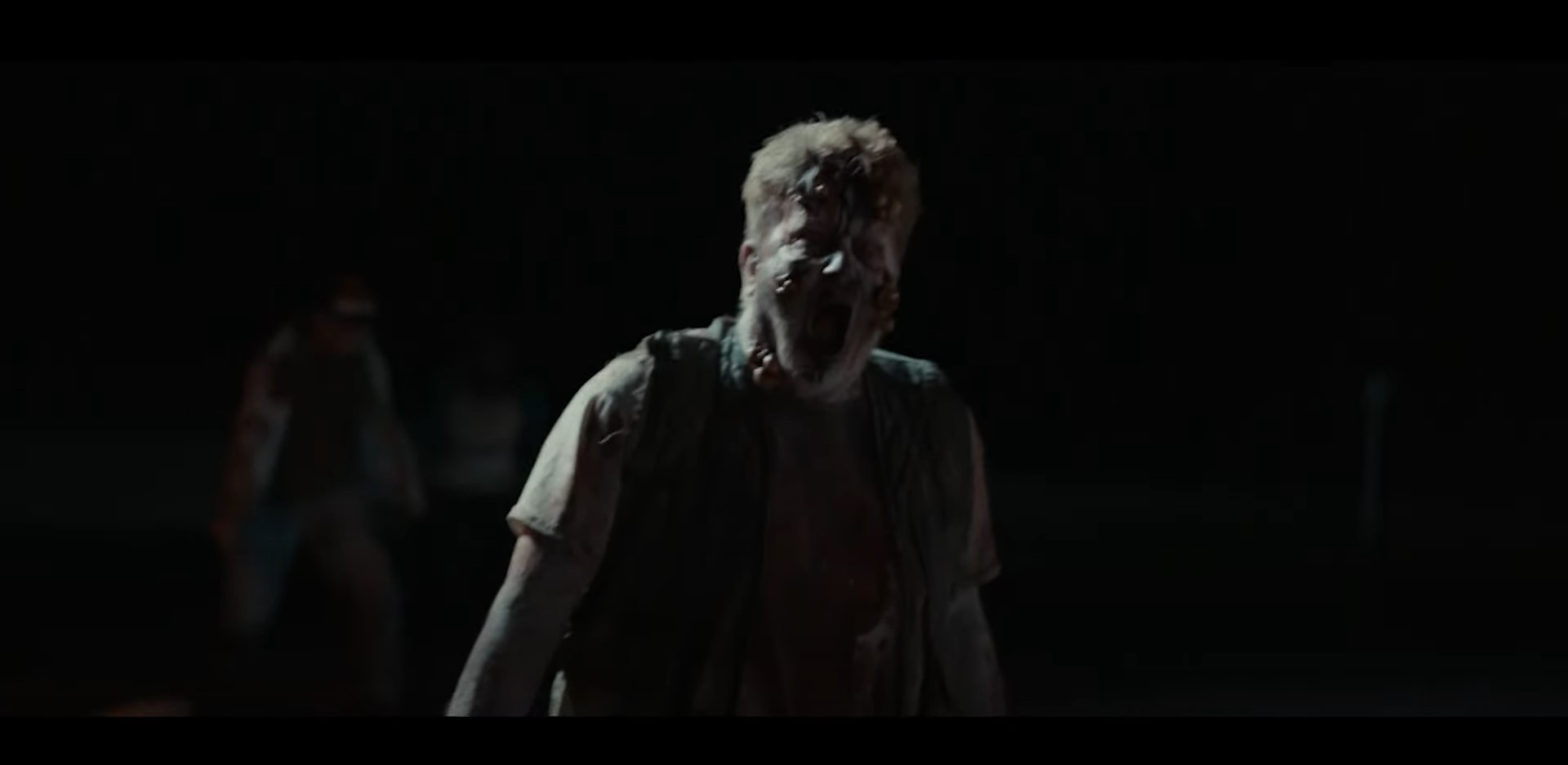
“Herd,” once titled “It Comes From Within,” very much implies the sheep who blindly follow the influential proximal powers into separating factions of dependency on the very moment national authority downplays the truth and designates into a free-for-all for survival, a doomsday prepper’s wet dream.  “Herd” catapults a very anti-government harpoon message right into the lampooning of Midwest gun nuts and schismatic truthers.  These instances surrounding a not-too-exaggerated truth detrimentally snaps the arc for the initial, more considerable character metamorphosis with heroine lead Jamie Miller.  We’re no longer on her track toward parental recovery that’s laid a substantial foundation in the first two acts with flashbacks of her father verbally tirades and banishment, only able to visualize her mother’s faceless corpse, and the brittle relationship she has with girlfriend Alex when going into the third act careens into a clash of the small-town titans.  The disinvestment of an endeavoring lesbian courtship plagued by mind-traumatizing scar tissue and a frustrated partner is ran over by the warring militias to the point where we’re scuttled from face-off to face-off and Jamie and Alex road-to-unity takes a backseat wholeheartedly.  The unexplained infected are also pulled into the backseat as an unfortunate consequence of said conflict that missed the mark explaining the climatic scene with the infected, shambling, boil-riddled bodies’ near unintelligible and moaning in unison wail that conveys a less antagonized existence and to defend themselves when threatened.  The humanizing moments are lost in the wake of war and conservative hoopla that insidious impale anything meaningful, but perhaps that was the message all along, a sort of blindness or autocratic ways to diverge free thinkers, as exampled with Big John Gruber whose liberal opinions and talk did nothing for him in the end.

Get into the “Herd” mentality with a new DVD from the UK distributor High Fliers Films.  The MPEG-2 encoded PAL DVD has a widescreen display with a 2.35:1 aspect ratio.  Compression decoding bitrate has impressive measure up to an average of 7 Mbps, leaning toward more detail, less artefact intrusion.  Shot in more rural areas of Missouri, though I believe the story takes place in the Midwest, Kansas maybe from the dialogue, an enriching scope of landscape, such as a dusty crossroads or a vast river shot from above, adds palpable details and texture with a natural grading.  Brennan Full doesn’t go fancy with an extravagance appears but exercises control over the contrast and shadows to obscure the infected lurking about and also handles the camera professionally, resulting in a cleaner, precise, and full of various angles and shots that typically would be nonexistent in most indie works.  Full also retains much of the natural and environmental irradiance for lighting without the use of gels to augment tone.  Two English audio options are available to select from, a Dolby Digital 2.0 stereo and a Dolby Digital 5.1, though not listed on the back cover. The surround sound mix shepherds in a better flexier channel distribution with back and side channels offering broader infected gutturals and militia gunfire. Dialogue is clear and clean of hiss and other banes in the leveled whereabouts of the digitally recorded audio layers. No subtitles are available. The High Fliers DVD is void of special features within the static menu framework. The clear amaray case unfortunately displays a shoddy composite image of a boil-repleted infected man with a beard trimmed with bad photoshop scissors giving way to a horde of baldies, which the latter doesn’t closely represent the “Herd.” There is no insert inside the casing. UK certified 15 for a sundry, laundry list of strong language, violence, gore, threat, horror, domestic abuse, and homophobia, the DVD’s playback is region 2, PAL encoded, and has a runtime of 97 minutes. “Herd” variegates down many different possibilities – a tumultuous fraught lesbian couple, tormenting father issues, governmental lies, rural dissidence, inexplicable infected creatures – but never settles to resolute one of them with confidence and that’s hurts the film’s better laid in visual portraiture.

The Body Must Go Through an EVILution to Survive! “Crimes of the Future” reviewed! (Second Sight / 4K-Blu-ray)

“Crimes of the Future” 4K UHD/Blu-ray Set is the New Sex!  

Physical pain no longer resides in the human body, infection has all but been inexplicably eradicated, and new organs spontaneously appear, mutating their bodies and humanity into grotesque performance artist and back alley surgical pleasure seekers.  Saul Tenser and his partner Caprice showcase the new organ oddities with surgical art of removing the organ in front of sensually aroused and curiously stimulated spectators.  When an admirer offers an idea for a show, an autopsy of his recently deceased son he promises will be full of surprises, the artists dig into what could be a spectacular operational observation for shocking advant-garde art, but the deeper they dig the more than realize their own bodies might be evolving to a synthetic-laden environment and there are those working in favor and against what it means to be considered human in the New Vice Unit, at the National Organ Registration Office, and clandestinely, behind-the-scenes of the corporation Lifeform. 

David Cronenberg is known for pushing provocation in style and in substance.  His latest dystopian picture “Crimes of the Future” continues the provoking, controversial trend in his verve of body horror that has collectively corroborated Cronenberg as the face of the biologically integrating subgenre.  Cronenberg writes and directs the quasi remake of his 1970 feature of the same title with modern day effects as well as providing new reconstructive surgery on the story surrounding the man who grows new organs just to have them cut out shortly after.  Cronenberg tackles themes of human physiological evolution in a plastic consumed and destroyed environment and the evolution of performance art as it relates to sex or stimulation while also dipping his toes into the darker side of control with organization entities that either become an obstacle or a complete antagonist of corruption within a commercial corporation sense or a threadbare government agency that attempts to control and police a person’s own body and life.  Shot entirely in Athens, Greece under local production company Argonauts Productions, as one of man of the companies backing the 2022 feature, “Crimes of the Future is also funded by the capital investment company Ingenious Media (“Guns Akimbo”) and the Canadian governmentally funded Téléfilm Canada (“Ginger Snaps”) with Serendipity Point Films, Crave, and Rocket Science to name a select few in the co-productions.

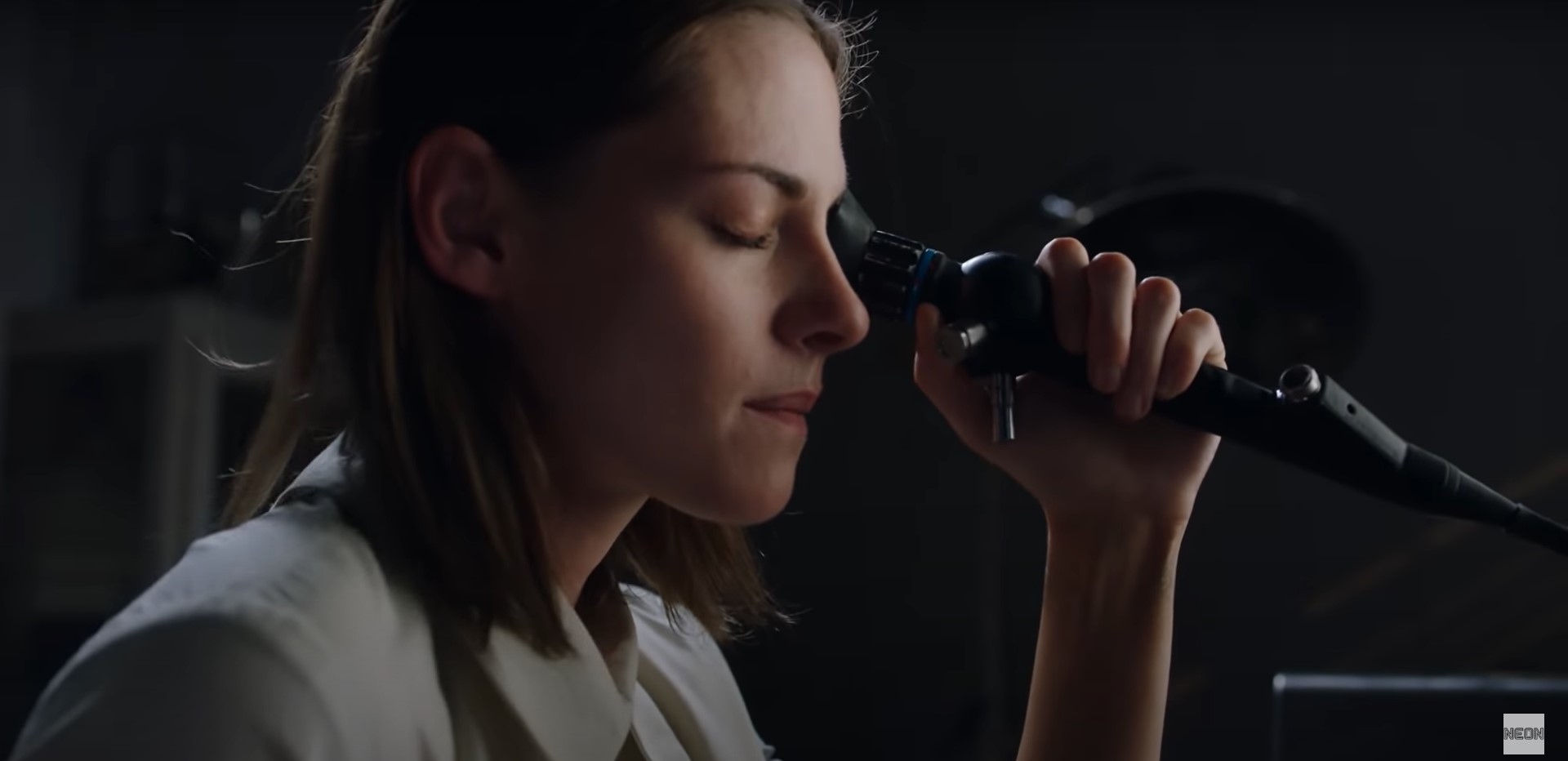
Marking his fourth collaboration with the director, Viggo Mortensen (“Eastern Promises,” “A Dangerous Method”) handles the fame of Saul Tenser, the subject of performance art with a knack for spontaneously growing new organs, or tumors, nearly at will and having them removed during surgical exposition at the hands of his intimate partner Caprice, quizzically seduced by the performance from “Blue is the Warmest Colour” and “Spectre’s” Léa Seydoux. Mortensen plays into Tenser’s will to remain what the institutes define has human only to become conflicted with the investigation into the prospect of rib-splitting a deceased young boy that sends Tenser into what-if territory. Scott Speedman (“The Strangers”) is the cause-driven father of the expired boy and Speedman sustains the character with his usual calm, soft-spoken demeanor which didn’t quite feel passionate enough for a neo-rebel against a society against what he stands for, what he is, and what he thinks everyone should relinquish to – to let the organs grow and flourish. Instead, the New Vice Unit Agent (Welket Bungué), the National Organ Registry’s bureaucrats, the excitable Whippet (Don McKellar, “eXistenZ”) and odd yet attractive Timlin (Kristen Stewart, ‘Underwater”), and an unscrupulous corporation looking to stop the spread of evolution insurgence for capital sustainability. Full of complex characters and neoteric performances, “Crimes of the Future” leaves a lasting impression, makes you stop and think, and indulges in the possibilities of the future with the help of a supporting cast that rounds out with Nadia Litz, Tanaya Beatty, Lihi Kornowski, and Yorgos Pirpassopoulos.

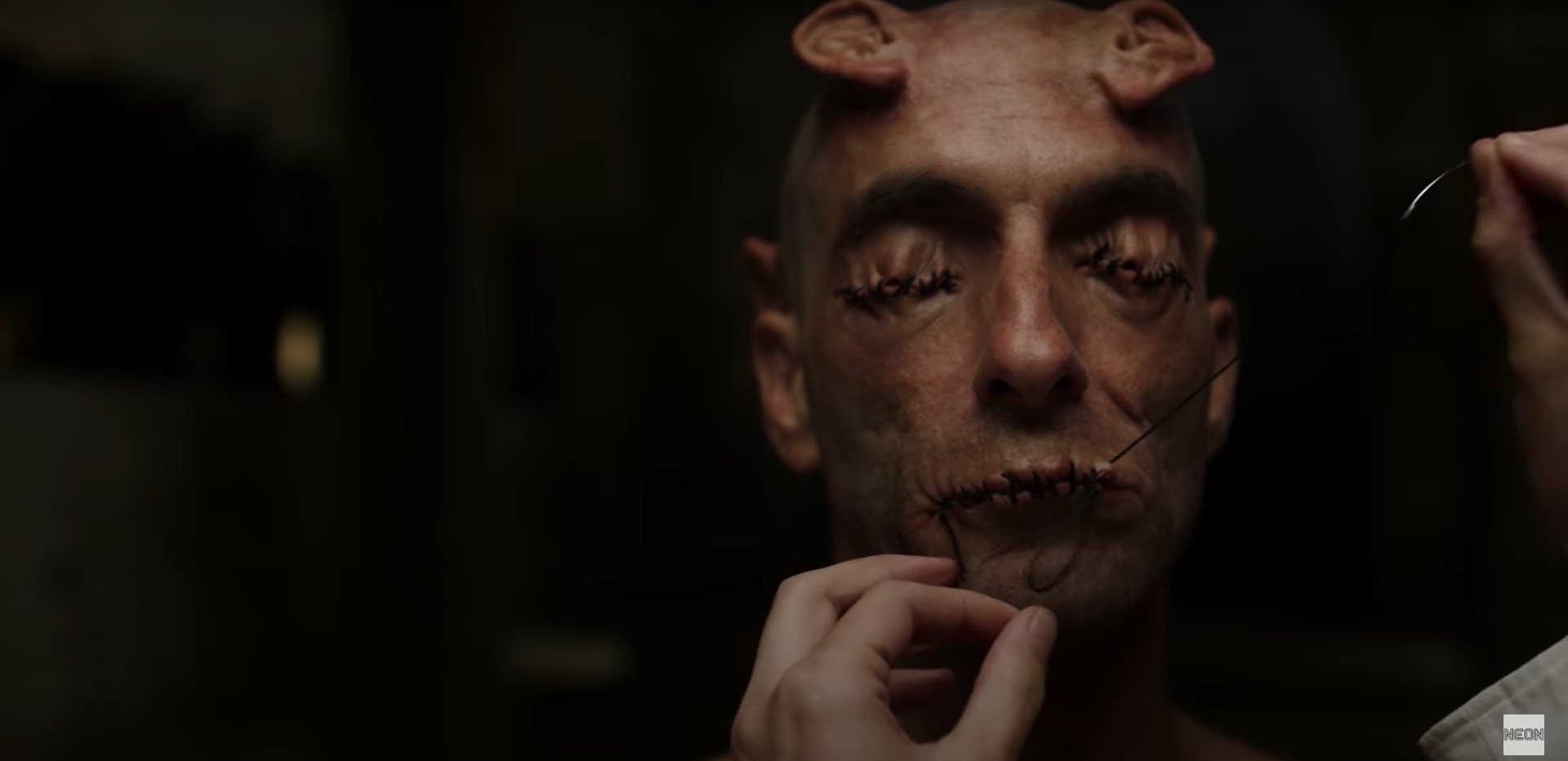
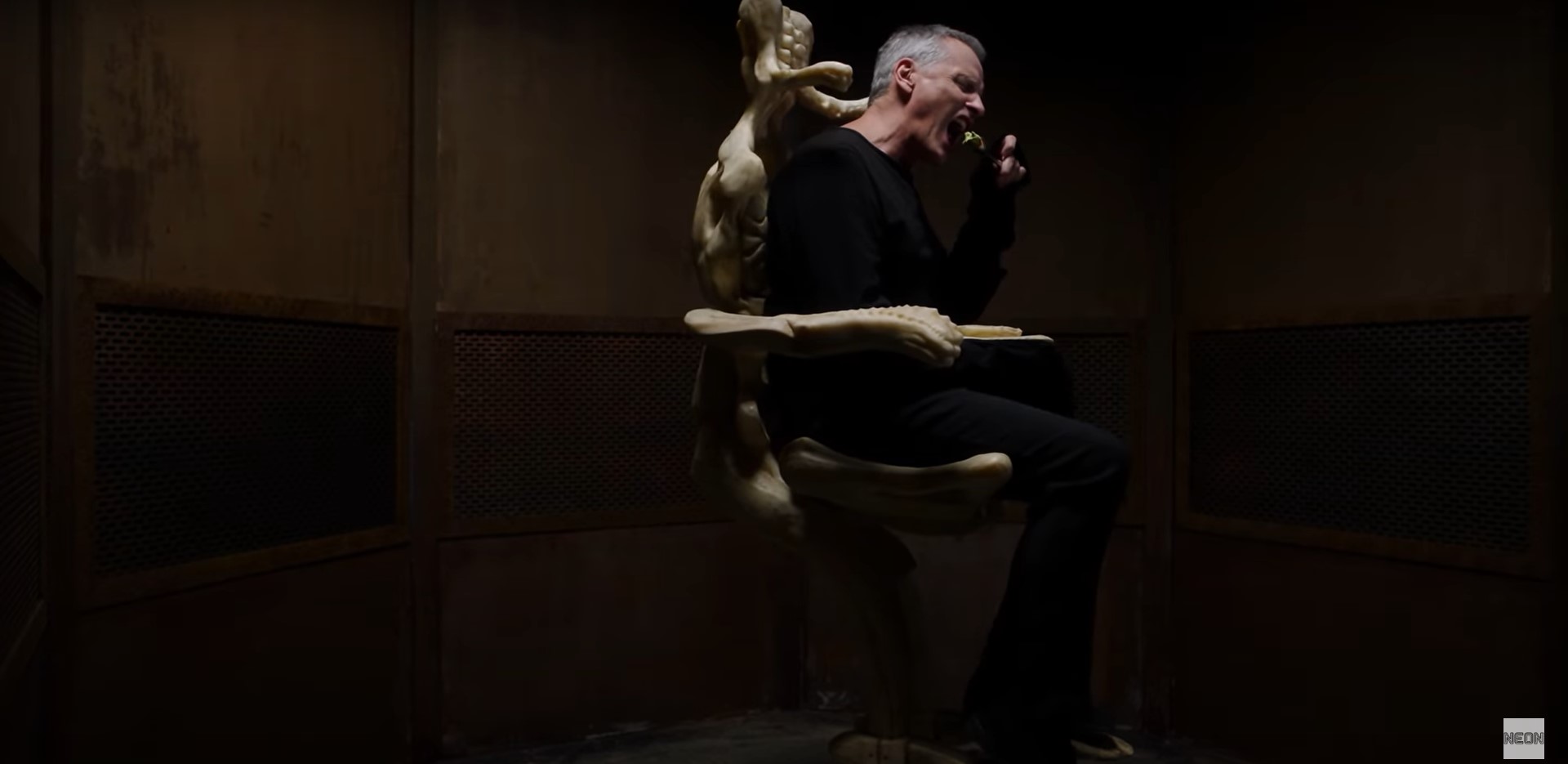
My official opinion about Cronenberg’s “Crimes of the Future” is that many viewers won’t see the multifaceted sides of what the writer-director is trying to convey.  What will be seen is the grunting organic bed that tilts back-and-forth, the fleshy and clunky moving digestive assistance chair that also has low guttural sounds, a dancing man sewn with many human ears, people being sliced open and enjoying it, and a dystopian future where suffering is not a main element.  People will see surface level abnormalities and gore and not understand the layers of a hard-pressed evolution in stagnation by unknown fear and extreme prejudice that runs rampant throughout Cronenberg’s underlying implication of an adaptation and updated normalcy inside a synthetic world.  “Crimes of the Future” is grotesquely beautiful in the depiction of not only how human culture and arts have morbidly progressed by the elimination of pain and by the advancement of technology only to be harshly juxtaposed against the grimy, gritty, and dilapidated habitation where infection feels high risk and imminent, but also in the corruptibility of the human condition that isn’t a naturally biological one like growing spontaneous organs.  Instead, the two bureaucrats of the National Organ Registry are supposed to be hardliners, rule followers, and thorough with their newfangled profession in the everchanging, unexplored future of the human physiology but are seduced by the intimacy of surgery, comparing it to sex with a high addiction rate.  The two agents are constantly breaking government policies and rules in order to be close to the dazzling aciurgy considered artful and alluring like a beauty pageant for the celebration of one’s innards.  Cronenberg also adds the caveat of corporate greed into the folds and flaps of “Crimes of the Future’s” dash of commercial retail that can be fleeting if not paying attention.  The threat of evolution aims to put body mechanism-correcting bed and chairs out of business and so a concealed aim to lobotomize that particular information permanently creeps up onto the narrative in some of the more frightening and gruesome scenes of smothering the risk it can spread like theater fire panic.  “Crimes of the Future” is an eye opening epiphany of everlasting ecological entrapment and the only way to survive is becoming accustomed to the taste of waste in order to be free of it.

If “Crimes of the Future” isn’t already remarkable enough in the wake of David Cronenberg returning to the body horror heir class, Second Sight stuns us with an impressive collector’s set from the UK. The 2-disc 4K UHD and Blu-ray set exhibits the film in a widescreen 1.85:1 with both formats decoding at an average bitrate of 23Mbps. The 4K UHD Dolby Vision comes in a HDR10 2160p while the High-Definition Blu-ray comes in a 1080p. Douglas Koch’s umbrageous urban bathed in greens and yellows and all the colors in between starkly hard lighting against softer details on the visual effects. Most details are lost in the tenebrous and decaying background of age worn and spartan warehouses with little-to-no wide longshots other than the opening of an overturned cruise ship in one of the very few daylight scenes, but the extreme contouring lucidly delineates the shapes around people and objects. Both formats include an English DTS-HD 5.1 Master Audio, providing a coherent and even robust dialogue through much of the Mortensen’s Tenser throaty rasp, Stewart’s Timlin robotic inflections, and Speedman’s Lang soft and breathy speech. “Crimes of the Future” is not volatile and full of action in what’s more a slow noir progression, focusing in on intimacy of dialogue, the proximate ambience, and Howard Shore’s (“Lord of the Rings”) neo-space opera and synth score. English subtitles are available for the hearing impaired. Second Sight puts heart and soul into every release when not only considering A/V but also special features and limited-edition contents. Special features include multiple succinct Second Sight produced interviews with director David Cronenberg and stars Viggo Mortensen, Léa Seydoux, and Kristen Stewart regarding “Crimes of the Future’s” broad vision. An extended interview with Don McKellar dives into his relationship with David Cronenberg from over the years plus his role as the National Organ Registry agent, plus additional crew interviews with producer Robert Lantos, cinematographer Douglas Koch, and editor Christopher Donaldson. Famed film journalist Leigh Singer provides a video essay New Flesh, Future Crimes: The Body and David Cronenberg, a making of featurette, production design materials that go deep into the austere and spartan look of Greece-turned-dystopian future, and a short film “The Death of David Cronenberg by Cronenberg and his daughter, Caitlyn. The physical features are a whole other beast within a rigid slipcase with new artwork by Marko Maney of a pitchy Saul Tenser relaxed in his orchid bed with tentacles while the back reads in stacked words, Body is Reality, glowing inside an old tube television. Both discs are held in an insert jewel amary case with its own Maney artwork of extracted organs in the same color scheme as the slipcase. Alongside the casing, there are 6 collectible art carts, a 120-page color book with production designs, location setups, and new essays by Reyna Cervantes, Tim Coleman, Joel Harley, Rich Johnson, Mikel J. Koven, Phil Nobile Jr., Ian Schultz, and Hannah Strong. “Crimes of the Future” is certified 18 for strong gory images and sex reference and runs 107 minutes on both formats with the Blu-ray locked in B region while the 4K UHD is listed as region free. Plausibly absurd, “Crimes of the Future” imparts far-fetched and dark humored science fiction, but if plants and animals biologically adapt to new or changing environments in order to survive, director David Cronenberg sees the future and renders a concept that, on a second sight thought, may be existentially key.

“Crimes of the Future” 4K UHD/Blu-ray Set is the New Sex!  

Always Wear Protection From EVIL! “It Follows” reviewed! (Second Sight Films / Blu-ray)

“It Follows” You Home on Blu-ray and 4K Home Video!  

After sleeping with a young and handsome man in the back of his car, Jay wakes up strapped to a wheel cheer in an abandoned and dilapidated Detroit warehouse.  The panicked and apologetic man explains that having sex passed something to him and now he has passed it to her.  What it is is a supernatural force, a shapeshifter, always walking toward the last person implanted with an imperceptible sexually transmitted beacon.  Slowly but surely, the entity continues with a steady pace until reaching the infected person and brutally murdering them.  The only way Jay can unload this burdensome curse is to pass it along to someone else, but her tightknit group of friends aim to help her despite not being able to see the entity and drive her out beyond the stretches of her Detroit suburb home.  Yet, no matter how far Jay travels the entity eventually catches up to her, endless following her to wherever she goes, leaving her and her friends without options to alleviate her paranoia and fear.

David Robert Mitchell’s breakout horror success “It Follows” is the 2014 released supernatural teen terrorizer with an immutable edge of not only absolute apprehension but also with a distorted real-world dreaminess not based in vague abstraction.  Mitchell, who not only directed by wrote the film as well, is the sophomore feature from the “The Myth of the American Sleepover“ director who persists in the unravelling of apparent teenage problems, dramas, and sensations in the metro area and in the suburban borders of Detroit, Michigan, the state in which Mitchell was born.   “It Follows” barely scratched a significant budget for production but managed to succeed expectations earning domestically here in the U.S. 13x the film’s budget amount plus the additional international box office revenue and at-home media sales saw Mitchell’s indie horror a major sleeper amongst surprised genre fans who couldn’t get enough of the sexual transmitted spook.  Mitchell, along with Erik Rommensmo, Roby K. Bennett, Rebecca Green, Laura D. Smith Ireland, and David Kaplan, produced the venture under production companies Animal Kingdom and Two Flints with Northern Lights Films presenting.

At the center of a parentless predicament are a group of friends with the nucleate being the followed Jay under the performance of Maika Monroe, who also saw simultaneous and unexpected success in another 2014 thriller, “The Guest.”  Monroe’s slow burn sauntering becomes hit with complete shock when her lover betrays her, sends her spiraling in post-trauma harm, and instills a paranoia that can’t be ignored.  Jay no longer floats in life’s little wonders of love and romance; instead, she finds herself on the other side of the idyllic fantasy with the repercussions of her choices amplified by the supernatural spin.  At her side is her sister Kelly (Lili Sepe, “The Intruder”), childhood friends Paul (Keir Gilchrist, “Dead Silence”) and Yara (Olivia Luccardi, “Kappa Kappa Die”), and the across the street cool guy Greg (Daniel Zovatto, “The Pope’s Exorcist”).  Each play a role in Jay’s post-sex paranormal plight, some are a conductor of relief, such as providing a comforting presence as bodyguards per se or even become the next person to pass along the curse while others project future spurs of ominous ambiguity without the direct intention of doing so.  Though Mitchell might be invoking a dream state of events that may play into the following, I still found the groups’ idle hands to be concerning, especially during a school period from which we see Jay and Greg sitting in class together in one scene.  The cadence of time and responsibility doesn’t exist and that can be really jarring to our sense of natural order where school is an afterthought, juvenile attention is an afterthought, and the only thing that really matters is Jay’s imperceptible anxiety without any other exterior consequences pressuring their decision making.  “It Follows’” complete cast consists of Jake Weary, Bailey Spry, and Leisa Pulido.

Many of the film critics and analysts deconstruct and piece “It Follows” as an allegory for the sexually transmitted disease that will always be with you and how easily, or naively, it can be spread amongst friends and peers in casual intimacy and while that point can be seen as valid, there’s definitely merit behind that theory, I have come to an alternate conclusion of what the entity might represent that has been following me much like the entity has been following Jay. Since parents, or adults in general, are faceless, absent, or represented as attackers, Jay and her friends represent teens having to deal with the peak problematic adolescence with suggestions of suicide, drugs, neglect, abuse running rampant without ever having to be laid out in exposition or be straightforward and evident. The entity represents time running out in their youth dwindling quickly with every adult choice that they make, sex being the main sample of a larger grouping. No matter how hard the teens try to run from their issues, time never ceases and will eventually cause their mortal coil to succumb at an early age. Mitchell’s weirdly timeless set productions and props add systematic value in what has been longstanding through the decades of wriggling deviant teenage behavior. The indifference adult caregivers in themselves can be much scarier than the entity itself, a lack of experience and control often turns wild, unpredictable, and irrational, and set the story’s backdrop as the tatterdemalion surroundings of a once booming Motor City and you have a complete and total degradation of city to soul in one tailgating terrifier.

Follow Second Sight Films for a special release of David Robert Mitchell’s “It Follows” on an AVC encoded, high-definition 1080p, United Kingdom Blu-ray with an anamorphic widescreen aspect ratio of 2.39:1. Looking sharp and retaining original grading, this particular new Second Sight product, the standard Blu-ray version of the two-part deal along with a 4K UHD release, doesn’t hinge on perfecting or upgrading the digitally record video. Still, image quality renders like definite de facto distinctness that separates objects with delineated depth and a realistic color palette while the master of the slow pan, Mitchell, keeps scenes alive with an ever-moving camera shooting alternative, odd angles. Backside of the Blu-ray suggests a bitrate decoding at 23 Mbps but I had clocked it higher at low 30s that better suppresses any kind of compressions issues on the more than adequate BD50. The release comes with two English audio options: a Dolby Atmos produced by Second Sight and a DTS-HD 5.1 master audio surround sound. The Atoms provides a pedestal for the original composed score by Disasterpiece aka Richard Vreelord with his note firmly pressed on the slasher pulse while keeping a discordant arm’s length away from being too terribly catchy; instead, we shrill in fear with ever crescendo in letting us know the entity is here and near, foot-over-foot toward the target. Depth and range fathom well to create space and provide more than just a dialogue robust narrative with suburban ambiance as well as the exertion surrounding motivation to stay alive or to be followed and killed. Though not an A/V level up, Second Sight pours all their love and respect in new special features including new experience and opinion-laden interviews with Keir Gilchrist Chasing Ghosts, a new interview with Olivia Luccardi Following, a new interview with produce David Kaplan It’s in the House, new interview with composer Disasterpiece (Rich Vreeland) Composing a Masterpiece, and a new interview with production designer Michael Perry A Girl’s World that focuses on the out of time and oddly placed set dressings for era ambiguity. There’s also new commentary by author Joshua Grimm, an archived commentary with authors/film scholars Danny Leigh and Mark Jancovich, and a Joseph Wallace video essay surrounding “It Follows” Architecture of Loneliness, providing a deep-dive look into Mitchell’s curation of isolating loneliness in all areas of the cinematic story. The green Blu-ray casing has new simple, yet effective, artwork of Maika Monroe floating head bathed in small strips of rainbow glints contrasted against a dark background. No reversible cover or insert inside the Blu-ray but the disc pressing contains an equally color arrangement to the front cover with Monroe bound to the wheel cheer from a plot point moment. The region locked B release plays at a 100-minutes and is UK certified 15 for strong threat, sexualized nudity, violence, gory images, and strong language. Architecturally sound to be great horror movie of originality and inspiration, “It Follows” never succumbs to the frustratingly breeziness with when the entity enters the picture as director David Robert Mitchell is able to keep us ever vigilant with high suspense, stunning visuals, and keep characters from wandering too far off path.

“It Follows” You Home on Blu-ray and 4K Home Video!  

Friends for Dinner is EVIL’s Table Setting! “Gnaw” reviewed! (MVD Visual / DVD)

“Gnaw” on this DVD from MVD Visual, Danse Macabre, and Jinga FIlms!

A holiday away in the English countryside might not be the perfect relaxation for six prickly friends.  Quarrelsome and unfaithfulness run rampant through their fragile friendship on the verge of collapse.  Everything at first was manageably enticing – a quaintly rustic countryside house, a quietly isolated surrounding woodland, and the matron house owner who whips up meaty delicacies for them to enjoy breakfast, lunch, and dinner – but when darkness falls amidst a heated love triangles, lustful romps, and frustrated behaviors, the divisive friends become blind to the ever watchful eye that’s hungry for what the group of young people have to offer – as fleshy comestibles.  A cannibalistic cook lurks in the shadows and in between the walls, waiting for the opportune moment to strike, fillet, ground, and prepare the tender meat for seasoning and baking, but his observant eye has set it’s sights on one whose expecting child that could be a tasty morsel for later. 

Cannibalism subgenre has been a staple in horror for decades the under the vastly wide dog-eat-dog umbrella that pits human beings against each other in one of the many gruesome reasons of unwittingly engaging into a form of Darwinism.  People considered as food are lower-shelf commodities to those who need to feed of human flesh and organs, regarding their placement in the food chain as superior amongst the rest despite being in the same category of the animal kingdom.  Every filmic narrative contains a tweaked difference in justification for cannibalism and in Gregory Mandry’s 2008 English horror, simply known as “Gnaw,” in lies that sense of definite worth in craving someone else’s entrails, boiling the viscera down into a hot soup or baking it into a meat and potato Cornish pastry.   The script, penned between first time screenwriters Michael John Bell and Max Waller from a story by independent horror producer Rob Weston (“Antibirth,” “The Thompsons”), contrasts people’s life-consuming narcissism and pettiness against something truly terrifying and waiting to sink its teeth in you.  Weston and Simon Sharp produce the film under Weston’s production company, Straightwire Entertainment Group, as well as The Big Yellow Feet Productions.

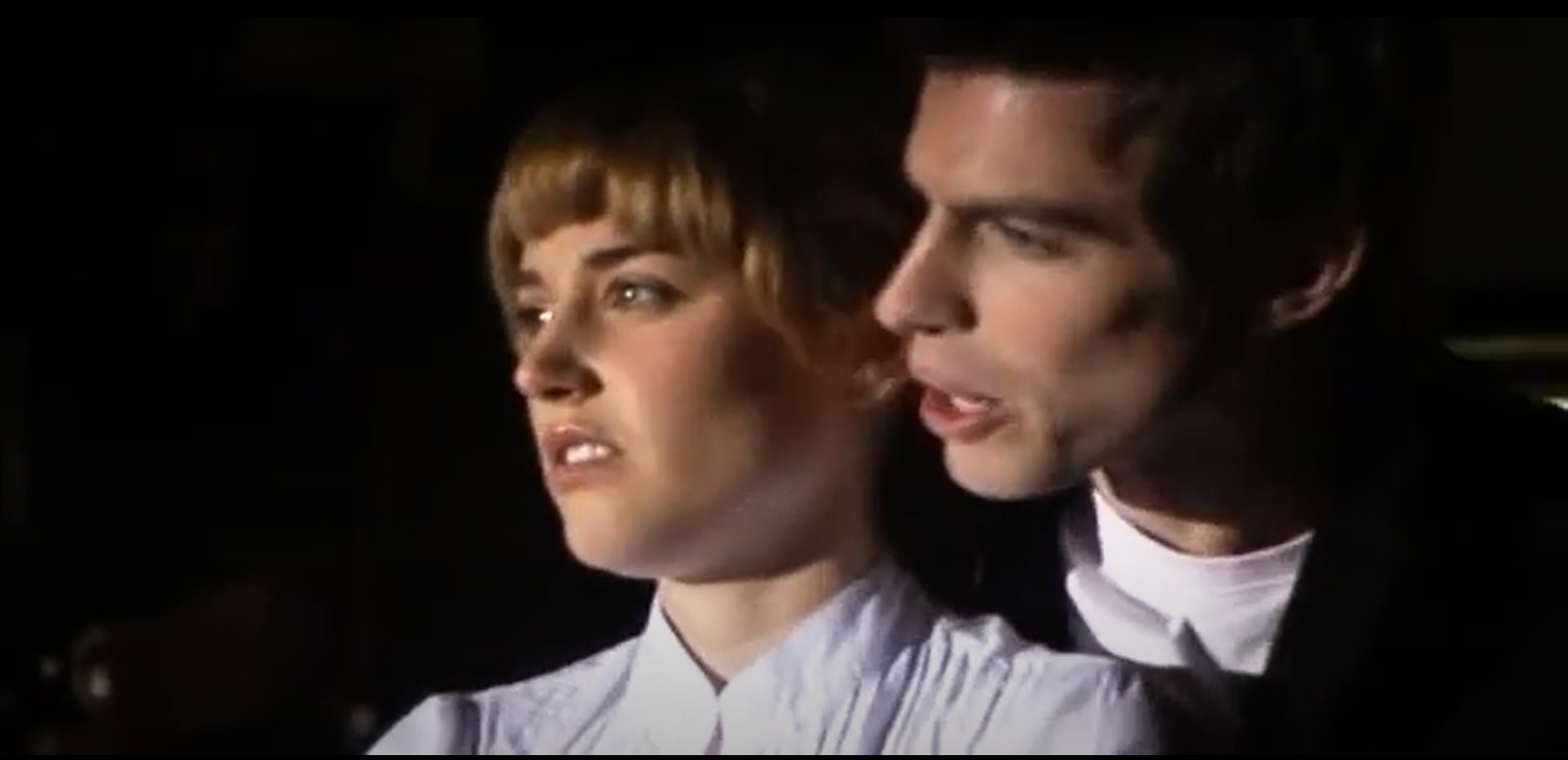
Being that “Gnaw” was released in 2008 and is a low-budget indie film, a novice bunch of English first timers trying to break into the acting game and industry overall comprises the story’s cast of victims and cannibals, but that isn’t to necessarily say the meat and bones are rotten from the very unwrapping of DVD case plastic.  As a whole, the fresh cast undertakes the pessimistic angles of a souring love triangle between established couple Jack and Jill, yes, like the nursery rhyme, played by Nigel Croft-Adams and Rachel Mitchem in a slowly sink ship that symbolizes their relationship, torpedoed by an unknown undercurrent in Jack’s fling with Lorrie (Sara Dylan, “Mandrake”).  Between the three, suspicion is entrenched in Jill with sarcastic lashings on Jack’s recent temperament and behavior that suggests she’s aware of wandering playboy antics, but what Jill is unaware of is the other woman, a hopeless romantic who can’t seem to see through Jack’s philandering, self-assured ways.  One thing “Gnaw” does to spoil this wonderfully taught threesome is not bring the tension to a head and, instead, deflects to the butchering head chef of human bodies, played gruntingly by a muted and snarky-looking Gary Faulkner attempting his best to imitate a killer from the very best of the 80’s slasher renaissance and only to come up short of the current slasher renaissance a decade and a half later.  Masked half the time with some kind of black felt cloth with an attached pelt, Faulkner looks more like a half-wit brandishing a two-prong pitchfork than an large, formidable intimidator you’d be scared of just by looking over your shoulder while running as fast as you can to get away.  Granted, the character is tough to kill, able to take punches and stabs as if they were mosquito bites, but his connection to cannibalism often feels lost in the chase rather than knee deep in guts and a frying pan.  The rest of the cast rounds out with a trope-horny couple in Julia Vandoorne and Hiram Bleetman (“Zombie Diaries”) and the matronly yet unnerving face and voice of Carrie Cohen as the house owner.

In the grand canon scheme of cannibalism films, “Gnaw” places on the generic neighborhood scale.  The small time indie picture rides the line of equivalence, neither being absolutely terrible or outstanding gruesome, with a less-is-more story that more-or-less been done before in the subgenre.  Yet, “Gnaw” doesn’t give audiences anything new to squirm about with its peanut long-pigs who arbitrary abduct locals for their bone-licking appetites.  “Gnaw’s” in frame gore generally consists of goring with that aforementioned puny pitchfork and we’re quickly skirted from the “Texas Chainsaw Massacre” inspired moment of Faulkner revving the two-stroke engine for maximizing terror in the eyes of a soon-to-be-in-bits victim   Gore should be a staple motif for any cannibal film where one deranged person has to either sauté, stew, bake, or grill the parts of a hacked up totally emotion-regulated person and Mandry’s film seldomly shows the sickening, sordid sloppy Joe-makings of a flesh eater, except for one scene of a severed foot being ground into hamburger meat that fits the bill while most of the rest happens implied off screen or unshown.  Mandry’s approach to telling the story has the inklings of a 80s-90s vintage made-for-TV movie with an unpolished dark veneer and snooping camera angles to obtain a POV sense of prowling prey while also keeping us engaged with the frustratingly unresolved melodramatics of the group that can stifle our concern for the characters in the last act, infectiously affecting the crude final scenes that literally drops a baby into our laps and expects us to know what to do with that information. 

Personally, my second time around with Gregory Mandry’s “Gnaw” but a lot has changed in between the more than 10-year span of now-and-then.  Hell, even I’ve changed in regard to taste and with now having consumed more cinematic wisdom over the years, from what I recall, “Gnaw” was a rememberable off-industry shocker to a limit and it’s gratifying to see the little cannibal film that could receive a revisit on DVD from MVDVisual in association with Danse Macabre and Jinga Films.  The film is housed on a DVD5 that presents the 35 mm stock in a widescreen 1.78:1 aspect ratio and in a rather chaotic upscaled transfer that may be more commercially equipment caused than artefact, but compression macro blocking is evident during the majority of night scenes as it phases in and out of overlapping darker shades. Tom Jenkins’s cinematography can be nicely fore focused to center the characters in front of a background out of focus, but there are other instances where the lighting is extremely binary with not a splash of other color to liven up the image. The only audio option is an English Dolby Digital 5.1 surround sound mix with an overkill statement on a film that doesn’t require it.  The back and side channels hardly become utilized for any back brush movement or creaky old house shifting so a lot of the sound is in the anterior which is where the dialogue most rightfully aggressive and clearest.  No issues with the digital recording that offers a balance between the placid moments and the screaming hysteria without being too much intake on the speakers.  There’s not much in the way of ambience, some chewing of the meat pies, steaming of pots, and the revving of a chainsaw is most character-driven sounds that overtake any kind of natural environment along the background landscape.  English subtitles are optionally available.  The DVD does not list special features, but extras appear on the static menu with a director’s commentary that can be toggled off/on.  There is also a trailers selection with previews for the feature plus “Midnight Son,” “After,” and “Red Latex.”  Physical features offer an alternate cover from the other releases with a man opening wide to take a bite out of a literal hand sandwich in the photoshopped composition.  The DVD case does not contain an insert and the disc art contains the same image as the front cover.  With a region free playback, the movie come not rated and has a manageable runtime of 84 minutes.  The second time around with “Gnaw” proves to appreciate the work that goes into a stably fixtured indie horror from the UK but with the copious entries of the cannibal subgenre, especially in the early 2000s with more theatrical pieces in “Wrong Turn” and “The Hills Have Eyes” remake, “Gnaw” treads mediocre waters just enough to sate the man-eater hunger.

“Gnaw” on this DVD from MVD Visual, Danse Macabre, and Jinga FIlms!