Sometimes It Takes EVIL To Bring Out the EVIL In Us All. “Jacob” reviewed! (Crazed House and MVDVisual / Unrated, Director’s Cut Blu-ray)

“Jacob’s” EVIL is Coming to Blu-ray! Order Here!

In the Texas smalltown of Melvin Falls, a dark history engulfs the Kell family.  Edith Kell and her two children have lived in ostracized notoriety for years amongst their neighbors as Edith’s husband, obsessed with restoring a suddently inherited house immersed in haunted opine, walked into the town crowded bar and started violently killing patrons before being shot dead by the local sheriff.  Years later, Edith’s son Jacob is now a quiet, large, and lumbering young man with a death stare that’s akin to looking into the abyss, but Jacob’s underlining rage and psychopathic tendencies are comforted by his younger sister, Sissy, when tensions rise between his mother and her boyfriend, the abusive town drunk Otis.  When Otis inadvertently kills Sissy, Jacob’s bloody rampage is unleashed and the townspeople, led by a capital punitive sheriff, form a posse to bring down the vengeful Jacob, if they even can, in another Kell family massacre.

IMDB.com

Larry Wade Carrell writes-and-directs the dysfunction family and rural community horror “Jacob,” released over a decade ago in 2012.  The film is Carrell’s debut solo directorial that earned the filmmaker best Indie Fantasy-Horror, Best Young Actress, and Best Music Score at the WorldFest Houston before embarking into more recent horror of the last decade with “She Rises,” “Girl Next,” and “The Quantum Devil” that run the subgenre gamut with supernatural terror, trafficking abductions, and evil on a whole other plane of existence.  Carrell’s humble backwoods basket case thriller has broad stroke inklings of a supernatural catalyst.  Filmed in and around Richmond, Texas, “Jacob” is the last feature from Odyssee Pictures and the first for Javaline 98 Productions, produced on a low budget by Carrell, Odyssee Picture’s Stacy Davidson and Jeremy Sumrall (“Domain of the Damned,” “Sweatshop”), William B. Davis, Catherine and Frederick Rushford, James Martinelli, and Chuck Norfolk (“Conjoined”).

IMDB.com

Like most indie features, multiple hats are being worn in front of and behind the camera.  Not only does director Larry Wade Carrell write the script, he also dons the twin brother roles of drunkard abuser Otis and the gentile deputy Billy.  Edited so the two characters are never fully faced in a scene together, Carrell manages to pull off contrast personalities by portraying, essentially, the epitome of bad versus good with the no-good delinquent and intoxicated aggressor Otis up against the mild-mannered solicitous nature of Billy, a deputy.  While Carrell may be the core of the story playing two characters, he’s written a narrative that has to battle out against the titular character Jacob, played by Dylan Horne, and the venerated genre name of Michael Biehn (“Terminator”), in what can be considered as the worst impersonation of a whoopie-exclaiming Podunk, literally with the character yelling whoopie when learning of inheriting a house.  Aside from Biehn’s cringy performance, the acting is generally positive and compelling.  Carrell goes beyond the bar in melodramatics but manages to keep grounded by much of dynamic interactions supplied by scrupulous actors with Krystn Caldwell (“Psychic Experiment”) as Edith Kell, the staying in victim of abuse, Leo D. Wheeler (“Domain of the Damned”) as the manbun sheriff with a firm but gentle approach, and Grace Powell (“Hell of a Night”) as Jacob’s soothing little sister Sissy.  Horne, in the Jacob role, is voiceless throughout but imparts Jacob’s ogre-esque killer from inside out but is still overshadowed by Carrell’s double-edge role that takes away from his menancing run through the simpleminded townsfolk.   Dustin Lane (“The Darq’), Travis Hester, Sandy Ray (“Hairmetal Shotgun Zombie Massacre: The Movie”), Shane Stewart, Karen Schlag (“Domain of the Dead”), Nick W. Nicholson (“Pickaxe”), and Deke Garner (“The Void”) rounds out the “Jacob” cast.

IMDB.com

“Jacob” is one of those horror-thrillers that wears the trope suit of a large, quiet, countryside hulk with little intelligence but makes up for with strength and goes on a killing spree when a cataclysmic moment, usually spurred by external elements like peer bullying or the death of significant person, in this case the death of his sister, Sissy, breaks Jacob’s dammed violent tendencies and what ensues is a deluge of body mangling carnage in a big ole heap of misunderstanding as the Melvin Falls residents believe, with prior judgement and without a doubt, Jacob finally snapped and murdered his sweet baby sister, though far from the truth.  However, the reason for Jacob’s turn to madness is a little more complex than just dead sister vindictiveness.  In this case, less is more would have suited Carrell’s film more aptly as Carrell adds in a supernatural element with Jacob’s father inheriting a supposed haunted house.  As the father attends to the house rehab, a montage of him finding a book and able to read and be beguiled by the demon scripture inside causes him to slowly become obsessed and insane while fixing their newfound home which then leads to the bar massacre Jacob witnesses.  Jacob also comes in contact with his father’s spilled blood that night and that presumably passes whatever supernatural forces the father was affected by to his son, an evident metaphorical theme of hereditary genes gone wild through blood lineage that’s also demonstrated within Sissy who mentions hearing the house’s callings to her but she was not tainted by the touch of her father’s blood with her being inside mother’s womb. There’s a lot to digest and decipher but not properly arranged or the demonic mainspring is sorely underplayed to really nail the occult supernaturality on its head.

The Unrated, Director’s Cut of Larry Wade Carrell’s “Jacob” lands onto Blu-ray from Carrell’s current release company Crazed House and distributor MVDVisual.  The AVC encoded, 1080p, BD50 and presented in a widescreen 1.78:1 aspect ratio.  Picture quality is a bit all over the place and its likely not from the compression codec but rather stylistic choices for flashbacks for a narrative that goes into a flashback while already inside a flashback, creating multiple tonal layers to distinguish the vying eras.    Carrell really gets his hands into a sepia and desaturated grading that sucks the color out in a fit leaning toward overexposure taking with it much of the finer detail points.  Combined with digital stock, the gritty tone Carrell goes for often loses the battle to an ultra-sheen effect.  The English LPCM 5.1 surround sound plays to the rigors of the dialogue.  The loquacious script, delivered on point by the actors, goes unobstructed with a prominent dialogue layer underscored by its Iain Kelso score that evokes a slightly better grittier tone Carrell attempts to achieve with the film’s appearance.  Range is limited to just what’s in frame and within the nucleus bubble and that often goes together with eliminating much of the depth when all the centered focus objects are making all the noise in the room and scene, diegetic speaking.  English subtitles are available.  The director’s cut has special features that include two commentaries with one including writer-director Larry Wade Carrell and the other including Stacy Davidson, a behind-the-scenes documentary The Journey of Jacob that has retrospective cast and crew interviews as well as raw footage and film footage of the film’s from alpha to omega, an interview at the “Jacob” Canadian premiere hosted by Yell Magazine, actors screen test, extended and deleted scenes with Carrell commentary, a storyboard comparison with Carrell commentary, and the theatrical trailer.  There is no stinger scene post credit.  The cover art screams low-budget and photoshop but is an adequate shoe that fits the rural horror and lumbering maniac concept.  “Jacob” comes in a standard Blu-ray Amaray for its region free, 92-minute feature presentation.

Last Rites: “Jacob’s” a good first effort in the big chair for filmmaker Larry Wade Carrell with solid acting, interesting characters, and palpable bloodshed. Where the weaknesses lie is with the story’s inability to connect the demonic, haunted house, ghost story, or whatever supernatural force may be to the essence of backwater calamity and dysfunctional family lineage.

“Jacob’s” EVIL is Coming to Blu-ray! Order Here!

There’s No Cutting Out This EVIL! “Brain Tumor” reviewed! (MVD Visual & Whacked Movies / DVD)

Watch the Deadly Growth of the “Brain Tumor” on DVD!

World-renowned but virtually unorthodox and cursory neurosurgeon Dr. Seymour Caligari removes yet another brain tumor with relative ease from a cancerous-afflicted patient.  After the large golf ball sized tumor is discarded for oncology dissection and study in the lab, the once lifeless biological malignant specimen escapes from the medical pan and starts violently attacking people on a rouge killing spree.  Having absconded the hospital grounds, the tumor continuously stays on the hunt for its next meal, devouring the distasteful locals surrounding Dr. Caligari’s mansion home.  Caligari, his son Dash, and stepdaughter, Kitsie, who is an alcoholic and is also oddly dating her stepbrother, soon find out that the nearby, forest hiding tumor is growing into a large, tentacled, and toothy ball with bloodthirsty, feeding frenzy tendencies and it’s up to Caligari’s family to reconnect whole their interfamily relationship faults if they want to stop it before it consumes more victims. 

A practical schlock tribute to the pre-1980s monster movie, this 2024 release “Brain Tumor” embodies every bad, mutated cell that defined the ridiculously slathered B-movie creature features of yore, the ones that aired late enough to be seen by the burning the midnight oil few and were described with every exclamatory interjections and horrifying, vocabulary descriptors you could think of to put shock, terror, and fear in large, screen-to-screen filling grotesque font.  Glen Coburn, who’s directorially debuted with the “Blood Suckers from Outer Space” in 1984, wrote and directed his latest comedy-horror cheapie in nearly three decades since his last feature.  The American-made picture reteams Coburn with Bret McCormick whom both helmed a segment in the “Tabloid” horror anthology alongside the third co-segment director, Matt Devlan.  This time, the “Repligator” and “The Abomination” producer McCormick designs Coburn’s tumorous creature, much like the body-bred monster of “The abomination,” with “Tabloid” actress Kay Bay producing the film under Whacked Movies, distributed by TinyBig.

“Brain Tumor’s” schtick is part half-century ago creature feature and part absurdist humor brought upon by the cast of caricature characters beginning with Dr. Seymour Caligari in off the cuff remarks and off topic comments that no one patient wants to hear while in the middle of brain surgery, which, if I’m correct, requires you to be awake depending on the type of operation.  Behind Caligari is an actor who is usually behind the camera in Bil Arscott, cinematographer for “Christmas of the Dead” and gaffer for the Ryan Kline black market human meat selling comedy-horror short film “Meat.”  Perhaps the less sensationalist absurdist in the entire picture, Arscott is joined by Jack Mahoney and Sydney Hatton as son Dash and stepdaughter Kitsie who embody the light “Cruel Intentions” incest between siblings. Yes, I know they’re stepsiblings but there’s still a creepy factor about it.  Plus, Kitsie’s mentioned on multiple occasions about her alcoholism but that sidebar aspect her character doesn’t flourish or become problematic.  Dash tries to convince himself his father has nothing to do with the recent string of murders while Kitsie’s devil’s advocate reign of suspicion marks the doctor complicate.  In the end, none of the complexities amount to anything in a fiery fight finale of man versus malignant tumor with casualties in between from mostly interesting yet throwaway characters in biopsy researcher Phoenix Leach (Danielle Wyatt), Caligari’s medical assistant Freddy (Aspen Higgins), a bordering predo-priest Father Bud (Matt Tucker), and 2000’s indie scream queen Anjanette Clewis (“Witchcraft 13,” “Suburban Nightmare) in perhaps the only gory scene in the entire film.

At eye level, “Brain Tumor” is nothing more than a quirky horror-comedy conjured up with slim conceptualization from Coburn seeking to spend a shoestring budget.  Not a ton of substantial story inside this framework of a cantankerous killer tumor with a vaginal mouth, snakelike tentacles, and a single ocular just above the vagina dentata.  With no mutational cause for the creature’s resulted effect, the titular terrorizers mostly skulks in nearby bushes and grabs those stupid enough to leave the confines of their home to check out that weird sound.  Following a formulaic path similar to monster movies of the 1950s modernized to reflect with a jab of a politically divided climate and a liberal sense of humor, “Brain Tumor” fails to that semblance of an under-the-veil of Golden Age cinema veneer classified by those archaically rendered B-films, substituting the strived charm of making the most of it with farce and satire just like most modern movies that more-or-less mock what once was for a serious creature feature.  Without the presence of significant monster mayhem and without the presence of a personality, Coburn’s creature metastasizes into too many benign lumps that it causes a deficiency in entertainment, horror, and for it’s intended comedy. 

“Brain Tumor” arrives onto DVD home video from rising physical media distributor MVDVisual in distributive collaboration with Whacked Movies.  The MPEG2 encoded DVD5 is upscaled to 1080p from the standard 720p resolution.  Picture quality doesn’t hold many qualms through an ungraded and brightly lit digital compression.  There’s an artificial quality to the rudimentary visual effects that emits a plastic and hard-edged surface without a smoother blend into the frames.  Color density is quite sharp against the off-and-on emerging details when green screen tactics are not being utilized or the scene is not overexposed with natural lighting.  Audio specifications are not listed on the back cover, but my player has identified the English language mix encoding as an uncompressed stereo 2.0.  Digital audio retains a crisp and clean reproduction albeit the feedback crackling during higher pitched screaming.  Dialogue renders clean, free of obstruction, and with prominence over the other encoded tracks and despite it’s microbudget, an onboard mic doesn’t seem to be used here based off the clarity and depth of sound.  There are no subtitles available with this feature as well as no bonus content in this barebone, feature-only release.  The unsigned illustrated front cover art is neat though, an above average Ghana-like design that’s more accurate to the film’s storyline.  Aside from the sexy front cover, that’s about the sum of “Brain Tumor’s” physical allure with no insert accompaniments and a disc art pressed with partisan screengrab of the monster. The 76-minute feature comes unrated and is region free. 

Last Rites:  While I applaud the use of a stationary, yet tangible, bio-organic mutated creature instead of a visual effects atrocity, “Brain Tumor” is terminally fated to be a miss amongst fans both old and new with too little monster, too little gore, and too little sense to save itself from itself. 

Watch the Deadly Growth of the “Brain Tumor” on DVD!

DCU Can’t Handle this EVIL! “Swamp Thing” reviewed! (MVD Visual / 4K & Blu-ray)

“Swamp Thing” on 4k / Blu-ray Combo!  Now Available on Amazon.com!

A top-secret government project in the Louisiana swamps concern the combination of aggressive animal genes into plant DNA to result in creating super food for the potential famine and overpopulated future.  Agent Alice Cable becomes assigned to the project when her predecessor is unexpectedly devoured by a gator and becomes acquainted with the passionate head scientist, Dr. Alec Holland.  However, the government isn’t the only interested party in obtaining a formula when a faction of cutthroat mercenaries invade the swampy compound in the name of Arcane, a mastermind sociopath looking to hold the fate of the world in his hands.  Storming the compound with force, all the government agents are slaughtered except for Cable who managed to escape while Dr. Holland suffers a tragic accident of combusting with his volatile formula during the attack.  Believed to be dead, Dr. Holland returns transformed into a half-man, half-vegetal thing with superhuman abilities.  Now, Arcane is after him with Cable trapped in the middle. 

Having success in the grisly rape-revengers and mutant-cannibals section of his career in the 1970s, Wes Craven tussled with creating and securing another hit film to pay the ever mounting bills.  Before “A Nightmare on the Elm Street,” one of two biggest titles that have gone synonymous with the director’s name, the other being “Scream,” Craven dived into a DC Universe project before the DC Universe ever existed as such with the script adaptation and the helming of “Swamp Thing,” a vegetational anthropomorphic superhero inhabiting elemental powers, such as regrowth and superhuman strength.  What Craven originally scripted may not have been the same as the finished product on screen but the 1982 captured audiences attention and created lifelong fans of an underappreciated hero still germane to what is now a large universe of revitalized superheroes films and television shows.  Film in and around Charleston, South Carolina in the Cypress Gardens doubling as deep South everglades, “Swamp Thing” is produced by long time DC films coproducers Benjamin Meiniker and Michael E. Uslan as their first DC superhero venture as a Melinker-Uslan production and distributed by Embassy Pictures and United Artists.

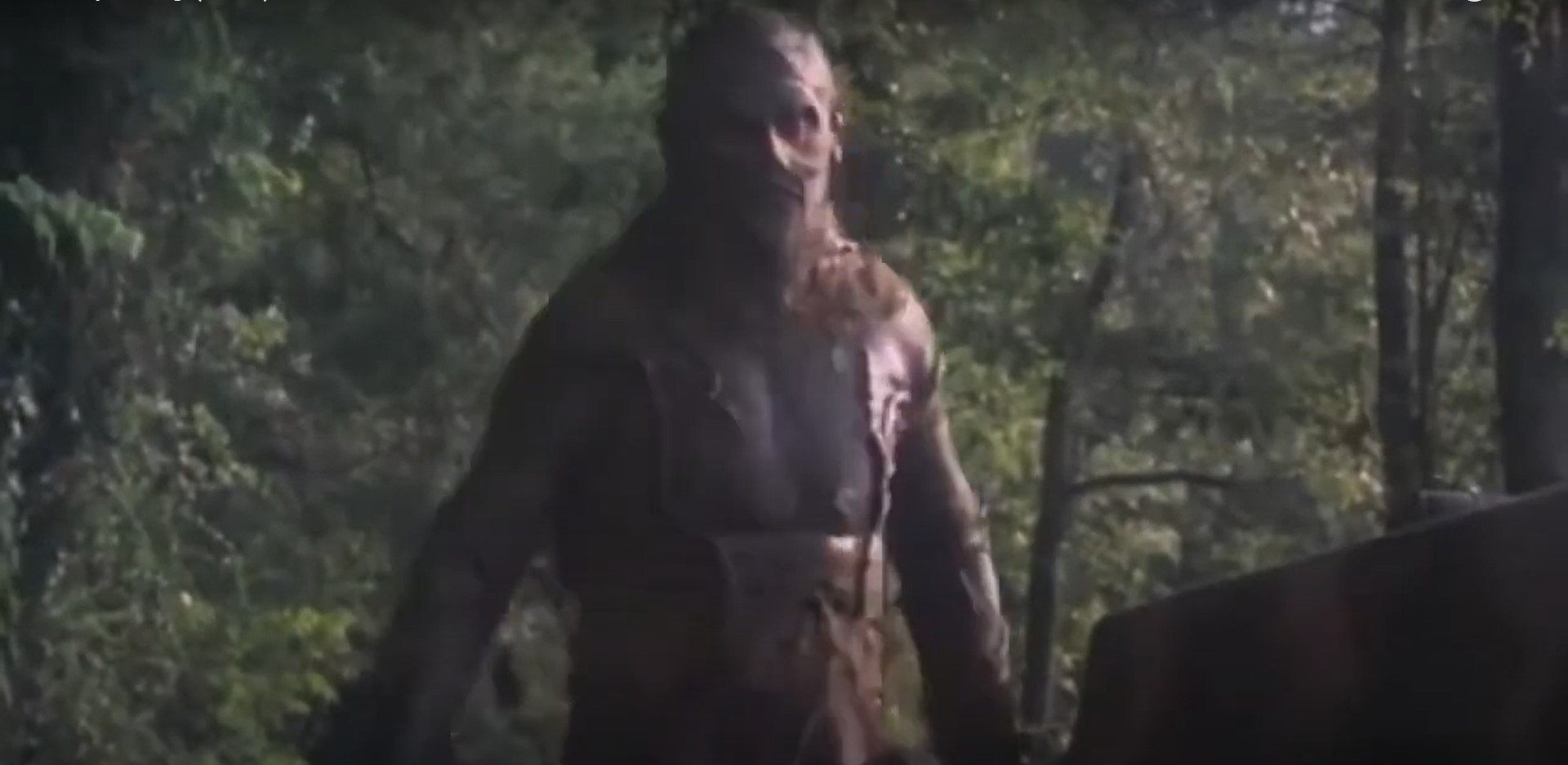
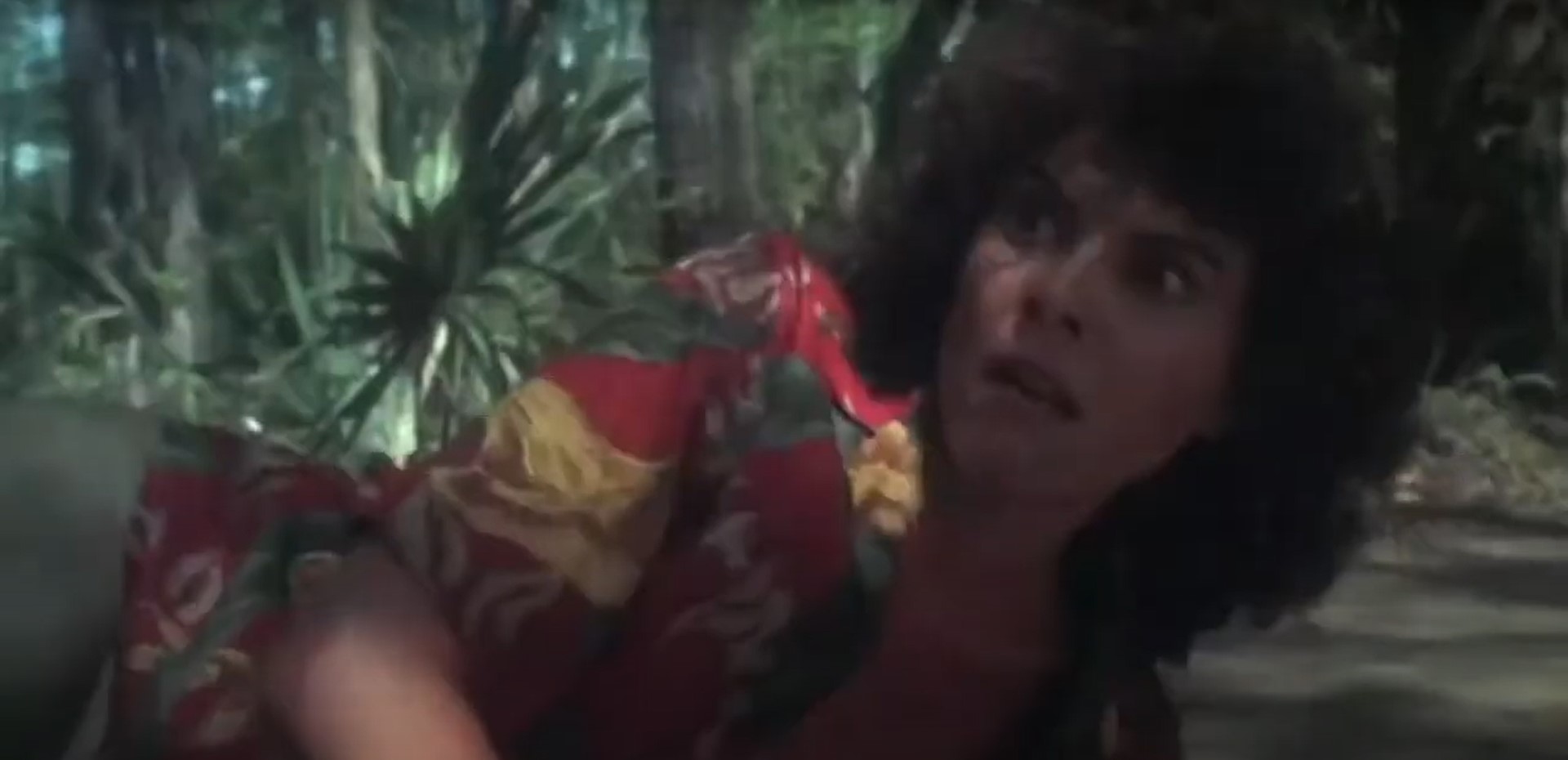
The question of who would bring this monolithic human-hydrangea?  Answer:  Dick Durock.  The 6’5” former Marine Durock was not afraid to jump into character skin, no matter how hairy, tight, or otherwise uncomfortable it might have been.  Durock may not have been the face of Dr. Alec Holland, played by genre cult actor Ray Wise (“Robocop,” “Twin Peaks”) before succumbing to transformational injury and rebirth, but the Indiana born actor certainly became the face of “Swamp Thing” throughout a decade with the sequel and the subsequent television show.  Durock captures not only the strength but also the humanity of the superhero in this origin story, a feat hard to accomplish for a man in a skin-clinging green and bulky suit.  Not to diminish Ray Wise’s performance by any means as the charismatic Wise is charming, passionate, and invested into making his Dr. Jekyll jive with the soon permanent Mr. Hyde to come, but as titular principal, Durock becomes the face of foliage on steroids.  Before solidifying herself as a scream queen, a young Adrienne Barbeau would have more difficulty in her Alice Cable role reflected in having some kind of feelings for essentially the same character in two versions played by different actors.  Yet, Barbeau beats the buggy Carolina heat as well as the differentiate obstacles by being a kickass government agent able to handle herself around the frighteningly new swamp creature and Arcane’s goon squad.  Before he was a James Bond villain in “Octopussy,” Louise Jordan donned the arrogancy of a tyrannical thinker yearning for the unique powers of others.  Jordan’s quite pretentious as the unrelentless Arcane and that makes the actor be the quintessential antagonist but I would not say his performance places his character in complete rivalry as “Swamp Thing’s” archnemesis.  Something is missing from their dynamics within their broad encounters that make the struggle appear impersonal and distant.  Even when Arcane ingests the formula and turns into a werewolf-like beast and the two superpowers clash, I wouldn’t label their conflict personally intertwined.  Perhaps Alec Holland and Alice Cable’s pre-mutation passion wasn’t strong enough or Swamp Thing’s deep-seeded desire for Alice wasn’t rooted well that makes Arcane just whither like a sun-beaten plant without water.  Another character that’s beaten into the ground is Ferret played by David Hess (“The Last House on the Left”) as head mercenary without any real power or absolute authority over his men, turning Hess more into like Tracey Walter in Tim Burton’s “Batman” but not as cool or as likeable.  “Swamp Thing” cast rounds out with Nicholas Worth (“Darkman”), Don Knight (“Death in Space”), Nannette Brown (“My Boyfriend’s Back”), Al Ruban (“1,000 Shapes of a Female”), Mimi Craven (“Last Gasp”), Karen Price, and Reggie Batts as the unlikely best child character in all of the film as an interesting and lone gas station attendant with hilarious, deadpan wisecracks. 

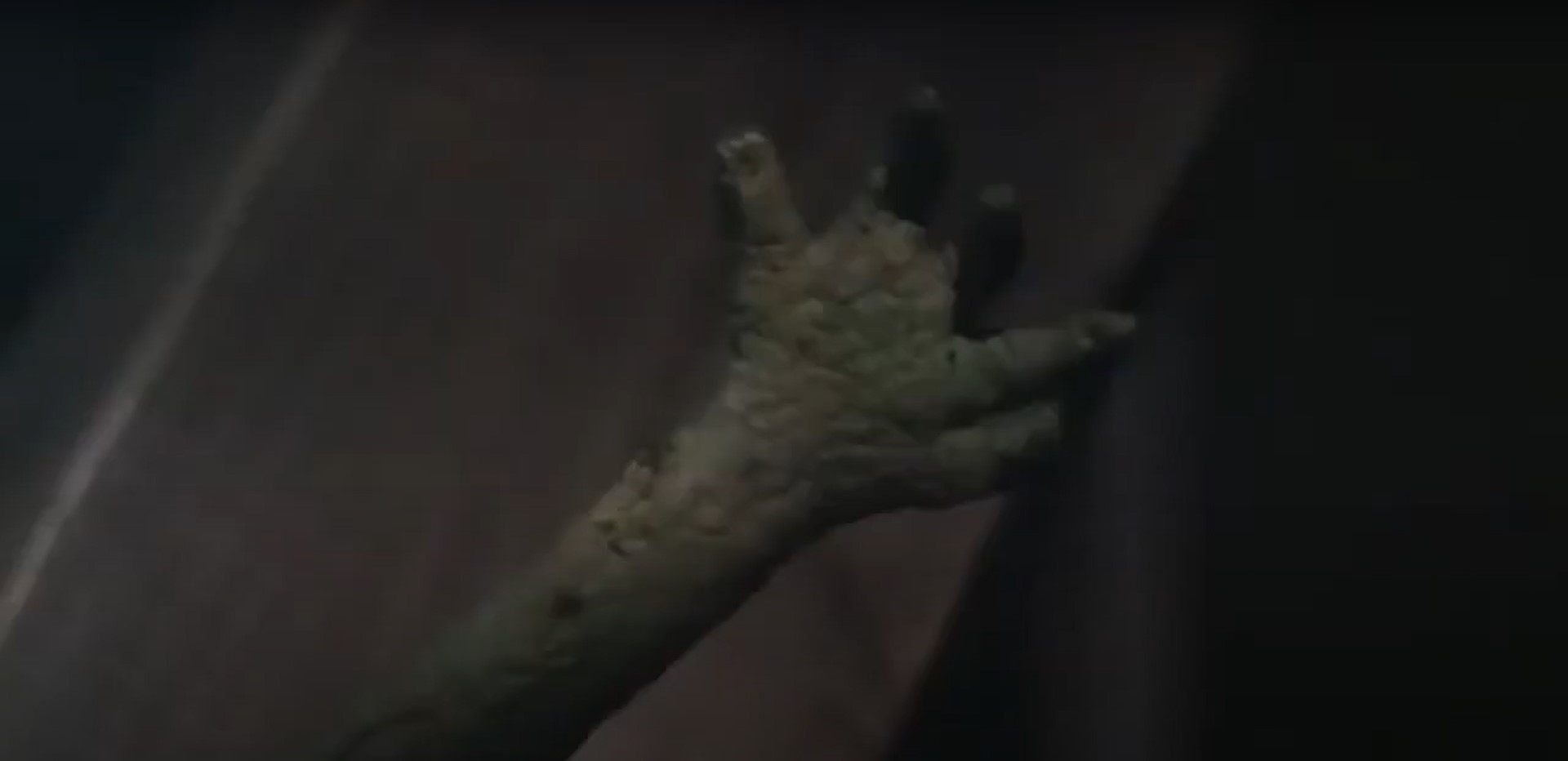
“Swamp Thing” may not be the first comic book superhero to be pulled from the DC lined colorfully illustrated and action-packed pages and adapted to the big screen but what separates the mucky-dwelling plant hero from the other is he’s cape-less, without ray guns and jetpacks, and appears as a monstrous humanoid rather than a regarded normal looking servant of justice as with Superman, Batman, or Wonder Woman.  “Swamp Thing” intrigues viewers with their own internal conflict stemmed from a foundationally laid idea that mutant creatures or unnatural monsters are inherently bad guys.  “Swamp Thing” becomes a part of that trailblazing group of grotesque good guys with hearts of gold.  Yes, the 1982 feature hasn’t held up over time with some of the low on the totem pole creatures suits and makeup I’ve seen, even with the agreeable Swamp Thing suit showing the rubbery creases and fold overs when Dirk Durock has to hold an object; however, to balance out the cut-rate features, special features picks up the tab with stunt boat chases, invisible pull wires, and a man set on fire that’s intense.  With a slashed budget, Wes Craven scripts on the fly to churn out a watered down but still flavorful cinematic origin story that’s full of heart and humanity and partly carried by the sweat and endurances of an eclectic cast and a handful of popcorn action patches.

“Swamp Thing” emerges from out of the muck yet again and onto a 2-Disc 4K/Blu-ray combo set from MVD Visual’s Rewind Collection label, specially marked as the first release on the LaserVision Collection.  The restored 4K UHD Dolby Vision is presented in 2160p and in a 1.85:1 widescreen aspect ratio on a BD100 while the Blu-ray is presented in 1080p high definition with the same aspect ratio on a BD50.  Each format presents two cuts of the film – a PG version and an international Unrated version – both of which have collated from various cuts of the film, resulting in some impressively rich grading that offers refreshed saturation levels of a lusher swamp environment.  More of that richness is conveyed through the UHD with providing deeper tones to make the swamps isolate and swallow characters while also have a sense of being alive amongst the hazy, knee-high fog, opaque waters, and thick vegetation.  Black levels look fine with the amount of grain that can vary from scene-to-scene but not compression issues to talk about on both spectacular approached formats.  The 4K offers a remastered DTS-HD MA 2.0 mono, which is same as on the Blu-ray, that unjustly limits “Swamp Thing’s” audible potential.  Dialogue has some deficiency projecting with all the tracks transmitting through a single channel that’ll force the up arrow on the volume setting or require a punchy soundbar or headphones to get to a clearer understanding of what characters are conversing.  The intrinsic ambience would have been better suited for multi-channel network to extract everything the swampy milieu had to offer, plus punchier fights, but if not an audiophile, these tracks will ultimately sate a viewer’s goal.  Range decently enough limps through despite the surround sound as we receive enough explosions and barrages of bullets to check that box, but depth struggles through the audio layers.  Both formats also include a Spanish language mono track and optional English subtitles.  Special features vary across the two releases with the UHD having limited extras due to storage but what is included is the PG version, the Unrated International version that includes Adrienne Barbeau’s topless scenes, an archive commentary with writer-director Wes Craven moderated by commentary director Sean Clark on both versions of the film, commentary with makeup artist William Munns moderated by Michael Felsher of the commentary/documentary conducting Red Shirt Pictures, also on both versions.  The Blu-ray contains the same extras above plus another Red Shirt Pictures’ interview with Adrienne Barbeau Tales from the Swamp, an interview with Reggie Batts Hey Jude, a discussion with Len Wein, the creator of “Swamp Thing,” the featurette Swamp Screen:  Designing DC’s Main Monster, the featurette From Krug to Comics:  How the Mainstream Shaped a Radical Genre Voice, photo galleries, and theatrical trailer. This must-own set, that caters to paying homage to the Laserdisc, comes retail green 4K Ultra HD snapper that in holds the 4K and Blu-ray on each side of the interior wall. The exterior features an illustrated encirclement of the main players – Dirk Durock and Andrienne Barbeau in comic character – on a single-sided front cover, sheathed inside a cardboard O-slip cover with the same cover art. Both disc presses also represent the original Laserdisc art. The insert contains a folded mini poster of the slipcover design. Two version, one release headline both the 91-minute PG and 93-minute Unrated version of the film with the entire package region locked in A. I may have finally watched Wes Craven’s “Swamp Thing,” but I won’t be the last as I highly recommend this stellar launch into ultra high-definition territory with the original quagmire superhero.

“Swamp Thing” on 4k / Blu-ray Combo!  Now Available on Amazon.com!

When Machine and Man Merge, Which EVIL Will Emerge? “Re-Flesh” reviewed! (SRS Cinema / DVD)

“Re-Flesh” DVD Available Now to Replace Your Old Skin!  

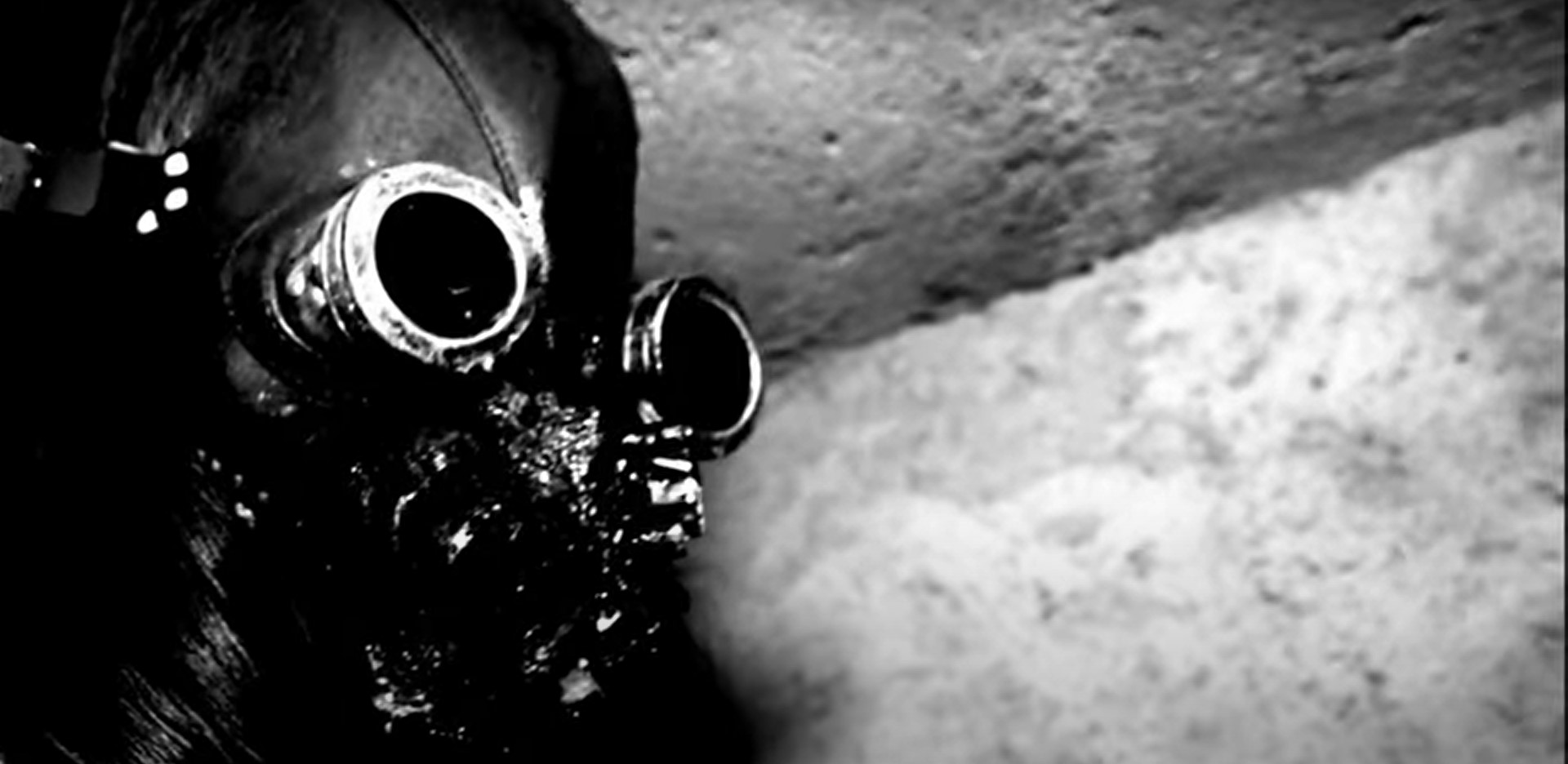
In a dystopian future, machine and man have merged into an asymmetrical symbiosis where machine is preponderantly present to corrupt man’s benevolent humanity.  Such corruption removes compassion at the core level with the use of neurol inhibitors of technological ascendency over mankind in a gruesome, unpleasant fashion.  The exhibited process is exampled with a masked nurse pushing a wheelchair bound masked man down a dank and dark hallway and into a reprocessing room where he’s plugged with a cable attached to his arm.  From there, the man is fitted with a virtual viewfinder displaying five short reprocessing-to-repair files, transmitted before his eyes to incite organic machinery violence that’ll absorb and eradicate years of human psychological evolution.  Slowly through the images and videos of visceral excision does the man morph into an automaton of flesh, blood, and commingled organic cabling and mechanical veins that will render him resolved as biologically re-fleshed.

Japanese splatter punk Body horror inspired “Re-Flesh” becomes “Deep Web XXX” and “Suffering Bible’s” director Davide Pesca’s tribute to the very distinctive denaturalization of the man-machine mix cinematic movement from the unabashed narrative risktakers hailing from land of the rising sun, Japan.  Made popular by the likes of auteurs Shinya Tsukamoto and Shozin Fukui and cult favorites like “Tetsuo:  The Iron Man” and “Tokyo Gore Police,” “Re-Flesh” adds to the niche palate with an unconfined, Italianized take to ambiguate that blurry line between the soul and the soulless as man comes to terms with a terror-inducing technological takeover.  Writer-director Pesca’s underground anthological tale pits the human condition, it’s mortal coil if you will, up against the cold and heartless tech to create coded layers of neova carne, or new flesh.  Pesca and fellow coproducer Massimo Bezzati reteam after “Night of Doom” to collaborate the 2020 released production under their respective indie companies Demented Gore Productions and M.B. Productions.

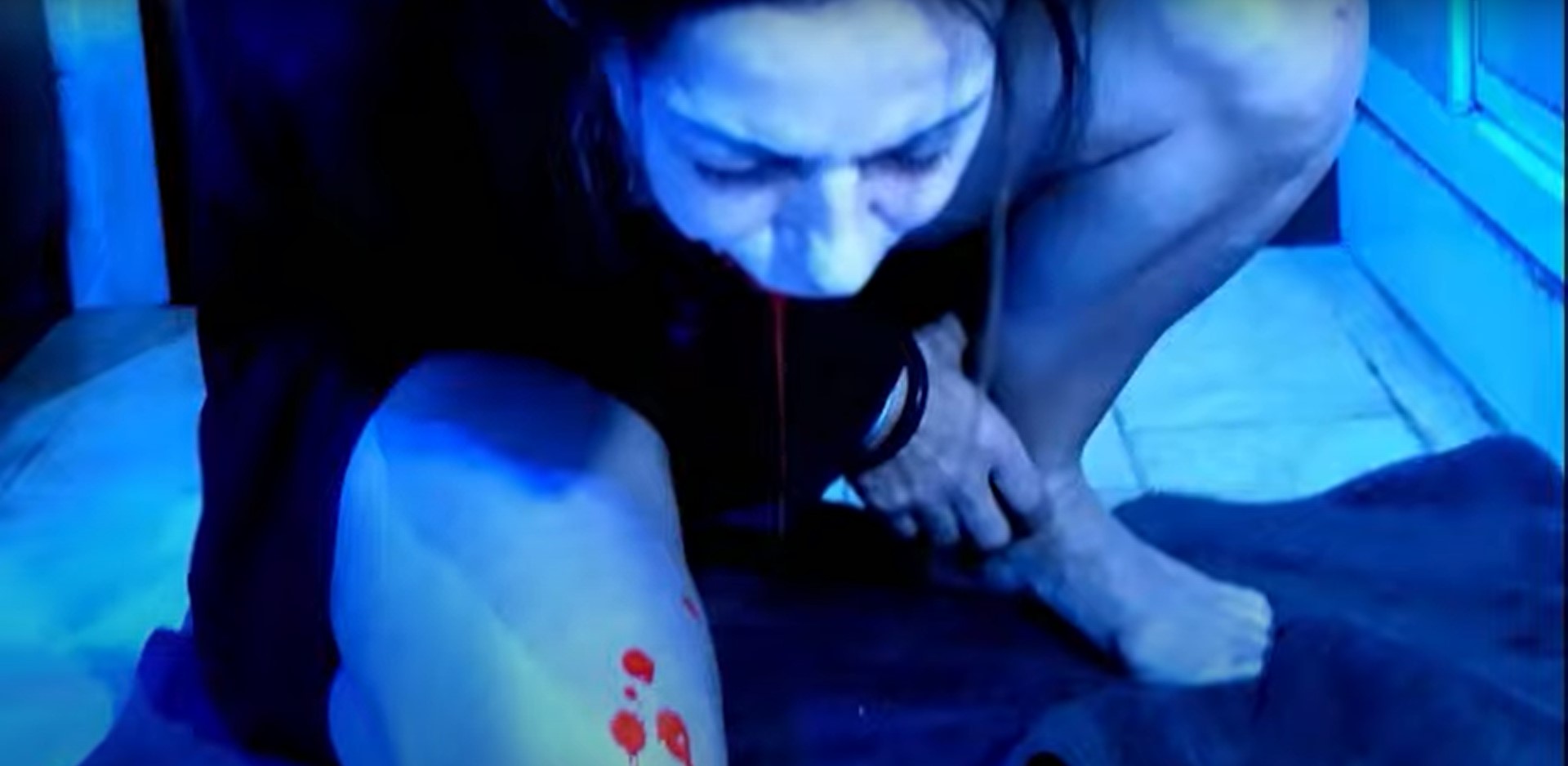
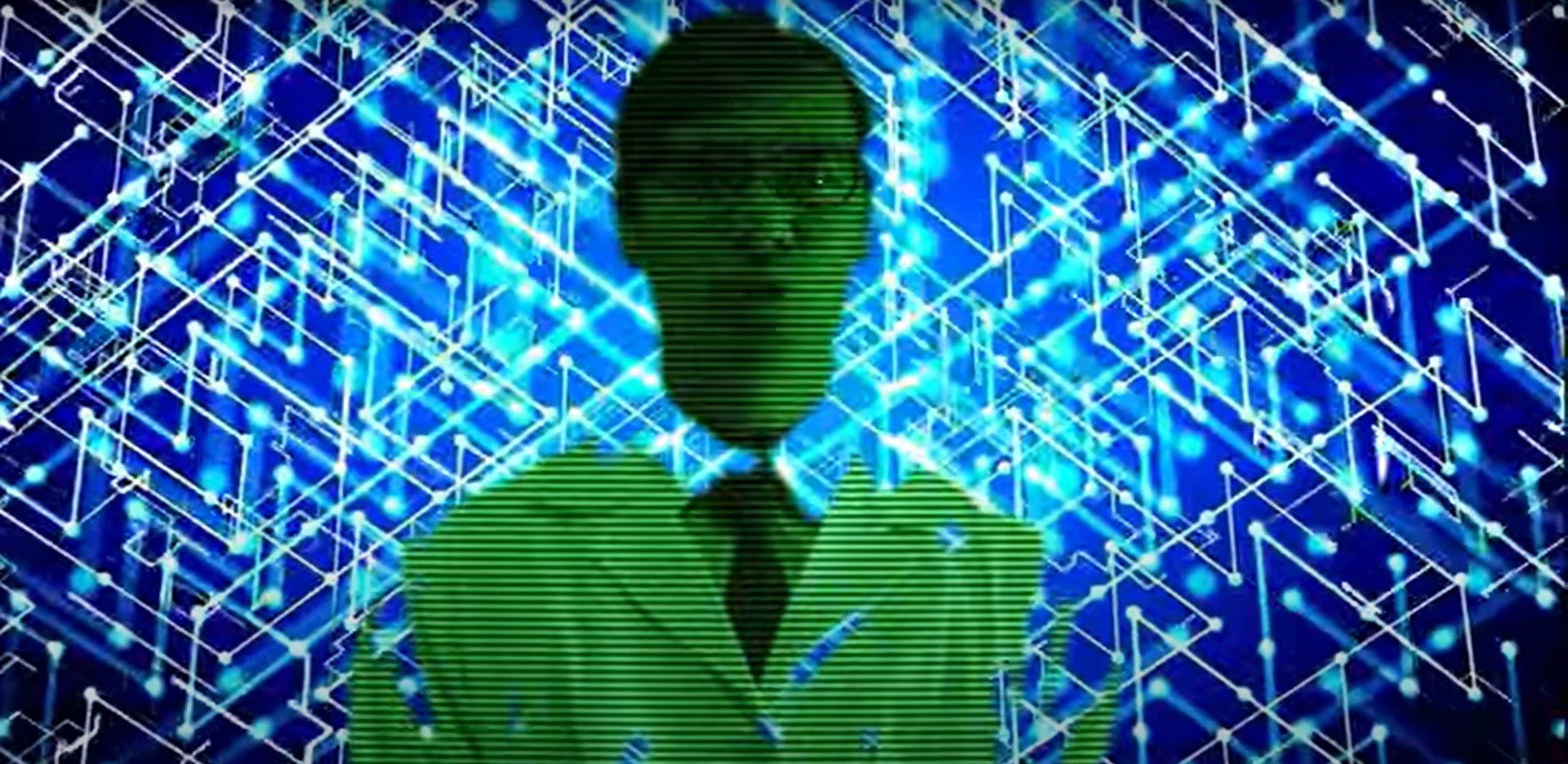
The five-story anthology with the interweaving wraparound of a man being reprogrammed casts a lot of visual performances without the need for dialogue.  Dialogue is reduced to only a pseudo medical television advert or surgical endorsements for a better, prosperous life to eliminate human flaws, advancement in new, and improved, flesh, and can even cure homeless afflictions like drugs and addictions.  Pesca keeps a simplicity about his scenes by keeping sullying dialogue removed to just retain the beauty of body horror and a sonorously cacophonous industrial soundtrack.  Each story’s characters are also fairly simplified.  Without dialogue, individual complexities and depth remain shallow in what is “Re-Flesh’s” sole celebration of horror based cybernetic organisms.  This creates no emotional attachment to any of the characters being violated by fiber optic cables and experimentally operated on with crude animatronic gizmos, but Pesca does implant an imploration of at least one emotional response from his audience through gratuitous nudity on half of the female protagonists going through a rapture and ruination of bodily rape and mutate connected by inhumane sentient cybernetics.  Most of the women protagonists are half-naked women ensnared by the inescapable new world of merged new flesh but the tail end episodes dig a little deeper, perhaps even stretch the theme to the limits of cyberpunk horror, to where women are more than just ravaged victims.  “Re-Flesh” sees skin in the game from Alessandra Pellegatta (“Night of Doom”), Giacomo Clerici, Mery Rubes (“Rage Killers’), Reiko Nagoshi (“Devil Times Two – Quando le Tenebre escono dal Bosco”), Giulia Reine, Paolo Salvadeo, Amira Lucrezia Lamour (Devil Times Two – Quando le Tenebre escono dal Bosco), Alessandro Davoili (“Alice Was My Name”), Ivan Brusa (“7 Days, 7 Girls”), and Marco Cinque.

David Pesca is no stranger to short, gore-laden, underground films having been a featured segment director on a pair of anthologies in the last decade from “A Taste of Phobia” and “After Midnight.”  For “Re-Flesh,” Pesca doesn’t have to share the spotlight in his very own tech-themed, feature length compilation that narrates transmitted computer files as tech insidiously infiltrating our insubstantial innards.  The first three episodes revolve around phones and solitary women become enslaved to the devices with a link of invading their bodies with a foreign object, whether be adopted a virtual, grotesque pet to being the reason for infection that spreads throughout the body like a flesh-eating disease, to being beamed up and constrained for a thorough, if not sexual, examination of one of mother nature’s creatures.  I’m intentionally skipping the review of fourth short and head straight into the terminal episode that is more dystopian splatter punk than the others with an experimental bio-cybernetics company called Neo Vita, or New Life, ridding the world of lowlifes by module implants that turn them into society-controlled puppets.  Yet, all these stories are not terribly straight forward with the rub being the ambitious nature of interpretation and the fact there isn’t a dialogue track for most of the runtime.  Taking a step backwards to the fourth short, I found this particular short doesn’t fit “Re-Flesh’s” theme with a demonic woman damning three inert souls to a black void of pain and death.  Perhaps, a construal could be constructed to lay in code into the technology sequence strand, but the code would be a fractional stretch in comparison to the surrounding system.  As a whole, “Re-Flesh” may side more with gory sanguine than an illuminating story but does depict the scourged with a front row seat in this bloodcurdling network of body horror.

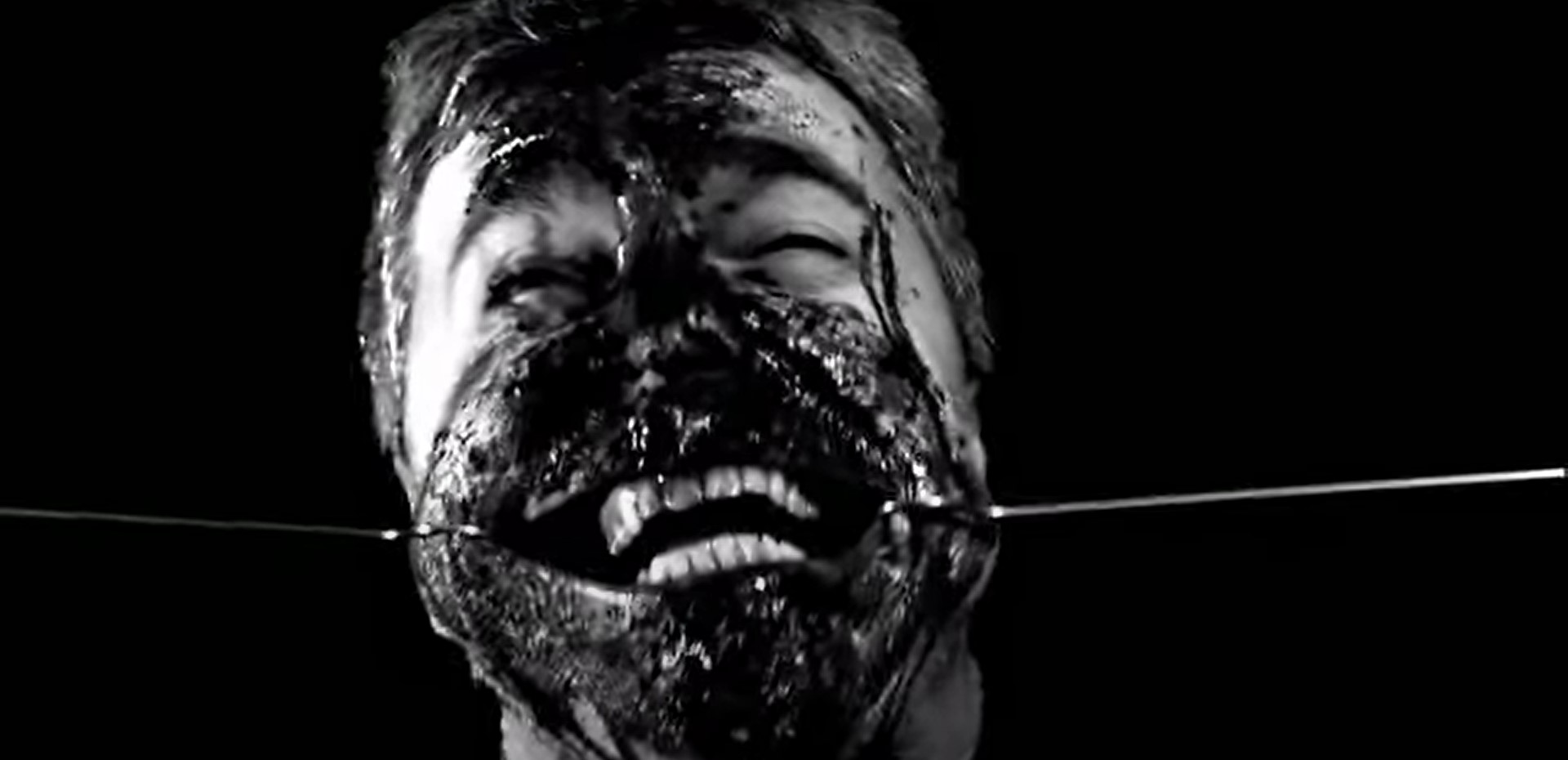
Befitting to be distributed on SRS Cinema’s Nightmare Fuel – Extreme and Unrated sublabel, “Re-Flesh” emerges as a bizarre aghast mix of tentacle erotica and technical dysfunction onto a 480p DVD, presented in a widescreen 1.85:1 aspect ratio.  Technical dysfunction also applies to the image quality.  Though combating some lossy compression issues, the standard definition resolution and budget filming equipment sustain a level of image softness under a desaturated color palette.  Depth and delineation range from hazily outlined to a complete wash out from the frame’s JPEG conversation.  Pesca operates under a wide-stylistic format that incorporates varied black-and-white schemes (a gritty B&W wraparound story compared to a more defined desaturated monochrome for the fourth segment), natural lighting, harsh gel lighting and tint, and green screen for CGI backdrops.  The English dub stereo 2.0 mix will obliterate your sound setup if not careful and without a subwoofer with a booming LFE industrial soundtrack that has produced an inherent crackle and since there is no in-scene dialogue or ambience, all of which is 100% done in ADR, the lower frequencies engulf the other channels that may pop in for phone effects or squishy surgery sounds.  “Re-Flesh” is an Italian film, but the cybernetic implant advert shot, originally spoken in Italian, is dubbed in a burned-in expeditious English dub that is what it is.  Bonus features include a promo and original trailer, a behind-the-scenes featurette entitled Backstage which is a look at some of the gory scene effects the first two segments, the short “Electric Dreams” which is an alternate graded version of the second segment, and other SRS trailers.  The traditional DVD snapper case comes with the illustrated front cover art of the man plugged in under a faux harsh white neon glow with the disc art containing the same art but superimposed with a red hue layer.  There is no insert inside the casing.  The unrated feature has a runtime of 72 minutes, more than enough time for this type of anthology, and has a region free playback.  A kitschy and schlocky graft of “Re-Flesh” will get under your skin, but this anthology quickly grinds gears toward a blue screen of death.      

“Re-Flesh” DVD Available Now to Replace Your Old Skin!  

EVIL is All in Your Head! “Implanted” reviewed! (Gravitas Ventures / Digital Screener)

Year 2023.  After a devastated global pandemic, health companies engineered an experimental personal diagnostic nanochip called LEXX that is surgically implanted into the a human’s spine.  For Sarah, a woman down on her luck living homelessly after being let go from her job and struggling to cope with her mother’s early stages of dementia, quick cash is essential for survival and this experimental program, that uses advanced AI technology, tempts a desperate Sarah into participating in human trial runs.  Initial implementation serves Sarah with quick vitals and healthy lifestyle recommendations articulated by an artificial voice in her mind, but when the AI has other plans for Sarah, such ordering the assassinations of the health startup’s top leadership and destroying all evidence of the program, Sarah has to either obey every lethal command or fight against the insidious tech that has complete control over her pain sensors as well as her mother’s life.

COVID-19 has been the baseline culprit for millions of deaths worldwide.  The impact of the pandemic has inspired filmmakers to a creative outlet of churning out stories surrounding a lifechanging and devasting virus.  Some are ridiculous, off-color, cash grabbers – “Corona Zombies” comes to mind – but there are a few out there that challenge the gratuitous advantage-taking by folding in more substance into the story.  Fabien Dufils attempts to go above and beyond the here and now with a post-pandemic, self-containing thriller entitled “Implanted” and is the first written and directed non-made for television feature length independent film for the once music video director set in the urban jungle of New York City.  “Implanted” spins A.I. tech horror with the whooshing fast track of the health care system to eagerly push experimental drugs, in this case a clinical artificial intelligent grafting, upon the desperate, often marginalized, public.  There’s also an allegorical smidgen of mental illness thrown in there as well.  Dufils co-writes the script with fellow Belgium screenwriter David Bourgie under Dufils’ Mad Street Pictures production company.

Making her lead performance debut, mentally wrestling an invasive cybernetic nanochip, is Michelle Girolami who also serves as associate producer.  We all have that little voice inside our heads, telling us what do and think to an inevitably end of accordance with that ever so delicate whisper of persuasion and that’s how Girolami has seemingly approached this role with that little suggestive presence cranked up to the level of full-fledged chaos on two-legs.   Girolami ultimately is a reverse mech with all the cold puppeteering directed shots directed by programmed software and so much of the actress’s performance is solo, feigning responses to a bodiless voice and reacting to pain generated from within whenever she doesn’t comply to the relentless LEXX.  Unable to bounce dialogue and reactions off of others can be a tough sell for most actors, but Girolami really slathers it on thick the vein-popping strain of integrated torture.  Opposite Sarah is Carl (Ivo Velon, “Salt”), another hapless experiment participant forced into assassination servitude, but Carl’s purpose isn’t exactly crystal clear.  His LEXX unit shepherds him down a collision path with Sarah, but the two separate LEXX units have no shared intentions and while that’s wonderfully niche to provide individual A.I. with their own personal liberties and schemes, Carl just wanders the city, sometimes murdering the program’s top leadership or doing something polar opposite of Sarah with no substantial collusion about their subversive attacks.  The what could have been interesting cat-and-mouse game tapers off and the story leads into more of characters trying to regain back their autonomy and this is where Dufils’ narrative shines using LEXX as a symbol for mental disorders and how those impoverished or distressed are struggling to cope can lose themselves and give in to the internalized madness slipping outward.  Parallelly, Sarah’s mother (Susan O’Doherty) suffers from dementia that reinforces the theme.  Martin Ewens, Shirley Huang, Sunny Koll, John Long, and David Dotterer wrap up the cast list.

“Implanted’s” sci-fi concept can be described as if Amazon’s Alexa, with all the internet connections and text-to-speech bells and whistles, suddenly became murderously woke inside your cerebral cortex.  “Implanted” relays humanity’s lopsided dependency on advanced technology that continues to make us even more less connected to each other and the possibility of a machine takeover just that more feasible.  However, much like when a software program crashes, a malfunctioning script error ravages the narrative for not being tight enough, leaving unaccompanied loose ends as devices that fail to progress the story along stemmed by sudden drop off character development and unknown, speculation at best, motivations.  There’s also no discernable backstory to the why LEXX’s A.I. has snafued.  At least with “Terminator,” Kyle Reese provides exposition about Skynet’s sudden upheaval and domination over the human race whereas “Implanted” dives into none of that rich framework and tossing it aside for the sake of just tormenting Sarah into being a killer pawn, moving her across the NYC chessboard with the intent of taking down the king, queen, and knights of LEXX’s program.  To what ends?  Explanation on the specified targeting isn’t made entirely clear as programmers to CEOs are solely liquidated for just being involved.  

“Implanted” is a warzone for headspace and there can be only one victor in this psychological, sci-fi thriller released now, digitally, from Gravitas Ventures.   The unrated, 93 minute film also showcases the various hats of director Fabien Dufils with one being cinematographer.  Dufils captures obscure, slightly neglected, areas of New York City that’s becomes refreshing to consume because even though the Big Apple is well known for glass and steel skyscrapers, the undergrowth locations ground “Implanted” as relatable without the monolithic structures and hustle and bustle tropes.  In juxtaposition to the down-to-Earth background, the decision to sprinkle in visual effect blood splatter taints “Implanted’s” realism.  Though not gory by any means, digitally added blood can’t be cleansed from the physical veneer and being an indie feature, I would have though a run to corner store for a bit of red food coloring would have been a cost saving measure.  “Implanted” adds another layer to the man versus machine subgenre with tinges of mental illness and too reliant on tech themes but undoubtedly leaves gaps in the narrative coding, racking strenuous mental effort without the egregious assistance of an A.I. nanochip.