Amongst the EVILs of Digital, Analog Rises from the Grave! “Night of the Zodiac” reviewed! (SRS Cinema / DVD)

A Mock VHS Retro on a Mock VHS Retro DVD!  “Night of the Zodiac” from SRS Cinema!

A bizarre and grotesque dream about the once notorious Zodiac killer inspires Richard Gantz to create a movie worthy of his idol’s praise.  With little income and having just lost his girlfriend and his job, Gantz is on the brink of being homeless and unable to materialize his dream into reality until he receives a mysterious, unexpected phone call.  The Zodiac killer got wind of his project and is offering support to finance and bestow guidance to Gantz’s film as long as the struggling, yet eager, filmmaker can crack Zodiac’s cipher and stomach the enigmatic task before him.  Gifted the Zodiac’s iconic mask and murder knife, Gantz sets out to record his first kills that pays homage to his aging idol but his mentor wants him to be creative with the new chapter worthy of the Zodiac name and gathering a whole new set of slaves for his paradisal afterlife.  When Gantz hits a barrier of inspiration, he solely becomes reliant on the Zodiac’s encouragement that has become few and a far in between. 

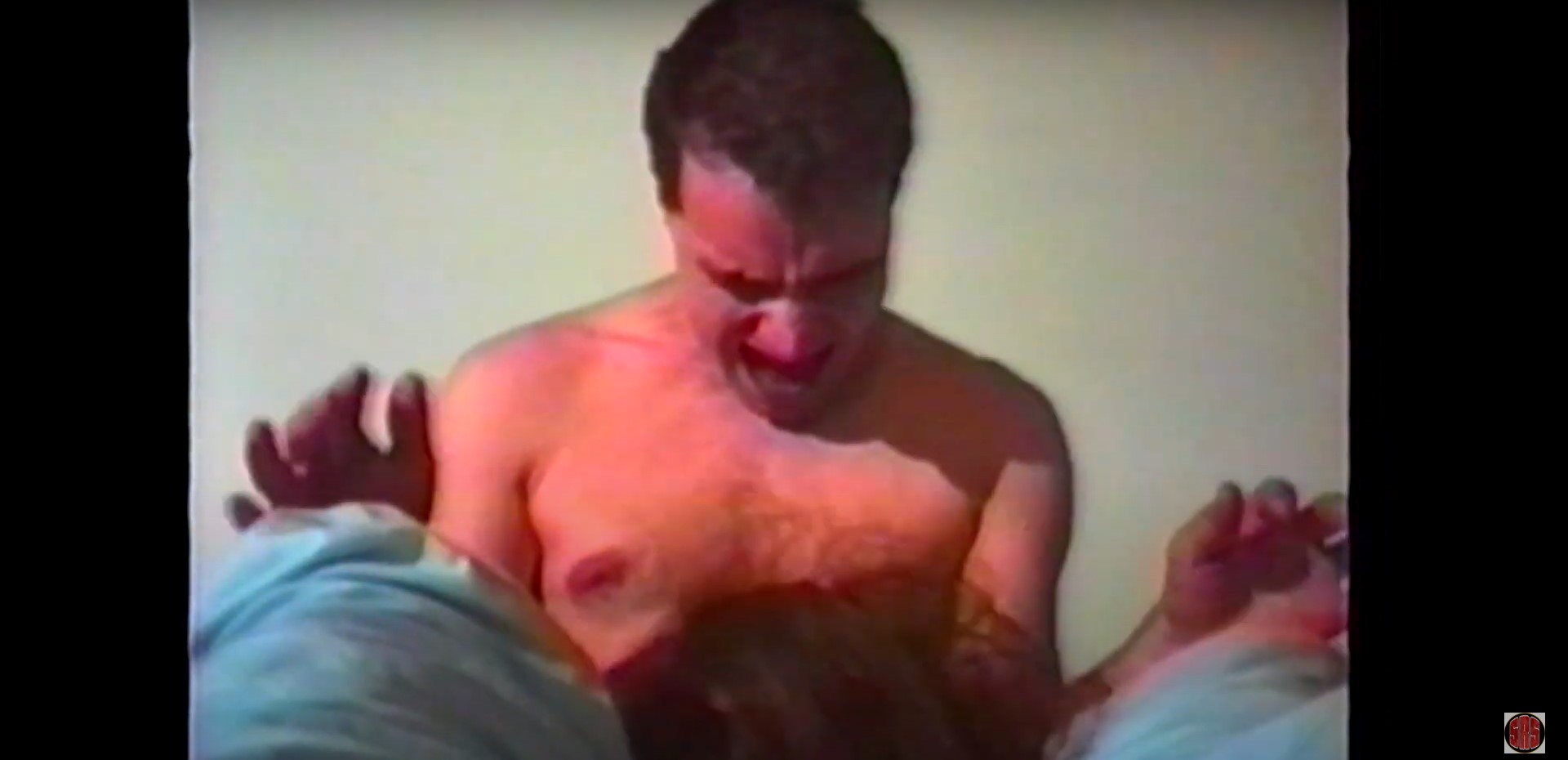
Susana Kapostasy is who I like to label a mad genius.  Many filmmakers have attempted to create antiquated formats of yore with watered down imitations, but for the Michigan-born videographer and editor-by-trade Kapostasy, what has been a challenge to most to faithfully recreate has simply become second nature for the video production enthusiast.  Scraping up any and all elderly video camcorders she could find, the “Metal Maniac” director wrote-and-directed her sophomore feature film “Night of the Zodiac,” pulling inspiration from one of the most notorious unsolved murder cases in America by the Zodiac Killer in San Francisco.  From the West Coast to the Midwest, “Night of the Zodiac” is filmed in and around the backdropped Detroit area for the Zodiac’s next round of sliced-up slaves – only in the creative, moviemaking sense, of course.  The 2022 film has the spitting image of a 1980s/1990s SOV with ghastly, gory effects, a killer hair metal soundtrack, and video characteristics that’ll have you trying to adjust the tracking setting on your DVD/Blu-ray player.  The Johnny Braineater Production is produced by star Philip Digby with Kapostasy serving as executive producer alongside co-cinematographer Apollo David Zimmerman.

Stepping into the shoes of the infamous serial killer to embark on a theoretical continuance of the real life mass murdering character is Philip Digby.  Channeling his best Jeffrey Dahmer vibe in looks alone with a crazed and obsessive personality suited for Charles Manson, Digby plays a hodgepodge of America’s most notorious killers, adding his own flare for film into the fold to make him a full-fledged psychopath, as he internally celebrates the moniker after his disparaging roommate/Landlord (Victor-Manuel Ruiz) labels him with an ear-to-ear grin and a nearly whoopie jump for joy.  Digby’s eccentric mania thrusts us beyond a threshold we didn’t even realized we had crossed from the very first opening dream sequences of a rotting, coffin-thronged corpse oozing maggots and putrid viscera and, believe it not, my opinion is this thrust doesn’t do justice to Gantz’s character because of the lack of foundation of setting up viewers with an inbred psychosis that puts into question, how did he survive this long without killing someone before?  Dreams are power but are they powerful enough to twist a seeming normal film lover into a frantic frenzy of vile fates and videotapes?  I think only Freddy Krueger can answer that.  Gantz goes around town slaughtering people in parks, in their driveways, and even makes one very bad magician (Derek Dibella) wish he requested to hire Gantz as a videographer for a promotional video disappear as Gantz strangles him to death.  “Night of the Zodiac” completes the cast with Logan O’Donnell, Mark Polonia (director of “Splatter Farm”), Tim Ritter (director of “Truth or Dare?”), and Benjamin Linn as the voice of the Zodiac.

From the video production veneer to the set decorations and locations to the characters themselves, “Night of the Zodiac” perfectly captures SOV horror in this modern day time capsule.  Not until the credits, when I see master craftsman of SOV horror filmming, Tim Ritter and Mark Polonia, appear in the cast credits did it dawn on me that what Susana Kapostasy had accomplished was a labor of love for the niche market, resurrected four decades later and revered by horror fans who were likely still in diapers or weren’t even born yet – maybe to go as far as not even a twinkle in their parents’ eyes.  Yet, there were clues to “Night of the Zodiac’s” contemporary construction, such as the opening title which had a clean, well-polished illustration and Kapostasy’s film is very self-aware by slathering horror in every recessed corner with mountainous stacks of VHS tapes, posters, and  and often, perhaps every other scene, displayed tribute to filmmakers, like Ritter and Polonia, who were still counterparts and establishing themselves as independent videotape artists during the 80s-90s.  This self-awareness harnesses more comedic relief than horror, accentuated by Gantz’s matter-of-fact imbalance, and the humor loosens the reins on “Night of the Zodiac’s” cold cruelty a tad but what the gore spools back in audiences by spilling lots of blood. 

SRS Cinema releases “Night of the Zodiac” onto DVD with a single layer encoding and presented in a throwback letterbox 1:33:1 aspect ratio.  Kapostasy uses a slew of equipment – Cannon XL2, Sony Video 8 AF, Panasonic AG 450, JVC GY X2BU, JVC GY X3, Panasonic AG 456, Panasonic AG 196, Sony CCD FX 330, and a Sony VO 4800 U-Matic S VTR – with some be more present-time cams run through U-matic VHS playback to degrade for SOV quality.  The intentional SOV has a variety of distinct looks with distinct quirks that flexes higher magenta levels in earlier scenes as well as tracking lines and aliasing artefacts.  Detail levels also vary but the overall VHS brands generally remain the same with soft, indistinguishable contours with also a surprising amount of depth and hue range.  The English Dolby Digital 2-channel (2.0) mix can sound boxy at times and come accompanied with a piercing, underlining interference.   Telephone conversations have no distortion depth so the other person on other line sounds present in the room.   The soundtrack from Anguish, Locust Point, and the brunt of it provided by Stoker is metal madness but does overshadow the dialogue when shredding through the scenes.  Dialogue is often clear, but again, no depth and echoey.  There are no subtitles available for this release.  Bonus Features include an audio commentary by director Susana Kapostasy, star Philip Digby, and costar Victor-Manuel Ruiz that goes over a lot of technical aspects of “Night of the Zodiac’s” look and how they obtained the gore and blood for the film, a Tim Ritter conversation about how he became involved with Kapostasy’s video enthusiasm and provided analog input, a blood cannon showcase that’s instructionally descriptive as well as you’ll see Kapostasy’s foot accidently go into the 5 gallon Homer bucket, a gore score Ouija board gag, recreating the Zodiac cipher, and the trailer.  SRS Cinema’s release dons a retro VHS design front cover with an exact and beautiful illustration of Gantz’s copycat Zodiac attire with a cropped version of the front cover on the disc art inside the traditional black snapper case.  “Night of the Zodiac” has a runtime of 86 minutes, is not rated, and has an all-region NTSC playback. Difficult to immerse oneself into a half-a-century old unsolved murder while sticking to glorifying merely the guts and gore, “Night of the Zodiac” stuns more qualitatively with video techniques thought archaic and obsolete but Susana Kapostasy steadfast proves otherwise in her undying love for the flawed, yet nostalgic format.

A Mock VHS Retro on a Mock VHS Retro DVD!  “Night of the Zodiac” from SRS Cinema!

On the Verge of a New Millennium, New Faces and Stories Tell Their Terror on the Same Old EVIL Video Format! “V/H/S/99” reviewed! (Acorn Media International / Blu-ray)

Found Footage is all the 90’s Craze These Days! “V/H/S/99” Available at Amazon!

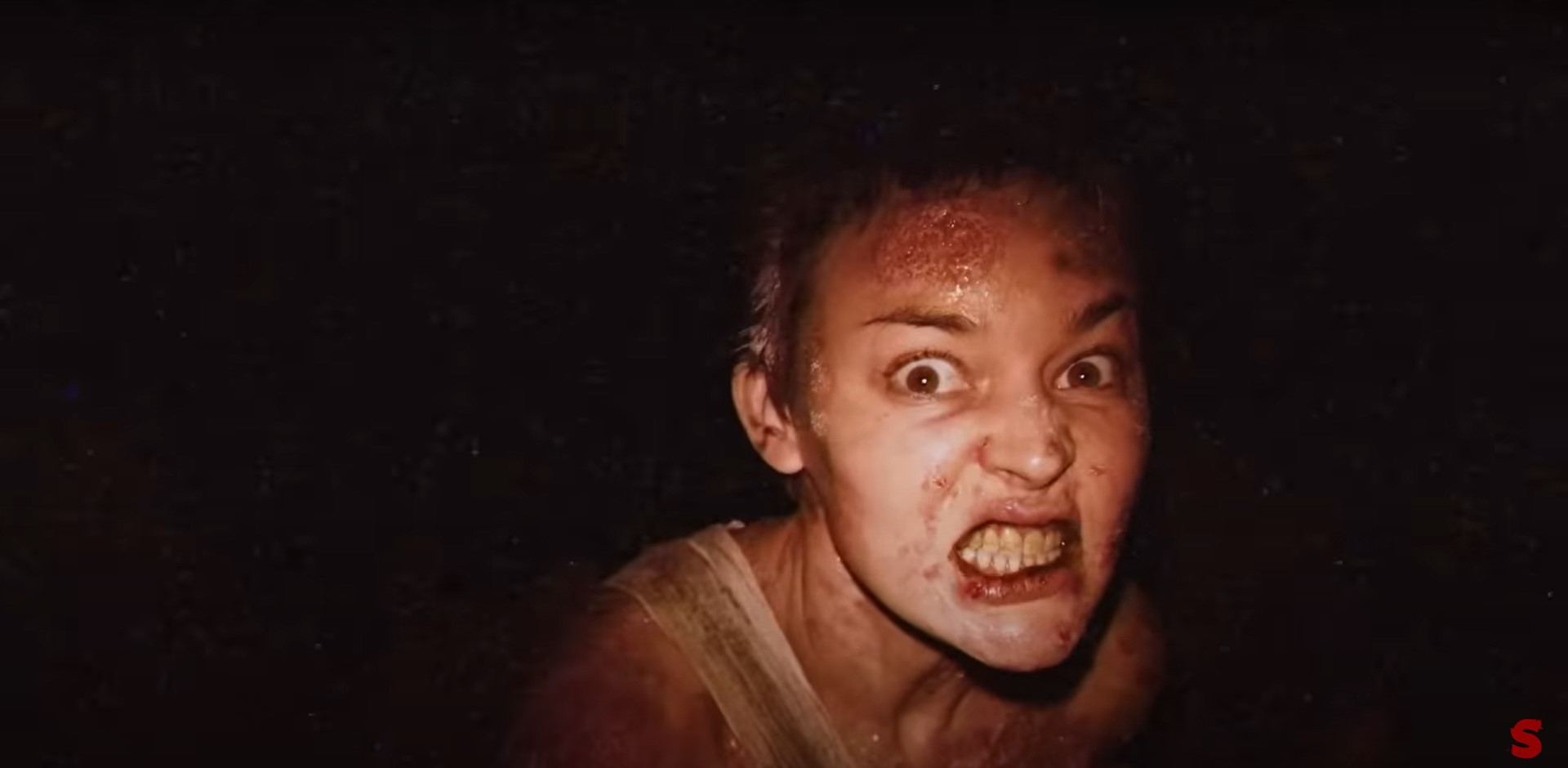
The year:  1999.  The format:  VHS.  The theme:  The most horrifying experiences caught on found footage camera.  A horror anthology for the turn of the century puts together five of the most terror-drenched short films that resurrects the punk-rock dead, turns urban legends into vindictive playthings, televises Lovecraftian game show frights, peers into the stone-cold eyes of a Gorgon neighbor, and goes to Hell and back!  All caught on camera from a first-person view as VHS vicariously relives the glory days through a digital world, capsulated by the horror realm and all its fanatical acolytes for the analogue video format to live undead forever. 

Living in the age of a VHS comeback is admittedly kind of weird.  VHS has become a hot collectible, especially and obvious the rate and obscure that mostly resides in the horror and cult genre.  Most recently, a discovery on a Brazilian VHS cut of Jaws 2 has a couple of minutes of shot footage that no other release holds to this day.  That, being just one example, is sought after power of VHS that saw various versions of one film be disperse far and wide across continents, which the same could be said about DVD that too saw a variety of different cuts due to the diversity of playback formats, distribute cuts, and numerous levels of censorship between countries.  VHS is also making a comeback in format style with gritty, faded, flat colored image veneer and tracking lines and the absent transmission signal of snow statically adorning the screen with beautifully hypnotical and flickering white dots.  So, it’s now surprise that on the heels of 2021’s “V/H/S/94,” another analog anthology is greenlit in 94’s wake with “V/H/S/99” for 2022, written and helmed by newcomers to the series but not necessarily newcomers to the horror scene.  The movie’s sequential lineup Is as follows:  Short filmmaker Maggie Levin writes-and-directors “Shredding,” taking a break from killer sharks is Johannes Roberts to oversee his “Suicide Bid” entry, musician Flying Lotus directs and co-writes with Zoe Cooper with “Ozzy’s Dungeon,” “Tragedy Girls’” director Tyler Macintyre writes-directs “The Gawkers” along with co-writer and fellow “Tragedy Girls’” screenwriter Chris Lee Hill, and the husband and wife tag team of Joseph and Vanessa Winter, filmmakers of “Deadstream,” helms-and-pens “To Hell And Back.”  The Shudder exclusive series latest is produced by Josh Goldbloom (“V/H/S/94”), David Bruckner (director of “Hellraiser” ‘22), Chad Villella (producer of the of 2022’s “Scream”), Bloody Disgusting’s Brad Miska, and “Scream” ’22 and “Scream VI” director Matt Bettinelli-Olpin under the production banner of Studio 71 and presented by Cinepocalypse Productions and Bloody Disgusting.

A new set of five tales of analog rendered terror invoke a new set of actors in each short film that carrier with them a broad range of experience. While a couple of the stories shred the narrative with hectic editing (I’m looking at you “Shredding”), performances throughout come over with blistering consternation and definitely a late 90’s grunge attitude with “Shredding” and “The Gawkers” delivering the full blunt force of period, heckling away in their baggy clothing, bohemian hairstyles, and a penchant for skateboard thrashing. The other films are merely timeless with only mere mentions of date, or their timestamped on the video tape recording, or are just a thematical proverbial nod to the specific point in time, lacking the keep it real essence that is quite idiosyncratic to the hop from a phasing out decade and into a whole new other. The cast of these shorts play their roles with exuberance and wackiness, which if you have lived in or can look back to the converging decades/millennium and see some of the gameshows or cultural shenanigans that defined America as people or, if you want to go smaller, just the pop culture, wacky is a pinpoint descriptor. The short films’ of “V/H/S/99” are comprised of a cast including, selectively, Steven Ogg (“The Walking Dead”), Ally Ioannides (“Synchronic”), Keanush Tafreshi, Jesse LaTourette (“There’s Someone In Your House”), Dashiell Derrickson, Isabelle Hahn, Sonya Eddy (“Blast”), Emily Sweet (“Castle Freak” ’20), Melanie Stone (“Deadstream”), Archelaus Crisanto, Luke Mullen, and Ethan Pogue.

Anthologies have been around for decades and are a great medium to showcase a multitude of individual storytelling from a variety of filmmakers walking different paths in life.  Fans can often salivate over these types of jump-the-shark formats that can start off with the zombie undead, transition 10 minutes later into a supernatural spooky, and then segue into a creature feature with a wraparound bonus story that may or may not connect them all and squeeze each episodic terror vision in a full-length feature runtime.  Though I enjoy a good collection of short and sheer frightful films, anthologies are not my cup of sanguinary tea.  Hopefully, no partisan takes seep out of this review as I attempt to examine “V/H/S/99” objectively.  Out of the five segments, three have landed strong with a right amount combination of style, gore, performance, narrative logic, and, of course, terror, and if you like comedic sugar in your black cup of horror then “To Hell And Back” is a perfect Venti-sized, well-blended mulatto of choice that thrusts two dimwitted demonic ritual documentarians into the pits of dark, gloomy, and malformed creature Hell and fight their way back to their own plane of existence.  Though one flaw some make catch when watching the caboose film of the anthology is that it doesn’t particularly reflect 1999 other than the small caveat, which is pivotal to the story, that at the turn of the millennia is when the veil between our world and Hell is as it’s thinnest.  The other two better entries capture more infinitesimally in detail of the late 90s, early 2000s clothing and discourse.  “The Gawkers” taps hard into the weird aggressive hormones of a teenage boy while exploring the newfound ways to use technology as spyware.   Webcams aboard big boxy desktops chauffeur in a whole new way to be creepy that lands them in hot water not by the law but by the wrath of ancient femme fatale of Greek mythology.  Johannes Roberts rounds out the better half with a sorority haze gone wrong that evokes an urban legend to become more than just a story and Roberts “Suicide Bid” offers, again, that period presence that feels like a tribute throwback to the 1998 “Urban Legend” film itself, but adds a supernatural surprise that utterly creepy and not as deep with only 6 feet underground rather than a 47 meters down, the director is slowing raising his fear to the surface.  The shorts left hanging below the bar are “Shredding” and “Ozzy’s Dungeon” and for reasons that have to do with their style and story. “Shredding” promising premise is plagued not by punk phantasms back from the dead but simply pilfered of focus with a hectic, if not severely chaotic, VHS-graded editing scheme that shocks the perception senses while “Ozzy’s Dungeon” is inspired by Nickelodeon’s Legends of the Hidden Temple gameshow where kids have to compete in toned down ancient society games to race up the temple to win the big prize. “Ozzy’s Dungeon” definitely is weird, sadistic, and Lovecraftian-inspired for sure but its story design loses motivation and often cheats rounding the bases in order to reach the shocking climatic finale.

Acorn Media International brings tape to the United Kingdom with a Blu-ray home entertainment release of “V/H/S/99.” Presented in a widescreen 1.78:1 aspect ratio, though doesn’t cater to the standard 4:3 ratio of video tape, the provided image quality purposefully varies to give audiences the titular analog experience. Faded grading, tracking lines, static and that jittery playback is all part of the visual environmental experience and even a few of the filmmakers shoot the film digitally to then run it through VHS to garnish with unnatural base video turbulence. The English DTS-HD 5.1 surround sound mix heightens the exposure and familiarity to of being that person behind the camera as all of these shorts of short POV. Intense and, often, cacophonous, the audio tracks still manage to level out, be discerned, and manage to relay the chaos no matter how much bedlam is thrown at the screen. From the zoom in-and-outs of the video tape recorder, there’s a clean sense of depth and the range is bountiful as the ambient track runs the gamut of omnifarious sounds that give each episode an individualized stamp. English SHD is optional. Bonus content includes an exclusive panel from New York’s Comic Con with guests producer Josh Goldbloom, “The Gawkers'” Tyler Macintyre, and “To Hell And Back’s” Joseph and Vanessa Winter as well as a total arc gag reel. After that encompassing project feature, the girth of the bonus content breaks down into the individual shorts with “Shredding” having a deleted scene and the complete fictious band BitchCat music video, “Ozzy Dungeon” has two deleted scenes, “The Gawkers” has a deleted scene as well as bloopers, camera tests, and The Making of Medusa, and “To Hell And Back” rounds out the features with a hefty look at the raw footage, scouted location, and a storyboard and blocking rehearsals. There are no bonus features for Johannes Roberts’ “Suicide Bid.” Physical features include a slightly thicker traditional Blu-ray snapper, a Europe standard, with a cover art that matches the North American RLJE release, a city being loomed over by skull made out of colorful galactic stars and a pair of video lenses for blank eyes. The disc art is pressed with the same front cover image. Though no mention of a region playback on the back cover, I suspect a region B encoded release as per usual with Acorn Media Interntional. “V/H/S/99” has a total runtime of 109 minutes and is UK certified 18 for strong blood violence/gore. “V/H/S/99” is not my kind of off the heasy subgenre, but the latest series anthology packs a punch and I would never discourage anyone from not experiencing firsthand an homage trip through terror.

Found Footage is all the 90’s Craze These Days! “V/H/S/99” Available at Amazon!

To Death Do Us EVILLY Part! “Savage Vows” reviewed! (SRS Cinema / DVD)

“Savage Vows” on DVD at Amazon.com

A fatal car crash claims the life of Mark’s wife.  Plagued by vivid nightmares of death and grief-stricken by the loss, Mark finds comfort in his closest friends who have come to console and stay with him after the funeral.  Slowly, Mark’s friends begin to thin out.  Thinking they’ve gone home or stepped out briefly, Mark continues to spend time with his remaining friends, watching horror movies, and eating fast-food hamburgers while contemplating how to handle the sorrow for the rest of his life without his wife by his side.  Other than a select few of his friends attempt to take advantage of his vulnerability, what’s really happening behind the scenes is a crazed killer is taking out his friends one at a time and while Mark continues to sink deeper into self-pity and become contentious with the greed of others, the killer mercilessly works closer to him by wiping out his entire friend network before he even comprehends what’s going on.

Let me take you back in time to the archaic and fashion disreputable (or maybe just plain questionable) year of 1995 where the hair was bigger, the cars were more manual, and where Blu-rays, DVDs, and those godawful streaming services were a futuristic glimmer in the eye as cassette videotapes were stocked the shelves. One of those physical retail locations was a brick-and-mortar store owned by Robert (Bob) Dennis who became enticed to stick his hand into the movie making machine and convinced to direct his one and only full length feature film, a shot-on-video slasher indie entitled “Savage Vows.” Bob Dennis’s then wife-now-ex, Carol Dennis, co-wrote the 80-minute script of an obscured death dealer racking up a body toll of Mark’s disputable friends who secretly despise each other and have sub rosa intentions. Shot in and around Wilkes-Barre, PA, where Dennis operated and shared ownership alongside brother Michael J. Dennis his video store, Full Moon Video (no relationship that I can deduce to Charles Band’s Full Moon aside from selling his hot horror commodities on tape), “Savage Vows” retains a two-location shoot encompassing Mark’s house and an always tight budget cinema staple cemetery for full blown low-budget honors. Gage Productions funds the project under another Dennis relation, executive producer Gage Dennis, along Carol Dennis wearing the dual hat of producer.

“Savage Vows” transposes the family affair from behind the camera into the forefront of the camera as Bob and Carol Dennis not only nurture widowed-slasher concept into a full-fledged video feature but also take on principal, yet ill-fated roles themselves while also employing Bob’s brother, Mike Dennis, and Jamiece Dennis into the background and extra fatality-fodder to fill in where needed. The scene interactions transcend through naturally as suspected with having family members mimic being mincemeat for the grotesque grinder and to put forth their best foot in the dialogue despite the rather cliched and trite rap. Though Bob Dennis and his cohort crew of closely related cast member might not be the marquee glowing luminaries of low-budget lore, there is one name, a singular cast member, that sticks out as a present-day household name in rinkydink D-movie horror. The filmmaker who has made a notorious name for himself for his schlocky and shoddy sharksploitation films, has trespassed and exploited the property of Amityville on more than one occasion, and continues to be an unfazed direct-to-video deity amongst the bedrock in the bottom of the barrel genre pool is none other than Mark Polonia, the director, who often collaborated with his late twin brother John Polonia, brought us “Splatter Farm” and has also a defacing sharksploitation rut-rack with the so-bad-it’s-drinking game good grievousness of “Land Shark,” “Virus Shark,” and, most recently, “Sharkula.” Mark Polonia has more than just the role of Adam, Mark’s best friend, in this story as the then just hitting his stride Polonia encouraged Bob Dennis to expand beyond his wishful thinking of creating a horror movie and also provided creative notes during principal photography. Just being this far down in the character-cast paragraph section, you know “Savage Vows” Armando Sposto (“Night Crawlers”) barely makes a blip on the radar as the widowed Mark, but the shame of it all is that Sposto provides fathoms of depth when juxtaposed to any other in the cast. Having just lost his beloved, Mark’s up against the wall of grief and Sposto does his damnedest to convey that without flinching as the young actor has to teeter between misery and another self-conscious emotion pivotal to the endgame. Kelly Ashton, Adam Bialek, Jackie Hergen, Grand Kratz, and Sally Gabriele make up the rest of the “Savage Vows.”

To death do us part” is the ceremonious idiom that signifies an everlasting commitment to one another. For Bob Dennis, it’s the marginally grim phrase that also drives the plot, but “Savage Vows” wanes nearly entirely from matrimony motifs, never really genetically incorporating the sacred act of bonding two people itself into its slasher anatomy.  Instead, Bob Dennis (and Mark Polonia) land on the ghastly side, or rather the latter side, of a marital life span with the untimely splitting of a union and this particular union, Mark’s marriage, ends in tragedy and therefore a gothic-cladded funeral of gloom and despair are rooted and entrenched into the story.  Though perfectly suitable to drown oneself woes, “Savage Vows” reaches further into that dispirited nature with Mark having fallen into negativism and his friends lend their sympathy with a sleepover offer of consolation. That’s where the comradeship becomes icky at best with friends who disguise their underhanded true intentions with a show of spurious sympathy and that kind of malevolence benevolence within the closeness of others mirrors itself, in a foreshadowing type of way, in the heart of the plot that lacks the pith of solid slasher kills. The kills scenes are of the run-of-the-mill stratification that slowly ascend to a not so bigger or better rehashed versions of themselves. The finale cap sets the bar a little too late in my book with a deserved kneecapping kill that simultaneously sums up “Savage Vows” skin-deep concept.

A longtime leader in resurrecting obscure SOV horror back from the 80s and 90’s analog grave, SRS Cinema does what SRS Cinema does best with a supremely graphic and retro-approached DVD of Bob Dennis’ “Savage Vows.” The NTSC encoded, region free DVD5 presents the film in the original aspect ratio of a matted 1.33:1 with a shot on video quality that’s high on fuchsia hue in what’s a warm, inflamed, infrared color palette that obtrudes in a non-stylistic choice. Certain trope-filled nightmare scenes have a catered good synth score and stay ablaze with visual terror fuel in which the hot pink-purple palette would have worked to the scenes advantage. As expected, as these imperfections add that wonderful je ne sais quoi to the shot-on-video epoch, the subpicture white noise and tracking lines are a welcome treasure trove for trashy rare cinema albeit the gargling of quality. The English Mono track never flushes or levels out with any promise due to a lack of a boom recording and far-removed mic placement. The dialogue remains boggled down also by e-interference with a slog of hissing issues, but still manages to be intelligible. Bonus features includes an 80-minute, feature length, commentary track with supporting star Mark Polonia on the phone with writer-director Bob Dennis, a bloopers reel, and theatrical trailer. Say, I do to “Savage Vows,” a love-it or hate-it, little known, SOV slasher with a can-do attitude of stab-happiness of the unprincipled so-called nearest and dearest.

“Savage Vows” on DVD at Amazon.com

Fixing the Tracking on Those EVIL VHS Cassettes! “Snuff Tapes” reviewed! (MVDVisual / DVD)

Ready to be Recorded?  “Snuff Tapes” now available at Amazon.com!

Marcela Arkaino investigates a Talca, Chile rapist and murder who has been drugging and abducting women for years to record aberrant tapes of his cruel exploits.  Marcela takes a special eager interest in this particular assignment as she was one of those unfortunate women.  As a silver lining out of an extremely bad situation, she is one of three women left alive by her brutal sex-sadist aggressor.  As the reporter in her garners the difficult stories from the other two survivors, Cataline and Jesus, abused by the same masked man, she inches closer to his whereabouts by triangulating attacks and connecting similarities but her scouring of roadside market, unlabeled VHS tapes became the smoking gun needle in a haystack that produces not just any depraved tape of his victims but of her own ordeal, turning now an inch into a mile in finding him.  Bring the other two women into the fold, Marcela devises a plan of revenge to direct a snuff film of her own, starring their rapist and torturer.  

Hailing from Talca, Chile, the same location where the story is set, comes the shock-slamming, VHS-inspired thriller “Snuff Tapes,” aka “Cintas Tapes,” from the Chilean born independent filmmaker, Vito Garcia Viedma.  The writer-director’s prior two zombie-influenced short films, the 2012 “Bajo el sonido del tren” and the 2017 “Escape from Zombie City,” along with the criminal underbelly 2017 feature, Los culpables,” displays a course change deviation that wouldn’t prepare the average Viedma film fan for his 2020 venture into the dark underworld exploitation of indie snuff.  While the title highlights the concept around videotaping the misuse of a person’s trust and vulnerability for one’s own disturbing profit, in this case to get one’s jolly’s off, much of Viedma’s story skirts around the edge with just mentioning the nixing of captured and consumed of vivacity women, saving the story’s climax for more detailed death dealing in a vengeful perspective rather than a videotaped one. “Snuff Tapes” is created under Viedma’s ZineFilms production company in association with Cabro Chico and Trippas Productions.

“Snuff Tapes” is no “8MM” with a mega-Hollywood budget and Nic Cage doing Nic Cage antics. “Snuff Tapes” is no “Effects” with cult icons Joseph Pilato and Tom Savini helming sordid scenes from fantasy to non-fiction. “Snuff Tapes” isn’t even on the same level as “A Serbian Film” and, to be honest, I don’t think any film anytime soon will ever be on the same level as that twisted picture. What all three of those successful and notorious films have in common and what Viedma lacks in separating itself from the rest are in two very important details: a budget and an array of talent. Viedma’s film humbles in comparison with not only a microbudget but also in a cast makeup of essentially five actors with withering substance. Valentina Soto Albornoz stars as the retribution-reporter, Cataline Ibarra, who for the last decade has been piecing together clues of her kidnapper’s whereabouts by purchasing random video cassettes tapes from Talca street vendors and when Ibarra strikes gold unearthing her own ugly tape, she understandably feels overwhelmed reliving visually the nightmare and subsequently gravitates toward being hellbent for revenge. Ibarra recruits her survivor carbon copies in the tattooed Jesus Mayano (Camila Medina) and aspiring photography model Marcela Arkaino (Camila Carreno Arancibia) for a little payback, but Ibarra, aside from her good friend Esteban (Hugo Villar) providing her a PAL encoded VHS player and rewatching her tape to catch clues missed, she virtually does all the legwork in pinpointing the one responsible, drugging him, abducting him, and committing herself to the nitty-gritty, fantasy plan for whenever she got her hands on him. I’m not sure what roles or business Arkaino or Mayano actually had to just stand there moping other than maybe bear witness to the end of their lifelong torment, to see the boogeyman parish once and for all? Reinaldo Aravena plays the man behind the mask who initially puts up a strong showing as the camera operator and stud of his homemade videos but then quickly fizzles disappointingly on the opposite side of the camera due to a lack of scaled down combating in what becomes just a one-woman show without much to show for it.

Viedma paves an interesting structural path for his film, taking the audience an extended 36-minute introduction of voiced over VHS recordings of survivor stories before entering opening credits to what then becomes a dichotomy narrative between backstory and present day. This also speaks to the visual cinematography as well that jumps back and forth between being shot on the VHS’s boxed-in format (found footage) to a wider lens of the digital world, capturing past and present in two distinct formats as well as capturing the past that isn’t glossy, pretty, and is an inescapable prison where the walls, the horizontal pillars, are closing in on the world.  Appearances, no matter how apt to the subject, do not give the movie soul and “Snuff Tapes” misses that poignant shock value target with poorly written characters and a misaligned connect-the-dots investigation that doesn’t make much sense.  Ibarra examination of the evidence, or really lack thereof, points to one man, but like a cheating slacker in high school, she does not show her work to come up with that result.  Instead, she repeats, at least in a couple of instances, her gut knows she has the right man.  In Viedma’s world, a gut feeling is factual evidence for stringing someone up to face judgement.  In reality, that’s a severe boo-boo case of miscalculation that would get you jail time.  Circumstantial street justice on little-to-no proof separates the empathy from what an audience is supposed feel fired up against an unspoken truth and gives them satisfaction in a just cause to see the obliteration of scum from the face of the Earth. In the first half, “Snuff Tapes” is undeniably graphic and cuts deep with a veridical, degenerate villain, but falters with a lazy second half approach and gratuitous revenge.

MVD Visual in association with Danse Macabre and Jinga Films release “Snuff Tapes” on a North American DVD release. The region free DVD is presented in a VHS format of 1.33:1 when looking cassette camera lens with the rest of the film in a widescreen 1.85:1 aspect ratio. As expected, the VHS quality has semblance of overuse and age with a fuzzy display and muted, boxy sound. Outside of that, the picture quality is not much better in reconstituting a playback on lower end of the DVD spectrum – approx. 3-5 Mbps. Compression artefacts are heavily present with poor clarity around the edging and blacks shimmer and appear blotchy. The lossy Spanish language Dolby Digtial 5.1 Surround Sound loses some of it’s fidelity in the compression but is the overall highlight amongst the DVD’s A/V scorecard; however, the subtitle transcription is the worst I’ve seen in quite some time with duplicated segments, spelling errors, and a timing that equates to a microsecond blip of dialogue on some occasions. The release comes with another version of the film as the sole bonus feature with an entire VHS 1.33:1 (4:3) VHS Cut for an immersive effect. As always, snuff features can be difficult to digest but they are becoming more and more prevalent and popular in a highly accessible home video market and director, Vito Garcia Viedma, tries his creative hand at creating disturbing content only to defile the genre with a subpar entry sullied by deficient storytelling.

Ready to be Recorded?  “Snuff Tapes” now available at Amazon.com!

Beware! EVIL is Afoot in a Small Town! “I Scream on the Beach” reviewed! (Darkside Releasing / Blu-ray)

First you Scream, then you DIE!  “I Scream On the Beach” available to buy at Amazon!

Mellow Coast is a small, quiet fishing town typically free from big city violence.  When a dead body shows up on the Mellow Coast’s shoreline, a past of enigmatic and thought solved disappearance cases return to haunt Emily whose father was murdered right in front of her when she was little, yet the local police department ruled her father’s case as simply a father-husband leaving his family when no evidence of blood was recovered, and his car was missing.  The murders and disappearances are connected to a now defunct large corporation working on shady experiments and as Emily digs deeper into her father’s case, a light is shed upon the dastardly transgressions of a shifty, under handing corporation as well as more bodies, including her close friends, turn up dead around town. Pieces all the clues together with the help of a keen detective desperate to solve a case no other officer wants to touch, Emily comes face-to-face with an unsuspecting, tightly knitted killer.

As if slasher films are already tough enough in trying to unlock and solve who the mysterious homicidal wolf in sheep’s clothing is before the big, blood reveal, the 2020 horror-comedy “I Scream on the Beach!” surely takes the cake as the impossible and no-win kobayashi maru test of the slasher genre. Hailing from United Kingdom with a retro 80’s VHS veneer, the Alexander Churchyard and Michael Holiday written-and-directed parodying red herring seeks to be deceptive and as cryptic as logically possible with a masked serial killer storyline stretching over a span of 10 years that culminates to an illogical and shockingly socking finale. “I Scream on the Beach!” is the first feature from the filmmakers working as a pair and as individuals, but Churchyard and Holiday have been skimming together that micro thin layer of the horror stratosphere with college short film works, such as “Fragments” and “The Ratman of Southend,” the latter referencing Churchyard and Holiday hometown of Southend-on-Sea in Southern Essex. The duo cofounded TIS Films Limited during their production of “I Scream on the Beach!” with Churchyard and Holiday as producers alongwith Claire Bowman and executive producer Hill Burton (“RoboWoman, “Slasher House 2”).

The story follows Mellow Coast local Emily, her friends, including a bashful big city transplant with a crush on her, and Detective Kincaid embroiled in a 10-year mystery beginning with the murder of Emily’s father (Rob Shaw) or maybe even beginning with the murder of Dr. Lloyd (Lloyd Kaufman, “The Toxic Avenger”). Hard to tell as Dr. Lloyd expositional death is brought up as background plot painting an unscrupulous picture against a devious, experiment-conduction corporation. In her first feature film and first of many productions with the Churchyard and Holiday team, Hannah Paterson is placed in the final girl role of a VHS decorated slasher that has her twisting and turning from the pub to every which way to find corpses stabbed, gutted, and decapitated in the search for the truth about her father. Her friends, played by Jamie Evans, Rosie Kingston, Ross Howard, and Reis Daniel, are the trope typical asshole, hot girl, filmic nerd, and good guy love interest, in that respective order, are definitely defined to bring out the shine around this specimen of the slasher genre. Lurking in the shadows, as a contemporary scream queen of such films like Debbie Rochen’s “Model Hunger” and “Cute Little Buggers” starring alongside the iconic Caroline Munro, is the Australian born, English raised actress Dani Thompson as a snarky bar keep and aspiring actress who pokes her into the picture as the sort of easy girl and easy target for other characters to love-and-hate, especially amongst Emily and her friends in a mixed bag of feelings toward her role of bitchy Paula. Martin W. Payne (“Toxic Schlock”) as the staunch, Mellow Coast chief inspector, Tess Gustard as Emily’s combative mother, Will Jones (“Terror at the Black Tree Forest”) as the dispassionate inspector, Andrea Sandell (“Patient Zero”) as a fake nun, Chris Linnat-Scott as the creepy Dr. A, and Mark Keegan in a surprising reprising role fill out the cast.

Churchyard and Holiday embark on a VHS faceplate journey with their inaugural film complete with faux tracking lines, low-quality picture, lo-fi audio, and rounding out the semblance with schlocky f/x composition and content.  “I Scream on the Beach!” is a non sequitur, yet perfectly fitting, title for a seemingly beach-themed slasher that evolves erratically and radically as the story progresses into an eyebrow raising “…what?”  I would also dare to say that the acting isn’t the best but rather reflects the modeled era of straight-to-video indie low-budget horror with mild ostentation exaggeration with a character or two grounding the film with relative gravity from floating toward a too far-gone outcome. “I Scream on the Beach” is a kind of film that sits in the nosebleed section of the video rental and physical media aisle (if there are such things as video rental or physical stores anymore) but, sometimes, the cheap seats can be the section where anything goes, and no one will ever know about what happens near the roof. I’m not saying the Churchyard-Holiday production is a raunchy, nudity-laden, immodest, grindhouse peepshow worthy of the now ousted 42nd Street; in fact, “I Scream on the Beach!” mounts a tame and respectable horror-comedy that, like the cheap seats, is nothing to be ashamed of because in the end, they both provide entertainment on a budget.

Continuing to pluck out atypical wild horror genre films, Darkside Releasing distributes “I Scream on the Beach!” onto Blu-ray home video as part of the UK release collection. Keeping with the VHS effect, the stretched 1:78:1 aspect ratio feels to mimic only the very summary of details that continue into employing other SOV gags such as tracking lines, as I mentioned above, as well as a flat coloring palette. The English language PCM 2.0 continues to stay the antiquated technical course, taking the joke all the way, with a badly dubbed and ambient filled lossy audio tracks that keep with the kitschy package. The unrated, 87-minute, full director’s cut release comes with retrograded previews, such as “Mask of Thorn,” optional cast and crew introductions to the film, an audio commentary, complete short films “The Decorator” and “The Hiker” that were briefly spotlighted in the story, and promo spots from the Music and Film Festival. “I Scream on the Beach!” falls above being better than low-rung horror that’ll still knock your socks off, literally, with surreptitious corporation experiments insidiously embedding its clandestine claws into small town denizens in the dark and being stalked.

First you Scream, then you DIE!  “I Scream On the Beach” available to buy at Amazon!