Isolated Between Mountains, EVIL Rises Out of the Refuge. “Lycan Colony” reviewed! (Visual Vengeance / Blu-ray)

“Lycan Colony” available on Blui-ray Collector’s Edition!

A big city surgeon on the mend of an alcohol problem and two siblings searching for their father who disappeared in the mountains hunting a mysterious big game find themselves in a small town inhabited by an ancient werewolf tribe.  Mostly seeking a peaceful way of life, many of the werewolves have tamed their inner beast to live normally isolated from their human neighbors to avoid bad blood and fear-driven conflict, but a rogue faction of werewolves has tasted human flesh, transfixing them with an insatiable need to hunt and feed on human outsiders who have uncovered the small town’s truth.  On the verge of the Equinox where every lycanthrope resident will transform into the primal versions of the beast, a select few have been able to conquer not losing their humanity as they team up with trapped, arsenal-ready humans and the eldest werewolf who is half witch to squash the evil werewolf population for good. 

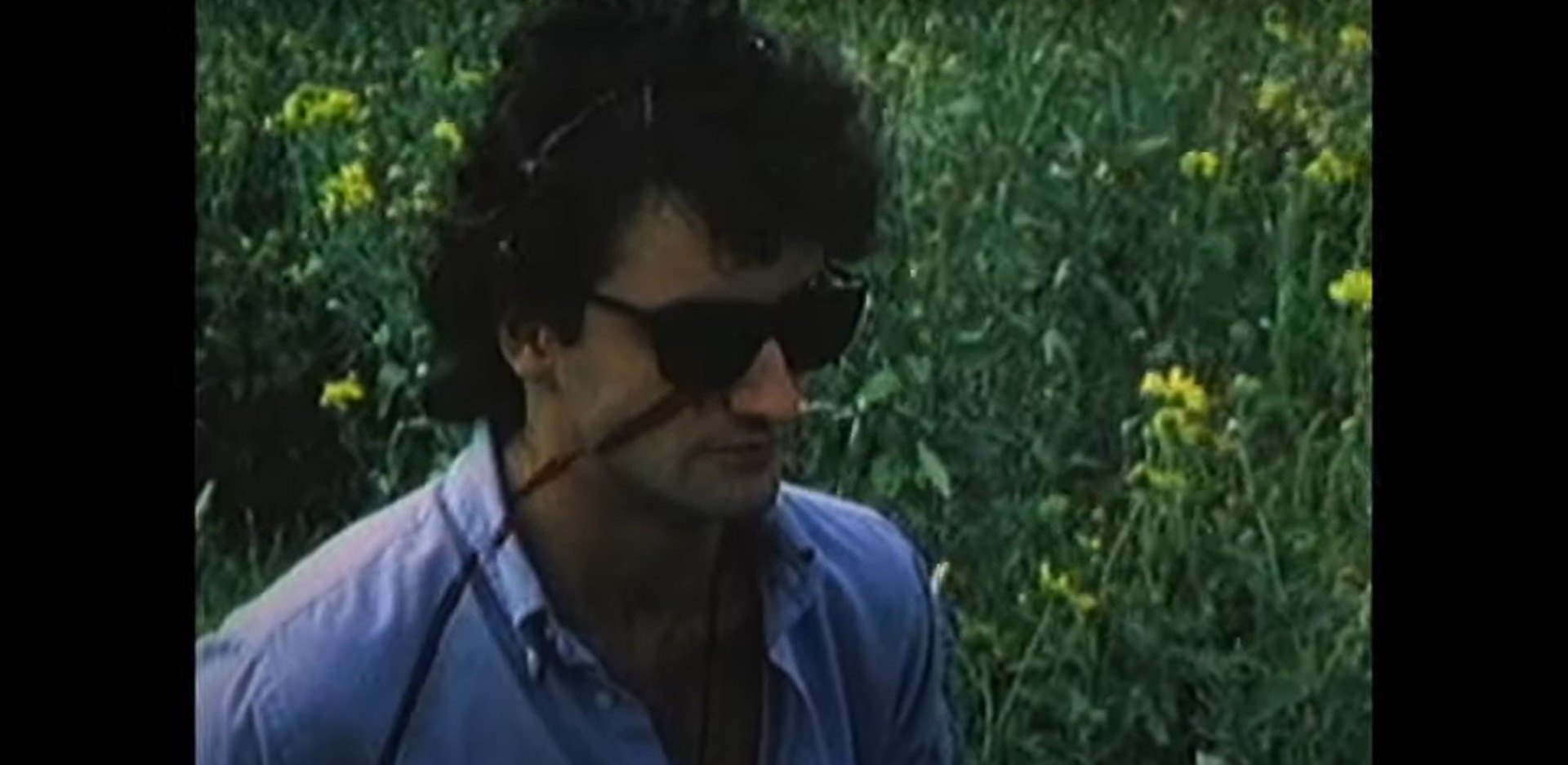
In the rural areas of New Hampshire 2006, Rob Roy tries his creative hand at making a movie, writing a script ingrained with his personal affinity for fantasy and werewolves, with the action-packed, shot-on-MiniDV camcorder thriller “Lycan Colony.”  Roy’s first attempt is ambitious to say in the least with a vim and vigor narrative with a visual and practical effects heavy ornament that Roy single-handily constructs all himself learning all the tricks to the trade as he goes.  What ultimately results is initially a colossal flop of technical mishandlings, bad acting, and rushed final products, but in recent years nearly two-decades later, “Lycan Colony” has been revived with a second chance by fans of the so bad, it’s good sect who, like the evil werewolves in the film, have tasted blood and want more.  Rob Roy self produces the film under his Wits’-End Entertainment company.

In producing a movie yourself, with your time, money, equipment, and the little know-how of the process, Rob Roy casts mostly family, friends, and newcomers in his New England werewolf film.  Both of the director’s sons make it into the picture with the older Ryan playing the mistakenly werewolf bitten teenage son of Dr. Dan (Bill Sykes), the surgeon, and Roy’s youngest, Jacob, as a presumed pup running for his life from hunter Sgt. Roger Allen (Paul Henry) as we see in the preface opening.  Though an important piece to some aspects of the story, such as Stewart’s creaturized adolescent transfiguration to help Dr. Dan and wife Sandy (Kadrolsha Ona Carole, “Attack of the Killer Chickens: The Movie”) understand and cope with their now lycanthropic son, Roy’s boys are not the centralized characters as the narrative awkwardly pivots from building up Dr. Dan’s choppy family dynamics and his alcoholic mishap substory to more nondescript kickass and chew bubblegum action of good versus evil as the missing Sgt. Roger Allen’s offspring, the commando-suited daughter Russ (Gretchen Weisiger) and the bad werewolf killed yet risen to the ranks of being a good lycanthrope Doug (Bill Finley), team up with the eldest wolf-witch  and spiritual liberated Athena (Kristi Lynn, “Hypnagogic”) and David (Sean Burgoyne) who can control his beast side with hero pose mediation and tribal chants.  As you can tell, it all becomes disturbingly clear as mud on what exactly we’re bearing witness to, but the “Lycan Colony” burghers flesh out with Sophia Wong, Steve Pascucci, and Libby Collins.

There’s nothing inherently wrong with Rob Roy’s good wolf pitted against bad wolf with man trapped in the middle story.  Throw in some subtle themes of alcoholism juxtaposition where the mountain water tames the beast with hints of silver nitrate and Dr. Dan’s post-career predicament that sends him to AA meetings and also themes of puberty or some kind of other rite of hormonal passage and “Lycan Colony” can work as an action-fantasy with a strong horror element.  The problem lies in the ambitious undertaking for a first-time filmmaker with more gung-ho carpe diem than actual experience and Roy will be the first one to tell you, as heard in bonus content interviews, his goal is to go big and not limit himself with a tightknit narrative with little-to-no special effects.  To the detriment of “Lycan Colony” however, that mentality of thinking took a three-month shooting-script down to a mere three weeks, rushing the final product to the point of using a blue screen for the nearly the entire third act in a real shoddy piece of VFX compositing.  Transpiring on screen resembles similar to the early days of 2D fighting video games with its mix of antiquated motion capturing technology, practical effects, and digital matte but while those traits appear raw, lifelike, and add that certain je ne sais quoi that makes it so attractive, for “Lycan Colony,” the effect miscarries for its time in what is a laughable imbrication.  For some, “Lycan Colony’s” campy crust will be a holy grail to obtain; one could compare Roy’s film to Dave Wascavage’s “Suburban Sasquatch,” another Visual Vengeance, early 2000s, revived flick that had similar rough-cut visuals.  For others, like me, what comedy rises to surface is digestible, the rest of the movie might make you sheepishly queasy. 

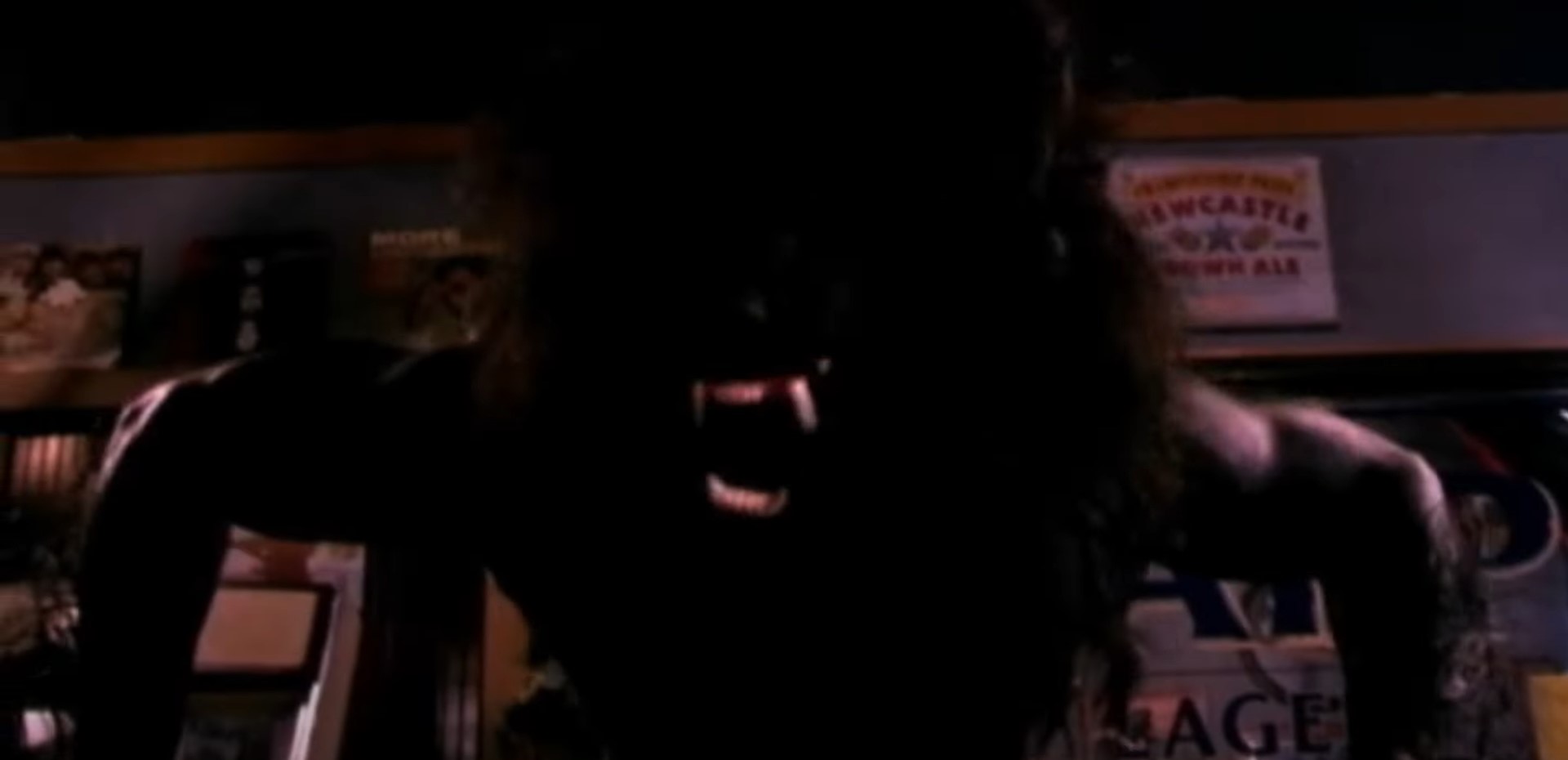
For the first time on Blu-ray, “Lycan Colony” has become a part of the Wild Eye Releasing’s Visual Vengeance tribe.  The AVC encoded, 1080i upscaled, BD50 is presented in a full frame 1.33:1 aspect ratio, sourced from an original tape shot on a Panasonic DVX100 MiniDV at 24fps.  Safe to say nothing will outshine celluloid, millimeter film or even today’s digital cameras as that period of time where videotape made a stand offered a rival format with cheaper costs and comparable picture quality; yet videotape, as with “Lycan Colony,” squeezes the resolution combined with matted visual effects, making inaccurately distanced composite look even more compressed.  Details suffer through the compression of MiniDV’s interference noise, undersaturation, and vertical tape impression lines seared into a few frames.  The undersaturation lies the biggest concern leaving behind darker tones that keep the image popping with color, rendering the entire scheme more overcast even when not exposed to rough gel lens which is used quite often in various Crayola hues.  The English lossy Dolby Digital stereo 2.0 has enough strength to get around and get through with a tenuous dialogue track complicated by the not truest of fidelities on likely the onboard camera mic and by the boxy echoes of a blue screen stage, likely Roy’s garage.  Stock file notes give the full body suited lycanthropes enough growling canine bite and the gunshots are awarded cacophonous explosivity, solidifying a decent range of sound, but there are missed or asynchronized effects against the action with brief seconds of delayed catchup or just plain omission.  Boxy areas eradicate the depth, especially in the whole third act when the last battle is held in the woods but is mainly a blue screened forest, so the compounding loss of milieu affects atmospheric track greatly.  Visual Vengeance’s track record on delivering new special features has not gone unnoticed and the trend continues with “Lycan Colony” with a new interview with director Rob Roy.  Also included are two commentary tracks:  one with director Rob Roy and a second with B&S About Movies’s Sam Panico and Drive-in Asylum’s Bill Van Ryn.  A second version of the film is a full Rifftrax version, a blooper reel, the “Lycan Colony” music video, original trailer, and the Visual Vengeance trailer round out the release’s ancillaries.  The colorful Stephen Gammell-esque, presumably pastel, front cover illustration greatly over exceeds expectations but is nonetheless phenomenal full-moon imagery on the cardboard slipcover and also dichotomizes the style on the translucent Amaray Blu-ray case’s cover art depicting a scene from the film of a hungry wolf behind the alcohol-decked bar.  And also true to Visual Vengeance, the release is jammed-packed with inner goodies, such as a New Hampshire Forest Scent air freshener, retro VHS Sticker sleeve, a 3-page pamphlet with essay from Sam Panico with color picture, and a folded mini-poster of the Blu-ray cover art.  Not also to neglect to mention is the reversible cover art with the original one sheet art.  The Visual Vengeance release comes region free, unrated, and has a runtime of 90-minutes. I’m extremely happy for the appreciation and newfound love director and enjoyer all-things-werewolf-fantasy Rob Roy is receiving for his resuscitated escapism but, for me, “Lycan Colony’s” jerry-built and doesn’t come anywhere close relieving the so good, it’s bad itch in Roy’s filmmaking first pass done on the cuff. 

“Lycan Colony” available on Blui-ray Collector’s Edition!

Never Trust a Script Written by an Egotistically EVIL “Scream Queen” reviewed! (Visual Vengeance / Blu-ray)

This Chainsaw’s Made for Cutting! “Scream Queen” on Blu-ray!

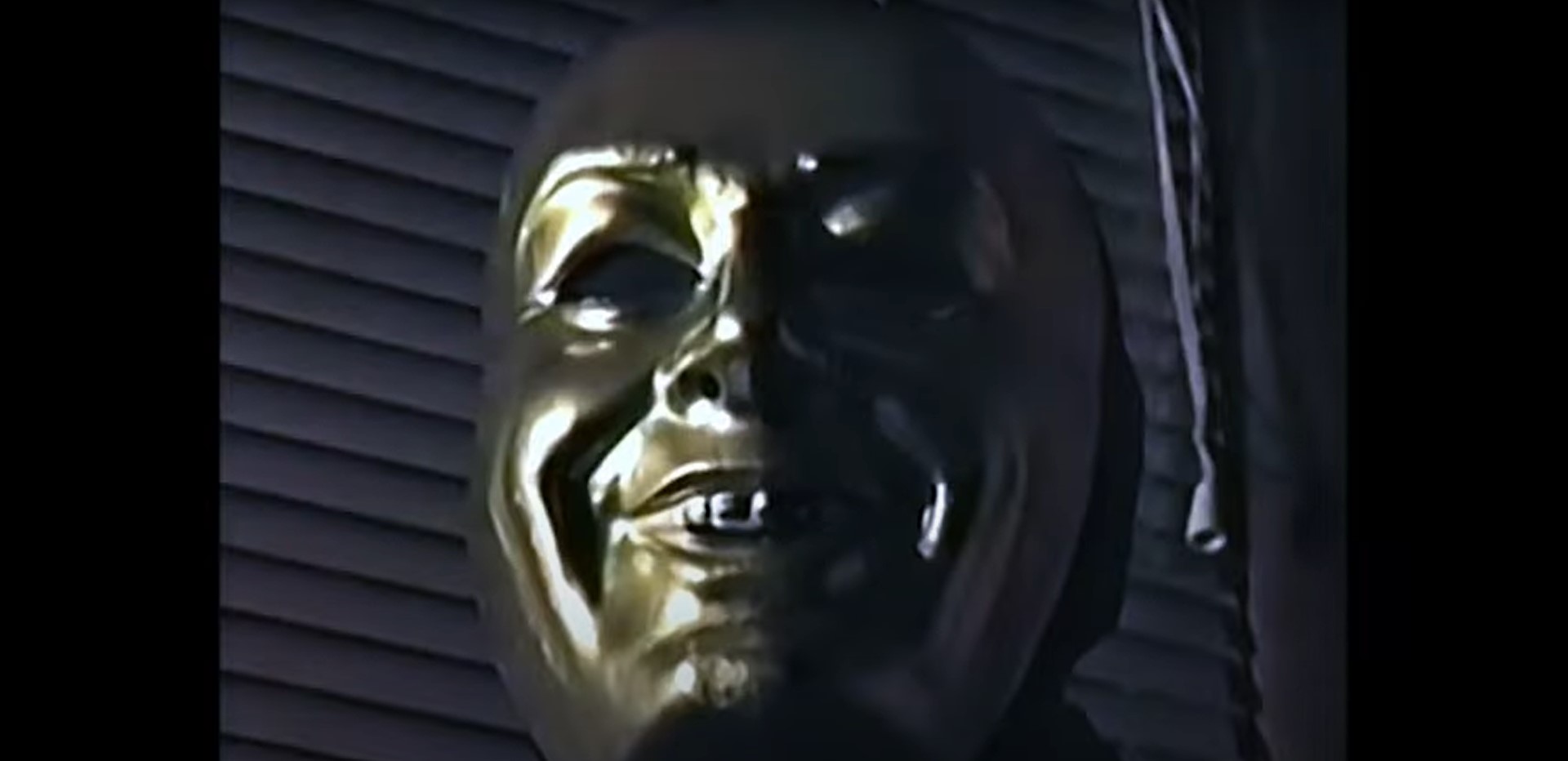
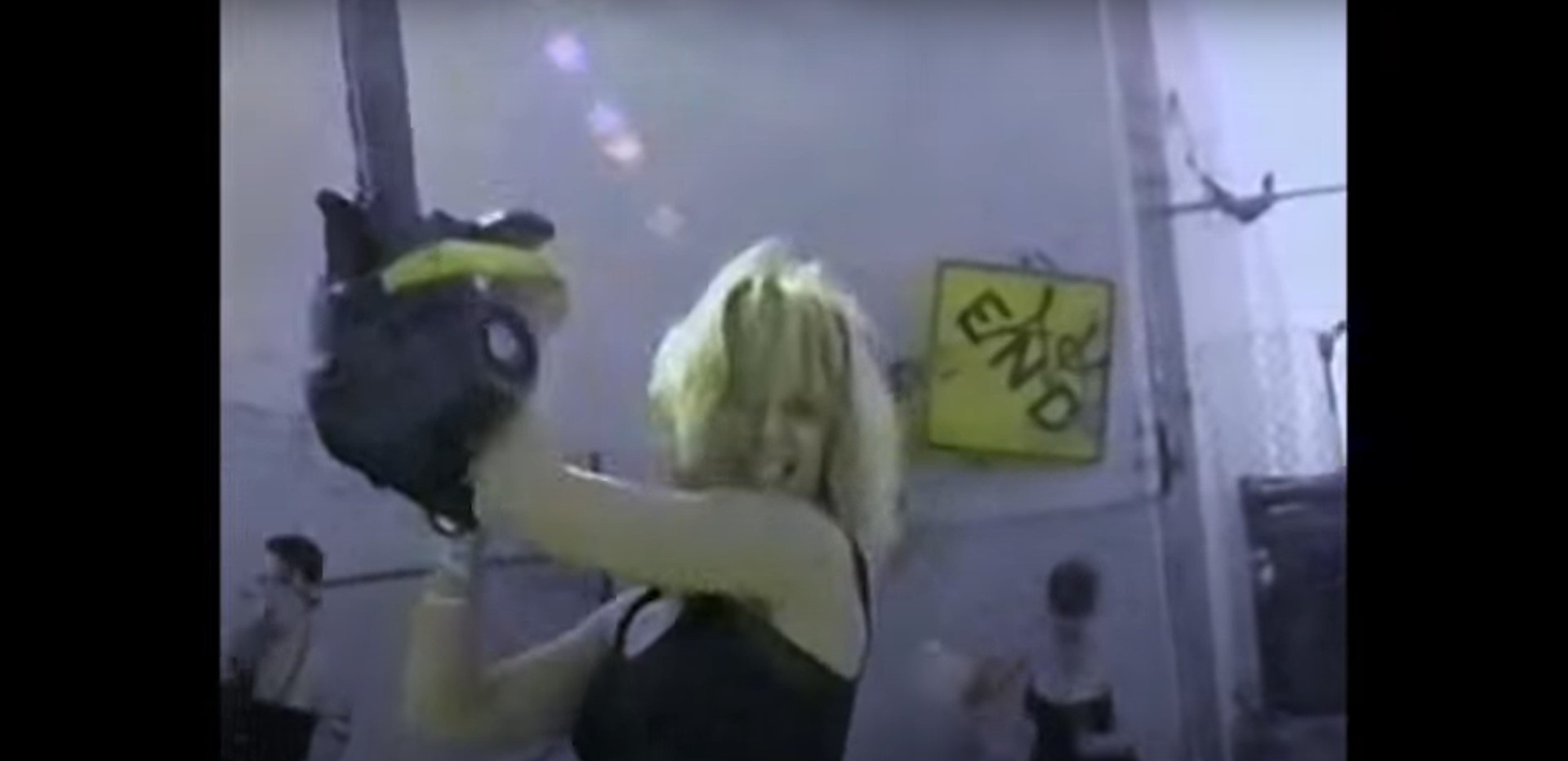
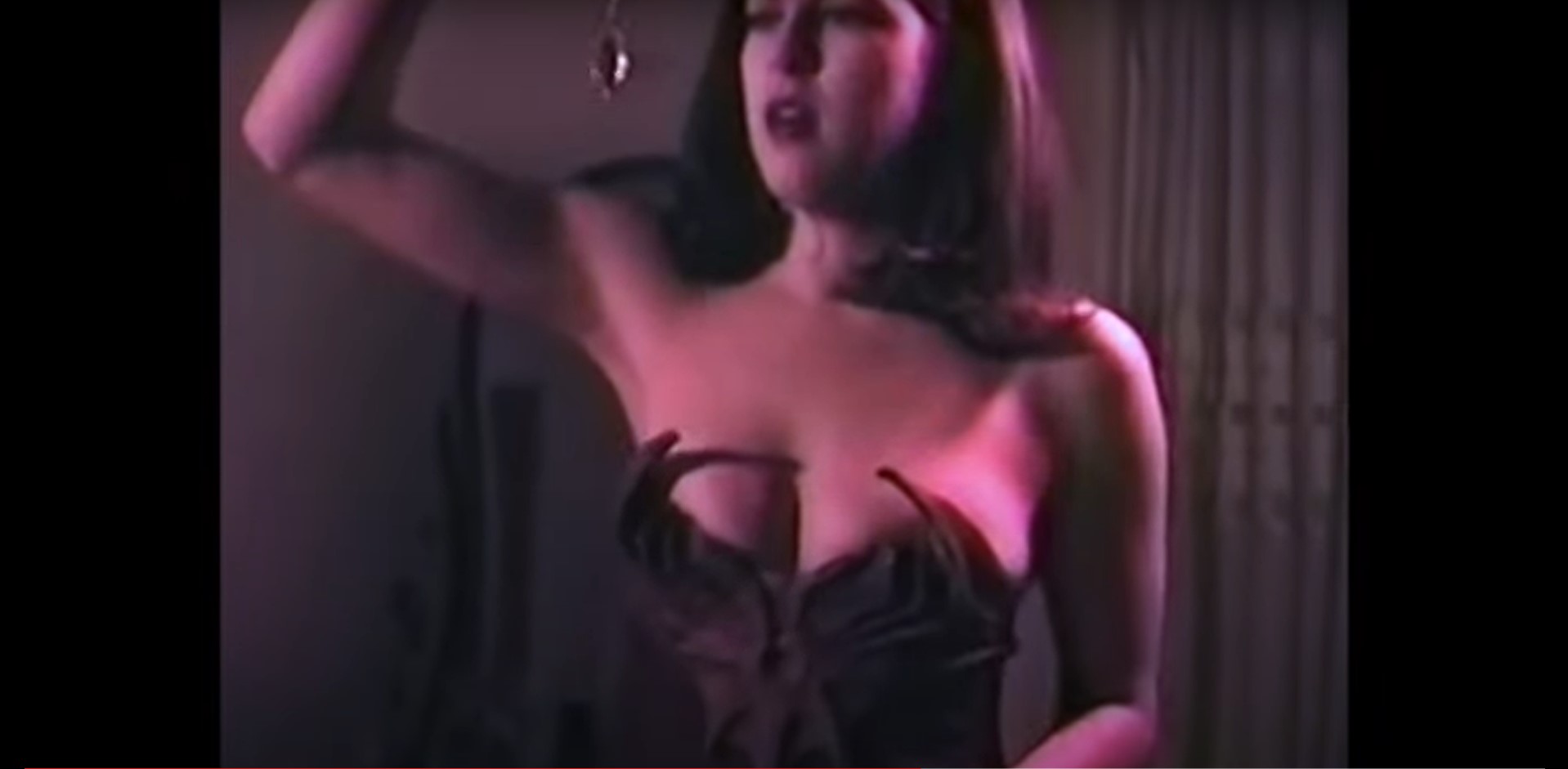
Malicia Tombs, an acclaimed horror actress known for B-movies and bad attitude, bursts into a wreckage of flames when her car sudden explodes after storming off the set of her new movie, “Scream Queen,” in which she wrote and starred as the titular character.  Part of the cast and crew were devastated by the accident that had cut their own career short while others were relieved the egotistical Tombs had perished despite publicly feigning grief over the loss of a genre fan-favorite.  Months later, the small cast and crew receive a mysterious invitation to gather at a creepy mansion butlered by Runyon.  When their host is unveiled as to be a very much alive Malicia Tombs, she offers them a lucrative sum of money to finish the film they’ve started but with a new script.  As the guests read through the new treatment, the cast and crew realize their present moments read just as their being played out in the script, even their deaths. 

If there was ever a single face deserving the representative distinction within an overpopulated categorized scream queen genus, Linnea Quigley would be that green-eyed, blonde-topped, beautiful face with an infectious smile.  Quigley worked with an array of filmmakers, ranging from some of the most renowned cult films of all times amidst reams of horror movies for nearly half a century (yes, we’re feeling old now) to the most independent of the independents films never having really receive the proper exhibition format or audience attention.  To what would be a delight to Quigley’s fanbase, one of those obscure features is Brad Sykes’ “Scream Queen,” a late 90’s filmed, 2002-released, SOV, U.S. slasher written-and-directed by the “Camp Blood” and low-budget filmmaker with Quigley in mind to play the scream queen character Malicia Tombs, now available, officially, on Blu-ray.  “Scream Queen” is the first major project for Brad Sykes in a collaborating effort in not only as a director but also as a co-producer alongside David Sterling of Sterling Entertainment.

“The Return of the Living Dead” and “Night of the Demons” Quigley puts on another memorable and wickedly fiendish performance as the haughty genre scream queen Malicia Tombs who superiority has gone to her head as she embraces her designation to an exact mania, displayed early on when her character’s character attempts to choke-kill another actress despite the numbered scene not being a death scene and Malicia harps on wanting to continue with the resembling act of murder.  As much as Malicia Tombs embraces the killer instinct inside of her, Linnea Quigley very much embraces Malicia Tombs without having to take her top off and despite having less screen time than her costars.  While Quigley fades in and out of the linear story, the narrative progresses with livelihood hardships of the now out-of-work cast and crew who relied heavily on that small film to boost their acting and filmmaking careers.  That crop of characters falls short tipping into their expectations, aspirations, and even their relations to be just slasher fodder for the mysterious maniac roaming the house.  Jenni (Emilie Jo Tisdale,” Escape from Hell”) and Devon (Nova Sheppard) are inferred romantic roommates who sell clothes on the side of the street to make ends meet post failed film but don’t have surmountable direction to either be a full-fledged couple to sympathize or seem terribly concerned about opening their own clothing shop other than what would be a bad decision to reside at the mansion overnight.  Again, no sympathy there either.  The special effects goof Squib (Bryan Cooper churns chuckles relentlessly by relating more to his crafted effects dummy more than people, marking him conclusively comedy relief as well as fated for death that, like in life, no one takes him seriously when he shows up gruesomely mutilated.  The other principal actress across from Tombs is Christine (Nicole West, “Dimension in Fear”), a buxom blonde tired of secretary work succumbing to lead man flirtations in a dark and scary house where every shadowy corner is lodged with threat.  The pair fall into that horror character cliché of have sex, will die, quickly downgrading their pre-professional relationship into nothing more than dark house desire.  Director Eric Orloff (Jarrod Robbins, “Evil Sister 2”), a presumed spin on the Awful Dr. Orloff and perhaps hints at his motives, seems to be stuck in angsty avoidance and melancholy stemmed by what could have been with Scream Queen but that also peters to a gross negligence end of an arc waste.  Rounding out the cast are a couple of special bit parts played by prolific Full Moon Entertainment and overall horror movie screenwriter C. Courtney Joyner (“Puppet Masters III,” “From A Whisper to Scream”) as a televised homicide detective and Kurt Levee in a quasi-return of his character Runnion from “Evil Sister” but alternatively spelled “Runyon” in “Scream Queen.”  

Though obviously and definitely not the first to do this, “Scream Queen” humors metacinema measures built upon horror tropes and spherical plot points that redirects the story back upon itself for a killer effect.  The feature has no issues making and poking fun at itself within a campy context albeit the usually grave apprehensions of a true scary slasher movie that’s less campy of which a scream queen is born – think Jamie Lee Curtis in “Halloween” or Neve Campbell in “Scream.”  Bryan Cooper not only portrayed the foolish effects guy persona but also actually did a lot of the gore gags for the film, achieving very detailed inlaid gore prosthetics for a smalltime picture with an axe embedded into a chest and a mangled face to name a few.  The story itself feels a bit rough and ready as it slips into supernatural obscurity and, as aforementioned, character setups flounder to a stagnation, killing instantly the miniscule arcs that were structured prior to their mansion gathering in what becomes a slapdash of serial offing that wraps up the story post-haste without much cat-and-mouse tension.  With that said, “Scream Queen’s” unpolished plot had once mirrored its fallowed physical release until recently but now witnessing its birth out of twilight has been multitudinous worth the wait. 

Another of Linnea Quigley’s lost films has been resurrected from the format graveyard by Visual Vengeance with a new Blu-ray release of “Scream Queen.”  The Wild Eye Releasing sublabel release comes with an AVC encoded, high definition interlaced scanned and director approved 1080i transfer from the 480p tape elements on BD50 capacity and comes also with the qualitative joys of a standard definition shot on video experience.  SOV tape upconversion can never completely eradicate the imperfections associated with tape and we also know this going in courtesy of Visual Vengeance’s standard practice of a fair warning before the film, but the overall “Scream Queen” presentation passes as clear content despite some minor tracking blips, 1.33:1 aspect ratio, original lower resolution, and scan line visibility, which is smoothed out nicely by the 1080i conversion. Exteriors and brightly lit scenes take on more shape compared to darker and low-lit areas that become like a void in standard DEF, which also hits the natural grading into a washed-out drab.  The English Dolby Digital 2.0 stereo labors to maintain some form of auricular strength but often nearly goes dark to where certain Linnea Quigley monologues periodically go silent for a few seconds, so the dialogue isn’t entirely clear but when it is, it’s relatively clean. There’s no hardiness pop in the audio track, staying suppressed throughout, and having little-to-no range or depth to the compile contexture. Some electro-interference throughout but nothing to be bothered by considering the grade of the SOV. Optional English subtitles are available. Special features include a commentary with writer-director Brad Sykes, a new behind-the-scenes documentary Once Upon A Time Horrowood that’s mostly Brad Sykes going through the stages of making “Scream Queen” and his recollections of his first big time produced film, a new interview with star Linnea Quigley, a new interview with one of the three various editors Mark Polonia (director of “Splatter Farm”), an original full-length feature producer’s cut of “Scream Queen,” a behind-the-scenes image gallery, Linnea Quigley image gallery, snippets from the original script, original trailer, and other Visual Vengeance distribution trailers. Along with the hearty software special features, hardware physical features include a six-page trifold with behind-the-scenes color photos notes by Weng’s Chop Magazine’s Tony Strauss and beautifully illustrated with dripping blood, a chainsaw, and Linnea Quigley on the front cover, a folded up mini color poster of a scantily-leathered Linnea holding one of the film’s murderous weapons, retro stickers, and your very own Four Star Video plastic rental card. All of this great stuff is stuffed inside a clear Blu-ray Amary case with a pressed disc art of a bloody illustrated Linnea sawing some unknown guy’s face off. The same illustrated graces the front cover in an expanded form and under a different hue. If you don’t like it, which I would be hard-pressed if you don’t, the reverse side contains one of the original cover arts with, again, a scantily-leathered Linnea holding that murderous weapon. The entire package is sheathed inside a rigid O-slipcover with an extended view of that chainsaw scoring with a bloody spray the eyeball from some guy’s face. The 13th Visual Vengeance release comes region free, unrated, and has a runtime of 78-minutes. Lost vintage now found and digitally revived to give us even more Linnea Quigley than we knew we needed with a meta-film shows initiative and fit special effects but swerves off trajectory into a more-of-the-same pathway. 

This Chainsaw’s Made for Cutting! “Scream Queen” on Blu-ray!

Sucked Into Hell. Surrounded By EVIL! “Vampires and Other Stereotypes” reviewed! (Visual Vengeance / Blu-ray)

Hell Wants You To Stay for Dinner!  “Vampires and Other Stereotypes” on Blu-ray!

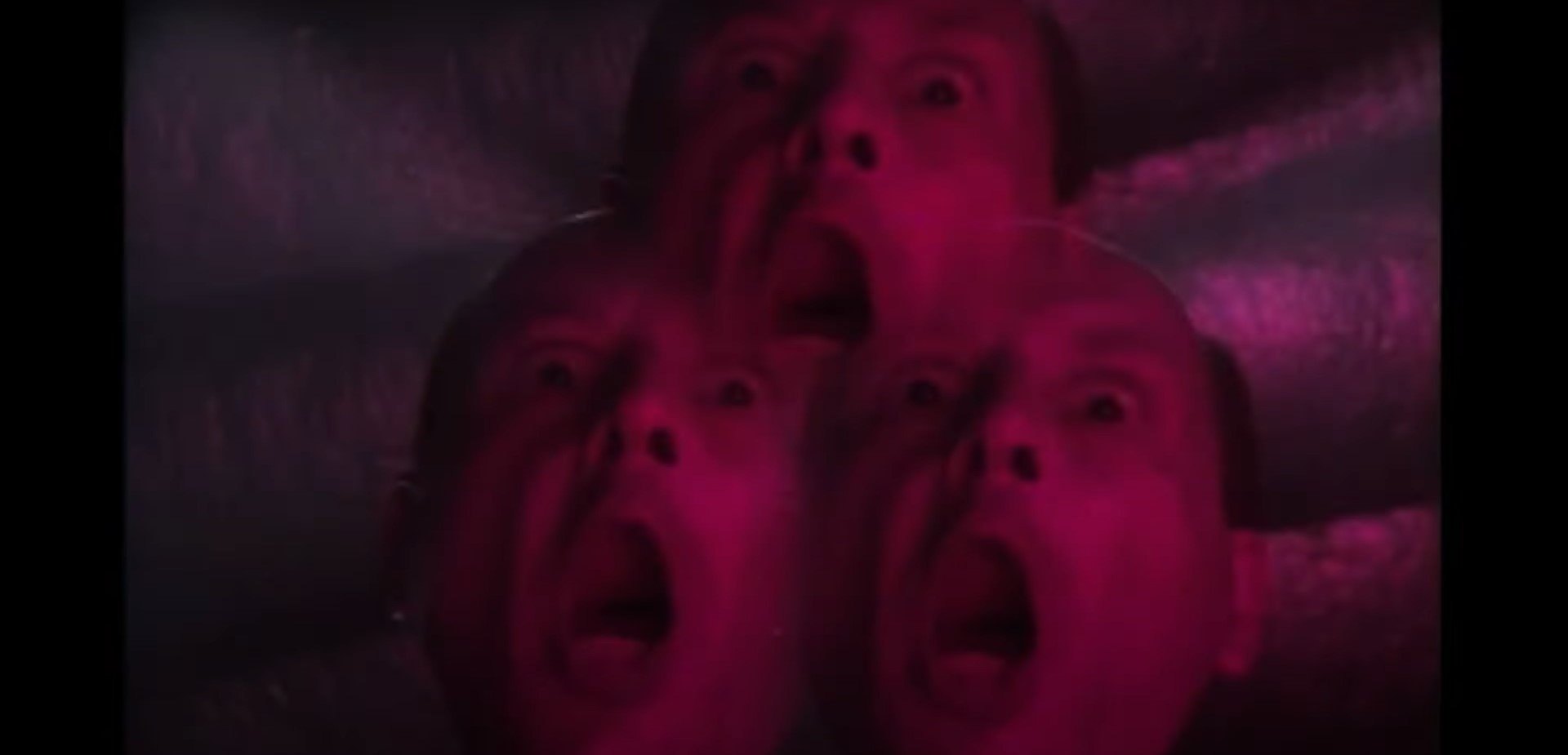
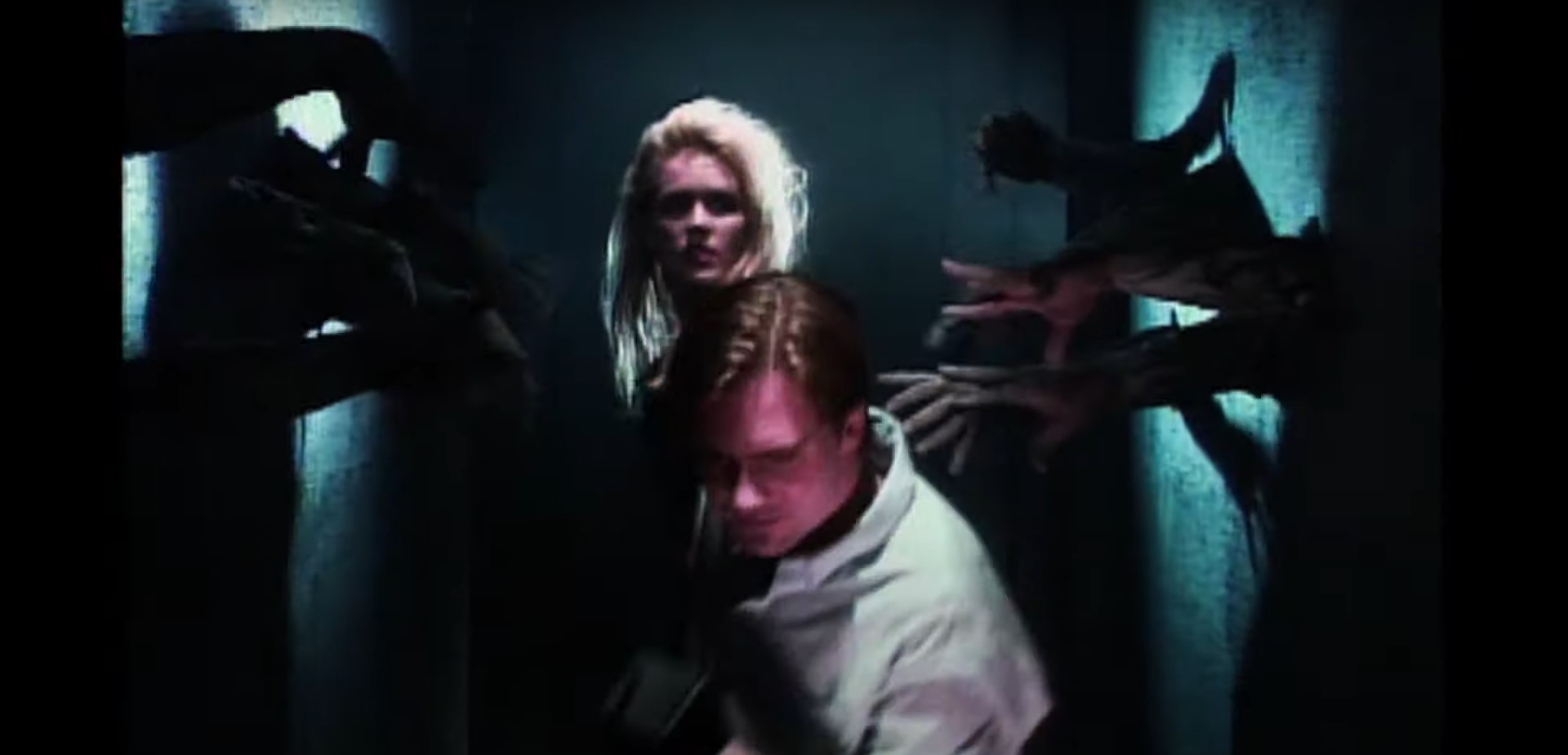
Ivan and his hard-nose partner Harry work between the shadows as protectors of the Earth realm.  The pair of paranormal guardians battle demons attempting to sneak from the Netherworld for more domain and power in the human world.  After thwarting a demon’s reneging plans with a wealthy businessman, they find themselves sucked into a portal to Hell after a group of young partygoers become lost and inadvertently crossover everyone in the abandoned warehouse to the underworld, including the warehouse itself.  Confined to a room with the portal opening, they must band together to survive the night where gnarly demons roam behind every door and are master tricksters with one goal in mind – to breed human women with half-breed demons to procreate more of Hell’s minions.  Its up to Ivan and Harry to see the survivors through until dawn but not everyone is who they seem and when the masks are dropped, real Hell will pounce upon them.  

The northeastern American horror-comedy, “Vampires and Other Stereotypes” is the topsy-turvy and totally-transcendental SOV feature from first-time writer-director Kevin J. Lindenmuth (“Twisted Tales,” “Monsterdocom”).  Shot primarily in Cherry Hill, New Jersey with some exterior city shots of New York City, the film alternatively known as “Hell’s Belles” sought ambitious Hell below Earth undertakings, creating a maze-like dwelling for disfigured dwellers of the demonic kind, and a down-the-rabbit hole story where the head-lopping queen is actually the devil in a leatherjacket playing procreator matchmaker and the Cheshire Cat is a overgrown rat looking to nibble on human flesh rather than cheese.  The rat, as ostentatiously cool as it sound, is simply a slither of one of “Vampires and Other Stereotypes” few themes, which is fear.  Kevin J. Lindenmuth’s production Brimstone Media Productions serves as the studio and Lindenmuth serves as sole producer of his self-funded venture into the vile mouth of the demon world.

“Vampires and Other Stereotypes” follows two difference groups related to the existence of Hell, the demons that inhabit it, and the rogue demons splicing themselves into the human world. One group is the guardians Ivan (Billy White) and Harry (Ed Hubbard) who are very much aware of the esoteric magnitude of the abysmal situation and background while the other group, young Generation X’ers oblivious to the signs of Satan’s underworld seeping into their own. Lead by serial-dater and college girl Kirsten (Wendy Bednarz, “There’s Nothing Out There”) and her two tagalong best friends Linda (Anna Dipace) and Jennifer (Suzanne Scott, “Child of the Sabbat), the ready-to-party trio provide the state of affairs with Kirsten’s nonchalant taste in bad boy boyfriends, believing her courting apathy, treated as an impulse indulgence for the sake of fun, will one day run her out of luck. Enter Erik (Mike McCleery, “Deep Undead”), another misfit miscreant unearthed by Kirsten in her ever unquenching need to be wined, dined, and spoiled by the bottom layers of the dating pool. The two parties clash walking into the epicenter of an open investigation, denoted by an aperture in the middle of the room, where dead, decapitated bodies are strong upside down and Kirsten and her businessman father (Rick Poli, “Blitzkrieg: Escape from Stalag 69) are unexpectedly reunited in an air of something more happening behind the scenes other than Kirsten’s father’s flailing dealings with the demons and Erik’s party-sniffing nose leading them to astray and lost. The rest of the cast comes together with Laura Vale as Rosa the psychic, Monica Batavanis as the wife lost to the dark side, Mike Memphis as the Elvis impersonator, Bean Miller as the Lizard King aka Jim Morrison impersonator, and Sally Narkis as the demon waitress.

Lindenmuth’s dragged to Hell premise is a neat enough concept to peak the interests of the casual and diehard horror fan. However, the executed result is a whole other animal that tends to claw back, trying to maul away your viewership.  The special effects Scotts – Scott Hart and Scott Sliger – pull off practical prosthetics and latex with some side curb appeal that helps lift up “Vampires and Other Stereotypes” as best as possible, but the effects have a difficult time keeping up with the film’s innate ambitious concept to where much of the story relies on character exposition to fill in the gaps and where I note the exposition has a few cracks and leaks in themselves is in the very first word you see in the title that sets the expectation right off the bat before going far into a narrative that constantly and hurriedly builds upon the demonic construct.  That edifice evolves so high and so quick that the air becomes thin when the very first presence of a vampire insert comes late into the third act.  You nearly forget that the word Vampire was ever in the title.  Where Lindenmuth succeeds in this frenzy of fiends and folly is passively providing verbal cues of one of the character’s monotone-delivered pangs of extreme hunger.  Being a New Yorker and a rather large individual, you believe a NYC pizza or a greasy burger would be in mind here to feed the need but then the gag drops with well-timed revelation albeit the severe tardiness inside the narrative framework that suggests maybe the title should have been reworked or better thought through to really add upon that element of surprise and not sit waiting and waiting until bloodsuckers join the jittery jamboree.  While the demons are jovially wicked, their wily ways are playful to a fault compared to an “Evil Dead” Kandarian demon or a twisted and ugly demon from “Night of the Demons,” a class of demons that craft a special kind of deviance that maniacally fun as they rip you to shreds.  Not to say the “Vampires and other Stereotypes” demons are painfully dull or too good to be terrible, quite the opposite in the variety of severed head yappers or an oversized rodent, but they don’t offer that same fear-inducing merriment of playing with their food before they eat it. 

The 12th release on the Visual Vengeance line of dusted off sidelined SOV horror and cult films with a brand-new Blu-ray release with an AVC encoded, 1080p (note: off the original standard definition master 1-inch tape), BD50 presented in the original pillarbox of a 1.33:1 aspect ratio. Visual Vengeance provides the usual prefatory statement about the using the best possible elements out of consumer grade equipment, but I do think “Vampires and Other Stereotypes” has the best details within the Betacam SP camcorder, which was, at the time, the crème de la crème of videotape, and then have the video run through a millimeter gauge emulator to give it a 16, or even stretched to a 35 mm, appearance at times. Tullio Tedeschi cinematography is soft, light, and dreamy that forsakes stark details but does offer a sheen along the surfaces and textures that size up and adds to depth to the objects, even more so with the film’s hard lighting and deep shadows to provide a diversion away from the cheap sets but also a diversion away from what could be lurking from the horror-set tropes. The English language stereo 2.0 has decent dynamism between the dialogue, ambience, and soundtrack. Dialogue has a voice above the other sublayers, separating its prominence in front of the batty surroundings of a demon-riddled rodeo and against a soundtrack, or lack thereof, that’s repetitively uninspiring to takes away from the spirt of the level Lindenmuth attempts to reach with his debut. Optional subtitles are available. Special features include three new audio commentaries with director Kevin Lindenmuth, actor Mike McCleery and Lindenmuth, and Weng’s Chop Magazine’s Tony Strauss. Also included are new, brief interviews with Lindenmuth on the technical tangents of his film, actress Laura McLauchlin surrounding her role as Rosa and various recollection of principal photography, actor Mike McCleery as bad boy Erik fitting into his skintight, nonbreathable demon mask and having a good time on set overall, Suzanne Turner on playing Jennifer, Sally Narkis in her brief role as demon waitress and her sidetracking fashion career, and plus interviews with makeup effects artist Ralis Kahn, special effects artist Scott Sliger, photographer Sung Pak, and publicist Joe Mauceri with behind-the-scenes image gallery, original trailer, Visual Vengeance trailers, and Lindenmuth early Super 8 films along with commentary by the director. As always, the physical presentation is nothing short of a thing of pure beauty with a rigid slipcover graced with new illustration by Tom “The Dude Designs’ Hodge with a traditionally sized clear Blu-ray amaray case with reversible front cover that includes more new looming demon heads art and the original one-sheet on the reverse side that really relates to the dreaminess of the photography. In the insert pocket is stuffed a color trifold essay from Tony Strauss with behind-the-scene stills, a folded mini poster of the Blu-ray case cover art, and retro VHS stickers. Disc art is pressed with the slipcover art. Region free for the world to see, the Blu=ray is unrated and has a 87 minutes. Nominal and ambitious, “Vampires and Other Stereotypes” fights an uphill battle coming off the heels of an extremely gorified video nasties of the 1980s, but Lindenmuth fulfills with an indiscriminate spread of insanity at every turn with some vivid and vibrant vanward effects to drive this one home to the great people at Visual Vengeance, a boutique distributor of lost, but not forgotten, SOV buried treasure ready to be rediscovered.

Hell Wants You To Stay for Dinner!  “Vampires and Other Stereotypes” on Blu-ray!

The Little EVIL in the Cupboard. “The Abomination” reviewed! (Visual Vengeance / Blu-ray)

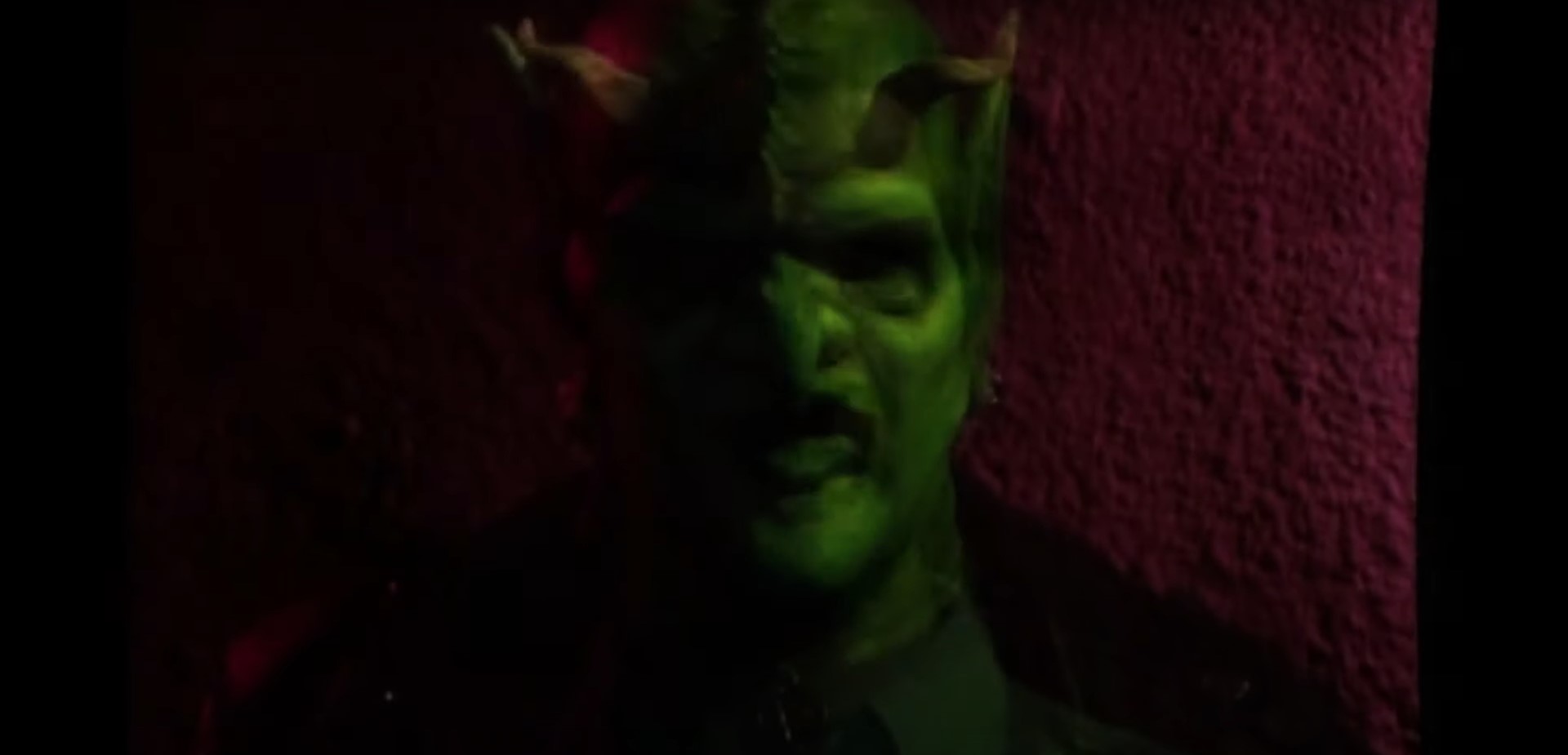
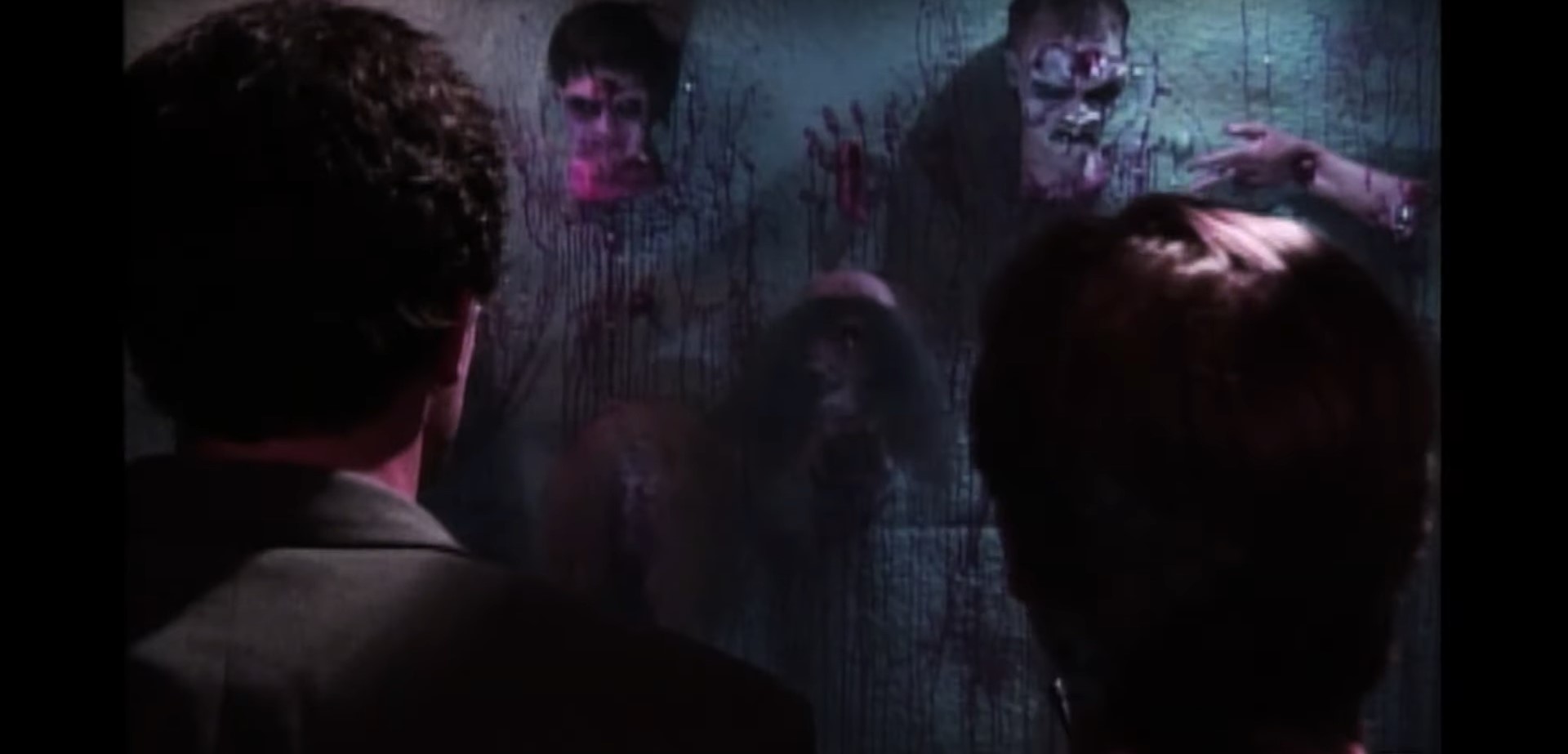
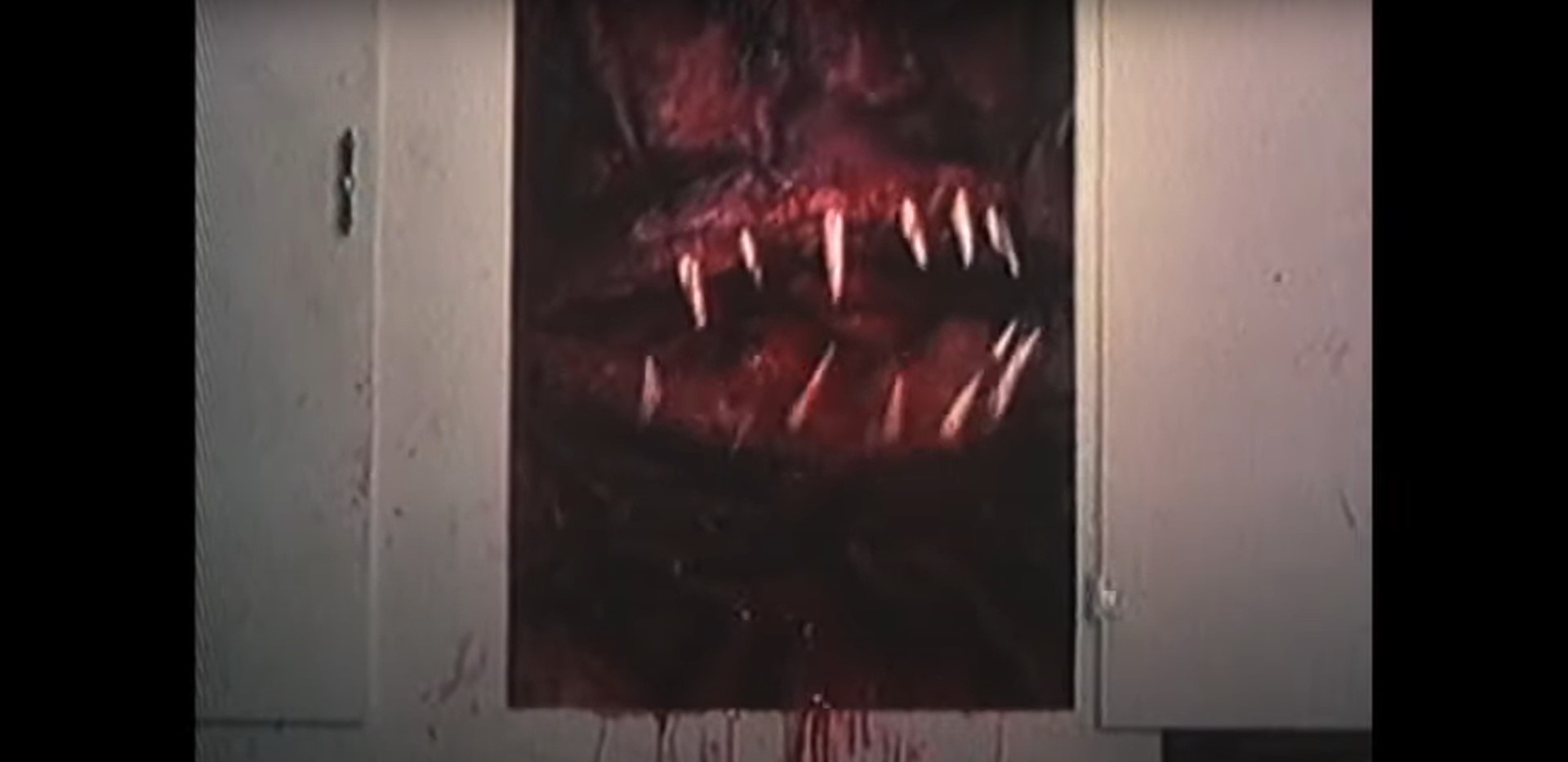
Cody’s devout mother has a large tumor growing in her lung.  Her piety believes will cure her from the ailment or so says the televised evangelical priest Brother Fogg who once listened to her plea.  When she coughs up the tumor onto the kitchen floor one night, the relieved woman becomes ecstatic having been miraculous cured by brother Fogg’s channeling of the holy spirit and her $20 donation to him but little does she know that the tumor is actually a blood lusting demon that slithers down Cody’s sleeping throat, turning the young man zombified and obedient to the demon’s ever starvation for human blood and flesh in order to grow.  Inhabiting Cody’s house like a shell and monstrous with tentacles and large teeth chomping from out of cupboards and the top loading washing machine, Cody heads out into the world to brutally murder his own boss, friends, and even family to serve and feed the abomination living in his home.

Tantamount to “A Little Shop of Horrors” and released the very same year as the Rick Moranis remake of the original Roger Corman killer-plant picture, writer-director Bret McCormick waters to grow his gelatinous creature-feature “The Abomination” onto the home video market.  Ultra-violent and gory against the more, what would be considered in comparison, family-friendly and Hollywood produced rowdy giant flytrap ravenous to devour victims, “The Abomination” is by no means a musical but delivers a tone of tentacle-laden terror around a subtle theme of mental health.  Shot in Poolville, Texas, from the then future filmmaker of “Repligator” and “Highway to Hell” under his pseudonym of Max Raven, the guts-galore indie was also produced by McCormick as well as with longtime partner Matt Devlen, director of “Ozone:  The Attack of the Redneck Mutants” and producer of “The Upstairs Neighbor” with “Woodchip Massacre” and “Cannibal Hookers’” Donna Michelle Productions picking up the film for at-home VHS distribution rights.

However unlikely it may seem with these types of splatter films and with a cast credited with different stage names and pseudonyms, “The Abomination” is undoubtedly a family affair.  Bret McCormick has employed a great deal of his once intact family into filmic roles as creature fodder, which some of us would like to dish up on a daily basis.  Well, McCormick did it from his brother Brad McCormick as Ike, mother Victoria Chaney (“Christmas Craft Fair Massacre”), former father-in-law Van Connery, and even his wife, now ex-wife, Blue Thompson (“Ozone:  The Attack of the Redneck Mutants,” “Highway to Hell”).  Relatives appear game to be in a next-to-nothing splatter horror that offers a soup kitchen of out of body organs being pitchforked fed into gaping jaws living a cupboard.  Performances render suitably as bored rural clodhoppers who fear God, work at junkyards, and give into evangelical sermon with Cody (Scott Davis) and his friends often the more sensible foursome of youth yearning for fun and beer as they race down dirt roads and yuk it up on the back of their 4×4 truck beds.  All of the dialogue is done in post with ADR and so we’re not offered the actors’ original gutturals, conversations, and screams with the silver lining in the audio track being a clean post-principals photography recording of the dialogue.  One shortcoming of the dialogue track lies with Cody’s mother Sarah, played by Jude Johnson (“Tabloid”), with earsplitting screams set on linger as she discovers the truth.  With a small, intimate cast with most being within McCormick’s inner circle, every character is essentially core to the story with the rest being rounded out with performances from Suzy Meyer, Gaye Bottoms, Matt Devlen, and Rex Morton as the equivocally moral televangelist Brother Fogg.

There’s something to be said for low-budget, do-it-yourself, indie horror films with exaggerated and practical special effects.  “The Abomination” is one of those said features that’s’ more splatter than substance but the splatter and the palpable puppetry are the driving force behind McCormick’s attempt to enter the gonzo-gory market of cost nothing commodities popular at the time.  “The Abomination” evokes the very truth of the titular creature without being ambiguously metaphorical, becoming a character, much like Audrey II in “The Little Shop of Horrors,” in itself even if it didn’t talk or sing with boisterously briar.  Before delving into the core narrative, skipping the opening dream sequence/montage may be in your favor as the series of random images of grotesque violence, splatter, and such sum up the film’s entirety in a disordered delusion of dreams. If you can fast forward the montage, the opening secondary setup of Cody and Dr. Russell’s voiceover conversation will suitably add the necessary layer to peel back not only to expose the carnages to come but also sneaks in a thought-provoking twist that will leave audiences reeling over the bookend voiceover conversation between a distraught Cody and the doctor in the final moments.  Not to be exceedingly overshadowed by the immense deluge of blood, the pint size pivot juts out like a nail in a floorboard, insignificant across the entire square footage but once you step on it, the punctured wound leaves an unforgettable impression that makes the entire floor feel the need to be tiptoed around because of the dreadful sensation of sharp, pointy objects covering the entire area.  Narratively, the linear structure works as a son and his mother struggling on the precipice of her cancerous death while believing the televangelist Brother Fogg’s wisdom and spiritual healing will come to her rescue before her demise, but the one element that doesn’t quite work, or is more so unclear, is Brother Fogg’s part in the much darker side of the abomination’s arrival.  In scene, Fogg’s has all the hallmarks of a fire and brimstone swindler but no other clues hint to his involvement in the scourge spawn other than a few dropped lines by other indirect characters that more disconnect the dots then link them.

You have to continue to love Visual Vengeance for their pastime presentation of splatter and obscure VHS films.  “The Abomination” slithers out of incubation as one of their latest releases onto a full-bodied Blu-ray with new artwork, new bonus features, and a new high-definition transfer! The AVC encoded, 1080p, BD50 is presented in a 1.33:1 aspect ratio. McCormick filmed “The Abomination” on Super 8 but had converted the feature through a U-matic VHS playback, resulting in two very different technical looks with the grainy celluloid of a Super 8 integrated into the softer gauze and tape degradation of VHS. We usually see this in the reverse with modern releases being played back through VHS to obtain that SOV/retro look. Visual Vengeance continues to preface all their releases with a warning of quality with their obtaining the best possible standard definition tape masters that may still render poor video and audio quality. A/V does convey a softer simulacrum and a pallid color palette with the occasional tracking lines and even seldom frame damage, but the overall finished product is visually rock solid. The English Dolby Digital stereo mix has the same pallidity as the video but is balanced within the amplification ilk where fading or becoming distorted is virtually nonexistent. Automated dialogue replacement as well as overstepping foley is evident from the start that does provide an undertow of clear consistency without fluctuation. Soundtrack and sound design by Kim and Richard Davis and John Hudek really shines through with a pulsating ghoulish synth-piano key that hints at giallo undertones. Optional English subtitles are available. Visual Vengeance really did outdo themselves with sizeable supplementals beginning with a pair of commentary: Bret McCormick joins Visual Vengeance’s Rob Hauschild and Matt Desiderio while Tony Strauss of Weng’s Chop Magazine goes solo. There’s also a new feature-length interview with McCormick Monster Kid Movie Maverick that entails McCormick starting his life story from Super 8 home movies to the present, a new interview with Blue Thompson, a new interview with Victoria Chaney, and an interview with Michael Jack Shoel of the original Donna Michelle Productions’ VHS distributor. McCormick provides a new location tour between his involvement in “The Abomination” and “Ozone,” raw footage of the testing the tumor and the death of Cody’s boss, McCormick’s Super 8 movies from his youth, a multi-page text screen interview with “The Abomination,” a behind the scenes image gallery, and a trailer archive. Release number 10 on the spine, this Visual Vengeance piece of home video art comes with The Dude Designs’, aka Tom Hodge’s, illustrated rendition of “The Abomination” with phallic tentacles, blood-stained teeth, and a mustard yellow title. Sheathed inside is an even more beautiful front cover art adapted from the iconic scene that left a lasting impression with this reviewer. The uncredited cover, or uncredited because I could not locate the signature or the credit, possesses more depth in detail than the comic book-esque slipcover, a comparable contending front cover from the original VHS art on the reverse side. Visual Vengeance provides hefty insert material that not only includes their staple retro sticker sheet but also a 14-page, black and white official comic book illustrated by Marc Gras, a trifold essay entitled The Tumor that Came to Fort Worth: Apocalypse on a Budget by Tony Strauss, and a folded mini-poster of the front-facing cover art inside the clear Blu-ray case. The disc art has the same The Dude Design slipcover art cropped to fit the BR disc. Bret McCormick fed his ferociously tumorous feature with all that he had, spellbinding with shocking serration, and now three and half decades later, Visual Vengeance celebrates McCormick’s cancerous creature with one hell of a soul-swallowing souvenir!

There’s Nothing Abominable About “The Abomination” Release!  

EVIL is Released When the Rent is Due! “The Dead Girl in Apartment 03” reviewed! (Wild Eye Releasing / Blu-ray)

Get Spooked by “The Dead Girl in Apartment 03” on Blu-ray!  Purchase at Amazon.com!

Massachusetts native Laurel has been living in New York City for a few months with a roommate she barely knows or sees because of their opposite work schedules.  When Laura discovers her roommate’s dead body in their shared apartment, the living space no longer feels comfortable, and the uneasiness keeps her awake long after the police and coroners remove the body that has left them baffled with a cause of death.  The mystery of her roommate’s demise, the agony splayed on the corpse’s face, and knowing her lifeless body has been undiscovered for at least a couple of days just next door to her room leaves Laura shuddered to the point of reaching out to her ex-boyfriend to hear a friendly, comforting voice, but bizarre and supernatural occurrences slip Laura in a state of panic and fright with a presence that has suddenly haunted her urban home and with the unearthing of her roommate’s black magic paraphernalia and a demonic symbol under her bed, Laura just uncovered a hidden nightmare that would have been a life saver if listed in the roommate wanted newspaper ad.

Atmospherically creepy and part of the reason I don’t like having roommates, “The Dead Girl in Apartment 03” is the little known, highly effective supernatural haunt horror from writer-director Kurtis Spieler.  Spieler has crossed our paths previously with the 2013 released lowkey thriller under the guise of a werewolf with “Sheep Skin” distributed by Unearthed Films and the review came out on top with a positive write up that noted the film as “a fresh suspenseful spin on lycanthrope mythos.”  Since then, the American filmmaker has re-directed and completed the 1984, John Liu unfinished cult and martial arts actioner, “New York Ninja,” for a Vinegar Syndrome exclusive release and has also preceded his dead girl paranormal enigma model with “The Devil’s Well” that has a similar plot but with a found footage medium.  Spieler’s latest venture provides the opportunity to work again with a couple of actors from “Sheep Skin” under the banner of Invasive Image with the director co-producing alongside longtime collaborator and Invasive Image co-founder, Nicholas Papazoglou, and one of the film’s principal leads and “The Sadist” screenwriter, Frank Wihbey. 

“The Dead Girl in Apartment 03” is one of those indie films that snags and headlines a genre icon to thrust the title into the spiraling coil of a massively oversaturated low-budget horror pool in the hopes that the film sticks to the now desensitized fans who have been burned too many times too often by radioactive junk.  The tactic is not always necessarily nefarious or a fool’s paradise to lure in fans into a schlock storm of insipid independent media as “The Dead Girl in Apartment 03” proves that though the original “Friday the 13th” actress and scream queen, Adrienne King, might be the top billed, the actress is definitely not the star and the film still manages to provoke a keen spine-tingler with a lesser known and younger cast dipping their toes into the what King has already lapped twice, if not three times, over for decades.  King’s name becomes the proverbial foot in the door for new, upcoming talent for audiences to be exposed to, such as with Laura Dooling playing as, well, the spookily chipped away, panic-induced Laura.  Dooling immerses us into her character’s complete physical cutoff from friends and family as a woman stewing in an uncomfortable sixth sense that surrounds the disturbing faculties of her roommate’s death.  Dooling nails the superb chiller despite the one-sided act with no other cast to react off of for the majority of the runtime, paralleling her character’s isolation with her own to root out goosebumps unaccompanied.  King and Frank Wihbey head up the detective detail as the around-the-block Detective Richards and the fresh understudy Detective Miller.  The older woman, younger man character dynamic rides a similar trajectory to their professional colleague one and I’m not talking about cougars, if that is where your mind take you.  Though she certainly can be a cougar if she wanted to, King is more of a mentor on camera than she is off camera, playing the seasoned detective who warns the ambitious Miller not to get involved with active case women.  Wihbey’s a suitable fit as the double-edged sword eager rookie to King’s cooler, calmer approach to bestow path-treaded wisdom for a reason.  One of the highlighted performances stems from “Sheep Skin” actor Michael Shantaz, a tall and intimidating presence that sizes up Dooling’s terror tenfold from the very first scenes of the deceased’s dazed boyfriend Derrick crossing the threshold into Laura’s apartment.  Subdued and stony-faced, Shantaz adds to the tangible terror in contrast to the paranormal one at hand, yet both are ostensibly woven from the same thread.  Fellow “Sheep Skin” actor Bryan Manley Davis along with Jasmine Peck and Jennie Osterman (“Dickshark”) fill out the cast.

I’m always intrigue, or maybe just easily entertained, by titles that goad into viewership for the simple fact of fulfilling title-spurred questions with answers.  The title “The Dead Girl in Apartment 03” elicits many unexplained uncertainties that become an itch you can’t scratch until the end credits fade to black.  I want to know who is the Dead Girl?  Why is she dead?  What’s terribly important about the specified Apartment 03?  Do the Dead Girl and Apartment 03 correlate more significantly somehow in the story?  All these internal queries, prompted by a non-generic, puzzling title, are just cascading through the mind in a deluge of I-gotta-knows and for the most part, the team behind the quaint thriller does rub the itch to a smoothed over satisfaction while also working the edits, the angles, the sound design, and the lighting toward a decent scary movie.  What’s fascinating about the story is the exploration of the immediate after when Laura is left shivering in shock, solitude, and a sense of grim thought knowing she’s been living with a corpse for the last 48 hours.   She hits all the stages of a post-traumatic situation by reaching out to family and friends, diving into comforts like making tea or taking a shower, and even finding ways to keep busy and remove the macabre image from her mind by cleaning up the crime scene herself.  That portion of etching into Laura’s psyche distracts her in an ironic, detrimental way because as she attempting to self-soothe by any means possible, she oblivious to the grotesque presence coming and going and in-and-out of the negative space with its body jerking as it glares at Laura with blood running down it’s shirt.  Laura is also not cognizant of the things that go bump in the night as they barely make a blip on her radar or trigger her into a deeper stage of fright until it’s too late.  The climatic ending stretches the story further into love hexes and demonic contracts that perk up the ears in interest as the story gets into the nitty-gritty of details of what’s happening and why but doesn’t quite reach the finish line of resolve with a deflated conclusion that supposed to leave you shocked when it really just leaves you. 

Not your typical bottom-of-the-barrel budgeted or gore-drenched debauchery Wild Eye Release, “The Dead Girl in Apartment 03” looks and feels like a big-budget ghost film with all the muscle-seizing suspense.  The bold independent home video distributor delivers the Kurtis Spieler picture onto a Blu-ray collector’s edition, which, again, is atypical for the label.  The AVC encoded, high-definition, 1080p Blu-ray is presented in a 2.35:1 widescreen aspect ratio.  Spieler has defined himself as a master of the negative space and, fortunately, there’s no lossy image from a deficient compression, leaving a crisp view of the lurking, crooked dead entity soon to fill the void or not as the director tends to position the camera for an uncertain possibility.  Details are relatively good within a muted color scheme and many of scenes are dark lit, bordering on a neutral to high contrast with a palpable delineation, with only the dead girl’s room projecting a stony mustard illumination and spotted moments of candle and hand torch lighting.  Other scenes, more so involving Detective Richards and Miller, dip into the cop-noir with gel and back lighting that looks vivid and mysterious on screen.  The surprisingly backwards tech of the English language LPCM stereo relies heavily on dialogue than ambient jolts of jumps scare sounds though there are a few, effective examples about and is balanced well with the dialogue that is a little on the mumbling side but comprehensible and free of obstruction, interference, sound design, or otherwise. The dual channel stereo works and is adequate for the size of the picture that doesn’t require a multi-channel audio format as there are no explosions, whirring bullets, or a large cast to create depth range.  Soundtrack composed by Connecticut based, VHS-inspired synthwave artist, Brian Burdzy – aka Satanic Panic ’81, delivers a low and lively and often deadened (pun intended) but rhythmic sound reminiscence of John Carpenter scores that gives Spieler’s film a very “Halloween” vibe. Aforesaid, Wild Eye Releasing doesn’t accompany a ton of special feature material with their releases unless on their Visual Vengeance sister label but the seemingly new special edition line, in conjunction with a regular standard release, bears more supplementals for the storage.  An audio commentary with filmmaker Kurtis Spieler , a behind-the-scenes featurette featuring cast and crew retrospective interviews of their time on the film, Spieler’s 2011 short western thriller “No Remorse for Bloodshed” (though mistitled on the back cover as “No Remorse Bloodshed,” Take 3S Video – a montage of actress Laura Dooling humorously pretending to be clipped by the marker clapper on third takes, an image gallery, and Wild Eye Releasing trailers of “Smoke and Mirrors,” “Wicked Ones,” and “The Bloody Man.”  The physical aspects of the release include a clear Blu-ray latch snapper with a macabre illustration of the titular dead girl holding a knife on the front cover, as you’ll see in the image below for the trailer.  The cover art is reversible with a still image of Laura Dooling in one of the more thrilling scenes on the reverse side.  Inside the snapper insert is a folded mini poster of the SE’s O-case slipcover with another illustration of two more characters in a 70s inspired retro design.  The region free, unrated film clocks in with a 72-minute runtime – an easy, breezy thriller with punch.  “The Dead Girl in Apartment 03” is a perfect selection for a Halloween night movie. An eerie apparitional residuum that’s character-driven, tense, and thoroughly carried by the small cast.

Get Spooked by “The Dead Girl in Apartment 03” on Blu-ray!  Purchase at Amazon.com!