EVIL’s Ready to Rock! “Hard Rock Zombies” reviewed! (MVD Visual / DVD)

“Hard Rock Zombies” Rocks out on DVD! Check it Out Here!

A hair metal rock band will a killer ballad Holy Moses is on the verge of making it big time.  With a scouted gig at a venue in the small-town of Grand Guignol, Jesse, Tommy, Robby and Chuck are ready to rock the house with the help from band manager Ron but Grand Guignol’s narrowminded men and women, including the sheriff and government officials, will stop at nothing to cancel the show that has their children and teenage daughters enthralled with what the parents call scandalous rock’n’roll.  In favor of canceling and to sate their unquenchable bloodlust, a strange but wealthy eccentric family of perverse killers invite the band to play at their mansion only to kill them one by-one in a horrible death.  The town is not all full of bigots and murderers as Jesse’s rockin’ romance with Cassie, a daughter of Grand Guignol, plays an incantation cassette tape that rises them from the grave to seek hang-banging revenge! 

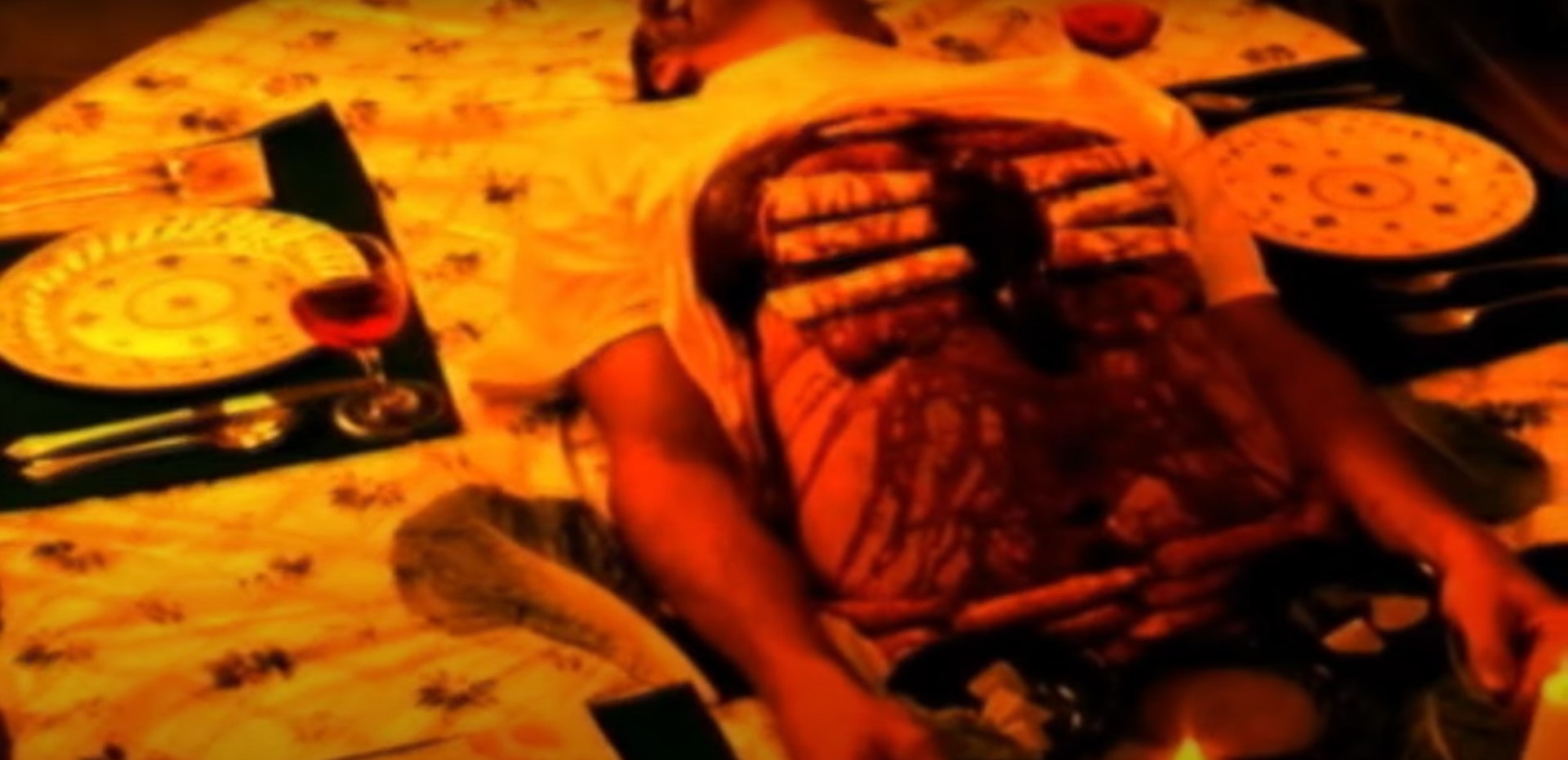
Femme fatales.  Dwarf-sized ghouls.  Werewolves in wheelchairs.  Voyeuristic snuff photographers.  Gas-crazy Nazis!  “Hard Rock Zombies” may thematically state rock’n’roll lives forever by way of tuneful necromantic resurrection, but the 1984 comedy-horror is a complete smorgasbord of absurdity.  Helmed by the India-born and Ivy League educated Krishna Shah  “Hard Rock Zombies” is a multifaceted vaudeville act set to the rock is the devil music trope.  Also alternatively known as “Rock Zombies” or “Heavy Metal Zombies,” Shah cowrites the metal music metastasizing script alongside David Allen Ball, both of whom would collaborate once and final more with the follow year’s teen comedy “American Drive-In.”   The in and around Los Angeles shoot is a production of the Patel/Shah Film Company with Shah producing and Shashi Patel serving as executive producer along with the debut of “Candyman” and “Lord of Illusion’s”  Sigurjon Sighvatsson and Steve Golin as associate producers. 

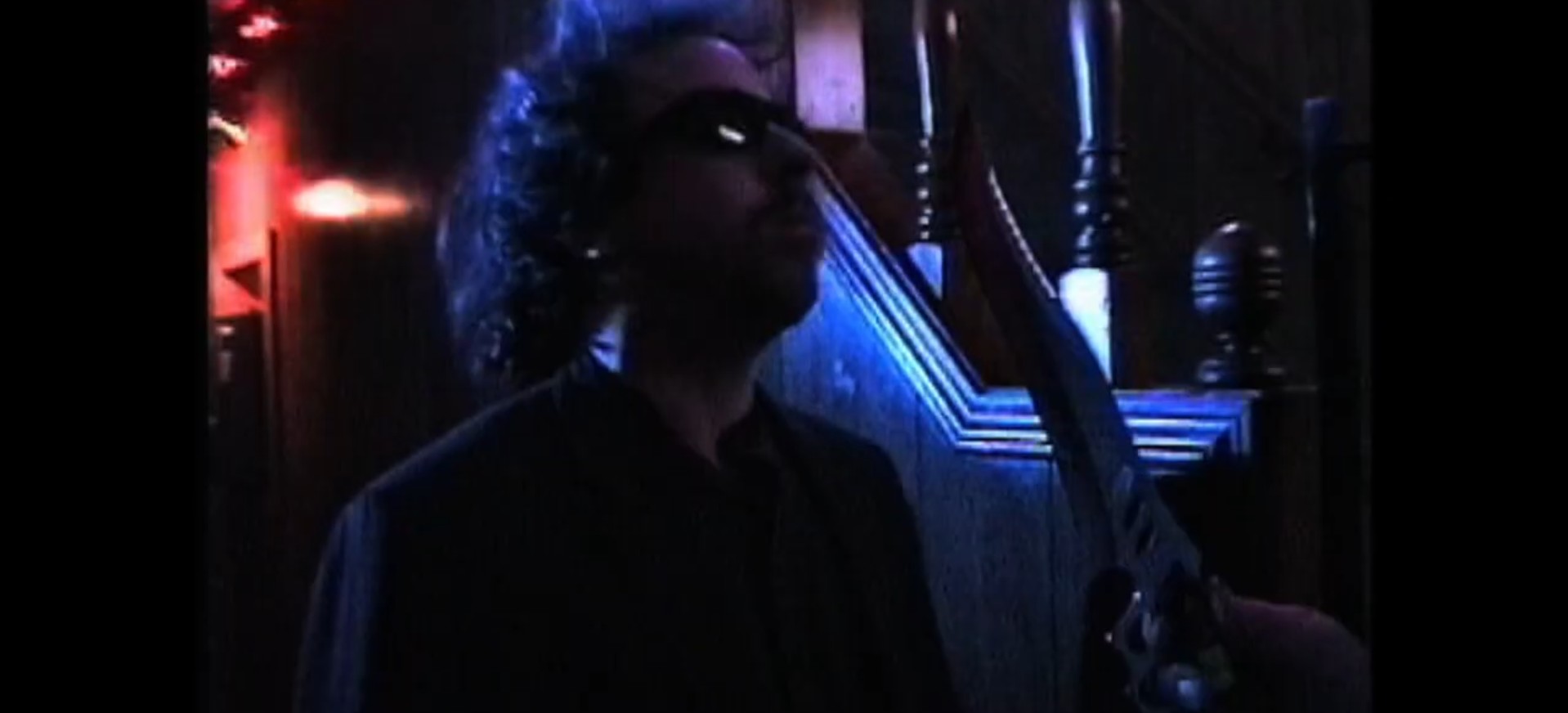
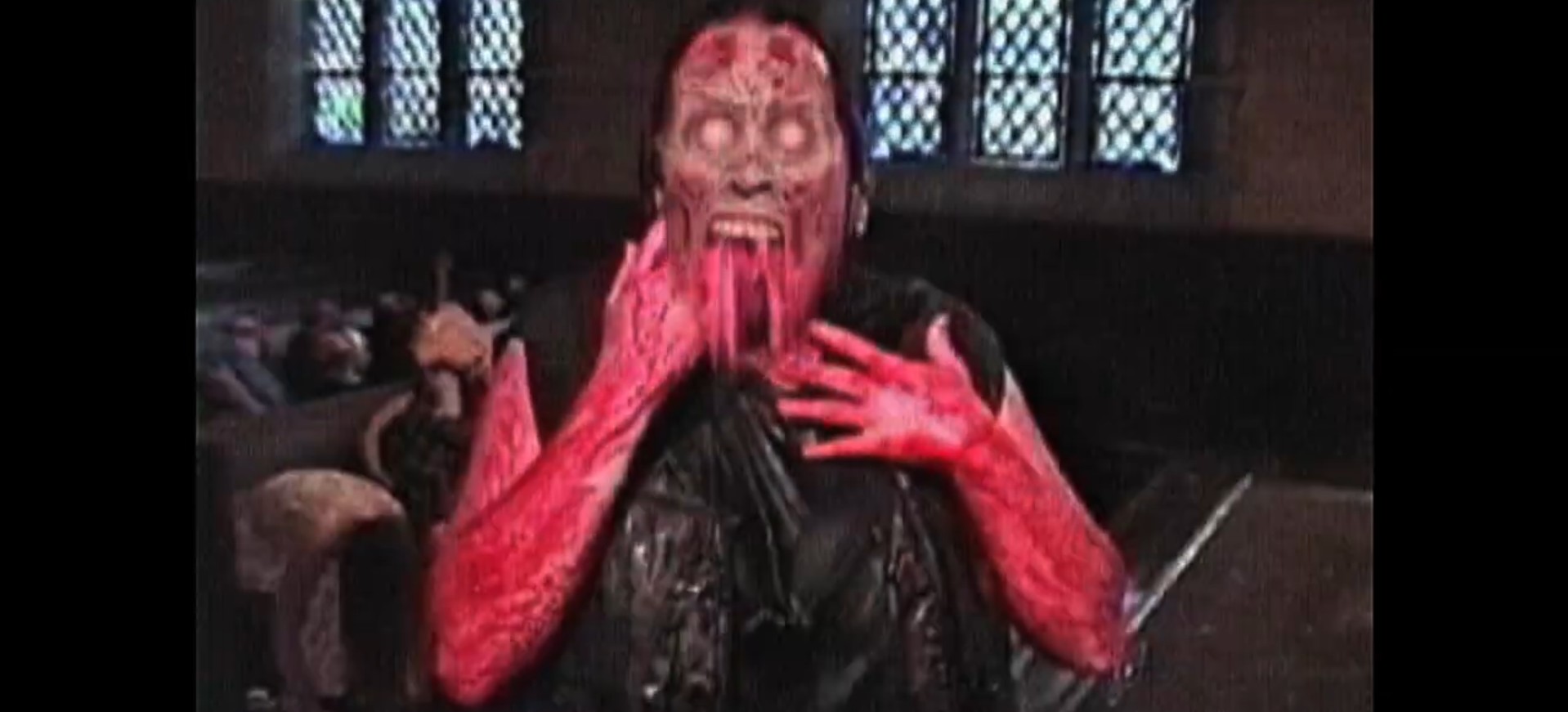
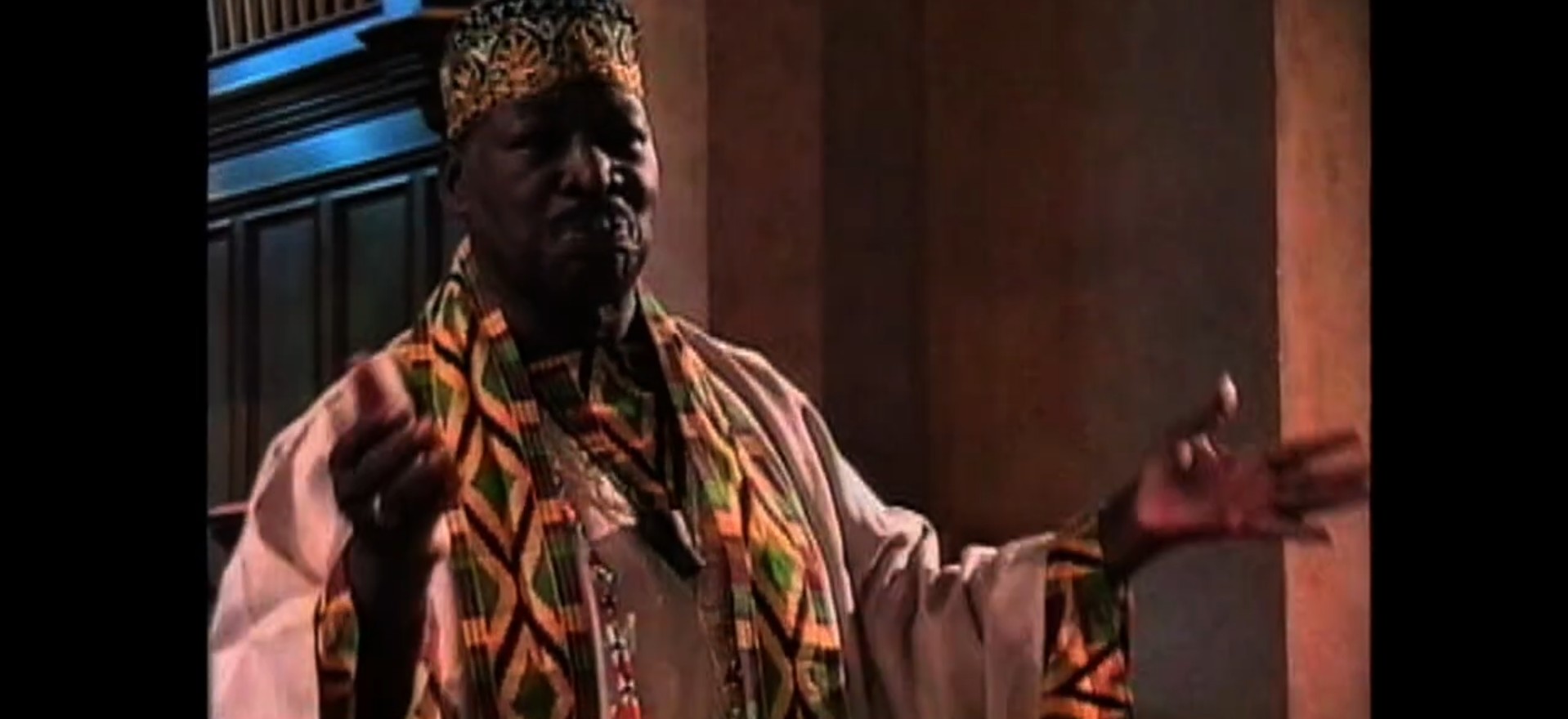
E.J. Curse, Geno Andrews (“Dr. Alien”), Sam Mann (“Roller Blade”), and Mick McMains make up the hair metal band Holy Moses and none of them had real acting experience.  The novice lot do their best to express themselves as an 80’s metal with large and heavily teased hair to produce maximum body and volume, tight and outlandish leather and revealing clothing, and apart from the competent and skilled skateboarding, move in antiquated dance moves familiar to the era.  They may not have a single convincing acting bone in their performance but credit to their overall appearance that speaks to the film’s title.  Though the band is intended central focus, they share a copious amount of screentime and development with the family of frightening agendas and secret identities.  The story even begins with attractive blonde Elsa (Lisa Toothman, “Witchcraft III:  The Kiss of Death”) seducing two young men to their demise while a slicked dress man takes pictures from the nearby bushes alongside two playful, dressed-in-black dwarfs, one human Mickey (Phil Fondacaro, “Willow”) and one monster Buckey (Gary Friedkin, “Cool World”).  It’s like a scene straight out of a David Lynch movie.  We learn this group belongs to an eccentric grandfather patriarch (Emanuel Shipow, “Biohazard”) and his wheelchair bound wife Eva (Nadia, “Dark Romances Vol. 1”) eager to strike down their next victims with clandestinely goosestepping and small mustache fervor.  Frazzled but loyal band manager Ron (Ted Wells) and Jesse’s Grand Guignol lover girl Cassie (Jennifer Coe) are seemingly the only two sane and rational characters who favor the sweet ballads of Holy Moses rather than the sinister genocide of an experiment happy dysfunctional family.  “Hard Rock Zombies” has an abundance of supporting characters and extras to give weight toward a Shah and company’s first-time production with a select secondary cast list of Jack Bliesener (“Crime Killer”), Richard Vidan (“Scarecrows”), Vincent Albert DiStefano, Christopher Perkins, David Schroeder, Michael David Simms (“Scarecrows”), David O’Hara (“Star Worms:  Attack of the Pleasure Pods”), and Donald Moran.

“Hard Rock Zombies” was probably more fun writing and performing in than it was piecing together a coherent narrative that spins like an unruly top going in unpredictable and varied wandering ways.  The amount of subplots against the core resurrection of a metal band erode the very essence of their supernaturally charged revenge because the primary focus on their rise from dead and how that resurrection incantation came into the rockers’ possession can quickly be forgotten as the exposition and the defining titular moment can be easily missed if you blinked for 0.0002 of a second.  There’s also the aforementioned circumstantial subordinate themes of adults and/or parents unwavering, harsh rebelliousness against the adolescent swooning hard rock and of the concealed true malevolent nature of the town’s murderous hodgepodge of a family that turn out to be bloodlust Nazis with an assumed case of monstrous, experimentational evil coursing through their veins, as seen with the unexpected shape-shifting wheelchair bound grandmother who can transform into a werewolf, complete with dual switchblades, and the ghoulie-like dwarf who eventually feasts upon himself into nonexistence.  “Hard Rock Zombies” transcends viewers into a bizarro world where, initially, seemingly plausible issues around an older generation’s labeling of infernal rock’n’roll music, stirring up townhall meetings and protests they see has harmful influence of the younger generation but then the topsy-turvy and screwball antics of heinous villainy goaled with and having already done committing atrocities is a complete farce on the actual, factual, historical events of ethnic cleansing.  Shah definitely makes light with the tone-deaf analogy with great zest and jest but without a more honed in effort and concentration on just the rockers back from the dead, this absurd 80’s comedy-horror fails to address its intentions.   

If not looking to spend a ton of money on the Vinegar Syndrome’s Blu-ray “Hard Rock Zombies,” the MVD Visual DVD is an economic alternative that won’t downsize your wallet.  The MPEG2 encoded, standard definition 720p, DVD5 suits this eccentric horror-comedy just fine, retaining its campy nature in the ballpark of an unrestored scan into 2K territory but still have the working print Vinegar Syndrome used for their high-def transfer, still presented in a widescreen 1.85:1 aspect ratio.  What’s encoded has not been sheened into an apt color correction and buffed with a higher pixel count for better, digital vivid saturation and better, digital defined textures, but “Hard Rock Zombies” is innocuous as the scenes require less eye squinting for finer details and a perverse need for range of color in what’s more of a surface-level squall of rock-infused, nonsensical horror.  Again, a technical spec that won’t knock your socks off and does muddle the fidelity quite a bit, the English Dolby Digital 2.0 Stereo has less amp, and this is where any kind of impact “Hard Rock Zombies” would have had hurts the most.  Extended Holy Moses montages and concerts, alive and dead, should be an unharnessed power of ballad rock and supernatural discords for a story driven by monsters and music, especially one that uses an Iggy Pop-like mumbling incantation to rise Jesse and his band mates from the grave.  English subtitles are available for selection.  MVD’s release is a purely a feature only substitute with no special feature and the standard DVD case has the same artwork as the Blu-ray counterparts, nicely tinged on its rad rock’n’roll and death illustrated cover art.  Another difference is the rating with MVD’s release coming in at a R-rating versus the NR Blu-ray from Vinegar Syndrome, yet this is most likely either incorrect rating or a re-cut of the film as both format features have a runtime of 97 minutes.  MVD’s DVD has region free playback. 

Last Rites: Rock’n’roll never dies! For “Hard Rock Zombies,” the phrase rings true with undead rockers seeking revenge from beyond the grave. For the DVD, there’s not enough overall elan behind the release to bang your head to in this barebones and untouched alternative that’s a good budget friendly option for the features only enthusiasts.

“Hard Rock Zombies” Rocks out on DVD! Check it Out Here!

Daddy’s EVIL Little Secret. “The Beast Within” reviewed! (Well Go USA Entertainment / Blu-ray)

“The Beast Within” is Calling! Own Your Copy Here!

Infirmed 10-year-old girl Willow witnesses one night a month her mother whisking away her rather distant father into the dense woods deep within the English countryside.  When brought home the next day, her father must be helped carried in, appearing haggard and weak from his strange and mysteriously kept overnight departure far from home.  The secret festers between the parents, as well with her grandfather, to a point where tensions rise to the surface and the family is slowly falling and drifting apart.  One night, Willow decides to sneak onto one of those one-a-month egresses and discovers her father, left chained inside a dilapidated structure in the middle of the wooded nowhere, transforms into a horrible beast.  From that point on, the family secret was no more, and she must come to terms with her parents’ deception and their struggling family cohesion before the next full moon rises above their isolated home compound.

Lycanthrope films are on the rise with the anticipation of two new theatrical releases that have seen positive reactions just by their trailers alone with “The Invisible Man’s” Leigh Whannell staying in the Dark Universe with “Wolf Man,” slated for the silver screen January of 2025, and “Scream of the Banshee’s” Steven C. Miller going wild and hair near this Christmas season with his chaotic and carnage-ladened “Werewolves.”  Kicking it off in the werewolf category however is English director Alexander J. Farrell making his debut fictional feature with “The Beast Within.”  The 2024 released conceited thriller plays on a child’s perception of events, especially when she sees her parents joyless faces, co-written by Farrell and more seasoned screenwriter Grear Ellison (“A Woman At Night”) and both have worked previously on Farrell’s last two projects, a documentary entitled “Making a Killing” that sheds like an antiquated law that results in capping financial need after preventable medical negligence and another cowritten session, a RomCom in “How to Date Billy Walsh” that was also released in 2024.  The UK production comes from a conglomerate of companies in Paradox House, Future Artist Entertainment, and private equity group Filmology Finance and is produced by the father-son duo Gary and Ryan Hamilton of Archlight Films who oversaw global sales of the film, Martin Owen, Tammy Batshon, Spencer Friend, Evan Ross, Sebastian Street, and Paolo Pilladi.

Looking for his next big hit to branch out from the shadow of “Game of Thrones’” bastard hero, Jon Snow, is Kit Harrington taking the headlining role as an intermittent explosive disorder father struggling to keep his family whole because of his own family curse.  Often resembling the HBO role that made him a household name when donning that iconic large fur coat that became an innate symbol of the Stark family, Harrington’s Noah character fails to become uniquely recognized as he’s quite the mystery with little background to his compound abode and his occupation of what seems to be a lumberjack of sorts, always cutting down trees in the nearby forest.  What’s even more mysterious is the family lineage of temporarily transmogrifying into an aggressive, animalistic beast when the full moon is high.  His reason for being cursed stems mostly from anecdotal knowledge of his own grandfather’s tragic history with being plagued by the same condition.  This places Noah’s family onto spider-cracking eggshells as his wife Imogen (Ashleigh Cummings, “NOS4A2”) finds herself loyal to a fault by caring for Noah’s condition but taking the brunt of his abusive behavior all the while daughter Willow (“Caoilinn Springall, “Stopmotion”) initially doesn’t know what’s truly happening but has this underlining fear of her father, noted by wedging her rocking horse underneath her room’s door handle every night.  Willow’s grandfather and Imogen’s dad Waylon (James Cosmo, “Highlander”) serves as a buffer between Noah and his family, maybe even perhaps the voice of reason.  Performances are mostly strong with Harrington forcing Noah’s hand a little to be brutish, a quality that doesn’t quite stick as intended.  There’s also some finale unresolve essentials with Waylon that doesn’t determine his fate as we’re left with only a threadbare implied outcome, an unfortunate state for one of the handful of principal characters.  The supporting actors rounds out with Ian Giles and Martina McClements (“When the Lights Went Out”) who never share scenes with the key intimate cast.

Aforementioned, “The Beast Within” is from the perspective of a child, in this case a child with great imaginative qualities as seen with her hobby of matchitecture of her home and nearby buildings, but the story is also definitively an allegory for an abusive husband and father that uses the lycanthrope mythology as a bestial symbol for one man’s vile nature.  Noah’s deceptive behavior lures in what the family wants, a loving husband and adoring father providing, protecting, and caring for them, but Farrell strings along a hidden truth with spot visual clues of Noah’s true self.  Those clues are terribly evident to the family devolution but there’s also a stasis of hope when Noah’s charm and smile glimmer through the cracks of his monstrous shell that’s mostly kept at bay from the audience.  The allegory keeps well until the end and then the allegory loses its legs and not mounting to much when everything laid before our eyes in the story is suddenly washed away by Farrell’s inability to stick with his metaphorical story and go explicit in the last few scenes when the child’s perspective veil is dropped, as if the new feature director couldn’t trust audiences to come to their own conclusions.  Yet, timeless set locations in the expansive English countryside, the compound set design, performances, and the limited but practical effects of the wolf man add to the independent film’s slow burn horror-dramaturgy that seizes the opportunity to label man a beast under his worst genetical conditions. 

A terrible, dark, ancestral secret can never be contained and now the terrible animal is loose onto Blu-ray home video from Well Go USA Entertainment.  The AVC encoded, 1080p high-definition, BD25 stacks up against the rest of the label’s catalogue as par for the course with a slightly softer image mostly under natural daylight and key night lighting and foundationally based with a mixture of yellow and red hues.  Though soft, details are not lost.  There’s an abundance of sharper medium to closeup shots, especially in darker scenes, where granular textures surface and the layers separate more distinctly.  Where the softness prevails is in the exterior wide shots of the 1.78:1 aspect ratio that can’t seem to not only create a greater sense of space but also can’t fathom the finer diversities of road, land, forest, and structure in what is likely a dovetail diffusion of color around the edges.  Ultimately, your brain figures it out but to the eyes the landscape is a bit one noted.  There is a pinch of splodgy murkiness in the shadows that doesn’t affect the presentation immensely.  The English DTS-HD Master Audio 5.1 diffuses the layers with solid balance.  There’s plenty of isolated audio capillaries to carry over the ambiance denotations of an ever-present fear, such as the howling wind, the violent banging of a fortified gate, or even the animalistic sounds deep in the distance, creating the depth needed to present danger from afar.  This is also coupled with tighter tension of closer vibrations, the hacking of the trees, the creaking of a floors, etc., for heightened lossless reproduction.  Dialogue renders clearly and cleanly throughout.  English and French subtitles are available for preference.  In the special features department, this Well Go USA release only comes with the film’s trailer plus pre-feature previews of other label releases.  The Blu-ray disc is pressed with a clawed imagery inside a standard Blu-ray Amaray with snap-lock and has only an advert card in the insert for this film, sharing space with “Twilight of the Warriors:  Walled In” and “You Gotta Believe.”  Rated R for Strong Violent Content and Language, “The Beast Within” has a runtime of 97 minutes and is listed as region A playback only but I was able to play the disc in Region B. 

Last Rites: “The Beast Within” is a by-the-book and subdued English allegory for fearsome behavior and Farrell’s debut is finely drawn but up to a point when audiences are quickly subjected to an unnecessary and redundant end-all, tell-all of daddy’s true being.

“The Beast Within” is Calling! Own Your Copy Here!

Isolated Between Mountains, EVIL Rises Out of the Refuge. “Lycan Colony” reviewed! (Visual Vengeance / Blu-ray)

“Lycan Colony” available on Blui-ray Collector’s Edition!

A big city surgeon on the mend of an alcohol problem and two siblings searching for their father who disappeared in the mountains hunting a mysterious big game find themselves in a small town inhabited by an ancient werewolf tribe.  Mostly seeking a peaceful way of life, many of the werewolves have tamed their inner beast to live normally isolated from their human neighbors to avoid bad blood and fear-driven conflict, but a rogue faction of werewolves has tasted human flesh, transfixing them with an insatiable need to hunt and feed on human outsiders who have uncovered the small town’s truth.  On the verge of the Equinox where every lycanthrope resident will transform into the primal versions of the beast, a select few have been able to conquer not losing their humanity as they team up with trapped, arsenal-ready humans and the eldest werewolf who is half witch to squash the evil werewolf population for good. 

In the rural areas of New Hampshire 2006, Rob Roy tries his creative hand at making a movie, writing a script ingrained with his personal affinity for fantasy and werewolves, with the action-packed, shot-on-MiniDV camcorder thriller “Lycan Colony.”  Roy’s first attempt is ambitious to say in the least with a vim and vigor narrative with a visual and practical effects heavy ornament that Roy single-handily constructs all himself learning all the tricks to the trade as he goes.  What ultimately results is initially a colossal flop of technical mishandlings, bad acting, and rushed final products, but in recent years nearly two-decades later, “Lycan Colony” has been revived with a second chance by fans of the so bad, it’s good sect who, like the evil werewolves in the film, have tasted blood and want more.  Rob Roy self produces the film under his Wits’-End Entertainment company.

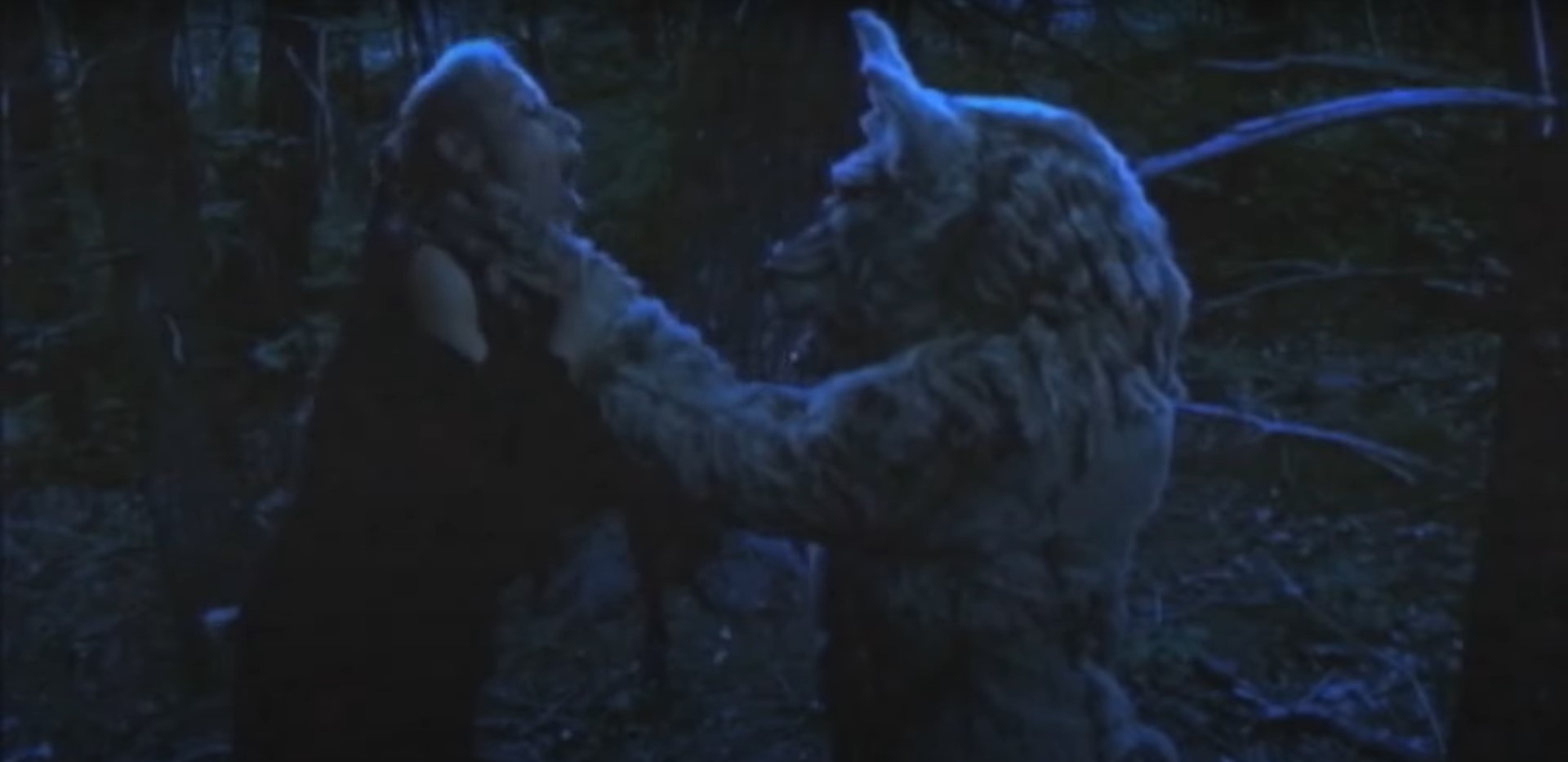
In producing a movie yourself, with your time, money, equipment, and the little know-how of the process, Rob Roy casts mostly family, friends, and newcomers in his New England werewolf film.  Both of the director’s sons make it into the picture with the older Ryan playing the mistakenly werewolf bitten teenage son of Dr. Dan (Bill Sykes), the surgeon, and Roy’s youngest, Jacob, as a presumed pup running for his life from hunter Sgt. Roger Allen (Paul Henry) as we see in the preface opening.  Though an important piece to some aspects of the story, such as Stewart’s creaturized adolescent transfiguration to help Dr. Dan and wife Sandy (Kadrolsha Ona Carole, “Attack of the Killer Chickens: The Movie”) understand and cope with their now lycanthropic son, Roy’s boys are not the centralized characters as the narrative awkwardly pivots from building up Dr. Dan’s choppy family dynamics and his alcoholic mishap substory to more nondescript kickass and chew bubblegum action of good versus evil as the missing Sgt. Roger Allen’s offspring, the commando-suited daughter Russ (Gretchen Weisiger) and the bad werewolf killed yet risen to the ranks of being a good lycanthrope Doug (Bill Finley), team up with the eldest wolf-witch  and spiritual liberated Athena (Kristi Lynn, “Hypnagogic”) and David (Sean Burgoyne) who can control his beast side with hero pose mediation and tribal chants.  As you can tell, it all becomes disturbingly clear as mud on what exactly we’re bearing witness to, but the “Lycan Colony” burghers flesh out with Sophia Wong, Steve Pascucci, and Libby Collins.

There’s nothing inherently wrong with Rob Roy’s good wolf pitted against bad wolf with man trapped in the middle story.  Throw in some subtle themes of alcoholism juxtaposition where the mountain water tames the beast with hints of silver nitrate and Dr. Dan’s post-career predicament that sends him to AA meetings and also themes of puberty or some kind of other rite of hormonal passage and “Lycan Colony” can work as an action-fantasy with a strong horror element.  The problem lies in the ambitious undertaking for a first-time filmmaker with more gung-ho carpe diem than actual experience and Roy will be the first one to tell you, as heard in bonus content interviews, his goal is to go big and not limit himself with a tightknit narrative with little-to-no special effects.  To the detriment of “Lycan Colony” however, that mentality of thinking took a three-month shooting-script down to a mere three weeks, rushing the final product to the point of using a blue screen for the nearly the entire third act in a real shoddy piece of VFX compositing.  Transpiring on screen resembles similar to the early days of 2D fighting video games with its mix of antiquated motion capturing technology, practical effects, and digital matte but while those traits appear raw, lifelike, and add that certain je ne sais quoi that makes it so attractive, for “Lycan Colony,” the effect miscarries for its time in what is a laughable imbrication.  For some, “Lycan Colony’s” campy crust will be a holy grail to obtain; one could compare Roy’s film to Dave Wascavage’s “Suburban Sasquatch,” another Visual Vengeance, early 2000s, revived flick that had similar rough-cut visuals.  For others, like me, what comedy rises to surface is digestible, the rest of the movie might make you sheepishly queasy. 

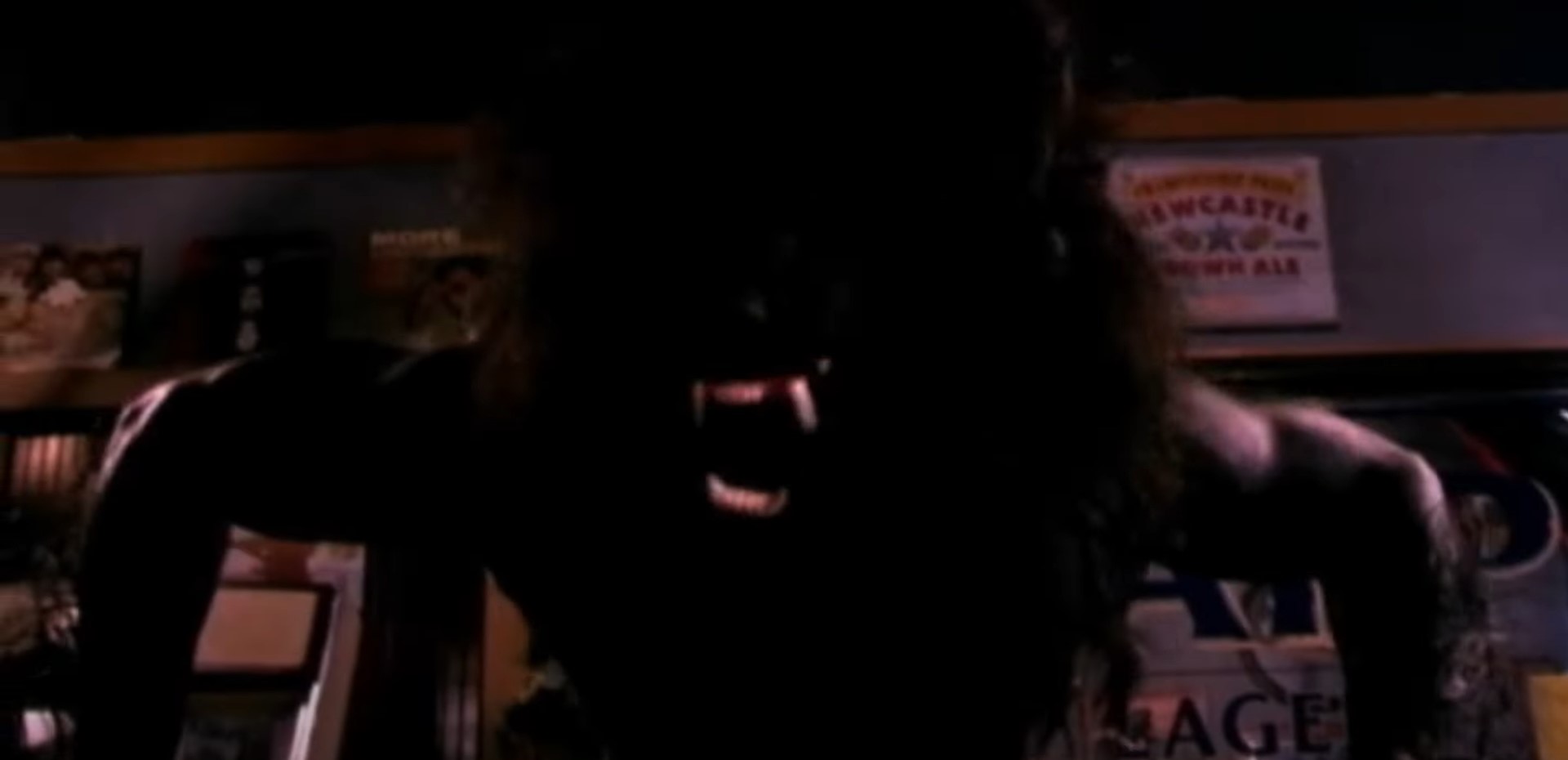
For the first time on Blu-ray, “Lycan Colony” has become a part of the Wild Eye Releasing’s Visual Vengeance tribe.  The AVC encoded, 1080i upscaled, BD50 is presented in a full frame 1.33:1 aspect ratio, sourced from an original tape shot on a Panasonic DVX100 MiniDV at 24fps.  Safe to say nothing will outshine celluloid, millimeter film or even today’s digital cameras as that period of time where videotape made a stand offered a rival format with cheaper costs and comparable picture quality; yet videotape, as with “Lycan Colony,” squeezes the resolution combined with matted visual effects, making inaccurately distanced composite look even more compressed.  Details suffer through the compression of MiniDV’s interference noise, undersaturation, and vertical tape impression lines seared into a few frames.  The undersaturation lies the biggest concern leaving behind darker tones that keep the image popping with color, rendering the entire scheme more overcast even when not exposed to rough gel lens which is used quite often in various Crayola hues.  The English lossy Dolby Digital stereo 2.0 has enough strength to get around and get through with a tenuous dialogue track complicated by the not truest of fidelities on likely the onboard camera mic and by the boxy echoes of a blue screen stage, likely Roy’s garage.  Stock file notes give the full body suited lycanthropes enough growling canine bite and the gunshots are awarded cacophonous explosivity, solidifying a decent range of sound, but there are missed or asynchronized effects against the action with brief seconds of delayed catchup or just plain omission.  Boxy areas eradicate the depth, especially in the whole third act when the last battle is held in the woods but is mainly a blue screened forest, so the compounding loss of milieu affects atmospheric track greatly.  Visual Vengeance’s track record on delivering new special features has not gone unnoticed and the trend continues with “Lycan Colony” with a new interview with director Rob Roy.  Also included are two commentary tracks:  one with director Rob Roy and a second with B&S About Movies’s Sam Panico and Drive-in Asylum’s Bill Van Ryn.  A second version of the film is a full Rifftrax version, a blooper reel, the “Lycan Colony” music video, original trailer, and the Visual Vengeance trailer round out the release’s ancillaries.  The colorful Stephen Gammell-esque, presumably pastel, front cover illustration greatly over exceeds expectations but is nonetheless phenomenal full-moon imagery on the cardboard slipcover and also dichotomizes the style on the translucent Amaray Blu-ray case’s cover art depicting a scene from the film of a hungry wolf behind the alcohol-decked bar.  And also true to Visual Vengeance, the release is jammed-packed with inner goodies, such as a New Hampshire Forest Scent air freshener, retro VHS Sticker sleeve, a 3-page pamphlet with essay from Sam Panico with color picture, and a folded mini-poster of the Blu-ray cover art.  Not also to neglect to mention is the reversible cover art with the original one sheet art.  The Visual Vengeance release comes region free, unrated, and has a runtime of 90-minutes. I’m extremely happy for the appreciation and newfound love director and enjoyer all-things-werewolf-fantasy Rob Roy is receiving for his resuscitated escapism but, for me, “Lycan Colony’s” jerry-built and doesn’t come anywhere close relieving the so good, it’s bad itch in Roy’s filmmaking first pass done on the cuff. 

“Lycan Colony” available on Blui-ray Collector’s Edition!

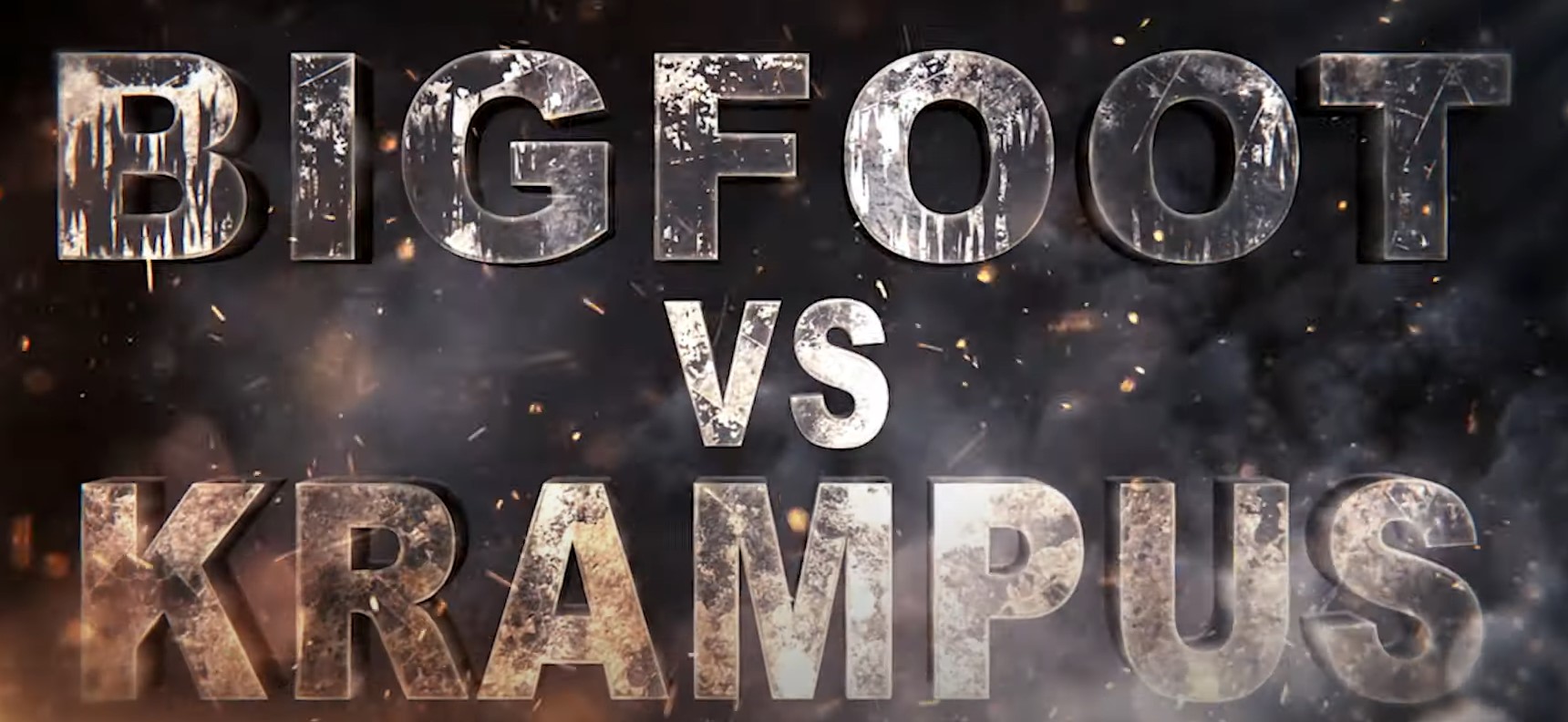
EVIL vs EVIL vs EVIL vs EVIL vs EVIL etc., “Bigfoot vs Krampus” reviewed! (Ruthless Pictures / DVD)

Merry Kirstmas to all!  “Bigfoot vs Krampus” on DVD!

With Christmas time approaching and the Illuminati forces on the retreat, the Allies are in high spirits. Space rough neck Van Helsing considers taking his relationship with Allied Forces leader Princess Kali to the next level. Unfortunately Satan is set to ruin the moment. From the depths of Hell, the wicked Lord Of Darkness summons the demon spirit of Christmas, Krampus to wreak havoc on the living. Upon hearing the news, the clone of magician Aleister Crawley joins forces with the reptilian form of General Stalin and the Illuminati to mount a Christmas Eve attack on the Allies forcing Van Helsing and Kali to take drastic action. With help from the rowdy space rouge Bigfoot, the Allied Forces bait a syndicate of monsters to help take down the fiendish Krampus and restore peace to the galaxy.

Usually, I write my own storyline synopsis for the physical releases I provide review coverage for as there’s something about firsthand accounts that interpret more clearly and is more detailed in story events than the tagline plot that can be misleading at times, whether be a false marketing ploy to sham potential viewers into watching or goes to the other extreme with a less-than-desirable summary of drab when really the movie is much more magical, but with the 2021 released “Bigfoot vs Krampus,” the bizarre synopsis is worth every word count calorie.  Coming off the heels of a decent bigfoot picture from 1976 (“Creature from Blake Lake”) and playing into the festive Christmas holiday theme with the anti-Santa folklore, I was fingers crossed and impossibly hopeful to be two-for-two in the Sasquatch saga that kills two birds with one stone in doing my duty watching holiday-horror.  Boy was I terribly mistaken.  “Bigfoot vs Krampus” is just a full-length computer-generated cog in the machine of writer-and-director BC Fourteen and is a part of his so-bad-they’re bad versus film lot of an unofficial science fiction, comedic and satirical saga of generally evil in nature icons facing off against one another….in space.  “Bigfoot vs the Illuminati,” “Bigfoot vs Megalodon,” and even “Trumpocalypse Now!” and “Trump vs the Illuminati” really speak the filmmaker’s political stance as well really speak volumes on the filmmaker’s wayward clashes of alternative universes that amalgamates characters from horror, sci-fi, folklore, and video games into battle beyond the stars cratered epic. From executive producer Tony Cliftonson and producer Randall Finings, both involved with “Tickles the Clown, another spinoff in BC Fourteen’s gonzo-galaxy epic, “Bigfoot vs Krampus” is a production and a presentation of indie distributor Ruthless Studios.

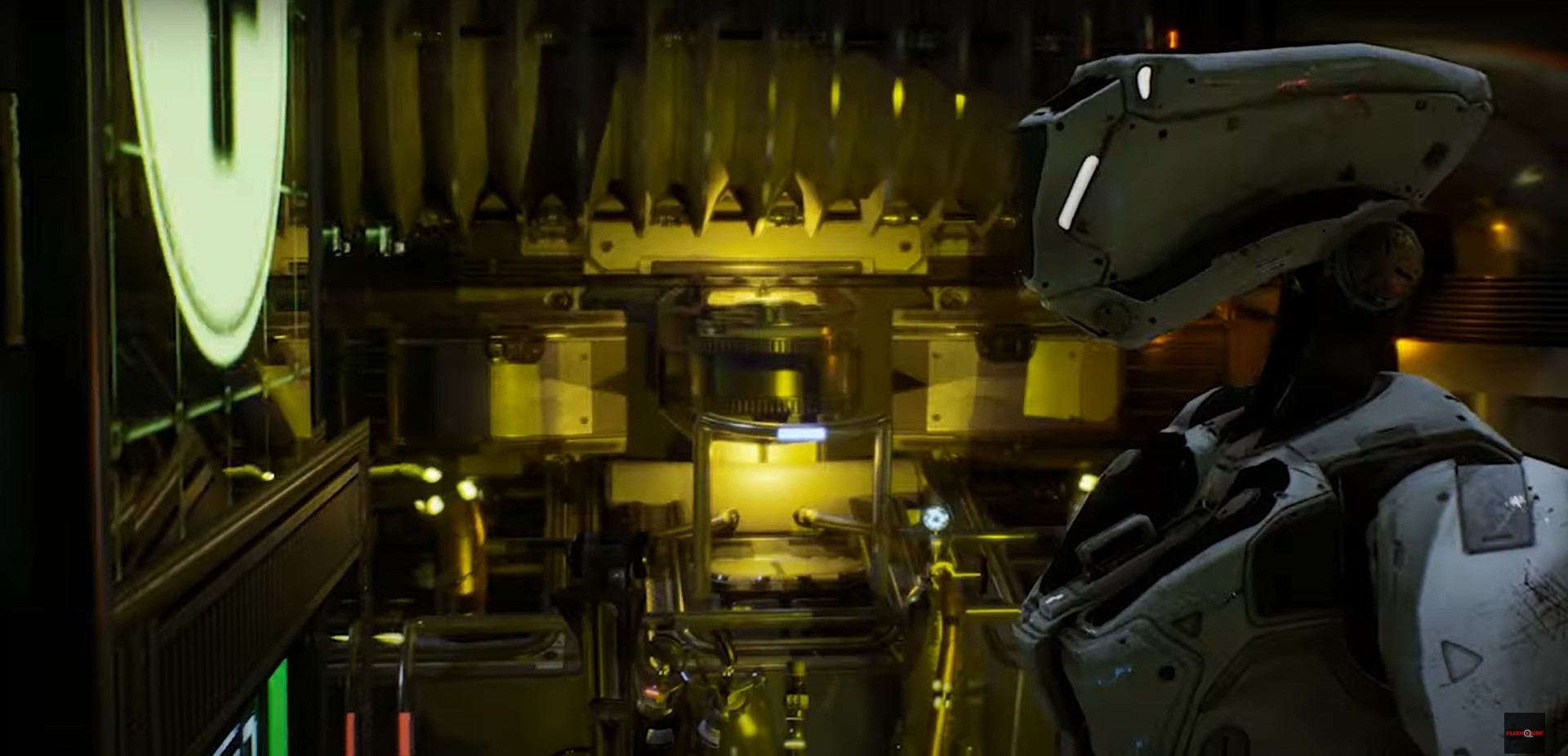
“Bigfoot vs Krampus” is total, 100% computer-generated graphics with only voiceovers to bring the highly kinetic, standing-in-place characters to resemble something that looks like life. BC Fourteen doesn’t stray too far from his regular voice talent as many of the same characters reoccur or popup randomly in this galactic gasbag of all talk and little action. When not voicing family friendly films, Marco Guzmán finds himself fouling the language barrier of space as he lends his vocals to the majority of principal leads and supporting char acters, such as the titular hairy primate Bigfoot who in the film sounds like a bastardized, sonorous, and raspy version of Fat Albert. Guzmán also voices another principal lead in Van Helsing, the 16th clone of the original vampire slayer. Known by his friends as V.H., Van Helsing looks less like a doctor with a stake and more like the Master Chief from Halo, never removing his helmet as he spews surefooted cockiness across the galaxy. Guzmán also voices the reptilian form of a reincarnated Joseph Stalin as well as the Egyptian sun God, Ra, who has ambiguous loyalties but can be useful to the allies as an all-seeing eye of the universe. Carli Radar voices humanities last hope and hero, Kali. The allied forces leader is pregnant with V.H.’s baby, a contentious sore point for Van Helsing who felt tricked into providing Kali a progeny, but has to become mankind and the illuminati, stereotypical green Martians with big black eyes and small mouths, last leader when the Illuminati’s Princess is destroyed by Krampus (who is oddly not listed as being voiced in the film’s credits), Satan’s partner in clinching power over the allies. The voice talent rounds out with Nate Trevors, Edson Camacho, Wes Bruff, Leslie Parsons, Simon Daigle, Carl Folds, Robert Forth, and BC Fourteen.

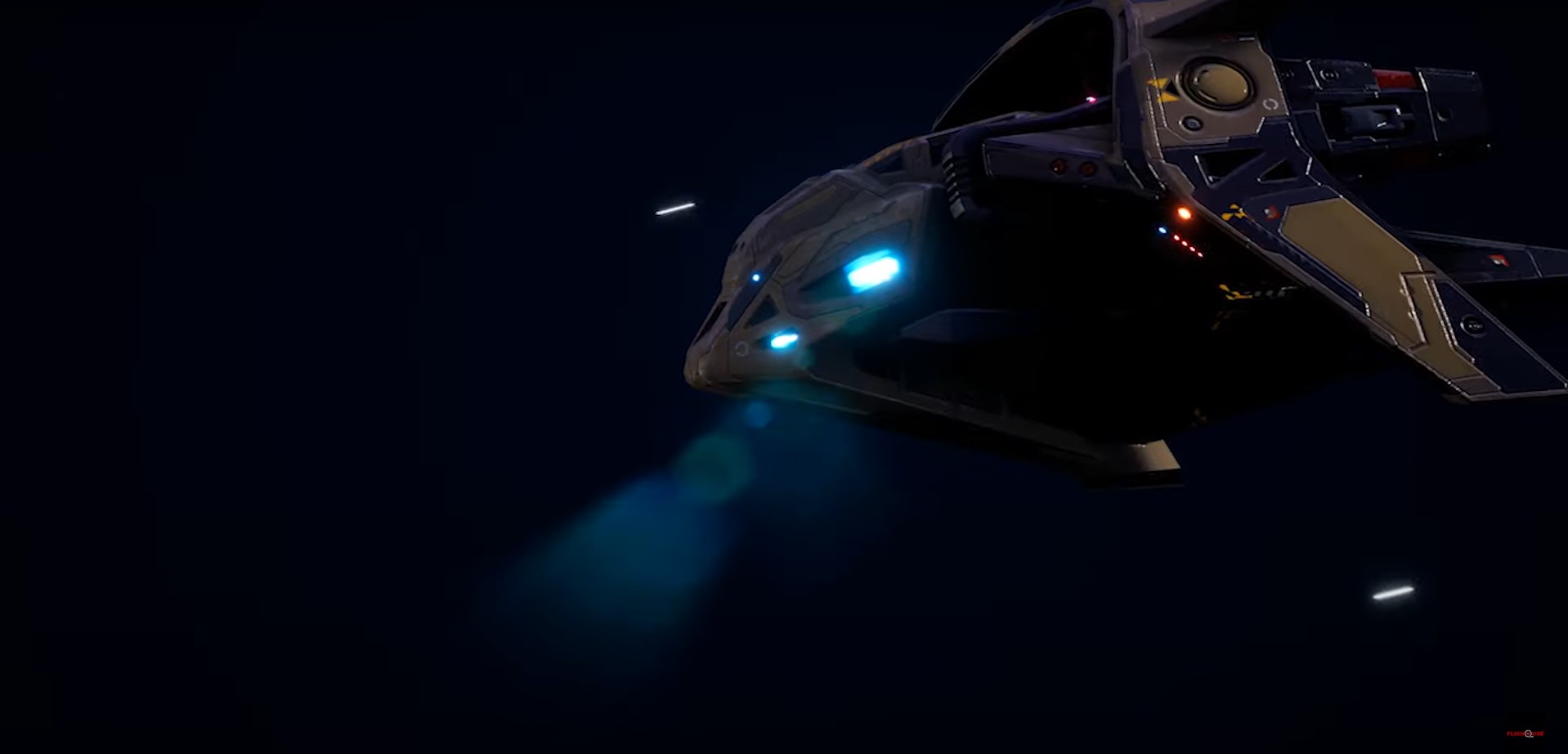
What do Bigfoot, Krampus, Megalodon, Clowns, The Terminator, Dummy Dolls, The Boogie Man, Werewolves, Satan, Anubis, Ra, and Jack Skeleton all have in common? BC Fourteen CGI’d their likeness into his…I don’t even know how to classify the film. I’ve had a run-in with a BC Fourteen film 8 years ago with 2014’s “Werewolf Rising” when the Pittsburgh, Pennsylvania-born filmmaker went under the name BC Furtney and aside from a stellar performance by the always captivating Bill Oberst Jr. and Irena Murphy baring a full moon going snout-to-nips with a werewolf, “Werewolf Rising received a mixed review but was still comprehensible with a start, middle, and an end. Though I stress the comedic and satire, a precaution must be instilled as the unfunny “Bigfoot vs Krampus” drags through the mud a trove of select horror and sci-fi pop icons in carbon copy tiny spaceships, flying around in a muddlesome mess, and rendered completely unnatural in an advanced resemblant version of the Goldsrc engine – you should see Bigfoot run down the ship’s corridors. If “Bigfoot vs Krampus’ were a series of cinematic story intercuts sewn together with gameplay axed entirely, I would believe it, and I’m sure, having spot check a few of the sequels, prequels, and spinoffs of the same caliber, that some animated scenes are recycled. There’s definitely recycling happening in this feature. If the war between the Illumanti-Humans-Bigfoot allied forces and every evildoer under the sun wasn’t thematic enough, the pseudonymous BC Fourteen throws in Van Helsing’s struggle with conscious as the cloned hired mercenary with legendary blood lineage skips town and on his baby’s mama because he does not feel appreciated in a fight that’s technically not his. The director also adds a subplot of Bigfoot checking in with old friend, and apparently cafe barista, Anubis to make sure the Sun Deity Ra isn’t fibbing about Van Helsing’s unexpected demise at the hands of Krampus. Everything does circle back around to an open-ended showdown for that next exposition heavy installment of intergalactic garbage made with no heart, no respect and very little effort.

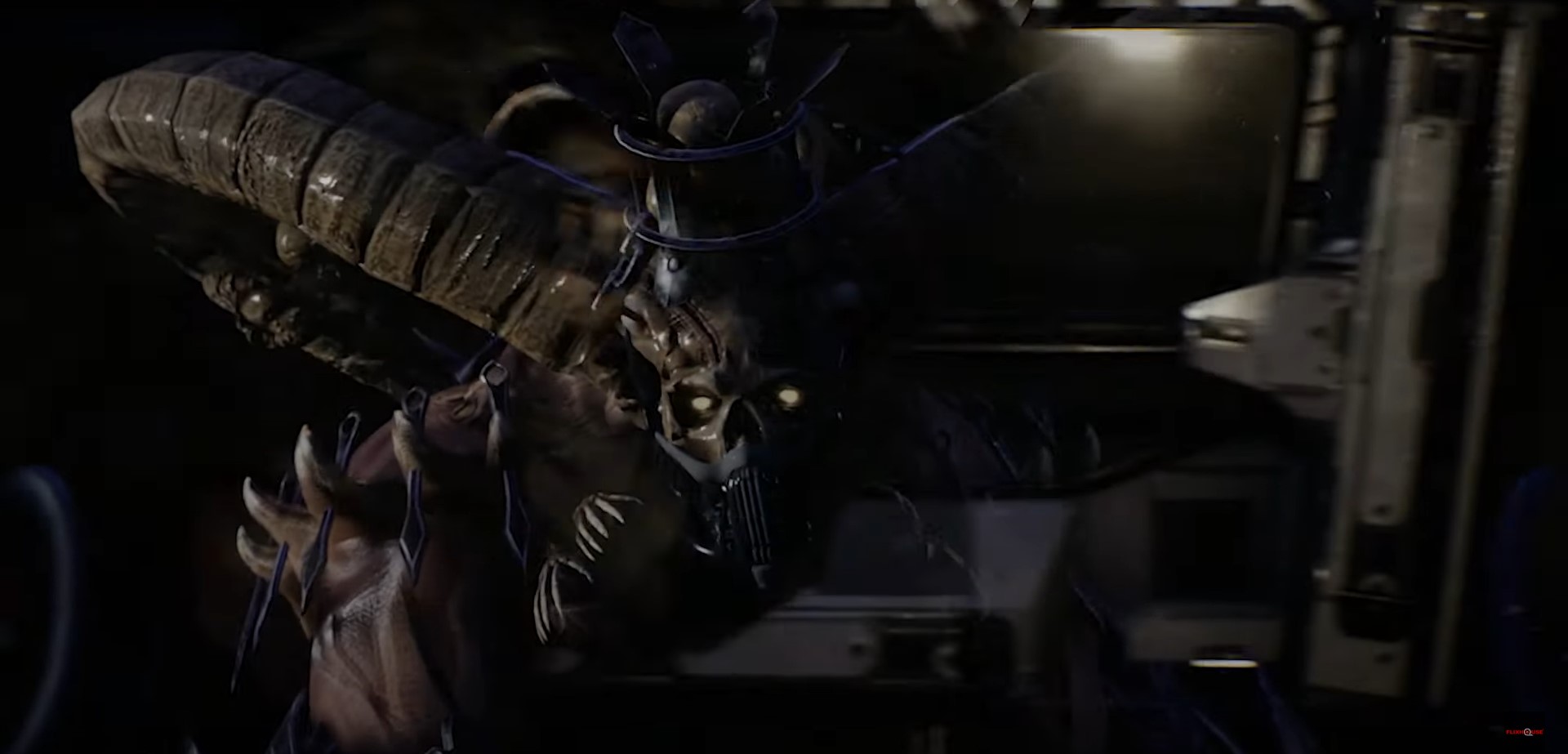
If the synopsis didn’t frighten you off from watching the film, text pulled word-for-word from the Ruthless Pictures’ DVD back cover, I surely hope this review left you with a bit of common sense prior to watching a cool and kitschy what if versus scenario. The Ruthless Pictures DVD presents the glossy computer graphics in a widescreen 1.78:1 aspect ratio. I will admit the animation provides here-and-there tactile moments, such as battle scuffs on robots or the ridges, grooves, and lighting on Krampus’s curled horns. All the animation looks about the same throughout, leaving a one-note taste that’s hard to wash out, but the at times, the CGI provides that nice ragdoll feel for humanoids Van Helsing and Kali and the lighting/shading does make appear more luxurious. Compression issues include background banding and splotches in darker spaces, but for the majority of the feature, those issues are limited. Though no listed on the DVD’s attributes, my players states “Bigfoot vs Krampus” has a single audio option – a Dolby Digital 2.0. For a science-fiction baster war, the lossy format is a lackluster that doesn’t surprisingly match all the other qualities, pushing out a mediocre 5-6Mbps average. Option English subtitles are available under the static menu. The DVD is a bare bones release with zero bonus content. The DVD is encoded region free and has a runtime of a merciful 70 minutes. Bigfoot films are back in the dumps again for this reviewer as “Bigfoot vs Krampus” is a flurry of insipidity and, the worst part of it all, it doesn’t add anything to the Christmas holiday horror subgenre with the Krampus module built-in for the sake of impersonating a something about as old as it’s folklore, a space invader.

Merry Kirstmas to all!  “Bigfoot vs Krampus” on DVD!

EVIL Lays All the Cards on the Table. “As the Village Sleeps” reviewed! (Indie Rights / Digital Screener)

Sarah is throwing a birthday party at her stepdad’s large house on Indian reservation land.  What should have been a quiet, boozy night with a handful of close girlfriends turns into a bigger and tense shindig of drugs and alcohol when her ex-boyfriend’s band and her step brother and sister unexpectedly show up at her doorstep.  With them comes a game, called Lynched, her ex purchased at the nearby gas station, but after playing, then drinking, the night away, the quickly find out the game is far from being over.  The mysterious card game comes to life, pitting friend as foe, and Sarah’s friends disappear one-by-one in the order of their in game deaths.  Leveled heads tip in the balance of fear and loss as the game plays havoc on their psyche, creating nightmare visions and that feeling of being watched and hunted, and the rules are anything goes when the game goes halfheartedly unfinished.

Werewolves.  Witches.  Vindictive townsfolk.  Murder.  Lynched, the game, sounds like an intense and medieval whodunit that insidiously presents mistrust into who you think are your closest friends and allies.  An interesting setup for the Chloë Bellande penned and Terry Spears directed 2021 released horror-mystery thriller, “As the Village Sleeps.”  The feature is Bellande’s first produced script based off her short, “While the Village Sleeps,” she wrote and directed in 2012 and with a few tweaks to the characters and location, the “American Terror Story” and “Hell’s Belle” director Spears, whose career as a musician only recently sought expansion into filmmaking, depicts that some games should never be played.   The independent film is a production of Spears’ 19 Artists Development and is co-produced by Kris Young as well as award-winning producer Gray Frederickson of “Apocalypse Now” and “UHF.”

Starring in her first feature film, Eleonora Saravalle has to be puzzler piecing together the deadly mystery intruding upon her character’s remote birthday bash.  The rather tall Saravalle is paired up with a rekindling love interest in the rather short Oliver Rotunno in their respective roles of Sarah and Alex who hold onto a sparkle with a rough patch in a rocky relationship history that stays in the past never to be fleshed out from their backstory involving Sarah dumping Alex for unsaid reasons.  That dimly lit sparkle doesn’t really shine through much between Saravalle and Rotunno with a dynamic resembling more big sister and little brother than crisscrossed lovers.  More so than the sibling rivalry from Sarah’s stepsister Tala (Shiah Luna, “Age of the Living Dead”), and stepbrother Jacey (Daniel Olguin) with an uptight and contentious static background noise that, again, fails to come to ahead about why Tala is stubbornly irritated with Sarah; instead, the attempt at building something more between them during shared terror experience quickly fizzles out of complacency without so much as a hurdle to make their bond more impactful.  None of the characters are terribly impressive or worthy enough for sympathy, not even the flawed ones had any emotional weight when meeting their maker, falling into uncomplex tropes stapled to the genre such as with the naïve party girl Connie (Chloe Caemmerer), the immature rocker Matt (Rane Thomason), and the I-hate-city-slickers town cop (Mark Adam Goff).  The more interesting characters, like the old, long in the tooth, gas station attendant who sold the game and walks to work every early morning, doesn’t receive the time of day though very important to the plot.  “As the Village Sleeps” rounds out the cast with Michael Gum, Tyler Malinauskas, Kenzie Leigh Spears, Victoria Strange, Winnie Du, and Otis Watkins as the elusive Midnight.

“As the Village Sleeps” has too many strikes against it to ignore.  Between significant plot holes, underdeveloped characters, snuffed out offshoot side stories, and an arterial scenario struggling to stay cohesive by a bunch of no-named actors, who more or less do okay in their lackluster residing roles, the already low-budget production deserves every grain of a derisible reaction with its horrifying-veneered derivative hand at “Jumanji.”  Instead of a stampede of elephants, a ferocious crocodile, and a hairy Robin Williams being roused from out of the board game world by the roll of the dice, the card game Lynched barely rears itself back into the fold after the players supposedly don’t finish the game in order to drink themselves into a stupor.  Only just a handful of cards reappear on the spot where those disappeared, turning the game into a supernaturally present character without ever manifesting tangibility and that becomes a running motif for Spears’ film, that lack of finishing something to elicit a gratifying arc of completion.  We see fragmentary elements everywhere with the aforementioned character dynamics between Sarah and Alex and Sarah and Tala, the unresolved routes of unearthing the game’s racist atrocities against Native American origins by investigating the obvious gas station merchant Midnight who sold our protagonists the game, and the characters who don’t disappear at the game’s hands, but just vanish without so much of a word about their fate.  From what I’ve briefly watched, Bellande’s 2012 short would be a tad improvement over the 2021 release and might be more worthwhile with a mindful production value that’s more attuned to being budget friendly and a sound design that’s not a stock file folly with depthless growling wolves and overexaggerated footsteps.  The overall experience just might be more pleasant. 

Become lost and hunted down in the gameplay of “As the Village Sleeps” now available on Amazon, currently free with Prime Video, under the distribution of Indie Rights Movies with more streaming platforms to be announced.  Titus Fox serves as the film’s cinematographer whose most intriguing scenes are under the latticed deck.  Between the combination of steady and handheld camera work, Fox implements a voyeuristic and stalking POV of the shadowy werewolves coupled with the stark contrast between black negative space and sphere of torch light.  The scenes are brief but well-executed to drawn some visual aesthetic and sense of threat with the remaining cinematography reliant on common swivel panning and edited stationary positions.  There are no extras or bonus scenes accompanying this streaming release.  Whether be the filmmaking inexperience of Terry Spears, Bellande’s perforated story, or the limitations on the production and sound design, “As the Village Sleeps” should be slept through to not rouse exhaustion from consistent frustration. 

“As the Village Sleeps” is available on Prime Video!