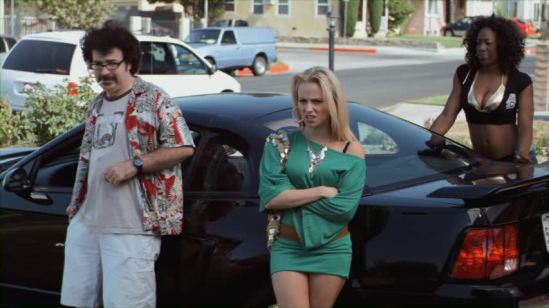
The homeless twosome Caesar and his half brother Otto haphazardly take down a notorious serial killer and are awarded a fall-to-winter housesitting gig at a powerful California politician’s summer home where multiple families have been brutally murdered. Their good fortune seems ill-fated as the two encounter strange house employees, random levitating objects, and an endless supply of dead bodies. Tagging along with the brothers is their drunk and inattentive father Fred who spearheads his own agenda in a house full of secrets. When Fred ends up trapped on the other side of the spirit world, Caesar and Otto’s antics strive far and wide within their bag of tasteless tricks to not only save their hapless father, but also save their very lives and, perhaps, the entire state of California. In the middle of all the chaos, Otto is informed that his once thought dead mother is truly alive and discovers he was born with a hidden talent that’s soon to be pertinent to his current and dire situation.
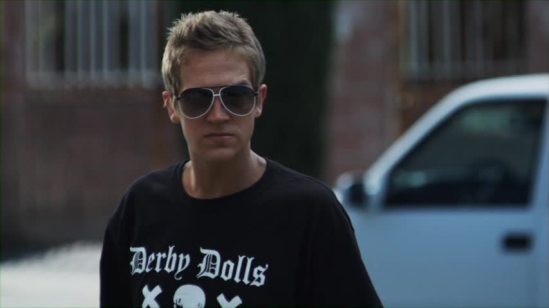
My second “Caesar and Otto” experience compares to nearly the same tomfoolery as their “X-Mas” inspired horror spoof, except that “Paranormal Halloween” is vastly more superior when considering the comedy quality. Caesar himself Dave Campfield once again stars and directors the spoof that pays tribute to many classic and modern horror films such as “The Amityville Horror,” “Paranormal Activity,” “Halloween”, and “The Conjuring.” Campfield joins forces once again with his longtime sidekick Paul Chomicki as Otto to produce and star in the Campfield’s and Chomicki’s four feature film of nitwit wonders Caesar and Otto who resemble a one more tool in the toolbox version of Harry and Lloyd from “Dumb and Dumber.”
Campfield pens more dialogue for Caesar who hilariously continues to generate a well-defined lisp while spit firing one-liners, comebacks, and insults at Otto and anyone and everyone standing in the vicinity. Chomicki’s Otto is the big lovable oaf whose on-going hunt for love in all the wrong places, but manages to catch a break in nearly biting the bullet by sheer dumb luck and stupidity. Campfield and Chomicki’s whole schtick isn’t groundbreaking as we’ve seen this kind of film before in “Scary Movie” and even outside the realm of horror with “Airplane!” Unlike “Scary Movie,” Campfield and his team dedicated horror icons maintain a sense of dignity and respect that honor horror more than just dumbing it down. My first experience with the “Deadly X-Mas” Caesar and Otto wasn’t a very pleasant one as I couldn’t grasp the scene-by-scene speedy pace, the cut rate budget, and the inexplicable reference, after reference, after reference structure and I was a bit hesitant in enduring another episode of their continuing legacy. Now that I’ve matured as a viewer a little bit more from two years ago, I can honestly state that “Paranormal Halloween” is calculated corniness and precisely patronizes faithfully the horror outlets.
Like the predecessors before, “Paranormal Halloween” contains the usual cast of entourage actors that coincide with Dave Campfield, Paul Chomicki, and Scott Aguilar as the fatherly Fred. Deron Miller again ends up shaggy and disoriented, Ken MacFarlane once again plays a guy with a J name, Avi K. Garg is calm and cool until he loses an arm, Ray Plumb quickly makes an appearance, Keith Bush sports a rad stash, Samantha Barrios makes another cut, and “Sleepaway Camp” legend Felissa Rose conjures up some on-screen time and this marks the second time I’ve seen her in a film that I’ve reviewed twice in a month. The credits also add other “Felissa Rose” type stardom actors from the similar molds such as “The People Under The Stairs’s” Sean Whalen, “Commando’s” Vernon Wells, b-horror vixens Tiffany Shepis, Debbie Rochon, and Brinke Stevens, and along with “Return of the Living Dead’s” Beverly Randolph. An excellent lineup for a horror spoof of this size. Tack on a few cute faced actresses and a nude scene from Model Mayhem model Jin N Tonic and you have a decent, well-rounded cast to support this Wild Eye Releasing film.
The Wild Eye Releasing backed production “Caesar and Otto’s Paranormal Halloween” won’t be the last of it’s kind (a hint from the film suggests that Caesar and Otto’s Spring Break of the Dead will be the next title) from funny guys Dave Campfield and Paul Chomicki. A second chance or a second look never hurt anybody and taking a plunge after a seemingly disastrous first round with “Deadly X-mas” will now be deemed as only a fluke. With giggly-garbage writing, a cast of willing horror legends, and cruise ship filled of homages (or horror ripoffs such as the same John Carpenter “Halloween” font used on “Halloween” in the title), “Paranormal Halloween” smarts oh so good and doesn’t apologize for any or all of it’s budgeted quality.
Erotic escort Love falls for on the side boyfriend Ned, a regular client with who she’s madly in love and with who she doesn’t charge a dime for her services. When Love wants out of the escort business, her controlling pimp Sunny says otherwise by sending her and two other girls on Love’s final trick, an all night mansion party. When the girls arrive at the gated mansion, they’re greeted by three strange hosts: Cleb, Selma, and Hate. Each of the three girls partner up with each of the hosts and move forward to their separate rooms where the escorts fall victim to sadistic tendencies, but Hate has more in store for Love. Ned, concerned when Love didn’t call once all night, sets out on a rescue mission to track down Sunny and gain information in means necessary on the whereabouts of the girl who love struck him.
“The Last House” is a 2011 mixed subgenre film directed by b-horror director Sean Cain that was originally released under the title “Breath of Hate” and was penned by first time writer Wes Laurie. The ambitious story plays out cordially with a talented cast of actors behind the camera, but the story, though larger than life for a b-horror flick, follows a non-linear path that builds and builds for a grand finale and while that sort of tension usually creates a good setup, the ending nearly fizzles, not generating enough pizzaz and spark worthy the wait of the last five minutes of the total 91 minute runtime. However, the Laurie script fascinates and entertains throughout because of character structure through the aforementioned non-linear layout and because of the physical and emotional outpouring portrayed by the actors such as Lauren Walsch, Timothy Muskatell, Jason Mewes, and, especially, Ezra Buzzington.
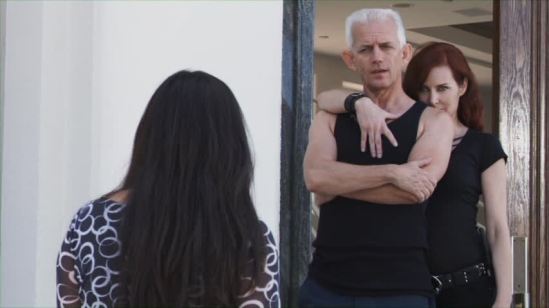
“The Hills Have Eyes” remake actor Ezra Buzzington steals the entire movie as Hate, leader of the three sadistic maniacs, and Hate, in himself, is an interesting character who seeks to start revolutions against humanity through brains and brutality and maybe even something more. Buzzington embodies a “Die Hard with a Vengeance” Jeremy Iron’s type personality with a calm demeanor on one face and a ruthless side on the other, but he single handedly separates the character from the likes of any other and creates Hate, with the help of a Laurie twist ending, to be potentially a long time running franchise character. There is a fierce downside alongside Hate where his lackeys were served a overshadowed injustice. Monique Parent plays another sadist, Selma, and her time on screen didn’t add to the girth and felt unnecessary. The then 46-year-old actress, with more than 100 film credits to her name, looked absolutely stunning, sizzling with lust for her cougar age. That should be no surprise to fans of Parent who are mostly familiar with her previous work in a number of softcore porn films. Sadly, Parent has no nude scenes though the part strongly suggests it; “Evil Head’s” Joanna Angel and “Amateur Porn Star Killer 3’s” Regan Reece take the burden of skin diligently – thank you Joanna and Regan. The third sadist, Cleb, is portrayed by Jamaican native Ricardo Gray. Gray’s take made Cleb, frankly, my least favorite sadist as Gray went overboard with a character that could been a menacing psycho-sexual deviant to a half-witted, Jurassic role-playing pervert. If there was perhaps more of Cleb’s backstory, a better picture of this sadist’s mindset might have reversed the first unfavorable impression.
Jason Mewes has always played the part of the funny guy character. The same stereotype description can be laid upon other actors of similar character such as Hollywood studs Jim Carrey, the late Robin Williams, or the cult favorite Bill Murray. Mewes, a strong supporter of independent work, has most famously, for most of his career, teamed up with writer-director-actor Kevin Smith and produced some of the most notably comedic material to ever be released for about around a decade starting near the mid-1990’s. Not many audiences, aside from fanatical Mewes fans, are aware that the same Jay, of “Jay and Silent Bob” films, has had quite a few horror credits. From John Gulager’s “Feast,” to David Arquette’s “The Tripper,” Jason Mewes doesn’t just do comedy, but what makes “The Last House” unique from the other independent horror films is that Mewes is cast in a serious horror film whereas “Feast” and “The Tripper” are horror-comedies that still tap into Mewes endless vein of laughs. Instead, “Dead Girl” actor Timothy Muskatell takes the reigns on the comedy as a pot smokey, womanizing lackey and Muskatell is born for that type of part. Porn star Timmy Pistol also delivers some goofy laughs in a brief cameo with Jason Mewes and also, fun fact, Tommy Pistol and Joanna Angel were both in “Evil Head!”
Mewes, Buzzington, and even Parent are major, recognizable names in the movie industry, big enough that even audiences so attached to Hollywood stardom would still be familiar with them. Two of the names mentioned headlining “The Last House” are accompanied by one more name that isn’t familiar to mainstream audiences, but any knowledgeable horror enthusiast would surely recognize. “Sleepaway Camp” actress Felissa Rose is that third headlining name and, unfortunately, shouldn’t have been exploited. Rose’s on screen appearance runs a total of around two minutes as the mansion realtor, but her presence falls from the face of “The Last House’s” universe after her single scene. Her iconic name alone will draw in the horror masses, but when she filmed the minor role, Rose was near popping at 9-months pregnant and she didn’t have one single story merit line or action.
Distributed by Wild Eye Releasing, “The Last House” picture quality looks amazing presented in a detailed widescreen format. The audio quality comes and goes; at some points during outside scenes the ambience or the soundtrack plays at a whisper. When in more confined scenes, the tracks blare with some crackle. However, none of these will impact watchability nor take away from the film itself. “The Last House” aka “Breath of Hate” will make a deep gash into the independent horror scene and Wild Eye Releasing will help deliver Hate into your home entertainment on November 24th.
From the demented minds of Brian Dorton and Douglas Conner, “The Horror Network” anthology has set sail on it’s first volume maiden voyage, shipping five petrifying and on the edge of your seat horror shorts right to your television set. Stories so darkly atmospheric and spine tingling that leaving the lights off while watching would be a horrible mistake. Each tale tells a different kind evil including demented demons, child stalking predators, family abusers, and a sadistic plaster saint. Certainly not intended for the faint of heart or the easily offended for each episode turns up the intensity, the fear, and the scares. Leave the lights on, take a blanket to hide under, and make sure you grab a couch partner to watch with you and then ask yourself, are you ready to tune into “The Horror Network?”
“3:00 A.M.”
A young woman named Georgia drives through the English countryside to get away for a few days. When she arrives at her remote farm house, a strange sense of foreboding overcomes her and weird, sporadic noises emit from all around her throughout the day and into the night. When the digital clock nearly reaches 3:00 A.M., she hears a concerning noise from downstairs and when she investigates, a ghostly presence lies in wait.
Before the anthology’s credits even begin to roll, the Lee Mathews directed film “3:00 A.M.” will for damn sure kickstart anybody’s heart. The atmosphere is violently tense when Georgia explores the strange occurrences downstairs and even before the night falls. Initially, the main focus kind of misguides you through much of, what were led to believe to be is, Georgia’s imagination from the one after the other false jump scares: a branch scratching at a window, a cat jumping out of the shadows, a jack in a box toy. Okay, maybe that last one is a bit obvious and not so much a surprising jump scare, but the toy does tie into the story near the end, giving the toy a reason to exist and a hint of menacing. Many of the jump scares are accompanied by screeching sound effects, like fingernails across a chalkboard, which would make any poor soul, who fears the dark and supernatural, jump out of their skin.
“3:00 A.M.” is a good introductory 10 minute short that sets the tone for the four other films in tow; a tone with a subtle message that insinuates the maturity of this anthology. Despite being a little redundant with the classical jump scares, especially with the cheesy jack in the box jump scare that could be seen coming from miles away, for director Lee Mathews, with “3:00 A.M.” being the only credit to his name, creating a nail biting short of that magnitude is fairly impressive and inviting.
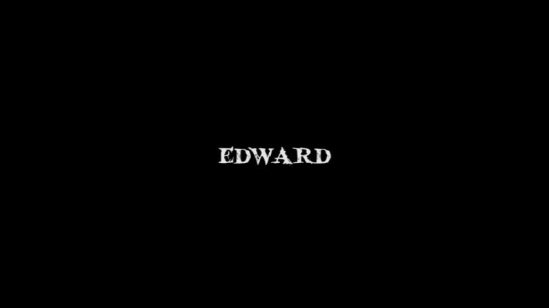
“Edward”
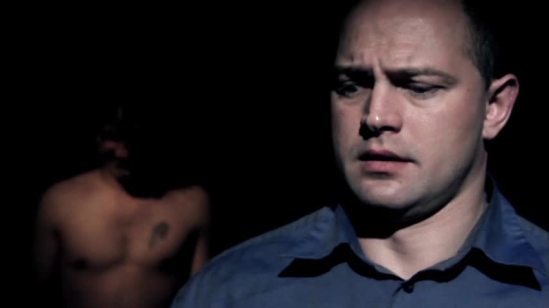
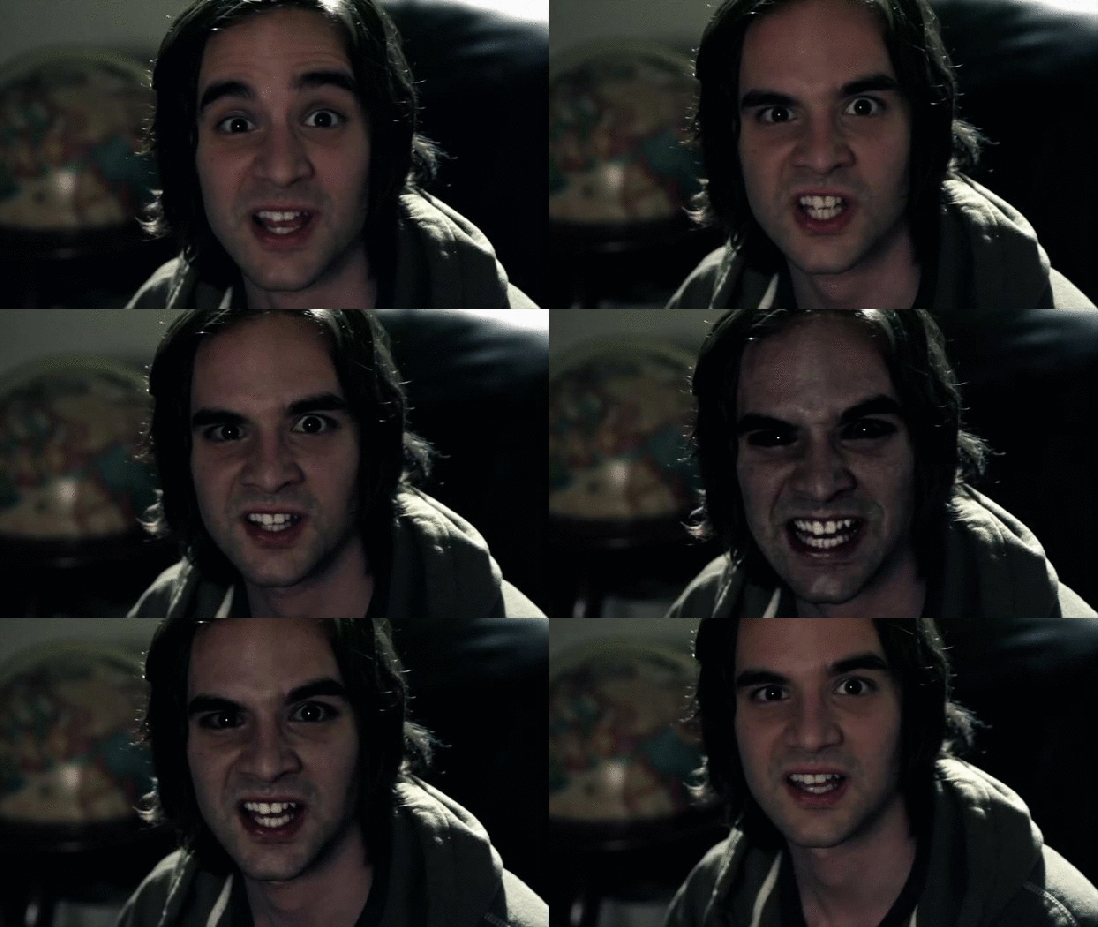
Hal has mental problems. He can’t sleep. He can’t stop sleepwalking. He can’t seem to stop dreaming about death. Psychiatrist Dr. Aleksey is determined to root out Hal’s issues, but when Hal informs him about the news of a school friend named Alice being murdered, the good doctor decides to put Hal under hypnosis and determine just what’s going on in Hal’s mind. Under the semiconscious state, Hal recounts his last dream and sleepwalking incident where he describes in detail a man coming into his room from outside his window. The man has Hal follow him into Alice’s room, the same Alice Hal said was brutally murdered prior to going under hypnosis. When Dr. Aleksey discovers the truth about what happened to Alice, Hal’s hidden inner demon named Edward reveals himself, leaving Dr. Aleksey at wits end in trying to cure the incurably evil.
“Edward” is a gothic tale that isn’t too overly gothic in setting onscreen. The ominous presence, whether through the acting of Hal played eerily and perfectly by Nick Frangione or the chilling atmosphere, remains always present in the confined space of Dr. Aleksey’s office. The “Edward” short is a stray genre short from director Joseph Graham, a San Francisco based director who has been credited in directing feature films about homosexuality and the cultural-based stigmas – reminds me a little of the work helmed by Gus Van Sant. Graham’s “Edward” has an pitch black aura that seeks to let loose the horror-elements, yearning to be freed, because everything about the story of “Edward” is well told and well shot, as if you yourself were standing in the room with Hal and Dr. Aleksey, experiencing the fate of both men. However, Dr. Aleksey’s fate could have, and probably should have, contained more exposition, especially when the doctor arrives back home to his wife and sleeping child.
“The Quiet”
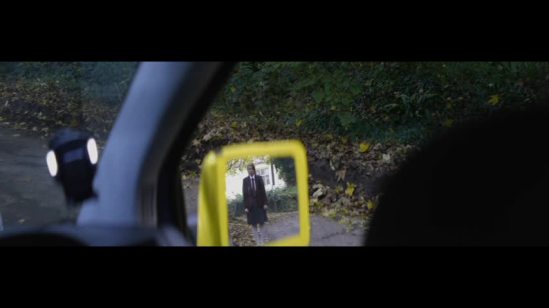
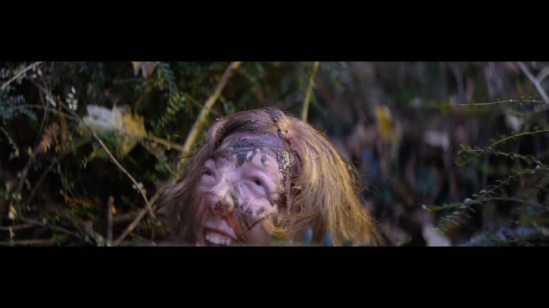
Alice, a partially deaf young school girl who particularly loves the quiet instead of using her hearing aid which eventually to taking the brunt of the cruel jokes from her classmates, rides the bus home from school. When she’s being dropped off at her remote stop, she forgets her cellphone on the bus. With her mother no where in sight, Alice decides to walk home alone, but when a suspicious blue van seems to be stalking her, she makes a break for the woods where she unfortunately loses her hearing aid. Lost in woods and unable to hear good, a cat and mouse game ensues between her and the man with the blue van whose on her closing in on her.
Unlike “Edward” where dialogue catapults the film into a tension-filled frenzy, “The Quiet” lives up to the title with the duration containing no dialogue until the twist ending. The built-in weakness of our protagonist Alice and the constant bullying of her helps the audience sympathize with her character more, making Alice a relatable person rather than a whimsical character everyone wishes instant death upon. The story has a strong beginning, continuing to build once the blue van man is introduced, but there are moments of unclarity that create more confusion than add value to the story; for example, the scenes of a padded room, a tortured little girl’s doll, and someone whispering, “I’ll love you forever,” don’t seem to connect up or match with the rest of the story, making the scenes seem out of place and unnecessary. The twist ending also becomes mysterious and diluted when were giving more information about the man in the blue van, but his intentions still aren’t made crystal clear, leaving way too much to the imagination and not in a good artistic way. Imwiththemproductions is behind the production of “The Quiet,” that’s supposedly based on a true story about a young girl being kidnapped when walking home with friends, and has a runtime of 21 minutes.
“Merry Little Christmas”
Christina and her mother Lola have lived many years with the scars bestowed upon them by Christina’s father, Lola’s husband. On the Eve of Christmas many years back, Christina’s strikes Lola unprovoked, continuously beating her, slashing her face with a straight edge razor, stabbing her, and raping her. Christina’s inner struggle constantly fights to restrain her internal, monstrous-illustrated hatred and self-destructiveness while Lola’s alcoholism and self-inflicted cutting addiction amplifies every Christmas Eve and this year, the mother and daughter grapple on keeping it together for one more year, but that battle will be lost in a fierce tragedy when they receive a phone call from the man who hurt scarred them for life.
“Merry Little Christmas” is the 20 minute Ignacio Martin Lerma and Manuel Marin visually graphic directed film from Spain. Surprising and suspenseful, “Merry Little Christmas” isn’t your old fashion gay and jolly-filled holiday film where Saint Nick brings all little boy and girls toys. No. In fact, Christmas is defined as a terrible point in time for Christina and Lola, a time when pain and fear are symbolic for tis the season. Lerma and Marin deconstruct the mother and daughter down to reveal their complexity and they’re characters are filled with various demons that become flesh in Christina’s mind when their abuser makes an unexpected phone call. A bravo should be awarded to Blanca Rivera for her bathtub scene, exploring her cutting addiction as well as attempting to learn to lover her body fully in the nude. The demon special effects are downright nasty, frightening and fantastic from “[REC] 2” and “[REC] 3” special effects guru Juan Olmo and the Doug Jones of Spain actor Javier Botet portraying the Demonio, or Demon. “Merry Little Christmas” is callous and cold without any remorse and no apology is needed for the cynicism or the brutally that it portrays.
“The Deviant One”
A young man becomes the victim of a suburban sexual sadist who lives a facade life of scripture and holiness. The atrocities committed might be the misinterpretations of the good Lord’s holy book and no one is safe from the deviant’s hungry claws and thirst for sexual and murderous gratification.
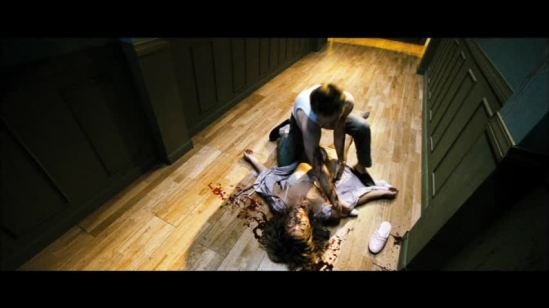
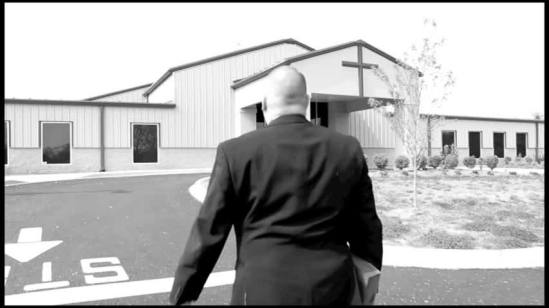
Perhaps my least favorite short from “The Horror Network” anthology, “The Deviant One” is helmed by the anthology’s co-creator Brian Dorton who also starred as the deviant neighborhood sadist. In the 8 minute black and white story of a young man’s death, body desecration, and body disposal, a lack of story glorifies the private life, but just doesn’t tell the tale fully of the deviant’s public church-going life. While the deviant walks up to a church, I wanted scenes of him standing at the pulpit, in front of shoulder-to-shoulder filled pews, opening the bible, and reading from the book, preaching his version of the scripture upon those ears listening. An opportunity was missed to strike at the heart of church hidden hypocrisy. On a positive note, Dorton, as the deviant, plays and looks the part so uncomfortably well that it’ll be hard to distinguish his off-camera self from his on-screen character.
“The Horror Network” material is nitty gritty with loads of passion behind the camera and from the crew of all the shorts. One of my favorite anthology releases of 2015 from Wild Eye Releasing. The DVD contains shorts that were shot in various formats and aspects ratios so I won’t be too harsh on the quality of the picture, but I will say that the noticeable posterization in “The Deviant One” and “Edward” stood out from the rest. The audio tracks do need fine tuning as there was some faint, but obvious feedback and the dialogue tracks were slightly overpowered by the soundtracks. The extras include an extended cut of Dorton’s “The Deviant One” which contains dialogue and additional scenes of Dorton, but the short works better without the clunky, kindergarden dialogue and Dorton’s testicles as he makes love to a severed head – yup, testicles. An image gallery and trailers for the shorts round out the rest of the bonus material. The DVD art, from “Merry Little Christmas’s” demons, amazingly exhibits and sells this release and stays true to form from the disturbing short. I expect volume two to exceed the fear bar!
In the zombie post-apocalypse, the human discovered that by not firing their weapons allowed the flesh eating hordes to calm their desires, resulting in the protection of the zombie species and institutionalizing laws against the killing zombies for fear of another undead swarm attack. One of the many survivors Clay has lived in a zombie cooperation world for over a year after the initial outbreak along with his sister Mia, whose boyfriend Gerry didn’t survive, but still roams the Earth as the walking dead. With no one truly dying, the whole idea of existence becomes meaningless and where people, like Mia, won’t move on when they’re loved ones still feel very much alive. When Clay discovers his sister’s attachment to undead Gerry, he takes it upon himself to kill Mia’s zombie boyfriend, releasing a zombie swarm post-apocalypse apocalypse on the his town.
Unprecedented and gushing with rage, “A Plague so Pleasant” redefines the way audiences would view the zombie since 1968, constructing still a vicious species of man-eating undead while domesticating them to a lumbering land fixture much like the way pigeons amongst the birds. First time directors Benjamin Roberds and Jordan Reyes triumph amongst the modern zombie competition, spilling their heart and soul onto the script and onto the screen. With a story to match, a Romero-inspired social commentary zombie film held true to form by instilling normality to a post-apocalyptic world. Zombie and man living together. What was that Bill Murray line in “Ghostbusters?” “Cats and dogs living together… mass hysteria.” Clay and Mia were living a mundane life while the dead remained alive and protected, socially poking fun at how society maintain a normal livelihood with zombies: the U.S. Government made killing zombies a national felony, companies were mandated to go through a yearly undead awareness program as a formality, and there’s a guarded visitation area full of the undead much like a graveyard without graves.
Stunning cinematography added much needed life to “A Plague so Pleasant” which settles into an already over saturated zombie genre. Starting in black and white, Clay introduces his life in a offscreen monologue, conveying much of the post-apocalyptic and zombie information. The black and white symbolizes how simple and plain life has become with the living with zombies regulations. When Clay breaks the law by offing Gerry for good, thats when the movie turns to color and creating complications in a black and white life. The once unvarying and shuffling zombie nuisance goes into full berserk mode with “28 Days Later” sprinters thirsty to tear into anything with a heart beat. Only when the zombies turn calm is when life goes back to being black and white, considering the option that normality needs to be simplified to live peacefully.
The special effects by first timer Tyler Carver are a great effort clashing together a classic European Giannetto De Rossi style with Carver’s own settle flair by not being overly gruesome. There’s not an over-the-top, chart-topping special effects moment that defines the “A Plague so Pleasant,’ but there the solid effects subtly throughout satisfies. The zombies overall look are the usual stock type, yet they’re exhilarating to watch with an army of intense actors who are no doubt from the Athens, GA Halloween attraction named Zombie Farm where Tyler Carver has a connection. Not everything about the creation of a frightening zombie was accomplished as much of the audio tracks were out of sync and just too gaudy.
Actor David Chandler as Clay does a fine job portraying a bored survivor and a clueless big brother while also performing the second zombie swarm nearly without speaking during the entire engagement. Mia, played by Eva Boehnke, resembles the gorgeous Lebanese-American porn star actress Mia Khalfia with her giant nerdy glasses. Boehnke creates a free spirited, yet delusional, persona in Mia whose holding onto the past and coping the only way she knows how and that’s by not separating from her undead boyfriend Gerry. We round out the cast with Todd played by Maxwell Moody. Todd becomes the catalyst of the coming events by placing the idea of him and Mia being a couple and putting a bullet into Gerry’s rotting brain. Chandler, Boehnke, and Moody on paper are amateur actors in an estimated $1,500 budget, independent movie, but they own their performances and shine through budgetary constraints.
Another awesome release from Wild Eye releasing that would make a worthy and unique edition to a zombie fanatic’s movie collection. Don’t judge to harsh the production value with the slight aliasing, the out of sync zombie audio tracks, and the muffled off screen Clay character monologue. Instead, focus on the cinematography, the actors performances, and the genuine story telling of a socially awkward scenario. Let “A Plague so Pleasant” infect, let it sink it’s teeth deep, and let it help turn your undying attention unto a lively concept.
Three high school friends live in an online gaming and comic book world making them easy targets for sinister bullies. When one of them, Devon (Alexander Fraser), becomes the victim of extreme bullying, the gaming friends are forced to come together and cope with the brutal and aggravated assault laid upon their friend Devon. Becky (Alicia Rose), whose had a long lasting love for Devon, plans the ultimate revenge by teasing to expose a hidden secret on the world wide web about Devon’s bully neighbor John Brooks (Daren Ackerman). The circle of violence and secrets wildly spirals out of control to an extremely car-crash of a finale that will put Devon, Becky, and John in a trio of devastating destruction.
“All American Bully,” formally titled “The Innocent,” serves as not the typical bully-revenge film we’re aware of in such films as Gus Van Sant’s “Elephant” or Jason Buxton’s “Blackbird” and that creates a misleading film title, but doesn’t necessarily hurt the film’s integrity. Director-writer John Hawkins intentionally creates an unexpected twist that’ll take the film into a totally different direction. With the help of the elusive, yet recently fan-revived cult “Friday the 13th” heroine Andrienne King and the superb acting by Daren Ackerman who portrays complex character John Brooks, “All American Bully” becomes a unique hybrid with a cultural and social timeliness that will surely strike the core like a bully punching you in the gut and kicking you while you’re down all for just your lunch money.
The John Hawkins film is not solely about high school bullying, but also about mental illness and childhood abuse to which all comes to the forefront to bring the house down at the end. The repercussions from years of bullying results in kidnapping, rape, and murder. Actor Daren Ackerman’s has a wide range playing the disturbing character John Brooks by never backing down from the character’s various stages. Ackerman complete shadows his peers such as Alexander Fraser who can’t strain from a monotone tone, Alicia Rose who has range but just not enough girth, and even Adrienne King who, I felt, played an overacting Principal.
There seems to be a side story that goes unexplained to which we have to make our own conclusion. Adrienne’s Principal Kane doesn’t trust her employed teacher Mr. Taylor that’s somehow related to her son being gay. I concluded that Mr. Taylor and her son had some kind of relationship that’s not being explicitly explained and this drives Principal King unhinged, but her breakdown doesn’t feel connected to the story, feeling separate from the body and not bring the film to closure. Perhaps Principal Kane’s mental break parallel’s the psychotic break that John Brooks suffers, displaying and defining two various scenarios of pain.
Speaking of homosexuality, Hawkins hits many gay undertones and not only with Principal Kane’s son and Mr. Taylor. There’s also a past relationship, even if only one sided, between Devon and John when they were tiny kids playing army in the woods. The overuse of the word fag becomes repulsive and that might be intended to reveal the true ugliness of the word. I had always thought fag might have faded into oblivion, especially in the film industry, but I guess in independent ventures the word still thrives to bring out the tensions and angers out of the viewers. Lastly on the topic, John becomes the plaything to all his mother’s friends and some of them being men, creating more taboo and disturbing qualities that make me think Hawkins is one warped individual. When Becky, played by an absolute beauty named Alicia Rose, and Devon actually have a heterosexual scene together, the mood becomes ruined when John gets a hold of them, to punish them, almost for being happy because his life turned out tragic and hopeless.
Forget the misleading title “All American Bully” (as I believe “The Innocent” works better) and the misleading Wild Eye Releasing DVD cover where a person gripping a firearm at their side in a student filled hallway; instead, focus on the film as a whole where the acting is solid and the direction tells a stunning story of various facets of bullying. Check out this Wild Eye Releasing DVD and also take a gander at the cast interviews as you’ll learn more about the actors backstory and how their take on bullying motivated them to create this film.











 It's Bloggin Evil!