A Pact Plans EVIL Revenge on Crime Fighting Heroes! “Royal Warriors” reviewed! (88 Films / Blu-ray)

“Royal Warriors,” a Revenge Tale, Now on Blu-ray from 88 Films!

Hong Kong police inspector boards a Hong Kong bound plane on return from her vacationing in Japan.  She meets Michael Wong, the plane’s air marshal, as well as her across the aisle seat mate, Japanese native, Yamamoto, a retired cop returning to Hong Kong to retrieve his wife and daughter and retreat back to Japan to start their new life.  Also on the plane, an escorted criminal being extradited to Japan for prosecution.  When a criminal accomplice takes the plane at gunpoint, Michele, Michael, and Yamamoto spring into action and thwart an aero catastrophe with the two terrorists dead.  After celebrating their success of saving many lives, the heroic trio begin to depart their separate ways when suddenly Yamamoto’s car explodes with his wife and daughter inside.  The assassination attempt puts a target on the backs of all three of them as two war veterans swear vengeance for their slain combat brothers from the airplane hijacking.

“Royal Warriors,” also known in other parts of the world as “In the Line of Duty,” “Ultra Force,” and “Police Assassin,” is the 1986 Hong Kong police action-thriller from “Web of Deception” director and “Once Upon a Time in China” director of photography, David Chung.  Stephen Chow’s regular screenwriter Kan-Cheung Tsang, who penned Chow’s “Kung Fu Hustle” and “Shaolin Soccer,” as well as “Magic Cop” and “Intruder,” reteams with Chung on their sophomore collaboration following the comedic-crime film “It’s a Drink!  It’s a Bomb!” starring the Hong Kong humorist John Sham, and a denotes a shared three-way perspective of protagonist principals while simultaneously providing sympathetic seedlings for the principal antagonists who though are coming wrongdoings and murdering up a storm of people, a wartime conflict bond between them holds them a higher level of honor between close brothers in arms.  Dickson Poon and D&B Films produce the explosive and hard hitting with prejudice venture with John Sham (Remember him from earlier?) and Yiu-Ying Chan, serving as associate producer.

Michelle Yeoh plays Michelle Yip, the level-headed chopsocky cop returning from some rest and relaxation only to wind up on a dish best served cold “Royral Warriors” for Yeoh, who then under the less recognizable moniker Michelle Khan, is the risk-it-all action film for the actress still in the earlier days of her what would be a prolific international career.  Her breakout hit “Yes, Madam,” saw both Yeoh and also then newcomer Cynthia Rothrock punch and kick into silverscreen success as unlikely onscreen partners to take down a crime syndicate.  In the Yeoh’s next film, she rides solo but only in the actress category, being a third of the good guys, yet holding her own as a strong female, lead between another prolific Asian cinema actor Michael Wong (“Tiger Cage III,” “Dream Killer”) playing essentially himself as Michael Wong (not a typo), the plane air marshal turned love sick puppy for Hong Kong’s tough cop Michelle Yip, and yet another prolific Asian actor whose career in Japanese films started well before Yeoh and Wong and has been rising internationally amongst the ranks of American cinema in Hiroyuki Sanada (“Sunshine,” “Mortal Kombat”) playing retired officer Yamamoto, a revenge-seeking justifier on those responsible for killing his family.  The level of how these three come together in a post-incident instantaneous bond borders an idealistic way of an extreme shared experience.  Yeoh and Sanada offer a cool, collective approach with degrees of vindictive separation with a layer of compassion thinly in between with Wong providing calculated lighthearted measures of chasing Yip with infatuated eyes to break any kind of monotonous, stagnant composure between the other two, yet they’re seemingly different lives, connected ever so vaguely by being around law enforcement one way or another, doesn’t seem to thwart an instant relationship immediately after the plan incident.  What’s also odd, especially with Yamaoto, is there is more background to the villains of the story than there is with him, providing rewarding elements for reason why the two men are hunting down Yeoh, Wong, and Yamamoto and seeking deadly revenge.  Ying Bai, Wait Lam, Hing-Yin Kam, and Michael Chan Wait-Man are the pact-making, behind-enemy-lines soldiers of some unknown war from long ago who neither one of them will turn their back on a combat brother in need.  Through a series of none linear flashbacks, a union of honor between them is made and while respectable and moral during war, that pact turns rotten overtime outside the context of global conflict, suggesting ever-so-lightly toward a combat shock issue between the four men that builds a bit of sympathy for them even though blowing up a mother and child and shooting to shreds a whole lot of nightclub patrons in their misguided revenge runs ice through their veins.  Peter Yamamoto wears his sleeve on his shoulder and there is this uncertainty with his character, and his wife too, that something is amiss, creating a tension that goes unfounded and sticks out.  “Royal Warriors” rounds out the cast with Kenneth Tsang, Siu-Ming Lau, Jing Chen, Reiko Niwa and Eddie Maher.

As part of the In the Line of Duy series, a strict criterion needs to be met:  Police Action, check.  Martial Arts, check.  A Level of High Intensity, check.  And a Female Heroine, check.  “Royal Warriors” meets and exceeds the bar with another bar, a no holds bar, of spectacular stunt work done by the Hong Kong standard way of action now, think later which looks phenomenal on camera and the resulting footage.  Hoi Mang’s martial arts choreography showcases a fast-striking combinations that cut traditional sparring with melee improvisation dependent on the surroundings, moving the action left-to-right, top-to-bottom by never staying in the same place and expanding the field of play with collateral damage of bystanders and family.  A couple of components are missed between that focused innocence and whiplash of violence.  For example, the playfully amorous affections between two of the characters are not poignantly shattered like precious stained glass when one is suddenly offed.  There are other examples of once a downspin cataclysm occurs, the aftershock of loss and change does not rear its ugly head.  “Royal Warriors” just pushes forth, continuing pursuit, in a rage of retribution and righteousness. 
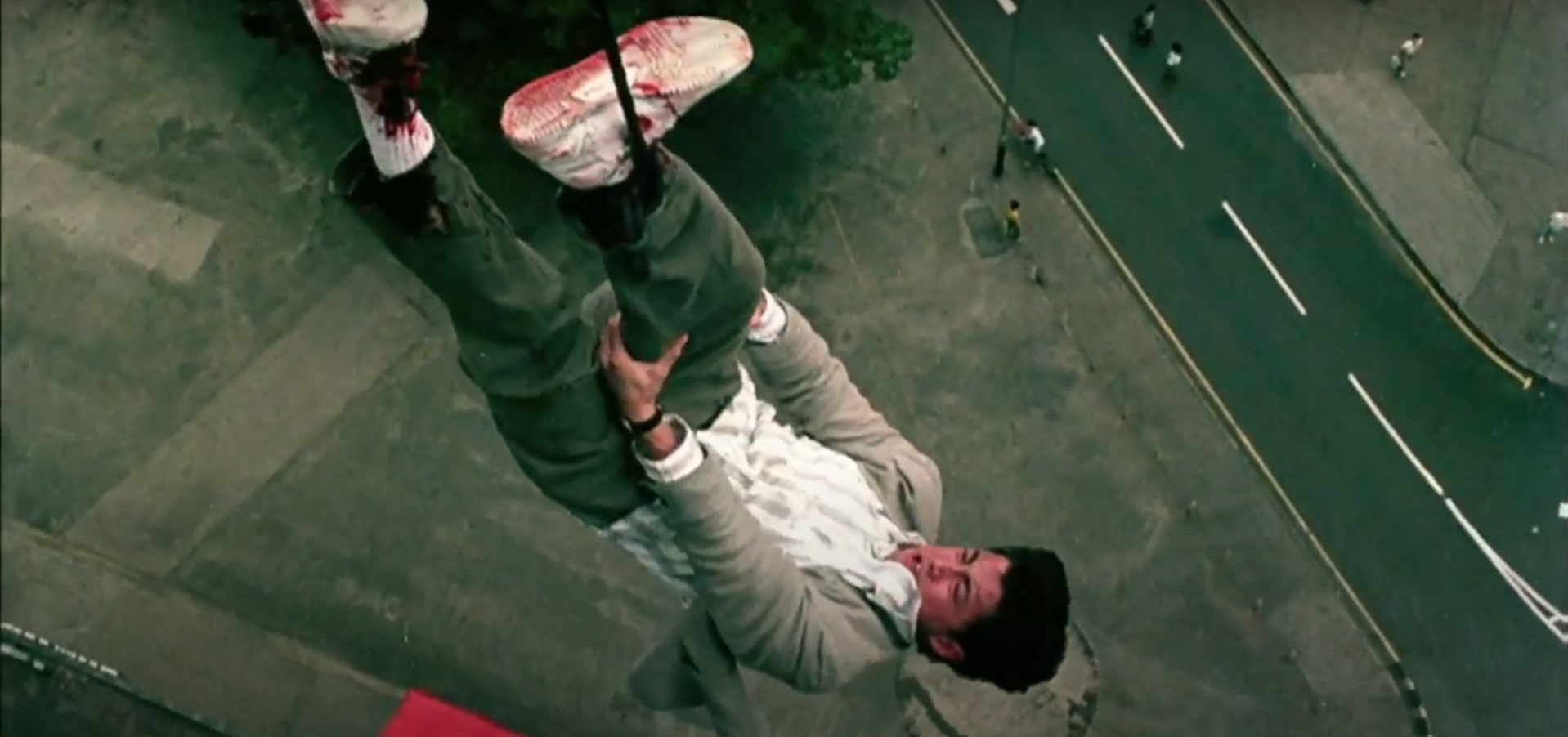
88 Films releases “Royal Warriors” onto an AVC encoded, 1080p high definition, BD50, presented in the film’s original widescreen aspect ratio of 1.85:1.  If you own the “In the Line of Duty” four film boxset, the version in the boxset contains the same transfer as this standalone, standard version that stuns with a new 2K restoration from the original 35mm print.  When I say this restoration stuns, I mean it.  A clean-cut natural gain, color balanced saturation, and with all the detail trimmings laud 88 Films’ work, as such as with the rest of their higher definition catalogue in the older Asian film market.  Range of atmospherics challenge with a different lighting scheme and mise-en-scene cinematography, such as the pink and purple warmth of a nightclub glow or the brilliantly lit restaurant ferry boat.  Skin and texture tones cater to a slight darker pastel but is consistent through-and-through without appearing to unnatural.  The restoration does have a positive to a fault, revealing stunt equipment during the fast-paced fighting, such as the exterior stone ground turning bouncy with creases when Yeoh vault kicks one of the Japanese yakuza members to the ground.  The release comes with four, count’em four, audio tracks:  a Cantonese DTS-HD 2.0 mono theatrical mix, a Cantonese DTS-HD 2.0 alternate mix, an English dub DTS-HD 2.0, and an English dub DTS-HD 5.1.  Of course, I go with the theatrical mix to comply with the original fidelity as much as possible with any films using ADR for an immersive experience within the original, intended language.  the 2.0 mix keeps a midlevel management of the voluminous aspects to bombastic range but never muddles or mutes the tracks.  Dialogue comes out clear with a microscopic static lingering way deep in the sublayer but, again, has negligible effect on the mix.  Special features content includes an audio commentary by Hong Kong film expert Frank Djeng, missing airplane inserts which are spliced out shots of an inflight plane exterior, and the Cantonese and English trailers.  The standard edition comes pretty standard but does feature the new character compilation artwork of Sean Longmore on the front cover with the reversible sleeve featuring the original Hong Kong poster.  The disc is individually pressed with Michelle Yeoh doing what she does best in most of her films, kick butt.  There are no inserts or other tangible bonus content.  88 Films’ North American release comes with a region A encoded playback, not rated, and has a runtime of 96 minutes.

Last Rites: 88 Films’ “Royal Warriors” Blu-ray release captures Hong Kong cinema impeccably with monumental stunts, hard-boiled police work, and permeates with color, detail, and a cleanly, discernible audio mix. In the Line of Duty, “Royal Warriors” is the first, and foremost, cop crusading caper that began it all.

“Royal Warriors,” a Revenge Tale, Now on Blu-ray from 88 Films!

If Highschool Didn’t Already Have Enough EVIL In It! “Homework” reviewed! (Unearthed Films / Blu-ray)

Purchase “Homework” Blu-ray Here!

Highschooler Tommy can’t take it anymore.  His friends all talk about their sexual experiences and he’s still a virgin.  Talking to a therapist to help redirect his sexual energy into something else, Tommy becomes inspired with the idea to form a rock band with best friend Ralph.  The eager students secure three classmates from the student body to round out the band, one not being the obsessed competitive swimmer Sheila whom Tommy has strong feelings.  Each band member’s lives revolve around their own sexual activities from sneaking around from their God-fearing, prudent parents, embellishing fantasy from late night tutoring sessions gestured by a hot, young French teacher, or contracting a venereal disease from a rockstar idol.  As Tommy continues to plead with Sheila to attend just playing session, he becomes sorely frustrated by not only her lack of reciprocated affection but also lack of friendship towards the rest of the group, resulting in him finding his sexual prowess in the arms of a classmate’s mother who also recounts fondly her sexualized youth. 

Not just another teen sex comedy from the 1980s, “Homework” is the provocative, controversial, and obscure teenage comedy-drama from James Beshears, his one-and-only director credit behind his day jobs of being a film sound editor on such a range of films from “True Lies,” to “Day of the Dead,” to “Porky’s Revenge.”  The script is the debut feature from cowriters Maurice Peterson and Don Safran that carves out story subdivisions from Tommy’s friend and denotes Tommy as the as the epicenter of sexual hangups.  The late, legendary producer Max Rosenberg, producer of many B-reels such as “Dr. Terror’s House of Horrors,” “And Now the Screaming Starts!,” and “Perdita Durango,” secured funding for the feature alongside Robert Fenton (“The Incredible Melting Man”) with Beshears and Safran producing under the production and distribution label of Jensen Farley Pictures. 

The top bill was denominated to actress Joan Collins of the television series “Dynasty” fame, but the once voluptuous English brunette, who starred in “Fear of the Night” and “Sharon’s Baby,” sizzles in a more mature role in early 80s production with a screen time of about a third of “Homework’s” runtime.  Much of the story focuses on Tommy, played by the late Michael Morgan (“Midnight Offerings”), who succumbs to Collins’ character’s subtly and sudden sultry desires for her daughter’s school friend when helping her hang a picture.  The building up to this moment isn’t as plain on it’s face as it would seem with audiences subjugated to teenage fantasy and mature women’s reminiscence that doesn’t even hint cougar encounters.  Collins, unfortunately for you sleazoids out there, had a body double for the character’s topless scene and romantic entanglements but the then late 40s actress had plenty of curves and sex appeal to make any man, no matter than carbon-date, sweat with arousal anticipation.  “Homework” spreads the love, literally, as each band member goes through a totality of teenage sexcapades, individualized and customized to their own story’s arc, and there’s not a path of sexual conquest to be had but rather a variety situational scenarios where teens either learn the hard way, face the consequences, or leave their hearts at the door to avoid disappointment because at that age, the youth are the most impressionable and angsty with mixed up emotions.  A young cast of Lanny Horn (“Tarantulas:  The Deadly Cargo”), Erin Donovan (“Mack the Knife”), Renee Harris, Shell Kepler (“The Great American Girl Robbery”), Mark Brown, and John Romano (“Dandy”) act toe-to-toe with Lee Purcell (“Necromancy”), Carrie Snodgress (“The Attic”), Ernestine Jackson (“Aaron Loves Angela”), Bill Knight, Rosemary Alexander (“Madhouse”), Howard Storm, and Wings Hauser (“Vice Squad”) in this eclectic casting. 

What’s most memorable about the little-known production is not the sex-driven antics and mischievousness of high school boys but rather the day-in-a-life of touch choices and toucher consequences interlaced with regular adolescent customs, such as missing the cut for the swim team and beating yourself up for it, smoking dope in the school locker room, have the fantastical hots for the new young teacher, starting a garage band, etc.  “Homework” has comparable, lighter traits to the 1995, Larry Clark coming-of-age film “Kids.”  While not as crass or violent, “Homework” has high-impact themes like sexual transmitted diseases accompanied with visits to the women’s health clinic, a misunderstanding of sexual education, and, even to go as far as, the exploitation of minors to an extent and a spiral of obsession as we see with Shelia is won’t leave the pool in order to shave time off her laps, neglecting friendships, and even romantic relationship with Tommy whom ends up in the arms of her equally emotionally irresolute mother reminiscing a past of first time and exciting sexual encounters.  While the story manages to stay afloat with multiple sub-stories, technically, “Homework” falls below the conventional quality standard of the period with visible boom mics, a deficient picture quality, and lack of artistical knowhow from a new director in James Beshears.  Luckily for viewers of obscurity, lovers of the long-forgotten, and retro-adventurers, there are boutique labels salivating for the chance to revive and resuscitate these titles back into our field of vision. 

That boutique label is for those who are in the know wouldn’t expect “Homework” to be released on.  Unearthed Films brings the James Beshears film to Special Edition Blu-ray, the first time on the format, with a new 2K scan a part of their Unearthed Classics banner, numbered at 15.  The AVC encoded, 1080p high definition, BD25 presents to date the best image quality possible from the original 35mm negative shot on an Arriflex camera.  There’s slightly more grain presented on this transfer that stems from Paul Goldsmiths’ cinematography and with that there’s a loss of detail in darker scenes that become victims of black crush where delineation bleeds into the environment and darker clothing no longer renders outstanding with the proper shades.  Better lit scenes have more distinction coherency, but the color diffusion is limited and the original image retains a lower resolution akin to 720p and seldomly increases an upscaled 1080p in the 1.85:1 widescreen aspect ratio.  What’s notable about this release, and despite the visible equipment gaffs, is the uncompressed LPCM 2.0 mono audio mix that doesn’t reflect any kind of hissing, popping, or damage to the track.  There’s not a ton of range or depth representation with mostly interior shots containing dialogue, which is prominent and clear under the lossless compression.  English subtitles are available.  With the obscure nature of “Homework” comes with it not a lot of special features but what’s included is an archived interview producer Max Rosenberg going into detail of the film’s genesis and controversies, a promotional gallery, and the trailer along with other Unearthed Classic prevues.  Unearthed Classics’s illustrated, cardboard O-slipcover of the prefacing sex scene between boy and woman covers the same image on the standard Amaray’s front cover.  There are no inserts or other physical contents.  The rated R release has a runtime of 89 minutes and is listed as region A for playback; however, I did have my player set to region B during play and so the release is tested for A and B regions.

Last Rites:  Plenty of nudity and surrounding controversy keeps “Homework” relevant in today’s every-stimulating, ever-producing retro-release market but it’s the film’s pertinent application of teenage troubles that tips the scales to seeking this unconventional Unearthed Film’s Blu-ray release.

Get an A on this “Homework” Blu-ray Release!

In the Canals, An EVIL Lurks! “Amsterdamned” reviewed! (Blue Underground / Blu-ray)

The Horror of “Amsterdamned” Canals Are Now Available at Home!

A killer emerges out of the depths of an Amsterdam canal and mercilessly kills a prostitute, dragging her into the water, and suspends her lifeless, stabbed-riddled corpse over one of the canal bridges.  Detective Eric Visser is baffled by the canal killer’s unusual technique but aims to track down the bravado murderer while living the single dad life with daughter Anneke.  When another couple of heinous killings takes place out in the middle of the water and the mutilated bodies wash ashore, panic begins to creep into administrative officials with the thought of a scuba diving maniac swimming in the hundreds of Amsterdam canals.  Investigating the underwater hobby leads Visser to meet Laura, a diving enthusiast and museum tour guide who sparks instantly with the ruggedly handsome detective, but as the Visser gets closer to the truth and the killer, Laura becomes emmeshed in a crime that’s deadlier than an embolism. 

If scuba diving wasn’t already deadly enough, the murky waters of canal rivulets become the hunting grounds of a deranged, underwater killer in Dick Maas’s 1988 Dutch crime thriller “Amsterdamned.”   The elevator horror filmmaker of “The Lift” Maas wrote and directed the red-running canal of carnage with a fast-paced, action-packed, hard-boiled, giallo film outside the conventional Italia-construction.  Shot mostly in the red-light district capital of the world of Amsterdam, shooting locations also include Utrecht to accommodate additional speedboat scenes, plus studio work in Leiden and Heemstede, Netherland.  Maas self produces the action-horror alongside Lauren Geels, a longtime collaborator with Maas who’ve worked previously on comedies “Voyeur” and “Flodders” and subsequent projects, such as the English-dialogued apocalyptic drama “The Last Island” helmed by provocative feminist filmmaker Marleen Gorris and Maas’s own American remake of “The Lift,” known as “The Shaft” or “Down.”  “Amsterdamned” is distributed theatrically by First Floor Pictures.

Huub Stapel (“The Cool Lakes of Death,” “The Lift”) stars as the world-weary, tough as nails cop Eric Visser.  Also, as a single dad raising a small preteen and nearly self-independent child Anneke (Tatum Dagelet, ”Stuk!”), the setup doesn’t automatically constitute the detective as a cynically hardboiled man of the law but evokes more of a seasoned and skeptical vigilant persona of a man who is willing to leave circumspection at the door when duty calls.  Stapel wonderfully fits the bill of Eric Visser’s rugged and assured good looks with a force in tune with being a father and a police investigator when the occasion calls for it.  Being a single father also invites the opportunity to spark an exciting love interest to later put into danger.  The infectious smile of Monique van de Ven (“Turkish Delight,” “A Woman Like Eve”) fills that void as Stapel and Ven engage in teetering flirtation that makes us wonder how astute is Visser now on a case that’s causing havoc on the streets of, or rather the waterways of, Amsterdam.  Luckily, fellow police partners Vermeer (Serge-Henri Valcke, “Sl8n8”) and John van Meegeren (Wim Zomer), the latter a professional scuba diver and once jealous rival lover of Visser, keep the detective mostly focused with investigative conversation, joint crime scene speculation, and the gruesome death of one of them when they get too close.  That ancient rivalry between Visser and Meegeren stays put in the re-introduction of their assembly with no hard feelings and bygones will be bygones attitude, missing the change for any exterior or addition tension outside the murderer’s reign of terror.  “Amsterdamned” rounds out the cast with Lou Landré, Tanneke Hartzuiker, and Hidde Maas.

The fascinating aspect of Dick Maas’s “Amsterdamned” is taking the idyllic, ingrained, and utilitarian that is a cultural and landmark staple of Amsterdam and turning into an unpleasant gateway of fear and anxiety.  Transferring soundbite cues and following a storyline that’s not terribly too dissimilar from that of Steven Speilberg’s iconic oceanic death-dealing “Jaws,” and toss in Dick Maas’s enthusiastic fervor for a heart-racing effervescence, and you have the singular crime-thriller “Amsterdamned” in a nutshell that’s doesn’t deliver trite and uninspired horror or thrills but rather spoils the innate grandeur of a worldclass city that’s soaked in splendor as well as carnal sin; a fact lost upon espionage thrillers who overuse “Amsterdam” as an assembly of salvo and high-speed chases.  Maas does add his own variation of high-speed chase with a lengthy and complex speedboat pursuit through the on-site in Amsterdam and Utrecht canals with gripping and well edited ramp jumps and fiery explosions that predate some of the more renowned speedboat chases of modern cinema.  What’s also interesting about “Amsterdamned” is the adversary that doesn’t have a lot of bells and whistles to make a convoluted story stick; instead, the killer is rather simply pieced together but descriptively held at bay until the finale for maximum suspense on unveiling the identity. 

Surfacing just beneath the depths is a 2K restoration from the original 35mm negative, approved by Dick Maas, from Blue Underground; however, these Blu-ray specs mirror the 2017 Blu-ray and DVD combo set and is more than likely the same transfer but for this standard edition, also labeled special edition, release.  The single disc, AVC encoded, BD50 is presented in high-definition 1080p and in a widescreen 1.85:1 aspect ratio.  Color saturation stands out here with a specified density that results in a pop of color and a diffusion of light that’s brilliant and revealing in the day without a bleeding wash and cold, wet, and with a noir-like steeliness at night, accentuated by inky solid shadows.  The original 35mm print has flawless approach into the restoration that makes the 2K scan candid and, perhaps, a walk in the park for another Blue Underground upgrade to high-definition in their established genre catalogue.  The original Dutch soundtrack is presented in a 5.1 DTS-HD, greatly tightened around the milieu and dialogue to isolate each track for separation and clarity.  Dick Maas, a filmmaker of many talents, scores his own feature with an unintrusive and dynamic soundtrack that ebbs and flows with the trepidation terror and tension-riddled action.  Dialogue is clean and clear but does have that ADR artificiality to it.  English subtitles render over promptly and error free.  Two other soundtrack mixes are available on the dual layer disc:  a lossless hybrid English-Dutch 2.0 DTS-HD and a French dubbed and lossy Dolby Digital 2.0 Stereo.  English SHD and Spanish subtitles are also optionally available.  Extras are pulled from the previous Blue Underground release and are an audio commentary from writer/director/composer Dick Maas and editor Hans van Dungen, a making of “Amsterdamned,” an interview with star Huub Stapel Tales from the Canal, an interview with stunt coordinator Dickey Beer Damned Stuntwork, the Dutch and US trailer, the Lois Lane music video directed by Dick Maas, and poster and still galleries.  Behind the wild ride illustrated composition of the Blu-ray front cover, the reverse cover lists the encoded scene chapters on top of one of Huub Stapel’s stunt work performances. The disc is pressed with the masked scuba diver head holding a gleaming diver’s knife cover art from Blue Underground’s limited-edition Blu-ray and DVD combo set of 2017. The all region encoded disc holds a 113-minute feature and is rated R.

Last Rites: If looking to save a buck against purchasing the limited edition, dual format combo set, the standard special edition Blu-ray of “Amsterdamned” is worth it, especially since the film has been absent from U.S. home markets up until 2017. Dick Maas is a premier Dutch horror filmmaker with the ability to keep us engaged as well as on edge.

The Horror of “Amsterdamned” Canals Are Now Available at Home!

Interrogating EVIL Mounts to Hundreds of Deaths. “Confessions of a Serial Killer” reviewed! (Unearthed Films / Blu-ray)

An Unearthed Classic Now Available on Blu-ray! “Confessions of a Serial Killer”

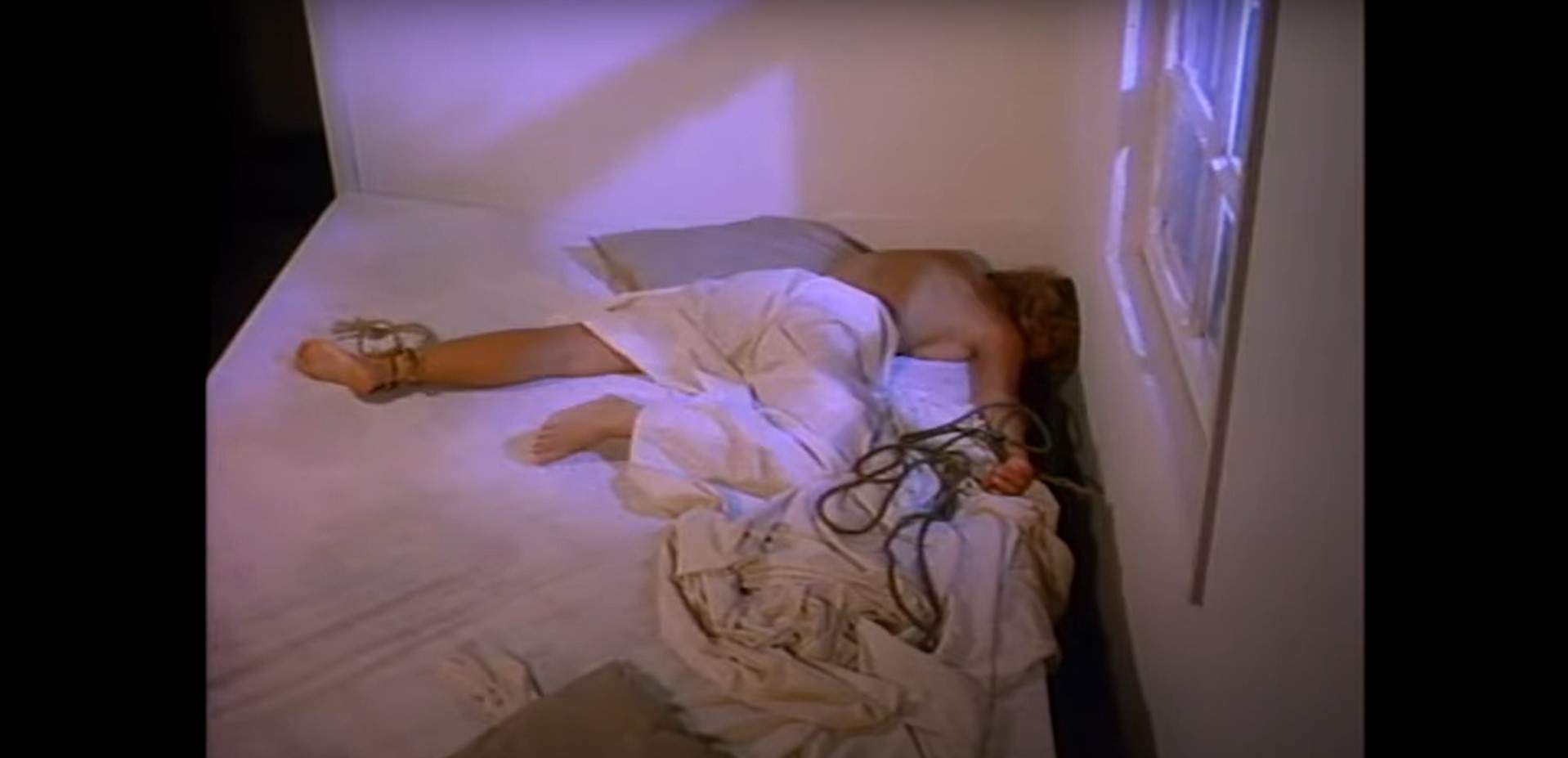
Daniel Ray Hawkins drives an unsettling, nomadic lifestyle as he travels across different parts of the country.  With no money, no place to call home, and little friends, Hawkins lives a life of mostly solitude, odd jobs, and equally as strange as him acquaintances spurred from his childhood, shaped by his promiscuously prostitute mother and a war veteran disabled father who gruesomely took his own life, both of which displaying their iniquities right in front of him.  Hawkins also lives a life of torture and murder, being one of the most prolific American serial killers ever of mostly young women.  When caught by authorities, Hawkins is willing to confess to everything and help unearth bodies from over decades on the road to ensure families he’s stolen from receive some sliver of solace.  His anecdotal accounts of individual disappearances and murders shock authorities to the core, so much so that Hawkins may just be unstable and not telling the truth.  That is until he informs them of and leads them to the cached polaroids and decaying corpses. 

Based on the American serial killer Henry Lee Lucas, who notoriously claims killing over 200 people has earned him a trio of film adaptations, at least, with “Henry:  Portrait of a Serial Killer,” directed by John McNaughton and starring Michael Rooker in the titular role, the subsequent lesser part II, and the more obscurely known Mark Blair written and directed production, “Confession of a Serial Killer.”  Much like “Armageddon” and “Deep Impact,” or “End of Days” and “Stigmata,” both movies fall into the paradoxical twin film phenomena of sharing the same them and having both been released approx. within a year of each other.  While “Henry:  Portrait of a Serial Killer” may have taken the top spot with a bigger budget played in more widespread venues, Blair’s rendition was released prior and closer to Lucas’s active killing spree that saw an end in 1983, just didn’t get released in America until a few years later to not duel with McNaughton’s film and thus didn’t succeed as much.  The Cedarwood Productions film was produced by Cecyle Osgood Rexrode, distributed by Roger Corman and his company, Concorde Pictures. 

While he was not the first choice for the titular character of Daniel Ray Hawkins, production designer, the late Robert A. Burns, filled in the sociopathic shoes with great monotonic conviction.  Burns, who has ties as Art Director and makeup effects on some of the most iconic and seminal genre films, such as “The Texas Chain Saw Massacre,” “The Hills Have Eyes,” and “Tourist Trap,” matches the makings of an unempathetic, unsympathetic, natural born killer with a glazed deadpan austere and matter-a-fact knowledge and every evil committed.  “Confessions of a Serial Killer” would not be as laced with depravity if Burns didn’t push the demented drugs to keep audiences hooked on overdosed deviancy.  Not a tall or broadly muscular stature, curly outstretched and receding hair, scruffily unshaven with a consistent 5 o’clock shadow, and wide rimmed glasses, Daniel Ray Hawkins epitomizes the very essence of a creep and accentuates the behavior even further with his leisurely composure and straight-faced simplicity.  Other side characters exist around Hawkins’ maniacal run with the bisexual Moon Lewton (Dennis Hill) and his sister Molly (Sidney Brammer), who marries the pansexual Hawkins out of necessity rather than sexual desire, and while Moon and Molly share Hawkins deranged apathy, they are completely overshadowed by the more controlling and interesting lead principal character due to half the murderous anecdotes are solo ran and all of the perception in the stories is through Hawkins’ recollection, giving him more power in the trio in perceptional self-interest, if Hawkins is capable of such consciousness.  The cast fleshes out with lawmen and victims in Berkley Garrett, Ollie Handley, DeeDee Norton, Demp Toney, Eleese Lester, Colom L. Keating, and Lainie Frasier in the opening stranded motorist scene that sets up Hawkins diabolical reach in turning a car into a trap. 

Bathed in realism, “Confessions of a Serial Killer” does not embellish with surrealistic temperament.  The story never dives into Hawkins’ head to show any indication or any kind of visual mental degradation or reality breakage toward being a coldblooded killer.  His violence is spartan, acidic, and raw to the bone, leaving a gritty taste in your mouth, with only a bleak childhood to blame for his adult obsessions to kill that he describes as necessary as breathing.  Blair distills the story to a “Mindhunter’” episode in trying to understand the killer and recover skeletons from his past, literally, through rational and respect ways rather than boiler room beatings and power-tripping threats.   Blair’s concept humanizes the inhuman and having Hawkins’s reminiscence each account is like recalling childhood memories with a smirk and fond remembrance splayed across his face adds another layer of iciness.  Grounded by pedestrian scenarios, “Confessions of a Serial Killer” disrupts the routine, the familiar, and the unscripted ways we live our lives unconsciously to the fiends living among us that look like you or me.  It’s a very palpable fear Blair conveys under the semi-biopic film.  The director does eventually let loose the reigns in the final third act with a finale account of Hawkins, Moon, and Molly shacking up with an amiable doctor, his suspicious assistant, and his shapely young daughter that boils to a head when one bad decision leas to another. 

For the first time on Blu-ray anywhere as a part of Unearthed Films’ Unearthed Classics sub-banner, “Confessions of a Serial Killer” receives a high-definition, 1080p release on an AVC encoded, single ring BD25.  Higher contrast and a lesser diffusion to create a harsher, flatter color scheme, the intention is to fully base the story in reality as much as possible, to structure an abrasive look of grain and low lighting that parallels the seediness the tale touts. inspired from the facts of an American serial killer without having to fully give recognition to the actual killer.  Shadows are key to Hawkins nightly runs, adding back-alley value to his viciousness, and the more lighter scenes, such as brighter-by-color interiors or day exteriors, are ample with natural grain that cut into the details but don’t necessarily knock them out entirely.  With the lesser capacity disc, compression doesn’t appear to be an issue with no sign of macroblocking, banding, or posterization. The English language LCPM 2.0 mono possesses lo-fi aspects kept true to the original audio master. The dual-channel conduit amasses the layers mostly in the forefront without ascendancy in the environment, creating a flat approach, rendering the audio mostly fixed and depthless with the action creeping onto the dialogue, but this also adds the realism of a real world chaos where cacophony reigns. William Penn’s effectively, inlaid soundtrack has hallmarks of Wayne Bell and Tobe Hooper’s “Texas Chain Saw Massacre in the minor key with added notes of an otherworldly tune fork keyboard and lingering bass elements that’s just infests with the sounds of deceit and death, reminding me also a lot of a George A. Romero’s “Night of the Living Dead’s” atmospheric arrangement. English SDH are an available option. The collector’s edition contents include a commentary with director Mark Blair, aka John Dwyer, director of photography Layton Blacklock, and actor Sidney Brammer (Molly), The Henry Lee Lucas Story by author and former TV news reporter James Moore, and a full-lengthy documentary Rondo and Bob examines Robert Burns being the foremost expert on uniquely deformed actor Rondo Hatton as well as examines Burns’ own career, a polaroid gallery, promotional gallery, and the trailer. Displaying the iconic poster, a profit from rip of Hannibal Lector with a devilishly masked killer behind bars, Unearthed Films’ releases the stark image onto a planar cardboard slipcover. Same image is used from the standard Blu-ray Amaray case with no reverse side. Disc is pressed with a memorable and anxiety-filled chase scenes. There are no inserts material included. The region A encoded Blu-ray has a runtime of 107 minutes and is unrated.

Last Rites: One of the better biopics on U.S. serial killers even if a little bit of speculation and sensationalism increases the already verbose notoriety of one Henry Lee Lucas. Scary and bleak, “Confessions of a Serial Killer” continues to remind us that no one is safe from the everyday sociopath.

An Unearthed Classic Now Available on Blu-ray! “Confessions of a Serial Killer”