DCU Can’t Handle this EVIL! “Swamp Thing” reviewed! (MVD Visual / 4K & Blu-ray)

“Swamp Thing” on 4k / Blu-ray Combo!  Now Available on Amazon.com!

A top-secret government project in the Louisiana swamps concern the combination of aggressive animal genes into plant DNA to result in creating super food for the potential famine and overpopulated future.  Agent Alice Cable becomes assigned to the project when her predecessor is unexpectedly devoured by a gator and becomes acquainted with the passionate head scientist, Dr. Alec Holland.  However, the government isn’t the only interested party in obtaining a formula when a faction of cutthroat mercenaries invade the swampy compound in the name of Arcane, a mastermind sociopath looking to hold the fate of the world in his hands.  Storming the compound with force, all the government agents are slaughtered except for Cable who managed to escape while Dr. Holland suffers a tragic accident of combusting with his volatile formula during the attack.  Believed to be dead, Dr. Holland returns transformed into a half-man, half-vegetal thing with superhuman abilities.  Now, Arcane is after him with Cable trapped in the middle. 

Having success in the grisly rape-revengers and mutant-cannibals section of his career in the 1970s, Wes Craven tussled with creating and securing another hit film to pay the ever mounting bills.  Before “A Nightmare on the Elm Street,” one of two biggest titles that have gone synonymous with the director’s name, the other being “Scream,” Craven dived into a DC Universe project before the DC Universe ever existed as such with the script adaptation and the helming of “Swamp Thing,” a vegetational anthropomorphic superhero inhabiting elemental powers, such as regrowth and superhuman strength.  What Craven originally scripted may not have been the same as the finished product on screen but the 1982 captured audiences attention and created lifelong fans of an underappreciated hero still germane to what is now a large universe of revitalized superheroes films and television shows.  Film in and around Charleston, South Carolina in the Cypress Gardens doubling as deep South everglades, “Swamp Thing” is produced by long time DC films coproducers Benjamin Meiniker and Michael E. Uslan as their first DC superhero venture as a Melinker-Uslan production and distributed by Embassy Pictures and United Artists.

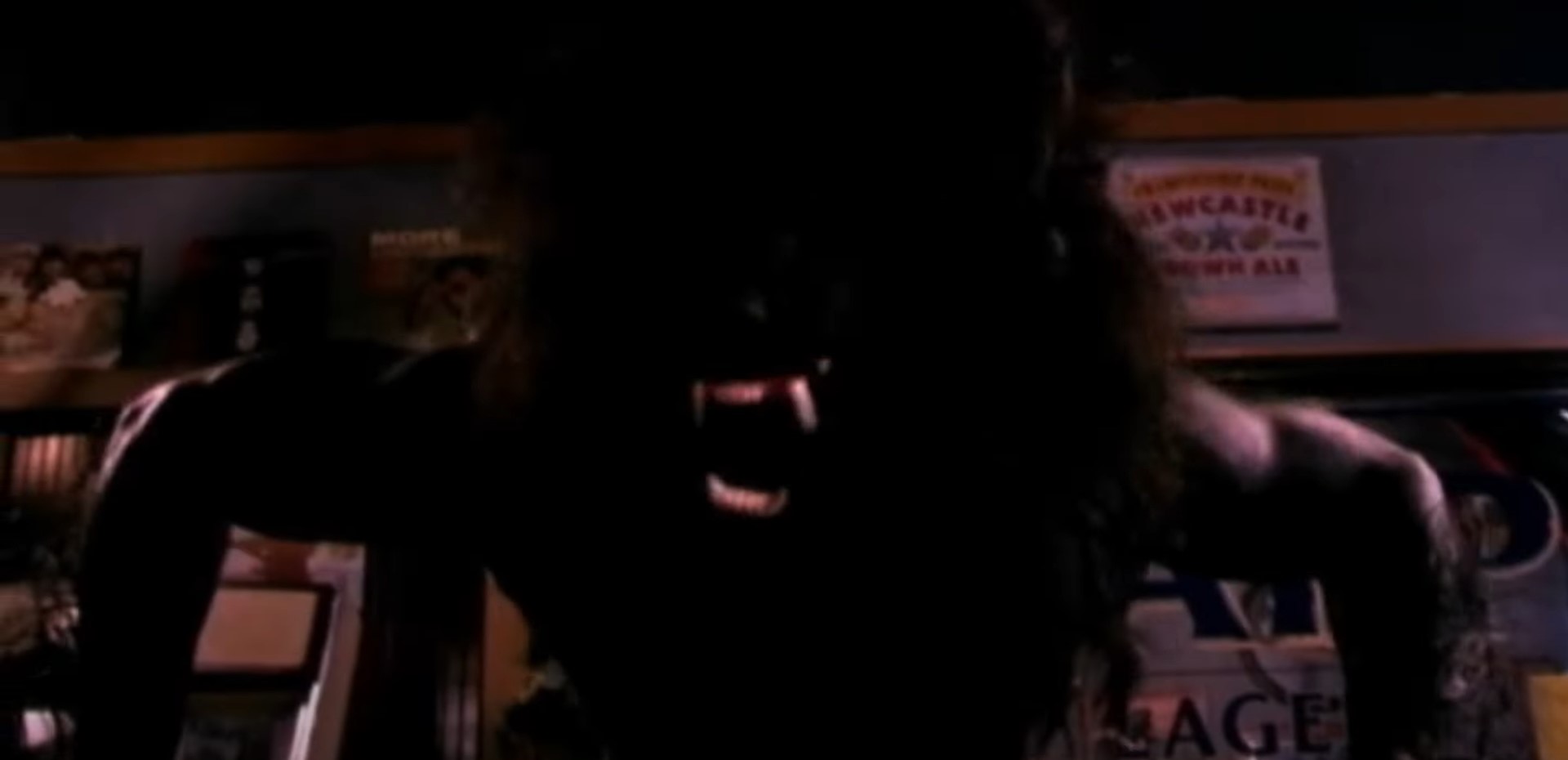
The question of who would bring this monolithic human-hydrangea?  Answer:  Dick Durock.  The 6’5” former Marine Durock was not afraid to jump into character skin, no matter how hairy, tight, or otherwise uncomfortable it might have been.  Durock may not have been the face of Dr. Alec Holland, played by genre cult actor Ray Wise (“Robocop,” “Twin Peaks”) before succumbing to transformational injury and rebirth, but the Indiana born actor certainly became the face of “Swamp Thing” throughout a decade with the sequel and the subsequent television show.  Durock captures not only the strength but also the humanity of the superhero in this origin story, a feat hard to accomplish for a man in a skin-clinging green and bulky suit.  Not to diminish Ray Wise’s performance by any means as the charismatic Wise is charming, passionate, and invested into making his Dr. Jekyll jive with the soon permanent Mr. Hyde to come, but as titular principal, Durock becomes the face of foliage on steroids.  Before solidifying herself as a scream queen, a young Adrienne Barbeau would have more difficulty in her Alice Cable role reflected in having some kind of feelings for essentially the same character in two versions played by different actors.  Yet, Barbeau beats the buggy Carolina heat as well as the differentiate obstacles by being a kickass government agent able to handle herself around the frighteningly new swamp creature and Arcane’s goon squad.  Before he was a James Bond villain in “Octopussy,” Louise Jordan donned the arrogancy of a tyrannical thinker yearning for the unique powers of others.  Jordan’s quite pretentious as the unrelentless Arcane and that makes the actor be the quintessential antagonist but I would not say his performance places his character in complete rivalry as “Swamp Thing’s” archnemesis.  Something is missing from their dynamics within their broad encounters that make the struggle appear impersonal and distant.  Even when Arcane ingests the formula and turns into a werewolf-like beast and the two superpowers clash, I wouldn’t label their conflict personally intertwined.  Perhaps Alec Holland and Alice Cable’s pre-mutation passion wasn’t strong enough or Swamp Thing’s deep-seeded desire for Alice wasn’t rooted well that makes Arcane just whither like a sun-beaten plant without water.  Another character that’s beaten into the ground is Ferret played by David Hess (“The Last House on the Left”) as head mercenary without any real power or absolute authority over his men, turning Hess more into like Tracey Walter in Tim Burton’s “Batman” but not as cool or as likeable.  “Swamp Thing” cast rounds out with Nicholas Worth (“Darkman”), Don Knight (“Death in Space”), Nannette Brown (“My Boyfriend’s Back”), Al Ruban (“1,000 Shapes of a Female”), Mimi Craven (“Last Gasp”), Karen Price, and Reggie Batts as the unlikely best child character in all of the film as an interesting and lone gas station attendant with hilarious, deadpan wisecracks. 

“Swamp Thing” may not be the first comic book superhero to be pulled from the DC lined colorfully illustrated and action-packed pages and adapted to the big screen but what separates the mucky-dwelling plant hero from the other is he’s cape-less, without ray guns and jetpacks, and appears as a monstrous humanoid rather than a regarded normal looking servant of justice as with Superman, Batman, or Wonder Woman.  “Swamp Thing” intrigues viewers with their own internal conflict stemmed from a foundationally laid idea that mutant creatures or unnatural monsters are inherently bad guys.  “Swamp Thing” becomes a part of that trailblazing group of grotesque good guys with hearts of gold.  Yes, the 1982 feature hasn’t held up over time with some of the low on the totem pole creatures suits and makeup I’ve seen, even with the agreeable Swamp Thing suit showing the rubbery creases and fold overs when Dirk Durock has to hold an object; however, to balance out the cut-rate features, special features picks up the tab with stunt boat chases, invisible pull wires, and a man set on fire that’s intense.  With a slashed budget, Wes Craven scripts on the fly to churn out a watered down but still flavorful cinematic origin story that’s full of heart and humanity and partly carried by the sweat and endurances of an eclectic cast and a handful of popcorn action patches.

“Swamp Thing” emerges from out of the muck yet again and onto a 2-Disc 4K/Blu-ray combo set from MVD Visual’s Rewind Collection label, specially marked as the first release on the LaserVision Collection.  The restored 4K UHD Dolby Vision is presented in 2160p and in a 1.85:1 widescreen aspect ratio on a BD100 while the Blu-ray is presented in 1080p high definition with the same aspect ratio on a BD50.  Each format presents two cuts of the film – a PG version and an international Unrated version – both of which have collated from various cuts of the film, resulting in some impressively rich grading that offers refreshed saturation levels of a lusher swamp environment.  More of that richness is conveyed through the UHD with providing deeper tones to make the swamps isolate and swallow characters while also have a sense of being alive amongst the hazy, knee-high fog, opaque waters, and thick vegetation.  Black levels look fine with the amount of grain that can vary from scene-to-scene but not compression issues to talk about on both spectacular approached formats.  The 4K offers a remastered DTS-HD MA 2.0 mono, which is same as on the Blu-ray, that unjustly limits “Swamp Thing’s” audible potential.  Dialogue has some deficiency projecting with all the tracks transmitting through a single channel that’ll force the up arrow on the volume setting or require a punchy soundbar or headphones to get to a clearer understanding of what characters are conversing.  The intrinsic ambience would have been better suited for multi-channel network to extract everything the swampy milieu had to offer, plus punchier fights, but if not an audiophile, these tracks will ultimately sate a viewer’s goal.  Range decently enough limps through despite the surround sound as we receive enough explosions and barrages of bullets to check that box, but depth struggles through the audio layers.  Both formats also include a Spanish language mono track and optional English subtitles.  Special features vary across the two releases with the UHD having limited extras due to storage but what is included is the PG version, the Unrated International version that includes Adrienne Barbeau’s topless scenes, an archive commentary with writer-director Wes Craven moderated by commentary director Sean Clark on both versions of the film, commentary with makeup artist William Munns moderated by Michael Felsher of the commentary/documentary conducting Red Shirt Pictures, also on both versions.  The Blu-ray contains the same extras above plus another Red Shirt Pictures’ interview with Adrienne Barbeau Tales from the Swamp, an interview with Reggie Batts Hey Jude, a discussion with Len Wein, the creator of “Swamp Thing,” the featurette Swamp Screen:  Designing DC’s Main Monster, the featurette From Krug to Comics:  How the Mainstream Shaped a Radical Genre Voice, photo galleries, and theatrical trailer. This must-own set, that caters to paying homage to the Laserdisc, comes retail green 4K Ultra HD snapper that in holds the 4K and Blu-ray on each side of the interior wall. The exterior features an illustrated encirclement of the main players – Dirk Durock and Andrienne Barbeau in comic character – on a single-sided front cover, sheathed inside a cardboard O-slip cover with the same cover art. Both disc presses also represent the original Laserdisc art. The insert contains a folded mini poster of the slipcover design. Two version, one release headline both the 91-minute PG and 93-minute Unrated version of the film with the entire package region locked in A. I may have finally watched Wes Craven’s “Swamp Thing,” but I won’t be the last as I highly recommend this stellar launch into ultra high-definition territory with the original quagmire superhero.

“Swamp Thing” on 4k / Blu-ray Combo!  Now Available on Amazon.com!

A Corrupted Nation, Operated by EVIL Drug Lords, Are No Match for “McBain” reviewed! (Synapse Films / Blu-ray)

“McBain” Explodes onto Blu-ray from Synapse!

Vietnam War has officially ended, and U.S. troops evacuate the worn torn country almost immediately until Robert Santos and his squadron happen upon a Vietcong-controlled POW camp still operating under the merciless thumb of North Vietnamese soldiers either unaware of the news that war is over or are blatantly disregarding defeat to deface the enemy. During the trouncing of opposition in a fury of firearms and explosions, Santos saves POW Robert McBain seconds before being stabbed in the back by the enemy. McBain pledges a debt to Santos for saving his life. Eighteen years later, the now Colombian revolutionary Santos, in fighting for his countrymen’s freedom and end of suffering, is killed by an iniquitous President controlled by a narcotic cartel. Santos’s wife travels to America to find McBain where the former soldier regroups Santos’s old platoon to avenge their brother in arms as well as to free the struggling people of Colombia from dictatorship and tyranny.

Director James Glickenhaus, known for his handful of thrifty, R-rated, action thrillers with some of the biggest names of the 1980s, including Jackie Chan, Sam Elliott, and Peter Weller, had previously not helmed a picture with a budget more than $5-10 million. That is until he met “McBain,” a fictional, titular character Glickenhaus created and wrote the screenplay for in his first feature at the turn of the decade. The 1991 film tripled in budget compared to the filmmaker’s previous films, aimed high for a larger scale that took the retribution guts of the story to multiple locations from around the New York metropolitan area to the surrounding waters of the Philippine islands that doubled for politically despotic Colombia in South America and multiple, sizeable explosions around every scene corner. “McBain” also hired an esteemed actor to bear the weight of the title that would contest the very robust budget against “The King of New York’s” star power, paid for by Glickenhaus’s own production banner, Shapiro-Glickenhaus Productions with executive producers Leonard Shaprio (“Black Roses”) and Alan M. Solomon (“Moontrap”) and producer J. Boyce Harman Jr.

“The King of New York,” if you haven’t clued in on the hint by now, is Christopher Walken playing a former Vietnam veteran turned NYC steel worker fulfilling his promise to repay a life debt to fellow former soldier Roberto Santos (Chick Vennera, “Last Rites”). Walken, in at least my eyes, has always been a one note kind of character and as McBain, that note remains true here as well.  Don’t get me wrong about Walken’s feature-after-feature character continuity as the acclaimed actor has his cool-cat idiosyncratic inflections and pompadour hairdo.  There’s also a relaxed swagger about the now 80-year-old actor that remains recognizable from his earlier work to all the way to today.  Usually, we do not see Walken paired up with a love interest and “McBain” is no different in a side-by-side with “Running Man” and “Predator 2” actress Maria Conchita Alonso as Christina, sister of Robert Santos.  The two are more servants of doing what’s right, connected by singular retribution, to provide justice for a mass of people drowning in injustice because of a small group of corrupt and dangerous empowerment.  McBain and Christina rarely share the screen together in a strategic mix of accomplishing their own parts of the mission:  McBain rallies sympathetic mercenaries to obtain money and gear while Christina rallies her people to rise up and raze the crooked administration.  Walken makes the ordeal look like a stroll in the park with lofty assurance to take down an entire country’s military power juxtaposed against Alonso soulful, teary-eyed pursuance in the eyes of Christina that’s more compassionate and real, especially with Alonso’s investment as a Cuban born actress who may know a thing or two about dictatorships.  McBain mercenaries are not a ragtag bunch but the former military unit that saved him from POW Hell along with Santos, but they are more of a ragtag, mixed lot cast of actors amassed to be characters ready to leave their professions and livelihoods for a South American throwdown.  Michael Ironside (“Scanners,” “Starship Troopers”), Steve James (“The Warriors”), Thomas Waites (“The Thing”), and Jay Patterson (“Hard Rain”) see to it that those mercenary warriors are committed beyond a shadow of a doubt and, no, Michael Ironside does not lose a limb in this film.  A rather bland McBain is backed by a rather highly skill set of commandos, such as post-Vietnam billionaires with long-reaching tech and a war pilot who is also now a surgeon, and this creates some depth complexity between a former POW turned steel worker McBain and those who saved him and came out better in life than the titular character.  “McBain’s” explosive action rounds out with roles from Forrest Compton, Hector Ubarry (“Crocodile Dundee II”), Nigel Redding, Victor Argo (“True Romance”), Michael Joseph Desare, and Luis Guzman (“Innocent Blood”). 

Explosive would be one of the words I would use to describe “McBain” to someone who hasn’t seen the film.  Another word I would use would be rudimental.  “McBain” struggles to provide opposition for our band of solicitous to the cause heroes who steamroll over the entire Colombia army and air force with little-to-no resistance or demise unless it was their own decision.  What basically unfolds is a much more expensive version of the A-Team with high powered gear and a will to flatten just about anything that lays in their path, making “McBain” shallow like an extended television episode rather than a saga of epic explosive proportions.  The one good aspect about Glickenhaus’s production is the pyrotechnics are ridiculously off the charts with a nonstop stop bombardment of military armament, combat vehicles, and personal convoys strapped with a weaponry assortment of M50’s, incendiaries, and stingers to light up every scene with miniature mushroom clouds glow with the heat of orange, yellow, and black.  “McBain” might as well have titled “McSplosion” with all the hellfire that lit up the budget.  Unfortunately, “McBain” doesn’t yield any other megaton fringe benefits from the acting to the story that seemed to have been caught in hoopla of the collateral damaging combustion, like an Andy Sidaris actioner but without the equalizing T&A to extinguish the bad by igniting another kind of pants fire.

Synapse Films delivers another high-quality product with the new 2K transfer of “McBain” on an AVC encoded, 1080p, Blu-ray.  Presented from its OAR of 1.85:1 to a high-definition 1.78:1 widescreen aspect ratio, Synapse’s Blu-ray release clearly has a pristine transfer to work from, likely the reason why there’s no mention of restoration printed on the back cover.  No significant signs of damage, age wear, or unnecessary augments on the 35mm print.  No notifiable compression issues on the information decoding that averages around the high 30s on a sizeable BD50.  A varied color palette has a renewed, clean, and stable appeal, pleasing to absorb and delineate objects within the primaries as well as patterns and sundry hues that separate into a range of objects and locations.  Specified new is the English DTS-HD MA 5.1 surround soundtrack created this release.  Accompanying also is the original theatrical LPCM 2.0 stereo mix.  The DTS-HD mix has superior strength to maximize the explosions across the cross-media channels. There’s also an unobstructed dialogue track that prominent but maintains the varying degree of depth during bullet buzzing skirmishes and the flaming tailed rockets.  Transmissions and comms hold the range to the appropriate subdued amount and, even more so, when the enemies engage each other in aerial combat. Exclusive to the release are newly translated, optional English subtitles. Bonus content underperforms on this particular Synapse title with only an audio commentary with director James Glickenhaus and film historian Chris Poggioli as well as the original theatrical trailer. Physical content comes home in a green, standard-sized Blu-ray snapper case with one of the more illustratively warm “McBain” poster arts on the single-sided cover art. Inside, a multi-page advert catalogue is included for your browsing pleasure and the disc art is rendered with the front cover art. “McBain” is rated-R, has a 104-minute runtime, and the release has a region free playback. “McBain” promises a retreat back into action for those missing action after the war is long over, but though there is a lot of bang, there isn’t a lot of buck with a seldomly challenging fight that practically makes McBain an invincibly dull crusader.

“McBain” Explodes onto Blu-ray from Synapse!

EVIL Has the Right to Remain Dead! “Magic Cop” reviewed! (88 Films / Blu-ray)

No Two-Bit Magician In ‘Magic Cop” on Blu-ray!  

Hong Kong cops are confounded by a chaotic drug bust when learning that their female suspect, who had managed to overpower an entire unit of male officers and even take a bullet ambling deadpan into the streets, had died 7 days prior.  An outlying officer, and practicing Taoist, Uncle Feng is called to Hong Kong to not only quickly solve the narcotic crime but also investigate the unnatural properties of the case.  Feng is accompanied by his city eager niece Lin and two Hong Kong cops, a Taoist devotee and skeptic of Ancient Chinese spiritual mythologies.  Together, they track the drug trail to The Sorceress, a Japanese witch with powers that rival Feng and that can resurrect the dead into zombies and vampires to do her bidding, such as trafficking narcotics.  When the investigation closes in her business, The Sorceress and her right arm, skilled fighter plan to remove the only man worthy of stopping her.

Fans of Ricky Lau’s “Mr. Vampire” will once again be amazed and entertained by the fantastical and mystical action of Stephen Tung Wai’s “Magic Cop.”  Tung, a fellow martial artist and stunt man who had roles in “The Fatal Flying Guillotine” and John Woo’s “Hard Boiled,” helms his debut directorial penned by Chi-Leung Shum (“Vampire vs Vampire”) and the longtime Stephen Chow script writer Kan-Cheung Tsang (“Shaolin Soccer,” “Kung-Fu Hustle”).  The screenwriting duo brought lighting quick comedy to the mostly fictionally invented yet sprinkled with slivers of hard-pressed veracity and definitive entertaining occultism and what resulted resurrected “Mr. Vampire” semblance out of the being a period piece and into the modern day, backdropped in the year of 1990 when the film was released.  Long rumored to be the fifth sequel of the “Mr. Vampire” franchise, “Magic Cop” is a coproduction between Movie Impact Limited, Millifame Productions Limited, and Media Asia Film with star Ching-Ying Lam producing.

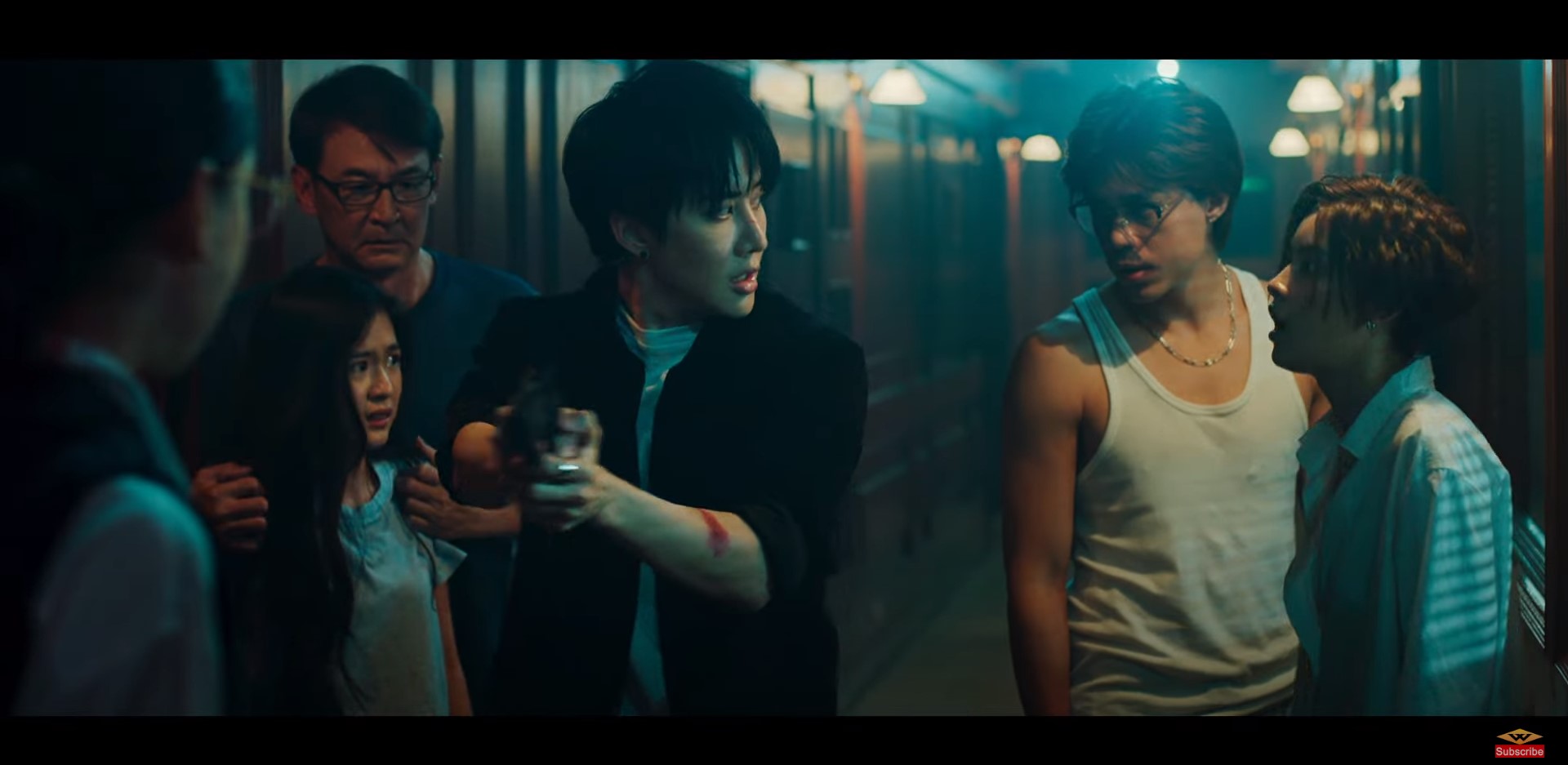
“Magic Cop,” and even “Mr. Vampire,” wouldn’t have such a cult following if it wasn’t for the Vulcan eyebrows and thin mustache of Ching-Ying Lam in costume.  The short-statured, Shanghai-born Lam delivers the same vigorous choreography and tranquil demeanor to this particularly stoic character of Uncle Feng, a Taoist practitioner to essentially wrangle unruly entities and please the spirits in the in-between our world.  Feng is old world and finds himself in surrounded by modernism when in Hong Kong, goaded by the young lead sergeant attached the case.  Practical as well as disrespectful, Sgt. Lam (Wilson Lam, “Ghost for Sale”) epitomizes today’s, or rather back then the 1990’s, modern man who has forgotten tradition and deference to those who came before.  Though padded with a fair amount of comedy coursing throughout, balanced against the impeccably edited tango fight sequences, Sgt’ Lam’s partner, known only as Sgt. 2237 played by “Centipede Horror’s” Kiu-Wai Miu, risibly wants to understudy Uncle Feng’s powers while Feng’s niece Lin, played by Mei-Wah Wong of “The Chinese Ghostbusters,” provides the subtle and quirky opposite sex that catches of the philandering eyes of Sgt. Lam.  The ragtag quartet of influx mindsets and personalities become challenged by their single common goal, to stop whoever is behind breathing life into the formidable dead and stop the unorthodox method of drug smuggling.  Former Japanese bodybuilder Michiko Nishwaki (“City Cops”) embodied that very dark magic antagonist.  Nishiwaki handles The Sorceress character with ease despite not having a surfeit army under her thumb; instead, this forces Nishiwaki to become the entire villain body with the slight, full-contact support for her right-hand bodyguard (Billy Chow, “Future Cops”) and a couple of undead lackeys, including Frankie Chi-Leung Chan of “Riki-Oh.”  “Magic Cop’s” cast rounds out completely with well-versed and seasoned, late actor Wu Ma (“Mr. Vampire,” “Return of the Demon”) as the chief inspector polarized in a complicated history with Uncle Feng.

What director Stephen Tung Wai boils down in essence is another variation of good executants of spirit humbled caretakers versus the wicked necromancers existing inside the fabric of the highly praised and cult-following “Mr. Vampire” universe.  Frankly, there’s nothing wrong with that derivativity since Ching-Ying Lam, Mr. Vampire himself, produces and stars as the titular hero.  Lam can conjure whatever-the-hell he wants in order to battle Hell itself.   “Magic Cop” is also a well-made, entertaining story, balanced between the contest wizardry, slapstick comedy, and the character dynamics, and stacked with improbable yet gratifying step-intensive fight orchestration that has gawked early martial arts films a wonder to behold and continues to do so to today but now trickles with pizzazz more-after-more due to put in place industry safety measures.  “Magic Cop” contains that lost art of potentially hazardous palatable physicality that beguiles more than the movie’s faux magic exhibited on screen.  To add to the authenticity, very little painted composited visual effects were used with makeup and the actors doing much of the heavy lifting with the editing team of Ting-Hung Kuo and Kee Charm Wu in full cut-and-paste fortifying mode to button up each sequence with comprehendible continuity of each punch, kick, and magical chopsocky.  One overtone made well known in “Magic Cop” is the unfillable chasms between old and new, respect and disrespect, and myth and science from whence solves no problems until some unified common ground can be reached in order to succeed, in this case, to stop a bitch of a witch.    

An age-resistance 35mm print scanned onto a buffed 2K Blu-ray that extracts the best print elements to-date. The AVC encoded, 1080p, Blu-ray presents Stephen Tung Wai’s picture in a widescreen 1.85:1 aspect ratio. A fine-tooth comb through the celluloid couldn’t unveil any major issue with the 88 Films release. Colors are richly grafted within the sabulous surfaces that are exceedingly defined with delimited, shadow-creating depth. Decoding speeds average around 35Mbps on a BD50, securing categorical choiceness amongst other releases and formats (that is until the potential 4K release). The release comes packed with four audio options to explore: The original Cantonese DTS-HD master audio 2.0 mix, a Cantonese DTS-HD 2.0 home video mix, an English DTS-HD 5.1 master audio dub, and an English DTS-HD 2.0 dub. Between the variated audio mixes, we preferred the original Cantonese DTS-HD 2.0 due to its cadence with the image and welcoming exactness through the lossless compression process. You can make do with the other three options, but the fidelity is much better with the original mix and only anti-subtitle sectarians would be pleased with an English dub. English subtitles are optional and synch well the dialogue but be prepared to speed read as the pacing is quick much like the dialect. Software special features include an audio commentary with Hong Kong film experts Frank Djeng and Marc Walkow, an alternate, standard definition Taiwanese cut of the film with alternate score, an interview with director Stephen Tung Wai, image gallery, and trailer. Endowed with a limited-edition, cardboard slipcover, the dark green Blu-ray snapper has newly illustrated, front cover artwork by Manchester graphic designer and 88 Films resident artist Sean Longmore, which is also on the cardboard O-slip. The reversible cover art has a reproduction of the original Hong Kong poster art. Stuffed in the insert is a mini-folded poster of Longmore’s front cover and a disc art, a scene moment captured in spherical rotunda, of the opening sequence. Available with a regional playback limited to A and B, the 88 Films release is not rated and has a runtime of 88 minutes. ‘Magic Cop, perhaps, wasn’t the sole proprietor of influence but certainly had a black talisman plying hand in the substrata of more Western favorites like “Big Trouble in Little China” and is a crucial cornerstone in representing the best of the Hong Kong Golden Age of cinema.

No Two-Bit Magician In ‘Magic Cop” on Blu-ray!  

Recalled to Nam is a Return Tour of EVIL! “Kill Zone” reviewed! (MVDVisual / Blu-ray)

Enter the “Kill Zone” on a New Blu-ray Home Video!

Combat POWs are captured by enemy forces, imprisoned in an outdoor internment camp.  Tortured for information, the prisoners are held without water in the scorching heat, strung up for hours on posts, beaten to a pulp, and stowed away in a hotbox if they do not cooperate with interrogators.  When Lt. Jason McKenna snaps and loses grip on reality, he breaks free from his confinement and kills four guards during the process when the soldier believes he’s back in Vietnam.  The only problem for McKenna is that the enemy imprisonment was a his own military’s roleplay training exercise for POW-survivalist.  The commanding officer, Colonel Crawford, had pushed McKenna too hard, making the exercise realistic as possible despite the warnings of fellow trainee and McKenna’s friend, Mitchell.  Now, the incensed Colonel is out for blood, covering his tracks with military leadership as he and the gung-ho soldiers seek to put an end to McKenna and it’s up to Mitchell to find his troubled friend first. 

The high-body count film that became the launching point for what would form Action International Pictures, 1985’s “Kill Zone,” an American-made, military actioner written and directed by the late David A. Prior (“Sledgehammer,” “Killer Workout”), opened the production door for a string of both action and horror ventures that spawned cult followings over the decades to come, especially when obscure titles such as “Kill Zone” never made it passed the release of its VHS format – until now.  John Saxon’s “Death House,” “Teenage Exorcist” with scream queen Brinke Stevens, and even the pint-sized creature feature “Elves” are just a few titles that owe “Kill Zone” some ounce of ground working thanks.  Prior cowrote the script with Jack Marino, who also produced the film under the limited formation of Spartan Films, and was shot in and around what is now Prado Regional Park in Chino, California.

Trekking from internment camp to civilization, aka the kill zone, and fighting and fleeing for their very lives from their own crooked military unit are McKenna and Mitchell, played correspondingly by “Killer Workout’s” Fritz Matthews and Ted Prior, younger brother of director David Prior.  Though Matthews has the emotional range of a tree stump, the leading man more or less fits the bill as a tall and stocky soldier protagonist while Mitchell does all the emotive heavy lifting of the pair, reflected in his large and muscular Stallone-sized biceps.  The comrades’ necks fall under the boot of Colonel Crawford from an aging David Campbell (“Scarecrows”) whose ridicule onslaught is dousing and his ruthlessness remains constant but can’t top the baseline he cemented early on into the story, diluting his villainy with not much formidableness, and becomes a feeble opposition.  Colonel Crawford is backed by his equally inadaqute military unit, former fellow trainees that divide themselves into a clique against the diverging outliers McKenna and Mitchell who separate themselves from the apathetic herd thinking either by post-traumatic mental illness or for concrete concern for a life-saving friend.  Either way, the rest of the unit bully their way into Crawford’s good graces albeit the Colonel’s lack of interest in the lives or death of his men in a nationally organized armed force that breathes the creed to keep the peace, but the Colonel’s men are just as complicit to their commanding officer’s callousness when they begin to rough up and snuff civilians in what is the most cold-blooded aspect of “Kill Zone’s” torrent.  Dennis Phun (“Surf Nazis Must Die”), Rick Massery, Richard Brailford, William Zipp (“Mankillers”), Richard Bravo (“Killer Workout”), and Larry Udy fill out the Colonel’s men while Ron Pace, Tom Baldwin, Jack Marino, and Sharon Young round out the civilian contingent.

On the surface, “Kill Zone” has the presentation of a direct-to-video, low-budget rip of “First Blood” but like the Sylvester Stallone John Rambo thriller, commentary undertones rise to the top with an additional few bobbing and freestanding from 1982 film.  Producer Jack Marino admits watching “First Blood” prior to writing the script that obviously become appropriated from the Ted Kotcheff picture in what is an underlining post-traumatic syndrome plagued individual in a dormant stage of the affliction then becomes pried open by aggressive, misapprehending authority with no time for a condition they’re ignorant too.  What follows is a deadly resistance against a barbaric enemy and the starkly different situations both characters John Rambo and Jason McKenna find themselves caught up in parallel their hellacious Nam tour in many synapse-snapping and physically scarring aspects to a point where the line blurs between being back in that Hell in reality and being back in that Hell in the mind.  What “Kill Zone” adds to its own version of the tale is no pedestrian anti-war pushback like we see with Brian Dennehy’s Podunk sheriff and his deputies but rather a shift in commentary toward the military’s once push harder and neglectful treatment on PTSD in what becomes an anti-military production to the extreme.  John Rambo had military sympathizers in Richard Crenna’s Colonel Trautmann but Jason McKenna’s Colonel spat flak with nothing but contempt for what he considers a weak soldier.  While military criticism is large and in charge, what negatively impacts “Kill Zone” is the no flare for technical military behavior or jargon.  The opening combat scene exemplifies the inexactitudes with Mitchell and his team storming through brush and across a river toward an unseen enemy’s stronghold guns blazing like little boys with popguns and mouthy explosions sounds of amateurism splayed all over as he and his team run wildly, hop like a bunny into fire stances, and point rifles with no line of sight.  Prior is able to achieve some nice shots of ammunition exchange with slow profile pans and aerial assaults filmed up from the ground, but there’s too much downplay to take this low-rung action film seriously and to really get a viewer the headspace of “Kill Zone’s” deathtrap montage that warrants more respect than what the rest of the presentation layout provides.

Missing in action from contemporary formats for over three decades, “Kill Zone” finally becomes rescued from inferior definition captivity and arrives onto DVD and Blu-ray (reviewed) courtesy of MVDVisual’s Rewind Collection series.  The Blu-ray is an AVC encoded, 1080p high-definition transfer scanned and restored in 4K from the 35mm interpositive print.  Presented in a widescreen 1.78:1 aspect ratio, the new transfer breathes new life into the lost but not forgotten feature with an enriched color grading and a sharpening of details, especially textures of the foliage and rocky terrains and assorted skin features.  Not entirely impeccable, contrast often teeters in the same frame and there’s an abundance of saturating grain, like large raindrop grain, in nighttime image that wash out details to great extent, but we’re always reeled back in with warm and pleasant color palette that flushes the previous VHS release quality down the core memory exiting drainpipe.  There’s one or two moments of vertical scratches, indelicately faint, and rough editing patches that distort to a blip that may be more problematic and age-related from the interpositive print than the dynamic restoration that was done.  The English language LPCM 2.0 mono track suffers from the low-quality sound recording equipment or placement that renders dialogue soft and nearly unintelligible as volume levels severely spike depending on how much the actors are projecting their voices.  There is some minor, unobtrusive popping throughout the fidelity faithful ambient and dialogue track, the latter, though softly wavering at times, does ultimately prevail to the forefront.  Optional subtitles are available.  Special features include a new audio (and optional video) commentary with producer Jack Marino, moderated by Cereal at Midnight host Heath Holland, a new Making-Of Kill Zone” featurette with clips interview with Jack Marino moderated by “Kill Zone” restoration project producer Steve Latshaw, the Vestron Video VHS version of the feature in standard definition, a photo gallery, and the original theatrical trailer redone with restoration elements.  The action-packed original poster art obtains a renewed look for the Blu-ray’s retro cardboard O-slip that resembles a torn, scuffed, and stickered VHS box art. Underneath the slipcover, the same poster art is on the front of the clear Blu-ray snapper case with latch and on the reverse side a back-the-scenes still images of Ted Prior and costars in character form.  The insert holds a folded mini-poster of the original poster art and the disc is pressed with the ridged gridlines of a VHS shell cassette with insert this side directions at the top.  Pretty neat design that further leans into “Kill Zone” VHS cult following purgatory.  MVD’s 50th release of the Rewind Collection is rated R feature has a runtime of 91 minutes and the Blu-ray is region unlocked for everyone’s viewing pleasure.  No longer destined to live out its shelf life on VHS, the wonderful contributors to obscure movie restoration brings “Kill Zone” back into action with a rejuvenated hi-def release that’ll blow you away. 

Enter the “Kill Zone” on a New Blu-ray Home Video!

What Russian EVILS Lie Beneath in “The Lair” reviewed! (Acorn Media International / Blu-ray)

“The Lair” Has a Deadly Secret!  Blu-ray Now Available!  

Royal air force Captain Kate Sinclair is shot down over the arid planes of Afghanistan.  Swarming with Taliban insurgents and her command officer killed, Sinclair takes shelter in an old, abandoned Russian bunker from the Russian Afghanistan invasion of the 1980s.  What she stumbles into is an experiment lair housing numerous stasis chambers and dark secrets.  Sinclair manages to barely escape with her life when one of the creatures inside the capsules is released, tearing to shreds her well-armed pursuers.  Rescued by a ragtag team of U.S. military outcasts based in the middle of nowhere as peripheral punishment and joined up by a trio of British special forces in the area, the Captain attempts to warn her rescuers what’s out in the desert only to be on the receiving end of a monstrous invasion that sees the slaughter of nearly everyone in camp, including the camp commander.  Miles from anywhere and not enough supplies to withstand another attack, those soldiers left alive band together to stage their own last stand assault on the creatures’ Russian bunker lair to ensure hostile eradication.

Acclaimed horror director Neil Marshall (“Dog Soldiers”) returns to his roots with a claustrophobic, high-energy, and violent creature feature known as “The Lair.”  Having experienced underwhelming success with the fiery Dark Horse antihero “Hellboy” remake in 2019, Marshall returns to independent scene for the 2022 released film having been shot in the barren lands of Budapest, Hungary to create the illusionary Afghanistan territory backdrop.  Marshall co-writes the script with “The Lair” star Charlotte Kirk, a reteaming affair from Marshall’s last feature “The Reckoning” from two years prior in which Kirk also produced and starred.  Also returning from “The Reckoning” and into the producer’s chair is Daniel-Konrad Cooper along with “Infinity Pool” producers, Jonathan Halperyn and Daniel Kresmery, and “Lords of Chaos’s”, Kwesi Dickson in this Shudder exclusive collaboration from Rather Good Films, Scarlett Productions Limited, Highland Film Group, and Ashland Hill Media Finance with Neil Marshall and Peter Shawyer’s private equity investment group, Ingenious Media, providing financial support.

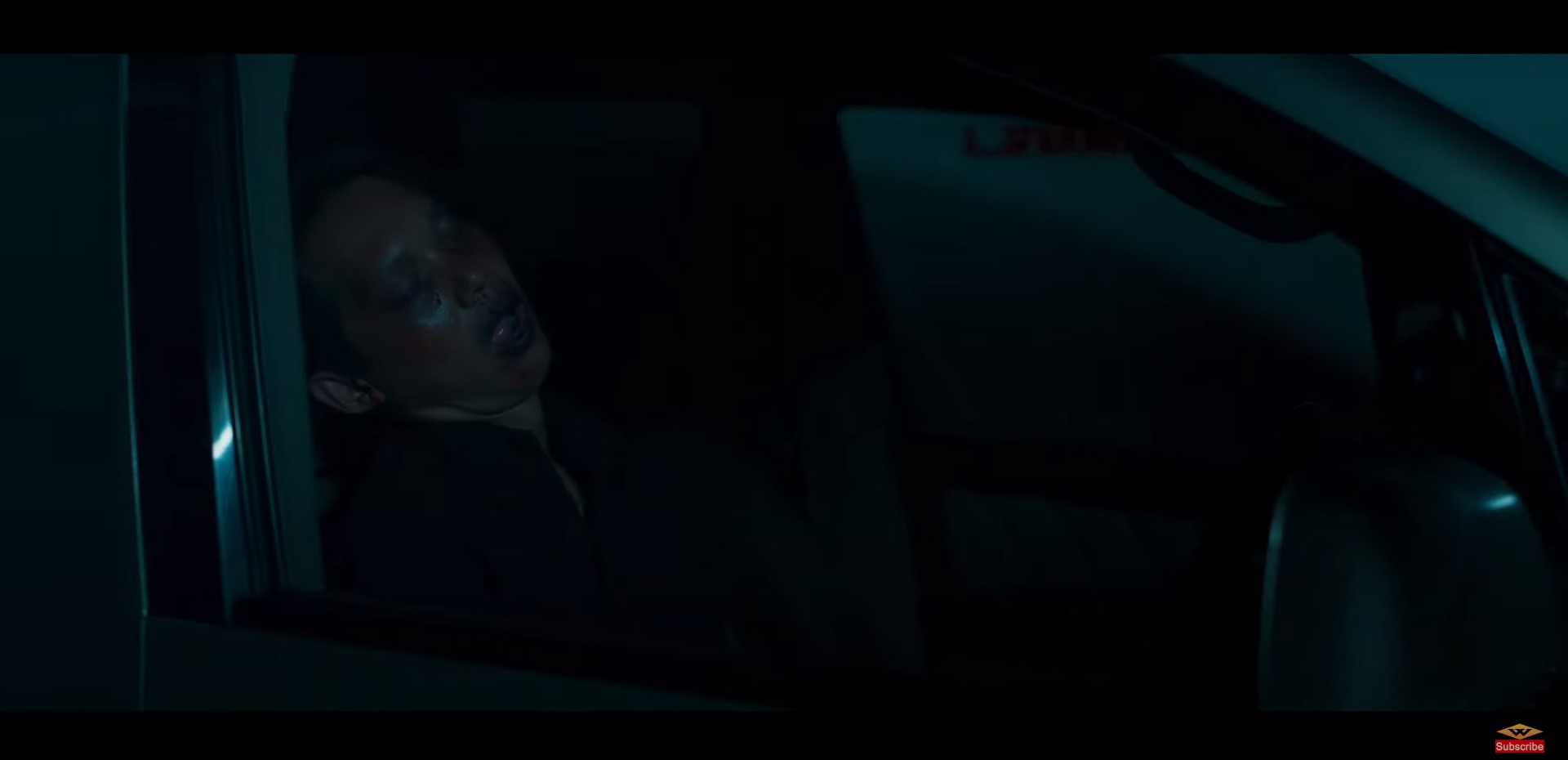
Star Charlotte Kirk and Neil Marshall have a seemingly natural rapport that has transposed well from their collaboration on “The Reckoning” to the “The Lair,” crossing subgenre that involve the equivocal occult to a more plainspoken physical presence of foreign experiments gone wildly bloodlust.  Instead of being hunted by a 17th century witch hunters just for being a woman saying no to man, Kirk steps into a role of authority as military captain with loads of smarts and adept at close combat as she’s being, once again, chased by predators, but these uber-predators are unearthly, unremorseful, and ugly.  Marshall provides just enough character backstory for understanding the stakes and strengths of each of them but to reach a little more into their history might have been key to stronger motivations and for something to prove in not just being jarhead screwups.  Sinclair finds commonality and sympathy from Sgt. Tom Hook (Jonathan Howard, “Godzilla:  King of the Monsters”) who bears the guilt of losing men in battle and punishes himself to do better.  Psyche profiles for each soldier makes them rise above being flat by providing depth of flaw but what is vexing and irking about each, and this element may very well be intentional as an international thespian bout of poking fun, is the cast is nearly all British playing Americans with stereotypical drawls, ebonics, and punctuating southern accents so overexaggerated it’s downright sickening to hear, like watching a bad old war film, but what’s even worse and what drives a sharp claw talon into the inane heart of trite-tired audiences is the group slow walk before embarking into the battle of no return.  Again, this might be the work of intentional satire.  Some accents are gargantuanly worse than others, such as with “Titanic 666’s” Jamie Bamber’s pirate-patched Major Roy Finch and the Mark Arend’s Carolina-born Private Dwanye Everett.  From there, the elocution grades get better with less cliché but not by much with a cast rounding out of Leon Ockenden (“The Reckoning”), who I couldn’t understand because his accent was so Scottish-ly thick, Troy Alexander, Mark Strepan, Hadi Khanjanpour, Kibong Tanji, Adam Bond, Harry Taurasi, and Alex Morgan.

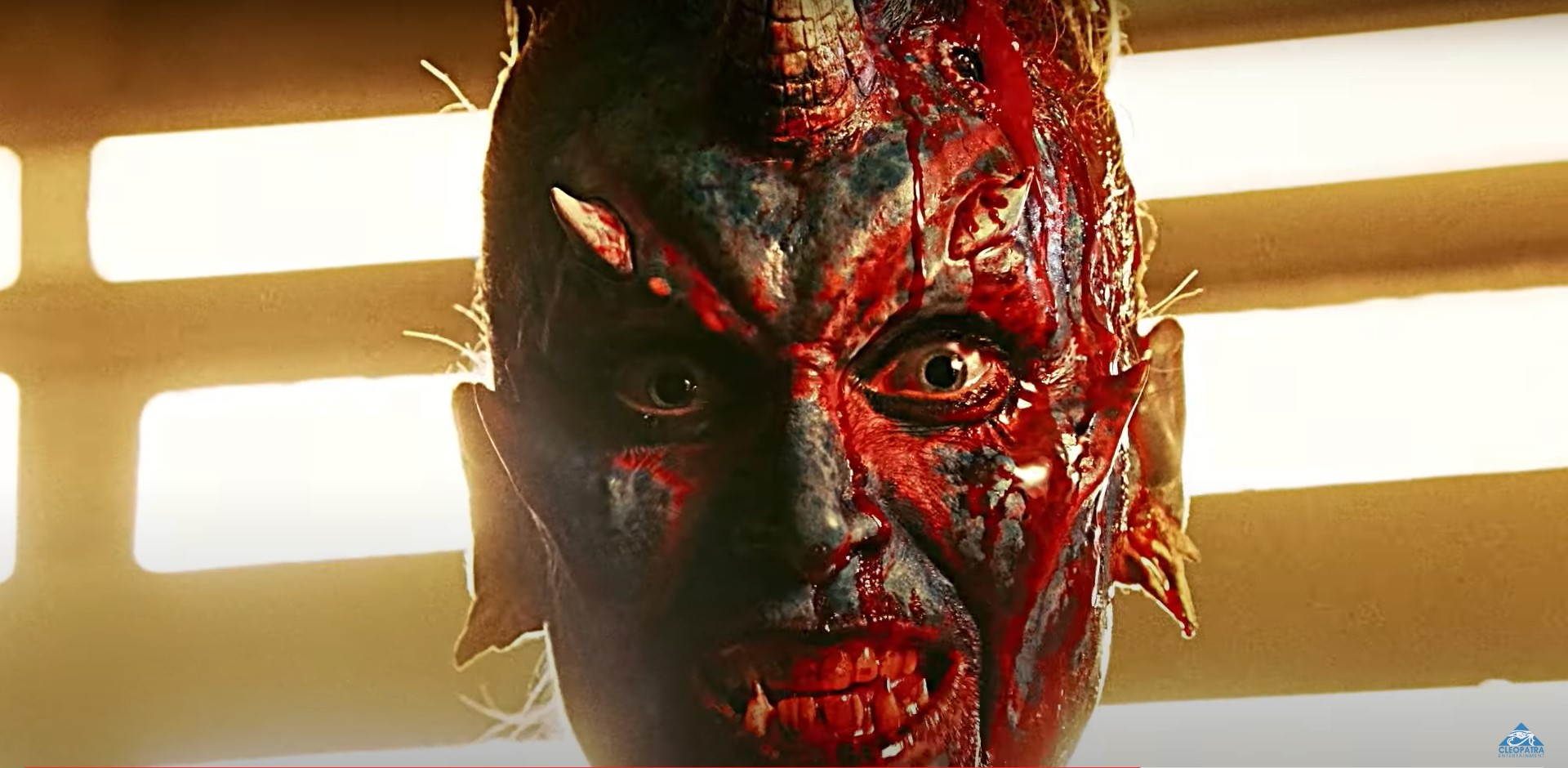
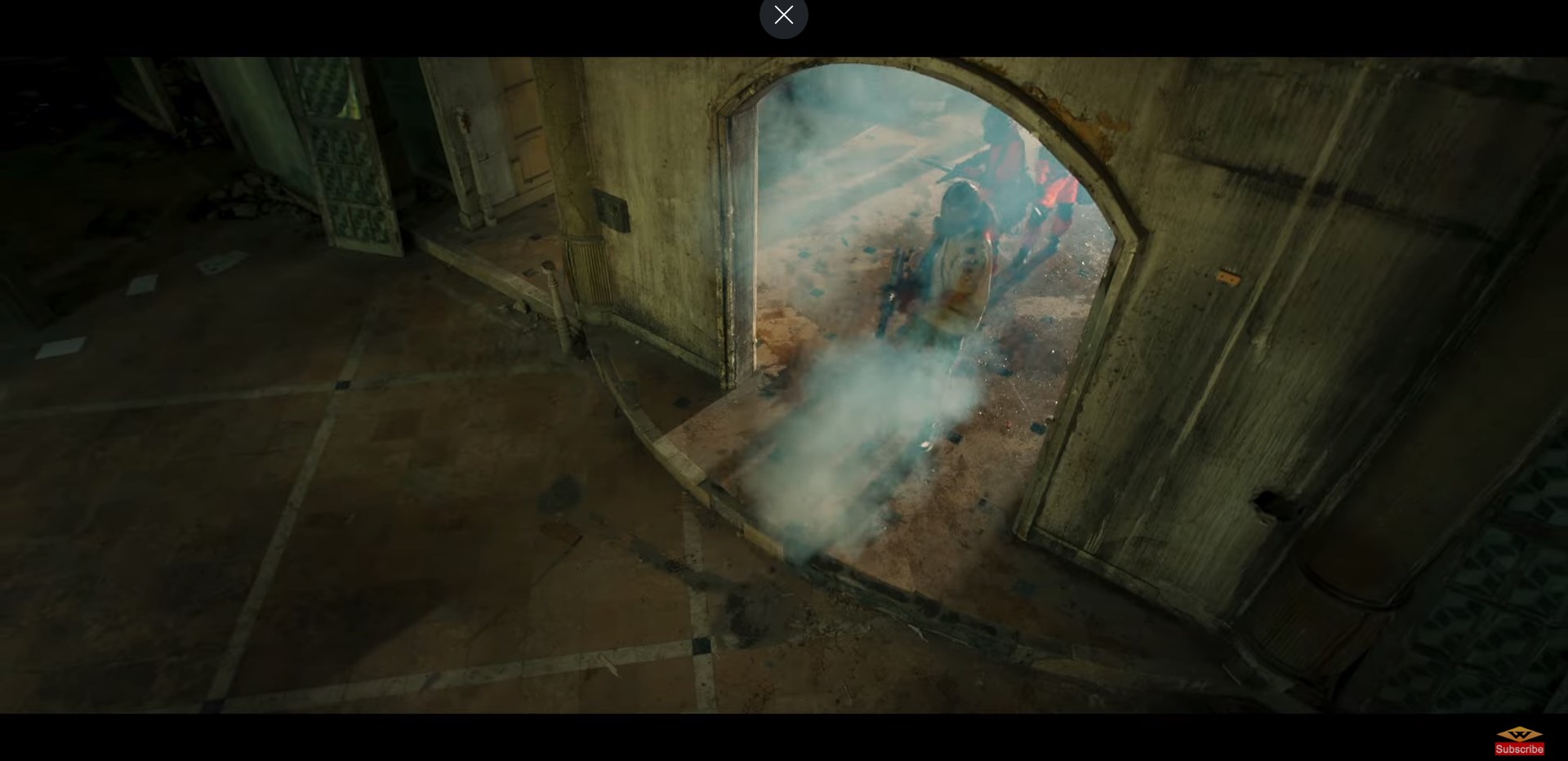
Neil Marshall not only returns to his horror origins but he also returns to the heyday of prime practical effects with inset creatures of a spliced appearance between the build, the dark full body achromia, and the facial configural layout of Marvel’s extraterrestrial antihero Venom with the eye-less, tongue-lashings and grabbings of Resident Evil’s staple adversaries, the Lickers.  Obvious a man in a prosthetic suit, the simplistic, brawny-framed humanoid basks in nostalgia despite being in a modern day movie, pining for the days when large or small men in full body, head-to-toe, terrifying imagery suits were the antagonists of our youthful nightmares while also providing the cast something to act against for a more realistic and rancorous on screen rendezvous.  The smaller scale production limits Marshall’s possibilities with his Kevlar-fleshed and razor-toothed creatures but the veteran director sells every act of “The Lair’s” story with trenchant action with hardly any downtime to catch one’s breath in between because the next blood-laden blitz rollout is upon us in a blink of an eye.  Between the action, the anomalous characters, and the pulsating, downbeat synthesizer score that courses through its veins, “The Lair” leans itself toward being a callback to the late 80s-early 90’s last stand dogfight subgenre and you can’t one second cease your attention for a director who appreciates the narrative surprise more than anticipated predictability.

Become lured into “The Lair” now on Blu-ray home video from Acorn Media International, a UK distribution subsidiary of RLJ Entertainment.  The AVC encoded, 1080p high definition release is presented in a widescreen 2.35:1 aspect ratio.  The BD25 offers sold flexibility for a film with hefty amount of night shoots and action as potential compression problems seem to stay at bay without any severe noticeable banding, blocking, mosquito noise, etc., however, the details are quite flat with a smoother finish, often in the blur of the fast camera workflow and editing because of the action sequences, leaving depth on characters, as well as in the scene, at arm’s length with monocular vision.  The warm hint of chartreuse embedded grading offers industrials color tones with a rich grit of oxidized bunker steel.  Don’t adjust your audio dial on the release’s English DTS-HD Master Audio 5.1 surround sound track, the dialogue only sounds wonky because its deliberate Americanized dialect set at the forefront and prominent amongst the audio layers which has significant range and depth with explosions, rapid gunfire from different calibers, and the guttural growls of the creatures that echo nicely through the rear and side channels when under the bunker or even affixed in a slightly decreased volume of its form in the attack of the basecamp.  There were no interference blights with the audio track, such as hissing, popping, or other discernible issues.  Special features included only a making-of featurette with clipped interviews during the shoot with director Neil Marshall, actors Charlotte Kirk, Mark Strepan, Jamie Bamber, Jonathan Howard, Leon Ockenden, and others regarding their admiration for the project in different aspects.  Acorn Media’s physical release comes in a slightly larger Blu-ray snapper, typical of the UK releases, with the cover art featuring an up-close and personal look at the creature’s ugly mug.  The same art is also on the disc with no insert inside the snapper case.  The release comes region B locked with a runtime of 97 minutes and is certified 15 for strong gory violence, language, and threat.  If you can stomach the fatuity at times, “The Lair” is a fast paced and staunch creature feature with a bunker full of gore.

“The Lair” Has a Deadly Secret!  Blu-ray Now Available!