Creating the Perfect EVIL Race Takes Needless Amounts of Surgery and a Good Pair of Balls! “S.S. Experiment Love Camp” reviewed! (88 Films / 4K UHD and Standard Blu-ray)

“S.S. Experiment Love Camp” 4K and Blu-ray is Ripe for the Taking!

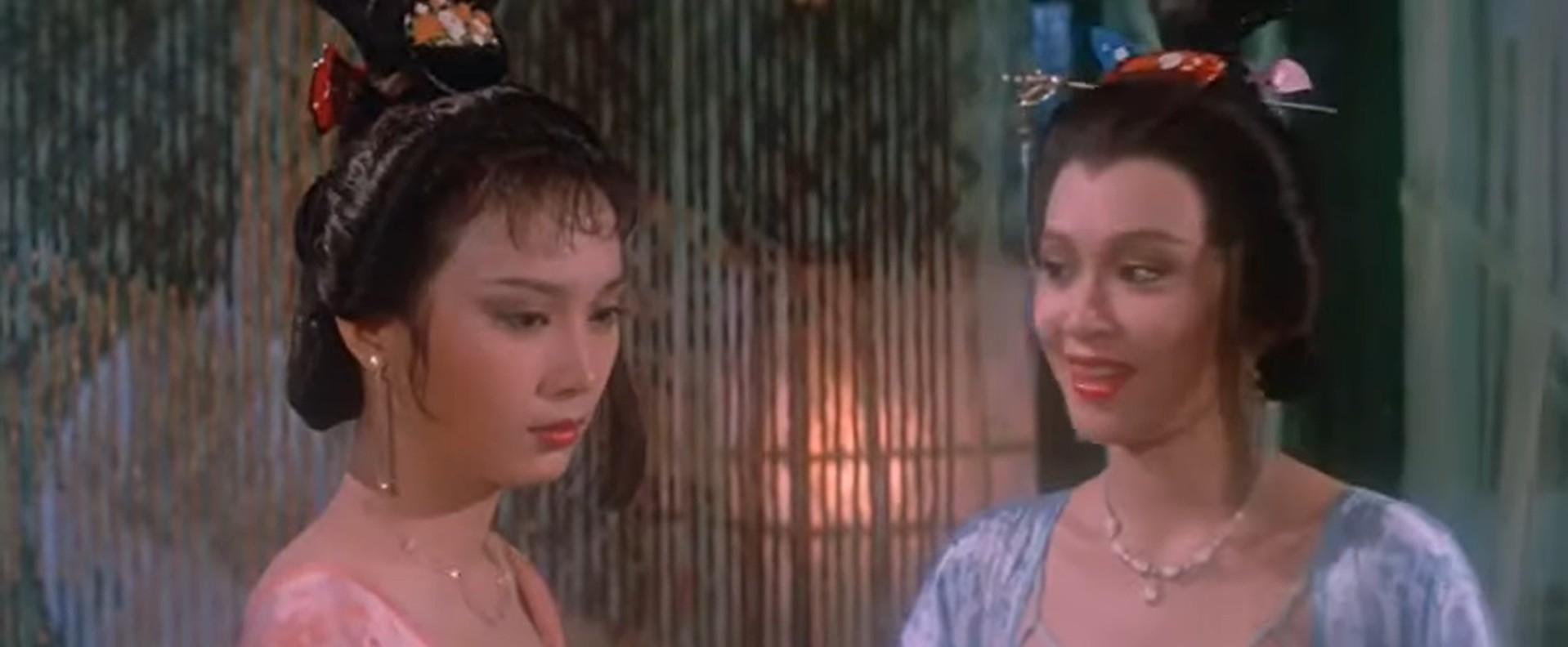
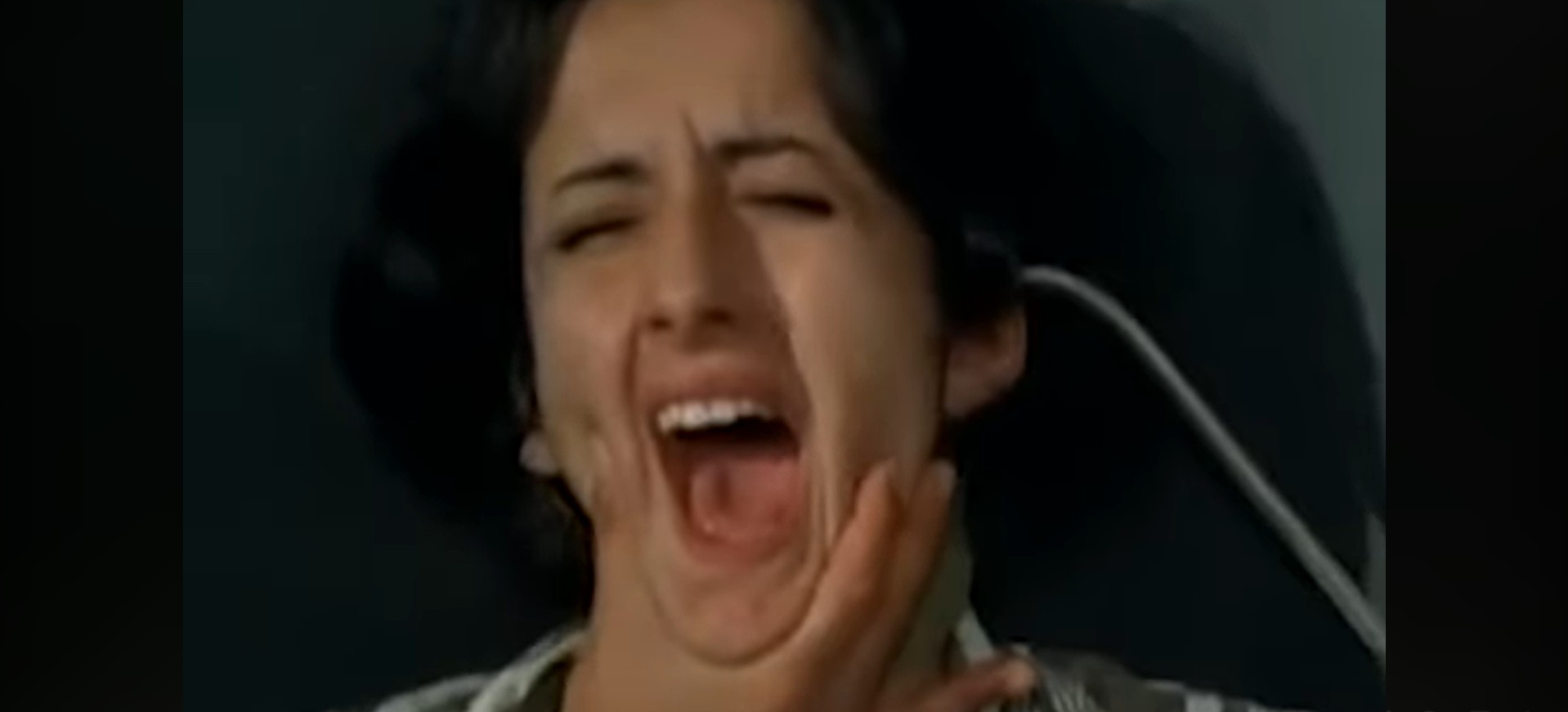
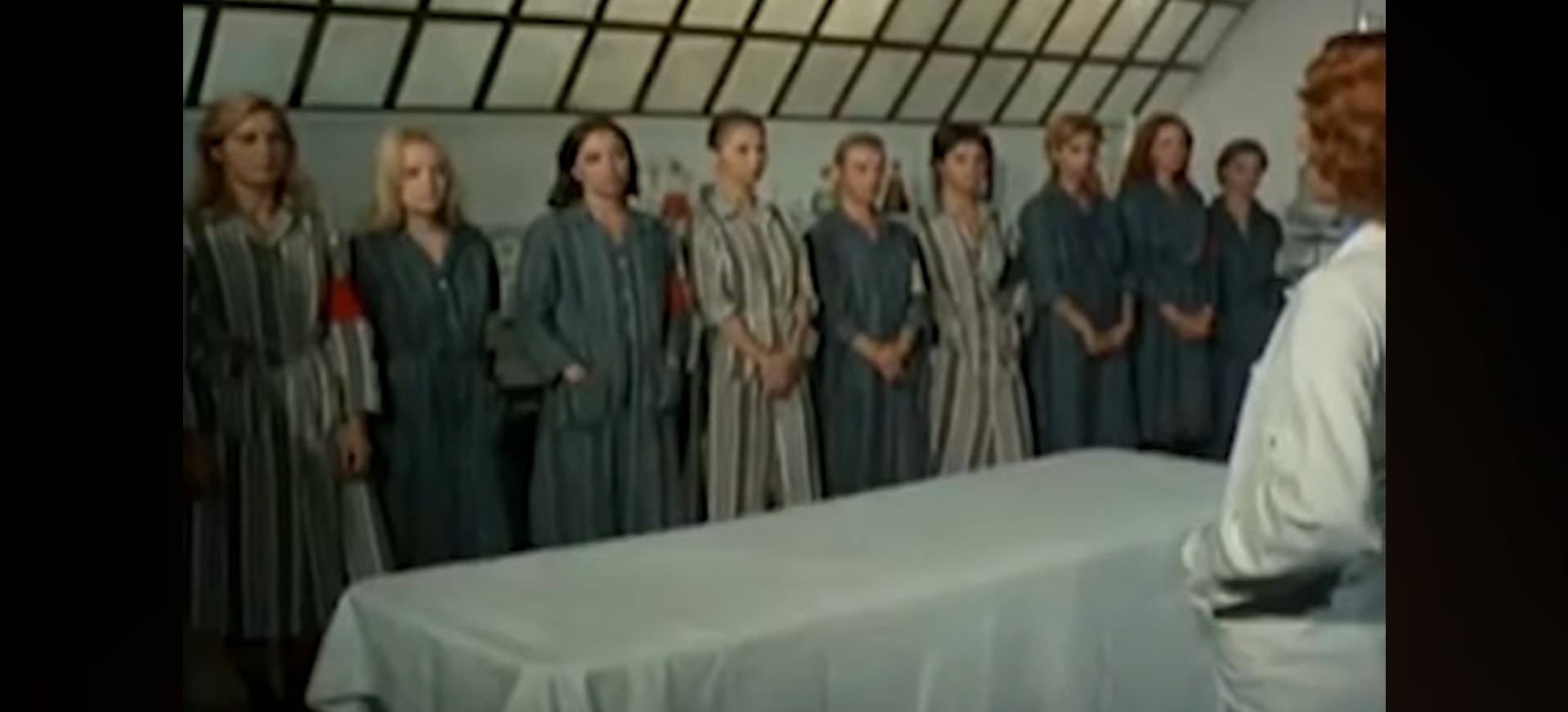
Nazi officer Colonel von Kleiben heads a concentration camp where he experiments of young Jewish and Russian female prisoners.  His experiments bore through the encampment lot with unconventional reproductive system surgery for the good of and in the name of purifying the Aryan race, experimentations that also including nonconsensual sexual activities between the women captives and the top physical specimens of the Nazi ranks.  Kleiben’s masked, real intentions are to practice for his own sake in a testicle transplant after a Russian woman castrates him during his attempted raping of her during conflict.  Woman after woman is sacrificed for the surgeon’s rigorous rehearsal by having their uteruses removed and replaced by another and when they expire on the table, their corpses are discarded into the camp’s incinerating ovens.  One Nazi solider is earmarked to be Kleiben’s hope to be whole again and uses the soldier’s affections toward a female prisoner to gain power and control in coercing him blindly into the experiment. 

If pleasure seeking banned films from certain sovereign states, then perhaps “S.S. Experiment Love Camp” should be on your short list.  The 1976 Nazisploitation film from Italy depicts a semblance of torture simulations used from Hitler’s Reich and lays the groundwork for total absurdity with a plot coursed with nonsense motivation at the disadvantage of a minority group under the threat of torture and death.  Also known as “Captive Women II:  Orgies of the Damned,” as more of a sequel in the collective Naziploitation subgenre popular in the 70’s, or most widely known as simply “S.S. Experiment,” the film is from the “Django the Bastard” and “Kill Django… Kill First” director Sergio Garrone, who co-wrote the script alongside “The Weapon, the Hour, & the Motive” co-screenwriter Vinicio Marinuci.  The Società Europea Films Internazionali Cinematografica produced the video nasty venture and expressed no regret the depictions of Nazi terror with the continuation of the subgenre by producing “S.S. Camp 5:  Women’s Hell” as well as other rape-inclined exploitation, such as “Mandinga” between master and plantation slaves and the caged women narrative of “Barbed Wire Dolls.”  

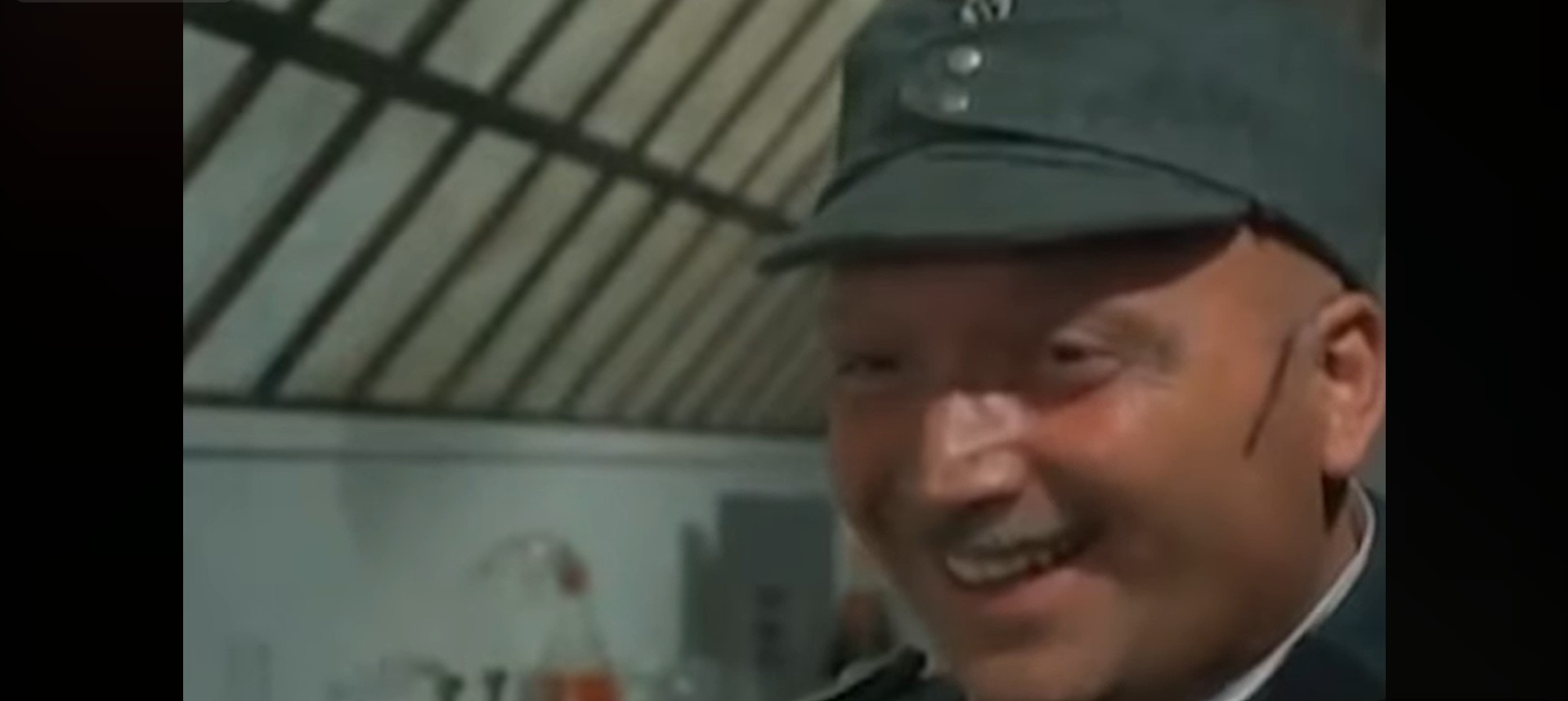
Sifting through the atrocious Nazi experiments, the unabashed sum of nudity, and the ridiculously selfish plot of one Colonel’s lengths to restore his manhood, “S.S. Experiment Love Camp” has a handful of mainstay principals key to the premise’s perpetuation encircled around Colonel Kleiben’s clandestine reasons to willingly and uncompassionately order a new type of surgical procedure on innocent civilian women prisoners.  Played by the square jawed, blonde haired Italian Giorgio Cerioni, who after “S.S. Experiment Love Camp” went on a string of playing a woman abusing Nazi in nazisploitation films between ’76 and ’77 with “Deported Women of the SS Special Section,” “SS Camp:  Women’s Hell,”  “The Red Nights of the Gestapo,” Kleiben’s a stoic, behind-the-scenes force and Cerioni dons the decadence evil well behind German medals and sense of false soldier duty as he works both the known to Kleinben Jewish world class surgeon Dr. Steiner (Attilio Dottesio, “The Sinful Nuns of Saint Valentine”) pretending to be German and Kleiben’s targeted German solider Helmet (Mircha Carven, “Death Will Have Your Eyes”) sought for his textbook testicles.  Dottesio’s Dr. Steiner is a conflicted man brought to do surgery on his fellow Jews that will result in their certain death and while he knows this, and it weighs on his conscious, the stuck doctor keeps himself from being exposed from other than the Colonel who knows and exploits his little secret for advantage; Dottesio wears a burden upon the surgeon’s face but doesn’t do enough to provide the body language of resistance in being doctor death against his will.  Yet, Carven wholly depicts an outlier amongst the typical German national who rather read books than shoot the sexual gab of his countrymen, which is in itself a nice slice of visual irony with the Nazi being known for burning literature.  Carven keeps Helmut relatively quiet, reserved, and a watcher from afar, noticing blonde prisoner Mirelle as the two fall for each other at the moment of locking eyes.  Carven and Paolo Corazzi (“SS Camp:  Women’s Hell”) sizzle with chemistry that’s left pieced too far apart and with not enough relationship context toward their insta-love connection.  There are other peripheral dialogue characters that keep the story spicy in their debauchery with Serafino Profumo (“Escape from Hell”) who had that perfect thin mustache and bald and stout look that makes him a formidable slimeball as the Nazi Seargent, Patrizia Melega (“SS Camp:  Women’s Hell”) as Dr. Steiner’s sadistic lesbian colleague Dr. Renke, and a handful of German soldiers to be the plug to the female prisoner outlet, such as with Matilda Dall’Agilio, Agnes Kalpagos, and Almina De Sanzio.  One of the more details to gripe about the cast is that they’re all Italian bronze that dilutes the allusion of the nationalities their portraying. 

“S.S. Experiment Love Camp” comes with a smidgen of notoriety having been banned in select western European countries over its depiction of violence, especially at the hands of Nazis, and its controversial poster of a naked woman crucified upside.  To this day,  Garrone’s film is still shocking and abhorrent with the aforesaid but also the emotion confliction etched into characters like Dr. Steiner or Helmut who must make a choice, weighing the balance of self-preservation over the salvation and safety of others, and that’s what really drives this nazisploitation to have tremendous impact in an absurdist plot of colonel cajones.  Garrone favors a more realistic approach to the tortures and horrors of a Nazi concentration camp by including close reenactments to their torture methods and Garrone also lingers ever so uncomfortably on the complete discard of corpses into the oven without any dialogue, expression on any faces, and even adds a surrealist glance into the oven of the bodies moving, in an artful dance way, when the flames are ignited.  There’s also the given, often gratuitous nudity that accompanies most nazisploitation films and while nudity usually arouses, stimulation stalls under the barbarism that’s present in the air, the context of which the sex acts are being conducted for, and the outcome of ghastly blood and sinew that follows to the end of the mortal coil.  There’s sensuality between lovers and transactions between prostitution and paying customers but even those innocuous instances rapid degrade into unnerving anticipation. 

88 Films’ new 2-disc, dual format 4K UHD Blu-ray and Standard Blu-ray set is a marvel of physical media engineering.  The 4K UHD is HVEC encoded and presented in Dolby Vision HDR10, 2160p ultra high-definition, and stored on a BD100 while the Standard Blu-ray is AVC encoded with a 1080p resolution on a BD50, both brand new 4K remastered transfers stem from the original negatives and displayed in a widescreen 1.85:1 aspect ratio.  Between the two formats, there’s identical visuals to the naked eye but the 4K UHD does provide a slightly sharper image that has more an immersive pop when comparing the two formats side-by-side.  Colors are rich with a complete hue saturation that isn’t present in previous, more muted DVD or other Blu-ray editions.  Darker scenes have an intention rough quality about them as well as the concrete and unpigmented concentration camp as intended by director Sergio Carrone to put forth as much realism as possible.  No identifiable issues with compression as the picture quality looks clean through-and-through with blacks retaining an inky bide, grading remains consistent and stable, and the minutiae of fabric and skin color doesn’t contest with any ambiguity as Nazi uniforms distill a gray cotton-wool blend, you can also touch the little fuzzies on their garb, and the stubble and sweat greatly show the length of detail on strained and tense faces during torture or combat scenes.  The formats both have the same audio mixes:  an ADR English 2.0 LPCM and an ADR Italian 2.0 LPCM.  The uncompressed audio brings an unfiltered and considerate quality to the front channels with clean and clear dialogue under a diminutive amount of interference and an ambience track that puts its best foot forward, or rather the front, with distinct, sundry range of electronic voltage, machine gun fire, and the surgical slippery stickiness of organs being handled.  The new translated English subtitles are paced well and have no grammatical or misspelling issues.  Special features include a feature tandem audio commentary with Italian film experts Eugenio Ercolani and Nanni Cobretti.  Plus, Italian audio only interviews subtitled in English, including an interview with the late director Sergio Garrone Sadistically Yours, Sergio G., an interview with music historian Pierpaolo de Sanctis SSadist Sound, an interview with editor Eugenio Alabiso The Alibiso Dynasty (a back cover misspelling error perhaps?), an interview with cinematographer Maurizio Centini Framing Exploitation.  The special features conclude with the Italian title credits for the opening and closing of the film and the original Italian trailer.  88 Films and Joel Robison bring a newly illustrated, censored and uncensored cover art with the censored version on the rigid dual-sided slipcover that’s crazily detailed in all its tempestuous glory with the backside depicting the original poster art of a reverse crucified naked woman, both images are impressed with a pop-pulp coloring and chrome effect. The uncensored version lies within the plastic slip of the black 4K Amaray with a reverse side depicting also the original cover in its more traditional coloring of the horrendous and country-banning portrayal.  Inserted on the left interior is an uncensored illustrative cover, of the original poster art, atop of a 11-page English essay from Tim Murray entitled “Nazisploitation, Punks, and The Nasties…”  The Not rated, 95-minute film is region free for global player use. 

Last Rites: If nazisploitation or Eurosleaze just isn’t what tickles your movie mania, any cinephile can appreciate the pristine transfer, the raw and uncompressed audio, and its physical accoutrements that rise “S.S. Experiment Love Camp” into a must-have release.

“S.S. Experiment Love Camp” 4K and Blu-ray is Ripe for the Taking!

The Shaw Brothers Deliver the EVIL Lovers! “Shaw Brothers Horror Collection Volume 2” reviewed! (Imprint Asia / Blu-ray)

Shaw-Shock Horror Collection Volume 2 is Now Avilable for Purchase!

The Qing Dynasty of Imperial China is full of spiritual folklore, mysticisms, and romance.  Three tales of supernatural passion arouse not only enduring amorousness and longing desire but also strikes fear of apparitional ghosts and grudges into naive and honest souls from beyond the grave, crossing existential planes to be with intended suitors no matter the cost.  These stories will send a pining chill down your spine:  a traveling scholar bunks at an abandoned temple to find he’s enchanted by a young woman not of life and protected by a blood thirsty lady-in-waiting, a provincial governor crosses paths with a beautiful virgin while taking shelter at her home.  When he catches her nude, he’s willing to marry her to avoid her shame but little does he know she’s a lonely ghost searching for love and revenge against those who raped and killed her, and, lastly, an arranged marriage is foiled by the sudden death of a young mistress and the late arrival of the master because he was being robbed of a debt he owned the mistress’s family.  Unfulfilled in love and life, the young woman returns to court the young master with the help of her elderly servant who took her own life to make the love between them possible.  Not believing the rumors of her death and discounting the spirit warnings from those close around him, the young master falls in love with his intended bride despite the obstacles put in between them by the master’s servants, Taoist priests, and even a band of bodyguards. 

Australian distributor Imprint, under their sublabel Imprint Asia, has released the second volume of the Shaw-Shock:  Show Brothers Horror Collection with three more titles that fall within the release window of 1960 to 1973.  These adapted stories stem from and inspired by Songling Pu’s Liaozhai Zhiyi, aka Strange Tales from a Chinese Studio, which is a collection of classical Chinese ghost narratives, and they include the 1960 “The Enchanting Shadow,” directed by Han Hsiang Li (“The Ghost Story,” “Return of the Dead”) and written by Yue-Ting Wang and Wong Yuet-Ting, the 1972 “The Bride from Hell,” directed Hsu-Chiang Chou (director of “The Enchanting Ghost,” not to be confused “The Enchanting Shadow”) and penned by Tien-Yung Hsu, and 1973’s “The Ghost Lovers,” the only film of the three from Korean-born filmmakers, director Shin Sang-ok (“3 Ninjas Knuckle Up”) and writer Il-ro Kwak (“Ghosts of Chosun”).  Runme Shaw produces all three films in the Shaw Brothers production studio. 

Other than being a Shaw production, each of the three stories are also connected by common elements – travelling male scholars or those high in station, a dead or recently deceased high-born woman in phantomic form, and the two intertwine romantically under false pretenses all the while Taoist priest, servants, or family of the living beg, plead, and even self-interject themselves in between the unnatural love affair to save the man from a wraith’s haunt, whether the affectionate intent by the ghost is malicious or benign, but each also differ in style and substance.  Lei Zhao (“Succubare”) plays a servant-less travelling scholar, Ning Tsai-Chen, unphased by the foreboding warning of ghosts and death of a dilapidated temple where those who stay the night don’t live the next morning.  Ning falls for adjacent neighbor maiden in Nie Xiaoqian (Betty Loh Ti) and between the actors there is a show of palpable and touching natural coquet that’s honorable to their period and to their characters’ hearts but their being from two different worlds puts up a marital blockade unlike in  “The Bride of Hell” that has generally has the same amorous bond between Yang Fang (Nie Yun Peng) and Anu (Margaret Hsing Hui) that eventually leads to marriage, but the Anu guileful portraying of a living is more deceitful to use Yang Fang despite also actually loving him in this more revenge based spookery involving Fang’s unscrupulous family members.  “The Ghost Lovers” also uses ghostly deceit to trick the master into a coitus cemented bond revolving and complicated around Han His-lung’s (Wei-Tu Lin, “Corpse Mania”) honor and shame and the affluent Sung Lien-hua’s (Ching Lee, “Sexy Girls of Denmark”) unfulfilled life and love before an untimely death.  There are of course the conflicts that get in the middle – the blood thirsty Lao Lao (Rhoqing Tang, “Brutal Sorcery”) aims to kill temple trespassers and Nie Xiaoqian suitors no matter how much a gentlemen they are, there’s the rape-revenge aspect in “The Bride of Hell,” and the sundry hindrances that try to keep the undead Sung and the alive Han from being unionized.  There’s quite a bit of hammy performances to digest in what’s relatively near being the same story said over thrice,  The three films fill out the cast with Chih-Ching Yang and Ho Li-Jen in “The Enchanting Shadow,” Carrie Ku Mei, Hsia Chiang, Chi Hu, Feng Chang, and Yi-Fei Chang in “The Bride from Hell,” and Shao-Hung Chan, Feng-Chen Chen, Ki-joo Kim, Ling Han, Han Chiang, and Mei Hua Chen in “The Ghost Lovers” as the belabor the melodramatics of ghostly fervor. 

From a bird’s eye view, the Shaw Brothers productions appears virtually unoffensive and harmless period pieces set in the Imperial China with romanticized slices of fantasy in love after death, unstoppable passion, and an adherence to honor, principles, and duty to others, but a closer look reveals a darker sliver coursing through the supernatural palaver with it’s unnatural fascination of hooking up dead beautiful women with eligible scholarly men.  The most outlying and blatant example would be the rape-revenge narrative of “The Bride form Hell,” a coarse title that’s been spun into various renditions over the decades – take Quentin Tarantino’s The Bride from “Kill Bill” for example – by a woman embarking on path of retribution after being wronged in a maliciously despicable way and she uses everything to her advantage, even if that means marrying a relative, while a spirit I might remind you, of the men who raped and murdered her during their plundering of riches.  The film also doesn’t mind it’s hands a little dirtier with some nudity unlike the other two films of the set.  “The Ghost Lovers” isn’t as deeply disturbing with more of an untimely and unfortunate situation robbing mistress Sung of life and love and master Han of time and wealth that would have solidified a bond if the elements were not stolen from them.  There’s also a misunderstanding with fear of the unknown and a twisted sense of intent by humble servants and priests who distress of anything not of this plane of existence.  Much can be said the same about “The Enchanging Shadow” but that also deploys a countermeasure to the good heart nature of spirit Nie Xiaoqian as she’s balanced by her pure evil and bloodthirsty caretaker Lao Lao who between love and represents unholy demise.  Han Hsiang Li, Hsu-Chiang Chou, and Shin Sang-ok don’t stray too far away from each other when it comes to production set and scene compositions by keeping much of the storylines set during the mischief of the night when folkloric ghosts are more awake and present and keep the coloring cold contoured under grays, blues, and only hints of muted vibrancy outside the monochrome.  Special effects are kept close to the chest with fleeting rudimentary prosthetic and makeup, superimpositions to liven the ghost effect, and lay a dense fog in certain moments of atmospherics.  Combine all the elements infused with Chinese culture and superstitions and you get three stories that shutter with phantasmic passion. 

The Shaw-Shock:  Shaw Brothers Horror Collection Vol. 2 from the Imprint Asia line under parent company Via Vision is another awesome Shawtastic boxset that takes obscurity into the light.  The three disc Blu-ray set is AVC encoded, 1080p high-definition resolution, encoded onto BD50 is limited to 1500 copes.  Each included film is catalogue as numbers 31 to 33 in the Imprint Asia sublabel.  “The Enchanting Shadow” is the only one of the three presented in a 1.66:1 aspect ratio, transferred from a rougher print that has patches of cell damage and varied grading as if a couple of prints were spliced together.  There is a prelude title card warning of the quality so there should be no surprise when it does come up.  “The Bride from Hell” and “The Ghost Lovers” are presented a widescreen 2.35:1 aspect ratio and have used a cleaner print for the hi-def transfer with no notice of damage issues.  All carrier a softer, airy image from the film stock and film processing scans and combine with sharp key lighting, there is a glow effect around objects but not enough radiance to affect the diffusion of colors and smooth out details.  Skin tones often fluctuate between an organic and an orange tinge that can sway the perceived quality.   The much older “The Enchanting Shadow” from 1960 definitely shows its age with more muted earthly tones within its darker scaling.  Each film uses a compressed, spherical lens as the curvature is more severe than you notice in more modern productions, hallmarking Hong Kong’s utilized lenses during the decades.  All three films are in Mandarin with no other language option within a LCPM 2.0 audio format that adequate fills the front channels of dialogue, ambience, and soundtrack.  Dialogue and ambience is not immersive with the stereo mix but the ADR track is present and discernible with some noticeable sparse hissing in the dialogue and low level gurgling interference amongst more docile moments.  Along with the image damage, “The Enchanting Shadow” has counterpart audio damage with tears in the audio layer that pop and crackle during the damage breaks. English subtitles are available on all three titles and are paced well but the subtitles on the “The Ghost Lovers” come with a few grammatical and misspelling errors. New special features encoded on the releases include an audio commentary by author Stafan Hammond and Asian film expert Arne Venema, film historian analysis by Paul Fonoroff, an archival interview with director Hun Hsiang Li, and the original and DVD trailer for “The Enchanting Shadow,” the “The Bride from Hell” has a new audio commentary also by Arne Venema with the DVD trailer, and “The Ghost Lovers, too, has a new audio commentary from critic and filmmaker Justin Decloux with film scholar Wayne Wong discussing the film. The new encoded special features compliment the tremendous and substantial Imprint Asia rigid box set with a removable jagged tooth locked top that includes compositional artwork and permeated with the Shaw Brothers insignia. Inside, the three Blu-rays sit snug in individual clear Amaray cases, each with their own original cover art reflecting the original posters with the reverse side pulling a still from the film. The total runtime of all three films is 4 hours and 14 minutes in its region free, unrated capacity.

Last Rites: A triple threat of Shaw Brothers’ classics resurrected from the dead to haunt your collection! Imprint Asia’s boxset continues to recover unearthed Hong Kong and Chinese culture, folklore, and fantasy for new enthusiasts of the far East and avid collectors of physical media!

Shaw-Shock Horror Collection Volume 2 is Now Avilable for Purchase!

EVIL Will Run You Over and Scrape You Off the Road Just to Kill You Again! “A Very Flattened Christmas” reviewed! (SRS Cinema / Blu-ray)

Merry Christmas, You Filthy Reindeers! “A Very Flattened Christmas” Blu-ray on Amazon.com!

A roadkill collection company mourns the sudden death of one of their former employees who was murdered in a seemingly drug deal gone bad. Max, also a former roadkill company employee, returns to town to pay his respects to his close friend and colleague but the funeral is everything but cordial and of decorum when Rick, another former roadkill company employee turned famous yet narcissistic filmmaker on the verge of releasing another installment of his popular Dick Puncher series, makes trouble not only at J’s funeral but also at the company’s Christmas party. Max’s friend, conspiracy theorist Dan, becomes lead suspect in J’s death, and detectives Bradley and Francine search for clues and interview those involved with the deceased. Soon, they and all other employees become intwined in all the roadkill company drama for all the wrong reasons when a killer dressed in a menacing reindeer outfit has set out to slay all employees, past and present, this Christmas.

Based on the Shane Wallace created six-episode comedy web series “Flattened,” premised with precursory characters Max, Dan, and J involved in roadkill company hijinks and drugs, Wallace’s feature length, Christmas holiday-themed, and company slasher film serves as a direct follow up to the web series filmed in and near Wichita, Kansas and released between 2016 and 2017. Titled “A Very Flattened Christmas,” the 2024 story continues the trio’s story, picking up years later after all the interned employees have moved on with their lives from scooping up animal carcasses from off the local highways and backroads and started different career pathways, such as becoming a highly famed filmmaker, and but their newfangled lives become jeopardize by an evil reindeer taking them out one-by-one. Different Day Pictures returns to produce the venture backed by crowdfunding through GoFundMe with film’s star Key Tawn Toothman serving as producer.

The returning web series cast carry little over from the series into the feature film other than selective series moments displayed in a snow globe during the credits, which doesn’t explain much if, like in myself, you’ve never seen, or even heard of, the web series, and the multiple mentioned fact that characters once worked at the roadkill company.  That’s about as much backstory you’ll get to catch up into a whole new venture for Max and gang that are no longer in the dirty business of carcass removal but are in the business of being preyed upon by a reindeer masked killer, a complete 180 degree turn of events from the comedic web series.  This particular Christmasy, slasher sequel follows Max (Key Tawn Toothman) having returned to town to attend his friend J’s (Naythan Smith) funeral.  Max’s grounded for social facets with level-headed awareness and a good sense of judgement making him well liked amongst current employees of the company but that also makes him an easy target for former employees turned narcissist filmmaker Rick (Jesse Bailey) and conspiracy theorist Dan (Trevor Vincent Farney) who clings on him with his paranoia drivel.  Between the two, Rick receives substantial backstory material with news story and commercial hype for his upcoming Dick Puncher film but receive little context to Dan’s rants and ravings that are more like an annoying friend’s unconscious conversational narcissism.  Max is balanced out by allies within the company like receptionist Jerry-Ann (Beckie Jenek) and mobile carcass scraper Lorribell (Paul Makar), both of him have to work on Christmas, begrudgingly, but all are fair game for Red Eyes (Lucas Farney) with a mangy Reindeer mask in a mall Santa suit killing off Max’s friends and enemies alike and while Max and his love interest Maddie (Kaemie McCanless) along with detectives Bradley (Mark D. Anderson) and Francine (Shanna Berry) work to uncover the truth, led on red herring, and fight for their own survival, the body count continues to collect those staple to the “Flattened” series, turning every character fair game to be trampled by the Reindeer masked killer.  Mark Mannette, John Doornbos, Noah Farney, Blaine Frazier, Nora Graham, and Dean Kavivya costar.

The Christmas season may be over and Santa has packed it in for another 364 days, but no Christmas horror movie, especially released during the season, should be left unturned over and “A Very Flattened Christmas” receives a platform as we continue to celebrate the 12-days of Christmas with a series-based slasher that concludes the “Flattened” troupe’s run by killing off its beloved characters.  “A Very Flattened Christmas” continues the campiness with a dry humor, dark comedy affair that plays like a family get together that has gone down the drain with rekindled friends and enemies swirled into a nutmeg batter of one maniacally, reindeer-and-Santa Claus-garbed killer’s cake mix.  The feature tiptoes ever so gradually away from the roadkill company despite keeping the series’ Flattened in the title as the chaos spills out into other portions of town without the whiff of decaying animal corpses; instead, the corpses of Max’s acquaintances are the ones who are being flattened, literally.  The masked killer has strong threat appeal and wields an array of offings in favor of the story as Wallace uses death gags and some practical effects to shoulder the horror weight but there’s also a fair amount of visual blood spurt’s that speak to its budget limitations and crowdfunded castrations.  The killer twist is palpable enough though leans into overt tells some but the one thing this themed slasher really needed, as much as it also needed more series context in the jump from a television show to a feature film, is to up the Christmas tinsel with seasonal carnage to turn the merriness on its head by decapitating it.

Keep the holiday spirit going with “A Very Flattened Christmas” on an SRS Cinema Blu-ray. The AVC encoded, 1080p resolution, 25 gigabyte BD-R offers a solid image quality under the technical low bar circumstances. Details are sharply outlined, distinct, and without fuzzy aliasing, splotchy spots, or other associated compression issues. There’s some banding along the darker shades but nothing too big to gripe about. The details are hit or miss depending on the scene difficulty and substandard lighting but the achievement of corporal tactiles on an SRS Cinema Blu-ray is a little triumph for the release and that is what is accomplished here. The full-blown animation portion is top-notch work for something of a skit gag that lands with confidence. The English language LPCM 2.0 has little authority behind it’s acoustical dynamics and projecting strength, but the dialogue is overall clear and present, ample and adequate by all means of the sound design without underscoring the horrific highlights of a holiday horror film, such as the hits and action of the evil reindeer’s sojourn slaughter through the Max’s rolodex of friends. Daron Kelp and Dave Baker’s eclectic soundtrack of rattling synth keyboard and haunting sustained chords peppered with full length vocal tracks. There are no subtitles available. Special features include a director and producer commentary track parallel to the feature, an alternate scene, deleted scenes, the film’s trailer, an animated trailer, “Flattened” series pilot episode, and other SRS Cinema trailers. The Amaray Blu-ray is about as physically scanty as they come with only an illustrated cover art of the Santa-cladded reindeer (looks like a rat to me) overtop and about to take hold a snowy covered town in its bloodied shovel grasp. SRS Cinema has always been able to produce neat art for their releases to bedazzle slightly the rudimentary in-hand. The not rated release has a runtime of 92 minutes and is region free unlocked.

Last Rites: Santa has packed it in for the year but in horror, Christmas can come at any time of year. “A Very Flattened Christmas” is a welcomed addition to the holiday clash subgenre with a formidable villain, decent kill decimating, and great soundtrack but be forewarned of its spotty at best storyline, some bad CGI bloodletting, and humorlessly dry jokes.

Merry Christmas, You Filthy Reindeers! “A Very Flattened Christmas” Blu-ray on Amazon.com!

Caught in the Act, Evil Must Do Evil’s Bidding. “The Killer Must Kill Again” reviewed! (Rustblade / 50th Anniversary Blu-ray)

“The Killer Must Kill Again” on a restored, 50th Anniversary Blu-ray!

Giorgio and Norma’s hot-and-cold marriage takes a turn for the worse when Giorgio’s greed convinces him to plot her murder after she threatens to cut him off from her family’s money.  When Giorgio catches a sexually perversive killer in the act of dumping a young girl’s body in an isolated canal, he devises a blackmail agreement with the killer to murder his wife and falsely claim a ransom from her father to satisfy Giorgio’s gluttony.  Killing Norma was easy enough but after the killer brings the car around to put her body in the trunk, a young couple steal the car for an all-night joyride to the beaches of Seagull Rock, unbeknownst to them a dead body stowed in the trunk.  With the killer in pursuit of the couple and the police suspicious of Giorgio’s involvement of his wife’s disappearance, it’s only a matter of time before the killer must kill again.

“L’assassino è costretto ad uccidere ancora,” aka “The Killer Must Kill Again,” is a straying kind of Italian psychotronic film from the typical giallo overload being produced out the country between the 1960s and up to the early 1990s.  Released right in the middle in 1975, the film never enshrouds viewers in mystery with a blunt, clearcut case of who and who is not the villains, the victims, and the heroes.  “The Naked Doorwoman” and “Contamination” director Luigi Cozzi helms the script he cowrites with Daniele Del Giudice (“The Story of a Poor Young Man’) with an inclination of slipping darkly dry comedy into the fold of a cold and callous killer’s purview of an extorting mastermind’s bidding and the uncomfortable self-serving sexualized force thrust upon women, the dead and the living.  Sergio Gobbi (“Vortex”) and Umberto Linzi coproduce the GIT International Film, Paris-Cannes, and Albione Cinematografica coproduction. 

The cast is comprised of an ensemble lot and for an Italian production, there are hardly any Italian actors leading the charge.  Most of the principal cast hails from Europe, mostly Spain, and with a few outliers from France and even one from Uruguay in South America.  Each actor and actress have a rough fair share of screen time, preluded with the titular killer, played by Frenchman Antoine Saint-John.  Saint-John has a face for television, villainy television that is, with high cheekbones that create deep contoured shadows, a danger stare, and a round head with cranium hugging, short dark hair that make him distinct amongst his fellow castmates.  “The Beyond” actor’s heart put effort into a heartless role of the unnamed perverted murderer of young, beautiful women for unknown reasons and motivations.  That’s not the case for the opposite transgressor, the killer’s blackmailer Giorgio Mainardi who’s a scheming businessman and money leech off his wealthy wife (Tere Velázquez, “Night of 1000 Cast”), two reasons and motivations to put a kill contract on his wife.  “The Strange Vice of Mrs. Wardh’s” George Hilton dons the dapper swindler with trim suits, neat hair, and a handsome façade underneath his ugly intentions as he tries to fraud his wife’s ransom for himself.  Caught in the middle of this plot are two young lovers, who in themselves are not so innocent by stealing the killer’s car with a dead woman in the trunk.  Cristina Galbó (“The Living Dead at Manchester Morgue”) and Alessio Orano (“Lisa and the Devil”) are the couple Laura and Luca, two teens on a stolen car joyride to a distant beach front in order Luca to try and convince Laura to take her virginity.  While there’s ransom fraud, murderous plots, murdering, corpse disposal, and other heinous crimes, the most disturbing in the story is Luca’s pressuring to get into Laura’s pants and his means of satisfying his lust by picking up car stranded blonde (Femi Benussi, “Bloody Pit of Horror”) and cheating on Laura while she is raped when confronted by the pursuing killer.  The sleaze and skeeze level on Luca is beyond reproach and it really makes him more the villain than the actual killer who’s up two bodies by this point.  The principal cast can’t be complete without police presence and that is where Eduardo Fajardo (“The Murder Mansion”) steps in as the cool, suave, know-it-all-and-see-how-it-all-plays-out inspector, a cliched role of the time and even in today’s whodunit ventures.   

This crime giallo lacks mystery but makes up for it with rich characters, a sleaze-bag crime, and a little style from director Luigi Cozzi and cinematographer Riccardo Pallottini in their choice to visual effects to insulate the moment within a scene by matte narrowing the focus and using a sharp spherical lens to heighten the tension around the center focus with a semi-fishbowl effect.  Coupled with solid editing and great lighting for the night drive sequences between the two cars and it’s reflexive, subsequent chase, the story’s pace doesn’t rush into the more gushing violence and sexual subversion, effectively building up a pressure cooker of a confrontation between the killer and the kids that’s brilliantly edited in a taut juxtaposition that flips back and forth between the killer’s virtually explicit raping of Laura and Luca’s wanton encounter with a stranded licentious blonde motorist; both elicit wrongdoings, rendered around the crave of naked flesh, but they are from different perspectives with one being a clean cheat of carnality with another person and the other being a malicious rape of innocence yet both leave that sour taste of discomfort in the mouth but the edited design is about as sweet as it gets. 

The Italian distributor Rustblade Records, under the movie release sublabel of simply Rustblade, release L’assassino è costretto ad uccidere ancora,” aka “The Killer Must Kill Again,” onto a new Blu-ray in its complete Cozzi’s original vision and is a restored transfer for worldwide audiences in association. The 50th anniversary Blu-ray is AVC encoded, 1080p high-definition resolution, on a surprising BD25. The BD25 is surprising because the restored picture quality looks phenomenal considering the capacity, retaining deep shadows, vibrant color palette, and no incongruous signs of compression artefacts. There is however some detail smoothing fragmented throughout depending on the interior or exterior scene. More of the opening moments between Giorgio and Norma look quite polished and intricate regarding textural skin and fabrics but a good number of moments appear to smear portions of the face, especially in Antoine Saint-John’s more distinct facial characteristics. Depth and range favor the bold with Cozzi able to obtain decent amount of space between objects within his stylized choices and the color spectrum, like many giallo films, is saturated with intensity. An Italian and an English 2.0 DTS-HD Master Audio are the reigning encoded audio choices, both of which are post-production ADR and both of which show the obvious synchronization discord. The English translation, as well as the English subtitles, contain generalizations of a perhaps more complex scripted dialogue intent. With ADR, dialogue clean and clear with present, defined space right in the front two channels but lacks milieu acoustics, depth, and little range with the action added with Foley. Nando De Luca’s lingering avant score blend single low-note guitar chords, resonating piano keys, and Theremin wooing lift up the story with ominous tension. The English subtitles appear accurate without any grammatical errors. Special features include an interview with director Luigi Cozzi, a film analysis by Federico Frusciante, a horror enthusiastic musician from Rustblade Records, film locations toured by Giallo Italiano, and the feature trailer. The 50th Anniversary Edition comes with two versions: a limited-edition DVD/Blu-ray Deluxe mediabook with postcards and a single disc Blu-ray. For this review, the single disc was provided in a clear Amaray case with double sided art sleeve of a giallo yellow and contrast shadowed illustrated composition of characters and the reverse side depicting two moments from the movie drenched with giallo yellow. Presented in widescreen 2.35:1 aspect ratio, the not rated, region free film has a runtime of 90 minutes.

Last Rites: A giallo unlike the rest, “The Killer Must Kill Again” is a perversion of greed, lust, and murder without virtuous players in a plot gone awry. Luigi Cozzi’s 1975 classic is a genre staple for fans old and young in this Italian murder shocker and Rustblade offers a new and improved, director approved vision that collectors will see to acquiring immediately.

“The Killer Must Kill Again” on a restored, 50th Anniversary Blu-ray!

To Bring Life into Existence, One Must Go Through the unscrupulous EVIL Trials and Tribulations. “The Last Frankenstein” reviewed! (DiabolikDVD / Blu-ray)

“The Last Frankenstein” on Blu-ray from DiabolikDVD

Jason Frankenstein is the great grandson from a long ancestorial line of corpse reanimators.  Feeling unfulfilled in life and his destined legacy, Jason goes through the motions of being a hospital’s physician assistant and putting up with his less ambitious girlfriend, Penny.  When a disfigured serial killer is brought into his hospital, Jason immediately recognizes the shell of a man as his grandfather’s reanimated corpse brought back to life with the family’s secret elixir, Adrenarol.   Hiring two crooked, drug-dealing EMTs to do his kidnapping bidding in exchange for medical grade drugs and with the assistance of a confidential nurse with a disreputable past, Jason sets to complete what his grandfather started by creating his own living, breathing, thinking monster with the family reanimating formula.  Selective hacked up body parts, double-crossing henchmen, and a troublesome manmade man goes against his birthright grain with the only path forward soaked in the blood created by his own hands. 

Resurrected from the depths of just a concept and electrified by crowdfunded, “The Last Frankenstein” is alive, ALIVE!, from writer-director David Weaver in his debut feature length film.  The U.S. film from 2021 was set and shot in Weaver’s hometown of Amsterdam, New York, just northwest of the state capital of Albany.  Labeled as an existential slasher, extracted from Mary Shelley’s classic gothic novel, Weaver sought to recreate exploitation films of the 1970s-1980s with a raw façade, gruesome practical effects and gore, and an assortment of cynical characters in a story that tells of generational expectations, the pressures of living up to greatness, being the last of one’s family surname.  The Kickstarter production raised $13,500 for mostly the shooting costs with much of the post work being completed by Weaver to maintain low costs and is a production of Gila Films with Jay Leonard producing.

“The Last Frankenstein’s” acting tone is a curious one.  Complex with the desire to conquer death with footnotes of drug peddling and murderous EMTs, longing relationships and carnal stress releases, and death, much death, there’s a severe lack of emotion amongst the character pool, delivering a consistent and constant cadence of flat intonations.  The same expression is pretty much splayed onto each face with attitudes and personalities to match in a widespread of white bread acting.  In a way it works toward the story’s apathetic and cynical nature but while Frankenstein’s monster lives with a new life, “The Last Frankenstein” cast utterly is lifeless, beginning with the lead actor William Barnet in the titular role and though a doctors are conventionally attributes plainspoken, carry an unbiased inflection, and eve have some sense of being on the spectrum, perhaps, Barnet’s lukewarm woodenness extends beyond his reach and to the rest of the lot.  There’s no concern or fear in Nurse Paula’s (Keelie Sheridan) eyes when her acquaintance is killed by Jason Frankenstein or that the doctor is trying to resurrect the dead, no anger, resentment, or guilt from the two stoic ambulance drivers (Jeff Raiano and Ulisses Gonsalves) covertly dealing drugs and doing Frankenstein’s dirty work, and there’s definitely no life behind Frankenstein’s monster’s eyes, neither his grandfather’s nor his, that’s very opposite to the legacy portrayals by Boris Karloff’s sadness, Robert De Niro’s revenge, or Peter Boyle’s joy and fear.  This different take on the canopied story has the creature boiled down to a Jason Voorhees type, especially with eldest creature (Roderick Klimek) that looks very much like hockey mask slasher from the backside and even kills like him too.  Jason Frankenstein’s version, played by Michael Wetherbee, at least shows some reserve, some kind of calculation happening behind the flesh-stitched face, and does abide by his apathetic opportunity to kill but also resists the juggernaut chase to slaughter even if detrimental to his existence.  What that resistance is that holds him back goes without exposition or a vague sense of implicit explanation but it’s a performance that renders the most feeling in a rather frozen stiff guild of actors.  Jana Szabela plays Jason’s girlfriend Penny, Brett Owen plays Jason’s father in flashbacks, and cult actors Jim Boelsen (“Strange Behavior,” “The Curious Case of the Campus Corpse”) and the late Robert Dix (“Forbidden Planet,” “Horror of the Blood Monster”) also costar.

The creature’s Gothically enriched surroundings, darkly and bleakly trimmed with elaborate castles inside sinister castles and grotesque in unordinary shapes, styles, and hauntings, are more than replaced by David Weaver’s backwoods entry into the electrified monster.  Trading castles for cabins and grandiose laboratories for makeshift surgical rooms, “The Last Frankenstein” utilizes what’s immediately around, and in this case it’s Weaver’s hometown of Amsterdam, New York, a quaint, post-industrial smalltown surrounded by brick homes, rundown factories, and woodland that gives the story an unconventional look and approach while keeping true to the basic principles of Frankenstein and his monster.   With the idea that small towns hold secrets, “The Last Frankenstein” leans into the problematic drug problem less populated areas encounter with most turning a blind eye or ignorantly keeping their blinders down to the transgressions that are happening right underneath their noses.  In this instance, the drug dealing EMTs are utilized via blackmail but deal to come out better than before with more peddling product than before without risking exposure through a doctor approved sign out sheet for narcotics, which is how Frankenstein caught onto their scheme.  To dig deeper into that latter statement, Frankenstein is the smartest amongst his living peers but can’t seem to understand and figure out his and his ancestor’s creations that go against his family tree in a visceral and violent protest of what it means to live, promoting once again that anti-God actions spoil the fruits of man.  There’s a show of arrogance and false omnipotence to cheat the natural course of death found in all the Frankenstein subject films and those who create variations of the filmography, such as with “Re-Animator” and “The Lazarus Effect.”  

The film may be called “The Last Frankenstein” but it’s the first title with the DiabolikDVD label as a company release.  The AVC encoded, 1080p high-definition, BD50 Blu-ray is presented in the original widescreen aspect ratio of 2.35:1.  “The Last Frankenstein” favors a neutrally saturated raw image, capturing a lot of the natural greenery and aesthetic of nearby woods, creeks, and other characteristics of rural America, including trailer parks, post-industrial buildings, and wood paneling interiors.  The surrounding intricacies of a clearly puttied and latex mask used for the Frankenstein grafted facial skin looks like a true mask instead of skin but that’s the very intention of a created being, pieced together in slapdash stitchwork to add a layer of differentiation much like the original monster’s scars or bolt.  General particulars around exteriors and interiors are clearly defined with the consistent laid out image quality that produces ordinary smalltown charm contained to limited landscapes and mostly the direct environs that are not exactly cinematically picturesque but does depict the visual boredom of the vicinity.  The sole audition option is an English LPCM 2.0 stereo that reproduces faithful fidelity of the dialogue and diegetic action within the front channels.  The foley and Steve Noir’s poignant trance of a synth score are a little more girthier bodied to fill the entire medium that get to being comical in action (in foley) yet powerfully bleak and hypnotic (in score).  Dialogue is clean, clear, and in the forefront mostly, often vying for position with Noir’s repetitive and pulsing soundtrack portions. English SDH are optionally available.  Special features include feature-length commentary with writer-director David Weaver and producer Jay Leonard, a second commentary track with Weaver, a making-of featurette Reanimating the Last Frankenstein that goes through cast and crew interviews, the Kickstarter campaign, and a creation thought process for the concept and its materialized conception, deleted scenes, outtakes, still gallery, and a mentioned bonus easter egg listed on the back cover but unable to locate it on the disc. The reviewed copy isn’t the DiabolikDVD exclusive with limited slipcover, but the standard Blu-ray comes one-side cover art that actually requires the slipcover in its muted and dark composition of characters with no title, only the subtitle Nothing Lasts Forever, which makes me believe the slipcover is the one and only primary cover art. The 102-minute featured release comes not rated and region free.

Last Rites: Not to be a wash, rinse, and repeat of the canonical Frankenstein films, “The Last Frankenstein” is creature feature-lite in toneless, small-town adversities of creating an existence that requires life and limb…many, many limbs.

“The Last Frankenstein” on Blu-ray from DiabolikDVD