To All the EVIL Devil Horns Out There “Death to Metal” reviewed! (Wild Eye Releasing / Blu-ray)

“Death To Metal” available on a Collector’s Edition Bluray!

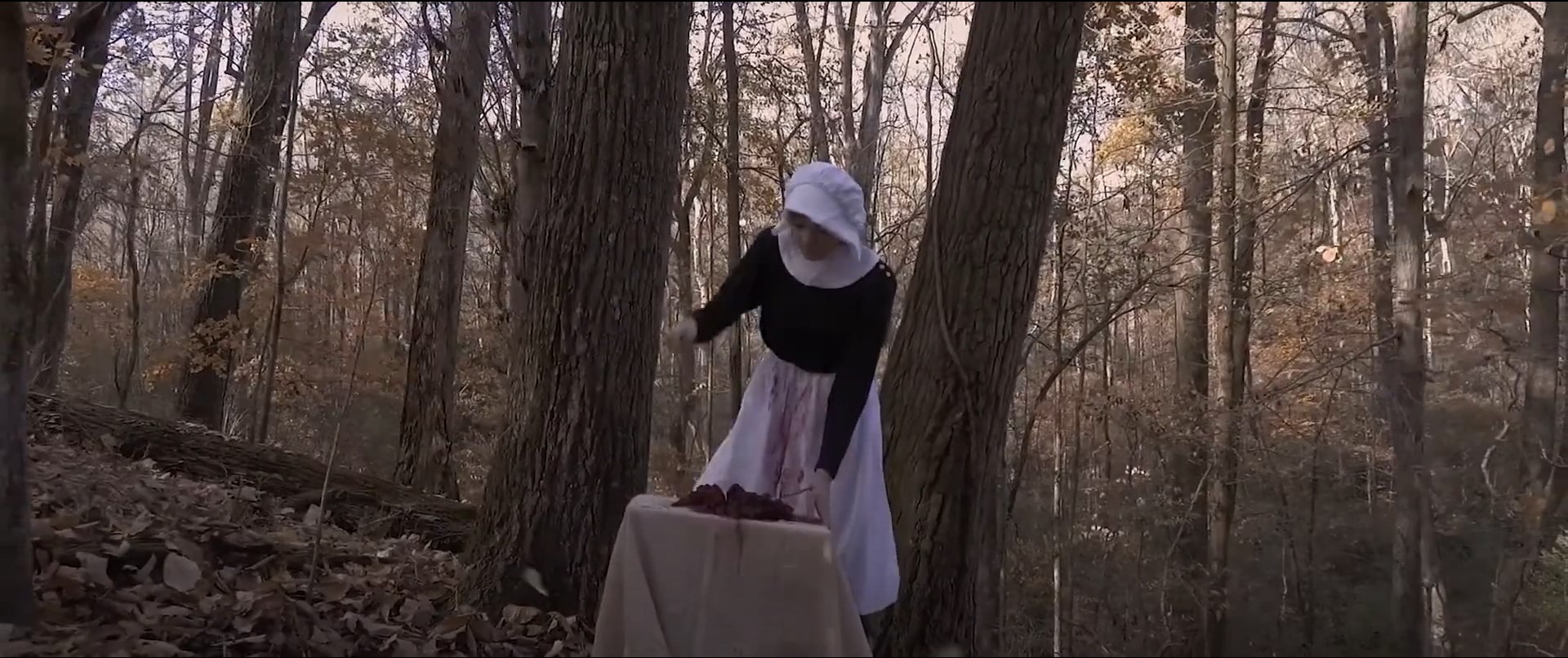
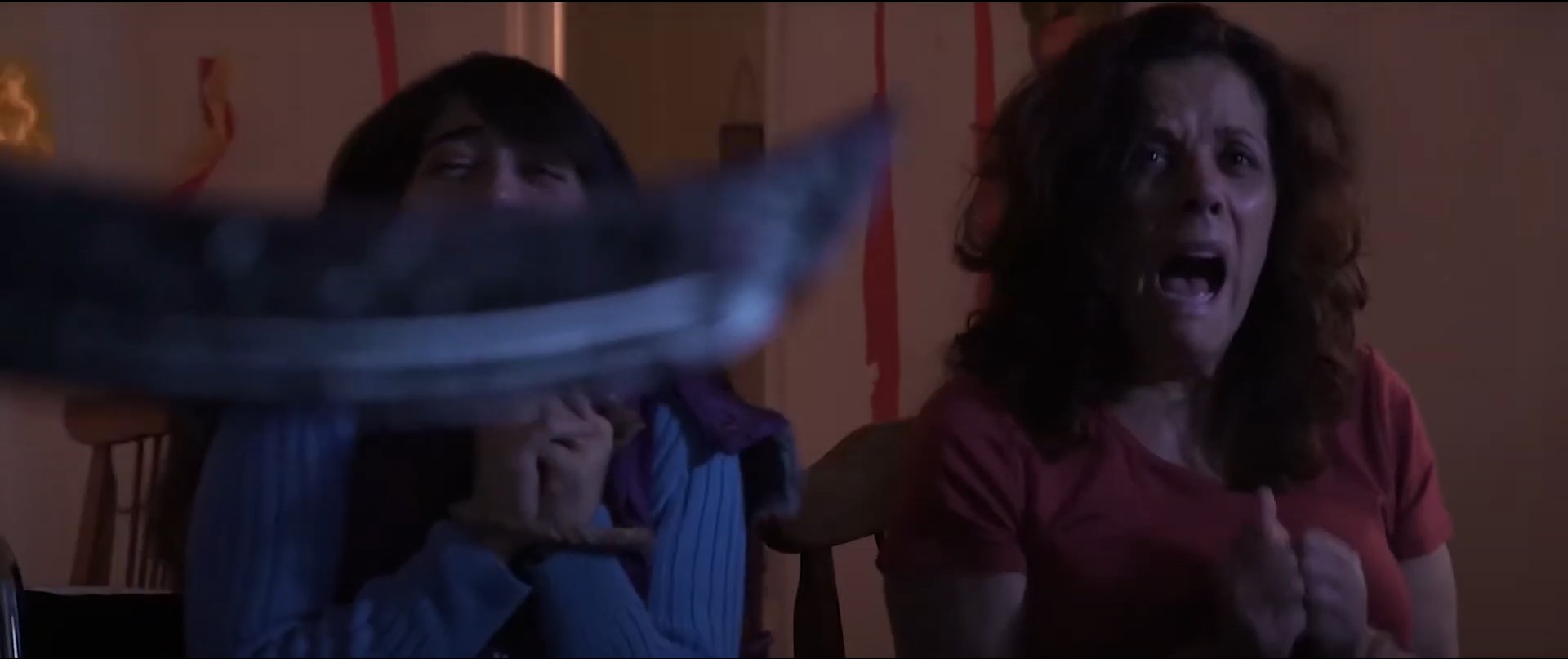
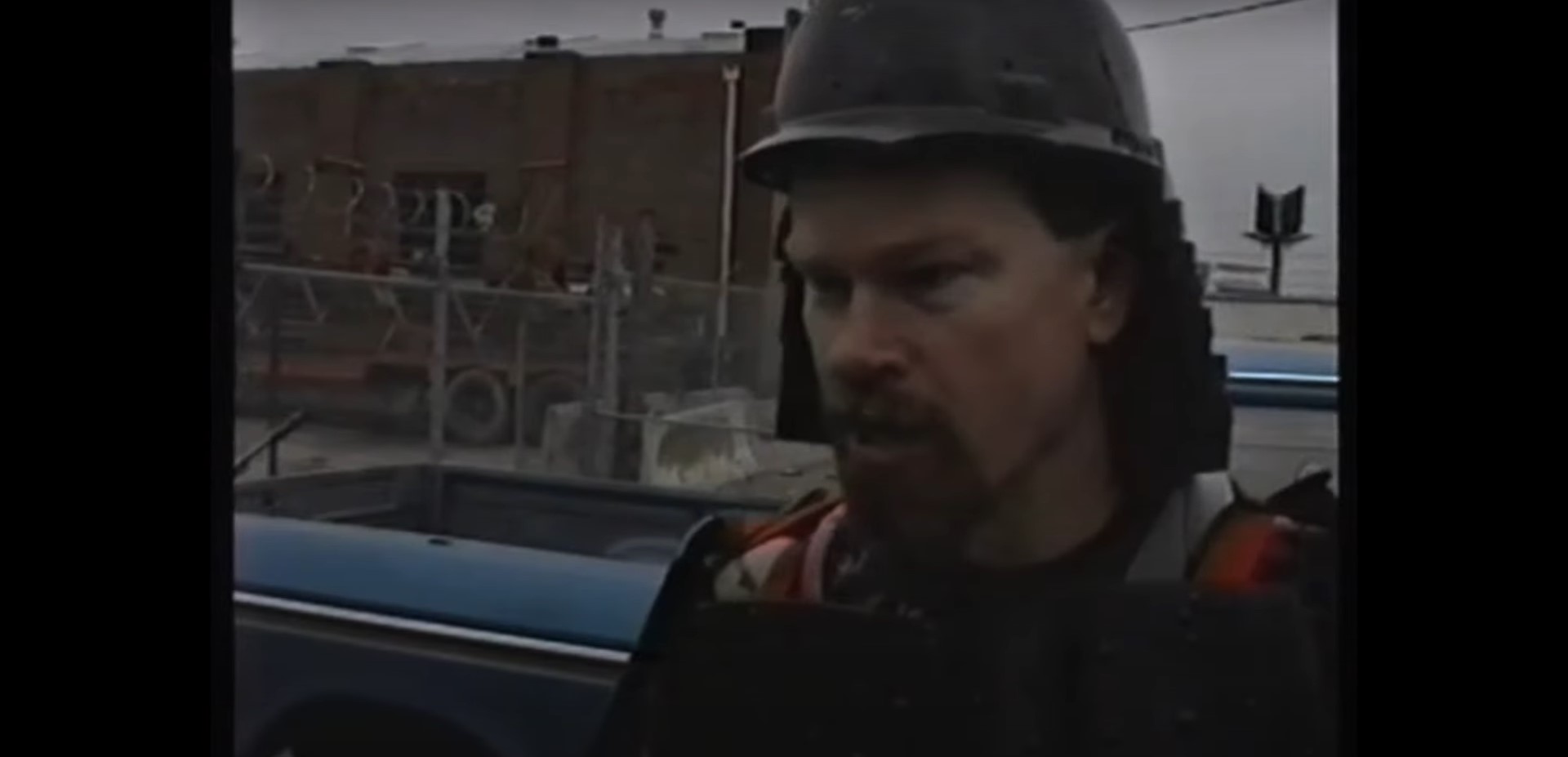
Already with the traumatic distaste for heavy metal music, the fire and brimstone preacher, Father Milton Kilborne, addresses his congregation with a bigotry homily aimed to categorize not only heavy metal music as a sin, but also homosexuality, internet porn, and other indulging vices. When Father Kilborne is suspended by the church’s head priest, the zealous Kilborne drives himself into a stuporous accident that upends his car into a toxic waste dumping ground. The accident mutates the ardent Father, still blinded by God’s Wrath rather than his Mercy, into a superhuman and disfigured killing machine who stumbles into one of the biggest heavy metal concerts of the year – The Holy Saturday Metal Massacre. Metal bands and metalheads unite for a headbanging, guitar-rifting, super loud four-show rockfest and what was supposed to be the best part of metalhead Zane’s abysmal day has now turned into a bloodbath as he and his friend Mariah are caught in the middle of Father Kilborne’s devout judgement and faith cleansing.

The tritonic Devil’s music needs not to fear God but fear his misguided instrument of destruction! “Death to Metal” is the 2019 Metalsploitation mutant slasher from written-and-directed by Tim Connery (“Black Web”) and cowritten by Kevin Koppes. What began in the Summer of 2016 under the working title of “Good Friday,” an Indiegogo fundraising campaign was launched with a goal of $50k and with a modest turnout of supports, “Good Friday” received more than half its goal, plus additional private contributions that provided enough moola pull off the campy thrasher-slasher filmed in mostly in New Vienna and Dubuque, Iowa with latter scenes of the downtown Dubuque area and in the historic, post-industrial converted, cultural arts and music venue building appropriately called the Smokestack because of its monolithic warehouse smoke funneling circle chimney. Double Dubuque Films in association with DreamCatcher Productions presents the Smoking Section Films’ “Death to Metal,” a holier-than-thou slasher produced by Connery and Samantha Cihak and associate producer Gary Greco with executive producers Noel Kapp, Trent Lind, Joe Scherrman, and Charlie and Lara Lind, most of all of whom were involved previously in Connery’s freshman feature “Black Web.”

“Death to Metal’s” parallel story follows two unfortunate souls connected by church and who are having the worst day of their lives. For Father Kilborne, his stubborn, one-sided dogmatism lands him in hot water with the residing church priest. Going through the stages of grief having lost the right to perform a holy sacrament and been punished for what he wholeheartedly believes, Kilborne bends the word of God while going on a bender that sends him hurling into a monstrous “Toxic Avenger” fate that isn’t as anti-heroic and doesn’t come with a melee mop but comes with a sharp edged broken wooden cross. Andrew Jessop’s enthusiastic performance glorifies the evilly enthusiastic Father Kilborne’s human form while Trent Johnson takes the lumbering approach of the mutated, Knights of the Templar version of the fanatical Father. As Kilborne becomes a toxic terror, churchgoing Zane has just been dumped by his band Withered Christ and girlfriend. Played by Alex Stein, Zane ventures to self loathe in the comfort on longtime friend Mariah (Grace Melon). Stein’s the unlikely head banger with a quietly spoken and easygoing demeanor but can be a sleeper metalhead with vehemence for the genre, candidly naming off bands and their technical attributes with excitement in their eyes is a telltale sign of fan no matter what they’re wearing, how they look, or how docile they act. “Death to Metal” fills the mosh pit crowd of characters with supporting bit performances from Charlie Lind, Steve Thompson, Sean Weis, Dean Wellman, Neal Kapp, and Dan Flannery.

Being not a tremendous metal fan, I find that metalsploitation is not terribly hard to love. Horror and metal have gone hand-and-hand for decades since the 1980s with films such as “Hard Rock Zombies” and “Trick or Treat” but has soared under the radar for much of that time and only recently has horror and metal has found some commercial success in the indie market with hits “Deathgasm,” “Lords of Chaos,” and I would say “Psycho Goreman” with its Gwar inspired grotesque costuming. “Death to Metal” is another entry that has had a rough go of breaking the surface with a lack of financial supported marketing, yet the Tim Connery film is a campy crusade to highlight and farce religious sectarianism as well touch upon the hypocrisy of band politics. In a modest showing of practical special effects, first timers Trent Johnson and Brad Vondra bang out simple, yet credible death metal death strokes of broken bottle nipples, a bleach chug, and a metal show circumcision abortion. In contrast, Vondra and Johnson show very little of their bloody work against a slather of offscreen kills that coat “Death to Metal’s” more gritty-grungy veneer and its metacognitive reason for being, to be a sweaty mosh pit of knavish metal and horror. Conner and Jackson Cooper Gango reteam from “Black Web” to not only providing a dingy and smokey atmospherics and stylize with stark blue filter gels but they also make up where special effects lack with impressive camera work with subtle zooms to narrow the center focus, crane shots to make visualize the body-high carnage, and a stationary car-cam next to the wheel well to enrich and stretch “Death to Metal’s” humble budget. One of the best parts of “Death to Metal” is the opening prologue of Romans 1:18, speaking to the wrath of God being revealed against all ungodly and unrighteous men, and then quick cuts to title track “Fuck Your God” in big, bold red lettering.

Compiled of horror and metal, with actual metal bands such as Telekinetic Yeti and Mutilated by Zombies, “Death to Metal” arrives on a collector’s edition Blu-ray from Wild Eye Releasing. The AVC Encoded BD50 presents the film in high definition, 1080p resolution with a widescreen 1.85:1 aspect ratio. Not the most tapered image for an indie scaled, indie market distributor with banding issues at every dark-toned turn. Textures on the skin, liquids, and clothing do have a tactile decking that can’t be ignored, especially on the higher contrast focus to create tension-laden semi-opaque shadows. The release comes with two English audio mixes, a Dolby Digital 5.1 surround sound and a stereo 2.0. Honestly, I had difficulty distinguishing between the two mixes flipping back-and-forth. Both tracks appear to be identical in a quizzical effort to not make the metal music stand out in a more than dual channel output. Dialogue renders over fine, clear and clean with a nice balance between the club patron and club skirmishing chaotic ambience. The soundtrack’s a phenomenal plethora of metal band sampling with music from Mutilated by Zombies, Exmortus, Boar, Driftless Sisters, Inquiring Blood, Netherworld, Monolithe, and The Rising Plague. Optional English subtitles are also available. Special features include raw Snapchat behind-the-scenes footage, music video for the fictitious metal band Grandma Incinerator’s End of the Elderly, Indigogo fundraising videos back when the film was under the working title “Good Friday” with dark humored skits and pleas for funding, a behind-the-scenes photo gallery, the official “Death to Metal” drinking game rules, and Wild Eye Releasing trailers. The physical features include a clear Blu-ray snapper case with an illustrated father Kilborne gracing the dual sided cover art. The reverse side displays an iconic scene from the film enveloping a mini poster in the Blu’s insert. There’s also a more grotesque rendering of Father Kilborne and one unlucky impaled metalhead screaming in agony illustrated on the cardboard slipcover. “Death to Metal” comes unrated, region free, and has a runtime of 80 minutes. A slaying entry into the niche metalsploitation subgenre, “Death to Metal” goes hardcore with deathcore when church and metal clash!

“Death To Metal” available on a Collector’s Edition Bluray!

A Stop-Motion EVILscape of Totalitarian Hell! “Mad God” reviewed! (Acorn Media International / Blu-ray)

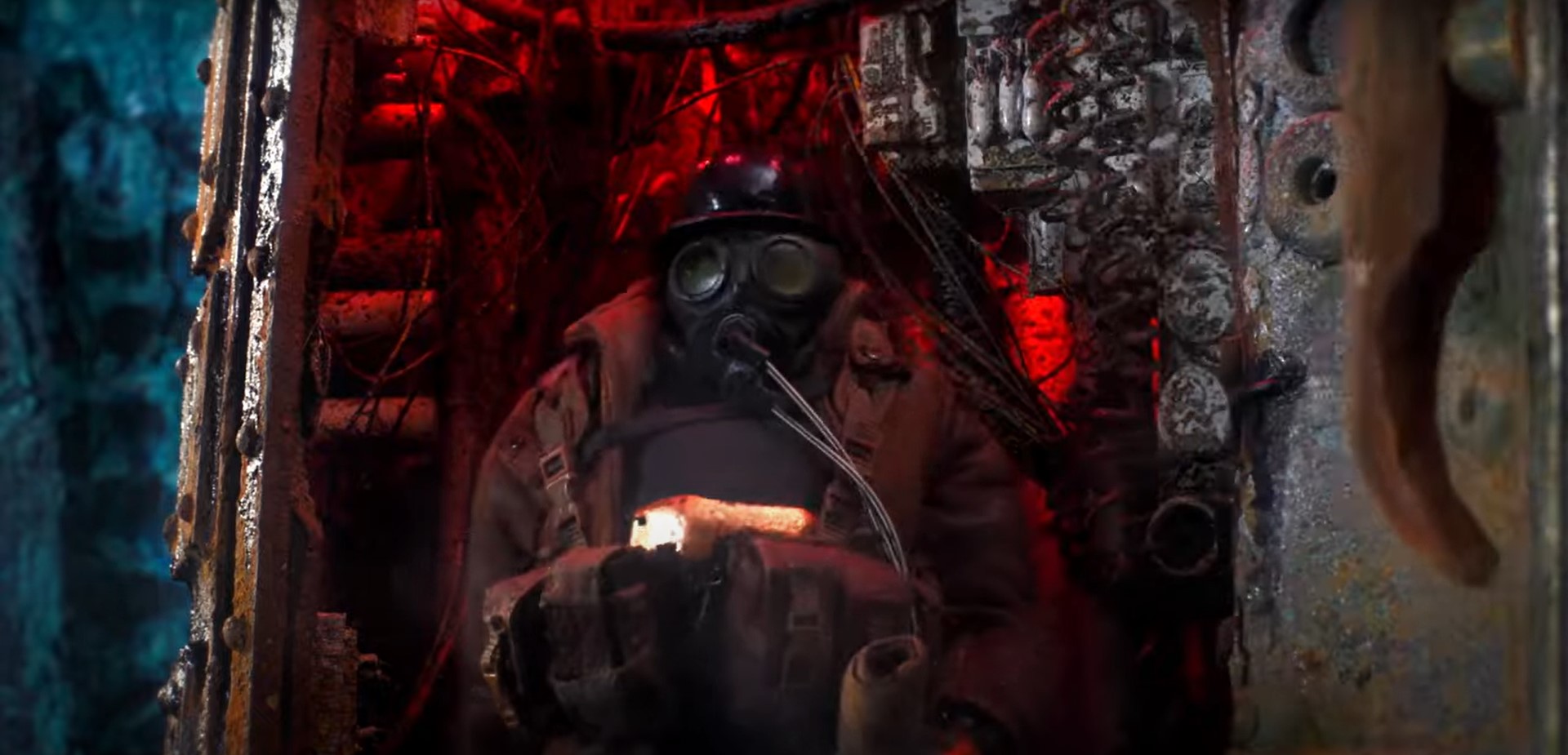
Descending from above into the depths of grotesque terror and suffering, The Assassin steps out of the drop pod with a gas mask, industrial armor, a suitcase, and a crumbling map.  Bearing witness to the surrounding horrors – cruel experimentations, enslaved beasts, tortured manufactured slave laborers, dog-eat-dog atrocities – The Assassin sallies forth, descending deeper into the primordial pit.  The missioned at hand is to set an explosive charge that will eradicate out the ruinous, oppressive filth that aims to corrupt the everything, but there the darkness won’t be so easily wiped away and The Assassin must stay in the shadows and out of sight or else become a tortured fixture in the fray. 

“Mad God?”  More like mad genius!  Phil Tippett’s 34-year, stop-motion, pet-project “Mad God” is the purest Hell I’ve ever seen.  Tippet, famed stop-motion and puppeteer effects artist responsible for the iconic visual effects and stop motion work in fan films such as the original “Star Wars” saga and the “Robocop” franchise as well as cult favorites “Howard the Duck,” “Piranha” and “House II:  The Second Story,” started “Mad God” in 1987 that become more of an ambitious project than originally thought and once the 1993 saw a computer generated effects revolution with a little prehistoric dino-disaster film called “Jurassic Park”, a film Tippett also did work on as dinosaur movement consulting supervisor because of his expertise on the short “Prehistoric Beasts,” the gifted animator had shelved “Mad God” for about 20 years with the though a newer, shiner, computer-driven animation would be the next best thing studios would ardently desire. This two-decade span gave Tippett time to outline objectives and really expand upon ideas of how “Mad God” should look and feel when conveyed. Tippett co-produces the film with Jack Morrissey under Tippett Studios and presented by IFC Midnight and AMC’s Shudder.

Just because “Mad God” is dialogue-less doesn’t make the “Mad God” voiceless. All around, in every scene, is a disturbing commentary or an unhinged metaphor bred mostly out of the animatable inanimate, but there are some live action performances weaved into the mad tapestry of monstrous titans and despot of cruelty. The most clearly discernible face of the lot comes from a director, “Repo Man” and “Sid and Nancy” director Alex Cox to be more exact. Cox plays the long nailed and regime-driven “Last Man,” representing divine leadership of a modest, dieselpunk heaven above a more organic and grotesque hell-type world. Only on screen for perhaps a total of 5-to-10 minutes, Cox grunts and gestures with precision articulation to give off a fair and just ruler impression. Niketa Roman plays the next real person to have some substantial screen time. Less of an actress and more of an animator by trade, with credits including “Blade II,” “Jurassic World,” and “Star Wars: Episode IX – The Rise of Skywalker,” Roman finds an expressive talent in her striking, heavily made-up eyes overtop a surgical mask and gown when whisking away one of the Assassin’s souls to be studied and experimented on by a broodingly ethereal entity. Other micro-performances include minor roles of tortured monkeys, various iron-cladded Assassins, witches, and gnomes from Satish Ratakonda, Harper Gibbons, Arnie Hain, David Laur, Chris Morley, Anthony Ruivivar, Tucker Gibbons, Tom Gibbons, Hans Brekke, and Jake Freytag.

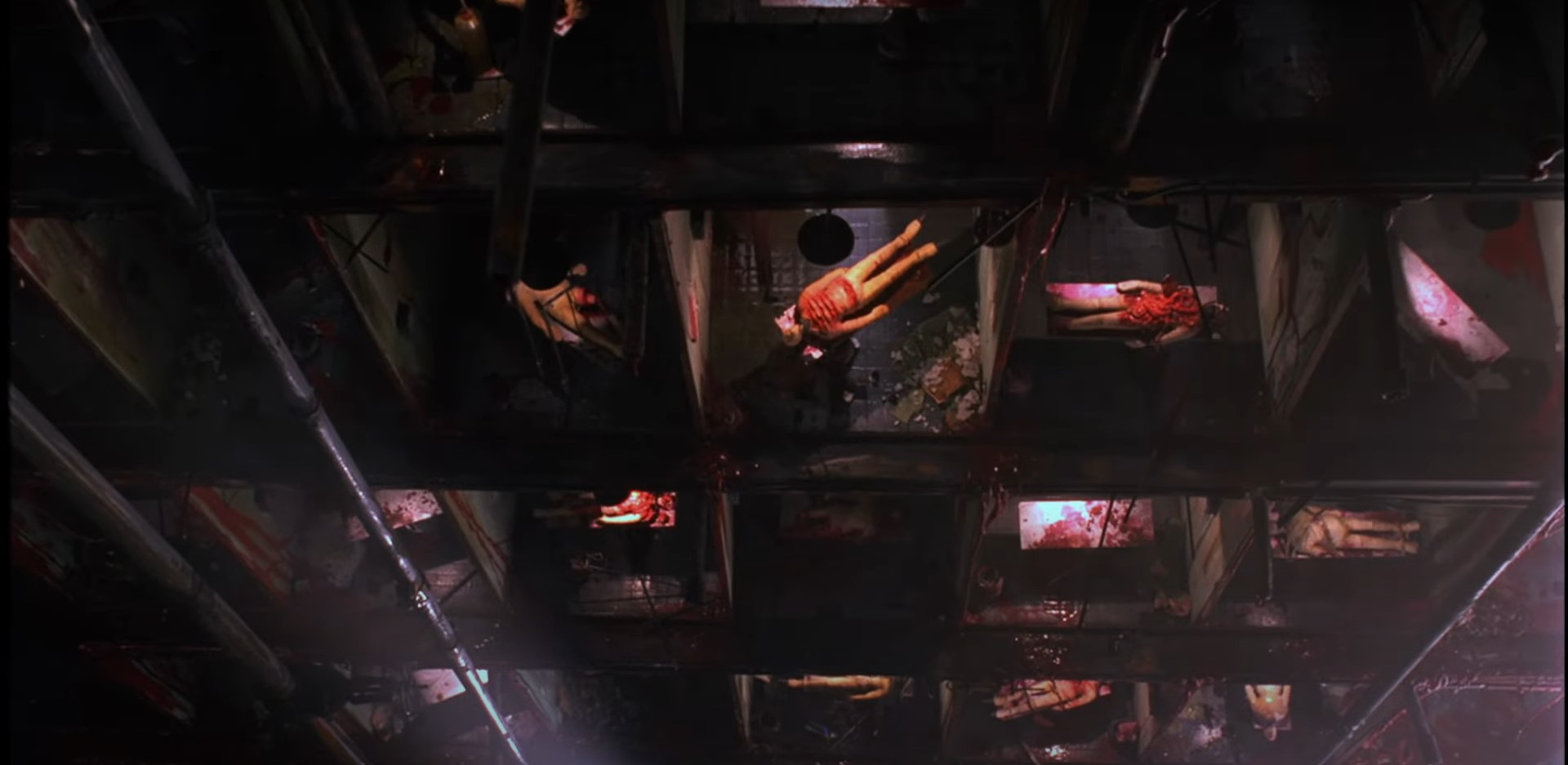
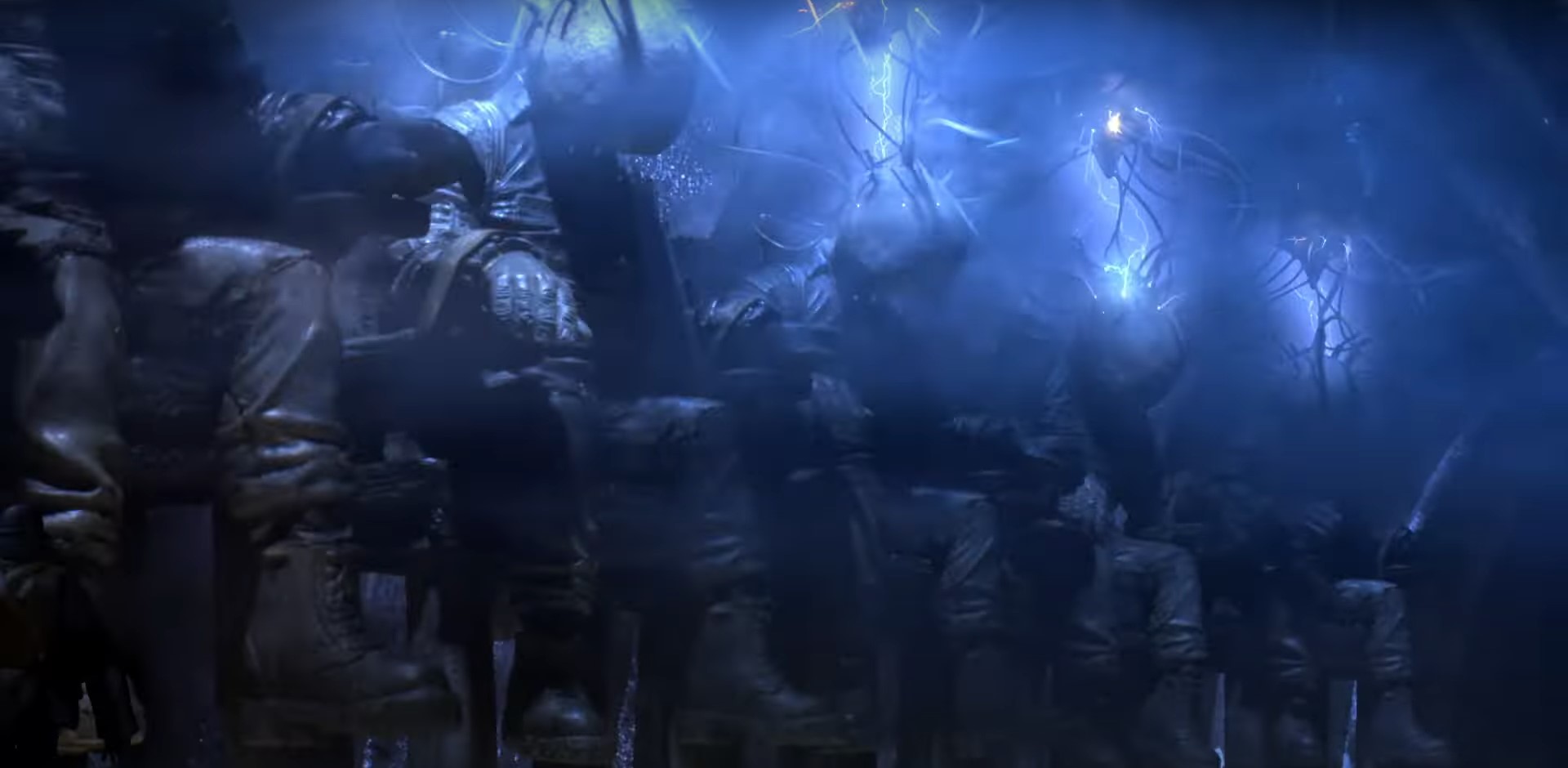
“Mad God’s” possibilities and interpretations are endless. Phil Tippett pulls from a motley of inspiration that includes, but is not limited to the fantastical, sometimes hellish, paintings of Hieronymus Bosch, the wacky, often gonzo animation of Tex Avery, the stop-motion titans of Nathan Juran’s “The 7 Voyages of Sinbad, and Dante’s Inferno. The mind is a deranged and wonderful creator of the macabre and of the aberrant and as a receiving device, the mind can also, if opened up enough, accept such visceral visuals of bowel fluids being jettisoned out by electric shock and into the mouth of an organic machine that manufactures fibrous, lumbering humanoids for slave labor. Like lemmings in a way, these exploited shadows of human beings will succumb under their own demise or at the gnarled and unforgiving hands of their master’s gargoyleish work-whippers. “Mad God’s” eye for detail is greatly disturbing to see cities in monolithic cities and cultures in ruins, the composite depth between foreground and background action in one scene reminds me a lot of older works like “The Neverending Story” or “Clash of the Titans” that create a vast scale with smaller objects, and the playful irony of a nightmare netherworld being commanded over by a baby’s babble doesn’t nearly seem to a stretch from the truth. As the multiple Assassins trek through the chaos and the insanity, an overwhelming sense of life is meaningless scores the landscape as there isn’t an ounce of compassion or empathy to be had or displayed for any of the malformed creatures and wretched humans. A laborer is crushed by a stone – no biggie. A cute and cuddle animal is attacked and whisked away for food storage – all in the day of cruelty. A man is stripped of his armored gear, injected with a mysterious substance, and prepped for exploratory surgery – all for show in front of a live clapping and cheering audience. The only compassion I can make sense is the Assassin’s mission to blow up this God-forsaken world of eternal suffering to restart the heart. Madness grinds bones, fillets spirits, and crushes souls in Phil Tippet’s Godless underworld and can haunt you even while you’re awake.

A surreal stop-motion wonder and excruciation, “Mad God” brings all the horrors of the subconscious mind to the surface with a high-definition, 1080p Blu-ray. The region 2, PAL encoded release from UK distributor Acorn Media International presents Tippet’s tour de force in a widescreen 1.78:1 aspect ratio and the image is purposefully varied to exhibit different strokes of craft as students would assist Tippet with contrastive topographies to carve out an apocalypse-riddled world that’s in a state of a violet retrogression. Tippet and Tippet Studio visual effects artist, Chris Morley, pivot to “Mad God’s” cinematography appearance with brooding, darker tones that illuminate and are erratically sparked with warm neon glows or brilliant voltage streaming through highly conductive bodies. Some earlier scenes from the late 80’s have natural grain from the 35mm stock and then later, more recent scenes have a cleaner, sleeker look with the digital recording. The Dolby Digital 5.1 surround sound mix has an all-embracing range, mostly with sudden and alarming blazons of guttural roars, unnerving baby babble, elongated zaps and shocks, and the indistinct yips and yaps of a mad world, that sustains on a line of being lesser than crisp, which might be contributed to the inexact capture of depth as sometimes all sounds casts like from inside the reverberations of a fishbowl. Descriptive SDH subtitles are available. Bonus features include audio commentary with Phil Tippett and “Pan’s Labyrinth’s” Guillermo del Toro, cast & crew commentary, an interview with Phil Tippett, “Mad God’s” various painter, cartoonist, animator, and psychology inspirations, the making-of “Mad God,” Maya Tippett’s Worse than the Demon – Phil Tippet’s daughter’s 12-minute thesis documentary of her father’s 34-year passion project journey, Academy of Art & “Mad God,” a behind-the-scenes montage, and a behind-the-scenes photo gallery. “Mad God” has a runtime of 84 minutes and is UK certified 18 for strong violence and gore. A motion picture diorama of Phil Tippett’s neoteric psyche, “Mad God” is wrath wrapped in heart and soul, two descriptors not topmost on the surface but are meticulously integrated into every frame of pain, suffering, and despair.

The Mayflower Brought the Thanks of EVIL Long Ago! “The Last Thanksgiving” reviewed! (Scream Team Releasing / Blu-ray)

Gobble Up and Chow Down on “The Last Thanksgiving” on Blu-ray!

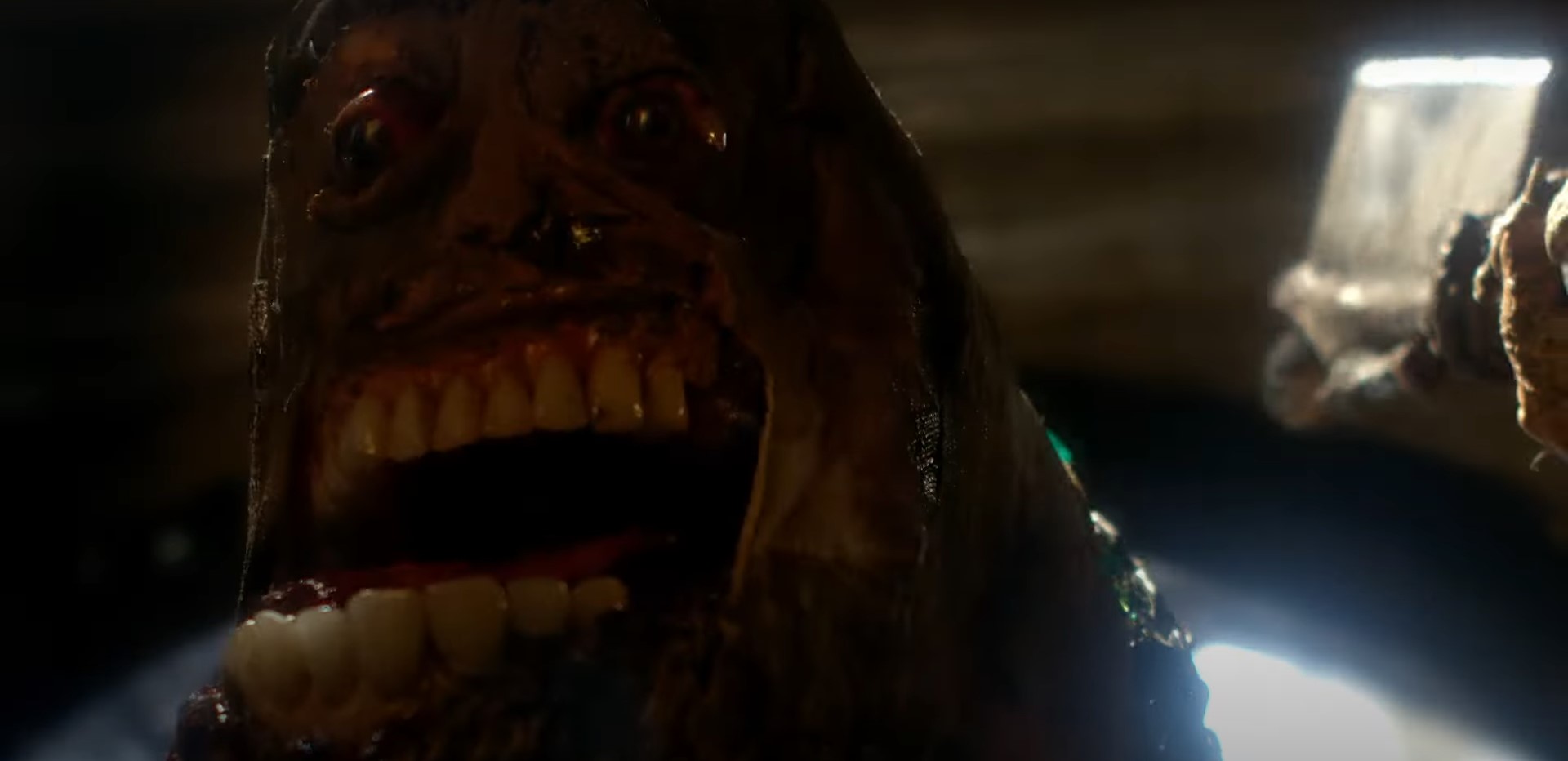
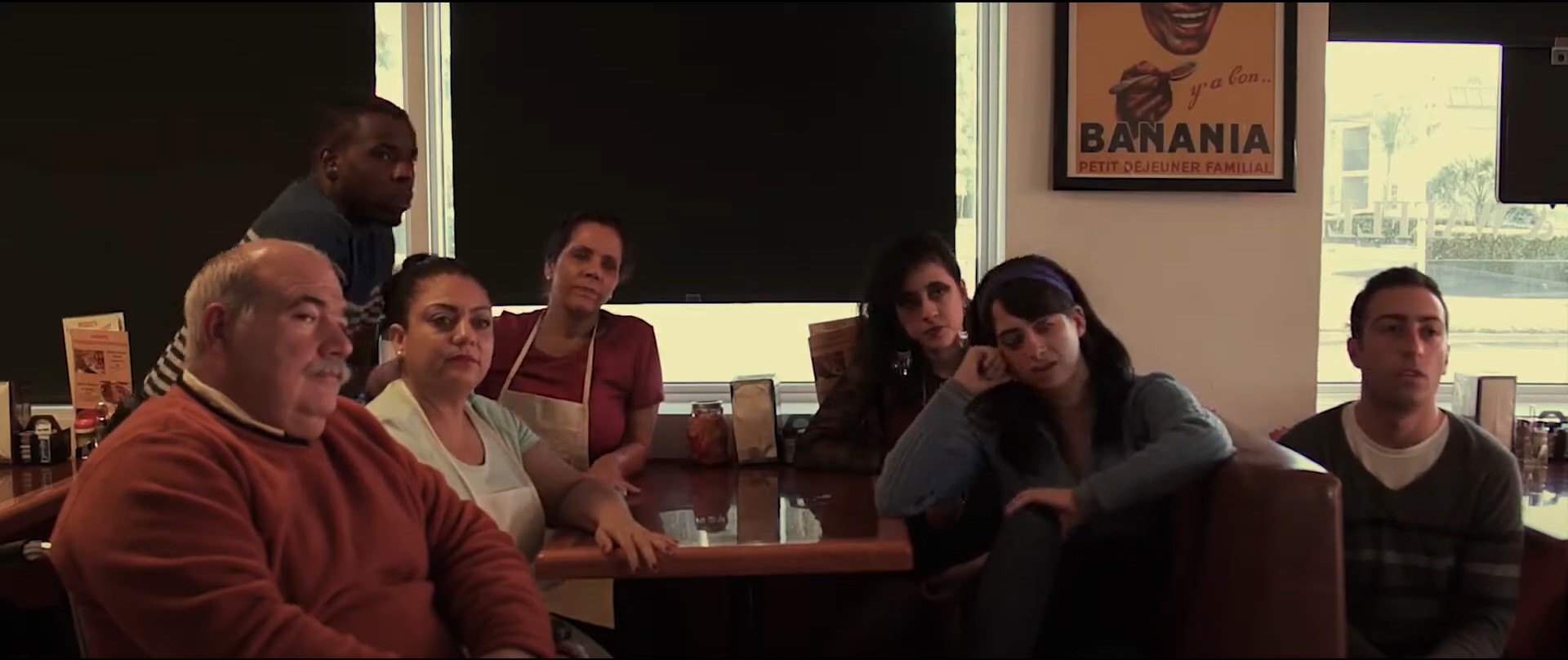
Lisa-Marie Taft is known for being uncompromisingly difficult to be around with her snarky comments and negative attitude.  She’s especially coarse when she has to spend her Thanksgiving holiday working tables at the restaurant, one of the only places open on Thanksgiving.  Stuck with the equally as enthusiastic coworkers, Lisa-Marie can’t go home and snog with her boyfriend when one lonely customer decides to show up right before they were given the blessing to leave.  The situation at the restaurant goes from irritable to fatal when a family of cannibals with ancestry Pilgrim ties raids the open business to keep with their yearly tradition of cooking a thankful feast out of “thankless” people.  For 400 years, the tradition has been upheld and sought through, but they’ve never went up against anyone like Lisa-Marie Taft before. 

Are we ready for some Thanksgiving leftovers yet?  The time to give thanks to all our family and friends holiday has come and gone and many fans have exhausted through the extremely short list of Thanksgiving themed horror films, such as “Thankskilling,” “Thankskilling 3” and “Blood Rage” to be the most likely few viewed this past holiday week.  Well, have you ever heard of 2020’s “The Last Thanksgiving” from writer-director Erick Lorinc?  If you haven’t, then put back on your watching stretchy pants to gobble up another feast of cranberries and carnage as this slasher is from a group of University of Miami grads shooting on the streets and in the rural fall foliage of Chattanooga, Tennessee and in the Derry’s Family Restaurant in Hollywood, Florida with some of the shots being done over the actual Thanksgiving break for, you know, immersive authentic fall and giving thanks atmospheric quality.  “The Last Thanksgiving” is a Peak Jerry Production and is the first full-length feature film from Lorinc and produced by Annissa Omran with Sydney Gold serve as associate producer.

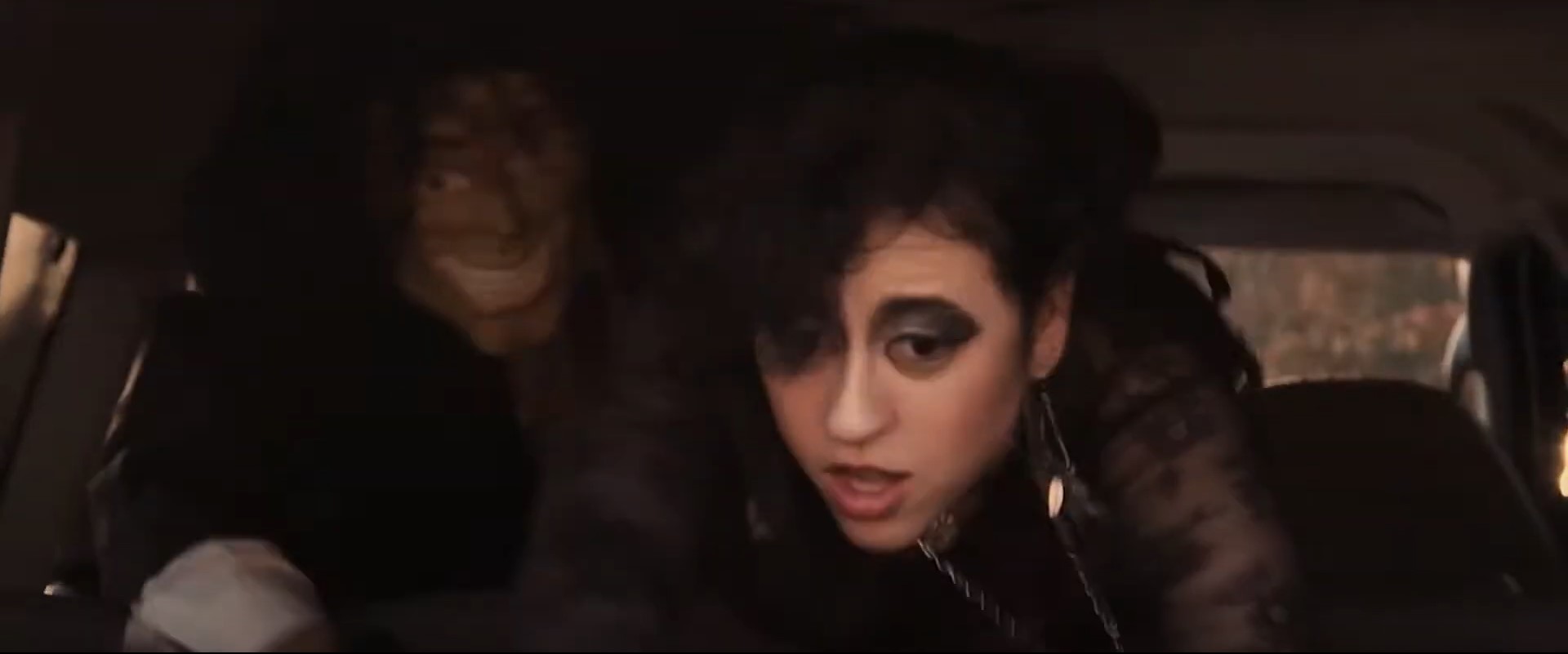
In the role of the snooty, snarky Lisa-Marie is fellow University of Miami grad Samantha Ferrand who plays the not-so-nice version of Halloween’s Laurie Strode with a complete disdain for her responsibly burdening parents and, well, basically any form of adult authority.  Even Lisa-Marie’s softy boss receives talkback and huff and puffs from what Lorinc pens as a self-centered brat.  As Lisa-Marie goes to war against the world, including her gothic waitress counterpart Trudie (Gabriela Spampinato) in a witty top dog positioning back-and-forth at times, she’s goes up against the Brimstone family who have a long-standing cannibalistic Thanksgiving tradition of following their Pilgrim relative’s footsteps, Abigail Brimstone (played dually by Alex Love and Gosta Utarefson).  The Brimstone family tradition has been enacted for over 400 years by each generation and this generation is no different with the commune living of two sisters and two brothers, who also may or may not be sleeping with other.  Yikes! Matthew McClure and Tristan Petashnick become the masterminding main face of the Brimstone clan as brother and sister, Kurt and Cordelia, while Laura Finley and Michael Vitovich come top up as the grunt work muscle as Maggie and as the Leatherface-esque Trip, a tall, quiet, and mask-wearing brother that takes a note from classic slasher icons with walking chase downs and brutal kills. Together, the Brimstone family is not terribly cliche at all and are backed by strong, singular performances that stand out like rightful, lip-smacking wolves against the restaurant sheep trying to survive the holiday on the backs of each other. These particular group of individuals are the perfect side dishes to the smorgasbord of sanguinary grub with a Backstage audition casting of Robert Richards Jr., Brandon Holzer, Madelin Marchant, Tametria Harris, Bobby Eddy, Nicholas Punales, Francisco D Gonzalez, and scream queen icon, Linnea Quigley (“Night of the Demons”) as the one, lonely restaurant patron in the wrong place, at the wrong time.

We’ve established that performances are strong, but what about the story?  Does it salivate interest and keep your attention from start to finish?  Is enough Thanksgiving incorporated material live up to the niche theme?  Certainly campy with dark, puritanical humor that stresses the importance giving thanks and being with family and friends on the holiday, “The Last Thanksgiving” unquestionably  expresses itself as a film that fits inside the theme’s parameters while also not taking itself too seriously, which has been routinely par for the course for these types of Turkey Day films.  Lorinc’s story concept stretches the gamut by briefly sending audiences back in time to when Pilgrims had the first Thanksgiving with the local Native American.  With the quasi-flash back story depicting Abigail Brimstone, who was in need of more food for the first feast because the Native Americans would be joining them at the table, chopping and mincing the postmortem remains of a handful of Native Americans to robust her menu, the Brimstone family quickly becomes understood after the first two acts of just chalking them up to your everyday cannibal, but the Lorinc takes the simple and satisfactory explanation, one that’s easily understandable and works as a cause, to a complicated and incongruous supernatural area with a 400-year old Abigail Brimstone still very much alive, and still looking good after four centuries, to procreate with one of each year’s male victims to keep the family craving and carving that human flesh turkey.   Cleaved in half heads, a jawless leftover, and a basement full of acidic gravy should be gobbled up in this traditional holiday horror film, “The Last Thanksgiving!”

Scream Team Releasing releases “The Last Thanksgiving” on a AVC encoded Blu-ray home video with a 1.77:1 aspect ratio and presented 1080p high definition. For a fall holiday feature, we’re treated to some fall coloring of brown and red of the Chattanooga wooded areas and the detailing in the textures of sweaters, scarfs, and pilgrim hats to bring out the right festive feelings of a fall, but the image grading reins backs a tad that doesn’t showcase the true beauty of fading foliage. For an indie crew working with university equipment, contrast levels appear balanced to enrich the shadows where needed and lit-up appropriate locations helps delineate scenes of trepidation clearly. There were no evident issues with compression on the 50GB Blu-ray pressing. The English language 5.1 surround stereo mix is the sole mix on the release and this is the part of the A/V package where “The Last Thanksgiving” can’t stuff it all into that the big bird cavity. Dialogue is clear but is more pallid to the ears and when decibels reach a certain height, the audio output starts to break down slightly to a crackle. Optional English subtitles are available. Bonus features include an audio commentary, The Long Pilgrimage an in-depth making of featurette with the University of Miami grad cast and crew, “Thanksgiving” 1978 short film which has scenes spliced into the feature film, gag reel, Talking Turkey: Late Night Discussion, auditions, photo gallery, teaser, and official trailer. The blue snapper case has shoddy front cover art that doesn’t provide the best first impression, but the backside has more retro appeal and the cover art is reversible with still image on the inside with the film’s splayed on top. The Scream Teaming Releasing Blu-ray comes region free, unrated, and has a runtime of 70 minutes. “The Last Thanksgiving” is a great addition to the boutique Thanksgiving horror movie table that will certainly be a yearly staple in every family fright night viewing tradition.

Gobble Up and Chow Down on “The Last Thanksgiving” on Blu-ray!

An Experiment Backfiring with EVIL Payback. “Moonchild” reviewed! (Visual Vengeance / Blu-ray)

“Moonchild” now on Blu-ray from Visual Vengeance!

An Inhuman government body of a dystopian future experiments with genetic splicing to create the ultimate weapon, known as Project Moonchild, against the human rebellion. That weapon, Jacob Stryker, is unaware of his newly encoded abilities when he escapes one of their holding labs to rescue his captive son from the very same apathetic regime. Stryker teams up with a group of human rebels and uncover by mistake Stryker’s hidden super solider talent of turning into an unstoppable beast – a werewolf. Hellbent on taking down his son’s brainwashing captives by any means necessary and to do it before an intestinal bomb explodes within 72 hours, Stryker convinces the rebels to assist him and now they have an ace in the pocket as they traverse in search for Stryker’s boy, encountering android and mutant bounty hunters, cannibalistic human survivors, and a surfeit of governmental soldiers hot on his tail, but when the werewolf comes out, Project Moonchild is out to seek and destroy those son-stealing son-a-of-bitches by ripping them to shreds.

Director Todd Sheets has long been considered one of the kings of SOV. The “Zombie Rampage” and “Clownado” Kansas City filmmaker writes and directs “Moonchild,” the 1994 direct-to-video, post-societal, lycanthropy actioner is Sheets’ attempt in splintering himself away from the gore. The American Prince of Gore and the Master of Splatter accomplishes the lessened bloodletting and liquid innards coming outwards werewolf feature with a dystopian rescuer that pits what remains of a separatist human society on a verge of collapse to go on a quest to cure a dividing mutation affliction and to go up against the malign immortals of killers and assassins constructed with nuts and bolts and sawblades on a super independent budget. The ambitious project comes with car chases, a large cast, and a hairy beast that fights for family! Executive producer Greg Petrak returns to Todd Sheets’ side after “Bloodthirsty Cannibal Demons” and is a production of Sheets’ very own Extreme Entertainment, a now 34-year standing product company based out of Kansas City, Missouri. Feel old yet?

Playing the lab rat, the werewolf, and the integral hero, Jacob Stryker, to the story is Auggi Alvarez (“Zombie Bloodbath”) as a widowed father who will stop at nothing to save his son Caleb (Stefan Hilt) in the hands of iron-hearted inhuman leader, Lothos (Harry Rose). Alvarez, like much of the rest of the cast, fall into a monotonal expositional black hole that can make “Moonchild” a slog between the excitement. While fleeing captivity, Stryker runs into Rocky (Julie King, “Zombie Bloodbath 2”), Talon (Dave Miller, “Violent New Breed”), and Athena (Kathleen McSweeney, “Violent New Breed), a band of underground resistant fighters who are desperate enough to overthrow the authoritarian ruling class that’s comprised of henchmen with duct tape masks and are skippered by a mustache wearing an unadorned samurai kabuto helmet – catching a tad resemblance to Mel Brooks’ Lord Helmet of “Space Balls.” If you have noticed already, the cast is an entourage of Todd Sheets regulars, a small niche of actors and actress with close ties to the Master of Splatter and have reoccurring roles in most the director’s early 90s indie gems. That trend continues with Carol Barta (“Prehistoric Bimbos in Armeggedon City”) as the bounty hunter, Medusa. Looking more like your next-door neighbor grandmother, Medusa is viper-tongued assassin with an unforgettable cackle and a throaty super ability that’ll inject nightmares for nights to come. Barta’s performance is one of those cliched it’s so bad, its good acts that you have to see to believe. Cathy Metz, Kyrie King, Rebecca Rose, Jody Rovick, and Mike Hellman round out the cast.

Character names drenched with Greek mythology inspiration and a contemporary take on the werewolf canon, “Moonchild” is an interesting and unorthodox story to say at least. Todd Sheets had obviously perfected the limited capabilities of S-VHS shooting or was confident enough to build in a lengthy car chase into a project that didn’t rely on disgusting audiences with blood and guts, but rather actionable thrills and singular characters of the post-apocalypse with only a smidgen of horror. You see, the werewolf doesn’t make too many appearances on screen, only surfacing from beneath Jacob Stryker’s human skin twice in total. The wolfish transformation is shoddy but for the budget, there is an appreciation for the amazing looking effect as well as the other practical effects throughout the feature. “Moonchild’s” pacing can be concernedly plodding to make sure the exposition covers aspect of Stryker’s intentions, slowing down the film to the point sluggishness. It doesn’t help that the scripted word-for-word, automaton performances are not tonally textured with droning dialogue that can’t captivate and contributes to the fatigue at times. Though “Moonchild” is an evolving project for Sheets with conviction in his ability to produce, there are still some editing continuity blunders that downgrade the overall result. Upward closeup shots of Julie King as she looks down when supposedly holding a rifle on Auggi Alvarez show her hand mock holding a rifle as it comes into the frame and then the next cut is the actress actually holding a rifle. Another scene involving King has her smash in the head of a traitor on a concrete floor and the next shot is of her running down the hallway away from where the body should be but wasn’t. The corpse had vanished. Howlers, pun intended, like these conspicuous examples are what depreciate an already discounted movie, curbing any kind of recognition for Todd Sheets going outside his blood and guts comfort zone.

As one of Visual Vengeance’s SOV cult-horror titles, we come to expect temperamental image and sound quality from the Wild Eye Releasing banner due to the consumer grade S-VHS equipment and the novicey of the filmmakers as, and mostly related to the former, Visual Vengeance warns of prior to the start of every feature so thus far, but the 50GB, MPEG-4 encoded, 2-disc Blu-ray set, that presents the feature in 1080p of the 1.33:1 aspect ratio, is the best technical-looking SOV to date for the company. Hardly any tracking issues, artefact issues, and any tape distortion of any kind and while still lacking premium quality as we all expect today, nothing is taken away from “Moonchild’s” original SD master transfer that is a director supervised. The single soundtrack audio option is an English analogue 1.0 mono mix and the dialogue as well as the score come over nicely despite a less punchy channel output. There’s a steady, feature length electrical interference from start-to-finish that is no surprise and is not terribly audio intrusive. Depth suffers mostly with the type of equipment that doesn’t filter and level out ambient noise, but the range of sound is pleasant with the added clip tracks. English subtitles are option. The bonus features include two new audio commentaries – director Todd Sheets and star Auggi Alverz and Todd Shoots and Visual Vengeance. Other bonus features include the alternate VHS cut, Wolf Moon Rising documentary, archival behind-the-scenes cast and crew interviews featurette, the original VHS trailer, deleted ending, the Todd Sheets’ directed music video Burn the Church by the now defunct Kansas City-based, goth metal band Descension, short film “Sanguinary Desires,” trailer for Todd Sheets “Bonehill Road,” and other Visual Vengeance trailers.” The phyical release comes with a 2nd disc, a bonus audio CD of the movie soundtrack, reversible cover art featuring original VHS cover on the inside, new art on the clear cased Blu-ray snapper, and original art on the cardboard slipcover by The Dude Designs aka Thomas Hodge. Inside the snapper lining are four-page liner notes by Matt Desiderio, folded mini poster of the snapper front cover, and the standard VHS throwback sticker sheet. “Moonchild” on a Visual Vengeance Blu-ray comes unrated, region free, and with a runtime of 87-minutes. Todd Sheets is a maniacal moviemaking machine with “Moonchild” being released a decade after the gorehound began and there’s plenty of admirable spirit and effects in the Kansas City werewolf in dystopia tale, but one can’t shrug off the oversights and the exasperating exposition that goes way off trail the turbulent path of indie filmmaking.

“Moonchild” now on Blu-ray from Visual Vengeance!

The Clap is the Real Evil Here. “Quiet Days in Clichy” reviewed! (Blue Underground / 4K Ultra HD and Blu-ray)

“Quiet Days in Clichy” 4K Ultra HD and Blu-ray Combo Set Available Now!

Joey and Carl are two broke writers living the coquet bachelor life in a small Paris, France apartment where they have a revolving door of transient sexual encounters with various women.  Despite being writer poor and hungry for most of the time, Joey and Carl happily lead a charmed life of meaningless moments.  Doesn’t matter to them how or from who they contracted a sexual transmitted disease.  Doesn’t matter to them how they pay for their carnal escapades.  And, mostly, doesn’t matter to them the age of the women they sleep with as long as it doesn’t cause them trouble.  The woes of everyday life do not stop the roommates from enjoying night clubs, traveling abroad, and the simple, bodily pleasures of French women.

In the same preface vein as Jens Jørgen Thorsen adaptively written-and-directed “Quiet Days in Clichy,” some readers may find the following material offensive, revolting, and not up to the universal moral standard – especially more so in the politically awareness of contemporary times.  Based off the novel of the same title from American writer Henry Miller, who was seen as an intellectual surrealist enlightened by the chauvinistic viewpoints on women and sex, the Danish, 1970-released blue film, “Quiet Days in Clichy,” resembles something of a semi-biographical depiction of Miller’s own personal non-fictional experiences as a proofreader in Paris during the 1930s, but updated to more contemporary times in the 1960s with genre designation that’s more of sex comedy than bio documentary.  The novel, which was banned in the United States for many years, focuses on the frivolous joys of simple pleasures that superseded the life sustaining necessities, such as food or money for food and become something of a blend between Miller’s explicit anecdotes and some wishful fantasy.  Shot on location in the small outer rim Paris neighborhood in Clichy, “Quiet Days in Clichy,” also known in the U.S. as the “Not So Quiet Days” or “Stille dage i Clichy” in the Norse Danish tongue, is produced by comedy producers Klaus Pagh and Henrik Sandberg.

A full skin, hang loose, and complete sexist semblance is no easy task and yet the two principal Dane actors Paul Valjean and Wayne Rodda, as Joey and Carl, are not the best looking in the men gene pool. “Quiet Days in Clichy” marks Valjean and Rodda’s one and only leading roles in their shrimpy career and while their performances paint the characters as apathetic womanizers, they still render a dopey slack-jawed dialogue as if delightful halfwits, a description not terrible too far off from the roles their portraying. The story substantially surrounds around Joey more frequently in what is an uneven dynamic development of the buddy comedy system to undercut Carl nearly completely out of the picture if no half-naked women are in the scene. Perhaps because Paul Valjean, or at least Valjean made up in Joey’s balding hair line and spectacles, looks a lot like the adapted story’s novelist author, Henry Miller. Again, this film is a semi-biographical onset of one man’s intellectual philosophy on sex and nihilism. There’s even a bit of nonchalant pedophilia as Carl takes a dunce young girl, Colette (Elsebeth Reingaard) at the ripe age of 14 off the street and keeps her as a sexual pet who keeps the house tidy in nothing more than a shirt and the way Thorsen depicts the introduction and the proceedings of keeping her around feels rather normalizing and whimsical despite Carl practically shoving her pubescence right in our faces with repetitive noting the illegality of underage exploitation and trouble that comes with it as long as the law doesn’t finds out. Even when the roommates are found out and confronts sans police, Joey and Carl’s punishment is nothing more than a stern warning from Colette’s mother. A plethora of women cross the screen and round out “Quiet Days in Clichy’s” menagerie of lewd and sensual women with roles by Ulla Koppel, Susanne Krage, Avi Sagild, Lisbet Lindquist, and Anne Kehler.

Henry Miller may have been something of a surrealist author, Jens Jørgen Thorsen was also something of a surrealist director that approached the adaptation with the knowledge the content would offend likely most people who find cavalier sex and arrogance to be offense.  “Quiet Days in Clichy” is certainly obscene with wanton waywardness.  Thorsen has a way of telling the lewd and crude story from the philanderer’s perspective that construes a routine day-and-a-life and everyone appears okay with what would usually be a Molotov cocktail exploding self-spiraling madness.  Instead, Thorsen paints a happy-go-lucky portrait of Joey (and Carl too) with aimless ambivalence and does so with frenzied edited scenes that trims out frames and you still get the gist of sequential events by letting your brain connect the dots.  The same cerebral interpretation also takes place during the photograph montage of Joey and Carl’s trip to the small country of Luxembourg in a flurry of images that tell a sequential ordered story of their whirlwind trip filled with seeing the sights, causing some mischief, and, of course, flirting with the local women.  Thorsen also showcases ground level Paris to the fullest with mom-and-pop storefronts, open aired dining, the widened trafficked lanes, and the night club scenes complete with featuring American Jazz saxophonist Ben Webster scoring a subdued hot number while Joey and Carl become handsy and indulge in covert public exhibition with the female patrons at a small-time cabaret club.  Miller’s adapted work is a philosophy of sexual freedom that takes precedent over personal welfare is akin to self-torpedoing with still a starry-eyed and goofy grin expression.

Stylistically, even though this Thorsen sex comedy is labeled a blue film by subgenre the film actually is voided color all around with a black and white cinematography approach by Jesper Høm that looks super slick with a well-preserved transfer in a slight low contrast on the new Blue Underground 2-disc 4K Ultra HD and Blu-ray set. The brand-new restoration on a 66GB, double layer, release comes scanned in 4K 16-bit from recently discovered uncut and uncensored original fine-grain negative that absolutely is very fine indeed! The black and white picture is presented in a European widescreen standard of a 1.66:1 aspect ratio and barely shows signs of age with an anti-wear, which makes me suspect there might have been some cleanup work. There’s clearly some DNR use to smooth out the grain, but this effort also clears up the black and white picture very nicely, resulting in a solid contrast that favors the lower said a tad. The 4K Ultra HD and Blu-ray process mid-to-high 30s Mbps with no pacing issues to the frame rate. Both come with new rescored English 1.0 audio mixes with the 4K Ultra HD sporting a Dolby Vision HDR while the Blu-ray’s DTS-HD Master Audio presents an equally clean file. Both offer quality audio designs that are free from undercutting distortions, such as a cracking, popping, hissing, etc, and are greatly robust with the Dolby Vision eking out a little fuller bodied product. One gripe I have is that Blue Underground doesn’t translate the French-speaking ancillary roles that become lost to conversation if one does not know the tongue, but the English subtitles are free from error and synch up well without any delay or being too quick. French subtitles are also included. Bonus features include new deleted scenes and new theatrical trailer on both discs. The Blu-ray also includes the Songs of Clichy – a 2002 interview with soundtrack composure Country Joe McDonald speaking about one note role of just scoring the film and coming to terms with his unaware sexism, Dirty Blooks, Dirty Movies, Barney Rosset on Henry Miller – an interview with Henry Miller’s editor and publisher that touched upon the mad, chauvinistic genius and perversions of the blacklisted author, Midnight Blue – an archival second interview with Barney Rosset, new poster and still gallery, a new Henry Miller book cover gallery of the title, and new scanned court documents when America seized the film upon entry into the country and the legal fight that ensued to obtain it back. The physical release comes with a not safe for work cardboard slipcover with imprinted frames from scenes while the blacked out 4K and Blu-ray snapper case comes with original artwork of one of the more memorable scenes. The release comes not rated with a runtime of 91 minutes. “Quiet Days in Clichy” lead to more rambunctious nights in the Paris suburb of debauchery and Blue Underground preserves the perverse with a higher quality of lower standards in a beauty of a release.

“Quiet Days in Clichy” 4K Ultra HD and Blu-ray Combo Set Available Now!