EVILFormers: Robots in Disguise! “Crash and Burn” reviewed! (Full Moon Features / Remastered Blu-ray)

“Crash and Burn” on Blu-ray from Full Moon Features!

In the year 2030, the global economy has collapsed and the most powerful organization on the planet, Unicom, controls most of the national markets with scrutinizing oversight.  What makes matters worse is years of pollution and nuclear naivety is dissipating the ozone layer, exposing the Earth and its denizens to altering ultraviolet rays that scorch the Earth with thermal storms, turning much of the terrain into wastelands. Out in the middle of nowhere in one of those barren lands, Unicom errand boy Tyson Keen delivers freon to an isolated Unicom television station fabricated from an old powerplant.  An impending thermal storm forces Keen to stay overnight with the motley crew of station personnel and televised guests.  When the thermal storm knocks out the power, they discover the station chief has been murdered, revealing the chief’s involvement with the Independent Liberty Union, a rebellion group against the mighty repressive Unicom, and secret plot involving Unicom’s illegal use of synthetic people to infiltrate the station to stop dissident behavior. 

2030.  That’s only five years away, folks!  Get ready for the global financial downfall and fallout when the ozone also says peace out after years of abuse.  Giant robots and subverting T-800s, I mean synthetic androids, are exploited for corporate gain and power over the few who resist.  Actually, if you think about it, the premise of 1990’s “Crash and Burn” might actually be happening now, today, five years earlier by the sound of it!  The Full Moon production, helmed by company founder Charles Band, (“Trancers,” “Doctor Morbid”) and written by J.S. Cardone (“Shadowzone,” “The Forsaken”), is seemingly ahead of its time with the exceptions of mecha robots and a vastly dusty wasteland of the Earth’s surface, complete with temperature rising thermal storms.  Unofficially considered a sequel to Stuart Gordon’s “Robot Jox,” another Full Moon production released the year prior, “Crash and Burn” is produced by “Nightmare Sister’s” David DeCoteau and John Schouweiler with Band and Debra Dion serving as executive producers.

The futuristic dystopian thriller plays out much like a slasher with a group of people hunkered down safely in shelter until one-by-one they’re picked off.  Paul Ganus (“The Monolith”) acts as the Unicom outsider Tyson Keen, a motorcycle-riding delivery boy just needing cash to get by in turbulent times, inside an established dynamic of a reclaimed power station used for Unicom television broadcasting where Ralph Waite dons the station chief shoes of Lathan Hooks, Megan Ward (“Arcade”) in the role of Lathan’s tech expert, teenage daughter Arren, Bill Moseley (“House of a 1000 Corpses”) as the station’s handyman Quinn, Eva LaRue (“Robocop 3”) educating the children over the TV waves as Parice, and Jack McGee (“Rumpelstiltskin”) in the blowhard and perverse egotistical TV host role Winston Wickett.  There are also two Winston Wickett guests, flesh and blood adult actresses who came back into the business after Unicom banned robot porn star and are being roasted by Wickett for their licentiousness, played by Elizabeth Maclellan (“Puppet Master II”) in the non-nude role of Sandra and Katherine Armstrong (“The Arrival”) in the topless required role of Christie.  Sandra and Christie are opaquer when it comes to their purpose as the two seemingly nomad women obviously need the money Wickett promises them to do the show to continue moving from place-to-place, but they put up with Wickett’s pompous and chauvinistic degrading being, even sleeping separately in the same quarters as the television host without wearing clothes.  There are dialogue moments between them that suggest there’s more to their relationship than what’s in exposition but never fleshes out; instead, Christie fleshes out in a shower scene with Bill Moseley’s Quinn for a brief cleansing.  The above cast of characters set the same for a “The Thing” similar mistrust when one of them is suspected to be a sabotaging, murderous robot in human skin, they even do a blood test too.  Solid performances all around with Moseley outshining most and Megan Ward’s innocence really comes through in her debut as a teenager while Ganus can be a suitable leading man but lacks the presence where it matters.  Jon Davis Chandler (“Carnosaur II”) and Kristopher Logan (“Puppet Master III:  Toulon’s Revenge”) round out the cast as two wasteland gas attendants close to the isolated power station.

“Crash and Burn” is an enjoyably campy, science-fiction horror that derivatively cherry-picks from other films in the genre.  From “The Thing” to “Aliens,” to even Full Moon’s own production “Robot Jox,” “Crash and Burn” puts other sci-fi cult films’ best elements together to form something new that instills a sense of isolating tension and heart-racing thrills from the man versus machine narrative.  Charlie Band adds his localized flavoring of beautiful women, sometimes teasing to bare it all, to zhuzh it up in a different light.  Like most of Full Moon’s earlier productions, and what separates the company’s catalogue from the modern features of today, is the practical effects.  Greg Cannom (Francis Ford Coppola’s “Dracula”) and his assistant Larry Odien’s make up effects, plus “Terminator 2’” Steve Burg’s robot design with the puppeteering, have longevity over the decades rather than today’s fly-by-the-seams visuals that often look cheap and mismatch against the live action with no tangibility and hardly anything the actors can work off against.  The under skin, robot skull exposure looks phenomenal for the era and budget with multiple layers peeling off in its prosthetic application and makeup arrangement. 

Full Moon continues to remaster their catalogue into high definition with their 1990 title “Crash and Burn” next on the docket. Remastered from the original 35mm negative, that was recently unearthed, the image has greatly improved from the flat colored transfers of previous positive prints, AVC encoded with 1080p high-definition resolution on a BD25. Full Moon’s remastering adds richness to the color pallet and a fine texture point that discrete objects the internal boiler room of the television station and, in contrast, the arid desert of Alabama Hills, California doubling as the futuristic wasteland. Skin textures are filled with stubble, ridges, imperfections, sweat, and robotic skin peels in every frame without the softening or smoothing over process to work quicker rather than precise. Full Moon offers two English Dolby Digital audio tracks, a Stereo 2.0 and a surround sound 5.1, which has been standard fair with the re-released remastered lineup. As fidelity reproduction goes, the layers perceive repressed for a bigger approach, especially one that has giant mecha action and a whipping thermal storm that causes a giant satellite crashing into a building. There’s nothing innately substandard about the Dolby mix, it’s perfectly adequate to handle the action, ambience, soundtrack, and the forefront dialogue and exact clear prominence without the lift in its intermediate range. English SDH are optionally available. Charles Band and actor Bill Moseley launches off the special features portion with a feature parallel audio commentary that’s entertaining between Moseley’s quips and Band’s stories in relation to the “Crash and Burn.” Also included is the making of the film, a blooper reel, the original trailer, and other trailers from Full Moon. Housed in a traditional Blu-ray Amaray, the original VHS art is reiterated, again, for the Blu-ray that’s more mecha oriented rather than stealthy robot assassins. There are no inserts inside or other physical features with the release that has a runtime of 85 minutes, is unrated, and is encoded as region free.

Last Rites: “Crash and Burn” does not do just that, crash and burn, but has real world dystopian concepts underscoring a Full Moon slasher reanimated by remastering for high-definition fanatics.

“Crash and Burn” on Blu-ray from Full Moon Features!

The EVIL is Not Just in the Virus, but Also in the Cure! “Side Effects May Vary” reviewed! (Tempe Digital / Blu-ray)

“Side Effects May Vary” From This Blu-ray Drug!

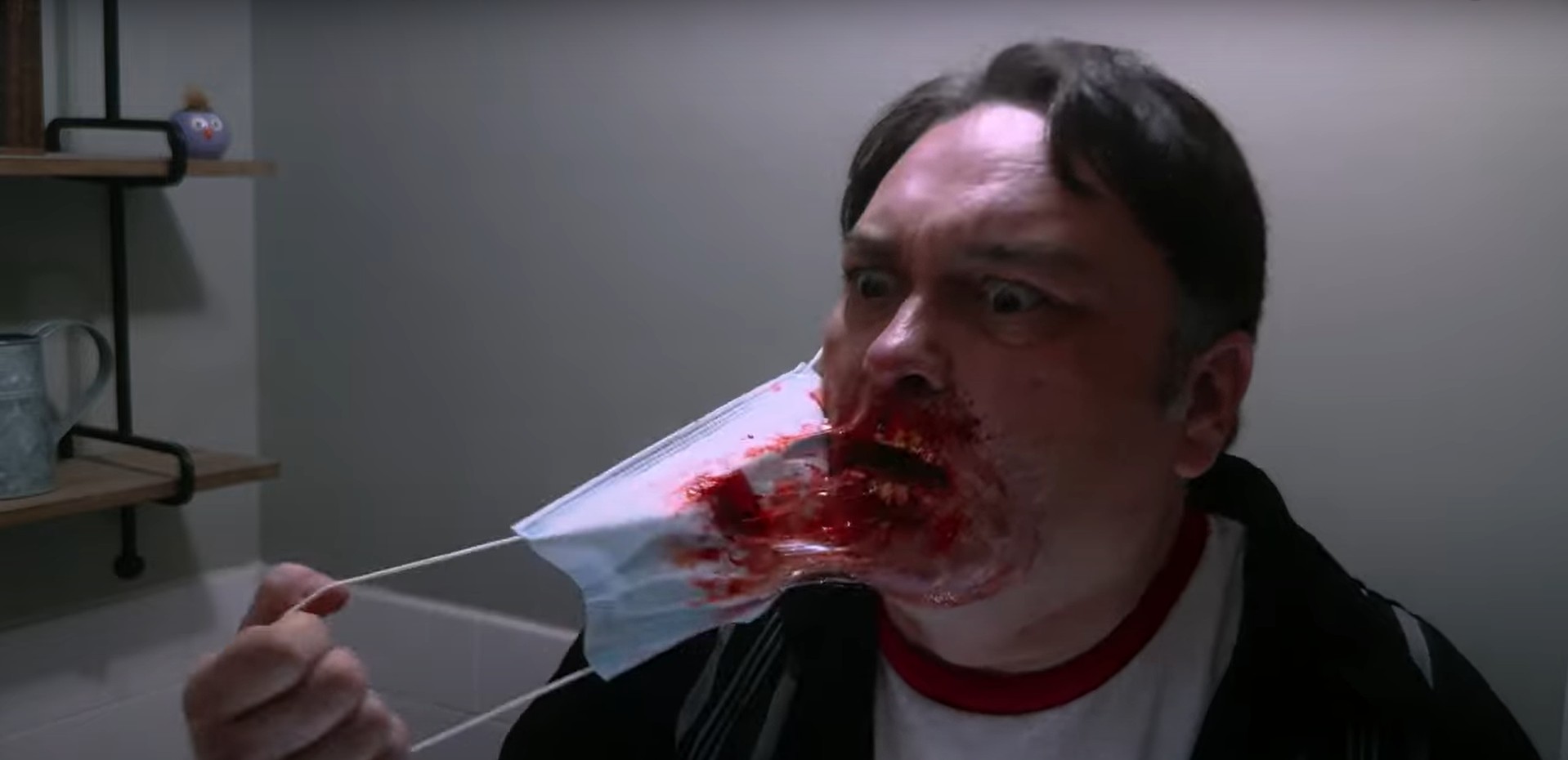
COVID-19 virus has the world masked up and social distancing in full effect with experimental vaccines being rushed toward a rollout.  For Glenn Rollins, being under the weather now for weeks still hasn’t convinced him to inject himself with experimental Government drugs meant to combat coronavirus but when wife Janelle does everything in her persuasive power to convince him to take the vaccine, Glenn reluctantly agrees to receive the shot at his doctor visit the next day.  What Glenn is given is no ordinary coronavirus vaccine, but the new Alpha-21 concoction just released for public intravenous inoculation, an rapidly tested serum that boils subjects from the inside-out.  Instead of completely exploding in a pile of blood and sinew, Glenn’s rare blood type maintains a semi-rigid form and the only way he can maintain from melting into a pile of goo is to feast on the blood and meat of the living in his zombified state.

The cult director behind “The Dead Next Door” and “Robot Ninja,” J.R. Bookwalter, returns to take a hypodermic needle stab at a world-crippling pandemic horror inspired by the COVD-19 virus and how the FDA rushed to approve emergency vaccinations on U.S. citizens in a comically satirical, gore-and-goo-filled comedy-horror.  The movie, “Side Effects May Vary,” is Bookwalter’s first film in over 20-years, the last being “Mega Scorpions” that only saw a streaming release due to a folding in the financing of a distribution deal.  “Psycho Sisters” and “Her Name Was Crista” writer James L. Edwards, who’s collaborated with Bookwalter since the very beginning of the filmmaker’s career, pens the script and also stars in the disturbing desquamation of Glenn role.  “Side Effects May Vary” is the second direct-and-writer production between Bookwalter and Edwards with the first being 1996’s “Polymorph.  As like many of Bookwalter’s films, he produces under his longstanding own indie label Tempe Digital serving as executive producer alongside Edwards producing and wife Lana Bookwalter as associate producer.

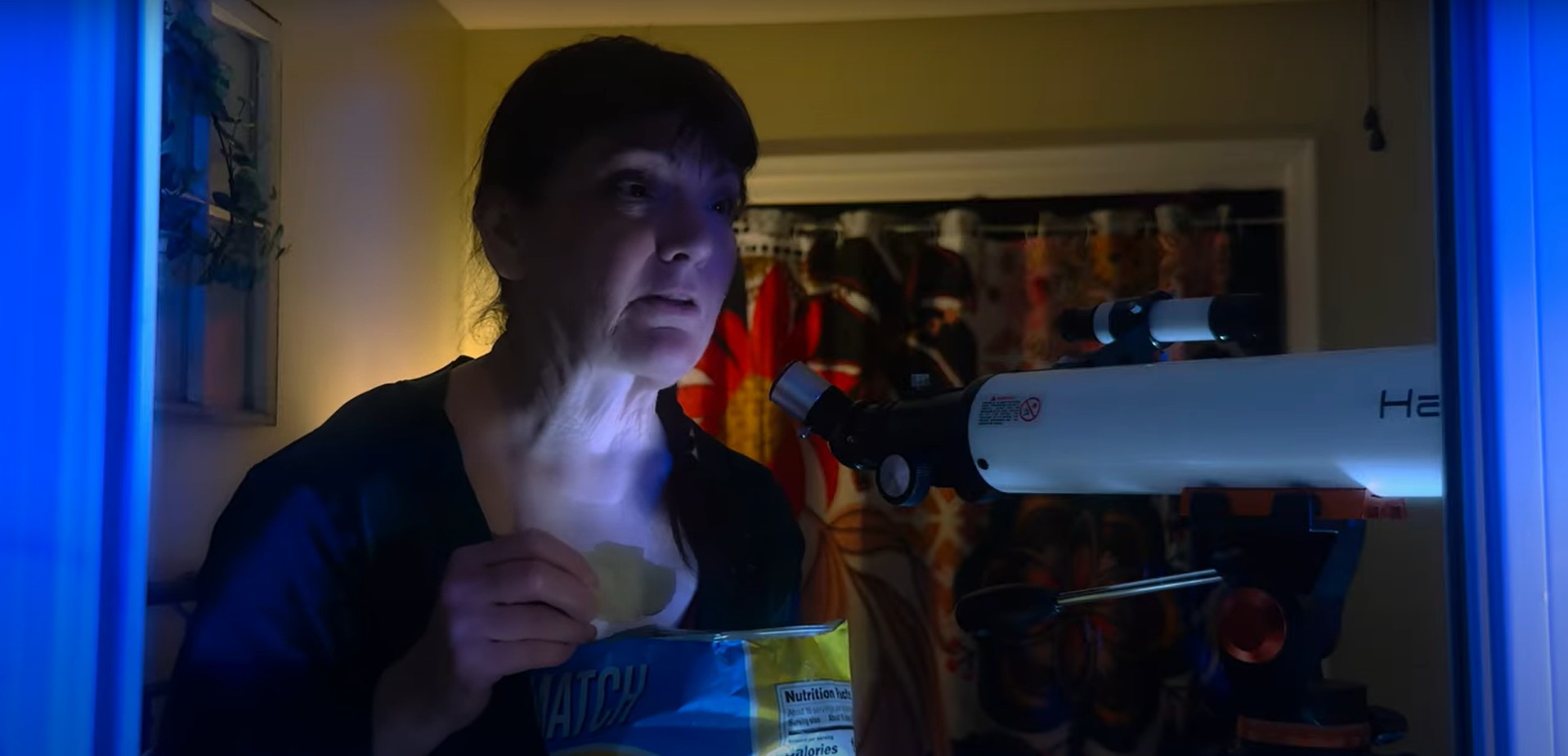
I wouldn’t call Glenn Rollins a right-wing conservative antivaxxer but, instead, Glenn’s a doubter of the vaccine’s testing measures with a range of side effects from an experimental injectable could cause from a vaccine so unproven swirling inside his head.  That’s the satirical concept Bookwalter and Edwards put into motion and deliver fully charged as mild-mannered Glenn gorges on the innards of family, friends, neighbors and strangers after unpleasantries arise from an untested product.  The likeable Rollins rears an ugliness brought upon by pressures of vaccination, especially from his wife Janelle, played by indie horror scream queen Tina Krause (“Crimson Nights,” “Bloodletting”).  Another scream queen of legendary acclamation is in on the fun with Brinke Stevens (“The Slumber Party Massacre,” “Sole Survivor”) as the saucy nosy neighbor who knows all the sexual acts by their sporty designations.  We journey from the beginnings of a substance subjugation and are wiggled into a buddy cop scenario between Glenn Rollins’ best friend and former cop turned private eye Jack Murray (Drew Foriter, “Trivial”) and his former boss and one-night-stand Chief Tom Danvers (“Floyd Ewing Jr., “Robot Ninja”) and their sudden thrust into an investigation to find Glen under their distinct impressions of his character, plus that one sexual encounter between them, makes for a good dynamic of sidetracking diversion that interrupts a constant flow, which can get stale, of formality and responsibility of chasing a killer.  The cast Sasha Graham (“Trivial”) as the prescribing primary care physician Dr. Fisher, Wendy Zier (“Trivial”), Tom Hoover (“Ozone”), and David Bachmeier (“Bathtub Shark Attack”) as the first scene test subject of Alpha-21’s explosive results. 

A relief will wash over fans to know J.R. Bookwalter is not dead in the water when it comes to directing.  A long hiatus was exactly what Bookwalter needed to get back to form after a string of mediocre horror that didn’t leave a bad taste in our mouths but wasn’t quite the standard of the Ohioan director’s carnage-laden caliber.  “Side Effects May Vary” spoke to nationwide fears during the global pandemic, in a humorously horrifying way, and even extends beyond that now historical portion of our time into the forefront of our minds that we may have not have yet seen the actual long-term effects of the COVID shots, if any.  The intention of “Side Effects May Vary” is not to instill fear, though does create a fraction of concern, but is more to the tune of exaggerated those once media covered and one-sided fears to the extreme by turning injected patients into boiling potato sacks of putrid cannibalism.  It’s pretty damn funny and gross.  To create a vibrant visual veneer, Bookwalter plays with different lighting angles and color gels of primary neon illumination that takes characters out of the real world and places them into a fantastical neon-noir that surrenders to the sexualized, the scandalous, and the scary story bits and pieces. The buddy-cop, manhunt storyline works as bodies are left as breadcrumbs for the two conflicting investigators that are on the precipice of making a final decision on Glenn Rollin’s fate while Glenn himself battles internally, both physically and emotionally, his wretched state that needs blood to slow down the process of his metaphorizing melting but his mild-manner, nice-guy identity doesn’t want to harm a soul. 

Tempe Digital castrates the COVID cure scare with an incredible liquescent comedy-horror in “Side Effects May Vary” on a director’s cut Blu-ray home video.  The AVC encoded, 1080p high-definition resolution, BD25 comes with a ton of color, contrast lighting, and a decent compression codec that makes the low-budget production appear a step or two up the upscale staircase.  The heavy neon light cuts into the skin and textural details but scenes more naturally lit, such as in the outdoors, fair better with more granular inside a digital presentation in its original aspect ratio of 1.78:1.  There are two English audio mixes available for selection and audiophile setup in a DTS-HD 5.1 Master Audio and a Dolby Digital 2.0 Stereo.  The surround sound selection has a semi-fluid dynamic that works in a contained closed to medium shot arrangement and doesn’t expand to anything beyond to warrant an immersive experience aside from a healthier fidelity of the dialogue, proximity milieu, and the gruesome creature sound effects.  Dialogue can get out of the reigned in alignment that breaks in with sparse unfiltered hissing but otherwise renders cleanly and clearly through the 81-minute runtime.  English subtitles are available.  Special features encoded are an audio commentary with director J.R Bookwalter, a Harris Theater Q&A in Pittsburgh at the Roadshow Opening Night with film guests Bookwalter, writer-star James L. Edwards, and actor Floyd Ewing Jr., a theatrical roadshow cut trailer, a teaser trailer, and the theatrical trailer. Art from the Alex Sarabia and Karl Munster collaboration gives a pulpy artistic rendition of Glenn Rollins oozing deterioration inside a clear Amaray Blu-ray with no supporting supplements other than a cropped version of the art on the disc. The not-rated, region free disc is a perfect cure for what ails you – bad indie comedy-horror done right!

Last Rites: A global pandemic killed millions of people, the silver-lining is now we can look back at that time of isolation and fear and honor those deaths with a coronavirus and rushed-cure blend act worthy of being to the likes of “Bad Taste.”

“Side Effects May Vary” From This Blu-ray Drug!

Let EVIL Give You a Hand! “The Beast Hand” reviewed! (Cleopatra Entertainment / Blu-ray)

“The Beast Hand” Grabs A Blu-ray Release! Buy it Here!

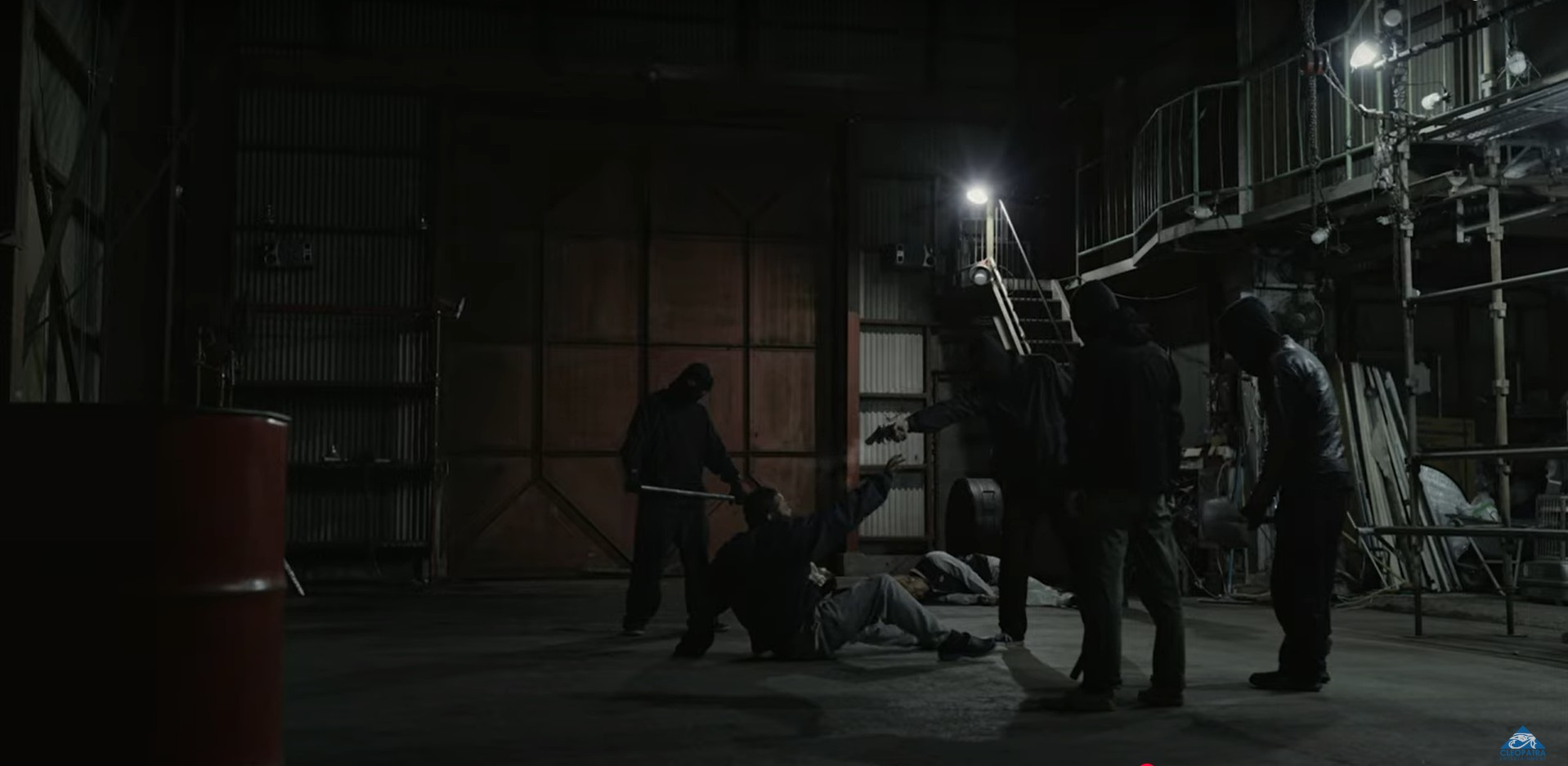
A derelict criminal Osamu Kogure finds himself back in the company of his jumped parole crime boss Akira Inui, Kogure is back to being a manipulated puppet at the whims of a conceited and aggressive Inui.  When Inui persuades Kogure to give up the whereabouts of an old, reluctant fling Koyuki Igarashi, who went through full body surgery to wipe away her past with Inui, Kogure and Igarashi are trapped by Inui’s bull-headed intimidation, forcing them into a rushed heist that ends with Korgure’s hand being severed.  A syndicate surgeon grafts a deformed, experimental monstrous limb on his wound that turns Kogure into a superhuman beast when provoked.  Now gone rogue out of the surgeon’s reach, Kogure and Igarashi are hunted down across the region by a powerful crime boss’s clan to extract the success of Kogure’s new, powerful extremity but the once timid and submissive delinquent will no longer go down without a fight. 

Taichiro Natsume, the director behind the Big Summer Psychic Team shark series, such as “Ring Shark,” “Love Shark,” and “Last Shark,” moves away from the supernaturally swimming maneater terrorizing the sands and lands surrounding the creature’s resident watering well and popping up out of the bathwater of those clutched in its curse, forgoes another shark infested entry for a monstrous transplant tentacle in his latest outrageous indie horror, “The Beast Hand,” aka “Koletise käsi,” or original titled “Kemonote.”  The Japanese film is one part science-fictional body-horror thriller and one part yakuza splatter strife and is all part penned from the mixed-up monstrosity and melancholy swirling inside Natsume’s mind with cowritten efforts from Yasunori Kasuga.  Lead actor Takahiro Fukuya wears multiple production for producing the production under his studio company Eigabatake that foots the partial budget combined with the crowdfunding remaining purse pieces to bring this splatter dream to reality. 

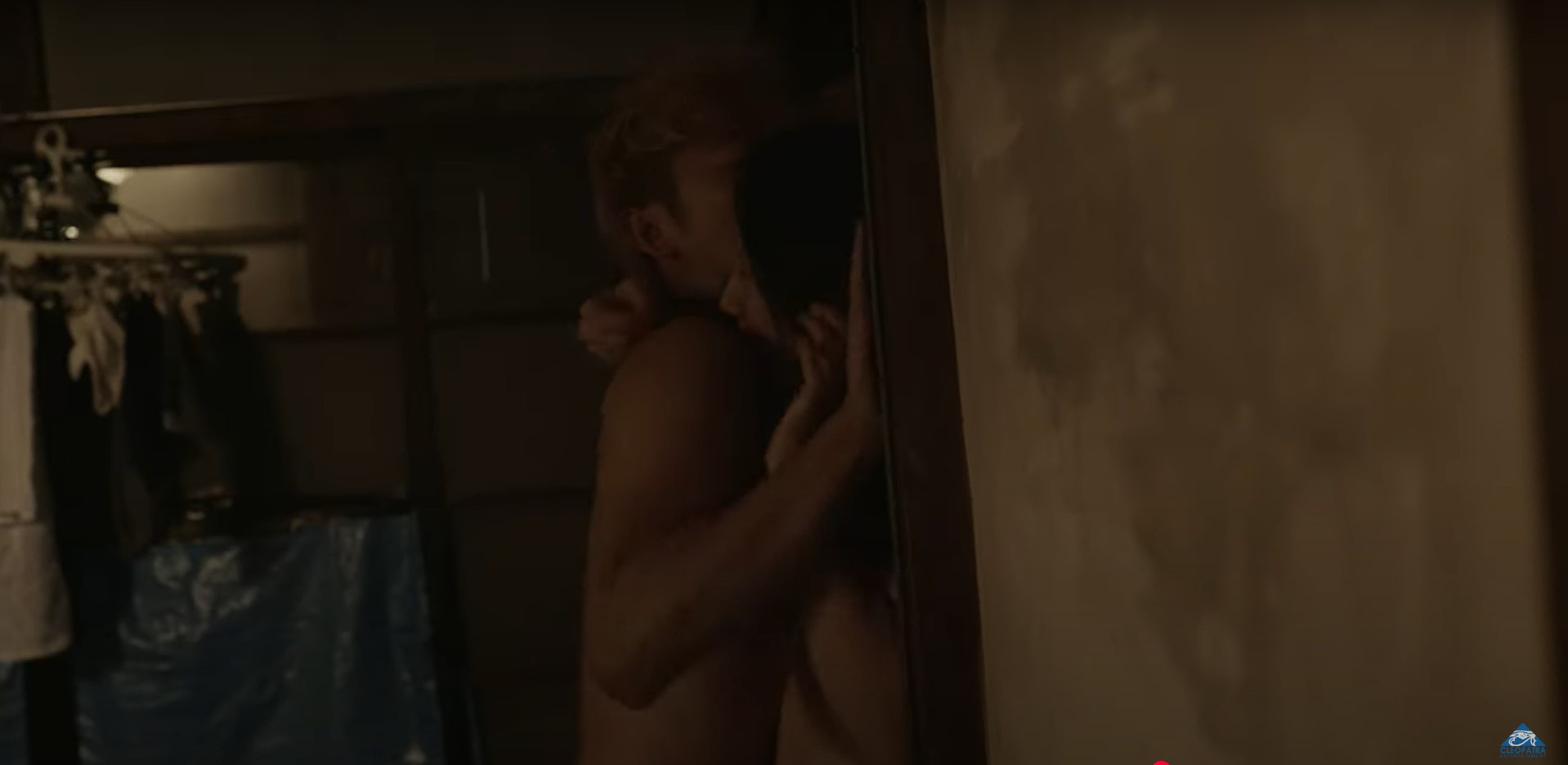
Takahiro Fukuya invests himself full throttle into the role of Osamu Kogure leading to his real life and role to nearly be parallel to each other as Fukuya quits his day job, spends most of his money, and, likely, leads a temporary pauper lifestyle, much like his character, in order to get his vision off the ground and into production.  Fukuya embodies the weak-minded aspects of a fragile delinquent, submissive to a much more apex predator in the recently prison released, escaped parolee Akira Inui (Yôta Kawase, “Slave Ship,” “Maniac Driver”) in a take-all, give-nothing leader position in what Inui considers is his gang, completed by Misa Wada’s objectified into sexual slavery of Koyuki Igarashi.  The pink eiga actress, of such hits as “Corpse Prison” and “Black Tears,”  has lingering anxiety and timorous defensiveness for her character’s subject of sexual and verbal abuse by Inui only for it to transfigure it into a slap-across-the-face affection for the even more cowardly Kogure in an unforgettable sex scene prior to the monstrous hand augmentation.  The second half of the story rather abruptly butts into Korgure and Igarashi’s departure of the city and into more humble means of making a go of their relationship, especially now Igarashi is months pregnant after their slappy-rollick on top of the sleeping bag sack.  Character exposition of the couple’s circumstances at this point is nonexistent as Natsume uses images and exterior shaping scenes to fabricate their current, still poor, state trying to make it work until the surgeon and the gang leader come to collect their handy work.

“The Beast Hand” embarks into different subcategories of splatter subgenre filmmaking.  Natsume certainly pays homage to the Japanese gore-and-splatter films in his own miniscule way but keeps the blood down to the minimal level allowed for labelling as such, but the filmmaker invests into the hardships of the accounted characters without unleashing too many background details or story dynamic particulars to that doesn’t allow audiences to become too involved leaving characters banally wrapped in their strife from point A-to-Z.  Instead, Natsume concenters around two sides of the story;  the first being the elegancy of Kogure and Igarashi’s unlikely and oddly misshapen relationship with scenes of beach walking, comforting, cheap meals in a humble home, and of course, the slap-happy sex scene of two belittled and downtrodden people tying one off in expressive fit of passion while the second part is more tension-riddled hearty with a yakuza hunt for Kogure’s one-of-a-kind beast hand.  Both sides balance awkwardly along a sporadically dotted line of limited detail and time passed but ultimately collide at a culminating point of a beast hand slaughterhouse when Igarashi’s safety boils up the beast from within Kogure, tracking “The Beast Hand” as a horror with to some extent a rivulet of romantism often clunky and riddled with holes. 

Cleopatra Entertainment distributes in association with Reel Suspects the Blu-ray release of Taichiro Natsume’s “The Beast Hand.”  The AVC encoded, 1080p high-definition resolution, BD25 decodes an anemic picture presented in widescreen 1.78:1 aspect ratio.  Visually, “The Beast Hand” has nothing going for it other than a clean experience with no aliasing, minor banding, and other immaterial compression issues.  The lack of color pop and the feather washed grading dampen with a lifeless aesthetic toward a Japanese splatter subgenre that’s literally soaked in a manga style or pop art.  Dialogue renders over cleanly and with clarity in a Japanese Dolby Digital 2.0 stereo that syncs timely with the forced, grammatically errorless English subtitles.  Immersive qualities are limited to the two front channels that are vigorous only during the intermittent action full of Lou Ferringo Hulk snarls and growls when Kogure goes full milky-eyed beast mode and good squishy Foley as stomachs and heads are eviscerated and sliced down.  Bonus features are typical run of the mill for Cleopatra Entertainment with a cache of trailers for the company’s recent releases.  There’s also marketing promo clips for “The Beast Hand” but in Japanese without English subtitles.  The standard Blu-ray Amaray encases a decent, and uncredited, original photoshop illustration that is, however, partly inaccurate, and awkwardly arranged with a beast hand resembling nothing like the body horror hand transplant in the movie.  The cover feels like right off the commercial printer, raw homemade art.  Inside is the same art pressed to the disc with no other accompaniments.  The region free, not rated Blu-ray has a runtime of 77 minutes. 

Last Rites: As far as J-horror goes, “The Beast Hand” has average appeal inside a strung along story and not enough absurd Japanese off-the-wall concepts and violence to stand out amongst the crowded subgenre.

“The Beast Hand” Grabs A Blu-ray Release! Buy it Here!

Next Step in Evolution Leads to EVIL’s War Against the Common Man. “Scanners” reviewed! (Second Sight / 4K UHD)

“Scanners” 4K is Head Popping Good! Buy it Here!

Dr. Paul Ruth is a ConSec scientist, the head of the private contract weapons department on the “Scanner” project.  A Scanner is a highly developed human with psychic and telekinetic powers able to control and damage the minds of others through the nervous system.   Ruth’s latest case is Cameron Vale, a vagrant helped by Ruth to control his self-detriment powers with the use of a scanning suppressive drug known as ephemerol.  When one of Ruth’s past subjects, a renegade Scanner known as Revok, infiltrates and assassinates a live public demonstration of the Scanner project with the intent to wage war on non-Scanners, Ruth’s only hope is to convince to conscript Vale to join the fight and infiltrate against Revok who kills any Scanner who doesn’t join his growing army.  Vale’s search for Revok leads him to learn of a treacherous mole within ConSec and that ephemerol is being weaponized against the normal human race.

On the heels of our Second Sight 4K review of David Cronenberg’s 1979 film “The Brood,” Cronenberg’s following film “Scanners” released two years later in 1981 ups the ante in elaborate special effects and high conceptual themes twirling around in a bowl of body horror soup and is now also available on 4K UHD from the UK Second Sight label!  Like “The Brood,” Cronenberg writes-and-direct a dysphoric film in his birth country of Canadian, per his normal track record of principal production countries, specifically shooting in in the urban and greater areas of Québec, Canada.  The first film of a trilogy, to which Cronenberg did not return to direct the subsequent sequels with both films released a decade later in 1991 and helmed by “Screamers” director Christian Duguay, is a production of the  CFDC (Canadian Film Development Corporation), Filmplan International, and Montreal Trust Company of Canada with Pierre David and Claude Héroux both returning from “The Brood” as executive producer and producer, respectively. 

The face of Scanners has been and always will be Michael Ironside, included on most poster and home video release stills and artworks of a flaringly distorted Ironside as Revok deep in a frighteningly milky-white eyed scanner turbulence.  The “Total Recall” and “Starship Troopers” actor has a face the camera loves, especially in an antagonistic role with Ironside’s gifted devilish grin, dagger eyes, and sarcastic stoic expressions.  However, he is not the heroic lead of Cronenberg’s “Scanners.”  Ironside is not even in the top three headlining credits.  That foremost distinction is consumed by Stephen Lack (“Perfect Strangers,” “Dead Ringers”) in the Cameron Vale role and Lack’s performance is indicative of his name in a completely overshadowed protagonist role.  Lack’s monotonic bordering dangerously to catatonic presence is swallowed up by Ironside who has fewer scenes but instills punchier passion toward his character’s rebellion against humanity cause, plus the contour control over his mannerism and expressions are impeccably cinematic  There are other actors credited ahead of Ironside, beginning with the greatly dramatical Patrick McGoohan (“Escape from Alcatraz”) as the pro-scanner ally Dr. Paul Ruth whose commanding the Vale assignment, “The Clown Murders’” Lawrence Dane as a traitorous ConSec company man Keller in Revok’s pocket lining, and “The Psychic’s” Jennifer O’Neill as fellow pacificist scanner and Vale love interest Kim Obrist.  Each actor finds their individual, attributable, character voice while giving into the required performance with commitment, a sentiment that was not shared by Lack in a strong leading man contender against the forces that face him or scan his mental space.  “Scanners” rounds out the cat with Robert A. Silverman (“The Brood,” “Jason X”), Mavor Moore (“Heavy Metal”),  Fred Doederlein (“Shivers”), Adam Ludwig (“Short Circuit 2”), and Victor Desy (“Rabid”) with that iconic head explosion scene.

To follow up “The Brood” almost right on its heels with “Scanners,” David Cronenberg’s creative synapses were just thunder stroking on all cylinders with ways to evolve mankind into next level grimdark science fiction.  The simple premise of the advanced human condition sparking a potential war between normal man and Scanner man with a private weapons developer in the middle, perhaps inadvertently or intentionally coaxing a new breed of man, is elevated by the special effects of Gary Zeller (“Visiting Hours, “Amityville II: The Possession”) and the makeup alley-oop by Dick Smith (“The Exorcist”) to give audiences those head-exploding, vein-popping, fire-starting special effects that are sear so well into the mind they’re virtually unerasable from the mind, as if real life scanners were implementing the reel into the occipital lobes themselves.  Plot devices like these inarguably saturate the cloak-and-dagger, on-the-run, and species-eradicating storyline with leadup anticipation, building suspense through the truth and lies of Vale’s assignment as well as Vale understanding and, ultimately, accepting his gift rather than seeing it as a burden or a blight to his being.  Unlike “The Brood,” “Scanners” leans more into the physical method of effects with not only the pulsing veins and the white contact lenses but Cronenberg amps up the pyrotechnics with violent and fiery explosions, both of which do a number of the body with blunt invisible force ravaging soft tissue, and also sets ablaze characters’ specific, isolated areas for visual awe and a presentation of a whole new possibility dimension plane of the mind and body that can create, endure, and eventually destroy.   

“Scanners” rounds out the pair of Second Sight’s David Cronenberg releases onto 4K UHD, in conjunction with “The Brood.” The HEVC encoded, 2160p ultra high-definition, BD100 houses the director approved 4K restoration transfer, presented in Dolby Vision HDR10 and in a widescreen 1.85:1 aspect ratio. Previous HD releases favored a slightly anemic image with a tilted color grading that never approached the aesthetics of the cinematic era. Second Sight improves on this with a present in time natural grading true to the late 70s into the early 80s. Healthy, organic grain filter through with an agreeable measure, never overtaking the details that effect upon texture and substance, such as from the massive head explosion with all the intricate gory bits of hair and flesh flying splattering about make for ideal visual immersion to the more macrolevel of inside circuitry when Vale enters the computerized nervous system through scanning. Skin tones render over organically with no flashes of a slightly orange tinge as in previous releases, corrected to overall completed neatness on the finer points. An English DTS-HD 5.1 master audio and a LPCM 1.0 mono consummate the release with fidelity honoring mixes. The surround sound offers a constructed immersive dynamic riddled with explosions and a feverish Howard Shore score engulfing the echoing of the scanner waves to denote the telekinetic or psychic use, but the mono track offers something far greater than any retroactive designed immersion track could offer, a genuine, unforced mix. Both tracks offer clean, robust dialogue with a clarity to match. English subtitles are available on both. Special features include a new audio commentary by Canadian film writer Caelum Vatnsdal and a second audio commentary by film academic William Beard. If comprehensive interviews straight for the horses’ mouths are your thing, than Second Sight has you covered with new and archive interviews with Stephen Lack My Art Keeps Me Sane, Michael Ironside A Method in His Madness, Lawrence Dane Bad Guy Dane, cinematographer Mark Irwin The Eye of Scanners, composer Howard Shore Mind Fragments, executive producer Pierre David The Chaos of Scanners, makeup artist Stephen Duplus Exploding Brains & Popping Veins, and with makeup effects artist Chris Walas Monster Kid. A new visual essay by Tim Coleman Cronenberg’s Tech Babies cabooses the special features. Encased in a traditional back UHD Amaray, the new artwork also sports a prominent and looming Michael Ironside as a raging scanner Revok but now Stephen Lack has presence space with his own iconic and disturbing moment from the film now on the front cover, as the little spoon of course. The companion standard Second Sight release of “Scanners” is UK certified 18, has a runtime of 103 minutes, and is region free!

Last Rites: “Scanners” never looked so good. An exceptional inception of a release from Second Sight Films that continues to aim high and raise the bar with every title they touch, like King Midas without being cursed by their success.

“Scanners” 4K is Head Popping Good! Buy it Here!

Rage EVIL Leads to A Legion of Drone Dwarfs! “The Brood” reviewed! (Second Sight / 4K UHD)

“The Brood” Available Now from Second Sight!

After a series of mentally abusive behavior, Frank Carveth’s wife Nola resides under the unorthodox psychology of Dr. Hal Raglan whose controversial impersonation techniques to break down his patients’ dissociative psychological hangups and destructive blocks.  After months of therapy and witnessing Dr. Raglan’s methods in action, Frank is ready to pull the plug on the doctor’s sideshow sessions he deems are doing more harm than good when his daughter shows signs of physical abuse after a visit with her mother.  The prolonged verbal bout to get his wife out of Raglan’s care leads to Frank confiding in Nola’s mother who is found brutally murdered soon after.  When Nola’s estranged father comes into town to oversee the burial arrangements, he’s also brutally murdered.  Frank begins to connect pieces, theorizing that Dr. Raglan’s procedures and the murders may be linked and as he investigates further, the truth is more terrifying than he could ever imagine. 

Surging with emotional turmoil through a bitter divorce with ex-wife Margaret Hindson, Canadian body-horror director David Cronenberg pulled the rancorous inspiration from that turbulent time to write the originial screenplay for “The Brood,” a 1979 released thriller between an estranged couple, the effect of their ascending troubles upon their only child during the separation, and the sort of radical and systematic behaviors and practices used to reform a relationship bond that actually divides the emotional expanse even further.  Sprinkle a little of the unknown and grotesque abilities of unnatural corporeal world in there and you have yourself one hell of a dysfunctional and undomesticated horror only the unconventional David Cronenberg could conjure.  “The Brood” is produced by Claude Héroux, who would go on to produce Cronenberg’s next series of films, “Scanners” and “Videodrome,” and the Ontario filmed production is a studio venture from the CFDC (Canadian Film Development Corporation), Elgin International Films, and Mutual Productions.

Art Hindle is in the role of Frank Carveth, a father initially skeptical and frustrated with his wife’s supervised treatment and care.  The “Black Christmas” and “Invasion of the Body Snatchers” actor Hindle plays the role of a hinged investigative husband-parent involved into something far more unbelievable than initially imagined.  Next to his on screen dazed and mentally tarnished wife by Samantha Eggar, of “The Exterminator” and “Demonoid,” Hindle enacts normal responses that carry over into extreme situations when those around him – his mother-in-law (Nuala Fitzgerald, “Obsession”), his father-in-law (Henry Beckman, “Side Roads”), and his daughter’s teacher (Susan Hogan, “Phobia”) who might have had a little something-something with while on the rocks with the misses – dies a violent death at the hands of kid-sized mutants that resemble, partially, his own daughter Candace (Cindy Hinds, “The Dead Zone”).  As Nola Carveth, Eggars is only present in a few scenes alongside Dr. Raglan, played by the formidable British actor Oliver Reed (“Paranoiac,” “Gladiator”), as a staring into space, emotionally compromised woman struggling to cope with her past that makes her angry and upset and, in turn, makes her inexplicably conjure do-bidders in the birthing means of advanced evolution or in a parallelism to eusocial insects, like bees or ants.  Reed is the monkey in the middle of all of this between fending off Frank Carveth who challenges the results of his unorthodox psychological methods while also using those methods to unearth the root cause of Nola Carveth’s strange and unusual behavior and, eventual, psychic abilities.  Reeds delivers his typical stoic indifference which makes him ideal for a confident character of the scientific community eager for results rather than feeding his motivations with emotional fodder by empathizing with Carveth’s concerns.  Gary McKeehan (“Rabid”) and Robert A. Silverman (“Naked Lunch”) costar.

In his 50-year plus career, David Cronenberg has evolved in style, substance, and story that dip into more of alternate universes and deliver new ways to blend the future into an organic composite with commercial and social sub context.  While technology and personal and professional growth have developed the director into what he has accomplished and known for today, especially on the verge of his latest release with the living and dead connection theme in “The Shrouds,”  the core of what David Cronenberg does best and still does today has an etiology leading back to his earlier work and “The Brood” is definitely an archetype of his niche.  Cronenberg works the narrative up to his reveal of body horror, and “The Brood” is dangerously on the edge of being atypical, subjecting audiences to more of a buildup in the story and the delimitation of character  disclosure without a steady course of the maladjusted, mutated or modified human body as the villain or the escape, only for that theme to be quasi hinted and then unveiled at the end in a shocking reveal.  “The Brood” plays more of the slasher tones, using the children, dwarfs, or however you want to describe the little, mutant minions to be unknown villain tropes, even when one is laid up on a morgue slab for examination of its biology, or lack thereof.  Cronenberg’s directed ambiguity tees up one of the best endings of his career and, perhaps, even horror cinema as “The Brood” is queen sized stomach-churner, literally.

David Cronenberg’s “The Brood” arrives in 4K on a Ultra HD Blu-ray from UK boutique label Second Sight Films.  The BD100 is HEVC encoded with a 4K resolution or a pixel count of 2160 with Dolby Vision HDR10 and presented in a widescreen 1.85:1 aspect ratio.  On the back cover, the 4K restoration is approved by David Cronenberg.  There’s definitively a more positive treatment of the restored transfer that brightens with a slightly tweaked color grading compared to other DVD or Blu-ray releases, improving delineation as well as rectifying intended details to burst through what’s been long frustrating by a darkened wall of low-resolution definition.  Retaining and sustaining cinema coarse grain, the picture looks and feels incredibly natural without the presence of compromising touchups and smoothing overs that do more harm than good in the plastic-like approach to restoration.  The UHD reinforces the coloring with vibrant richness and range, boosting the once little Canadian film that could into an expensive-appearing optical overhaul that puts to shame previously shelved videos.  Audio fidelity is too retained with a LPCM 1.0 mono that although funnels through a single output is more than an adequate mix all in thanks to the competent sound engineering of Peter Burgess and team to amalgamate recorded sound and post-production ADR into a brawny singular unit that meshes nicely.  Dialogue foots the bill as a clean and clear presentation, the ambient sound design renders distinctly over without ambiguity, and longtime David Cronenberg collaborator and friend Howard Shore conducts an orchestra score that breaks through and keeps the course with an unforgettable amount of tension build.  English subtitles are available.  Special features are aplenty with a new audio commentary by film critics and historians Martyn Conterio and Kat Ellinger, a second commentary with film academic William Beard, interviews with actors Art Hindle and Cindy Hinds moderated by Fangoria’s editor Chris Alexander Meet the Carveths, an interview with executive producer Pierre David Producing the Brood, interview with cinematographer Mark Irwin The Look of Rage, interview with composer Howard Shore Scoring the Brood, an interview with actor Robert A Silverman Character for Cronenberg, a new video essay by film journalist Leigh Singer Anger Management: Cronenberg’s Brood and Shapes of Cinematic Rage, and an archived David Cronenberg interview The Early Years.  The standard Second Sight release comes in the traditional 4K UHD black Amaray case with new unnamed, unsigned illustrated cover art.  The UK certified 18 film is presented region free in this release and has a runtime of 92 minutes. 

Last Rites:  Cronenberg’s play on the word Brood is next level genius with litter rage as a result of mental health and a broken home.  The director’s filmic roots have proved time-and-time again his mastery of moviemaking as his body horror and thought-inducing stories, intermixed with social commentary, are complex visual and narrative devices braised an organic edge. 

“The Brood” Available Now from Second Sight!