Never Tour Mistakenly into an EVIL Murder Bar! “La Petite Mort” reviewed! (Unearthed Films / Blu-ray)

“La Petite Mort” is Orgasmically Gory and on Blu-ray!

Vacationing to Mallorca should have been a relaxing getaway for Simon, his blind girlfriend Nina, and their longtime friend, Dodo, but their flight layover in Frankfurt leaves down idle town to explore the city that’s only a mere two hours from home. Tension between them begin to bubble to the surface when uncertain emotional steps to take relationships to the next level arise and they become inadvertently scammed by a local grifter. Exhaustion sets in and forces them to take refuge in a local dive bar with a specialty for S&M play. The bar is actually a front for the Maison de la Petite Mort, an underground snuff house owned a sadistic woman named Maman who livestreams kink-murders and sells hapless victims to wealthy businessmen with whimsical and perverse deviancies. The flight to Mallorca will be indefinitely delayed as the three friends are now a part of the bloody basement decor awaiting the horrors before them.

“La Petite Mort,” translated from French as literally the little death, is also known as the post-orgasmic sensation, such as a weakness or loss of conscious, that serves as an analogy to death. The phrase is also the title of the 2009 torture-gore film written-and-directed by the German-born Marcel Walz more than a decade before the formation of his now Neon Noir production company. Walz, who later in his career went on to remake the Herschel Gordon Lewis 1963 film, “Blood Feast,” blossoms as a torture porn filmmaker as Walz’s directorial catalogue contains more blood than a blood bank and often stretches the subgenre range of plot machinations from cannibals to dark web to snuff. Made on a few thousand-dollar budget and shot in a real sex club in Mannheim, Germany, “La Petite Mort” touches upon all three plot devices to create a dungeon of splatter and sadism using elements of an unsolved true crime case of a couple gruesomely murdered in an underground murder house as the narrative base. Before Neon Noir, Walz and filmmaker Michael Effenberger, director of “Tortua,” formed Matador Films that became the company behind “La Petite Mort” with Thomas Buresch (“Unrated: The Movie”) and feature actor and director of photography, Andreas Pape (“Toxic Lullaby”) producing.

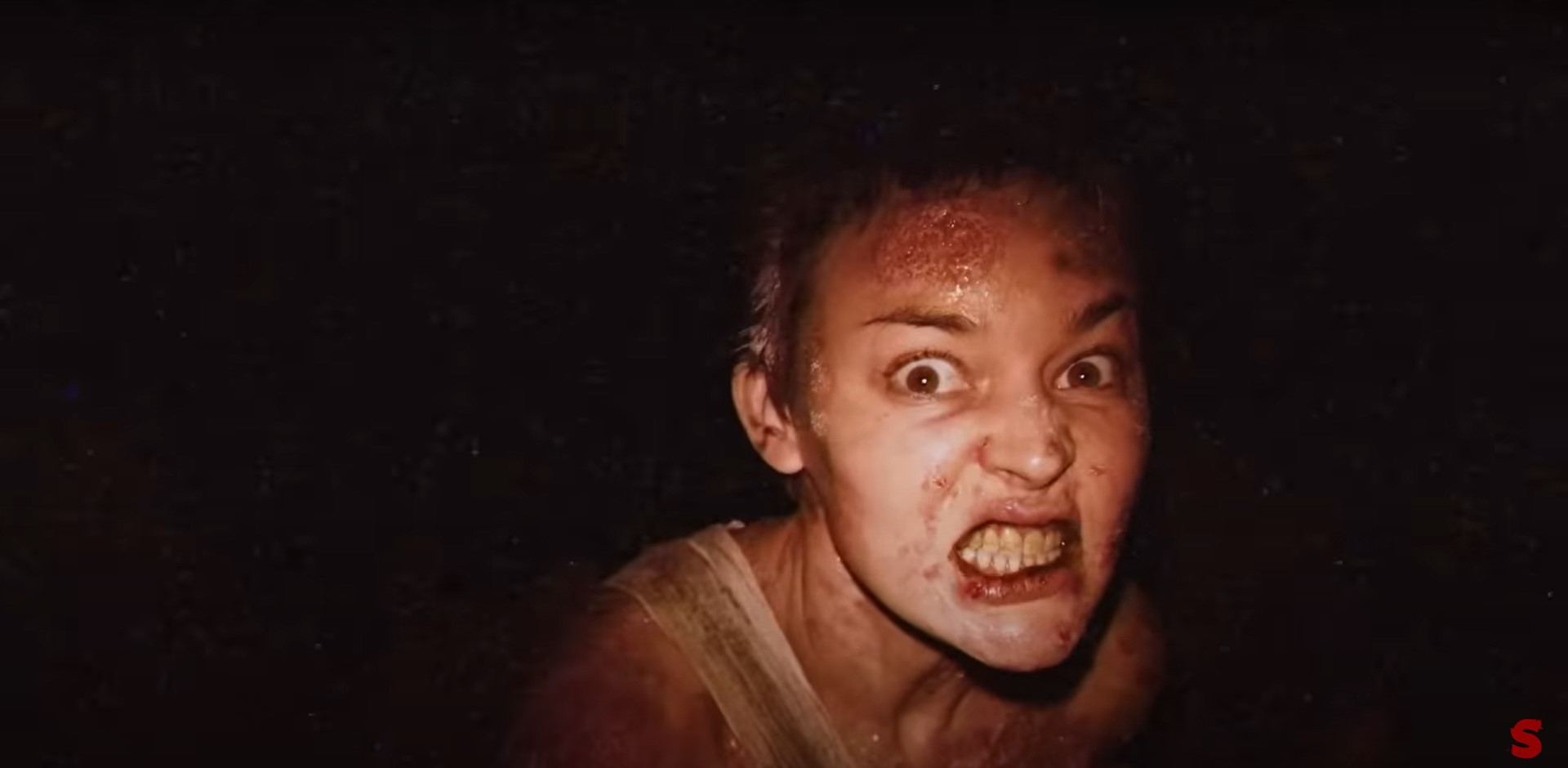
Films like “La Petite Mort” is a special breed not because of the torture and gore-porn element, which can be an acquired taste for consumers with dark thoughts, fantasies, and morbid curiosities (I fall into the latter category if you’re wondering), but rather the story caters to no singular principal lead nor does is the focus on an ensemble cast.  “La Petite Mort” transitions from one group, the naïve backpacking travelers, to the S&M snuff-makers in a flip-flop of point of view and storytelling.  All the relationship complexities between the out of concern love from Simon (Andreas Pape) to his even keeled blind girlfriend, Nina (Inés Zahmoul, “La Isla”) as well as the insignificant tiffs and spats between Simon and friend Dodo (Anna Habeck, “Popular”) to see who is in Nina’s favor are quickly swept aside when the trio is trapped and tethered to the S&M spider web of Maman’s Maison de la Petite Mort.  While the three travelers produce a mild interest spun out of frivolous dramatics to the like of the normal human population and very much up played by Walz for that very purpose to produce stark contrast against what’s normal for sadomastic pleasure-seekers, Maman, the orchestrator of pain and profit, is the most earnest of principals with a crone-like presence, played inexorably and ruthless by French punk-goth singer Manoush.  The certified gypsy and former bodybuilder has made a name for herself in a plethora of extreme, Germanic horror pictures over the last decade, but “La Petite Mort” came early in Manoush’s career and is exhibits why she’s so good at horror, especially at the sadism brand.  Maman’s schadenfreude business employs two lesbian dominatrixes, Dominique and Angélique, with strong-stomachs and a healthy bloodthirst.  The beautiful femme fatales serve Maman’s unquestionably, almost mindlessly, that only glimpses into possibilities of how the two women became betrothed to do Maman’s bidding.  Annika Strauss, who’s been in the screen queen business about as long as and has starred alongside with Manoush on a number of films, is also a Marcel Walz regular casted actress who fits and transforms into just about every character under the black sun of ghoulish and macabre material thrown her way.  As Dominique, Strauss is provided more depth to why and how the brunette basket case has come under Maman’s greedy and depraved thumb as the actress shows some slither of concern for the captives while explaining she had no choice just they like them and exhibiting more reserve than her blonde counterpart Angélique (Magdalèna Kalley, “Violent Shit 4”) when the cameras are rolling.  Conversations rooted into provocative thought, sympathy, or reason are often few and far in between the constant pleas for help and the screaming matches of pelting threats.  “La Petite Mort” finalizes the cast with Martin Hentschel (“Zombie Reanimation”), Tanja Karius (“Necronos”), and Thomas Kercmar (“Space Wolf”) as Klaus der Kobold, a Napoleon-sized elitist wealthy enough to buy people’s lives and enjoy seeing them horrifically mutilated.

One scene overwhelms the diagnostic side of my brain and that is why Maman is torturing Dodo with needles as Manoush delivers a surprising genuine villainous monologue about sadomasochists being judged by normal people and how her character has a liberated, uninhibited sexuality in a moment that is a powerful argument in favor for sadomasochism to exist without shame.  Thinking about this, I’m not aware of any publicized S&M clubs, especially those that aren’t criticized for being deviant, perverse, and secular.  After that one moment of vulnerability, “La Petite Mort” turns into a choke-down bloodbath with some great and some not-so-great special effects by one of Germany’s gore film greats, Olaf Ittenbach, director and F/X artist of “Premutos:  The Fallen Angel” and “Legion of the Dead.”  Ittenbach brings me to another overwhelming scene, one that churns the contents of your stomach, involving a meat grinder, a hand, and a chalice.   “La Petite Mort” has other notable grisly moments of scalping, castrating, eye-plucking, and disemboweling, all of which are in great gooey-gory detail.  What takes away from the gore scenes is Walz fluttering effect or grindhouse-esque edited framed overlay that, in my wildest guess, is supposed to enhance the extreme acts of violence, torture, and death in conjunction with composer Michael Donner’s industrial rumble and pulsing synth score. Instead, the effect becomes nothing more than a cinematic nuisance, an eyesore that dilutes Ittenbach’s best handywork because that scalping scene is the chef’s kiss of tactual realism. Based on a true story that I can’t seem to find any record of, “La Petite Mort,” for a brief few minutes, becomes a promulgating champion for alternate sexualities and is also a showcase for Olaf Ittenbach to shock and disgust but for what the feature is worth, “La Petite Mort” offers only emptiness in both character conviction and story narrative.

A fitting entry into the shockingly weird and grotesque “Unearthed Films'” independent film catalogue, “La Petite Mort” arrives onto a high definition, 1080p Blu-ray home video. Presented in a 2.35:1 widescreen aspect ratio, Walz bookends his callous-cladded cult film with a yellowish-tan tint while the girth of the story is laced with more gel coloring under no hinderance of tint. Low lighting with low contrast markers, mixed with tropical-warm gel coloring and strobe flashing fabricates the sunless and dank murder basement but any exterior shots, even the bookend act one and act three are rendered with poor resolution for digital recording. Only a single audio track is available with a German LPCM 2.0 with burned-in English subtitles and what’s rendered is likely the best quality to get from the masters from the lossy format. Dialogue is often unrefined, and the levels vary, but for the most part clean and free from obstruction. The track has limited ambience and harps heavily on the gory moments while Michael Donner’s dark industrial score takes the brunt of the overall soundtrack. Subtitle synchronization varies as well with millisecond flashes of translations that are impossible to read or even pause perfectly on, but the translations appear flawless and consolidated from the dialect for easy reading. The Unearthed Films’ bonus content is aplenty with a new commentary and interview with director Marcel Walz. Also included is a feature-length making of “La Petite Mort” with raw handheld camcorder footage, shot by The Bad Boy character in the film, behind-the-scenes footage, and even some 16mm footage that go reel deep into the effects and life of independent filmmakers. An archived interview with special effects artist Olaf Ittenbach, deleted scenes, photo gallery, teaser trailer, official trailer, “La Petite Mort 2” trailer, and the VHS intro that’s essentially a Marcel Walz introduction of the VHS home video release round out the bonus content. The physical attributes are a clear, Blu-ray snapper case with reversible cover art with the inside sleeve containing a more graphic torture not suited for retail shelves. The region A encoded, 77-minute feature is not rated. If invested for the kills, “La Petite Mort” pleases to overindulge the desire and is a solid first torture-porn effort from a then young Marcel Walz who continues to rise in the niche market.

“La Petite Mort” is Orgasmically Gory and on Blu-ray!

Biding Time Can Be Dystopianlly EVIL and Claustrophobic. “Tin Can” reviewed! (Dread / Blu-ray)

“Tin Can” on Sale Now at Amazon.com!

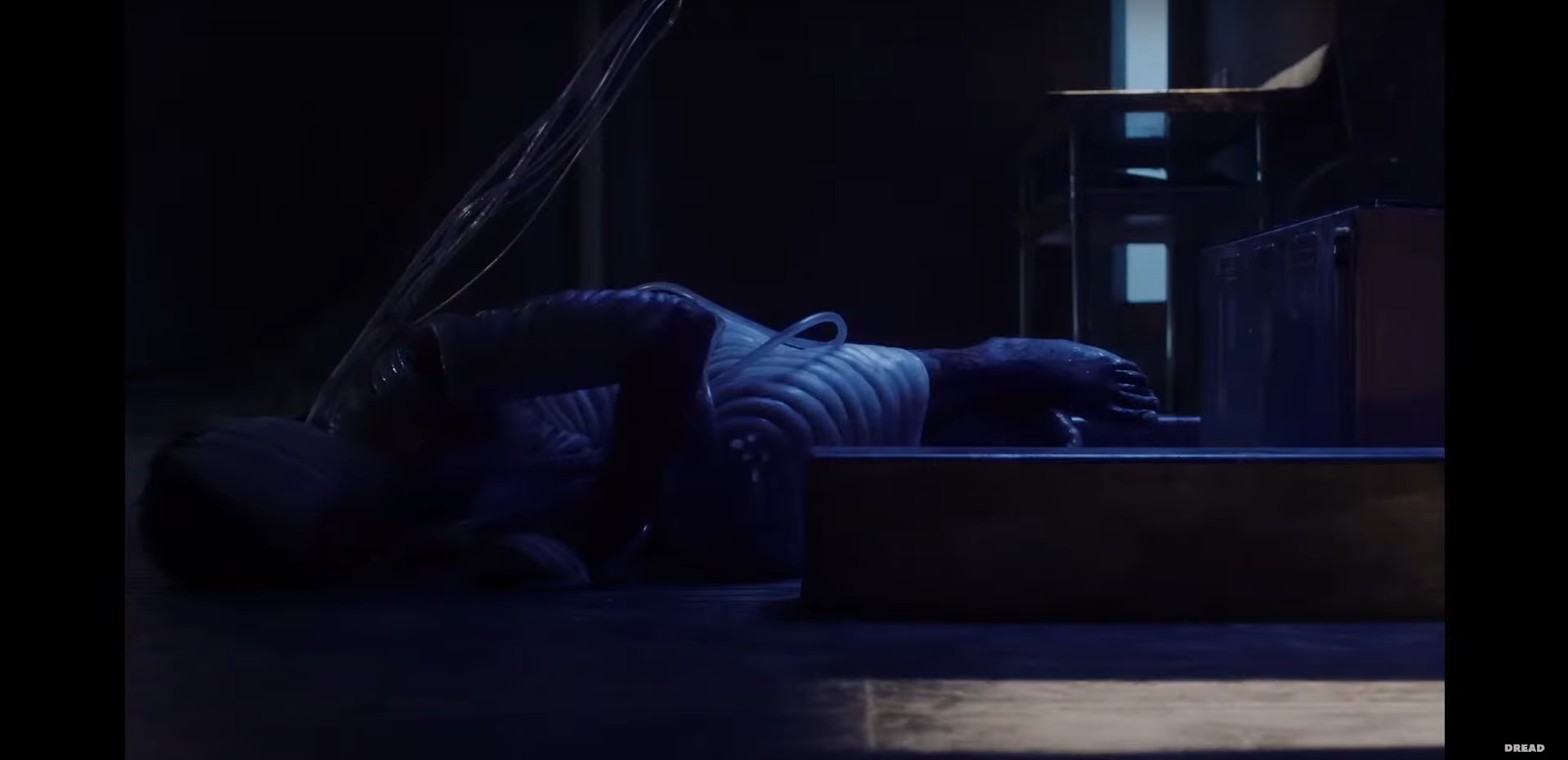
A viral fungus pandemic has plagued the world.  Fret, a parasitologist, has worked toward a cure to stop the spread of a virus that grows Clavaria-like basidiocarps from inside out the body that’ll eventually enclose the victim to death in an organic cocoon.  Before Fret can develop and distribute the recently discovered global cure for the virus, she awakes in a confined metal container constructed to suspend life duration for those who contracted the illness.  Confused and disoriented, Fret learns she’s not alone as others awake around her and able to talk with through the containers, including your infected husband John.  Unaffected by the virus and believed to be encapsulated in error, Fret works desperately on an escape from her well-intended prison in order to save humanity before it’s too late.   

By now, most of us can relate to a pandemic-driven storyline because, well, you know, COVID.  The 2020 sci-fi body horror “Tin Can” is no exception despite having been filmed prior to all the pandemic induced deaths and lockdowns.  Perhaps premise creator and director Seth A. Smith had a little foresight into coming events that inspired the Canadian project co-written with Darcy Spidle.  “Tin Can” is the fourth pen-to-paper collaboration between Smith and Spidle who previously completed two feature films (“Lowlife,” 2010 / “The Crescent,” 2017) and one short (“The Brym,” 2016) along with “The Willows,” the duo’s fourth feature film and revolving once again around preternatural events, that is currently in pre-production. For “Tin Can,” Smith and Spidle entangle a science fictional, dystopian, Hell in a handbasket world with selfish motives that outweigh saving the world. Seth A. Smith’s Nova Scotia based production company, Cut/Off/Tail Pictures, develops the story produced by company producer Nancy Ulrich and financially backed by the executive producing team of Michael Baker, Marc Savoie, Tim Lidster, and Rob Cotterill (“Possessor”).

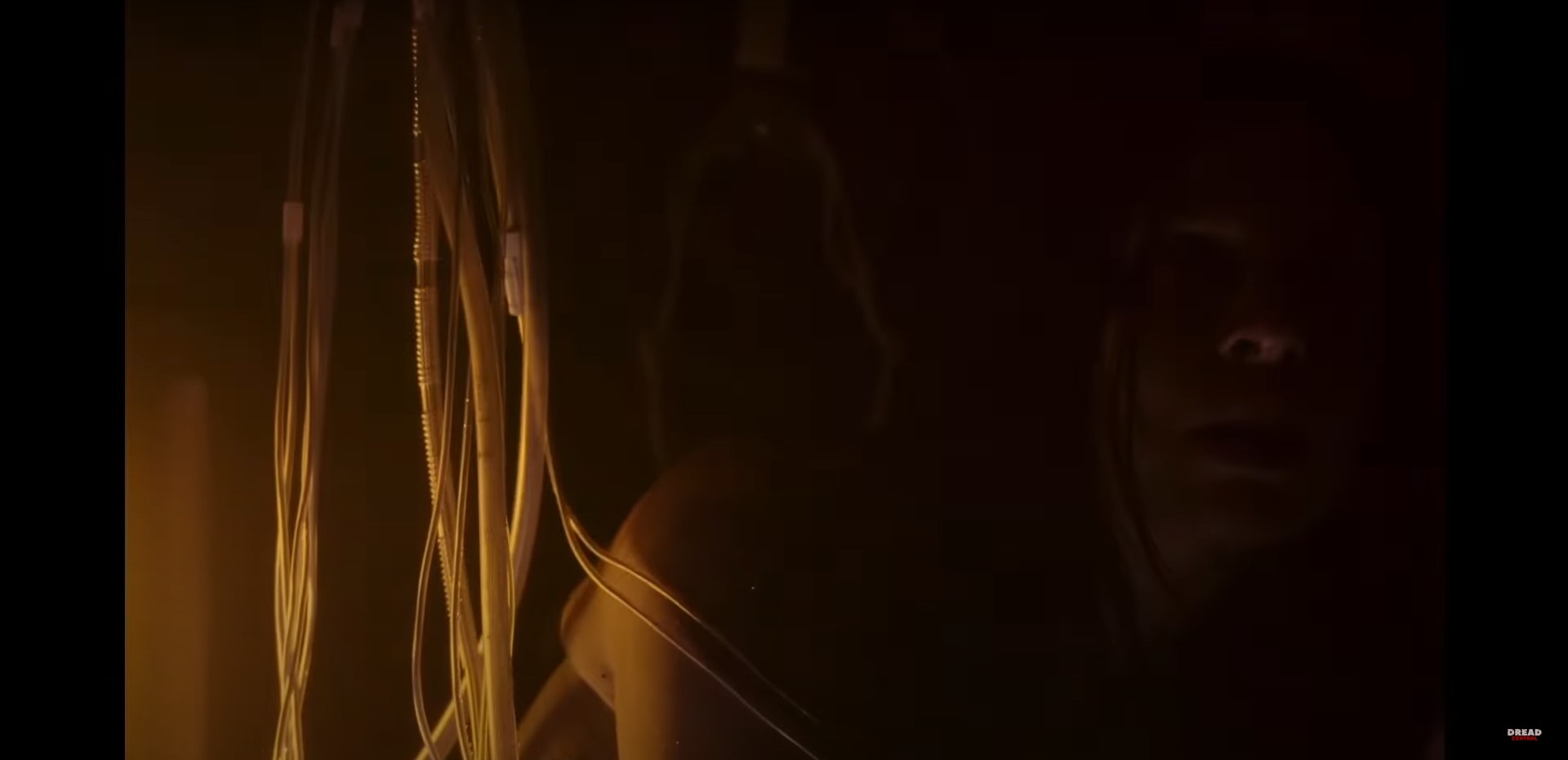
“Tin Can” might evoke a sense that one main character will be the focus point for the entire storyline, such as with “Buried” that stays put on the singular person trapped in this very tight, very claustrophobic-inducing soda can. Yet, that is not such the case with “Tin Can” that does circle around a centerpiece character in Fret (Anna Hopkins, “V/H/S/94”) but the cure-all scientist waking up in a life-extending canister while on the edge of saving mankind isn’t alone. Surrounding Fret are strangers, colleagues, and even her husband, some of whom, such as her husband, are suffering the protruding fungal fairy fingers of the virus. Anna Hopkins fields a hefty, difficult role after an initially a humble beginning as a scientist that more so-or-less feels the pangs of a low rent indie, but as Hopkins’ Fret transcends time by waking up weeks (or maybe months…years?) later, her environment becomes frantically imprisoning. The tight confines of the titular object with medical tubes dangling from the ceiling, a Tracheostomy tube down the throat, a malfunction video screen, and mysterious bars that light up one-by-one set a stronger stage for the actress to be put up against and Hopkins nails the mindset of a woman vehement and determined with escape to not only save her own life but the life of billions across the planet. In the cans beside Fret, providing Hopkins with more serve-and-volley fuel, is her husband John (Simon Mutabazi) inflicted by disease but becomes more than just a victim, Wayne (Michael Ironside, “Starship Troopers”) who I couldn’t really grasp as a component in the story as he’s like a project financier in the tin can project to save his own skin from being reskinned by fungus, Darcy (Amy Trefry) as a colleague-friend of John and Fret, Whistler (Tim Dunn, “The ABCs of Death”) who is the most interesting and weird doomsayer of the bunch, and a fist banging mute (Sara Campbell) also inflicted. For much the back-and-forth in the cannister talk, the dynamic is more of a talking head roundtable of initial discussions of popping open a small air vent so they sce outside their enclosed cell and eventually lead to more depth and deception that narrows the story with the what, when, why, and how.

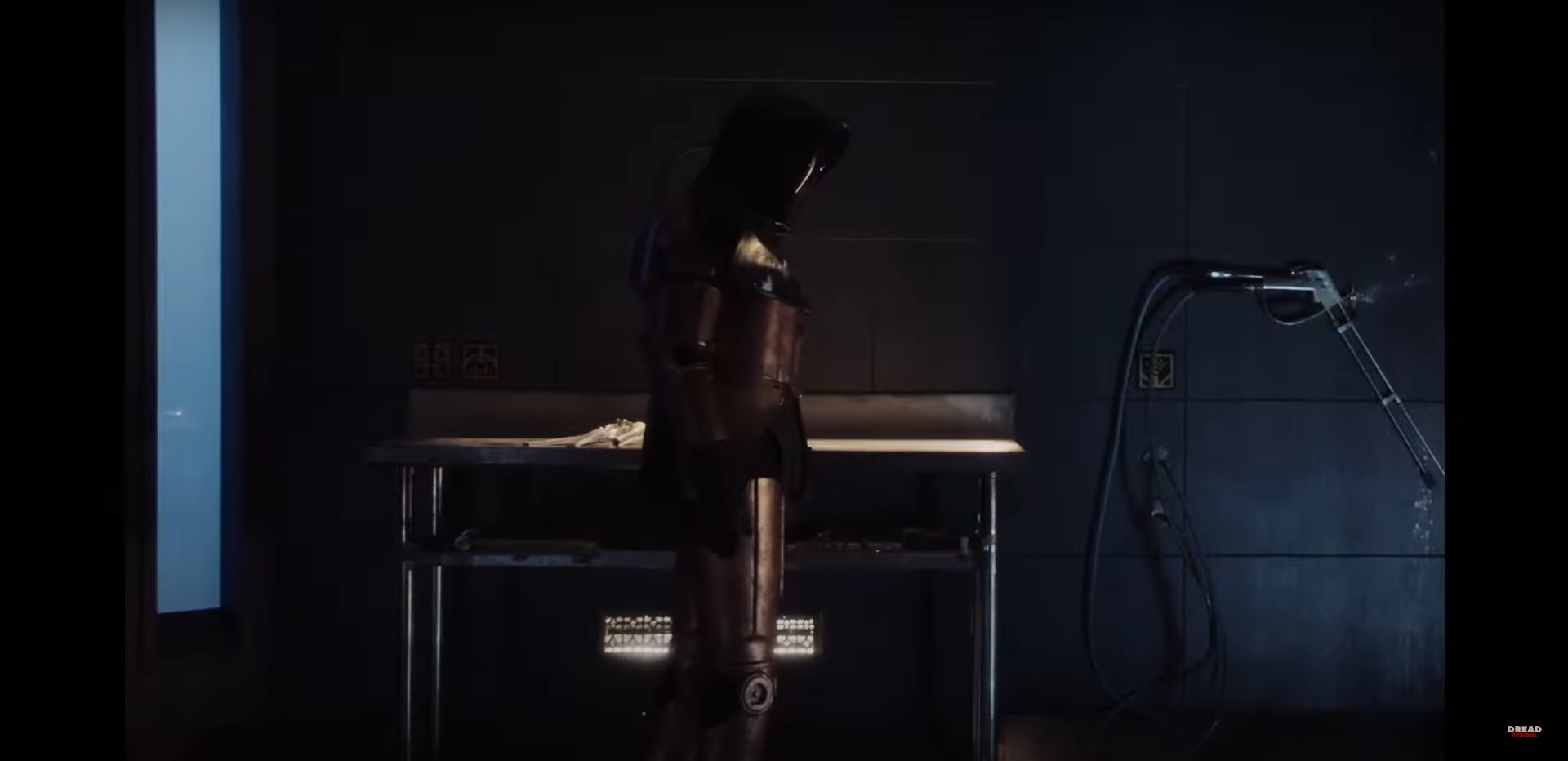
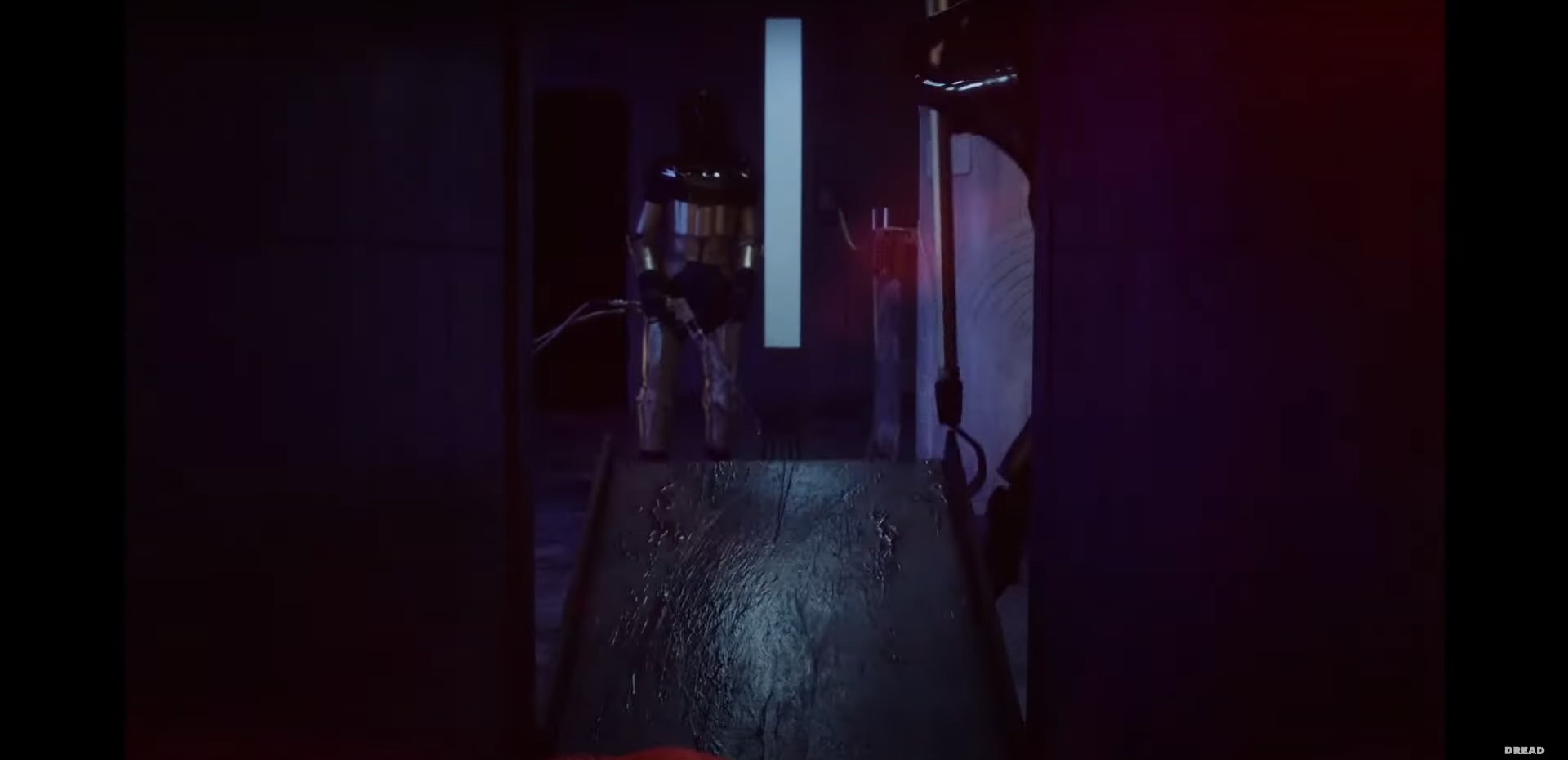
“Tin Can” aspires to be a chaptered three-act conundrum. I don’t mean that in a negative perspective. What Smith brings into existence is a polished independent film of Cronenberg-esque and has ensuing weirdness act-after-act only paralleled by the double-crossing exoneration or a retaliating impugn of keeping one alive after being severely scorned. The first act plays out like the world of today, a devastating pandemic that has ravaged the human population. The second act unsheathes the mystery of waking up inside the tin can device with people she knows and is eager to discharge herself from a capsule that’s supposed to sustain her life. Then, the third act rolls in, the third and final chapter, and time has officially been corrupted as we know it with a futuristic beings suited in various colored alloys. Alloys are definitely a theme beginning with title “Tin Can.” Fret discovers a cure for the diseases by commingling it with an alloy and each containment artificer is suited in a different metal and are credited as Copper, Gold, Silver, etc. What Smith could be suggesting is the element that could cure us could also incapacitate or, even worse, transfigure our existence with a lifesaving, yet life altering, solution to the extreme. Cinematographer Kevin Fraser industrializes the look of “Tin Can’s” existential view and is a glorious rusty bucket of a cheerless life. If Smith wanted to convey a life of nihility and automaton, Fraser nailed down the oxidation state. “Tin Can’s” a cold hard look at the cost of saving the world that, in the end, might not be worth saving.

A part of the Dread Central at home release line, “Tin Can” arrives onto a high-definition Blu-ray distributed by Epic Pictures and MVD Visual. The region free Blu-ray is presented in a throwback 3:2 with letterboxing and has a color reduction implemented to give it that demoded depiction. Image looks amazing without an inkling of any kind of compression issues especially with many of the scenes shot in darker and bleaker circumstances. Fraser delivers some awe-inspiring, creative angles that produce a how-did-they-do-that response to get a 360-degree single take of Anna Hopkins in the cannister or the rotation of a limp body on a large wheel door. The Dolby Digital 5.1 English audio mix has solid sound design as more than half of the picture is off the principals talking through their metallic cylinder containers that created a muffled depth and low range flickering in the backorder, the mechanized hum mixed with scraping metal, does wonders to sell the dystopian effect that borders steampunk. No inherent or noticeable flaws in the final product. English subtitles are available. Special features include a commentary with Seith A. Smith, The Last Bell Doe Toll – the making of “Tin Can'” exhibits the construction and creation of the displaced subsequent future, how to achieve a few of those crazy Kevin Fraser shots, and provide cast and crew interview insights, and the bonus content rounds out with two music videos – The Last Bell Does Toll and ZAUM – The Enlightenment (Part I). “Tin Can” runs at 104 minutes and is not rated. “Tin Can” is ingenious on a level many will not fully understand and, frankly, I barely can tether my impression and have it make sense, but there’s a unique ore core to this science fictional, ill-fated fantasy that can be so odd at times you can’t help but not look away.

“Tin Can” on Sale Now at Amazon.com!

Starve EVIL With Unseen Faith. “A Banquet” reviewed! (Second Sight / Blu-ray)

After the long-term care of her terminally ill suffering husband, he suddenly commits suicide right in front of her and right in front of their oldest daughter who just came home.  Holly must now pull it together for her two teenage daughters, Betsey and Isabelle.  Drowning in debt to maintain a wealth front of normalcy, Holly puts on the facade to juggle life’s adversities to order to keep the family above water, but when Betsey is overcome by an apocalyptic vision that intermittently possesses her behavior, Holly’s unsure of how to cope as any threats of committing Betsey for treatment is rebutted by talks of suicide.   Betsey goes into deep trances, deep sleeps, and won’t eat despite not losing any weight and as imaginations run wild of what’s driving her unusual behavior, Holly must contend to survive and triumph not only in her daughter’s wellbeing but in all of the seemingly insurmountable problems threatening to tumble down and crush her spirit.

If you’re a fan of elevated horror then Ruth Paxton’s debut dysfunctional family drama horror, “A Banquet,” will tickle your thinking pickle.  While some would argue there is no need for elevated horror in the genre, sometimes exercising the old thinker can be immensely stimulating as well as scary in the same breath.  The 2021 psychological thriller-horror hailing from the United Kingdom was one of the first productions shot in the thick of government issued pandemic lockdowns that tossed the moviemaking job market into a frenzy, scary void of uncertainly and, what seemed like, an eternal limbo, similar to what “A Banquet” offers in its multifarious themes and interpretations that involve faith and religion, family hierarchy, and postural image.  With many departmental crews and cast out of a job and unable to find work during forced lockdowns, “A Banquet” became a beacon of hope and a chance to indulge a passion no matter how little it paid.  “A Banquet” is penned by Justin Bull (“Merge”) and was secured by first time producer Leonora Darby with Nik Bower (“Replicas”), James Harris (47 Meters Down”), Mark Lane “Cockneys vs Zombies”), and Laure Vaysse (“A Dark Place”) co-producing the conglomerated production from HanWay Films, Riverstone Pictures, Tea Shop Productions, and Reliance Entertainment Productions 8 LTD.

“A Banquet” surrounds around a nuclear family minus the patriarch who immediately removed from the picture within the first five-minute opener in a powerful scene of weary difficulty, distressing pain, and a harsh untethering of a burden that begins the inklings of the uncanny to come. Enter mother Holly (Sienne Guillory, Paul W.S. Anderson’s “Resident Evil” franchise) and her two daughters, Betsey (Jessica Alexander) and Isabelle (Ruby Stokes), into the frame weeks, maybe months later, and resided to the loss. Playing the center of concern is the raven-haired Jessica Alexander in what is one of her first feature film performances and it’s a doozy.  As Betsey, a mild-manner older teenage girl at the forefront of adulthood, Alexander earns the chance to showcase herself in a variety of ways with a role that transcends from a docile daughter to a variable vessel of unknown origin that’s haunting and unpredictable as you can never tell what’s taken control over Betsey is naturally good or evil.  Alexander even gets to dip her toes into, or rather dig her fingers into, gross and horrifying practical effects with brilliant results.  Opposite Alexander in the role of the mother, Holly, is Sienna Guillory, a beguiling veteran actress now in the throes of maintaining the routine and keeping appearances aggregated up to snuff.  Guillory exudes a bottled-up pressure that’s so immense it can be translate right off the screen and into the viewer.  There’s plenty of tension in the story but most of it is concentrated right on Guillory’s embodiment of a mother treading desperately in deep waters.  A maelstrom of frustration, fear, loathing, and neglect eviscerate Holly open to shoulder her family’s bleeding and she claws frantically, with poise, to cauterize the fissure.  Isabelle is a fascinating and almost unintentionally forgotten character that is meant to evoke that effect as the neglected younger sister.  While we’re constantly orbiting Holly and Betsey’s, we lose track of Ruby Stokes’s Isabelle yet the upcoming star for Netflix’s “Lockwood and Co.” Stokes paints a potent psychological picture of Isabelle being on the backburner.  Raw and tragic, Stokes subtly pushes Isabelle, who initially is the more cavalier and disobedient of the two sisters, to strive for attention in her own way whether be that longing glance into the stands when her mother isn’t paying her mind during figuring skating instruction or wanting to reluctantly engage in alcohol and sex just to outlet that notice me energy elsewhere.  Concluding this bloodline of women is the more draconian matriarch, Grandmother June, with an uncompromising and plain-spoken fascia erected by Lindsay Duncan (“Body Parts”).  Duncan’s fine snide performance compounds the pressure on Holly and is a cold bucket of ice water to her granddaughters when speaking her mind, telling them simply stop pretending, and remind them of their mother’s own historical mental problems in a matter-of-fact tone.  Between the four, there’s individualistic dominance over each of their domain without an ounce of withdraw or relief until the bitter end and that dreadful dynamic sets the tone for the “A Banquet” austere veneer and tone.

“A Banquet” is a lot to unbox and chew on in this women-driven created film.  Open for a many number of interpretations, based on one own’s spiritual outlook or personal opinions, Ruth Paxton tees up a broader theme of centrical growth of stepping outside another’s shadow.  The message can be applied to Holly and her two daughters as each one of them attempts to move forward or past a routine of some form of contempt.  Isabelle is trying to get out of her sister’s shadow, Holly bristles against her overbearing mother, and Betsey is being supernaturally guided through a symbolically painful transition of growing up into an adult as if the process came naturally. Blunt defiant moments shine Betsey’s overall separation from mother’s control, such as threatening to kill herself if her mother institutionalizes her or in during the number of elaborately prepped dinners that Holly slave over are just pushed aside and untouched by Betsey. Those dinners, in themselves, are a sign of privileged with fine dining right at their fingertips with no sign of hot dogs or sloppy joes in sight. Holly strives to maintain that sense of luxury, which is another form of control but, in this case, is Holly’s mother June whose elitist fundamentals enslave Holly to live up to the hype. Systematically, each member of the family, working up the ladder from youngest to oldest, breaks the inherent status quo. What Betsey undergoes is mystically charged after she emerges from the woods a changed woman and what might seem like a possession of sorts, we don’t exactly know if the extent of what inhabits her is wicked or actually good as the pendulum sways constantly between being enlightened and being cursed. There’s plenty of allusions toward a religious experience with encouragement of faith and rapture talk that not only spooks Holly but also makes her the primary subject of Betsey’s claim to save. When the time does come, and Betsey passes through a substitutionary atonement, the end scene shows Holly being embraced by a candescent light that illuminates from within her. Is it being saved or is it something else? Ruth Paxton smashes her first feature with an elevated deconstruction of a family obliviously rotting at the core and attacks the film with dispirited ambiance sewn to dread.

Feast your eyes on the new limited-edition Blu-ray set of Ruth Paxton’s “A Banquet” from Second Sight films. The region B, PAL encoded UK boxset presents the film in 1080p widescreen 2.39:1 aspect ratio with a frame rate of 23-24 fps. David Liddel’s deep and encroaching cinematography of somber is highly effective in dulling out any kind of hope that might try to sneak in and with Liddel’s close-to-mid shots of macro-sized foods of all fresh and decaying varieties and in the middle of the more volatile struggles between mother and daughter opens up “A Banquet” to a plethora scene being uncomfortable moments. Details are sharp and colors are about as rich as Liddel can make them inside a grey-covered world. The English language set comes with two audio options: a DTS-HD 5.1 and a LPCM 2.0 stereo. DTS is clearly more robust through the various channels with a well-balanced mix. Other than a few outlier moments in the forest that disperse the dialogue in a naggingly boxy echo that doesn’t fit the environment, dialogue is discerningly clean and clear of obstructions and damage, as if there would be any on a digital record. Optional English subtitles are also available. Bonus material includes an interview with director Ruth Paxton Deformity of the Flesh on creating her first film during the height of the pandemic, an interview with star Jessica Alexander Improvised Exorcism in which she discusses her experience soup-to-nuts from hiring to completion, an interview with producer Leonora Darby Producing a Feast who notes about the difficulties of being a first-time producer in pandemic time, an interview with cinematographer David Liddel Dark Edges on how he creates “A Banquet’s” gloomy aura and creative shooting angles, the Q&A from Glasgow Film Festival with Paxton, Alexander, and Sienna Guillory, and a making of featurette. The limited-edition physical boxset is a sturdy vessel of beauty with a rigid slipcase with new artwork by Jen Davies, a 56-page soft cover picture and essay book with thoughtful examinations by novelist Alexandra Heller-Nicholas (“1000 Women in Horror”), film critic and writer Jennie Kermode, and Heather Wixsn, the managing editor of the Daily Dead. The contents round out with 6 collectable art cards. The film has a runtime of 97 minutes and is certified 15 for strong threat, language, suicide, self-harm, and drug misuse. “A Banquet” is lavishly cataclysmic as a divinely damning dish of a broken, dysfunctional family made to order by first time director Ruth Paxton with more to say.

EVIL Packaged Fresh, Never Frozen. “Raw” reviewed! (Second Sight / Blu-ray)

Brought up on a strict vegetarian diet by her parents, Justine became conscious that one swallow of meat down her gullet might start a chain reaction of life-threatening allergies. Her legacy acceptance into the prestigious Saint-Exupéry Veterinary School would have a set of challenges toward retaining that diet but her older sister, Alexia, who is still studying at the school and is also a vegetarian, would protect her from the intense hazing brought down upon the freshman class. When it turns out that Alexia gave into the temptations of peer pressure and egged her own to digest meat in a hazing ritual, Justine learns that her sister’s shielding won’t stand up against the forces of elder student pranks. From then on, a primordial animalistic behavior slowly transforms Justine from a quiet, awkward, and studious teenage girl into a party animal, an explorer of sexual awakening, and a herbivore whose slipping from her regime. Justine’s craving for raw meat digs deeper into the bone as the overwhelming need to consume human flesh spirals her down into an uncontrollable descent, turning the school’s exuberant hazing knaveries all the more dangerous.

Having been a meat eater all my life, the transition to vegetarian would be a hard-fought war that would likely shed years off my life just as much as eating a thick, juicy cut of a steak seasoned to perfection and medium cooked. After all, the human race is born with tapered canines that rip through the tough flesh and meat first and then pass along the now tendered feed to our molars, our mashers, that would handle the soft, chewy substance for an easy ride down toward our stomach. “Raw” takes that approach one step further, or maybe two or three steps further, by coupling the sudden discourse from meatless to meaty meals that expands into cannibalism with a coming of age and finding one’s place in life story that can be relatable to us all. The French film is written-and-directed by Julia Ducournau, who reprised herself with another body horror sensation with last year’s acclaimed “Titane,” and was shot at an actual veterinary school in Belgium, the University of Liège. Originally titled “Grave” before being upgraded to “Raw,” the film is a production from a conglomeration of studio labels, including the first horror production for Petit Film. Rouge International (“Murder Me, Monster”), Frakas Productions (“Sea Fever”), Ezekiel Film Production and Wild Bunch (“Martyr”) serve as a few of the film’s other coproduction companies with Jean des Forêts, Julie Gayet, Jean-Yves Roubin, Nadia Turincev, and Cassandre Warnauts as producers.

“Raw” is not your typical girl journeying through the trials and tribulations of normal self-discovery.  For this, you need not your typical girl to play centric character Justine.  Enters 16-17 year-old Garance Marillier, the Paris-born actress with an established bond on and off screen with director Julia Ducournau having debut her acting in Ducournau’s 2011 short film “Junior” as a tomboy going through a strange corporeal transformation.  Fun fact:  Marillier has been cast as a different Justine in all three of her collaborations with Julia Ducournau – “Junior,” “Raw,” and “Titane” since 2011.  Marillier soaks into “Raw’s” Justine with not only a transcending behavior pattern performance that takes the freshman from stifled to uninhibited, but the young actress also overhauls a complete body language transformation that sheds Justine’s meek skin, literally displayed on screen, for a more confident and abrasive veneer.  Ella Rumpf (“Tiger Girl”) receives Justine’s inexperienced blossom-hood with an the older, already initiated, sibling having been fostered by rambunctious peers to break the sheltering chains her parents had shackled with and just like true to life sisters, there’s contention.  The vehemence venom between them when they’re on bad terms on screen can stop one’s breath, you can hear a pin drop, yet you still understand their sisterly connection and love no matter how messed up a situation might be, especially when involving boys, such as the pansexual fluidity of Justine’s freshman roommate Adrien, played by Rabah Nait Oufella.  “Raw” rounds out the small cast surrounded by a slew of extras with Laurent Lucas and Joana Preiss as mom and dad.

Julia Ducournau has the body horror genre down to the molecular level.  It’s as if the filmmaker studied every film and playbook of David Cronenberg just from researching her various work credits that target to restructure and regress the human condition into something far worse and watching “Raw” unravel a symbiotic relationship between natural and unnatural human development blurs that line of what is considered to be normal so disturbingly good.  Exteriorly, we notice the changes and can almost set a clock to way our bodies react and change over time, biologically and socially, within the context of our environment.  Internally, a whole unexplored set of conditions apply to the unpredictable mindset of transfiguration and that’s where Justine paves an unfounded roadmap for her sudden kick from being a veggie lover to a flesh craver. “Raw’s” undoubtedly an allegory of a young girl’s pubescence and coming of age into her own from, essentially, being on her own exploring her sexuality and exploring new interests as is such with going into university. Ducournau casually strolls through Justine’s drama and tension as much of the body horror overwhelms our morbid curiosity but her angsty complications, still very much underlined even being overshadows, retain a constant line of parallelism in a symbolic reality. Delicate touches of indelicate gore really spice up “Raw’s” entrenching story not for the faint of heart as well as vegetarians.

Hot off the heels of their now out of print limited edition release of “Raw,” Second Sight Films offers a second, standard release on Blu-ray home video. The UK label offers a single disc packaged, region B encoded, BD-50 of a 1080p, high-definition, 2.40:1 aspect ratio presentation, listed at running an average frame bitrate of ~24Mbps. Highly accurate on its bitrate average, the image is well diverse in discerning details without an ambiguous scene or spot in sight. The color often feels muted, dreary, like one long continuous overclouded day that presents an everlasting feeling of dismay. Yet, that isn’t all cinematographer Ruben Impens has to offer with arthouse framing of disturbing imagery and an opening freshman party scene that takes us through the cramp pockets of sweaty, half-naked partygoers in one lengthy, single shot that expels just about everything Justine will face at her time in veterinary school. The French DTS-HD 5.1 master audio superbly distributes the audio tracks with just right levels to accommodate each scene. If there’s a noisy, bass blaring party, the score rightly takes over and the dialogue takes a muted backseat but still clear and intelligible – or so I believe since I don’t understand French, but I can make out the syllables and inflections. Otherwise, dialogue is king and clear alongside an eclectic soundtrack of English indie rock and experimental tracks as well as Jim Williams guitar and industrial synth trek across that’s beautiful and, simultaneously, disconcerting disharmonic. If you missed out on the limited edition, don’t bite yourself as the standard edition as plenty of extra features, including an interview with actress Garance Marillier The Girl Can’t Help It, an interview with producer Jean des Forêts Making Ends Meat, an audio commentary by film critic Alexander West, an audio commentary with director Julia Ducournau and critic Emma Westwood, an interview with Ducournau A Family Affair, the featurette Raw A Votre Gout with Ducournau and Emma Westwood, a conversation between Ducournau and critic Alexandra Heller-Nicholas Quick Bites, a genre matters panel discussion, an Australian premier introduction and post screen Q&A with Ducournau and Kier-La Janise, and a handful of deleted scenes. The film runs at 99 minutes, comes with well synced English subtitles, and is certified 18 for strong gory images and injury detail. Taste “Raw’s” unseasoned, unadulterated, pure and simple line of hidden truths and manifesting urges that once crossed there’s no turning back as the person you once were, is no longer akin to an impossible burger but a fully tendered hunk of mouthwatering meat freshly cut and ready to sink your teeth into.