Jack’s Back for an Evil Good Time! “Razors: The Return of Jack the Ripper” review!


London’s infamous 19th century serial killer, Jack the Ripper, was never caught and the specialty knives he used to fillet his victims were never recovered, but in the darkly lit maze of an abandoned Victorian warehouse located in present day London, the spirit of the mysterious murderer of prostitutes lingers within the bricked up walls or so goes the urban legend. Six aspiring writers are invited to a screenwriters workshop at the Victorian warehouse for inspiration and orchestrating the event is an eccentric arts professor Richard Wise. The goal is write the most horrifying, potentially box-office busting horror story for a chance at penning a major movie deal. One of the six writers, Ruth, had received an enigmatic case full of old knives prior to her invitation, placing inspiration in her to write a terrifying script involving Jack the Ripper. When the knives go missing, the writers become trapped inside the warehouse as their involuntarily actions result in the return of Jack the Ripper to continue his unholy work of slaughter and the only way to stop him from carving his way into their ill-fated story is to solve the mystery of why they were specifically chosen to attend this particular workshop.
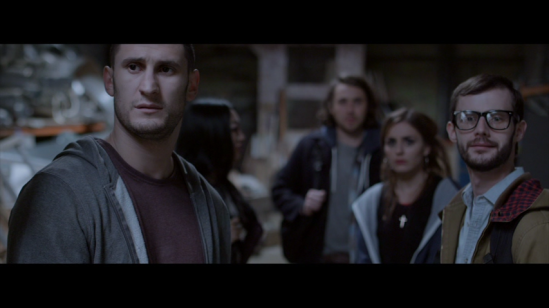
“Razors: The Return of Jack the Ripper” is the interesting first installment of a British horror movie franchise from writer-directors Ian Powell and Karl Ward. The co-filmmakers reach into the 19th century to bring Jack the Ripper into the present day, but Jack’s not the same; He’s a variant of him old self that involves the murderer being a pissed off malicious ghost in a concoctive tale that blends the modern-day remakes of “House on Haunted Hill” and “13 Ghosts” from near the turn of the century. Other than a physically present, if not more of a flickering presence, manifestation with a link to his prey of frightened writers, I won’t delve too much into details of Jack’s return and what he means to accomplish in hopes of not spoiling the story for you, but I have a sneaking suspicion that that won’t be a problem. The independent film attempts very little to bring the Victorian era swag into the fold. Even Jack the Ripper solely dons a dark wide brim hat and cape, that loosely associates him with the time period. Powell and Ward focus more on the group of bewildered writers and their conflicting dynamics on how they deal with their predicament – i.e. one character is very poignant on the dangers while one other brushes off superstitions and unnatural occurrences – but the pair of filmmakers fail to work the character Professor Wise into the mayhem and by not attributing purpose to the character, the professor inarguably becomes one of the many loose ends of a sunk horror franchise before it’s even set afloat.
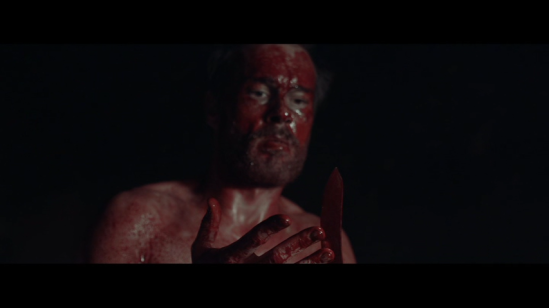
The 2016 film stars Kelby Keenan as Ruth, the only character to have any damn sense, but won’t just leave even though she repeatedly states how much danger their in. Kelby’s the lead actress with Josh Myers (“Zombie Diaries 2”), Georgia Mcguire, Kunjue Li (who oddly enough have a bit part on an unrelated Jack the Ripper television series entitled “Ripper Street”), Jack Brown, and Ian Weichardt (“Freak of Nature”) to round out the group of writers. Together, their plight doesn’t come across potently enough; instead, Thomas Thoroe’s Professor Richard Wise strew them through the warehouse corridors in an unbelievable performance of the professor not having a clue about the turmoil that’s afoot. Jack the Ripper goes virtually silent, much like a ghost should, under the unkempt performance of Andrew Shire. In short, the cast haphazardly walks through the storyboards, overkilling reactions and not reacting enough during called upon scenes to the relative cause of action.
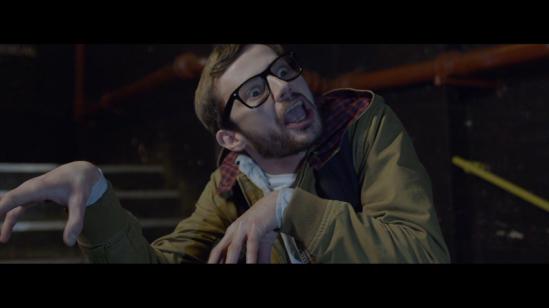
So far, in this review, you might conclude that Powell’s and Ward’s inaugural franchise film may be a dud and not spawn sequels. Honestly, I personally would like to see closer for the open ended characters and story; however, I preferably would not like Powell and Karl in the director chairs. Their style could only be described as spastic with way too many edited in interjections of arbitrary spook house filler. The body of work has the sheer tenacity of being more like a 92-minute music video that’s abundantly chorused with haunted house ambiance. Literally, interlaced cuts made more than half the film, barely leaving any story for the actors, and the back-and-forth edits could crisscross your eyes into a strabismus.

Breaking Glass Pictures and Magic Mask Pictures Limited present “Razors: The Return of Jack the Ripper” on DVD home vide. Usually the pride of indie LGBTQ films, Breaking Glass Pictures has a fair share of horror as well and, typically, do right by the release. In this one particular, the DVD is presented in a widescreen 16:9 aspect ratio that’s very detailed. The color hues are a bit dull, more so grey, than hoped. The English language stereo dual channel stereo track had no part in being saved. Layers upon layers of unfinished audio snippets run rampart throughout to the point where you can pick out the flaws at will. Dialogue is wish-washy with the full power of the voice being reduced to no more than a mumble of hearing every other third word from every character. The DVD does come with some special features, such as clips and interviews in a segment entitled “Lights, Camera, Speed!,” “Behind the Walls” is a short featurette about the film, and you can also play the film with commentary from the directors and cast. The film is dedicated to the late Khan Bonfils, who had a minor part in the introduction, after his untimely death on a separate project. “Razors: The Return of Jack the Ripper” is clunky at best. Poor Jack couldn’t rise from the dead to reclaim his infamy in this ghost show of scatterbrained storytelling.

“Razors: The Return of Jack the Ripper” is available at Amazon.com!

Evil Attracts With the Fluorescent! “Feed the Light” review!


Sara, a desperate young mother, infiltrates a secret facility workplace under the false pretentions of becoming an employee of the critical janitorial department. After losing custody of her adolescent daughter Jenny in court, the child becomes misplaced when her custody awarded father, an employee, loses Jenny in the facility that’s conducting unusual activity involving the building’s light energy source. With everyone on constant edge and under the powerful and dangerous influence of the light, including her very organized and unstable employer, Sara is able to find a sympathizer in the head janitor and by exploiting his mental map and valuable knowledge of the building, Sara goes deeper into the structural bones of a nightmarish reality where evil lurks in the shadows and not everything is what it seems.

“Feed the Light” is a H.P. Lovecraft inspired sci-fi horror directed and co-written by indie filmmaker Henrik Möller with Martin Jirhamn sharing the co-write. The gothic tale stems from the Lovecraft short story “The Colour Out of Space” that tells the tale of a meteor crash landing in the hills near Arkham, Massachusetts, poisoning and deforming all the living creatures nearby that creates chaos amongst the locals. The light, that never dulls, becomes the driving force of everything malevolent and that carries over into Möller’s film, but isolates the setting to a dilapidated building instead of a natural landscape and focusing more on the people inside rather than vegetation or livestock as the Lovecraft short story builds upon. Originally shot in color, Möller thought best to suck the color out from the reel and produce a mostly black and white film, sprinkled with color at strategic moments, that would convey the importance of the ever-present light and interpret a far more dramatic effect to play out; a decision I whole-heartedly agree because if laced with color, much of the abandoned warehouse setting would be a monotonous eye-sore. Instead, black and white enhances the light’s presence, makes it almost seem to stand out amongst the greyscale, and give way to more inspirationally vibrant hues when they are revealed.

For Henrik Möller, this is the director’s first dive into feature films and for the filmmaker whose better known for his shocking shorts, “Feed the Light” doesn’t water down the deranged, creative machine that just steam-plows through a 75-minute runtime and still managing to be mechanically sound to comprehend the Lovecraftian tone. Lina Sundén fills the lead shoes as Sara and Sundén embodies complete innocence and bewilderment when her characters goes forth into this strange facility, but doesn’t show much fear as if a mother’s determination is her driving force to go beyond being what frightens her. Alongside Sundén is Martin Jirhamn, who you might remember me saying he co-wrote the script, as the sympathizing janitor. Jirhamn has collaborated on many of Möller’s shorts, feeling comfortable taking on the challenge of a full length feature by taking on more of a scripted role that has a face with two sides. Rounding out the cast of memorizing characters are “Not Like Others'” Jenny Lampa as an authoritarian boss of the facility who tries to keep Sara from going on Indian Jones and the Raiders of the Lost Ark in the basement and Patrik Karlson otherwise known as the VHS-Man and Jenny’s father in the film.

“Feed the Light” has undertones beyond that of Lovecraft. The story feels nearly anti-establishment, a surreal and extreme look at how doing the same job, in the same office, staring at the same fluorescent lights can make one loose one’s humanity. The boss is a strict enforcer of the rules and doesn’t shrug at the thought of one of her employee’s burning out as long as the job gets done, but it’s not burning out that’s the problem. The light symbolizes obedience and control, turning those with a soul into mindless workers. There’s an unseen power embodying them such as with the dog man, played by Morgan Schagerberg, who, literally, sounds and acts like a canine that just happens to have glittery dust goo ooze out of it’s anus. Yup, weird. “Feed the Light” is jarringly weird, but also laminates into the prospect of hidden doom that’s very similar to the truth is out there concept reveled in the “X-Files.”

The Severin sub-label, Intervision Picture Corp., usually subjects us to older projects, but embraces newer indie films such as Henrik Möller’s “Feed the Light” and with the help of CAV Distributing, Möller and “Feed the Light” can be exposed to every house hold on Earth as a region free Blu-ray in 1080p full Hi-Def. The full frame is a staple of Intervision and doesn’t necessary cause any distress over cropped images. There is a fair amount of interference, but again, only enhances the indie labels reputation. Other than that, the image is fine laid under a Swedish language dual channel audio track that’s well balanced with a brooding industrial soundtrack by Testbild, a Möller familiarity. There are two extras accompanying the feature: one is a making of featurette and the other is an interview with the director, Henrik Möller. “Feed the Light” is a science fiction oddity chocked full with surreal depictions and nightmare creatures with a Lovecraft base and a passionate director’s otherworldly view of how light and color powerfully dictate our everyday lives.

“FEED THE LIGHT” is available on Blu-ray at Amazon!

In a Seemingly Fresh Corpose Lies a Legendary Evil.  “The Autopsy of Jane Doe” Review!


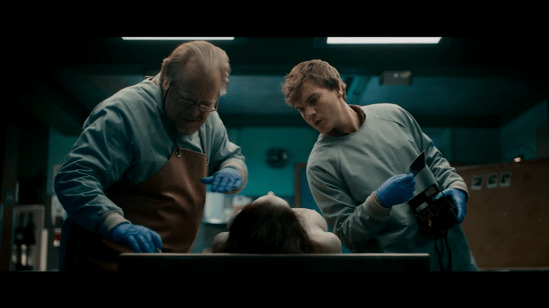
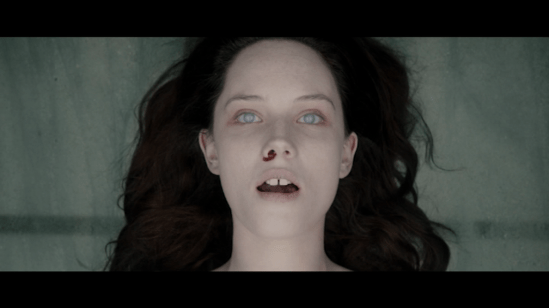
An unknown corpse of a young woman, found naked and half-buried in the basement of a home involved in a gruesome crime scene, is strolled into a small town family morgue and crematorium by a puzzled local sheriff.  Without any idea who this woman is and how to explain the her presence at the scene, the sheriff wants a cause of death on his Jane Doe as soon as possible and it’s up to Tommy and his son, Austin, to investigate what caused her demise and to determine her involvement in the grand scheme of the grisly events.  When the medical examiners begin to peel back the layers, each segment of the autopsy reveals impossible and unspeakable horrors underneath her cold flesh that go against their combined years of medical experience and the deeper they dig into her body, the more the autopsy room becomes a spine-tingling area as strange occurrences begin to happen to the father and son. Their only hope in stopping the ominous terrorizing presence and surviving the hell-bent stormy night is to continue the examination in order to unravel the enigma that surrounds Jane Doe.

“Troll Hunter” director André Øvredal helms a contemporary horror masterpiece with the Americana horror film,”The Autopsy of Jane Doe, that can be described as American folklore lit ablaze with modern day macabre that plays like a gruesome adult version of the children’s game Operation. Øvredal pulls inspiration from present day classical horror, including such films as the widely popular James Wan franchise, “The Conjuring,” by not embarking on an overkill journey of heavy duty effects or relying on gallons upon gallons of fake blood to sell his film. Instead, André Øvredal’s “The Autopsy of Jane Doe” is patient, subtle, and massively creepy, utilizing the dated morgue and crematorium basement setting to construct a dreadful, despairing dungeon atmosphere and focus on being very particular with every scene having a function to take advantage of the overwhelming brooding aurora and pop scare moments that can scare the pants off a mannequin. Øvredal heightens moments of complete pin-drop silence to amplify the terror and plays with camera angles that linger longer to leave an unsettling residue pooled in a spine-tingled soul.

Not only is the Ian Goldberg and Richard Naing script palm-sweaty frightening, tack on A-list actors like Brian Cox (“Manhunter”) and Emile Hirsch (“Killer Joe”) as a father and son team pitted against a dead body and “The Autopsy of Jane Doe” jumps up by tenfold as a must-see. Brian Cox is masterful as the widowed mortician whose numb to the pain of life and shock of work, making him a dedicated professional at uncovering the truth inside corpses, and he’s well companioned with Emile Hirsch, the mortician’s eagerly loving son and apprentice to the family business. The only problem is Austin doesn’t want to be a part of the family legacy, but is rooted by his continuously cloaked grieving father and you can see the struggle in Hirsch’s wish-washy character. The pair of veteran actors play off each other well being a medical super duo by conducting examination procedures and digging right into the corpse of dead, disfigured bodies like it’s just another day at the office. The gorgeous Olwen Catherine Kelly is dead on being a dead body. Though Kelly literally doesn’t move an inch for the entire runtime, her slim frame and blank facial expressions are truly haunting, if not also alluring to behold.

Immediately, my first impression of André Øvredal’s film had me stroll back to the past, nearly a decade a go to 2008, with the Marcel Sarmiento and Gadi Harel thriller “Deadgirl.” The premise of the film told the story of two high school aged boys discovering a seemingly near dead young woman in an abandoned asylum; the dead girl being played by Jenny Spain.  Whereas each film have their separate horrific identities, their end games bare supernatural similarities. What also separates André Øvredal’s film from Sarmiento and Harel’s “Deadgirl” are the two protagonists; instead of two teen boys pulling hormonal hijinks on a motionless attractive female body, Tommy and Austin are strictly professional, focused on their task to answer the riddle lying inside the very fabric and bones of Jane Doe. The only gripe I can bottom barrel scrape out is how Tommy and Austin had this big ‘what if’ epiphany that becomes the very basis of the entire film and, in my opinion, felt that scene was extremely chintzy and a cop out.

Lionsgate Home Entertainment delivers “The Autopsy of Jane Doe” from production companies 42, Impostor Pictures, and IM Global onto UK DVD and Blu-ray.  Unfortunately, a DVD-R screener was sent to me, resulting in no true examination of the audio and video qualities and the only extra on the disc was a Q&A with directorAndré Øvredal. Even if viewers might be able to guess the nature of the corpse – I did about halfway through – “The Autopsy of Jane Doe” is still way ahead of it’s genre brethren in being the best horror film of 2017 with an unlimited amount of sinister wretchedness that tugs at your soul strings and weighs heavy in your mind’s cache as soon as the lights go out for bedtime. I would recommend this title to anyone seeking an unadulterated horror experience.

Evil Lurks in the Woods. You’ve Been Warned! “Altar” review!


Maisy and her socially reclusive brother, Bo, venture on a mountain getaway trip with Maisy’s former college friends. With Bo documenting with a handheld video camera as part of his way in comforting his anxiety, he captures the dynamic of how each of Maisy’s friends have changed over years, especially with Asher and his recently High School graduated girlfriend, Pam. After breaking down on the side of the road, falling behind the rest of the caravan, they encounter a strange man with an axe, harshly warning them to not continue up the mountain pass. Shrugging of the warning and returning to their now working vehicle, the group resumes their drive, but makes a wrong turn and becomes lost in the mountains’ thicket of the Sierra Nevada. They decide to setup camp for the night and continue their way back the next morning, but the discovery an ominous, skull-riddled altar in the woods unleashes a frightening presence that won’t allow them to leave. As tensions rise and night falls, Bo keeps his camera running as a soul inhabiting evil has fallen upon them that seeks to destroy them one-by-one.

“Altar” is the 2016 found footage horror from writer-director Matthew Sconce. Sconce is actually able to harness a fraction of the mysticism and presence that made the found footage genre a thing back in 1999 with the ground breaking flick “The Blair Witch Project” and does a well enough job implementing it into his very own version of an allusive satanic cult ghoul, but with more specials effects and screen time. Despite being titled “Altar,” the story barely wraps itself around the titular object with only a handful of brief scenes, one of the scenes being the thinly-connected introduction that intensely catches the attention, while mostly focusing on the friends’ road trip chatter, breathtaking scenic gasps, and becoming lost on the mountain without much peril in-between. Even the creature, whom makes the scene approximately the last 10 minutes, has more of a presence than the altar itself.

The plot follows around Maisy Marks and her Aspergers labeled brother, Bo Marks, played by Stefanie Estes and Jesse Parr who pull off the socially awkward brother and the cutesy overprotective sister well enough to pass muster. Maisy’s other “beau” is Ravi, played by Deep Rai, and along for the ride as well is muscle head Asher, Tim Parrish, and his ditzy, teenage girlfriend, Pam, played by Jessica Strand. Rounding off the group is Chelsea, a communications graduate who could only find work as a bartender who seems to be stuck in life, and she’s catered to by Brittany Falardeau. Michael Wainwright, Tina Johnson, Master Dave Johnson, and Catherine Wilcox make up the rest of the cast. As a whole, the acting wasn’t terrible even if the script was conventionally kitschy and with a group of young actors, I’m fairly encouraged to see more of their work.

However, acting is only a third of the battle when critiquing a film and “Altar” has falters more in it’s own story and script that’s peppered with cliche after cliche. The scenes leading up to the mayhem constantly hyped that something bad is going to happen; Bo finds an online article of two newlyweds missing for six months (part of the introduction), characters kept comparing their scenarios like horror films, or a daunting man, named Ripper, sternly warns them with a very large axe in his hand. Moments like these try to build tension, but when overtly and grossly laid out for views, sustaining the substance behind them is lost and waters down the effect toward campy foreshadowing. Special effects weren’t overly cinematic nor where they similar to video nasties and kept simple, much like “The Blair Witch Project, with a little more padding to them. The Evil Spirit, as it’s credited in the film and portrayed by Nicole Osborne, is a black and white nightmare that’s effective on camera; slightly cheesy with a hint of gooeyness, but edited in nice and sporadically for those eye-clenching jump scares.

Production company Movie Hero Studios partners with Distribber for a VOD nationwide release of Matthew Sconce’s “Altar,” including platforms such as iTunes, Amazon, Google Play, Xbox, PlayStation Network, and on Hulu. A DVD-R screener was provided and so commenting on video and audio quality will not be critiqued and there were no extras on the reviewed disc. “Altar” is, disappointingly, just another found footage casualty with hasty slivers of hope of not falling into the muck that has become an over-tapped genre. What Sconce has done with “Altar” makes the film enjoyable enough for a single viewing with little-to-no repeat value as everything lays out in the open and the only subtly in the entire film is the altar itself.

Watch “Altar” on Amazon.com!

Evil Review: Little Nightmares

littlenightmares

Developer: Trasier Studios

Publisher: Bandai Namco Entertainment

Platforms: Xbox One, Playstation 4, PC

Imagine taking Tim Burton and the video game Limbo and just mashing them together. You got yourself a little gem called ”Little Nightmares”. I remember back in 2014 seeing gameplay videos of ”Little Nightmares” and never heard anything after that. The project was originally called ”Hunger” and it was quiet for few years until late 2016, when Bandai Namco announced they were the publishers. After following the game a little bit more I started to get really interested in it. So interested that I even bought the collectors edition on the day it came out. After finishing my first playthrough, I’d like to go into how this little horror game became one of my favorite games of the year.

Little Nightmares_20170428232958

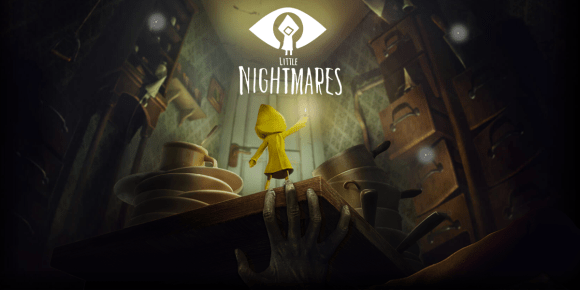
In ”Little Nightmares” you play as a nine-year-old girl named Six, who must journey through a dark and mysterious prison known as the ”Maw”. Armed with just a lighter, Six will have to solve puzzles and use her wits to avoid traps and monsters during her escape.

The one thing that I’m sure caught peoples eyes, especially mine is the games visuals. The level backgrounds and character designs are dark and gloomy and look amazing. The entire game looks like it came straight out of a Tim Burton stop-motion movie. The games soundtrack mixed with the graphics makes this one of the most atmospheric games that I have ever played. Hell even if all the puzzle solving and platforming was removed I still would’ve enjoyed it. Just walking through each level admiring the scenery.

Little Nightmares_20170503214013

like most horror games today. Most of the gameplay is you hiding and running from enemies. Each level has specific enemies that you will have to hide, run, or sneak past in order to beat the level. Other than that there is also puzzle solving and platforming. I kind of wish there were harder puzzles, pretty much every puzzle you’re faced with is incredibly easy and you can get through the game pretty fast if you just blow through all of them. The game isn’t long at all, on your first playthrough it’ll take you an easy 2 hours, but when you play again and just speed through it, I’m sure you can finish it within an hour or even less.

Now of course not every game is perfect and unfortunately ”Little Nightmares” suffers from a slightly annoying flaw. The controls are a bit finicky and some times they’re not all that responsive. Several times I will be walking over pipes or bridges and Six will just randomly fall off or I’ll try to pick up a key item and Six will just stand there. If you play on PC the controls will be pretty annoying and I highly recommend using a gamepad, since that’s what the game seems to be optimized for. But again this was a slight inconvenience and in no way ruined the game for me.

Little Nightmares_20170503225218

”Little Nightmares” is a fantastic game and I am so happy I decided to buy it day one. I enjoyed it from beginning to end. Along with ”Resident Evil 7”, ”Little Nightmares” is going to be right up there with being one of my favorite horror games off all time. It offers an experience that is unique and different from other games and that it should be cherished for it. If you have $20 to spend then I highly recommend you buy this game, it is a must own. I hope in the future, Trasier Studios comes out with a sequel or at least a spiritual successor.

My final score for ”Little Nightmares” is a 9/10