A Parents’ Love Never Dies. It Just Becomes EVIL Against Threats! “The Sweet House of Horrors” reviewed! (Cauldron Films / Blu-ray)

“The Sweet House of Horrors” on Blu-ray by Cauldron Films!

A house robbery gone wrong results in the brutal murder of twin siblings’, Marco and Sarah’s, parents Roberto and Mary Valdi when they stumble upon the masked thief, catching him in the act in their beautiful villa home.  The twins bawling at the funeral gives way to impish innocence as the children cope in jokes amongst each other and to their now legal guardians, Uncle Carlo and Aunt Marcia.  Looking to sell the now sullied house, Carlo and Marcia invite a pompous realtor to examine and price the home only to have strange occurrences begin a series of unexplained phenomena the children are certain to be their parent’s lingering and love presence to keep the house within the family.  The parental entities also seek revenge on their attacker whose has been close to the family for years.  As the spirits continue their course of playful and perturbed poltergeist toward their children and unwanted visitors, an unaware Carlo and Marcia hire an exorcist to rid the house of what they suspect to be an evil spirit. 

The third made-for-TV film in the Massimo Manasse and Marco Grillo Spina doomed The Houses of Doom series, in which none of the films aired due to their too gruesome violence, “The Sweet House of Horrors” is the second Lucio Fulci production under the defunct 1989 series, coinciding with “The House of Clocks.”  Just like that film, Fulci also invented the concept of murdered parents being guardian angels over their children while thwarting murderers, realtors, and exorcists from taking what they hold most precious, their children and their home.  The shooting script comes from “Devil Fish” and “Phantom of Death” duo Vincenzo Mannino and Gigliola Battaglini.  The fantasy-ghost house horror is another production of Reteitalia and Dania Film and filmed in peaceful Italian municipal of Ponte Pattoli.

“The Sweet House of Horrors” has an alternating appointed cast of main characters that turns focus between the children, Marco (Giuliano Gensini, “The Fishmen and Their Queen”) and Sarah (Ilary Blasi), the inheriting guardians of Carlo (Jean-Christophe Brétignière, “Rats:  Night of Terror”) and Marcia (Cinzia Monreale, “The Beyond”), and the dead parents turned ambivalent malicious poltergeists with Mary (Lubka Lenzi, “Massacre”) and Roberto (Pascal Persiano “Demons 2”) Valdi.  Giuliano Gensini and Ilary Blasi are well matched bratty children with mischievous dispositions who let their parents setoff hurricane force winds in the house and unleash topsy-turvy fog to combat the selling of the house and the unwanted removal of the children by the new guardians.   The children are also the only ones who know what’s actually going on while Carlo and Marcia chalk it up to either Marcia overactive imagination or, eventually, boiling the explanation down to malevolent ghosts unaware that it’s actually the deceased Mary and Roberto being impish apparitions.  This allows to comical characters to enter the fold in an overweight and pompous realtor lovingly nicknamed Sausage (Franco Diogene, “A Policewoman on a Porno Squad”) and gravely natured exorcist (Vernon Dobtcheff, “Horsehead”) to give levity and breeziness for a television market to a point where it feels almost a like a kids movie, but then we get to Guido (Lino Salemme, “Demons”) whose a guilt-ridden soul is splashed with past transgressions and the blood of his victims that haunt him from beyond the grave, literally, and in these flashes of Lucio Fulci’s ferocity for a visceral showing of range that definitely turns what could very well be a family friendly film into a smaller scale fright and violent feature.  Dante Fioretti (“The Wild Team”) rounds out the cast as the graveside servicing Father O’Toole who is the butt of the joke from not only the children but also the audience as a priest overbooked in his ceremonial duties. 

Finally – we’ve always suspected in The Houses of Doom installments a good old fashion haunting would make an inevitable appearance, but this particular Godfather of Gore entry is no ordinary ghost house narrative.  As read above, “The Sweet House of Horrors” has plenty of light-hearted comedy and fantastical elements to make a great televised production with dancing and floating candle flames, slapstick punching bags with the Sausage character, and two children who laugh and belittle at those in the path of the spirit-induced misfortune, spirits who are just loving parents taken too soon from their children and want to protect them at all cost.  As these scenes playout, feeling breezy, light, and full of supernatural fantasy, one hardcore horror fan could potentially forget their tuned into a Lucio Fulci film if it wasn’t for the opening double murder of the parents, the subsequent revenge killing of the murderer, and the shocking last frames of a hand melting away to the bone.  Granulized bits of body injury and stark severity and gruesomeness slingshot audiences out of the kiddie dreamland into the grisly nightmare of Fulci’s eye for details.  Hair and blood matted together, run over and eviscerated by a large truck, and, of course, “The Sweet House of Horrors” wouldn’t be a Fulci film without a gruesome dislodged eyeball from the socket.  There’s nothing quite like this House of Doom picture, or even in the generalization of haunted house tropes, as “The Sweet House of Horrors” splinters a fractured tale of holding onto dear life a happy nuclear family with the external forces that try to violently rip them apart.  

Cauldron Films proudly presents an uncut and restored Blu-ray release, scanned in 2K from the film negative and encoded onto AVC BD50 with 1080p, high-definition resolution.  The 1989 Fulci film now looks remarkably crisp in its European widescreen 1.66:1 aspect ratio.  A counterargument against the defined image could be the color timing that does have a bit of a wash layer overtop, reducing hues down to a pause in the image pop.  The reserved grading primarily hits the internal scenes, perhaps a result of the transparent animation layer for dancing candle flames, the ethereally delineated parents, or the blue orb/blob that circles the kids, but there are live shot instances that too are stifled to radiate better.  Textures are definitely not washed away as we receive an in-depth look at the wardrobe design that distinctly set characters apart, such as Sausage’s prim-and-proper suit, Guido’s paint-speckled denim overalls, and the Exorcist’s dark cloak getup, courtesy competent compression.  The ADR English and Italian 2.0 mono tracks offer a more than adequate A-to-Z dialogue with instances of crackling, more so the beginning.  The hit tracks and other targeted ambient sounds land with depth and range incorporated into the action with the character.  As with a mono track, distinction can be lost but with many Cauldron releases, there’s a pseudo-tier balancing of separating sounds through the 2.0 channels.  English subtitles are available on both releases and are well transcribed with excellent pacing.  Special features includes new Cauldron Films’ produced content, such as interviews with actress Cinzia Monreale Sweet Muse of Horrors in Italian with Englis subtitles, production designer Massimo Antonello Fulci House of Horrors in Italian with English subtitles, editor Alberto Moriani Editing for the Masters in Italian with English subtitles, and an audio commentary track with film historian regulars Eugenio Ercolani and Troy Howarth.  The release also includes archival interviews previously seen on Mediablasters DVD release with interviews from actors Cinzia Monreale, Jean-Christophe Brétigniere, Pascal Persiano, Lino Salemme, and screenplay writer Gigliola Battaglini, all of which are either in Italian or English with English subtitles on the Italian interviews.  Matthew Therrien and Eric Lee provide, yet again, another compositional illustration of the more harrowing sides of “The Sweet House of Horrors” and its logo design inside a clear Scanova Blu-ray case.  The reverse cover also pulls a fiery still from the story.  There are no additional supplements inside or out with a cropped pressed image of the front cover on the disc that has a runtime 83-minutes and has region free playback.

Last Rites: “The Sweet House of Horrors” is a paradoxical made-for-TV special that never saw the light of public broadcast day but lands safely in the distributive hands of Cauldron Films with a new Blu-ray, Hi-Def release too good to pass up.

“The Sweet House of Horrors” on Blu-ray by Cauldron Films!

Who Would Have Thought Something So Tiny Could Create So Much EVIL! “Cannibal Tick” reviewed! (SRS Cinema / Blu-ray)

Get Bit by the “Cannibal Tick” Blu-ray! Now Available!

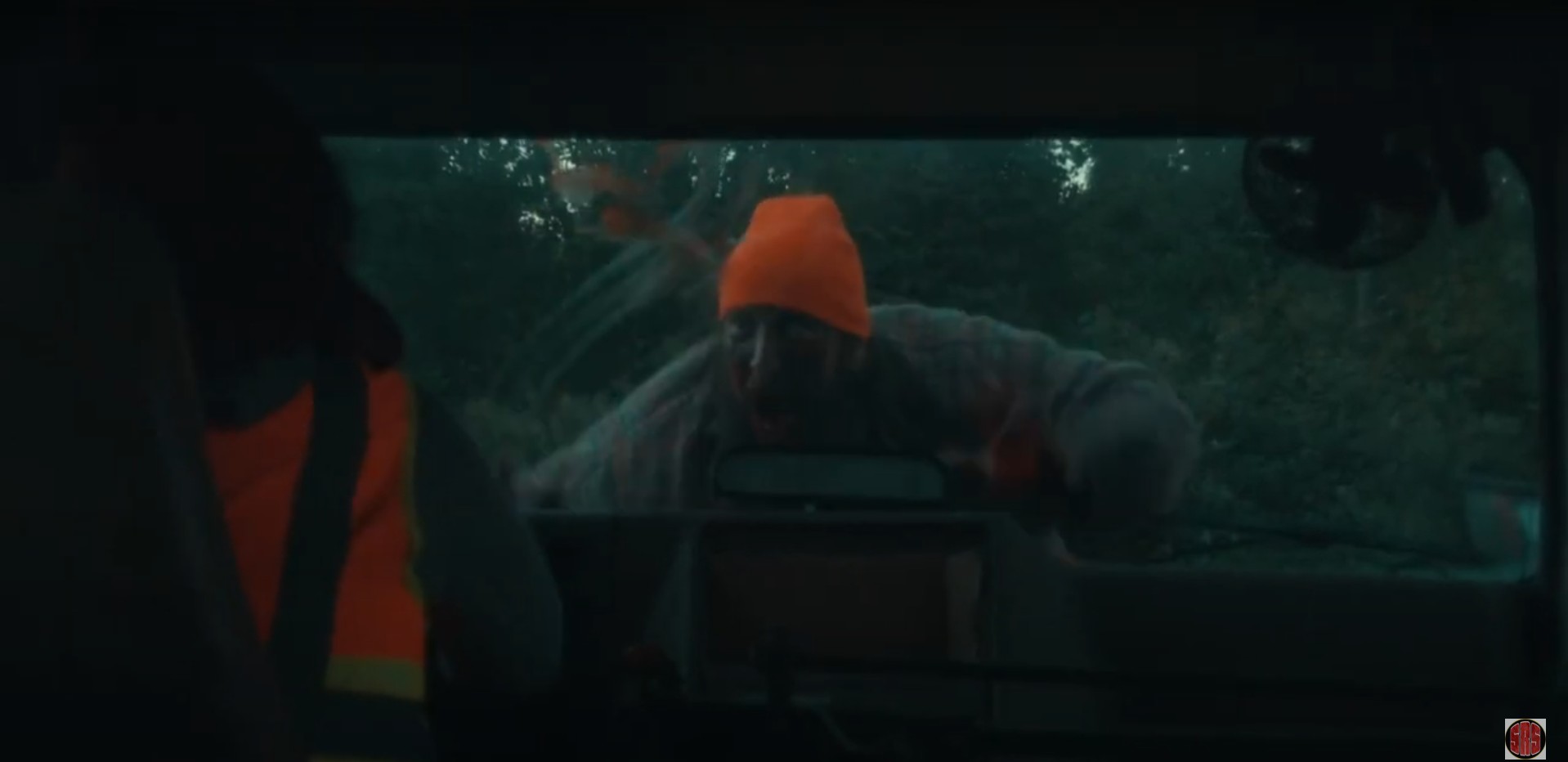
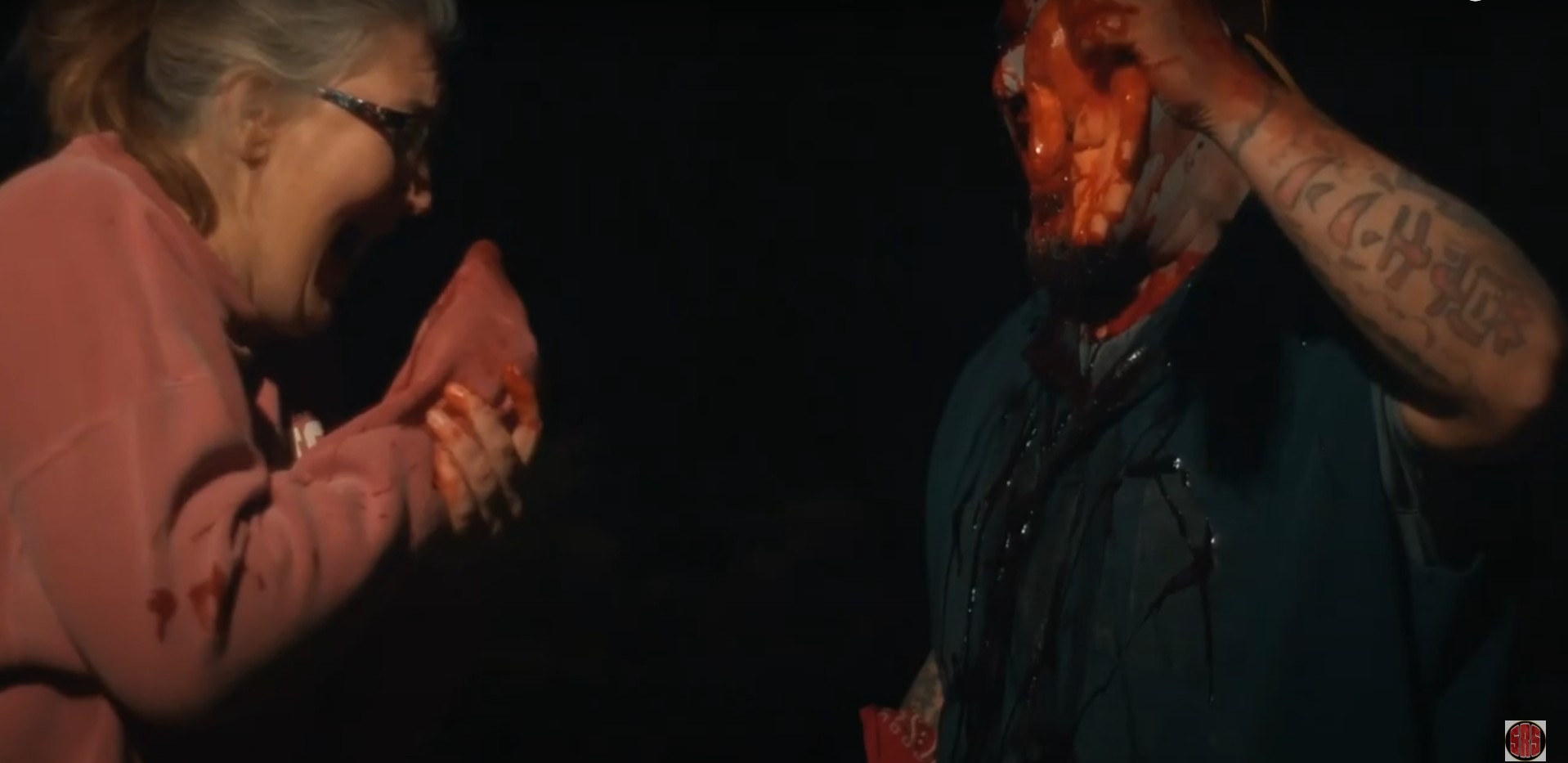
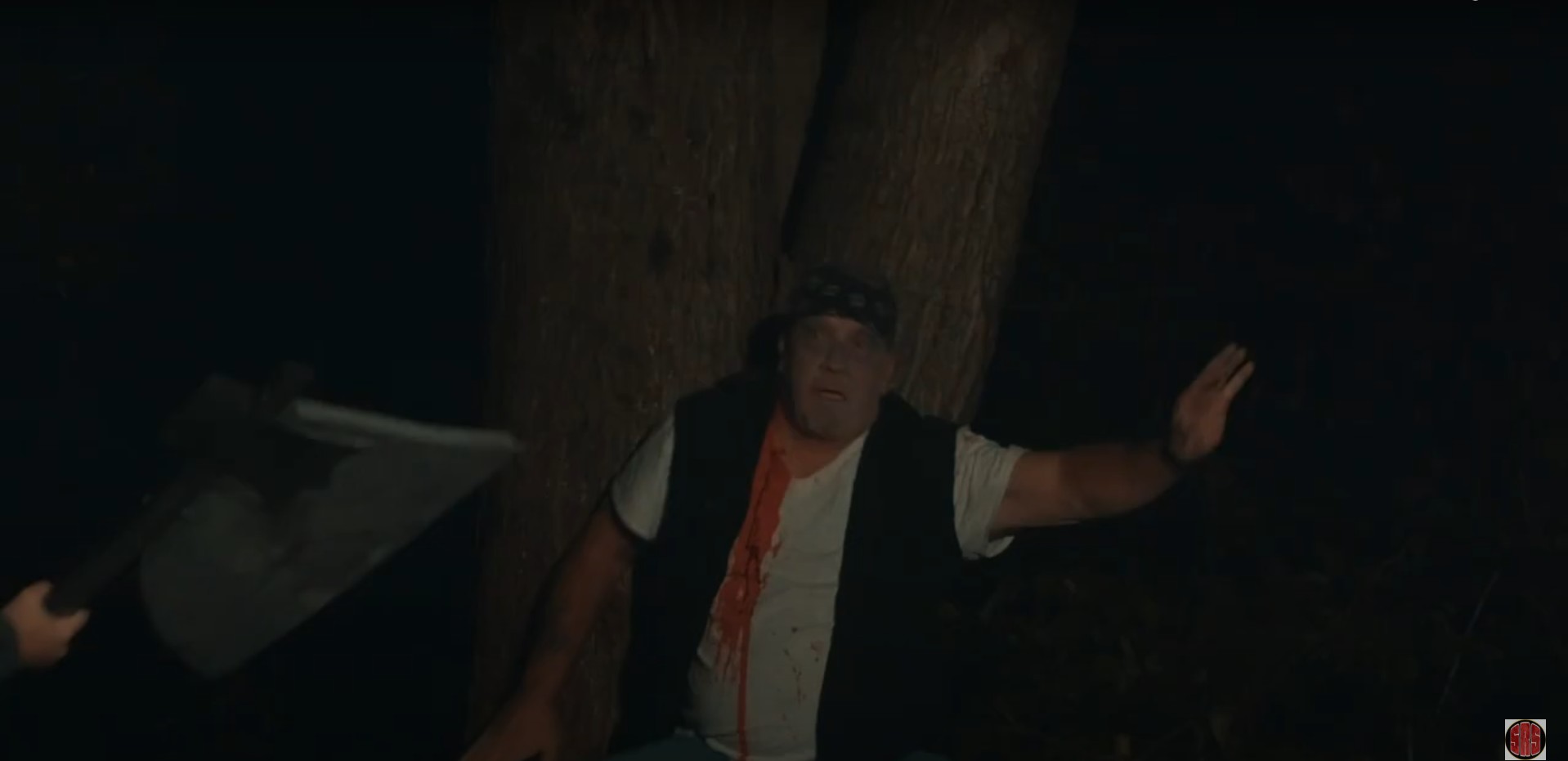
Jeb believes his late father’s purloined gold is stashed underground in his densely wooded backyard.  What’ Jeb unearths is not gold, but barrels of chemicals Jeb believes to be just as valuable.  What Jeb doesn’t know about the pinched drums is the ooze inside leaking from them turns the local tick population into diseased carriers, transmitting a sickness upon biting their hosts and transforming the hosts into ravaging flesh eaters that continue to spread the disease with one single bite.  All hell quickly breaks loose amongst a sleepy backwoods around Big J’s outdoor food truck until a retired vampire hunter, Alec, turns his skillset onto the zombified undead when twin brother Roscoe becomes patient zero.  Big J’s famous menu items pig dicks and beer won’t save the rustic hillbillies from a fast-spreading contagion but one kilt wearing son of a bitch aims to take on all of them with a help of local and his vampire slaying colleague.  

If Lyme disease wasn’t already bad enough, chemically diseased ticks being the parasitic harbingers of the zombie apocalypse might just be the worst.  Like a premise straight out of Valve Corp.’s Half-Life series, co-directors Ross Carlo and William Long’s low budget, running zombie-comedy film, “Cannibal Tick” will leave more than just a bull’s eye symptom in its bloody, outrageous wake.  Mostly derivative from other running undead features, the 2020 feature length film is the debut and first collaboration efforts of the Eastern Ohio-Western Pennsylvania filmmaking duo with Long running solo in penning the screenplay of rednecks running rampantly through a serious case of tick-induced rabies.  “Cannibal Tick” is a production of indie companies Poo House Productions located in Youngstown, Ohio and of William Long’s Dark Long Productions of Northern Cambria, Pennsylvania.  William Long and Ross Carlo retain the producing credits as well as taking on principal characters as per standard in the microbudget, everybody-pitches-in productions.

In the spirit of low-budget creativity, Ross Carlo (“Rotten, Welcome to the Freak Show”) accepts his dual role fate playing twin Scottish brothers Roscoe and Alec.  Carlo invests himself into the accent while getting physical when the ticking timebomb explodes and all zombie hell unfolds in the armpit of Nowheresville, Pennsylvania.  His presenting of Alec and Rosco couldn’t be more different but still oddly the same as Alec’s has more of an interesting background as a retired vampire hunter visiting his brother, or rather just dozing off on Roscoe’s couch.  Roscoe, on the other hand, is purely just a boondock alcoholic without much of anything else going on other than the next pint and a handful of used tissues from his personal pleasuring.  William Long (“The Devil’s Wasteland”) also has a role in the film but just one as the gold feverish Jeb looking for his late pop’s buried treasure.  Jeb’s quiet nature is not imposing and he’s terribly forgetful or just doesn’t listen to his wife but neither scenario is really relevant to the story, much like most of the carrier scenarios and backgrounds other than Alec’s vampire killing skills translating over to zombie dispatching.  So many characters are quickly tossed into the mix of a 73-minute story that they’re unfortunately not well fleshed out nor provided enough substance to even instill an impression upon and what they reduce to is simply just fodder for the carnage for the sake of a high body count.  John Catheline (“Deadly Numbers”) is and plays a forlorn former wrestler Curtis lost in beer and solitude for his prime fight days and has become a local mechanic, Maurandis Berger (“Chronicles of a Serial Killer”) and Sheneefah Johnson (“3 A.M”) are a black married couple who find themselves broken down in a white hick town, and Lena Devinney and the late Jimmy Barber Sr. (“Deadly Numbers”) are the couple who arrive at the wrong place, wrong time as they drive up to Big J’s for some pig dick and beer.  The aforesaid descripts don’t go any further with no progressive dynamism that usually establishes either a love or hate development with audiences.  “Cannibal Tick” also feeds upon Greg Bailey, Allison Devinney, Donnie Lawrence, Tene Gossard, RahZhee Emmaunel, Lisa Dapprich, Iesha Guzzo, Jana Ferris, and Michelle Dominique Buxton to be bigger in the slaughter and in the slaughtering. 

“Cannibal Tick’s” concept is sound – a tick becomes affected by a barrel of leaking toxic chemicals that causes their bite to inject the zombie creating substance directly into the bloodstream.  Yet, the problem is there is only one scene with a tick bite and the Rosco-Long production goes from interesting to run-of-the-mill zombie chaos with zero principal protagonist power.  Another knock down is the substandard traits of an extreme indie production that relies heavily on the character captivation and special effects caliber to be successful in a demanding market driven by those factors.  The former has been touched upon in great detail, but the special effects pull ahead as Michelle Dominique Buxton, who not only has a character role but is also the special effects makeup artist, is able to pull off a few interesting prosthetic monster looks as well as a decapitation death that in all honesty is really well done in framing and effect.  While the solid zombie carnage infects survivors left and right with a ferocious appetite, the narrative then evolves with Jeb’s direct ooze contact, transforming him into some similar to a zombie king that sets up “Cannibal Tick” to a potential sequel in the future.  However, that sequel hasn’t crawled its way to fruition just quite yet.

The blood thirsty arachnid with a zombifying bite buries itself onto a new Blu-ray release from SRS Cinema.  The AVC encoded, mastered 720p resolution, 25 gigabyte BD-R with the purple underbelly.  While typically unusual for a Blu-ray to be in standard definition, SRS Cinema’s certainly no stranger to their films being filmed in 720p, thus the format, but video, as well as audio, suffer quality buckling, especially when encoded onto a one-time writable disc that has its own technical limitations.  “Cannibal Tick” sees quite a bit of those technical woes in its compression codec from banding, splotchy macroblocking, and loss of overall finer details.  Many of the action scenes are done at night with little lighting and decoding struggles with delineation and details, especially when the use of commercial filming equipment was used.  The film is at least presented in a widescreen 1.85:1 aspect ratio.  The English audio isn’t written or displayed on back cover, but this does render through the receiver output as an uncompressed 2.0 mix that channels a dialogue and ambience stream through to another channel of a stock score.  Obvious lack of refinement housed in a lower bitrate captures less isolation efforts on the dialogue, leaving disruption to run interference that spike and subdues pitches and tones, but the dialogue strength has solid recorded quality from a well-placed boom.  Other than that, there’s not a good dynamic range other than zombie growl and gurgle to give “Cannibal Tick” a semblance of audio body.  Special features include raw footage of behind-the-scenes of stunt sequences and makeup effects without narrative context, the original trailer, the official SRS trailer, and trailers of other SRS Cinema catalogued films.  The standard Blu-ray contains original artwork of a large, translucent, yellow tick overtop a blood smeared, presumably, zombie woman that speaks greatly to and has intrigue appeal of an ultra-indie film.  With a runtime of a little over an hour, marking at 73-minutes, SRS Cinema’s release comes region free.

Last Rites: Ultra low-budget, rough-and-ready, and imitative in a rustic sense, “Cannibal Tick” drains interest and captivation with the film’s throwaway moonshine characters caught and released in the throes of a backwoods zombie outbreak.

Get Bit by the “Cannibal Tick” Blu-ray! Now Available!

With Fame Comes Absurd EVIL Exploitation. “A Tale of Sorrow and Sadness” reviewed! (Radiance Films / Limited-Edition Blu-ray)

Limited Edition Blu-ray of “A Tale of Sorrow and Sadness” Now Available!

To compete against a rival fashion magazine who found profound success after hiring a famous gymnast as their spokesmodel, an ambitious fashion company sees potential in amateur golfer Reiko Sakuraba with her beauty, grace, and a decent enough golf game.  The only problem is Reiko has not won a championship.  The fashion company representative and Reiko’s sport’s columnist writer/manager/boyfriend Miyake strike a deal to get intensely train and mentally exhaust Reiko to be the best by the next tournament.  When Reiko outperforms the tournament’s veteran players, she instantly becomes a fashion icon and celebrity that leads to her own show for the magazine, photoshoots, and a large house in the middle of the suburbs.  Miyake’s aloof behavior continues even after Reiko’s success and while he drives her back home, he hits-and-runs a woman form the neighborhood who blackmails and guilts Reiko into letting her into the rich and famous lifestyle.  Reiko’s mental health slowly declines as pressures mounts.

“A Tale of Sorrow and Sadness” is a tale of how the sudden rise of fame and fortune can quickly lead to world of hurt through inexperience, obsession, misguided love, abuse, and the day-to-day tasks that can even burden even the most common person.  The story also represents a dichotomy between fame and the mundane.  The 1977 Japanese surreal drama is helmed by Seijun Suzuki, a filmmaker once blacklisted by the head of Nikkatsu Studios after his film for the company, “Branded to Kill,” was deemed terrible by Nikkatsu execs, and rode the filmic bench for nearly a decade until his theatrical release of the Shochiku Ltd. Released production that allowed him the freedom for artistic expression.  Also concisely known as “A Tale of Sorrow,” the Suzuki picture is written by Atsushi Yamatoya based off manga by Ikki Kajiware and produced by Yoshiki Nomura, Kenzo Asada, and Tokuya Shimada.  

Yoko Shiraki steps into the tragic golf-cleated shoes of golfer-turned-spokesmodel Reiko Sakuraba who finds herself unknowingly being exploited as object of marketable objectification.  What’s interesting about Sakuraba is she’s totally alone amongst other adults in a real cutthroat and cruel way through her trajectory of success.  In the fashion world, the magazine representative behind the concept (Masumi Okada, “The Living Skeleton”) only wants her for her beauty and success, her boyfriend Miyake (Yoshio Harada, “Lady Snowblood 2:  Love Song of Vengeance”), and even an once starstruck housewife, Kayo Senba (Kyôko Enami, “Killer Whale”) who was struck by Miyake’s car and resents Reiko’s, blackmailing her way into the superstar golfer’s life by forcing her hand to relinquish all from her worldly possessions to her mind, body, and soul.  Shiraki gifts Sakuraba the fault of inability to say no with her innocence and naivety ravaged and exploited beyond the point of no return and beyond repair but Sakuraba clings to dear life, perhaps even sanity, because of tone person that too only reacts negatively around her but since their blood reaction is thicker in the watery connections manipulating her, Sakuraba’s hand is forced to do much all of the golfing and modeling hell for her adolescent younger brother Jun (Tetsu Mizuno), a smart yet reclusive boy with off screen aggression getting into fights with school bullies stemmed likely by his sister’s constant absence.  Sakuraba’s not only a slave to external obsessions of success, image, and greed but also a slave to internal obsessions with Mikyake who deprives her of the most basic primal needs for financial gain and for manipulative control.  Kôji Wada, Shûji Sano, Noboru Nakaya, sao Tamagawa, Tokie Hidari, and Jô Shishido co-star.

“A Tale of Sorrow and Sadness” is Seijun Suzuki’s tour de force return to feature films.  A linear narrative speckled with surrealistic doses creates an unsettling and bizarre atmosphere of strongarm manipulation on the unassertive character of Reiko Sakuraba.  Her raw talent is mined and minced without much consent and pushed past mental exhaustion and collapse in what is an all too true theme surrounding the early television era of celebrity branding with esteemed figures being puppets for large scale companies in order to sell their promoted products.  Money, image, and success steer the helm without any due remorse to the elegant centerpiece of the room, driving Suzuki’s social commentary to extreme levels of misappropriation of a human person with feelings and ambitions of their own.  Instead, Reiko’s meekness is measured by Suzuki’s fabricated milieu of mistreatment represented partly in a behavioralism of semi-surrealism – Miyake’s stoic aloofness, Senba’s brazen hijack of Reiko’s fame and wealth, and even Jun’s withdraw and reclusion are all good archetype of strange conducts illegitimizing Reiko as person.  She’s dehumanized so much so she stops whatever little rationality she had to begin with and becomes a vessel of command that allowed those around to walk all over her.  Suzuki’s suburban reach toward fame theme is satirical for “A Tale of Sorrow and Sadness’s” thin blanketing of dark comedy and the filmmaker often accentuates the moments with elongated sequences, randomized bits of eccentricity, and highly stylized contrasts of sex and violence as well as commercially sensationalized imagery versus Stepford wives’ expectations.

A bleak absurdist dream, “A Tale of Sorrow and Sadness” becomes rightly a part of the Radiance obscure, high level lineup with a new, limited-edition high-definition transfer Blu-ray release.  The AVC encoded, 1080p, BD50 receives the high definition transfer from the Shochiku Corporation, who currently distributes a fair amount of Anime and since “A Tale of Sorrow and Sadness” is adapted from a Ikki Kajiware’s Manga, the film fits right in, and is presented in by Radiance in the original aspect ratio of a widescreen 2.35:1.  Radiance’s image quality surpasses expectations as visually bold in a wide variety of contrasting colors, especially in primaries of yellow and reds juxtaposed against achromatic shades of brilliant whites and deep blacks.  The original print is beyond pristine with virtually no dust, dirt, scratches, or any kind of visual impediments in what appears to be a well-preserved 35mm reel.  Skin tones appear naturally organic and textures pop in their specific fabrics inside an overlay of natural stock grain for that bare-faced aesthetic of clear based film strip.  The Japanese uncompressed mono PCM audio, again, surpasses expectations with a diverse mix through a single output that creates excellent note individualism rather than an indistinct amalgam.  The omitted compression codec provides the original audio framework comfortably upholding against the test of time without a flurry of issues in the single layer.  Hissing, popping, crackling and other types of interference are kept either suppressed or to a bare minimal in another pristinely kept transfer.  ADR dialogue clearly affixes to the images with synchronous efforts being no worse compared to other films of the era out of Japan.  The newly improved English subtitles render without error, are compositionally more-or-less within syntax range of translation, and pace nicely throughout.  Special features include a new audio commentary by film historian and author Samm Deighan, a new interview with assistant editor Kunihiko Ukai, and the film’s trailer.  The clear Amaray case contains Sam Smith commissioned artwork on an obi-strip included reversible sleeve – primary cover composition is of a live still of exhausted Reiko Sakuraba lying next to a bunker with a spirally title font and the reverse cover is more NSFW with a partially nude Reiko with boyfriend Miyake portrayed in soft, dreamy glow.  The white and red disc is pressed with eye-pleasing contrast and the inserted 31-page color booklet provides cast and crew credits, essay “Sorrow, Sadness, and the Sweet Smell of Excess” by Radiance regular contributor Jasper Sharp, an archive essay “The Realisation of a Seijun Sizuki Film” by Atsushi Yamatoya, and the Blu-ray acknowledgements. “A Tale of Sorrow and Sadness” Radiance Blu-ray has a runtime of 93 minutes, is unrated, and since Radiance is a UK boutique label, collectors and film aficionados will get the best of both worlds with a region A and B playback.

Last Rites: Seijun Suzuki’s return to theatrical feature films with “A Tale of Sorrow and Sadness” is a remarkable comeback for the ages and the decade interruption didn’t even cause a missed step for his artistic expression of exploitation and consumerism control ruining young, raw talent which is a clear-cut archetype of sorrow and sadness.

Limited Edition Blu-ray of “A Tale of Sorrow and Sadness” Now Available!

The EVIL is Not Just in the Virus, but Also in the Cure! “Side Effects May Vary” reviewed! (Tempe Digital / Blu-ray)

“Side Effects May Vary” From This Blu-ray Drug!

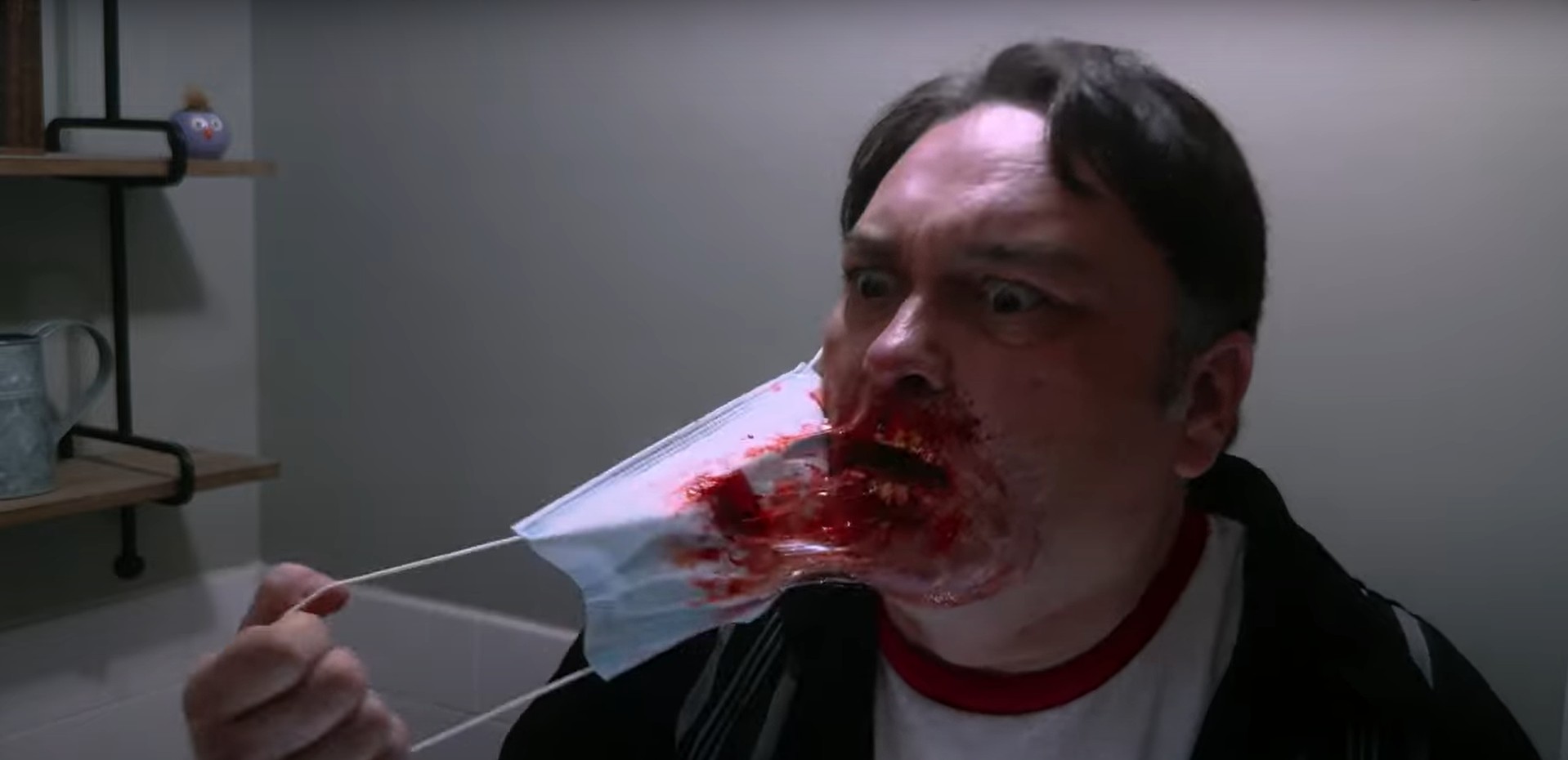
COVID-19 virus has the world masked up and social distancing in full effect with experimental vaccines being rushed toward a rollout.  For Glenn Rollins, being under the weather now for weeks still hasn’t convinced him to inject himself with experimental Government drugs meant to combat coronavirus but when wife Janelle does everything in her persuasive power to convince him to take the vaccine, Glenn reluctantly agrees to receive the shot at his doctor visit the next day.  What Glenn is given is no ordinary coronavirus vaccine, but the new Alpha-21 concoction just released for public intravenous inoculation, an rapidly tested serum that boils subjects from the inside-out.  Instead of completely exploding in a pile of blood and sinew, Glenn’s rare blood type maintains a semi-rigid form and the only way he can maintain from melting into a pile of goo is to feast on the blood and meat of the living in his zombified state.

The cult director behind “The Dead Next Door” and “Robot Ninja,” J.R. Bookwalter, returns to take a hypodermic needle stab at a world-crippling pandemic horror inspired by the COVD-19 virus and how the FDA rushed to approve emergency vaccinations on U.S. citizens in a comically satirical, gore-and-goo-filled comedy-horror.  The movie, “Side Effects May Vary,” is Bookwalter’s first film in over 20-years, the last being “Mega Scorpions” that only saw a streaming release due to a folding in the financing of a distribution deal.  “Psycho Sisters” and “Her Name Was Crista” writer James L. Edwards, who’s collaborated with Bookwalter since the very beginning of the filmmaker’s career, pens the script and also stars in the disturbing desquamation of Glenn role.  “Side Effects May Vary” is the second direct-and-writer production between Bookwalter and Edwards with the first being 1996’s “Polymorph.  As like many of Bookwalter’s films, he produces under his longstanding own indie label Tempe Digital serving as executive producer alongside Edwards producing and wife Lana Bookwalter as associate producer.

I wouldn’t call Glenn Rollins a right-wing conservative antivaxxer but, instead, Glenn’s a doubter of the vaccine’s testing measures with a range of side effects from an experimental injectable could cause from a vaccine so unproven swirling inside his head.  That’s the satirical concept Bookwalter and Edwards put into motion and deliver fully charged as mild-mannered Glenn gorges on the innards of family, friends, neighbors and strangers after unpleasantries arise from an untested product.  The likeable Rollins rears an ugliness brought upon by pressures of vaccination, especially from his wife Janelle, played by indie horror scream queen Tina Krause (“Crimson Nights,” “Bloodletting”).  Another scream queen of legendary acclamation is in on the fun with Brinke Stevens (“The Slumber Party Massacre,” “Sole Survivor”) as the saucy nosy neighbor who knows all the sexual acts by their sporty designations.  We journey from the beginnings of a substance subjugation and are wiggled into a buddy cop scenario between Glenn Rollins’ best friend and former cop turned private eye Jack Murray (Drew Foriter, “Trivial”) and his former boss and one-night-stand Chief Tom Danvers (“Floyd Ewing Jr., “Robot Ninja”) and their sudden thrust into an investigation to find Glen under their distinct impressions of his character, plus that one sexual encounter between them, makes for a good dynamic of sidetracking diversion that interrupts a constant flow, which can get stale, of formality and responsibility of chasing a killer.  The cast Sasha Graham (“Trivial”) as the prescribing primary care physician Dr. Fisher, Wendy Zier (“Trivial”), Tom Hoover (“Ozone”), and David Bachmeier (“Bathtub Shark Attack”) as the first scene test subject of Alpha-21’s explosive results. 

A relief will wash over fans to know J.R. Bookwalter is not dead in the water when it comes to directing.  A long hiatus was exactly what Bookwalter needed to get back to form after a string of mediocre horror that didn’t leave a bad taste in our mouths but wasn’t quite the standard of the Ohioan director’s carnage-laden caliber.  “Side Effects May Vary” spoke to nationwide fears during the global pandemic, in a humorously horrifying way, and even extends beyond that now historical portion of our time into the forefront of our minds that we may have not have yet seen the actual long-term effects of the COVID shots, if any.  The intention of “Side Effects May Vary” is not to instill fear, though does create a fraction of concern, but is more to the tune of exaggerated those once media covered and one-sided fears to the extreme by turning injected patients into boiling potato sacks of putrid cannibalism.  It’s pretty damn funny and gross.  To create a vibrant visual veneer, Bookwalter plays with different lighting angles and color gels of primary neon illumination that takes characters out of the real world and places them into a fantastical neon-noir that surrenders to the sexualized, the scandalous, and the scary story bits and pieces. The buddy-cop, manhunt storyline works as bodies are left as breadcrumbs for the two conflicting investigators that are on the precipice of making a final decision on Glenn Rollin’s fate while Glenn himself battles internally, both physically and emotionally, his wretched state that needs blood to slow down the process of his metaphorizing melting but his mild-manner, nice-guy identity doesn’t want to harm a soul. 

Tempe Digital castrates the COVID cure scare with an incredible liquescent comedy-horror in “Side Effects May Vary” on a director’s cut Blu-ray home video.  The AVC encoded, 1080p high-definition resolution, BD25 comes with a ton of color, contrast lighting, and a decent compression codec that makes the low-budget production appear a step or two up the upscale staircase.  The heavy neon light cuts into the skin and textural details but scenes more naturally lit, such as in the outdoors, fair better with more granular inside a digital presentation in its original aspect ratio of 1.78:1.  There are two English audio mixes available for selection and audiophile setup in a DTS-HD 5.1 Master Audio and a Dolby Digital 2.0 Stereo.  The surround sound selection has a semi-fluid dynamic that works in a contained closed to medium shot arrangement and doesn’t expand to anything beyond to warrant an immersive experience aside from a healthier fidelity of the dialogue, proximity milieu, and the gruesome creature sound effects.  Dialogue can get out of the reigned in alignment that breaks in with sparse unfiltered hissing but otherwise renders cleanly and clearly through the 81-minute runtime.  English subtitles are available.  Special features encoded are an audio commentary with director J.R Bookwalter, a Harris Theater Q&A in Pittsburgh at the Roadshow Opening Night with film guests Bookwalter, writer-star James L. Edwards, and actor Floyd Ewing Jr., a theatrical roadshow cut trailer, a teaser trailer, and the theatrical trailer. Art from the Alex Sarabia and Karl Munster collaboration gives a pulpy artistic rendition of Glenn Rollins oozing deterioration inside a clear Amaray Blu-ray with no supporting supplements other than a cropped version of the art on the disc. The not-rated, region free disc is a perfect cure for what ails you – bad indie comedy-horror done right!

Last Rites: A global pandemic killed millions of people, the silver-lining is now we can look back at that time of isolation and fear and honor those deaths with a coronavirus and rushed-cure blend act worthy of being to the likes of “Bad Taste.”

“Side Effects May Vary” From This Blu-ray Drug!

EVIL Nazis, Mad Lumberjacks, and Insatiable Nymphomaniacs! “Up!” reviewed! (Severin Films / Blu-ray)

It Won’t Be Hard to Get it “Up!” on Blu-ray!

Perverted Nazi, Adolf Schwartz, is murdered in his castle’s hot tub after a masochistic romp with his paid sadists, including male Dom named Paul.  Paul helps run a small restaurant-bar owned by his wife, Alice, and the two have a good thing going about town in working together and making love day-in, day-out.  When busty new neighbor Margo Winchester moves to their quiet, quaint town, she’s immediately raped by the locate hoodlum and kills him defending herself.  Officer Homer Johnson witnesses the entire ordeal and amends his report to reflect the hoodlum was not killed by Margo but rather fell off a cliff in order for him and Margo be constant bedfellows, but when Margo begins to work for Paul and Alice, a quadruple love-triangle ensues and there’s still the matter of who killed Adolf Schwartz in a small wooded community filled up to the brim with massive sexual appetites and ulterior hijinks. 

“Up!” is Russ Meyer’s 1976 released, oversexed gambol bringing with it an explicit nature a polyamorous, sex-for-all, character cast of players riding overtop a threadbare plot of that resembles something along the lines of murder mystery.  Is this Russ Meyer’s attempt the Italian giallo?  Offscreen killer, gloved hands, multiple suspects, most certainly a very vivid fleshy aesthetic, and a big brass jazz orchestra to back it up musically, “Up!” carries most, if not all, of the trademark building blocks that makeup popular thrilling subgenre but tailored in only a pageantry of perversion only Russ Meyer’s knows how to do it from his own imagination and story collaborated with Anthony-James Ryan (“Vixen!”) and the late, esteemed critic Robert Ebert.  Once under the working title of “Over, Under and Up!.” Meyer’s produces his production under his company RM Films International with associate producing credits attributed to long term collaborators Fred Owens and Uschi Digard.

Like most of Meyer’s auteur films, “Up!” is a quirky plotted story with quirky plowing characters converging into idiosyncratic copulating chaos surrounding a singular problem.  The cast of charactes are just as eccentric and eccentrically written as the inside of Meyer’s rapid storytelling and no-nonsense nudist eye.  Multiple principal leads create a confounding multi-string focus with an esemble character contingent that receive their own backstories, their own emphasized subplot tangents, and they crisscross paths with each other through an array of coitus montages that’s it would be no surprise if this small woodland community all had raging case of singularized strain of syphilis.  “Up!” opens with the masochist perversions of a Hitler variant in Adolf Schwartz (Edward Schaaf, “The Flesh Merchant”) in the throes of being self-purposefully exploited by bosomy gimp The Headperson (“Candy Samples, “Beneath the Valley of Ultra-Vixens”), the ball-bustin’ Ethopian Chef (Elaine Collins, “Fantasm Comes Again”), the Asian persuasion Limehouse (Su Ling, “Ilsa, Harem Keeper of the Oil Sheiks”), and whip-master and male dom Paul (Robert McClaine, “A Very Natural Thing”).  Paul’s the only character to continue through the story narrated nakedly through our breaking the third wall maestro, The Greek Chorus, played lively and in a state of fully and forever buff by former Russ Meyer wife and adult film star Kitten Navidad in her first principal acting role.  Paul along with Alice (Janet Wood, “Fangs!”) have a more stable presence in the story and same goes for who would likely be “Up’s!” lead character Margo Winchester (Raven de la Croix, “The Lost Empire”) and one of more prominent male lead characters, officer Homer Johnson (Monty Bane, “Sleepwalkers”) in a fervorous fit of philandering and fuc…I mean sexing…between the four while running the town full of loggers and locals on Alice’s grand opening of her second restaurant jamboree.  There are other side characters too that come and go, have more stage presence than others, but are always circled back to in flashback and in the Greek Chorus’s audience-directed commentating of suspicion and events, such the lesbian truck driver Gwendolyn (“Linda Sue Ragsdale), rapist Leonard Box (Larry Dean), the smoking peace pipe that is the stark naked Pocahontas (Foxy Lae), and Bob Schott (“Gymkata”) as the large grunting logger Rafe.

If what’s been described hasn’t been clear, perhaps to my horrendous descriptive writing no doubt, “Up!” has a political correctness that goes right into the garbage in scene one with a thrust-hard jab right at Adolf Hitler’s sexuality in the most hardcore and kinky perversity and, from there, plenty of other sexual objectifications against men and women, Native Indian American stereotyping, teetering racial commentary, and an overall nonchalant air quality on intimate encounters in Meyer’s inclination for spoof, satire, and sex.  Meyer shows no shame, remorse, or even letting his lead foot off the break toward the highly energetic debauchery between character carnality and his rapid-fire editing style that, as like throughout his career, has been seamlessly well put together to keep continuity integrity and make sense of the whole damn bedlam of frenzied bedding, violence, and fornicating flashbacks, but it must be noted that Meyer’s giallo with gusto storyline is severely stretched thin.  Unlike the “Beneath the Valley of the Ultra-Vixens” that was released a couple of years later, the same harnessed liveliness charged through both films is not as focused in “Up’s!” common core narrative primarily because of the continuously dwelled upon flashbacks of reintroducing characters repeatedly to build suspicion upon those possibly “Clue”-like designed list of suspects.  Campy and a jovial orgy, peppered with some tension and bloodshed excellent junctures, “Up!” is above and beyond a good time sexploitation drivellers will treasure. 

The latest release from Severin’s Russ Meyer’s Bosomania collection is “Up!” now on a 1080p high-definition, AVC encoded, BD50 Blu-ray presented in a widescreen 1.85:1 aspect ratio.  Scanned and restored in 4K from the original 35mm camera negative, “Up!” visually tickles the right spots with a vibrant and naturally granulated presentation, balanced in its color diffusion, and accurately represented and reproduced skin and texture tones to enhance the period’s cinematic appearance.  As far as pristine prints, the 35mm stock has held the test of time in its preservation without any major damage or plight hiccups aside from the more protuberant dust, dirt, and smaller scratches.  Contrast levels are a minor sore point in rendered night scenes that reduce delineation for more the nighttime effect but doesn’t hurt the overall value and restoration efforts.  The English LPCM mono track lacks the vitality as any fidelity true reproduction through a surround mix may offer as “Up!” is a fast-paced, ripping-and-roaring, chorus of sights and sounds meticulously constructed by the auteur himself but the mono honestly enthusiastic and we’re still able to distinct each note and ruckus through Meyer’s rapid-fire A/V design compositions, captured precising and without interference or intrusion through post Foley and dubbing work.  Same goes with ADR that’s always seemingly 2 or 3 layers above the rest of the soundtrack as Meyer’s script is flamboyantly dialogue heavy with Kitten Navidad’s narration of events and plenty of vocal deluge for flirtatious affairs by way of innuendo and blunt channels.  English closed captioning is available on this release.  The special features are not as plenty on “Up!” as they are on other Bosomania releases with an audio commentary by film historian Elizabeth Purchell, who was also on the previous Russ Meyer collection titles, an archived interview No Fair Tale….This! from The Russ Meyer Trust with star Raven De La Croix, and a radio spot for the feature.  Displayed like the rest with a primary red and black board surrounding white padding, “Up!” is down with the deep cleavage of Raven De La Croix on its one-sided cover art.  Inside the black Blu-ray Amaray, the disc is pressed with the same image but with greater resolution detail of Margo Winchester’s best assets in an open cut dress.  The region free release has a runtime of 80 minutes and is unrated.

Last Rites: A romp tour-de-force, “Up!” and the rest of the Russ Meyer’s Bosomania collection is Severin Films’ most bust-filled merry-go-rounds that’s one-part Benny Hill, one-part Fanny Hill, and all parts an sexploitation extravaganza.

It Won’t Be Hard to Get it “Up!” on Blu-ray!