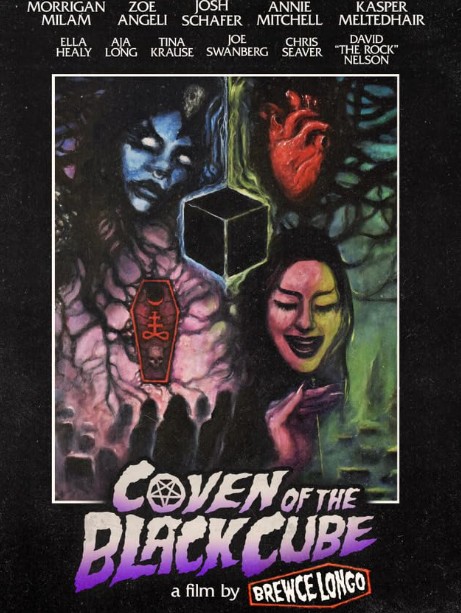
Romance, Arsenic, and EVIL from the “Coven of the Black Cube” reviewed! (Blood Sick Productions / Blu-ray)

Don’t Take a Drink from “The Coven of the Black Cube!” See On Blu-ray!

In a romantic tale brewed in turmoil and death metal, Violet’s relationship with girlfriend Gumby has spiraled into rocky territory.  Meanwhile, a coven of witches, the coven of the black cube, use a façade storefront to sell their arsenic infused potions to women who patron the store looking for spells, elixirs, or anything they can get their hands on to give them their just desserts.  Along with a steep price for the potion, the coven’s intent is to also extract the hearts from the corpses for black ritual purposes.  When Violet meets Clover, one of the coven witches, she’s smitten with their newfangled friendship, entrusting Clover enough to naively purchase the potion that only truly works if the other person actually loves them back.  Violet’s plan backfires when the potion takes Gumby’s life but in tragedy she finds solace, warmth, and love from Clover as the two find a stronger connection than before.  Yet, Clover’s coven doesn’t see their amorousness as conducive and plot against Violet and her inner circle who know a little too much of their murderous plans. 

“Coven of the Black Cube” is the 2025 alternative-goth romance horror from Brewce Longo.  The 2024 released film is Longo’s third full-length feature film behind “Blood Sick Psychosis” and that timeless – or was it tasteless – holiday classic, “A Corpse for Christmas.”  Longo pens the shooting script from a story concept by Longo, the film’s costar Zoe Angeli, and Josh Schafer, a VHS aficionado with producing involvement in the VHS documentary “Adjust Your Tracking” and videotaped themed adult animation film in “The Magnificent Kaaboom!!! VHS.”  “Coven of the Black Cube” takes a shine to Schafer’s enthusiasm for the antiquated media format as Longo devises an analog appearance from shooting with a VHS camcorder.  Longo and cinematographer Michael DiFrancesco serve as executive producing financiers of the lo-fi and underground horror production with “Busted Babies’” X Menzak and Charles Smith as co-producers. 

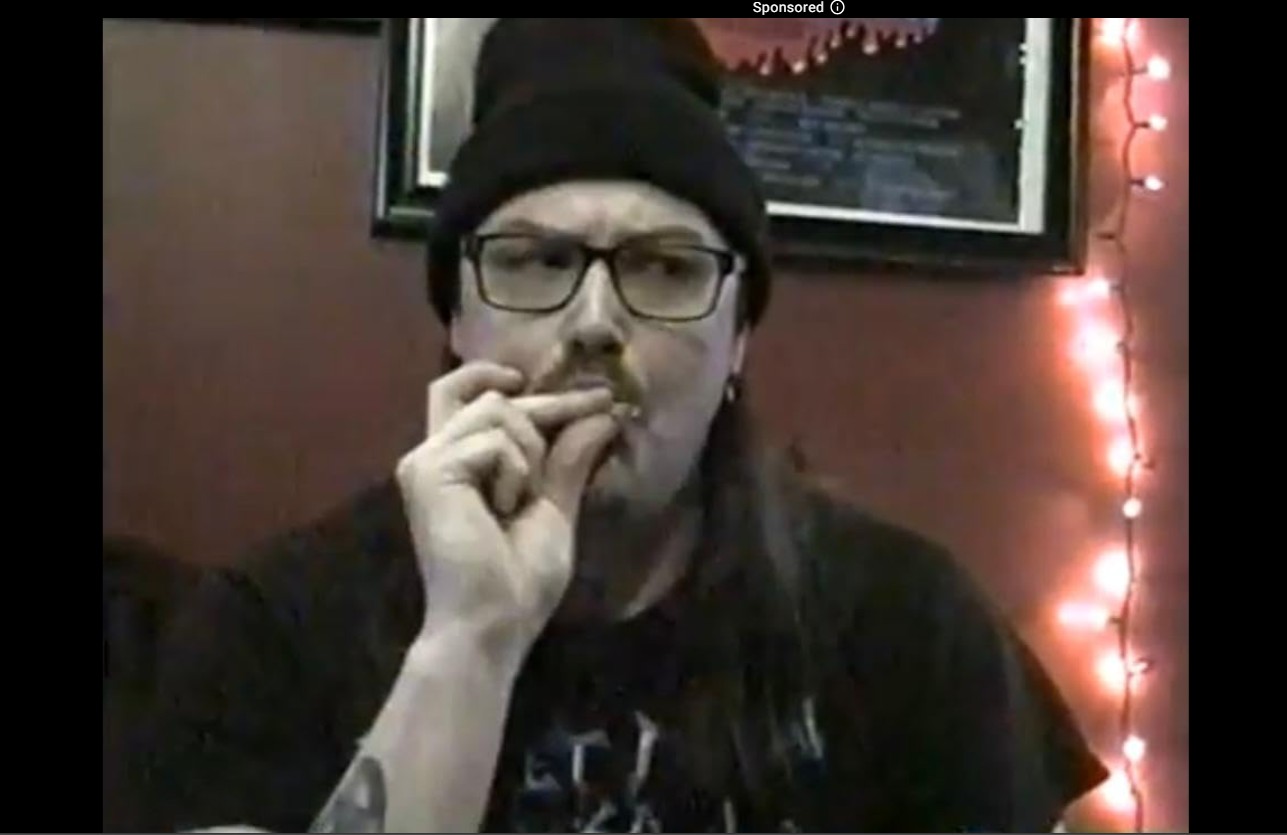
At the dark heart of the story, two women devoid of true love are a piece of a larger pie of characters and while Morrigan Thompson-Milam (“Debbie Does Demons,” “XXX-mas”) and Zoe Angelis (“Flesh Eater X,” “A Corpse for Christmas”) play the characters on opposing sides of the morality scale who find a connection of desire for each other’s comfort and company, there is often a focus on Milo, the laissez faire pot shop, VHS, and pizza-making entrepreneur, and his frustrated wife looking for husband humiliation.  Milo’s a long haired, mustached, glass-wearing, dope smoker with a penchant for Carl J Sukenick movies and the finest college combo of cold pizza and warm beer.  “Pigshit’s” Josh Schafer cowrites in his character’s love for the underground and obscure horror in a retro-VHS format and instills an uncouth yet gentle behavior for a likeable Milo, but Milo’s is benign to “Coven of the Black Cube’s” theme as well as his wife’s (Annie Mitchell, “A Corpse for Christmas”) distaste for his uncivilized and disinterested spousal conduct.  There’s segment has little value other than to be another coven case of trying to get rid of one’s husband and to be not a good friend, but just a floating friend to Violet and Gumby (Kasper Meltedhair, “Darbie’s Scream House”) that supplies them weed from time to time.  We’ve seen Angelis before in more X-rated material from extreme indie filmmaker SamHel’s short films “Vania” and “LoveDump” but her role as Clover takes it down a notch by only going full nude for a steamy moment, exposing just enough yet plenty for a lead into sex scene that fades to a black transition just before getting down with Violet.  Clover and Violet relate to effectual romance that’s organically not sustainable due to the coven’s strict unwritten policies on privacies with Luna (Aja Long) as the representational face of the coven head who will do what is necessary to keep their practices a secret.  The cast fills in with Tina Krause (“Bloodletting”), Joe Swanberg (“You’re Next”), David ‘The Rock’ Nelson (“Blood Sick Psychosis”), and Chris Seaver (“Scrotal Vengeance”).
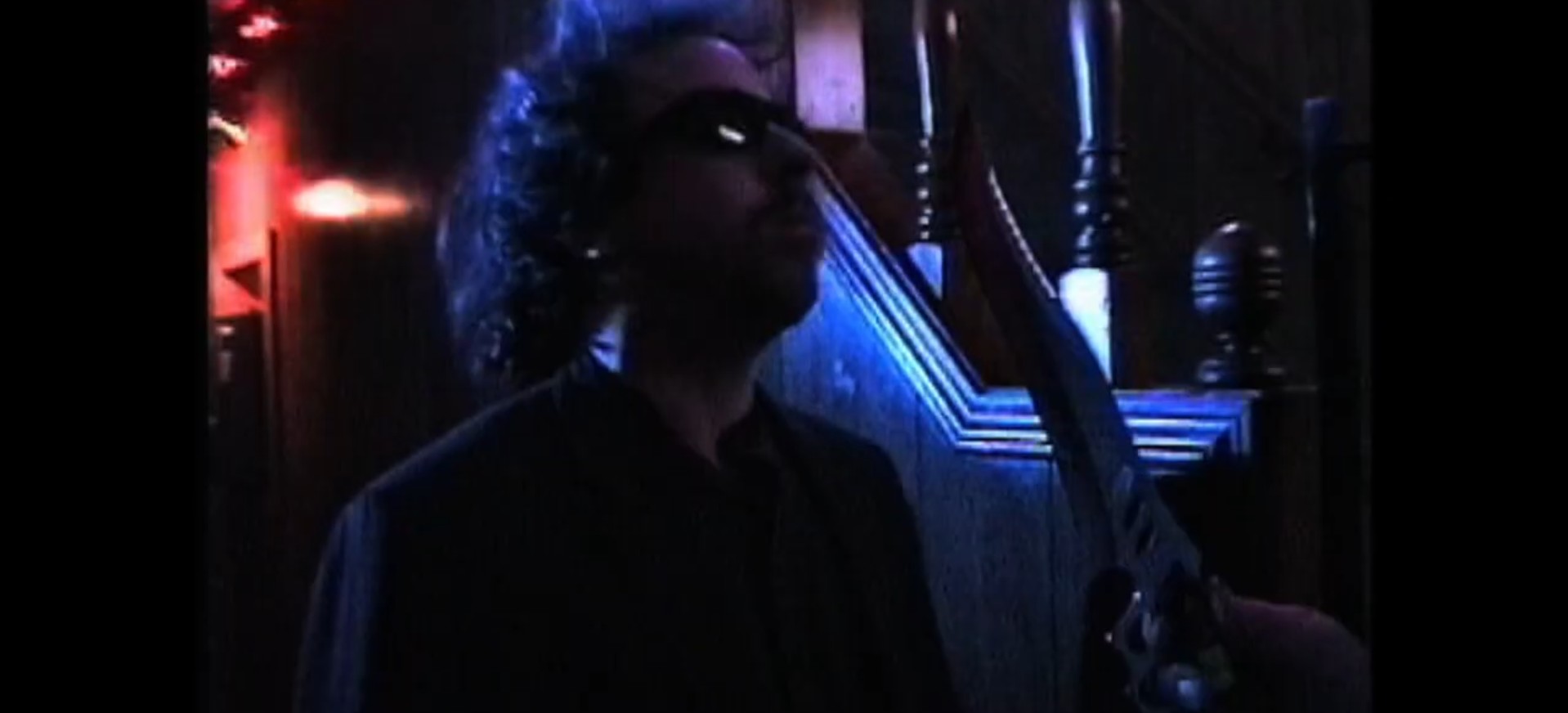
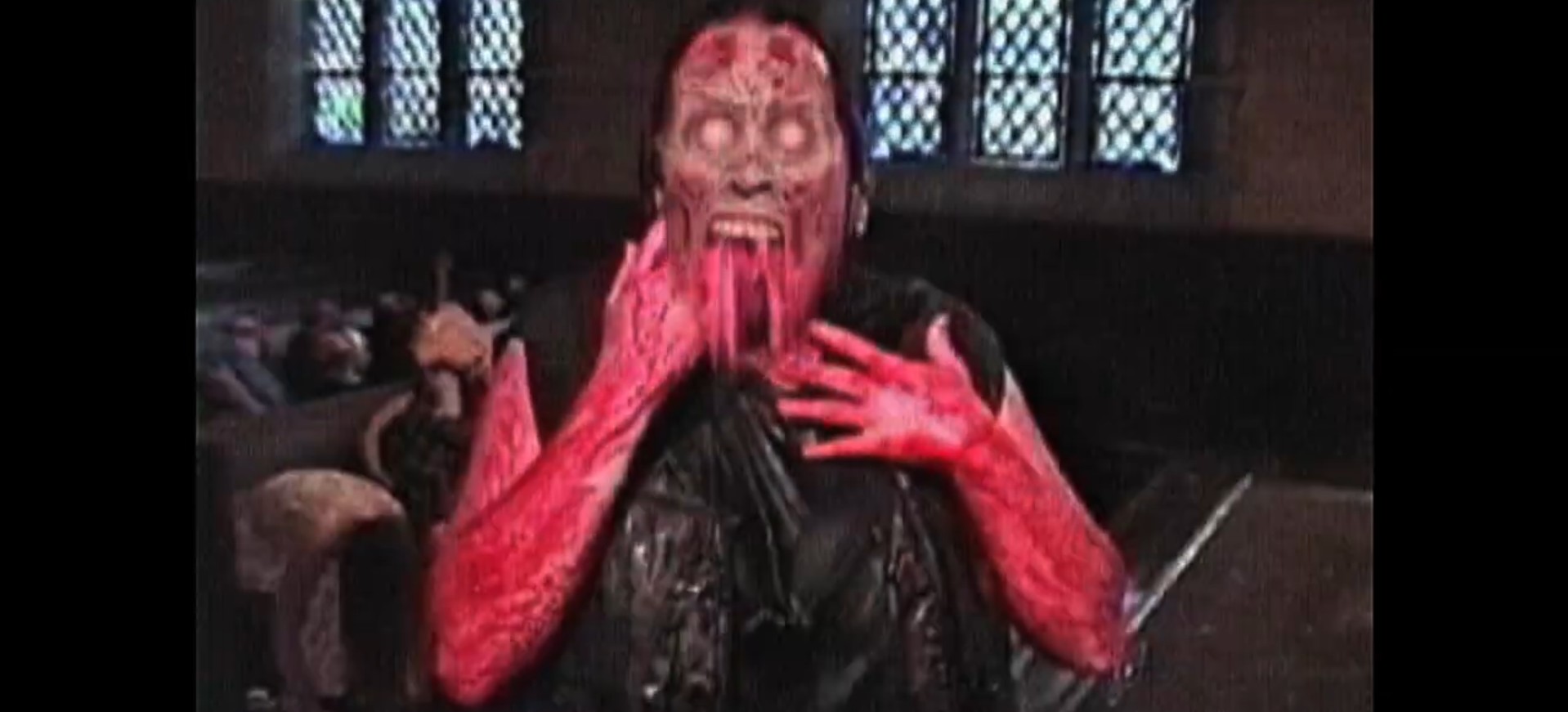
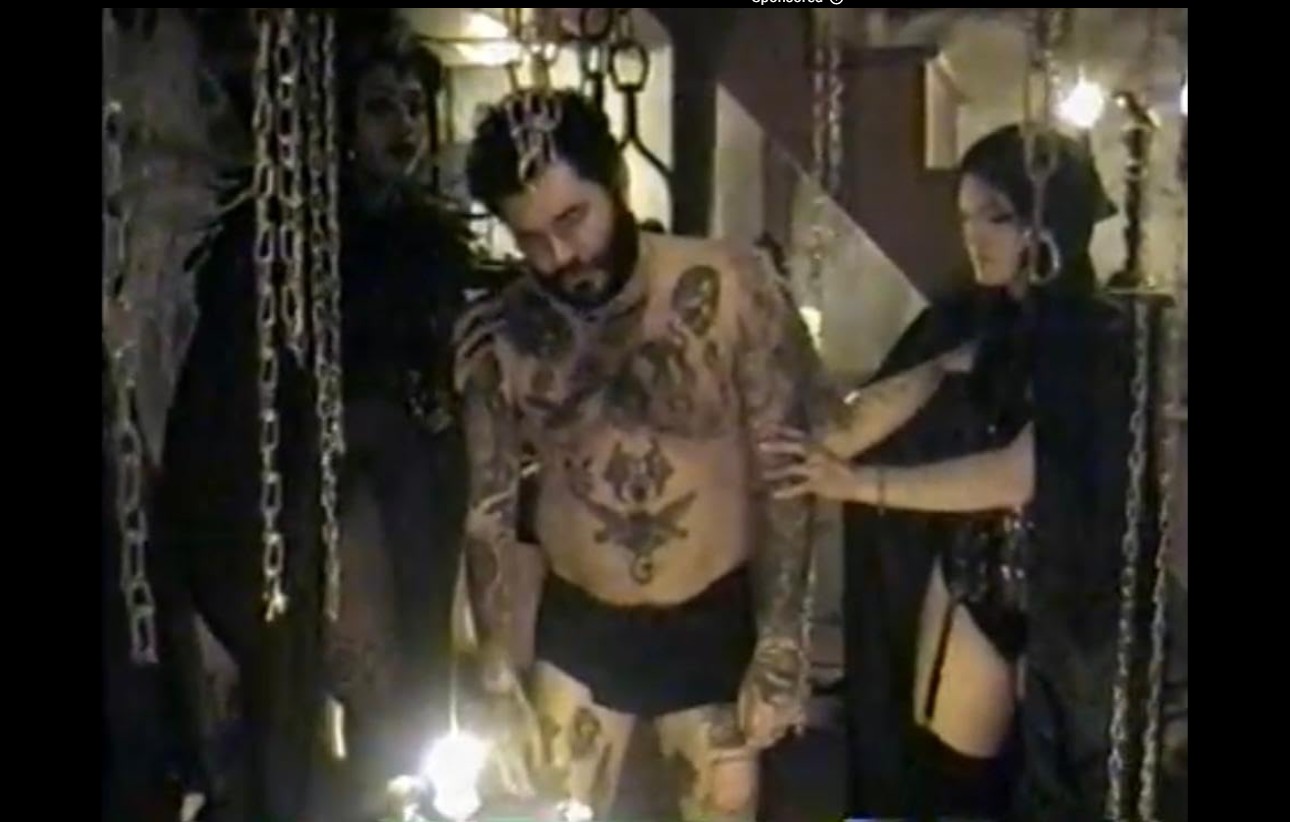
Underneath the darkling foundation and it’s deathrocker-and-hillbilly rock scene, “Coven of the Black Cube” has perfected the notes of being an analog horror in the modern, digital age by actually using era specific filming equipment to achieve a natural aesthetic with tracking lines, interlaced blocking, and a low-bandwidth process with magnetic tape decay resulting in color shifting and bleeding of the warmer tones produces a nostalgic exactness, an infinite times better aged look through proper medium than a digital image could ever try to reproduce through  being played back through a VHS recorder or any VHS filter.  High praise for a more than accomplished film aesthetic can only push its success so far as the story, a dark-and-grim queer romance, struggles to keep focus with a disjointed narrative, diluting too much of the Violet and Clover rising relationship within the killer-coven context.  Sidebar scenes of Milo’s substory, subjecting his wife’s disdain for his change over the course of the marriage and the subsequent consequence of her plot to do harm to him, dissent the story’s core queer love affair tone too much and too heavy-handily while keeping an overtop cloud of wicked witchcraft whirling about between murdering men, selling pernicious beauty products and services, and holding dark rituals involving a coffin, torture of manhood, and ill-effect open-heart surgery.  Gore effects are moderately effective, especially with the back alley penile canal probing that’ll have all the men cross their legs in fear but also include disemboweling and heart removals.  One item that really digs under the skin, nagging for it to be further explained, is the significance of the black cube.  It’s symbol is worshipped but is still an ambiguous cause or idol the coven sees fit to follow; however, a little research suggest Longo’s story pulls inspiration from the occultist and magical religion Cult of the Black Cube that has been segmented over he course of time, one of those segmentations being blood sacrifices in order to harvest souls for possibly Satan and that closely resembles the filmic plot. 
Blood Sick Productions receives the high-definition Blu-ray treatment for “Coven of the Black Cube,” distributed by MVD Visual.  Encoded onto a BD25, the AVC encoded, 1080p Blu-ray, presented in a 1.33:1 aspect ratio, is an analog enthusiasts wet dream being shot on magnetic tape rather than digital, creating all sorts of color bleeding, interlacing issues, and fuzzy imaging that can both be an instilling nostalgia of reminiscent low-budget 1980s horror and a videophile’s ultimate night for apex image quality.  Longo’s intentions were for the former, a love letter to the VHS era, under the cinematography of Michael DiFrancesco who knew how to correctly light and angle certain shots ot appear vivid, such as in the nightclub scene where Violent and Clover meet eyes, and for the rest of the film use the inherent camcorder’s constraints to let the low resolution and limited color range to take the wheel.  The English PCM 2.0 stereo has a stronger mix than expected in contrast to the video quality, filling in the dual output with unrefined and flat but clear and prominently forefront dialogue, nonetheless.  A killer metal soundtrack is the film’s pride and joy, dispersed throughout appropriately emotionalizing and accentuating the type of scene, with performances from Sing Slavic, Fishgutzzz, Slasher Dave, ShitFucker, Blank Spell, Xarissa, Sorrow Night, deleter, Heavy Temple, Soft Teeth, and more, a full list is inside on an inserted one-sided sheet in their respective band fonts.  Other physical properties of include a harsh pastel and crudely demonic illustration by Paul Barton.  Inside with the insert sheet, the disc is pressed with a giant black cube, bordered with archaic rue figures in a bloodred backsplash.  Encoded special features include a commentary writer-director Brewce Longo, writer-star Zoe Angeli, writer-star Josh Schafer, and director of photography Michael DiFrancesco, a behind the scenes look, and the trailer.  The region free encoded disc has a runtime of 97 minutes and is not rated.

Last Rites: An alternative witchy tale for the alt-scene, “Coven of the Black Cube’s” nostalgia for the analog and the misandrist femme-fatales marks a different kind of cauldron-stirred potion for the black cat and broomstick subgenre but there’s an imbalance of story here that’s difficult to ignore with its wandering path that takes focus away from the significance of the black cube, trading defining substance around the coven’s existence for a quick cementing romance.

Don’t Take a Drink from “The Coven of the Black Cube!” See On Blu-ray!

Yorgos Lanthimos Early Day EVIL is Not to be Missed! “Dogtooth” reviewed! (Visions Home Video / 4K UHD)

“Dogtooth” Available on 4K UHD Blu-ray from Visions Home Video!

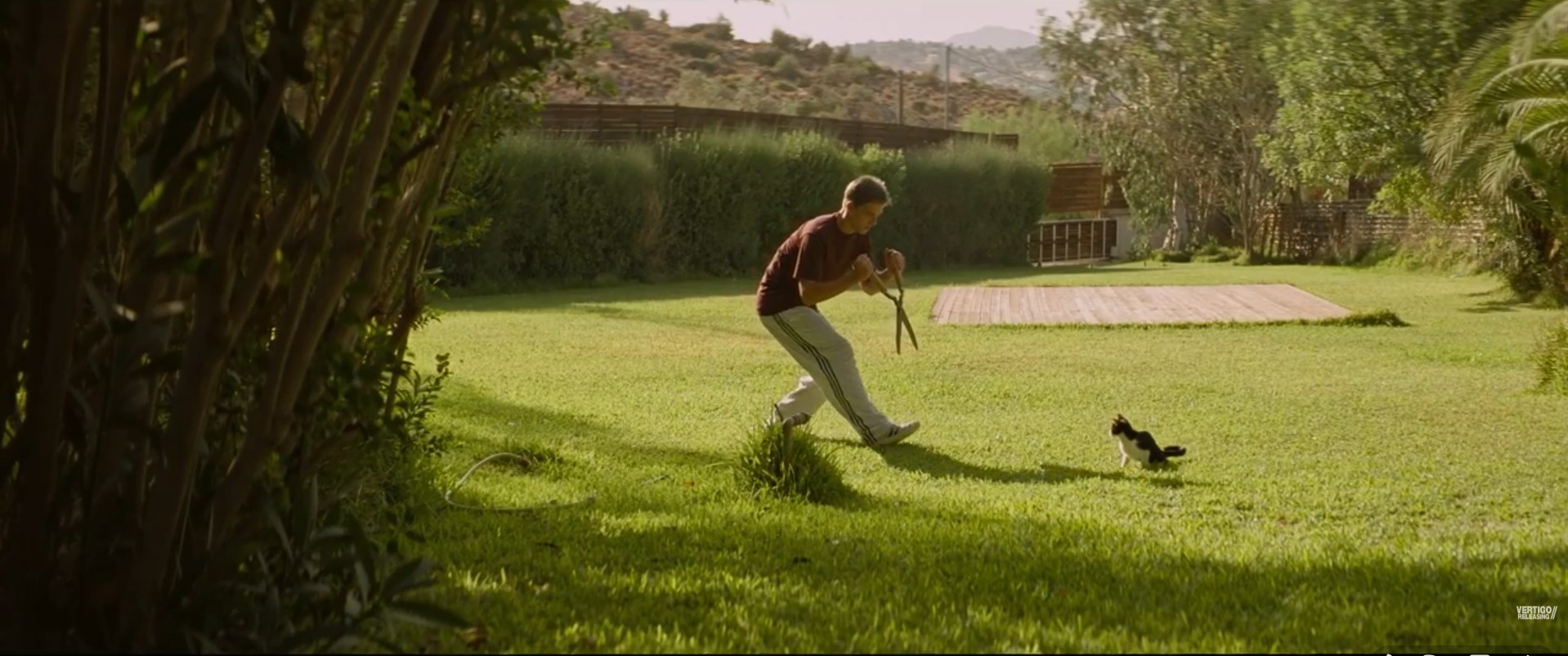
Three adult children remain on home grounds by their manipulative father to protect them from the outside world and keep them suspended in a childlike state.  Educated on a basic level and even educated incorrectly to strategically keep their spongy intellect pure and from asking too many questions about the curiosities beyond the front gate, the children must complete chores and workouts under their father’s regimental thumb, earning tokens to keep them engaged with simple activities and rewards, but the outside can’t be stopped from seeping in with exterior influences raising more questions than the father can keep up with lies, excuses, and fabricated stories.  If he finds his children entertaining an inspiration, his immediate reaction is to manipulatively redirect or even use violence if necessary to put his children back in a stationary line, scaring them of dangers outside the home, such as the killer ferocity of a household cat as it’s curiosity that killed the cat.  Or is it the other way around, did the cat kill the curiosity? 

Way before his 2026 Oscar nominated film “Bugonia,” way before his quicky dark-comedic Frankenstein variation “Poor Things,” way before the shapeshifting deadline of forced relationships in “The Lobster,” offbeat and provocative Greek filmmaker Yorgos Lanthimos directed “Dogtooth,” the 2009 psychological horror-drama that displayed a disturbing power-dynamics of a nuclear family by a manipulative father of three.  Lanthimos co-wrote the script alongside Efthimis Filippou, a regular collaborator with the director from Filippou’s debuting “Dogtooth” script up until 2017 psychological, life invasion thriller “The Killing of a Sacred Deer.”  “Dogtooth,” or “Κυνόδοντας” in the native Greek vernacular, is filmed in the heart of Athens, coproduced between Lanthimos, Yorgos Tsourgiannis, and “Do It Yourself” producer Katerina Kaskanioti, and is a collaborated studio project of Boo Productions, Greek Film Center, and Tsourgiannis’s Horsefly Productions. 

“Dogtooth” consists of a tight cast of six actors between the parents, three kids, and a security guard employed at the father’s manufacturer.  Some would say Christos Stergioglou plays one of the worst manipulating parents on screen of our generation with a calm demeanor and a convincing nature while having a ferocious side of physical punishment against those going against the grain.  With a small cast, those taking the beatings can be his children.  “Singapore Sling’s” Michele Valley is in the mother role, an equal schemer in her abetting of the problematic parenting, but it’s quite unclear whether the Mother is either in on the Father’s paranoic protective plan or whether she too is a victim of his deceit.  While she can be seen deriding her children in seldom words and violence, she too follows Father’s strange ways:  pretending to be a four-legged guard dog like her kids, never leaves the house, succumbs to Father’s sexual habits, etc.  The sex never extends from parent to child, leaving most of Father’s perversities kept intact by Mother and a good old fashion VHS stag tape, but there’s still exploitation done amongst the children.  Treated to his own arranged woman to bed, overseen by his Father, the son’s sexual hormones and desires are made docile by the security guard Christina (Anna Kalaitzidou) from his father’s work and is seen as an act of transactional duty rather than having a presence of affection.  Christos Passalis does embody his character with a young, pre-adolescent boy with tempers, sibling competitiveness, and appropriate reactions to all things that accompany a young boy.  Eventually, after Christina is let go exploiting and influencing the younger daughter with sexual tradeoffs and forbidden contraband, the son is forced to have sex with one of his sisters to maintain the stability of a pure environment.  Angeliki Papoulia and Mary Tsonia are the Older and Younger Daughter with similar appearances and attributes, too exemplifying childlike qualities, that make them also like twins in how they act and how they act with each other with the Eldest naturally, without purposeful intent, trying to break free of her father’s grip in the way children do – in irritational and hurtful ways.  Other than Christian, none of the main principal characters have a name, leaving them to be a representation of any family of any kind out in the world.  Steve Krikris, Sissi Petropoulou, and Alexander Voulgaris round out the film’s supporting parts.

Yorgos Lanthimos takes helicopter parenting to the extreme but in subtle, death-by-a-thousand cuts techniques simply by sheltering in place his entirely family for years and himself teaching his children lessons of his own fabrication.  Taught the world is a dangerous place, where cats are the most feared and deadly animal who killed their exiled “brother”, the children fear what’s beyond their sprawling compound so much they don’t dare cross the gate line.  Vulgar worlds like pussy are defined with innocuous objects, such as lamp light, and lesser provocative vocabulary, in this case zombie, is given the designation to little yellow flowers.  The children’s minds are so brainwashed, their identity is also erased along with their names, mostly busying themselves in the same sterile clothing that evokes no emotion whatsoever.  Lanthimos extends this common place sense of being into the character interactions, whether between family members or the supporting characters, that make the entire tone feel that more unsettling and perfunctory.   The sexual tension is chronic, even between the siblings it’s uncomfortably prevalent, but never malicious on the surface as the acts are kept dutiful and necessary to sustain dominion over the children and perhaps even the wife despite its icky film coating.  The whole idea of the titular dogtooth is a rite of passage from childhood to adulthood, the latter suppressed by the weaponization of sex, education, and threat, for when the permanent adult canine, or dogtooth as Father puts it, falls out is when a child can leave the next and in that is manipulative false hope that one day, the strongest tooth, it’s ability to rip through meat and sinew, will fall out on its own accord, essentially making the children a metaphorical dogtooth that needs forceful extraction from its rigid system of enameled manipulation.

Courtesy of Visions Home Video, a premium home media label from Vertigo Releasing, “Dogtooth” arrives on 4K UHD Blu-ray in the UK-Ireland.  Presented with 2160p in the original aspect ratio of 2.39:1, the HEVC encoded BD100 has a superior encoding compared to previous models and other region 4Ks with a Yorgos Lanthimos approved transfer of the 35mm negative that’s contains and controls the grain that once had issues in previous releases with ill-defining effects on darker sections of the scene, establishing corrected contrast where intended and needed other releases failed to accomplish.  A natural light grading shines through with immersive coloring from the monochromic, or achromatic, outfits to the saturation of greens of the compound estate, a dynamic range of the metadata, DolbyVision.  There’s very minor speckling off some individual cells on the stock but the overall product is the best “Dogtooth” has looked and deserves it.  There are a pair of audio layers available:  a DTS-HD Master Audio 5.1 and a LPCM 2.0 Stereo both in Greek with optional English subtitles.  The monotonic dialogue alleviates many issues associated with these tracks as there are no inflections, tones, forced accents, or any other shaded types of vocal manipulation.  The plainspoken, forth-right conversing creates a naturally prominent layer that’s clean and concentrated above all else.  That’s not the say the soundtrack or the ambience drags or lacks behind though it is slightly less dynamic in its diegetic range.  You won’t be fully immersed with audio hits through side or back channels, but every layer has a stronger and bolder presence than before in previous releases.  Special features include a film in tandem audio commentary with stars Angeliki Papoulia and Christos Passalis, an archived interview with Yorgos Lanthimos from 2009, a 2025 London Film Festival stage interview with more in-depth insights from Lanthimos, three deleted scenes, and two original trailers.  Visions home video release is a vision in itself starting with the beginning layer, a cardboard O-ring slipcover with a somewhat glossy, upscaled image of one of the female children locked behind a bar-cell of bare legs.  The same image is represented as the primary sleeve art inside a Scanova case (no Blu-ray logo at the top).  Inserted inside are four collectible cards of high-quality stills from the film and a double-sided folded mini-poster.  The region free release is UK certified 18 for strong sex and nudity inside the duration of 97 minutes. 

Last Rites: “Dogtooth’s” disturbing fan outs, spreads like an infection of manipulation, but is localized in and around the property that’s become a cage, or an invisible fence, with the latter being more poignant to the storyline with the father having them bark and be on all fours like a dog, a pet symbolism indictive of egocentric power over those one can control from the beginning. The new Visions Home Video 4K UHD release is a new and improved upgrade for any collector’s wall.

“Dogtooth” Available on 4K UHD Blu-ray from Visions Home Video!

EVIL Sleeps with Women to Anticipate the Antichrist’s Arrival! “Violent New Breed” reviewed! (Visual Vengeance / Blu-ray)

“Violent New Breed” is a violent Visual Vengeance video available now!

The city of New York is under siege by a new drug as the narcotic Rapture sticks in the arms of his addicts, leaving them mindless and helpless to the effects.  At the head of the snake, a demon race known as Breeders are responsible for trafficking Rapture across the city.  Jack and Steve are part of a covert government operation well versed with the Breeder’s stimulation scheme of the junkie community. Going undercover at a Breeder establishment front, Jack concealed effort is blown and he falls to the Breeder’s vile ways, leading partner Steve, along with Jack’s teenage daughter Amy, down in the underbelly of the Breeder lair where cyborg servants are constructed and human women are led to breed more demonic spawn, one in particular in plan to be the birth of the antichrist.  In a hellish, NYC basement, amongst viscera and body part leftovers, Steve and Amy must complete the mission and stop the antichrist from reigning hell down on Earth. 

Independent horror filmmaker Todd Sheets has become a master of the microbudget horror scene since the mid-1980’s.  His evolution began with humble shorts, such as “Blood of the Undead” and “Dead Things,” with the latter being re-imagined by Sheets a decade later, and those early years really sowed the seeds of his behind-the-camera love for extreme and outrageous gore and horror as he creates low-budget horror through the years a rapid, breakneck pace, releasing titles such as the lycanthropic “Moonchild,” the anthological horror “Hi-8 (Horror Independent 8) that brings eight of the best indie filmmakers together to tell their tales of terror, and “Clownado.”  Yes, “Clownado” is, you guessed it, a tornado swirling with murderous clowns in it’s vortex.  My personal favorite has always been “Dreaming Purple Neon” for its off-coloring performances and survival-esque storyline with demons and drugs.  “Violent New Breed” is in the middle of his career having been released in 1997 with Sheets gaining traction on multiple filming locations, employing more principal and supporting cast members as well as an abundance of extras, and upping the violent tone and degenerate microcosms that transport viewers to seedier and deadlier worlds.   “Violent New Breed” is written and directed by Sheets under his early production label, Trustinus Productions, securing him a producer credit too.

Sheets has never been the type of filmmaker to follow conventional guidelines when it comes to his characters, often switching them around or executing a red herring to flesh out the real protagonist or anti-hero.  “Violent New Breed” plays into the former with a switcheroo of the principal protagonist, initially beginning with Jack going undercover and infiltrating the Breed’s strip club bar used as a front for their demonic dealings and ending with partner Steve taking the antichrist to the finish line.  The audience will get pretty far and involved with Jack’s life as he struggles with his divorce and custody of daughter Amy (Rebecca Rose).  Mark Glover, who has worked with Sheets on “Bloodthirsty Cannibal Demons” and “Zombie Bloodbath 2,” lands the subconscious weight of personal strife as he inevitably becomes the lone cop sheep in a den of demonic wolves that leave Amy fatherless.  That’s when Nick Stodden (“Clownado”) steps into the fold as Steve.  Steve’s not terribly present in the fist half of the film but is thrust into the Breed labyrinth by duty and by promise to his partner to keep Amy safe.  Strodden plays an average hero with Steve’s bravery in plenty of supply, but the character lacks the hand-to-hand combat skills or weaponry for a government agent trained to deal with supernatural killers.   Embracing entirely Asmodeus, the slick-rick head honcho of the demon hierarchy, is “Moonchild’s” Dave Miller who rather dons the nice suit, cocky attitude, and twisted demon leader suitably despite some reckless decision-making faux-pas moments that ultimately cost the character everything he’s worked toward.  The characters a mostly filled in with little human survivors of the foreboding infernal uprising, such as with Tamara (Jenni Geigel, “The Shivers”) and Trixie (Becky Stodden, “The Shivers”) who find themselves caught in the middle, and with Rod Will (“The Shivers”), Joel Hedge, Jody Rovick (“Prehistoric Bimbos in Armageddon City”), and Andrea Ureno as numerous demons, even one that has a carcinization lower body while still resembling a humanoid at the top-half with protruding mandibles, an absurd radical efforted pulled off successfully by Sheets and his limited budget. 

Sheets’ vision has always been larger than his funds, but the ambitious indie horror filmmaker can’t be contained or constrained by the size of his wallet and the size of his heart for the genre that inspires his creativity.  “Violent New Breed” epitomizes that Todd Sheets ingenuity and the image of a horrifying tomorrow with a large cast, lots of blood, and a striving story set on the streets of New York City while not actually taking one step in the Big Apple.  Yes, “Violent New Breed” is completely filmed in the Midwest, more specifically in Sheets’ hometown and state of Kansas City, Missouri, but the urban jungle is sold through the editing with interjected NYC cityscapes. However, none of the action really happens on the streets but in enclosed bars, basements, and backalleys that could sell to be anywhere, USA. Like many other Todd Sheets productions, there’s not a ton of backstory to chief characters, such as with Jack and Steve’s covert company of infiltrating and obliterating Breeder operations in what is considered an off-the-books undertaking, not recognized officially, yet the pre-apocalypse of the Breeders’ mission isn’t worth the money or resources to warrant the assignment more than two men. Breeders also outweigh hundred-fold, have abilities to invisible-phase, and have an army of Cyborgs all with the influencing poison on the streets to control most of the human population. Sheets sets up a David vs. Goliath narrative without much fight in the heroes and heroines with the Breeders’ shortcomings breed essentially from them tripping over their own shoelaces by not taking advantage when advantage appears opportune. The heroes’ dumbluck constantly and consistently happen through the film and becomes tiresome to watch weak torchbearers fumble to save all of humanity against domineering supernatural terror from Hell!

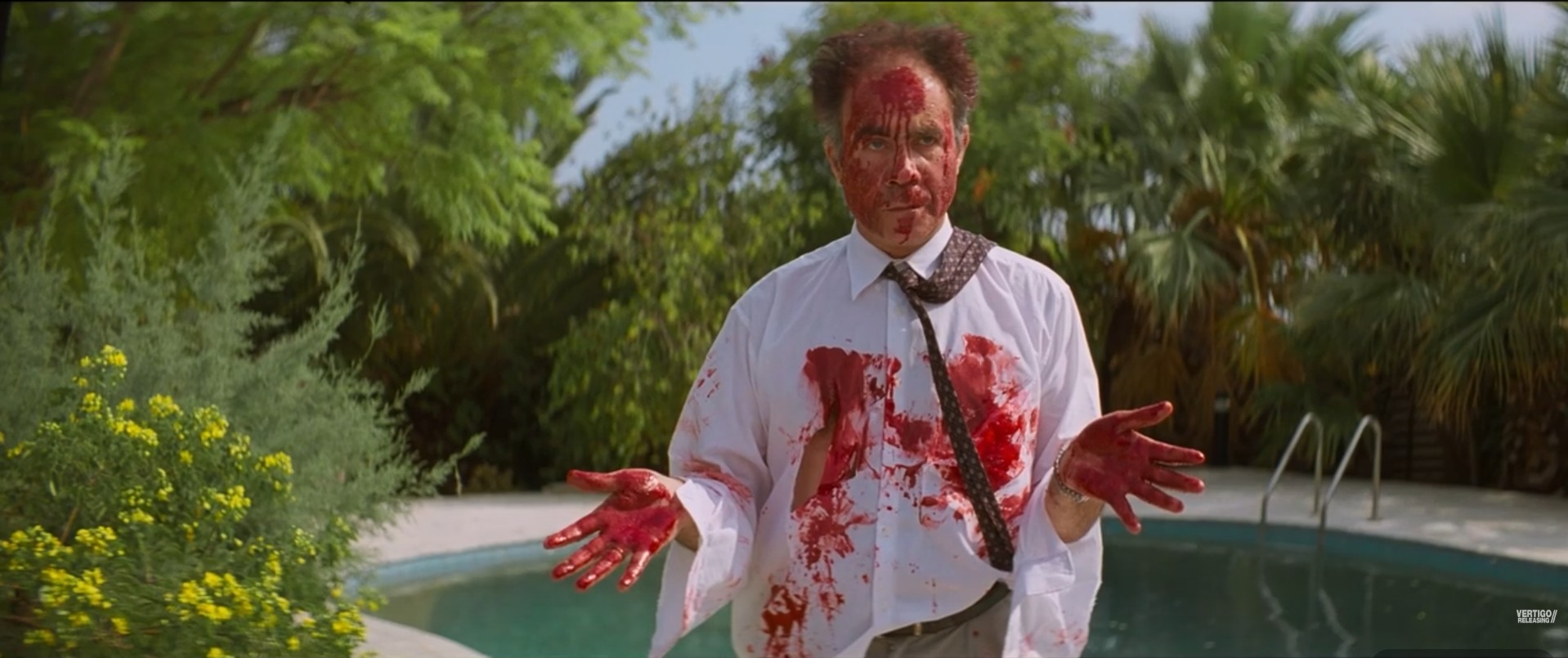
‘Violent New Breed” gets a violent-illustrated new release from Visual Vengeance. The new Blu-ray glorifies Sheets’ SOV artistic style through an AVC encoded, 1080p high-resolution, BD50. The precursing title card warning of the film’s technical imperfections through commercial or economical equipment, a wonted service by the Wild Eye Releasing’s SOV label, are not egregiously touched up but rather accentuate a cleaner, meaner version for show, presented in its original pillarbox full screen 1.33:1 aspect ratio. The world-wide debut Blu-ray contains the director approved transfer of the SD master tape elements. The faded details incline toward a warmer tone that almost seems ablaze with a glowing heat lamp just out of frame and this also, along with the 720p video, suppresses finer textures with notes of aliasing around character actions. Sheets’ color gels and hazy lighting work to an extent but there’s little pop to the graded coloring. The English Dolby Digital 2.0 Stereo offers more bite than expected out form it’s two-channel output but has some difficulty deciphering distinct layers inside the scene. Dialogue echoes and varies in volume sporadically through the picture with it also melding into the diegetic environment in a less-than-refined sound. However, dialogue does push through to an extent and is discernible with a rock soundtrack scoring through more effectively like a hot knife through butter. There are English subtitles available for selection. Packed with 12 hours of bonus content, Todd Sheet fans will receive a comprehensive look on not only a “Violent New Breed” but as the filmmaker as a whole. Those with older format copies of the film with be familiar with one of three commentary tracks on the Visual Vengeance release that includes director Todd Sheets and actors Nick Stodden, Antwoine Steele, and Becky Stodden. There’s a Tony Strauss of Weng’s Chop magazine commentary and a Visual Vengeance produced 2023 remastered commentary with Sheets and Rob Hauschild, founder of Wild Eye Releasing. Other bonus content contains an interview with actor Jerry Angell and director Todd Sheets, Sheets discussing working with the late “Dolemite” actor Rudy Ray Moore who plays the last-standing city cleric, a behind-the-scenes documentary, a 2023 Q&A session at the Nitehawk Cinema / Visual Vengeance screening, a blooper reel, a behind-the-scenes image gallery, the original Kansas City local news spot, an uncut version of the strip club entrance sequence, Todd Sheets’ 2014 short zombie-western “Fistful of the Undead” from the 2016 anthology “Grindsploitation 2: The Lost Reels,” and the original and Visual Vengeance trailers. Also included are two alternate versions of the film: the DVD version and The Movie Channel’s R-rated cut. Three movies from the prince of one! Now that you’ve gone through 12-hours of encoded content, next stop is the hefty physical content beginning with graphic artist Heavy J’s Ghana-inspired artwork on the pink carboard O-slipcover that unveils inside a more traditional-approach to Visual Vengeance’s orange, yellow, and black, character-compiled primary art for the standard, clear Blu-ray Amary. The reverse side has the original poster art of a blue-tinted negative image of an axe-wielding Breeder cultist. The insert section has a single-sided folded mini poster of the Ghana art, a trifold essay from Tony Strauss with a bio on Todd Sheets, his filmography, and on “Violent New Breed” that also includes behind-the-scene and movie stills, a single fold, cardboard birth announcement for the coming of the antichrist, and a retro sicker sheet. The 114-minute feature is not rated and is region free encoded.

Last Rites: Todd Sheets enlarges an evil urban with an insidious poison coursing through the city, taking women when they please, and bring forth the antichrist and there’s only a handful of ill-equipped humans to stand in their way. “Violent New Breed’s” Visual Vengeance release, packed with extra content and a spiffy physical presence, is a victory for Todd Sheets and all independent filmmakers like him.

“Violent New Breed” is a violent Visual Vengeance video available now!

Football, God, Family, and EVIL! “Him” reviewed! (Universal Pictures / Blu-ray)

“Him” Collector’s Edition Now Available from Universal Pictures!

Cameron Cade’s father has been firmly preparing his son to be a football GOAT since Cam was a young boy.  Inspired by the 8-time champion Isaiah White, star quarterback of the Saviors, Cam had trained and played through the years and ranks to be the game’s next promising rising superstar athlete.  When a mascot-dressed manic derails Cam with a head trauma-induced attack, Cam takes a step back from competing in the football showcase but receives hope when he receives an invitation from the Saviors to work with Isiah White at his isolated training camp deep in the desert.  Before long, a dream-come-true turns into a terrifying nightmare as the training sessions go deeper into something far more sinister and Isiah’s greatness may be contributed to unnatural forces bound by limited contracts.  How far and how much will Cam have to sacrifice to be the best football player ever and to live up to his idolized hero before the game and those who control it swallow his own soul. 

Jordan Peele, once skit comedian with Keegan-Michael Key in “Key and Peele” turned provocative social commentary director of such films as “Get Out” and “Us,” produces the next potshot at cultural critiquing with 2025 released “Him,” a football themed psychological horror that puts sacrifice for the game over family, intensifies the pressures of equating performance with success, and a misguidance from fatherhood/mentorship that intends on grooming a young person into superstardom.  “Him” is the sophomore feature length film for Justin Tipping who also cowrite the script along with Two-Up Productions cofounders Skip Bronkie and Zack Akers as the first major movie release for the company associated with Peele’s Monkeypaw Productions that not only produces his Peele’s own films but also invests into minority-driven projects, such as “The Candyman” remake, “Monkey Man” with Dev Patel, and Spike Lee’s the “BlacKKKlansman.” 

At top bill of “Him’s” roster is an established comedian, writer, and producer with an even more well-established and famous last name.  Marlon Wayans’s breakout project was the sketch comedy TV show “In Living Color” that also highlighted and rocketed the career of Jamie Fox and Jim Carrey but was also considered a family affair as Marlon’s siblings, Shawn, Kim, Keenan Ivory and Damon Wayans, cohosted with him the African-American centric comedy show.  In “Him,” Marlon plays the 8-time champion quarterback for a football team that is as venerated as his character Isiah White playing for the Saviors.  Wayans, known for his comedic role stints in favorites “Don’t Be a Menace to South Central While Drinking Your Juice in the Hood,” “Scary Movie,” and “White Chicks,” has a surface scratched darker side to his onscreen personas that leave him no stranger to a role like Isaiah White that’s dispassionate yet ferocious – his drug addiction role in  “A Requiem for a Dream” is one of those examples.  Opposite Wayans is the strong, muscular facial features underneath soft, piercing eyes of Tyriq Withers.  The then mid 20-year-old is in peak physical condition for his rising star quarterback Cameron Cade under the pressure cooker of family, agents, and a football league that expects greatness on every level.  Withers’ recent principal parts in perceptively pointless and under-the-radar remakes of classic cult films, “Don’t Tell Mom the Babysitter is Dead” and “I Know What You Did Last Summer,” didn’t elevate the Florida born actor into the spotlight, preparing him for an upcoming lead in a more visible original psychological horror themed around one of America’s favorite sports, but Withers meets the challenge with a promising performance for his promising character that makes “Him” standout above the rest and being his biggest role of his career catalogue.  Wayans and Withers battle out with testosterone trumping into a gray area of occultism that’s not so unlikely from the reality of professional sports.  The principal leads are supported by an eclectic supporting cast of eccentric oddities of the isolated training camp with Julia Fox (“Presence”) as Isiah White’s fast-and-loose, high-end wife Elise, standup comedian Jim Jefferies as White’s personal athletic physician Marco with baggage regrets, Tom Heidecker (“Us”) as Cade’s hype manager Tom, Indira G. Wilson (“The Perfect Host”) as Cam’s mother, and Richard Lippert (“Scare Us”) as the saviors behind-the-scenes owner. 

“Him” came and went from its theatrical run so fast it feels like only yesterday trailers were being played on commercial breaks and on online previews, denoting Justin Tipping’s movie offering not finding a significant audience for the anti-pro sports treatment of players message.  That’s what “Him” powerfully engrosses with is an anti-football message of dog-eat-dog cruelty that cannibalizes itself for what’s best of the sport and discard those who give the sport it all once their eliteness has been completely emaciated, as if the sport is a vampire and drains their athleticism through the carnivorous canines of fans, team, and ownership.  Tipping and his cowriters integrate religious and Roman motifs that relate the gridiron as Church or the blood of the GOAT coursing through another that offers divine playing sacrifice and supremacy while certain aspects of the film regard the football fields as coliseum with players being gladiators with even the finale reenacting scenes similar to that of “Gladiator.”  Along with those strong imageries, iconographies, and representations, Tipping’s linear telling of the story feeds off the phantasmagory and being on the edge of experimental that, in turn, puts into question Cameron Cade’s reality as everything he experiences from the ominous weirdness pulsating his path forward in football to the macabre training and cultish indoctrinations of Isiah White’s desert training camp don’t come about until Cam’s whacked over the head with a long handled and ornate hammer.  Then, the question becomes, is Cam in dead and a warped purgatory?  Is Cam hallucinating?  Or is Cam actually experiencing the darker side of a game he’s been bred to believe in and be the best at.  All of those existential and surreal components overload “Him’s” highbrow and social commentary horror that will fly over the audiences’ head like pre-game ceremony fighter jets. 

“Him” arrives onto a collector’s edition Blu-ray and digital combo set from Universal Pictures.  The AVC encoded, 1080p high-definition, film is stored on a BD50, ensuring room for a visually and audibly stimulating tryout of pigskin piety.  Infused darker tones of shadows, Brunswick greens, and plenty variations of brown from the football to the desert located training camp, there are a very few contrasting moments that embolden cinematographer Kira Kelly (“Skin in the Game”) to emerge out from the hefty draping shadows that obscure much of the compounding and confounding irrationality of the insular football fanaticisms.  Kelly utilizes an array of long to closeup shots from different scenes or even the same scene to throw off the balance and provide depth when needed for the moment.  In addition, the same moments can be implanted with a personal bubble of surrealism through Cameron’s perception of events, never leaving other characters to define the atmosphere or the behaviors that are inherently set by the principal lead character, who or who may not be suffering from an intense concussion untreated unintentionally by the internal turmoil of family politics.  Detailed textures and skin tones have organic qualities, and the X-ray vision has seamless segue with all its intensified bone crunching hits.   “Him” is presented in a widescreen 2.39:1 for an extra stretch of spherical sighted surroundings that work to enclose on Cameron the deeper he’s in with the mentor’s program as well as to fully embrace his destiny with obstinance in the grandest of finales.  The Blu-ray has encoded four audio option a with English Dolby Atmos, a Dolby Virtual Speaker 2.0, a Spanish Dolby Digital Plus 7.1, and a French Dolby Digital 7.1.  All options offer extended reach into the audio localization areas of the compressed, multiple channel formats, and even the DVS adds a little extra to throw sound inside a three-dimensional space which is important for “Him’s” haunting and bizarre oneiric structure.  The Atmos provides more depth and richer lagniappe effort where it comes with Cameron’s perceptive discords of racing arguments and whispering inceptions.  Dialogue is clean and clear throughout, and no issues imposed on The Haxan Cloak aka Bobby Krlic’s subtle descent of a score.  English, French, and Spanish subtitles are available.  Bonus contents include feature commentary with director Justin Tipping touching upon production areas and the cast to create his footprint as a movie artist, an alternate ending, a removed end credits scene, a handful of deleted scenes, two deconstruction of scenes on how they’re made, Becoming Them looks at Tyriq Withers and Marlon Wayans transformation into elite athletes, The Sport of Filmmaking featurette offers a behind-the-scenes look at production of “Him,” and the Hymns of a G.O.A.T. has composer Boby Krlic’s detailing the elements in creating his movie score for the film.  The collector’s edition also comes with a digital code insert to stream or download from anywhere on any device.  The physicality of the collector’s edition is more to the tune of a play fake that doesn’t allow the release to run with an overloaded package.  Instead, Universal laterally passes with a cardboard slipcover with an embossed title for some smooth font texture.  Instead, the standard VIVA case houses the same artwork as the slipcover without the raised lettering and the disc is translucently pressed with the title and film and format technical credits.  “Him” has a runtime of 97 minutes, region A encoded playback, and is rated R for strong bloody violence, language, sexual material, nudity, and some drug use.

Last Rites: If you’ve ever thought professional sport players were commodities before, “Him” brings the blitz of putting football above it all by bringing divine blood, sweat, and tears into a cult of sadists and stardom.

“Him” Collector’s Edition Now Available from Universal Pictures!

To Be or Not To Be EVIL? That is the Question! “#Shakespeare Shitstorm” reviewed! (Troma / 3-Disc 4K UHD and Standard Blu-ray)

A Wild and Crazy Shakespearean Parody of “The Tempest!” Own it here!

Inspired by William Shakespeare’s revenge and restoration themed play, “The Tempest,” the ostracized pharmaceutical scientist Prospero plots his revenge with whale laxative as gushes of multiple killer whale defecation shipwreck the excrement slathered global elite to the shores of Tromaville, New Jersey where Prospero owns a nightclub and laboratory for his mad experiments.  Miranda, his beautiful daughter blinded by the Trauma of her mother’s suicide, falls for Ferdinand, son of the rich pharmaceutical king Big Al who, along with Prospero’s twin sister Antoinette, betrayed Prospero to exile and displacement.  Revenge is a dish best served as cocaine tainted with mutant growth hormones concocted in Prospero lab.  With the help of a wheelchair bound crack-whore as his right-hand pusher, Prospero’s vindictive plan melds bodies and bodily fluids together in one flesh heap of disfigured dysfunction against the conglomerating corporate greed in the midst of two lovers formulating a bound beyond partisan lines.

Troma Entertainment president Lloyd Kaufman returns to the director’s chair to helm a classical rendition of William Shakespeare’s “The Tempest” with the NSFW eloquent title “#Shakespeare Shitstorm” and, as any self-respecting Tromaville fan knows, Troma titles can be extreme literally and, in this case, the adaptation is one big splash park of diarrhea.  “The Tempest” isn’t the company’s first re-imagining of a Shakespeare’s work with “Tromeo and Juliette” being the humble career beginnings of now mega-MCU and DCU director James Gunn (“Guardians of the Galaxy,” “Superman”).  For Kaufman, “#Shakespeare Shitstorm” might be one of the last directing efforts for the independent filmmaker and social justice warrior as he reaches into his 80th year of age, but that doesn’t stop the 50-year moviemaking vet from passionately wanting to create art from behind the camera to in front of it with this Brandon Bassham script based off a story between Kaufman, Gabriel Friedman (“Slashing:  The Final Beginning”), and, of course, the Bard of Avon.  While Shakespeare doesn’t foot the bill for the budget, him and Troma do have something wildly in common being masters of the low-cost arts as Kaufman, Troma cofounded Michael Herz, Doug Sakmann, Justin A. Martell, and John Patrick Brennan produce “#Shakespeare Shitstorm” on a shoestring budget put muster together a wild and crazy story and effects movie.

Kaufman’s so passionately about making art and filmmaking, and also watching his bottom line, that he also dons a dual role playing the revenge-seeking and masterclass scientist Prospero and crossdressing, which he’s done frequently and without a morsel of shame, to become the treacherous twin sister and marketing guru Antoinette.  Kaufman’s continues to throw caution to the wind in an unabashed performance that’s outrageously crude and lined with verbose dialogue that’s definitely memorized with monotonic intention but none of that should be surprising as Troma was built on fervor absurdity, and all the actors have a range of tactlessness that runs the gamut.  The eclectic personalities never conflict with overlapping or feel forced as sometimes they often do with Troma or with farce comedies in general.  Each character shines on an idiosyncratic level, such as Abraham Sparrow’s Big Al’s magnified pompous and drug-fueled pharmaceutical big shot, Amanda Flowers (“Werewolf Bitches from Outer Space”) crack-whore cripple Ariel, and Dylan Mars Greenberg (“Psychic Vampire”) as a social media influence and justice warrior.  Kate McGarrigle and Erin Patrick Miller, like Kaufman’s Prospero and Antoinette, play two characters from the Shakespearean play with Miranda and Ferdinand respectively.  Their opposite sides, Romeo & Juliet-esque affair has more an even keel, still absurd without a doubt, but better balances the stranger side of the deep character pool.  Let’s also note that “#Shakespeare Shitstorm” is also a musical that puts more effort in synching action and lyrics into a frame already filled with slapstick surrealism and socio-political satire.  The cast rounds out with Frazer Brown, Monique Dupree, Teresa Hui, Ahkai Franklin, Zoë Geltman, Zac Amico, Elizabeth D’Ambrosio, Nadia White, Dai Green, Vada Callisto, and special guest stars Ming Chen, Tommy Pistol, Bill Weeden, Julie Anne Prescott, Doug Sakmann, and Catherine Corcoran.

If afraid to get down and dirty with drowning in logs of whale feces, be offended by the large, and small, phalluses and other nudist behavior, be enraged by the comedic appropriation of the disabled, transgendered, and race communities, or just become upset at the smallest off-kilter behavior and uncouth conduct, then “#Shakespeare Shitstorm” should be on your top ten list of must watch because that’s Troma’s whole schtick is to challenge the uptight and corporate commercial narrative that has everyone on edge and afraid to walk on the permissible wild side, especially in art that’s supposed to covered by freedom of expression and speech.  Kaufman puts the light on the irony, the preposterousness, and the two-faced hypocrisy that is the dark side of social media, such as cancel culture, which is in itself is an ironical dig at far liberal thinking, a stance bred from the same gene pool that has supported Troma over the last half a century, but that doesn’t mean Troma stops parodying and caricaturing the gentrifying and oligarchical elite with their own brand of downright vulgarity, and being funny and rights advocating while doing it, such as an extreme deluge of whale feces being evacuated right onto a luxury yacht, shipwrecking the survivors onto the seedy shores where a tainted drug nightclub brings revenge to a fleshy, body-horror amalgam finale that is Brian Yuzna’s “Society” on steroids and Viagra.  Characters Miranda and Ferdinand represent the best parts of both worlds, restoring and evolving out from their parental trauma induced wormwood ways into love and hope, two core values Troma preaches from the rooftop.

“#Shakespeare Shitstorm” receives a huge 3-disc UHD Blu-ray and standard Blu-ray release that’s….not a shit storm.  The UHD is HEVC encoded, 2160p ultra-high definition resolution, BD66 with an HDR10 range and the standard Blu-ray is AVC encoded, 1080p resolution, BD50.  Troma pulls out all the stops for what could have been Kaufman’s last feature film directorial, leaving nothing to chance with detail and sound immersion to make sure audiences get into the sticky crevices of every mutated orifice.  Cloudy with haze, bathed in neon lighting, and lots of rough, low-lighting doesn’t provide the utmost specifics surrounding every textural aspect but there’s plenty to field in both formats that warrant squeamish reactions and repulsive states through the mound of transformative flesh that for the most of the time show their fabricated prosthetic qualities.  While both formats produce a vivid image, neither one of them really stand out above the other with only minor, insignificant detailing coming through the UHD.  The film is presented in a widescreen 1.78:1 aspect ratio.  An English DTS-HD 5.1 master audio mix is surprisingly utilized!  Environmental ambience, diegetic and non-diegetic, has isolated channeling, such as the pitter-patter of rain through the back channels, that provide a layered sound design and added depth to the picture.  The dialogue, through regular conversation and musical numbers, retains a clear understanding without any feebleness and often times with Troma productions, the audio can sound one-dimension, but this Kaufmann film is a multi-diagonal product with an abundance of surround sound through all the bodily fluids and it’s acts of secretion sounds.  Rob Gabriele, Filipe Melo, and Louise Aronowitz music and compositions run with the Troma tide in executing highlighted whimsical and comedically inclined numbers for the actors to either be engulfed by or lip-sync.  English subtitles are available.  Two discs packed with extras extend the endless absurdity.  First disc includes a typical introduction from Lloyd Kaufman, also available before running the feature, who teases the road ahead and shows enthusiasm for the film’s UHD properties, there’s also two commenter tracks – one with Lloyd Kaufman and fellow producers Justin Martell, John Brennan, and Mark Finch and the other with actors Zac Amico, Teresa Hui, Amanda Flowers, and Dylan Mars Greenberg, producer John Brennan and production designer Yuki Nakamura, who both also work on the Last Drive-in with Joe Bob Briggs, regaling their tales through production designing, a music video Tromatized featuring Abbie Harper, a Troma Now advert featuring two lone Tromettes bored and looking for something to do/watch when Uncle Lloyd gives them Troma streaming guidance before locking lips, and the teaser plus three theatrical trailers for the feature.  The bonus 2nd disc includes the full-length, behind-the-scenes documentary Brown is the Warmest Color (a riff on “Blue is the Warmest Color”) that follows the pre-principal-and-post production and all its departmental successes, problems, and day-to-day that though even shows how ardent Lloyd Kaufman is about his on-set direction for art, love, and expression, it also does show how tyrannical, at times, he can be on set with an impatient nature and rigorous time productivity.  Also including on the disc is Tromalbania as the production goes to Albania to finish the yacht sequence, Troma in Times Square is another video marketing maneuver for the company’s streaming service by having Toxic Avenger face off against the evil Netpix, isolated musical numbers from the film in #Shakespeare’s Shitstorm:  Musical Numbers, and the auditions for select roles, including but not limited to Dylan Greenberg Mars, Nadia White, and Amanda Flowers.  The encoded features are definitely good insight and tourist attraction beacons that depict movie magic, intent, and can offer comedic and cringeworthy states of independent filmmaking, but packing a punch as well is the packaging that offers embossed tactile elements of the O-slip with some sick (awesome) illustrative, back-and-front artwork by Sadist Art Designs  The black UHD Amaray sports a white trimmed version of the O-slip backside artwork and inside is a hinged flap that tightly secures discs 1 (UHD feature) and 2 (standard Blu-ray feature) with the third disc snapped securely onto the interior back cover.  Each disc displays a different story depiction with either the front O-slip art on the UHD disc with the standard Blu-ray and the bonus disc with memorable movie imagery.  The self-labeled comedy-epic, with gashes of unhinged body-horror, has a runtime of 94 minutes with the not rated 4K UHD disc is encoded as region free while the Blu-rays are region A.

Last Rites: “#Shakespeare Shitstorm” may be a lot of things – crude, offensive, over-the-top – but Lloyd Kaufman’s supposed last magnum opus seizes every opportunity to make a statement, one that’s literally on a crapload of sociopolitical and cultural renaissance level!

A Wild and Crazy Shakespearean Parody of “The Tempest!” Own it here!