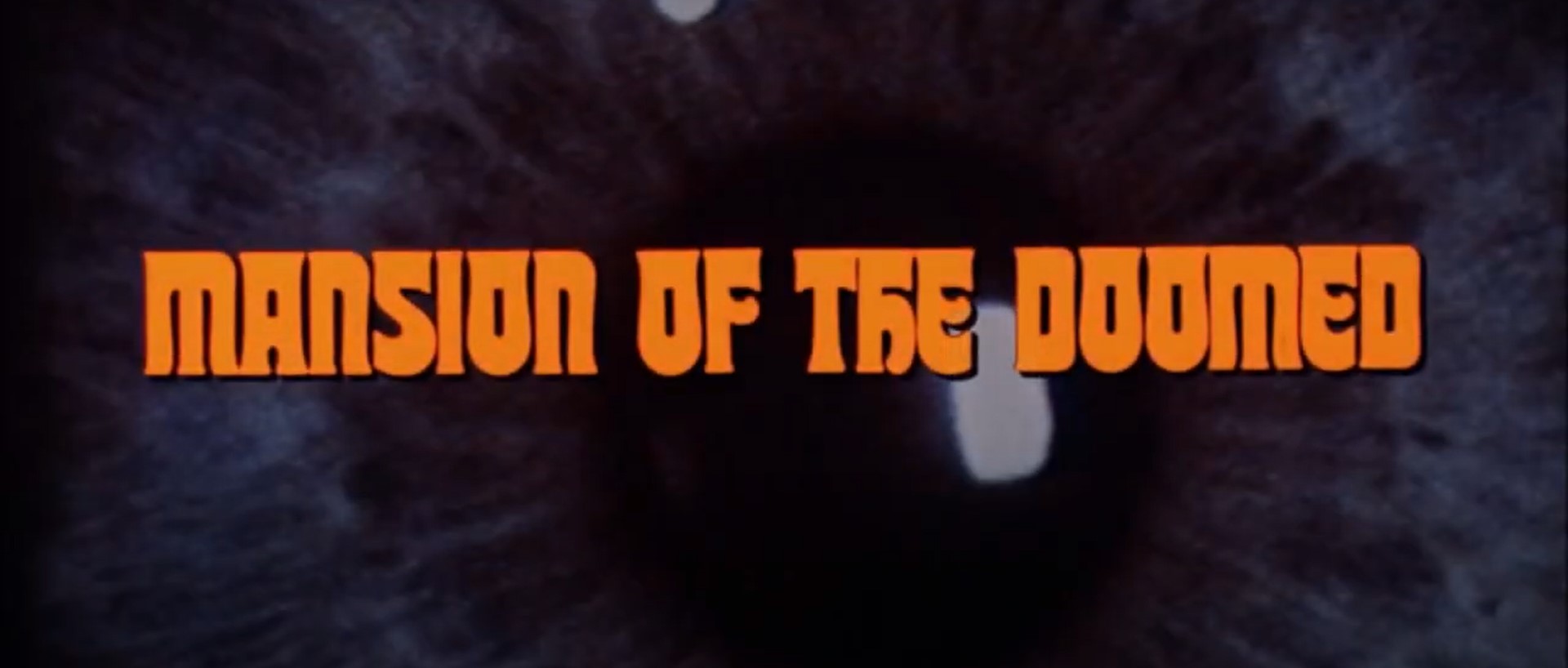
EVIL is in the Eye of the Beholder! “Mansion of the Doomed” reviewed! (Full Moon / Blu-ray)

“Mansion of the Doomed” on Blu-ray.  Hold Onto Your Eyeballs!

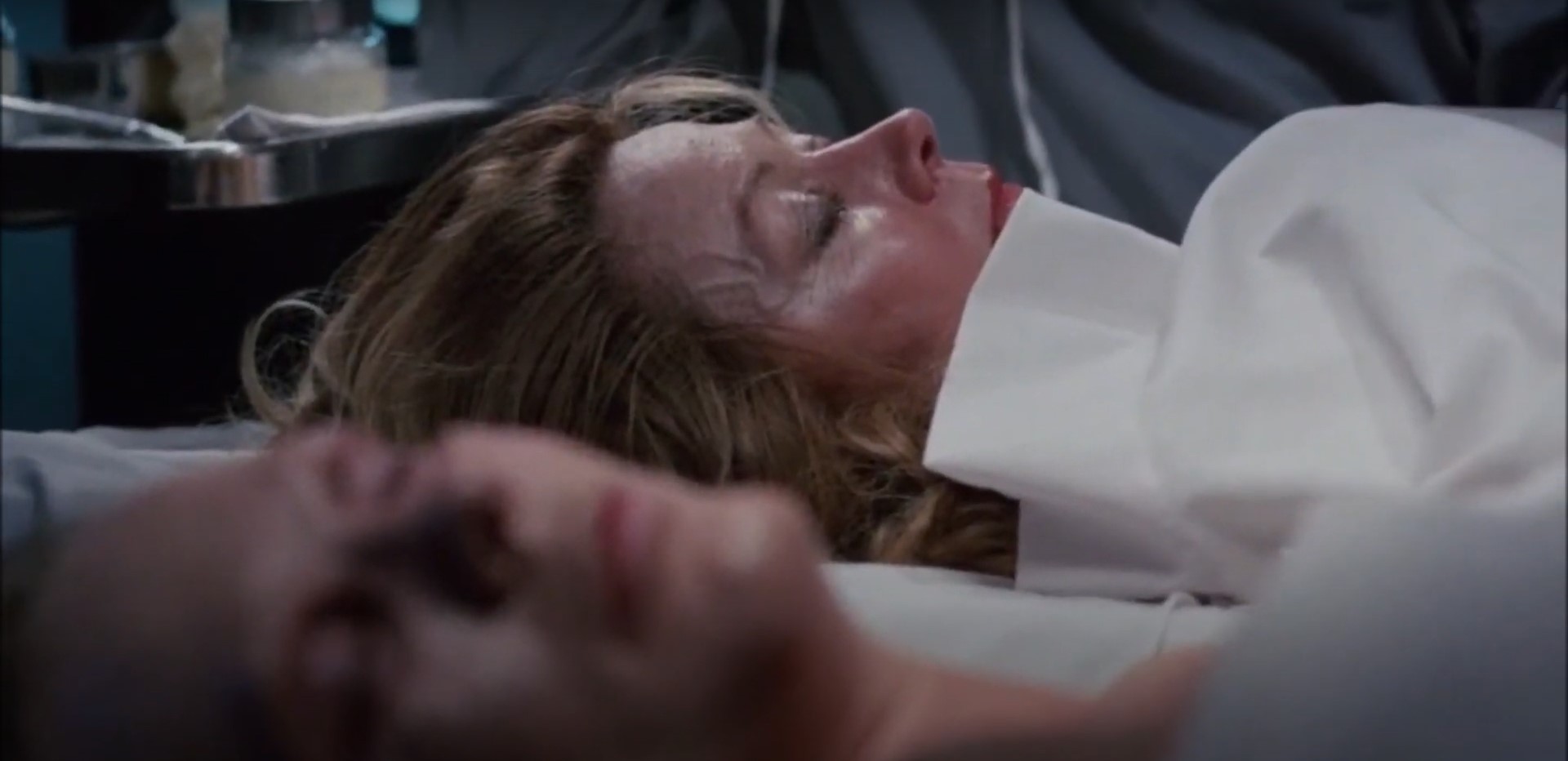
In a stroke of irony, renowned optometrist surgeon Dr. Leonard Chaney had a car accident that accidently causes his young adult daughter permanent blindness.  Obsessed by guilt and determined for her to see again, Chaney moves toward a not only radical procedure but also unethical one of a full eye transplant.  The catch for this type of surgery to be successful is the eye has to be extracted from a living patient.  Unwilling to wait for a donor, Chaney employs every deceptive tactic to lure unwillingly healthy and beautiful globular organ donors into his dark basement where he drugs them unconscious, surgically plucks out their entire eyes, and leaves them locked in a cellar cage, blind and crudely healed with scar tissue but still alive.  With each failed attempt at restoring her eyesight, the reminders of his experiments linger down below, screaming in pain, and pleading for their lives.  Soon, those pleas will ultimately catch up to him. 
Before his fascination with mini-sized maniacs of killer animated toys and malicious experimental oddities, Charles Band used to produce other types of original horror and the “Mansion of the Doomed” was one of them.  The 1976 Frank Ray Perilli (“Dracula’s Dog,” “Alligator”) written and the “Dead & Buried” and “Halloween 4: The Return of Michael Myers” actor Michael Pataki directed mad surgeon “Mansion of the Doomed” was the first feature film Charles Band officially stamped his actual name onto along with father and western screenwriter, Albert Band, as financial executive producer.  While “Mansion of the Doom” is known by various other titles around the world – “Massacre Mansion,” “Eyes,” “Eyes of Dr. Chaney,” “House of Blood,” “Eyes of the Living Dead,” and “The Terror of Dr. Chaney” – the one aspect that the film is firm in is its Hancock Park and estate shooting location in Los Angeles as one of the very first features to come out of Charles Band Productions company.
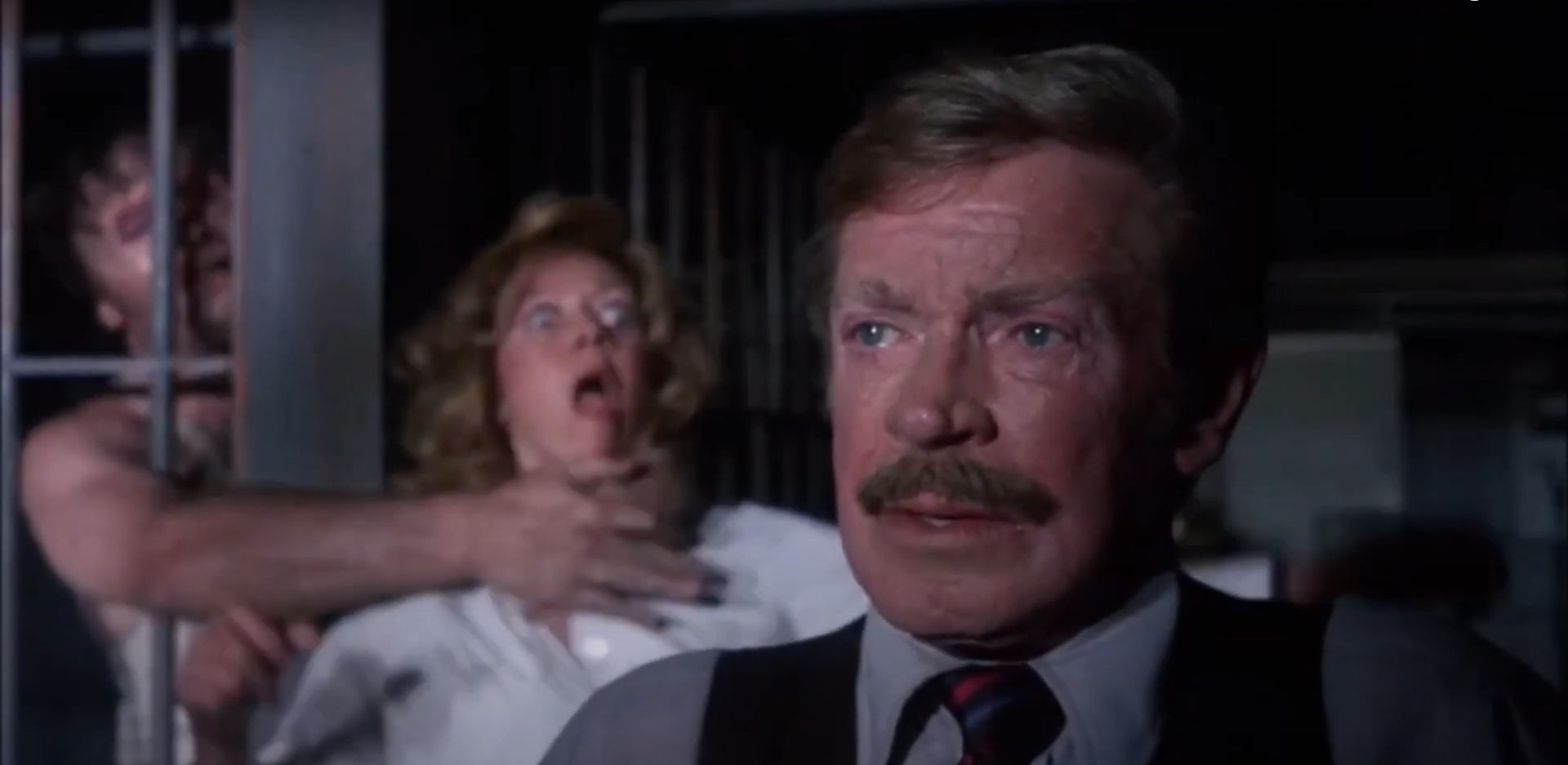
Lance Henriksen.  You know name, right?  Sounds familiar, yes?  The “Aliens” and “Pumpkinhead” actor, hot off the success of “Dog Day Afternoon” with Al Pacino, begins his tour de force of horror and dark science fiction with the Pataki mad doctor eye opener.  Dr. Chaney uses his misguided experimental expertise first on Dr. Dan Bryan, played by Henriksen, after Dr. Bryan’s recent romantic relationship breakoff with the recently blind daughter of Dr. Chaney, Nancy (Trish Stewart).  Before he became the narrating voice in TV’s “Knight Rider,” the veteran actor Richard Basehart, who also had a role in the 1977 “The Island of Dr. Moreau,” became his own inhumane medical malpractice physician in Dr. Chaney.  Though Basehart makes for the epitome of a professional doctor, his performance was the weakest link in the cast’s locks that didn’t exhibit the stress and desperation of a man continuously exploiting and disfiguring people for his own personal guilt release.  The guilt was not compounding as much as the story wanted to suggest, but we feel more empathetic to Dr. Chaney’s longtime assistant in Gloria Grahame (“Blood and Lace,” “Mama’s Dirty Girls”) who we can see her character dissolve with each abducted patient and affected to the core by their sightless screams.  “Mansion of the Doomed” rounds out the cast with Al Ferrera (“Dracula’s Dog”), Marilyn Joi (“Black Samurai”), Donna Andersen, JoJo D’Amore (“Dracula’s Dog”), and Katherine Stewart.
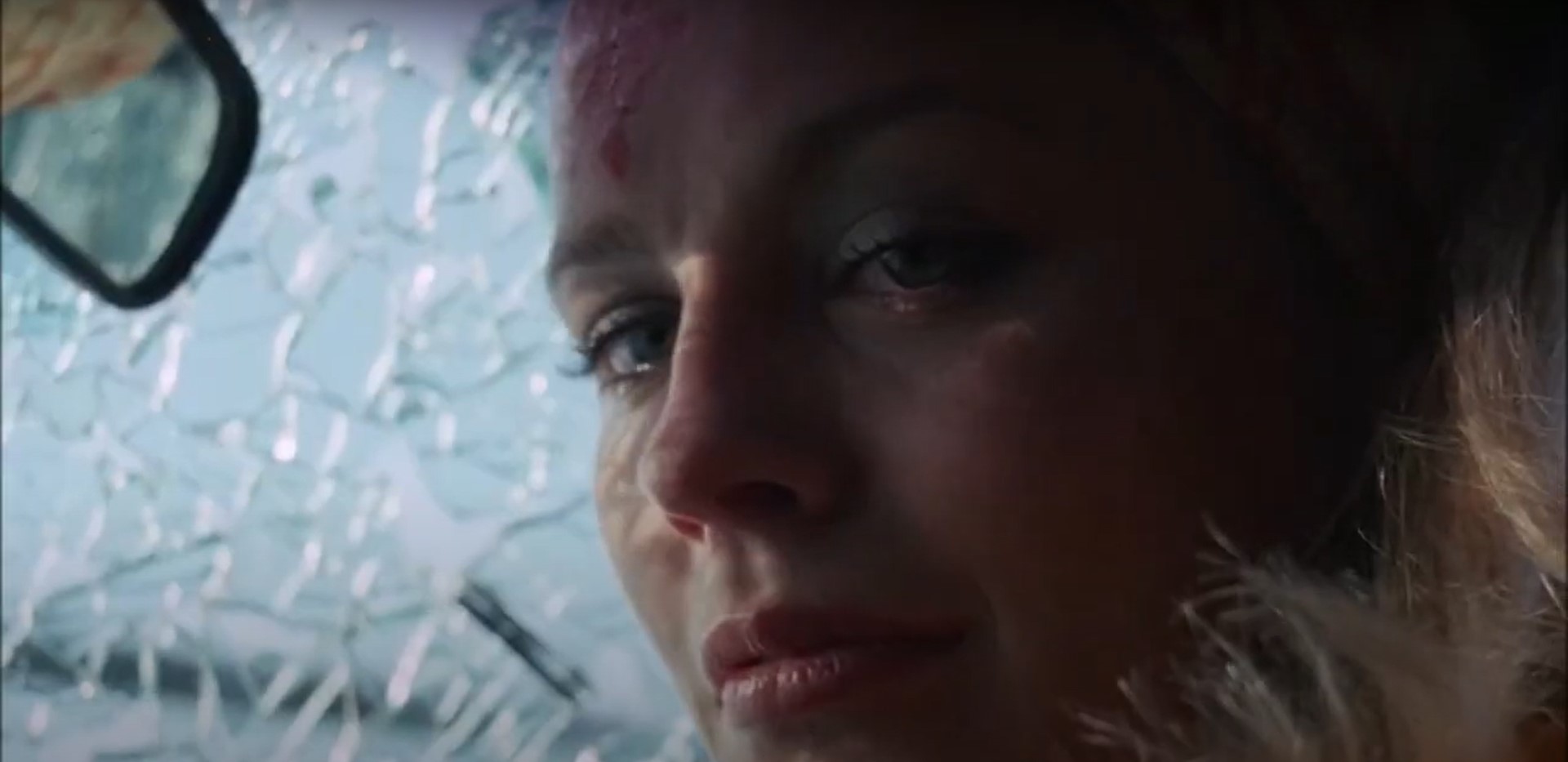
Michael Pataki’s “Mansion of the Doomed” is an eye-peeling shocker that’s dark and grim to the core and has an eye for cynicism. I could keep the eye puns going but that would be too easy to pluck out. Perilli’s story is rather plainly spoken with not a lot of fluff diving into medical or procedural jargon to bore you down into a loss of interest. Instead, the good doctor character goes right to work getting his hands elbows deep into the eye sockets of his victims and that’s how this particular exploitation perfectly crafted the balance by tabling the under stimulating medicalese with caged disfigured patients left to live in agony. Where Pataki and Perilli faltered some is in the preface by skimming the surface of the Dr. Chaney caused accident that rendered Nancy blind when she face-planted right into the doctor’s windshield as he swerves to not runover a mutt. In driver’s ed, you’re supposed to hit the small animal that runs in front of you in order for these kinds of accidents don’t happen! Told in the inner thought of a flashback, the force between the two immovable objects shatters the glass but leaves Nancy unscathed physically yet, somehow, she loses her sight in both of her eyes and while Dr. Chaney is unable to best the blindness with everything the surgical optometrist throws at it, perhaps that’s the unsolvable mystery that beleaguers abashedly an expert at the summit of their excellence. ‘Mansion of the Doomed” is not a feel-good film as not one single character has a positive outcome and having lost more than just their sight but also, to name a couple, their humanity and their hope.
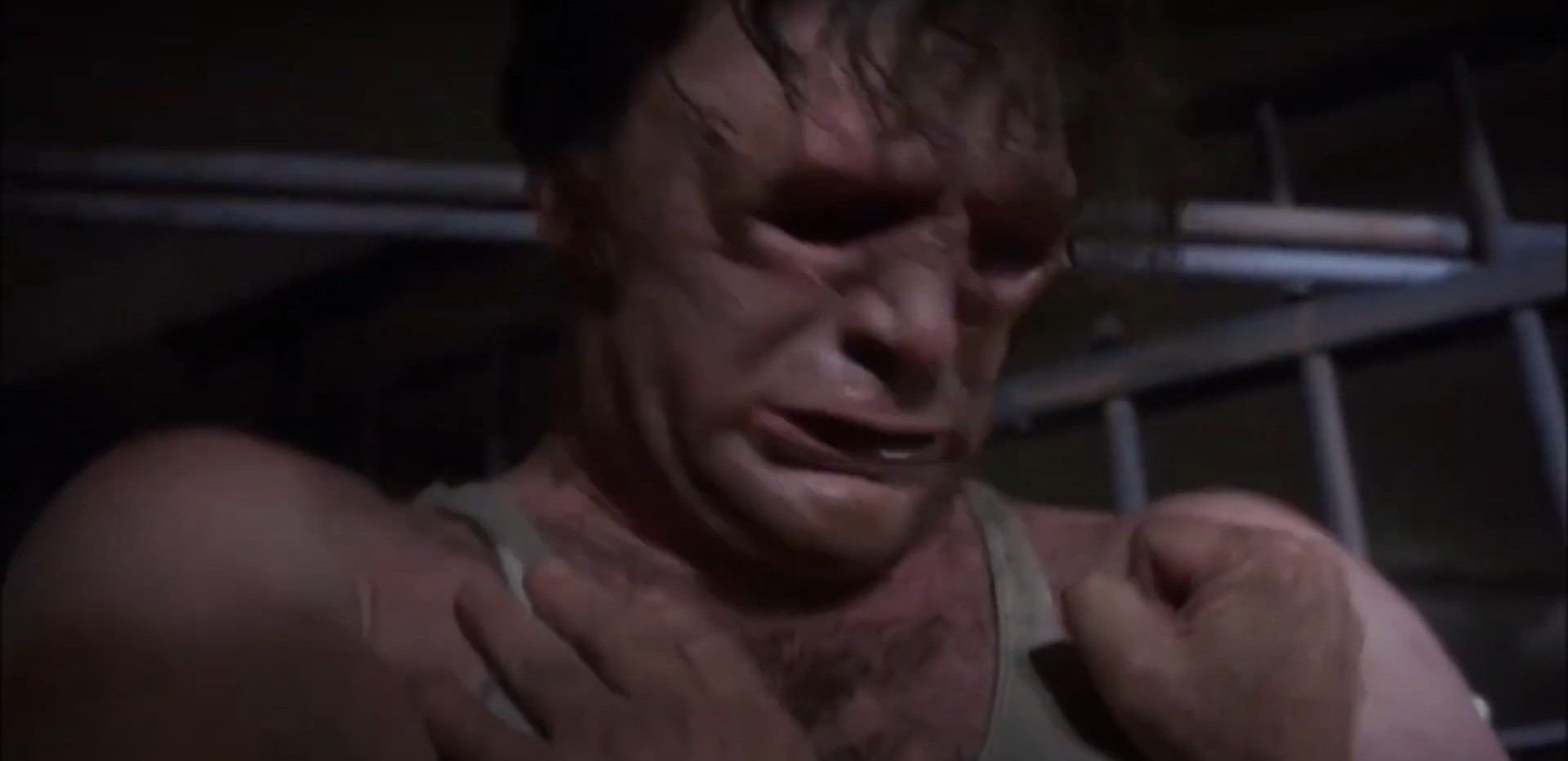
Uncut, restored, and remastered onto a new Blu-ray release, Full Moon Features re-release “Mansion of the Doomed” onto 1080p, full high definition, from the original 35mm negative. Source material held up over father time with a pristine 85-minute uncut transfer to retouch in a pop of color and refine the details in a softer, more airy-soft image, presented in a widescreen 1.85:1 aspect ratio. Full Moon offers two audio options available with an English Dolby Digital 5.1 surround sound and a Dolby Digital 2.0 PCM. Though slightly staticky in the ambient and dialogue tracks, the balance works and is full-bodied around more essential scenes of surgery and the cries of anguish. Dialogue doesn’t sound overly boxy or hissy and the cult composer Robert O. Ragland’s (“Deep Space,” “Q”) classic orchestra score come across with a powerful range that speaks the scene without exposition. The region free Blu-ray has no extra features, leaving this release as a bare bone, feature only. “Mansion of the Doomed’s” harrowing ending induces stupefying blank stare and feels like a brick just walloped you in the face knowing that every pawn in this story loses at the hands of man disillusioned in playing God.

“Mansion of the Doomed” on Blu-ray.  Hold Onto Your Eyeballs!

Book an EVIL Getaway Rental from the “Superhost” reviewed! (Acorn Media International / Blu-ray)

Never Again Feel Welcome After Watcing “Superhost” on Blu-ray Available at Amazon

Airbnb reviewer vloggers Claire and Teddy are bleeding viewership fast.  To save their monetized video channel, their financial independence, and possibly live happily ever after as man and wife, the duo was finally able to rent a highly demanded location set in isolated in the forest when it became available.  The house is more than they could ever hope for with beautiful floor-to-ceiling windows, spacious accommodations, and breathtaking idyllic mountain views.  The one little hiccup about the residential stay is the quirky superhost, Rebecca, who has been more than overly friendly.  An unsuspecting guest from the past turns the tables on Claire and Teddy as Rebecca slowly unravels her true intentions in a nerve-wracking game of life and death with all the amenities.

From the director of the supernatural baby-snatching “Still/Born” and the imaginary friend from Hell in “Z” comes Brandon Christensen’s next written-and-directed demented thriller “Superhost” that takes the automated vacation rental methodology and breaks them in half.  Shot just outside Las Vegas in the rural area of Mount Charleston, Christensen provides the illusion of a far trek away from busy street society with a cabin in the woods what if’er of an overzealous hosting homeowner making weird and uncomfortable conversation with their tenants on a daily or nightly basis.  Tacked onto that idea is the new age monetizing of vlogs and racking up subscribers that overtake or make us blind to what’s really important.  The Superchill and First Look Releasing production is executive produced by the Ty and Darren Siversten and produced by Christensen, Kurtis David Harder (“Spiral,” “V/H/S/94”), and stars Sara Canning and Osric Chau.

Aforementioned, Sara Canning (“Z,” “The Banana Splits Movie”) and Osric Chau (“Supernatural”) star in the film as vlogging couple Claire and Teddy.  Whether be the actors’ performances or the blind obsession toward their monetized YouTube platform to secure financial freedom, the on-screen chemistry between the couple didn’t jive.  What doesn’t help is there’s no real romance being displayed during their time together nor was there any expositional or any form of mentioning what their life looked like before becoming internet influencers.  Being influencers makes up a sizeable portion of what the audiences (us as viewers and not their video channel followers) know about the couple sans the miscellaneous background of Teddy’s parents providing rent aid whenever needed and Teddy’s top-secret engagement plan in which he also vlogs to his viewers behind Claire’s back.  We experience a little more where Teddy comes from, but Claire is a complete mystery much in the same way as superhost Rebecca.  However, as the crazed host, the enigma surrounding the jovially expressed Rebecca, eager to help with clog toilets and whip up pancakes, adds to her strange and frightening demeanor.  I would never want Gracie Gillam (“Fright Night” ’11, “Z Nation”) to uninvitedly walk into my vacation rental in her full Rebecca form.  I would forego my deposit lickety-split and hightail away from a much-needed getaway to literally save my skin from Rebecca’s crackpot revelry. Popping into the frame a couple of times is genre veteran and overall fan favorite is Barbara Crampton (“From Beyond,” “Re-Animator”) as Vera, a disgruntled property owner who tracks down Claire and Teddy for a vindictive, rock-throwing rant but becomes unsuspectedly ensnared in the Rebecca’s mare’s nest.

Brandon Christensen is no stranger to small productions with a small cast, but “Superhost” is a micro-production with a micro-cast and, somehow at no surprise, busts out a truly terrifying lunacy that can make you double think before clicking that confirmation button on the vacation rental reservation. “Superhost” is unsettling and invasive as if privacy is nonexistent and the ever-watchful eye is always looming. In fact, it is! With security cameras installed in basically every room, there’s 24-hour CCTV footage of every moment of Claire and Teddy, but isn’t the moment captured and being filmed constantly is what their livelihood and vocation is all about? Christensen has that paradoxical undertone packed exceedingly well beneath the veneer of voyeurism, inescapability, and troubled relationship issues that the theme becomes a backburner hit on the tail end in that what the thing that provides Claire and Teddy a reason to be free as individuals is the also the very thing that they can’t flee from and become merely a battered object of one’s mad person’s whims much like their more critical reviews can be ruinous to others. While “Superhost” can feel a bit slow for the first two acts, the story showcases a development and escalation of Grace Gillam’s Rebecca as a woman with more than one loose screw. Of course, Rebecca’s not seen for who she really is by the compulsion to film not just the rental, but also her, as gold-plated viewership material. “Superhost” admonishes a tread carefully thriller to beware and adhere the signs of mania danger and all those Rebeccas out there.

Trust me – cancel that reservation, plan on a staycation, and watch the Shudder-exclusive “Superhost” now on Blu-ray home video from Acorn Media International. The region 2, PAL encoded, Blu-ray is presented in an anamorphic widescreen aspect ratio of 2.35:1. Nothing terrible to note here as much of the digitally captured, RED Gemini images are about as crisp as they come with a natural presentation all around from cinematographer Clayton Moore (“It Stains the Sands Red”) with the exception of the unfiltered handheld camera and CCTV footage, which is also very authentic. The English language Dolby Digital 5.1 surround sound rustles together clearly and discernibly ever creak of the floorboards and every gushy stabbing sound for full impact purposes. Dialogue track is clean with pronunciation clarity and the bottom-and-bass dropping score by instrumental band Blitz//Berlin (“Psycho Gorman,” “The Void”) continue to impress with their original soundtracks. The special feature includes a director’s commentary, a behind-the-scenes that talks about Mount Charleston location, the annoying tiny beetle swarms, and how amazingly small the production crew was, a solid blooper reel, “Superhost” VFX featurette with green screening and matting car scenes and the ultra-graphic knife through the mouth effect, a behind-the-scenes still gallery, and episodes 1 and 2 of Brandon Christensen’s television shorts, “Scaredycats.” Remember, guys, hit that like bottom and subscribe to follow Brandon Christensen’s descension of guests becoming unaccommodated by a psychotic “Superhost!”

Never Again Feel Welcome After Watcing “Superhost” on Blu-ray Available at Amazon

This EVIL is Why I Don’t Have a Roommate! “2DLK” reviewed! (Unearthed Films / Blu-ray)

“2LDK” Now Leasing a New Life on Blu-ray from Unearthed Films!

Rana and Nozomi couldn’t be more different coming from different backgrounds with antagonizing behaviors.  The two aspiring actresses live in a cozy two-bedroom apartment hosted by the same production company that has them vying for the same lead role in an upcoming feature film.  The role could jumpstart either of their careers and, internally, Rana and Nozomi believe the other isn’t good enough despite their different approaches in as city girl Rana uses her famine ways and laxer attitude to slut her way up to the top while the country-born Nozomi diligently studies the dialogue and the role to impress beyond her days as a parent-encouraged elementary stage actor.  When tensions rise through apartment sharing irksome nuisances and a man’s affections put an even more divisive wedge in the already gaping hole between them, Rana and Nozomi reach a breaking point and a violent melee of at each other’s throats ensues.

From my personal experience, the only roommate I’ve ever had was my wife during our engagement period and I can tell you that living with someone else – someone’s quirks, someone’s habits, and someone’s tastes – can be utterly earthshattering and explosive in what seems like every little pampered or established, taken for granted role you had living without a roommate is acutely upended and tossed into apocalyptic chaos.  Or, at least, that’s how it feels, right?  The sentiment is exactly perfectly and with killer instinct in Yukihiko Tsutsumi’s written-and-directed fight!-fight!-fight! film “2LDK.”  The 2003 Japanese movie helmed by the “12 Suicidal Teens” Tsutsumi co-wrote the script with Yuiki Miura, who of the last six years penned episodes of the recent various “Ultraman” series.  The 8-day shoot left no time to spare, leaving much of the cast and crew to shoot longer, sleepless nights, on “2LDK,” which in Japan shorthand describes the type of apartment – a 2-bedroom apartment with a Living room, Dining room, and Kitchen.  “2DLK” is a production of Micott, Times in, and DUEL Film Partners and is produced by Kazuki Manabe and Susumu Nakazawa.

When the central plot revolves around two aspiring actresses cohabiting a single living space and, literally, fighting over every inch of space, also literal as well as figural, there’s no room for more cast or even extras.  We’re first introduced to Eiko Koike (“Terra Farmers”) as Nozomi, a small province girl, reserved in manner, and extremely methodical to the point of obsessive.  Koike perfectly pitches Nozomi’s quiet but strong behavior, yet still judgmental about a roommate from the total opposite spectrum in Rana.  Played by Maho Nonami (“Scarecrow”), Rana’s a big city Tokyo girl with a jaded history.  Blunt, sleazy, and inconsiderate of apartment-sharing etiquette, Rana knows how to push Nozomi’s buttons – hard and on purpose with a innocent smile.  The story dives into differentiating Nozomi and Rana with an immediate internalizing of trash talking voiced over for the audience to see how Rana thinks Nozomi wearing high school gym clothes is hanging on to her humble origins whereas Nozomi itemizes every piece of Rana’s expensive accessories with a dollar amount.  Tensions slowly build from there and the actresses do a phenomenal slow burn into madness where the pot lid rockets to the sky when irritations hit the boing point summit.  Before you know it, electric-corded chainsaws are being wielded, spray cleaner bottoms are being spritzed into eyeballs, and eggs and toilet lids are being cracked over heads.   

“2LDK” is compact carnage, relatable dark fantasies of every roommate with a grudge against something thought their roomie did incorrectly or inconsiderately over and over again.  Other factors play into the two women’s meltdowns that provided fuel to the flame the burns with them in.  Rana struggles with the indirect suicidal death of a mother and child during her affair with the woman’s husband.  Nozomi bears the burden of forcedly shepherd to be the best whether to her studies or acting.  Not to forget to mention that both are in the running to be handpicked for a feature film role by the production company and there’s a man in the mix as an exploited chip against the other adoring roommate just to stick that knife into the side and twist for a little extra gut-wrenching spite.  Tsutsumi builds the seething hate, the tension, and the momentum that all comes crashing down in a Tsutsumi tsunami of cat fighting violence, weaponizing every inch of that small apartment from their individual bedrooms to the kitchen as a battleground.  Tsutsumi smartly doesn’t make “2LDK” a story about good versus evil as there are hardly any instances where the audiences will feel Rana nor Nozomi are in the wrong and wish their demise by virtuous-righteous other.  The bout is equally matched at their core and in scrappy ability to pick up whatever is lying around as a deadly weapon. 

Unearthed Films brings this one-on-one battle royale to an all-new Blu-ray release in association with Duel Film Partners and distributed by MVD Visual.  The perfectly paced and timed 70-minute film is presented in a widescreen 1.78:1 of AVC encoded 1080p high-definition transfer.  Image appearance is quite similar to another Unearthed Films Blu-ray release in “Tokyo Decadence” with a hefty grain product that be very discernible in blacker/darker areas of the image, suggesting maybe a celluloid film gauge that offer a pleasantly filmic presentation instead of a white-glove and sleekly fabricated digital video.  While colors don’t exactly pop, the texture is there surrounding skin pores and facial imperfections that shine in the details.  Unearthed Films presents two options with a Japanese 5.1 DTS-HD master audio and a 2.0 PCM stereo.  The multi-channel has a tad trouble discerning the inner voice overs between the two woman and never quite isolating their individual dialogues.  Some food for thought in case you decide to not pay attention to the movie and look at your phone as the dialogue courses through.  Some of the action came off with a bit of an echo but the overall soundtrack is robust with a clean and clear dialogue that comes with option English subtitles.  Extras include a commentary with actresses Maho Nnami and Eiko Koike with subtitles, a making of “2DLK,” interviews from the Tokyo International fantastic Film Festival, interviews from the premiere screening, production briefs on the duel between the roomies, a video message for theater audiences, interviews from the screening at Kudan Kaikan, and a photo still gallery.  Duel epitomizes “2LDK” exactly and only the Japanese know how to formulate a 70-minute comedy-action-thriller of two going toe-to-toe to the death.

“2LDK” Now Leasing a New Life on Blu-ray from Unearthed Films!

Nature is Healing. The EVILs of Industry are Destructive. “The Great Movement” reviewed! (Sovreign Films / Digital Screener)


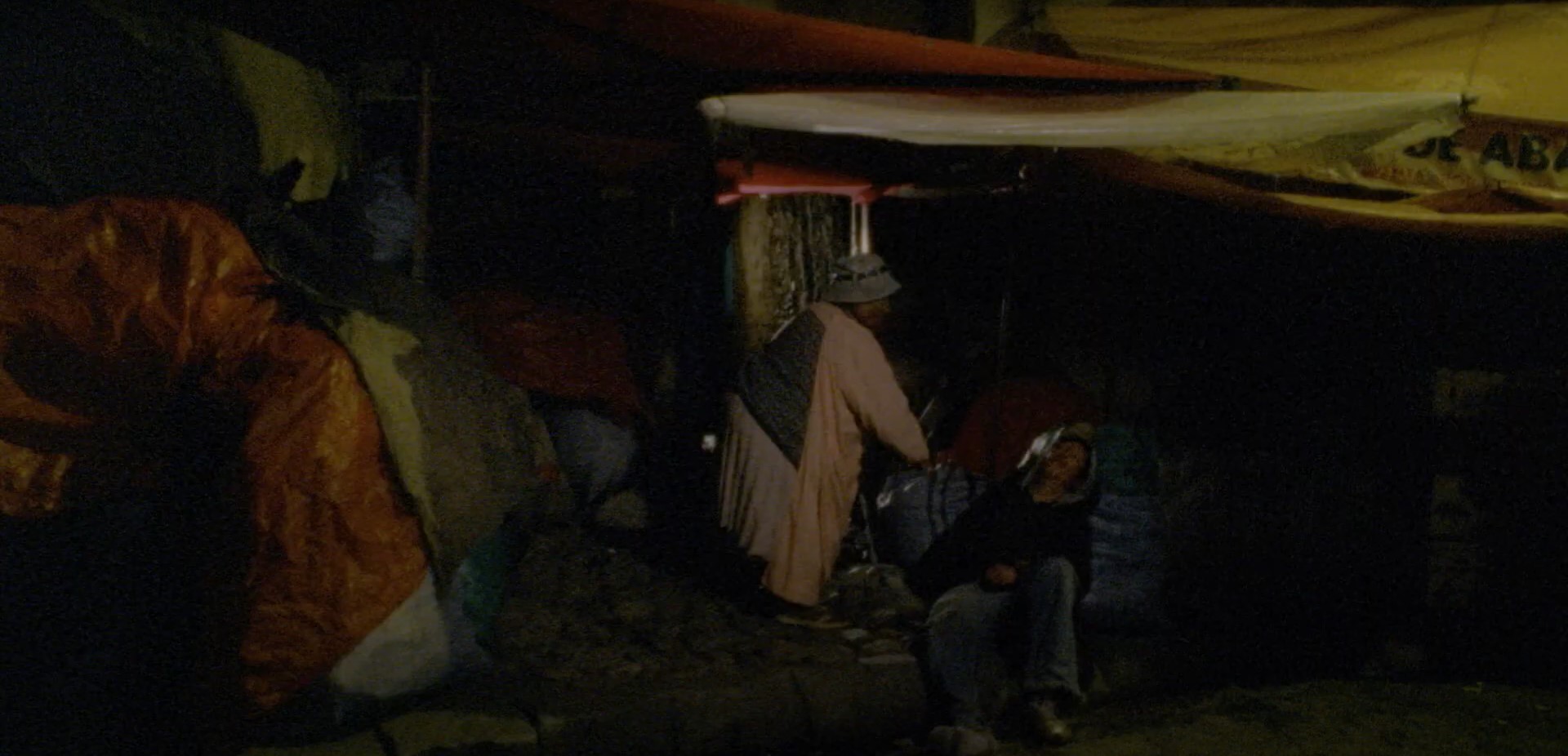
A group of out of work Huanuni miners march into the capital of La Paz to protest forced labor shortages.  Young miners Gallo, Gato, and Elder roam around La Paz to rummage up piecemeal work to live.  When they find work as commodity runners at an outside market, the job is labor intensive, pays very little, and they must sleep outside with other runners and vendors with essentially everything they own on their back.  The job takes a toll on Elder who is suffering a strange illness that cases fever, coughing, shortness of breath, and fatigue that hurts his pockets when he can’t run product in a timely manner.  Elder comes under the wing of a mysterious earthy, old woman who thinks Elder is her godson and she enlists the holistic medicine of a clairvoyant herbalist, living off the mountainous land just outside the city, to extract the unnatural elements that plague him.

Every so often, diving into a dramatic piece of filmic art, with hints of nightmarish surrealism to satisfy the horror element (or, in this case, the EVIL), is worth cracking into and peering into dependent the writher’s personal taste and the influencing environment surrounding.  In this instance, Kiro Russo’s “The Great Movement” spoke to the interests of this reviewer for not only the urban growth is death, nature is life social commentary but also my intimate connection to Bolivia because of my second-generation wife whose mother was born and raised in the South American country before migrating to the U.S.  “The Great Movement,” aka “El Gran Movimiento,” is the first native Bolivian film I’ve ever seen and that, too, sparked a curiosity in the Bolivian film industry that was virtually thought of as nonexistent.  Russo writes-and-directs the film produced by an international conglomerate of production companies with Altamar Films (“Killing the Dead”), Bord Cadre Films (“The Untamed”) and the La Paz based Socavón Cine as well as Sovereign Films who also distributes the film.

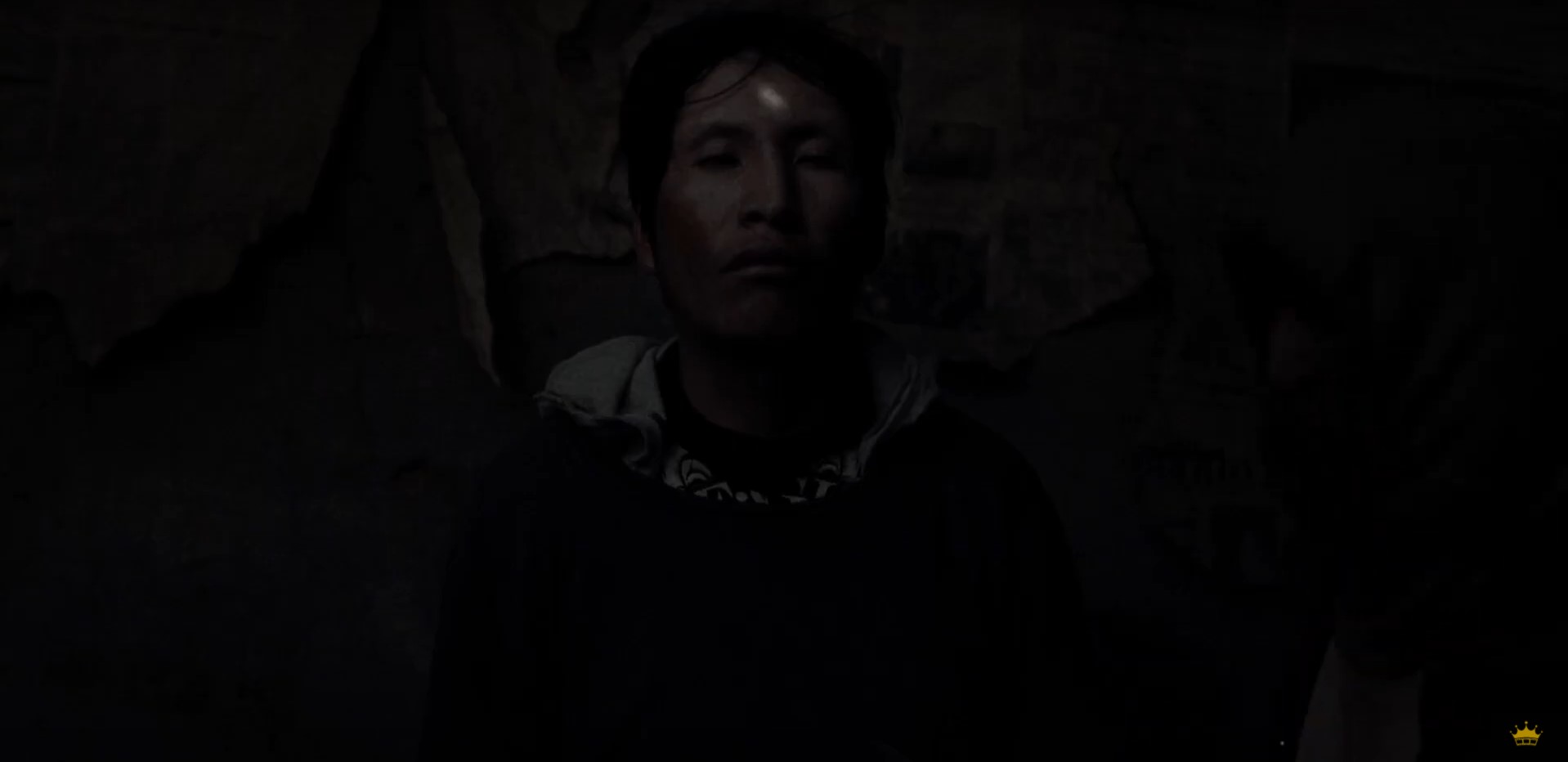
“The Great Movement” is a continuation of Elder Mamani’s story in this follow-up film from Russo’s 2016 “Dark Skull” where Elder’s moves in with his grandmother after his father’s death.  Living in a mining town, Elder pickups a miner job which leads to unearthed secrets about his father.  Julio César Ticona reprises his role as Elder, marching from the mines to the capital in protest for work only to be stricken by an illness insinuated from his dirty work at the mines.  Only a little of the previous “Dark Skull” story works itself way into the next chapter revolving around Elder’s suffering from various forms of urban reaping toxicity and also a clairvoyant old man living off the adjacent wilderness.  Max Bautista Uchasara, in his performance debut or at least as stated on IMDB, plays…well…Max, the well-loved, if not hard-loved, and dirty-cladded mystic that sees visions of La Paz in ruins.  Elder and Max cross paths because of Elder’s unexplainable sickness, without hardly a word spoken between them, to eradicate his illness and heal the young man’s failing body.  The connection between them is an old urbanite woman Mama Pancha (Francisa Arce de Aro) who thinks Elder is her godson but Elder, taking advantage of her kindness and generosity, doesn’t know this random person and, in the grand scheme of mysticism, Mama Pancha, which translates loosely to Mother Earth, is a symbolic representation of a forgiving planet lending a hand to an ore reaping miner by introducing a natural healer.  “The Great Movement” rounds out with a cast in Gustavo Milán Ticona, Israel Hurtado, Armando Ochoa, and Richard Aguilera. 

Through Russo’s use of cityscape and natural soundscape compositions, the sound design injects a creeping presence, enveloping the characters either insidiously or soothingly in their respective surroundings. The overwhelming arsenal of concrete jungle noise pollution becomes the harsh soundtrack that contributes to Elder’s environmentally unfriendly downfall. Every car horn, every construction machinery, every hustle and bustle of foot traffic is a spike through the head as Russo wants to make sure you can feel the audible image. In contrast, Max experiences virtually little noise, aside from streams, wind, and the rustle of greenery, in his detachment from clustered society when roaming the mountainous wilderness. Max’s elder ways grant him inexplicable aptitude that allows him to essentially speak to nature, live amongst the trees, and use the land for beneficial properties without waste and destruction. This encourages Pancha Mama, aka Mother Earth impression, to ask Max to heal her godson, aka an Earth child. This is Kiro Russo’s linchpin theme for “The Great Movement” that showcases a distinct dissonance between urbanization and nature. Being a nationality outsider going into Bolivia, that distinction is immensely obvious seeing firsthand the lack of organization, resources, and care for the city I travelled to that has been turned into a comprehensively polluted, dry dust-riddled, population on top of a population where one has trouble simply inhaling a breath of fresh air and struggling with the annoyance of a bloody nose. Now, I’m not singling out or epitomizing this one area of Bolivia I journeyed to as the worst of the worst, much of the same can be said about New York City sans the dust, but once you escape the city limits and step into Bolivia’s lush jungle, the air is noticeably cleaner with an almost healing effect on the body – no more bloody nose! My experiences greatly make visible and nail in Russo’s message as we accompany Elder through his deterioration, hearing about inhaling dust as a miner, drinking nothing but strong alcohol, and being worked literally to death with backbreaking labor. Modern medicine can’t locate or explain his symptoms, diagnosing Elder with psychological manifestation of physical problems. Russo’s “The Great Movement” is powerful and invokes soul-searching about reconnecting and healing with Mother Nature.

An insomniac nightmare that’s haunting in Russo’s solemn vision and full of delirium, “The Great Movement” is an arduous detox from the overdevelopment’s intoxicating prospect. Sovreign Films will release Kiro Russo’s 85-minute disenchanting and revival tale in UK cinemas on April 15th, 2022. With the limitations of a digital screener, I am unable to entirely comment on the audio and video quality, but the film is shot in the faint speckle of super 16mm and is presented in a widescreen 1.85:1 aspect ratio to get the full spectrum of the cinematographer Pablo Paniagua shot Bolivia from the market busy streets to the monolithic stone and mountain structures on delineated outskirts of the capital. Paniagua employs the vibrancy of daylight and the scarcity of night light for tenebrous effect already poorly rendered by the 16mm grain. Miguel Llanques’s score is often overshadowed by the conspicuous soundscape, but the impromptu synth-flash mob dream sequence broke up the feverish trajectory at midpoint with catchy beat and dance seemingly out of nowhere. There are no bonus scenes during or after the credits. “The Great Movement” is just as raw with the foreboding circumstances in the rest the world civilization as it is with Bolivia in Kiro Russo’s film that shepherds the overlooked denizens in need for growth back to a natural world of healing.

Prepare Yourself for the Side-Splitting EVILS of Adultery. “Sex and Zen” reviewed! (Umbrella Entertainment / Blu-ray)

A Must-See, “Sex and Zen” is highly erotic and highly funny.

A wealthy educated man is arranged to marry the beautiful and sexually naïve daughter of a high scholar.  After persuading her sex being a cornerstone to a healthy marriage, she quickly concedes to his insatiable desires.  Yet, the man wants more and decides to venture out into world seeking passionate sexual escapades and when he happens upon a distinguished scoundrel, who’s good at swordplay, martial arts, and as a carnal adviser, the man is schooled about his insignificant manhood needing to be the size of a horse’s.  The obvious thing to do, transplant his penis with a horse’s.  The comical insanity pursues from then on out with the man falling for not only the brutish fabric maker’s wife, but also a bisexual noblewoman with a jealous lady lover.  When the scholar’s secret is found out, the jealous lover imprisons the man’s stay-at-home wife into prostitution, spearheaded by the seduction of the vengeful fabric maker posing as the house’s new gardener.  

Attuned to the same idea as war and peace, “Sex and Zen” is a delicate balance of control between the two and the dire consequences suffered if the sanctity of matrimonial fidelity is not respected.  Hailing from Hong Kong under the infamy of the Category III rating and with surprising staggering budget of approx. 4 million USD, director Michael Mak’s artfully erotic 1991 sex-comedy is by far one of the most entertaining of its genre ever to be produced into the world.  Michael Mak, the director of the three sequels following the “Long Arm of the Law” after taking over the franchise from his brother Johnny Mak, helms a script penned by “To Be Number One” writers Alexander Lee and Ying-Chiet Lee, based loosely off the drama-tragedy novel “The Carnal Prayer Mat” by Yu Li.  While definitely not a mirror dramatization of Li’s novel, “Sex and Zen’s” melodrama is in full-frontal effect with outlandish sex organ transferring and fiendish-flings and betrayals that make this slapstick an absolute riot.  Raymond Chow’s Golden Harvest (“Game of Death,” “The Man from Hong Kong”) and Michael Mak’s brother’s company, Johnny Mak Productions,” build “Sex and Zen’s” luxurious sets and wardrobe, bright with colors and backed by phenomenal talent. 

“Sex and Zen” is only as good in its absurdity as it’s actors and actresses and, fortunately, Lawrence Ng and Amy Yip, and amongst the others, infuse and imprint themselves to the carnally comically characters with pleasure.  Ng (“The Underground Banker,” “Madame Q”) plays the travelling sex alcoholic husband Mei Yeung-Sheng to “Erotic Ghost Story’s” Amy Yip character, Huk-Yeung.  Huk-Yeung is an in the closet nympho taught to be disgusted by sex from her father’s puritanical stance.  Though Ng. and Yip’s scenes are few, they sizzle as explorers of each other’s bodies with Ng portraying shameless lust for the flesh against Yip’s innocent purity.  When Mei Yeung-Sheng ventures out into the world seeking erotic flings, that’s when Kungfu superstar Lieh Lo (“Fiver Fingers of Death”) enters the fold as the famous masterful thief Choi Kun-Lun who not only steals from the rich and gives to the poor as a Robin Hood-esque martial arts bandit but also becomes the sexual advisor to a hapless Yeung-Sheng and his itsy-bitsy trouser snake problem.  Lo’s hilariously cavalier and unpredictable in his performance that offers a divergent against the constant yearnings to follow the graphic depictions of pornographic picture art.  The scholar becomes entangled with an abused fabric seller (Japanese-born actress Mari Ayukawa, “Groper Train Hurry Up and Come”) and, in consequence, the fabric seller’s husband Wong Chut, a ultra-physical ruffian played vigorously intensive by Elvis Tsui (“The Boxer’s Omen”), who has a vendetta against the scholar and has an affair with the scholar’s wife that leads to prostitution, frail health, and immense guilt in an parable about the misconduct of unchecked sexual liberties.  “Sex and Zen” rounds out with a solid cast in Hong Kong comedian Kent Cheng (“Dr. Lamb”), Isabella Chow (“The Nocturnal Demon”), Carrie Ng (“Angel Terminators”), and Feng Tien (“Fist of Fury”) as the Sack Monk who warns about lust-induced karma that pulls the story into a full arc.

“Sex and Zen’s” mighty price tag is beyond being obvious with elaborately detailed set designs and structures, equally elegant and era appropriate wardrobe and makeup, elevated stunt work that blends highflying Kungfu with softcore eroticism, a physical and omnipresent choreography, and a few complicated shots, especially the one involving the back-and-forth editing of above and below the surface of a steamy hot tub sexual assault-to-fantasy fornication.  The inexplicit story can be difficult to follow at times without much being conveyed to what the characters are doing, especially in the first act that jumps from a licentious Mei Yeung-Sheng debating with a temple-residing Sack Monk on the principles of polyamorous relationships, to the scholar fulfilling his engagement to and the slow deshelling into wanton exercises of the aristocracy daughter, to finally his sudden departure from her as he ventures out into the world for untamed carnal delights with strange women.  From that point, “Sex and Zen” becomes a little more cohesive and coherent, building upon the scholars need for a bigger penis at the suggestion of his newfound friend Choi Kun-Lun and bedding the wife of a loutish fabric maker while paralleling a forbidden lesbian love affair of two stepsisters without the meddlesome of man in the mix.  As Mei Yeung-Sheng and the lesbians’ paths collide, stiff and unforgiving karma catches up to each and every one of them with the welting sting of tit-for-tat cuckolding.  Yet, Mak’s depiction of the story is wilder than the slapstick and melee humor with a stark contrast of, or maybe a complete overshadowing all together of, the perversion of foreign sex toys.  From the hilt of a scroll brush to both ends of a golden flute (I’ll let that visual sink in)the women of “Sex and Zen” have a knack for insertion talents in this Hong Kong Cat III sideshow of debauchery and comedy. 

Coming in at #2 on Umbrella Entertainment’s Sensual Sinema label, “Sex and Zen” lands on a sleek Blu-ray home video from the Australian distributor. Presented in a widescreen 1.85:1 aspect ratio, the “Sex and Zen” Umbrella Blu-ray has impeccable full high definition, 1080p quality that pops right off the screen. The original 35mm transfer has a healthy amount of good grain and the colors lavishly seize control over every scene with a full-bodied range of hues. Blacks are inky and unaffected by any major artefact issues and the skin shades are poor-riddles and hair-laden in every since of the detail spectrum. Umbrella’s Blu-ray offers two audio options with a Cantonese 5.1 DTS-HD master audio with optional English dub or a Cantonese 2.0 Dolby Digital stereo with optional English dub. The dubbed-dialogue overlay is slightly asynchronous with the image, but there’s robust dialogue amplification centralized out of the five channels coinciding with isolating individual ambient sounds, such the swooshing of the swordplay or the chains clinking during acrobatic coitus. Special features are a little slim and of yore for a second title on a new sublabel, but the release offers an achieved, English-subtitled interview with director Michael Mak diving into the budget, working with the actors, and creating certain scenes. The theatrical trailer is also available on special features. The hot pink Sensual Sinema cardboard slipcover has a retro impression with various posters of the film on the slip and the snapper case surrounded by also a hot pink border. The film is listed as region B coded but played on my region free player without issue, runs at 95 minutes and is rated R+ for high level sex scenes. “Sex and Zen” is, by far, one of the best and most fetishized sex comedies ever produced and though a notorious Hong Kong CAT III production, the film is absolutely riotous and one-of-a-kind, deserving of praise from hedonistic crowds around the globe.

A Must-See, “Sex and Zen” is highly erotic and highly funny.