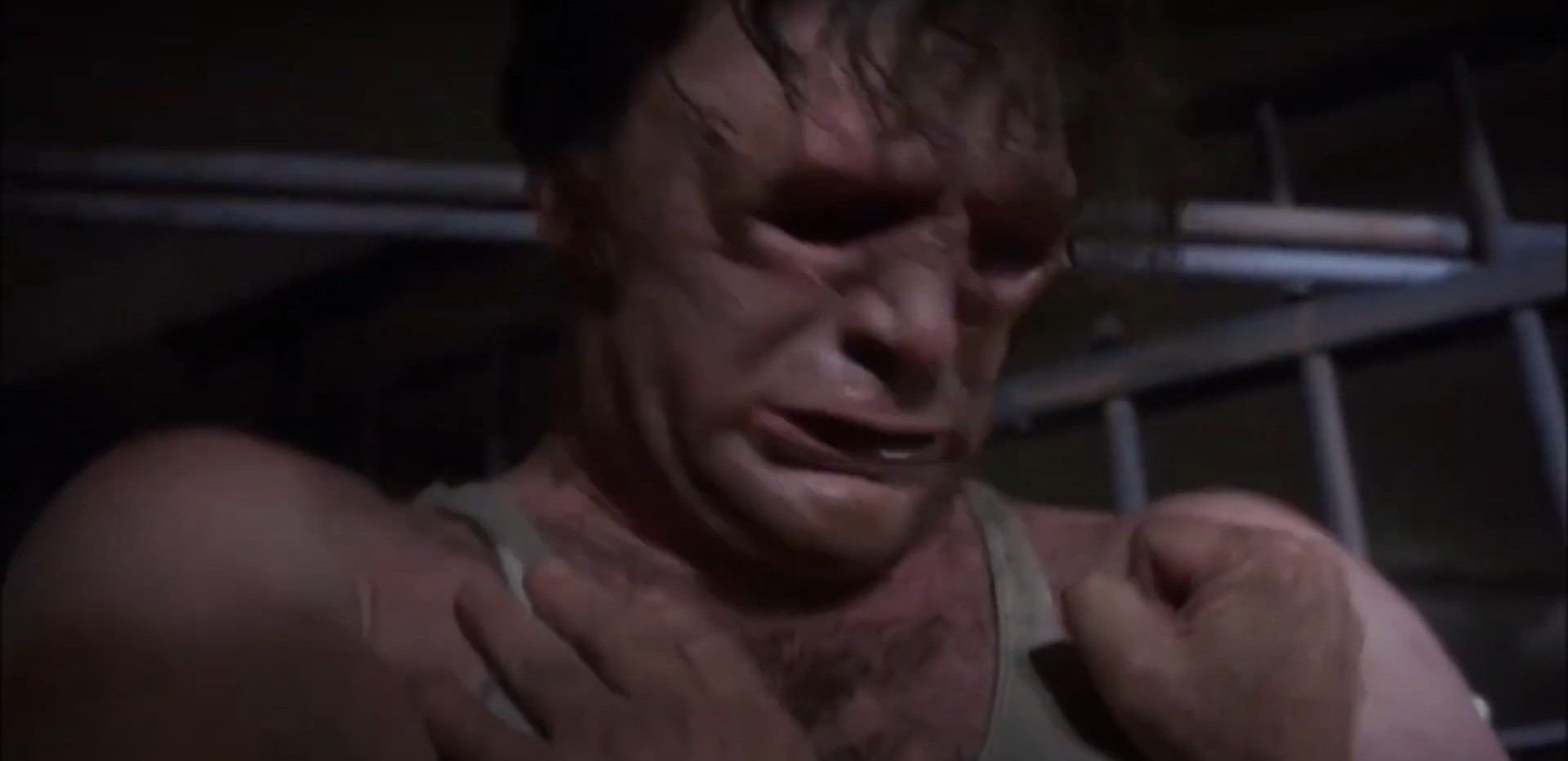
Best Friends Trying Their Best to Best EVIL! “The Boy Behind the Door” reviewed! (Acorn Media International / Blu-ray)

Best friends Bobby and Kevin are kidnapped by a stranger and taken to a remote house in the middle of nowhere. After Kevin is removed from the stranger’s trunk and is dragged into the house kicking, screaming, and pleading to be let go, Bobby breaks free of his restraints, but hearing his best friend Kevin’s screams leaves Bobby with no choice but to help him. Working his way through the house and upstairs unnoticed, obstacles stand between him and rescuing Kevin, including the boys’ kidnapper, a paying customer, and Kevin being shackled to the wall, locked inside behind an attic door, but that doesn’t avert Bobby’s intentions from thinking outside the box to save his best friend from a fate far worse than death. However, only a matter time before the kidnapper or the paying customer knows there’s someone else lying low the house and unearthing troubling secrets.

Child sex abuse is, without a double, a disturbing and touching subject to exhibit in cinema.  How to maneuver around the theme with child actors can be a delicate balance of commitment and understanding when considering the cast involved, especially if most would argue that a child’s brain is too immature or not developed appropriately to comprehend the impact of sexual abuse and to expose them indirectly could also be traumatic to their being.  The opposite of that argument has been proved over the decades with child actors having major roles in general with horror films.  Monsters of all shapes and sizes, guts and blood, and violent themes surround them and films such as “The People Under the Stairs” and “IT” have some of the most frightening and disturbing practical effect imagery that would cause sleepless night terrors for months and, yet kids star in them and are key to their success because, as we all know, children are not immune to real world dangers and threats.  So, why should be exempt from the creative imaginary ones? David Charbonier and Justin Powell finesses that line with a massaged contented breakout feature in “The Boy Behind the Door” written-and-directed by the lifelong friends and produced by Ryan Scaringe of Kinogo Pictures. Howard Barish of Kandoo Films, and Rick Rosenthal, Bert Kern, Ryan Lewis of Whitewater Films

***Beware… this section may contain spoilers*** Lonnie Chavis (“This Is Us”) and Ezra Dewey (“The Djinn”) play Bobby and Kevin who find themselves in the worst-case scenario of two unaccompanied pre-teens violently whisked away to an isolated farmhouse near one or two oil well pumps. I commend Chavis and Dewey’s hard fought, emotionally deep performances in battling against the creepiest of odds and feigning injury without being too over-the-top or inauthentic. Either if by being well coached or, more than likely, just good child actors, the level of anxiety maintains a solid 10 throughout with them. Their only scenes together where I thought the fusing of their friendship didn’t quite work was before the abduction where their dialogue and interactions as two young boys drifting across fields and profoundly thinking about their future deemed itself well too mature and far beyond being advanced for boys their age that the moment was a complete misfire for the story. Inevitably, the two friends run into a couple of creeps and exploitative racketeers in Micah Hauptman (“Phobias”) as the paying customer abandoning paid up time to chase down Bobby and Kristen Bauer van Straten (“True Blood”) in a twisted plot point of a white, late 40s to early 50s-year-old woman, who in the film could be someone’s mother, as the ruthless kidnapper of young boys for old man pleasure. Hauptman is more-or-less there in slimy spirit but doesn’t ooze enough egregious behavior to note as that trait falls immensely well upon the shoulders of van Straten with a mean streak that never lets up despite the rather paralleling of a hard R “Home Alone” antics between adults and children.

“The Boy Behind the Door” is a butt-clenching thriller because of the sheer fact children straddle the danger line on either side of spectrum. You have Kevin locked securely away in the summitted play and video room, shackled and waiting in screams, tears, and fears for his sure fate, and then there’s Bobby escaping his restraints and staying in the shadows, out of sight, trying to save his friend before he becomes either chained and exploited like Kevin or executed because of his strong will. Charbonier and Powell offer little-to-no fluff in pretending “The Boy Behind the Door” is anything but a fight for survival, a fight for friendship, and a fight against the utmost evil. The film isn’t full of strong one-liners or momentous moments that keep the story grounded and pure in its vilest state with tiptoeing around the one-woman operated child sex abuse ring without going into the full gross details. Charbonier and Powell’s story has many strengths, but it also has a few weaknesses waned upon the characters’ decision making. For instance, when Bobby has to break into the house, he throws a rock through the mud room door window without knowing where the kidnapper is and if they are in earshot of the window breaking. Later in the film, Bobby is trapped in the upstairs bathroom and when a squad car pulls up, instead of breaking the window he can clearly reach, he tries to yell through it and fiddle with opening the latch. Why does he simply not break the window and then yell for help? That particular scene drove me nuts and there a few other minor instances of the same caliber throughout in a story that well made enough to be compelling, to be horrific, and to be gripping in and around every house interior scene.

Tense, harrowing, and an ugly truth, “The Boy Behind the Door” is defensible horror at its best and a righteous strength of friendship. Acorn Media International distributes “The Boy Behind the Door” onto a region 2 Blu-ray in the UK! The PAL encoded release is presented in a widescreen 2.38:1 aspect ratio and, speaking digitally, the picture renders flawlessly the inkling of low-lit hope inside a world of dark fatalism and cynicism under the cinematography eye of Julián Estrada. The English language DTS-HD Master Audio 5.1 is crystal clear that occupies each channel with the right number of decibels to exact the range of sneaking through a creaky wooden floored house. Dialogue is clean and clear, especially at whisper breath. The Shudder original film comes with a pair of special features including a blooper reel of mostly Lonnie Chavis sneezing and goofing off which is nice to see kids being kids on set and a music video to the film which is more like a trailer with Anton Sanko’s dark synth-gripping score being an apogee of suspense. There’s never sympathy for these types of vile exploitation villains on and off screen and in “The Boy Behind the Door,” that fight back mantra resonates loud and clear in an unambiguous do-or-die between guileless innocence and pure evil.

Surrounded by Aquatic EVIL, No One Can Escape “The Island of the Fishmen!” reviewed! (Full Moon / Blu-ray)

Check out the scantily-cladded woman encroached upon on “The Island of the Fishmen” Blu-ray!

A French prisoner ship sinks to the bottom of the Caribbean leaving only a handful of prisoners and the Left Lieutenant Claude de Ross, the ship’s doctor, stranded on a lifeboat for weeks until they a mysterious force drives them through the fog and crash them on the rocks of a seemingly deserted volcanic island. Only a few prisoners and the doctor manage to survive the wreckage, stumbling upon a ritualistic area of empty graves and abandoned artifacts of an island society. This is where the haggard and hungry men meet the beautiful Amanda Marvin on horseback and follow her through the island jungle to a clearing where the edifice of Edmond Rackham sits imposing on them. Having left his home country, Rackham settled upon this uncharted island, garnering local Caribbean inhabitants as servants, and being a greedy treasure hunter who might have just discovered the lost city of Atlantis. There’s only one problem, the city is surrounded by aggressive fishmen kept at bay by Amanda’s famed disgraced biologist father who has fallen severely ill, charting a course for the good doctor, Lt. Claude de Ross, to be unharmed in order to care for perhaps the only person who knows how to manage the wrath of the fishmen.

A swimmingly aquatic creature feature with an all-around gratifying men in costume pastiche, familiar to the style of “The Creature from the Black Lagoon,” in Sergio Martino action-adventure horror “The Island of the Fishman.” Also know under the revamped shots of “Screamers” aka “Something Waits in the Dark,” here we have the original film in all it’s natural glory from the director of “Your Vice Is a Locked Room and Only I Have the Key” and “Torso” director Martino from a script by Martino, Sergio Donati (“Orca”), “Slave of the Cannibal God’s” Cesare Frugoni who workshopped with Sergio Martino’s older brother, Luciano Martino, (“So Sweet… So Perverse”) on the original story. Some would also say that “The Island of the Fishmen” is also a crossbreed between H.G. Wells’ “The Island of Dr. Moreau,” H.P. Lovecraft’s “The Shadow Over Innsmouth,” and, aforementioned, “The Creature from the Black Lagoon.” The 1979 Italian production stars an international cast shooting along various locations in Italy and is produced by Luciano Martino under Dania Films and Medusa Distribution.

American, United Kingdom, and, of course, Italian come together to form “The Island of the Fishmen” cast that doesn’t stray too far away from their individual innate dialects. The most pompous is he Essex-born Richard Johnson’s sadistic and fortune hungry Edmond Rackham with a caricature of a voice that isn’t like anything in his performance in Lucio Fulci’s “Zombie.” As Rackham, the inflections reminisce of a British Humphrey Bogart mixed with a one Dick Dasterdly and so Johnson comes off a bit cartoony and overly dramatic compared to the film’s panache malnourished yet earnest hero in Italian actor Claudio Cassinelli (“Murder Rock,” “The Scorpion With Two Tails”) as Left Lieutenant Claude de Ross, a ship’s doctor who suddenly becomes the medical caretaker and leading guard over a lifeboat full of hardened prisoners, some who have blood on their hands. Franco Javarone and Roberto Posse play a pair of surviving convicts, especially two at odds on how they should treat their next in rank penal officer. Though being thrust into the oversight position, the Lieutenant doesn’t have to worry about his prisoners for too long as the island’s baleful environment with jungle death traps, poisonous water, voodoo priestess, a sadistic lord of estate, and mutant fish people swimming in circles around the island’s parameter and through the cut through waterways sees to their wellbeing. “Island of the Fishmen” does have a few predominant male figures of different caliber but there are also a pair of women inhabiting the island who, too, have counteracting roles. Bond girl Barabara Bach (“The Spy Who Loved Me”) became plagued by the ocean’s frightening fishmen only two years later as the captive dame of Edmond Rackham who holds her hostage as he pushes her father (Joseph Cotton, “The Survivor”) to continue with his mind control potion over the fishmen. Then, there’s Shakira. No, not the Brazilian singer-song writer with the hypnotizing booty shaker. This Shakira is a voodoo priestess, played by Jamaican actress Beryl Cunningham (“Dorian Gray”), who works for Rackham but ultimately envisions foreboding doom on the volcanic island. Giuseppe Castellano and Franco Mazzieri round out the cast.

A whole lot is going on in this film that from the surface seems, surfacing meaning the home video covers and posters, to focus chiefly on the hostile half-fish half-man creatures that bubble to surface, check out top side for any unwanted visitors, and quickly dispatch them before disappearing under the glassy waters of the Caribbean. I adore the design of the rather stiff but crudely convincing creature suits with buggy fisheyes, razor piranha like teeth, and cladded entirely green and scaley in a design by Massimo Antonello Geleng who by vocation was more a production designer with credits including this film along with “Cannibal Holocaust,” “City of the Living Dead,” “The Church,” and “Dellamorte Dellamore” to name a few. Yet, the fishmen were not a sole source of danger on an island that had a deadly schemer in Edmond Rackham, the motif of voodoo and jungle trap throughout, a volcano ready to erupt and engulf the island with lava, and the lost city of Atlantis as the grand epic finale that pivots this story on an acute elbow left that shows a mighty ambitious story on an Italian slim budget. To put it frank, Sergio Martino was able to put all the elements together into a cohesive, coherent plot with action, horror, exploitation, and mad science fiction albeit the story’s wild and diverging concepts.

Though many U.S. audiences know this film as Roger Corman’s highly altered, New World Pictures presented cut retitled as “Screamers,” Full Moon features releases the original oeuvre of Sergio Martino with a remastered Blu-ray release from the original 35mm negative. The 99-minute film is presented in a widescreen 2.35:1 aspect ratio that captures in perfect matte composition and frame the locational miniatures, such as the manor house or the underwater Atlantis temples, in a compression that doesn’t make the structures obvious fakes. Slightly tinged yellow, the overall color palette is renders out well enough to suit the release with a pristine transfer seeing no signs of real significant damage. The English language tracks come in two formats – a PCM 2.0 and a Dolby Digital 5.1 surround sound. The English-speaking actors have their original tracks intact while the Italian cast have their original dialogue re-dubbed in English for posterity on new releases such as this one. Dialogue, nor any of the corresponding audio tracks, show any signs of fidelity issues or damage, but do feel muffled, even on the 5.1 as if the sound was boost stifled and left with some of the channels lacking vigor. Aside from Full Moon trailers, the R-rated film rides solo on this hi-def release. “Island of the Fishmen” is a small film fighting hard to swim upstream and really does a number on many different levels regarding where the audiences should focus their attention on, but I can see why Roger Corman wanted to give Martino’s film a second run after a commercial flop with a new, gory scenes edited right into the heart of “Island of the Fishmen’s” flexible, cartilaginous bones. Despite Corman’s efforts, Sergio Martino’s unmolested, original reeling reel is the one and only catch of the day for this purist.

Check out the scantily-cladded woman encroached upon on “The Island of the Fishmen” Blu-ray!

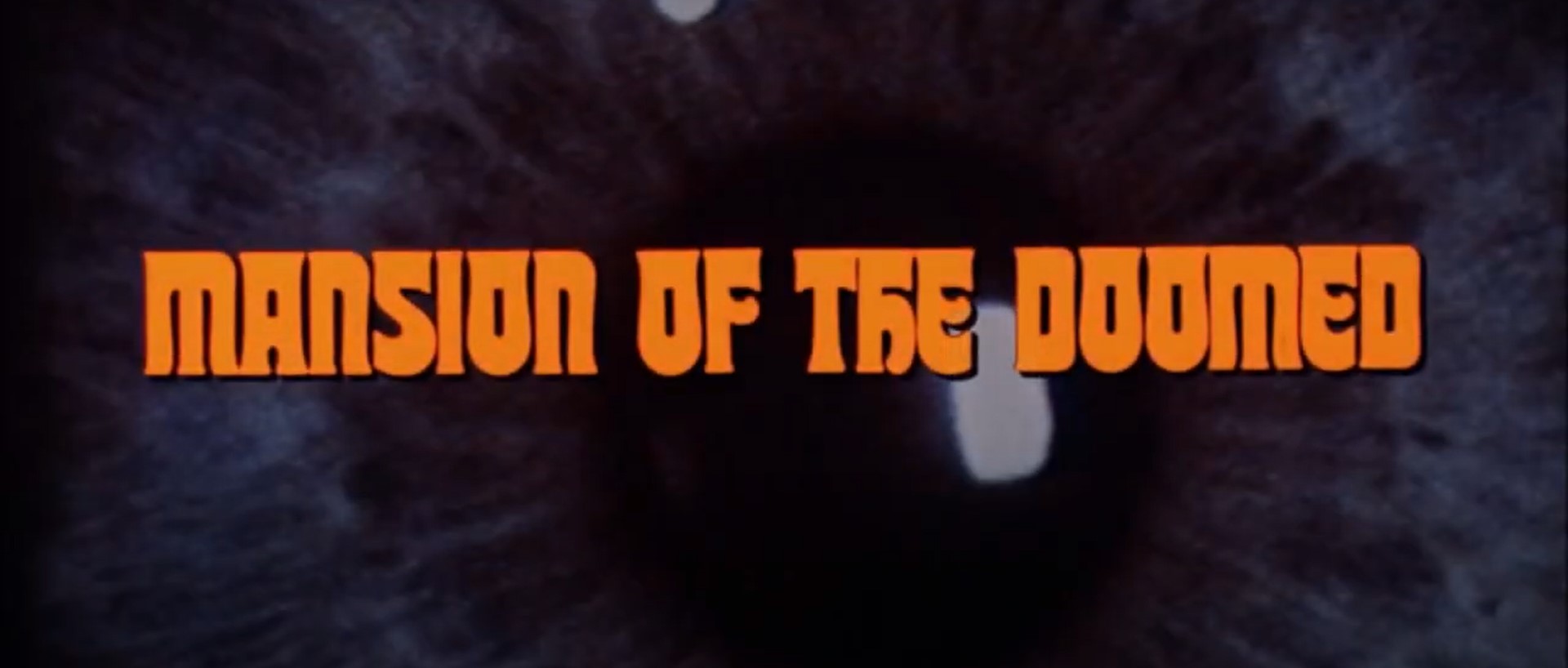
EVIL is in the Eye of the Beholder! “Mansion of the Doomed” reviewed! (Full Moon / Blu-ray)

“Mansion of the Doomed” on Blu-ray.  Hold Onto Your Eyeballs!

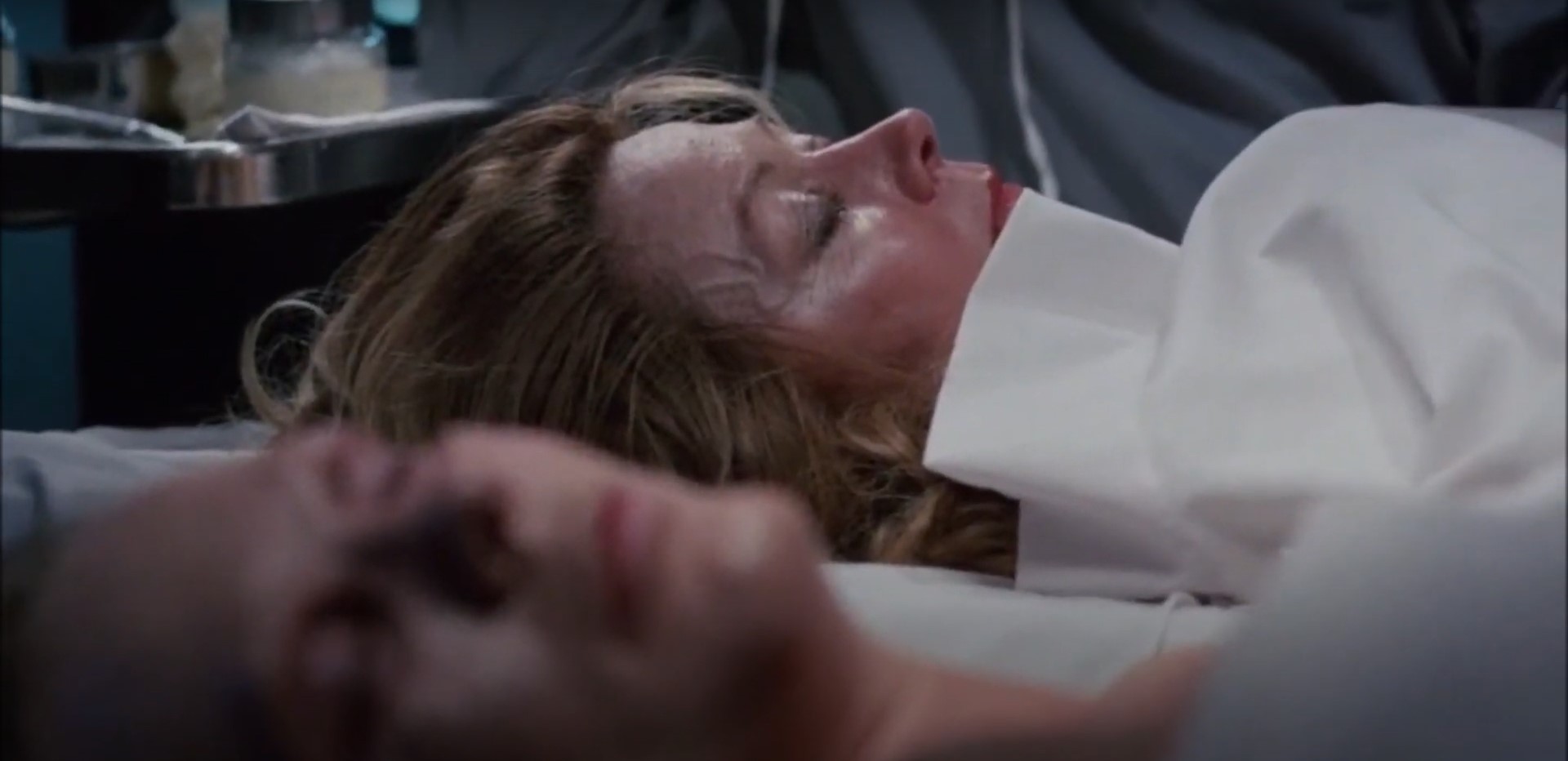
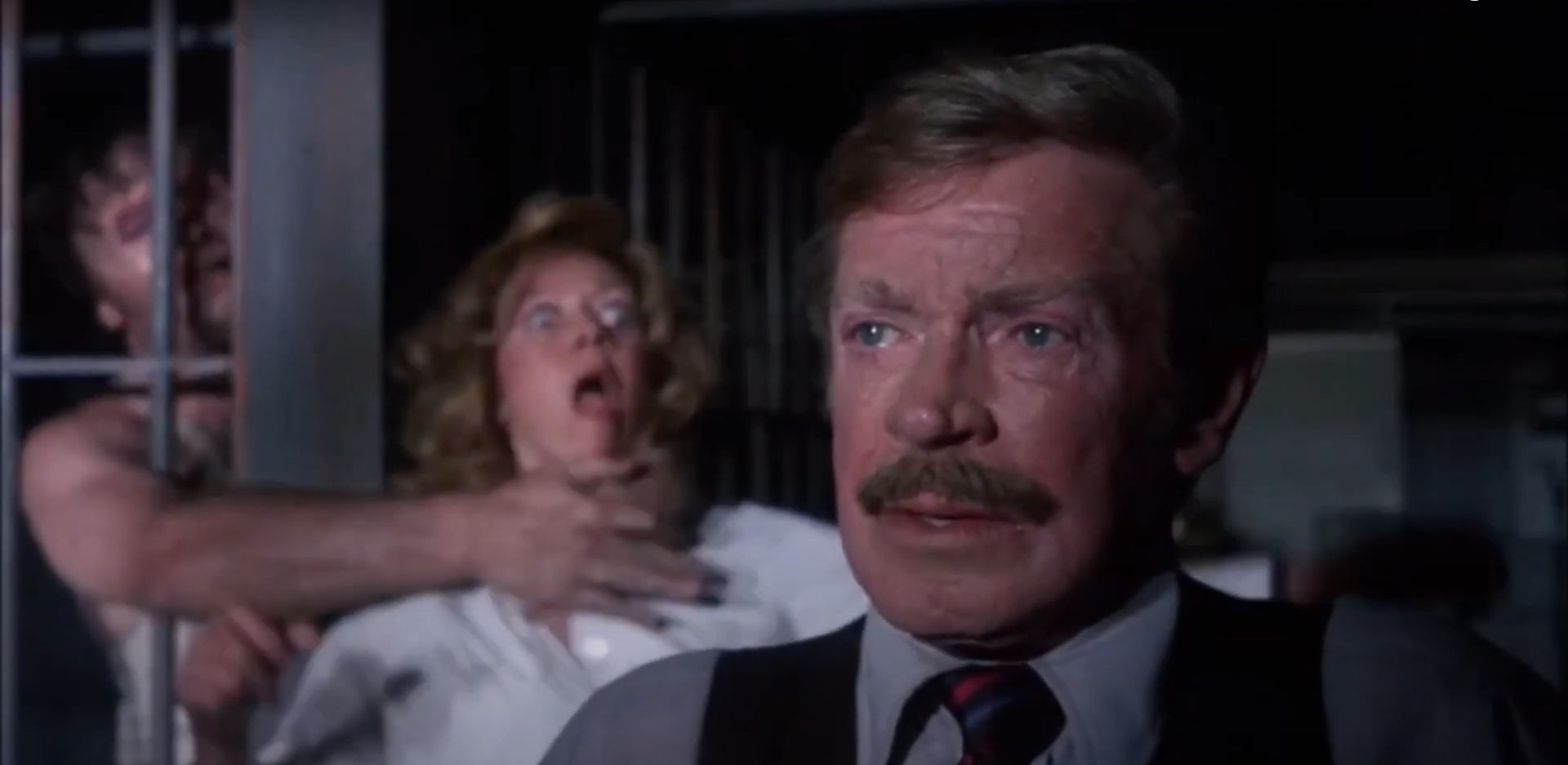
In a stroke of irony, renowned optometrist surgeon Dr. Leonard Chaney had a car accident that accidently causes his young adult daughter permanent blindness.  Obsessed by guilt and determined for her to see again, Chaney moves toward a not only radical procedure but also unethical one of a full eye transplant.  The catch for this type of surgery to be successful is the eye has to be extracted from a living patient.  Unwilling to wait for a donor, Chaney employs every deceptive tactic to lure unwillingly healthy and beautiful globular organ donors into his dark basement where he drugs them unconscious, surgically plucks out their entire eyes, and leaves them locked in a cellar cage, blind and crudely healed with scar tissue but still alive.  With each failed attempt at restoring her eyesight, the reminders of his experiments linger down below, screaming in pain, and pleading for their lives.  Soon, those pleas will ultimately catch up to him. 

Before his fascination with mini-sized maniacs of killer animated toys and malicious experimental oddities, Charles Band used to produce other types of original horror and the “Mansion of the Doomed” was one of them.  The 1976 Frank Ray Perilli (“Dracula’s Dog,” “Alligator”) written and the “Dead & Buried” and “Halloween 4: The Return of Michael Myers” actor Michael Pataki directed mad surgeon “Mansion of the Doomed” was the first feature film Charles Band officially stamped his actual name onto along with father and western screenwriter, Albert Band, as financial executive producer.  While “Mansion of the Doom” is known by various other titles around the world – “Massacre Mansion,” “Eyes,” “Eyes of Dr. Chaney,” “House of Blood,” “Eyes of the Living Dead,” and “The Terror of Dr. Chaney” – the one aspect that the film is firm in is its Hancock Park and estate shooting location in Los Angeles as one of the very first features to come out of Charles Band Productions company.

Lance Henriksen.  You know name, right?  Sounds familiar, yes?  The “Aliens” and “Pumpkinhead” actor, hot off the success of “Dog Day Afternoon” with Al Pacino, begins his tour de force of horror and dark science fiction with the Pataki mad doctor eye opener.  Dr. Chaney uses his misguided experimental expertise first on Dr. Dan Bryan, played by Henriksen, after Dr. Bryan’s recent romantic relationship breakoff with the recently blind daughter of Dr. Chaney, Nancy (Trish Stewart).  Before he became the narrating voice in TV’s “Knight Rider,” the veteran actor Richard Basehart, who also had a role in the 1977 “The Island of Dr. Moreau,” became his own inhumane medical malpractice physician in Dr. Chaney.  Though Basehart makes for the epitome of a professional doctor, his performance was the weakest link in the cast’s locks that didn’t exhibit the stress and desperation of a man continuously exploiting and disfiguring people for his own personal guilt release.  The guilt was not compounding as much as the story wanted to suggest, but we feel more empathetic to Dr. Chaney’s longtime assistant in Gloria Grahame (“Blood and Lace,” “Mama’s Dirty Girls”) who we can see her character dissolve with each abducted patient and affected to the core by their sightless screams.  “Mansion of the Doomed” rounds out the cast with Al Ferrera (“Dracula’s Dog”), Marilyn Joi (“Black Samurai”), Donna Andersen, JoJo D’Amore (“Dracula’s Dog”), and Katherine Stewart.

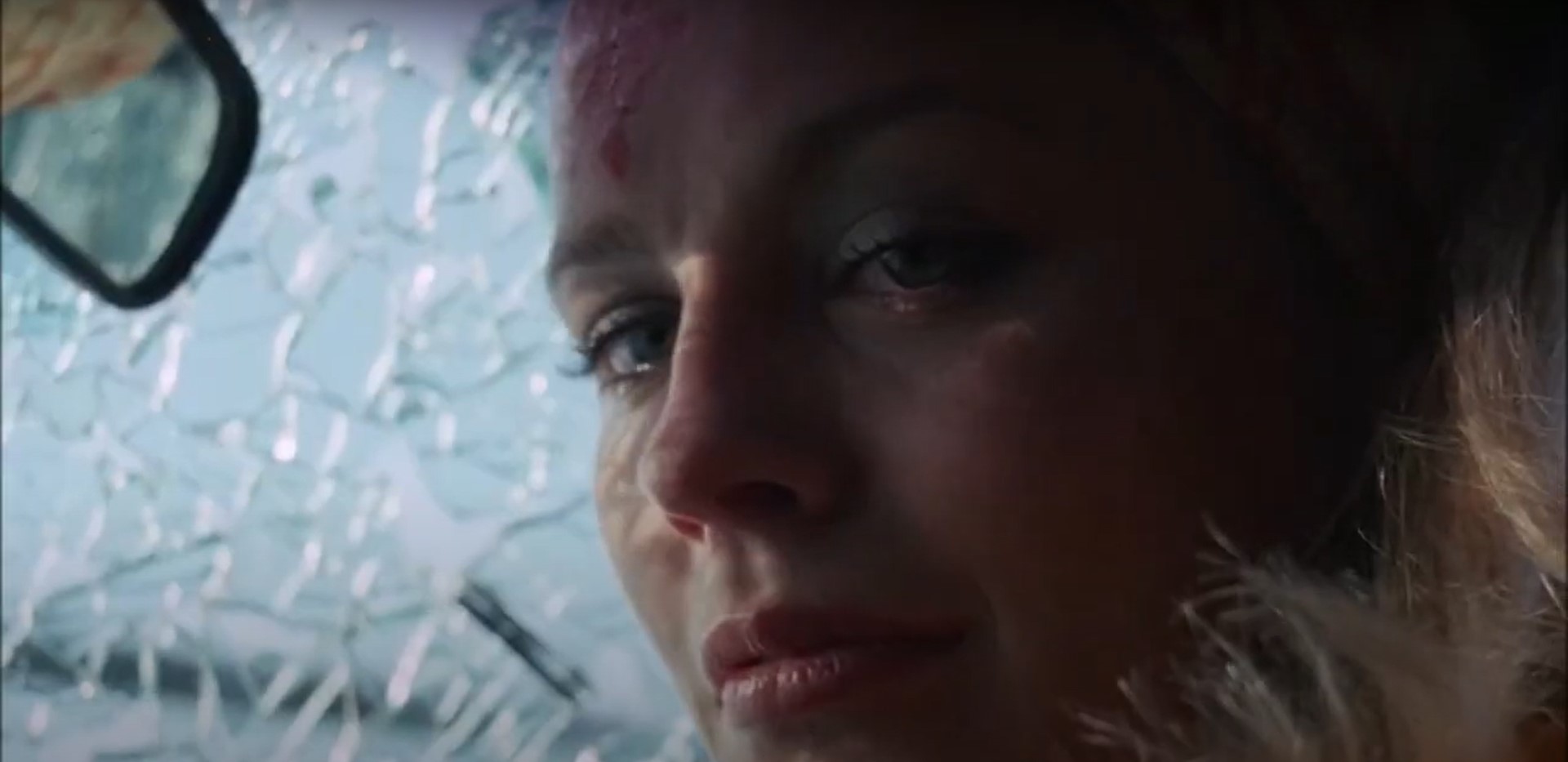
Michael Pataki’s “Mansion of the Doomed” is an eye-peeling shocker that’s dark and grim to the core and has an eye for cynicism. I could keep the eye puns going but that would be too easy to pluck out. Perilli’s story is rather plainly spoken with not a lot of fluff diving into medical or procedural jargon to bore you down into a loss of interest. Instead, the good doctor character goes right to work getting his hands elbows deep into the eye sockets of his victims and that’s how this particular exploitation perfectly crafted the balance by tabling the under stimulating medicalese with caged disfigured patients left to live in agony. Where Pataki and Perilli faltered some is in the preface by skimming the surface of the Dr. Chaney caused accident that rendered Nancy blind when she face-planted right into the doctor’s windshield as he swerves to not runover a mutt. In driver’s ed, you’re supposed to hit the small animal that runs in front of you in order for these kinds of accidents don’t happen! Told in the inner thought of a flashback, the force between the two immovable objects shatters the glass but leaves Nancy unscathed physically yet, somehow, she loses her sight in both of her eyes and while Dr. Chaney is unable to best the blindness with everything the surgical optometrist throws at it, perhaps that’s the unsolvable mystery that beleaguers abashedly an expert at the summit of their excellence. ‘Mansion of the Doomed” is not a feel-good film as not one single character has a positive outcome and having lost more than just their sight but also, to name a couple, their humanity and their hope.

Uncut, restored, and remastered onto a new Blu-ray release, Full Moon Features re-release “Mansion of the Doomed” onto 1080p, full high definition, from the original 35mm negative. Source material held up over father time with a pristine 85-minute uncut transfer to retouch in a pop of color and refine the details in a softer, more airy-soft image, presented in a widescreen 1.85:1 aspect ratio. Full Moon offers two audio options available with an English Dolby Digital 5.1 surround sound and a Dolby Digital 2.0 PCM. Though slightly staticky in the ambient and dialogue tracks, the balance works and is full-bodied around more essential scenes of surgery and the cries of anguish. Dialogue doesn’t sound overly boxy or hissy and the cult composer Robert O. Ragland’s (“Deep Space,” “Q”) classic orchestra score come across with a powerful range that speaks the scene without exposition. The region free Blu-ray has no extra features, leaving this release as a bare bone, feature only. “Mansion of the Doomed’s” harrowing ending induces stupefying blank stare and feels like a brick just walloped you in the face knowing that every pawn in this story loses at the hands of man disillusioned in playing God.

“Mansion of the Doomed” on Blu-ray.  Hold Onto Your Eyeballs!

Prepare Yourself for the Side-Splitting EVILS of Adultery. “Sex and Zen” reviewed! (Umbrella Entertainment / Blu-ray)

A Must-See, “Sex and Zen” is highly erotic and highly funny.

A wealthy educated man is arranged to marry the beautiful and sexually naïve daughter of a high scholar.  After persuading her sex being a cornerstone to a healthy marriage, she quickly concedes to his insatiable desires.  Yet, the man wants more and decides to venture out into world seeking passionate sexual escapades and when he happens upon a distinguished scoundrel, who’s good at swordplay, martial arts, and as a carnal adviser, the man is schooled about his insignificant manhood needing to be the size of a horse’s.  The obvious thing to do, transplant his penis with a horse’s.  The comical insanity pursues from then on out with the man falling for not only the brutish fabric maker’s wife, but also a bisexual noblewoman with a jealous lady lover.  When the scholar’s secret is found out, the jealous lover imprisons the man’s stay-at-home wife into prostitution, spearheaded by the seduction of the vengeful fabric maker posing as the house’s new gardener.  

Attuned to the same idea as war and peace, “Sex and Zen” is a delicate balance of control between the two and the dire consequences suffered if the sanctity of matrimonial fidelity is not respected.  Hailing from Hong Kong under the infamy of the Category III rating and with surprising staggering budget of approx. 4 million USD, director Michael Mak’s artfully erotic 1991 sex-comedy is by far one of the most entertaining of its genre ever to be produced into the world.  Michael Mak, the director of the three sequels following the “Long Arm of the Law” after taking over the franchise from his brother Johnny Mak, helms a script penned by “To Be Number One” writers Alexander Lee and Ying-Chiet Lee, based loosely off the drama-tragedy novel “The Carnal Prayer Mat” by Yu Li.  While definitely not a mirror dramatization of Li’s novel, “Sex and Zen’s” melodrama is in full-frontal effect with outlandish sex organ transferring and fiendish-flings and betrayals that make this slapstick an absolute riot.  Raymond Chow’s Golden Harvest (“Game of Death,” “The Man from Hong Kong”) and Michael Mak’s brother’s company, Johnny Mak Productions,” build “Sex and Zen’s” luxurious sets and wardrobe, bright with colors and backed by phenomenal talent. 

“Sex and Zen” is only as good in its absurdity as it’s actors and actresses and, fortunately, Lawrence Ng and Amy Yip, and amongst the others, infuse and imprint themselves to the carnally comically characters with pleasure.  Ng (“The Underground Banker,” “Madame Q”) plays the travelling sex alcoholic husband Mei Yeung-Sheng to “Erotic Ghost Story’s” Amy Yip character, Huk-Yeung.  Huk-Yeung is an in the closet nympho taught to be disgusted by sex from her father’s puritanical stance.  Though Ng. and Yip’s scenes are few, they sizzle as explorers of each other’s bodies with Ng portraying shameless lust for the flesh against Yip’s innocent purity.  When Mei Yeung-Sheng ventures out into the world seeking erotic flings, that’s when Kungfu superstar Lieh Lo (“Fiver Fingers of Death”) enters the fold as the famous masterful thief Choi Kun-Lun who not only steals from the rich and gives to the poor as a Robin Hood-esque martial arts bandit but also becomes the sexual advisor to a hapless Yeung-Sheng and his itsy-bitsy trouser snake problem.  Lo’s hilariously cavalier and unpredictable in his performance that offers a divergent against the constant yearnings to follow the graphic depictions of pornographic picture art.  The scholar becomes entangled with an abused fabric seller (Japanese-born actress Mari Ayukawa, “Groper Train Hurry Up and Come”) and, in consequence, the fabric seller’s husband Wong Chut, a ultra-physical ruffian played vigorously intensive by Elvis Tsui (“The Boxer’s Omen”), who has a vendetta against the scholar and has an affair with the scholar’s wife that leads to prostitution, frail health, and immense guilt in an parable about the misconduct of unchecked sexual liberties.  “Sex and Zen” rounds out with a solid cast in Hong Kong comedian Kent Cheng (“Dr. Lamb”), Isabella Chow (“The Nocturnal Demon”), Carrie Ng (“Angel Terminators”), and Feng Tien (“Fist of Fury”) as the Sack Monk who warns about lust-induced karma that pulls the story into a full arc.

“Sex and Zen’s” mighty price tag is beyond being obvious with elaborately detailed set designs and structures, equally elegant and era appropriate wardrobe and makeup, elevated stunt work that blends highflying Kungfu with softcore eroticism, a physical and omnipresent choreography, and a few complicated shots, especially the one involving the back-and-forth editing of above and below the surface of a steamy hot tub sexual assault-to-fantasy fornication.  The inexplicit story can be difficult to follow at times without much being conveyed to what the characters are doing, especially in the first act that jumps from a licentious Mei Yeung-Sheng debating with a temple-residing Sack Monk on the principles of polyamorous relationships, to the scholar fulfilling his engagement to and the slow deshelling into wanton exercises of the aristocracy daughter, to finally his sudden departure from her as he ventures out into the world for untamed carnal delights with strange women.  From that point, “Sex and Zen” becomes a little more cohesive and coherent, building upon the scholars need for a bigger penis at the suggestion of his newfound friend Choi Kun-Lun and bedding the wife of a loutish fabric maker while paralleling a forbidden lesbian love affair of two stepsisters without the meddlesome of man in the mix.  As Mei Yeung-Sheng and the lesbians’ paths collide, stiff and unforgiving karma catches up to each and every one of them with the welting sting of tit-for-tat cuckolding.  Yet, Mak’s depiction of the story is wilder than the slapstick and melee humor with a stark contrast of, or maybe a complete overshadowing all together of, the perversion of foreign sex toys.  From the hilt of a scroll brush to both ends of a golden flute (I’ll let that visual sink in)the women of “Sex and Zen” have a knack for insertion talents in this Hong Kong Cat III sideshow of debauchery and comedy. 

Coming in at #2 on Umbrella Entertainment’s Sensual Sinema label, “Sex and Zen” lands on a sleek Blu-ray home video from the Australian distributor. Presented in a widescreen 1.85:1 aspect ratio, the “Sex and Zen” Umbrella Blu-ray has impeccable full high definition, 1080p quality that pops right off the screen. The original 35mm transfer has a healthy amount of good grain and the colors lavishly seize control over every scene with a full-bodied range of hues. Blacks are inky and unaffected by any major artefact issues and the skin shades are poor-riddles and hair-laden in every since of the detail spectrum. Umbrella’s Blu-ray offers two audio options with a Cantonese 5.1 DTS-HD master audio with optional English dub or a Cantonese 2.0 Dolby Digital stereo with optional English dub. The dubbed-dialogue overlay is slightly asynchronous with the image, but there’s robust dialogue amplification centralized out of the five channels coinciding with isolating individual ambient sounds, such the swooshing of the swordplay or the chains clinking during acrobatic coitus. Special features are a little slim and of yore for a second title on a new sublabel, but the release offers an achieved, English-subtitled interview with director Michael Mak diving into the budget, working with the actors, and creating certain scenes. The theatrical trailer is also available on special features. The hot pink Sensual Sinema cardboard slipcover has a retro impression with various posters of the film on the slip and the snapper case surrounded by also a hot pink border. The film is listed as region B coded but played on my region free player without issue, runs at 95 minutes and is rated R+ for high level sex scenes. “Sex and Zen” is, by far, one of the best and most fetishized sex comedies ever produced and though a notorious Hong Kong CAT III production, the film is absolutely riotous and one-of-a-kind, deserving of praise from hedonistic crowds around the globe.

A Must-See, “Sex and Zen” is highly erotic and highly funny.

Making a Horror Movie can be EVIL on the Health! “Stoker Hills” reviewed! (101 Films / Digital Screener)

Three film studies college students are eager to win their class’s short film contest with story idea Street Walkers, a genre blending horror movie that crosses “Pretty Woman” with “The Walking Dead.” On their first night of shooting, isolated on the empty streets of Stoker Hills, their actress and friend is suddenly abducted right before their camera lens and instantly give chase without a second to call the authorities, falling right into the maniac’s nightmarish world. Left behind for two detectives is the students’ tell-all camera, leaving behind the recording as the only clue into tracking down their undisclosed whereabouts and stopping the kidnapping-killer. As the detectives home in on the killer’s lair, only hours are left before a determined and desperate madman drains every single drop of their youthful blood for a deadly selfish cause.

Director Benjamin Louis and “Stoker Hills” want you to believe in their compelling and bloody slasher narrative of periled college students fighting for their lives against a formidable, resilient killer while two resolute detectives sniff out the mystery of their disappearance before it’s too late. However, in “Stoker Hills,” nothing is as it appears to be. As the first feature script penned and produced by Jonah Kuehner, the “State’s Evidence” director, Benjamin Louis, coproduces the sheeny cinematic slasher that hits upon almost every known trope in the book by incorporating a backwoods nook, a torturous rec room, and foggy night underneath a vividly complete full moon into a story that’s one part found footage and one part cop thriller. Benjamin and cinematographer John Orphan (“The Black String”) do a phenomenal job crafting away from a Los Angeles look and into an unrecognizable, any-town-America by shooting at the dead of night in L.A.’s low-lit surrounding areas of Griffith Park and the Angeles National Forrest without focusing in on or revealing well-known landmarks. “Wildling’s” Rab Butler and Timothy Christian coproduces the 2020 teen-mystery slasher.

“Stoker Hills” begins very much in the same way as my last review of Seth Landau’s “Bryan Loves You” with a deep-in-character production by the great Tony Todd (“Candyman”) as a film studies professor. Instead of warning audiences to look away if frightened or to be ushered out of the theater when shocked beyond just stomaching the content, Todd’s professor of cinema is passionate and enthusiastic about what great filmmaking and the auteurs who wield their work upon the world. However, much like “Bryan Loves You,” Tony Todd only dabbles into the narrative with a superficial house role that opens the doors for Ryan (David Gridley, “The Unhealer”), Jake (Vince Hill-Bedford, “Sorority Slaughterhouse”), and Erica (Steffani Brass, “Ted Bundy”), three slackjaw, maybe even indolent, students eager to take “The Walking Dead” and turn it into a “Pretty Woman” romance comedy known as “Street Walkers.” The concept is no Guillermo del Toro or Martin Scorsese, but nonetheless barely sates the professor’s threadbare faith in the three’s semester-ending grade. Along the way, we’re introduced laterally to character who will eventually be integrated into the story later and at a state of prominence to the mystery, such as with fellow star student Dani Brooks (television actress Tyler Clark) and her university benefacting donor Dr. Jonathan Brooks (John Beasley, “The Purge: Anarchy”). “Stoker Hills” also isn’t entirely linear as the footage soon appears to be corrupted only to be on pause by two officers investigating the case and analyzing the video. William Lee Scott (“Identity”) and Eric Etebari (“Scream at the Devil”) play the high-blood pressure, blue collar, family-man Detective Bill Stafford and a sophisticated bachelor and quasi-Rain man Detective Adams respectively. The Scott and Etebari cop drama show entertains as less CSI and more NYPD Blue or Law & Order with a conspicuous partner correlation only to be separated by adding snippets of out of context humanity, such as why Adam’s is a loner and Stafford hates changing baby diapers. Powerful stuff. Each character is connected to “Stoker Hills'” antagonist, Charles Muyer (Jason Sweat), who’s been abducting young, healthy people off the streets and into his vacant buildings of intravenous drips of blood into a milk crate-based cylinder beaker tube. Thomas R. Martin, Joy McElveen, Maya Nucci, Michael Faulkner, and “Eraser’s” Danny Nucci round out the cast.

Director Benjamin Louis cherry picks the best traits from a triad of genres to smush together into one trope-tastic “Stoker Hills”  A lumbering mute killer bred to annihilate in his nihilism from the slasher genre, two dedicated detectives determined to catch a killer and able to snoop out clues out of nothing that’s familiar toward the cop drama genre, and a pair of brosefs, who dude each other in every other line of dialogue no matter if it’s joshing in film studies class or being chased harrowingly through the woods and having their foot snagged in the teeth of a beartrap, pulling from the pot-smoking and arrogant hijinks of two immature college aged guys usually hovering around the teen comedy category.  All the actors really get into their parts to the point of a fault in creating a bogus, simulated environment as if a knockoff matrix, coded by naive aliens who know nothing of the human race other than watching “American Pie,” “Law & Order,” and every Renaissance era slasher film, is being pulled over the eyes. The whole ordeal that has a context surrounding Charles Muyer’s bad pig heart is also grossly under kneaded and bordering nonsensical until the ending. That game changing ending spooled by meta wiring puts in perspective every last minute of the well-paced 91-minute film, and when the narrative quickly closes upon itself and fades to black into the credits, every scene previously pondered and examined, crisscrossed into a mental algorithm that breaks down character arcs and progression devices, and spits out answers like an Amazon Alexa has suddenly last all its calculated determination in a snap of a flash. Kudos to “Stoker Hills'” screenwriter Jonah Kuehner for conceiving an overtreated trope decoy story and kudos to director Benjamin Louis in pulling the wool over our eyes without flinching or showing his cards too early.

Everybody run for “Stoker Hills” and become caught up in a diabolical twist that’ll deflate the suspense out of you but also leave you pleasantly surprised. 101 Films released this film last month, March 28th, on digital platforms. Since “Stoker Hills” is solely a digital release from UK distributor, there are no audio or video specs to note or review. Aforementioned, John Orphan helms the “Stoker Hills” noir and no-nonsense veneer which is and also the minor league Jigsaw traps are very “Saw”-like, even down to peppering certain scenes with over illuminating primary color gels if by spotlight. Roc Chen, a profound composer for China over the last decade, notes a less than impactful score in what could be considered more run of the mill material, but that also could play into the whole narrative twist. There were no bonus features available with the film nor were there any bonus scenes during or after the credits. At first glance, “Stoker Hills” treads over the same worn trodden path of slasher predecessors, but then the finale hits like a five-finger slap in the face from Will Smith and, suddenly, everybody could be, should be, and will be talking about “Stoker Hills'” gripping gambit.