Mar and Scar is EVIL’s Sullied Handiwork and is Also Its Undoing! “Hanger” reviewed (Blu-ray / Unearthed Films)

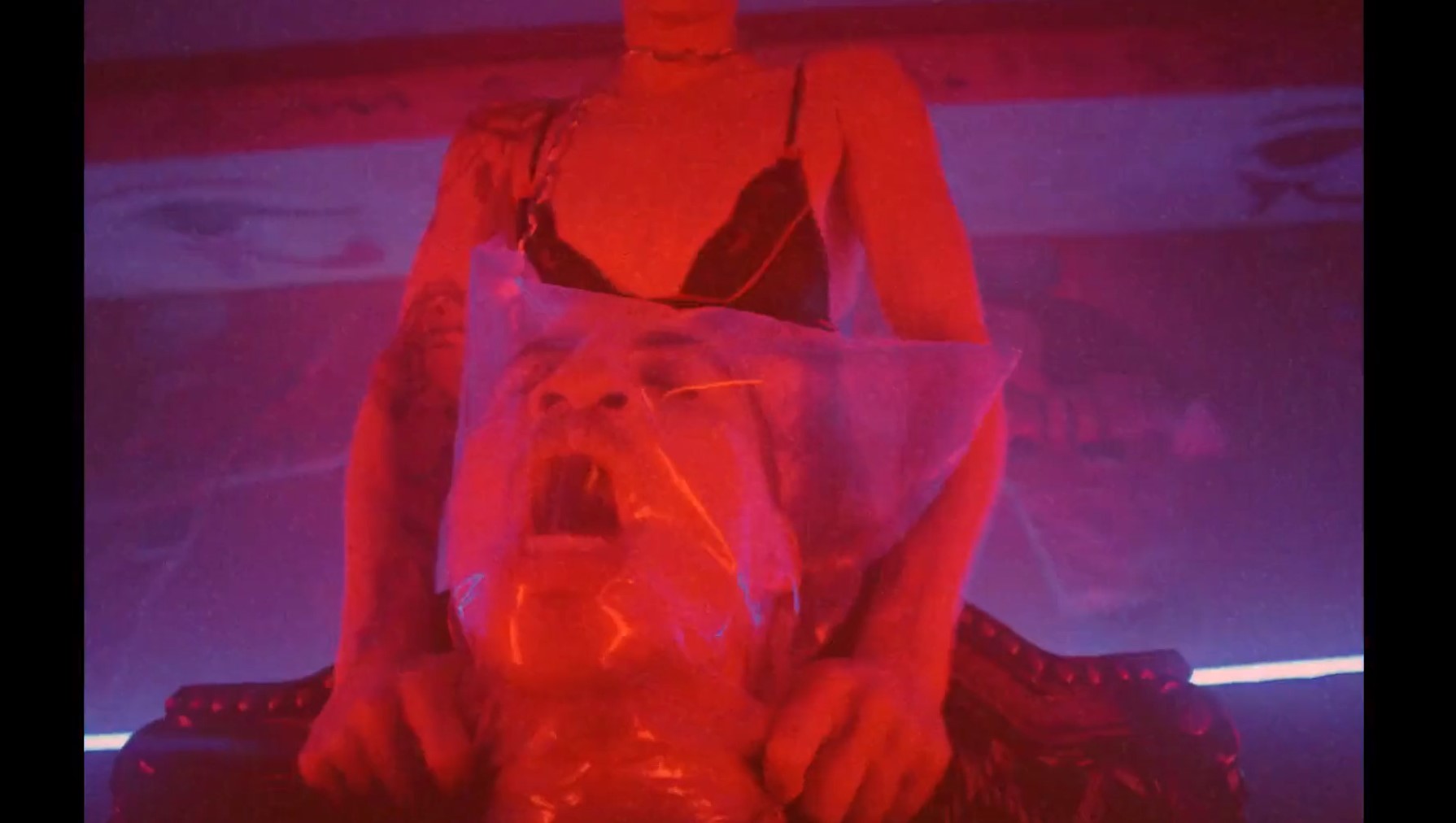
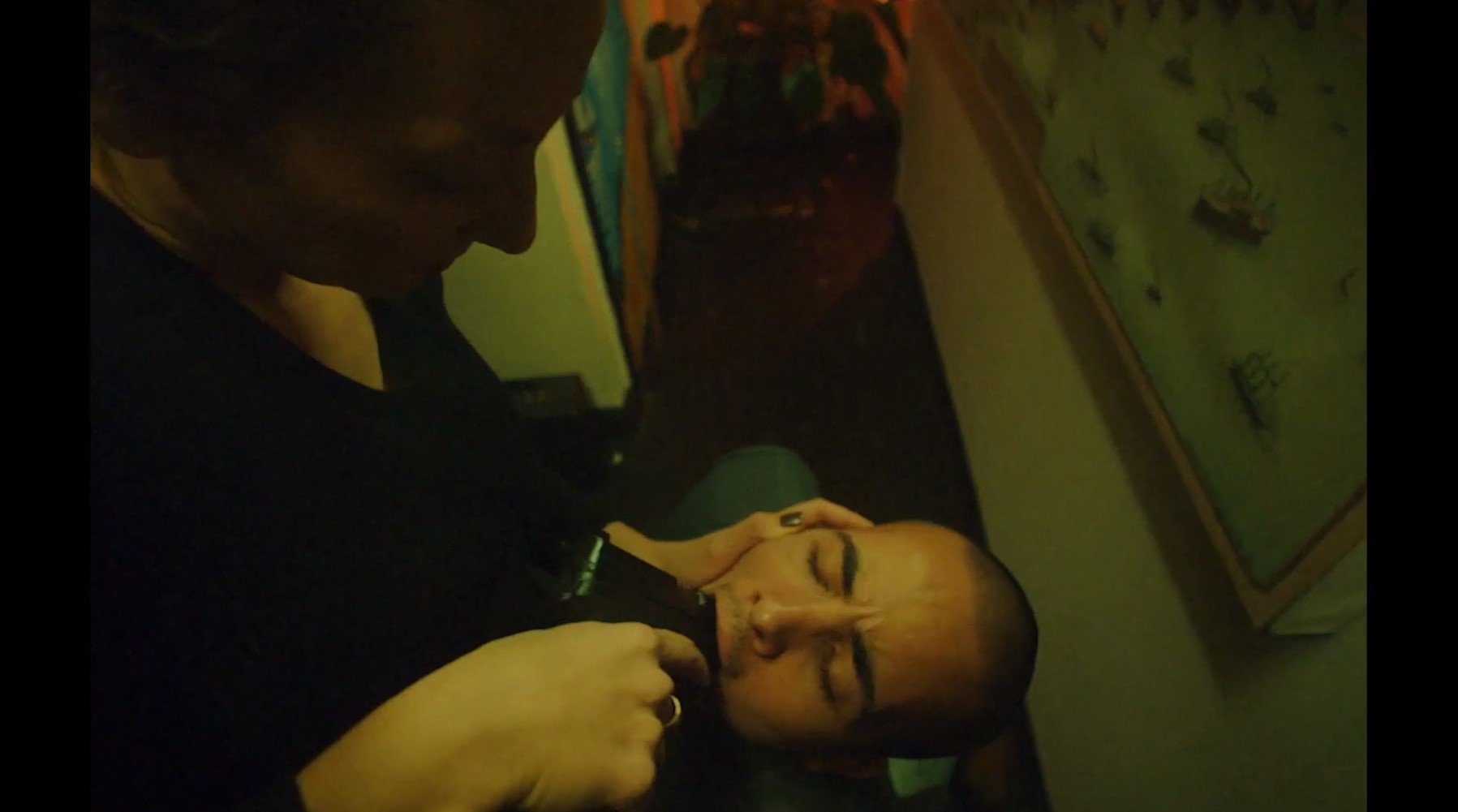
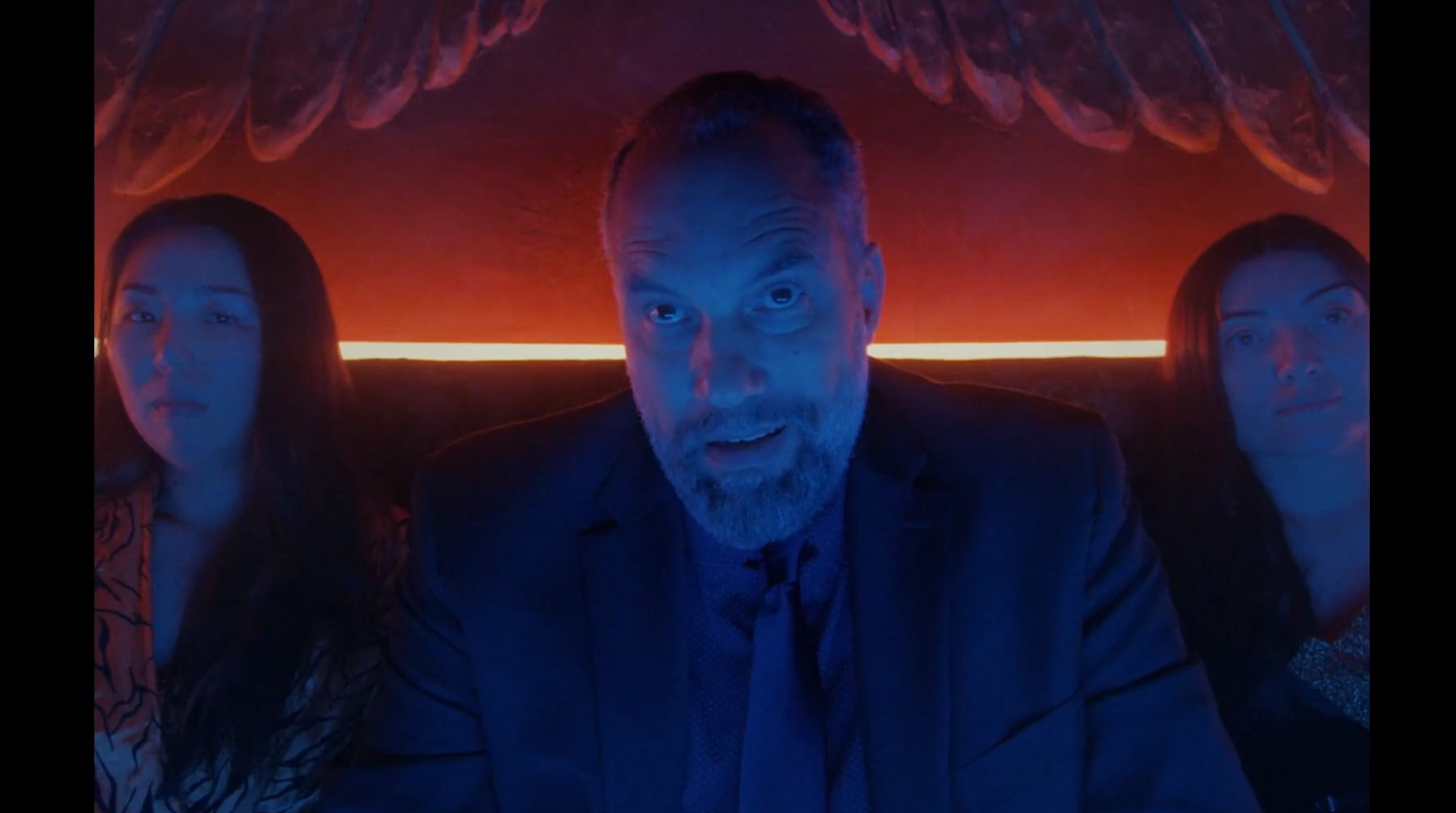
Pimp Leroy likes money.  He likes money so much he stop anything and anyone from coming in between him and cold hard cash.  When Rose, his star prostitute, becomes knocked up and she carries the baby into the later terms, Leroy sees that baby as just another obstacle keeping him from dollar signs and performs a back alley abortion on Rose that results in her death and the newborn mauled by the close hanger used to pull him out.   Fast forward 18 years later, the disfigured boy Hanger, named after tool used to extract him from the womb, falls under the wing of his supposed father, one of Rose’s more admirer, only known as The John, and together they seek revenge for Rose.  In the meantime, Hanger is secured a job at the local recycling center where he is befriend by fellow outcast Russell and as The John ignites war against Leroy that spills into every prostituted infested corner of the streets and into the recycler center.

First off…Man, do I miss Ryan Nicholson.  Secondly, “Hanger” is one of the most depraved films I’ve seen in a long time.  Probably the most depraved amongst the credits of the “Gutterballs” and “Collar” writer-director who has left his mark on the sometimes bland indie horror scene with the craziest content that has become the epitomizing taste of Unearthed Films.  Nicholson cowrote the vulgar comedy-exploitation with Patrick Coble in their second feature story collaboration following their 2004 work on the Nicholson brutal rape-and-revenge directed tale “Torched.”  Rape and revenge, plus a whole lot of sleazy, scuzzy, and sordidness, doesn’t buck the Canadian filmmaker into doing something more political correct as the auteur is too well versed into capturing the base layer muck under his Plotdigger Films production banner in Vancouver, British Columbia  “Hanger” is financially produced by Nicholson and Coble and along with Wolfgang Hinz, Stephanie Jennings, and Michelle Grady.

Needing no stamp of approval, “Hanger” would not have been as unpleasantly intoxicating if it wasn’t for the cast.  Each and every character beneath “Dick Tracy”-like prosthetics come to life with their own identifiable quirks and putrid personalities with perhaps the headliner in the tamest role being played by genre icon and scream queen Debbie Rochon (“Tromeo and Juliet,” “Model Hunger”).  Troma’s most famous gal isn’t the only Troma-head to be in Nicholson’s film with a guest appearance by Troma co-founder Lloyd Kaufman as Melvina the Tranny who has her willy kissed the stove-top burner.  I know what you’re thinking – Rochon and Kaufman is in anything is a must-see film!  I couldn’t agree more, but “Hanger” really lives and breathes on the more prosthetic-heavy performances of Nathan Dashwood, Wade Gibb, Dan Ellis, and, especially, Alastair Gamble as Phil.  Also known as Philthy, Phil is also a recycler on the look out for unemptied beer bottles for any kind of alcohol fix he can get his filthy hands on and Gamble really develops the ins-and-outs of the character’s mannerism and style and the “Gutterballs” actor does the role so well that Phil will forever be imprinted into your cerebral character catalogue for the rest of time.  I also couldn’t get enough of Wade Gibb’s Russell who gives the ethnic Chinese man a high-pitched voice and an insatiable hankering for porn and bad jokes.  Russel also has a penchant for trashed picked used tampons the administrative secretary at his job bins when she’s cycling through and after her late night self-pleasures, Russell can’t help but to blather on and on about her to his new friend Hanger, play with domicile explosiveness like TNT by “They Came From the Attic’s” Nathan Dashwood.  Candice Le (who is an uncanny Laura Prepon lookalike), Nadia Grey, Stephanie Walker, Rochelle Lynn-Jones, Susan Arum, Michelle Grady, and Dan Ellis who stars as Rose’s revenger-advocate, The John.

Ryan Nicholson passed away come two years ago come October due to brain cancer. From that condemned mind came some of the most vividly depraved characters, gratuitous gravities, and sweet, lip-smacking gore that just rolls into the place. “Hanger” is no exception; in fact, “Hanger” is probably Nicholson’s magnum opus considering all of the aforementioned descriptors. Obviously, pleasantries is not in Nicholson’s vocabulary with a storyboard progression rock hard on revenge, sex, and a recycling center full of a variety of perversions. Nicholson had a knack for obtaining real locations without having to build sets, one of his more cost-efficiency attributes to appreciate, and the recycling center where Russel, Hanger, and Phil worked was an actual true business, but the way Nicholson shoots the scenes, and with the other exteriors, is masterful in only allowing the audience to see what he wants you to see. Background details are tenebrously obscured as he highlights the basic necessities to convey what to focus on in relation to the characters. These characters are terribly invasive to the point where you can almost smell how they look and the need for a shower after some of their atrocities is well justified as this fetish theme of unsolicited bodily insertions goes over and beyond the borders of comfort. I still can’t get Alastair Gamble’s Phil out of my head. Rubber dicks, fart jokes, racist obscenities, trannies, voyeurism, masturbations, mutilation -“Hanger” has a lot of sin to be unapologetic for as it reeks lowlife war to the max. If desiring a little extra something-something, the Unearthed Films release comes complete with a second version of the film, XXX-rated cut, that’s not available on previous North American releases, such as with Vicious Circle unrated release. Where “Hanger” stumbles is with the narrative that divides like a cell into two rather different narratives after the initial coat hanger botched abortion. Though The John talks a good game and amps Hanger up for vengeance, the ex-military prostitute connoisseur goes for Leroy alone while Hanger and Russell burgeon their unusual friendship with trash-picking tampon diving and just hanging out. With the narrative more so focused on the latter, don’t expect “Hanger” to be round-the-clock carnage from start to finish.

Continuing their distribution of all Nicholson’s Plotdigger Films, Inc. catalogue, Unearthed Films 2-disc collector’s edition Blu-ray of “Hanger” is a must own and a must see for any fans of Unearthed Films’ gory longstanding pedigree and of Ryan Nicholson.  A warning about ghosting and compression artefacts precedes the film that is presented in a widescreen 16:9 aspect ratio, informing views of the unstable picture quality due to the nature of the recording equipment, but for the most part, the worst ghosting and compression issues are in the first scenes of the motel with Debbie Rochon and Lloyd Kaufman.  The controlled contrasting, comprised of limited lighting, a reduction in color, and perfect shadow placement, adds another flavor to “Hanger’s” squalid and vulgar character exteriors by accenting scenes with a post-apocalypse or slum living discomfort.  Details can get a very graphic, explicit, and fleshy as prosthetic organs ride that ambiguous seesaw and the prosthetics overall are extremely unique and memorable under the creative eye of Life to Death FX artist Michelle Grady.  The English language Dolby Digital 5.1 sound mix has ample fidelity despite the self-manipulation of voices and appropriations of cultural accents.  Dialogue is clean and prominently lucid.  Personally, the soundtrack is not particularly my favorite of a compilation of heavy rock and hardcore bands, such as Bison, Nomeansno, Spread Eagle, and Grass City and The Invasives, but do fit right into Nicholson’s scheme and personality.  The 2-disc set comes jampacked with over 16-hours of extras including a commentary with director Ryan Nicholson, Behind the Stoma:  The Making and Taking of Hanger with cast and crew interviews, a video diary-esque of Lloyd Kaufman’s single-day shoot entitled Enough Dope to Hang Yourself With:  On the Set with Lloyd Kaufman, a blooper reel, deleted and additional scenes, photo galley, Debbie “Rose” Rochon’s simulated sex tape “Black on White Bred” with pimp Ronald Patrick “Leroy” Thompson, the Colostomy Bag Edition aka the XXX-rated version of the film, trailer, and a second disc that’s nothing but outtakes.  The scene in the Colostomy Bag Edition, I believe, is just a minor penetrating cut-in scene more than likely not related to any of the actresses in the cast.  The Unearthed Films release is not rated and clocks in at 90 minutes (regular edition) and 91 minutes (Colostomy Bag Edition). The characters alone are worth “Hanger’s” price of admission but Unearthed Films delivers a sweet, comprehensive 2-disc collector’s set for this gore-soaked and grotesque little film.

A Must Own 2-Disc Collector’s Edition of Ryan Nicholson’s “Hanger” Available at Amazon

Two Movies, One EVIL. “House of Cruel Dolls” reviewed! (Full Moon / Blu-ray)

A perverse gang of sex traffickers kidnap beautiful women to be prostitutes for a hidden away bordello, known as the House of the Lost Dolls.  Gaston, a bordello regular, falls for sex slave Yvette and together they make a great escape to free Yvette from the gang’s clutches.  Yvette’s harrowing ordeal is given to the police.  What ensues next is the dispatching of secret agent Sigma to track down and eliminate the ruthless gang, but finding their hideout won’t be that easy as espionage tactics and killer assassins lie in wait around every corner, but agent Sigma will do everything in his power to see an end to their depravity. 

What a wild mashup of manipulation to work in a spy thriller around a sordid exploitation!  That’s the only way to describe French filmmaker Pierre Chevalier’s sleazy action-action thriller “House of Cruel Dolls.”  Also known as “The House of the Lost Dolls,” “The Panther Squad” director and A.L. Mariaux, one of “The Sexual Story of O” Jesús Franco’s pseudo names, penned 1974 released screenplay fills in the blanks with archival footage from the 1967 espionage flick “Agente Sigma 3 – Missione Goldwather,” starring “The Vampires Night Orgy’s” Jack Taylor.  Judging by the colorful, multi-national, grindhouse titles and the crew involved, you can bet on the “House of Cruel Dolls” to be a licentious and violence riddled romp, swanky in sexual severity and coarse with an untamed plot.  As a production of Eurociné, one shouldn’t be surprised of “House of Cruel Dolls’” shameless nature with the once legitimate Marius Lesqeur storytelling company that ventured into mass producing cheap, seedy classics, more around the uncomfortable context of Naziploitation or WIP (Women in Prison), with such films as “Angel of Death,” “Jailhouse Wardess,” “Hitler’s Last Train,” and “Helga, She Wolf of Stilberg,” as well as other European exploitations in “Diamonds of Kilimandjaro” and “Female Vampire” to capitalize on the rise of erotic in the 1970s through the 1980s. 

The Eurociné played the popular casting game of hiring American actors to star in their oversees produced films, but for “House of Cruel Dolls,” the hiring of an America actor doesn’t go as typical as you would have thought.  Instead of signing Oregon born Jack Taylor to be the leading man stopping a ring of evil sex traffickers, Chevalier, along with “Nude for Satan” editor, “Luigi Batzella,” spliced together Jack Taylor’s Italian-made spy thriller “Agente Sigma 3 – Missione Goldwather  fit into the extremely graphic and perverse scenes of rape, gang rape, and perversion narrative of the barely sticky adhesive “House of Cruel Dolls.  There’s actually one scene where Taylor’s character and partner run down a flight of stairs on a boat, but topside is definitely Taylor, but down the stairs inside the boat is a different actor with an extremely bad wig.  Co-starring, more or less, with Taylor are a blend of Italian and French actors from both stories that not necessarily share the same screen with their leading man.  The French actress Silvia Solar (“Cannibal Terror”) does share actual screen time with Taylor as the infiltrating villain in the cloak-and-dagger film whereas Sandra Julien (“The Shiver of the Vampires”) mingles deep undercover in the lion’s den of the sex trafficking master of ceremonies, Rasly, played by “Blue Rita’s” Olivier Mathot staged in actual “Cruel Dolls” territory.  Rounding out the patchwork cast is Magda Mundari, Raymond Schettino, Gillian Gill, and “Shining Sex’s” Claude Boisson (credited as Yul Sanders) who can’t seem to scratch his inch for lusting over helpless dames. 

I’ve seen worse cut and paste fuses of different 35mm reels and some not so terrible, yet oblivious a stretch at the seam, “Caligula” comes to mind with the inserted hardcore snippets, but “House of Cruel Dolls” flows and flows pretty well considering the rough segue cuts that blend the 1967 film with the 1974 film without much era style or stock degradation differences.  However, what Chevalier, and also most likely Franco, accomplished with their film had more attributes toward being a hardcore adult movie than being an action packed espionage thriller with prolonged and gratuitous sex scenes.  For example, Gaston rescues Yvette from sex slavery horror after a short-lived shoot out during the opening segment, the pair drive their way to the police station but stop along the way to cool down under the forest trees, lay out a blanket like they’re having a picknick, and have sex before going back to rushing to the authorities.  Plus, also experiencing Claude Boisson uncontrollably salivate over tied up and drugged women and easily make them look feeble as he ravages them is a trope norm of that character in the adult industry.  Plenty of skin makes “House of Cruel Dolls” a surefire sexploitation attraction, but much of the nudity is one-sided with the women baring everything while every man, except for one, keeping his clothes while committing the sleazy act and cinematographer, Gérard Brisseau, remains tight on focusing on two parts:  the clothed humping rear of the misogynistic rapist and the women’s bare nipples being forcibly suckled on. This makes the scenes not pungently powerful but more monotonously dull stuck on loop.  The latter is really laid on thick for the first act, saturating the skin-laden setup with Yvette’s escape and her flashback of how she become a lost doll in the lost doll brothel, but once Jack Taylor makes the scene, the action really starts with solid fight sequences that could rival the Sean Connery era James Bond.  However, you really receive a good chuckle when the big boss dies and story cuts-to Gaston and Yvette, hanging around Gaston’s pool, hugging and smiling that the gang has been wiped out in a drop off, that’s-a-wrap ending that table any coda gratification. 

For the first time released in North America and on Blu-ray home video, Pierre Chevalier’s “House of Cruel Dolls” comes uncut and remastered in Hi-Def, 1080p from the original 35mm transfer by our friends over at Full Moon Features as part of their Eurociné Collection.  Presented in a matted 1.85:1 aspect ratio, the pristine transfer really comes through without really a hint of damage or over the years degradation.  The color palette dices through the natural grain copiously vivid where needed to be character garments, hair, and vehicles.  Contrast has a whispery air about, heavenly almost, throughout without squashing too much of the textures.  The forced Dub English language audio tracks come in two formats – Dolby Digital stereo 2.0 and 5.1 surround sound.  Prepare to have side-splitting, cringe-worthy reactions to the incredible horrendous dubbing of baritone grumbling through the lossy audio tracks.  Even the Jack Taylor impersonator has a different dub than the actual Jack Taylor. Bonus features include trailers of other Euro cult titles. Considering being the only release in North America, “House of Cruel Dolls” is a rubbernecking sight to behold as the Eurotrash epitome of the Eurociné scene of the 1970’s, worth the price of admission just for that.

Own “House of Cruel Dolls” on Blu-ray or DVD!

EVIL Will Scrape You Clean Right to the Bone in “Scavenger” reviewed! (MVDVisual – Cleopatra Entertainment / Blu-ray)

A ruthless post-apocalypse world consists of killing others for their vital organs and sell them on the black market to earn a living or to score the next high.  The latter is the life Tisha lives as a bounty hunter assassin sustaining through a bleak existence of the next job and another hit.  When a new job brings her ugly past to the present, no payment is necessary as she gladly assassinate a smutty bar owner and brutal cartel head.  Things don’t go as planned when Tisha winds up naked on one of grimy sex mats of her target’s whore house after encountering and being seduced by Luna, the boss’s best laid side piece stripper and confidant.  The assassin must fight tooth and nail to survive on her filthy course to truth-hurting vengeance.

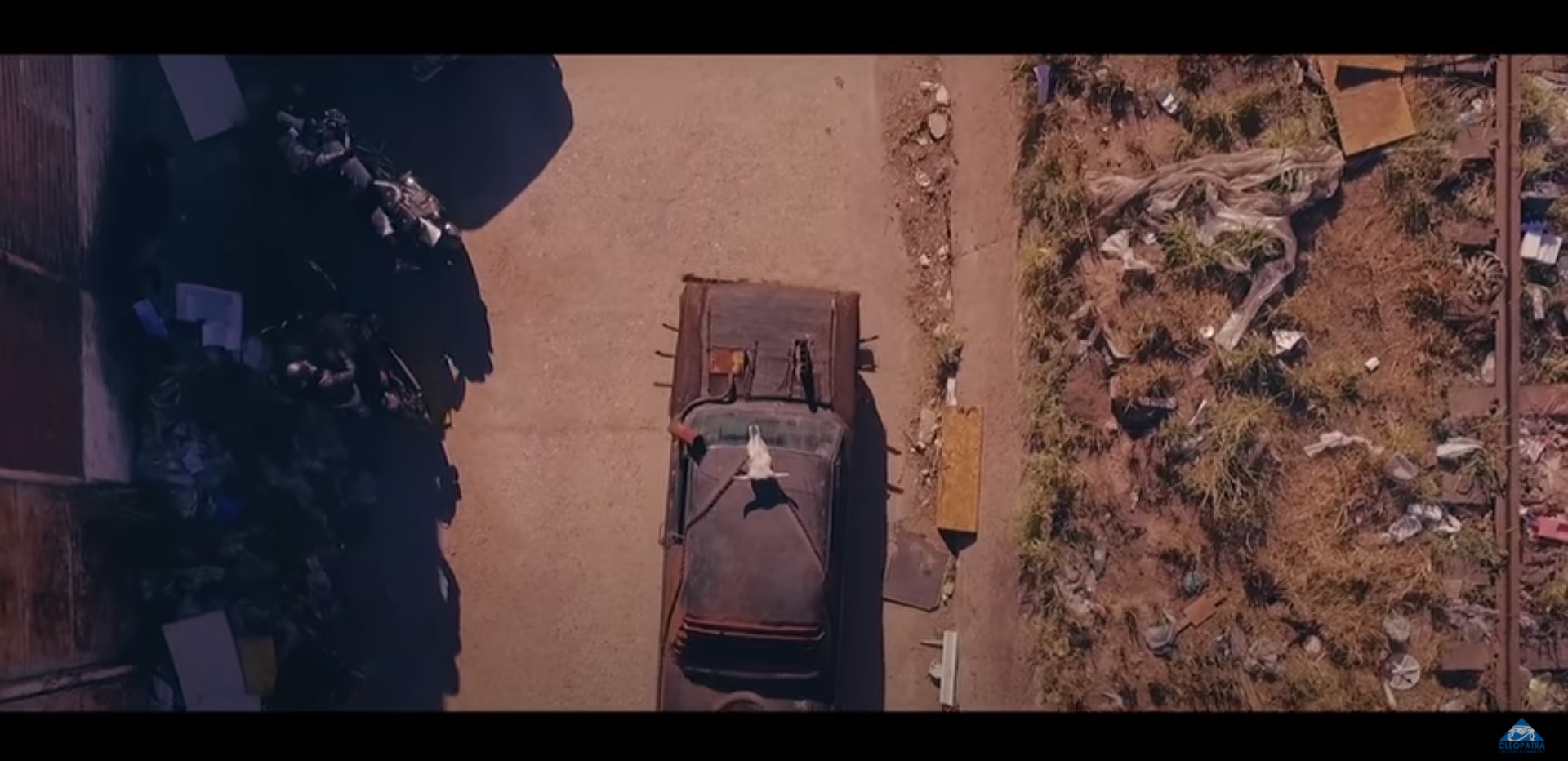
A complete ball of filth and fury is how I would begin to describe Eric Fleitas and Luciana Garraza’s sordid wrapped “Scavenger,” hailing from Argentina with wild west undercurrents in a post-apocalypse wasteland that makes George Miller’s barren lands look like Disneyworld.   Titled originally as “Corroña” in española,  the filmmakers also pen the violent screenplay alongside a third writer in Shelia Fentana to produce their very first feature length credit together that clocks in at 73 minutes, and 73 minutes is plenty enough to be entranced and be gorged by the anarchist sleaze, galloping gore, fast cars, and loose whores.  The trio financially self-produce “Scavenger’s” journey to silver screen fruition while Ronin Pictures provides special effects work that can rival the best independent productions. 

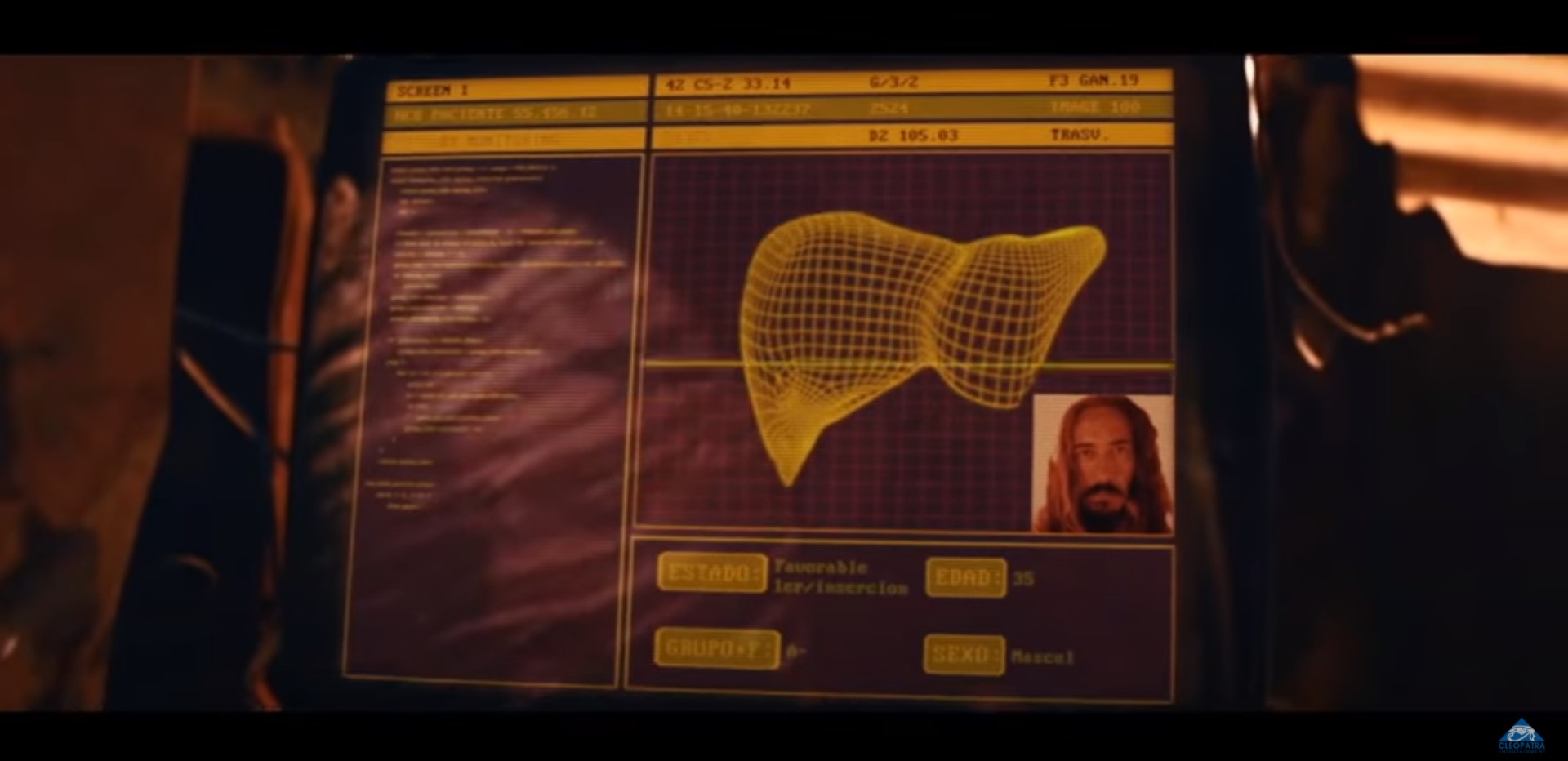
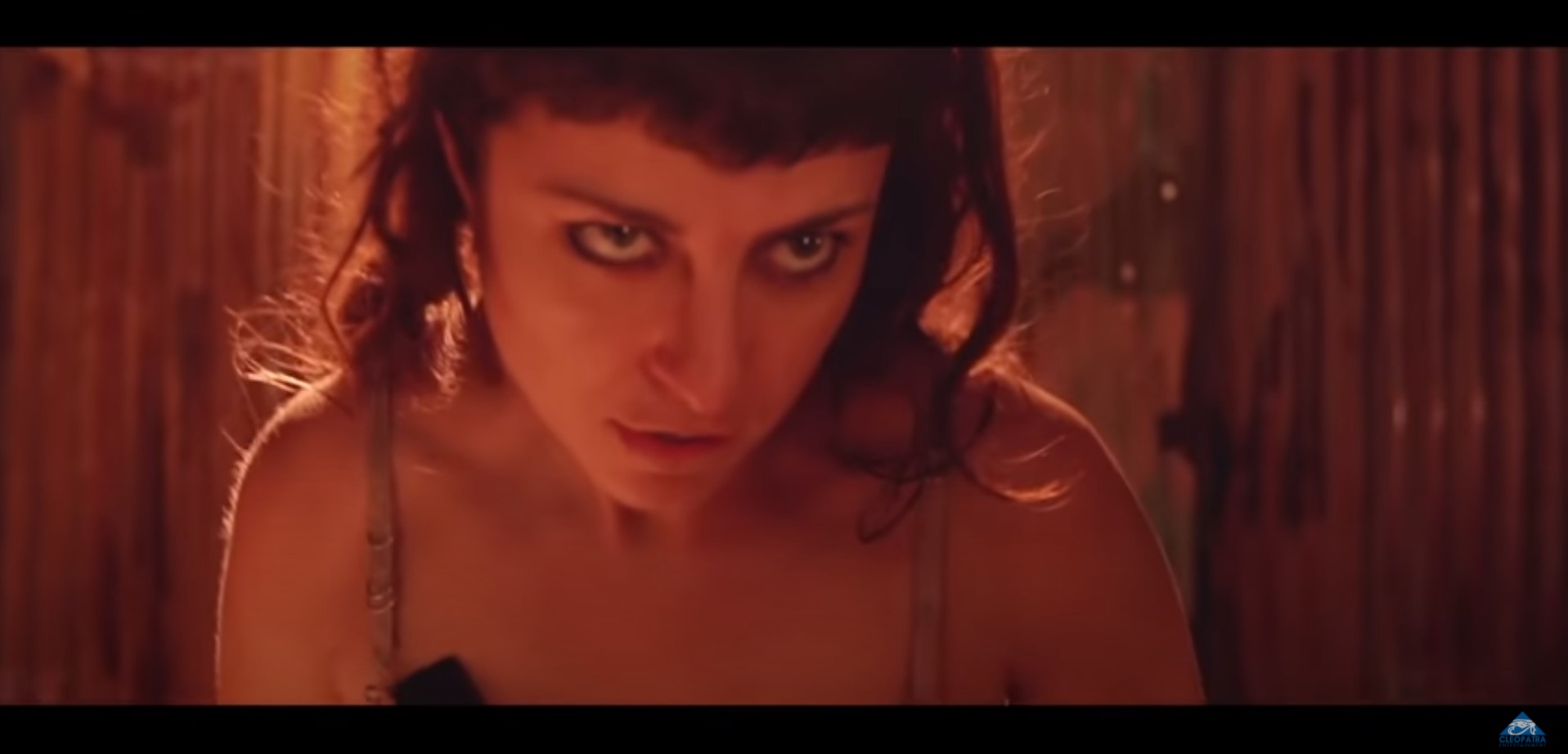
The role of Tisha is not a pleasant one, no role in where the protagonist being raped is pleasant to begin with, but to compound the character with a nasty drug habit, a gruesome vocation, traumatically scarred past, and be the objectifiable plaything for a bunch of society-fallen degenerates, Tisha’s fortitude had to be uncompromisable and her sensitivity dialed way down to zero in order to survive in her cutthroat world where not even your bodily organs are safe.  In steps Nayla Chumuarin, a fresh face Argentinian actress unknown to the majority of general audiences, ready to slip into a demanding role antithesis to Mel Gibson’s Max Rockatansky that’s only similar in a very few ways.  Geared in masculine attire, sporting a pixie cut, and gleaming with sweat and dirt from head to toe, Chumuarin offers up an intriguing anti-femme fatale in a more cold shouldered assassin vibe with a fast barb wired cladded car and who can handle herself around all types of antagonists, even those two times her size and are a disfigured mutant!  Tisha tracks down Roger, a brothel and bar owner who has ill-fatedly crossed paths with Tisha in a previous life.  Played by Gonzalo Tolosa, the mohawk-sporting Roger abides by his own set of rules unless they’re coming out of the sensual viperous mouth of Luna (Sofia Lanaro), Roger’s stripper girlfriend with a true sense of the femme fatale archetype.  Together, Roger and Luna call the shots and lust suck each other faces in the torment of Tisha who by the end of the film just wants to waste them both from the face of the post-apocalypse Earth.  Fleitas and Garraza purposefully and rightfully omit much of the backstories from most of the film and slide them in, crashing down like a house of falling cards, right on top of not only the characters but also the audience in a moment of realization and shocking truth from everything that has happened in the story up to that climatic end.  “Scavenger” rounds out the cast with Tisso Solis Vargas, Denis Gustavo Molina, Norberto Cesar Bernuez, Vanesa Alba, Rosa Isabel Guenya Macedo, and Gaston Podesta as the Mutant.

“Scavenger” is pure debauchery nonsense.  A gore loaded free for all.  The story is about as ugly as you would expect with the exploitation of carrion from those slowly succumbing to death in one form or another.  “Scavenger” is an entertainment juggernaut doused in corrosive material that will either disgust or amuse, depending on your temperament, with no middle ground to balance.  Characters are driven by unadulterated greed or rage, even the heroine of vengeance who just a few scenes prior stabbed a man in the back to harvest his organs, without one morally redemptive character to relieve the incessant current shocking the mind’s nipples with searing voltage.  Fleitas and Garraza slather in a laissez-faire fashion the exploitation veneer of grindhouse muck to serrate the unsavory snaggleteeth even sharper, but there are points where too much of a good thing becomes bad to the film’s health.  As such is with the licking of the face motif.  Like Quentin Tarantino and his obsession with closeup shots on female’s feet, Fleitas and Garraza shoot a handful of scenes of sexually engaged males lapping the sweat and pheromone droplets from the faces of their carnal conquests in all types of scenarios from rape to consensual.  The saliva wet, grainy muscle just slides right across the soft flesh covered cheekbone in more scenes that I cared to count in what seems more like a filmmaker fetish than an object necessary to overboard the obscenities.  It’s a weird action to call out but happens more than just a couple of occasions and between different characters.  The pacing’s fine albeit a few nauseating slice and dice editing that doesn’t take away or hinder in abundance understanding the progression of Tisha’s journey, but definitely causes a bit of blurriness on the heroine’s perspective of whether what she’s experiencing is a nightmare, a flashback, or a bad trip from whatever narcotic she withdrawals from that once injected speeds her into a kill monger. 

If what I’ve gone over doesn’t entice you, I can tell you this much.  “Scavenger” is perhaps the best Cleopatra Entertainment film release I’ve seen up-to-date.  The subsidiary of the independent record label, Cleopatra Records, Inc, in collaboration with MVD Visual release the South American grindhouse-fest film on a 2-disc Blu-ray and Compact Disc set featuring the film’s soundtrack, including music from Rosetta Stone, The Meteors, The 69 Cats, Philippe Besombes, Damon Edge and more with a full artist list on the reverse side of the cover liner along with alternate cover art of the film.  Presented in a widescreen 16:9 ratio, don’t expect a high-definition output with a homage to grain and a warm high-key contrasts to augment the desert outward show under the eye of Sabastian Rodriguez.  Negative space is only used for intense shadows to cloak the lurking menace around every corner.  There’s a variety of shots, including some great wide shots and crane angles, that sell “Scavenger” beyond the frenzy of blood-soaked and furrowed brow closeups.  There are four audio options available:  a dubbed English 5.1 surround and a 2.0 stereo as well as the original Spanish dialogue track in a 5.1 surround mix and a 2.0 stereo.  Unfortunately, the Spanish tracks do not come with option English subtitles so if you don’t understand the language, you’ll need to sit through the always awful English dub; however, this particular dub track is not obviously horrendous.  With all the Cleopatra Entertainment titles, the soundtrack sticks out like a sore thumb to promote their investments with high quality sound but also in true Cleopatra Entertainment titles, the lack of bonus features continue with “Scavenger” with only a theatrical trailer and an image slideshow.  “Scavenger” is a particular breed of film where you just flip your mind’s decency switch to off and gladly watch the world burn in depravity to get your jollies off.

Own “Scavenger” on Blu-ray and Soundtrack CD combo Set!

When EVIL Runs The Show, That’s When the Reality Sets In. “Funhouse” reviewed! (Magnet Releasing / Digital Screener)

Eight C-grade social media celebrities sign a contract for a new reality show, Furcas’s House of Fun.  The reality show streams worldwide on all electronic devices in an exhibition of different and standoffish personalities locked together in apartment-size living quarters.  Contestants will have to face challenges and weekly viewer voting to be the last one standing for a chance to win a 5 million dollars cash prize  Instead of sexy making out sessions, drunken brawls, and contestant melodrama to boost viewer ratings, Furcas’s House of Fun is in actuality a syndicated snuff reality show where a contestant is voted out is a contestant receiving a brutal death in front of the entire world.  Survivors watch behind paned glass as one-by-one their castmates are dispatched in the most gruesome way possible, directed by a screen animated panda bear helmed by a sadist eager for the show to go on.

Ready to have a little fun?  The “Funhouse” is open for what is a variety show of horrors in this 2019 shot, 2021 released reality show of encroaching aggravation and gore from writer-director Jason William Lee.  “The Evil In Us” filmmaker plays his hand at personifying internalized resentful rage for hack, do-nothing, inconsequential to society celebrities by feeding them gladly and enthusiastically to the bloodthirsty wolves.  “Funhouse” isn’t your typical social media or tech horror film as Lee dishes out a thought-provoking disgust covered in a powdery sugar and popcorn veneer that’s surely to please the broad range of horror fans.  The co-ventured Canadian-Swedish story of shallow fame nihilism is shot in the Providence of British Columbia and in Stockholm, home base of Ti Bonny Productions under executive producer Henrik Santesson, in collaboration with Lee and producer Michael Gyorl’s Sandcastle Pictures.

With the surname Skarsgård, acting is in certainly in the blood.  Valter Skarsgård, the youngest son of “Nymphomaniac” and “Deep Blue Sea’s” Stellan Skarsgård’s first marriage and the brother of terrifyingly frighteningly Pennywise actor, Bill Skarsgård (“It”), branches out following his ancestral destiny by headlining as the lovable and misjudged Swede, Kasper Nordin, who leeched fame by being the ex-husband to a renowned singer.  Nearly the spittin’ image of his older brother Bill, Valter brings his name and family looks to the table while showcasing his own talent amongst a motley crew of nationalities.  That’s one of “Funhouse’s” main messages about social media stardom as a plague that has spread to every corner of the world symbolically infecting each contestant from a different country:  Dayleigh Nelson (“Island of the Dolls”) of Britain, Khamisa Wilsher of America, Gigi Saul Guerrero (“Puppet Killer”) of Mexico, Amanda Howells of the Philippines, Mathias Retamal (“The Source of Shadows”) of Chile/Canada,  Karolina Benefield of Poland, and Christopher Gerard of Ireland.  The roles of wannabe celebrities is an ostentatious representation of click bait influencers who will sell essentially their soul and show their skin to be noticed and this turns the clear antagonist villain, a merciless gamester and contract abider with business dealings more vile than from the Devil himself, to be a subtle antihero of sorts as the cast rounds out with Jerome Velinsky’s wickedly sophisticated performance as Nero Alexander that is urbane nihilism at its best. 

Outrageous, fun, and gory – “Funhouse” has all the hallmarks of a 90’s horror on cruise control.  With a bedazzling rudimentary shell of a panda bear avatar animation and blend of practical and digital blood over the simplicity of a small location and indie production, Lee is able to fly through the narrative at whiplash speed and still drop animosity-awarding and empathetic traits to believe in the cast of characters.  In the middle of the chaos of axe splitting heads and being dunked into a barrel of highly corrosive acid, a topical theme of the detrimental social media and influencer stardom to society really positions “Funhouse” on the frontline for inflammatory and anti-social media messages, harping on the noncontributing and unbeneficial role of these money-generating, like-focusing, click baiters in culture and society other than selling to their audiences sex, gossip, and violence.  Speaking of violence, I was pleasantly surprised by the right amount of gore that didn’t shoot for extravagant levels despite some smoothing around the digitally added sinew and guts, keeping a modest amount of realism to the dystopian gameshow construct.  Initially, there are dubious first act moments that quickly shuttle hapless soon-to-be-casualties into the same location, much like in “Saw II” when characters all wake up in the room together and we have no idea who they are, where they come from, and what their backstory is, but as the film progresses we learn more about them and the roles they play in the maniacal puppeteer’s design.  The twist, almost meta-like, ending leaves “Funhouse” on a low note that doesn’t fulfill any void for its existence, but a good chunk of the story is really meaty with a revolving door of plights and a small, yet efficient, compassion outpouring spicket.

Not your traditional participatory surprise-laden and mirror maze attraction, “Funhouse” will still bring old-style thrills with some new blood spills in it’s grand opening release in theaters and on demand on May 28th courtesy of Magnet Releasing. Shawn Seifert (“Dead of Night”) lays out a smorgasbord of cinematography techniques that includes rich, un-matted color filters, isolating characters in darker, dim rooms in making them seem centerstage for their own grand demise, and cultivates stationary, handheld, tracking, and some drone shots for an extremely vibrant and glossy approach and feel for reality television version 2.0. Lee edits the digital reel himself and, honestly, the pacing wanders quickly to the overly rushed section like a quick-spit-it-out story wanting to be finished before it even begins and is compounded with another intrusive quality in the hyperactive back-and-forth of shots that aims to resemble the irksome flight in and out of reality shows that speed up and slow down like a nervous teenager behind the wheel of their parents and continuously presses down on the brake pedal. Stay tuned after credits for a gag bit scene that ties into the main story but promises nothing more. No more being voted off the island or nixed by expert judges, “Funhouse” cleans house with deadly eliminations and a message of the unyielding power granted to many so easily through a rapidly reshaping medium that has become too influential on a braindead scale.

HELLelujah! God Does Not Deliver Us From EVIL! “We Still Say Grace” reviewed! (101 Films / Digital Screener)


A family living in deliberate solitude looks to God to provide them with everything they need to sustain.  Harold’s two teenage daughters have never experienced beyond the 14 acres of land their father and mother own, but the youngest, Maggie, can’t help but think of the wonders outside her father’s god-fearing, draconian sheltering.   When three teenage boys travelling to California suddenly break down on Harold’s remote land, an eager Maggie can’t wait to taste a mere glimpse of their perception of the outside world.  Being a good Christian man, Harold welcomes the hapless travelers into his home and convinces them to follow the rules and stay the night, but the boys’ seemingly happenstance car troubles is manipulated into an unavoidable sign of God’s will, or at least so in Harold’s eyes, and he decides to carry out a predetermined family suicide pact for him and his family to be welcomed into the gates of Heaven.

The one think learned, or maybe had shed more light on, out of this pandemic is the unstable relationship people have with God.  Religious extremist have weaponized the Powerful and Almighty against every day people like you and myself with contentious, hate-filled vocabulary such as damnation, burning, hell, etc., for those who do not seek his glory the way asininely seek it.  “We Still Say Grace” epitomizes that very lifestyle of devout fanaticism that has also been highlighted with buffoonery as the very same people who verbally condemn others usually don’t walk-the-walk but only talk-the-talk or are a charlatan involved in a more sinister plan.  “The Lodge’s” Brad Helmink and John Rauschelbach write and direct the film that has become their second feature horror film produced by the filmmakers under their Brothers Shamus Pictures, Mark Sonoda of Dauntless Studios, Room in the Sky Films, and Lexicon Entertainment. 

Now, I’m not a religious man or spread the word of the divine in my reviews, but God love Bruce Davison as the “Dahmer” and “X-Men” actor is a silver fox crazy man of God living rurally with his wife and two teenage daughters.  Davison relentlessly rallies Harold’s madness and is having a good old time performing as a man with a hidden agenda.  Harold is an intriguing character with little-to-no information about the character’s background or reasoning for being unreasonable, but that doesn’t seem to faze the legendary actor who had cut his teeth into horror 50 years ago as the original rat-speaking avenger, “Willard,” as Davion trots down a path of deceitful radicalism and manipulative exploitation.  Those he unscrupulously cons with pious smoke and mirrors are his own family in wife Betty (Arianne Zucker, “Days of Our Lives” daytime soap opera), Sarah (Rita Volk), and Maggie (Holly Taylor, FX’s “The Americans”).  As a viewer who is currently, at this very moment, chin deep in catching up on FX’s Cold War espionage thriller series of Soviet spies living as ordinary Americans in Washington, D.C. as they carry out missions in the name of Communism, I found difficult in separating Holly Taylor from her the 2018 series that ended its successful run in 2018 when she was a teenager.  Taylor’s roll in “We Still Say Grace” typecast the actress as another teen though having filmed the movie as a young adult woman, but the lighting is different and I don’t mean in a literal illuminating sense.  Taylor steps out from “The Americans’” 80’s setting and into, what I presume, is the 1990’s based off some wardrobe choices, car models, and the time frames that fit into those constructs and while she still has this inkling of suspicion that her parents are up to something, a parallel that has carried over, there hasn’t been this much ill-fitting reverence of a man hellbent on belting those he breaks bread with on a daily basis.  There is hesitancy and fear in Taylor eyes and that’s breaks up her from a reoccurring teenager role.  When the three teens (Dallas Hart, Frankie Wolf, and Xavier J. Watson) show up at the front door, that’s when things go, more than usual for Maggie, terribly awry. 

Aside from Bruce Davison, the other performances muster little faith in their roles with overplayed tropes, especially the stranded teens who could be plucked out as the Three Stooges of horror they’re so easily identifiable across the genre.  The premise itself isn’t exactly novel of a Bible thumping person teaching and preaching self-sacrifice, aka suicide, as a way to transcend beyond the heathens of this Earth but marketable and attainable as a small independent production with a California desert location, minor but effective special effects, and a handful of actors where much of the money is spent on talent.  “We Still Say Grace” is structurally very loose with character development and plot points, leaking continues dribbles of minor shifts that never patch themselves up on the backend.  For example, Harold’s not the black and white evangelical nut he seems to be but that is where his arc pauses and doesn’t backtrack into reasoning.   Helmink and Rauschelbach do better on the scene setups and interiors that make Harold uncomfortably fearsome and hostile in any context as he sometimes looms in the shadows of his farm chic house or toys with people, even his own family, like rats in a maze as he guides them along to their doom.

Premiering for the first time in the UK courtesy of 101 Films, “We Still Say Grace’s” penitent themed horror-thriller releases digitally this month of May.  As for the imagery presentation, and take this with a grain of salt with any digitally released film, the nearly 94 minute runtime seems to be filmed with a sun derived dust and light haze that I would compare the appearance more akin to trying to look through the bottom of a hard water stained glass.  Under the cinematography of Douglas Quill, the haziness plays into the rustic and dusty atmospherics that give age to the story and Quill frames Harold as a dominant and isolated figure, especially amongst the holy trinity ablaze in human flesh, as if he was the sole antagonist against the world.  The moment for shattered lives remains intent on the very edge of our corneas with the holy hell of “We Still Say Grace’s” patience brittle villain ready to gaslight and sacrifice anyone resisting against the grain of God’s good graces.