A CIA Plan is Being Sidelined by EVIL’s Rooftop Terrace Sniping! “Goodbye & Amen” reviewed! (Radiance Films / Blu-ray)

Own a Copy of “Goodbye & Amen” from Radiance Films. Click here to Purchase.

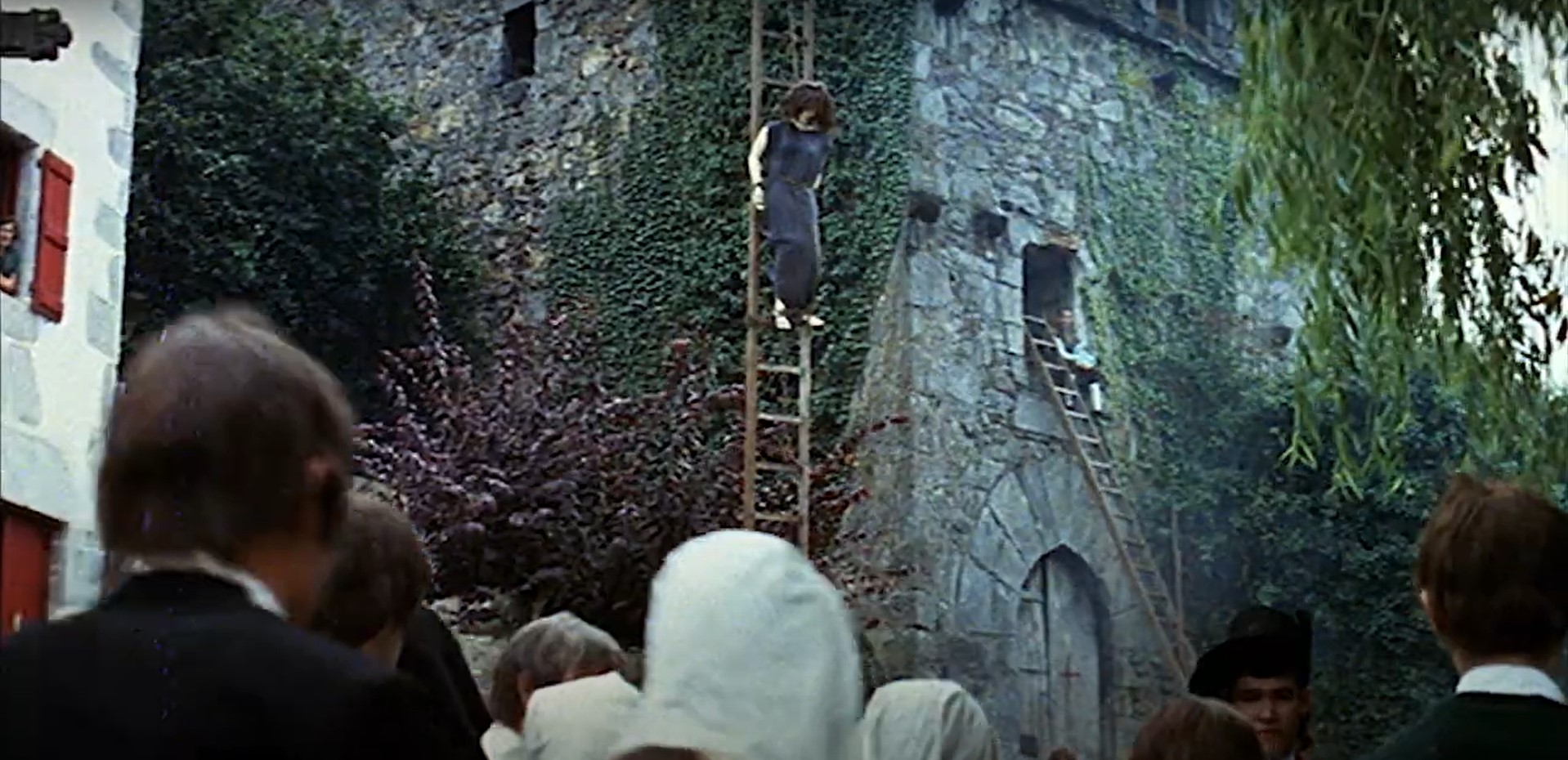
Ambitiously confident CIA agent John Dannahay eagerly wants to begin his plan for an African nation coup.  Based in Italy, Dannahay runs through his team the stage of events when suddenly a current administrative African agent, known for sniffing and snuffing out power-overthrowing schemes, suddenly arrives in town, Dannahay’s friend Harry Lambert up-and-leaves his wife and child and takes a rifle with him, and a gunman, supposedly Lambert, is at the top of a hotel terrace sniping down pedestrians.  Whatever surgical strike Dannahay had plan is now in jeopardy as a hostage situation occurs in one of the hotel rooms and agent Dannahay and Italian inspector Moreno must piece together why a longtime compliant and clean nosed American embassy worker has suddenly gone murderously berserk.  A public stir amidst a shrewd madman with a high-powered rifle creates a confounding panic of national security and for fear of what will happen next in the moment of mayhem.

Italian filmmaker Damiano Damiani, known for his crime thrillers, such as “Mafia” and “Confessions of a Police Captain,” and his small footprint in horror with the sequel “Amityville II:  The Possession,” had cowrite and directed an intense espionage thriller outside the confines of actual cloak-and-dagger activities with a multi-national cast.  The 1977 film titled “Goodbye & Amen”  is first and foremost an Italian production, cowritten by Damiani alongside “Wanted:  Babysitter” screenwriter Nicola Badalucco and is based off the novel “The Grosvenor Square Goodbye” by British writer Francis Clifford.   The gripping story draws upon multi-layered themes and twists to keep the narratively recycling on fresh and to never become stale with its intriguing mystery and taut tension, shot right in the heart of Rome, Italy at the Cavalieri Waldorf Astoria hotel.  “Goodbye & Amen” is a product of Capital Film and Rizzoli Film and produced by the profound producer Mario Cecchi Gori of Michele Soavi’s “The Sect” and Dino Risi’s “The Tiger and the Pussycat.”

Italians.  Americans.  British.  “Goodbye & Amen” has an all-star international cast that lines up and knocks down the perfectly scripted and beguilingly complex roles that warrant nothing less than the utmost praise for their personal performances. What starts off as a CIA caper to overthrow an African nation regime pivots acutely into a hostage standoff with many unanswered questions pelting down almost simultaneously in mass confusion and uproar in what translates to a very relatable, real moment.  Introductions begin with the CIA’s operational leader John Dannahay (Tony Musante, “The Bird with the Crystal Plumage”) spearheading the preparation meeting when suddenly his operational plans become under jeopardy.  Musante’s strongheaded approach to not lose control of the situation is fierce against the challenge his character faces – a lone gunman, a man Dannahay calls a friend played by “Tenebrae’s” John Steiner, holding hostage an actor (Gianrico Tondinelli, “Enter the Devil”) and his illicit mistress (Claudia Cardinale, “8 ½”).  Steiner delivers a sophisticated, twangy-accented killer hellbent on making a statement with a M1 Carbine rifle and a thought-out plan being a step ahead of Dannahay and Italian Inspector Moreno (Fabrizio Jovine, “The Psycho”).  The dynamic between Dannahay and Moreno, in my opinion, is rather lite for a fast and loose Dannahay and a by-the-book Moreno being two stags vying over how to handle an American mess on Italian land.  Other supporting characters add their creative two cents to “Goodbye & Amen’s” already swelling storyline with great additional principals from Renzo Palmer (“The Eroticist”), Wolfango Soldati (“The House at the Edge of the Lake”), John Forsythe (“Scrooged”), and Anna Zinnemann (“My Sister of Ursula”) that fillet down the mystery to reveal its coldblooded nature.

Not lately have I’ve impressed with a crime thriller and said to myself, wow, that was really engaging and unexpectedly good.  With confidence, “Goodbye and Amen” hit that satisfying note, a note thought to have strayed into an obscure black void never to be seen again, but the story coupled by Damiani perceptive big-world direction and some great camera work and angles by cinematographer Luigi Kuveiller, that shimmers hints of Kuveiller’s work on previous films like “Deep Red” and “A Lizard in a Woman’s Skin,” and “Goodbye and Amen” is one of the better Italian crime thrillers to come out of the country that isn’t in the giallo subgenre.  Incorporating wide shots with depth and a seriously oversaturation of characters and extras, plus not to forget to mention helicopters and shoot outs, create the illusion of a bigger film without manufacturing too many atmospherics to hoist suspense.  Plenty of red herrings and blunt force action, peppered with bare flesh sensuality, and heedful acting provides the film with an incredibly firm bite that sinks its teeth in and never releases.  Compelling and always one step ahead, “Goodbye & Amen’s” layers of excitement keep viewers simultaneously abreast and in the dark and with the seesaw suspense, which never falters with an overly opaque complex ingenuity, there’s a pleasant rollercoaster effective of up and downs between penetrating thrills and just enough down to Earth exposition in order to catch one’s breath.   

In a new limited edition Blu-ray release from UK distributor Radiance Films on their North American lineup, “Goodbye & Amen” receives a 2023 2K restoration scan from the original camera 35mm negative and presented on an AVC encoded, high-definition 1080p, BD50 in an anamorphic 1.85:1 aspect ratio. Certainly, a smooth image with no enhancement fluff or over-corrective, off-tilted coloring, the restoration brings out the best parts of Damniano Damiani’s natural approach with key lighting supporting exteriors and some intensely lit interiors without a smidgen of banding or posterization to complicate it. Details are razor sharp and the hue saturation is full-bodied and deep even along the line of a sunny Italian coastline where contours are a nice edge drop-off and shape. The English version has three exclusive shots pulled and scanned from the 16 reversal elements that create a slight grain difference that manages to nearly go unnoticed. Audio options come with the original Italian DTS-HD Master Audio 2.0 mono and, for the first time on home video, the English export in a DTS-HD Master Audio 2.0 mono. The English export’s audio track does come with a proclaimed statement right on the main menu about its unresolved damage. Like being pushed through a filter of interference, the English track is intelligible if not entirely clear and free from static and squelch. The Italian track offers a cleaner ordonnance albeit a few in-and-out moments of faint distortion of unrestorable audio ribbon snippets. New and approved English subtitles on both lossless, uncompressed tracks help alleviate some of the technical pain audio aficionados may suffer but, in my honest opinion, the Italian meets the bar whereas the English is under the bar by just a few clicks. Radiance’s special features include a new audio commentary track by Eurocrime experts Nathaniel Thompson and Howard S. Berger, a new interview with editor Antonio Siciliano, and an archival interview with actor Wolfango Soldati. Both interviews are in Italian with burned in English subtitles. Radiance’s physical approach to their releases is highly unique in format by using obscure poster elements, and sometimes often new illustrated art and compositions, to exact a striking front cover image. With “Goodbye & Amen,” the rendition of Italian’s finest in their version of S.W.A.T. body armor within the sites of a crosshair is clever and engaging to know more. The reverse cover offers more of the common language poster art. A 19-page color booklet, that contents the cast and crew information, transfer notes and credits, and a new essay from Lucio Rinaldi entitled “The American Connection: Damiano Damiani’s Goodbye & Amen,” accompanies a reserved blue background and yellow font disc art that befits Radiance’s retro-classy style. Being a UK distributor releasing in the North American market lends the title to have a region A and B playback for two varied runtimes, for the Italian and English version tracks, of 110 (Italian) and 102 (English) minutes. Radiance’s 38th release is also not rated.

Last Rites: “Goodbye & Amen” is a collaborative triumph, an arresting story anchored by monolithic performances, and imparted by director Daminano Damiani with attention, detail, and substance that makes the film a pillar amongst the Eurocrime narrative.

Own a Copy of “Goodbye & Amen” from Radiance Films. Click here to Purchase.

To Be EVIL, It Takes a Little Backbone. “The Fifth Thoracic Vertebra” reviewed! (IndiePix Unlimited / DVD)

Own “The Fifth Thoracic Vertebra” on DVD. Purchase Here!

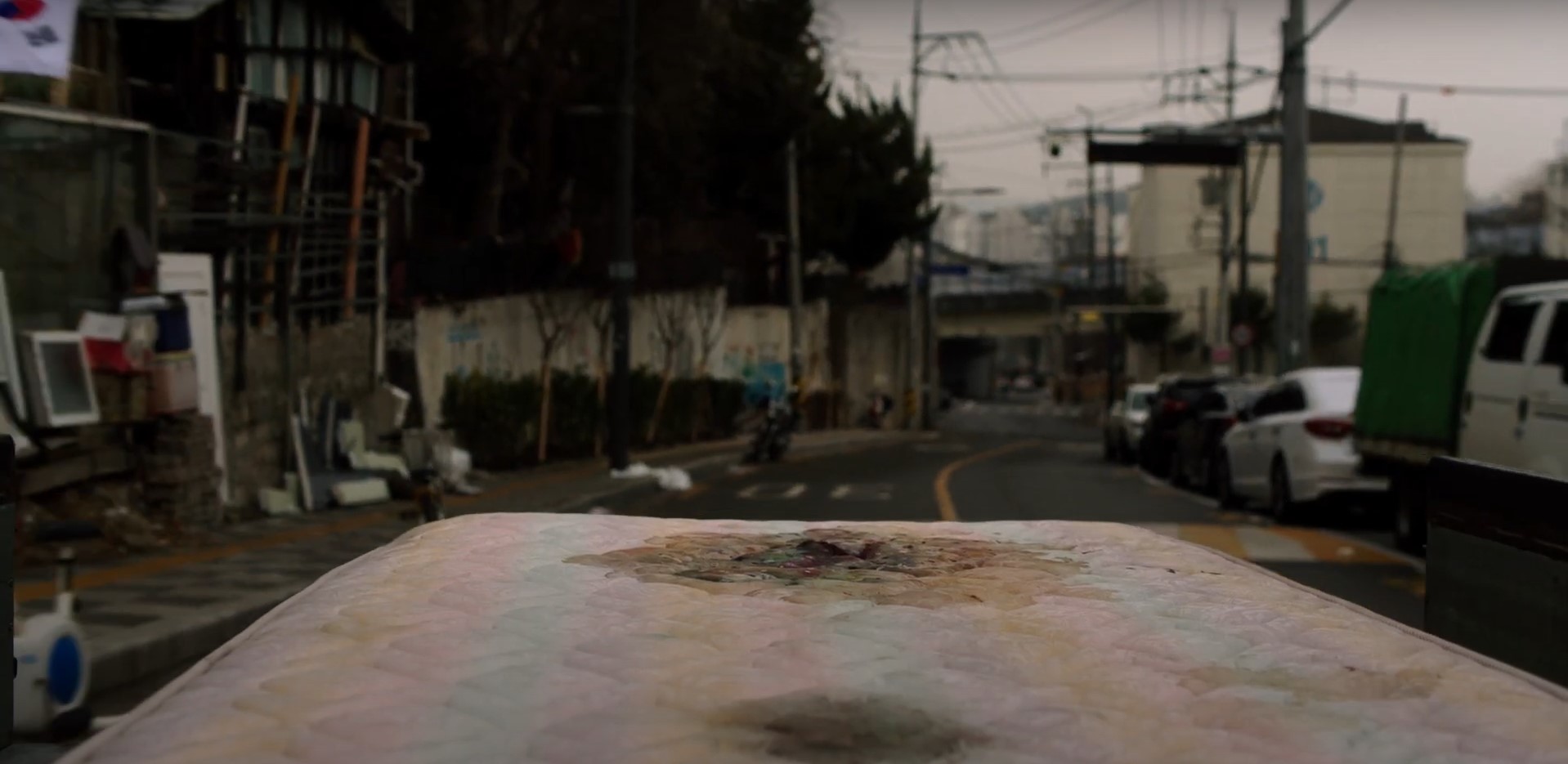
In the Gyeongbuk region of South Korea, a brand-new mattress is being delivered to a young couple’s new apartment but upon arrival, the fed-up delivery men take off when no one answers the door and leave it for the job endeavoring girlfriend who must lug up the mattress herself as she finds her boyfriend asleep on the floor. After more than year together, the threadbare relationship inevitably ends and the girlfriend vacates the apartment, but during all that time together, a mysterious mold formulates from within the mattress and surfaces on the pillow top. The mold turns sentient and uses an outgrowth protuberance to latch onto and extract the boyfriend’s vertebra for nourishment. From then on, the mattress is discarded into the world, being picked up and used by unsuspecting nourishments for the interior mold. Travelling across Korea land to difference providences, feasting on the vertebrae that becomes the building blocks of a new being, the growing mold digests to integrate itself into a human world. Absorbing the miscellanea range of emotions from its victims, what was once small fry fungi has become self-aware, compassionate, and even more hungry to live.

How do you write-up the depth of a film that’s undeniably indescribable? Syeyoung Park’s “The Fifth Thoracic Vertebra” trembles on the edge of being the epitome of that very sentiment with an abstract creature feature concept bred out of people’s raw emotions. The 2022 South Korean phantasmagoric horror, fattening itself off the dysphoric and euphoric morsels, is written-and-directed by Park as the filmmaker’s debut feature film credit that tackles life birthed out of death, such as the symbolic end of relationships and literal death, and becomes a metaphor stemmed by the natural growth phenomena of fungi, a new lifeform that grows out of rot. The Moonstone Productions indie picture is a festival favorite amongst the Fantasia Film Festival and others and is distributed onto physical media by the s streaming platform IndiePix Unlimited.

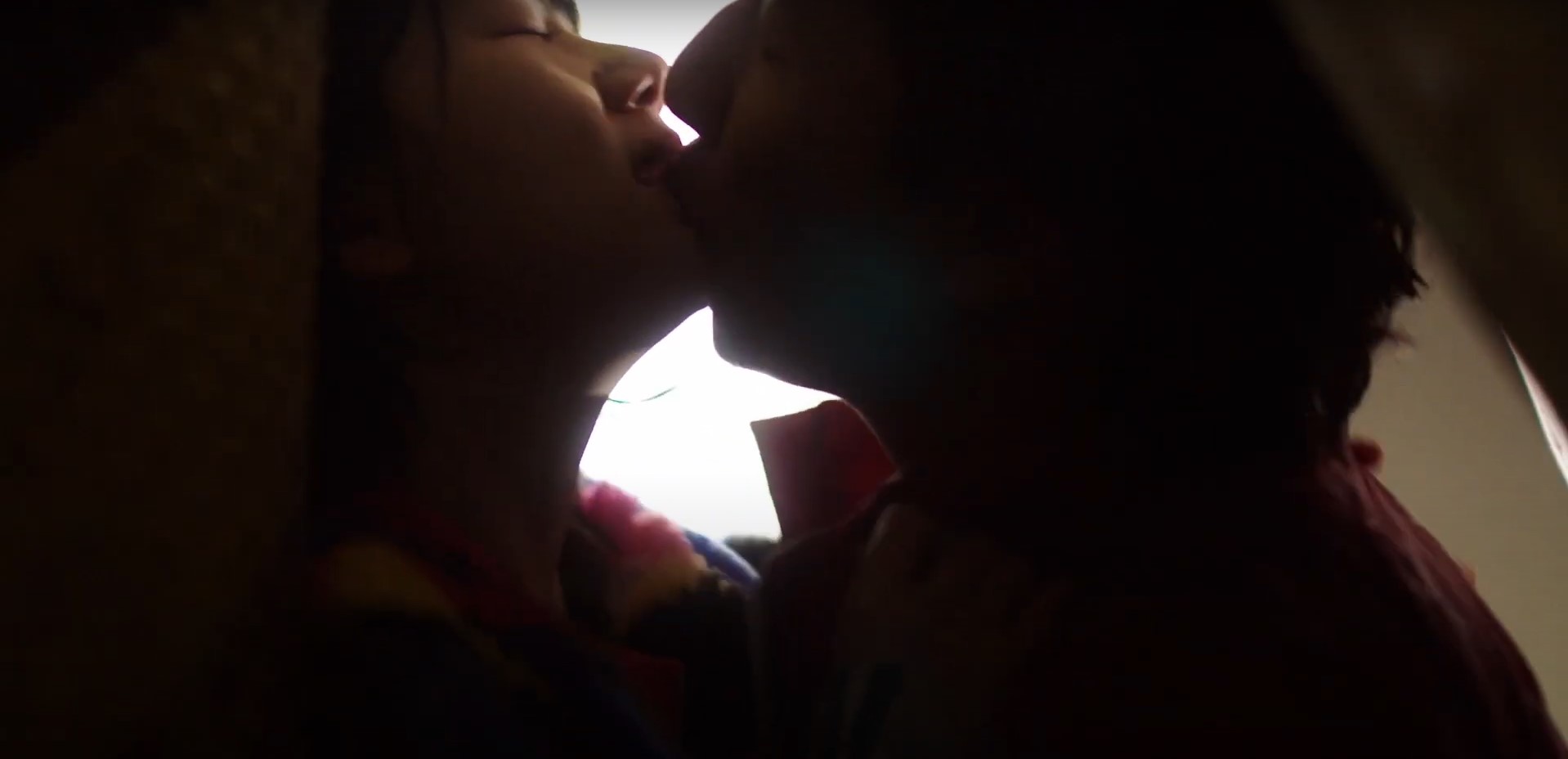
“The Fifth Thoracic Vertebra” doesn’t hone into and latch onto one core group of principals characters; instead, the travelling, moldy mattress has episodic events with interactions to various emotionally-turbulent or charged people that the being inside the dingy mattress not only cuts out and extracts a physical piece of who these characters are but also absorbs their emotional weight, in what could be considered as an incident in molding the mold into what it itself can come to be.  One-sided care and love, a tempestuous connection, contempt, amorous spontaneity, loneliness, and death feed the fungus and shape its mildewy putrescence on the mattress like the coating of an incubation chamber to ensure growth, maturity, and nutrition.  The episodic events hit and miss the gravitational pull needed land firmly on what’s being conveyed.  The woman on death’s bed was perhaps the most impactful written with regret left unsaid, unaccounted for, and is shouldered by the thing in the mattress to fulfill with a letter to the woman’s daughter to let her know about the mother’s definitive adoration.  Other instances are fleeting, perhaps lost in translation, of the evocative impression intended as the mattresses does a reach around for a clean vertebrae excision.  In either case, the now-vertebrae-less don’t even notice when a large part of their backbone is literally ripped from them in the moment; only in post-snatch do they double over in pain and unable to stand and straighten from their crippling past.  The film’s cast includes Mun Hye-in, Ham Sukyoung, On Jeong Yeon, Jung Soo-min, Kim Ye-na, and Park Jihyeon as the humanoid creature.

The fifth thoracic vertebrae, the T-5 spine part and not the film’s title, is located near the top-center of the spine in the thoracic grouping and it supports the abdominal muscles and feeds into the chest wall coinciding with the muscles around the rib cage, lungs, and diaphragm, to assist with breathing.  In Sye-young’s abstract, “The Fifth Thoracic Vertebra” does not brace audiences for metaphorical monsters surrounded by dreamlike imagery and esoteric purposes.  With no explanation, visual or verbally articulated, piecing together the strange circumstances is heavily relied upon our own personal experiences in life, our past mistakes, our relationship fails, our giddy fondness, and so forth to interpret Sye-young’s theoretical philosophy on the unfinished leftovers of a kaput relationship.  I believe Sye-young also felt the need to explain his film in a director’s statement on the back of a DVD that questions the whereabout “bits and scraps” of a failed relationship by anthropomorphism means and relating it all to the cycle of fungus.  While a difficult conceptual pill to swallow, “the Fifth Thoracic Vertebrae” can display beauty and disgust in a composite of odd juxtaposition in a peculiar world where a dirty, moldy mattress is an acceptable roadside pickup and debilitating excised bones of the body go without being questioned.   There’s an aloof presence that speaks symbolic volumes to the relationships depicted and with an open mind and broad, thoughtful strokes, one may see through the director’s expressionism.

Indiepix Unlimited, an online streaming service dedicated to independent films, also caters to the physical media market with a DVD release of “The Fifth Thoracic Vertebra.”  Encoded onto a single layered 5GB DVD-R, it’s been a while since I’ve seen an official release on the recordable DVD format and for the visual picture quality that’s already on a standard definition 720p resolution, we receive a middle-of-the-road 1.78:1 widescreen aspect ratio presentation. Posterization, in voids and on the skin, is the main artefact culprit in a stylish context of warm gel yellows and greens and the seldomly naturally lit hues which are not as richly saturated but can hold its own for a DVD-R.  There’s not a ton of detail in the mattress mold and any clear view frames are obscured by distance, the cover of darkness, and the cover of blankets as, much like all else, the contours are nicely delineated but the overall color scheme of the film blend together. The South Korean uncompressed LPC 2.0 mix has a pleasing enough unassuming range and depth field that hits all the notes and presents ambience with basically what is needed to envelope the immediate surroundings around the principal objects, all balanced through the dual channels.  The burned in English subtitles are not flawless but are synched well and seemingly translated okay.  The release comes feature only and the standard DVD Amary casing comes with an eye-catching, or rather eye-starring, front cover with no outer coverings or inserts.  The disc art deliberately yells DVD-R with a plain white, barely unique logoed, ring splay.   The release comes not rated with a runtime of 65 minutes and is confirmed to play on region 1 playback.  Untested for other regions. 

Last Rites: “The Fifth Thoracic Vertebra” impresses with forlorn residue in what is an offbeat creature feature where the creature is inside the mattress rather than under it.  Yet, the story stretches the imagination too far and near a snapping point that allows for no breathing room in what is a tale of lamentable remnants that creepingly germinates spores into a melancholic mycelium overtime. 

Own “The Fifth Thoracic Vertebra” on DVD. Purchase Here!

Getting Revenge on EVIL is a 6-Year Plan! “Kill Butterfly Kill” reviewed! (Neon Eagle Video / Blu-ray)

“Kill Butterfly Kill” – Both Films Available on Blu-ray!

Caught on the wrong side of the tracks during  a torrential downpour one dark and stormy night, a soaked Mei-Ling seeks shelter in a haybarn where a group of drunk men are playing cards.  Through an intoxicated lens of brash confidence, the men rape Mei-Ling as if the whole ordeal was nothing more than a game, like them playing cards.  For Mei-Ling, the night that changed everything ate at her for six long years as she worked her way up into a nightclub business as she sought the names and faces of her attackers.  When one of the men, a crime boss, stiffs a hitman after taking out leaders of a rival gang, Mei-Ling and the assassin form a mutual business and romantic relationship, pledging to help one another’s revenge. Together, along with Mei-Ling’s most trusted female accomplices, they plot, seduce, and lure each man out of hiding and take them out one-by-one in different ways.   

“Hei shi fu ren,” aka “Underground Wife,” aka “Kill Butterfly Kill,” is the 1982 rape-revenge Taiwanese thriller from director Yu-Lung Hsu, a fast-paced crime-action filmmaker with credits “The Boy from Dark Street” and the more fantastical, kaiju picture “King of Snakes” under his belt later in his career.  The script is penned by a compeer of such genres in Ching-Kang Yao who wrote “One-Armed Swordsman vs Nine Killers” and “Superdragon vs. Superman,” starring Bruce Lee imitator, Bruce Li.  Yu-Lung and Ching-King would collaborate often, making the film one of those efforts right at the height of their joined forces; yet, the film has gone through various titles and edits, even recut and edited in new scenes into what would become “American Commando 6:  Kill Butterfly Kill” five years later from director Godfrey Ho (as Charles Lee), and trying to get a sense of the original intention has proved nothing but difficult.  “Official Exterminator 2:  Heaven’s Hell” executive producer Wu-Tung Yet produces the film what we’ll refer to as “Kill Butterfly Kill” for the sake of his review and Fortuna Film Company is the production firm and presented by International Film Distributors (IFD).

Li-Yun Chen stars as the nightclub madam Mei-Ling hellbent on lethal revenge.  Chen, who continued her career in a few other sexy femme fatale roles in “Commando Fury” and “The Vampire Dominator,” plays the damsel in distress, forced into romping in the hay with a few baboonish male drunkards.  The rape scene is nothing to be overly wrought about as the close-ripping pursuit through the barn is violently toned down and the rape is more implied than explicit.  There isn’t even any nudity of the private parts with just Chen in ripped attire and the men baring their sweaty chests.  Chen never really receives the sympathetic tone one is supposed to receive after going through harrowing humiliation and assault.  Not because of the less intense attack, perhaps more so with how jovial and goofy the intoxicated men are, but Mei-Ling is never lit in a low-point light.  Even after the rape, Mei-Ling is standing strong, glaring, and with a look of determination to get payback while still having straw hang from her disheveled hair, segueing seamlessly right into her powerful businesswoman persona six years later.  This is the point in time where, as an exclusive call girl for a powerful crime boss (Paul Chang Chung, “Vengeance of a Snowgirl”) in a variant subplot, she meets cheated assassin Shiu Ping (Sha Ma, “The Nude Body Case in Tokyo”) who becomes a kindred spirit in seeking revenge.  Their intertwining falls on a fated sword and too serendipitous to make a lot of sense but their run-in to each other makes for good buddy action, an assassin and a high-end prostitute going full tilt on some really bad men who have dispersed into their own idiosyncratic corruption paths that makes them all the more detestable when Mei-Ling and Shiu Ping come for them.  “Kill Butterfly Kill” rounds out the cast with Sing Chen, Hung-Lieh Chen, Fu-Cheng Chen, Yaun Chuan, Li Hsu, Shao Hua Chu, Ti-Men Kan, Chen-Peng Kao, Yun Lan, Fei Lung, Wen-Tseng Liu, Kuan-Wu Lung and Ta-Chuan Chang.

“Kill Butterfly Kill” is inarguably a cult film from Taiwan with sordid themes coursing through its cinematic circulatory system.  Conjoined with the rape-revenge aspect, one of the staple themes of the genre, society corruption, gang wars, assassination attempts, prostitution and martial art skirmishes and brawls run rampant and serve “Kill Butterfly Kill” as Eastern grindhouse ambrosia.  Yet, the seemingly positive film style paraphernalia can also be detrimental.  In the case of “Kill Butterfly Kill,” there’s not a clear cut profile from Yu-Lung Hsu with lot to ingest but not a ton targeted nourishment.  The rape-revenge aspect, which feels like the keynote, foundational plot, careens into awkward comedy and the swindled assassin territory a little too much or invests heavily into the sudden and unexplained relationship between the two protagonists without much background or backstory. There’s no phoenix moment of rising from the ashes with a quick cut from the rape to the revenge without delving into the nitty-gritty details needed to satisfy an important sympathetic and empathetic resurrection.  Sha Ma’s assassin feels like a threadbare connection serving mostly for patriarchal palaver because, surely, a woman couldn’t undermine five influential men by herself, right?  In any case, what’s filmed is filmed, and the fight coordination doesn’t displease with fast-paced action and quick-striking movements.  There’s also a lean cinematographer stylistic palette that fashions surreal moments to coincide with fast action, offering unique methods in tracking down, seducing, luring, and inevitably dispatching the scum.

The film having been through multiple remixes, edits, and being obscure to begin with, the Neon Eagle Video’s 2-Disc Blu-ray release restore what’s feasibly possible in effort to showcase the best possible elements.  In return, the quality on the AVC encoded, high-definition BD50 houses a variable image that never falls terribly below par. The best surviving print is a burned-in English audio export now scanned in 4K and restored to the best possible extent that still sees vertical scratches, frame damage, splicing, and possible print decay. Yet, that doesn’t halt the fast-acting, slow-motion, and tripping visual lenses from being savored. Coloring’s limited saturation offers a flat, little-to-no, pop but there’s quite a bit of exterior light coming through the lens, creating a vivid lens flare effect that makes print have designer appeal. Aforementioned, the burned-in English DTS-HD 2.0 mono dub is the only audio track available and is about as gum-flapping as the next dub track over the likely original Mandarin, the native language track that’s presented on the standard definition presentation of “Underground Wife” in the special features. Foley’s fine with timely inclusions in the fight sequences and other naturally prescribed milieu audio bytes important for the story. English SDH subtitle are optionally available. On the first disc, “Underground Wife,” the feature’s original title and as I already mentioned available in the special features in standard definition, is a bonus version of the film in the original language audio. Also included an audio commentary by Podcast on Fire Network’s Kenneth Brorsson and Paul Fox as well as the “Kill Butterfly Kill” trailer. The second disc contains the remix of the 1982 film with the release of a 1987 “American Commando 6: Kill Butterfly Kill” with more-or-less the same premise except with the newly shot and edited in scenes of International Film Distributor (IFD Films and Arts Ltd.) regulars Mike Abbott and Mark Miller intercut to fit into the narrative that’s expanded by bringing in a powerful crime boss syndicate and his endless Rolodex of assassins. Also scanned and restored in 4K, “American Command 6: Kill Butterfly Kill” has a little more color in the cheeks and is in much healthier celluloid shape. I actually like the bastardized, Frankenstein cut better because of not only the image quality but because the fights show more intensity, but this isn’t to say “Kill Butterfly Kill” scrapes are poorly orchestrated – just different. The second disc also comes with the trailer and an IFD trailer compilation. The non-slipcovered release is housed in a clear Blu-ray Amaray with reversible cover art – one for each of the features. Inside, there’s a disc on either side of the cast featuring composite and illustration art for the respective features. Both films are region free and are not rated with “Kill Butterfly Kill” clocking in at 87-minutes and “American Commando 6: Kill Butterfly Kill” done in 90-minutes.

Last Rites: IFD had procured the rights to “Underground Wife” and mercilessly re-edited and re-mixed the storyline through the meatgrinder, producing two English exports for quick cash, and while intelligible to extent, each version carries a volatile variation that leads to a problematic personality disorder that loses sight of the story’s initial purpose. In the end, the differences denote diversity within the same framework, like facelifting a building with its original good steel bones, and shows how fluid and flexible the editing room can be as long as possibilities and creativity can prevail.

“Kill Butterfly Kill” – Both Films Available on Blu-ray!

This Spy’s Sex Serum Will Drive Men EVILLY Mad! “Blue Rita” reviewed! (Full Moon Features / Blu-ray – DVD)

Own “Blue Rita” on Blu-ray and DVD Combo Set Today!

Misandrist Blue Rita owns a high-end gentlemen’s cabaret.  Her renowned nightclub is also a front for espionage activities.  With the help of a Bergen, her handling, and her right-hand club manager Gina, she’s fed male targets that are affluent and powerful to kidnap and torture to extract sensitive intelligence information.  As a side hustle, a perk that comes with exploiting the naked and chained up men in her underground boxed cells, Blue Rita uses her chemical powers of seduction to sexually torture her captives into withdrawing their bank accounts dry.  When new girl Sun is hired in to not only titillate the nightclub client with her erotic Pippi Longstocking performances, the Blue Rita pledger works her first mission to reel in a wealthy, international boxer as the next target but Sun’s own conflictions collide with Rita’s sworn hate for all men, cracking the door open ajar just enough for Interpol and the Russian intelligence agencies to try and undermine Blue Rita’s confrontational spy operations. 

What’s renowned most about eurotrash filmmaker Jesus (Jess) Franco is his diverse contributions to the European and American movie-making markets.  Though most of his work is regarded as schlocky, beneath the sleaze and sordidness is a carefully calculating psychotronic director.  True, Franco may not be famously esteemed as, let’s say Martin Scorsese or Steven Spielberg, but his infamy should not be ignored amongst the present company of similar filmmakers like Tinto Brass or even Roman Polanski.  One of the late Franco’s few spy game theme films, “Blue Rita” is a hot house of sleaze and deceit, written by the director.  Filmed in Germany with German actors and actresses, the film went under the original title “Das Frauenhaus” translated as “The House of Women,” referring to the Blue Rita’s distaste for men and keeping an all-femme fatale, and mostly nude, workforce for her clandestine affairs.  Elite Film is the production company with Erwin C. Deitrich (“Love Letters of a Portuguese Nun,” “Swedish Nympho Slaves”) producing.

Much like Franco’s diverse dips into a variety of subgenres, “Blue Rita’s” cast is also quite an assorted lot in talent from sexploitation, horror, and the XXX industry.  The German production also garnered not just homefield advantage with German actors but also lured into the fold some of the French cast cuisine to spice up the affair.  Martine Fléty is one of those French foreigners, embodying the lead role of Blue Rita.  An adult actress of primarily the 70s, “Blue Rita” became Fléty only titular role but wasn’t her last Jess Franco feature, having continued her X-rated run with the director in “Elles Font Tout,” “I Burn All Over,” and “Claire.”  Either half or entirely naked for the entire narrative, Fléty’s comfortability bare-bottom relays power in her performance as an unwavering femme fatale agent that has men begging for sex and begging for their very lives.  Back then, the lines blurred between porn and sexploitation, often times melding into European coalescence hitting the same marquee theaters until it’s eventual separation.  Esther Moser (“Around the World in 80 Beds,” “Ilsa, The Wicked Warden”), Angela Ritschard (“Jack the Ripper,” “Bangkok Connection”), Vicky Mesmin (“Dancers for Tangier,” “Love Inferno”), Roman Huber (“Girls in the Night Traffic,” “Sex Swedish Girls in a Boarding School”), Olivier Mathot (“Diamonds of Kilimandjaro,” “French Erection”) and Pamela Stanford (“Sexy Sisters,” “Furies sexuelles”) rode, among other things, that fine line between grindhouse gauche and the taboo and certainly do well to incorporate both traits in Franco’s equally indeterminate genre film.  German actor and one of the principal leads Eric Falk (“Caged Women,” Secrets of a French Maid”) too dappled between crowds as a tall, dark, and chiseled chin but the actor chiefly sought limelight in sexploitation and as the haughty boxer Janosch Lassard, who karate chops at lightning speed, Falk adds to “Blue Rita’s” sexy-spy thriller.  Opposite the titular vixen is “Wicked Women’s” Dagmar Bürger who, like the rest of the cast, have crossed paths in a handful of exploitation exciters.  Bürger has perhaps the least built-up character Sun as she’s subtly folded into Blue Rite’s innermost circle without as much as a single ounce of doubt in her character, perhaps due in part to Bergen, Blue Rita’s handler, was once Sun’s direct-to, but Sun becomes the impetus key to everything falling apart at the seams and her role’s framework feels unsatisfactory just as her crumbling infatuation that’s more arbitrary than motivationally centric.

“Blue Rita” doesn’t necessarily broach as a film by Jess Franco whose typical undertakings are coated with sleazy gothic and historical context.  The 1979 feature, set around the extraction of international intelligence data by way of chemical approach, not terribly farfetched considering how the CIA once used LSD as a truth serum, is about as sordid and sexually graphic as any Jess Franco film gets but brings about a futuristic air laced with not just super cool spy gadgets and weaponry, to which there are really none to speak of as an example, there lies a more ultramodern verge upon unseen in much of the earlier, Spanish-born director’s work.  A futuristic holding pen with a capacity no bigger than an industrial-sized washing machine with a descending spiked barred ceiling, a hyper-aphrodisiac goo that makes men so horny it puts them on the edge of insanity and death, and the sleek, contemporary sex room with translucent furniture and stark white walls all in the routine hustle and bustle of Paris, France. “Blue Rita’s” contrarian patinas add to the film’s colorful charisma of avant-garde stripteases and a black operations nightclub, two of which combined play more into the “Austin Powers” funky 1970s ecosphere rather than in the high-powered espionage world of James Bond, the Roger Moore years.

For the first time on Blu-ray in the North American market, Full Moon Features puts out into the world a fully remastered, high-definition, 2-disc Blu-ray and DVD set. The AVC encoded, 1080p, BD25 entails picture perfect image quality that sharpen “Blue Rita” with greater resolution in comparison to previous DVD versions with full-bodied color, in setting tones and in body tones, and a contour-creating delineation that establishes depth and texture better, presented in a widescreen 1.85:1 aspect ratio. Not flawless mind you with soft spots rearing up every so often in the variety of interior and exterior, organically and inorganically lit scenes but there’s distinct contrast that delivers a recognizing lighting scheme that deepens the shadows in the right places without signs of an inadequate compression, especially on a single layer Blu-ray, and the Full Moon release retains natural grain with no DNR or other image enhancements. The release comes with two audio options, a lossy Dolby Digital 5.1 and a French Dolby Digital 2.0 Stereo, both of which have a horrendously acted burned-in English dub of not the original actors’ voices. Banal dub does take the quality of Franco’s dialogue down a good peg or two, which the original dub track was likely spoken in native German and some French judging by the cast list nationalities and where the bigger distribution market was for the planned; yet, though the dialogue is verbose and ploddingly straightforward to make do, losing some of the depth in the process, the quality is voluminous to ensure no mistake is made in underemphasizing the story’s outline when necessary. Ambience and other design markers hit more than well enough to sell the surroundings and the action to make those qualities palpable. English subtitles are option but not available on the setup; they will have to added in per your setup’s options. The Blu-ray extras come with a rare photo gallery, an archived interview with Chris Alexander with Peter Strickland discussing Franco circa 2013, and a vintage Jess Franco Trailer Reel. The DVD houses a different set of special features, separate from the Blu-ray’s, with Slave in the Women’s House interview with Eric’s Falk plus the DVD also offers Eurocine trailers. Those interested in supplementary content will be forced to pop in both discs to fully abreast of all bonus material. What’s eye-catching about the Full Moon Feature’s release is the erotic front cover on the cardboard O-slipcover, sleekly illustrated for your kink and perversive pleasure. The Blu-ray Amary inside has a NSFW story still of Dagmar Bürger walking down a spiral staircase in the buff. The same Dagmar Bürger image graces the DVD cover while a new illustrated luscious lips are pressed on the Blu-ray disc opposite side. There is no insert or booklet included. The region free release has a runtime of 78 minutes and is not rated.

Last Rites: The late Jess Franco may have a cache full of sleaze in his repertoire, but the director had a sense of panache and intensity that’s sorely underrated outside his fanbase. “Blue Rita” shows Franco’s range, stylistically and genre, and Full Moon’s sultry release is now high-definition gold in the color blue.

Own “Blue Rita” on Blu-ray and DVD Combo Set Today!

This One Has the EVIL Touch! “The Hand” reviewed! (Synergetic / DVD)

“The Hand” Pops Onto DVD at Amazon! Click Here to Purchase.

After a night of heavy drinking, Bong-soo wakes up from a strange nightmare.  The nightmare continues when he habitually walks into the bathroom and discovers a grotesque hand sticking up and out of the toilet bowl.  The confused yet calm Bong-soo wakes his wife who passes out at the sight after the hand twitches right in front of them.  Bong-soo calls 911 to report the strange occurrence and when his residence’s security guard and the dispatched EMTs check out the scene and see his wife passed out on the floor and a supposed severed hand sticking out of the toilet, the unbelievable scenario spirals into suspicion and Bong-soo is detained for suspected gruesome acts of foul play, but when the hand violent moves again and the bathroom door suddenly becomes stuck, those left standing, out of the hand’s deadly reach, are left with only toiletries at their disposal to do battle against the a force their unable to flush.

Preying on one of the more irrational fears that something will slither up the toilet while you make the business, “The Hand” extends that fear with a supernatural startlement.  Shot in 2020 but released in 2023, “The Hand,” or “The Hand:  Attack of the Things” is to the degree of a ghostly-demonic thriller sprinkled with dry humor from South Korea by writer-director Choi Yun-ho, claustrophobically shot inside an apartment bathroom which, and let’s be being honest, is roomier than most bathrooms in two-story houses.  Toilet horror is a subgenre that’s not everyone’s cup of eau de toilette but has resiliently found a niche audience and continues to live quietly in the indie shadows, such as with Evan Jacob’s “Death Toilet” films, Matthew Mark Hunter’s “Killer Poop” franchise, and the Asian market, specifically, has an interest in potty horror-humor, “Zombie Ass:  Toilet of the Dead” instantly comes to mind.  However, the absurdity of these titles doesn’t infect Choi Yun-ho’s less feces-filled horror, focusing more on the curled, demonically-skinned hand from out of the toilet.  “The Hand” is a feature presented by Korea Creative Content Agency and Inoi Media and a production of Spooky House, and R202 studio.

With an intimate setting comes an intimate cast to do battle with the mysteriously unknown monstrous hand.  Lee Jae-won is up to the task, or, well, placidly taking in the situation with subtle caution, as the expressionless alcoholic husband Bong-soo.  The regular Korean television actor infiltrates into his first leading man feature, or perhaps barely a feature with a film runtime of under 60-minutes, tackling close-quarter dynamics and a computer-generated thing with finger fingers, elongated fingernails, and a reach that turns the already compact bathroom into practically the size of a coat closet.  Considering the mention of his drinking problem more than once, Bong-soo’s alcoholism isn’t one of the more centric elements, especially at the chagrin of his wife Joohee (Jeong Seo-ha) to create a dynamic hurdle to arc over.  Once the building security guard (Soo-ho Ahn) and 3-person 911 team, with Park Sang-wook portraying lead paramedic, the energy devolves to a humorous suspicion of Bong-soo and the pigeon-hearted presence of the lead paramedic as the two men ever so lightly buttheads in a confounding position and through the progression of the ordeal, the squabbling pair form along the way a bond out of insta-desperation.  When the wife finally revives, another breakthrough moment between Bong-soo and his wife becomes realized that they’ll never take each other for granted again as they do slow motion poses and battles with an army of apartment wall-protruding hands who carry a deadly touch.  The jagged line graph tone maintains a comedic constant right through the heart of “The Hand” that lets the characters sway freely in various complexions without jarring their principles too flippantly. 

The titular hand is a fully operational character in itself.  A complete CGI mockup straight from the backstory sewers of Hell, conceived from a threadbare anecdote of a woman found dead in a nearby sewer tunnel with her arm missing a few days prior told by the paramedic leader.  That arm, with gnarled hand attached, is thought and assumed to be the same wretched one sticking ominously straight up and out from the toilet bowl.  Texturally, the synthetically composited hand looks pretty darn good with barely a trace of smoothed over plastic-splash veneer.  These scenes are also intermixed with a rubber hand cast with obvious contrast against the CGI hand.  That is until the arm extends feet beyond its chamber pot dwelling to tightly grip unsuspecting prey, like a crocodile lying in wait.  When in more a realistic scale, the hand’s movements are tremendously naturally looking with the help of green-suited animator and between appearance and mobility, the captured result, though miniscule in size appropriate for the indie film, has realistic attraction that edges “The Hand” out of the absurdity of circumstances and into more thrilling territory while still focus lit by comedic lighting.  The characters themselves are the more farcical models in comparison with representatives often aloof or arrogantly confident with ostentation as terror responses straddling between nonsensical and pragmaticism.  

“The Hand” arrives onto DVD home video from Synergetic, presented in a widescreen 1.78:1 aspect ratio on a MPEG2 encoded, standard definition, DVD5.  Decoding at a fairly high compression rate of 7 to 8Mbps, image quality has a fair amount of detail and color saturation from off the lesser disc capacity.  Facial details can appear soft throughout, sometime blotchy or waxy that fuses the contours and skin without delineation, and the CGI hand, though textured nicely, can have an early day video game blockiness about it in a handful of scenes.  The surround locations, such as bathroom and apartment, are hue balanced and display distinct visual variation.  The Korean Dolby Digital 2.0 mix is the only audio option available that comes with burned in English subtitles.  Dialogue renders over clearly inside the natural digital recording and prominent amongst the rest of the mix, isolating the changing levels of inflections and tones of what the moment calls for.  The English subtitles synch consistently with the action, but there are spot grammatical errors.  Aside from the play and chapter menu selection on the static menu, there are no selectable bonus features.  The after credits contains how the CGI scenes are composited together so stay tuned after the movie.  The scroll-like artwork with a monstrous hand, illustrated with a mock age-fading, is really neat visually and well-done.  Inside the bendy Amary case is just the disc with the same artwork in concise form.  With the region free playback, the Synergetic release runs at 62 minutes and, assumingly, comes unrated, as the rating is not listed on the back cover.

Last Rites:  Comedy and horror create stationary white-knuckle tension in “The Hand” despite not reining in a tightfisted backstory on the hand itself which ultimately turns the five fingered paw into more of a marginal footnote. 

“The Hand” Pops Onto DVD at Amazon! Click Here to Purchase.